Celebrity photographer reveals how Saif Ali Khan-Kareena Kapoor’s iconic wedding portrait was shot: ‘It’s the third generation wearing the same outfit’


The World Photography Organisation has announced its category winners and shortlist in the Open competition of the Sony World Photography Awards 2023.
These Awards recognise the best single shots from 2022.
Over 415,000 images from over 200 countries and territories were submitted to the Sony World Photography Awards 2023 and over 200,000 were entered into the Open competition category.
Each winner receives digital imaging equipment from Sony and will go on to compete for the prestigious Open Photographer of the Year title and a $5,000 prize.
The overall winner of the Open competition were announced at the Awards ceremony in London on April 13, 2023.
Here are 19 of the top images from the winning entries.
Winner, Open Competition, Motion: Zhenhuan Zhou

Slam on the Brakes
Barrel racing is a competition where cowgirls ride quickly around barrels; the one that does this in the shortest time wins.
Every time a horse reaches a barrel it needs to brake sharply, turn around the barrel and then race to the next one.
The whole race is exciting, especially at the turns.
© Zhenhuan Zhou, China Mainland, Winner, Open Competition, Motion, 2023 Sony World Photography Awards
Winner, Open Competition, Architecture: Mark Benham

The Silos
Taken from afar, this photograph of silos and associated buildings at the Port of Brest, France, appears to be a montage composite rather than the group of buildings that it actually is.
‘To enhance this idea I changed the sky to a simple colour vignette that complimented the colours in the composition.’
© Mark Benham, United Kingdom, Winner, Open Competition, Architecture, 2023 Sony World Photography Awards
Winner, Open Competition, Creative: Boris Eldagsen

Pseudomnesia ‘ The Electrician
From the series Pseudomnesia ‘ The Electrician, a haunting black-and-white portrait of two women from different generations, reminiscent of the visual language of 1940s family portraits.
© Boris Eldagsen, Germany, Winner, Open Competition, Creative, 2023 Sony World Photography Awards
Winner, Open Competition, Lifestyle: Azim Khan Ronnie

Childhood
Children weave in and out of scores of giant cones or topas, as they roll a wagon around a rice processing plant.
The cart is used by workers to carry rice and put it down for drying, but after they have finished with it, the children use it as a toy to play with.
More than 30 children turned this rice mill in Bahmanbaria, Bangladesh, into an obstacle course.
© Azim Khan Ronnie, Bangladesh, Winner, Open Competition, Lifestyle, 2023 Sony World Photography Awards
Winner, Open Competition, Landscape: Giorgos Rousopoulos

Untitled
‘I had to stop and gaze at this stunning view during a hike in Pindus National Park, Greece.’
The peak in the distance is Mount Tymfi, which stands at a height of 2,497 metres.
© Giorgos Rousopoulos, Greece, Winner, Open Competition, Landscape, 2023 Sony World Photography Awards
Winner, Open Competition, Natural World & Wildlife: Dinorah Graue Obscura

Mighty Pair
‘I think that a good picture does not need colour, it just needs to capture the desired moment in time.’
‘While I was shooting Crested Caracaras in flight in South Texas, I noticed these two, which were perched in a very similar way.’
‘They were staring in the same direction and not moving, almost as if they were posing for me.’
‘I was amazed by their powerful personalities.’
© Dinorah Graue Obscura, Mexico, Winner, Open Competition, Natural World & Wildlife, 2023 Sony World Photography Awards
Winner, Open Competition, Object: Mieke Douglas

Recycled
‘Photographs of pretty flowers from my garden? Look again…’
© Mieke Douglas, Netherlands, Winner, Open Competition, Object, 2023 Sony World Photography Awards
Winner, Open Competition, Portraiture: Sukhy Hullait

Charlie
During the COVID-19 pandemic a lot of people found they had time on their hands.
With most skateparks closed, Charlie — and many others — helped turn an abandoned pub car park, which had laid derelict for eight years, into a DIY skate park.
© Sukhy Hullait, United Kingdom, Winner, Open Competition, Portraiture, 2023 Sony World Photography Awards
Winner, Open Competition, Travel: Max Vere-Hodge

Ghosts
The Mundari tribe of South Sudan appear like apparitions among the nightly fires they light to keep the tsetse flies and mosquitoes off their beloved Ankole-Watusi cows.
Each night, as the cattle return from grazing, the herders tend to them by massaging ash into their skin to prevent bites.
© Max Vere-Hodge, United Kingdom, Winner, Open Competition, Travel, 2023 Sony World Photography Awards
Winner, Open Competition, Street Photography: Andreas Mikonauschke

Exhausted
In Andalusia, Spain, the traditional Easter processions are a fascinating event to watch.
The different brotherhoods (Hermandades) with their uniformed brothers (cofrades) are an everyday sight during the holy week, Semana Santa.
Central elements of the processions are the heavy wooden frames (pasos) showing biblical scenes with one or more statues.
These are carried through the streets by volunteer paso carriers underneath – usually one only sees their feet, but sometimes during the rare breaks one gets an impression of the tough job they have.
© Andreas Mikonauschke, Germany, Winner, Open Competition, Street Photography, Sony World Photography Awards 2023
Open competition, Architecture: Anthony Chan

Old Meets New
In an industrial district in Hong Kong, surrounded by a mix of old and new developments, this shot was taken to highlight a contrasting co-existence: a new skyscraper’s stylishly designed front entrance and an old industrial complex with myriads of air conditioners, pipes and wires mounted on its wall.
The shadow and light accentuated the overall monochromic effect of the city’s architecture
© Anthony Chan, Hong Kong, Winner, Open competition, Architecture, 2022 Sony World Photography Awards
Open competition, Creative: Isabel Salmon

Untitled
‘I began to document my mum’s experience with labyrinthitis and PPPD — a sensory documentation of her condition.’
‘I am finding ways to explore this through experimental techniques, with the intention of combining sound and also considering other senses.’
‘I hope to create an installation in collaboration with my mum, using a series of conversations with her.’
© Isabel Salmon, United Kingdom, Shortlist, Open competition, Creative, 2022 Sony World Photography Awards
Winner, Open competition, Landscape: Vicente Ansola

Exodus
‘I encountered this field of sunflowers in Castilla and León.
Sunflowers always seek the divine by following the sun on its route. These ones, although withered, stood up proudly.’
‘When I grabbed my camera to shoot, I no longer saw sunflowers but women walking the dry fields of Castilla, wearing ancestral garments.’
‘An army of spirits — the inexorable exodus of the Spanish rural.’
© Vicente Ansola, Spain, Winner, Open competition, Landscape, 2022 Sony World Photography Awards
Winner, Open competition, Lifestyle: Utsab Ahamed Akash

The Honey Collector
The honey collectors collect in winter. They place the bees’ nests near the mustard field as they can produce more honey that way.
We often see this kind of scene in the Bangladesh countryside.
© Utsab Ahamed Akash, Bangladesh, Winner, Open competition, Lifestyle, 2022 Sony World Photography Awards
Winner, Open competition, Object: Leonardo Reyes-González

Segundo Uso (Second Use) II
Still-life photography of things thrown away (aka trash), that might be useful for someone else — or could, hopefully, become an art.
© Leonardo Reyes-González, Mexico, Winner, Open competition, Object, 2022 Sony World Photography Awards
Winner, Open competition, Portraiture: Simone Corallini

The Endless Summer – Surf Trip
Simone Gentile, a 16-year-old surfer.
© Simone Corallini, Italy, Winner, Open competition, Portraiture, 2022 Sony World Photography Awards
Winner, Open competition, Street Photography: Etienne Souchon

Havana Running Away
‘This is the third picture of thousands taken over a month-long trip to Havana, Cuba, with my 35mm — and it is my favourite!’
‘There is something happening here, some kind of tension: this car looks like it is drifting in the middle of the street, and this kid looks like he is running away from something.’
© Etienne SOUCHON, France, Winner, Open competition, Street Photography, 2022 Sony World Photography Awards
Winner, Open competition, Travel: Thanh Nguyen Phuc

Bike with Flowers
A hundred years ago there were just 36 streets and now there are many more, but the street culture remains strong in Hanoi.
There are lots of shops in the main streets but people in the old streets prefer to get serviced by mobile street vendors.
‘I spent a weekend following street vendors and found that they were walking or riding their bikes all day. Here is one of my favourite moments.’
© Thanh Nguyen Phuc, Vietnam, Winner, Open competition, Travel, 2022 Sony World Photography Awards
Winner, Open, Motion: Raido Nurk

Surfing Festival
‘The waves were the biggest I’ve ever seen in the evening when I took this photo in The Hague, Netherlands.’
The waves and the pouring rain created quite a unique atmosphere.
© Raido Nurk, Estonia, Winner, Open, Motion, 2022 Sony World Photography Awards
This year’s Open competition was judged by Eric Schlosser, Art Director, Tbilisi Art Fair, Georgia.
The overall winners in the Student, Youth, Open and Professional competitions of the Sony World Photography Awards 2023 are on display at Somerset House, London, from April 14, 2023, to May 1, 2023.
Published with permission from The Sony World Photography Awards 2023
Photographs curated by Rajesh Karkera/Rediff.com


Frame.io. released its Camera to Cloud platform just over 2 years ago and it has become very popular with film, TV, and branded content productions.

Frame.io has now expanded its workflow to photography and print with Fujifilm and Capture One. They have also added Forensic Watermarking to make Frame.io one of the most secure creative collaboration platforms in the world.
Photographers can utilize an untethered RAW photo-to-cloud workflow when using the FUJIFILM X-H2 and X-H2S cameras.

When you upload RAW, JPEG, and HEIF photographs directly into Frame.io while you’re shooting, your images are immediately backed up in the cloud and accessible through the web app, or on iPhone or iPad for clients or collaborators to view. The cameras also upload up to 8K ProRes clips to the cloud as well, for teams who are working with photographs and video.

Integration with Capture One gives users the ability to share images between Frame.io and Capture One.

Anyone anywhere with access can give specific annotations on an image and the photographer can view the shots in Frame.io.

Backup while shooting means that if a media card is corrupted, there’s an automatic cloud backup of every shot. You also don’t have to spend time manually uploading image files and transferring cards onto hard drives, because your original RAW files are instantly available in the cloud.

With Frame.io you are now able to upload and view any RAW photograph from Fujifilm, Canon, Nikon, Panasonic, or Sony. Thumbnails appear in their correct native aspect ratio and Frame.io will automatically switch from sRGB to CMYK color proxies so teams working in advertising can see accurate color reproduction for work destined for print.

You can also now view two photographs or PDFs side by side with or without creating a version stack. This allows you to select any two frames and compare them either with or without comments or annotations visible. The new comparison tool also allows you to zoom, pan, and scan between two photographs while locked in unison, and to overlay the images on top of one another with transparency.

In the same way that Camera to Cloud works with video, Frame.io automatically organizes your photographs into a folder structure. In iOS and iPad devices you can now swipe to navigate between photographs or design files in the Frame.io player and comment on, annotate, and scroll through them in Frame.io.

Frame.io has added features like Watermark ID and Digital Rights Management (DRM) encryption in the years it has been around, and they were also early adopters of the Motion Picture Association’s TPN+ Platform.

Now, Frame.io has added another security feature called Forensic Watermarking. Forensic Watermarking embeds invisible watermarks at a pixel level that can’t be obscured or eradicated even through screen recordings, external device recordings, or copying the video file. It provides asset ID codes that can identify projects, teams, accounts, user location, and playback time within hours.
This new feature will be available soon.
For more information on today’s announcements, please visit our what’s new page and our release notes.


A wildlife photographer hunting for a famous crocodile named “Croczilla” in the Florida Everglades finally had her patience pay off when she stumbled across the gigantic creature at a pond.
Photographer Kymberly Clark says she spent months looking for the well-known crocodile, keeping her eyes peeled every time she visited Everglades National Park.
She had heard from park employees and tour guides that Croczilla is seen every so often at Nine Mile Pond and that it is likely the largest crocodile in the entire park, which spans over 1.5 million acres.
After many failed attempts at spotting Croczilla in 2022 and 2023, Clark recently paid a quick visit to Nine Mile Pond on her way out of the park after another day of no luck. As she drove through the popular kayaking and canoeing area, she was surprised to find Croczilla right on the shore of the pond, basking in the sun and frequently opening its mouth to regulate its body temperature.


“The crocodile almost didn’t look real,” Clark tells PetaPixel. “Living in South Florida, I am fortunate to see amazing wildlife creatures frequently, but this crocodile sighting is in my top three herping experiences of 2023 (including an 18-foot female Burmese Python filled with eggs and an elusive Pine Snake).”
Clark stayed at the pond and photographed Croczilla for over an hour, not knowing if or when she might ever get a chance to photograph the elusive giant again. She made sure to stay at a safe distance, and one can never be sure what a wild animal will do.
“Even though American Crocodiles are extremely timid apex predators, the general rule for most alligators and crocodiles is to remain about 20 feet from them, as they can lunge 6 feet from a resting position,” Clark says.


While there are an estimated 200,000 alligators in the Everglades, crocodiles are much more rare — the population declined to around 300 decades ago and the animal was declared an endangered species in 1975, but numbers have recovered to around 2,000 to 3,000 in the present day.
“I see alligators every day in Florida, but a crocodile is a rare and extraordinary find,” Clark says. “To spot a crocodile this large makes the experience even more special because this is about the largest found in the wild in the U.S.
“In 1975, crocodiles were listed as endangered but fortunately they are successfully reproducing and are now classified as threatened. They can only be found in the southernmost part of Florida, living in brackish and salt water.
While wild crocodiles max out at a length of around 14 feet, captive crocodiles have been known to grow significantly larger.
“Male crocodiles are larger than females and can reach about 20 feet in length but rarely exceed 14 feet in the wild,” the National Park Service writes. “Breeding females are about 8 to 12 feet in length.”


“It wasn’t until I was standing next to the colossal Croczilla that I realized how small and powerless I was in comparison,” Clark tells Insider. “Looking back at all the times I tried but did not find this enormous crocodile, I have no regrets. In fact, I will continue to look for Croczilla on every trip I make to Everglades National Park.
“I love the thrill of the hunt and unexpected surprises.”

Has your improvement trajectory in photography begun to level off? Do you find yourself feeling a little jaded and uninspired? There is a paradox that might resonate with your current situation and if it does, it holds the keys to propelling yourself forward.
In a talk I was watching recently, the speaker began discussing how often people coast when it comes to the working world. Many of us don’t want to risk our current position in an effort to secure something better and that can lead to stagnation and many other woes. To explain the problem, the speaker brought up the Region-beta paradox, and from the moment it was explained to me, I realized that it had applied perfectly to my photography in periods, and it’s likely I’m not alone.
The Region-beta paradox is the phenomenon where sometimes the worse situation in the short term is better in the long term. Honestly, there is no succinct way to summarize this paradox without it being at least a little confusing! I’ll give an example: if a person was fairly unhealthy — a little overweight, lacking a little in sleep, not drinking enough water — they may be displeased with the situation, but it’s not a disaster. If, however, they had become very unhealthy — obese, rarely getting enough sleep, often dehydrated — they are more likely to come to the realization that something has to change. The working example was useful in explaining this paradox: If somebody is in a job they don’t love, they are more likely to stay in it and not seek a job they do love. Whereas, if a person’s job is awful, they are more likely to quit and look for something better.
What do these situations have in common? Sometimes the worse situation is better. It is, of course, paradoxical, but it makes so much sense. If something isn’t bad enough to warrant action, it is likely more damaging than a worse situation that does effect change. I can think of many times in my life this has been the case, including in the working world. I had a low-average-paying job in my early twenties and while I didn’t loathe the position, it wasn’t what I wanted for myself. It took three-and-a-half years for the job to begin to impact my health with how unhappy it was making me and so I figured out how to leave and pursue something I wanted. Why? Because it wasn’t quite uncomfortable enough before that point.
So, how does this apply to photography?

At first glance, this concept doesn’t marry up all that well with photography; if photography is making you uncomfortable or unhappy, don’t do it. However, this paradox also applies situations that aren’t inherently negative. In fact, the example given in Daniel Gilbert’s paper that introduced the paradox used the following: “…consider a commuter who has the habit of walking to destinations within a mile of their origin, and biking to more distant destinations. Since the bike is faster, the commuter will reach some distant locations more quickly than nearer destinations (region beta in their diagram), reversing the normal tendency to arrive later at more distant locations.” The paradox was then applied to health and many other situations.
As for photography, it applies to how the photographer is progressing in their craft. When anyone starts photography, there is that typical, exciting state we all experience when finding something new and interesting. You know you’re a complete amateur and you’re learning an awful lot very quickly, which is rewarding. This tails off naturally and then you can stagnate without conscious effort to counteract it. It is around then that the first instance of the Region-beta paradox might rear its head. For example, you might have been trying lots of new techniques and learning because you felt as if you didn’t know anything about the subject, but as your knowledge grows, you become more complacent with that, so you make less of an effort to learn. If you were trying to hit new and difficult heights with your skill level, you would push to improve, but if you’re not uncomfortable enough with your lack of knowledge, you might not. Therefore, it would be better if you were less content with your work.
When I first heard of the phenomenon, I thought of two times in my own life it applied. The first was with the full-time job I wasn’t happy in, and the second was as a professional photographer, but for a completely different reason. Some readers may be aware that I have photographed watches for adverts and magazines. I have always enjoyed macro photography, and so, one day, rather out of the blue, I had the idea to look for paid work photographing watches as horology is a passion of mine. My early work was fine, albeit dull and with lots of niche mistakes, but I wanted to produce great images of these timepieces.

I could not stop in this pursuit to create memorable images. I had someone fire a flamethrower at a watch while I photographed it (pictured above), I took a watch to the edge of a glacier in a blizzard in Iceland, and I created a macro stack of a watch’s movement that consisted of over 100 images. I was desperate to show watches in a way that had rarely been done, whether that meant in a ridiculous and frankly dangerous setting, or pushing photographic techniques to see what was possible.
Honestly, looking back, this paid dividends. It wasn’t hard to find more work when I was creating the most interesting work I could possibly create and I think the reason is twofold: the images were “rare” and so more eye-catching, even if they weren’t perfect, and I was confident and proud of my work. Then, somewhere along the line, I started to plateau. Companies would send me their watches and I could create strong images of them without pushing myself. The client was happy and I — and this is the key here — wasn’t unhappy. That is, I wasn’t happy as I felt I had more to give, but I wasn’t unhappy because I was being paid to create these images consistently.
As a result, what would have been better is if either the work had dried up, leaving me stressed about replacing that income stream, or I had grown unhappy with the work I was producing. Either situation would have been worse in the short term, but ultimately better for my work. Instead, I coasted for a while until I reached the point where I was sick of the work I was creating and needed to push myself forward. Although I was eventually motivated enough to make a change, waiting for the breaking point is not the best outcome by a long chalk.

So, as photographers, we need to ask ourselves: is our photography in the Region-beta zone? Are you content with the photographs you are taking and, if you’re being honest, are you pushing yourself to create great images? If you are, then rather than waiting until you get to the point of unhappiness with the craft (which could even lead to you quitting altogether), correct your course now and act.


The World Photography Organization has announced the overall winners in the prestigious Sony World Photography Awards 2023 competition.
The “overall winners” announcement comes less than two months after 55 photographers earned National Awards and a month after the Professional Category finalists were unveiled.
Acclaimed photographer, Edgar Martins of Portugal, has been named the Photographer of the Year in the Sony World Photography Awards 2023, the sixteenth edition of the massive competition.

Martins earned the top honor for his photo series Our War, which pays homage to Martins’ friend and photojournalist, the late Anton Hammerl, who was tragically killed during the Libyan Civil War in 2011 by government militia.
Frustrated by an inability to determine the remains of his deceased friend, Martins traveled to Libya. He covertly entered the country with the assistance of a smuggler. Once there, Martins realized that it would be impossible to carry out a thorough investigation of what happened to his friend, so he instead reflected on the question, “How does one tell a story when there is no witness, no testimony, no evidence, no subject?”

“In Our War Martins conjures and alludes to the absent central figure through a series of portraits of the people Hammerl had connected with and those involved in the fighting (freedom fighters or their descendants, ex-militia, local residents, Gaddafi loyalists or lookalikes, and so on). They were chosen because they either resembled him, had similar ideas and beliefs, or reminded Martins of him at different stages of their friendship. The project explores the idea of absence, of documenting, grieving, and honoring a subject as well as reflecting on the role of photography within a conflict zone. Martins’s approach is to confront these questions head-on: to embrace the idea of the fragmentary and the many contradictions and ambiguities intrinsic to war,” explains the World Photography Organization.
Martins wins a $25,000 cash prize, a collection of Sony digital imaging equipment, and a solo presentation of his work as part of next year’s Sony World Photography Awards exhibition.
“It is a huge honor to be recognized and although I am philosophical about awards and the subjective nature of someone’s choice, knowing that there were over 180,000 entries to this. Year’s Professional competition, is very humbling,” says Martins. “In this case, it is also quite an emotional experience because I get to honor my friend on a world stage and bring attention to the family’s plight to find his remains. There’s no award that has the reach of the Sony World Photography Awards.”

“Photography is so often about memory and its nature. Long-term memory is about the conscious recollection of past events and our knowledge of them — be it through direct experience or meditated through the myriad of media we use,” comments Mike Trow, Chair of the 2023 Professional competition. “Our Way by Edgar Martins has used memory and invention to give us a powerful, personal set of portraits that attempt to explain the last days of his friend, the photojournalist Anton Hammerl. His work highlights the lengths photographers will go to tell a story and create meaning; each image giving a sense of the journey Anton took without ever being explicit about how his life ended. The entire jury was fulsome in their appreciation of the work and its narrative force.”
The Professional category includes 10 categories. Martins won the first-place award in Portraiture. The winners of the nine other Professional categories are featured below.
Chinese photographer Fan Li took home top honors in the “Architecture and Design” category for the photo series Cement Factory.


Lee-Ann Olwage’s series The Right to Play earned the South African photographer the first prize in the “Creative” category.


For his series The Women’s Peace Movement in Congo, British photographer Hugh Kinsella Cunningham won the “Documentary” category.


Two photographers won first place in the “Environment” category. Photographers Marisol Mendez (Bolivia) and Federico Kaplan (Argentina) collaborated on the winning series Miruku.


For Event Horizon, Polish photographer Kacper Kowalski rose to the top of the popular “Landscape” category.


UK photographer James Deavin’s impressive portfolio won the “Portfolio” category.


American Al Bello’s series Female Pro Baseball Player Succeeds in All Male Pro League earned first place in the Sport section.


Kechun Zhang of China took home first place for his “Still Life” series The Sky Garden.


Rounding out the Professional categories is American photographer Corey Arnold. He earned the top prize in the “Wildlife and Nature” category for his series Cities Gone Wild.


Each Professional category also includes second and third-place winners. All winning images are available on the Sony World Photography Awards Professional competition winners website.
The Open competition celebrates the power of a single image, rather than a photo series. Chosen from the 10 Open category winners, photographer Dinorah Graue Obscura (Mexico) earned the title Open Photographer of the Year for her image, Mighty Pair, that shows a pair of crested caracara birds in southern Texas.

“It is an absolute honor to receive the Open Photographer of the Year 2023 award. I am absolutely certain that this recognition will contribute to the dissemination of my work as a wildlife photographer, which aims to transmit and show people the beauty I see in nature. I believe that photography is a very powerful tool that can be used to raise awareness about the fragility of our natural world,” Graue Obscura says of her victory.
Beyond Graue Obscura’s winning image in the Natural World and Wildlife category, there are eight other Open category winners.


Chinese student, Long Jing from Yunnan Arts University, earned the title Student Photographer of the Year for his photo series Keep the Yunnan Opera. The series documents the decreasing number of performers and spectators of the traditional opera in Yunnan.

Jing’s victory earned him over $30,000 worth of Sony digital imaging equipment for his studies. His winning images will also be featured in the Sony World Photography Awards book and exhibition.


Another Chinese photographer, 17-year-old Hai Wang, has been crowned the Youth Photographer of the Year.

Wang’s winning image shows a deserted school ceremony canceled due to the COVID-19 pandemic.
Wang receives a Sony digital imaging kit and global exposure for his efforts.
Italian photographer Alessandro Cinque has been named the first-ever winner of the new Sustainability Prize for his series Atrapanieblas (Fog Nets).

The series documents an innovative solution addressing water shortages in Lima, Peru. Cinque’s series showcases “fog nets” and how they catch airborne moisture and make it usable for residents. Fog nets can collect up to 200 liters (53 gallons) of water daily.

Cinque receives a $5,000 cash prize and a presentation of his project.
The Sustainability Prize has been created in collaboration with the United Nations Foundation and Sony Pictures’ “Picture This” initiative. The program is designed to spotlight and amplify stories promoting peace and prosperity.
Angela Ponce of Peru has been named the Latin America Professional Award recipient for her Guardians of the Glaciers series. The series documents the Quechua community who live near the Quelccaya Ice Cap, the largest tropical glacier in the world.

Ponce’s portraits show how the locals are being affected by the ice cap’s recession. It is receding by about 60 meters (nearly 200 feet) annually.


The Sony World Photography Awards 2023 received more than 415,000 images from photographers in over 200 countries. Of these 415,000 photos, over 180,000 were entered into the Professional competition.
Selected Sony World Photography Awards finalists and winners are now on exhibit at Somerset House in London until May 1, 2023.
Each Professional category winner has additional images available to view. All winning and shortlisted photographs from the Sony World Photography Awards 2023 are available on the Sony World Photography Awards website. Users can also browse winning images dating back to the 2012 edition of the contest on the website.
Image credits: Sony World Photography Awards | All individual photographers are credited in the image captions

The Kerncrest Audubon Society will host the 2022 Audubon Photography Awards Traveling Exhibition at the Maturango Museum between April 19 and May 10 for three weeks only. Visitors can enjoy a display of the stunning, winning images and learn more about local birdlife in the Indian Wells Valley.
In the 13th year of the contest, winning photos, videos and honorable mentions were selected from 2,416 entrants from all 50 states, Washington D.C. and seven Canadian provinces and territories to appreciate the wonder of birds and the places they inhabit.
The Maturango Museum is located at 100 E. Las Flores Ave. and is open Monday through Saturday from 10 a.m. to 5 p.m. and on Sunday from noon to 4 p.m.
For more information, call 760-375-6900 or visit Maturango.org.
The National Audubon Society protects birds and the places they need, today and tomorrow. Audubon works throughout the Americas using, science, advocacy, education and on-the-ground conservation. State programs, nature centers, chapters, and partners give Audubon an unparalleled wingspan that reaches millions of people each year to inform, inspire, and unite diverse communities in conservation action. A nonprofit conservation organization since 1905, Audubon believes in a world in which people and wildlife thrive. Learn more about how to help at www.audubon.org and follow us on Twitter and Instagram at @audubonsociety.

Profoto sets a challenge for photographers, Chris Knight and Lindsay Adler, to orchestrate a portrait shoot with some limitations: the color theme of the shoot is the Pantone Color of the Year and although each photographer can use as many lights as they like, they have to use hard reflectors.
I often preach the value of going behind the scenes of photoshoots to learn how top photographers work and what their setups look like. Well, what’s better than one photographer’s shoot? This video is, of course, advertising for Profoto under a thin veil, but that doesn’t mean it’s not highly useful content.
Both Knight and Adler have been given the same brief and it’s interesting to see the routes they each take. The lighting and color restrictions mean that the results are bound to be high-contrast and similarly toned, but the directions are vastly different. Adler falls back on high-end fashion and Knight leans more toward an editorial style. Both photographers opt for complex lighting setups, but thankfully, they talk you through their decisions. It’s worth noting that magenta can be a tremendously difficult color to work with when it comes to portraiture!
Which images do you think were the best? Share your thoughts in the comment section below.


A photographer has stirred up fresh controversy and debate after his AI image won first prize at one of the world’s most prestigious photography competitions. He has since declined to accept the prize while the contest has remained silent on the matter.
Berlin-based “photomedia artist” Boris Eldagsen participated this year in the World Photography Organization’s Sony World Photography Awards, a leading photo contest that offers prizes that include $5,000 cash, Sony camera equipment, a trip to London for the awards ceremony, and/or worldwide publicity through a book and exhibition.
Eldagsen submitted an image titled THE ELECTRICIAN to the Creative category of the 2023 Open competition. It picture appears to be a portrait of two women captured with a photographic process from the early days of photography.

The photo is part of a series titled PSEUDOMNESIA: Fake Memories that Eldagsen has been working on since 2022.
“PSEUDOMNESIA is the Latin term for pseudo memory, a fake memory, such as a spurious recollection of events that never took place, as opposed to a memory that is merely inaccurate,” the artist writes on the project page. “The following images have been co-produced by the means of AI (artificial intelligence) image generators.
“Using the visual language of the 1940s, Boris Eldagsen produces his images as fake memories of a past, that never existed, that no one photographed. These images were imagined by language and re-edited more between 20 to 40 times through AI image generators, combining ‘inpainting’, ‘outpainting’, and ‘prompt whispering’ techniques.
“Just as photography replaced painting in the reproduction of reality, AI will replace photography. Don’t be afraid of the future. It will just be more obvious that our mind always created the world that makes it suffer.”
The photo went on to not only be shortlisted in the Creative category, but judges selected it as the overall winner of that category.


When the winners in the Open Competition were announced on March 14th, Eldagsen took to his blog to share his views of the win and of AI.
“I am very happy that I won the creative category of Sony World Photography Awards 2023 / Open Competition / Single Image,” he wrote last month. “I have been photographing since 1989, been a photomedia artist since 2000. After two decades of photography, my artistic focus has shifted to exploring the creative possibilities of AI generators.”
“The work SWPA [Sony World Photography Awards] has chosen is the result of a complex interplay of prompt engineering, inpainting, and outpainting that draws on my wealth of photographic knowledge. For me, working with AI image generators is a co-creation, in which I am the director. It is not about pressing a button – and done it is. It is about exploring the complexity of this process, starting with refining text prompts, then developing a complex workflow, and mixing various platforms and techniques. The more you create such a workflow and define parameters, the higher your creative part becomes.
Eldagsen says that he calls his work “images” and not “photographs” since they are “synthetically produced, using ‘the photographic’ as a visual language.” He also says that he is trying to bring this distinction to the forefront in the photo contest industry so that separate awards can be created for AI images.
“Participating in open calls, I want to speed up the process of the Award organizers to become aware of this difference and create separate competitions for AI-generated images,” the artist says.
Eldagsen’s win has been controversial, with photographers bemoaning the fact that an image created without any camera or light managed to take a top photography prize over actual photographers.
Eldagsen added a note to his website yesterday announcing that he was refusing the award and prize of Sony camera equipment. In an open letter to the contest’s organizers, the artist explained that the whole thing had been an experiment and effort to accelerate the conversation about this subject.
“Thank you for selecting my image and making this a historic moment, as it is the first AI-generated image to win in a prestigious international PHOTOGRAPHY competition,” Eldagsen writes. “How many of you knew or suspected that it was AI generated? Something about this doesn’t feel right, does it?
“AI images and photography should not compete with each other in an award like this. They are different entities. AI is not photography. Therefore I will not accept the award.”

Eldagsen writes that this whole incident has shown that the art world has been ill-prepared for the rapid advancement of AI image generation technologies, which has exploded onto the scene this year through projects like Midjourney and DALL-E.
“I applied as a cheeky monkey, to find out, if the competitions are prepared for AI images to enter. They are not,” he states. “We, the photo world, need an open discussion. A discussion about what we want to consider photography and what not. Is the umbrella of photography large enough to invite AI images to enter – or would this be a mistake?
“With my refusal of the award, I hope to speed up this debate.
“Having been a photographer for 30 years before I turned to AI, I understand the pros and cons of this debate and will be happy to join the conversation.”
The World Photo Organization has yet to make a public statement about Eldagsen’s win and the ensuing controversy — PetaPixel has reached out for comment and has not yet heard back — but all mention of Eldagsen’s image and win have quietly disappeared from the competition’s website and from the exhibition.
The gallery page for the Creative category no longer lists any entry as the “Winner”.
Update: Eldagsen actually traveled to London from Berlin on his own dime to visit the exhibition that is being held at Somerset House and to attend the awards ceremony put on by the Sony World Photography Awards.
“I paid [for the] flight, hotel, and a rented tuxedo,” the artist tells PetaPixel. “A €800 [~$800] bill to say no to $5,000 [worth of] Sony gear.”

Not only did Eldagsen attend the ceremony, but he also crashed the main stage uninvited and spoke briefly to the audience to deliver his statement in person.

“As I have never been to a SWPA award ceremony, I expected to have a short moment on stage, as an open competition category winner,” the artist explains. “But I didn’t.
“They only asked the overall open competition winner on stage. Then they had dinner break. After dinner break before the 2nd part of the show started I went straight to the host. Told her that my image was selected as a winner for the creative category / open competition and if I can say something.
“As she was taken by surprise I did it anyhow. That’s it. No response. The 2nd part started, the show must go on.
“I stayed until the end. No one from SWPA or CREO approached me, no one was interested in communicating with me.”
Only after his Kanye West-style interruption of the ceremony did he find that he had been scrubbed entirely from the website and exhibition.


The World Photography Organization has not yet responded to PetaPixel‘s request for comment.

With SCAD’s senior fashion show right around the corner, The Connector decided to reach out to Shan Shi, a recent SCAD photography M.F.A. graduate, for some insight into fashion photography. Shi is from China but has been living in New York since 2020 as a professional photographer.
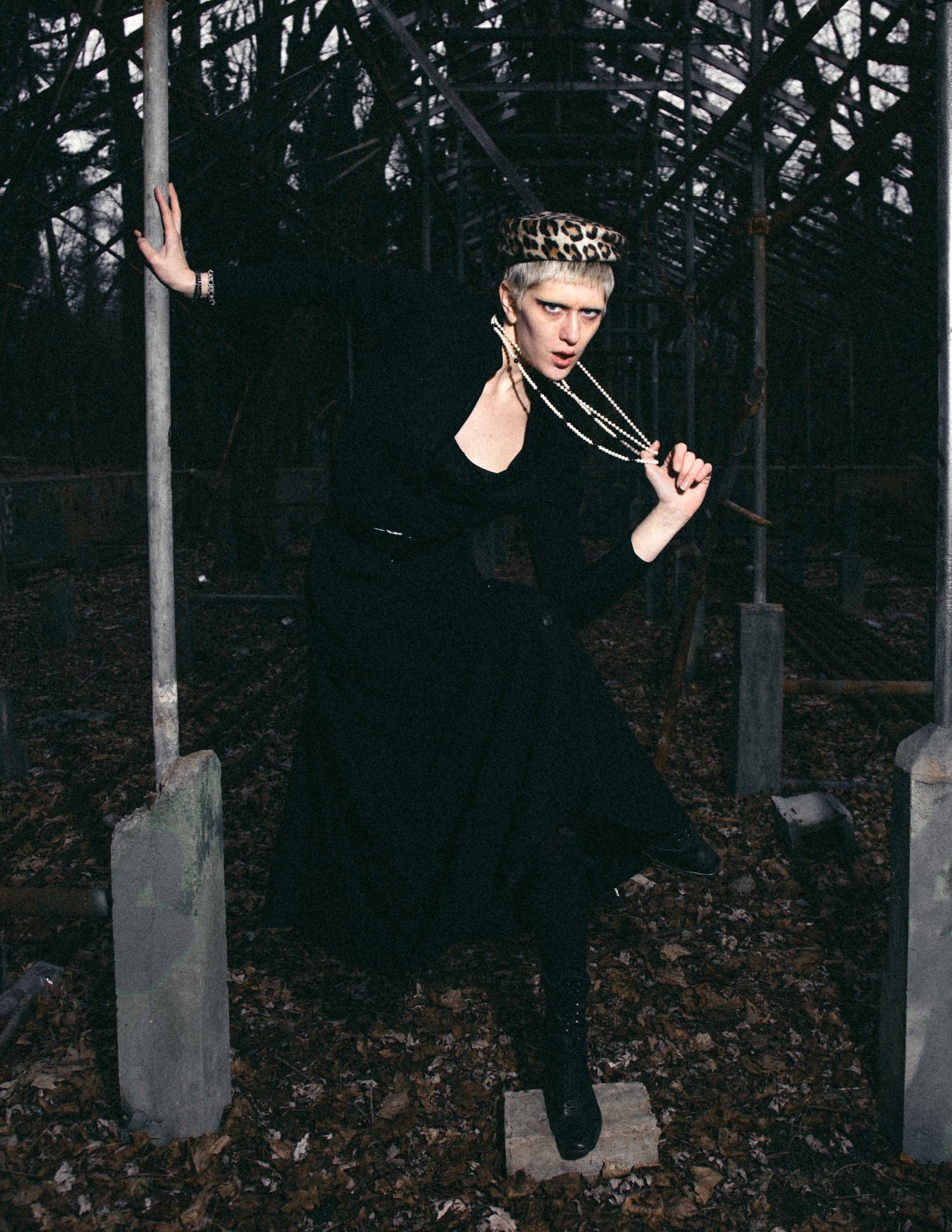
How would you describe your photography style?
“As an artist, I’ve had the privilege of exploring various styles and techniques in my photography. My educational background includes a degree in commercial photography, and my graduate studies were focused on fine art photography. However, my true passion lies in fashion photography. Through 8 years of professional experience, I’ve honed my skills and have become adaptable to various environments. I thrive on pushing the boundaries and am constantly seeking out new challenges. For me, creativity is about exploring new avenues and avoiding the monotony of repetition.”
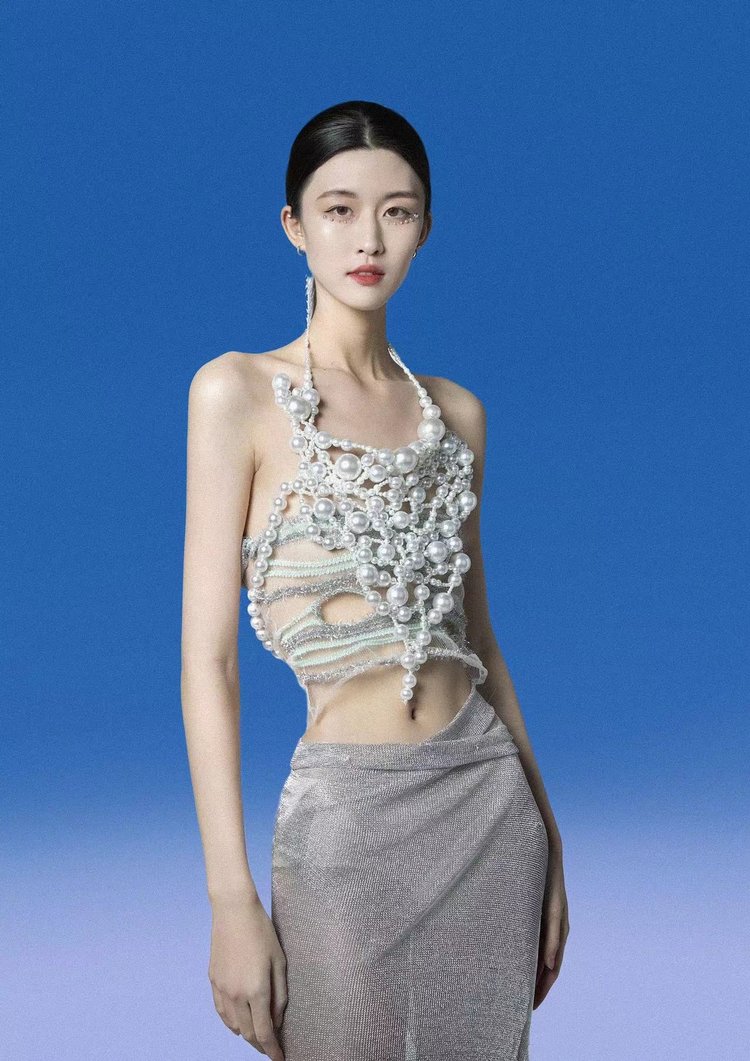
How would you describe your fashion photography collaboration process?
“When collaborating on a fashion project, my process begins with establishing the desired style and conducting thorough research. I then create a mood board, paying special attention to the location where the shoot will take place. I always visit the location beforehand to ensure it fits the vision.
After that, I identify a stylist who can source appropriate clothing and a makeup artist who understands my vision. Finally, I select models who fit the theme and will bring the vision to life.
For designers who wish to collaborate with me, I review their designs and concepts and create a mood board to ensure alignment with the overall vision. In addition, I carefully consider makeup and model options to complement and enhance the designs.”
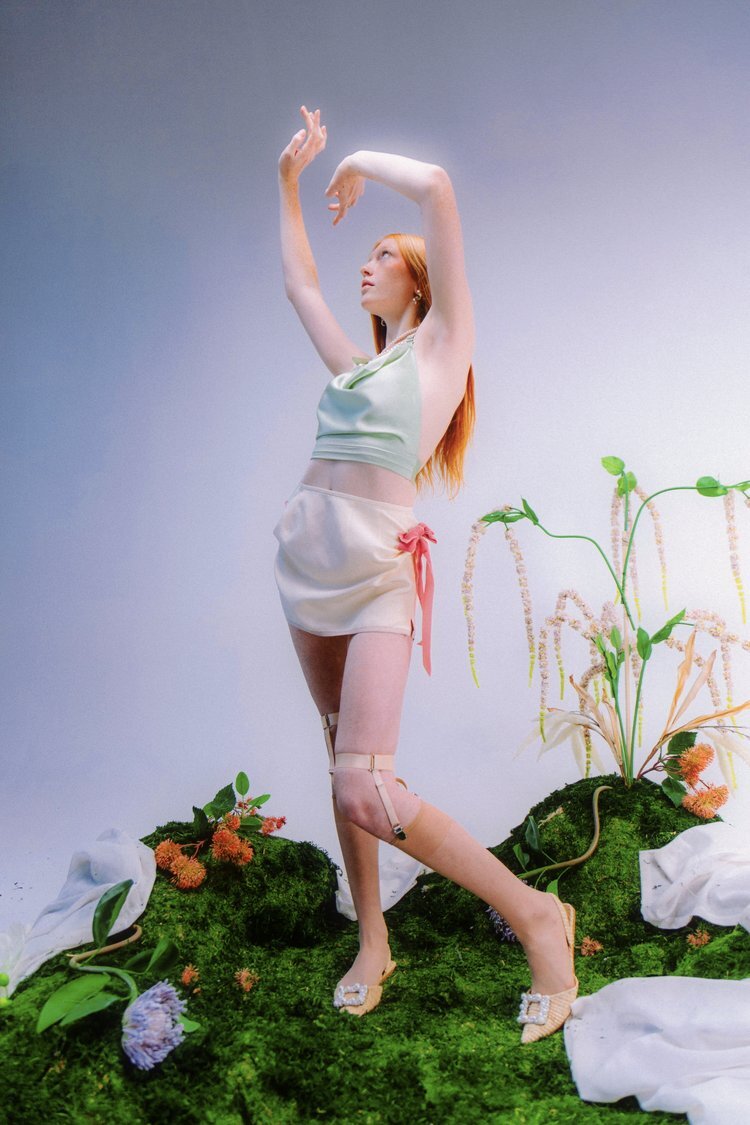
If you had to choose 3 ‘holy grail’ tips for photographers when collaborating on a fashion photography project, what would they be?
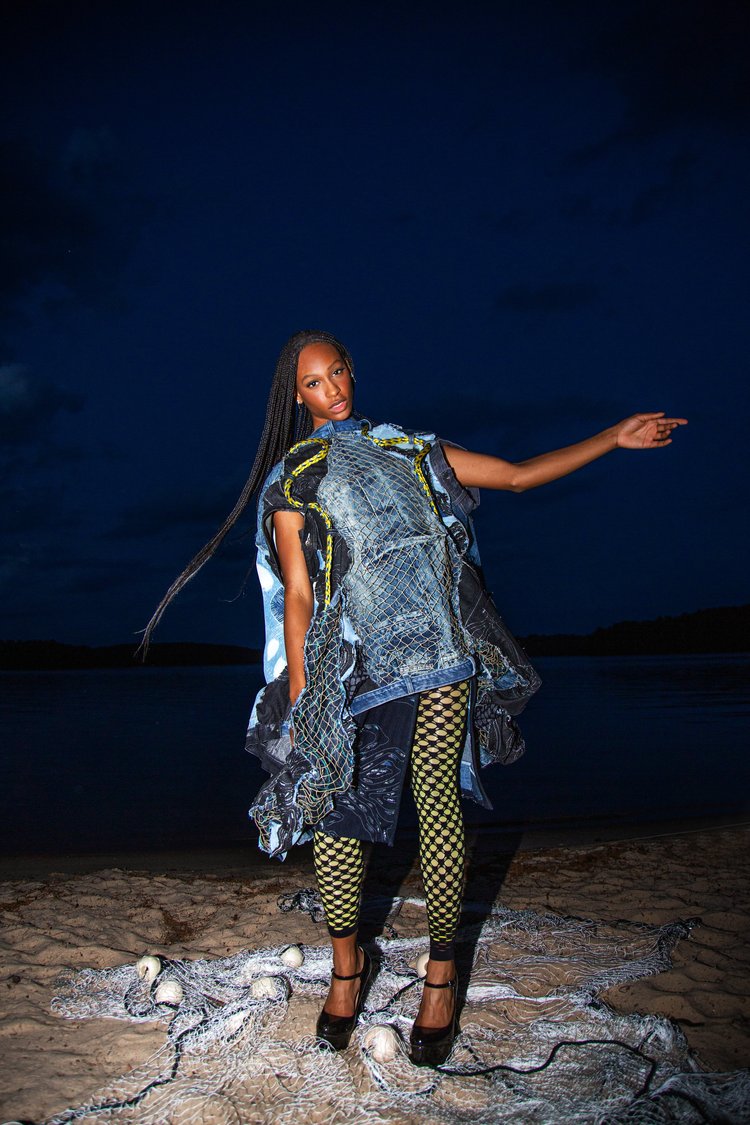
Shi will be at the Savannah campus from April 13 – 15 as an alumni mentor to teach workshops and share what she has learned at SCAD and through her own professional career. Follow Shi on Instagram to see more of her work.





