How this Beaumont woman honored mothers with deceased children


‘I’m not asking anything from them. I want to give them something. In exchange, I get to learn about them, and hear their story.” — Justin Veermer

Once or twice a week Justin Veenema will stand at a busy Vancouver intersection with two cameras sitting low on his hip while he watches people go by.
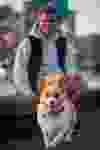
He’s waiting for a vibe. Veenema lets dozens, or sometimes hundreds of people pass before he finds the right person, couple, or dog to photograph.
Article content
“I look for people who I think have a story to share, people that look interesting or smart or fun. I try to pick up on someone’s vibe, and that leads my decision.”
Advertisement 2
Story continues below
This advertisement has not loaded yet, but your article continues below.
Article content
Veenema, 36, started approaching strangers in Vancouver 65 days ago, asking for permission to take their photos and posting them on Instagram. His reasons were personal.
The project offered him a way to deal with his social anxiety, to reach across the invisible gap that separates strangers from each other.
In a matter of weeks, the photos he took for his Stranger Project (@justin.veenema on Instagram) were garnering thousands of views.
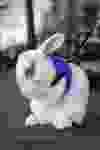
Although one clip of a woman walking a bunny has almost 20 million views, he doesn’t have any ambition to become an influencer. “My goal is just to connect with people, share my photography, meet cool people and make friends,” said Veenema.
After growing up in Chatham, Ont., he moved to Vancouver in his 20s to work in tech, and was captivated by its mix of people and cultures. “I loved it, I’d never seen anything like it,” said Veenema.
After a few years, he left to explore other cities. When he returned to Vancouver last year, he found it was more difficult to meet people than he remembered.
“That Vancouver coldness was rubbing off on me. It wasn’t as easy as it was before.”

Sunrise
Article content
Advertisement 3
Story continues below
This advertisement has not loaded yet, but your article continues below.
Article content
Yet, all around him he saw interesting people. “Everyone looked like they had a story to tell. But I couldn’t just walk up to them on the street.”
With a camera in hand, that changed.
“This is a way for me to open that conversation. I’m not asking anything from them. I want to give them something. In exchange, I get to learn about them, and hear their story.”
At the core of the project is the desire for connection. “Everyone is feeling isolated. But after I approach someone, we make a connection.”
Among the stories his photos tell, the one with the most surprising plot twist is the story of Vancouver itself.
“You hear that Vancouver is a cold and unfriendly city,” said Veenema. “It’s not true. People want to connect. I thought 90 per cent of people I approached would say no. Turns out 90 per cent of people say yes.”
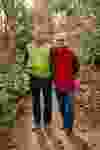
Veenema shoots with two cameras, an 85 mm Sony A74 and a 35mm Sony ZVE1, and an Insta 360 Go 3 that records his interaction with the people he approaches.
Every portrait tells a story of how to make strangers into friends. The tension of introduction — “Sorry to bother you, I’m a photographer. Is it OK if I take a photo of you?” — is the leap off a cliff, but the risk of rejection almost always leads to connection.
Advertisement 4
Story continues below
This advertisement has not loaded yet, but your article continues below.
Article content
Some are hesitant, or shy. Others don’t believe they are photogenic.
“That negative self-talk of not being good enough, or not being worthy — I really want to change that. I prove them wrong.”
His video clips sometimes include the moment he shows a once-hesitant stranger how they look through Veenema’s eyes.
“So beautiful,” one woman gasps, as if through Veenema’s lens she has seen herself for the very first time.
It’s part of what makes Veenema’s Stranger Project so compelling: that moment of recognition, where someone is no longer a stranger to themself.
Recommended from Editorial
Bookmark our website and support our journalism: Don’t miss the news you need to know — add VancouverSun.com and TheProvince.com to your bookmarks and sign up for our newsletters here.
You can also support our journalism by becoming a digital subscriber: For just $14 a month, you can get unlimited access to The Vancouver Sun, The Province, National Post and 13 other Canadian news sites. Support us by subscribing today: The Vancouver Sun | The Province.
Article content


Credits: Far Out / Library of Congress’s Prints and Photographs division
The first glimmers of women’s suffrage emerged in the late 1800s, leading to the rise of feminism in the following years. Women were fed up with being treated like children and campaigned for their right to vote, to be treated equally to men, and to be able to work and earn money in jobs not typically reserved for women.
Women were often denied from the creative arts, despite the fact that mediums such as weaving and sewing have been specifically associated with women for centuries. When photography emerged as a new form of art and communication, it was harder for women to be taken seriously. Thus, it’s important to look back at the pioneering women who stood in the face of adversity and wielded their cameras.
Frances Benjamin Johnston was a seminal figure in the history of photography, although, as she unashamedly admitted, she was more interested in using the medium as a job to earn her financial freedom rather than as a creative outlet. Still, her photographs are beautiful, and during her career, she made many important contributions to the development of photography, as well as encouraging other women to engage in the medium.
Born in 1864, Johnston was lucky enough to be brought up around wealth and connection – her interest in photography was sparked by a family friend, George Eastman, who helmed the Kodak company. Yet, she used these privileges to her advantage, quickly capturing high-profile subjects like Mark Twain and Theodore Roosevelt with her lens and subsequently proving that women were more than capable of being independent and career-driven.
She embodied the New Woman, a feminist idea that advocated for women’s rights and autonomy. The New Woman studied at university, rode bicycles, wore more practical clothing, and secured jobs in high positions, which gave them economic independence.
Johnston even made a photograph called ‘The New Woman’, in which she exposed a leg from beneath her dress (although it is clothed) and held a cigarette. She hardly looks like a subservient object – she’s ready to get up and assert herself in the world, which she certainly did. The photographer mainly photographed people and architecture, and throughout her career, she also focused on taking pictures of African American communities and figures, working alongside the civil rights activist W.E.B. Du Bois.
Johnston clearly used her position as an acclaimed photographer to involve herself in important periods of American history, capturing a time that was rapidly changing for African American people, women, and Native Americans. Her series of photos taken at the Hampton Normal and Agricultural Institute depicts black students engaging in education. The school was founded just a few decades prior in order to provide learning opportunities for previously enslaved men and women, and it continued to develop into an educational hub, which Johnston’s camera perfectly captured.
She also didn’t conform to heteronormative standards, engaging in a relationship with a woman named Mattie Hewitt. Johnston even photographed herself dressed as a man on one occasion, standing by a penny-farthing bicycle in trousers – which was not a common form of clothing for women at the time – while also wearing a masculine hat and a stick-on moustache. The photographer set out to do things differently, and in the process, she encouraged other women to join her, which she advocated for by setting up an exhibition of female photographers. She deserves to be remembered for her contributions to photography, especially during a time when it was considerably harder than it is today for women to be taken seriously.


MTSU’s Photography program prepares students for commercial, artistic, and photojournalistic career paths. Prospective professional opportunities include

Nicholas Andrew grew up in Speedway, and he can’t get enough of the place and its people, so each piece of art is like a love letter to his hometown.
SPEEDWAY, Ind. — During the month of May, just imagine how many photos are taken in Speedway of the drivers, of the track, of the town.
We’re talking tens of thousands.
But behind one of those camera lenses is a Speedway native who’s a trained and talented artist.
And much of his artwork pays tribute, like a love letter, to his beloved hometown.
By their very nature, some places are just more photogenic than others: stunning spots like the Grand Canyon or the Eiffel Tower.
These are iconic images everyone wants to capture.
For Hoosier Nicholas Andrew, that place is the Indianapolis Motor Speedway.
Art is his talent.
IMS, his muse.
“Yeah, it’s kind of like an Eiffel Tower to me where it’s just like, it’s incredibly big,” Andrew said. “It’s full of history, and it looks cool in a photograph.”
His photographs look really cool, especially considering he captures them all with an iPhone.
Plus, his best work actually comes on a bad weather day for racing.
“When I see a puddle and a dark cloud or something like that, then I get real excited because I know that photo’s gonna turn out well,” Andrew said. “And a reflection that just brings the photo a whole new life.”
From photos to paintings to graphic design, Andrew’s work gets a ton of attention from race fans.
But his inspiration is more than the track — it’s the town of Speedway itself.
“I love the buildings. I love the old architecture. Just walking around is great. It’s beautiful,” Andrew said. “It draws me back every year, especially around May, you know, for obvious reasons.”
Andrew grew up in Speedway, and he can’t get enough of the place and its people, so each piece of art is like a love letter to his hometown.
“Especially when I take a photo or do a drawing and then the town reacts to it,” Andrew said. “It’s like, OK they got the letter, and now, they’re writing me back to tell me, ‘hey, we love it.'”

Those replies even come from town leaders, who spotted his work on Facebook and chose a curated collection for Speedway’s municipal building.
“First off, they’re beautiful.” Grant Kleinhenz said. “They’re very stunning, they’re clean, they’re clear, and he does some amazing effects with them that really even enhance their beauty even more. I was like, well, we want to decorate town hall here, so we bought several of these and have now displayed them. There’s a lot of Sparkplug pride here.”
There’s so much pride for the talented hometown kid, that Andrew’s designs raise money for Speedway charities, businesses ask to partner on projects, and he’s set to create the logo for the town’s 100th year.
For Andrew, that’s pretty special.
The racing capital of the world, which is such an international icon, is finding its heart with art from a local.
Check out Andrew’s latest artwork and photography on his Facebook page.


A photograph shared in May 2024 authentically shows Sean “Diddy” Combs posing next to Barack Obama.
On May 19, 2024, a photograph went viral on social media, allegedly showing rapper Sean Combs, also known as Diddy, posing next to former U.S. President Barack Obama. “Obama needs to repent, too. He brought the demonic minstrel show to the Oval Office. It’s not just Diddy,” one viral post captioned the photo.
The photograph gained particular attention in late March 2024, when federal agents executed search warrants and raided Combs’ homes in Los Angeles and Miami as part of an ongoing sex trafficking investigation. “The media doesn’t want you to see this, so you know what to do,” one X post claimed. Google reverse-image search results showed that it was spread on multiple social media platforms, such as Instagram, 9GAG, TikTok, Facebook, and X. “Here is President Obama throwing his support behind a pedophile,” another X post read.
However, contrary to what social media users suggested, the photo itself did not indicate any involvement in or connection to the specific controversies facing Combs on Obama’s part. Social media users also underscored that the rapper has been photographed with various other prominent figures, including former President Donald Trump.
In short, despite the widespread circulation of the photograph, we have not found any reliable sources confirming or denying its authenticity. However, the existence of previous photos of Combs and Obama together, as well as the rapper’s support for Obama’s presidency, suggests that the latest image could be authentic. Because of that, we have rated this claim as “Research in Progress.”
We have reached out to the the Office of Barack and Michelle Obama and the Obama Foundation for a comment, and we will update this article if/when we receive a response or new information about the photograph comes to light.
Combs did share a photo with Obama in September 2017, in which the two were dressed in outfits resembling those seen in the recently viral image. The photograph is available on Combs’ Facebook page with a caption reading, “This week was a great week. Shout out to the king Barack Obama!!! #BlackExcellence.”
Barack Obama Presidential Library, a federal agency administered by the National Archives and Records Administration, told us via email that they “don’t have any information on this photo because President Obama was a private citizen then.”
We should add in 2004 Combs interviewed Obama, who was running for Senate, to encourage young people to vote.
[embedded content]“I think we are probably responsible for Obama being in office, yes. If nobody else is gonna say it, then I’m gonna say it. The confidence, the swagger we instilled in our communities made that possible,” Combs said in an 2009 interview with Playboy Magazine. “If God said I could pick one person to be my father, I’d want to be Sean Combs Obama. That’s how dope he is. I hope he reads this interview and adopts me,” he jokingly added.


“A Clear Welcome” by Francesco dall’Olmo. Location: Laguna de los Tres, Patagonia, Argentina.
“This was the first photo I took in Patagonia. Contrary to expectations of cold, rain, and wind, our initial encounter with these landscapes was unusual: nearly three days of clear skies. Reaching the lagoon around 7 a.m., I immediately captured shots of the sky. Shortly afterward, I photographed the foreground, where twilight had already set in. This clear welcome gifted me with a rare photo of Fitz Roy framed by the Milky Way arch.”
For the seventh year, travel blog Capture the Atlas has celebrated our galaxy with its Milky Way Photographer of the Year collection. These 25 images of the Milky Way were singled out as exceptional examples of astrophotography and are awe-inspiring looks at the Milky Way.
The photographs, taken in 15 different countries—from the United States and Argentina to New Zealand and France—were selected from the more than 5,000 images submitted to this year’s competition. Photographer Dan Zafra of Capture the Atlas curates the images, looking for photographs from both established and new photographers.
The final selection is not only beautiful but also inspirational. From remote locations in Patagonia to the snowy Alps of Slovenia, the stunning images demonstrate how creative astrophotographers can get with the Milky Way. Whether it’s shown as an arch perfectly framing a mountain or accompanied by bands of colored light in the sky, it’s incredible to see the diversity in our galaxy.
Scroll down to see 15 of our favorite images from the collection, and then head over to Capture the Atlas to see the full gallery.

“Mungo Dreamtime” by John Rutter. Location: Mungo National Park, NSW, Australia.
“This Mars-like landscape is the shores of Ancient Lake Mungo, housing the oldest human remains outside Africa—a significant site for all humankind. Its remote location grants it a Bortle 1 sky, allowing you to stand where the first Australians once did and gaze at the same sky they beheld 100,000 years ago. The beauty of the arid, wind-carved landscape and the untouched sky is only eclipsed by the rich history of this area.”

“Lightning Lake” by Tom Rae. Location: Aoraki, Mount Cook National Park, New Zealand.
“The Milky Way emerges from New Zealand’s highest mountain, Aoraki/Mount Cook, on a winter night—a shot I’ve longed to capture, knowing it would encapsulate the mountains and sky elements perfectly. In rare alpine weather conditions, I embarked on a journey up the glacial valley one night. Upon reaching the lake, the scene that unfolded made me feel like I had landed on another planet. This night, among many spent documenting this incredible part of the world, stands out for me.
It embodies the dedication, sleepless nights, and the fulfillment of completing my vision. The image features icebergs in the cyan-blue glacial lake, red airglow painting the sky, and the glow of billions of stars in the Milky Way—a glimpse into the vastness beyond.”

“Atmospheric Fireworks” by Julien Looten. Location: Dordogne, France.
“Last winter, I ventured to the foot of a medieval castle in France to capture the Milky Way’s “winter” arc. Alongside the stunning celestial vault, an exceptional airglow illuminated the sky, resembling multicolored clouds. This natural phenomenon occurs due to a chemical reaction in the upper atmosphere, emitting faint light known as chemiluminescence.
The panoramic view spans 180°, showcasing the entire Milky Way arc. From left to right: Sirius and the constellation of Orion, Mars, the Pleiades, the California Nebula, Cassiopeia, the double cluster of Perseus, and the Andromeda galaxy. Capturing this image required a large panorama of 40 exposures, totaling nearly an hour of exposure time using my Canon 6D Astrodon and Sigma 28mm f/1.4 lens.”

“Caradhras – Milky Way Arch Above Vrsic Pass” by Matej Mlakar. Location: Vrsic Pass, Slovenia.
“Vršič Pass is a high mountain pass across the Julian Alps in northwestern Slovenia. It is the highest pass in Slovenia, as well as the highest in the Eastern Julian Alps. It connects Upper Carniola with the Trenta Valley in the Slovene Littoral. One of those peaks is Prednje robičje (1941m), where this image was taken from. On Sunday afternoon, my friend Nino Frelih and I were still quite undecided about where to go.
I knew I wanted to capture probably the last winter Milky Way arch of the season above snow-covered peaks, and this location was a sort of last-minute idea while we were driving towards Vršič Pass. Sometimes it pays off to be a bit more spontaneous.”

“Blue Lagoon Under the Stars” by Yuri Beletsky. Location: Atacama Desert, Chile.
“I captured this view at one of the remote sites of the Atacama Desert in Chile. The Galactic Center was already shining high in the sky, with the Zodiacal light beautifully complementing it on the right. The blue color was as real as the stars in the sky, adding a touch of magic to the scene. It was an absolutely incredible experience!
In that moment, all I could do was capture the beauty unfolding before me. It served as a reminder of the wonderful sights that exist in the world and the endless beauty that can be found when we simply look up at the night sky. It was a moment that made me feel deeply connected to the world around me and the universe beyond.”

“Bluff Hut” by Rachel Roberts. Location: Mungo River Valley, West Coast, New Zealand.
“Sometimes, the best images come completely unplanned, which is precisely what happened on this trip to Bluff Hut, nestled in the Southern Alps on New Zealand’s South Island.
Only accessible by a challenging hike or helicopter flight, I had no intention of ending up here, as I had a different shoot planned at another hut. However, with weather closing in at my intended location and no backup plan, I trusted the chopper pilot to choose the best spot for clear skies that evening. Thankfully, he didn’t disappoint, and I was able to capture the Milky Way arching majestically over the hut from one of the darkest places on the planet.”

“Desert Bloom” by Marcin Zajac. Location: Goblin Valley State Park, Utah.
“Wildflowers blooming in front of a group of hoodoos called the Three Sisters in Goblin Valley State Park in Utah. The park, located in a remote corner of the Colorado Plateau and away from major urban centers, yields one of the darkest skies in the country.”

“Blooming Bottle Tree” by Rositsa Dimitrova. Location: Socotra Island, Yemen.
“Visiting Socotra was a dream come true – it had been at the top of my bucket list for a couple of years. The night sky in Socotra is categorized as Bortle 1 on the dark sky scale – the darkest you can possibly get. But it wasn’t just the dark skies – it was the alien-looking foregrounds that truly took my breath away. The gorgeous bottle trees of Socotra are especially beautiful in full bloom. They only bloom for a few weeks in February and March, and it’s a mesmerizing sight you want to experience again and again.
I was actually 11 weeks pregnant with my second child when I visited – I must admit that camping and shooting all night were not the most fatigue-friendly activities, but all the challenges were absolutely worth it. I’m now dreaming of taking my two daughters to Socotra one day – for an experience they will never, ever forget.”

“The Vanity of Life” by Mihail Minkov. Location: Wadi Rum Desert, Jordan.
“The concept behind this shot is to highlight the stark contrast between the vastness of the cosmos and the minuscule nature of humanity. The composition intentionally draws the viewer’s focus to a small figure, underscoring our insignificance in the grand scheme of the universe, while the majestic Milky Way core dominates the background.
Whenever I venture out to capture the night sky, I’m filled with a sense of humility and gratitude for my existence. It’s as if my problems diminish in comparison, and I’m reminded of the immense love I have for my family and the beauty of life itself, making everything else seem trivial.”

“Mother Juniper” by Benjamin Barakat. Location: Jebel Shams, Oman.
“The wisdom of the juniper reveals itself in its aged roots, twisted and sculpted over millennia, enduring the ravages of time and countless obstacles. Amidst the ever-changing tides of time, one constant remains: its profound connection with the night sky and the Milky Way. Their paths intertwine and converge, culminating in a perfect alignment. In that fated instance, I found myself beneath the juniper’s boughs, gazing up at the cosmic dance above, capturing its essence in the stillness of the night.”

“The Lions Den” by Lorenzo Ranieri Tenti. Location: Atacama Desert, Chile.
“This image was captured during an adventurous night on the plateau of the Atacama Desert, a potentially dangerous area due to its designation as a mountain lion reserve.
After a whole afternoon of searching for compositions, I stumbled upon this remarkable mass of rocks adorned with tufts of grass, now burnt by the harsh environment.
The area was littered with bones of small animals and footprints of a significant size, indicating the presence of wildlife not typically associated with peaceful sheep. Spending the night there was admittedly a bit nerve-wracking, but the opportunity to photograph such beauty made it worthwhile. The Milky Way’s arch, in all its splendor, rises above the pristine landscape, creating a truly mesmerizing scene.”

“Lupine Dreams” by Brandt Ryder. Location: Eastern Sierra, California.
“Super blooms can be a once-in-a-lifetime event. An atmospheric river in the winter of 2023 had caused record amounts of moisture to fall in the Eastern Sierra mountains and the foothills surrounding this area. The result was one of the best wildflower or super blooms on record for the state.
In May of 2023, I spent a couple of days around the iconic town of Lone Pine, California, where the lupines in the foothills were just coming into peak bloom and the skies are notoriously dark. I knew I wanted to create an image that transported the viewer into a sea of purple flowers framed by the snow-covered Sierra and the Milky Way rising above.
Although this spot was special, it was the incredible panoply of color in the night sky that I captured on this night that really elevates this image. Every time I look back at this image, I can still smell those flowers, and I’m immediately transported to this special place and time spent with special people.”

“Rainbow Valley” by Baillie Farley. Location: Rainbow Valley Conservation Reserve, Northern Territory – Australia.
“My recent journey to the Central Australian Outback was an incredible experience, exposing me to the harsh vastness of the outback and some of the darkest southern night skies in the world. This image captures the breathtaking scene at Rainbow Valley Conservation Reserve, where the southern Milky Way gracefully spans above a remarkable formation of colorful sandstone rocks. This area exudes a unique charm, with its vibrant hues and stunning geological formations creating a mesmerizing landscape.

“The Tajinaste” by Maximilian Höfling. Location: Mirador El Tabonal Negro, Tenerife, Spain.
“My astro adventure on Tenerife was unforgettable. The Canary Islands, particularly Tenerife, offer ideal conditions for astrophotography. In the Teide National Park, situated at an altitude of around 2000 meters, clear skies are almost guaranteed, with lower clouds shielding city lights, minimizing light pollution.
My primary goal in astrophotography is to unveil the hidden beauty of the night sky beyond the visible stars. I’m especially passionate about showcasing our galaxy, the Milky Way, in all its glory. I believe this picture achieves that goal impressively, capturing the mesmerizing brilliance of the Milky Way against the pristine backdrop of Tenerife’s night sky.”

Pocket-sized, autonomous HOVERAir X1 camera drone available for the first time in Australian retail, exclusively at JB Hi-Fi
SYDNEY
,
May 22, 2024
/PRNewswire/ — From Today,
May 23
, Australian consumers can purchase the HOVERAir X1, a controller-free, pocket-sized camera drone with its exclusive retail partner,
JB Hi-Fi, online
and in selected stores nationwide.

The HOVERAir X1 is designed for ease of use and portability, equipped with a
2.7K
camera that launches quickly to capture high-quality photos and videos. The drone features a unique cage-like structure for safety and includes autonomous flight modes for versatile shooting, such as Side Track and gesture-based Smart Controls. The HOVERAir X1 is priced at AUD
$649
for the combo package.
“We are excited to introduce the HOVERAir X1 to the Australian market through our exclusive partnership with JB Hi-Fi. This launch marks a significant milestone in making advanced aerial photography technology accessible to everyone. Designed by Zero Zero Robotics, the makers of the HOVERAir X1, this drone combines ease of use with powerful capabilities to capture life’s moments with simplicity and clarity. We believe this product will not only meet but exceed the expectations of Australian consumers, who appreciate innovation and quality in their tech gadgets.” —
Emily Wang
, COO of Zero Zero Robotics.
“Partnering with JB Hi-Fi aligns with our commitment to bring our Australian customers a more convenient shopping experience,” said
Anthony Fredella
, Channel Sales Manager – ANZ of Zero Zero Robotics. “We are proud to have JB Hi-Fi as our exclusive retail partner for the HOVERAir X1, making sophisticated aerial photography accessible to more Australians.”
Designed for simplicity and safety, the HOVERAir X1 can be operated without prior experience, making it ideal for capturing everything from personal moments to professional-quality indoor group shots without disturbing noise, thanks to its noise-filtering technology.
The availability of
HOVERAir X1 through JB Hi-Fi
is a significant development for photography enthusiasts looking to explore new creative possibilities. The device is available for purchase and pickup at Selected JB Hi-Fi locations from
May 23
.

View original content to download multimedia:
https://www.prnewswire.com/news-releases/launching-exclusively-at-jb-hi-fi-hoverair-x1australias-new-gateway-to-advanced-aerial-photography-302150746.html
SOURCE Zero Zero Robotics


On Sunday, a cow moose charged two men in Homer, Alaska, attacking and killing one of them. While one man escaped with no injuries, according to the Alaska Department of Public Safety, the other man died. A spokesperson identified the victim as Dale Chorman, a 70-year-old wildlife photographer. His family said he knew the risks and died doing what he loved.
Moose attacks are rare. This particular animal felt threatened by the men, who were walking through the brush hoping to photograph the moose cow’s newborn twins when the moose charged. In an interview with AP News, a spokesperson for the Alaska Department of Public Safety said the men tried to run away as soon as they realized what was happening, but the moose caught up with Chorman.
A friend of the Chorman family, Tom Kizzia, spoke to AP about the incident, saying: “There was no evident trampling [and] the medical examiner’s going to try to figure out exactly what happened, whether it was just single blow in the terrible wrong place or something.”
Chorman was pronounced dead at the scene.
AP reports that the family does not want the moose put down, since she was just protecting her calves.
The Alaska Department of Fish and Game says most moose charges are bluffs. “But if a moose does charge, don’t wait to find out if it’s bluffing,” the department says on its website. “Run and get behind something solid, like a tree, or retreat to a safe place, like inside a building or car.”
By all accounts, Chorman was a responsible wildlife photographer who knew what he was doing. Sadly, in this unpredictable moment, he was in the wrong place at the wrong time.







Comments