Photography

Moose kills Alaska man trying to photograph her newborn calves

Moose kills Alaska man trying to photograph her newborn calves

A man attempting to photograph moose calves was killed by their mother over the weekend, authorities in Alaska said Monday.

Dale Chorman, 70, was hiking about 100 yards from his home on Sunday looking for the newborns when the moose charged, Alaska Department of Public Safety spokesperson Austin McDaniel told the Anchorage Daily News.

“As they were walking through the brush looking for the moose, that’s when the cow moose attacked Dale,” Austin said.

“The cow moose charged two men, kicking one of them,” Alaska State Troopers said in a release. “Medics arrived on the scene and declared the victim deceased.”

Chorman had already photographed the birth itself and had invited his friend along as he tried to do the same for the calves, a friend told KTUU-TV.

“As they were approaching the area suddenly the moose came crashing out from wherever it was — they hadn’t seen it — on the attack,” Chroman’s friend Tim Kizzia said. “And they turned to run, and his friend looked back and saw that Dale was already on the ground and the moose was standing over Dale.”

The moose left the area with her calves by the time help arrived, Alaska State Troopers said. The friend was not injured, and police did not publicly identify him.

FILE – Dale Chorman, 70, was hiking about 100 yards from his home on Sunday looking for the newborns when the moose charged. (Shutterstock)

Chorman was a naturalist, bear guide, carpenter and builder who had lived in Homer for decades, the Anchorage Daily News said. He was also an avid and locally known wildlife photographer.

“Dale died on his property, tromping through the woods with a dear friend, in pursuit of a great photograph,” his son, Nathan Spence-Chorman, wrote on social media, according to KTUU-TV. “This was his favorite thing to do…. Dale was highly experienced around wildlife. He was intimately familiar with nature and had no naivete about its danger. This was not a hapless fool stumbling into danger — this was a person who went out looking for a great photo, knowing the risks, and got caught in a dangerous moment.”

Spence-Chorman added that the moose “was just protecting her offspring.”

With News Wire Services

On Non-Photography: A Snapchat Story

On Non-Photography: A Snapchat Story

It came as a familiar burglar of my attention, as I sat sorting through photo albums. I
remembered how we acted like spies, sending covert information in self-destructing parcels,
intercepted only by the shameful act of screenshotting. Indignant, I watched that hollow ghost
drift by, in a mist of smarm and lemon-drop yellow.

Taking photos—an instinctual human gesture. It’s impossible to imagine their absence, a time
when time could not be recorded and printed and revisited (or uploaded, to our lifelong
construction of a mausoleum in the cloud). Susan Sontag called photography a ‘mass art form’,
it’s almost antisocial to reject the activity; she gives the example of not taking photos of one’s
children growing up, which some would almost consider neglect

The camera obscura was the first attempt to generate an image, albeit ephemeral, hypothesised
in the years BC. But it was not until the 1820s, that the unpronounceable Nicéphore Niépce
engraved the first photograph, drawing on lithographic techniques and the light of a camera
obscura. It was an anthropological milestone, our first encounter with what Roland Barthes
called ‘messages without a code’; a representation which exists beyond ideological and
authorial intent.

I swipe right. Each name evokes an abandoned digital back-and-forth. The fleshy walls are
gone, architectural ribs exposed. It smells of decay. The passing domesticity that once endured,
erased by design. Laughter, argument, heartbreak. Wispy traces echo in these deserted rooms.

It was an event with a distinctive before-and-after in the collective consciousness, the invention
of both time travel and teleportation. Sontag says the promise of photography was to
‘democratize all experiences by translating them into images’. It’s now our technology-given
right to see through the eyes of others, as well as to gaze in high-definition at the youthful faces
of our now-dead relatives, friends, selves.

Nothing could be more divorced from the chemical, mechanical, frustrating process of early
photographic image-making, than Snapchat’s simple user interface. But it’s not the divide of
difficulty which should concern us, Kodak made shooting easy enough in 1888; ‘You press the
button, we do the rest’. The problem then, is rather the assertion that Snapchat—and all the
platforms which have duplicated its distinctive features— can be said to produce photographs
at all, as we know them. The nomenclature doesn’t apply, it’s like comparing a light bulb to the
sun, because both vaguely house and project light.

Am I being followed? I dart my eyes back at the slightest movement. The grinning automatons –
the bitmojis, dare I speak their name – are unnerving, like at any moment they might break
from their tableaux, find my house on Snap Map and violate me.

We should think about this in terms of use, and function. Snapchat is a particularly crude
interpretation of one modern and one lost art: photography and correspondence. We’ll focus on
the former in this admittedly hasty argument.

One must think of the Snap-Image as a social production, rather than a work of art or
preservation. The experience is diametrically opposite to Niépce’s breakthrough, but resembles
the ephemeral images first produced in the camera obscura. Recorded not for posterity, these
images exist to be seen and abruptly destroyed.

Like Wittgenstein argued for language, photography can be defined by its use, it is a means
with many opposing ends. But this strain of communicative photography has splintered from
its photographic lineage.

In a bizarre reimaging of McLuhan’s words, the medium is now literally the message. The
photo is a visual sketch for a linguistic purpose, an acting-out in a game of online charades.
Back and forth, images go, sometimes with text, sometimes saying enough on their own. The
form becomes meaningless, replaced by pure subject and perspective: this is what I’m seeing,
where you are, who I’m with, this is an image with a dog filter to cover your nose, an image of
my ceiling to maintain our messaging streak, a picture of the blue sky—only there as wallpaper
for your paragraph placed above it. The photograph loses its final materiality and becomes
material for collage and décollage, while impersonating authentic experience. For Sontag,
photography claims an ‘instant access to the real’, but to ‘possess the world in the form of
images is, precisely, to reexperience the unreality and remoteness of the real’. Snapchat facilitates a cyclical unending unreality, but stops short of possession, so that we can’t even sit
and contemplate the simulacra, we are swept up by its flow.

I scroll down, stumbling into the tomb which Snap Inc. calls Memories. It starts with school
uniforms, faces distorted or bearing animalistic veils. It descends in a vertical flood of
embarrassment. Friends looking to the camera with eager confusion. Enthralling concerts
broken up into unwatchable chunks of light-speckled noise. Videos panoramically drift over the
geography of a party, surveying unwitting subjects. The latter do well to follow Sontag’s
dictum, that good citizens of a ‘camera culture’ ‘pretend not to notice when one is being
photographed’.

Despite the app’s conceit, there is a storage function. Does this dismantle our entire theory of
Snapchat as operating uniquely? Rather, the incongruity is resolved when we think of its cloud
storage as a response to the act of photography, which Snapchat enables, rather than the storing
of photography itself. The leftovers found in Memories are traces of lost communication, letters and flyers stored in a library’s ephemera collection. Photographs, no matter how well-
planned, reach for the beyond and pull back the unexpected. The Snap-Image, alternatively, is always created, received, and saved with a code.

I can delete this overflow of imagery, right? But isn’t it wrong to delete a photo once it’s
taken? It feels like I’m scrubbing evidence from the historical record or tearing up a piece of
art. To delete is sin.

Perhaps we ought to follow Snapchat’s philosophy of ephemerality. Treat the app as one long
disappearing message, its obliteration always predetermined, the timer in the corner reaching
its climax.

Photography has been morally dubious from the outset. ‘Images transfix, they anesthetize’.

Imagery has numbed our sensory ability, narrowed our faculties to the visual, submerged us in
a deluge of images whose veracity and psychological impact is proving more difficult to fix.
But for all the failings and dangers of image-making, there is a spiritual or sentimental
satisfaction, an aesthetic fulfillment, a historicist impetus to taking photos. Snapchat strips
those ambitions away, degrades the act into the primal desire to hunt down experience, shoot it
dead, and show off its carcass to our friends. Whatever remains of the integrity of the image
dissipates with the Snap-Image, and it takes language and experience with it.

.

French actor Depardieu in ‘violent’ scuffle with photographer

French actor Depardieu in ‘violent’ scuffle with photographer

A well-known Italian paparazzi photographer accused French film star Gerard Depardieu of punching him in Rome on Tuesday, media reported, with the actor’s lawyer saying he had been defending a companion.

Italian daily Il Messaggero quoted the photographer Rino Barillari as saying the 75-year old actor punched him three times in the face when he tried to photograph the star.

Barillari, 79, dubbed the “king of paparazzi”, told the paper he approached the actor and a woman at Harry’s Bar on the chic Via Veneto on Tuesday afternoon.

“Mamma mia, he is fat. He punched me three times in the face,” the newspaper quoted him as saying. “First I’m going to hospital, then I’m going to deal with him. I’m going to file a complaint to the police.”

He said the woman, Depardieu’s partner Magda Vavrusova, initially tried to block him from taking photographs.

In a statement released later, the couple’s lawyer Delphine Meillet cited Vavrusova as saying the photographer had pushed her violently and touched her chest with his arm.

“It still hurts. He was extremely violent,” it quoted Vavrusova as telling police when she filed a complaint.

Meillet said Depardieu slipped and fell on Barillari while trying to get between him and Vavrusova.

The lawyer said Barillari was “well known as much for his photos as for his aggressive methods”.

Reached by telephone, Barillari told AFP he was in hospital and could not talk.

During a long career that started young, Barillari has photographed numerous stars including Elizabeth Taylor and Ingrid Bergman in the Italian capital.

Depardieu, a giant of French cinema, has faced scandals over recent years, including a series of sex assault charges that he denies.

He is scheduled to go on trial in October over accusations of sexual assault against two women.

© 2024 AFP

Embrace Failure: The Path to Better Photography

Embrace Failure: The Path to Better Photography

The belief that good photographers must consistently produce great photos is a myth that can hinder your growth. This notion implies that every shot must be perfect, discouraging experimentation and risk-taking, which are essential for artistic development. Understanding that not every photo needs to be a masterpiece is crucial for evolving your skills and creativity and enjoying the craft.

Coming to you from Adrian Vila of aows, this thought-provoking video challenges the myth of the “keeper rate” and emphasizes the importance of embracing failure. Vila reflects on his early days in photography, where he believed that each shot had to be exceptional. This mindset, reinforced by shooting film, made him cautious and inhibited his growth. He argues that photography is not about achieving a high keeper rate but about allowing oneself to make mistakes and learn from them.

Vila stresses that the early stages of any creative process are often rough and imperfect. Through continuous experimentation and practice, you refine your vision and develop your unique style. Avoiding mistakes by playing it safe might protect your ego, but it also stunts your growth as an artist. Vila encourages embracing the frustrations and failures, as they are crucial for artistic development. He highlights the danger of waiting for the perfect conditions, gear, or knowledge, which can lead to missed opportunities for growth and creativity.

Vila also addresses the unrealistic standards set by viewing the polished work of others without recognizing the struggles and failures behind those images. He reminds viewers that the stunning final images are the result of a long process of creativity, filled with experimentation and mistakes. Acknowledging this reality can alleviate the pressure to produce perfection and encourage more risk-taking and learning.

The video serves as a powerful reminder that great images are the exception, not the norm. They are the product of relentless practice, numerous failures, and a willingness to take risks. Vila’s message is clear: to grow as a photographer, you must embrace the journey, with all its imperfections and challenges. This approach not only enhances your skills but also makes the creative process more exciting and rewarding. Check out the video above for the full rundown from Vila.

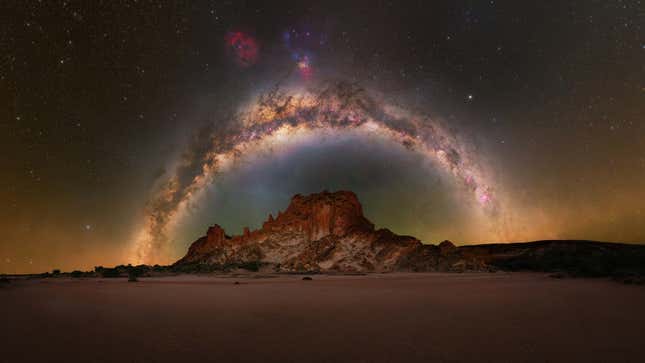
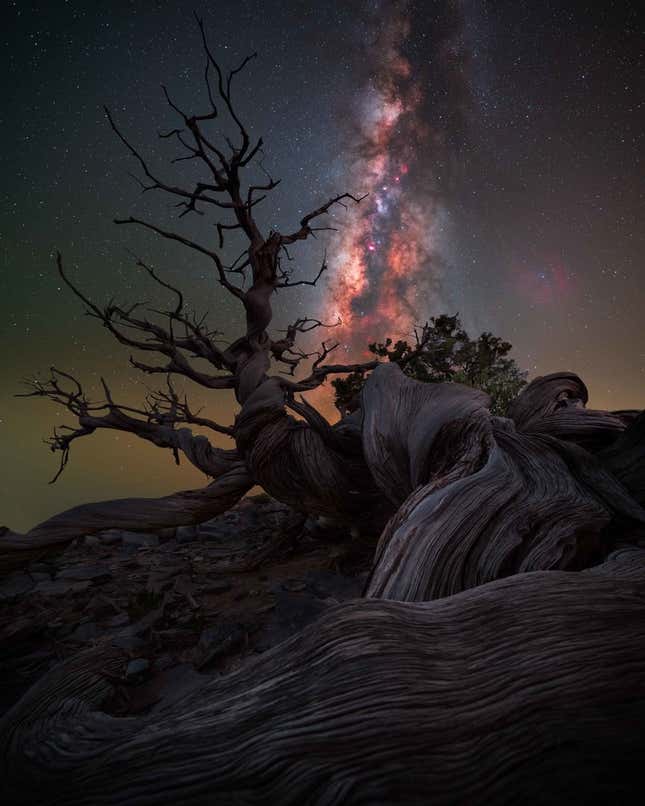
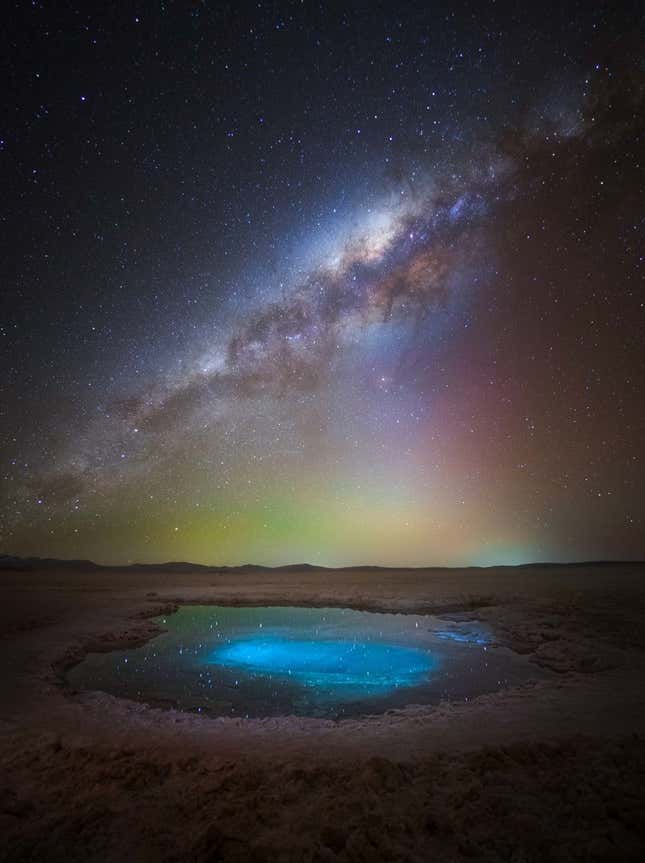
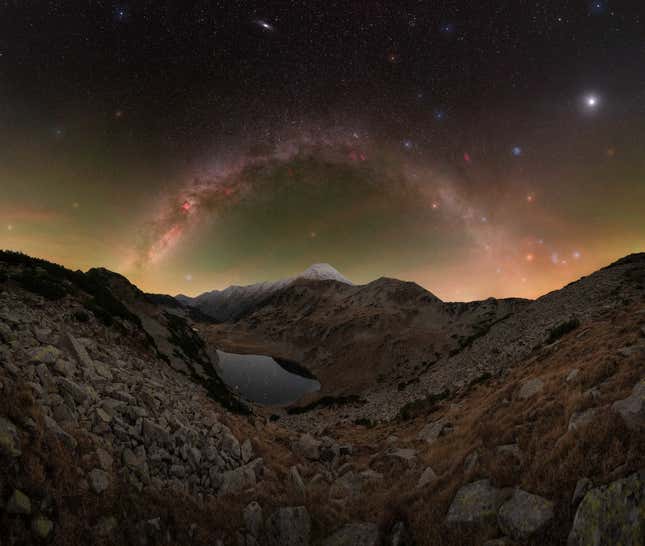
25 Jaw Dropping Photos of the Milky Way Taken From Around the World

25 Jaw Dropping Photos of the Milky Way Taken From Around the World
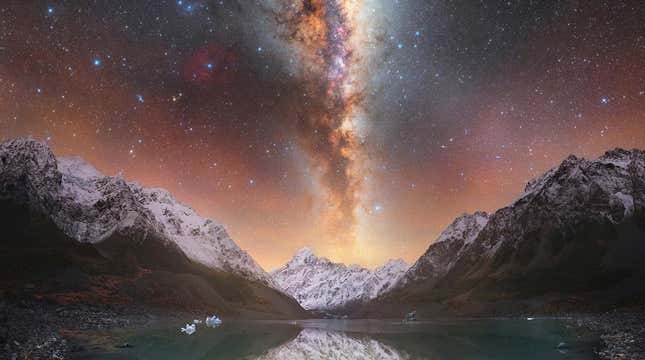
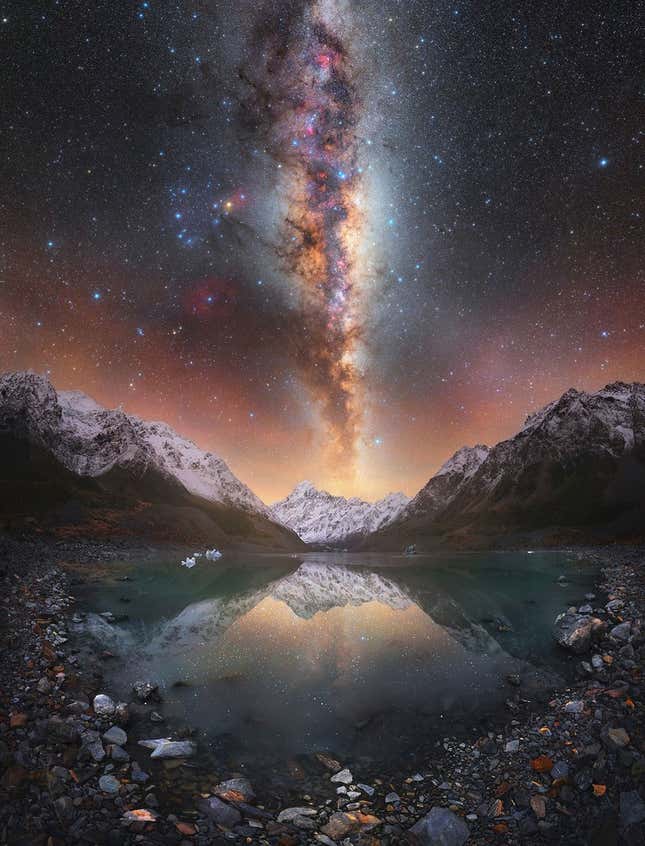
The Milky Way as seen above New Zealand’s highest mountain, Aoraki.
The Milky Way as seen above New Zealand’s highest mountain, Aoraki. Photo: Tom Rae

Our galaxy stretches across 100,000 light-years and contains somewhere between 100 to 400 billion stars. It appears in our night skies as a long, hazy strip of light littered with celestial objects. Photographers worldwide have been captivated by the sight of the Milky Way from Earth, capturing its incredible details in stunning high-contrast images.

Advertisement

Capture the Atlas, a travel photography blog, released the seventh edition of its Milky Way Photographer of the Year, a collection of the best 25 photographs of the galaxy that were captured over the past year. The 2024 collection features photographs taken from 15 different countries, including Australia, Spain, Bulgaria, Egypt, and Chile, and by photographers of 19 different nationalities.

The photos combine color and light to inspire wonder about the Milky Way—the galaxy that houses our star system near the edge of its spiral arms. Here are the 25 photographs for your viewing pleasure.

Image for article titled 25 Jaw Dropping Photos of the Milky Way Taken From Around the World
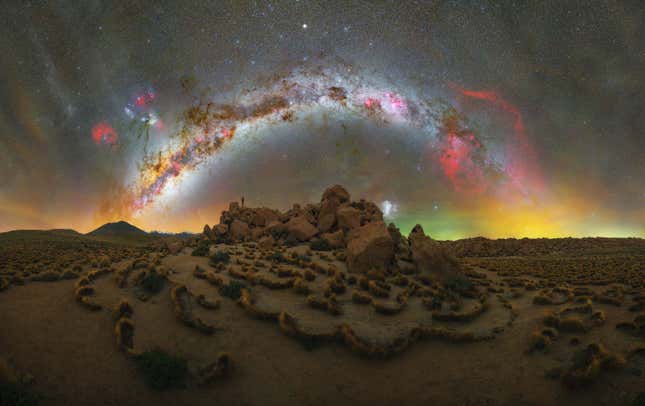
Photo: Lorenzo Ranieri

The Milky Way arching majestically above a plateau of the Atacama Desert in Chile.

Image for article titled 25 Jaw Dropping Photos of the Milky Way Taken From Around the World
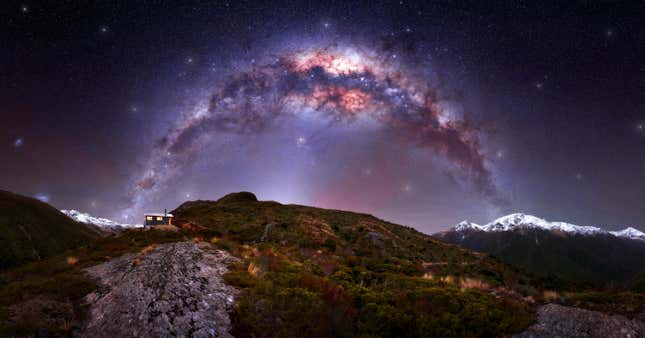
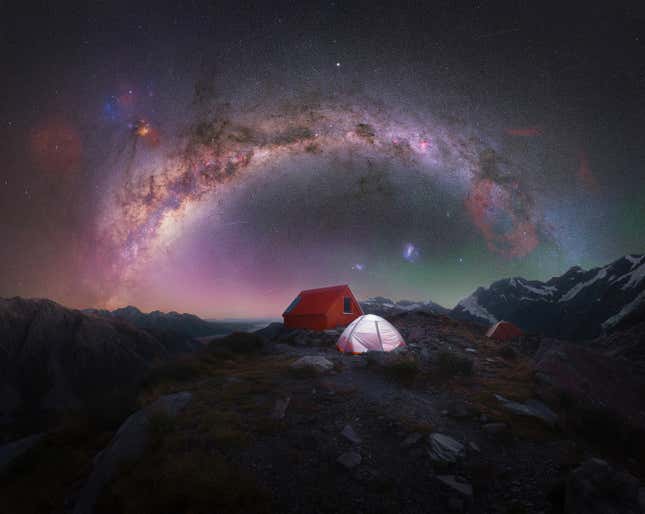
Photo: Rachel Roberts

The Milky Way shines over a hut nestled in the Southern Alps on New Zealand’s South Island, one of the darkest places on the planet.

Image for article titled 25 Jaw Dropping Photos of the Milky Way Taken From Around the World
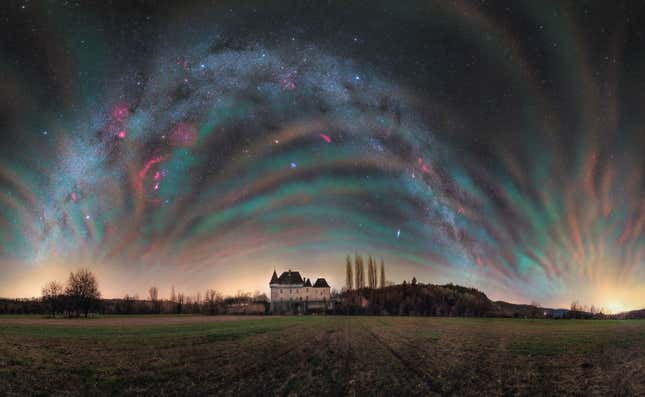
Photo: Julien Looten

The the Milky Way’s winter arc creates a magical spectacle of light above a medieval castle in France.

Image for article titled 25 Jaw Dropping Photos of the Milky Way Taken From Around the World
Photo: Yuri Beletsky

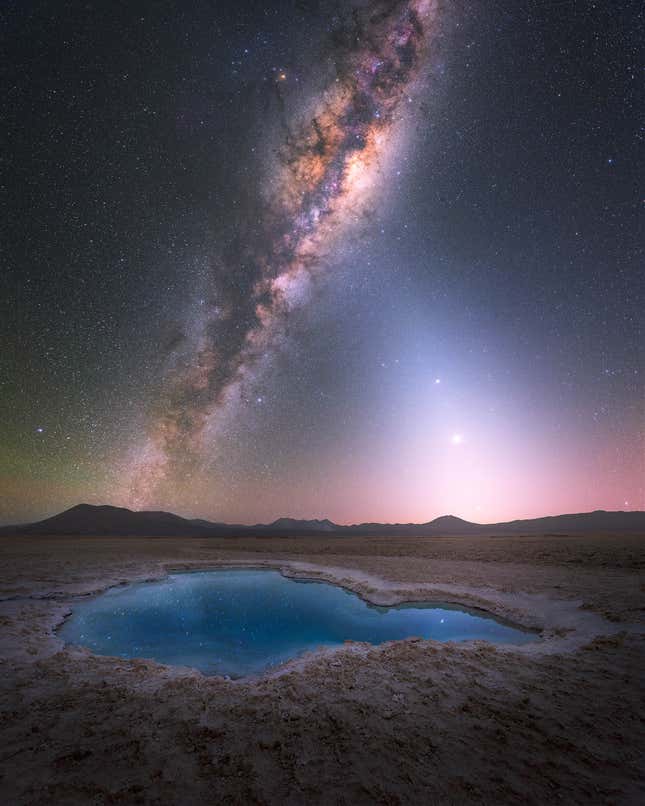
The galactic center shines above a remote site in the Atacama Desert in Chile.

Image for article titled 25 Jaw Dropping Photos of the Milky Way Taken From Around the World
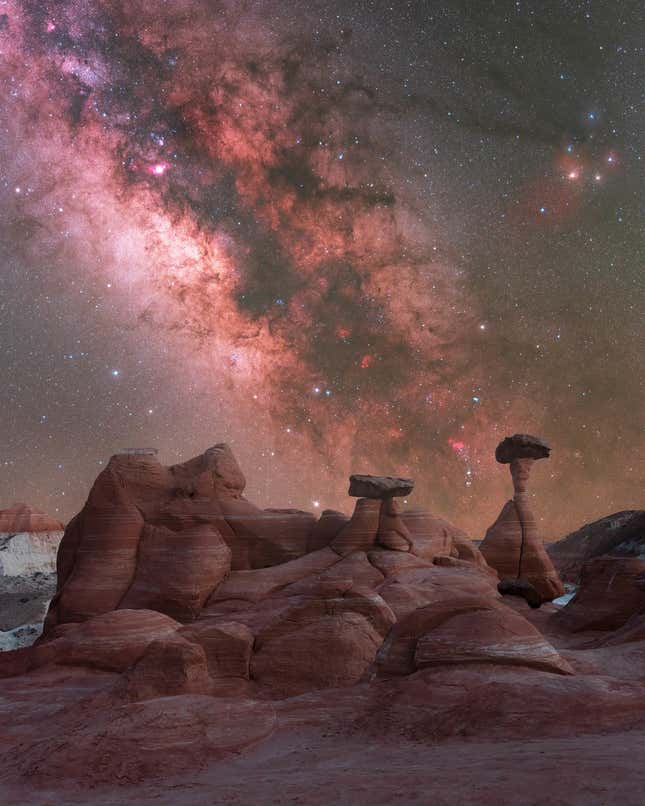
Photo: Marcin Zajac

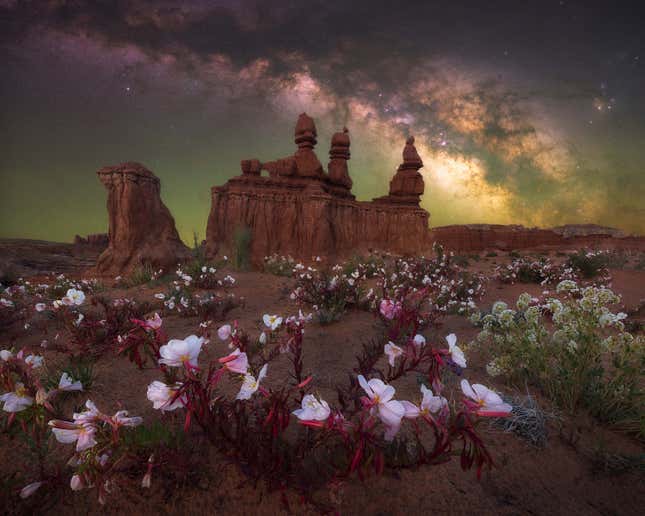
The Milky Way provides a dazzling backdrop to wildflowers growing at the Goblin Valley State Park in Utah.

Image for article titled 25 Jaw Dropping Photos of the Milky Way Taken From Around the World
Photo: Matej Mlakar

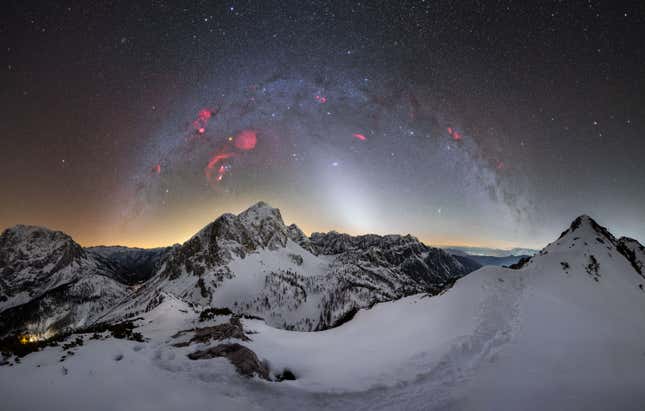
The Milky Way’s winter arch over Vršič Pass, a high mountain pass across the Julian Alps in northwestern Slovenia.

Image for article titled 25 Jaw Dropping Photos of the Milky Way Taken From Around the World
Photo: Rositsa Dimitrova

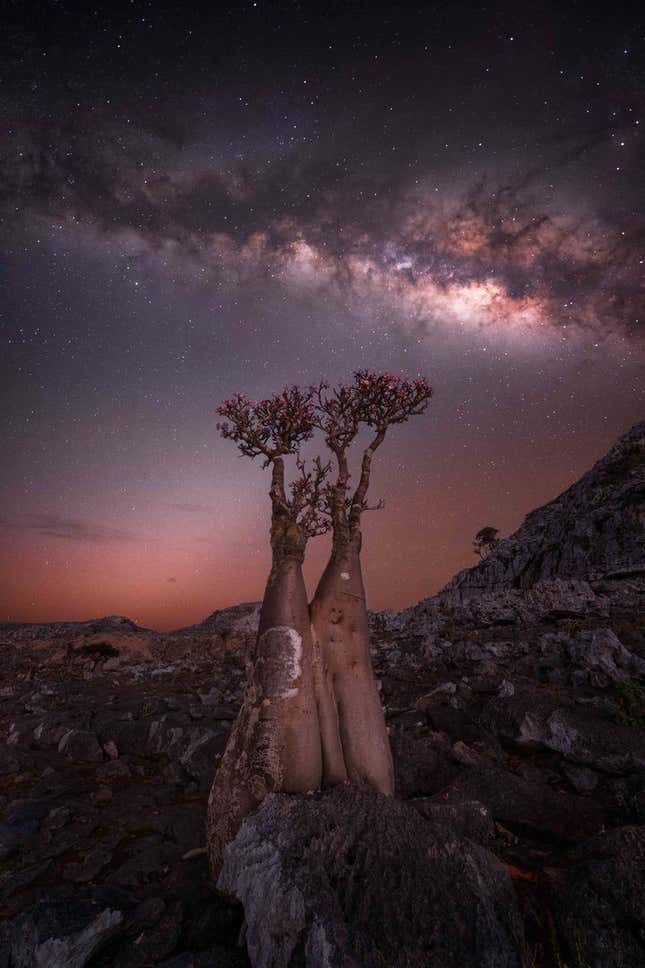
A view of the Milky Way captured from Socotra island in Yemen.

Image for article titled 25 Jaw Dropping Photos of the Milky Way Taken From Around the World
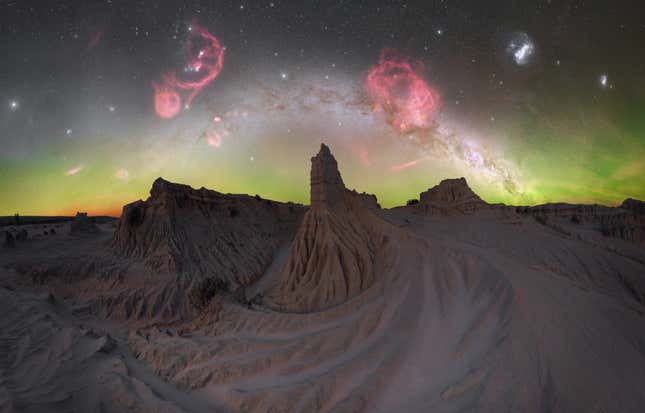
Photo: John Rutter

The Milky Way creates mystical shapes above the shores of dried-up Lake Mungo in Australia.

Image for article titled 25 Jaw Dropping Photos of the Milky Way Taken From Around the World
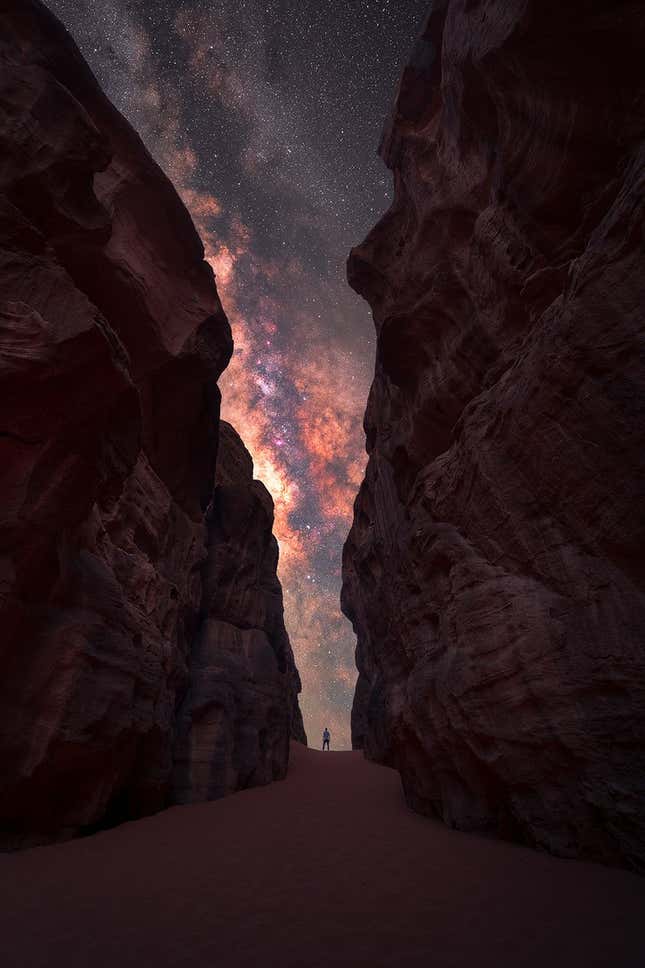
Photo: Mihail Minkov

The Milky Way peaks through the valley of the Wadi Rum Desert in Jordan.

Image for article titled 25 Jaw Dropping Photos of the Milky Way Taken From Around the World
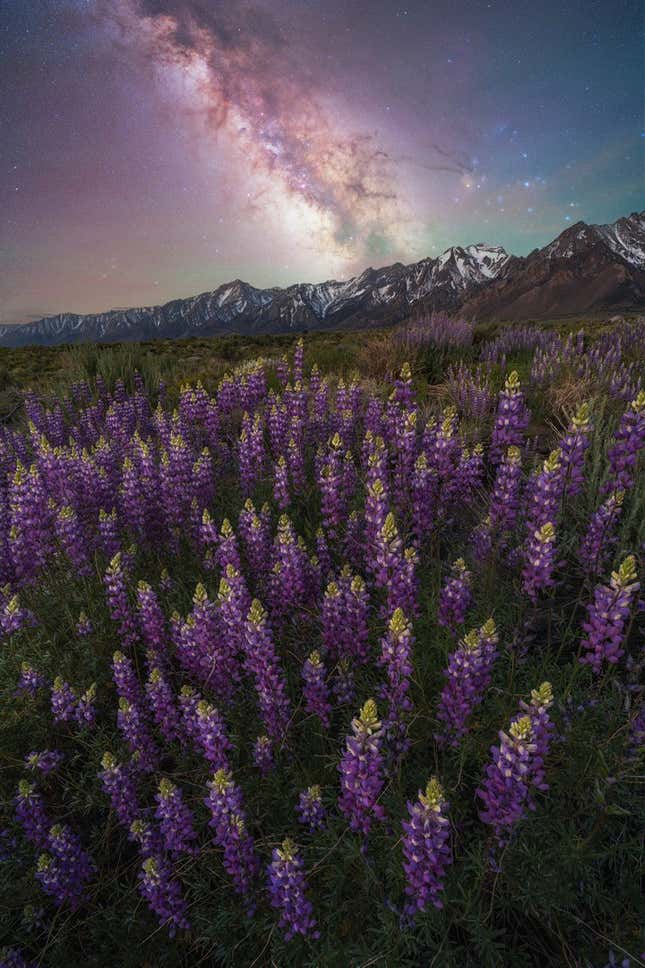
Photo: Brandt Ryder

Lupines in the foothills of the town of Lone Pine, California coming into bloom with a stretch of the Milky Way above.

Image for article titled 25 Jaw Dropping Photos of the Milky Way Taken From Around the World
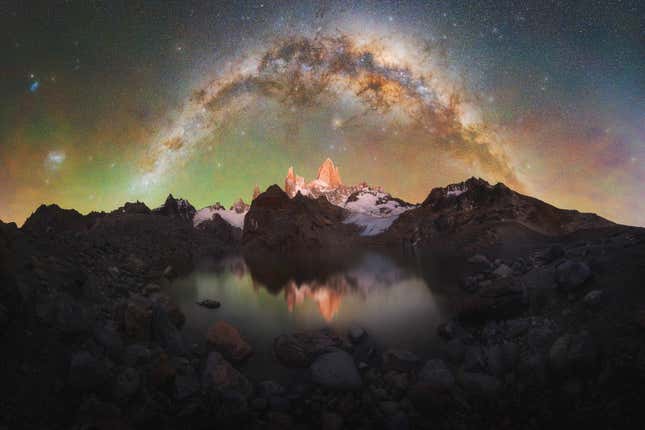
Photo: Francesco Dall’Olmo

The arch of the Milky Way framing Fitz Roy mountain in Laguna de los Tres, Patagonia, Argentina.

Image for article titled 25 Jaw Dropping Photos of the Milky Way Taken From Around the World
Photo: Stephanie Thi

A view of the Milky Way taken from Kanab, Utah.

Image for article titled 25 Jaw Dropping Photos of the Milky Way Taken From Around the World
Photo: Kavan Chay

The Aoraki/Mt Cook National Park in New Zealand shines under the starry light of the Milky Way.

Image for article titled 25 Jaw Dropping Photos of the Milky Way Taken From Around the World
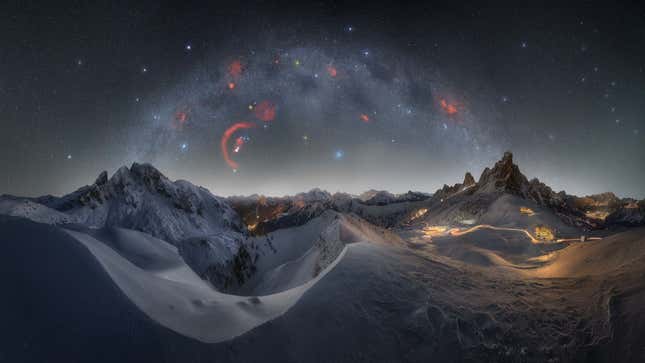
Photo: Andrea Curzi

The Milky Way shines above Passo Giau in Italy.

Image for article titled 25 Jaw Dropping Photos of the Milky Way Taken From Around the World
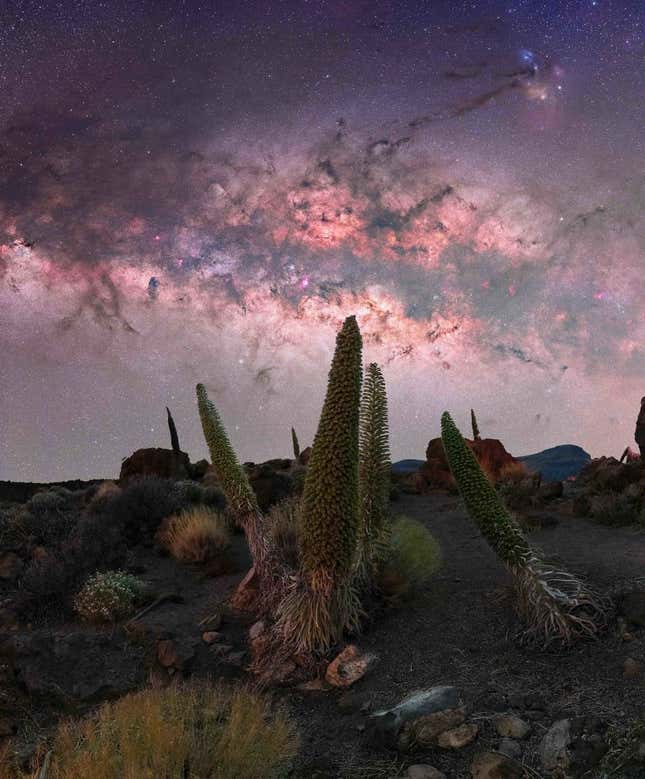
Photo: Maximilian Höfling

The magic of the Milky Way against the backdrop of Tenerife’s night sky in Spain.

Image for article titled 25 Jaw Dropping Photos of the Milky Way Taken From Around the World
Photo: Baillie Farley

The Australian outback at the Rainbow Valley Conservation Reserve shines under the arch of the Milky Way.

Image for article titled 25 Jaw Dropping Photos of the Milky Way Taken From Around the World
Photo: Benjamin Barakat

The roots of a Juniper tree point upwards towards the Milky Way in the night skies above Jebel Shams in Oman.

Image for article titled 25 Jaw Dropping Photos of the Milky Way Taken From Around the World
Photo: Kerry-Ann Lecky Hepburn

A shimmering lagoon in the Atacama Desert in Chile shines beneath the Milky Way.

Image for article titled 25 Jaw Dropping Photos of the Milky Way Taken From Around the World
Photo: Tervel Kutsev

An image of the Milky Way above Pirin Mountain in Bulgaria.

Image for article titled 25 Jaw Dropping Photos of the Milky Way Taken From Around the World
Photo: Jerry Zhang

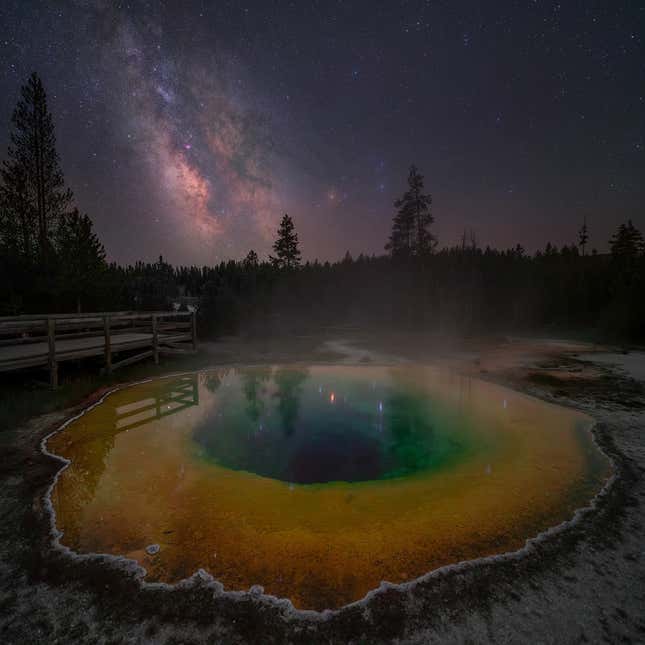
The Milky Way seen hovering above Morning Glory, a famous hot spring at Yellowstone National Park.

Image for article titled 25 Jaw Dropping Photos of the Milky Way Taken From Around the World
Photo: Cari Letelier

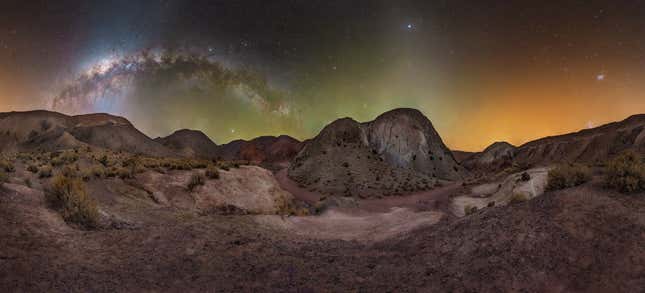
The Milky Way galaxy peeking above Rainbow Valley in Chile.

Image for article titled 25 Jaw Dropping Photos of the Milky Way Taken From Around the World
Photo: Hugo Valle

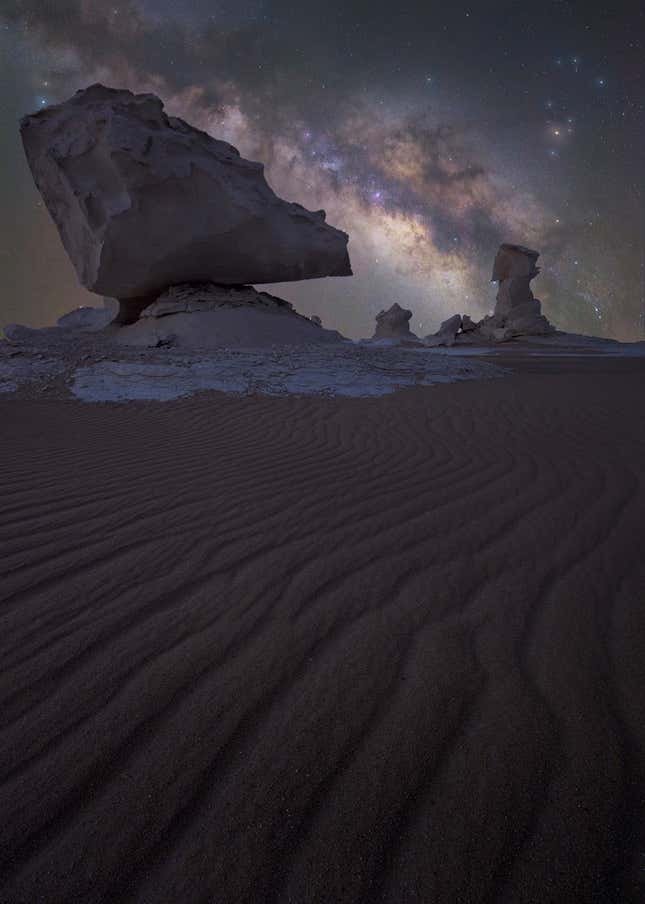
A strip of the Milky Way shines above the White Desert in Egypt.

Image for article titled 25 Jaw Dropping Photos of the Milky Way Taken From Around the World
Photo: Marc Rassel

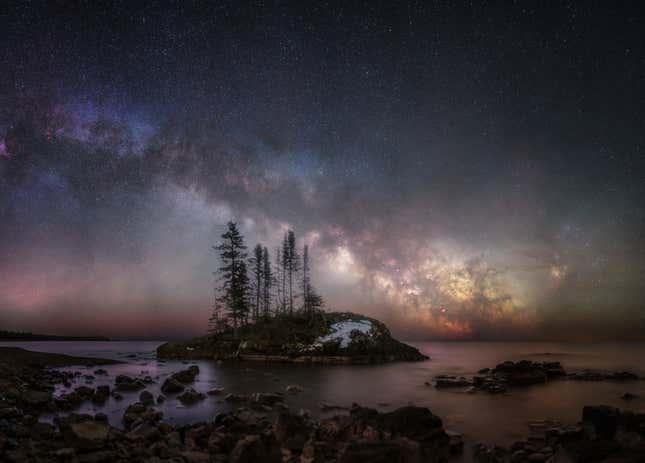
A view of the Milky Way emerging from Lake Superior in Minnesota.

Image for article titled 25 Jaw Dropping Photos of the Milky Way Taken From Around the World
Photo: Tom Rae

The Milky Way seemingly rising from New Zealand’s highest mountain, Aoraki/Mount Cook, on a winter night.

Image for article titled 25 Jaw Dropping Photos of the Milky Way Taken From Around the World
Photo: Alexander Forst

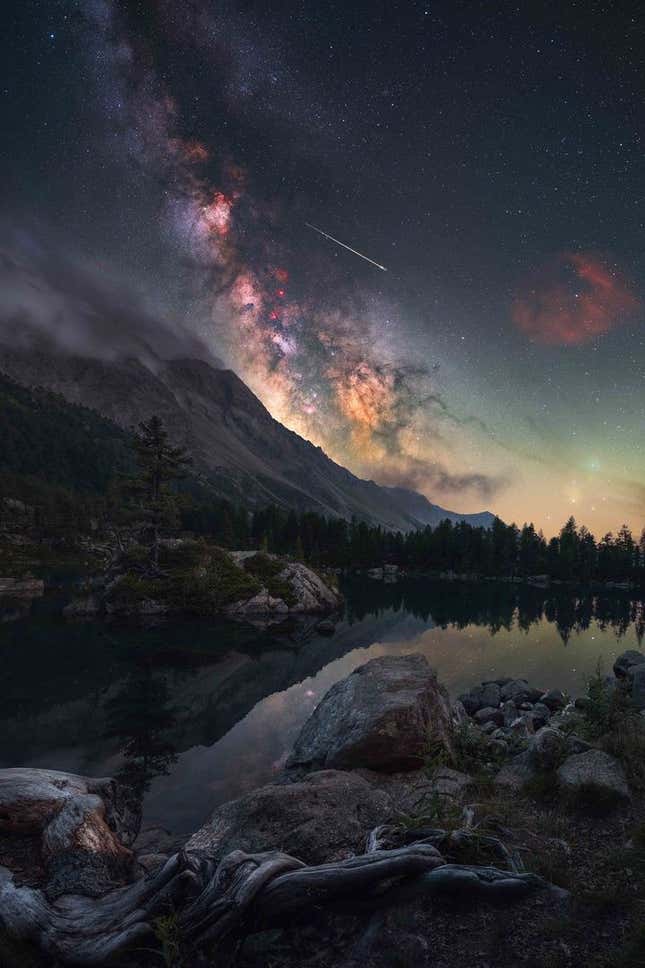
The Milky Way painted across the background of a haunting lake in Switzerland.

Milky Way Photographer Of The Year—See The Best Of The Winners

Milky Way Photographer Of The Year—See The Best Of The Winners
image

Travel photography website Capture the Atlas has unveiled the winners of its seventh Milky Way Photographer of the Year collection. Showcasing the top 25 photos of our galaxy, the collection comes at the peak time of the year to see and photograph the Milky Way on Earth.

Photographers of 19 nationalities have contributed images from 15 countries, from the U.S, Chile and Argentina to Australia, Oman and Jordan.

Dan Zafra, editor in chief at Capture The Atlas, selected the winners from 5,000 entries. The collection aims to inspire and share the beauty of the Milky Way.

The Milky Way is about 50,000 light-years across and contains over 100 billion stars. It’s visible to its greatest extent in May and June each year when its arc stretches across the sky at night. However, the “Milky Way season” is different for each hemisphere:

  • Northern hemisphere: February to October
  • Southern hemisphere: January to November

Here are a sample of the winning entries, with a brief description with each one:

‘Atmospheric Fireworks’

The winter Milky Way (above), as seen from the Dordogne, France, with Sirius and the constellation of Orion, Mars, the Pleiades, the California Nebula, Cassiopeia, the double cluster of Perseus, and the Andromeda galaxy.

Blooming Bottle Tree

Rositsa Dimitrova captured this stunning image (above) of the Milky Way behind a “bottle tree” on Socotra, an island in the Gulf of Aden off the coast of Somali, Yemen and Oman, under a Bortle 1 dark sky (the darkest there is).

‘Blue Lagoon

Noted astrophotographer Yuri Beletsky took this image (above) of the Milky Way’s center in the Atacama Desert in Chile.

‘Bluff Hut’

Rachel Roberts took this image (above) in Mungo River Valley, West Coast, New Zealand, in a region only accessible by hiking or a helicopter.

‘Lightning Lake’

Aoraki, Mount Cook National Park, New Zealand was the location for this stunning image (above) by Tom Rae.

‘Mother Juniper’

Benjamin Barakat took this image (above) of the Milky Way from Jebel Shams, Oman, the country’s highest mountain.

‘Sand Path

The White Desert of Egypt—a region of 2.8 million square kilometers that stretches from the west bank of the Nile into Libya—was the location for this incredible shot by Hugo Valle (above).

‘Saoseo’

Known for it’s very clear water, Lago di Saoseo in Graubuenden, Switzerland reflects the stars as photographed by Alexander Forst (above).

‘The Tajinaste’

The tajinaste flowers stars in this image (above) by Maximilian Höfling taken in Tenerife in the Canary Islands, an island beloved of astrophotographers for the clarity of its skies.

Tombolo Milky Way’

The Milky Way over Lake Superior, Minnesota, (above) as captured by Marc Rassel.

Wishing you clear skies and wide eyes.

Grumpy baby goes viral for hilarious newborn photoshoot

Grumpy baby goes viral for hilarious newborn photoshoot

CINCINNATI (WXIX/Gray News) – A newborn’s photoshoot is going viral for his grumpy facial expressions.

Drawing in Light Photography, owned by Cincinnati-based photographer Lauren Carson, posted photos of a 7-day-old baby boy that is melting the hearts of social media users.

Her Facebook post from May 15 has received nearly 150,000 reactions and more than 32,000 shares.

Carson, a former teacher, says she has been a professional photographer for 11 years.

In her decade of photographing newborns, she says no baby’s expressions compare to the ones she got from this little guy.

“I’ve been photographing newborns for a decade and have photographed hundreds of babies who have given me tons of great expressions,” Carson wrote on Facebook. “But none, and I mean NONE compare to the looks this sweet guy threw my way.”

Despite his funny faces, Carson wrote that the little guy was “a sweet little snuggle bug.”

Innovia Foundation looking for local photography talent

Innovia Foundation looking for local photography talent

SPOKANE, Wash. – Innovia Foundation is hosting its annual photo contest for local photographers in Eastern Washington and North Idaho.

The contest is for locals to submit their photos to support their favorite regional nonprofit organizations. 

The winner will receive a $1,000 grant to a 501(c)3 organization of their choice, a canvas print of their photograph and a feature on Innovia’s website. There will also be winners in each category that will receive a $200 grant as well. 

The categories open for submission are: 

  • People
  • Landscape/Wildlife
  • Education
  • Arts & Culture
  • Community
  • Nonprofit Mission in Action
  • Youth (open to photographers aged 0-17)  

The photo must be taken inside one of Innovia’s 20-county service areas which can be found here. 

Photographers are limited to 5 photos per entry, and submissions close on June 28. 

For more information on the contest and submission instructions click here. 

Grumpy-looking newborn’s photos go viral for Cincinnati photographer

Grumpy-looking newborn’s photos go viral for Cincinnati photographer

CINCINNATI (WXIX) – A newborn’s photoshoot is going viral for his grumpy facial expressions.

Lauren Carson’s Cincinnati-based Drawing in Light Photography posted photos of a 7-day-old baby boy that is melting the hearts of social media users.

Her Facebook post from May 15 has received more than 17,000 comments and 32,000 shares.

Carson, a former school teacher, says she has been a professional photographer for 11 years.

In her decade of photographing newborns, she says no baby’s expressions compare to the ones she got from this little fella.

“I’ve been photographing newborns for a decade and have photographed hundreds of babies who have given me tons of great expressions,” Carson wrote on Facebook. “But none, and I mean NONE compare to the looks this sweet guy threw my way.”

Despite his funny faces, Carson wrote that the little guy was “a sweet little snuggle bug.”

See a spelling or grammar error in our story? Please click here to report it.

Do you have a photo or video of a breaking news story? Send it to us here with a brief description.

Fstoppers Interviews Paige Vincent, Extreme Weather Photographer |

Fstoppers Interviews Paige Vincent, Extreme Weather Photographer |

The Great Plains offer some of the most extreme and jaw-dropping weather on Earth, and those who venture there with their camera are rewarded with some of the most unique and stunning images possible. We interviewed Paige Vincent, a photographer capturing those phenomena.

Introduction

Warning: storm chasing is extremely dangerous and should not be attempted by anyone without deep meteorology knowledge and experience. Do not attempt what you see in this article yourself.

For the past six years, Vincent has been passionately pursuing storm chasing. Initially, Vincent accompanied friends who were experienced storm chasers, taking on the role of passenger and navigator to safely get close enough to observe tornadoes. This experience allowed her to become well-acquainted with the road networks across the Plains. As a native of Texas, tornadoes had always instilled a sense of fear, yet they were also a source of fascination. After witnessing her first tornado, her obsession was solidified. We spoke with her about her work and experience. 

The Art of Storm Photography

Beyond the dramatic storm structure, what other elements do you look for to create compelling images (e.g., foreground interest, light, color, etc.)?

There’s not much to choose from as far as foreground in the plains, but if you can find a windmill, livestock, or the jackpot—an abandoned house—that’s all you need to add some perspective and scale to a storm. Sometimes I even leave chaser cars in the shot to tell more of a behind-the-scenes story.

How do you balance capturing the raw power of nature with artistic composition and visual storytelling in your storm photography?

You don’t have a ton of time to set up your ideal composition when chasing storms. It’s more of 1. park in a safe spot off the road, 2. grab your camera and run, 3. shoot and hope for the best! It is very fast-paced because these storms are moving at around 40–50 mph and you have to stay with them.

What post-processing techniques do you use to enhance your storm images while maintaining authenticity and realism?

What I love about storms is that they are so unique and eye-catching on their own that they don’t require much editing. Sometimes they are even the subject, background, and foreground of my shots! In my editing, I usually only have to bring my raws into Lightroom to enhance the contrast and clarity because when shooting supercells, what’s really interesting to me is all of the layers in the storm. The structure of each storm is much more complex than what you see with your naked eye.

Many storm chasers use time-lapse or video. How does your approach to still photography differ, and what unique challenges and rewards does it offer?

I love being able to look at the details in a shot from a single moment in time, to analyze the structure of what was really going on. I still record videos on my phone to capture the speed, wind, and strength of the storm, but photos have always been my favorite way to reflect and share moments with others.

Safety and Challenges

Storm chasing inherently involves risk. How do you prioritize safety while still pursuing captivating shots?

Safety ALWAYS comes first! No shot is more important than your life. I study the way a storm is moving and follow along at a safe distance beside the storm, never in front of it. You always have to keep in mind an exit route as well to escape if the situation takes a turn.

Have you ever faced a situation where you had to choose between capturing the perfect shot and prioritizing your safety? How did you navigate that decision?

Almost every chase. The road network in the plains is not always the best. There is a lot of farmland, meaning a lot of dirt roads. I drive a stock Subaru Outback, and it can do most of the roads pretty well, but if I see mud, I’m avoiding it at all costs. The last thing you want to do is get stuck in mud while a tornado is forming near you. A good way to ensure this doesn’t happen is to follow the recommended routes on Google/Apple Maps. They typically will follow paved roads, but it is also helpful to have chased in the plains for 6 years and to learn the road networks there in case you don’t have GPS.

Passion and Community

What was your favorite storm? Favorite story?

My favorite storm was April 22, 2022, in Badlands, South Dakota. I knew it was a risky storm to chase because it had a lower probability of producing versus a storm in Kansas and Texas the same day, but it paid off and produced one of the most beautiful supercells I’ve seen to date.

What initially drew you to storm chasing and photography, and how has your passion evolved over time?

I always used to sit on my patio with my sister and watch storms roll in. We loved watching the lightning and then counting the seconds until the thunder sounded. About seven years ago, I met some friends who were into storm chasing, so I started tagging along and got hooked! It wasn’t until a few years later that I finally purchased my own camera and started combining my love for photography and storm chasing.

How has storm chasing changed your perspective on nature, weather, and the world around us?

I am much more aware of how destructive nature can be and how many people are still unprepared for a storm. I love showing people the juxtaposition of how beautiful a storm can be even though it looks terrifying and destructive. The more you understand why a storm forms and how it moves, the more you respect it and can sit back and enjoy it.

What role does the storm chasing community play in your work, and how do you collaborate and share knowledge with fellow photographers?

The storm chasing community is pretty close-knit but has been rapidly growing due to social media in the last 5 years. I love that more people are aware of storm chasing and want to pursue it, but it is probably one of the more challenging hobbies to master. The storm chasing community is one of the most supportive as far as supporting each other’s work online and even helping a friend in need during a storm.

What are your future aspirations as a storm chaser photographer, and what message do you hope to convey through your work?

I would love for my work to be recognized on a broader scale and for more people to appreciate this niche hobby of chasing storms. I love that people have different opinions of the storms in my photos: some are in awe of the beauty and some are terrified, but I love bringing people into that moment and having them experience what I felt while capturing it.

Misconceptions and Technology

What are some common misconceptions about storm chasing and storm chaser photographers?

That we all drive tornado-proof cars! My Subaru has had a few cracks, a lot of hail dents, and one new windshield, but it cannot withstand a tornado! Haha.

How has technology (e.g., weather forecasting, communication, camera gear) impacted your approach to storm chasing photography?

I exclusively use my phone for radar and road mapping while I chase, and I’m not sure how chasers even 10 years ago used paper maps and old-school dial-up to look at radar! Technology has come so far and made it more available for anyone to learn how to chase.

Tell me more about Girls Who Chase.

Girls Who Chase is an amazing organization started by Jen Walton, who is also based here in Colorado! We realized there wasn’t a huge representation of women in the storm chasing community. The storm chasing community was pretty male-dominated when I started and you didn’t hear of many chasers who were women, so through GWC we are able to better connect and share the work and knowledge of women on a larger scale.

How do you navigate the business side of storm chasing photography, including licensing, prints, and other revenue streams?

I only do storm chasing as a hobby. I list my prints on my website for sale, but only because other people over the years have had interest in having them for themselves! I do it for the thrill and to capture amazing memories.

Anything to add?

I didn’t see anywhere this would make sense, but a fact I love is that a lot of storm chasers are CPR and First-Aid certified and because we are typically the first to a scene after a tornado hits, we stop to render aid before the paramedics are there.

KÜHL

Vincent was also featured in the new KÜHL clothing brand series “The Road Less Traveled.” You can watch her episode below:

[embedded content]

Conclusion

Vincent’s dedication to storm chasing and photography underscores the blend of art and science required to capture the raw power and beauty of nature. In a world driven by risk-taking for clicks her emphasis on the importance of respect and safety when pursuing such a dangerous passion is quite refreshing. Her work not only highlights the dramatic elegance of storms but also serves as a reminder of the awe-inspiring force of the natural world. You can see more of Vincent’s work and purchase prints on her website, and you can follow her on Instagram and Twitter.

All body images used with permission of Paige Vincent. Lead image by KÜHL and used with permission.