Photography

‘There were lots of parties here’: exhibition of Rauschenberg’s photographs opens at his former New York residence

‘There were lots of parties here’: exhibition of Rauschenberg’s photographs opens at his former New York residence

An exhibition of early and rarely seen photographs dating from 1949 to 1952 by the American artist Robert Rauschenberg went on show in his former home and studio at 381 Lafayette Street this week. The exhibition, organised by the Rauschenberg Foundation in collaboration with students from Hunter College, coincides with research being undertaken for the first volume in a series of online catalogues raisonné being published in 2025 to mark the centenary of the artist’s birth. The first volume covers the years 1948 to 1953 and will shine a light on Rauschenberg’s photographic practice.

David White, the senior curator at the Rauschenberg Foundation, notes how, early on, Rauschenberg “felt he had to choose between painting and photography”. The artist was known for incorporating a vast array of media in his work, but photography was his primary interest.

Rauschenberg’s studio is not open to the public but is viewable by appointment. Constructed in the 1800s, the building was previously owned by a Catholic orphanage and included a working chapel. When Rauschenberg purchased the building in 1965, he renovated the property but kept the chapel as a studio space.

“Bob was a very gregarious person; there were lots of parties here,” says White, who first met Rauschenberg while working for the New York dealer Leo Castelli. “The place was known as ‘Milton’s Hilton’ after all the people who used to stay here.” (Rauschenberg changed his name from Milton to Robert in 1947.)

In 1968, having discovered the benefits of working in a coastal environment, Rauschenberg bought a property on Captiva, an island in south Florida, and moved his official residence there—though he kept the New York studio. “He loved New York, he loved this building. His accountant kept saying ‘Why don’t you sell that white elephant?’, but he never wanted to,” White says.

The Captiva campus, which hosts an artist residency, was badly damaged by Hurricane Ian in 2022, but is due to reopen later this year.

Thin Line Fest arrives with music, film and photography exhibition

Thin Line Fest arrives with music, film and photography exhibition

Thin Line Fest, the longest-running film festival in Texas, returned to downtown Denton for its 17th year, hosting a city-wide range of performances and events from April 24-28. Five days of activities from two photography galleries, over 60 films and 85 bands were at the event. General admission to all events was free, but special bundles were also available at many price ranges.

The first day was welcomed with an opening reception at 6 p.m. on Wednesday at the UNT CoLab, showcasing submitted photography in categories “Site/Unseen“ and “Still life.“

Photography freshman Ryan Bigley had four photos on display at the CoLab.

“I heard about Thin Line from my professor.” Bigley said. “I decided to submit a couple of photos that I’ve taken over the past year in Denton, just exploring every little nook and cranny of this town.“

Just down the street from the CoLab, the music section of Thin Line started at the same time at Rubber Gloves Rehearsal Studios, bands playing until midnight that night. Different genres like metal and indie rock filled the venue, setting the tone of what type of bands would be playing. Over 150 people attended the first night of concerts.

The Campus Theatre also showed two feature films, each touching on current trending issues. The first film discussed the stigma around abortion across the country, and the second film discussed women and LGBTQ+ journalists in media coverage, both with Q&As at the end.

The second day of the festival started with another photo gallery at the Patterson-Appleton Arts Center at 4 p.m., showing photography in the categories “Time/space” and “Macro/micro.” In total, there were over 100 photographs submitted.

Filmmaker and photographer Erin Nicole Parisi said although she has been attending Thin Line for six years now, this is her first time having her work displayed at the photo contest. 

“Film is so collaborative,” said Parisi. “It’s really fun to celebrate everybody’s voice when you make a movie, but when it’s just your own piece of artwork, it’s so much of you and baring your soul.”

Parisi had more than five photos that made it into both galleries, her most well-known being a portrait of Frank Moka, the current drummer for Erykah Badu. 

Thursday had more concerts at more venues. Along with Rubber Gloves, Dan’s Silverleaf, Andy’s Bar and Steve’s Wine Bar. Friday and Saturday would also include performances at Harvest House.

Rock band Nip Slip had their performance Thursday night at Andy’s Bar. Lead singer and frontman Bowie Brae said they were excited to perform at Thin Line for the first time. 

“Thin Line was a blast, and the people putting it on were super helpful and very organized,” Brae said. “This is one of the best festivals we’ve performed for, and we hope to be part of it every year.” 

Nip Slip has performed at other festivals, like the Trans Pride Festival back in October, and performed at the Fry Street Festival.

The following days of the festival were even grander, with hundreds of people attending all the events. A worker at Rubber Gloves predicted around 500 people would be at their venue alone on Saturday. 

University alumna and Denton resident Miriam Perveen, who has been coming to Thin Line for four years, said she looks forward to the music at the festival.

“I am really looking forward to seeing the band Chat Pile on Friday night,” said Perveen. “Tonight [Wednesday], my friends are playing here at Rubber Gloves. They’re in a band called Skimp, and the band Strays. This is a good way to support local musicians, by coming out to these concerts.”

Thin Line’s goal is to combine different aspects of art and creativity, and they do this by hosting multiple events for various niches. They call the music portion the soundtrack to the festival, and the photographs fill the gaps in between.

There are also opportunities for creators to win awards with a ceremony held on Friday evening. People who had their films shown can win prizes from different categories, including Best Feature Documentary, Best Cinematic Vision, Best Student Documentary, Best Music Video and more. Photographers who had their work shown at the galleries also had a chance to win from each category. 

“I have all these friends who are amazing musicians, and we have such an incredible music scene in North Texas,” Parisi said. “This was a chance to support my friends, take photos of them performing and even have my own photos here. It brought me great joy to participate and be a part of this.”


Your Moment of Film Photography Zen: Wandering the Mojave Desert With

Your Moment of Film Photography Zen: Wandering the Mojave Desert With

Whether you’re shooting for fun or for work, in the rush of modern life it can be all too easy to lose sight of the joy of photography. In this short, meditative interlude with no words, there’s plenty of inspiration to be found in just watching another photographer enjoying their own photography.

To be a photographer is to be part of a wonderful community in which we can all learn and be inspired by the work of others. I particularly enjoy “behind the scenes” videos in which a photographer or filmmaker offers a glimpse into their creative process and shares some of their results. Whether these shared experiences are educational or just pure inspiration, they can show us new directions and plant the seeds in our minds of our own future creative pursuits.

I already introduced Ben Staley in a previous article, and even if his name is not familiar to you, you have almost certainly seen his work. Ben is an award-winning videographer and filmmaker whose stunning imagery has been featured on popular TV shows like “Deadliest Catch” and “Ice Road Truckers”. Ben also happens to be an avid (and excellent) still photographer, and regularly features his still photography work on his YouTube channel “Adventure & Art”.

In this meditative and beautifully produced video with no commentary, Ben shares his experience photographing the Mojave desert with his Leica M6 loaded with Ilford XP2 black and white film. There’s a wonderfully leisurely and contemplative vibe to this scene. Ben seems to be in no hurry and shooting with no agenda other than the pure joy of photography for photography’s sake. I also really appreciate his choice not to add any commentary to this video since the beautiful black and white images he produces speak for themselves.

So why not pour yourself another cup of your favorite beverage, kick back, enjoy, and be inspired!

KILL PHOTOGRAPHER BOOK

KILL PHOTOGRAPHER BOOK
image

Editors: This is a Mandatory Photo Kill for the photos slugged PHOTOGRAPHER BOOK 3, 6 and 8, transmitted on Monday, April 29, 2024, as XNYT0489, XNYT0288 and XNYT0820, respectively. The photos are black-and-white images depicting celebrity guests at various parties in the 1980s and 1990s. The images moved inadvertently on the network. They must not be used and should be removed from any server or access point.

Seeing the sound of Blue Note

Seeing the sound of Blue Note
Herbie Hancock at “Inventions & Dimensions” recording session, Van Gelder Studio, Englewood Cliffs, N.J., Aug. 30, 1963. Photo by Francis Wolff.Blue Note Records

A great record label is about more than music. Yes, it’s about the quality of that music, the character of that music, the sound of that music. Yet it’s also about things beyond what’s heard. A great record label often has a look. It always has a style and a sensibility and, sometimes, when the planets line up, it can even have a mystique.

From left: Alfred Lion, Dexter Gordon, and Francis Wolff, outside Van Gelder Studio, Englewood Cliffs, N.J., May 5, 1962. Photo by Rudy Van Gelder.Blue Note Records

On all of those counts, Blue Note, the greatest of all jazz labels, and still going strong 85 years after its founding, more than qualifies.

Look, style, and mystique — there’s even a bit of music, too — are very much to be found in “The All Seeing Eye: Blue Note Records Through the Lens of Francis Wolff.” The show is at the Folk Americana Roots Hall of Fame, at the Boch Center’s Wang Theatre. A closing date has yet to be announced. Maybe it will run forever? Nothing wrong with that.

Wolff (1907-71) was a Jewish refugee from Nazi Germany. He’d been childhood friends with Alfred Lion (1908-87). Lion was also Jewish and fled the Nazis. Both men were jazz enthusiasts. More than that, they were highly discerning and eclectic in their enthusiasm. Blue Note, the record label Lion founded when he reached New York, would reflect those qualities. When Lion was drafted, Wolff ran the company for him. He stayed on with Blue Note, as a senior executive, occasional producer, and house photographer. In that last role he took some 20,000 photographs, a matchless one-man visual archive of jazz.

John Coltrane at “Blue Train” recording session, Van Gelder Studio, Hackensack, N.J., Sept. 15, 1957. Photo by Francis Wolff.Blue Note Records

“Eye” consists of nearly four dozen photographs, almost all of them by Wolff, ranging in date from 1941 to 1968. The prints were newly struck for the show. A few are familiar, such as the portrait of John Coltrane that is on the cover of “Blue Train.” There the portrait is cropped and tinged blue, an example of the use Wolff’s photos were put to by the label’s art director, Reid Miles. All but four of the photos in the show are black and white. In our color-dominated visual world, black and white now has two effects. It seems both otherworldly yet also more realistic and serious (your definition of those two words is as good as mine). That those two effects are ostensibly opposed makes the photographs all the more striking.

McCoy Tyner at “Tender Moments” recording session, Van Gelder Studio, Englewood Cliffs, N.J., Dec. 1, 1967. Photo by Francis Wolff.Blue Note Records

There are also 13 album covers, several blown-up contact sheets, and two videos. One of them is an interview with Don Was, the label’s current head. The other is Art Blakey and the Jazz Messengers in concert, performing “Moanin’.” The sound fills the two galleries, and it’s as irresistible as the show: mood as subset of mystique. There’s also a vintage Rolleiflex, Wolff’s preferred camera, though the one on display wasn’t his, and a copy of the label’s first press release. Publicity is to record labels as reeds are to saxophones.

Many factors went into making Blue Note … Blue Note. There were the musicians, of course. The label started out recording traditional jazz. The show includes photographs of Sidney Bechet and Meade Lux Lewis. (Is there a better jazz name than “Meade Lux Lewis”?) It recorded bebop early on. Look for Thelonious Monk and Bud Powell here. Later on it dabbled in the avant-garde. Note the presence of Ornette Coleman, Eric Dolphy, and Cecil Taylor. The heart of Blue Note was hard bop and beyond: Miles Davis, Sonny Rollins (both only briefly, but memorably, on the label), Blakey and the Messengers, Horace Silver, Wayne Shorter, Herbie Hancock, Lee Morgan, Freddie Hubbard, Joe Henderson. All are in “Eye.”

Rudy Van Gelder at Van Gelder Studio, Hackensack, N.J., early 1950s. Photo by Francis Wolff.Blue Note Records

Blue Note’s heyday coincided with the arrival of engineer Rudy Van Gelder. The sound that he — well, what’s the right verb: captured? created? forged? composed? That last one may be best. Technique as artistry is what Van Gelder practiced. Heard today, Blue Note recordings of the ‘50s and ‘60s are aurally unmistakable: full, crisp, spacious, robust, immediate, gleaming, though without ever sounding cold or metallic. The show includes a photo of a bow-tied Van Gelder, surrounded by recording equipment, looking like a one-man band with his collection of instruments.

The heyday also coincided with the tenure of art director Miles. He designed more than 500 covers for the label. Several are in the Museum of Modern Art’s permanent collection. His bold, unfussy use of photographs, illustration, typefaces, and layouts ensured that Blue Note albums look every bit as cool and distinctive as the music on them sounds.

Cover design mock-up for Joe Henderson’s “Mode for Joe,” with handwritten notes by designer Reid Miles. Photos by Francis Wolff.Blue Note Records

The most important component of those designs was Wolff’s photographs, the Coltrane being the best known of many examples. Wolff had been a professional photographer in Berlin, so he wasn’t just a privileged amateur given entrée to Van Gelder’s studio. The vibraphonist and Blue Note artist Bobby Hutcherson described Lion and Wolff as being “more like jazz musicians than record executives. They loved to hang out and have a great time. They loved the music and had a real feel for it.”

Wayne Shorter at Lee Morgan “Search for the New Land” recording session, Van Gelder Studio, Englewood Cliffs, N.J., Feb. 15, 1964.Blue Note Records

That feel is everywhere apparent in Wolff’s photographs. There have been other very good jazz photographers: Herman Leonard, William Claxton, William P. Gottlieb, Chuck Stewart. Milt Hinton was himself a very good jazz musician. Lee Friedlander, who turns 90 in July, would be in any serious discussion of who’s the greatest living photographer. He worked for Atlantic in the ‘50s and ‘60s. Wolff differed from them because he was an insider without himself being a participant. It’s in the nature of cusps to create camera-friendly conditions.

Feel is indefinable. Other aspects of Wolff’s work are quite specific. The Rolleiflex produces square images, just the thing for an LP cover. It also has a twin lens, meaning Wolff didn’t need to interpose the camera between his face and his subjects. As he wandered through Van Gelder’s studio, taking pictures, the process would seem less formal than with a single-lens reflex camera. Wander is the right word. There’s nothing formal about these photographs, which is part of their sense of immediacy. Arranging lighting setups would have undercut that.

Grant Green “Standards” rehearsal – New York, Aug. 1961. Photo by Francis Wolff.Blue Note Records

Worse, it might have distracted the musicians. Wolff made a point of not shooting while they were actually recording, only as they rehearsed and kibitzed. Instead, he used a handheld flash. “He’d hold the camera in his left hand,” Van Gelder later recalled, “with the flash held up in his right — Statue of Liberty style.” The use of flash accounts for the consistent velvety black backgrounds in the studio shots. That background can make for fabulous contrasts, as with the plume of cigarette smoke exhaled by Grant Green. (Boy, those guys smoked a lot.) It also ensures the viewer’s attention is wholly on the subject, and that subject is accorded a visual status within the frame that a Habsburg monarch painted by Velázquez might have envied.

“We established a style,” Wolff once said, “including recordings, pressings, and covers. The details made the difference.” Add understatement to the list of things that make classic Blue Note so special.

The label had no more important contributor over the past five decades than Michael Cuscuna. He oversaw numerous reissues, dug up countless lost sessions in the vaults, cofounded Mosaic Records (which reissued many earlier Blue Note releases in impeccable box sets), and presided over the Blue Note photography collection. Cuscuna died last month, at 75. Although not organized for that purpose, “The All Seeing Eye” might be considered a tribute to him.

THE ALL SEEING EYE: Blue Note Records Through the Lens of Francis Wolff

At the Folk Americana Roots Hall of Fame, Boch Center Wang Theatre. Ongoing. www.folkamericanarootshalloffame.org


Mark Feeney can be reached at mark.feeney@globe.com.

Michiana Chronicles: On intimacy in translation and photography

Michiana Chronicles: On intimacy in translation and photography
image

My creative expressions of choice for a few years now have been literary translation and photography. While these two artistic practices may not appear to have much in common, in my mind, they are joined at the hip as deliberate strangers to the author’s blank page and the artist’s empty canvas. Indeed, unlike other forms of creative writing and arts which often partake in the myth of absolute originality, both translation and photography trumpet their unoriginal beginnings and derivative finales. They ostensibly emerge from and insist on remaining an integral part of the source of their attention. To phrase things more concretely, the already fully written pages of an original text are translation’s jumping-off point and place of landing, while the pre-existing places and humans of the whole wide world in light and dark are photography’s sole elemental canvas. In that respect, translation and photography embrace unoriginality as essential to their creative labor. They begin and end by pointing to the source of their attention and, to a lesser extent, to its transformation. In so doing, they center on creativity as an expression of intimacy with a source page, place, or person. As a translator and photographer, all I know to do and all I want to do is embrace these expressions of intimacy with my own toolset through a lens of curiosity, momentary stillness, and an eye for the chiaroscuro of attunement and insight.

Although, in all honesty, it was not always like this. “Blank-page” creative expressions, such as poetry, and short-story writing in my first language, French, were my main ecstatic spaces from a very young age. And then, I immigrated. Multiple times. The making of poetry and prose became the translating of poetry and prose. This puzzled my family as well as my friends in Provence, who enquired: “Are you not writing anymore? Why give away the power of your voice to someone else’s creative project?” I replied: “Giving is a creative act, is it not? So why not create in the flagrant space of highly attentive and receptive giving that is translation?” Still, I understood what they meant. For them – and for many – the creative practice of translation is a generous, but suspicious exercise in self-effacement. Not a giving, but a giving up. Understandably, my siblings and friends were concerned that immigration had caused me to occupy less space (including on the page), or to occupy space exclusively when it was visibly shared. They interpreted my new initials as a first-generation immigrant and married woman, AMP, as a manifestation of the recent maladaptive leanings of my creative skills: I was now amplifying other people’s voices outside of their cultural spheres of origin instead of honing my own. And… oui, they were right in a way. Who is not humbled by immigration? By life itself?

But the truth is, what they consider the perplexingly tight, and compromised space of creative expression in translation is, to me, one of the most spacious and essential of all. The same goes for photography. Creativity in translation and photography primarily rises from a dexterity with one’s skills, as well as a heightened form of intimacy with the content of their source material. Intimacy in this context is not only a closeness, an insightful knowing, an attunement, and a sense of respect. It is also the artist’s willingness to be moved by what they sense and their ability to let this attuned intuition emerge without compromising the integrity of what they see. It’s not a giving nor a giving up. It’s a being-with. What differentiates translation and photography from other art forms, and one of the reasons why they have my heart, lies in that the expression of this intimacy, as a creative outcome, is the focus of the translated page and photograph. There is no need for more. Here, the artists resolve to linger in the process of being touched and touching back without feeling the urge to exit the very spaces of resonance that drew them close in the first place. This intimacy, this intense focus on the source and transformative process of being moved, is not only a way of showing up at the creative table, it is a way of being. The intended outcome here is not to birth a signature style, let alone to claim a body of work, but simply to share a creative circle within the layered event of a being-with.

For Michiana Chronicles this is Anne Magnan-Park. To the inimitable Jean Magnan who would be 84 today. The light and dark of your layered silences are the source of my immersive lingerings. Be well.

Music: Pablo Neruda’s “Siempre”

How Photographer Platon Captures the Power of Everyday Heroes

How Photographer Platon Captures the Power of Everyday Heroes

Platon proudly calls himself a cultural provocateur. While other mononymous artists like Bono or Madonna use music to provoke, Platon communicates through photography. Photographs, he argues, are only effective if they “make you stop in your tracks to think about the times we’re living in”—they should “choke like mustard gas.” A professional photographer since the late ’90s, Platon has consistently applied this approach to his work creating images of boldface names across every sector, including President Barack Obama, Serena Williams, Prince, Mark Zuckerberg, Muammar Gaddafi, and President Vladimir Putin. His images have appeared on more than 25 TIME magazine covers.

image

In 2010, an assignment came from Human Rights Watch that opened Platon’s eyes to another kind of story to tell. He was asked to travel to Burma (now Myanmar) to help bring awareness to the toll of the civil war by photographing everyday heroes. He would be paid nothing, he would have to leave his young family, and his life would be in danger. Even so, he took the job. When he arrived, Platon immediately felt out of his element. But understanding that the subjects were counting on him to take their photographs and share their stories gave him a sense of responsibility. He remembers thinking: “I’ll roll up my sleeves, I’ll get to work, and I’ll photograph them the way I shoot TIME covers—powerful, in your face, unapologetically defiant.”

Image from The Defenders by Platon

Throughout the process, Platon saw that his subjects projected many of the same qualities—courage, leadership, resilience—as the high-profile figures he was so used to shooting. He became motivated to show through his photographs that the term “powerful leader” does not exclusively apply to those with cultural or institutional power. The greatest trail blazers, he observed, are often ordinary people who rise up against the odds to fight for something bigger than themselves.

Platon’s new book, The Defenders: Heroes of the Fight for Global Human Rights, is a visual commemoration of powerful figures around the world. The book, weighing in at nearly 9.5 pounds and 560 pages, weaves together images of everyday and high-profile leaders. It encourages the viewer to embrace the definition of power in all its forms, with a focus on amplifying the voices of those fighting for a more just world. Platon’s hope is that the book will embolden and inspire the next generation of human rights activists. After all, he says, “Real power is not to be kept protected. It is to be shared.”

Image from The Defenders by Platon
” data-credit=”Platon” data-sizes=”(max-width: 768px) 90vw, (max-width: 1024px) 75vw, (max-width: 1280px) 55vw, 800px”>Image from The Defenders by Platon
Image from The Defenders by Platon

Nye & Company Auctioneers will hold two important online-only photography auctions on Wednesday, May 15th, at 10 am EDT

Nye & Company Auctioneers will hold two important online-only photography auctions on Wednesday, May 15th, at 10 am EDT
Gelatin silver print by Valdir Cruz, (Brazilian, b. 1954), titled Gypsy Woman I.

Gelatin silver print by Valdir Cruz, (Brazilian, b. 1954), titled Gypsy Woman I.

Photograph by Flip Schulke (1930-2008), titled Muhammad Ali Underwater at the Sir John Hotel Pool.

Photograph by Flip Schulke (1930-2008), titled Muhammad Ali Underwater at the Sir John Hotel Pool.

Halftone print by Alfred Stieglitz (American, 1864-1946), of the artist Georgia O'Keeffe.

Halftone print by Alfred Stieglitz (American, 1864-1946), of the artist Georgia O’Keeffe.

Silver gelatin photograph by Ansel Adams (American, 1902-1984), titled Two Skiers, stamped “Photographed in Yosemite by Ansel Adams” on verso.

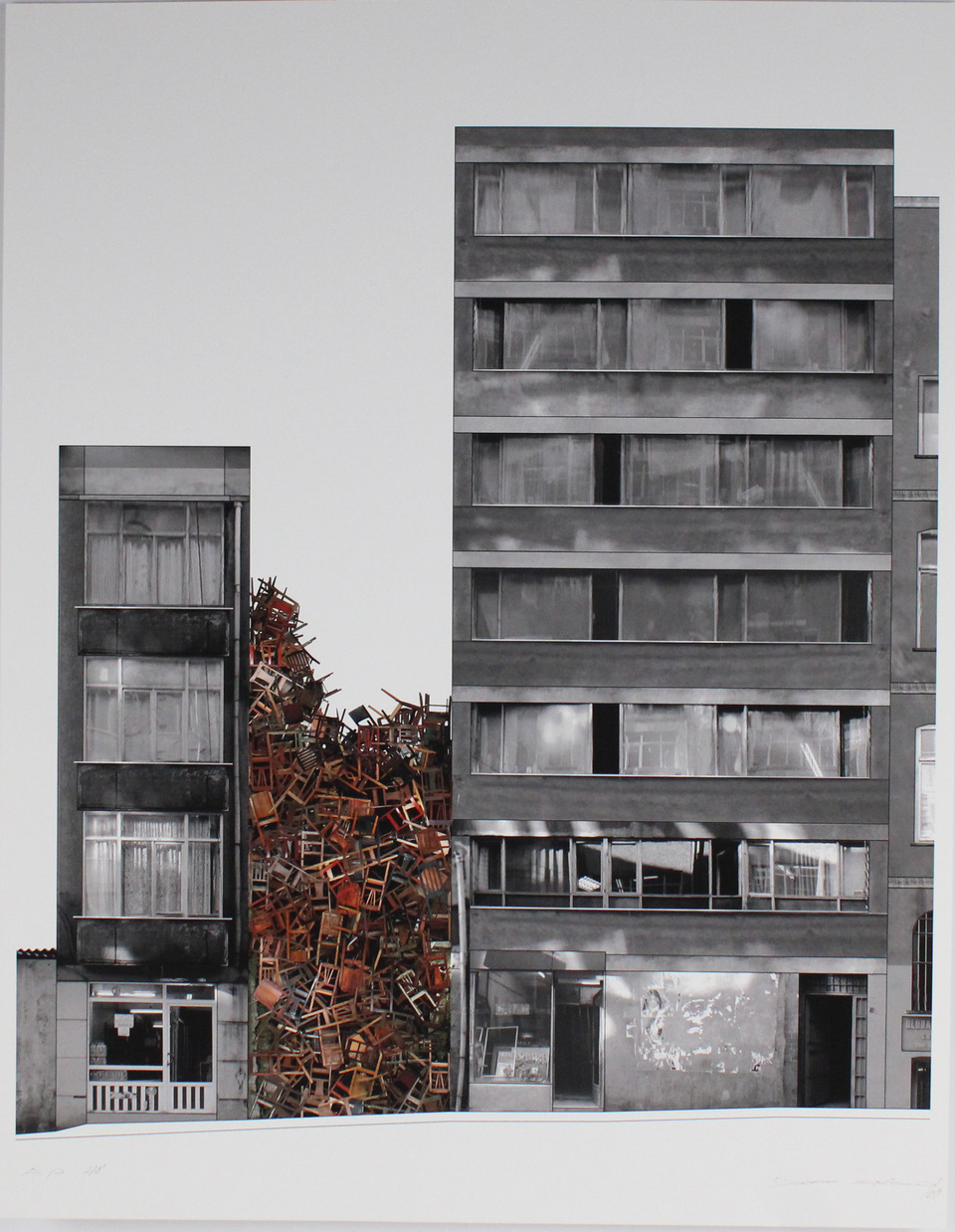
Doris Salcedo (Columbian, b. 1958), Istanbul Project I, Piezo-Pigment, 2003, Edition 8 of 8 AP, on Hahnemuhle German etching paper.

Doris Salcedo (Columbian, b. 1958), Istanbul Project I, Piezo-Pigment, 2003, Edition 8 of 8 AP, on Hahnemuhle German etching paper.

The Wednesday auction will begin at 10 am Eastern for the Photographer’s Lens Collection and at 2 pm Eastern for the Various Owner, Photographs sale.

BLOOMFIELD, NJ, UNITED STATES, May 2, 2024 /EINPresswire.com/ — Nye & Company Auctioneers will hold two online-only photography sales on Wednesday, May 15th, starting at 10 am Eastern time, with The Photographer’s Lens; A Collection of Images auction, featuring about 200 lots of contemporary photography from a private New York City and Ibiza, Spain collection; followed by a Various Owners Photographs auction at 2 pm Eastern, featuring over 100 lots of traditional and contemporary photography.

The single-owner Photographer’s Lens; A Collection of Images sale features a variety of contemporary photography from artists across the globe. The captured images will be sure to delight even the most seasoned and scrupulous collector, dealer and institution alike.

The auction includes several well-known and museum collected photographers from across Europe, South America and the Middle East – artists such as Tono Stano, William Ropp, Philippe Pache, Didier Ben LouLou, Valdir Cruz, Virgill Brill, Lynn Bianchi, Slim Aarons, Houshyar Kashani, Mario Cravo Neto, George Silk, Flip Schulke and John Rooney.

Highlights include works from the Brazilian artist Valdir Cruz. Gypsy Woman I and Girl from Mokarita are both striking images that seem to portray the heart and soul of the sitter. John Rooney, George Silk and Flip Schulke have all captured the magic of Muhammad Ali in their photographs. Somehow, they all managed to capture lightning in a bottle.

Israeli-born artist Didier Ben LouLou has managed to depict the people of Israel and illustrated some of the struggles they face and the hardship of the landscape. This is especially poignant relative to what has been happening as of recent. His use of the Fresson printing technique is incredibly rare and difficult.

Tono Stano, the Slovakian-born photographer, has masterfully portrayed the beauty and sculpture of the human body in his works. The interplay of light and shape create visually exciting images. The American photographer, Lynn Bianchi, also captures the human form within a more Classical context. Her use of the gelatin silver print with a gold wash serves to deliver a warm and almost retro look to her works.

The Various Owner Photographs sale has a nice mix of both traditional and contemporary photography. Artists represented in the sale include Ansel Adams, Alfred Stieglitz, Roman Loranc, Tom Millea, Doris Salcedo, Jay DeFeo and others.

The Alfred Stieglitz picture is a portrait of famed painter Georgia O’Keeffe. This striking image captures the very essence and soul of the artist in a stoic photograph. Not to be outdone is a terrific photograph by the celebrated photographer Ansel Adams. His image of two skiers in the glades is a perfect balance of light, shadow and atmosphere.

Following in the footsteps of Adams, Roman Loranc’s Western style landscapes are visually stimulating and transformative. His use of gelatin silver prints is a time-honored tradition.

For more contemporary photographs, Doris Salcedo, Willie Cole and Jennifer Bolande are all represented with a variety of c-prints, inkjet and pigment prints. Salcedo does a masterful job of capturing the urban landscape of Istanbul in her series of works, while Willie Cole uses the c-print to capture his modern interpretations of objects.

Real time Internet bidding and absentee bidding will be provided by LiveAuctioneers.com, Invaluable.com, Bidsquare.com, BidSpirit.com and the Nye & Company website. Telephone bidding will also be available on a limited basis.

People can bid in absentia and online. An online preview is being held from May 1st thru May 15th at the abovementioned websites. Anyone looking for additional images, condition reports or info about an object is invited to visit the Nye & Company website (nyeandcompany.com) or send an email to info@nyeandcompany.com.

For more information about Nye & Company Auctioneers and the two online-only photography auctions planned for Wednesday, May 15th, beginning at 10 am Eastern time, please visit www.nyeandcompany.com, www.bidspirit.com, www.bidsquare.com or www.invaluable.com. Updates are posted frequently. The full color catalog will be available to viewed online shortly.

# # #

Andrew Holter
Nye & Company Auctioneers
+1 973-984-6900
email us here

image