Photography

Glenn Baglo, longtime Vancouver Sun photographer, dead at 75

Glenn Baglo, longtime Vancouver Sun photographer, dead at 75

Glenn Baglo’s gruff exterior hid his artistic spirit, and mediocrity exasperated him. Pete McMartin pays tribute to longtime Vancouver Sun photographer Glenn Baglo, who died Wednesday at the age of 75.

Article content

On Wednesday night, Vancouver Sun photographer Glenn Baglo died in Lions Gate Hospital of idiopathic pulmonary fibrosis. He was 75.

Given the relative anonymity news photographers work under, most Sun readers will not recognize his name. This is a shame, because during his 42-year-long career at The Sun, Baglo won two National Newspaper Awards, a Jack Webster Award, and amassed a portfolio of photographs that made him, in my opinion, not just the best news photographer at The Vancouver Sun but the best in Canada.

Advertisement 2

Story continues below

This advertisement has not loaded yet, but your article continues below.

Article content

Article content

And while all of the above speaks to his considerable talent — talent which helped revolutionize photo journalism in this country — it says nothing about Baglo himself, which is the real oversight since, well, there was no one like him. He was that rare person I was lucky enough to meet in my working life that had — and this seems the most appropriate word — texture.


See a gallery of Glenn Baglo’s photographs from over the years.


He was unapologetically rough-edged. He was pathologically contrarian. He chain-smoked, preferred beer to wine, and his favourite nouns and verbs were profanities he used liberally to fulminate on the idiocy of his editors, the public at large and, for that matter, me. Mediocrity exasperated him.

And yet when I think of him, he’s always laughing. He liked a party. And under that gruff exterior hid an artist. Consider, for example, his 1971 portrait of a family at Wreck Beach. Baglo won his second National Newspaper Award for it.

There had been plenty of photos in The Sun of nude sunbathers at Wreck Beach — all of them discreetly salacious — but the nudity in Baglo’s photo was anything but. It was of a mother, father and child standing in the surf, with the child huddled in a protective embrace between her parents. Baglo had waded out into the water to ask them to pose, and he waited until a spray of water, as he said, “hid the naughty bits.” The result was a photo that not only epitomized the popular image of Vancouver at the time — a Lotus Land full of hippies — but in that one singular moment captured a timeless and lyrical portrait of family.

Article content

Advertisement 3

Story continues below

This advertisement has not loaded yet, but your article continues below.

Article content

wreck beach
Vancouver Sun photographer Glenn Baglo won a National Newspaper Award in 1971 for this photograph of a nude family at Wreck Beach. Photo by GLENN BAGLO /PNG

Capturing those singular moments was central to Baglo’s talent. One grisly example came in 1997, when a Mission man named Doug Holtam murdered his pregnant wife and six-year-old daughter, and nearly beat his eight-year-old son to death. Holtam had started an affair with a younger woman and wanted to be rid of his family. Baglo and Sun reporter Lori Culbert were assigned to cover Holtam’s first court appearance, and after doing so, they — alone among the Vancouver media — drove out to Holtam’s house in Mission. The house stood at the end of a long gated driveway, and when they arrived, Culbert, on a whim, phoned the house on her mobile phone. To her amazement, the woman who Holtam had started the affair with answered.

Culbert asked her if she could interview her — “to tell her side of the story,” Culbert said — and the woman agreed. “But no photographer,” the girlfriend said. This didn’t deter Baglo.

“Glenn set up his camera at the end of the long driveway,” Culbert said, “and gave me instructions — in his usual gruff, direct way — to have her walk me to the door and to NOT get in the way of his shot when I left the house. So, when the interview was over and she showed me out, I stood to the side of the door when I left the house as Glenn told me to, and he got the photo of her with a telephoto lens despite having no idea when we would come out, having just seconds to take it, and being so far away.”

Advertisement 4

Story continues below

This advertisement has not loaded yet, but your article continues below.

Article content

shannon goddard
Shannon Goddard, lover of Douglas John Holtam, is pictured in this archive photo. Photo by GLENN BAGLO /PNG

Culbert got her interview, Baglo, his photo, and they had a front-page scoop the kind of which journalists live for.

“He had endless patience for the perfect shot,” Culbert said, “and I loved going out on breaking news stories with him — even if it meant sitting in his smoky car!”

Like Culbert, I too loved going out on stories with Baglo, despite a rocky start to our relationship. I was a cub reporter just starting at The Sun, and I said I wanted a photo of the person I had been interviewing taken in such a way, and he replied that if I ever told him how to take a photograph again, he would “beat the s- — -” out of me. It was a lesson I took to heart.

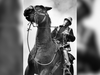
One of our more memorable trips together came in 1980. Baglo and I had flown by prop plane into the huge Spatsizi Plateau Wilderness Park, 500 kilometres north of Smithers. It was among the most remote terrain in all of B.C., and we had been sent there by The Sun to cover Greenpeace’s attempt to stop the big-game hunting that had been allowed in the park.
glenn baglo
Oct. 17, 1980 — Vancouver Sun photographer Glenn Baglo on horseback at the Spatsizi Plateau. Photo by PETE MCMARTIN /PNG

We were in the park for five days, on horseback, along with a team of hunting guides and two wealthy German financiers who had paid a small fortune to hunt caribou. The Germans’ shooting skills were questionable at best, the horses we rode seemed intent on killing us, and Greenpeace was nowhere in sight. One caribou was killed, the carcass of which the celebratory Germans, much to our disgust, castrated. On the way back to our camp, I found a big whitened rack of caribou horns, tied them onto my saddle and decided I would take them back to Vancouver with me.

Advertisement 5

Story continues below

This advertisement has not loaded yet, but your article continues below.

Article content

But the real adventure for Baglo and I came on our flight out of the park. I sat in the front with the pilot and Baglo sat on a bearskin in the rear baggage area, and some time after we took off, clouds set in. The pilot took us lower and lower to get beneath the clouds, and at one point we were flying only a few hundred feet through a mountain valley. The clouds kept coming lower and lower, and the pilot, sounding genuinely concerned, was not encouraging, and Baglo and I thought, well, this is it, it’s been nice knowing you, they’ll never find our bodies in this terrain.

It was just then that the pilot spotted an old abandoned rail bed a few hundred feet below us. The rail bed was bare gravel, and just wide enough for the plane to land on, so the pilot took us down, landed, and Baglo and I, shaken, got out and took the longest pees in our lives. We sat there for a few hours in this mountain valley until the clouds lifted. We took off and made it to Smithers.

The first thing Baglo did at the airport was kick in the rear panel of our company car — “for The Sun almost killing us” — and I tore the car’s fabric headliner trying to fit the caribou horns into the back seat. Then we drove to what was considered the best restaurant in Smithers, which, at the time, was not saying much, and we ordered the most expensive steaks we could, drank two bottles of Baby Duck (because, the waitress told us, they had run out of red and white wine) and chased it with scotch. When we finished, we found a parking ticket on the car. It was the last straw for Baglo. He punched the parking meter as hard as he could, mangling his hand, which we then had to bandage up. The next day, I drove home but got a speeding ticket in Burns Lake for doing 80 km/h in a 50 km/h zone. Baglo took over driving and immediately got a speeding ticket, too, from the same cop, for doing 100 kph. I still marvel that we survived that trip. When we got back to the office, Baglo paid for the dent in the car and I paid for the torn headliner. The caribou horns are still in my backyard.

Advertisement 6

Story continues below

This advertisement has not loaded yet, but your article continues below.

Article content

One more story:

As a rookie reporter, I was sent out with Baglo to do an interview with a young boy for a reason I can no longer remember. I do remember how peeved I was doing it. I thought it was a puff piece, and when we got to the boy’s house I did a quick, cursory interview with him.

Then Baglo started taking photos. After a few shots, he went back to his car, took out a collapsible step ladder, set it up on the sidewalk in front of the boy’s house and asked the boy to pose on his bicycle. He took more photos from the top of the step ladder. Apparently dissatisfied, Baglo went back to his car and took out a light stand and set it up on the sidewalk. He took more photos. We were there for another half-hour. Watching him work, my impatience morphed into a kind of shame, and I came away thinking, there are no small stories, only lazy journalists, and that I had to up my game. Baglo taught me more about newspapering in that one afternoon than four years of journalism school had.

Last words:

When he was first hospitalized, he and I emailed each other, and the news he was getting from his doctor was not good. He knew his time was limited. Of that, he wrote:

Advertisement 7

Story continues below

This advertisement has not loaded yet, but your article continues below.

Article content

“At least I wasn’t born in Gaza.”

Soon after that he emailed me what may have been the last photo he ever took.

It was a self portrait. He was in his hospital bed, unshaven and haggard, hooked up to oxygen, but looking oddly calm and, as always, defiant. He regarded the lens with a look that was neither smiling nor unsmiling, and his expression seemed to be informed by thoughts of eternality.

In the photo, he was wearing a cardboard bed pan on his head, and on it he had written “I. Jones.”

“Made a hat for my grandson’s Indiana Jones costume,” he wrote in his email to me, as only he could. Damn if I didn’t laugh out loud.

mcmartincharles@gmail.com

Article content

Comments

Join the Conversation

This Week in Flyers

RF vs EF Lenses: A Comprehensive Guide for Canon Photographers |

RF vs EF Lenses: A Comprehensive Guide for Canon Photographers |

Canon offers two primary lens options: the newer RF mount lenses and the older EF mount lenses. Understanding the differences and advantages of each system is essential for making informed decisions about your photography gear.

Coming to you from Josh Sattin, this informative video delves into the world of RF and EF lenses, exploring their compatibility, performance, and overall value. Sattin emphasizes the significance of considering factors like cost, availability, and adaptability when choosing between these two lens systems. He highlights the affordability and vast selection of EF lenses, which have been a staple for photographers and videographers for decades.

Sattin also discusses the versatility of EF lenses, particularly their ability to be used on various camera systems beyond Canon through adapters. He showcases several adapters, including options for Sony E-mount, L-mount, and Fujifilm X-mount cameras, demonstrating the potential to expand the use of your EF lenses across different platforms. This adaptability can be a significant advantage for photographers who own multiple camera systems or plan to upgrade in the future.

However, Sattin acknowledges potential drawbacks of using EF lenses with adapters, such as autofocus performance and stabilization issues, particularly with older models. He recommends opting for newer Canon L-series EF lenses or Sigma Art EF lenses for better compatibility and performance on RF mount cameras. Additionally, he emphasizes the superior autofocus, stabilization, and image quality offered by native RF lenses, especially when paired with the latest Canon mirrorless cameras.

Ultimately, the choice between RF and EF lenses depends on your individual needs and preferences as a photographer. If you prioritize affordability, versatility, and access to a wide range of lenses, EF lenses with adapters can be a compelling option. On the other hand, if you seek the best possible performance, image quality, and native compatibility with Canon’s latest mirrorless technology, investing in RF lenses may be the ideal choice. Check out the video above for the full rundown from Sattin.
 

Want a Stylish Photo With Your Pup? This NJ Photographer Specializes in Pet Portraits

Want a Stylish Photo With Your Pup? This NJ Photographer Specializes in Pet Portraits
Photographer Stephanie Blum poses for a self-portrait, with photogenic pup Jay, among colorful florals

Photographer Stephanie Blum poses for a self-portrait, along with photogenic pup Jay, who is being raised by Blum and her husband as a potential Seeing Eye guide dog. Photo: Courtesy of Stephanie Blum; hair and makeup by Ericka Medina; blossoms by Colly Flowers in Morristown

When Stephanie Blum spent her early years in fashion as director of merchandising for Calvin Klein’s design team, she didn’t foresee her future as a full-time photographer specializing in pet portraiture.

“I love this job because I always wanted to work with people and their animals,” Blum says. “Growing up, my family had a lot of rescue animals, so I’m comfortable around pets, and I know how to read a dog’s body language.”

She adds, “Pets are beloved family members, so clients like to include them in professional images to celebrate their intimate bond.” Blum also captures the likenesses of solo humans and other critters in her Mendham Borough studio.

Full services with Stephanie Blum Photography begin with an at-home consultation to meet adults, kids and pets in their own environment. “Understanding how my clients live helps me envision a creative concept that will represent their authentic style,” she says. “It’s also good for animals to meet me before they visit the studio.”

Clients choose Blum because she makes photo shoots stress free by suggesting what to wear, providing professional hair and makeup artists, and offering posing guidance.

After the shoot, it’s time for the big reveal. Images are immediately available for viewing, and clients can select from digital portraits, heirloom-quality photo albums, and framed wall-art options.

Blum usually works with canine clientele because, she explains, “cats are not always willing participants.” However, she would be happy to collaborate with cooperative kitties, as well as horses, birds, bunnies or reptiles.

Blum and hubby Michael Ansell have two pups of their own: 12-year-old Winnie and 11-year-old Benji. In 2023, the couple volunteered as foster parents in the Morristown-based Seeing Eye’s puppy-raising program. Last November, they brought home Jay, a 7-week-old black Labrador retriever, and they are teaching him socialization and good manners for one year.

“I wanted to give back to the community because I’m blessed with good vision,” says Blum. “Michael and I are delighted to raise Jay to one day serve a visually impaired person.”

She is also working on a “pet project” in her spare time. Later this year, Blum will release a coffee-table book that features her portraits of rescue dogs and their poignant backstories. Proceeds will benefit See Spot Rescued, a Jersey City nonprofit dog-rescue organization that re-homes lucky pooches.

Stephanie Blum Photography, 2-A Hilltop Road, Mendham; 732-598-1291.

Follow our home & style editor on Instagram (@susanbrierlybush).


No one knows New Jersey like we do. Sign up for one of our free newsletters here. Want a print magazine mailed to you? Purchase an issue from our online store.

NASA announces winners of annual Photographer of the Year awards

NASA announces winners of annual Photographer of the Year awards


NASA announces winners of annual Photographer of the Year awards

NASA astronaut Alvin Drew poses for a photo with guests during the White House Easter Egg Roll. (Keegan Barber/NASA via SWNS)


By Dean Murray via SWNS

NASA has announced the winners of its sixth annual Photographer of the Year awards.


NASA announces winners of annual Photographer of the Year awards

NASA announce winners of annual Photographer of the Year awards


NASA announces winners of annual Photographer of the Year awards

NASA announce winners of annual Photographer of the Year awards


NASA announces winners of annual Photographer of the Year awards

NASA announce winners of annual Photographer of the Year awards


NASA announces winners of annual Photographer of the Year awards

NASA announce winners of annual Photographer of the Year awards


NASA announces winners of annual Photographer of the Year awards

NASA announce winners of annual Photographer of the Year awards


NASA announces winners of annual Photographer of the Year awards

NASA announce winners of annual Photographer of the Year awards


NASA announces winners of annual Photographer of the Year awards

NASA announce winners of annual Photographer of the Year awards


NASA announces winners of annual Photographer of the Year awards

NASA announce winners of annual Photographer of the Year awards


NASA announces winners of annual Photographer of the Year awards

NASA announce winners of annual Photographer of the Year awards


NASA announces winners of annual Photographer of the Year awards

NASA announce winners of annual Photographer of the Year awards


NASA announces winners of annual Photographer of the Year awards

NASA announce winners of annual Photographer of the Year awards


NASA announces winners of annual Photographer of the Year awards

NASA announce winners of annual Photographer of the Year awards


Featured Local Savings


Commentary | Jeffrey Diehl: Enriching kids’ lives with the craft of analog photography

Commentary | Jeffrey Diehl: Enriching kids’ lives with the craft of analog photography
image

Research increasingly links smartphones and social media to rising rates of childhood anxiety, self-harm, and suicide. Against this bleak background, analog photography is emerging as a counterbalance to phone-based childhood, offering a hands-on, immersive experience that fosters a deeper connection to the physical world and imbues kids’ lives with meaning.

Recently at In-Sight Photography Project in Brattleboro, youth analog photography classes fill up more quickly than digital ones. This enthusiasm indicates something a lot of grownup film camera enthusiasts remember — throwback photography is a lot of fun.

“Using film cameras and being in the darkroom is a unique experience and radically different from the day to day for most youth,” says Emily Wagner, Executive Director at In-Sight, “In the darkroom, students have found friendships and community as well as a new connection to art and science that doesn’t involve a screen.”

In-Sight teaches students the entire flow of analog photography, from handling film, to learning the mathematics of exposure, to developing film, to making prints in a darkroom. The art form demands patience and care at every step, something children are naturally drawn to. It is highly effective at teaching important values that are being lost in the digital age, such as the value of slowing down and appreciating the moment.

“Analog photography requires the photographer to be present and consider a lot of factors, often taken for granted in digital photography,” Emily explains, “and in processing the film and images students learn to slow down and wait for the chemical reactions to take place, without being able to look at their phones.”

The tactile experience of handling film-based cameras, especially older ones which have a different, more mechanical feel when adjusting settings, loading the film, clicking a real shutter button and feeling the vibration, and even advancing the film after an exposure, can have unique payoffs. Physically developing the film, then entering the sightless world of the darkroom to create prints with enlargers and chemical trays, can provide a tangible sense of achievement and creativity, unlike the easy, no-stakes nature of capturing digital images.

In fact, In-Sight uses the darkroom as a way to teach principles of mindfulness, since the key sense of vision is nearly eliminated. Attitudes and voices naturally quiet in the darkroom and while there are moments of focus there are moments of celebration when unexpected results are achieved. Touch, time, and memory become very important. This is an ironic pleasure of the darkroom given how important light is in the origins of any photo, and it has been almost entirely lost today.

As kids delve into the world of analog photography, they find it’s not just about stepping away from screens. It’s about embracing a different rhythm of life that values the process as much as the result. There’s also a distinct embrace of mystery since so much needs to happen, from the time they frame a shot to looking at what they exposed, that they will often be surprised — sometimes in a good way, sometimes in a bad way. Not knowing becomes a foundation for the whole mode of analog photography.

Another value children learn is how to develop a deeper connection to their environment, learning to observe and appreciate details they might otherwise overlook, since successfully creating a real photograph involves so much work and good fortune. In his 1952 book exploring the “decisive moment,” Henri Cartier-Bresson, an iconic photographer, reveals how capturing a significant moment in human activity requires a perfect blend of anticipation, composition, and timing. He could not have foreseen how cameras would one day be pulled away from our faces, that we would see the final exposure and print displayed to us as we capture it, and how it would erode our level of awareness and observation.

“As a parent, I was thrilled to see my child inspired to stop and observe the world in new and slower ways, through the lens of the camera,” remarked a parent of a recent analog student. “In our digital era, 35mm basics provided a rare opportunity for them to experience the magic of silver emulsion photography.”

This engagement with the process and history of analog photography opens the door to many lost skills, including patience, focus, and a genuine appreciation for the art of storytelling through images. As such, analog photography becomes more than a hobby; it transforms into a meaningful antidote to the digital harms of smartphones in our children’s lives, offering a pathway to creativity, mindfulness, and a renewed sense of connection to the physical world.

Five things the Xiaomi 14 Ultra’s Photography Kit needs to truly elevate smartphone photography

Five things the Xiaomi 14 Ultra’s Photography Kit needs to truly elevate smartphone photography

The Xiaomi 14 Ultra is unapologetic in offering the best of the company’s current mobile technology in a single device. The Leica-tuned camera experience is a huge part of the phone’s appeal and for those keen to get the absolute most out of it, Xiaomi has also launched the Xiaomi 14 Ultra Photography Kit, which adds physical controls, better ergonomics and an additional battery. Even so, I think it could have gone further.

As you’ll see in the unboxing below, the (sold separately for £179 / €199.99 – approximately $225 / AU$345) consists of a dedicated case with a grippy woven leather-like finish, two interchangeable decorative metals rings that surround the phone’s camera, a 67mm camera filter adapter ring, a lanyard and the all-important Photography Grip – which includes an integrated 1,500mAh battery, a USB-C port for charging, a dual-detent shutter button, zoom lever, exposure dial and a video record button.

@techradar
♬ Blossom – Crispy Beats

So what could Xiaomi have possibly added to make the Xiaomi 14 Ultra’s Photography Kit even more potent? Here’s a shortlist of five killer features that would have rendered it best there is.

Tripod thread

Xiaomi 14 Ultra Photography Kit suggested upgrades tripod thread

(Image credit: Future | Alex Walker-Todd)

The 14 Ultra already includes dedicated shooting modes for a variety of long-exposure scenarios; from moving crowds and light painting, to modes like Starry Sky and Star Trails. But in order to pull of these latter two shooting modes effectively, photographers will already know that such scenes require an incredibly still camera in order to achieve the best results. Attaching a tripod seems like the most logical way to do that.

The underside of the Photography Grip already plays host to the lanyard loop, USB-C port and a power indicator LED for the internal battery, but with a little shuffling around, there’s little reason why Xiaomi couldn’t have squeezed a conventional 1/4-inch 20mm female tripod thread on there too; likely having to extend or better secure the grip around the phone, so too much force isn’t placed on the USB-C connection on the base of the phone.

USB passthrough

Xiaomi 14 Ultra Photography Kit suggested upgrades USB-C

(Image credit: Future | Alex Walker-Todd)

The Photography Grip connects to the phone via an inset USB, so naturally, there’s an additional USB-C port on its underside to let users recharge the grip’s internal 1,500mAh battery (said to extend the Xiaomi 14 Ultra’s longevity by up to 23%) and in turn charge the phone’s main 5,000mAh battery (90W fast charging is also supported).

While the boon of the grip’s additional power cell is great to extend shooting sessions – as well as general usage, it would be incredibly useful if – akin to some of the best gaming phones – users could also change modes and connect power to this port to keep the phone alive without charging the battery.

From a photography standpoint, this could allow for even longer exposure times in low light or astrophotography scenarios, as well as when capturing time-lapse video footage – for which the Xiaomi 14 Ultra already has a dedicated mode for. Doing so would have reduced strain on the batteries (both the phone’s and the grip’s), while making the Ultra an even more versatile camera phone.

As in the case of gaming phones, USB passthrough would also allow for extended gaming sessions with excessive strain on the phone’s battery too.

Focus ring

Xiaomi 14 Ultra Photography Kit suggested upgrades focus ring

(Image credit: Future | Alex Walker-Todd)

The Xiaomi 13 Ultra’s Photography Kit included a dual-detent shutter button and a zoom lever, which the company has expanded upon on the 14 Ultra’s equivalent Kit, also adding an exposure dial and a dedicated video record button. However, there’s one more physical control that would have elevated the shooting experience even further: a focus ring.

While the case that comes as part of the 14 Ultra’s Photography Kit already allows for interchangeable decorative rings and that excellent 67mm lens adapter, considering the bulk the kit as a whole already adds there’d be little issue in also implementing a physical focus ring, letting you pull focus while maintaining a steady grip on the 14 Ultra during shooting.

Like the rest of the physical controls, the real sweetener would be the ring’s ability to be reprogrammed, so that it could be made responsible for zoom – or even perhaps exposure.

Xenon flash

Xiaomi 14 Ultra Photography Kit suggested upgrades xenon flash

(Image credit: Future | Alex Walker-Todd)

Xenon flashes used to be the go-to flash on point-and-shoot cameras, as well as digital cameras. With the age of the smartphone, however, while many a camera phone has dabbled with these more intense means of illumination (the Nokia Lumia 1020 springs to mind), xenon flashes have fallen foul of the convenience the comparatively underwhelming dual LED flash offers. It helps that the dual LED also leads a double life as your phone’s flashlight.

Extending the top edge of the camera grip along the phone’s body in order to integrate a proper xenon flash seems like a worthwhile upgrade.

Hot shoe

Xiaomi 14 Ultra Photography Kit suggested upgrades hot shoe

(Image credit: Future | Alex Walker-Todd)

If the xenon flash doesn’t float your boat, or you like the idea of even more versatility from the camera kit, then a full-fledged hot shoe would be the greatest addition. 

Its existence as a camera standard ensures compatibility with a range of photographic accessories; from flashguns to shotgun mics, opening up potential for the Xiaomi 14 Ultra as a next-level vlogging phone, as well.

You might also like

Navigating the Evolution of WPPI: A Strategic Guide for Modern

Navigating the Evolution of WPPI: A Strategic Guide for Modern

The Wedding and Portrait Photographers International (WPPI) conference stands as a beacon for both emerging talent and seasoned professionals. With the photography industry witnessing rapid changes in technology, style, and business practices, WPPI’s role in a photographer’s career has sparked intriguing discussions.

The Allure of WPPI for Newcomers

For those at the beginning of their photography journey (or contemplating the leap into a full-fledged business), WPPI presents a golden opportunity. The conference’s inclusive atmosphere is fertile ground for learning, with workshops and seminars designed to elevate your craft, business acumen, and confidence. First-time attendees can expect to immerse themselves in a comprehensive educational experience, gaining invaluable knowledge on technical skills, creative expression, and business strategies essential for a successful start.

Evolving With the Audience: A Veteran’s Perspective

As we progress in our photography careers, the quest for growth transitions from mastering the basics to refining a unique style and expanding business frontiers. Regular WPPI attendees have witnessed its transformation and how it caters to an expanding audience spectrum. While the conference remains a source of inspiration and networking, seasoned photographers might find the curriculum leaning toward the foundational aspects of photography. This shift reflects WPPI’s aim to be accessible and beneficial to a broad audience, including those at the nascent stages of their career.

The Integration of Portrait Masters: A New Chapter?

A pivotal development in WPPI’s trajectory is the incorporation of the Portrait Masters, a move that promised to blend high-caliber education with the broader appeal of WPPI’s existing programming. This integration was anticipated to enrich the learning experience, especially for those seeking advanced mastery in portrait photography. However, feedback suggests that the essence of the presentations, including keynotes by renowned photographers such as Sue Bryce, still gravitates toward foundational themes. This observation underscores a strategic opportunity for WPPI to balance its offerings, ensuring that both beginners and advanced practitioners find value and advancement in their craft and business.

Strategies for Maximizing Your WPPI Experience

  1. Set Clear Objectives: Before attending WPPI, identify your goals. Are you looking to enhance specific skills, explore new trends, or expand your professional network? A clear focus will guide your session selections and activities.

  2. Diversify Your Agenda: Balance your schedule between technical workshops, creative sessions, and business seminars. This holistic approach will ensure a well-rounded enhancement of your photography career.

  3. Engage Beyond Classrooms: WPPI is not just about the sessions; it’s a vibrant community. Leverage networking events, product exhibitions, and informal meet-ups to connect with peers, mentors, and industry leaders.

  4. Seek Advanced Workshops: While navigating the program, look for sessions that challenge your current level of expertise. Advanced workshops and master classes can offer the deep dives necessary for growth.

  5. Provide Feedback: WPPI evolves through community input. Share your experiences and suggestions for future events to help shape a more inclusive and enriching conference.

Final Thoughts

WPPI remains a cornerstone event in the photography community, offering a rich tapestry of learning and networking opportunities. Whether you’re just starting out or have years of experience under your belt, the key to extracting the most value from WPPI lies in strategic participation and open-minded engagement. As the conference continues to evolve, it holds the potential to cater to the diverse needs of the photography industry, fostering growth, innovation, and a shared passion for capturing life’s moments.

‘I’m practicing photographic justice’: Corky Lee’s portraits of Asian American life

‘I’m practicing photographic justice’: Corky Lee’s portraits of Asian American life

Corky Lee spent decades photographing Asian American life, in New York and across the US, capturing the rise of the Asian American movement as well as everyday happenings in immigrant communities often overlooked by the powers that be.

He saw his calling as more than just observing and documenting – he was righting a wrong by immortalizing Asian Americans in the civic makeup of the US.

“In all my photographs, I’m trying to include pages that should be in American history books, that have been omitted,” he said. “I’m practicing photographic justice.”

Photographic Justice: The Corky Lee Story, a documentary opening in New York on Friday, explores the life and photography of Lee, who died in 2021 from Covid-19. Through his own words and through commentary from a number of well-known figures in the Asian American community, the documentary delves into the lasting impact of Lee’s work – and the importance of bearing witness on a community level.

“Corky helped change the American landscape through his lens,” Jennifer Takaki, the film’s director, said in an interview. “He had the knowledge of American history and the insight of a community organizer, so he could offer insight into a community that he was personally involved with, but also documented in a way to show that they were larger pieces missing from American history.”

Takaki first met Lee in 2003, at an event at the John Jay College of Criminal Justice in New York. She asked him where the bathroom was. He proceeded to recount for her the history of the building in which they stood. That was just who Lee was – through his years photographing Asian American events around New York, he had accumulated a vast knowledge of local history and lore. “He is institutional memory,” author Joann Lee said in the documentary. “A walking encyclopedia.”

Takaki had originally intended to film a five-minute vignette on Lee and his life, but the more she spoke to him and learned from him, the more she realized that would not be enough. The documentary ended up spanning 19 years, during which Lee took countless more photographs documenting Asian American life – yet it was still just a drop in the bucket when compared with the breadth and scope of Lee’s body of work.

Lee’s approach to his craft was to always show up. He made a point of being at as many Asian American events as he possibly could, no matter how big or how small – everything from lunar new year parades to the viewing of dilapidated Chinatown apartments to musical performances to demonstrations that showed the full might of the Asian American bloc. “It isn’t an Asian American Pacific Islander event if Corky Lee isn’t around,” Norman Mineta, former US transportation secretary, says in the documentary.

“He never had a sense of self-importance of like, I’m only looking for protests or I’m only looking for big events,” Takaki said. “Corky was on the ground all the time, at everyone’s event. He thought everything was important, and I think because he didn’t edit what was important, he has this incredible treasure trove of images.”

In always showing up, Lee was present at a number of significant moments in Asian American history. He photographed police injuring a protester at a police brutality protest in the 1970s. He shot images of Asian American first responders in the aftermath of 9/11. Up until his unexpected death, he was in the community, capturing the fear and uncertainty that came with an uptick in anti-Asian violence connected to the coronavirus pandemic.

Some history he helped create. Lee often spoke about the moment that inspired him to become a documentarian of Asian American life: when he was in school, learning about the tens of thousands of Chinese migrant workers who built the transcontinental railroad, he found in a history book the 1869 photo commemorating the completion of the railroad. Dozens of workers gathered where the east and westbound lines met at Promontory Summit, Utah, surrounding two engineers in the center, shaking hands. Not a single face was Chinese.

In 2014, Lee organized a group of Asian Americans, including some direct descendants of the Chinese railroad workers, and restaged the photo. In the documentary, Lee, with his camera in hand, rallied those posing in front the locomotives: “We came today to reclaim American history,” he shouted as the group cheered.

“The Asian American movement, I believe, is still alive,” Lee says in the documentary. “Whenever there’s a crisis, more people step up to the plate. There will be setbacks, there will be times when you feel depressed about what’s going on, but you have to believe that things are going to get better.

“If you’re a photographer, keep shooting.”

  • Photographic Justice: The Corky Lee Story is out in New York on 19 April, Los Angeles on 26 April and on PBS on 13 May with a UK date to be announced

Nextech3D.ai adds photography tools to 3D model platform

Nextech3D.AI (CSE:NTAR, OTCQX:NEXCF) announced that it is adding digital photography and product visuals as part of its 3D model offering, meaning every 3D model created for eCommerce customers will have 2K, 4K or even 8K photos to accompany it.

The company said this new AI tool is expected to drive “significant” revenue because each product listed for sale on an eCommerce platform requires a minimum of six 2D photos.  

It said it expects it can capitalize on this demand for high-resolution while increasing the value of its 3D modelling business with its all-in-one solution for eCommerce sellers on platforms such as Amazon and Shopify.

The company said it has already signed up 10 of its existing customers for its digital photos, which will be offered as a standalone product or as part of a 3D model bundle.

According to its analysis, creating and rendering 3D models is more cost-effective than traditional product photography, notably for products which are expensive to produce or challenging to photograph.

It added that, once a 3D model is created, it can easily be manipulated and rendered from a variety of angles without needing physical prototypes or multiple photoshoots.

“Having experienced the significant costs and time investments associated with traditional 2D product photography for eCommerce firsthand, I am thrilled to announce our innovative solution,” Evan Gappelberg, CEO of Nextech3D.AI (CSE:NTAR, OTCQX:NEXCF), said.

“Our new 3D to 2D digital photo studio leverages our proprietary AI algorithms to effortlessly generate high-quality 2K, 4K, and even 8K photos.”

He highlighted that this new tool isn’t just limited to eCommerce but also caters to industrial designers and other users of the Toggle platform for their 3D models.

For example, the tool can be used to visualize diverse textures, styles and materials, a feature that the company said shows “immense potential” for industry designers across manufacturing sectors.

“Furthermore, we’re excited to introduce bundled packages of 3D models and photos for leading eCommerce platforms like Amazon, Ebay, Shopify, Pinterest, Walmart, Flipcart, and Target,” Gappelberg said.

“Additionally, our flexible a la carte pricing extends our services to site owners who already possess a 3D model or CAD file.”

Nextech3D.AI (CSE:NTAR, OTCQX:NEXCF) supplies 3D models to Amazon, Miele, P&G, Kohls, Wesfarmers Group, Bunnings, and other major eCommerce retailers.

Evansville Art Center displaying works by young photographers

Evansville Art Center displaying works by young photographers

EVANSVILLE — Through April 27, the Evansville Art Center is home to the results of an ongoing project designed to get kids interested in photography.

Several years ago, the Evansville Photo Club bought four SLR cameras and gave them to the Brandon-Evansville fourth-graders.

Karen Howell, president of the Evansville Art Center, explained, “Every year the fourth-graders are taught how to use them, to understand this is not a cellphone or a point-and-shoot, how to frame, how to arrange a picture, and how to work the camera. Then they go in small groups and do little field trips around the school and take pictures.”

Exhibit 2.JPG

Kaydence Rupp took these photos, which are on display at the Evansville Art Center through April 27.

Travis Gulbrandson / Alexandria Echo Press

The pictures taken this school year are now on display on one of the walls at the art center.

“These are all pictures the fourth-graders chose to make,” Howell said. “They’re very creative.”

ADVERTISEMENT

Some feature buildings, some feature fences, some feature insects. Some show the same object as captured by several different young photographers.

“But they’re not copies,” Howell said. “They’re all different.”

The photos are printed by Lundeen’s in Fergus Falls.

Howell said projects like this are important for the students’ creative development.

“When you catch that age group and you give them a little push toward art, it’s amazing what will grow,” she said.

Exhibit 3.JPG

These photos by fourth-grader Leland Eddy are currently on display at the Evansville Art Center.

Travis Gulbrandson / Alexandria Echo Press

The fourth-graders aren’t the only ones whose work will be showcased at the Evansville Art Center. When this exhibit closes a new one will open that will feature artworks from the middle- and high-schoolers.

The Evansville Art Center is located at 111 Main Street in Evansville. Gallery hours are from 10 a.m. to 2 p.m. Fridays and Saturdays.

For more information, visit

www.evansvilleartcenter.org/

.

Travis Gulbrandson covers several beats, including Osakis School Board and Osakis City Council, along with the Brandon-Evansville School Board. His focus will also be on crime and court news.