Photography

Explore Mysticism in Photography at MoMo Gallery’s “In the Time of Spirits”

Explore Mysticism in Photography at MoMo Gallery’s “In the Time of Spirits”

New Mexico Magazine: What do you think photography allows us to communicate that words cannot?
Bill Shapiro: Photos have this ability to let you time travel, let you travel to a different part of the world where you’ve never been, and to feel these really human emotions. Photos in general allow the viewer, very quickly, to place themselves in the photo.

NMM: What made you choose the images we will see in this exhibit?
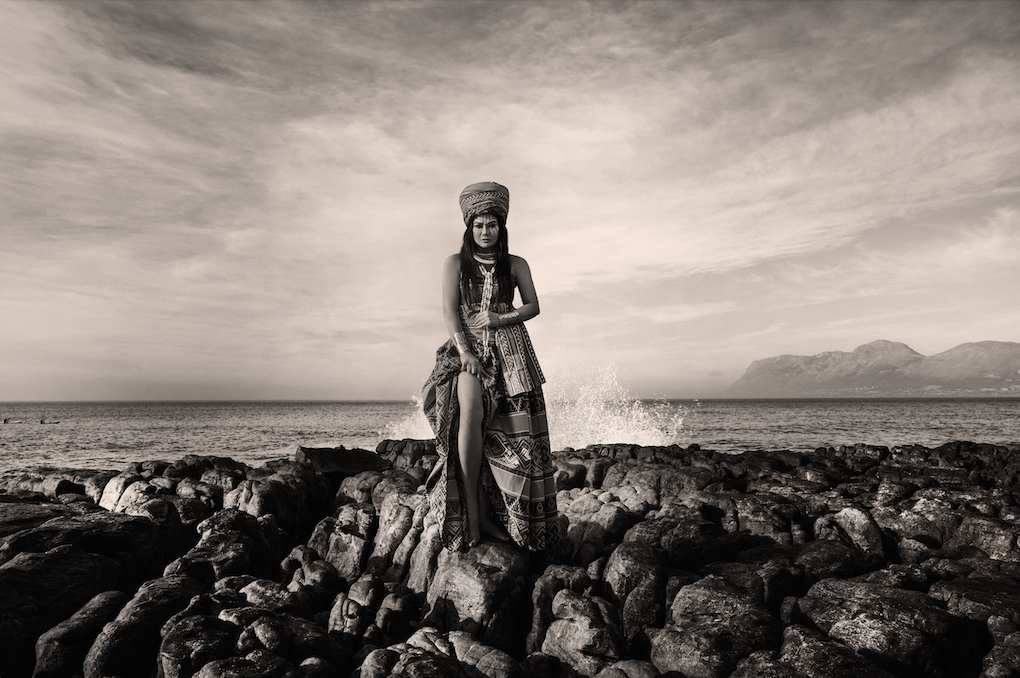
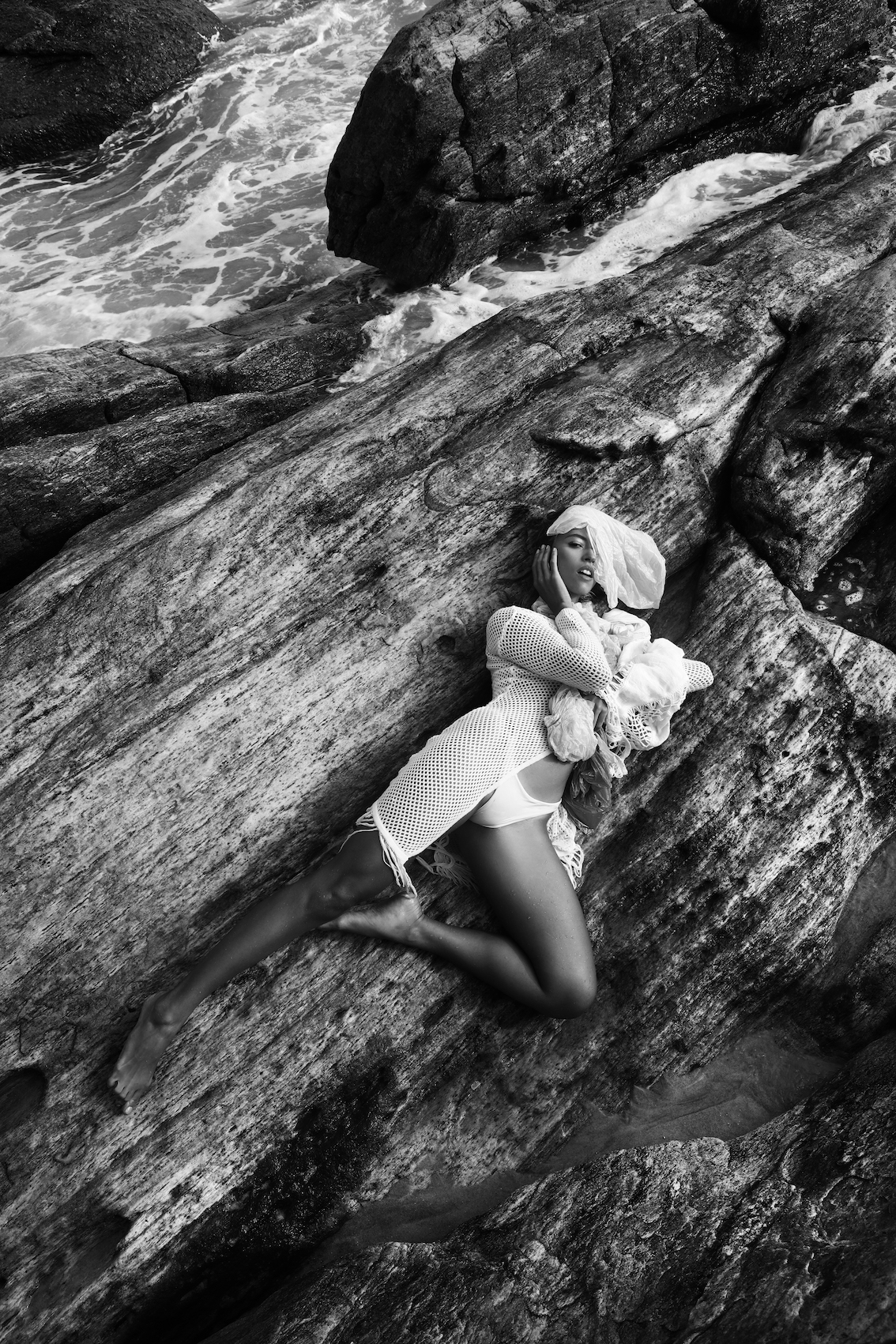
BS: These photos have this sense of spirit and a subtle sense of surrealism. These pictures put you in a headspace or a frame of mind that, to me, feels a little bit transcendent.

NMM: How did you choose the photographers you wanted to highlight?
BS: It’s all photographers that people probably haven’t heard of, but they should. I started with about 10, which I knew would be too many. I looking for works that would complement each other—that don’t step on each other’s toes, but sort of speak to each other. These five really seemed to work together.

NMM: Many of the works in In the Time of Spirits are black and white. Are you particularly drawn to black-and-white images, or is this somewhat of a coincidence?
BS: I do often find myself falling for photographers who shoot in black and white. Part of that is, with color, you can sometimes be distracted by the color. Sometimes, as we see on Instagram, people get very excited by a red umbrella on a dark street. But that doesn’t make a great photo. The framing and composition and depth is more focused or more apparent in a black-and-white image.

At the same time, you look at Lula’s pictures, and the color of those makes them so evocative. She gets a lot of the power of her photos from her lovely color palette. It’s very soft, and almost sensual.

In Odhiambo’s photos, his colors just absolutely sing. That yellow jacket on the man, I love that. Color has the potential, as we see in his work, in and of itself to make you feel something. Taken in Kenya’s biggest slum, those bright colors play against what we think we will find in a slum. He is showing us another side, that even in this environment of hardship, there is this rich and vibrant vein of color and optimism and the human spirit. That’s one reason why his work is so surprising, you don’t expect to look at a photo of poverty and think, Oh my God, that makes me happy. And yet, it does.

NMM: What do you think about social media, particularly Instagram, and this notion that it has, in a sense, turned us all into photographers?
BS: I am a huge fan of Instagram. It has turned so many people not only into photographers—or people who take pictures—but into wiser consumers of imagery.

We have more exposure to photos than we ever have before. But you have to do a little bit of work to get to the really good photographers on Instagram. There’s a lot of noise, a lot of people taking pictures of red umbrellas. It’s thrilling that everybody can see so many amazing pictures these days. But it still takes work to find the true gems. What Instagram has done is get people more interested in looking. There’s this great quote about how being a photographer, and looking at pictures, can teach you to see. I think people who look at pictures see more beauty.

Read more: A new Couse-Sharp Historic Site exhibition looks at the varied and complex ways Taos influences artists.

71 Remarkable Photos Selected As Winners By World Sports Photography Awards 2024

71 Remarkable Photos Selected As Winners By World Sports Photography Awards 2024
ADVERTISEMENT

For the fifth year in a row, we are blessed to see the greatest shots from the sports community. To celebrate the winners of this year’s World Sports Photography Awards, we have shared their mesmerizing pictures below.
Three photographers won both an award as overall winner and gold in their category. Those great photographers are Eric Tkindt (gold), Isaac Julián Morillas Sánchez (silver), and Ryan Pierse (bronze). Eric competed in the category Gymnastics, Isaac in Other, and Ryan – Aquatic. And they didn’t have it easy as this year they broke the record of submissions spanning over 83 countries.
So, without further ado, let’s take a look into the world of sports. And for previous year’s competitions, see winners from 2023 and 2022.
More info: worldsportsphotographyawards.com | Facebook | Instagram | x.com

Explore the night sky with the shortlisted images in the Astronomy Photographer of the Year competition

Explore the night sky with the shortlisted images in the Astronomy Photographer of the Year competition

It’s been an active year so far for astronomers. We’ve had the tantalizing Northern Lights, a solar eclipse, and a close call with an asteroid.

Not to mention sky platypuses and cosmic koi carp

Last year, an astronomical highlight was the incredible meteor storms, among other cosmic events captured by the entries to the Astronomy Photographer of the Year competition.

The competition is run by Royal Observatory Greenwich in association with BBC Sky At Night Magazine. This year, the competition received over 3,500 entries and from passionate amateur and dedicated professional photographers from 58 countries across the globe. 

The winners will be announced September 12, but until then, we can take a look at the shortlisted entries, which include sky dragons, Himalayan cosmic rainbows, and the screams of a dying star. 

The overall winner will take home £10,000 ($12,630), with other prizes ranging from £250 to £1,500 ($315 to $1,895), and all winning entries will receive a one-year subscription to BBC Sky at Night Magazine. 

Photographers entered their work into nine categories: Skyscapes, Aurorae, People and Space, Our Sun, Our Moon, Planets, Comets and Asteroids, Stars and Nebulae, and Galaxies. 

There are also prizes for the best newcomer, and for entrants processing images using pre-existing open source data, and for the best under 16 photographer. 

Explore some of our favorite shortlisted images. 

Serpentine, Paul Haworth, Snettisham Beach, Norfolk, UK

The lead image for this story: “This image was taken at Snettisham Beach, famous for its vast tidal mudflats that attract migrating birds in staggering numbers. The foreground subject is a dilapidated jetty, which was built in the Second World War to allow gravel extracted from the nearby pits to be moved by boat. The curved channel in the mudflat mirrors the trailing stars.”

Equipment used: Taken with a Canon 6D camera, Samyang 14 mm f/2.8 lens, ISO 400, 319 x 30-second exposures Foreground: ISO 800, 120-second exposure

A Night with the Valkyries, Jose Miguel Picon Chimelis, Hvalnesviti, Iceland 

(Image credit: A Night with the Valkyries © Jose Miguel Picon Chimelis)

“A view of the Eystrahorn Mountain on the night of a KP7 storm (a strong geomagnetic storm that can cause aurorae and upset electrical power systems). The intensity of the storm resulted in the impressive range of colours in the sky.”

Equipment used: Taken with a Nikon Z7 II camera, 14 mm f/1.8, ISO 6,400, 4-second exposure

The Fire-Spitting Dragon, Moritz Telser, Uttakleiv Beach, Lofoten, Norway

(Image credit: The Fire-Spitting Dragon © Moritz Telser)

“The photographer was able to capture the aurora in motion when it turned into something resembling a dragon’s head on a clear night. Telser chose to use black and white to emphasise the contrast of the aurora against the dark sky.”

Equipment used: Taken with a Canon EOS R6 camera, 14 mm f/2.8, ISO 12,800, 1.6-second exposure

The International Space Station Daytime Moon Transit, Kelvin Hennessy, Gold Coast, Queensland, Australia

(Image credit: The International Space Station Daytime Moon Transit © Kelvin Hennessy)

“This image shows the International Space Station (ISS) transiting the 51 per cent illuminated Moon. The photographer initially struggled to find a suitable shooting location with clear skies along the very narrow transit corridor.”

Equipment used: Taken with a Saxon ED127 FCD100 Triplet Refractor telescope, Baader IR/UV filter, Sky-Watcher EQ6-R mount, ZWO 294MC Pro camera, 952 mm f/7.5, Gain 192, 1-millisecond exposure

The Palette of the Himalayas, Geshuang Chen, Shigatse City, Xizang Province, China (Tibet)

(Image credit: The Palette of the Himalayas © Geshuang Chen)

“During the Spring Festival, the Sun and altostratus clouds acted together to create this huge corona, soaring above the Himalayas. The result is an enormous colour palette above the snowy peaks.”

Equipment used: Drone footage, DJI Mavic 3 Camera, 12.3 mm f/5, ISO 100, 1/3200-second exposure

Cosmos in Reflection, Jianfeng Dai, Dunhuang, Gansu Province, China

(Image credit: Cosmos in Reflection © Jianfeng Dai)

“The 100-megawatt molten salt tower photovoltaic power station pictured here has 12,000 super mirrors. In the daytime, the mirror matrix reflects the sunlight back to the central heat-collection tower which can reduce carbon dioxide emissions by 350,000 metric tonnes per year. At night, the mirrors reflect the light of nebulae, clusters, planets, the Milky Way and countless stars at different angles, making it difficult to tell what’s real and what’s not.”

Equipment used: Taken with a Sony ILCE-7RM5 camera, Sony FE 50 mm F1.2 GM lens, 50 mm f/1.2, ISO 3,200, 5-second exposure

Auroral Touch: the Milky Way’s Close Encounter, Chester Hall-Fernandez, Castle Hill, New Zealand

(Image credit: Auroral Touch: the Milky Way’s Close Encounter © Chester Hall-Fernandez)

“This image was taken in Castle Hill, New Zealand, facing south as the Milky Way set. Partway through the night, Hall-Fernandez noticed a faint glow growing stronger, though he was not expecting to see the Aurora Australis. As the aurora was very far away, only the deep reds were visible.”

Equipment used: Taken with a Nikon Z 6 (astro-modified) camera, Tamron 35 mm f/1.4 lens, ISO 1,600, Sky: 11 x 60-second tracked exposures; Foreground: 6 x 60-second exposures  

Saturn with Six Moons, Andy Casely, Blue Mountains, New South Wales, Australia

(Image credit: Saturn with Six Moons © Andy Casely)

“Saturn’s decreasing ring tilt means the moon Titan is closer to Saturn from our viewpoint than it has been in over a decade. At the centre of the image, Tethys is just about to disappear behind Saturn, while Rhea, Enceladus and Mimas are on the left, and Dione is to the lower right. The planet’s shadow on the rings is prominent, as are the Cassini and Encke divisions.”

Equipment used: Taken with a Celestron C14 Schmidt-Cassegrain telescope, Tele Vue 2x Barlow lens, Chroma RGB filters, Celestron CGX-L mount, QHY5III200M camera, 10,000 mm f/29, 40-minute video, 10-millisecond exposures, 25% of ~220,000 total frames

Take a look at our guide to the best cameras for astrophotography, and the best lenses for astrophotography.

We’ve also go guides to the best star tracker mounts for astrophotography, and the best low-light cameras.

‘Sepia bride’ rages at pictures that made her ‘look like Simpsons character’

‘Sepia bride’ rages at pictures that made her ‘look like Simpsons character’

A BRIDE’S dissatisfaction with her wedding photos has sparked an online debate.

Alexandra Conder took to TikTok to chronicle her experience with a photographer and the snapper’s editing skills on her wedding pics.

Alexandra Conder raged at her wedding photographer in a series of TikToks

2

Alexandra Conder raged at her wedding photographer in a series of TikToksCredit: TikTok/alexandrajaye5
Conder sparked an online debate between fellow brides and photographers

2

Conder sparked an online debate between fellow brides and photographersCredit: TikTok/alexandrajaye5

At first glance, Conder expressed how she loved the shots, but 30 days after her festivities faded, she noticed something was off about the pictures.

Conder explains to her TikTok followers how she found her wedding photographer on Instagram and paid almost $8,000 to shoot the event.

“So, she delivered the photos, and, of course, right away, I’m like, ‘Oh my god, I love them, I love them.’ Every single one of them, I’m like beaming with excitement,” the discontent bride said.

“And, then, for about 30 days, I’m staring at the photos, and I’m like, why is there something bothering me? I couldn’t put a finger on it.”

Read more in The U.S. Sun

Conder, who clarifies that she’s a cosmetic artist and did her own makeup for her wedding day, explained how, in the photos, she looks extremely pale, and dull.

The bride said she contacted the photographer about her displeasure with the photos and shared side-by-side images of the edited picture and a snap of her on the wedding day.

“What did she put on my lipstick, what blush am I wearing like what is on my eye, my skin, everything,” a raging Conder said.

Conder proceeded to share three other editing snaps, grumbling about the photographer’s sepia-tone edit.

Most read in The US Sun

“Especially when I looked further, the filter on my teeth, my teeth look yellow, like what is that? My teeth are white, what is that,” she said.

“One last example, this is the ocean. It looks like we got married in Seattle. What is that?” the dissatisfied bride added before clarifying that the photo is “beautiful” nonetheless.

“I’m not discrediting her ability to capture a moment because that she was really good at, but it was the post edit that I was unhappy about.”

More to follow… For the latest news on this story, keep checking back at The U.S. Sun, your go-to destination for the best celebrity news, sports news, real-life stories, jaw-dropping pictures, and must-see videos

Like us on Facebook at TheSunUS and follow us on X at @TheUSSun

Lucia Moholy’s retrospective captures her life’s work behind the lens

Lucia Moholy’s retrospective captures her life’s work behind the lens

Within the visual legacy of Bauhaus, few are as centrally positioned as Lucia Moholy and yet none more overlooked. While the Czech photographer’s painstakingly composed black and white images of the Bauhaus buildings in Dessau have become globally synonymous with the school, recognition of Moholy’s work, both around Bauhaus and beyond, has been routinely obscured.

‘Lucia Moholy: Exposures’, the first major retrospective of the photographer, aims to change that. Opening at Kunsthalle Prague, in the city of Moholy’s birth, the exhibition casts a suitably wide net in capturing her life’s work. Spanning the 1910s to the 1970s and drawing together more than 600 artefacts, this monumental undertaking offers a long overdue appraisal of a true virtuoso of 20th-century photography.

‘Lucia Moholy: Exposures’

Exhibition view of Lucia Moholy, 1981

Exhibition view of Lucia Moholy, 1981. Courtesy of the artist

(Image credit: Giorgio Hoch. Courtesy Kunsthalle Prague)

At its heart, ‘Exposures’ reveals the sheer breadth of Moholy’s practice beyond her five years at the Bauhaus and, indeed, beyond the medium of photography. In part, her limited recognition can be attributed to this multidisciplinarity. Moholy worked across art and science, as a photographer, portraitist, writer, editor and information scientist, producing microfilm projects funded by the British government during the Second World War and carrying out others abroad, across Europe and the Middle East, on behalf of Unesco.

Lucia Moholy_Peć, Yugoslavia, 1932_Photo Elysée

Lucia Moholy, Peć, Yugoslavia, 1932

(Image credit: Photo Elysée. Courtesy Kunsthalle Prague)

Linking the visual with the written word, her urge to preserve cultural heritage could be attributed to the loss of her own Bauhaus negatives after fleeing Germany in 1933 (only to discover that many had been taken and used without her consent), as much as it could to her experience working across multiple cultural contexts. Taking her from Austro-Hungarian Prague to pre-war Yugoslavia, interwar Germany and England, Turkey in the 1950s, before settling in Zurich in 1959, Moholy’s nomadic life drove a similar intrepid spirit in her artistic output.

Giorgio Hoch_Exhibition view of Lucia Moholy, 1981_Courtesy of the artist

Lucia Moholy, 1981

(Image credit: Giorgio Hoch. Courtesy Kunsthalle Prague)

Because as much as photography reflected culture, it also represented a culture for Moholy, who relentlessly pushed its development. Together with her husband, the Hungarian painter, photographer and Bauhaus professor László Moholy-Nagy (whom she married in 1921 and divorced eight years later), the pair expanded experimental forms of cameraless photography, coining the term ‘photogram’ to refer to a photograph made by placing an object or its shadow directly onto photographic paper and printing the resulting image.

Lucia Moholy_Edith Tschichold, c. 1926_Fotostiftung Schweiz

Lucia Moholy, Edith Tschichold, c. 1926

(Image credit: Fotostiftung Schweiz. Courtesy Kunsthalle Prague)

Moholy’s photographs embody this wealth of information and innovation but they also contain great beauty. In her portraiture – a particular delight of the exhibition – Moholy’s eye for lighting and perspective frames each sitter with a directness and clarity that echoes the language of her Dessau photographs. Like the women whom she mostly photographed, from Marxist activist Clara Zetkin to German artist Anni Albers, the beauty in Moholy’s work was too often hindered by male peers throughout her lifetime. This exhibition reveals it in full for the first time.

‘Lucia Moholy: Exposures’ is showing at Kunsthalle Prague until 28 October kunsthallepraha.org

Lucia Moholy_Shadows on Rock and Water_n.d._Photo Elysée

Lucia Moholy, Shadows on Rock and Water, undated

(Image credit: Photo Elysée, Courtesy Kunsthalle Prague)

Unknown photographer_Portrait of LM, 1927_Bauhaus-Archiv

Unknown photographer, portrait of Lucia Moholy, 1927

(Image credit: Bauhaus-Archiv. Courtesy Kunsthalle Prague)

Lucia Moholy_Lou Scheper, 1927_Bauhaus-Archiv

Lucia Moholy, Lou Scheper, 1927

(Image credit: Bauhaus-Archiv. Courtesy Kunsthalle Prague)

Art shows to leave the house for in July 2024

Art shows to leave the house for in July 2024
image
Courtesy of @thephotographersgallery

MEDITATIONS ON LOVE, THE PHOTOGRAPHERS’ GALLERY, LONDON, UK

Meditations on Love, curated by the Develop Collective for The Photographers’ Gallery, asks us to “consider how love is represented, preserved, and remembered” through an archive of photobooks, novels, and nonfiction. Designed as a reading room, the exhibition invites visitors to explore books and reflect on themes of resilience, community, friendship, subversion, identity, and queerness. Featuring works by Tami Aftab, Ollie Adegboye, Deana Lawson, Ewen Spencer, and more, it investigates love’s complex iterations, from tender to provocative, across a global landscape, from Palestine to Switzerland, Argentina to Taiwan, showcasing love’s enduring and revolutionary power.

From June 14 – September 22 2024 at The Photographers’ Gallery, London 

20 breathtaking astronomy photos capture the best of space

20 breathtaking astronomy photos capture the best of space

Space and photography fans are in for a treat. The Astronomy Photographer of the Year competition has returned, with its sixteenth edition shortlist featuring a stunning array of photographs.

London’s Royal Museums Greenwich received a whopping 3,500 entries from both amateur and professional photographers globally, each of whom captured a breathtaking glimpse of space. The 30 shortlisted entries range from visuals from the Geminid meteor shower to an aurora in the shape of a dragon to ancient supernova remnants. Categories cover everything from stars and nebulae to asteroids to lunar and solar images.

Mashable Light Speed
Want more out-of-this world tech, space and science stories?
Sign up for Mashable’s weekly Light Speed newsletter.
By signing up you agree to our Terms of Use and Privacy Policy.
Thanks for signing up!

The official winners of the competition will be revealed in September, but for now the shortlist is an incredible first look at the intersection between art and astronomy. Take a look:

This image shows an abandoned house in the middle of the Namib Desert with the Milky Way rising above it.
“Abandoned House” by Stefan Liebermann.
Credit: Stefan Liebermann
This image shows the details of the Sun’s surface.
“A Whale Sailing the Sun” by Eduardo Schaberger Poupeau.
Credit: Eduardo Schaberger Poupeau
The Isaac Newton Telescope at the edge of the telescope facility on La Palma.
“Observations at Night” by Jakob Sahner.
Credit: Jakob Sahner
Mount Aso in Kumamoto Prefecture.
“Earth and Milky Way Galaxy Show” by Yoshiki Abe.
Credit: Yoshiki Abe
SNR G156.2+5.7 is a beautiful and faint supernova remnant (SNR) in the constellation Auriga.
“SNR G156.2+5.7, a Faint Supernova Remnant in Auriga” by Bray Falls.
Credit: Bray Falls
A view of the Eystrahorn Mountain on the night of a KP7 storm.
“A Night with the Valkyries” by Jose Miguel Picon Chimelis.
Credit: Jose Miguel Picon Chimelis
An aurora panorama resembling a dragon, pictured in Raufarhöfn, Iceland.
“Arctic Dragon” by Carina Letelier Baeza.
Credit: Carina Letelier Baeza
CG4 (Cometary Globule 4) is a complex of nebulosity and dust with a very peculiar shape, located in the southern constellation of Puppis.
“The Galaxy Devourer” by ShaRA (Shared Remote Astrophotography) Team.
Credit: ShaRA (Shared Remote Astrophotography) Team
A picture of Snettisham Beach.
“Serpentine” by Paul Haworth.
Credit: Paul Haworth
The Pleiades photographed in Castilla-La Mancha, Spain.
“The Blue Details of M45: The Pleiades” by Sándor Biliczki.
Credit: Sándor Biliczki
This image shows a close look at IC 5070, the Pelican Nebula.
“Misty Mountains” by Bence Toth.
Credit: Bence Toth
The Carina arm of the Milky Way with a statue in the front, photographed in Kunene Region, Namibia.
“Run to Carina” by Vikas Chander.
Credit: Vikas Chander
The planet Ceres and the Blowdryer galaxy photographed in Chile.
“M100 (the Blowdryer Galaxy) and Ceres” by Damon Mitchell Scotting.
Credit: Damon Mitchell Scotting
This image shows the International Space Station (ISS) transiting the 51 per cent-illuminated Moon.
“International Space Station Daytime Moon Transit” by Kelvin Hennessy.
Credit: Kelvin Hennessy
A picture of the solar eclipse from Australia, composed of superimposed images.
“Total Solar Eclipse” by Gwenaël Blanck.
Credit: Gwenaël Blanck
M81, also known as Bode’s Galaxy, photographed in Michigan.
“M81, a Grand Design Spiral Galaxy” by Holden Aimar.
Credit: Holden Aimar
This is a still image from a time-lapse sequence of a solar prominence in Portugal.
“Gigantic Solar Prominence in Motion” by Miguel Claro.
Credit: Miguel Claro
An image taken from the Mars Reconnaissance Orbiter (MRO) missions.
“Martian Dementors” by Leonardo Di Maggio.
Credit: Leonardo Di Maggio
Saturn’s decreasing ring tilt is helping the big orange moon Titan get closer to Saturn from our viewpoint than it has in over a decade.
“Saturn with Six Moons” by Andy Casely.
Credit: Andy Casely
The aurora in motion when it turned into something resembling a dragon’s head on a clear night.
“The Fire-Spitting Dragon” by Moritz Telser.
Credit: Moritz Telser

Want more Astronomy Photographer of the Year wonders? Check out 2023’s list.

Explore the Captivating Photography of Catherine Bauknight at

Explore the Captivating Photography of Catherine Bauknight at

Catherine Bauknight’s photography has been featured in prominent publications such as The New York Times, USA Today, Time Magazine, Newsweek, Rolling Stone, People Magazine, and The Huffington Post. Her photographs from assignments across five continents are included in the permanent collections of prestigious institutions like Yale’s Beinecke Library, the Women’s Museum in Washington D.C., the Smithsonian Museum, and the International Center of Photography/NYC.

Enemy turned friend? Global digital photography market to grow—thanks to smartphones!

Enemy turned friend? Global digital photography market to grow—thanks to smartphones!

The global digital photography market has suffered significant knocks in recent years, with the comeback of film photography, Covid, and improvements in smartphone technology. 

Despite this previously bleak outlook, things are looking up.

According to the Digital Photography Global Market Report 2024, the market is expected to reach $66.68 billion by 2028. 

It will grow from $50.71 billion in 2023 to $53.84 billion in 2024 at a compound annual growth rate (CAGR) of 6.2%.

Described as a “historic period” of growth by the report, it attributed the prosperity to “smartphone integration, social media influence, internet connectivity, software development, and e-commerce in photography gear.” 

The anticipated growth in the coming years is predicted due to the influence of artificial intelligence in imagining, virtual and augmented reality photography, subscription-based photography services, blockchain for copyright protection, and sustainability in camera manufacturing

Earlier this year we reported the happy news that the Japanese digital camera market had grown for the first time in 13 years. An article in the Japanese financial newspaper Nikkei Shimbun reported at the time that the growth was predominantly driven by interchangeable lens cameras, an area that increased by 9% year on year. Compact cameras also contributed to getting the industry back in the green, with sales growing by 6%. 

The publication also recognized that after the pandemic, “demand for travel and leisure increased, and sales of digital cameras started on a recovery trend.”

image

New smartphone models are released every year, and the main thing everyone stumbles over each other to find out these days is how much better the camera and video technology is. Most people like to take photos, yet not everyone thinks of themselves as “into photography”.

However, instead of being a negative presence as previously thought, the report argues that “the increasing number of smartphone users worldwide will drive the digital photography market going forward.”

Everyone with a smartphone uses its integrated computer, and other functions not previously associated with cell phones, including the operating system, and the capacity to be compatible with certain software programs. Being compact and multipurpose, and with technology to now rival even the best digital cameras, the smartphone is the camera of choice for many individuals, “and this widespread adoption of smartphones as cameras has led to more extensive user engagement in digital photography.”

There are specific camera types, too, like the best 360-degree cameras which benefit from camera and app symbiosis.

The percentage of smartphone users in 2022 was 76%, and is projected to increase to 92% by 2030, directly propelling the digital photography industry.

The report also highlighted insights such as the focus of most major companies on innovative solutions such as tilt-shift lenses.

“For instance, in September 2023, Fujifilm Holdings Corporation, a Japan-based multinational company announced the launch of ‘Fujinon GF30mm F/5.5 T/S’ and ‘Fujinon GF110mm F/5.6 T/S Macro’. These lenses are specifically designed for the Medium-Format Digital Mirrorless platform and are integrated with both shift and tilt capabilities.”

Check out our guide to the best camera phones, the best lenses for iPhone and Android photography, and the best iPhone for photography

Filipino photographer Filbert Kung exhibit captivates in Milan

Filipino photographer Filbert Kung exhibit captivates in Milan

The exhibit celebrates the photographer’s work, from portraits of Lady Gaga to stunning landscapes in Africa


Filbert Kung, a Filipino photographer with a career spanning over 15 years, recently launched his second exhibition in Milan, showcasing the breadth and depth of his photographic talent. The exhibit, entitled “Chronology of a Mind,” opened on June 20 at the BI.CI. srl showroom along the prestigious Via Spiga in Milan, Italy.

Ambra Gutierrez
An exhibited photograph by Filbert Kung featuring Italian model Ambra Gutierrez

The exhibition features 25 carefully selected images, including portraits, avant-garde works, and landscapes, offering a comprehensive look at Kung’s diverse portfolio.

Kung, who divides his time between New York,  Miami, Rio de Janeiro, Paris, Los Angeles, and Manila, has found a special connection with Italy, where he has a creative team on the ground.

READ: The best is yet to come for Jolianne

The photographer’s impressive career has seen him collaborate with high-profile magazines such as Harper’s Bazaar and Vogue, as well as designers like Michael Cinco, Oliver Tolentino, and Natori. Kung is particularly known for his portrait photography, having captured images of celebrities including Jo Koy, Chris Evans, Pierce Brosnan, and Brian May of Queen.

He has also worked extensively with Miss Universe titleholders, including Pia WurtzbachIris Mittenaere, and Catriona Gray. His work reflects a sensitivity and presence that captures complexity and depth, drawing inspiration from renowned photographers like Richard Avedon and Annie Leibovitz.

Filbert Kung photography
Photographs by Filbert Kung in an editorial shoot in Rio de Janeiro

While Kung’s work spans the globe, from Hollywood red carpets to Zambia’s Victoria Falls, the exhibition in Milan invites viewers to pause and absorb the essence of each photograph. The curated collection includes some of Kung’s earliest work from 15 years ago, as well as landscape scenes from his recent trip to Africa. Notable pieces include a portrait of Miss Universe 2016 Iris Mittenaere and a photo of Lady Gaga, where Kung was commissioned for the Golden Globes.

Victoria falls zimbabwe
Victoria Falls from the border of Zimbabwe

The exhibition was presented by two prominent figures in Italian fashion and politics: one of the founders of Milan Fashion Week, Cav. Lav Mario Boselli, Honorary President of the National Chamber of Italian Fashion and President of Italy China Council Foundation, and Mrs. Daniela Javarone, Official of Merit of the Italian Republic. Affectionately referred to as the “godfather and godmother” of the event, their presence underscored the significance of Kung’s work in the Italian art scene.

“Italy has always been a very special place for me,” Kung shared. While the exhibit was attended primarily by Italians, the Consul General of the Philippines made an appearance as the Filipino representative. The BI.CI. showroom, a design space gallery for furnishings, provided an elegant backdrop for Kung’s photographs, situated near the upscale Montenapoleone area, known as “Europe’s most expensive street.”

Reflecting on the exhibition, Kung expressed his gratitude: “I’m very happy, of course. I’ve been waiting for this for a long time. And this is what I wanted, I want to have an exhibit everywhere. I’m grateful for the people who believed in me.”

Looking ahead, Kung is planning another series later this year, with potential exhibitions in London and again in Milan, where he hopes to host his exhibitions in historic spaces. He is also working on a book project, further cementing his place in the world of photography.

All photos courtesy of Filbert Kung.

READ: The yin and yang design dynamic of Rita Nazareno and Gabby Lichauco