Photography

Award-winning photographer works available for purchase at Milford Museum

Award-winning photographer works available for purchase at Milford Museum
imageimage

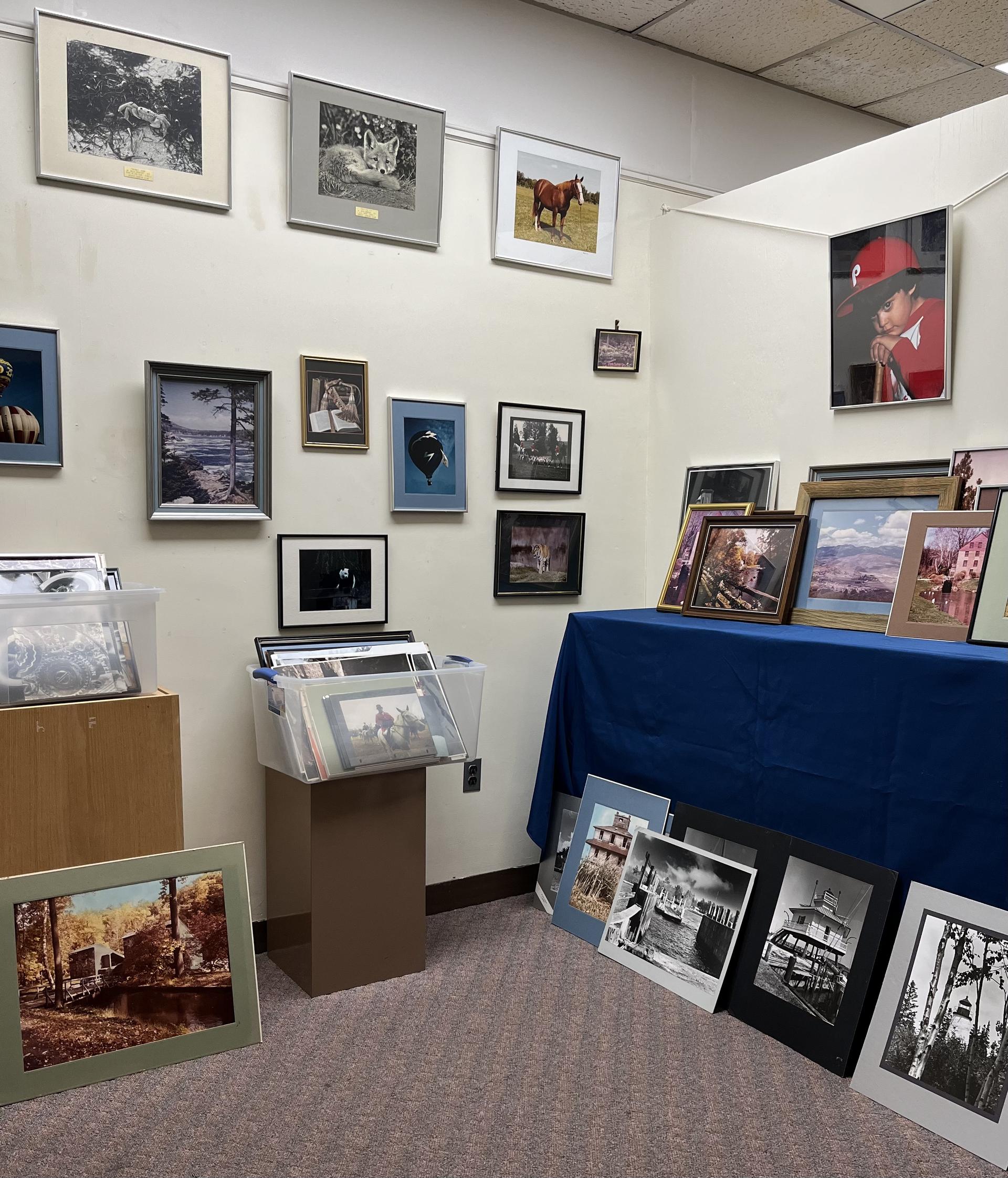
Collection of photographs by Melva Jane Bradford on display and for sale at the Milford Museum

The family of the late Melva Jane Bradford, whose landscape, animal and still life photos received multiple awards, donated a large portion of her collection to the Milford Museum. The items are now for sale at the museum.

“The collection contains a wide array of scenes, including landscapes, animals and still life,” Denise Curtis, a board member with the museum, said. “Some are framed and matted while others are available for you to surround with your own frame.”

Bradford grew up in the Milford-Frederica area but traveled the world as a member of the United States Air Force. After tours in Maine, Germany and Washington, DC, she was assigned to the Communications Center at the Pentagon before transferring to Dover Air Force Base as the first enlisted single WAF. Although Bradford enjoyed being back in her native state, a promotion took her to Virginia where she passed away. At the time of her death, she was planning a move back to her home state.
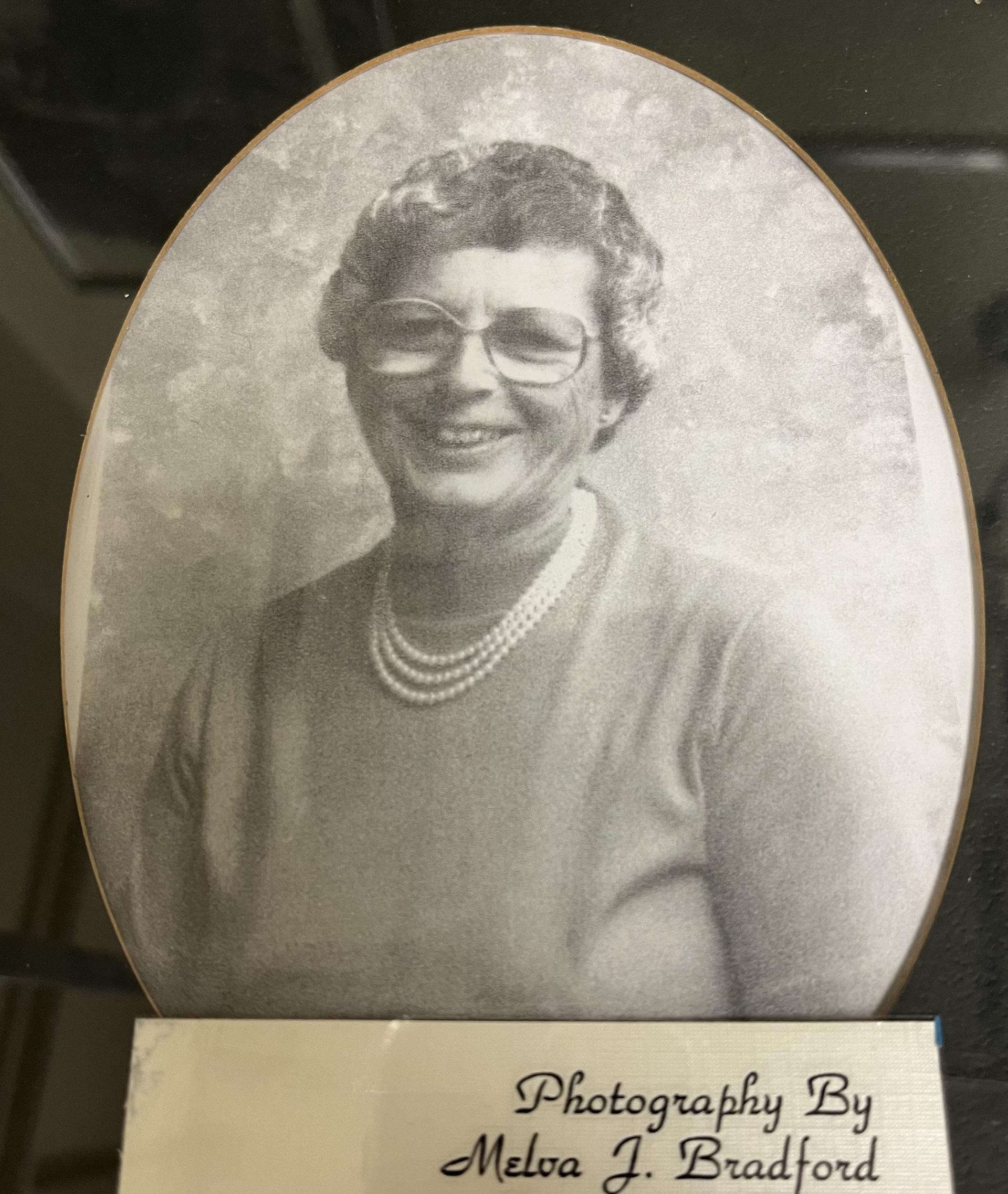
Melva Jane Bradford

“She was considered by many to be a renaissance woman,” Curtis said. “She owned and fixed her own cars, enjoyed computers and, of course, cameras. She saw beauty in everything as is evident in her photographs.”

Many of the photographs taken by Bradford can be found at the Delaware State Archives as well as the University of Delaware. Her work has also been featured in several books published by Holly Press in Hockessin. In addition to the collection of photographs, Bradford’s family donated an additional $500 to the museum.

imageimage

Milford Museum is located at 121 South Walnut Street in Milford. Their hours are 10 AM to 3:30 PM Monday through Friday. For more information, call 302-424-1080 or email [email protected]. Photographs can also be purchased online by visiting the Support link on the museum website.

RELATED STORIES:

Share this Post

I edit photos every day, but I only ever use one app — Here’s how Pixelmator Pro can transform any image in seconds

I edit photos every day, but I only ever use one app — Here’s how Pixelmator Pro can transform any image in seconds

There are so many photo editing apps available for Mac that it can sometimes be a daunting prospect trying to pick one. Of course, there’s Photoshop, which is literally now synonymous with editing images the world over. Then there’s also Adobe Lightroom, GIMP, Luminar Neo, and more. Apple even has its own editing suite built into Apple Photos, and there are plenty of online tools available, too, such as Canva. But for me, one app has proven ever-present in my workflow, and ultra-reliable when it comes to results. As a certified novice when it comes to both photography and editing, I need an app that does everything for me. Enter Pixelmator Pro. 

I was first introduced to Pixelmator Pro a couple of years ago, and it is now, by far, the most-used app on my Mac. Pixelmator Pro is one of the best photo editing apps for Mac, and I use it to edit all the photos I take on my DSLR, but thanks to intense integration with Apple’s ecosystem, it’s also perfect for editing photos taken on my iPhone. 

The thing I love the most about Pixelmator Pro is that it’s photo-editing on autopilot. You don’t need to know the first thing about white balance, hue (whoever he is), saturation, sharpness, or anything else for that matter. While all these options and tweaks are available to those who need them, I’ve found the value of Pixelmator Pro to be held in its incredible “ML Enhance” feature and its array of excellent films, which are refined Instagram filters. Let me show you how I use it to transform an image in seconds. 

Pixelmator Pro has an option to open iPhone shots directly from your Photos app on the Mac. As long as your iCloud sync is up and running, images you take on iPhone are automatically synced to your Mac and then can be opened directly in Pixelmator Pro. Pixelmator Pro recently added support HDR, which is great for some of the HDR photos I take on iPhone and it also supports Apple’s ProRAW format, so I can edit images in RAW for more control. 

Cropping and positioning

Pixelmator Pro on Mac

(Image credit: Future)

Sometimes you can make a photo much better just by cropping it. Literally hitting the C key brings up a comprehensive cropping screen. There are controls for aspect ratio, rotation and tilt, and a series of grid overlays such as Rule of Thirds and Grid, which can be used to get the image positioning just right. However, as I’ve said, for me Pixelmator Pro is all about convenience, so I’ll often hit the ML Crop button to see what the software thinks of my photo. Sometimes it gets it right, other times not, but it’s so easy to toggle the machine learning adjustments that cropping your image is a breeze.  

Color adjustments

Pixelmator Pro on Mac

(Image credit: Future)

The fun part comes in the Color Adjustments tab, again reached with a simple key press (A). While pros could spend hours in every single setting tweaking and re-tweaking, I often edit photos on the fly, and speed and expedience are usually the main goal. To that end, the first thing I do is hit the ML Enhance button. Just like ML Crop, ML Enhance uses machine learning and AI to transform your image instantly. The changes are often subtle, but I’ve never seen it make an image worse. It tweaks color, exposure, contrast, brightness, shadows, and more. If you’re feeling ambitious, you can tweak each section individually. For example, you can toggle White Balance settings, including whether you want ML editing in that particular area. This means you can set AI to edit the whole piece or just individual aspects like Color Balance. 

More often than not, however, I simply roll with whatever ML Enhance throws out in the first instance, if I don’t like it, I can simply click the same button again to remove/undo the changes.

 Films 

Pixelmator Pro on Mac

(Image credit: Future)

The third and usually final act in editing these photos comes from Films. As I’ve mentioned, these are really like Instagram filters on steroids for your iPhone pictures. There are eight categories, including Vintage, Black & White, and Modern, each with several individual films. Just like the AI adjustments, you can simply click on a filter to see its effects, clicking on it again to remove it if you don’t like it. 

Sometimes, I’ll be content enough with an image that it doesn’t need a film, but if it does, adding one replaces the aforementioned Color adjustments. If I like the film better than the Color Adjustments, I’ll stick with it, but if there’s still something missing, you can hit the ML Enhance button again while a filter is active to get the best of both worlds, a carefully curated film with AI adjustments made over the top 

This might sound a bit hectic, but it’s very simple once you get the hang of it. Pixelmator lets me crop and color adjust images usually in around 10 seconds. Of course, I’m not plumbing the depths of pro photography here or freelancing as a wedding photographer, but for my daily needs, this workflow is absolutely perfect. Here’s a quick look at a trio of edited images that Pixelmator Pro gave me. 

As you can see, I’ve cropped this shot to 16:9 and really quite like it, I love the colors from the floral arrangement, but, being Scotland, it all feels a bit washed out and grey.

iPhone photography week Pixelmator Pro

(Image credit: Future)

I threw a film on it (Cinematic 1 if you were wondering) and immediately preferred the colors here.  

iPhone photography week Pixelmator Pro

(Image credit: Future)

For the final touch, I then added the ML Enhance on top of the film, which restores the festive red to much of the decor (and the parked car). 

iPhone photography week Pixelmator Pro

(Image credit: Future)

Truthfully, I actually prefer the second of these three images, but this is the beauty of Pixelmator Pro. Its one-touch AI enhancements let me make hefty changes at the touch of a button, and undo them just as quickly. While it’s not going to win me any photography awards, it’s certainly an improvement. 

While Pixelmator Pro is not free, its $49.99 price tag is much more generous than the cost of some photo editing suites, and there’s even a free trial for Mac. If you’re a budding iPhoneographer and want a quick and easy way to take your images to the next level, I can’t recommend it highly enough.

Do you use Pixelmator Pro? Share your photos with iMore on X (Twitter) using #iMorePhotographyWeek

Sarfo Emmanuel Annor: “I Want to Showcase the Beauty of Black Skin”

Sarfo Emmanuel Annor: “I Want to Showcase the Beauty of Black Skin”

Ahead of his debut solo exhibition in Paris, AnOther meets the Ghanian artist painting jewel-like portraits of people from his hometown

February 19, 2024

Sarfo Emmanuel Annor’s portraits hum with a meditative frequency. Strong, primary-coloured backgrounds lay the foundation, in front of which his radiantly dressed subjects appear to levitate on a separate plane. Colours are exclusively bold but Annor keeps them in careful balance, creating perfectly tuned compositions with an almost holy aura.

The 22-year-old artist has made this deft interplay of light, colour and emotion the raison d’etre of his growing practice, creating jewel-like portraits of people from his hometown of Koforidua, southern Ghana. Last year, Annor received his debut solo show at the Bridge Gallery in Paris, and most recently, featured at the fifth edition of 1-54’s Contemporary African Art Fair, held recently in Marrakech.

Founded in 2013 by Touria El Glaoui, 1-54 remains the first and only international fair dedicated to contemporary African art. Featuring galleries from across the continent alongside international counterparts that reflect the wider diaspora, 1-54 has supported young artists like Annor from the outset.

As is true of many emerging African photographers, from Ismail Zaidy to Derrick Ofosu Boateng and fellow Ghanaian Prince Gyasi, Annor started out taking photographs on his smartphone. Combining his day job as a designer’s apprentice with a background in painting, photography offered a way of uniting both. “I started with taking photographs of family and friends,” says Annor. “Especially my niece – I used to do only portraits of her in the beginning.”

More recently, Annor’s list of collaborators has expanded but two things remain unchanged: all are children and all share dark skin tones. “Kids have this special aura around them,“ explains Annor. “They represent the future and that makes the work really special for me.”

The choice of shooting dark skin tones, on the other hand, offers a technical advantage, providing a high contrast with the textured white walls Annor uses as his backdrops so that their colour can be easily changed later. But the decision is also an integral part of Annor’s ambition to channel the radiant energy and vitality of his home. “I want to showcase the beauty of Black skin to the world,” says Annor, whose sitters all hail from Koforidua’s population of just under 100,000. “One of the main symbols in my photography is embracing dark skin and challenging African stereotypes around it.”

In spite of their relative locality (all his photographs were shot against found white walls in Koforidua), this Pan-African sentiment runs through Annor’s work, down to the ceremonial cloths worn by his sitters, which he has collected from different countries across the continent.

These exquisite fabrics are just one of several colour inputs that Annor uses to play with the emotional resonance of each portrait. “I really believe these colours can lighten your mood,” he says. “If you’re having a bad day, these colours can directly influence your emotions.” Each portrait reflects a different mood and each mood a colour, but Annor also brings narrative to his portraits with playful symbolism. In one photograph, a model stands with her back to the camera, an open book resting on top of her head (Burdened, 2021). “Here in Ghana, most kids face a lot of pressure around school from their parents. The concept is about how learning can become a burden and that they also need to play to be kids.”

Though he cites René Magritte and Vincent van Gogh as influences, closer similarities to Annor’s style can arguably be found in the work of pioneering US painter Barkley L Hendricks. Paintings like Misc Tyrone (Tyrone Smith) (1976) and Blood (Donald Formey) (1975), in particular share clear parallels with Annor’s intuitive sense for colour and sharp tailoring, as well as his elevation of Black skin.

Perhaps it’s little surprise, therefore, that Annor has his sights set on taking his work into museum spaces and sharing the same walls as his idols. “My dream is that one day I will show my work somewhere like Tate,” says Annor. “I want to continue developing works like this, works that promote a uniquely African beauty and tell stories of African youth.”

Sarfo Emmanuel Annor’s debut will go on show at the Bridge Gallery in Paris from 21 – 26 February 2023.

B&H takes up to $500 off Canon mirrorless cameras and up to $300 off lenses in spring sale

B&H takes up to $500 off Canon mirrorless cameras and up to $300 off lenses in spring sale

B&H is kicking off a new pre-spring photography event today with tons of Canon gear on sale. You’ll find price cuts on some of the more recent mirrorless cameras, as well as tried and true solutions for portraits, landscape photography, and capturing street shots. Not to mention lenses, too. Everything is at least $100 off and starts from $499 shipped. We break down all of our favorite deals below, or you could just peruse the offers yourself.

Canon mirrorless cameras on sale:

Canon lenses on sale:

More on the Canon EOS R5 Mirrorless Camera:

For the professional image-maker who needs resolution, speed, and video capabilities, the Canon EOS R5 full-frame mirrorless camera features a newly developed 45MP CMOS sensor, which offers 8K raw video recording, 12 fps continuous shooting with a mechanical shutter, and is the first EOS camera to feature 5-axis sensor-shift image stabilization.


Subscribe to the 9to5Toys YouTube Channel for all of the latest videos, reviews, and more!

Recent VideosRecent Videos

Underwater photo competition showcases stunning images of marine life

Underwater photo competition showcases stunning images of marine life

Diving northern gannets

Kat Zhou/UPY 2024

Snowy-white northern gannets (Morus bassanus) plunge into the icy waters of the North Sea in search of food in this action-packed photograph taken off the Shetland Islands in Scotland.  The seabirds are almost as big as an albatross, with a wingspan of up to 180 centimetres. They are also uniquely adapted to high-speed diving, with strong neck muscles and nostrils inside their bills that can be closed to prevent water entering.

The shot was one of the many spectacular entries to the 2024 Underwater Photographer of the Year competition, which celebrates the wonders of the marine world. Here are some of New Scientist’s top picks from this year’s contest.

Virgo wreck near Recife, Brazil

Fabi Fregonesi/UPY 2024

In this photo by Fabiana Fregonesi, a school of fish swarm around a wreck, forming a shape resembling the boat’s sail for a fleeting moment. The shipwreck, called Virgo, was deliberately sunk in 2017 to be a dive site near Recife, Brazil.

“The feeling I had at the time was that the ship was ready to set sail, beginning its journey towards an unknown adventure,” Fregonesi said in a statement.

The eye of a grey whale

Rafael Fernandez Caballero/UPY 2024

The eye of an eastern grey whale (Eschrichtius robustus) pierces this mysterious shot taken from just above the surface of a saltwater lagoon in west Mexico. These marine mammals are friendly creatures, often showing their curiosity by approaching boats. Grey whales go on one of the longest annual migrations of any mammals – from feeding grounds in the Arctic southwards along the west coast of North America to the warm lagoons of Baja California, Mexico.

An octopus ringed by a pyrosome

Dennis Corpuz/UPY 2024

In stark contrast to the gigantic grey whale, this tiny 10-centimetre-wide organism was captured up close in the deep waters of the Philippines. The circular subject of the image is a pyrosome – a colonial animal that is made up of hundreds of thousands of minuscule individuals called zooids. Enveloped inside the bizarre pyrosome is a little octopus, just peeking out.

A diving cormorant

Jon Anderson/UPY 2024

This ravenous cormorant makes a beeline towards the photographer Jon Anderson’s camera, after mistaking it for a fish. The extraordinary photo was taken in a kelp forest at a dive site in Monterey, California, during a bright summer afternoon. Many cormorant species rely on these special marine ecosystems to survive; however, local kelp forests have declined 80 per cent in the past decade.

A stranded sperm whale

Nuno Sá/UPY 2024

Dozens of beachgoers in southern Portugal attempt to save a sperm whale (Physeter macrocephalus) in this magnificent aerial shot.

“Together they push and chant, trying to help the giant back into the sea, as it slowly slaps its tail back and forth, and breathes heavily,” said photographer Nuno Sá in a statement. Despite their best efforts, the whale died several hours after reaching the beach – its body crushed under its own weight.

Topics:

The 2023 Monochrome Photography Awards Have Revealed The Best Black And White Images

The 2023 Monochrome Photography Awards Have Revealed The Best Black And White Images

#1

3rd Place In The Wildlife Category: “Baby Back” By Baiju Patil, India

“This photo was taken at Daruji National Park Karnataka India. This photo was taken while the mother was walking down the rock, but the cub was not ready to get off her back. When she was coming down, she literally cried like a baby and quickly climbed onto her mother’s back.”

Monochrome Photography Awards Report

#2

1st Place In The Wildlife Category: “Our Kingdom” By James Lewin, Kenya

“Lions have been momentous symbols to humankind for thousands of years. Their bravery, strength, courage, loyalty, and close family bonds have inspired millions of people in their day-to-day lives. My aim in Ndutu this year was to create a group portrait that would resonate with and connect us to this most iconic mammal and highlight their noble qualities.

For a worthy portrait to materialise, I needed the subject, location, composition, light, background, and sky to come together simultaneously, which, of course, is totally out of my control. These few and far-between split seconds have become what I search long and hard for. There is simply no better feeling than when it all pays off.

I am especially drawn to how the proud noble gaze of the lion represents the stability and leadership that dominant males bring to a pride and how the intent stare of the lioness reminds us of their loyalty to the pride and powerful hunting capabilities. It brings a subtle balance to the frame, highlighting the inspiring qualities of such a famous and highly regarded species.”

Monochrome Photography Awards Report

ADVERTISEMENT

#3

1st Place In The Street Category: “Snowfall” By Beata Zawrzel, Poland

“A boy plays in the snow after sudden and intense snowfall following rather mild first month of winter. Kraków, Poland on February 3, 2023.”

Monochrome Photography Awards Report

#4

2nd Place In The Street Category: “Bubble Fun” By Tebani Slade, Spain

“I came across this bubble thrower on my walk home one afternoon. For the small change they make from donations, they bring so much joy to children who jump and dance to pop the bubbles as they float into the air. It’s a magical feeling.”

Monochrome Photography Awards Report

#5

3rd Place In The Nature Category: “Love Language” By Fenqiang Liu, United States

“On a serene spring morning in Central Florida in 2020, a majestic Great Egret gracefully returned to its nest, where its young baby egret had patiently waited. I was privileged to observe and document the profound and tender bond between parents and offspring through my camera lens.”

Monochrome Photography Awards Report

#7

1st Place In The Landscapes Category: “Dust-Laden Hooves: Saga Of The Volcanic Riders” By Mahendra Bakle, India

“The Tenggerese people, known as ‘The Horsemen of Bromo’ in Indonesia, embody a captivating cultural legacy in the stunning landscape surrounding Mount Bromo. Their vibrant customs and role as horseback guides create an immersive experience for visitors exploring the volcanic terrains. These horsemen, with their traditional attire and deep-rooted rituals, offer travelers not just a ride but an encounter with the rich heritage of the region.”

Monochrome Photography Awards Report

ADVERTISEMENT

#8

Monochrome Discovery Of The Year 2023: “My Kingdom” By Simon Biddie, United Kingdom

“Male California sea lions are distinct from female sea lions; they are larger in size, have thick necks and possess a protruding, grey sagittal crest. During mating season the dominant males become territorial and protect their harem, which can be up to 30 females. This male bursts through a shoal of sardines, with his harem seen behind him. At Los Islotes, in the Espiritu Santo National Park, Mexico, the California sea lion has been protected under Mexican law since 1994. As part of the Islas del Golfo de California Flora and Fauna Protection Area (APFF-IGC), the area is a no-take zone enforced by La Comisión Nacional de Áreas Naturales Protegidas (CONANP), which positively impacts predators’ food sources such as sardine shoals. Espiritu Santo Island is a UNESCO World Heritage site since 2005 and was declared a National Marine Park in 2007. Thanks to these efforts, the sea lion colony at Los Islotes has expanded and is estimated at 400 – 800 individuals, making it now one of the most stable colonies in the area. While restricting direct human activity has hugely benefited the California sea lion population in Espiritu Santo.”

Monochrome Photography Awards Report

ADVERTISEMENT

#9

3rd Place In The Photojournalism Category: “Rapa Das Bestas” By Hans-Maximo Musielik, Mexico

“The entire body of work was taken along 4-5 months between April and August of 2022 in different parts of the Val Miñor region in Galicia, Spain. This photo in particular was taken at the Torroña “curro” in Pontevedra on June 5th, 2022. The “Rapa das Bestas” or “shaving of the beasts” is a Galician tradition that takes place every summer on different dates and places mostly along the Galician southern rural mountainous areas. Basically the horses are rounded up and locals in a comunal effort, drive them to the “curros” which are mostly stonewalled rodeo-like structures, where their manes and tails are shaved, dewormed and mandatory microchips are implanted on the newly born foals. After all these processes they are let go to roam freely for another full year. I wanted to document the entire process in different locations where different catching technics were applied. The picture shows just a part of “curro” where horses have been rounded up. For obvious reasons I immediately identified the white horse from the rest of the herd and snapped a couple of pictures.”

Monochrome Photography Awards Report

ADVERTISEMENT

#12

2nd Place In The Wildlife Category: “Untitled” By Andre Estevez, United States

“I shot this humpback whale lunge feeding in Monterey bay, California the humpback lunge fed way to close from the boat and I was only able to get close details of the mouth.”

Monochrome Photography Awards Report

#13

1st Place In The Photomanipulation Category: “Yin” By Bella Von Einsiedel, Germany

“Part of my series ‘YIN & YANG’.

A series that shows the connection between human beings, nature and the balance of the universe. The bright side and the dark side of life, which belong together and therefore cannot be viewed separately. What would Yin be without Yang? Would we appreciate the light without knowing the darkness? It’s always darkest before the dawn.”

Monochrome Photography Awards Report

#15

1st Place In The Nude Category: “Monolith” By Lukasz Spychala, Poland

“Man seems to us to be a stable, uniform whole, hard as a rock, just like the title monolith. We forget, however, that, like rocks, we are often formed by erosion. We can get used to bad experiences, accept that they have become an inseparable part of ourselves and turn them into a strong side of our personality.”

Monochrome Photography Awards Report

ADVERTISEMENT

#16

1st Place In The Nature Category: “Winter Story” By Bin Zhang, China

“This is Inner Mongolia, China. The filming location is located in Ulan Butong Grassland. A horse stands in the early morning snowstorm, waiting for its owner.”

Monochrome Photography Awards Report

#17

3rd Place In The Landscapes Category: “Aphairesi – Study 14” By René Algesheimer, Switzerland

“The Greek word for abstraction is αφαίρεση (aphairesi), which means “removal” or “withdrawal”. This term is often used in the context of philosophy to refer to the process of abstracting or separating an idea or concept from its concrete or sensory representations. In art, abstraction can also refer to the process of reducing a form or image to its essential geometric or formal elements, which can then be rearranged and recombined to create a new visual language.

The project follows Clement Greenberg’s idea of abstract expressionism. As a mathematician, through this project, I hope to challenge viewers to see the world in a new way, to appreciate the beauty and complexity of geometric forms, and to consider the ways in which the language of geometry can be used to express a wide range of emotions and experiences.

Death Valley, 2020″

Monochrome Photography Awards Report

#18

1st Place In The Fine Art Category: “We Are Part Of Nature” By Markéta Novak Leupoldová, Czech Republic

“Sometimes we tend to forget that we are an integral part of nature.

In my photographs, I create compositions where I blend man with nature. This creates a unified image where man and nature merge into one motif.
With this work I strengthen the current theme of man and nature.”

Monochrome Photography Awards Report

ADVERTISEMENT

#19

3rd Place In The Fashion/Beauty Category: “A Girl With Tin Foil” By Xiayu(Renee) Li, United States

“I was inspired to create a captivating photo series featuring a beautiful girl adorned with tin foil, as I found the combination to be intriguing. To enhance the dramatic effect, I crafted tin foil decorations specifically for the girl, transforming her appearance into a mesmerizing and striking portrayal.”

Monochrome Photography Awards Report

#20

1st Place In The Architecture Category: “Future Past” By Mario Tarantino, Spain

“This photo was taken at the Taal Monument located in Paarl, South Africa. The brutalist architecture of the monument is typical of the 70’s. The monument commemorates Afrikaans being declared an official language of South Africa separate from Dutch.

The silhouetted person (who is my father) is demonstrating scale, creating a mood and story as well as contributing to making the image surreal.

In both the composition and post processing of the image I wished to convey an outer worldly feel. A place of importance, a central meeting point or perhaps a place of worship. In searching to further develop surreality, the processing of the images has been done in black and white.”

Monochrome Photography Awards Report

#21

Monochrome Photographer Of The Year 2023 And 1st Place In The Portrait Category: “An Acid Attack Survivor (Portrait At The Taj Mahal)” By Érico Hiller , Brazil

“An Acid Attack Survivor (Portrait at the Taj Mahal). In my work for my new book about women, I was in Agra, India, and I was able to meet countless women like Geeta, in the photo, who posed for me, a timeless and disturbing portrait, which shows a trace of the violence and intolerance of our time.”

Monochrome Photography Awards Report

#23

1st Place In The Fashion/Beauty Category: “A Chinese Minority Girl” By Xiayu(Renee) Li, United States

“I took this picture of a Chinese minority girl who is living in the US. It’s important to learn and appreciation for the beauty of cultural diversity, especially those that may not receive as much attention or recognition as others. By understanding and respecting diverse cultures, we can promote greater understanding and empathy among people from different backgrounds.”

Monochrome Photography Awards Report

#24

1st Place In The Conceptual Category: “Jesters Gender Game” By Austn Fischer, United Kingdom

“Jesters Gender Game, a celebration of historical queer artists’ fearless exploration of gender performance. This photographic project draws inspiration from visionaries like Claude Cahun and Marcel Moore, who challenged gender norms through provocative self-portraits. This project embodies the concept of “gender performance” by Judith Butler, illuminating the idea that gender is a socially constructed performance shaped by cultural expectations.

Through a vibrant tapestry of clothing, makeup, and body language, participants in Jesters Gender Game craft intricate narratives of identity and liberation. The photographs playfully reveal how clothing influences societal perceptions, determining individual personas. It encourages viewers to reflect on their assumptions and embrace the richness of human expression.

A fusion of history, gender theories, and humor, “Jesters Gender Game” invites us to celebrate the beauty of diversity and embrace our authentic selves.”

Monochrome Photography Awards Report

#25

3rd Place In The Architecture Category: “Nabatea” By Nigel Malone, Australia

“The name of this image comes from the Nabateans – an ancient culture you might be more familiar with for their Architecture sculpted in stone at Petra in Jordan. They also travelled to what is now the remote deserts of Arabia, where this photograph was taken. For this image shot on film, I used a vintage rangefinder camera. I wanted a similar feel as the historic black and white images from the time of the discovery of the great pyramids, the time of Howard Carter – that can only come from vintage lenses.”

Monochrome Photography Awards Report

#26

2nd Place In The Architecture Category: “National Theatre Luminosity Ballet” By Thomas Maguire, United Kingdom

“Image taken of the famous Brutalist National Theatre in London. A ballet of luminosity which makes the structure all the more beautiful and appreciated.”

Monochrome Photography Awards Report

#27

3rd Place In The Street Category: “17 And A Half Monks” By Marcelo Silva

“About 4 million tourists pass through the enigmatic galleries and streets of Angkor Wat each year, stopping just long enough to take a selfie before continuing their frenetic pursuit of the next attraction the Kingdom of Cambodia can offer them.
Far removed from this madness are the monks who, although they seem to emerge from the very bowels of the temples, are in fact also tourists passing through Angkor. Unlike the hundreds of loud and hurried foreigners who pass them brusquely by (thus protagonizing a rare, live time lapse), the monks silently occupy every alley until they establish a connection without which, it seems, they can advance no further. In this way, slowly, they blend into the carvings on the walls, doors and hollows until they become part of the landscape and [seem to] disappear into the largest religious structure ever built.”

Monochrome Photography Awards Report

#28

3rd Place In The Photomanipulation Category: “Marvellini Vogue” By Collective Foto Marvellini, Italy

“Concept
Last works of the italian collective Foto Marvellini deal with the phenomenon of ‘Fashion’, easily demonstrating how this is only apparently a superfluous feature of any civilization. In fact, it’s the “modus” that affirms aesthetic and cultural style, at a particular historical moment and in a defined geographical area, in order to adopt elements of internal cohesion within a group of distinction with respect to others. Denying with photographic evidence the chronologies of the past styles, inevitably, leads one to question the entire civilisation and mentality of the women and men of that period. Because even unconsciously, we know that Fashion is influenced by external factors such as, for example, technology and economics (which have an impact on the way it evolves over time) and by historical and political events (sometimes simply related to the availability and use of materials).

Technique
Digital processing from originals photos on glass by C.M. Bell (a Washington portrait photographer, little known but very prolific in the second half of the 19th century) granted by the US Library of Congress. Digital restoration, postproduction, insertion of contemporary elements with studio shooting and computer-generated textiles. Darkroom prints on Bergger Wart-Tone baryta paper with silver salts in limited edition of 5, each one mounted in antique frames with anti-reflection glass (max. sheet size cm. 50X60).”

Monochrome Photography Awards Report

See Also on Bored Panda

#29

2nd Place In The Photojournalism Category: “Jugglers” By Natalia Gorshkova

“This story about people who fallen into a difficult life situation. People who don’t give up and find opportunity for a full life. Surgeries, rehabilitation, depression and despair led them to the search for another ways and other meaning for life in new circumstances.
The top of the self-sacrificing desire to conquer the tragic situation for them becomes a playing in basketball. For people who braving itself and who coming to the sports ground to fight and win it’s a kind of challenge to fate.
As a photographer I’m aimed to find such visual solution which tells the audience what stands behind those victories. I sought not to show the inferiority, but how much strength, patience and infinite possibilities lurk within each of us.

The main idea is to show healthy people and people with traumas that our body is just an outer shell which doesn’t mean anything to what we really are.
It shouldn’t have any influence on the quality of life and impose restrictions on our lifestyle.”

Monochrome Photography Awards Report

#30

3rd Place In The Conceptual Category: “Aphonic” By Chandler Williams, United States

“This image is called Aphonic, meaning silent or without a voice.

I’m connected with all my pieces on an emotional level and this one in particular is deeper than the other ones. This is my first piece that I have conceptualized and it really comes from a deep personal part of who I am and who I want to become.

Aphonic is based around the idea of showing the beauty of mother nature while highlighting the problems plastic and trash have created and how we are slowly destroying our environment.

I chose to work with designer Candi Gordon, a recent SCAD graduate, whose focus in the fashion industry is sustainability. When we first collaborated I knew that she was the right designer for this project. As you can see, the Aphonic custom dresses are the result of unbelievable hands-on tailoring. The dresses are made out of recycled plastics, fishing string, hook leaders, and other items.

The idea was to show the beauty of the model without being too obvious with loose plastic and other trash. We wanted the plastics to be subtle, just like environmental concerns can sometimes be, while on a beautiful model and we achieved it.”

Monochrome Photography Awards Report

#31

2nd Place In The Conceptual Category: “Horror Movies Story” By Hardi Budi, Indonesia

“Have you ever seen a horror movie? What’s your reaction when you watch a scary scene? This picture series is a Metaphor, tells about how people reacts when they watching a Horror Movie. The photoshoot was taken in an old theatre in Jakarta.”

Monochrome Photography Awards Report

#32

3rd Place In The Abstract Category: “Oyster Mushroom 6” By Dale M Reid, Canada

“Initially, the oyster mushroom captured my imagination and I have since added other wild varieties as subject material. My creative vision uses their bizarre and varied shape, alien textures, and intricate detail combined with composition and lighting to present crisp images with a dose of abstraction. Abstraction makes them unique and opens them to multiple interpretations depending on the viewer’s imagination to use their personal memories and life experiences to build content.”

Monochrome Photography Awards Report

#33

1st Place In The Abstract Category: “Poetry Of Silence Xxvi-7” By Roland Blum, Liechtenstein

“Poetry of Silence is an ongoing body of aerial desert photography created in the Namib Desert. This photograph was created in the southern Namib near the rugged Atlantic coast, where these constantly changing abstract patterns and structures are being shaped by the elements.

The picture was taken from about 1500 meters over the ground flying with a helicopter.”

Monochrome Photography Awards Report

#34

3rd Place In The Fine Art Category: “Untitled” By Jaroslav Šimandl, Czech Republic

“I create as much as possible in reality, only minor corrections with photoshop. I’m looking for new perspectives on hidden connections. Some inspiration: graphics, architecture, renaissance, music…”

Monochrome Photography Awards Report

#36

3rd Place In The Portrait Category: “Smoking Man” By Ien Yamasaki, Thailand

“Portrait of smoking old man take a break from transportation and watch over Chinese shrine near Chaophraya river in Bangkok, Thailand. Transportation via river is common in Bangkok and can be tiresome work during hot summer day.”

Monochrome Photography Awards Report

#37

2nd Place In The Portrait Category: “Back To You” By Giandomenico Veneziani, Italy

“I’m on a mission.
My world is dying, everything around me loses life force.
Everything fades away and the battle for survival is turning into hatred and pain.
I travel in search of a solution. I have no destination, there is no point of arrival. I move around trying to capture the essence of rebirth.
There is a gap in front of me, I think it’s a door: through it… suddenly a wave submerges me. I am about to drown and I know that I have to swim hard to emerge from these strange and rushing waters. I close my eyes and when I open them again I find myself floating on a body of water.
I don’t know where I am, this new world is different from mine.
I’m tired, but with the little strength I have left I try to emerge from this sea. I think my journey cannot end with a surrender. My only purpose is to be able to save my fellow men, my mind is pervaded only by this goal.
I wander through unknown and hostile lands. The heat suffocates me and that big star on the horizon burns my skin. I’m about to give up. My appearance has changed, my shape is no longer the same. I know it’s still me, even if I have a hard time recognizing myself.
At one point, bordering on desperation, I notice something: a light calls me insistently, it scares me, but at the same time it fascinates me.
Slowly I approach.
The voice of the light becomes more and more intense. My body shakes.
Here she is!
That light takes possession of me, it enters by tearing my skin. No pain. I can perceive serenity and harmony. My body has new energy. It pervades me, it flows.”

Monochrome Photography Awards Report

#38

2nd Place In The Fine Art Category: “Peace” By Małgorzata Fober, Poland

“The photograph “Peace” was created for the needs of the author’s calendar entitled “Everything in our hands”. This is one of the 13 photographs that make up the series of photographs depicting animals rescued by me. Each animal is shown in the company of human hands, people, people who visited my home at that time.”

Monochrome Photography Awards Report

See Also on Bored Panda

#40

2nd Place In The Photomanipulation Category: “The Skull” By Alexander Sviridov, Canada

“The human skull made out of female models, offering a unique perspective on beauty and mortality.”

Monochrome Photography Awards Report

Corunna photographer’s work recognized by Canadian Geographic

Corunna photographer’s work recognized by Canadian Geographic

Article content

Corunna’s Shaun Antle crossed a goal off his list this year.

Advertisement 2

Story continues below

This advertisement has not loaded yet, but your article continues below.

Article content

Antle earned an honourable mention in Canadian Geographic’s 2023 Canadian Photos of the Year competition for his image of a great blue heron diving into Canatara Park’s Lake Chipican.

Article content

A financial adviser by day, Antle has been taking photos for years and runs a sideline business he named Oh Me Nerves Photography.

“I snagged that shot on the north side of Lake Chipican July 13 of last year,” he said.

“That particular guy, he was doing his thing, just looking for some dinner,” Antle said.

“I was just laying on my stomach following him along. I was going for the shot right where they dive into the water.”

Later, while downloading the images, he saw he had one with water covering the heron’s eyes, but the eyes were still visible.

Advertisement 3

Story continues below

This advertisement has not loaded yet, but your article continues below.

Article content

“Pretty cool,” he said.

Shaun Antle
This photo by Corunna’s Shaun Antle of a great blue heron diving into Lake Chipican earned an honourable mention in Canadian Geographic’s 2023 Canadian Photos of the Year competition. Photo by OH ME NERVES PHOTOGRAPHY O/B SHAUN ANTLE /Handout

The Sarnia area has a large population of birds and waterfowl, but photographing them takes patience, Antle said.

“It’s hours and hours of laying in ditches and sitting in a blind,” he said.

Antle said he has been taking photos for 25 years now but “about 10 years ago, I got a little bit more serious with it.”

After someone asked to buy one of his images, Antle said he began putting his work in front of the public more often, including entering competitions and juried shows.

He submitted more than 20 mages last year to Canadian Geographic and learned in December his image of the great blue heron was selected as a finalist, and then in January Canadian Geographic announced it received an honorable mention in a Wildlife in Action category.

Advertisement 4

Story continues below

This advertisement has not loaded yet, but your article continues below.

Article content

There were more than 8,000 entries, according to Canadian Geographic.

“It was one of those moments where it’s like, ‘are you kidding me?’ I still am pinching myself,” he said.

Having a photo featured by Canadian Geographic was one of his photography goals and the recognition “is humbling,” he said.

“Someday the dream is to work for National Geographic.”

But Antle said he feels some “imposter syndrome” because he didn’t go to school to study photography. “It has always been a hobby.”

Despite that, he has been doing more recently to show his work, including exhibiting at Gallery in the Grove, teaching and public speaking.

Antle grew up in the Sarnia area, but his family is from Newfoundland and that’s where he spent most of his summers as a youngster.

Advertisement 5

Story continues below

This advertisement has not loaded yet, but your article continues below.

Article content

He used a Newfoundland expression when it came time to name his photography business.

Antle said he always had some sort of camera growing up. “I loved taking pictures of friends and family, and places that we went.”

It wasn’t until 2009 that he bought his first good camera and lens and took photos while he and his wife were travelling back to Sarnia through the U.S. after living in Western Canada.

Antle said now he takes all kinds of photos, including commercial work. “I only thing I don’t do is weddings. I wouldn’t touch that with a 10-foot pole,” he said.

“My bread and butter, so to speak, is wildlife.”

Article content

Comments

Join the Conversation

This Week in Flyers

Celebrity photographer hosts first gallery back in his home city on the far eastside

Celebrity photographer hosts first gallery back in his home city on the far eastside

INDIANAPOLIS — Over NBA All-Star weekend the inside of P30 on Indy’s east side was transformed in to a photo gallery.

Celebrity photographer John Canon was back home putting on his first showcase called Shooting for the Stars. Canon grew up on the east side.

“I don’t think the Far Eastside really discriminates. You got the good, the bad, you got opportunities. I feel like it’s pretty diverse,” said Canon.

For the last 8 years, Canon has been working as a celebrity photographer. His passion for photographer started at Warren Central High School and continued on after graduation in Chicago.

“I had gotten the opportunity to shoot a cancer in Chicago for Travis Scott, Young Thug, and Metro Boomin. I took video at the concert, but I used screenshots from it and people picked up on it as if it was actually photos and from there I just never stopped,” Canon said.

After being in Chicago, Canon used social media to network and found his way to Atlanta.

“Indianapolis native DJ Champ gave me the opportunity to document him at QC Studio and kind of like kicked off me getting my foot in the door in Atlanta,” Canon said.

Canon works with a lot music artists now and is the personal photographer for 21 Savage.

“That was my first opportunity to being an artists personal photographer,” Canon said.

The photo gallery at P30 showcased his eight year journey to get to where he is now, but was also about giving back.

“He’s been able to go places I’ve never been able to go,” Dennis Jarret, Canon’s high school teacher, said.

Jarrett also now runs 100 Cameras for 100 Kids, a new program that is providing under served youth the chance to learn photography.

Canon’s first gallery raised money for the organization.

A sensual portrait of young people in Bolsonaro-era Brazil

A sensual portrait of young people in Bolsonaro-era Brazil

William Rice’s O Novo Rio is a homage to the resistance, agency and style of Brazil’s queer youth

19February 2024

There’s an image of a young woman kneeling down in a river. She’s wearing a mask that harks back to centuries-old Brazilian folklore and a shirt for the country’s national football team. This study in contrasts – an older, spiritual tradition alongside a more contemporary, secular one – embodies a deep, political tension.

Photographer William Rice, whose new publication O Novo Rio explores this tension through portraits of people in Rio de Janeiro, who are captured in states of bliss, intimacy, and beauty. Rice, who has been travelling to Rio for almost a decade, took the pictures that would become O Novo Rio in the midst of populist president Jair Bolsonaro’s time in office; a period of far-right politics that were actively homophobic and transphobic. This is one of the reasons why, as Rice puts it, “the Brazil shirt, to me, worn in this kind of environment, shot by someone like me, styled by someone like Rafaela [Pinah] is strongly about resistance.”

Rice explains that Bolsonaro – Brazil’s president from 2019 to 2022 – and his followers adopted the nation’s football shirt as a kind of political uniform. “It became like the Make America Great Again hat,” the photographer tells Dazed. Rice recalls that this made the Brazilian football shirt become “really ugly”, in stark contrast to his own understanding of what the shirt meant historically. “When I watched the Brazilian football team in the 80s and 90s, there was such an unbelievable set of players […] and anyone could wear a Brazilian football shirt, in or out of Brazil – male, female, gay, straight. And Bolsonaro horribly politicised it. So to have a trans stylist put a young Brazilian woman in that football shirt was, to me, a fuck you move.”

A lot of O Novo Rio ties back to Rice’s own experiences as a young queer person; Rice says that he “didn’t feel entirely comfortable in [his] own queerness until [his] mid-to-late twenties”; showing queer spaces in this zine became a kind of antidote for that adolescent loneliness and a way to make sure others don’t get lost in what Rice called the “dislocating” feelings of growing up alone and queer. Instead, the Brazillian models featured in Rice’s monograph – most of whom are in their late tweens and early-to-mid 20s – possess what the photographer describes as “incredible amounts of agency over their own presentation and their own queerness, and part of me is kind of in awe of them.” Again, O Novo Rio becomes a kind of study in contrasts; as Rice puts it: “people are in really difficult social and political circumstances, but it will never stop them being themselves.” 

Rice describes much of this work – even the more stylised, produced images within it – as a documentary on Rio’s young people at this specific moment in time. The photographer explains that some of the awe and respect he has for the people in these pictures comes from the fact that they “live with much more agency than I was when I was their age”. Reflecting on the status of being an outsider, he writes in the introduction to the book, “This whole book is informed by an innate sense of being an outsider… When you’re queer, you’re automatically an outsider.” But he insists that this status comes with the need to treat everyone with the “respect of being in someone else’s house”.

An important aspect of the book is the photographer’s collaborations with stylists such as Rafaela Pinah and the impact they have on the work. He says that this outsider status means noticing things that you might “take for granted” while on the inside. For Rice, this meant recognising how a group of queer people might talk to each other or carry themselves. O Novo Rio becomes a celebration of these people, and Rice hopes that it can not only celebrate their agency, but also “make sure that we don’t move backwards, because there’s a lot of people that want us to move backwards”.

William Rice’s O Novo Rio is available in store at DSM now.