Photography

ArtDependence | Smithsonian acquires Earliest Known Photograph of an American First Lady

ArtDependence | Smithsonian acquires Earliest Known Photograph of an American First Lady

A landmark in both photographic and American history, the daguerreotype was the subject of fierce competition in Sotheby’s sale of Fine Books and Manuscripts, Including Americana, ultimate selling for some ten times its estimate and becoming, at $456,000, the most valuable American daguerreotype ever sold at auction.

Among the most important American photographic portraits to ever come to market, and one of very few surviving photographs of the woman who defined what it means to be the First Lady of the United States of America, the daguerreotype will now join the museum’s 1843 daguerreotype of John Quincy Adams by Philip Haas – the first known photograph of a U.S. President – which was acquired by the Smithsonian’s National Portrait Gallery from Sotheby’s in 2017.

Likely created in early 1846 by John Plumbe, Jr., when photography was still in its infancy, this portrait captures Madison at 78 years old, a key figure in Washington society, nearly thirty years after her late husband, James Madison, served as the fourth U.S. President (1809-1817) and a decade after she was widowed in 1836.

This image is one of the few surviving photographs of Madison. Initially attributed to Mathew Brady, new research uncovered by Sotheby’s specialists attribute the actual maker as enterprising John Plumbe, Jr., a leading figure in American photography.

Known for her influential role, Dolley Madison came to define a First Lady as we know it today, remaining a polestar of Washington society even after his presidency and after she was widowed. The House of Representatives awarded Dolley Madison an honorary seat on the floor whenever she chose to attend sessions – a privilege never granted before to a woman – and in 1844, when Samuel Morse demonstrated his invention of the electric telegraph, he chose Dolley Madison to send the first private message. Upon her death in 1849, thousands lined the streets to observe the procession – the largest funeral the city had ever seen. President Zachary Taylor’s eulogy coined the term “First Lady”, a term which survives in American tradition to this day.

“Time For Joe To Go”: Former White House Photographer Urges Biden To Drop Out After Trump Debate

“Time For Joe To Go”: Former White House Photographer Urges Biden To Drop Out After Trump Debate
'Time For Joe To Go': Former White House Photographer Urges Biden To Drop Out After Trump Debate

President Biden’s age is a particular concern with voters

After a rocky debate performance on Thursday night, political analysts and several US media organisations have been calling for US President Joe Biden to drop out of the 2024 race. Now, the former White House deputy director of photography under the Biden administration has also joined the growing chorus.

In an Instagram story after the debate, Chandler West wrote, “It’s time for Joe to go,” Axios reported.

“I know many of these people and how the White House operates. They will say he has a ‘cold’ or just experienced a ‘bad night,’ but for weeks and months, in private, they have all said what we saw last night—Joe is not as strong as he was just a couple of years ago. The debate was not the first bad day … it’s not gonna be the last,” Mr West wrote.

He further claimed that White House aides have known for months that Joe Biden’s mental health has been deteriorating but covered it up ahead of the debate. 

Several unnamed current and former Biden aides told Axios that the president is mentally engaged from 10 a.m. to 4 p.m., but outside of this time frame, he is more likely to have verbal lapses and fatigue.

Notably, President Biden’s age is a particular concern with voters and there have been calls from some Democrats for him to step aside for a new candidate. Despite weak poll numbers and questions about his age, he has stuck to his plan to seek a second term.

However, the 81-year-old president’s alarming presidential debate performance on June 27, has renewed calls for him to step aside. Biden, frequently seen fumbling and freezing during public events, appeared to lose his train of thought while answering a question by a CNN anchor on the economy. The Democrat made yet another mistake while answering a question on voters feeling “worse off” under his presidency.

If Joe Biden withdraws his name, delegates from 50 states will have to look for a replacement at the earliest. Vice President Kamala Harris, California Governor Gavin Newsom, Michigan Governor Gretchen Whitmer and Pennsylvania Governor Josh Shapiro are among the names that can represent the party. 

On The Ground At Pride 2024 With Vogue Photographer Aimee McGhee

On The Ground At Pride 2024 With Vogue Photographer Aimee McGhee
image

There are few occasions more utterly joyous than London’s annual Pride parade, the rainbow-hued celebration which, this year, saw over 32,000 people from 500 LGBTQIA+ community groups and businesses take to the streets of the capital last Saturday. Led by the Mayor of London, the procession made its way from Hyde Park Corner to Piccadilly Circus and Trafalgar Square before culminating in Westminster, after which the revelry continued at the Trans and Non-Binary Community Stage in Soho Square, the Cabaret Stage on Dean Street, the World Stage in Golden Square, the LGBTQIA+ Women’s and Non-Binary Stage in Leicester Square, and the Youth Zone in Victoria Embankment Gardens. As attendees basked in the glorious sunshine, there was, as usual, a stunning array of exuberant looks on display. Thankfully, photographer Aimee McGhee was on hand to capture all the festivities for Vogue. See her very best shots from the day, below.

PHOTOS: Texas Bank and Trust Photography Contest and Exhibition

PHOTOS: Texas Bank and Trust Photography Contest and Exhibition
image

Former Longview News-Journal reporter Angela Ward, second from right, and former News-Journal sports editor Bob Ward, right, listen during an awards ceremony Sunday afternoon as part of the Texas Bank and Trust’s annual Photography Contest and Exhibition. (Jordan Green/Longview News-Journal Photo)

The man who turned women into ice queens

The man who turned women into ice queens

This review of George Hoyningen-Huene: Photography, Fashion, Film by Susanna Brown (ed.) appears in the July/August 2024 issue of Apollo. Preview and subscribe here.

Is a model a mannequin, a statue or a living thing? For the early 20th-century fashion photographer, this was a burning question (and not just because the studio lights were so hot). The model was, herself, a relatively new invention, the flesh and blood embodiment of the replica women who went before her: the miniature 18th-century dolls in their miniature example gowns sent out to prospective customers; the usefully proportioned dressmakers’ busts that aided tailoring; the wax dummies with glass eyes and human hair displayed in shop windows. The fashion show, popularised around the turn of the century by designers including Charles Frederick Worth, Lady Duff-Gordon and Paul Poiret, required her ambulatory services as she strolled, drifted and turned, animating the clothing she wore.

Erna Carise and models around a Michelin push-ball, photographed by George Hoyningen-Huene and published in Vogue, 5 July 1930. © The George Hoyningen-Huene Estate Archives

Where the fashion show might have encouraged the model to move, the photographer beckoned her back towards stasis. (Early fashion photography could only move as fast as the technology – confined to the tripod within the studio, gestures had to be held for as long as it took the camera to blink.) As the fashion magazine – another fin-de-siècle invention, with American Vogue founded in 1892 – slowly made the move from illustration to photography, the display of clothes on the printed page became an experimental arena. Photographers including Adolph de Meyer and Edward Steichen laid the groundwork for a new visual language that combined the illustrative and the theatrical. Meyer’s chosen women were hazily lit society queens; Steichen, a modernist who took over Meyer’s position as chief Vogue photographer in 1923, favoured sultry, cinematic gloss. At first glance George Hoyningen-Huene is a photographer of the statue school. There is one right there on the cover of Thames & Hudson’s lavish new book about him. Taken in 1934, it features Catharina ‘Toto’ Koopman, a Dutch-Javanese model with a marvellously storied life (her CV included stints as a Chanel model, an Allied spy during the Second World War and a successful London gallerist). She is wearing a crisp, sinuous dress by French label Augustabernard. Toto’s face is perfectly lit in profile, her limbs throwing back long shadows. The pose suggests motion, one leg poised for the next step, but the effect is one of absolute stillness. If a skilled carving asks us to marvel at its uncanny mimicry of textures and movements – a muscle flexed, a skirt draped – then a photo like this achieves the opposite, reducing the human body to a glorious display of frozen solidity.

Reflections…, Miss Hubbell (1930), George Hoyningen-Huene. © The George Hoyningen-Huene Estate Archives

Digging into his background, one can see why Hoyningen-Huene might like an ice queen. Born in 1900 in tsarist St Petersburg to a Baltic baron father and American mother, he spent his childhood in what he described as ‘a world of Emperors, Grand Dukes and Grand Duchesses, nobility, militarism, authoritarianism, high-principled duty and incredible emotional tension […] a world of sacred things, of ikons and incense.’ Later, as revolution brewed, the family fled the country, first to England and then to France.

In Paris, Hoyningen-Huene landed in the midst of a creative and cultural explosion, a much-mythologised period in which France became, in the words of the composer Virgil Thomson, ‘a miracle spot like ancient Greece’. Hoyningen-Huene slipped comfortably into a social and professional network of Russian émigrés, American expats and artists drawn from across Europe, assembling the kind of contacts book that yielded an endless supply of models, subjects, creative collaborators and prospective employers, soon including French Vogue and Vanity Fair. He was aided by friends such as Man Ray, who taught him some of the rudiments of photography. In 1924 the pair collaborated on a fashion portfolio.

Man Ray, steeped in Surrealism, was a mannequin man through and through. The body was something to be segmented, distorted, upended, solarised; models’ faces interchangeable with masks, their eyes dripping perfect glass tears. The cynic might call it the ultimate form of objectification, the apologist (myself among them) drawn to the eerie fun of doubling and visual deception. Although Hoyningen-Huene photographed actual mannequins several times, his early vision was distinctly neoclassical – a mode that worked especially well in the 1930s, Madeleine Vionnet’s bias-cut gowns and Cristóbal Balenciaga’s bulbous, swooping silhouettes equally at home under stage lighting that picked out every drape and cheekbone, juxtaposed against the prop columns and blocks that Hoyningen-Huene favoured. There is an untouchable quality to the women who wear these elaborate designs, an enjoyably bitchy froideur that could not be sustained in quite the same way once Hoyningen-Huene made the move into colour. Even his erotic portraits of men, including his lover, friend and fellow photographer Horst P. Horst, are successful relics of a monochrome age – though these Olympians, muscles rippling, are not as remote as those still, self-contained women who graced Vogue and later Harper’s Bazaar.

Porch of the Maidens, Erechtheion, Athens, Greece (1939), George Hoyningen-Huene. © © The George Hoyningen-Huene Estate Archives

This book, edited by Susanna Brown, is clever and illuminating, with chapters by different writers devoted to the many and varied stages in Hoyningen-Huene’s life, all the way to a final act as a film colourist consultant in Los Angeles, where he died as a naturalised US citizen in 1968. Much of his architectural and travel photography restates his preoccupation with ancient forms – the line from the caryatids atop the Acropolis to his models draped in silk and jewels clear.

Fashion has always naively maintained an obsession with ‘timelessness,’ as though there could be some pure, unchanging definition of beauty not subject to societal tastes and neuroses. But a statue woman is as much a commodity as the mannequin woman, the fashion photograph borrowing from portraiture and fine art but ultimately separate given its commercial undertones – the fantasy always for sale.

George Hoyningen-Huene: Photography, Fashion, Film by Susanna Brown (ed.) is published by Thames and Hudson.

From the July/August 2024 issue of Apollo. Preview and subscribe here.

‘Ethiopia, Land of Champions’ photography exhibition

‘Ethiopia, Land of Champions’ photography exhibition

The “Ethiopia, Land of Champions” Olympic Games-themed exhibition offers an artistic exploration of sports through photography and other artistic expressions such as street art, virtual reality, poetry, and music. The diverse artistic mediums create a subtle dialogue between Greek mythology, the Olympic spirit, and the interplay of shadow and light, highlighting the boundaries of human achievement.

The exhibition features contributions from six French and Ethiopian photographers who captured the magic and diversity of sports movements, showcasing both amateur and professional athletes in moments of pure grace.

More than just an exhibition, this event is an ode to Ethiopian champions and the Olympic spirit that transcends borders, inspiring everyone to push their own limits.

The photography exhibition at the Alliance Ethio-Française is open from Tuesday to Sunday, until September 30th.

Inspiring Young Minds: Canon and Greenwood House School Introduce Canon Academy Juniors Programme to Spark Interest in Photography

Inspiring Young Minds: Canon and Greenwood House School Introduce Canon Academy Juniors Programme to Spark Interest in Photography

The Canon Academy Juniors programme (www.Canon-CNA.com) believes in teaching our youth to empower them and give them confidence by fostering a new hobby and developing their creative skills; The programme, offers two classes tailored to different age groups (8-12 and 13-16) which provide kids and teens with hands-on photography skills.

Canon Central and North Africa (CCNA) is thrilled to announce a partnership with Greenwood House School in Lagos, Nigeria, through it’s Canon Academy Juniors Programme. This collaborative initiative aims to inspire and empower young learners by igniting their passion for photography through engaging and interactive sessions led by certified Canon trainers.

Rashad Ghani, B2C Business Unit Director at Canon Central and North Africa shared his excitement regarding the collaboration, remarking, “Our partnership with Greenwood House School through the Canon Academy Juniors Programmes is a testament to our commitment to nurturing creativity and talent. These workshops provide a wonderful opportunity for youngsters to discover a new hobby, develop their creative skills, and forge a lifelong love for photography. 

“This collaboration aligns seamlessly with both organisations’ missions to provide quality education to individuals and develop creative skills. We are confident that these workshops will equip participants with the necessary skills and knowledge to unlock their creative potential to further explore the photography field.”  

What makes this collaboration truly unique is the direct hosting of two photography workshops on the premises of Greenwood House School. This approach facilitates seamless integration of the programme into the school environment, promoting a collaborative learning experience.  

Rashad adds further, “Education plays a vital role in fulfilling Canon’s values of creating a strong, knowledgeable, and inspired community where there is a shared passion for photography, videography, and printing. Our approach to education on the African continent aligns with Canon’s corporate philosophy, Kyosei, which is a Japanese concept meaning, living and working together for the common good. Through our educational programmes we bring to life our commitment to sustainability, how we work together, and our desire to create an environment for everyone to thrive and grow.” 

The workshops were specifically tailored for two distinct age groups: 8-12 years old and 13-16 years old, ensuring that the content is age-appropriate and fitting for all participants. Each cycle of the programme consisted of four sessions which spanned from May 4th to May 25th and from June 1st to June 22nd.

The young participants engaged in practical training sessions and learnt important skills such as how the camera works, and basic camera modes, while gaining confidence to take photos. They also learnt about framing, landscape, portraits, visual storytelling, and much more. It was an excellent opportunity for the participants to explore a new creative hobby and gain valuable skills that could help them in the future.  

The culmination of the workshops will be celebrated through a captivating photo exhibition at the school, where the best works of the participating students will be showcased, highlighting their creativity and achievements.  

Mr. R. Cilliers, Principal, Greenwood House School: “We are ecstatic to join hands with Canon in introducing the Canon Academy Juniors Programme at the school. This partnership promises an exhilarating journey for our learners, offering them an enriching experience in the world of photography. We are eager to witness the transformative impact that this experience will have on their confidence, creativity, and passion for photography.” 

Greenwood House School, situated in Parkview Estate, Ikoyi, Lagos, is recognized for its commitment to excellence in primary education. Catering to children aged 3 months to 10 years old, it offers classes from Creche to Primary, embracing diversity of cultural and religious backgrounds. Its dedication to quality education has garnered respect within Nigeria’s educational landscape.

Click here to learn more about Canon Academy Juniors: https://apo-opa.co/3L66Bpz  

Distributed by APO Group on behalf of Canon Central and North Africa (CCNA).

Media enquiries, please contact
Canon Central and North Africa
Mai Youssef
e. Mai.youssef@canon-me.com

APO Group – PR Agency
Rania ElRafie
e. Rania.ElRafie@apo-opa.com

About Canon Central and North Africa:
Canon Central and North Africa (CCNA) (www.Canon-CNA.com) is a division within Canon Middle East FZ LLC (CME), a subsidiary of Canon Europe. The formation of CCNA in 2016 was a strategic step that aimed to enhance Canon’s business within the Africa region – by strengthening Canon’s in-country presence and focus. CCNA also demonstrates Canon’s commitment to operating closer to its customers and meeting their demands in the rapidly evolving African market.

Canon has been represented in the African continent for more than 15 years through distributors and partners that have successfully built a solid customer base in the region. CCNA ensures the provision of high quality, technologically advanced products that meet the requirements of Africa’s rapidly evolving marketplace. With over 100 employees, CCNA manages sales and marketing activities across 44 countries in Africa.

Canon’s corporate philosophy is Kyosei (https://apo-opa.co/4colKib) – ‘living and working together for the common good’. CCNA pursues sustainable business growth, focusing on reducing its own environmental impact and supporting customers to reduce theirs using Canon’s products, solutions and services. At Canon, we are pioneers, constantly redefining the world of imaging for the greater good. Through our technology and our spirit of innovation, we push the bounds of what is possible – helping us to see our world in ways we never have before. We help bring creativity to life, one image at a time. Because when we can see our world, we can transform it for the better.

For more information: www.Canon-CNA.com

See Incredible Images Of Young People In 1950s-1960s London (And Beyond) At The Courtauld’s First Ever Photography Exhibition

See Incredible Images Of Young People In 1950s-1960s London (And Beyond) At The Courtauld’s First Ever Photography Exhibition

This is a sponsored article on behalf of The Courtauld Gallery.

Men and Boys, Southam Street, London , 1959 Vintage gelatin silver print, 18.5 x 27 Courtesy the Roger Mayne Archive

Children playing in a bombed-out Bermondsey building. Teddy Girls striking a pose at Battersea Funfair. A teen jiving on a now-demolished street in North Kensington. These are just some of the subjects immortalised in the work of self-taught British photographer Roger Mayne. This summer, you’ve got the chance to see 60 of his images — some of which have never been on public display before — at The Courtauld Gallery’s first ever photography exhibition.

Teddy Girls, Battersea Funfair , 1956 Vintage gelatin silver print 58.3 x 43.8cm Courtesy Victoria & Albert Museum

Roger Mayne: Youth reassesses the photographer’s importance, through the lens of his black and white photographs of children and young people. Many of these were taken during the late 1950s and early 1960s in London, including the work for which he is perhaps best known: his documentation of children in Southam Street, which was later demolished as part of a slum clearance programme.

A Girl Jiving in Southam Street (Eileen Sheekey) , London, 1957 Vintage gelatin silver print 36.5 x 25.2cm Courtesy Victoria & Albert Museum

The exhibition — and its accompanying catalogue — casts Roger Mayne as a key figure in the emergence of documentary photography as an art form in post-war Britain. On top of his iconic street photography, though, The Courtauld Gallery will also be displaying an almost entirely unknown collection of images from later in his career, including shots of his own family taken in Dorset, and on his honeymoon in Spain (curator Jane Alison put the exhibition together in close collaboration with Mayne’s daughter, Katkin Tremayne).

Girl in a Market, Almunecar, Costa del Sol , 1962 Vintage gelatin silver print mounted on board 59.5 x 91.5cm Courtesy the Roger Mayne Archive

Roger Mayne: Youth is at The Courtauld in Somerset House now, running until 1 September 2024. Your ticket includes entry to both the exhibition and the gallery’s permanent collection, where you’ll find paintings, drawings, prints, sculpture and decorative arts ranging from the Renaissance through to the 20th century. The gallery’s remarkable group of  Impressionist and Post-Impressionist paintings are especially worth a look, with world-famous works like Édouard Manet’s A Bar at the Folies Bergère, and Self-Portrait with Bandaged Ear by Vincent van Gogh, as well as the most significant collection of works by Cézanne in the UK.

Henry Moore Tube Shelter Perspective 1941. Pencil, wax crayon, coloured crayon, watercolour and wash on paper. Henry Moore Foundation

On top of all that, it’s a fantastic chance to see The Courtauld’s temporary display Vanessa Bell: A Pioneer of Modern Art, which features the Bloomsbury Group artist’s masterpiece A Conversation, alongside other paintings, a woodcut and bold, abstract textile designs. Be sure to also check out Henry Moore: Shadows on the Wall while you’re here, too. This temporary exhibition showcases haunting sketches made by sculptor Henry Moore, inspired by the scenes of Londoners seeking refuge in Underground stations during the Blitz.

Both are sticking around until the early autumn and are included with your ticket price— coupled with Roger Mayne: Youth, they comprise The Courtauld’s fantastic Summer of Art programme. Book your tickets today.

Children in a Bombed Building, Bermondsey, London , 1954 Vintage gelatin silver print 28 x 19.5cm Courtesy the Roger Mayne Archive

Roger Mayne: Youth is at The Courtauld Gallery, Somerset House (Strand) until 1 September. Tickets here.

x

Photographer Barbara Leon’s Lens Captures Underwater Mysteries

Photographer Barbara Leon’s Lens Captures Underwater Mysteries

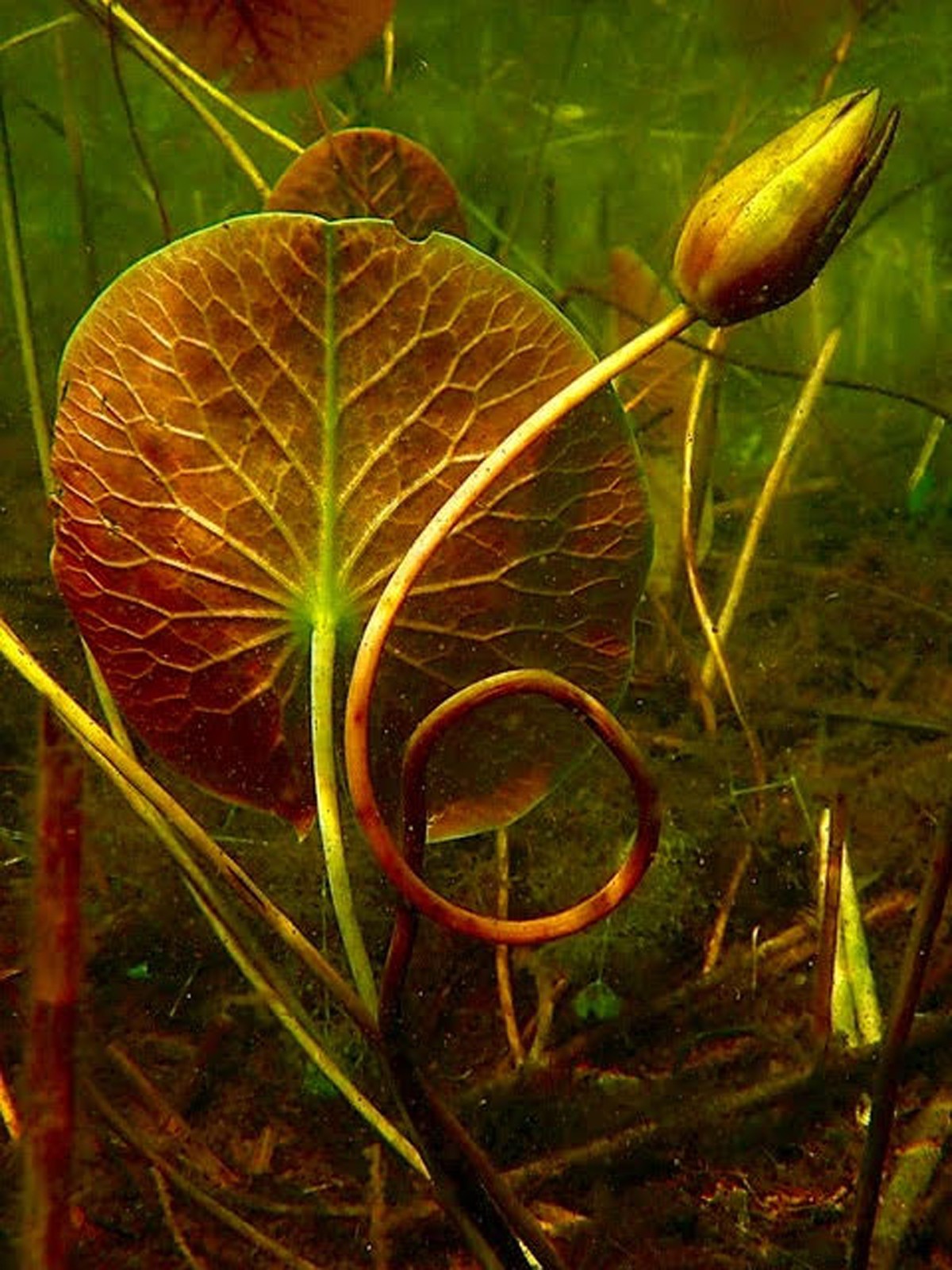
Barbara Leon’s Lens Captures Mysteries Below the SurfaceWhat lurks beneath the lily pads? Underwater photographer Barbara Leon knows. The Gardiner resident grew up exploring nature and was certified in scuba diving at age 15. Escaping pandemic stress, she was drawn to the mystery of the aquatic underworld more recently.

“This all started when the pandemic hit. As many others experienced, I was feeling isolated and unconnected. Going beneath the water became my escape from the craziness of the world above. It was so much more than a new place to photograph. It was a sanctuary imbued with life and beauty and mysterious connections,” she says. 

Having worked as a podiatrist for 30 years, Leon seeks to merge science and art in her photography. “I have always been fascinated by photographing the natural world. The scientist in me wants to see the inner, nitty-gritty of things. The artist in me wants to see, and reveal, light, form, and connections that occur in nature. It’s the hidden beauty in everyday things that captivates me,” she says. 

Using a waterproof Olympus TG-6 camera to navigate challenging photographic conditions such as murky water and low light, she captures sights seldom seen by most humans. Leon’s perspective looks up toward the surface, and often she’s not alone. 

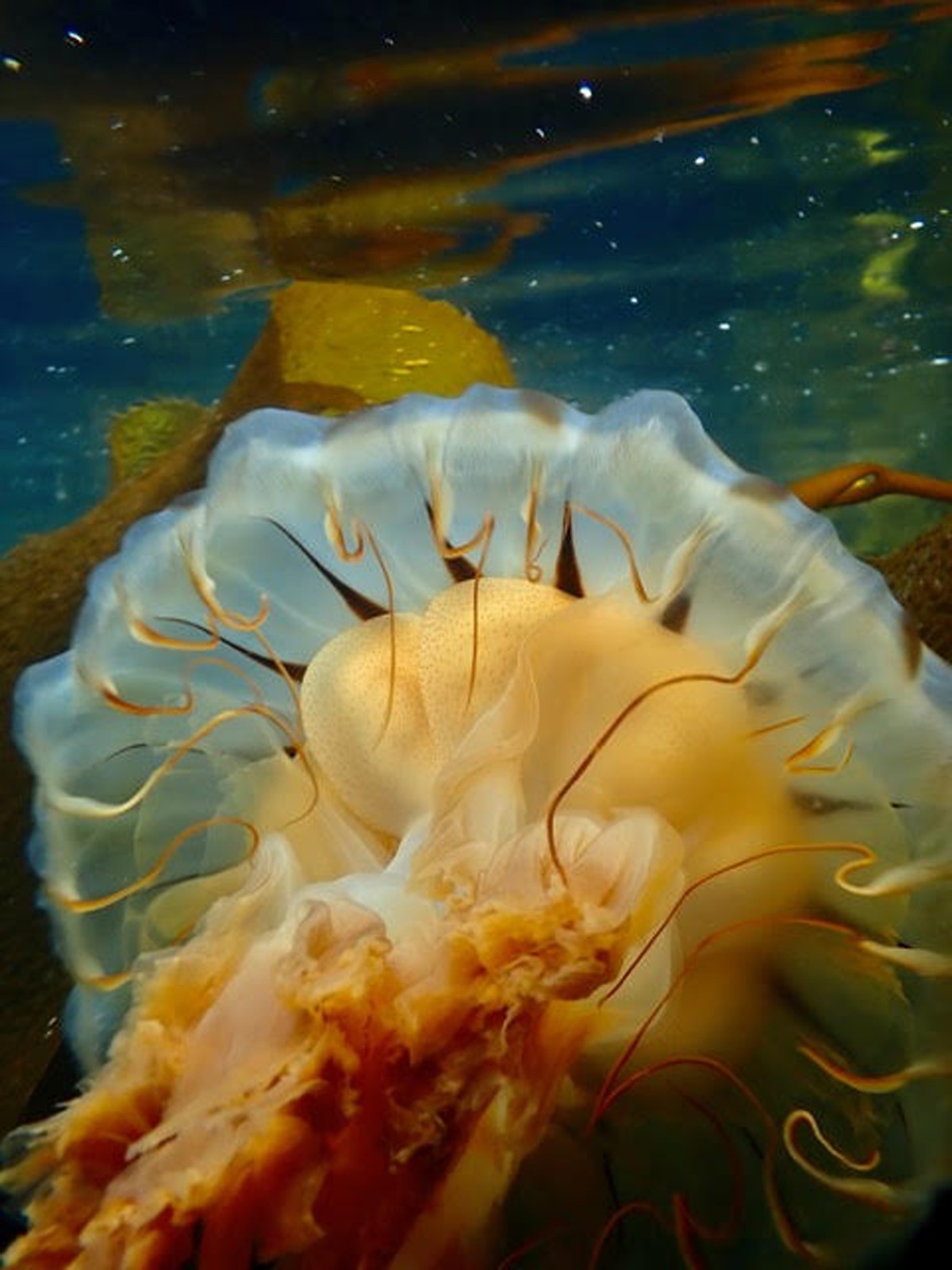
“While kayaking in the pristine waters of Alaska, I came upon this luminous jellyfish. As I got closer, it quickly plunged out of view. I had the photographer’s adrenaline rush of wanting to capture this incredible creature, but realized the jellyfish surely perceived me as a threat. I sat quietly and saw it appear again right next to me. I started shooting and, miraculously, this creature started swimming and diving around me. I can’t say why, but just as the jellyfish perceived I wasn’t a threat, I also didn’t feel threatened by it. We spent one mesmerizing hour together. I was not wearing a glove, and the water was frigid. I didn’t get stung, and I didn’t get frostbite!” she says. 

Leon’s underwater photographs comprise her first solo show, “Sub-merged,” at the Muse, a new multi-arts venue in Rosendale from June 12 through August 11. An opening reception will be held on July 12 from 5 to 9pm. 

Event Details