Photography

Photographer receives police payout after Just Stop Oil protest arrest

Photographer receives police payout after Just Stop Oil protest arrest

A news photographer who was arrested during a Just Stop Oil protest at an M25 petrol station has received a payout from police.

Peter Macdiarmid, 59, said he was handcuffed at Clacket Lane Services on 24 August 2022 and detained for several hours by Surrey Police, despite holding a UK press card.

Macdiarmid had been photographing activists as they blocked access to the petrol station from about 5am by sitting in the road with banners.

Some Just Stop Oil protesters put fuel pumps out of use by breaking the display glass and covering them with spray paint.

After Macdiarmid was arrested, law firm Bhatt Murphy sent a letter of claim to Surrey Police on his behalf and in December the force offered to settle out of court.

Thanks for subscribing.

The force has not accepted liability and is refusing to apologise for its actions, the British Press Photographers’ Association (BPPA) said.

Content from our partners

Surrey Police’s lawyers allegedly denied the officers did anything wrong, saying the situation they found when they arrived was confusing and that they had acted within the law.

Macdiarmid said: “I have been a news photographer for 37 years and have covered many events where tensions were running high and police were under great pressure.

“This Just Stop Oil protest was not like that, it was very calm and protesters were voluntarily giving themselves up for arrest when a police officer decided to detain me on suspicion of conspiracy to commit criminal damage.

“I was unable to persuade the arresting officer that I was a genuine working press photographer and my press card was ignored.

“Whilst I am glad to finally bring closure to this after many months, I am disappointed in the actions of Surrey Police in handcuffing and arresting me and then dragging out the legal process during my civil claim.”

The BPPA added: “Congratulations to Peter and his solicitors for their perseverance in pursuing this case – handcuffing and arresting a press photographer is unacceptable behaviour by Surrey Police.

“We believe that the police got it wrong on this occasion and that this is far from the first time this happened and it is likely to happen again.

“In the end Peter has received damages and his costs, but would rather have not had to go through a lengthy and stressful legal process to clear his name.”

Surrey Police confirmed it had reached a settlement with the claimant which was accepted.

Spate of journalists arrested at Just Stop Oil protests in 2022

Several other journalists were arrested while covering Just Stop Oil protests in 2022.

A MyLondon reporter spent seven hours in police custody in August 2022 – two days after Macdiarmid’s incident – after being arrested covering a petrol station protest in Hammersmith despite trying to show Met Police officers his press card.

Then in November that year four journalists – LBC reporter Charlotte Lynch, documentary maker Rich Felgate and photographers Tom Bowles and Ben Cawthra – were arrested in the space of two days by Hertfordshire Police while covering protests on the M25. A review found their arrests may have constituted “unlawful interference” in their freedom of expression.

Lynch, who was detained for seven hours despite carrying credentials and an LBC-branded microphone, later celebrated after the creation of “Charlotte’s Law” – an addition to the Public Order Bill last year offering special protections for journalists covering protests.

Email pged@pressgazette.co.uk to point out mistakes, provide story tips or send in a letter for publication on our “Letters Page” blog

MacDowell Club hears about Beth Kerr’s photography

MacDowell Club hears about Beth Kerr’s photography

Oelwein MacDowell Club met Tuesday, Feb. 6 at the home of Beth Kerr for the monthly meeting and program. Vice-president Katie Schuelke presided at the business meeting. A communication from Julie Williams stepping down from her duties as president was read and the members approved her resignation with regret. Ms. Schuelke will assume the duties of the office for the balance of the year.

Membership chairperson Cheryl Patera presented a list of prospective new members. They will be contacted prior to the March meeting. A slate of officers for the coming year will be given by the nominating committee to the group at the next meeting.

Linda Murphy reminded the club of the upcoming program featuring the Empire Trio and the high school choir members which will be performed at the Williams Center on Friday, Feb. 16. Friends of the Library’s annual Chocolate fundraiser, held Feb. 9, was also announced. Susan Macken told the group music was being provided by Bruce Bearinger and Clay Hallberg and local businesses would have beverage samples available.

Following the business meeting Beth Kerr presented the program. She explained how she started her photography hobby over 30 years ago, Through various camera changes and a multitude of subjects for her pictures, she has entered her works at the Iowa State Fair and other venues, winning many awards. Her talents were on display as members were able to browse through her original and varied artworks. Following her presentation, other group members shared special works of art of their own and told of their origins and personal meanings.

Refreshments were served by hostesses Beth Kerr, Cheryl Patera and Jami Tafolla.

The next meeting will be on Tuesday March 5 at 6 p.m. at the Little Husky Learning Center. Following the meeting members will attend the High School Vocal Music program under the direction of Darcy Fuelling. Hostesses for the evening are Susan McFarlane and Missy Rau.

Photography exhibition to promote positive aging

Photography exhibition to promote positive aging
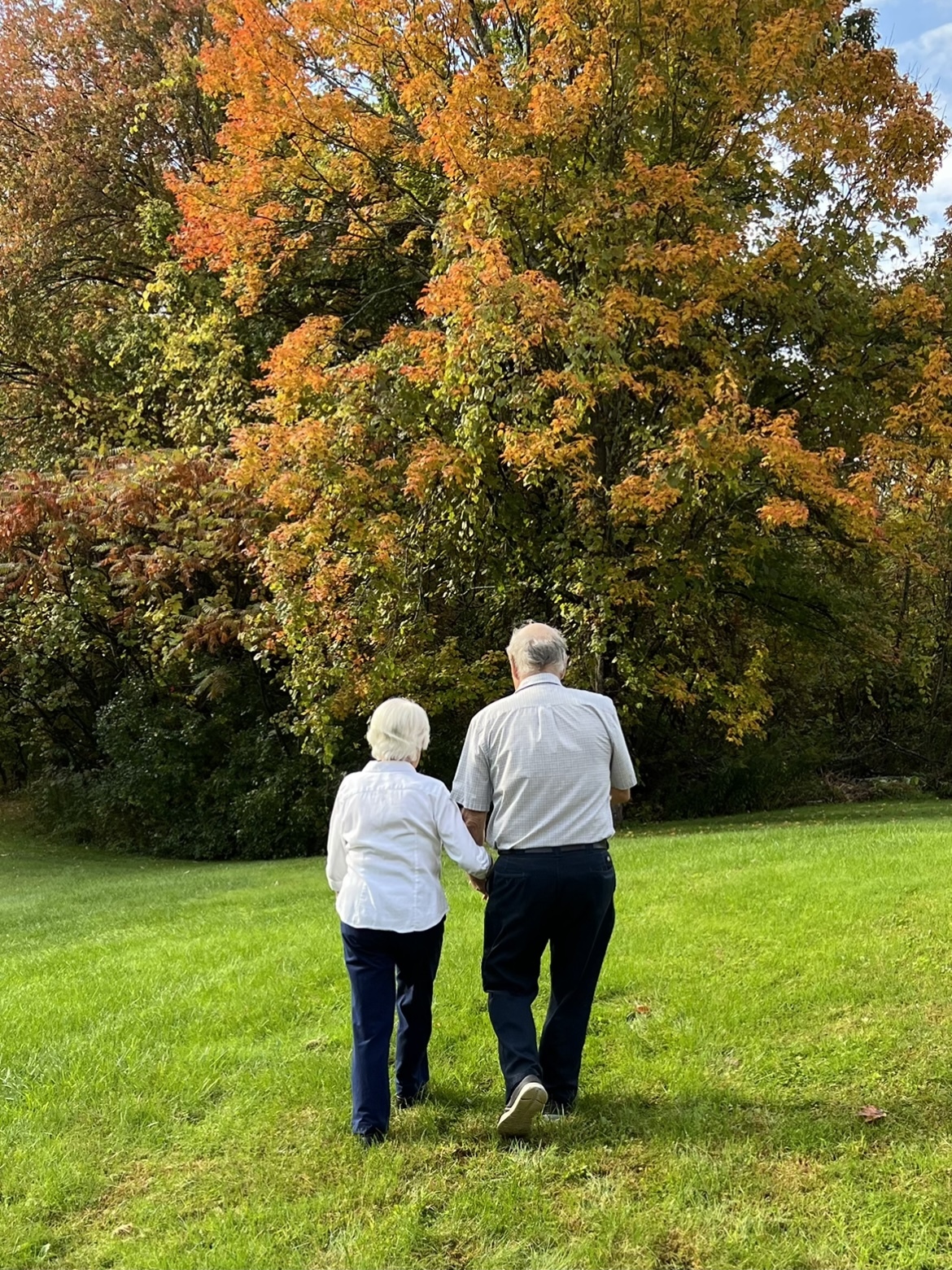
elderly couple walking in field toward trees with fall leaves

MACON — Mercer University’s Engage team is presenting “Images of Positive Aging: A Guided Response Tour Photography Exhibition” on Feb. 22 from 4:30-5:30 p.m. at the Mercer Innovation Center at the corner of College and Prince streets. The exhibition showcases images that were used in an interprofessional education activity with health professions students to promote positive aging.

“Health humanities using visual arts can foster the development of habits of the heart, improving visual literacy, clinical observation skills, resilience, empathy and reflection in health professions students,” said David W. M. Taylor, clinical associate professor of physical therapy in the College of Health Professions. “These skills are necessary to provide age-friendly health care for older adults.” 

Students involved in the education activity said it helped shape how they look at older people.

“I feel more empowered to seek out older people, have more conversations, go deeper into conversations and build relationships,” said doctor of psychology student Elisha Robinson.

“Progressing through the photos allowed me to see what others saw and changed my perspective.” said doctor of physical therapy student Courtney Shockey.

The activity was developed to support the University’s health professions students’ awareness of the lived experience of older adults through photography and was based on the 4Ms framework of age-friendly health systems: What Matters, Medication, Mind and Mobility. Engage faculty will be present during the event to answer questions and provide information on the 4Ms framework of age-friendly healthcare. 

Engage is an interdisciplinary team of clinician educators in Mercer’s College of Health Professions and College of Pharmacy including Dr. David Taylor; Dr. Leslie Taylor, professor of physical therapy; Dr. Jennifer de la Cruz, clinical associate professor of physician assistant studies; and Dr. Susan Miller, professor of pharmacy practice. Engage is part of Georgia Gear, a multi-institute partnership whose goal is to improve clinical care and quality of life for older adults and their families in Georgia.

The exhibition is the result of an activity supported by a Mercer Health Sciences Interprofessional Education Grant including students and faculty from the College of Health Professions, College of Pharmacy and Georgia Baptist College of Nursing.

How Jamel Shabazz Puts Smiles on Everyone’s Faces

How Jamel Shabazz Puts Smiles on Everyone’s Faces
Spread the love

It hit me when being a few feet away from him and hearing his conversations: there will soon be a day that the world loses incredible photographers like Jamel Shabazz. Jamel is part of a breed of photographer that is disappearing — he’s a personable photographer who can speak with people and that puts them before the idea of taking pictures. Despite how many people he photographed this month at the Brooklyn Museum, he made more interpersonal connections than I see photographers at the Sony Kando trip make. I’ve made it a goal to surround myself with as many of these people as I possibly can — the photographers who actually do people-work instead of just trying to be flies on the wall.

You can see work from Jamel Shabazz and others at the Brooklyn Museum during Black History Month and into July. Here’s more info.

The Presence of Jamel Shabazz

I remember in college, sitting next to Bruce Gilden at my internship at Magnum. And I also vividly still feel the awe of being in the presence of a building with hair and an old-school Brooklyn accent. He was kind in the NY-kind of way. Quite literally, on the day this article is being published, I turn 37 years old. Standing next to Jamel and being in the man’s presence filled me with similar feelings. Jamel uses his people skills to bring the most out of people in his images, and he embodies the energy of the ultimate extrovert. “I’m already enjoying myself,” he tells a young woman who checks on him to ensure that he gets time to actually recharge and take breaks. At 64 years old, he’s a strong reminder not to try to stave off our enjoyment at a later age but to do it every single day.

I’ve worked with Jamel and emailed him back and forth several times. We’ve interviewed him for this site many times in our 14 years. But it’s the first time we’ve shared the same oxygen in the same space.

When I arrive, Jamel isn’t at the original location: an area that was perfect for controlled lighting and all. His assistants are working to put things together while he walks around meeting and greeting. Eventually, he returns and I shake his hand. Nothing prepares you for the feeling of kindness you receive from this towering giant. I use this term to describe his stature and who he is in the photography and art world. Influencers, photographers (yes, I’m not kidding), and other people came to the event not knowing who Jamel was — while others were as starstruck as I was.

Eventually, we moved locations to do portrait shoots towards the front of the Brooklyn Museum. He takes occasional breaks and goes into the gallery space to see how the images are presented within the Giants Exhibit. I spoke with Jamel and commented on the immaculate lighting on the images within the gallery space. In my eyes, it seems like more museums are starting to understand the importance of mimimizing reflections. He greets several people who come up to him and talk to him — there are hugs, he leans in for handshakes, and he has the genuine conversations of a man who permeates love for the art world. Eventually, a line starts to form, and he returns to photographing people.

When I worked at Magnum, I learned from one of the lab managers that most photography is about talking to people more, and only a tiny part of it is actually shooting. He’s an incredible people person. I’m legally blind, so my sense of hearing is incredible for my age. I’m able to follow his conversations very well, and the enthusiasm in his voice never seems to run out. Jamel speaks like a man who isn’t burned out by social media and hyperfocuses his attention to everyone around him he interacts with. It’s a level of being in the zone that most street photographers aspire to.

How He Shoots: A Gift for People Skills

Jamel Shabazz photographs people in a way that fuses personability into the manufacturing line he’s tasked to do. We’ve all seen things like these at parties. There are several key things he says:

  • He compliments people on specifics about their attire that make them stand out. It could be something like boots with a matching bag, a jacket, etc.
  • Often, he photographs people from the front and with side profiles.
  • Jamel is great at instructing people what to do using hand motions. And for the most part, he doesn’t physically touch or move people unless they really need it or want it to get a better photo. “I need your help, I suck at this,” says one woman. People who know who he is seem to have a very immediate trust in him. And the people who don’t know him, he wins over by projecting his personality.
  • “I shouldn’t have to tell you what to do,” Jamel Shabazz tells an influencer-type in jest. He later explained to me that the woman he said that to was from Brooklyn — and if you’re from Brooklyn, you should know how to work in front of a camera at this point. He says this with the jest of a NY culture that’s put in the spotlight often.
  • He finds ways to make people laugh — and even calls a man around my age an old-man. He immediately got the joke.
  • Handshakes are very common. He interacts with people like a man who isn’t afraid of COVID-19, RSV, or getting sick. When he talks to people and gives handshakes, he consistently leans in. This is partially because we’re all vertically challenged in his presence; but it’s also a personality tactic that wins people over.
  • He remembers people he hasn’t seen in years. One man he hasn’t seen since 2002, but Jamel remembers every single detail of when they shot together. His memory is fantastic. It seems almost like he goes through his images every day to reconnect with the memories of what happened on those shoots. On social media, Jamel even does eulogies when he finds out that someone he photographed has passed.
  • Jamel says things like, “I love you too,” when fans express their affinity for him. When this happens, it truly dawns on me that photographers like this are disappearing. Peter Hurley was the last one who made it with people skills like this via social media. But Shabazz is from way before social media.
  • People bring out their good side and energy when they get in front of Jamel’s lens. Of course, he does the work to bring that out in people.
  • “I’m excited to take your picture,” he tells someone once. The person he told this to came to him with an ember of joy on their face that burst into a glowing hearth fire. She radiated joy for perhaps the rest of the night.

After a while, Jamel needs a break and stops shooting for the rest of the night. The event ended at 10pm and he stopped maybe around an hour before that. At one point, he took his jacket off from shooting and working so hard. We can tell that he was really into it because he was sweating while trying to look as nicely as possible.

Photographers like Jamel are artists who hone their people skills and adapt them to the various folks they encounter. Their work gets them into museums and the highest peaks of art recognition. It’s a strong difference from content creators who spend more time building a soulless, lifeless platform that cares nothing for them and instead relies on the life that other people bring to it. But Jamel focuses on real life and lasting legacy and in 2024, that’s one of the most beautiful things a photographer can ask for.

8 photography graduates to put on your radar

8 photography graduates to put on your radar
image

Fresh from the MA Commercial Photography course, these photographers are exploring identity, ancestry, memory and tradition

15February 2024

Despite an increasingly hostile climate for UK creatives, young photographers continue to emerge from university in the hopes of setting the world alight. The London College of Communication’s MA Commercial Photography students are no different. Having visited the students during their graduate show, I was struck by the breadth and depth of the stories they were telling.

At its worst, the commercial photography space is about selling a product. At its best, it can tap into personal and collective narratives that elicit empathy and understanding. Below, we get to know eight of the most exciting photographers who are flying the LCC nest.

A Hole in the Wall was inspired by a behaviour of my grandfather’s: he used to love facing the wall and tapping it with his hands before going to sleep, to the extent that it left a hole there. My childhood task was to discourage this ‘habit’ of his.

“It wasn’t until many years after his passing that I discovered a secret hidden in my home: In 1976, my grandfather came to Tangshan in search of work, accompanied by his wife and eldest daughter. However, on July 28, the Tangshan earthquake struck that very evening, just two to three hours after their arrival, and he forever lost his wife and one daughter before they even had a chance to set down their luggage. He believed that his decisions, more than the earthquake’s devastation, caused their deaths. He began a mechanical behaviour because of trauma: unconsciously chiselling the wall.

“I depicted these scenes, portraying my grandfather’s remorse evolving into nightmarish dreams: in his dreams, he believed he had killed his wife and daughter. Within these nightmares, he seemed to engage in domestic violence or display indifference to their deaths, but it was all a manifestation of his painful self-blame. I linked the desert to earthquakes; in these dream sequences, all water transformed into sand, revealing that everything was merely a dream.”

Weaving The World begins with a true story of my 87-year-old grandmother, who had accumulated a large box of plastic beads, which I later found out were BB bullets from toy guns played by children in the community. At her age, it was difficult for her to bend down to pick up each plastic bead and stand up again, but she had collected thousands of beads. This struck me like a bullet to the heart, awakening me to the profound sense of boredom, isolation, and the gradual erosion of her connection with the world and the purpose of life. 

“I put myself in the picture and recreated games I loved from childhood with my grandmother and great aunt, creating a vibrant dreamscape for the elderly and reconnecting them with the younger generation. This presents a narrative that weaves together dreams and reality, memory and the present, emotions and time.

“The time allocated for my graduation project wasn’t sufficient to cover all the topics I envisioned, and I intend to treat this project as a long-term endeavour, continuing to use photography to establish connections with my grandmother and even more elderly individuals in the future. In the current landscape where AI becomes a prominent topic, I aim to use photography to establish connections with more real people and the real world.”

Shall We Talk? sprang from the discord with my father over my vocational path. This project probes not only our father-daughter bond but also mirrors the tussle between familial hopes and my own ambitions. Educated abroad from a young age, I enjoyed the perks of diverse learning but concurrently faced a growing emotional rift with my family. My father’s desire was for me to enter management and inherit the family enterprise, yet my passion lay firmly in photography. This disparity impacted our relationship and filled me with unease about what lay ahead. The fruits of this project went beyond my anticipations. I managed to garner my father’s support for my ongoing exploration of phototherapy, enriching my comprehension of family ties and self-identity.

“I employed the re-enactment phototherapy methods pioneered by Jo Spence and Rosy Martin. Spending two months in my father’s factory over the summer break, this period was as much about exploring our relationship as it was about seeking my personal identity. Opting for self-portraits on film, I engaged in this immersive creative process to explore the connections between myself, my father, and the factory.”

Fong Tiáo Yǔ Shù interprets Taiwan from a positive and warm perspective by showing the unique fruits grown and the close connection between fruit farmers and the land. It is also a love letter to my motherland. I want my photography works to have a positive impact on audiences and be helpful to other people. After contemplating how to combine these elements, I decided to start from my own experience. Many young people born and raised in Taiwan always have a fear rooted deep in our minds if peace in Taiwan today could be sustained in the future. 

“In the 1970s, Taiwan was known as the Kingdom of Fruits. With innovative and advanced farming techniques, Taiwanese farmers cultivated various unique species, and all year round, there were fruits growing in different regions. I embarked on a month-long trip around the island, visiting 12 fruit farmers to record their daily works and introduce unique and symbolic Taiwanese fruits through images, such as guava, dragon fruit, and wax apple, and show the sincere interaction between people and land, people and people, and also create a travelogue of the stories of the journey. 

“After completing this project, I found myself living away from home for many years, reconnecting with Taiwan and reinforcing my national identity. For me, this is the unexpected and beautiful fruit of this trip.”

“I like to think that the portraits from Beyond Silāii Bunāii serve as conversation starters, encouraging people to acknowledge the hardships and societal pressures faced by women in India. For a long time in India, a woman’s worth has been scrutinised based on her ability to perform traditional household chores. For instance, in an arranged marriage – an age-old tradition in India – when looking for a bride-to-be, young women are often questioned about their ability to perform certain skills such as cleaning, cooking, knitting, and more. I want my work to represent strong women who defy social norms in subtle ways and showcase how women can achieve far beyond being domesticated. Capturing the beauty of rebelling, attaining wisdom, and the hope for the times ahead.

“I draw creative inspiration from various sources, with a significant influence coming from my memories of home. Whether I’m flipping through my family photo archives, reflecting on personal anecdotes, or identifying 90s stylistic trends, my roots play a crucial role in shaping my artistic vision. One photographer who particularly inspires me is Nadine Ijewere. I’m constantly in awe when I look at her images, aspiring to achieve a narrative that resonates with a broader audience and makes them feel seen.”

The Admirable Fabric of Masculine Intelligence (2023-) examines the traditional role division between men and women and how prevalent norms influence our perception of the ‘expected’’ This autobiographical project reflects on the experiences and feelings I went through when I left an office-based job back in 2014 in conservative Switzerland to become the caregiver to our two young daughters. I chose self-portraits as the method of expression not only to retain control of the images but also to allow myself to probe and reflect on dimensions I may not have observed before. 

“The images are staged but set in ordinary surroundings, photographed mostly in locations close to where I live. I used family extensively in this series to reflect on its importance as an institution both to myself and to society.

“A lot of my work reflects my interest in social and economic issues (justice) and how we as individuals place ourselves in society. Books, especially fiction, are also a great source of inspiration for me – I am fascinated by the way authors can create a narrative and manage to embed their often-subtle thoughts and opinions into it without breaking up the package. The conceptualisation of The Admirable Fabric of Masculine Intelligence was largely influenced by Virginia Woolf’s novel To the Lighthouse (1927), in which many of her groundbreaking thoughts on gender and relationships were introduced.”

“The images in BROADWAY show the portraits of five artists in the spaces they consider to be their cocoon for artistic expression. Through the photographs, one can tell how the spaces contribute significantly to the artist’s personality, often surpassing their explicit efforts to showcase it.

“I find inspiration from the people I meet and their stories. Each artist brings a unique perspective to the series, enriching it with varied viewpoints, and I intend to broaden this series by featuring a diverse range of artists in the project. Additionally, I am considering launching a blog to serve as a digital scrapbook, allowing me to keep a comprehensive record of the series and also providing the audience with insights into its evolution. Moreover, I believe the blog will be an effective platform for discovering new artists and fostering connections within the creative community.”

ZODIAC is an image-based project that tempts viewers into its hypnotic, vibrant universe with vivid colours and elegant poses. The cosmos and its mysteries have always intrigued human society. Throughout history, people have turned to constellations to elucidate profound questions about our identity, origins, and existence. The planetary positions at the moment of our birth can be composed to form a birth chart containing our traits and uniqueness, which is as unique as a fingerprint. 

ZODIAC draws inspiration from astrology, specifically my own birth chart, to create a diverse body of work in various formats that articulate my vision of the zodiac archetypes. Models embody each star sign, creating images oscillating between stereotypes and my interpretation of the zodiac signs, akin to day and night. 

“To achieve images reminiscent of drawings, I developed a method involving long-exposure photography, printing, handcrafting the print, scanning, retouching, and re-printing. Embracing a hands-on approach, I aimed to create images oscillating between the styles of Italian Renaissance artists, such as Michelangelo, and the classical aesthetics of Greek statues. Simultaneously, I incorporated the vibrant colours and textures found in the kitsch and camp works of artists like Tim Walker, David Lachapelle, and especially Pierre et Gilles, whose collaborative process of blending photography and hand-painted elements added layers of colour, texture, and embellishments, mirroring my workflow.”

5 Winning Black-And-White Landscape Shots From Monochrome Photography Awards

5 Winning Black-And-White Landscape Shots From Monochrome Photography Awards

1ST PLACE WINNER: LANDSCAPES PHOTOGRAPHER OF THE YEAR 2023

DUST-LADEN HOOVES SAGA OF THE VOLCANIC RIDERS BY MAHENDRA BAKLE
DUST-LADEN HOOVES: SAGA OF THE VOLCANIC RIDERS BY MAHENDRA BAKLE

The Tenggerese people, known as “The Horsemen of Bromo” in Indonesia, embody a captivating cultural legacy in the stunning landscape surrounding Mount Bromo. Their vibrant customs and role as horseback guides create an immersive experience for visitors exploring the volcanic terrains. These horsemen, with their traditional attire and deep-rooted rituals, offer travelers not just a ride but an encounter with the rich heritage of the region.

2ND PLACE WINNER

MTFUJI BY KANTAPAT PHUTTHAMKUL
MT.FUJIBYKANTAPAT PHUTTHAMKUL

Kantapat Phutthamkul captured this photograph during his Japan trip. “Mountain Fuji is the most iconic here,” the Thai photographer wrote.

3RD PLACE WINNER

APHAIRESI - STUDY 14 BY REN ALGESHEIMER
APHAIRESI – STUDY 14BYRENÉ ALGESHEIMER

The Greek word for abstraction is αφαίρεση (aphairesi), which means “removal” or “withdrawal”. This term is often used in the context of philosophy to refer to the process of abstracting or separating an idea or concept from its concrete or sensory representations. In art, abstraction can also refer to the process of reducing a form or image to its essential geometric or formal elements, which can then be rearranged and recombined to create a new visual language.

LANDSCAPES: HONOURABLE MENTION 2023 (PROFESSIONAL)

Church on a hill by Robert Walpole Australia
Church on a hillbyRobert Walpole(Australia)

Iceland is known for its very strong winds and in winter this helps present some interesting mono/minimalist images.

This is a little church high on a hill in the town of Vik. Cold, windy and wonderful.

LANDSCAPES: HONOURABLE MENTION 2023 (PROFESSIONAL)

Felicity by Karen Elizabeth Baker United States Minor Outlying Islands
FelicitybyKaren Elizabeth Baker(United States Minor Outlying Islands)

The image Felicity, taken in El Centro, California in 2023, is from Baker’s ongoing project called Segue. It contains both the element of the power of light in a simple composition and the recurring lack of human presence, thus a continuation of his vision. Segue, a smooth, uninterrupted transition from one thing to another, originated during the pandemic, celebrating the gift of returning to independent, unrestricted movement and thought.

Millennials and the Art of Photography: Overcoming Scarcity Mindse…

Millennials and the Art of Photography: Overcoming Scarcity Mindse…
image

In an era where the digital footprint of a generation is scrutinized, celebrated, and often misunderstood, a unique theory emerges, shedding light on the intricate relationship between millennials and the act of capturing moments through photography. At the heart of this exploration is Christine Buzan’s compelling narrative on why millennials, the trailblazers of the digital age, often find themselves ensnared in awkwardness when it comes time to pose for a photograph. This phenomenon, as Buzan articulates, is not merely a matter of self-consciousness but a deeply rooted consequence of their formative years, intertwined with the rapid evolution of technology and a scarcity mindset that has inadvertently sculpted their approach to photo-taking.

Advertisment

The Millennial Paradox: Technology vs. Scarcity

Buzan’s theory suggests that despite being the first generation to grow up with digital cameras and social media platforms at their fingertips, millennials have not fully embraced the ubiquity of photography in their daily lives. This hesitation is traced back to the era before the digital takeover, where film rolls limited the number of attempts to capture a perfect moment, instilling a sense of scarcity and pressure to get it right the first time. Fast forward to the present, and the remnants of this mindset continue to haunt their interaction with the lens, resulting in a palpable tension and discomfort that often characterizes their photographed expressions.

A Shift Towards Liberation: Learning from Gen Z

Advertisment

As a response to this conundrum, Buzan advocates for a paradigm shift towards a more carefree and experimental approach to photo-taking, akin to the one adopted by Gen Z. The younger cohort, having been born into a world where digital content is infinite and mistakes are easily deletable, exhibits a starkly different relationship with the camera. They approach photography as an everyday part of life, a stark contrast to the rigidity and reservation often displayed by their predecessors. It is this ethos of spontaneity and freedom that Buzan believes millennials must adopt to overcome their photographic awkwardness.

Understanding the Millennial Mindset in the Business Landscape

The insights into the millennial mindset extend far beyond the realm of photography, touching on broader implications for businesses aiming to thrive in today’s dynamic economic environment. Kunaall Devmane’s latest book, ‘Buffering to Streaming – The Guide to Millennial Mindset’, delves into the nuances of this influential demographic, born between 1981 and 1996, now at the helm of key decision-making roles across industries. Devmane emphasizes the importance of understanding the unique motivations, values, and aspirations that drive millennials, cautioning that organizations failing to adapt to these insights risk obsolescence in the modern economy.

The narrative that unfolds from the juxtaposition of Buzan’s theory and Devmane’s insights is one of a generation caught between two worlds – the analog and the digital. It highlights the necessity for a deeper comprehension of the millennial psyche, not only in personal interactions such as photography but also in the broader context of business strategy and organizational development. As millennials continue to shape the future through their purchasing power, investment decisions, and innovation in leadership, the imperative to align with their worldview becomes increasingly evident.

In conclusion, the exploration of millennial awkwardness in photography by Christine Buzan offers a fascinating lens through which to understand a generation’s challenges and potential. Coupled with the strategic insights provided by Kunaall Devmane, it underscores the critical need for businesses to evolve in tandem with the millennial mindset. As we move forward, the lessons drawn from these discussions will undoubtedly play a pivotal role in shaping the ways in which organizations engage with an ever-changing demographic landscape, ensuring that they remain relevant in a world that continues to buffer from scarcity to abundance, from analog to digital, and from rigidity to fluidity.

Around Cape Ann: CAM talk to explore the power of photography

Around Cape Ann: CAM talk to explore the power of photography

Curator Kristen Gresh, who brings an international wealth of knowledge about the profound power of photographs, will be the guest speaker at the next Cape Ann Museum special event linked to the current special exhibition, “Above the Fold.”

The CAMTalk’s program is titled “Life Magazine and the Power of Photography,” and takes place Thursday, Feb. 15, at 6 p.m. at the museum’s auditorium, 27 Pleasant St., Gloucester.

Gresh is the Estrellita and Yousuf Karsh Senior Curator of Photographs at the Museum of Fine Arts, Boston.

“From the Great Depression to the Vietnam War, almost all of the photographs printed for consumption by the American public appeared in illustrated magazines. Among them, Life magazine ‚ published weekly from 1936 to 1972 — was both wildly popular and visually revolutionary, with photographs arranged in groundbreaking dramatic layouts known as photo-essays. Gresh will speak about the creation and impact of the carefully selected images found in the pages of Life, and the precisely crafted narratives told through these pictures, in order to reveal how the magazine shaped conversations about war, race, technology, national identity, and more in the 20th-century United States,” according to a program statement.

Gresh, who grew up in Greater Boston, moved to Paris on a Fulbright Scholarship after college. She stayed overseas for the next 15 years when she also earned a master’s degree and doctorate in the history of photography at the School of Advanced Studies in Social Sciences in Paris. She also served two years as curator of photographs at the Rare Books and Special Collections Library at The American University in Cairo, Egypt. When she returned to the United States, she joined the staff at the Museum of Fine Arts, Boston.

The talk is free for members, $10 for others, and will be livestreamed on Vimeo and Facebook. Registration is required at capeannmuseum.org as seating is limited.

The special exhibition “Above the Fold: The Photographers of the Gloucester Daily Times, 1973-2005” runs through March 17. Tours of the exhibition are offered every Thursday at 2 p.m. until the show closes.

Distinguished Speakers Series

The Manchester-by-the-Sea Cultural Council, in partnership with Manchester-by-the-Sea Public Library, continues its free Distinguished Speakers Series this Thursday, Feb. 15, from 5:30 to 6:30 p.m. at the library, 15 Union St.

Dr. David J. Roberts, senior vice president of community operations at Mass General Brigham, will give a talk on “Addressing Social Determinants of Health.” He was the former president of Salem Hospital.

These determinants include socioeconomic factors, physical environment, health behaviors and health care. The talk will detail how these determinants lead to risk factors for various health issues.

“Dr. Roberts will describe how hospitals and health systems are developing methods to address these disadvantages for many populations. His talk will include examples of successful programs across the country as well as local programs, such as those at the Phoenix Food Hub in Lynn, The Salem Pantry, Lynn Community Farm, Mass General Brigham Mobile Service Line and Workforce Development initiatives,” according to a program statement.

To reserve a seat, visit www.manchesterpl.org/events.

Local trio at City Winery

Gloucester’s Jon Butcher and Allen Estes, along with bandmate Sal Baglio, bring their trio to Boston’s City Winery in a performance on Friday, Feb. 16, at 7:30 p.m. at the winery’s Haymarket Lounge. For more details and tickets, visit https://citywinery.com/boston/events/butcher-baglio-estes-gq90oz.

Rocky Neck Now 2024

“Rocky Neck Now 2024,” the annual members show, opens the exhibition season at the Rocky Neck Art Colony at the Cultural Center at Rocky Neck, 6 Wonson St., Gloucester. There is a free public opening reception on Sunday, Feb. 18, from 4 to 6 p.m. View the art, meet the artists and enjoy refreshments and conversation. The exhibition, which features work by 79 artists, is open to all members and offers each the opportunity to show one recent work. The exhibition showcases a range of artistic vision, from representational to abstract.

The artists are: Adam Adkison, Suzanne Agostino, Meredith Anderson, Christine Barensfeld, John Bassett, Anne Beinecke, Elizabeth Bish, Paula Borsetti, Sheila Boss-Concannon, Jennifer K Brown, Mike Cangemi, Jeanne Carey, Betsy Carter, Donna Caselden, Matt Cegelis, Michele Champion, Yhanna Coffin, Anne Marie Crotty, Dianna Daly, Alev Danis, Marci Davis, Lesley Davison, Terry Del Percio, Beth Delforge, Maria Denjongpa, Robert Diebboll, Cheryl Dyment, Cindy Efinger, Barbe Ennis, Paige Farrell, and Sue Funk.

Also, Jacqueline Ganim-DeFalco, Elizabeth Gauthier, Christine Gauthier-Kelley, Seth Goldfine, Nancy Gorman, John Grant, Karen Gross, Janet Grover, Olga Hayes, Leslie Heffron, Linda Henneman, Kata Hull, Nancy Jarvis, Linda Kauss, Ken King, Tobi Klein, Ira Levine, Juliet Lockwood, Lynn MacLaughlin, Laureen Maher, Jeffrey Marshall, Carmela Martin, Dawn McDonald, Vanessa Michalak, William Mitchell, Ed Mowrey, Brian Murphy, R. D. Murphy, Monica Pepicelli, Margaret Rack, Mary Rhinelander, Kathy Roberts, Judy Robinson-Cox, Tom Robinson-Cox, Patty Rosenblatt, Caleb Rulli, Thomas Rutigliano, Patricia Scialo, James Seavey, Mary Spitzer, Rosemary Sullivan, Marilyn Swift, Helen Tory, Juni Van Dyke, Grace Vasta, Anna Vojtech, Karen Watson and Christine Whalen-Waller.

The show runs through March 31. For more information, visit: www.rockyneckartcolony.org. Gallery hours are Friday through Sunday, from noon to 5 p.m.

Vacation week in the park

Halibut Point State Park, at 4 Gott Ave. in Rockport, offers several vacation week programs, all free to the public.

From Feb. 17-25, there is a February School Vacation “Staycation!!!” program with activities from 8 a.m. to 4 p.m. at the Visitor Center area. Heavy rain/snow cancels.

There is a “Quarrying History Self-Guide” for all ages and a “Quarry Quest—Treasure Hunt!” in which visitors follow clues with the goal to find a treasure box. Family fun adventure can be found walking on the trails while learning about the Babson Farm granite quarrying history. For ages 8 and up.

There is a StoryWalk, which features the book “The Nest Robin Built,” written by Denise Fleming. In this self-guided tour, visitors can read pages posted along a park trail near the visitor center in this program designed to promote “the magic” of reading together in the outdoors.

On Sunday, Feb. 18, the program “For the Love of Birding,” takes place from 8 to 10 a.m.; meet at the parking area. For all ages. Learn about winter birds that travel south to the seashore to escape the freezing ponds up north. Visitors may see Harlequin ducks and loons. Learn about their sounds, habits and flight patterns. Heavy rain/snow cancels. An adult must accompany children.

To learn more, visit halibut.point@mass.gov.

Around Cape Ann is a column devoted to events happening on Cape Ann and artists from Cape Ann performing elsewhere. If you would like to submit an item, contact reporter Gail McCarthy at 978-675-2706 or gmccarthy@gloucestertimes.com at least two weeks in advance.

Joy Gregory’s new book shines a light on overlooked Black women photographers

Joy Gregory’s new book shines a light on overlooked Black women photographers


CNN
 — 

The genesis of photographer Joy Gregory’s latest project, “Shining Lights,” began 40 years ago, at a Valentine’s Day party in London. It was here that Joy, who was the first Black woman to study an MA in Photography at the Royal College of Art in London, first met activist and writer Araba Mercer. After the party and as they became friends, Mercer suggested the pair collaborate on a book about women’s photography.

“I knew lots of photographers who were emerging at that time,” Gregory recalled over tea in a cafe near her studio in south London. “So I persuaded all of the people I knew to submit work.” They presented their plan for the book — comprising the photographs gathered by Gregory, and text by Mercer — to Sheba, a feminist publishing collective focused on Black women’s storytelling that Mercer was a key member of. Sheba was enthusiastic, but the cost of printing all the submitted photographs ultimately proved prohibitive.

The idea then, for a book surveying the work of Black women’s photography in Britain in the 1980s and 1990s, lay dormant for several decades. But a 2019 talk Gregory gave at Autograph gallery in London about photographer Maxine Walker’s work sparked renewed interest in the contribution of women of color to photographic art during this period.

The result is “Shining Lights: Black Women Photographers in 1980s–90s Britain,” a new photography book edited by Gregory and co-published by Autograph and Mack. Divided into thematic chapters exploring community and activism, kinship and family ties, travel and landscape photography and more, “Shining Lights” features 57 photographers, capturing the rich breadth of work from this overlooked period and community.

Telliing the stories no-one else was

The book includes work by well-known artists such as Walker, whose photographic practice centres on representations of Black womanhood, surrealist artist Mona Hatoum, and Turner Prize nominee Ingrid Pollard, whose images in the book use portraiture to examine gender and sexuality.

As well as casting the work of these artists in a new light, the project also introduces readers to photographers working during that time who are perhaps not as well known. Examples include Jacqueline Moran Daubercies, whose vibrant photographic practice focused on Latin American women and children, and Maria Pedro, whose poised self-portraits in the book reimagine herself as historical Black female royalty.

“What’s really interesting about history, and the way that history is recorded, is there’s always heroes, but actually, it was a collective,” Gregory told CNN in an interview. “And I think a lot of the collective has been written out of the history.”

“Shining Lights” then is Gregory’s considered effort to write in that missing history. Reconnecting with old networks and contacts to gather the material for the book was a meticulous task, with Gregory posting callouts in her own Facebook group as well as others and spreading the word around different creative networks.

She says that while some of the book’s contributors are now recognizable photographers, others have moved on entirely from photography since that era. Some had forgotten or not revisited their work during the interim decades, or had even lost large portions of their work. Gregory recalls one contributor arriving at her studio with three big bags of undeveloped negatives, consisting of close to 10,000 images. “That’s basically an entire book there, but again, that’s one of the people that’s completely disappeared from view.”

“That was the problem with going back and looking at the magazines and publications that were produced in the 1980s to try and find a trace of the women that are in this book,” said Gregory. “That wasn’t there because they weren’t picked up at that time, and nobody was telling their story.”

For some of the book’s contributors, Gregory says, revisiting that time and the poor treatment they received from the industry was painful. “It was reliving those disappointments…people were traumatized by the experience, and that wasn’t surprising, but it was shocking, in a way.”

An inaccessible medium

This era for Gregory, who was awarded the prestigious Freelands Award in 2023, was foundational. “I think I wouldn’t really have a practice without that period, obviously,” she said. Her own photographic series, “Autoportrait,” features in the book; originally made in 1990, it consists of a series of nine self-portraits of Gregory posed at various angles, looking both directly into and turned away from the camera.

She recalls how those among her network were often shut out of inaccessible arts institutions and forced to work at the margins. “Now, everybody has access to photography with their mobile phone; then it was a much more technically inaccessible medium,” she said.

Often faced with disappointment and rejection, these photographers rallied together. “There was a move to actually educate and help each other, and there was a lot of sharing of materials and knowledge,” she said, adding that community centres played an important role in offering space for learning. Gregory gives one example of photographer and curator Mumtaz Karimjee teaching herself how to do cibachrome color printing, and then teaching others in the network the same skill.

“The way in which people supported each other was really important — well, essential — because the other networks were not open to us,” said Gregory. “I think as women, it wasn’t open, and I think being of color, it definitely wasn’t open.”

In the book, Black “refers to the whole gamut of color, which was really about difference,” says Gregory. “Anybody who was different and seen as outside was included under that title Black, and it was more of a political identity, more than anything else.”

A 1987 essay written by Karimjee and included in the book explains this definition and feeling in more detail. It’s one of several contextual essays and conversations in “Shining Lights,” both from the present day and from the 1980s and 1990s, on themes including the abuse of power in photography, identity in British arts and cultural production, and change and continuity for new generations.

On this note, Gregory feels that in some ways, the landscape today remains similarly inaccessible, meaning that the enterprising, do-it-yourself attitudes of the 1980s and 1990s are still present among new and emerging artists. One example featured in the book is photographer and filmmaker Ronan Mckenzie, who established her own independent exhibition space, HOME, in London in 2020.

“I feel that a lot of the issues that we were dealing with in the 1980s haven’t gone away, and I think to include those essays actually highlights that,” said Gregory, adding that she hopes it will be encouraging for younger artists to see the work, perspectives and leadership of those who have preceded them.

While Gregory played a vital role in the book’s creation with support from associate editor Taous Dahmani, she emphasizes that it’s more about the dozens of photographers whose work is finally receiving overdue recognition

“The book is women in their own voices,” said Gregory. “That’s what I wanted to bring. So in a way, I feel that this is not my book. This is their book.”

Shining Lights: Black Women Photographers in 1980s–90s Britain is published by Mack and Autograph

Shining a light on overlooked Black women photographers

Shining a light on overlooked Black women photographers

By Suyin Haynes, CNN

(CNN) — The genesis of photographer Joy Gregory’s latest project, “Shining Lights,” began 40 years ago, at a Valentine’s Day party in London. It was here that Joy, who was the first Black woman to study an MA in Photography at the Royal College of Art in London, first met activist and writer Araba Mercer. After the party and as they became friends, Mercer suggested the pair collaborate on a book about women’s photography.

“I knew lots of photographers who were emerging at that time,” Gregory recalled over tea in a cafe near her studio in south London. “So I persuaded all of the people I knew to submit work.” They presented their plan for the book — comprising the photographs gathered by Gregory, and text by Mercer — to Sheba, a feminist publishing collective focused on Black women’s storytelling that Mercer was a key member of. Sheba was enthusiastic, but the cost of printing all the submitted photographs ultimately proved prohibitive.

The idea then, for a book surveying the work of Black women’s photography in Britain in the 1980s and 1990s, lay dormant for several decades. But a 2019 talk Gregory gave at Autograph gallery in London about photographer Maxine Walker’s work sparked renewed interest in the contribution of women of color to photographic art during this period.

The result is “Shining Lights: Black Women Photographers in 1980s–90s Britain,” a new photography book edited by Gregory and co-published by Autograph and Mack. Divided into thematic chapters exploring community and activism, kinship and family ties, travel and landscape photography and more, “Shining Lights” features 57 photographers, capturing the rich breadth of work from this overlooked period and community.

Telliing the stories no-one else was

The book includes work by well-known artists such as Walker, whose photographic practice centres on representations of Black womanhood, surrealist artist Mona Hatoum, and Turner Prize nominee Ingrid Pollard, whose images in the book use portraiture to examine gender and sexuality.

As well as casting the work of these artists in a new light, the project also introduces readers to photographers working during that time who are perhaps not as well known. Examples include Jacqueline Moran Daubercies, whose vibrant photographic practice focused on Latin American women and children, and Maria Pedro, whose poised self-portraits in the book reimagine herself as historical Black female royalty.

“What’s really interesting about history, and the way that history is recorded, is there’s always heroes, but actually, it was a collective,” Gregory told CNN in an interview. “And I think a lot of the collective has been written out of the history.”

“Shining Lights” then is Gregory’s considered effort to write in that missing history. Reconnecting with old networks and contacts to gather the material for the book was a meticulous task, with Gregory posting callouts in her own Facebook group as well as others and spreading the word around different creative networks.

She says that while some of the book’s contributors are now recognizable photographers, others have moved on entirely from photography since that era. Some had forgotten or not revisited their work during the interim decades, or had even lost large portions of their work. Gregory recalls one contributor arriving at her studio with three big bags of undeveloped negatives, consisting of close to 10,000 images. “That’s basically an entire book there, but again, that’s one of the people that’s completely disappeared from view.”

“That was the problem with going back and looking at the magazines and publications that were produced in the 1980s to try and find a trace of the women that are in this book,” said Gregory. “That wasn’t there because they weren’t picked up at that time, and nobody was telling their story.”

For some of the book’s contributors, Gregory says, revisiting that time and the poor treatment they received from the industry was painful. “It was reliving those disappointments…people were traumatized by the experience, and that wasn’t surprising, but it was shocking, in a way.”

An inaccessible medium

This era for Gregory, who was awarded the prestigious Freelands Award in 2023, was foundational. “I think I wouldn’t really have a practice without that period, obviously,” she said. Her own photographic series, “Autoportrait,” features in the book; originally made in 1990, it consists of a series of nine self-portraits of Gregory posed at various angles, looking both directly into and turned away from the camera.

She recalls how those among her network were often shut out of inaccessible arts institutions and forced to work at the margins. “Now, everybody has access to photography with their mobile phone; then it was a much more technically inaccessible medium,” she said.

Often faced with disappointment and rejection, these photographers rallied together. “There was a move to actually educate and help each other, and there was a lot of sharing of materials and knowledge,” she said, adding that community centres played an important role in offering space for learning. Gregory gives one example of photographer and curator Mumtaz Karimjee teaching herself how to do cibachrome color printing, and then teaching others in the network the same skill.

“The way in which people supported each other was really important — well, essential — because the other networks were not open to us,” said Gregory. “I think as women, it wasn’t open, and I think being of color, it definitely wasn’t open.”

In the book, Black “refers to the whole gamut of color, which was really about difference,” says Gregory. “Anybody who was different and seen as outside was included under that title Black, and it was more of a political identity, more than anything else.”

A 1987 essay written by Karimjee and included in the book explains this definition and feeling in more detail. It’s one of several contextual essays and conversations in “Shining Lights,” both from the present day and from the 1980s and 1990s, on themes including the abuse of power in photography, identity in British arts and cultural production, and change and continuity for new generations.

On this note, Gregory feels that in some ways, the landscape today remains similarly inaccessible, meaning that the enterprising, do-it-yourself attitudes of the 1980s and 1990s are still present among new and emerging artists. One example featured in the book is photographer and filmmaker Ronan Mckenzie, who established her own independent exhibition space, HOME, in London in 2020.

“I feel that a lot of the issues that we were dealing with in the 1980s haven’t gone away, and I think to include those essays actually highlights that,” said Gregory, adding that she hopes it will be encouraging for younger artists to see the work, perspectives and leadership of those who have preceded them.

While Gregory played a vital role in the book’s creation with support from associate editor Taous Dahmani, she emphasizes that it’s more about the dozens of photographers whose work is finally receiving overdue recognition

“The book is women in their own voices,” said Gregory. “That’s what I wanted to bring. So in a way, I feel that this is not my book. This is their book.”

The-CNN-Wire
™ & © 2024 Cable News Network, Inc., a Warner Bros. Discovery Company. All rights reserved.

Shining Lights: Black Women Photographers in 1980s–90s Britain is published by Mack and Autograph