Photography

How RED’s Global Vision & Extended Highlights takes computational photography and runs with it

How RED’s Global Vision & Extended Highlights takes computational photography and runs with it

Remember when everyone was excited about Thompson’s Viper and its exalted eleven-stop dynamic range? RED now claims twenty stops with new firmware for its newest V-Raptors, albeit with some slightly unusual techniques, which the company points out are still in beta. Phil Rhodes explains.

It’s not the first time that RED has offered a feature intended to increase dynamic range. Some time ago, it experimented with HDRx, a technique that stacked exposures in much the same way as a high-dynamic range stills shot using two or three photos at different exposures, improving both highlight and shadow detail.

However, this time round, the new feature is part of a collection of things that RED calls Global Vision, in reference to the global shutter on some of the company’s cameras (although exposure stacking is not necessarily dependent on a global shutter camera).

Computational photography

Referring to this as “exposure stacking” might not be the whole story. There are already lots of cameras that do things like that to improve some combination of noise, sensitivity, and dynamic range. Most of those cameras are in cellphones and action cameras where there’s already a significant amount of digital signal processing available, correcting lens aberrations and providing stabilization and noise reduction. This sort of thing has been called computational photography, where pictures are not a direct result of reading brightness values from a sensor but instead a computer’s reconstruction of a likely scene based on those values.

Combining multiple exposures is an example. The computation might compensate for the fact that the multiple exposures won’t necessarily line up because objects in the scene may have moved between shots. In that case, the computation involved might seek to shift things around in each image to line them up. Red’s HDRx didn’t do that, and while the details of this kind of thing tend to be proprietary, we might speculate that the new features try to solve that problem in some way. The company points out that it takes more processing time on the post-production workstation.

This is also how things like Google’s face-unblur feature works on its Pixel phones, which gives us some insight into the sort of thing that might be possible. Stack enough exposures, and the result might include something that looks like motion blur based on how the camera moved during each frame or during the sequence of frames, depending on how it was computed. If one of those exposures is sufficiently short, though, and any region of the image could use just that one exposure and be sharp, of course, that part of the shot won’t enjoy the noise, dynamic range, and sensitivity benefits, but it’ll be less motion blurred. RED accepts that there may be some related artifacts associated with its new process.

So, we might soon be in a world in which any one camera might have several different levels of performance in different areas of a single frame, depending on what the person using it (or someone in post-production, or even, increasingly, an AI) thought was important. If there’s been any objection to this sort of thing, it’s that learning how to get the best out of a camera might be difficult because the performance of that camera might become a moving target. There’s a degree of purism (if not puritanism) involved in the idea that an artist’s tools should be somehow knowable in a way that computational photography might disturb.

This sort of dynamic range does create some interesting new issues, however. Look at the step charts published by RED and notice just how much glow there is around the brighter chips, even on what looks to be something like a DSC Labs Xyla chart. The chart makes the brightest test patches smaller in order to minimize the amount of light spilled from bright chips to darker ones due to lens flare. That might make the dark patches more visible than they otherwise would be, making the test inaccurate. Even so, all lenses inevitably produce some halation, and that becomes a bigger factor the more dynamic range is involved. Lenses are not things that we’re used to thinking of as actually having a dynamic range limit – but they do, at least in local regions of the image.

From cell phones to the high-end

It’s been hard to ignore the fact that cell phones have been enjoying a lot of the fruits of computational photography in ways that cinema cameras haven’t, and this is probably the first of many. Sensor designs of the 2020s do pretty well already, of course. Still, there’s always room for more, particularly more sensitivity in circumstances where power consumption is a factor, which is the case both at the battery-powered low end and the generator-powered high end.

Perhaps most importantly, there’s the issue of what we actually do with all this dynamic range. Recording more information than we need has always been a good idea, and shooting for demanding distribution formats such as PQ-based HDR, including HDR10 and its derivatives, as well as Dolby Vision, costs us some of the flexibility we enjoy when shooting for conventional distribution because the camera is no longer so much better than the distribution format. Gaining some of that flexibility back would be valuable, though grading 20-stop footage into a 7-stop deliverable, which will be required for standard-dynamic-range distribution for a while yet, will not be easy. It’s already tricky with 14- or 15-stop cameras, depending on how it’s shot.

So, let’s not get too used to shooting scenes with massively high dynamic range, flicking the monitor into direct mode, and saying, “Well, it’s held in the log.” At some point, someone has to rationalize the sheer range of brightness in the scene into a viewable and hopefully attractive image. Still, it’s hard to object to computational photography in general. Some people will interpret it as a sacrifice of sheer artistic purity, but, in the end, it’s allowed cellphone cameras to enjoy shockingly good performance for such tiny sensors, and that’s performance that film and TV production could certainly use. This won’t be the last example.

Sony World Photography Awards: Here’s A Look At This Year’s Winning Pics

Sony World Photography Awards: Here’s A Look At This Year’s Winning Pics
Sony World Photography Awards: Here's A Look At This Year's Winning Pics

The Sony World Photography Awards received more than 395,000 images.

One of the world’s largest and most prestigious photography competitions has announced its winners for the year 2024. The Sony World Photography Awards received more than 395,000 images from scores of countries and territories, submitted for its four competition categories: Professional, Open, Youth and Student. Organised by the World Photography Organisation, the awards have now declared overall winners in each category. The winning national and regional images were taken by photographers based in 54 countries, organisers said.

According to the official site, photographers were judged anonymously by a panel of judges. This year, the participants showcased “unique styles and approaches to the medium,” the press note read. “Now in its 11th year, the programme supports photographers of all abilities worldwide and celebrates their achievements,” it added. 

Notably, among the winners is India’s very own Mitul Kajaria. His winning photograph, titled “Child Sleeping at a Construction Site”, captured a poignant moment of daily life, portraying a young child peacefully sleeping amidst the hustle of a construction site. 

Take a look below: 

Mitul Kajaria - National Awards 1st Place, India

Mitul Kajaria – National Awards 1st Place, India
Photo Credit: worldphoto.org

Here’s a look at some of the other most striking images from the Sony World Photography Awards 2024: 

Wasiri Gajaman - National Awards 1st Place, Sri Lanka

Wasiri Gajaman – National Awards 1st Place, Sri Lanka
Photo Credit: worldphoto.org

Tran Tuan Viet - National Awards 1st Place, Vietnam

Tran Tuan Viet – National Awards 1st Place, Vietnam
Photo Credit: worldphoto.org

Bibek Kunwar - National Awards 1st Place, Nepal

Bibek Kunwar – National Awards 1st Place, Nepal
Photo Credit: worldphoto.org

Pascal Fouquet - National Awards 1st Place, United States

Pascal Fouquet – National Awards 1st Place, United States
Photo Credit: worldphoto.org

Lim Chien Ting - National Awards 1st Place, Malaysia

Lim Chien Ting – National Awards 1st Place, Malaysia
Photo Credit: worldphoto.org

Abdulla Al-Mushaifri - National Awards 1st Place, Oman

Abdulla Al-Mushaifri – National Awards 1st Place, Oman
Photo Credit: worldphoto.org

Davuth Van - National Awards 1st Place, Cambodia

Davuth Van – National Awards 1st Place, Cambodia
Photo Credit: worldphoto.org

Yasser Alomari - National Awards 1st Place, Saudi Arabia

Yasser Alomari – National Awards 1st Place, Saudi Arabia
Photo Credit: worldphoto.org

Connie France Calderon Martel - Latin America Regional Awards Shortlist, Peru

Connie France Calderon Martel – Latin America Regional Awards Shortlist, Peru
Photo Credit: worldphoto.org

Notably, as per the organisation, winners of the Sony World Photography Awards student, youth, open and professional competitions will be announced on April 18. They will go on display with the national and regional award winners as part of an exhibition that opens at Somerset House in London from April 19 to May 6.
 

Photographing a volcano with an IR camera

Photographing a volcano with an IR camera
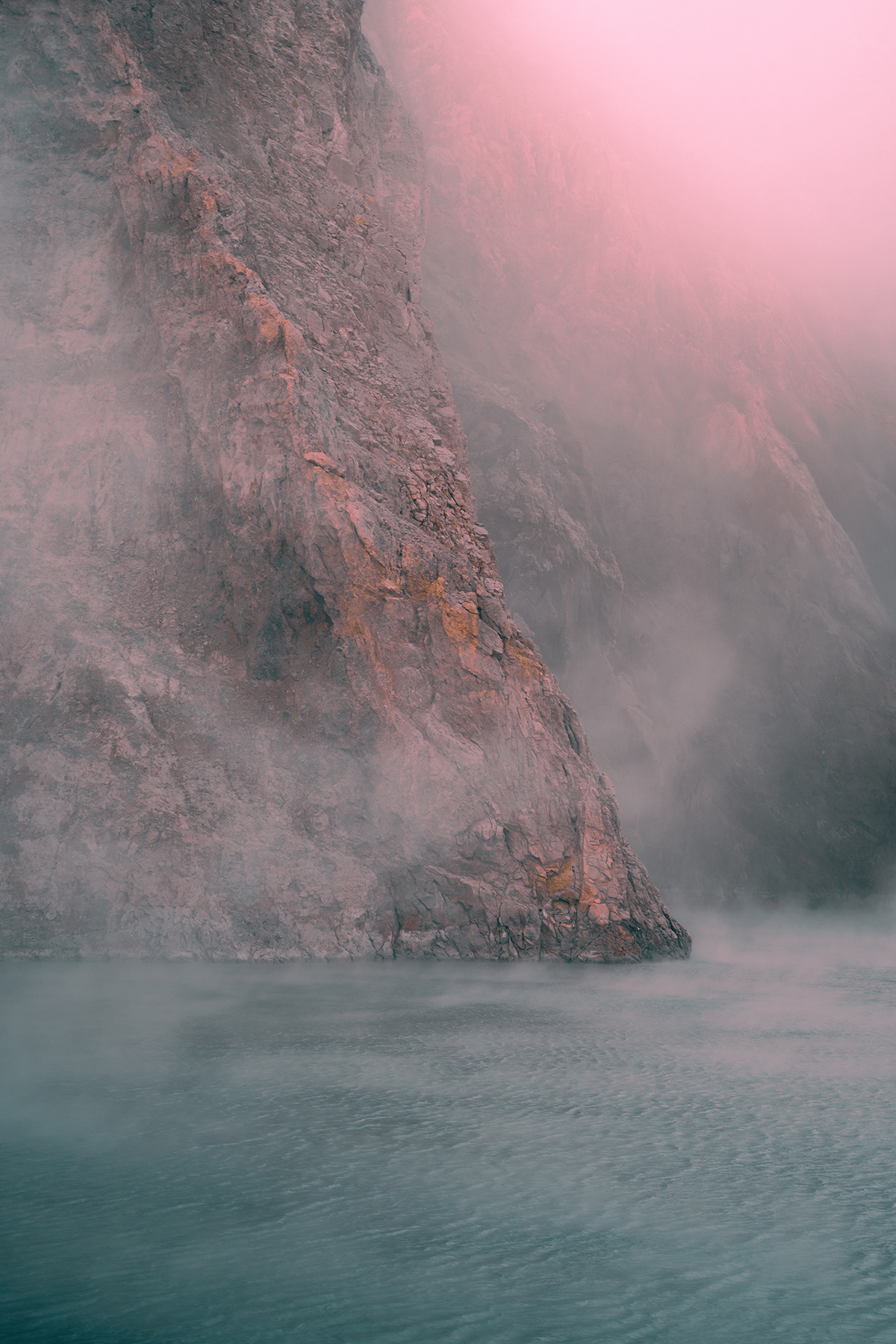
Ijen thumbnailIjen thumbnail

Jonas Daley is what I call an “atypical nature photographer”. His photos capture mountains and deserts, but they don’t look remotely similar to what pops into your head when you imagine such landscapes. Jonas colors his work differently, making his photos look like they were photographed in an alien world. His work has become a personal favorite of mine for color reference, taking a place in my reference album next to IR photographers. Frankly, the first time I saw Jonas’s work, I thought he was an IR photographer himself, shooting IR in peculiar locations.

Recently, I came across one of his more recent works, from his photography visit to Ijen, a dangerous volcano in Indonesia.

I haven’t seen someone shoot the blue flames of Ijen since Keeow Wee Long visit in 2014, and there is a good reason for that. Photographing volcanos is dangerous by itself, but this volcano is dangerous for more than just its heat.

The Ijen Volcano

With a diameter exceeding 1 kilometer and a depth of approximately 300 meters, the Ijen Volcano crater has formed the Ijen Volcano Lake due to the presence of abundant sulfur salts and volcanic magma activity at the bottom. The lakebed is rich in sulfur deposits.

Every year, local residents and workers climb the volcano and then collect sulfur from the lakebed. This is a strenuous and hazardous occupation, as workers labor in an environment saturated with toxic gases, traversing the steep slopes. The sulfur mined by them is primarily used in the production of fertilizers and industrial products such as chemicals.

DIYP: What was it like shooting in a dangerous volcano?

Jonas: “Shooting at Mount Ijen was truly an unforgettable experience. The environment in the area is extremely harsh, but it also showcases its unique beauty and landscapes. From both a technical and safety perspective, shooting near a volcano requires special preparation and precautions, which made the entire experience even more memorable and exciting.”

DIYP: volcanoes are not a common subject; how did you get to shoot this project?

Jonas: Regarding how I got into such a project, I have always had a strong interest in natural landscapes and photography, and I have gradually developed my skills and style through continuous learning and practice.

DIYP: What are your tips for aspiring nature photographers still searching for their art style?

Jonas: As for advice for aspiring nature photographers, I believe the key is to maintain curiosity and creativity, continuously experiment with new techniques and perspectives, and always stay sensitive to the beauty of nature.

Ijen - red sky over the seaIjen - red sky over the sea

You can see more of Jonas Daley work on his website, Instagram, and Behance account.

It set out to take creative street photos: here’s how I captured the London look

It set out to take creative street photos: here’s how I captured the London look

My Mission

London street photography by Chris Aldred

(Image credit: Chris Aldred)

Mission: Capture the streets of London throughout the day, sunset and blue hour
Photographer: Chris Aldred
Location: Bristol, UK
Kit used: Nikon D3500, Nikon AF-S DX 18-140mm f/3.5-5.6G ED VR
Instagram: @aldredvisual

Growing up in Bristol, I was surrounded by the creative wave of local photographers, street artists and architects in my community – and I wanted to be a part of that. My love of photography grew after leaving school, as I observed and learned from others I looked up to. 

My journey really began when I picked up my first proper camera, a Nikon Coolpix P510 bridge camera. This allowed me to develop my skills and creative outlook. I advanced onto a Nikon D5100 DSLR shortly after, and then a Nikon D3500. I’ve recently invested in my first Z-series camera, the Nikon Z5, which I’m excited to be using more often in the near future.

I took my trusty D3500 on this trip to London. It’s an absolute workhorse, and has been my go-to camera for a while. It was paired with my AF-S DX 18-140mm f/3.5-5.6G ED VR lens, a versatile piece of kit to suit all environments and subjects. I also had a Manfrotto Element MII tripod, which is nice and light to carry around. 

My best shots

(Image credit: Chris Aldred)

After spending the latter part of the morning walking around Piccadilly, I took a couple of photos of the Ritz, but wanted to find an angle to create something unique within my surroundings. I noticed there were several motorbikes parked not far away, and I couldn’t resist trying my luck with one of the mirrors. It took a few attempts to get the focus right, as the camera was set to Face-Priority AF, but I used the framing grid display to help keep it central. I then flipped the image in editing to make the lettering legible, which I think made the image stand out more.

(Image credit: Chris Aldred)

I could tell by the clouds forming above that there was a good chance of a nice sunset (a rarity in London). I walked towards Tower Bridge, wanting to capture something with architecture in the foreground. The pattern on the side of the bridge gave me the perfect opportunity to capture a frame within a frame (although it did raise a couple of eyebrows from some nearby tourists). It took some time to frame the image properly – the ‘Walkie Talkie’ needed to sit in the middle of the pattern – and I found myself racing against the clock so I wouldn’t miss the best light as the sun began to set.

(Image credit: Chris Aldred)

London Bridge can be a busy place, especially with the financial district nearby. I felt it was time to try my luck with my tripod. I had a long-exposure shot in mind – vibrant red buses with iconic London architecture in the background. It can sometimes take a little trial and error to settle on the right exposure length. I opted for just one second, as I didn’t want the blur to look too elongated and artificial.

(Image credit: Chris Aldred)

One of my favorite storytelling genres is science fiction, with elements of film noir and dystopian fiction. The London Underground offers a great location to try something that fits these categories. The key with shooting these candid scenes is to respect people’s space and to be considerate (and not use the flash) when taking portraits of strangers.

A slight Dutch tilt (where you rotate the camera to angle the frame) and muted color palette provided me with an image that I initially thought would look good in black and white; but in post-production, color seemed more appropriate. I only altered the highlights and shadows.

(Image credit: Chris Aldred)

I’ve always loved leading lines. You need to have a clear subject for the viewer to be led to – and what better example than St Paul’s Cathedral? This quiet street nearby offered a great chance to get down low and capture a quirky image of the famed building. It took several minutes to adjust my focus with Wide-Area AF, along with Vibration Reduction. I wanted the double yellow markings to stand out just enough so the landmark in the distance would remain in focus. I was delighted I managed to capture a clear scene with no pedestrians, as that would have changed the image.

My street and urban photography tips

  • Explore your surroundings and try something new. It could help you find a unique composition, and is a great way to allow your creativity to flow.
  • Always take a spare battery (or two). The last thing you want to do is worry about conserving the battery level while you’re out in the field, experimenting with shutter speeds and different compositions.
  • Take your time. Don’t rush or panic about your photography goals for the day. Enjoy the process of developing your photo skills and creating content. Be curious about your environment and let your imagination run wild.

Read more:

Oxfordshire’s Big Picture: 12 February

Oxfordshire’s Big Picture: 12 February

Join us as we take a few moments every day to relax and enjoy the beauty of Oxfordshire through the stunning images you send us.

Upload your images via BBC Weather Watchers or email us at southweather@bbc.co.uk

imageestherjohnsonphotography TUESDAY - Oxfordestherjohnsonphotography
“Sometimes I’m lucky enough that a passer-by walks into frame,” says BBC Weather Water estherjohnsonphotography of this image at the Radcliffe Camera in Oxford
imageJim Keyworth MONDAY - Chipping NortonJim Keyworth
A gorgeous sunset behind Bliss Mill at Chipping Norton was captured by BBC Weather Watcher Jim Keyworth

How to submit a picture

Upload your images via BBC Weather Watchers or email us at southweather@bbc.co.uk. For inspiration, view some top tips from three of England’s Big Picture photographers.

When emailing pictures, please make sure you include the following information:

  • The full name of the person who took the pictures (as this person owns the copyright)
  • Confirmation that the copyright holder gives permission for the BBC to use their pictures across all its outputs
  • The location, date and time the pictures were taken
  • Your telephone number so we can get back to you if we have any further questions
  • Any other details about the pictures that may be useful for us to know

Please note that while we welcome all your pictures, we are more likely to use those which have been taken in the past week.

Archive

Pictures can be found on Instagram, on the hashtags #bbcsouthnews and #OxfordshiresBigPicture.

Terms and conditions

If you submit a picture, you do so in accordance with the BBC’s Terms and Conditions and the BBC’s privacy policy.

In contributing to England’s Big Picture you agree to grant us a royalty-free, non-exclusive licence to publish and otherwise use the material in any way that we want, and in any media worldwide.

It’s important to note, however, that you still own the copyright to everything you contribute to England’s Big Picture, and that if your image is accepted, we will publish your name alongside.

The BBC cannot guarantee that all pictures will be used and we reserve the right to edit your comments.

At no time should you endanger yourself or others, take any unnecessary risks or infringe any laws while collecting any kind of media.

imagePresentational grey line

Follow BBC South on Facebook, X, or Instagram. Send your story ideas to south.newsonline@bbc.co.uk.


Tinley Park Photography Studio is the Recipient of the 2024 Emerging Star Award

Tinley Park Photography Studio is the Recipient of the 2024 Emerging Star Award

Loading

Tinley Park Photography Studio is the Recipient of the 2024 Emerging Star Award (Tinley Park, IL) — On January 7, 2024, H&H Color Lab named Lucas Benjamin Photography the winner of the 2024 Emerging Star Award at its annual Summit. The Emerging Star Award is given to a new member of the Summit that exhibits both photographic and business excellence. The annual gathering is for top photography studios that specialize in youth sports and school photography. Sixty-two leading studios from around the country were in attendance.

Representing Lucas Benjamin Photography was Jeff Ruhe, the owner of the company. “On behalf of all the hard-working people at Lucas Benjamin Photography, I am honored to accept this award. Our mission statement is: To inspire by creating positive images. If we can help improve the self-image of the children we photograph, we are doing our job. In part, this award is recognition of our commitment to that objective.”

About Lucas Benjamin Photography

Based in Tinley Park, Illinois, Lucas Benjamin Photography serves greater Chicagoland and is a leading provider of youth sports and school photography. We are members of top photographic societies including Professional Photographers of America and Volume Imaging Professionals.

Mission Statement

To inspire by creating positive images.

Find out more about Lucas Benjamin Photography by visiting: www.lucasbenjaminphotography.com.

Tinley Park Photography Studio is the Recipient of the 2024 Emerging Star Award

Advertisement

Football cones hi-res stock photography and images – Alamy, cônes de football

Football cones hi-res stock photography and images – Alamy, cônes de football

5
(561) ·

€ 16.00 ·

En Stock

Training cones hi-res stock photography and images – Alamy

Football cone hi-res stock photography and images – Alamy

Football training cones hi-res stock photography and images – Alamy

Sport field cone hi-res stock photography and images – Alamy

Marker cones hi-res stock photography and images – Alamy

Football cones and net hi-res stock photography and images – Alamy

Sport field cone hi-res stock photography and images – Alamy

Football cones hi-res stock photography and images – Page 3 – Alamy

Football cone hi-res stock photography and images – Alamy

Plastic training cones hi-res stock photography and images – Alamy

Football cones hi-res stock photography and images – Alamy

Joo Won Is An Extraordinary Photographer In “Midnight Studio” Poster

Joo Won Is An Extraordinary Photographer In “Midnight Studio” Poster

ENA’s upcoming Monday-Tuesday drama “Midnight Studio” has released a new poster featuring Joo Won!

“Midnight Studio” tells the thrilling yet mysterious story about a prickly photographer who runs a professional photo studio that only exists for the deceased and a passionate lawyer as they cross life and death with the night guests. The drama will star Joo Won, Kwon Nara, Yoo In Soo, and Eum Moon Suk, and it will be helmed by director Song Hyun Wook of “Another Oh Hae Young,” “Beauty Inside,” “Graceful Friends,” “Undercover,” “The King’s Affection,” and “The Golden Spoon.”

In the newly released poster, Joo Won transforms into Seo Ki Joo, the owner of the mysterious photo studio named Midnight Studio. Seo Ki Joo is standing behind a strange camera while showcasing a heartwarming smile. The somewhat extraordinary photos hanging on the wall as well as the text that reads, “Opens only at night,” raise viewers’ curiosity. As a photographer, Seo Ki Joo plans to take pictures of his guests at the end of their lives and help them ascend to heaven safely.

“Midnight Studio” is set to premiere on March 11 at 10 p.m. KST. Stay tuned!

Meanwhile, watch Joo Won in “Alice”:

Watch Now

Source (1)


How does this article make you feel?