Photography

Canon Student Development Programme 2024: Empowering the Next Gene…

Canon Student Development Programme 2024: Empowering the Next Gene…
image

In a dynamic merger of creativity and education, Canon Central and North Africa (CCNA) is set to open entries for its eagerly awaited Student Development Programme 2024 this month. This annual initiative, which has become a beacon of empowerment for the next generation of African photographers, promises to provide invaluable training, mentoring, and equipment to selected candidates.

Advertisment

Empowering African Talent

The Canon Student Development Programme is a testament to Canon’s commitment to nurturing African talent and fostering a culture of learning and growth. Over the years, the program has evolved into a coveted opportunity for aspiring photographers across the continent, offering them a chance to hone their skills under the tutelage of industry professionals.

The 2024 edition of the program continues this tradition of empowerment, providing participants with comprehensive training modules, one-on-one mentoring sessions, and access to Canon’s cutting-edge photography equipment. This holistic approach ensures that students not only learn the technical aspects of photography but also develop a nuanced understanding of visual storytelling.

Advertisment

Beyond its immediate benefits, the Canon Student Development Programme serves as a stepping stone for young photographers, helping them establish a foothold in the competitive world of professional photography. Past participants have gone on to excel in various fields, from photojournalism and fashion photography to fine art and conservation photography.

A Call to Action

As CCNA prepares to open entries for the Canon Student Development Programme 2024, interested students are encouraged to visit the CCNA website for more information. The application period is expected to run for several weeks, providing ample opportunity for candidates to submit their applications and portfolios.

Advertisment

Applicants should note that the selection process is rigorous and competitive, with a focus on creativity, technical proficiency, and a passion for storytelling. As such, prospective candidates are advised to carefully review the application guidelines and ensure that their submissions showcase their unique vision and artistic voice.

Inspiring the Future

The Canon Student Development Programme is more than just a training initiative; it is a catalyst for change, inspiring young Africans to explore their creative potential and contribute to the continent’s rich visual culture. By investing in the next generation of photographers, Canon is helping to shape the future of African photography, one student at a time.

Advertisment

As the countdown to the 2024 program begins, anticipation is mounting among aspiring photographers across the continent. For many, this is more than an opportunity to learn and grow; it is a chance to be part of something larger, to join a community of storytellers and artists who are redefining the African narrative through the lens of a camera.

In the coming weeks, as applications pour in and the selection process unfolds, one thing is certain: the Canon Student Development Programme 2024 will once again serve as a powerful reminder of the transformative power of education and the boundless potential of African talent.

As Canon Central and North Africa prepares to welcome a new cohort of students into its fold, the photography world watches with bated breath, eager to see what stories will emerge from this unique convergence of creativity, learning, and opportunity.

Dive deeper into the life and work of iconic fashion photographer George Hoyningen-Huene

Dive deeper into the life and work of iconic fashion photographer George Hoyningen-Huene

Genre-defining doesn’t come close to describing George Hoyningen-Huene’s catalog of work, capturing fashion, portraiture, and travel unlike anyone before him and setting the stage for those who came after.

George Hoyningen-Huene, by Susanna Brown and The George Hoyningen-Huene Estate Archives, is the first publication dedicated to the great photographer’s work in over 40 years. It presents the reader with Huene’s photography journey, providing a great depth of insight into an icon of fashion photography through his famous images, previously unseen photographs, and personal correspondence. 

Erna Carise and models around a Michelin push-ball, 1930 (Image credit: © The George Hoyningen Huene Estate Archives)

Divers, swimwear by A. J. Izod, 1930 (Image credit: © The George Hoyningen Huene Estate Archives)

Huene started his photography career photographing for Vogue and Harper’s Bazaar, which at the time were far removed from our modern understanding of these fashion powerhouses. Fashion photography was solely commerce-based during this period, and not the creative outlet for art and design we see today. Huene’s early work with publications like Vogue helped establish this new direction. 

“His early photographs for Vogue were shaped by influences from both the classical world and the machine age,” Susanna Brown writes in the book’s introduction. “A deep artistic sensibility and a talent for sculpting the body with light enabled him to create graceful fantasies that transcend the magazine page and transport us to a bygone era of glamor”.

Glamor is the perfect word to describe Huene’s work, as it is evident from his images that every aspect of the subject, location, framing, and lighting is taken into consideration. Huene took a lot of his inspiration from cinema and photographed portraits of Hollywood stars with a similar approach to his fashion work. Katharine Hepburn, Cary Grant, Ginger Rogers, and Bette Davis are but a few of the subjects that were elegantly captured by Huene’s lens. 

Katharine Hepburn, 1939 (Image credit: © The George Hoyningen Huene Estate Archives)

Frank Capra, c. 1934 (Image credit: © The George Hoyningen Huene Estate Archives)

Speaking on her experience working with Huene, Katharine Hepburn is quoted as saying, “Texture, line, and simplicity – these were the things he liked – the classic truth”. 

Ahead of his time in many ways, Huene never truly got to see his work represented as the art it was. Fashion photography was only just being exhibited by museums and galleries shortly before Huene’s passing in 1968 but, since then, much of his work has been displayed in solo shows and as part of larger exhibitions around the globe. This brought new audiences to his work and led to the discovery of much of Huene’s previously unseen work outside the realm of fashion. 

Male torso with white drapery, 1930 (Image credit: © The George Hoyningen Huene Estate Archives)

Stairs, Temple of Jupiter, Baalbek, 1940s (Image credit: © The George Hoyningen Huene Estate Archives)

Showcased in the book are images from projects that show Huene’s extended interests, such as travel, landscape, and his foray into motion pictures that although differ in subject, are still captured with his signature statuesque elegance. 

George Hoyningen-Huene by Susanna Brown and The George Hoyningen-Huene Estate Archives is published by Thames & Hudson and is available for pre-order directly from the publisher, as well as Amazon US ($100) and Amazon UK (£75).

Over the 328 pages are 300 images, with accompanying texts by writers from the worlds of fashion, cinema, and photography. This book is fantastic and provides a deeper insight into the work and personal life of one of the great photographers – one that perhaps doesn’t get the recognition he deserves. 

As William A Ewing states in the foreword, “Huene made photographs that transcended their utilitarian function and stood the test of time”, and it’s hard to disagree. 

If photography books are your thing, like they are mine, you may enjoy our guides to the best coffee table books and the best books on fashion photography

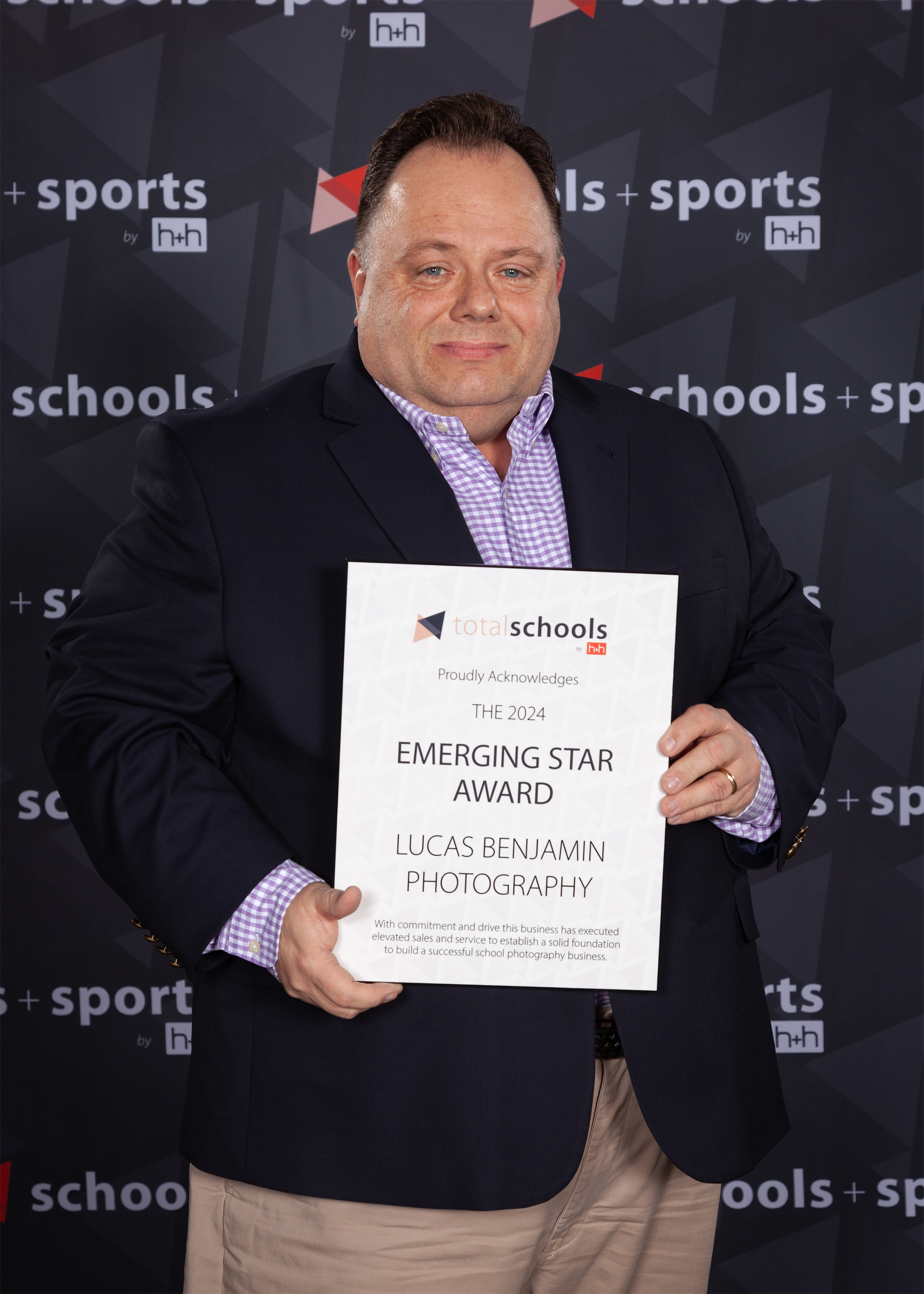
Tinley Park, IL Photography Studio is the Recipient of the 2024 Emerging Star Award

Tinley Park, IL Photography Studio is the Recipient of the 2024 Emerging Star Award
Youth Sports Photographer Chicago

Owner of Lucas Benjamin Photography Jeff Ruhe

Lucas Benjamin Photography receives prestigious award at national summit of sports and school photographers.

Our goal is to provide a best-in-class experience for our sports teams and schools. That includes the children, parents, and the administrators we serve.”

— Jeff Ruhe

TINLEY PARK, IL, UNITED STATES, February 12, 2024 /EINPresswire.com/ — On January 7, 2024, H&H Color Lab named Lucas Benjamin Photography the winner of the 2024 Emerging Star Award at its annual Summit. The Emerging Star Award is given to a new member of the Summit that exhibits both photographic and business excellence. The annual gathering is for top photography studios that specialize in youth sports and school photography. Sixty-two leading studios from around the country were in attendance.

Representing Lucas Benjamin Photography was Jeff Ruhe, the owner of the company. “On behalf of all the hard-working people at Lucas Benjamin Photography, I am honored to accept this award. Our mission statement is: To inspire by creating positive images. If we can help improve the self-image of the children we photograph, we are doing our job. In part, this award is recognition of our commitment to that objective.”

About Lucas Benjamin Photography

Based in Tinley Park, Illinois, Lucas Benjamin Photography serves greater Chicagoland and is a leading provider of youth sports and school photography. We are members of top photographic societies including Professional Photographers of America and Volume Imaging Professionals.

Our mission statement:

To inspire by creating positive images.

www.lucasbenjaminphotography.com

Jeff Ruhe
Lucas Benjamin Photography
+1 708-231-6270
jeffruhe@lucasbenjaminphotography.com
Visit us on social media:
Facebook

image

I played a photography simulator demo and it can’t hold a candle to the real thing, but the Apple Vision Pro could change that

I played a photography simulator demo and it can’t hold a candle to the real thing, but the Apple Vision Pro could change that

I’m a competent photographer. My photos aren’t going to change the world, but I’d like to think I’ve made images that most people would be happy to hang on their walls. So how would I fair with the Demo version of Madnetic Games‘ new Photography Simulator game

As someone who writes about cameras and photography for a living, the pressure was on me not to embarrass myself during the open demo stage. The demo is set in New York’s Central Park, where you find yourself as a ‘guy with camera’, well, a smartphone, who is asked to take a photo of your female friend who has just started her first day of work – a job which appears to involve little more than loitering in the park.

My first task was photographing the NY skyline across one of the park’s lakes (see above). It was a task that I managed with a wiggle of the mouse to reposition and click to fire the virtual shutter. The game judged my photo as worthy of a C grade. I had passed, though I could have done better with my composition.

A screenshot from a conversation in Photography Simulator PC game

(Image credit: Future)

Photo Tasks

A stroll through the beautifully Unreal Engine-rendered park led me to Elsa – the female mentioned earlier. Elsa is a strangely rendered human with unnerving eyes and facial expressions.  She asked me to take a photo of her next to a fountain to celebrate the first day of her new loitering job. Let the games begin!

A screenshot from Photography Simulator PC game on Steam

(Image credit: Future)

I thought about this as a photographer: What would be best? Perhaps have her in the middle of the shot, directly in the middle of the fountain, everything in perfect symmetry. Or perhaps off to one side slightly so we could see more of the fountain? Or I could just take a mid-length shot with the fountain, adding some background interest. I opted for the latter and was again rewarded with a C rating. I also returned and took a second full-length, off-center shot… and received a C rating. 

It appeared I had found my level as a photographer.

My next task was trickier and introduced me to the concept of sensitivity and ISO. Part of the game is learning about the various features of the camera, which is great for beginners (but more on this later.)

I was asked to take a photo of a fountain under a pergola. The tricky lighting situation required me to increase the ISO, which I did. My image received a C grade (obviously), and I jumped into the game menu to send the image to Elsa’s phone. She seemed happy enough with the random image but let me know it had noise – it would look better on a proper camera. Another valuable lesson learned.

Zoom Lenses and Bird Boxes

A screen from Photography Simulator game

(Image credit: Future)

Now, it was time to learn about zoom lenses. Elsa pulled from her list of mundane tasks and said I should photograph some birdhouses. Off I went in search of them using the in-game navigation tools. I took the shot, received my C rating, and tediously sent it to Elsa again.

After that, Elsa relieved me from my duties as her personal photographer, and I was free to roam around Central Park, hunting for photo missions to undertake. I photographed a woman and what was meant to be a squirrel (another C rating), but was actually a racoon. Then, I had a stroll around the park, completing a task or two and buying a camera from a photography stall in the middle of the park. The game does have a sense of humour, making light of some of the oddities in the onscreen conversations.

But I had to check out. 

It was like Grand Theft Auto, but instead of doing stuff that I can’t do in real life for many moral and legal reasons, I was doing something that I could do this afternoon: go to a park and take photos of birdboxes.

Unlike farming, cities, rollercoasters and even hospitals, it turns out that photography simulators aren’t actually fun.

A Screen grab from Photography Simulator

(Image credit: Future)

Photography as a game

As an idea, it sounds great. It encourages people to learn photography, starting with a smartphone. The problem is that anyone with a PC powerful enough to run Photography Simulator will likely have a smartphone and can walk around a real-life park and take photos of people or bird boxes.

The argument is that those who don’t have a DSLR or expensive zoom lenses can practice and learn about using them. Still, a used, or even new, DSLR or mirrorless camera and a basic zoom lens aren’t expensive – the best beginner cameras can be had for less than half the price of a premium smartphone.

The developers are now making the full version of the game focused on photographing landscapes and wildlife. It sounds like much more of an exciting adventure game as it is genuinely something that most people might not be able to do in reality. But it is still missing that physical, hands-on element. Like trying to solve a virtual Rubik’s Cube, it just isn’t the same as actually having it and learning how it works in your hands.

Photography Simulator may work better in VR; in fact, it definitely would. With Apple Vision Pro, we’ll all meet in a virtual landscape and snap photos of each other soon enough. It will feel like we are there, except we aren’t. We’ll be in a rendered world where an algo has judged us to be C-grade photographers.

And that brings us to the final point. Photography is an art and is subjective. Of course, there are rules to learn, but there are already enough algorithms telling me that my photos aren’t quite good enough. I’m not sure I need another one. 

Photography Simulator by Magnetic Games is coming soon via Steam

You might also like

Conan Doyle Rarities, Avedon and Adams Photographs, Harry Clarke Window Design: Auction Preview

Conan Doyle Rarities, Avedon and Adams Photographs, Harry Clarke Window Design: Auction Preview

Here are the sales I’ll be watching this week:

At New England Book Auctions on Tuesday, February 13, 227 lots of Fine Books & Ephemera, offering a wide range of material.

Forum Auctions’ sale of Modern Literature, Children’s and Illustrated Books ends on Thursday, February 15. The 270 lots include an original “cartoon” design by Harry Clarke for a stained glass window in the Church of Our Lady and St Richard, Ashdown Park, Leeds (£5,000–7,000); a copy of the 1979 Circle Press edition of Antony & Cleopatra in a designer binding by Stefanos Kolovouris (£1,800–2,000); a copy of the first edition of Graham Greene’s The Name of Action in the rare first-state jacket (£1,500–2,000). This sale also includes several more Steinbeck titles from the collection of his sister Mary Dekker.

At Potter & Potter on Thursday, A Study in Sherlock, Part II: Including the Collection of Robert Hess and Roy Pilot, in 336 lots. Conan Doyle’s autograph manuscript of the novel Uncle Bernac, along with the American serialization and the first English edition is estimated at $30,000–40,000. A copy of the first English trade edition of The Lost World with the original dust jacket is expected to sell for $8,000–12,000; a second issue copy of The Lost World in the original dinosaur-print jacket could fetch $15,000–18,000.

Swann Galleries holds a sale titled An American Century: The Collection of Dr. James & Debra Pearl & Fine Photographs on Thursday. The 239 lots include Richard Avedon’s Portrait of the artist Georgia O’Keeffe (1958), believed to be the only print of this image ($30,000–50,000); Ansel Adams’ Monolith, the Face of Half Dome, Yosemite National Park (1927, printed 1973–1977), estimated at $25,000–35,000; and a number of Irving Penn portraits form the Small Trades Series.

Indian photographers win awards at prestigious Wildlife Photographer of the Year competition

Indian photographers win awards at prestigious Wildlife Photographer of the Year competition
ByTrisha Sengupta

Feb 12, 2024 01:33 PM IST

Photographers from India, Sriram Murali and Vishnu Gopal, won awards under different categories at the Wildlife Photographer of the Year competition.

The Natural History Museum hosts the prestigious Wildlife Photographer of the Year competition each year which sees people from across the world submitting their incredible photographs. From beauty to fragility, these photos show the animals in the wild in a whole new light. This year, the Wildlife Photographer of the Year People’s Choice Award was claimed by Nima Sarikhani for his picture ‘Ice Bed’ – a polar bear sleeping on ice. There are also other categories in the competition in which people, including two photographers from India, won with their well-composed photographs of wild animals. While one of them captured an image of fireflies, the other won with a picture of a tapir.

Wildlife Photographer of the Year competition: This image showing fireflies was captured by Sriram Murali at Annamalai Tiger Reserve. (Instagram/@sriram_murali )

Also Read: Google India shares incredible pictures that will leave you ‘feeling warm’

Lights Fantastic

This photo by Sriram Murali from India won first place in the Behaviour: Invertebrates category. Captured at Anamalai Tiger Reserve, the picture shows “a night sky and a forest illuminated with fireflies”.

Discover the thrill of cricket like never before, exclusively on HT. Explore now!
Lights Fantastic: Captured at Anamalai Tiger Reserve, this image shows fireflies. (Instagram/@sriram_murali )

Face of the Forest

“I’m absolutely thrilled to announce that I’ve been awarded with the most prestigious NHM Wildlife Photographer of the Year award -2023 in the Animal Portraits category,” photographer Vishnu Gopal wrote as he announced his win on Instagram. His award-winning picture shows a tapir in a dimly lit rainforest.

The award-winning picture of a tapir by photographer Vishnu Gopal. (Instagram/@vishnugopal)

Here are five more award-winning pictures from the competition.

1. Life on the Edge

This picture captured by photographer Amit Eshel won first place in the Animals in their Environment category. It shows a dramatic clash unfolding between two Nubian ibex.

The image is titled Life on the Edge. (Instagram/@siberianart)

2. The Tadpole Banquet

“Juan Jesús Gonzalez Ahumada watched as toad tadpoles feasted on a dead fledgling sparrow that had fallen into a pond near his home.” reads a post shared on the official Instagram page dedicated to the competition. Named the Tadpole Banquet, this image won under the Behaviour: Amphibians and Reptiles category.

The image is titled The Tadpole Banquet. (Instagram/@jjgahumada)

3. Silence for the Snake Show

This image by photographer Hadrien Lalagüe captures an “unexpected encounter between a group of grey-winged trumpeters and a boa”. The photographer, in an Instagram post, revealed that the award-winning image is part of a series of 71 images that he compiled into a timelapse video.

The image shows a group of grey-winged trumpeters and a boa. (Instagram/@hadrien_lalague)

4. The Golden Horseshoe

Laurent Ballesta, a photographer from France, won under the category Portfolio Award. His picture shows a vibrant horseshoe crab moving slowly over the mud in search of food.

The image shows a horseshoe cab searching for food. (Instagram/@laurentballesta)

5. Hippo Nursery

Captured by Mike Korostelev, this image won an award in the Under Water category. He captured this image of hippos swimming underwater using a drone.

This image of the hippos was captured using a drone. (Mike Korostelev)

Which of these images did you like the most? Did these award-winning pictures from Wildlife Photographer of the Year 2023 leave you amazed?

Unlock a world of Benefits with HT! From insightful newsletters to real-time news alerts and a personalized news feed – it’s all here, just a click away! –Login Now!

Share this article

Artistic rebel, urban poet: new book celebrates the iconic photography of Saul Leiter

Artistic rebel, urban poet: new book celebrates the iconic photography of Saul Leiter

Saul Leiter may not be the best-known name in the history of photography, but perhaps he should be. As a new monograph highlights, this uncompromising artist was a true rebel with a radical approach that resulted in a huge archive of truly groundbreaking work. Having spent decades not getting the recognition he deserved, Leiter came to prominence late in life and is now considered one of the greats.

Saul Leiter: The Centennial Retrospective presents the full spectrum of his artistic output for the first time, including rare and previously unpublished material. In this way, it both introduces the artist to new generations and sheds fresh light on his work for those who are already familiar with him.

We chatted to the authors – Margit Erb, the founder and director of the Saul Leiter Foundation, and Michael Parillo, its associate director – to discover why Leiter’s work is so important, how they put the book together and why his images still speak to us today.

Who was Saul Leiter?

Saul Leiter was born in Pittsburgh, Pennsylvania, in 1923. His father was a respected Talmud scholar, and the younger Leiter was expected to follow in his footsteps and become a rabbi. In his early twenties, however, Saul moved to New York City to become an artist.

He had developed an interest in painting from an early age, and in New York, he was fortunate to meet the abstract expressionist painter Richard Pousette-Dart, who encouraged him to pursue photography. Soon, Leiter was taking black-and-white pictures with a 35 mm Leica. Around 1948, he started shooting in colour, at a time when most artists saw colour photography as ‘unserious’.

© 2023 Saul Leiter Foundation

© 2023 Saul Leiter Foundation

© 2023 Saul Leiter Foundation

© 2023 Saul Leiter Foundation

© 2023 Saul Leiter Foundation

© 2023 Saul Leiter Foundation

Leiter’s main subjects were street scenes and his small circle of friends, and indeed, many of his photographs were taken within a 10-minute walk of his apartment. His abstracted forms and daringly innovative compositions have a painterly quality that stands out among the work of his New York School contemporaries.

For his main source of income from the late 1950s through the 1970s, Leiter worked as a fashion photographer, and his pictures were published in magazines such as Harper’s Bazaar, Elle, British Vogue, Queen, Nova and Esquire. All the while, he was shooting colour and black-and-white street scenes on his daily walks, as well as nudes and intimate portraits back home, while continuing his painting explorations with abstract watercolours, whimsical sketchbooks, and painted photographs.

By the late 1970s, Leiter was moving away from fashion photography, and in 1981 – facing financial difficulties – he was forced to close his studio on Fifth Avenue. For the next two decades, he lived and worked virtually unknown.

Erb first met Leiter in the mid-1990s when she worked at the Howard Greenberg Gallery in New York, which represented the artist and remains his US dealer to this day. “He was only selling two or three prints a year,” Erb says, “for maybe $900, $1,200… not enough to live on. He rarely had money for lunch; I’d always take him out to eat. When we did an exhibition, it got great reviews. But there was no internet. There were no books. There was nothing to communicate to the world about Saul.”

Turning point

With Erb’s help, Leiter began working on a book of his colour photographs in 1996. It took a painful ten years before Saul Leiter: Early Color was published, but it was worth the wait. The publication marked a turning point in his life, with Leiter being hailed, seemingly out of the blue, as a photographer to be reckoned with.

© 2023 Saul Leiter Foundation

© 2023 Saul Leiter Foundation

© 2023 Saul Leiter Foundation

© 2023 Saul Leiter Foundation

© 2023 Saul Leiter Foundation

© 2023 Saul Leiter Foundation

When the recession of 2008 hit, Erb began working one day a week for Leiter. This allowed her to delve into the monumental task of organising his archive. After Leiter died in 2013 at the age of 89, she and Michael Parillo continued this work. As a result, the new book combines the artist’s best-known work with a large number of unseen treasures.

“We felt that Saul’s centennial would be a perfect occasion to present a full retrospective in a way that hadn’t been seen before,” explains Erb. “So it’s the biggest book to date, in terms of both its size and the number of works it contains. It was particularly important to us to show the breadth of his painting output, too, which was a lifelong pursuit for Saul.”

Finding a balance

Given the size of the archive, selecting which photographs to include was also a challenge. The authors needed to balance images that are now regarded as Leiter classics with newly unearthed material, black and white with colour, street photography with fashion photography.

“Many of the fashion images here are unseen because it’s not a well-explored area of Saul’s career,” Erb notes. “Michael and I went to the New York Public Library, which holds almost a full collection of Harper’s Bazaar. And we identified images that highlight how Saul’s style really made him different from his contemporaries, with his use of depth of field, foreground, backgrounds, and so on.”

© 2023 Saul Leiter Foundation

© 2023 Saul Leiter Foundation

© 2023 Saul Leiter Foundation

© 2023 Saul Leiter Foundation

© 2023 Saul Leiter Foundation

© 2023 Saul Leiter Foundation

Although his style was unique, Leiter’s approach didn’t do him any favours at the time. “Saul was accused of being very artsy by the art directors of various magazines,” says Erb. “Often, that meant he had to rein things in, but there were exceptions.

“His best fashion years, in our opinion, were when he worked with the art director Henry Wolf at Harper’s Bazaar,” she says. “Henry just let the reins go so Saul could do as he wanted. But when Henry moved on, new art directors came in who restrained the work. And that’s essentially why Saul left the fashion world, because he couldn’t handle the restraint any more. It became very frustrating for him.”

Unique vision

Despite such bumps in the road throughout his career, Leiter’s work is now considered iconic by photography lovers. But why, exactly?

“Saul saw things the rest of us wouldn’t see,” says Parillo, “even though these things were there for everyone to see. His take on the world was just unique and a little to the left.

© 2023 Saul Leiter Foundation

© 2023 Saul Leiter Foundation

© 2023 Saul Leiter Foundation

© 2023 Saul Leiter Foundation

© 2023 Saul Leiter Foundation

© 2023 Saul Leiter Foundation

“Take New York, for example. His vision of New York City is so different from other photographers, and I think that’s one reason why he really stands out as one of the great New York photographers. He presents a quieter and more mysterious New York.”

“His vision was much more abstract and visually pleasing than others,” adds Erb. “It was less social comment and more about the beauty of the world around us – the beauty of urban life.”

Indeed, this observation would apply not just to Leiter’s street photography but to every aspect of his creative work. “Beauty was a topic that consumed him,” says Parillo. “He really wanted to present beauty, and he certainly did. And the fact that he never wanted to control the scene was another thing that helped him stand out. He just wanted to respond spontaneously to whatever was there.”

Growing influence

Now, ten years after his death, Leiter’s influence is spreading far and wide. For example, there have been three major exhibitions of his work in Japan in 2017, 2020 and 2023. “We were very encouraged by that,” says Erb. “In Japan, 1,000 people a day were showing up, and a good majority of them were young people.”

© 2023 Saul Leiter Foundation

© 2023 Saul Leiter Foundation

© 2023 Saul Leiter Foundation

© 2023 Saul Leiter Foundation

© 2023 Saul Leiter Foundation

© 2023 Saul Leiter Foundation

“Saul has really struck a chord in Japan,” continues Parillo. “And maybe that’s not surprising because Saul himself was greatly influenced by Japanese artists. He had a huge Japanese art book collection, and we feel that his art reflects that in various overt and less overt ways. The emphasis is on beauty and mystery, and quiet as well. He’s not hitting you over the head – as he said, he’s tickling your left ear.”

Unveiling ‘Outside Images’: A Student Photography Exhibition Captu…

Unveiling ‘Outside Images’: A Student Photography Exhibition Captu…
image

Lila Shermata, a junior at the University of Pennsylvania, is set to unveil her curated photography exhibition, ‘Outside Images’, at the Kelly Writers House. The exhibit, opening its doors on February 13, will showcase an array of images captured by students from Penn and other Philadelphia schools, all centered around non-human subjects such as landscapes and architecture.

Advertisment

A Symphony of Non-Human Narratives

Shermata received over twenty submissions in response to her open call for the exhibition. Her selection process was guided by images that resonated with her personally, ultimately choosing works that presented a diverse range of perspectives. The chosen photographs, taken by around ten students, will be displayed in the Brodsky Gallery until late March.

Among the featured student photographers are Fiona Wu, an engineering junior, and Ivanna Dudych, a sophomore in the College. Their work, along with the other selected photographs, will offer visitors a unique exploration of the world through the lens of these young artists, highlighting the beauty and intrigue found in non-human subjects.

Advertisment

Unveiling the Unseen

The ‘Outside Images’ exhibition invites viewers to delve into the often overlooked realm of non-human subjects. Through the eyes of these student photographers, the audience will encounter striking landscapes and intricate architectural structures, each image telling a story that transcends the confines of human narratives.

Shermata’s curation emphasizes the significance of these non-human subjects, urging viewers to contemplate their relationship with the environment and the built world. By focusing on these elements, ‘Outside Images’ seeks to inspire a deeper appreciation for the complexity and beauty that exists beyond the human experience.

Advertisment

The Intersection of Art and Academia

Kelly Writers House, a student-run organization at the University of Pennsylvania, has long been a hub for artistic expression and intellectual discourse. The ‘Outside Images’ exhibition is a testament to the organization’s commitment to fostering creativity and promoting dialogue between students of various disciplines.

The exhibition’s opening reception, scheduled for 6 p.m. on February 13, will serve as an opportunity for students, faculty, and members of the Philadelphia community to engage with the work of these emerging artists. By providing a platform for student photographers, Kelly Writers House continues to support the intersection of art and academia, encouraging students to explore new perspectives and challenge conventional boundaries.

As the ‘Outside Images’ exhibition prepares to open its doors, the anticipation grows for the unveiling of these non-human narratives. The diverse array of photographs, curated by Lila Shermata, promises to captivate audiences and inspire new ways of seeing the world around us.

From the intricate patterns of architectural structures to the breathtaking expanse of natural landscapes, ‘Outside Images’ invites viewers to embark on a visual journey that celebrates the beauty and complexity of our environment. As these student photographers share their unique perspectives, they remind us of the power of art to challenge, inspire, and ultimately, bring us closer to understanding the world we inhabit.