Photography

Richmond County Photography Group begins meeting again

Richmond County Photography Group begins meeting again
The Richmond County Photography Group meets in January 2024. Photo by Betty Gallo McIntyre

ROCKINGHAM — Professional and amateur photographers gathered together once again a few weeks ago to meet after a long break that lasted most of 2023.

Photographer Jimmy McDonald started and led the Richmond County Photography Group more than 10 years ago in coordination with Arts Richmond in downtown Rockingham.

Like much of the nation, the group stopped meeting during the COVID pandemic in 2020 and started back up last year but for only a few months due to unforeseen circumstances. Group members were excited last month about gathering again to discuss photography topics, share photos, plan events which include a few photo shoots, and to share knowledge with one another.

(Disclosure: This writer is a member of the group.)

Throughout the year, the group may attend community events which include photography opportunities as well as participating in a photo scavenger hunt. All attendees are welcome to give input and/or constructive criticism in helping fellow photographers capture the “perfect” shot as well as encouraging one another.

Anyone who is 16 years old or older and has an interest in photography is welcome. There are monthly topics which also include printing that topic on an 8×10 to share with the group. The photos are saved in a binder and kept on display at Arts Richmond for the community to view.

Advertisements

The group’s planned meetings are on the third Thursday of each month at the Arts Richmond building in downtown Rockingham at 125 E. Washington St., beginning at 6 p.m. and lasting until around 7:30 p.m.

The next event that the group will participate in, other than the regular monthly meetings, will be on March 10 which will be coordinated with the Richmond Community Theater’s “Cinderella” closing reception. There will be snacks and drinks served, and the photography group will have photos on display during the event. The photos will stay on display for a period of time afterwards to give the community time to stop by and view.

For more information on the Richmond County Photography Group, view their Facebook page: Richmond County Photography Group.

For more information on Arts Richmond, go to their website artsrichmond.org or you can view their Facebook page, Arts Richmond.

How a Photographer Built a DIY Digital Clock Within a Flash Unit

How a Photographer Built a DIY Digital Clock Within a Flash Unit

The DIY digital clock within a flash unit mounted on a camera.

Finnish photographer Petri Damstén crafted a digital clock within a flash unit using a Raspberry Pi Pico, and it looks like a delightful accessory that many photographers would pay good money for.

The digital display fits into where the diffuser panel once was. It mimics the simple aesthetics seen when on camera lenses to perfection. At the top, in large, easy-to-see numbers is the time. Below that a graphic reminiscence of depth of field markings seen on lenses. This part is just for aesthetics, but it’s a nice touch.

In the last row is further information, starting with the temperature at the far right. The simple number is meant to look like the focal length markings in orange also seen on lenses. To the right is a dot, which, when orange, indicates that the temperature displayed is above freezing (all in Celsius), or below freezing, if blue. In the middle of this row, users have the option of displaying the date.

The parts of the digital clock display, including the time, graphics, temperature, and date, are labeled.

“The idea of a camera-themed clock originated from my interest in photography. Another concept I had in mind was a Back to the Future DeLorean time machine-themed clock, but that might be a project for another day,” Damstén says in a blog post detailing the project

[embedded content]

This DIY project looks incredibly impressive, but the process putting it all together is even more fascinating. Initially, Damstén thought of 3D printing a flash unit to house the clock display and electronics. But the photographer realized it was easy to find a used one for little money and determined it was worth it for the more authentic look. Damstén even tried to find a broken flash unit which would have avoided taking apart working gear, but wasn’t able to find one.

A test of the digital clock and display.

The Raspberry Pi Pico unit

With the body ready to go, Damstén still had to figure out how to get the actual clock part working the way he wanted. Accuracy was of the utmost importance, and the photographer’s first go was off by a month.

“The absolute requirement for this clock was that the time is automatically set. You just plug it into the power source, and it shows the correct time,” Damstén said.

The flash unit used for the DIY clock

“I selected the Pico W with Wi-Fi since I was planning to use the internet for accurate time and temperature,” he later added.

Another key feature for Damstén was truly capturing the lens look.

“I wanted a font that resembles engravings in old lenses. I could not find one that I was happy with, so I decided to create my own font for this project (SVG, TTF on GitHub). The CircuitPython fonts are 1-bit fonts and appeared jagged, so I coded my own simple font system too,” Damstén says.

The flash unit with the digital camera display in place.

There were other obstacles, including a too-bright display and an overly blue palette, but Damstén was able to sort out the details with some coding behind the scenes.

“All in all, it was a nice little project,” Damstén says. “MicroPython is suitable for these types of projects, especially for beginners.”

Electronics of the flash unit removed.

The DIY flash unit clock mounted on a camera seen from behind with a USB cable extending from the back.

He removed the existing electronics and modified the battery compartment in the flash unit, but the display and Raspberry Pi Pico fit perfectly inside. A USB cable stretches out the back, which is nicely hidden in the final display mounted atop a camera. Even better? The camera holding up the tricked out flash clock: It’s called a Petri, the same as Damstén’s first name.


Image credits: Photographs by Petri Damstén

Pratt Institute’s graduate facilities in fine arts and photography will soon move to Navy Yard

Pratt Institute’s graduate facilities in fine arts and photography will soon move to Navy Yard

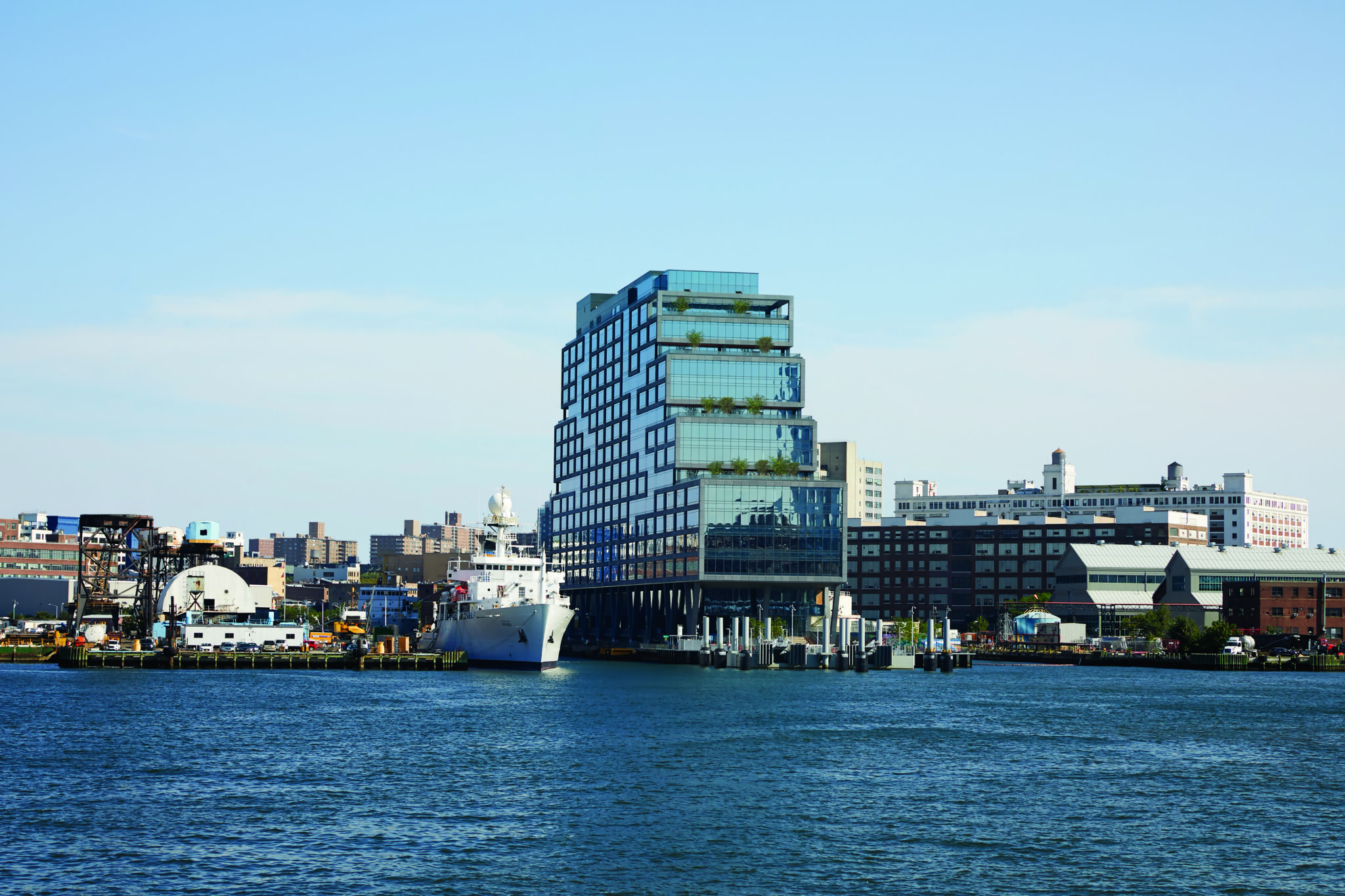
Pratt Institute’s MFA in Fine Arts and MFA in Photography facilities are scheduled to move soon from the Pfizer Building on Flushing Avenue to the new Dock 72 building in the Brooklyn Navy Yard (BNY), enabling access to a growing creative community on the edge of Pratt’s Brooklyn campus.

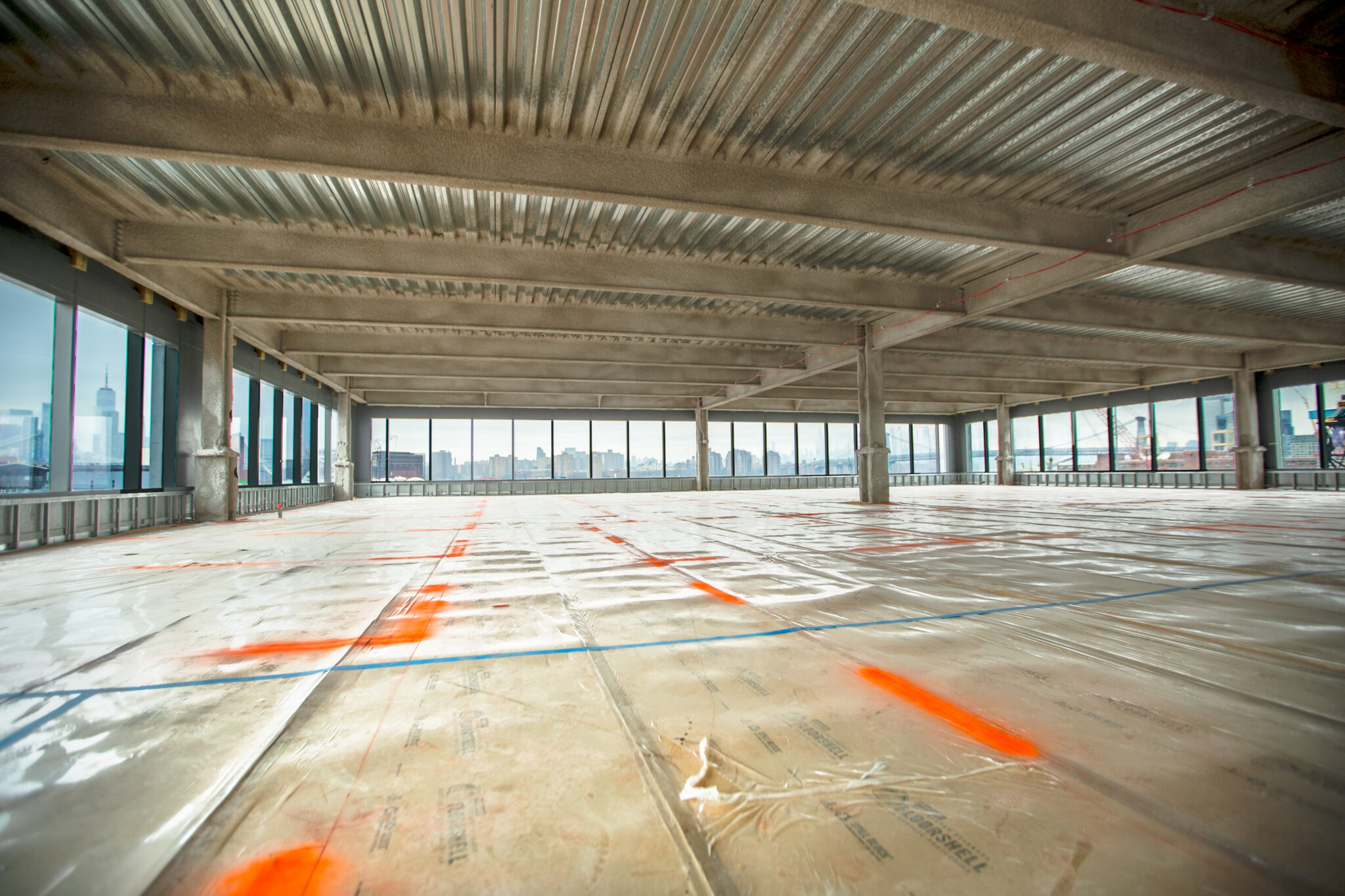
Dock 72 features floor-to-ceiling windows with abundant natural light and expansive views of the Manhattan skyline. The space is expected to be complete and occupied by the fall term, starting in August 2024.

Pratt’s graduate facilities in fine arts and photography will occupy 62,570 square feet across the entire third floor of Dock 72. The new location will include 100 individual artist’s studios, seminar and critique spaces, gallery spaces, a computer lab, fabrication shops and a black box for performances and projections. 

“Expanding Pratt Institute’s footprint in the Brooklyn Navy Yard provides our graduate fine arts and photography students with exceptional studios and access to a powerful community of diverse creatives and professionals,” Pratt Institute President Frances Bronet said.

imagePhoto courtesy of Pratt Institute” width=”600″ height=”400″ srcset=”https://www.mecreates.com/story/news/wp-content/uploads/2024/01/dock-600×400.jpg 600w, https://brooklyneagle.com/wp-content/uploads/2024/01/dock-1024×683.jpg 1024w, https://brooklyneagle.com/wp-content/uploads/2024/01/dock-768×512.jpg 768w, https://brooklyneagle.com/wp-content/uploads/2024/01/dock-940×627.jpg 940w, https://brooklyneagle.com/wp-content/uploads/2024/01/dock-1536×1024.jpg 1536w, https://brooklyneagle.com/wp-content/uploads/2024/01/dock-640×427.jpg 640w, https://brooklyneagle.com/wp-content/uploads/2024/01/dock-1200×800.jpg 1200w, https://brooklyneagle.com/wp-content/uploads/2024/01/dock-1920×1280.jpg 1920w, https://brooklyneagle.com/wp-content/uploads/2024/01/dock.jpg 2048w” sizes=”(max-width: 639px) 98vw, (max-width: 1199px) 64vw, 600px”>
The Dock 72 building at the Brooklyn Navy Yard, described as a hub of creative collaboration and innovation.
Photo courtesy of Pratt Institute

“There is a long-standing connection between manufacturing and art, much of which is steeped in the practice of making and creating. The corridor that connects Pratt and the Brooklyn Navy Yard brings together emerging artists with Navy Yard designers, fabricators, inventors, and business owners. We look forward to the exchange between Pratt’s painters, sculptors, photographers, researchers and new media graduate students and the incredible production facilities at the BNY,” Bronet added.

Pratt and the Brooklyn Navy Yard share a history of and commitment to expanding the ranks of local working professionals, from Pratt Institute founder Charles Pratt’s dedication to increasing access to education and training to the Brooklyn Navy Yard’s robust workforce that has powered decades of manufacturing and production. Also, manufacturing has historically been influenced, inspired and transformed by continued engagement with artists. 

Pratt students and faculty will have easy access between Pratt’s existing campus and Dock 72, allowing them to coordinate studio visits, exhibitions, conversations, and shop work. The new location also ushers in a permanent space for students to host their thesis shows. 

“Moving our facilities into Dock 72 will prove to be a game changer,” said Pratt School of Art Dean Jorge Oliver. “In addition to offering ample space and amenities, the building presents our students with incredible views that will inspire them in their artistic endeavors, as well as opportunities to engage with other creatives in the Navy Yard.”

imagePhoto courtesy of Pratt Institute” width=”600″ height=”400″ srcset=”https://www.mecreates.com/story/news/wp-content/uploads/2024/01/indoor-600×400.jpg 600w, https://brooklyneagle.com/wp-content/uploads/2024/01/indoor-1024×683.jpg 1024w, https://brooklyneagle.com/wp-content/uploads/2024/01/indoor-768×512.jpg 768w, https://brooklyneagle.com/wp-content/uploads/2024/01/indoor-940×627.jpg 940w, https://brooklyneagle.com/wp-content/uploads/2024/01/indoor-1536×1024.jpg 1536w, https://brooklyneagle.com/wp-content/uploads/2024/01/indoor-640×427.jpg 640w, https://brooklyneagle.com/wp-content/uploads/2024/01/indoor-1200×800.jpg 1200w, https://brooklyneagle.com/wp-content/uploads/2024/01/indoor-1920×1280.jpg 1920w, https://brooklyneagle.com/wp-content/uploads/2024/01/indoor.jpg 2048w” sizes=”(max-width: 639px) 98vw, (max-width: 1199px) 64vw, 600px”>
The third floor of Dock 72 is expected to be complete and occupied by the fall term, starting in August 2024.
Photo courtesy of Pratt Institute

 Dock 72 is nestled in a hub of technological, entrepreneurial and artistic activity. The Navy Yard, originally a shipyard for the U.S. Navy, is now an engine for local economic development and a magnet for working professionals and creative innovators through its vast manufacturing and commercial spaces.

These spaces house more than 450 businesses, including pioneers in metal fabrication, glass production and robotics, as well as the Research Yard, a 20,000-square-foot facility led by Pratt that opened on site in 2023 to unify the institute’s  research activities. 

Situated on the East River waterfront, Dock 72 serves as a visual reminder of New York’s position as an urban archipelago, an issue being explored in interdisciplinary ways across Pratt, particularly through its role as a core partner of the New York Climate Exchange on Governors Island.

The Brooklyn Navy Yard is also served by a wide array of transportation options, including the NYC Ferry, onsite parking, Citi Bike access, bus service, and Wi-Fi-equipped shuttle service to major subway lines, affording easy access to New York City’s contemporary art scene and opportunities beyond the studio confines.  

The Dock 72 building has been optimized for energy efficiency and features a  food hall, lounge areas, outdoor terraces and rooftop gardens.

One of America’s Most Important Photographs is in New Mexico

One of America’s Most Important Photographs is in New Mexico

Through out history there are many historic photographs & it turns out one of the most important was taken in the 40s in a small New Mexico town. All thanks to a man named Ansel Adams, his love for art and photography & this iconic photograph he took of a moonrise in a small town called Hernandez.

The story behind the iconic Moonrise, Hernandez, New Mexico photo

According to Ansel Adams, the man who took the photo, he and his companions were traveling by car in the Chama Valley near the Colorado-New Mexico Border on an autumn day in 1941. After some nasty looking rain clouds moved away from the Sangre de Cristo Mountains, Ansel saw the moon in the sky glowing BRIGHTLY and he thought this was the perfect opportunity to take a photo.

So he stopped the car, grabbed his 8 x 10 camera, and took THIS photo that he would called “Moonrise, Hernandez“:

via YouTube

via YouTube

loading…

Ansel himself goes into great detail into the story in an interview with the Getty Museum; the video was later uploaded onto YouTube.

If you want to go to the original spot of where the photograph was taken, you can. If you’re on US-84, stop by the highway markers 194 & 195. Take a left on the small road across from the highway from the San Jose Church & you’ll find the spot of the photo.

The area looks very similar on Google Maps like it did in the video too;

Google Maps

Google Maps

loading…

Google Maps

Google Maps

loading…

To this day it is classified as one of the most important & famous photographic images in history; the original print has gone on to be sold at auctions for over half of a million dollars. Even a mural sized print sold at a Christie’s New York auction for $930,000 in 2021.

Of course this wasn’t the only thing Ansel Adams is known for; you can see even more of his work, and people appreciating his photos in this video from The Art of Photography.

It’s amazing how a photo of a moon can become one of the most important photos of American history. Just a nice reminder to always keep a camera on you; you never know what you’ll find.

image

10 Haunted Locations Across Texas to Check Out

Looking for a scare in the Lone Star state? Check out these underrated haunted locations!

Gallery Credit: Google Maps

8 Iconic West Texas Restaurants Featured in Diners, Drive-ins, and Dives

The memorable Food Network show Diners, Drive-ins, and Dives has visited over 80 different restaurants in the state of Texas; some have been cities within the region of West Texas like El Paso & Taylor. Here are the places you’ve seen on the show so far.

Gallery Credit: Daniel Paulus

Super Cool “Earthship” For Sale In New Mexico

It can be yours for the low, low price of $825K!

Gallery Credit: Dubba G

Stunning Underwater Photos: Winners Of Ocean Art Contest Inspire Awe

Stunning Underwater Photos: Winners Of Ocean Art Contest Inspire Awe
image

Oceans contain entire worlds. Winners of the 2023 Ocean Art Contest capture them in vibrant, pulsating detail.

The Underwater Photography Guide, the online resource for photographers that sponsors the contest, announced the winners earlier this month. The Ocean Art contest, the organization said on its website, “stands as a celebration of ever-evolving photographic artistry alongside technological innovation.” The competition is now in its 12th year.

Three judges selected the winners from thousands of entries submitted from more than 90 countries. Photographers competed in 14 categories, including marine life behavior, underwater conservation, macro photography and black and white.

The winning photos offer stunning looks at undersea life, capturing sights from the violent mating ritual of nurse sharks to tiny luminescent predators poking out from the sand and sea lion pups’ playful pecking. Some images are surprising, illuminating rarely seen creatures and behaviors.

This year’s prize for best in show, for example, went to “Aquatic Primate” by Suliman Alatiqi, who captured a mesmerizing portrait of a crab-eating macaque foraging just beneath the surface of the water in the Phi Phi Islands of Thailand. The monkeys are efficient swimmers that have adapted to living near the ocean, and venture into the water to scavenge, cool down and play.

In capturing the winning shot, which also placed first in the portrait category, patience proved key for Alatiqi. The photographer spent long hours observing clans of macaques to better understand where and when they might go crab hunting before finally going close-up with a Nikon D850 camera housed in a protective Nauticam.

Alatiqi also nabbed first place in the wide-angle category for “Bunk Buddies,” a shot of whitetip reef sharks resting in place in South Roco Partida, Mexico.

Notably, with the proliferation of artificial intelligence tools that can dramatically alter images, the Underwater Photography Guide instituted new rules this year to address the use of AI during post-processing for its primary categories. It inaugurated two new categories, underwater digital art and underwater fashion, both of which can use generative AI tools to allow for creativity while keeping Ocean Art a photo contest.

Ocean Art 2023 winners received prizes such as dive packages that will allow them to keep snapping underwater wonders.

One of the judges, longtime underwater photographer and frequent photo expedition leader Mark Strickland, said bringing subaqueous scenes to attention is more important than ever. “Our beloved underwater realm is facing unprecedented threats these days,” Strickland said in a statement, “and needs all the advocates it can get.”

See the first prize winners for each category below. You can see all the winning images on the Underwater Photography Guide site.

Wide-Angle: ‘Bunk Buddies’

Macro: ‘Cavalluccio’

Marine Life Behavior: ‘The Birthday’

Coldwater: ‘Lunchtime’

Nudibranchs: ‘After The Wedding’

Blackwater: ‘Squid Hunting’

Underwater Digital Art: ‘Water Sprite’

Underwater Fashion: ‘Tea Party’

Compact Wide-Angle: ‘The Beauty of the Swamp’

Compact Macro: ‘Underwater Fireworks’

Compact Behavior: ‘Stay At-Home Mom’:

Underwater Conservation: A Shark Gets Released

Crisis vs utopia: New York shows of Richard Mosse and James Welling take photography to its limits

Crisis vs utopia: New York shows of Richard Mosse and James Welling take photography to its limits

Despite our collective impulse to snapshot every waking moment and share it on social media, we have yet to see everything. Luckily, we have artists who still have a thing or two to show us.

Consider James Welling and Richard Mosse, photographers who could not be more different. Since at least 2010, Mosse has been and tracking the wilful decimation of our planet by corporate profiteers and the displacement of refugees from war. Welling, a hardcore conceptualist, is more involved in the process of creating an image than documenting its subject. Yet both artists probe the limits of what a photographic image can represent by taking it beyond the visible world.

At the opening for Thought Objects, Welling’s tenth show with David Zwirner gallery, admirers scrutinised his photographs as if they had discovered a whole new medium. Or, as one sharp observer remarked, “It’s amazing to see pictures that no one else has taken.”

That was almost true. Many of us have seen photographs of calla lilies and of Modernist architecture such as Le Corbusier’s Villa Savoye. In Welling’s images, however, they register as vaguely familiar ruins that you can’t quite place, or echoes of an imaginary landscape. I was astonished to see that one work, Pier 24, was not of the startled, upside-down ghost ship that it seemed but of a riverside complex in Chelsea that I knew well.

“That picture inspired this whole series,” says Welling, who has fully embraced digital printing tools to conjoin, distort and abstract images that appear to attain sculptural depth and the texture of painting. (He compares the process to dentistry.) In his photographs, Brutalist buildings look like hyperreal intrusions on an alien world. Pictures of flowers, saturated in unreal colour, take on the mystifications of spirit photography.

Bigger than language

Welling uses ultraviolet light to print on aluminium panels that jut from the wall, a technique that frees him from frames, reflective glass and hours in a darkroom. Richard Mosse also works with UV light—specifically to photograph flowers—but in the middle of the night.

That’s what the Irish-born New Yorker was doing in 2018 to “convalesce” from five shattering years of recording the consequential extraction of rare earth minerals by armed bandits in Congo and the migrant crisis in the Middle East. But Mosse could not quiet his internal alarm when Jair Bolsonaro became president of Brazil and accelerated the ecological and human disaster unfolding in the Amazon Basin. Massive areas now look like Hiroshima after the bomb. It’s shocking. But Mosse is an artist, not a muckraker in search of scandal. He went to the Amazon with a small crew determined to “represent the unrepresentable”. For him, that is global warming.

Richard Mosse’s expansive video installation Broken Spectre (2018-22) at Jack Shainman, New York

Photo: Jack Hems

“I wanted to tell a story about climate change that is bigger than our language,” he says. It’s also too big for standard lenses. To make Broken Spectre, the magisterial and harrowing film that is inaugurating Jack Shainman Gallery’s new location in Tribeca, he packed three cameras, including a multispectral video device of his own design that replicates satellites used by scientists to keep up with changes to the environment. Together with an analogue and a UV microscopic camera, Mosse captured what the human eye cannot see on its own.

Global warming is not only poisoning the atmosphere and killing many species of animal, insect and plant in the rainforest but also spreading disease and causing immediate and irreparable harm to millions of displaced indigenous people. One of them, a woman wearing war paint and carrying a spear, directly addresses Mosse’s camera in a spontaneous rant against marauding criminals and a corrupt government that culminates in a gut-wrenching plea for help. It riveted the opening night audience.

It’s one thing to hear about incalculable destruction, another to experience it nearly at first hand. That is the effect of the film’s projection on a 60ft-long LED screen. Though it runs 74 minutes, no one left for a drink at the reception outside the room. People just kept coming in, and stayed, getting their minds blown and their eyes opened.

“The rain forest is an almost lawless place,” Mosse says. “But I’m interested in the cowboy culture of the Trans-Amazon Highway and this libertarian, evangelical spirit of capitalism that humans adopt to dominate and exploit the wilderness they believe God has given them. It has parallels in Western movies, and I wanted to exploit that.”

• James Welling: Thought Objects, until 10 February, David Zwirner Gallery, 533 W 19th St, New York; Richard Mosse: Broken Spectre, until 16 March, Jack Shainman Gallery, 48 Lafayette St, New York

Photographer Carlton Ward Jr. widens conservation efforts to the Gulf of Mexico

Photographer Carlton Ward Jr. widens conservation efforts to the Gulf of Mexico
Conservation photographer Carlton Ward Jr. is turning his attention to the Gulf of Mexico

Photographer Carlton Ward Jr., who has spent years trying to protect and preserve the Florida Wildlife Corridor, is now turning his conservation efforts on the Gulf of Mexico.

Ward, whose images of Florida panthers and other wildlife are the subject of a one-man exhibit at the Florida Museum of Photographic Arts in Ybor City through March 17, discussed his work on WMNF WaveMakers with Janet and Tom on Jan. 30. He said he’s turning his attention to the gulf because of its strategic importance to Florida’s environment.

“I’m going to be focusing on what’s really my first love in nature which is the Gulf of Mexico,” said Ward, who grew up in Clearwater and explored the gulf as a child through the work of the Clearwater Marine Aquarium.  “The gulf, it’s a remarkable story. It’s such an underappreciated ocean. This is a biodiversity hotspot.”

Ward said he is more convinced than ever that storytelling is the key to successful environmental conservation. His work has been shown in National Geographic and was the subject of a documentary film, “The Path of the Panther,” that is available on Hulu and Disney Plus. The film will be shown Sunday, Feb. 4, at the Florida Museum of Photographic Arts. His photos are also collected in a National Geographic book of the same name.

Florida legislators got an early look at the film when it was released in 2022 and Ward said it helped persuade lawmakers to fund millions of dollars in conservation easements to preserve the Florida Wildlife Corridor, which runs from the Florida-Georgia border to the Everglades. Those efforts continue. More than 300,000 acres were purchased last year and the governor and Cabinet will be considering more purchases in March.

Hear the entire conversation by clicking the link below, going to the WaveMakers archives or by searching for WMNF WaveMakers wherever you listen to podcasts.