Photography

Five Great Photography Ideas for 2024

Five Great Photography Ideas for 2024

2024 is here—can you believe it? I certainly cannot! It really felt like 2023 flew by, and the older I get, the faster life seems to go. In this article, I want to explore five photography ideas that you can try this year and see where the adventures take you.

Capture the Seasons

One goal I have for this year is to find a beautiful composition and capture that scene across multiple seasons. For example, I would love to find a minimalistic, beautiful lone tree in a field and photograph it in Spring, Summer, Fall, and Winter.

Some photographers do not like photographing the same scene multiple times, but there are so many variables to consider. One of the most important variables is weather. Weather conditions can really make an image stand out, seeing your scene in snow, with beautiful fall colors, during an amazing sunset, amidst mist or fog, and even in astrophotography. The potential here is endless, and it’s certainly something I want to try.

Can you imagine any scenes around the world that would inspire you to try this? Let me know in the comments below.

52-Week Challenge

There are a few challenges that photographers recommend, such as the daily photo challenge, but I find that one a bit too much, especially when balancing it with my usual day-to-day life. However, a weekly or even a monthly challenge may be more fitting.

The goal is to capture one image you are happy with each week or month. You could consider creating a new Instagram account to share those images as a reminder, or for a monthly challenge, you could produce a calendar of those 12 images and gift it to your family for Christmas. One of my close friends, Adam, does this very thing, aiming to photograph one species of wildlife each month for his calendar.

You can make your own rules for this challenge, such as sticking with a certain theme or trying different genres along the way. The choice is yours, and you could become an even better photographer by giving it a go.

Try Out a Different Genre

If you want to become a “jack of all trades” in the photography world, this is a great one to try. I love trying my hand at different types of photography, whether it’s wildlife, astrophotography, landscape, portrait, weddings, food, or macro—there are so many types you can try and then improve upon.

My passion lies within wildlife and northern lights photography. However, most of the work I was known for locally was photographing dancers in urban environments, and I was published in several national newspapers a few times for that work.

Personally, I am a massive introvert, and I suffer from depression, but I wanted to challenge myself by photographing portraits, choosing dancers because I love how graceful they are.

After a while, enjoying the success of photographing dancers, I tried other areas of portrait photography, such as studio, weddings, and headshots. This gave me the opportunity to not only have new revenue streams, but also to feel more confident within myself.

You never really truly know what you love until you do it, and you can find out a lot about yourself and where your passions truly lie. Who knows, you may find the genre you have been waiting for and not realized it!

Many photographers do not print their favorite images, but it is a skill that can be very valuable to you in the future. Whether you print the images yourself or go to a print lab, seeing your work in print can be an eye-opener.

It is always easy to look at your images on a computer screen or your phone, but seeing the image in print is a different feeling. The image is not backlit, so you will have a much different aesthetic to consider. You then have the options of different photo papers, which can elevate your image even further.

Whether you want a glossy or matte look, or maybe some texture in the print, these are all options available to you, and you can learn a lot from seeing your images up close and personal. You may even decide to put some up in your house! I ordered some metal prints from Saal Digital for my favorite Iceland shots, and they take pride of place on my living room walls. The prints are even a talking point for anyone visiting me, which is always nice when they appreciate my work.

Plan a Photography Trip

Sometimes, it can be monotonous, photographing the same region for years on end, so every year or two, I love to travel somewhere and find new subjects to photograph. The trips could be abroad, or they could just be somewhere further away in your own country that you have not visited yet.

Of course, with my favorite genres being wildlife and northern lights photography, I would love to travel around the world more often, but I am still waiting for that call from Sony or National Geographic to become an ambassador (wink wink). Sony, call me! Pretty please with a cherry on top.

I absolutely adore winter environments, and one day I want to move to Iceland or Lapland, but until then, I will keep traveling there as a visitor to look for new wildlife or compositions to photograph. One of my big dreams is to photograph Brown Bears and Polar Bears, so I am trying to save up for a trip to Finland for Brown Bears, and then to Svalbard for Arctic wildlife.

What trips do you have planned or would love to go on? Let me know down below.

Summary

I hope these five ideas can inspire you to try something new in the coming year or years. There is absolutely no harm in trying something different, and sometimes it can really pay dividends and might surprise you for the better.

Photography is about telling a story, and giving any of these ideas a go will in itself create a new story and take you on an adventure!

I wish all of you a very happy, healthy, and productive new year, and I wish you all the best for 2024.

City Life Org – The Brooklyn Museum Presents In the Now: Gender and Nation in Europe, Selections from the Sir Mark Fehrs Haukohl Photography Collection

City Life Org – The Brooklyn Museum Presents In the Now: Gender and Nation in Europe, Selections from the Sir Mark Fehrs Haukohl Photography Collection
image

Sarah Pickering (born Durham, England, 1972). Landmine, from the series Explosion, 2005. Chromogenic print, 20 × 20 in. (50.8 × 50.8 cm). The Sir Mark Fehrs Haukohl Photography Collection at the Los Angeles County Museum of Art and Brooklyn Museum, TL2020.6.133. © Sarah Pickering. (Photo: Courtesy of the artist)

On view in the Center for Feminist Art, the exhibition includes forty-seven women artists, including Yto Barrada, Bettina von Zwehl, Sarah Pickering, and Vanessa Beecroft, and examines gender, nationhood, and the male-centric development of photography as a medium.

On view March 8–July 7, 2024

In the Now: Gender and Nation in Europe, Selections from the Sir Mark Fehrs Haukohl Photography Collection unites forty-seven emerging and established women artists who are expanding and challenging notions of gender, nationhood, and the practice of photography itself. Drawn from a recent gift of the Haukohl Photography Collection to the Brooklyn Museum and Los Angeles County Museum of Art (LACMA), the exhibition highlights photo-based artwork made since 2000 by women artists born or working from more than sixteen European countries. Building on the first iteration of the exhibition, on view at LACMA in 2021, the Brooklyn Museum presentation features fifteen new artists from the Haukohl collection and illuminates the collection’s feminist underpinnings. The works on view investigate issues of migration, the legacies of nationalism in Europe, and the male gaze as patriarchal power structures continue to shape life and politics in Europe. By pushing the boundaries of photographic methods and techniques, the artists also resist the male-centric focus of the history of photography.

Organized into three thematic sections, the exhibition is located in the Museum’s Elizabeth A. Sackler Center for Feminist Art, which is centered around Judy Chicago’s The Dinner Party (1974–79). Chicago’s landmark installation presents a now-canonical critique of male-centric Western history, to which the diverse array of photographers of In the Now provide a twenty-first-century rejoinder. While Chicago reimagines Western civilization through the lives and achievements of women, artists like Carolle Bénitah, Anna Rackard, and Aida Silvestri use the camera to focus on personal and political stories of family, labor, and migration. Others, including Alexandra Croitoru, Eva Koťátková, and Melanie Manchot, capture the social and patriarchal pressures women face.

“We are grateful to Sir Mark Fehrs Haukohl, whose generosity has made this exhibition possible. The show inspires new narratives about the Brooklyn Museum’s photographic collection by prioritizing important contributions by women photographers. This directly supports the Museum’s mission to provide expansive encounters with art, inspire courageous conversations, and celebrate our communities,” says Carmen Hermo, Associate Curator, Elizabeth A. Sackler Center for Feminist Art, Brooklyn Museum.

The Gender section contends with representations of women’s bodies, as artists react to the personal and political realms of oppressive beauty standards, religion and law, and the history of art. Bettina von Zwehl situates the photographic portrait within the long multimedia history of portraiture with her 2016 series The Sessions. The series comprises fifty silhouette profiles of the same six-year-old girl, their edges torn and distorted to allude to the multiple facets of one individual. In Nu descendant un escalier (2020), Elina Brotherus asserts her role as an artist in front of and behind the camera. By restaging Marcel Duchamp’s 1911–12 Nude Descending a Staircase paintings using herself as the model, Brotherus reflects critically on the female nude, the male gaze, and gender norms in art.

In the Nation section, the artists unpack the social and generational fallout of European colonialism and nationalism. For Papiers Pliés (2007), Yto Barrada collected and folded recycled paper wrappings used by snack-food vendors in her native Tangier, Morocco. The printed French words on the wrappers indicate the sheets’ original function as forms from a textile factory, alluding to the legacy of France’s colonization of Morocco (1912–56) and the economic industries that propelled it. Sarah Pickering’s Landmine (2005) and Artillery (2005) depict the English countryside violently disrupted by mines, artillery, and other weapons. Upon closer inspection, they are revealed to be small-scale simulated explosions, reminding viewers of the relative peace “at home” in England while British troops supported the U.S. invasion of Iraq.

Artists in the Photography section grapple with a changing medium that has historically been hostile and exclusionary to women. Some engage early photographic methods in new ways or adapt found photography. Others reject the boundaries of the medium by incorporating painting, performance, film, and textiles, the last imbuing their work with the gendered politics of art forms historically categorized as “women’s work.” In La cartina indiscreta (Indiscreet Map; 2022), Carmen Calvo assembles found images around the body and face of a nude woman as she stands behind a translucent curtain, evoking Surrealist artists to comment on the woman’s pronounced visibility and simultaneous entrapment. Silvia Rosi’s Self-Portrait as My Father (2019) chronicles her family’s migration from Togo to Italy. Dressed as her father in a suit and tie, the artist marks her father’s change in status by surrounding herself with tomatoes, the crop her father picked as a migrant field worker in Italy. By holding the shutter release in the photo, Rosi signals her own identity as the photographer and steward of her family history.

The exhibition is accompanied by a catalogue of the collection titled The Sir Mark Fehrs Haukohl Collection of European Women Photographers, 2000–2020. Published by Steidl and edited by Manfred Heiting, the catalogue includes an essay by Rebecca Mark, Director of the Institute for Women’s Leadership and a Professor in the Department of Women’s, Gender, and Sexuality Studies at Rutgers University.

In the Now: Gender and Nation in Europe, Selections from the Sir Mark Fehrs Haukohl Photography Collection is organized by the Brooklyn Museum and the Los Angeles County Museum of Art. The exhibition is curated by Drew Sawyer, former Phillip and Edith Leonian Curator of Photography, Brooklyn Museum; Britt Savelsen, Curator and Head, Wallis Annenberg Photography Department and Prints and Drawings Department; and Eve Schillo, Associate Curator, Wallis Annenberg Photography Department, Los Angeles County Museum of Art. The Brooklyn Museum presentation is organized by Carmen Hermo, Associate Curator, Elizabeth A. Sackler Center for Feminist Art, with Imani Williford, Curatorial Assistant, Photography, Fashion, and Material Culture, Brooklyn Museum.

About the Sir Mark Fehrs Haukohl Photography Collection
In 2021, the Brooklyn Museum and the Los Angeles County Museum of Art (LACMA) announced the joint acquisition of two hundred contemporary photographs by women artists from seventeen countries in Western and Eastern Europe. The generous gift comes from Houston-based collector Sir Mark Fehrs Haukohl, whose expansive collection has been built over the course of twenty years and showcases an impressive range of styles and approaches to photography from that period. This is the Brooklyn Museum’s largest joint acquisition as well as the largest gift of contemporary photography ever received by the Museum, and it bolsters its long-standing commitment to collecting works by women artists.

Benny ‘One Layer’ Johnson: The Maverick of Digital Photography

Benny ‘One Layer’ Johnson: The Maverick of Digital Photography

Benny ‘One Layer’ Johnson: The Maverick of Digital Photography

In the realm of digital photography, Benny ‘One Layer’ Johnson is a maverick. The Tallahassee, Florida native has sent shockwaves through the community with a startling revelation – he eschews the conventional multi-layered approach to photo editing. Instead, he operates exclusively on the background layer in Photoshop, a technique that many equate to a high-stakes gamble.

Defying Conventional Wisdom

Unveiling his unique style at a recent workshop, Johnson, renowned for his stunning landscapes and emotive portraits, demonstrated how he adjusts brightness and contrast and removes spots directly on the original layer. This approach, often deemed risky by experts, involves making irreversible changes to the base image. The conventional wisdom of using multiple layers and masks for flexibility and non-destructive editing is conspicuously absent from Johnson’s workflow.

‘One Layer Wonders’: A Testament to Confidence

Johnson’s technique, encapsulated in his ‘One Layer Wonders’ series, is more than just a method – it’s a testament to his confidence and conviction. He dismisses the use of layers as overly cautious, believing that the process of art should not be mired in second-guessing and endless tweaks. The final product, he argues, should be a reflection of the artist’s decisiveness and unfiltered vision.

Controversy and Admiration

Johnson’s methodology has sparked a heated debate. Many photographers and Photoshop experts have voiced concern, likening his approach to reckless surgery or precarious bomb defusal. However, amid the controversy, there’s an undercurrent of grudging respect. Despite his unconventional method, Johnson’s work has been lauded for its raw, visceral beauty, earning him a place in the annals of digital art history. As the heated discussions continue, one thing remains clear: Benny ‘One Layer’ Johnson is a force to be reckoned with, changing the game one layer at a time.

‘Psychotic’ Photographer Edits All His Photos on the Background Layer

‘Psychotic’ Photographer Edits All His Photos on the Background Layer

Tallahassee, Florida: In a move that’s left the digital art world reeling with horror, local photographer Benny “One Layer” Johnson has confessed to a practice that’s nothing short of digital heresy: he edits all his photos exclusively on the background layer in Photoshop.

Johnson, whose stunning landscapes and portraits have won him mild fame, dropped this bombshell during a recent workshop. “Layers are for cakes, not art,” he joked, as he boldly adjusted the brightness, contrast, and even did spot removals, all on the original, irreversible background layer. His method involves making all adjustments – from color correction to cloning and even frequency separation – directly on the original, unalterable background layer, a practice akin to walking a tightrope without a net.

When questioned, Johnson stood his ground with a smirk, offering a bold statement that sums up his philosophy: “In this art form, your confidence is everything. If you’re not daring enough to commit your vision to the background layer, then perhaps you’re playing it too safe. To me, the background layer isn’t just a canvas; it’s a testament to the artist’s confidence and conviction. Why hide behind layers and masks? True art, like true courage, lies in making that irreversible stroke of genius.”

Despite the widespread panic in digital art communities, Johnson’s work, particularly his “One Layer Wonders” series, has garnered acclaim for its raw, unfiltered beauty. “Who needs layers when you’ve got guts?” Johnson remarked, as he daringly merged a new adjustment directly onto his only layer, sending shivers down the spines of Photoshop enthusiasts everywhere.

This cavalier approach has horrified photographers and editors alike. “It’s like a surgeon using a chainsaw,” gasped one seasoned Photoshop expert. Another commented, “Watching him work is like witnessing someone defuse a bomb with a hammer. It’s terrifying, yet you can’t look away.” Despite the collective anxiety he’s causing, Johnson’s “One Layer Wonders” have become a topic of grudging admiration. “There’s a fine line between genius and madness, and I’m not sure which side he’s on,” confessed a Photoshop instructor.

GUCCI SS24 “An Ode to Photography” Under Sabato De Sarno

GUCCI SS24 “An Ode to Photography” Under Sabato De Sarno
Gucci Spring Summer 2024
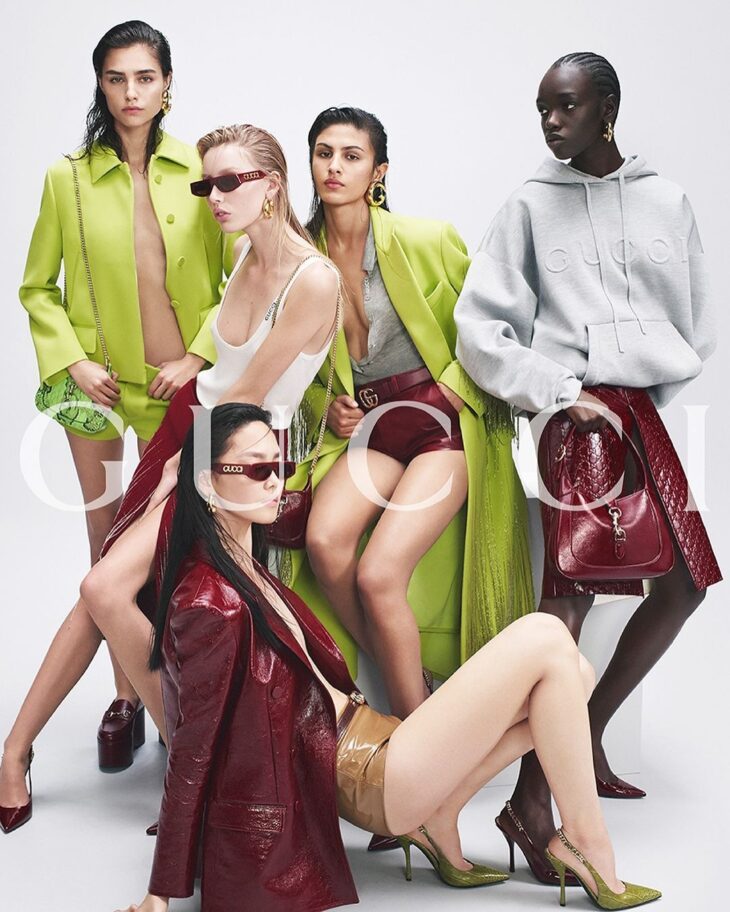
Gucci Spring Summer 2024 – photo ©David Sims

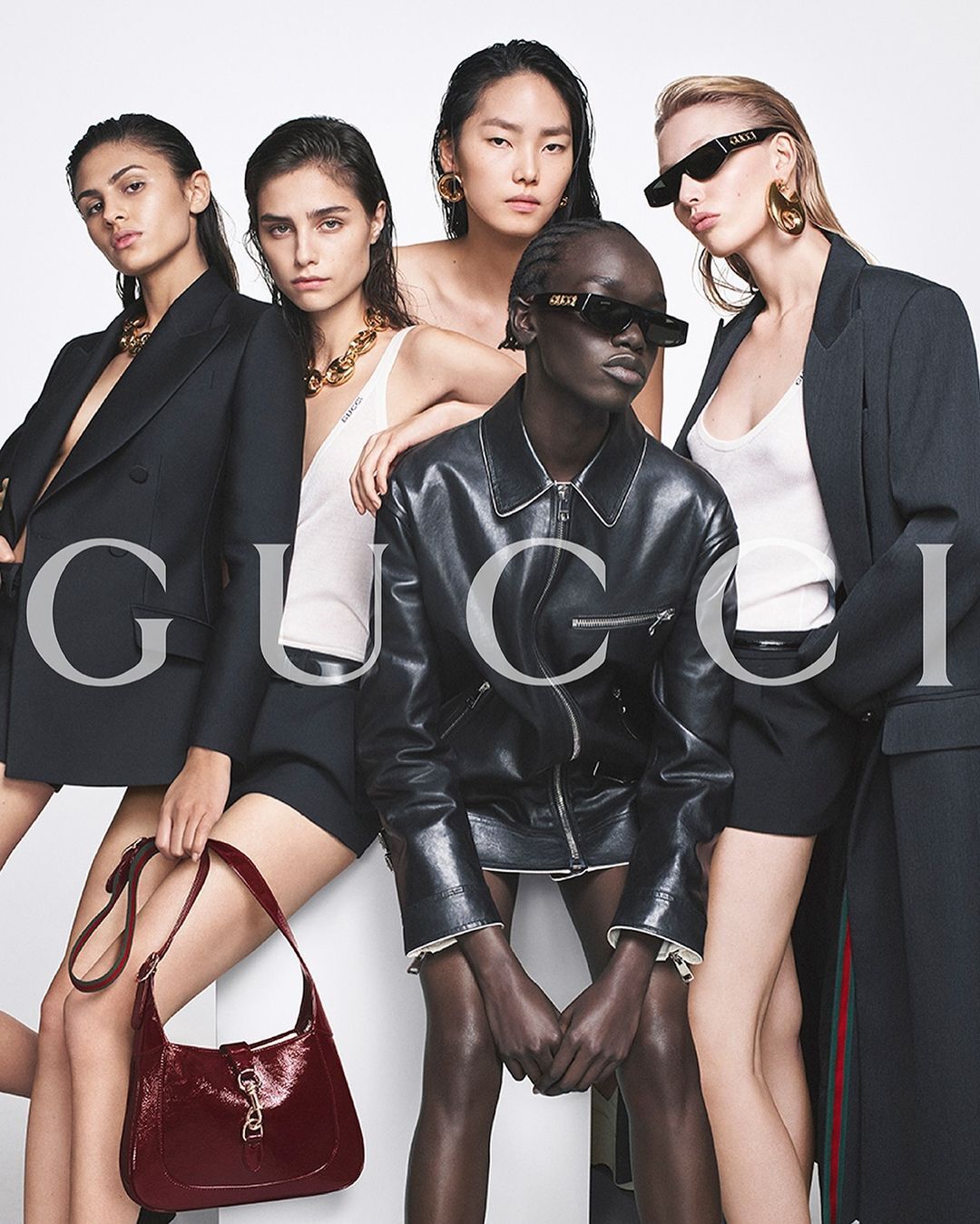
Gucci Spring Summer 2024 campaign comes with a striking return to the classic storytelling of a fashion photograph, Gucci’s first campaign under label’s newly appointed Creative Director Sabato De Sarno, titled “Ancora,” is orchestrated on a canvas of iconic simplicity. Captured by the legendary David Sims, the Spring Summer 2024 collection comes to life through a lens that is as much about the legacy of photography as it is about the vibrant future of fashion.

Under the direction of Sabato De Sarno and through the minimalist mastery of David Sims’ photography, Gucci Ancora redefines luxury with a bold yet understated palette. Art Director Riccardo Zanola’s precise aesthetic, coupled with Alastair McKimm’s fashion-forward styling, weaves a narrative of timeless elegance hitting the Gucci shops with the unfolding of the Spring Summer 2024 season.

Gucci Spring Summer 2024
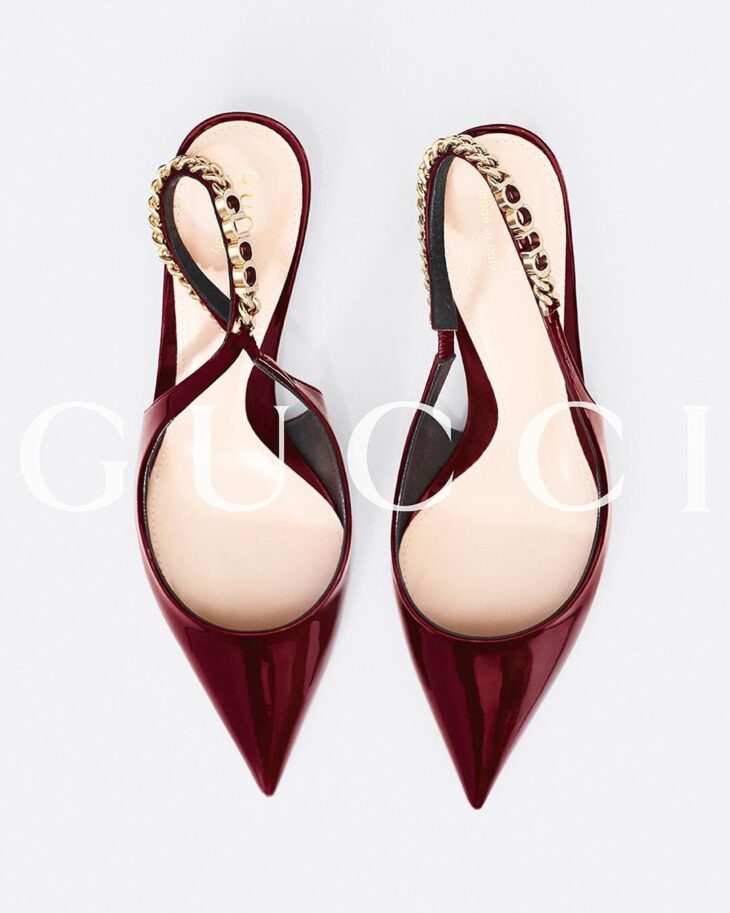
Gucci Signoria pumps- photo Gucci

Inspired by the heart of Florence’s iconic square, the Gucci Signoria pumps (pictured above), shaped under the leadership of Creative Director Sabato De Sarno for the Spring Summer 2024 line, capture the essence of modern elegance while paying homage to the eternal charm of the brand’s birthplace. Similarly, the newly introduced Gucci Horsebit platform loafers articulate a fresh perspective on the brand’s classic footwear, marrying tradition with a bold, contemporary twist.

Complementing the collection’s silhouette is the artistry of Hair Stylist Duffy and Makeup Artist Lucia Pieroni, whose work accentuates the natural allure of Gucci’s diverse ensemble of models. The finishing touch of manicurist Ama Quashie adds an understated sophistication to the campaign’s overall look.

Furthermore, embodying the spirit of the collection are the five new faces of Gucci—Fadia, Ana, Jiahui, Nyajuok, and Violet—each representing a facet of the brand’s inclusive vision. Alongside them are the enigmatic presences of Arthur Hargous, Prince Diamond, and the dynamic Ana Rossolovich.

“An Ode to Photography” is more than a new chapter for Gucci’s latest campaign—it is a nod to the formative moments of De Sarno’s career while celebrating fashion photography and where it is today.

Discover the complete Gucci Spring Summer 2024 campaign in our gallery:

Photographer David Sims
Creative Director Sabato De Sarno
Art Director Riccardo Zanola
Fashion Editor Alastair McKimm
Hair Stylist Duffy
Makeup Artist Lucia Pieroni
Nail Technician Ama Quashie
Models: Ana Rossolovich, Arthur Hargous, Fadia Ghaab, Jiahui Zhang, Nyajuok G, Prince Diamond, Violet Hume

Painter, photographer featured at VCPL in January

Painter, photographer featured at VCPL in January

#inform-video-player-1 .inform-embed { margin-top: 10px; margin-bottom: 20px; }

#inform-video-player-2 .inform-embed { margin-top: 10px; margin-bottom: 20px; }

Amber Johnson of Brazil has been selected as the January Artist of the Month for the Wabash Valley Art Guild. Her exhibit at the Vigo County Public Library, features two of her favorite specialties — oil painting and photography.

Johnson became interested in art when she attended high school. “My art teacher encouraged me by saying she thought I had talent,” Johnson said.

Currently she is enjoying oil painting on canvas and prefers the Bob Ross happy style. Her display shows her favorite subjects: mountains and landscapes. Johnson sells her paintings and crafts in a booth at the Bushel and Peck craft shop in Brazil. She also has a website her paintings, prints and pillows can be purchased. The site is AmberJohnson@fineartamerica.com. This is also her email address.

Although Johnson is a certified Pharmacy Technician at the Putnam County Hospital, she is looking forward to retirement. She has plans to teach some canvas painting and wine classes.

The Wabash Valley Art Guild meets regularly at the Vigo County Public Library on the second Thursday of the month at 6:15 p.m. For additional information, please call Jim Rhodes, president at 812-201-6770.

#inform-video-player-3 .inform-embed { margin-top: 10px; margin-bottom: 20px; }