Photography

Our Favorite Photography of 2023

Our Favorite Photography of 2023

Photographs convey what words cannot, which makes the two the perfect pairing in storytelling. While words can revive the past, detail the present, and sometimes even predict the future, the only way to make a photograph is in the moment,  and every story is an assemblage of moments. Here is a selection of frames where time, space, and light came together just so, as seen through the lens of the Beacon in 2023.  

Bridget Smith of Flathead High School and Madisyn Frazier of Glacier High School square off at the annual crosstown wrestling duel at Flathead High School in Kalispell on Jan. 19, 2023. Hunter D’Antuono | Flathead Beacon
Professional whitewater kayaker Cheyenne Rogers pictured on the banks of the Clark Fork River in Missoula on Jan. 24, 2023. Hunter D’Antuono | Flathead Beacon
The 44th annual Barstool Ski Races in Martin City on Feb. 10, 2023. Hunter D’Antuono | Flathead Beacon
Hoshigaki, or Japanese dried persimmons, dehydrate on strings in Stone Hill Kitchen in Bigfork on Jan. 29, 2023. The persimmons posses a sweet, honeyed flavor with notes of cinnamon and ginger, while the drying process lends the fruit a delightfully chewy, candied texture. Hunter D’Antuono | Flathead Beacon
Marc Racicot, former governor of Montana, at his home in Missoula on Feb. 22, 2023. Hunter D’Antuono | Flathead Beacon
Joe Senger ice fishes in Somers Bay on Flathead Lake on March 5, 2023. Hunter D’Antuono | Flathead Beacon
St. Patrick’s Day parade in downtown Kalispell on March 17, 2023. Hunter D’Antuono | Flathead Beacon
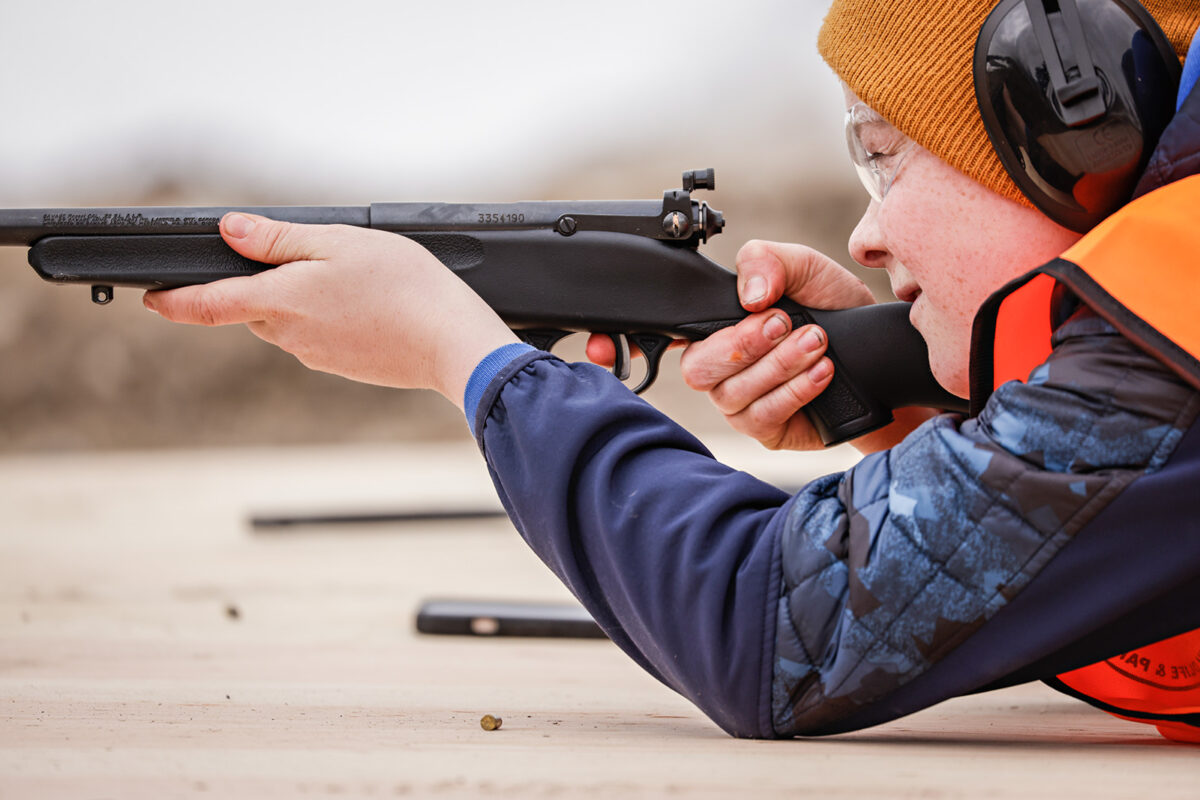
Kiel Guffin shoots a .22 rifle as part of a Fish, Wildlife and Parks hunter education course at the Spring Brook Ranch in Kalispell on March 25, 2023. Hunter D’Antuono | Flathead Beacon
A gull sprints across the waters of Somers Beach on the north shore of Flathead Lake on April 1, 2023. Hunter D’Antuono | Flathead Beacon
Whitefish Mountain Resort’s 16th annual pond skim on April 8, 2023. Hunter D’Antuono | Flathead Beacon.
National Park Service crews clear snow from Going-to-the-Sun Road near Haystack Creek Falls in Glacier National Park on April 24, 2023. Hunter D’Antuono | Flathead Beacon
Heavy equipment operator Mike Hudson stands by the auger of a snow blower parked along Going-to-the-Sun Road in Glacier National Park on April 24, 2023. Hunter D’Antuono | Flathead Beacon
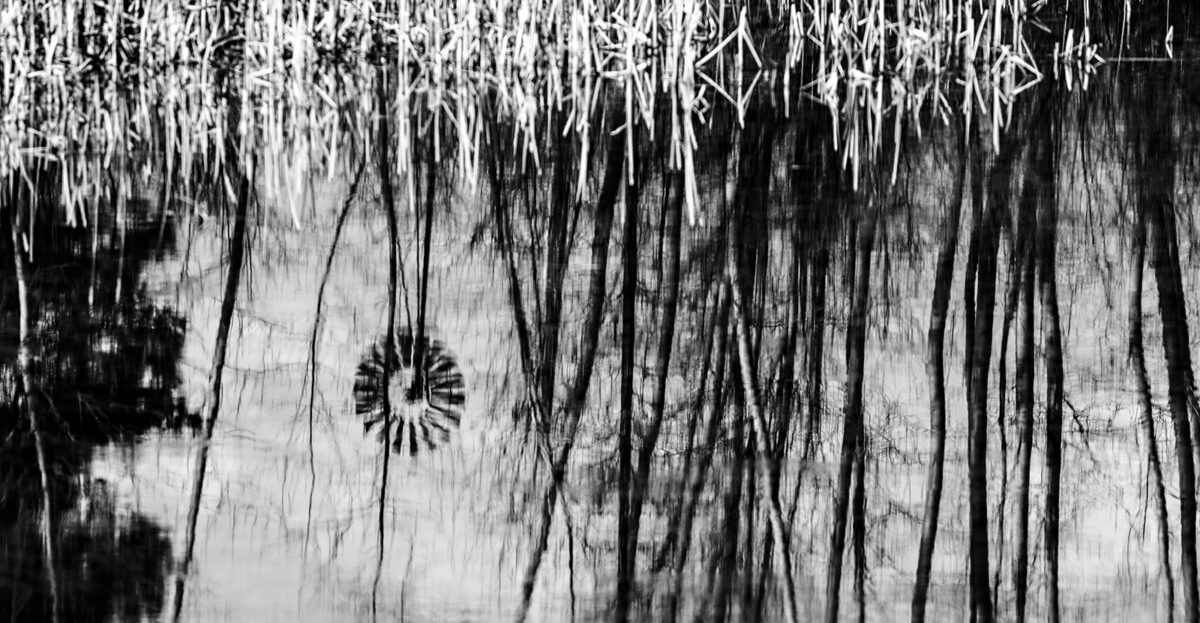
A windmill is reflected in the waters of a marsh along the Flathead River in Kalispell on April 12, 2023. Hunter D’Antuono | Flathead Beacon
Cody Baur, owner of Coyote boutique of Columbia Falls, cruises down Montana Hwy 28 west of Elmo in a Mustang with his wares on May 1, 2023.   Hunter D’Antuono | Flathead Beacon
Rafters run the Swan River’s Wild Mile during the Bigfork White Water Festival on May 28, 2023. Hunter D’Antuono | Flathead Beacon
A silhouetted osprey in its nest along the north shore of Flathead Lake at sunset near Somers on June 6, 2023. Hunter D’Antuono | Flathead Beacon
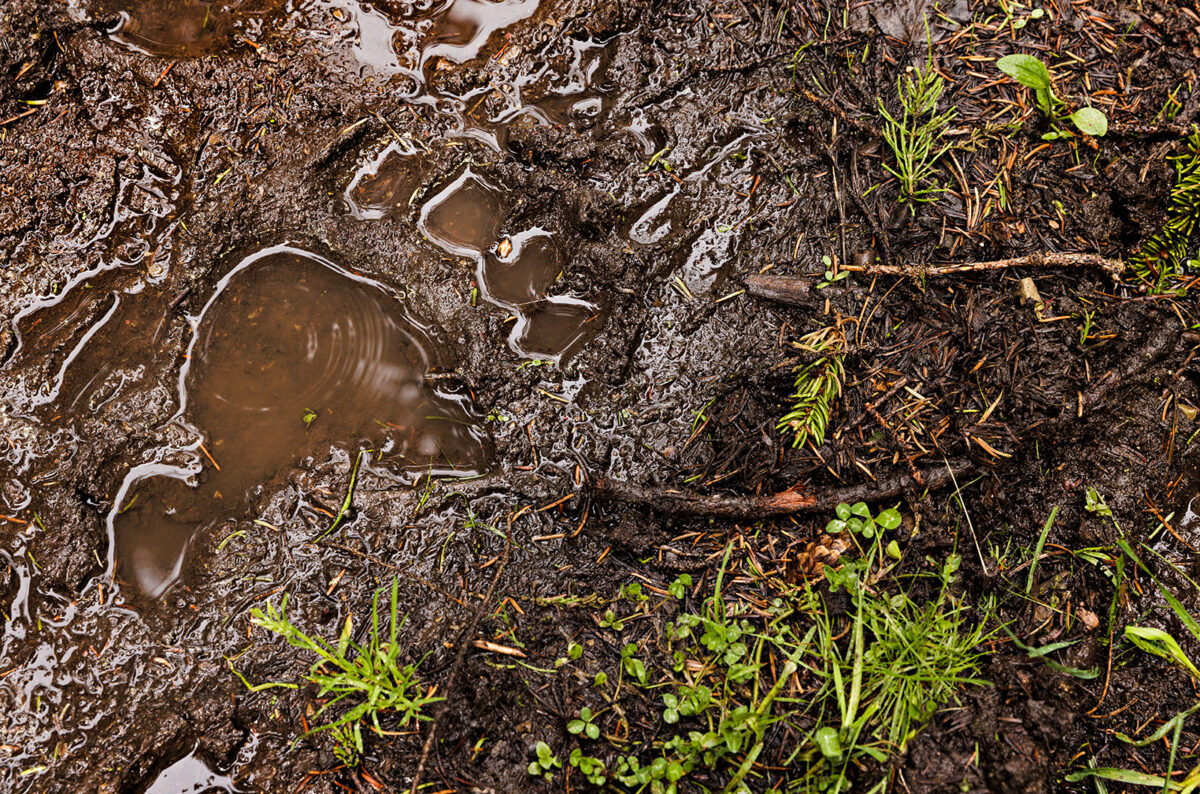
A grizzly bear track in the mud along trail in the Cut Bank Area of Glacier National Park on June 1, 2023. Hunter D’Antuono | Flathead Beacon
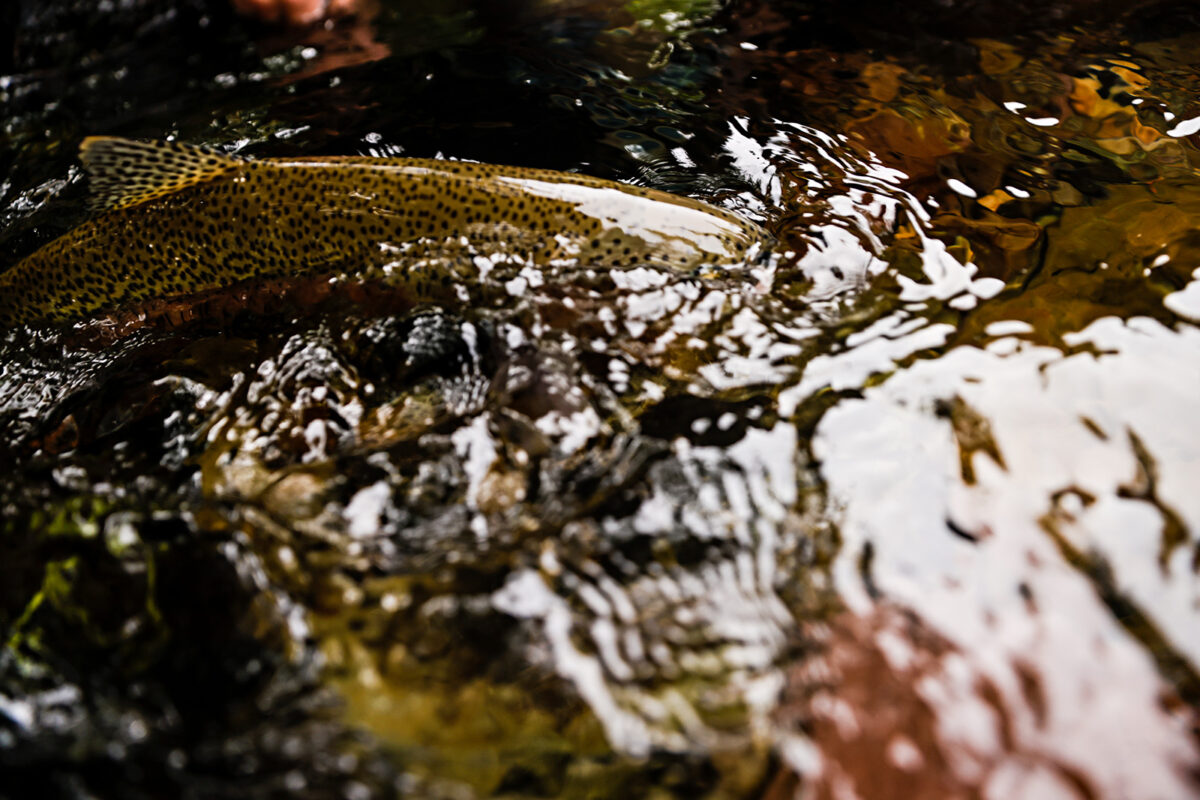
A rainbow trout swims through a stream in the Marion area on June 11, 2023. Hunter D’Antuono | Flathead Beacon
Flowers blossom along Bird Woman Pass above Hidden Lake in Glacier National Park on June 13, 2023. Hunter D’Antuono | Flathead Beacon
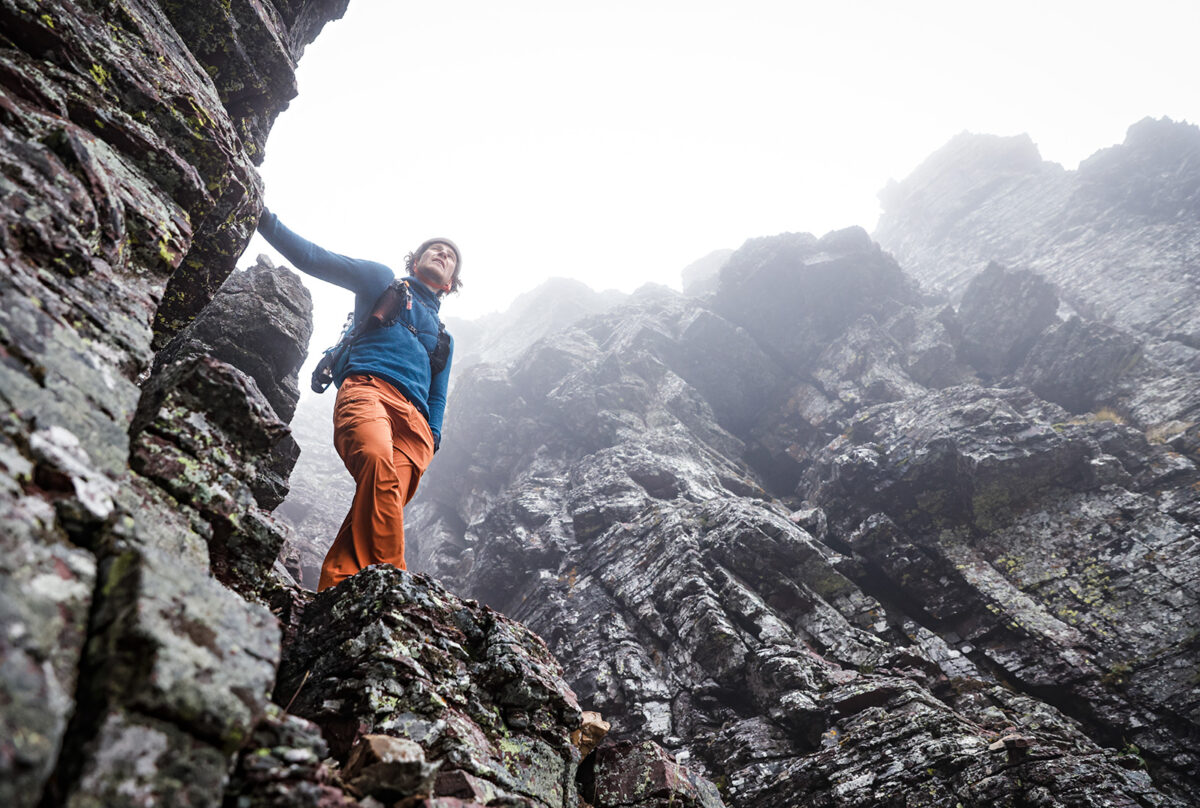
Many Glacier and climb to Allen Mountain via the Snowmoon Basin in Glacier National Park on June 17, 2023. Hunter D’Antuono | Flathead Beacon
Bighorn sheep munch on glacier lilies on Logan Pass in beneath Reynolds Mountain in Glacier National Park on June 13, 2023. Hunter D’Antuono | Flathead Beacon
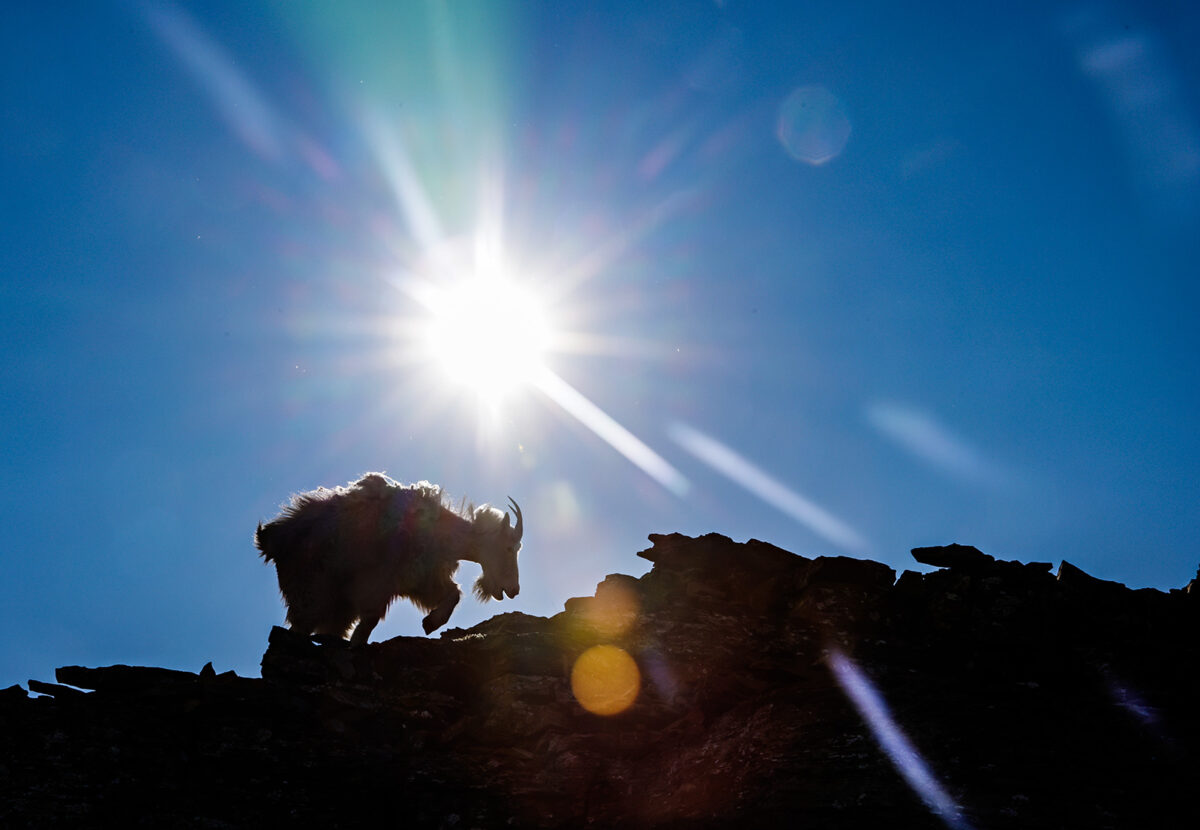
A mountain goat is silhouetted on the slopes of Mount Cannon in Glacier National Park on June 13, 2023. Hunter D’Antuono | Flathead Beacon
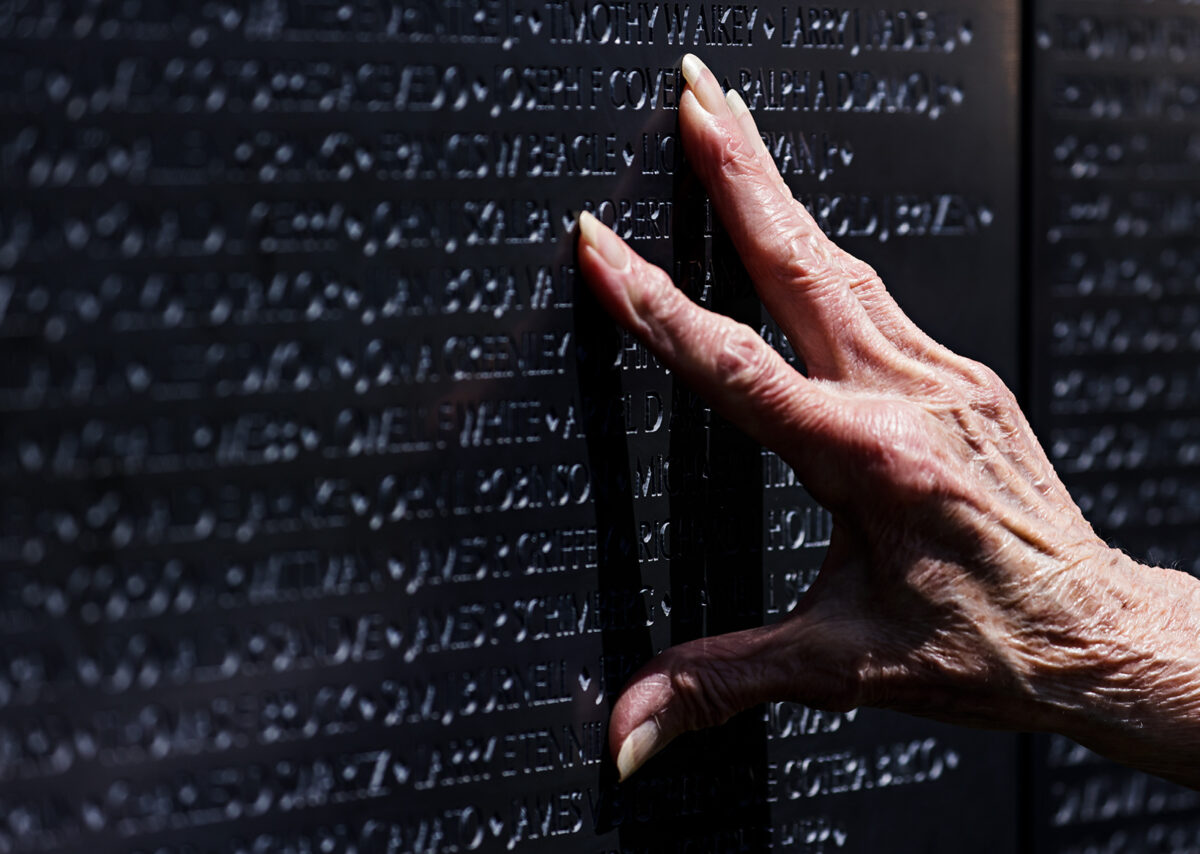
Connie Rippe, wife of Marine veteran Mike Rippe, places her hand on “The Wall That Heals,” a portable, three-quarter scale replica of the Vietnam Veterans Memorial on display at Glacier High School in Kalispell on June 22, 2023. Hunter D’Antuono | Flathead Beacon
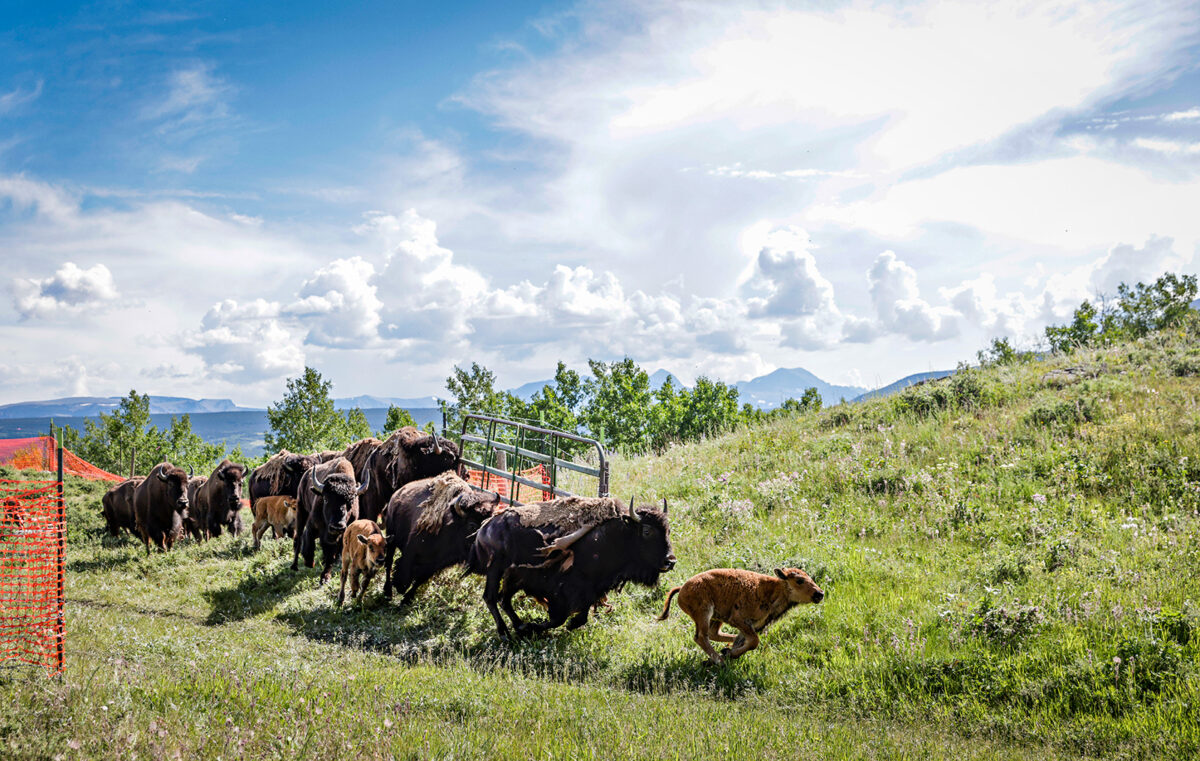
The Blackfeet Nation releases a herd of bison into the wild near Babb on June 26, 2023, marking the first time bison have freely roamed the landscape in 150 years. Hunter D’Antuono | Flathead Beacon
Marvin Weatherwax Jr., a Blackfeet leader and Montana legislator, pictured near Babb on June 26, 2023, where the tribe release a herd of bison to roam freely on the landscape. Hunter D’Antuono | Flathead Beacon
Hank Williams Jr. performs at Under The Big Sky music festival in Whitefish, July 2023. Hunter D’Antuono | Flathead Beacon
Hank Williams Jr. fans at Under The Big Sky music festival in Whitefish, July 2023. Hunter D’Antuono | Flathead Beacon
Under The Big Sky music festival rodeo in Whitefish, July 2023. Hunter D’Antuono | Flathead Beacon
Canoeists on the Swan River at sunset on July 20, 2023. Hunter D’Antuono | Flathead Beacon
Thistle Class Association National Championship sail boat race on Flathead Lake in Somers on July 21, 2023. Hunter D’Antuono | Flathead Beacon
The Niarada Fire burns through timber and prairie west of Elmo and north of Highway 28 on July 30, 2023. Hunter D’Antuono | Flathead Beacon
The sun sets through the smoke of the East Fork Fire near Olney on Aug. 18, 2023. Hunter D’Antuono | Flathead Beacon
Laura Chenier swims in Yellow Bay on Flathead Lake on Aug. 7, 2023. Chenier made the first known swim of the widest section of the lake, swimming from Elmo to Yellow Bay. Hunter D’Antuono | Flathead Beacon
A skydiver parachutes into the drop zone at the Lost Prairie Boogie in Marion on Aug. 12, 2023. Hunter D’Antuono | Flathead Beacon
Keegan Siebenaler of the Glacier Mountaineering Society climbs Reynolds Mountain in Glacier National Park on Aug. 10, 2023. Hunter D’Antuono | Flathead Beacon
Shawn McDyre of Sun Hands Farm holds a cluster of chestnut mushrooms in Kalispell. Hunter D’Antuono | Flathead Beacon
Steve Larson hikes along the ridge to the summit of Mount Gould in Glacier National Park on Sept. 9, 2023. Hunter D’Antuono | Flathead Beacon
Andrea Nunez from Costa Rica, Joe Hauserman from Germany and Iris Aba Mae from The Philippines are pictured after becoming U.S. citizens at a naturalization ceremony at Lake McDonald in Glacier National Park on Sept. 29, 2023. Hunter D’Antuono | Flathead Beacon
Aerial views of Libby and the Kootenay River on Oct. 4, 2023. Hunter D’Antuono | Flathead Beacon
Fall colors around Pumpelly Pillar in the Two Medicine Area of Glacier National Park on Oct. 8, 2023. Hunter D’Antuono | Flathead Beacon
Larch in the Essex area on Oct. 22, 2023. Hunter D’Antuono | Flathead Beacon
Trick-or-treaters roam the streets of Kalispell on Oct. 31, 2023. Hunter D’Antuono | Flathead Beacon
An inversion as viewed from Blacktail Mountain on Nov. 18, 2023. Hunter D’Antuono | Flathead Beacon
Olivia Genovese, Norah Schmidt and Isabelle Cooke of the Whitefish High School soccer team pictured in Kalispell on Nov. 29, 2023. Whitefish won the 2023 Class A state championship. Hunter D’Antuono | Flathead Beacon
A thick fog shrouds Kelly Rae’s gas station in Batavia on Dec. 6, 2023. Hunter D’Antuono | Flathead Beacon
Army Air Force veteran Neil Holiday pets Stella the Clydesdale at the Montana Veterans’ Home in Columbia Falls on Dec. 13, 2023. Hunter D’Antuono | Flathead Beacon
Christmas lights from Electric Avenue in Bigfork are reflected in the waters of Bigfork Bay on Dec. 21, 2023. Hunter D’Antuono | Flathead Beacon

A Glace Bay man knocked on a famous photographer’s door. It led him to a whole new world

A Glace Bay man knocked on a famous photographer’s door. It led him to a whole new world

When Brian Graham first learned about a world famous photographer who’d recently made Cape Breton Island his second home, he was intrigued, but he wasn’t ready to meet Robert Frank just yet.

“I didn’t think I had anything to say, tell you the truth,” he recalled, on a recent morning from his wife’s home in France. “I hadn’t done anything.”

His new book Goin’ Down the Road with Robert Frank, documents their 40-year-long friendship and unlikely working relationship, which began in Mabou, N.S., and continued in New York City after Frank sent him a postcard inviting him to move to the city and offering him a place to stay.

For Graham, who was raised in the mining community of Glace Bay, getting swept up in Frank’s world was something he could have never imagined. 

“I was never going to be an artist,” he said. “I mean, the best photographer I knew was my aunt.” 

Frank, who died in 2019 at the age of 94, was best known for his seminal book of photography, The Americans, which featured 83 photos, culled from tens of thousands, that Frank took on a 1955 road trip across the United States.

The images show a range of people just as Frank found them — whether he was documenting segregation on a city bus in the southern United States years before the dawn of the civil rights movement, or depicting other unsanitized slices of everyday life. 

In this black-and-white image, a man wearing a t-shirt stands outside next to a stand-up washing machine. He extends the palm of his right hand towards the camera.
The first photo Brian Graham ever took of Robert Frank, outside the photographer’s home in Mabou. (Brian Graham)

Frank first arrived in Cape Breton in the early 1970s after purchasing a ramshackle home overlooking the ocean in Mabou with his wife, the artist June Leaf. He spent winters away in New York City and summers in Nova Scotia, a place he came to adore.

“In the city, you’re an operator, you’re fighting to be at the top, you’re afraid that the guy behind you is going to push you away and you know he will. Which is not the case here, you can be more yourself,” he said in an interview with CBC News in 1977.

Graham became enamoured with photography after graduating from university in 1973 and moving to Halifax, where he began attending lectures on the subject at the Nova Scotia College of Art and Design. 

But it wasn’t until he spent two years working in the oilsands in Alberta and offshore near Sable Island and the Labrador Sea — gaining what he considered real life experience — that he finally worked up the nerve to knock on Frank’s front door in 1979. 

Wary of spooking Frank, he remembers parking far away from his house and making a slow approach on foot. The front door opened, Graham was invited inside and the two men hit it off, with Frank seeing something in Graham that would change his life.

On his next visit, Frank gave Graham a camera he had brought back from New York and told him to practise his craft by taking Polaroids. 

Frank could be mercurial, and sometimes would snap at photographers taking his picture. But when they went outside and Graham pulled out his new camera to take a picture of Frank, something curious happened: he didn’t swat the camera away. 

Copies of books by photographer and filmmaker Robert Frank hang from the ceiling at the opening of an exhibition featuring his work in New York City in 2016. (Kathy Willens/The Associated Press)

After moving to New York City, Graham was introduced to many of the artists in Frank’s orbit. He soon found himself working for the famous beat poet Allen Ginsberg, whose photographs he printed in his new dark room (and who asked memorably after they first met, “How’s the sex in Nova Scotia?”) and tagging along on Frank’s visits with musician Tom Waits (whose album, Rain Dogs, Frank had shot the back cover for) and filmmaker Jim Jarmusch.

“I’d go to [Ginsberg’s] apartment and he’d hand me a plastic shopping bag with like 40 rolls of film in it to process and make contact sheets,” he said. “I would meet all of these people, poets and different friends of Allen’s, old friends and young friends … it was magic.”

A masterclass in photography

For over 10 years, Graham worked closely with Frank, learning the craft from a master. That included everything from developing and printing images in the darkroom to cropping pictures for maximum impact. He even helped renovate the iconic building Frank called home on Bleecker Street on the Lower East Side.

A man wearing glasses with long curly hair poses for a portrait in a jean jacket with black beret on his head. He stands in front of a wall of glass bricks, with an envelope sticking out of his breast pocket.
A portrait of Brian Graham taken in the mid-1980s at 7 Bleecker St. in New York. (James R Smith)

During this time he regularly captured images of Frank at work or at play, never expecting that they would amount to anything.

It wasn’t until he began to sort through his archive, with the encouragement of his wife and friends, that he realized the photos he’d taken were worth sharing. 

Graham’s book was released earlier this year by Steidl, and features an introduction by the famous Chinese dissident artist, Ai Weiwei. They had become friends in the early ’90s, when both were regular fixtures in the East Village neighbourhood of New York, where they were members of the same loosely connected scene. 

“I am very happy to see Brian’s photography,” Ai writes in the intro. “It’s like a stone sunk to the bottom of the water surfaces and brings me back to thirty years ago and all that I experienced at that time.”

Two men are seen on a New York Street. The one on the right has curly hair, and stares directly into the camera, wearing what appears to be a denim button up shirt. On the left, A man who is balding, but still has long hair on the sides, twists his ear, and looks away from the camera, further down the street. He wears a pinstripe shirt and a jacket.
A photo of Allen Ginsberg (left) with Robert Frank following a screening of Frank’s film Energy and How to Get It in New York in 1981. (Brian Graham)

More than anything else, the book is about Graham’s own journey, a memoir in images that showcases his unlikely life alongside a legendary photographer.

Looking at the photos, viewers are treated to the same peek behind the curtain that Graham enjoyed.

And if it’s true that the camera doesn’t lie, then Frank was clearly comfortable in his presence. Frank rarely looks contemptuous — except perhaps in one photo, a proto-selfie taken with Graham that he wasn’t happy with. 

Even here, however, Frank gave him something to work with.

“He didn’t like it, and I guess you can see, the scratching on the negative wasn’t really that friendly,” Graham said. 

Named after classic Cape Breton film 

His book is aptly named after the 1970 Canadian cinema classic Goin’ Down the Road, directed by the recently departed Donald Shebib.  

That film followed two Cape Bretoners making tracks for Toronto in hopes of finding work, a journey familiar to thousands of islanders over the years, including Graham. 

By the end of the movie, both characters are at their wit’s end, driving away from the big city in defeat, having made a mess of their lives. 

It illustrates the risk in leaving home. You might find success beyond your wildest dreams, or perhaps just as easily find yourself in ruin.

But Graham persevered. He went down the road and now he’s lived long enough to tell the tale.

Over the years, he’s printed work from the archives of Ginsberg, as well as from renowned photographers like Walker Evans and Rosalind Fox Solomon. He’s also exhibited his own photos internationally, in New York, Berlin and Lisbon. 

But after all this time, the question remains: Why did Frank send that postcard?

“I’ve thought of that too, because, I mean, every photographer from Brooklyn or anywhere would want to be his assistant or his printer,” said Graham. “But he didn’t look at it that way, you know. I think it was because I was from Glace Bay, and not many people from Glace Bay end up in New York.”

MORE TOP STORIES 

In Pictures: Striking images from the south of England in 2023

In Pictures: Striking images from the south of England in 2023

Copyright 2024 BBC. All rights reserved.  The BBC is not responsible for the content of external sites. Read about our approach to external linking.

Beta Terms By using the Beta Site, you agree that such use is at your own risk and you know that the Beta Site may include known or unknown bugs or errors, that we have no obligation to make this Beta Site available with or without charge for any period of time, nor to make it available at all, and that nothing in these Beta Terms or your use of the Beta Site creates any employment relationship between you and us. The Beta Site is provided on an “as is” and “as available” basis and we make no warranty to you of any kind, express or implied.

In case of conflict between these Beta Terms and the BBC Terms of Use these Beta Terms shall prevail.

Polaroid’s Revival: Analog Cameras and Innovative Printers for the Digital Age

Polaroid’s Revival: Analog Cameras and Innovative Printers for the Digital Age

Polaroid’s Revival: Analog Cameras and Innovative Printers for the Digital Age

In a sweeping return to the snapshot photography scene, iconic brand Polaroid has unveiled a fresh line of analog cameras and ground-breaking printers that marry the comfort of digital photography with the nostalgia of instant film. The revival is led by the Polaroid Lab and Polaroid Hi-Print, devices that let users transpose their smartphone-captured memories into tangible Polaroid photos and sticker prints respectively.

The Polaroid Lab: From Digital Pixels to Classic Polaroid Prints

The Polaroid Lab, a marvel of modern technology cloaked in vintage charm, breathes new life into digital photos by transforming them into classic Polaroid prints. This is no mere printer; the Lab employs actual photographic chemical reactions to create an image, a process that requires either i-Type instant photo film or Polaroid’s 600 series film. Users can procure these from Polaroid’s online store or other authorized retailers. To use the Lab, users must download the compatible app, available for both Android and iOS. However, updating the operating system to the latest version is mandatory before the app can be installed.

Polaroid Hi-Print: Pocket-sized Printer for Sticker Photos

Offering a playful twist to the traditional instant photo, the Polaroid Hi-Print is a compact printer that turns smartphone photos into 2×3 sticker prints. The Hi-Print uses a specially designed sticky-backed paper, crafted and sold exclusively by Polaroid. Like its sibling, the Lab, the Hi-Print also necessitates the installation of a compatible app on a smartphone running the latest version of Android or iOS.

Revitalizing Polaroid in the Digital Age

These innovations have thrust Polaroid back into the limelight, demonstrating the brand’s ability to adapt to the evolving world of digital photography. By bridging the divide between the digital ease and the charm of instant film, Polaroid has successfully managed to maintain relevance in today’s rapidly changing photography landscape.

Photographic project inspired by immigrants in London

Photographic project inspired by immigrants in London
imageJJ Keith JJ KeithJJ Keith
The project, which celebrates migration, is dedicated to JJ Keith’s father, himself a first-generation immigrant

Rainbow suits, yoga mats and a human boombox have all brought flashes of inspiration and colour to a photography project celebrating first-generation settlers in the UK.

London photographer JJ Keith has been working on the series of portraits for a year.

The collection is dedicated to his father, who was born in Vienna and sought refuge in the UK after the rise of the Nazis.

Keith’s Portrait of a Diverse Nation, described as “intimate pictures of successes, hardships and adventures”, examines the cultural contributions of people from across the world who have found their home in London.

Here, the man behind the camera describes some of the people in front of it.

Flamboyant fashion

imageJJ Keith Jama ElmiJJ Keith
Jama, a mental health support worker, was interviewed for his job while he was wearing a rainbow suit. The residents complimented him and when the boss saw the impact he was having, he gave Jama the job

Jama Elmi is from Somalia; he moved to the UK when he was eight. His father, having been ambassador to the UK, was able to migrate here with his six children fleeing the civil war.

When Jama started school in Chalk Farm, he found it difficult to make friends and integrate. Aged nine, he went and bought himself pink trousers and a Hawaiian shirt. All the kids came flocking.

In 2018, Jama was traveling on the Central line from Stratford to Queensway. He looked around and at himself, everything was black, white or grey. Exasperated by the drabness, he went straight out shopping and the passion for the power of flamboyant dressing was reignited. Jama now has between 80 and 90 colourful suit combinations.

His suits still play an important therapeutic role in his day-to-day work. Each resident gets to pick their favourite colour for him to wear on a chosen day and when one resident wouldn’t talk any more, Jama decided to turn up in a completely ‘wrong’ clashing outfit. She couldn’t resist commenting and soon the communication lines were reinstated.

Defining moment

imageJJ Keith Cat Alip-DouglasJJ Keith
Cat Alip-Douglas: “Life, like those yoga mats, can be messy. It’s how we allow them to unravel and unfold that enables us to make sense of the mess instead of sanitising our experience”

Cat Alip-Douglas moved to New York from the Philippines with her family at the age of seven. Cat speaks with a subtle soft East Coast accent.

Her life in metropolitan Manila was a privileged one. At the time, it was still under a dictatorship and divided into the haves and have-nots. Her parents employed domestic help, not out of desire or necessity but to aid those in need. She remembers the first morning of school in the US being laughed at by her sisters for sitting on the end of her bed with arms raised waiting to be dressed.

On September 11, 2001, Cat was in the office when Flight 11 crashed into the North Tower. The focus on an upcoming work event meant she remained rooted to her desk, highlighting her “obliviousness and self-absorption”.

Like for so many, this turned out to be a wake-up call and a defining moment in her life. The yoga practice and its spiritual learnings became a lifeline.

Nurse Liz

imageJJ Keith Elizabeth AkalawuJJ Keith
Elizabeth Akalawu came to the UK 60 years ago, intending to stay for two years

Elizabeth Akalawu was born in Imostate, south-east Nigeria, where her parents were yam farmers.

She planned to come to the UK for two years – but 60 years later she’s still here. It wasn’t an easy start though; she used to cry from homesickness.

In the 80s as a school nurse in Brent, she discovered black parents were fearful of going to parents’ evenings and disadvantaged children were suffering. So, ‘Nurse Liz’ went on home visits to persuade the parents to attend. It worked. School nurses across Brent then followed suit.

A new era began.

‘Like Lady Gaga’

imageJJ Keith Florent Charly Romain BidoisJJ Keith
France was “too judgemental” for Florent Charly Romain Bidois

Florent Charly Romain Bidois was born in 1986, “just like Lady Gaga”. His parents were both cleaners for a city council near Rennes and still live where they grew up.

He says: “I am different. I am a Breton through and through, I’m a sailor, I’m a traveller, I’m an adventurer. I am Indiana Jones. Rennes was too small and France too judgemental.”

Florent initially came to London in 2011 for a pattern-cutting internship and immediately felt a sense of belonging. He also came because of his love of the English language, but quickly realised London gave him the space to develop and express himself.

‘Necking ciders’

imageJJ Keith Jai Kumari GirJJ Keith
As a child, Jai Kumari Gir delivered two of her own brothers

Dr Jai Kumari Gir was born in 1934 in Hyderabad, a childhood she describes as ‘completely idyllic’. In a sign of things to come, she delivered two of her own brothers when her mother went into labour.

They called her the ‘gypsy girl’ because of her incessant lust for travel and adventure and it soon became clear she wanted to make a career for herself in England, not least because she had a thing about a classy English gentleman, with a particular penchant for Roger Moore.

She buckled down and studied hard. It took four months to get exams results in those days as the papers were shipped back to the UK. She gained a place at Girton College, Cambridge but because of currency restrictions couldn’t take it up. She continued to study in India till the restrictions eased and then took a place at West London School of Medicine (now Charing Cross Hospital) in 1956.

She was quick to integrate into the UK, something she believes was helped by the lightness of her skin.

She “loved necking ciders” in and around Holland Park and Notting Hill.

As a gynaecologist for many years and then a doctor in general practice, she stresses the health service in the 1960s was under the same pressure due the squeezing of resources.

‘I just sing’

imageJJ Keith Viveth HardyJJ Keith
Viveth Hardy makes commuters smile with her special gift of song

Viveth Hardy is “Jamaican born and bred”.

Since moving to the UK, she’s been making commuters smile with her special gift of song. Why does she do it?

She says: “It warms my heart. It’s something to do with the within. I don’t do it because I want to sing. It’s a spiritual thing. I can’t control it.

“If it comes, I have to get with it. I don’t have any shame in my game. I be on the platform. I be on the street. I be at home. I just sing.

“I be sleeping. I wake up in the morning with a song in my head. I just sing. I’m like a boombox.”

She’s a boombox that’s a bit of a legend in Kensal Rise.

JJ Keith’s London section of Open Britain: Portrait of a Diverse Nation can be seen with the rest of his portfolio on his website.

imagePresentational grey line

Listen to the best of BBC Radio London on Sounds and follow BBC London on Facebook, X and Instagram. Send your story ideas to hello.bbclondon@bbc.co.uk


Copyright 2024 BBC. All rights reserved.  The BBC is not responsible for the content of external sites. Read about our approach to external linking.

Beta Terms By using the Beta Site, you agree that such use is at your own risk and you know that the Beta Site may include known or unknown bugs or errors, that we have no obligation to make this Beta Site available with or without charge for any period of time, nor to make it available at all, and that nothing in these Beta Terms or your use of the Beta Site creates any employment relationship between you and us. The Beta Site is provided on an “as is” and “as available” basis and we make no warranty to you of any kind, express or implied.

In case of conflict between these Beta Terms and the BBC Terms of Use these Beta Terms shall prevail.

Artist, photographer navigating stage 4 colon cancer

Artist, photographer navigating stage 4 colon cancer
image

The day before Thanksgiving, Marlene Wusinich, 48, was diagnosed with cancer.

“Nothing like finding out you have colon cancer in your neck,” Wusinich said with the kind of levity she is known for.

This page requires Javascript.

Javascript is required for you to be able to read premium content. Please enable it in your browser settings.

Bison sheds a tear in incredible viral video captured by US photographer. Watch

Bison sheds a tear in incredible viral video captured by US photographer. Watch

A poignant video of a bison shedding a tear has captivated the internet’s interest.

The video, captured by US-based photographer Chris Henry, has garnered over 2 million within two days of being posted on Instagram. While sharing the clip, Henry revealed that he filmed this moment in Northern Utah during winter in 2022.

The video featured a bison standing alone in an open area on a visibly chilly and windy day. As the animal closed its eyes, a tear rolled down.

advertisement

Watch the video here:

The video, which is being circulated across social media platforms, triggered a widespread reaction from internet users.

Several people said that the bison was weeping over the destruction humans have caused to nature. “God created beautiful things, on the other hand, we are destroying it,” an Instagram user commented.

“Humans have made hell on this planet for animals,” read another comment on the post.

“This is enough to make me cry,” wrote another Instagram user.

Bisons, like most animals, have physiological mechanisms to keep their eyes moist. They produce tears that fulfill the typical role of tear production in animals: lubricating the eye, removing irritants, and preventing infections.

This automatic physiological response, however, must not be confused with crying associated with emotional distress or sadness. More research is needed to understand the complexity of bison emotions in depth.

Published By:

Medha Chawla

Published On:

Jan 1, 2024

12.31 SH Tribune budget 4 obits 3 photos FINAL

12.31 SH Tribune budget  4 obits 3 photos FINAL

#inform-video-player-1 .inform-embed { margin-top: 10px; margin-bottom: 20px; }

#inform-video-player-2 .inform-embed { margin-top: 10px; margin-bottom: 20px; }

Dec. 31, 2023 South Haven Tribune budget

Contact: Becky Kark, 269-637-1104 ext. 102

This page requires Javascript.

Javascript is required for you to be able to read premium content. Please enable it in your browser settings.

#inform-video-player-3 .inform-embed { margin-top: 10px; margin-bottom: 20px; }

Adult Fairy Tales: The Off-Kilter Narratives of Artist Jada Fabrizio

Adult Fairy Tales: The Off-Kilter Narratives of Artist Jada Fabrizio

Rather than using a camera to convey verisimilitude, Jada Fabrizio combines photography with mixed media to bring her off-kilter inner visions to life. Fabrizio sculpts characters, then builds, lights, and photographs sets to create “freshly minted fairy tales for adults.” Her recent “Land” series is directly influenced by the silence she experienced during the pandemic. “The world seemed an alien place,” Fabrizio says, “as if I had suddenly landed on the moon. Everything was familiar, yet drastically changed.”

Over the Moon depictys two astronauts about to embrace under a giant celestial orb while a flock of birds flies away into the horizon. The landscape, building, and vehicle indicate the American Southwest, while the spacesuits suggest another planet. Perhaps that’s Over the Moon in a nutshell—at once familiar and otherworldly.

About her process, Fabrizio says, “My materials are mostly scavenged or bought and modified with Sculptamold, plaster, carpenter’s foam, wood, and anything else I can find or make. The sets are usually three to four feet. The backgrounds are hand painted with acrylic.”

For the construction of this particular image, she made the landscape with aquarium sand mixed with glue and foam insulation, while the house is a cardboard box. “The figures are from the movie Interstellar (which I found on eBay). I am always looking for old trucks and cars at estate sales. The background is painted, the birds and Earth added digitally,” Fabrizio says.

Generally shooting with a Nikon D850 and a 105mm Macro lens, she used miniature lights and tiny reflectors with black tinfoil to mask areas for Over the Moon.

Fabrizio prefers world building with models over straight photography. “It takes a very special skill to shoot reality in a meaningful way,” she says. “I once took a class with Mary Ellen Mark on street photography and was amazed by her skill, but felt that it was not the path for me. I like creating moments from observed reality and putting my own personal twist on it. I also enjoy the handwork involved with building things from nothing.”

As to how she comes up with her ideas, she says, “I try hard to always see things. I study people and imagine what their life is like. My stories are personal but also universal. It’s very challenging for me to figure out what the emotion will be and then, like a puzzle, figure out ways to fill the frame and build the components.”

Fabrizio is inspired by new topographic photographers such as Robert Adams and Lewis Baltz “for their poetic and breathtaking work on silence in landscape” and fantastic set builders Lori Nix (featured on the November 2003 cover of Chronogram) and Kathleen Gerber, as well as Diane Arbus and Francesca Woodman “for their raw emotion and vulnerability.”

The Hudson Valley is also inspirational. Fabrizio studied creative writing at SUNY New Paltz, fell in love with poetry and art, and was married in a field in Mount Tremper. “It’s a place where I feel free and calm,” she says.

While recognizing that each person brings their own interpretation when viewing art, she says, “I hope my images somehow express collective human experiences. I am not trying to influence thought, just reflect it.”

Photography New Year’s resolutions: we WILL stick to these in 2024!

Photography New Year’s resolutions: we WILL stick to these in 2024!

When the muggles – be they friends, family or loved ones – ask us about our New Year’s resolutions, we don’t usually say what they really are. That’s because saying, “Yeah, I’ll go to the gym more,” is much easier than trying to explain why your 2024 resolution is actually to clean your camera sensor or upgrade your memory cards.

Non-camera folk just don’t understand these things, so we fob them off with platitudes… but if we don’t share our resolutions somewhere, we’ll never stick to them! So, everybody reading this is now officially a DCW Accountability Buddy™, and the team needs you to hold us accountable for sticking to these promises in 2024!

Buy less gear!

(Image credit: James Artaius)

Gareth Bevan
Reviews Editor

As a camera journalist who makes their living waxing lyrical on the latest and greatest camera gear, it’s a little ironic that my resolution is to buy less of it! Now to be clear, this isn’t to escape any escalating debts, this is just to save my poor shelves from having to make space for another lens I am seldom going to use.

This year I invested heavily in Fujifilm cameras and lenses, an easy feat, as Fuji X gear can be a lot cheaper than other brands, especially second-hand. I now have several shiny new (or at least new to me) lenses waiting to be used. The main issue, I only ever leave the house with the same 35m lens on my camera. Next year I resolve to not buy any more gear I do not need (and as a bonus resolution – use what I actually own!).

Take black-and-white film more seriously

(Image credit: Leica)

My New Year’s resolution regarding photography is to take my black-and-white film shooting, developing, and scanning a little more seriously. Currently, I just use a mono bath (all-in-one solution) to develop my negatives at home and scan them on my Canon Canoscan 9900F Mark II. However, I want to experiment with other developers and nail down my scanning techniques to produce richer, better negatives, and overall crisper scans and images. 

First of all, I will invest in a darkroom changing bag – rather than loading my film into my Paterson tank in my awkward, Harry Potter-style cupboard – so I can change and load film anywhere. Once that is acquired, choosing another “proper” black-and-white developer will be my next move to see what results I like with the film stock I often shoot, then a deep dive into my current scanner – yes it is a flatbed, and won’t give leading performance results over a dedicated film scanner, but I’m hoping this will heal the wounds of intrigue. 

Let’s hope it all works out because if it doesn’t, I’ll probably buy a Leica Monochrom out of sheer madness and despair! 

Up my videography game

(Image credit: George Cairns)

Hannah Rooke
Staff Writer

Last year my photography-related New Year resolution was to shoot more medium format, and lo and behold I managed to keep it! I still haven’t invested in a light meter, as they’re not cheap, but I have used my Sony A7 III or a light meter app on my phone as a workaround. 

This year, I’m dead set on becoming a much better videographer and video editor. I’ve always enjoyed shooting video but I want to start creating more exciting content with thoughtful transitions, well-executed storyboards and applying more effects during the editing process to bring my videos to life. 

To create more professional-looking videos, I have also vowed to start using my gimbal more. While the camera I own does have in-body stabilization, it doesn’t quite cut it for scenes where I am walking. So to get smooth shots while on the move, I need to get over balancing it correctly and not be so lazy when it comes to taking it on shoots. 

Buy a “proper camera”

Ben Andrews
Lab Manager

Just one dedicated camera to call my own. I recently sold my trusty Nikon D5500 to help fund another project, leaving my Samsung Galaxy A53 phone to cover all my photographic needs. Though good enough for most situations, the phone’s primary (wide-angle) camera isn’t a great focal length for portraiture, and with no telephoto module, anything requiring some zoom can only be achieved by cropping in on a section of a wide-angle shot. 

Investing in a new interchangeable lens camera system can be daunting as, whichever system you choose, you’ll likely be wedded to it for a long time – for better or worse! Thankfully these days there are very few truly bad cameras, and let’s face it – we’re not short of buying guides on this website to help guide a new purchase!

Shoot (and share) for myself, not just for clients

Black and white images of the Gower Landscape

(Image credit: © Kalum Carter)

Working as a commercial photographer for the past eight years has been a blast, but it often means I am shooting concepts and ideas to meet the briefs of others. While studying for my MA in photography this past year I have, for the first time, been working on a large personal project, which has been a freeing experience. Without the constraints of briefs and the approval of others, I have been able to shoot with freedom much akin to when I first picked up a camera. 

In the new year I will start disseminating this work, but I would be lying if I said I didn’t feel anxiety over sharing my first personal project. New Year’s resolutions can be a good way of ensuring accountability, therefore I will aim to not only share the finished work but the work in progress and development stages, too, in the hopes that it may be useful to others. So, my New Year’s resolution for 2024 is a two-parter; to continue to make personal work for myself and to share it!

Ditch apps, use my computer

(Image credit: Apple)

Adam Juniper
Managing Editor

This year my photography resolution is to spend more time with my computer. I know, boring right? But the thing is I love the gadget fun of all my drones, cameras, assorted security devices and other weird toys and spend far too little time looking at the results on a decent-sized screen. 

If anything, the arrival of apps has compounded the problem. I’ve barely used a device this year that doesn’t have some kind of app connection, live view, or remote control, and I start to think of the images and video I capture too much in terms of the quick likes from family members or social feeds than as something with a worth of their own. To bring that out I need to take a breath, look at the RAW file or video equivalent, make some measured adjustments, and enjoy the rush I felt in the field again, differently.

As a stretch goal I’m going to try to print more pictures, buy more picture frames and keep the walls of the house busy. Until I put a nail through a water pipe, anyway!

Rip it up and start again

(Image credit: Future)

Chris George
Content Director

Owning a camera system is a bit like owning a house. When you get a new home, you spend time gradually improving it… and over time you improve it. Put in a new kitchen, add a sun deck, landscape the garden, and maybe add an extension. With a camera system, you start with the body – and over time add lenses, remotes, grips, flashguns and more to pimp it out to the max to meet your peculiar photographic needs.

I’ve had more camera systems now than I’ve had homes. Being a camera journalist has made me switch more often than most – enticed by the opportunity to try new tech. Somehow I currently have three camera systems – and the truth is that none of them suit my purpose. I have a very professional Nikon D800 system with top-class glass, which is too bulky for my current needs (and needs an expensive service). I have a Fujifilm X-T1 that looks great, but I don’t enjoy – despite having a big bag of lenses. And a Sony A7 II that I love, but only have a kit lens for.

So in 2024 I am going to sell all of it (or anything that has value), and start again. It will be as traumatic and emotional as moving home. But I know it is time to move on.