Photography

Brodbeck & de Barbuat: History of Photography Differently

Brodbeck & de Barbuat: History of Photography Differently

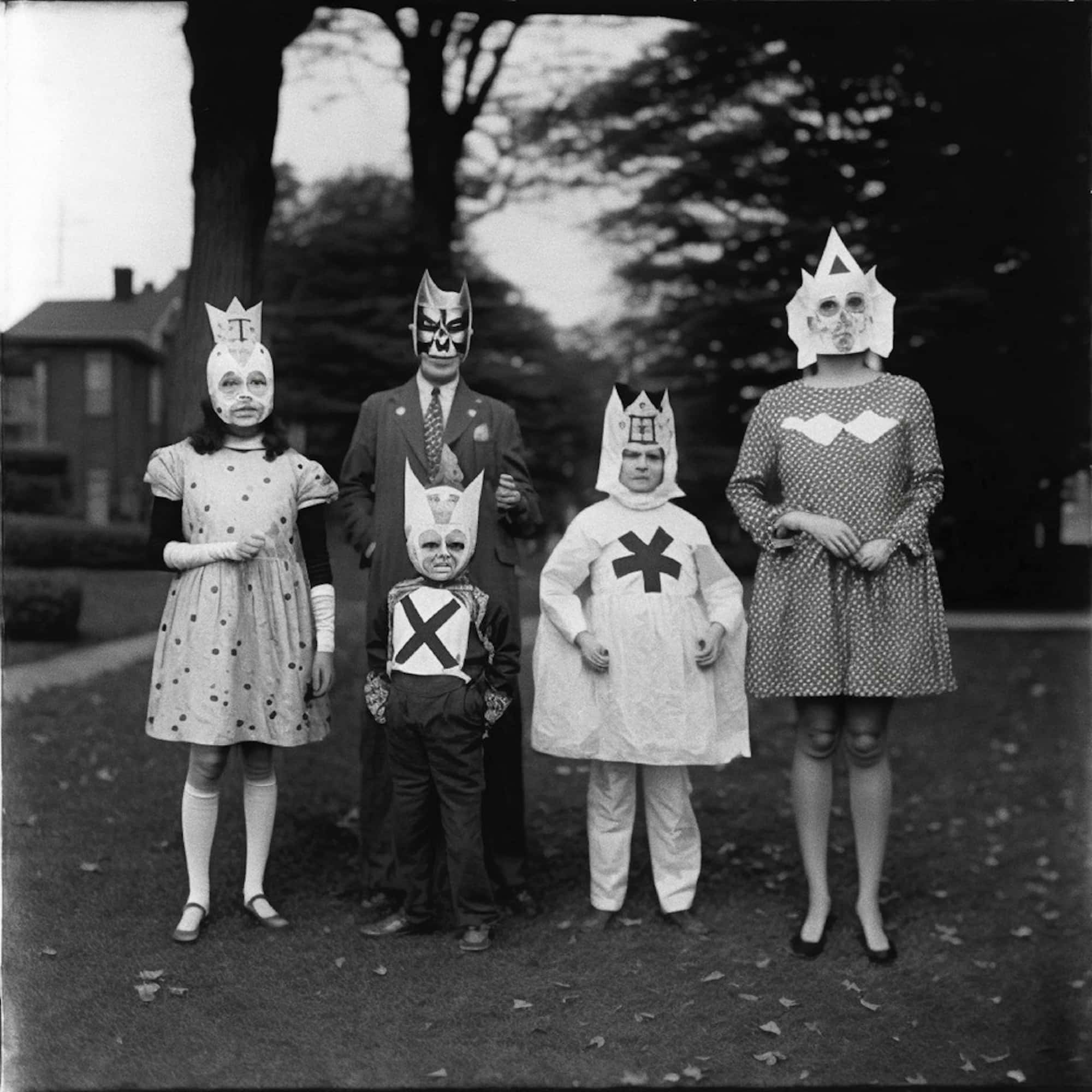
Brodbeck & de Barbuat’s 2021 work, The 1000 Lives of Isis, commissioned by the Centre National des Arts Plastiques and the Jeu de Paume, and supported by the French Ministry of Culture, featured a digitally synthesized image of Isis. The series portrayed a young woman with a strikingly lifelike appearance. In their latest project, the duo continue to “explore new ways of practicing photography and how new technologies become embedded in the medium’s history.”

They note that, since its inception, photography has flirted with reality, yet it offers only a representation of the real. The early, nineteenth-century staged compositions are a case in point: for example Julia Margaret Cameron’s allegories, currently on view at the Jeu de Paume (until January 28, 2024), or the images manipulated by various twentieth-century dictatorships to expunge disgraced figures. The advent of editing tools in the 2000s facilitated these practices, making them commonplace.
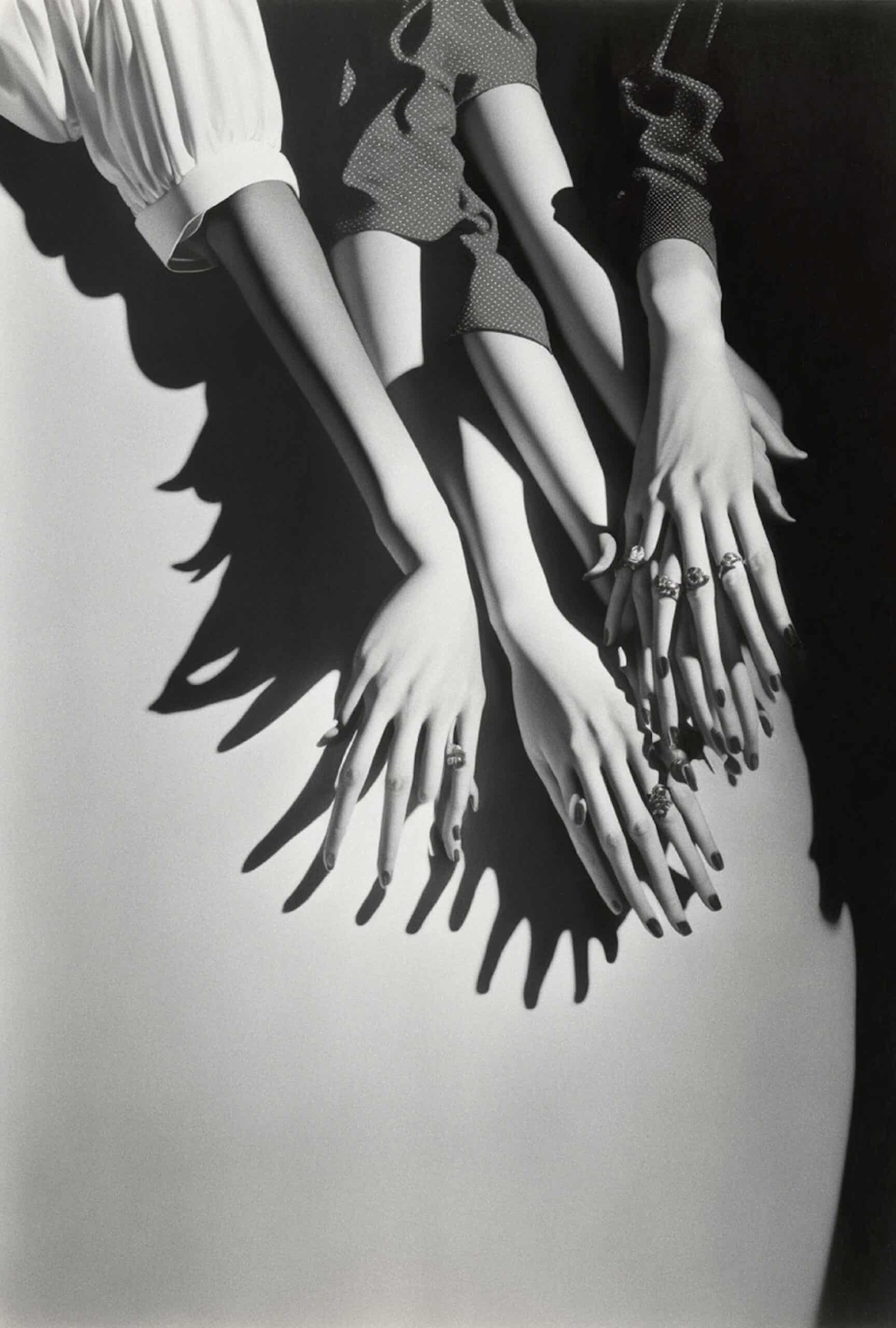
© Brodbeck & de Barbuat

© Brodbeck & de Barbuat, Horst P. Horst, Hands, Hands, Hands, 1941 – 2022

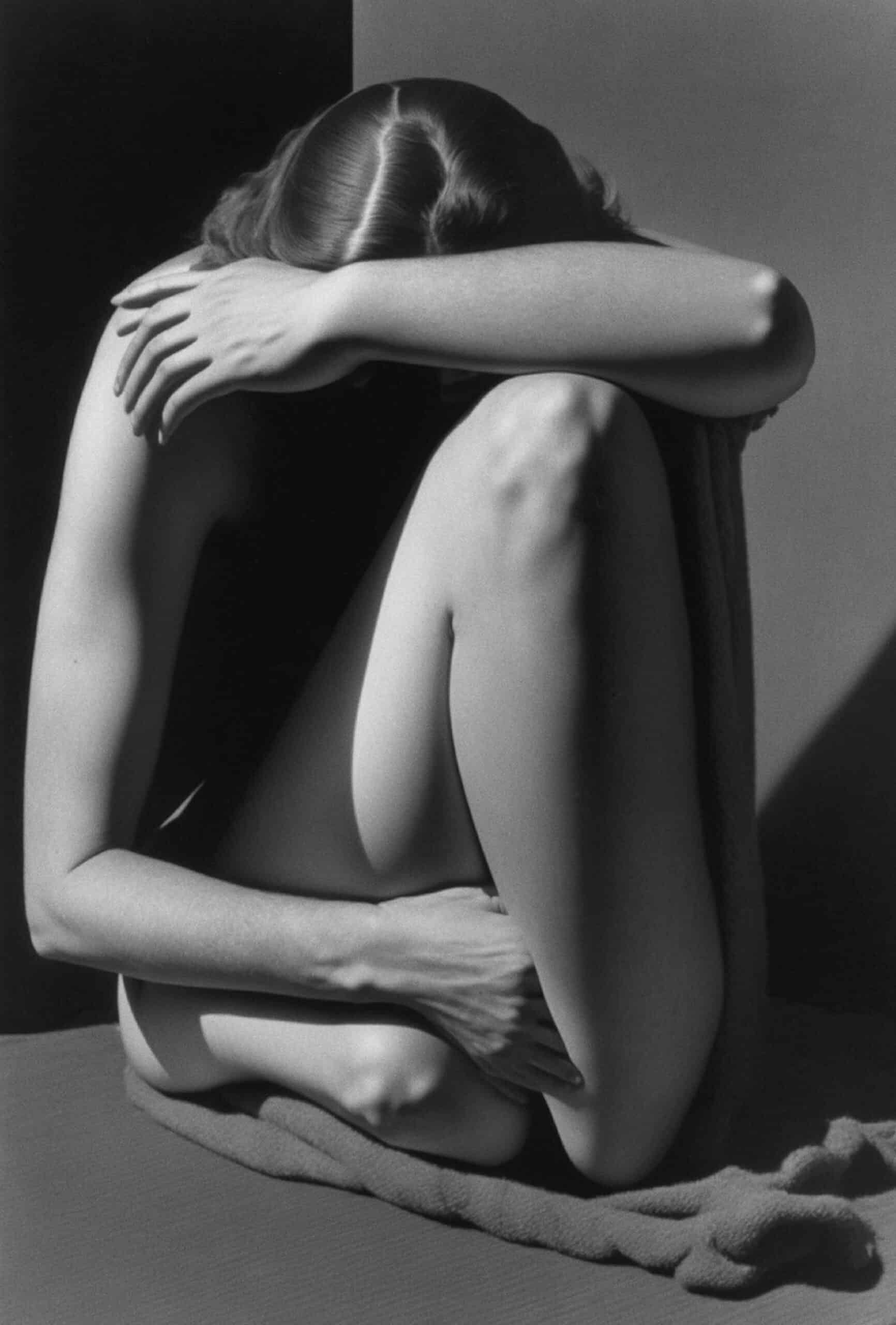
© Brodbeck & de Barbuat

© Brodbeck & de Barbuat, Edward Weston, Nude, Charis, Santa Monica, 1936 – 2022

© Brodbeck & de Barbuat

© Brodbeck & de Barbuat, Diane Arbus, Untitled (49), New Jersey, 1970 – 2022

Brodbeck & de Barbuat’s 2022 series, launched before the widespread adoption of user-friendly AI applications, pursues a distinct goal. Subtitled Study in Artificial Intelligence and the Mechanisms of Memory, the series reflects a concerted effort “to engage in a dialogue with the machine,” as the duo sought to comprehend how AI interprets and responds to specific prompts.

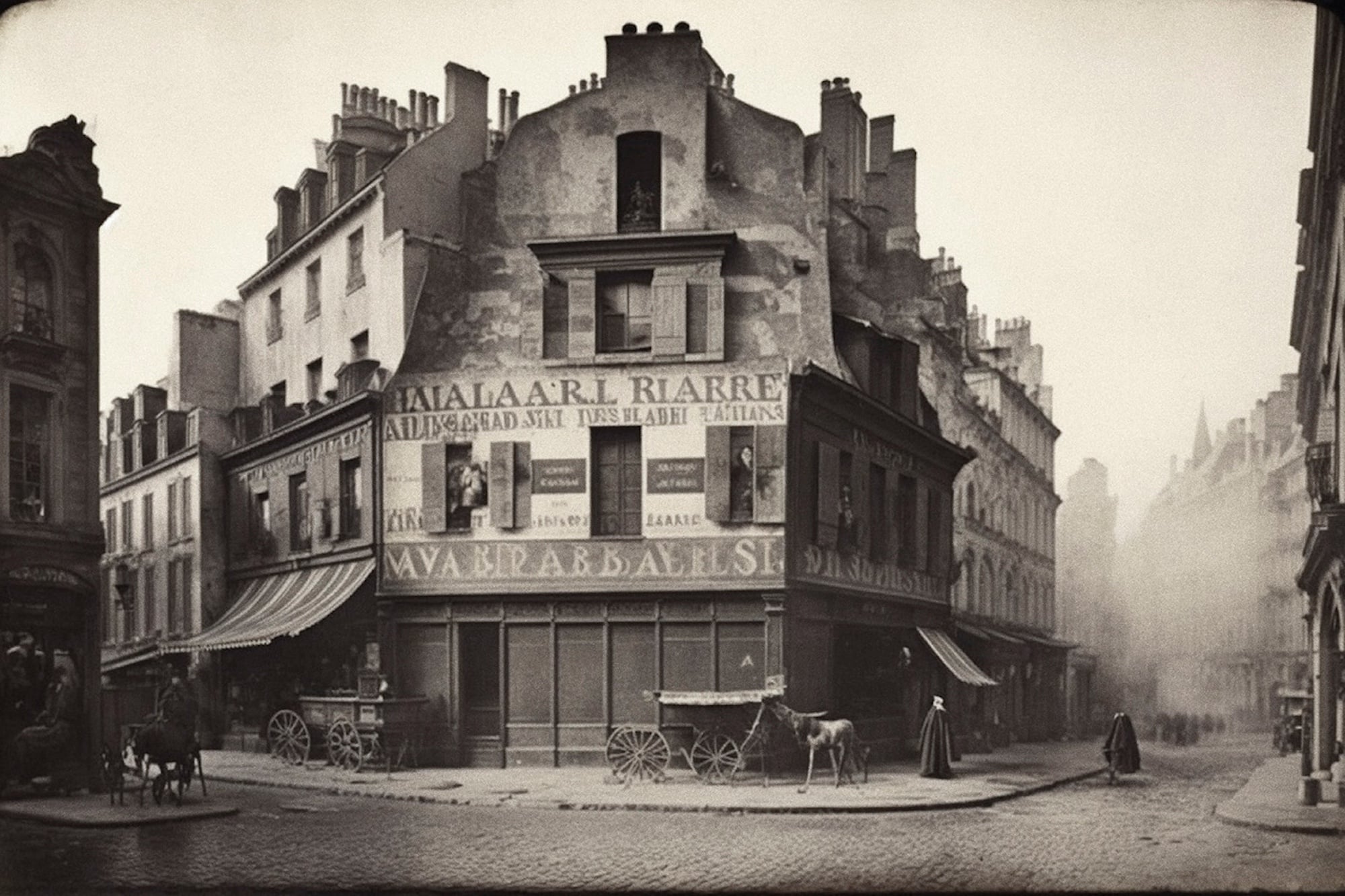
The AI-generated outcomes are the product of an extensive database of images: “Initially, we wanted to test these tools’ capabilities, discovering that they could recreate nineteenth-century images using only a date and the specific technique, without referencing the original photographer.”

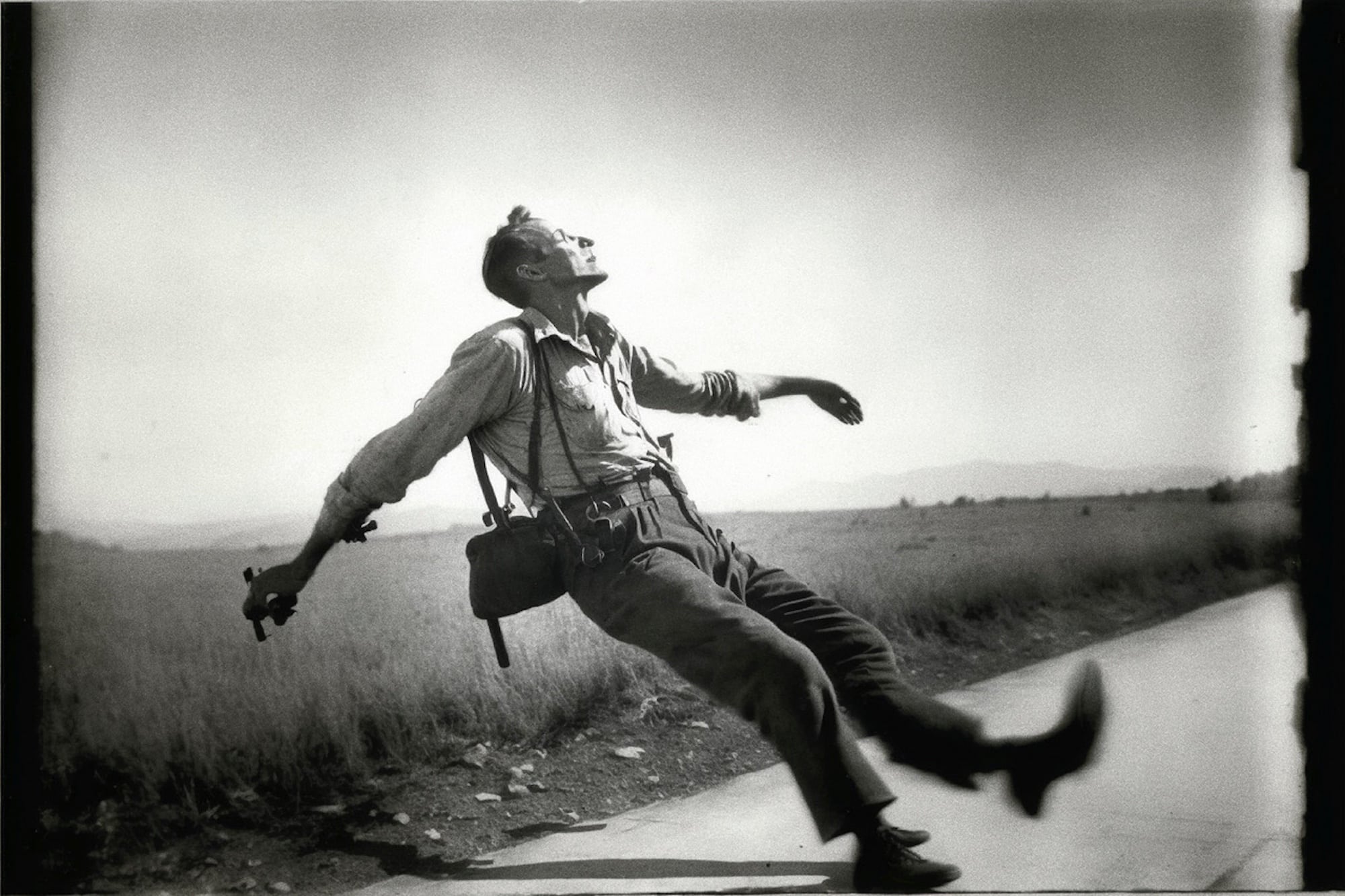
The clever idea was to choose iconic images embedded in collective memory. These serve as benchmarks for evaluating the results: “We went into the details, describing the scene in the image, sometimes specifying the date of creation so that the result is consistent with the original. For example, for Robert Capa’s Falling Soldier, if you don’t specify the date, you get a Vietnam War GI.”
© Brodbeck & de Barbuat

© Brodbeck & de Barbuat, Robert Capa, The falling soldier, Cerro Muriano, 1936 – 2022

The strength of the series lies in the editing, an essential, fundamental step in any photographer’s craft. “We chose to preserve the errors and accidents as they are quite telling.” Take for instance Helmut Newton’s photograph of a woman diving into a pool. “Since nudity is taboo for AI, we are offered a clothed version, elongated like a model, but whose body is no longer human.”

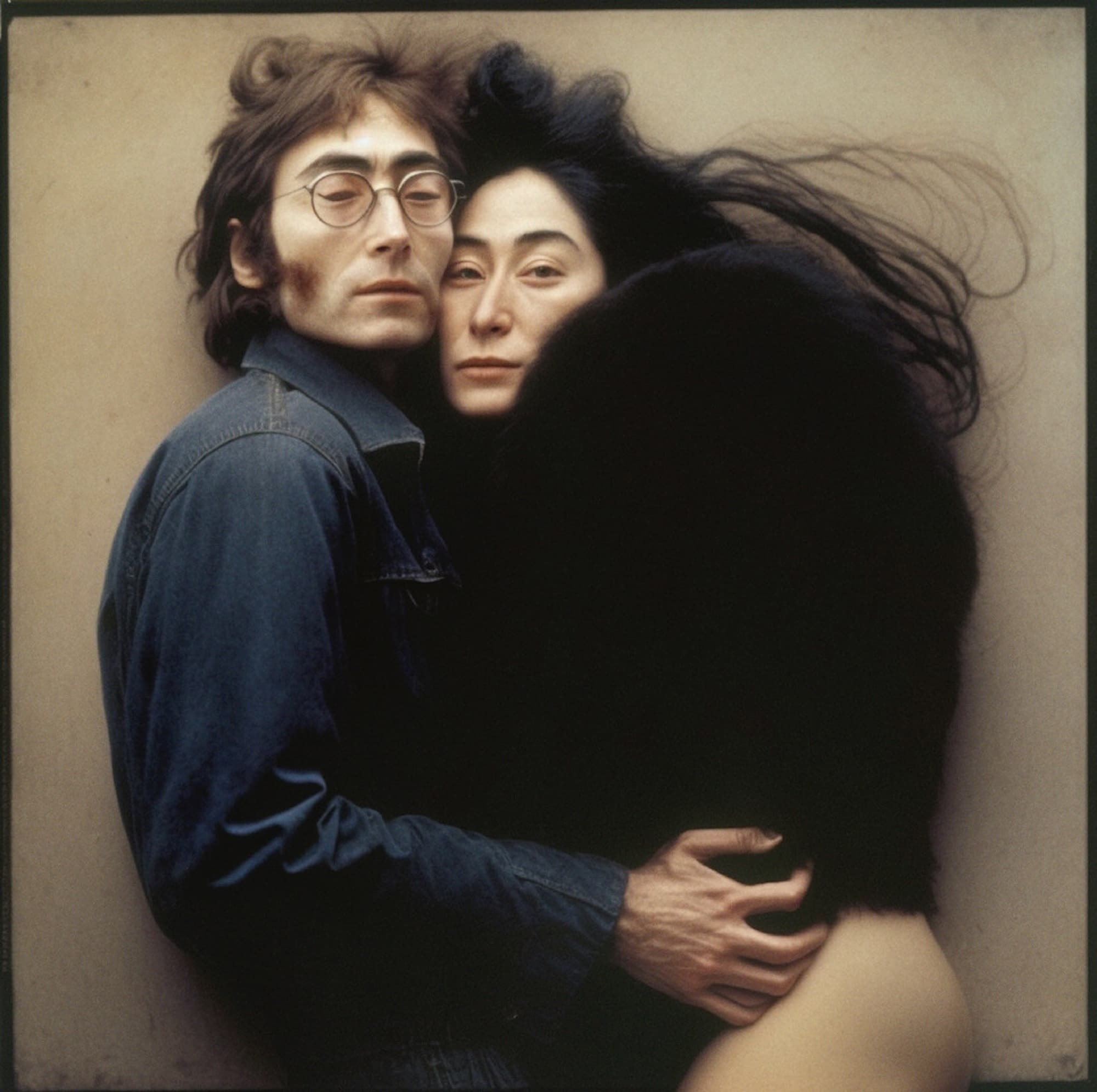
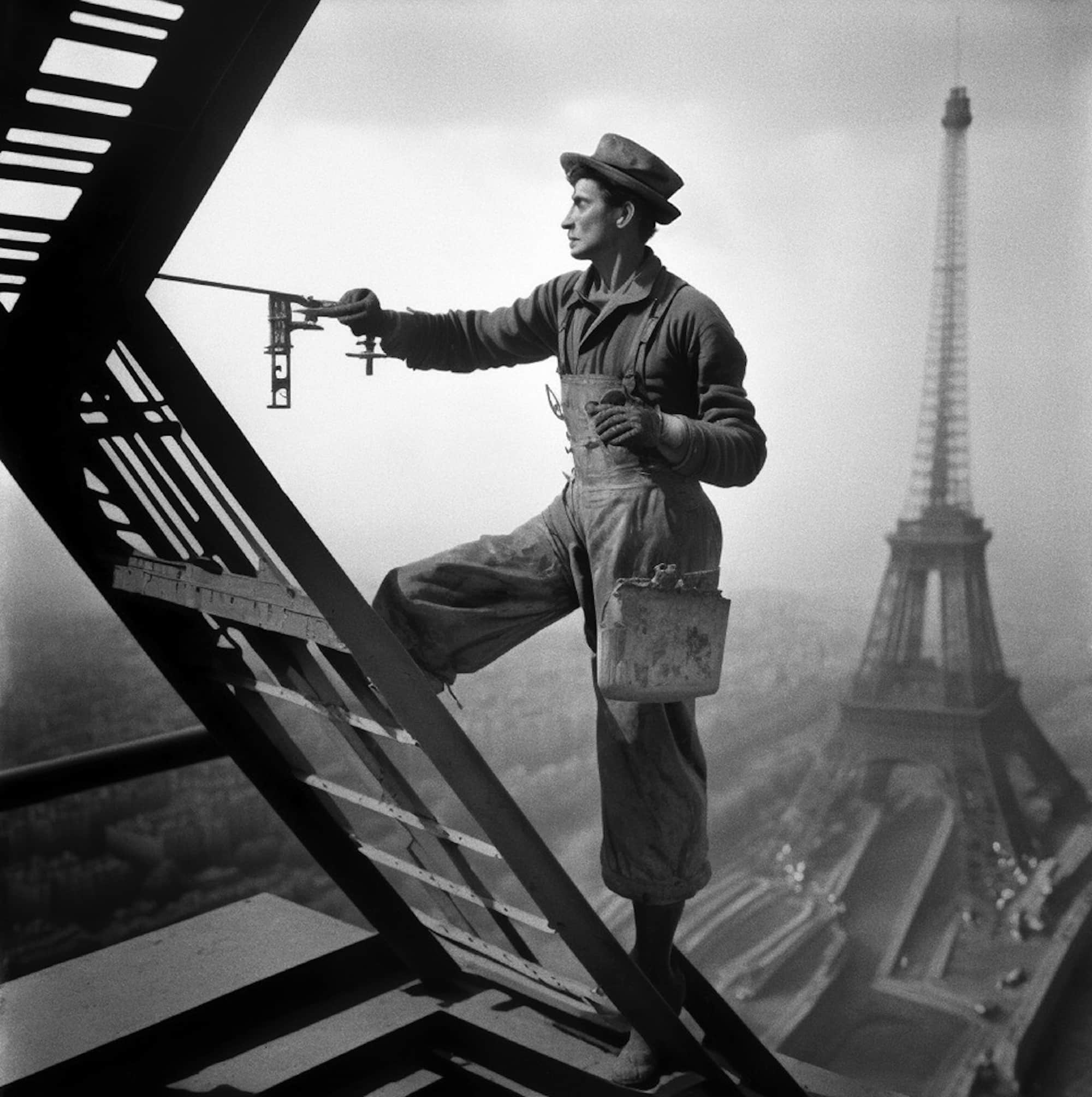
Some recreations are remarkably realistic, like the rendition of John Lennon and Yoko Ono based on Annie Leibovitz’s work, albeit with the machine “clothing” the singer and partially undressing his companion. In Marc Riboud’s The Eiffel Tower Painter, the monument is anomalously duplicated. As for the body of Charis in Edward Weston’s iconic nude, it is recreated with imperfections yet retains a superficial likeness.
© Brodbeck & de Barbuat

© Brodbeck & de Barbuat, Annie Leibovitz, John Lennon and Yoko Ono, 1980 – 2022

© Brodbeck & de Barbuat

© Brodbeck & de Barbuat, Marc Riboud, The Painter of the Eiffel Tower, Paris, 1953 – 2022

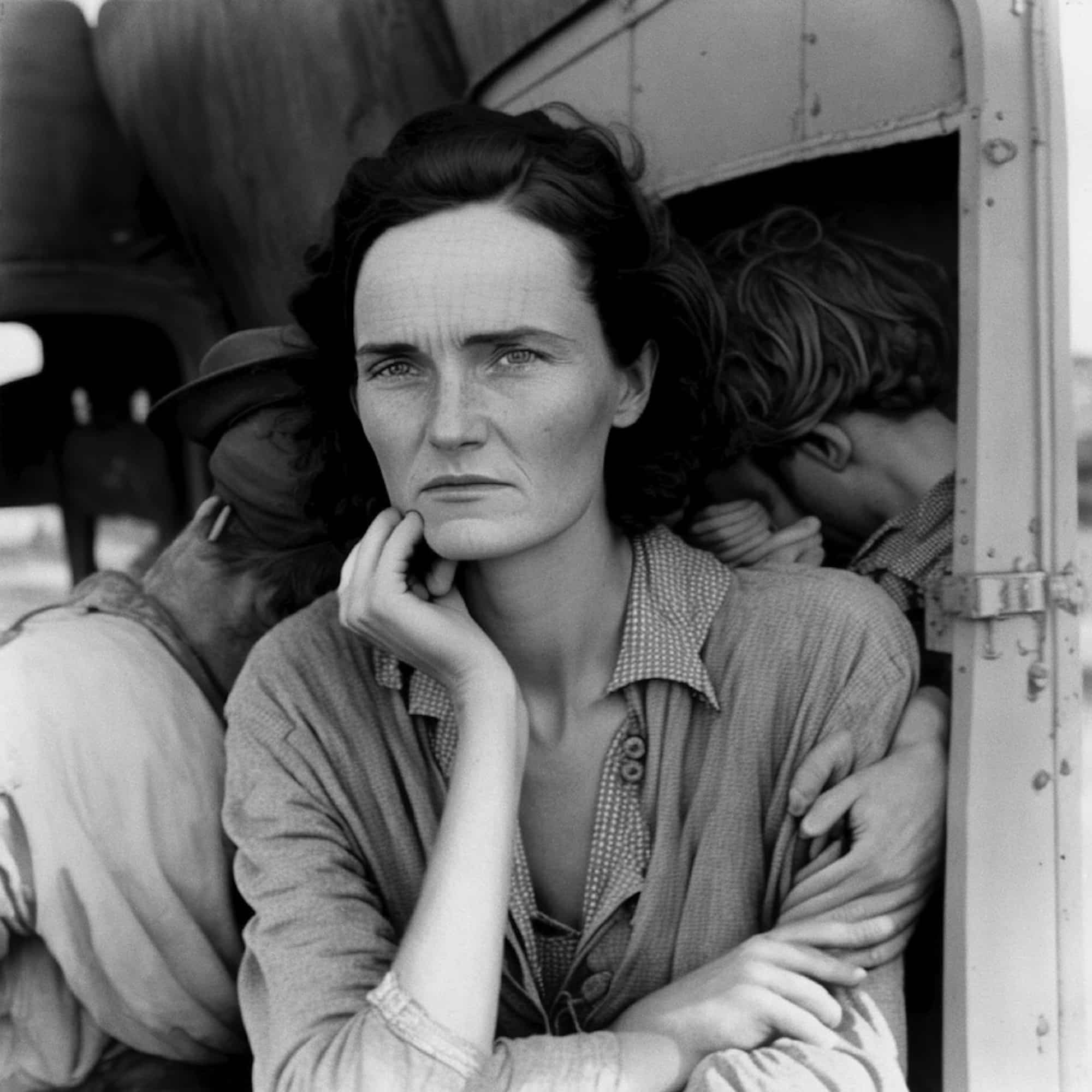
Beyond the anecdotal bugs, what is interesting is how these images challenge us as humans. Looking at these avatars, we can sometimes spot the defects immediately, as with the unnaturally smooth face of Dorothea Lange’s Migrant Mother, and other times only upon closer inspection. This forces us to acknowledge our own cognitive shortcomings. Although we believe we know these iconic images well, our recollection often proves to be inaccurate. “How can our memory be so imprecise, yet so trusted?” ponder the artists. This series thus offers a disquieting experience, confronting us not just with the limitations of AI, but also with our own perceptual frailties.
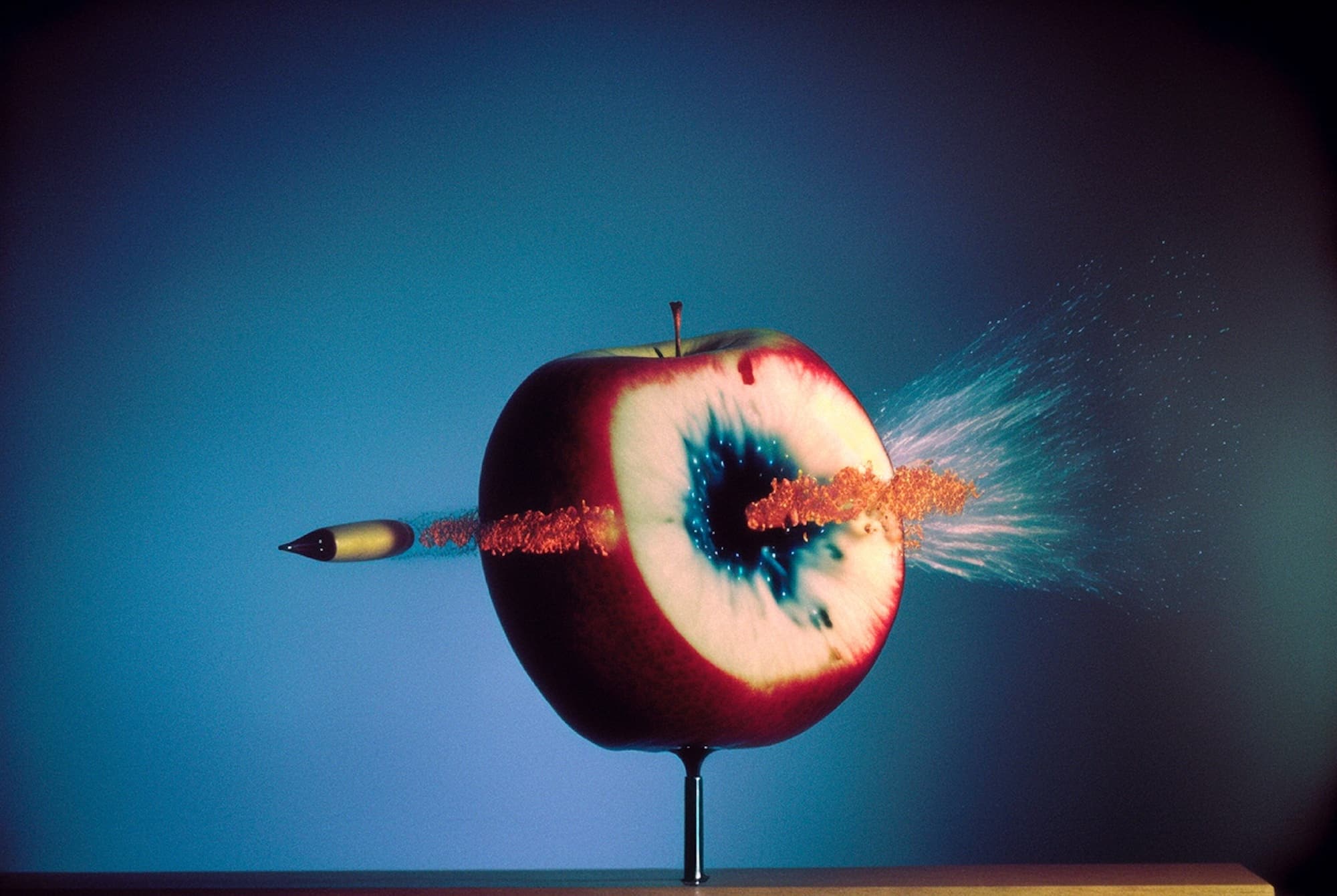
© Brodbeck & de Barbuat

© Brodbeck & de Barbuat Dorothea Lange, Migrant mother, Nipomo, California, 1936 – 2022

© Brodbeck & de Barbuat

© Brodbeck & de Barbuat, Harold Edgerton, Bullet Piercing
an Apple, 1964 – 2022

© Brodbeck & de Barbuat

© Brodbeck & de Barbuat, Charles Marville, Place Saint André-des-Arts. Paris. circa 1866 – 2022

Brodbeck & de Barbuat, Une histoire parallèle: Étude sur l’intelligence artificielle et les mécanismes du souvenir. Galerie Papillon, 13, rue Chapon, 75003 Paris. Until janvier 13, 2024.

Berkshire’s Big Picture: 4 December

Berkshire’s Big Picture: 4 December

Copyright 2023 BBC. All rights reserved.  The BBC is not responsible for the content of external sites. Read about our approach to external linking.

Beta Terms By using the Beta Site, you agree that such use is at your own risk and you know that the Beta Site may include known or unknown bugs or errors, that we have no obligation to make this Beta Site available with or without charge for any period of time, nor to make it available at all, and that nothing in these Beta Terms or your use of the Beta Site creates any employment relationship between you and us. The Beta Site is provided on an “as is” and “as available” basis and we make no warranty to you of any kind, express or implied.

In case of conflict between these Beta Terms and the BBC Terms of Use these Beta Terms shall prevail.

Dorset’s Big Picture: 11 December

Dorset’s Big Picture: 11 December

Copyright 2023 BBC. All rights reserved.  The BBC is not responsible for the content of external sites. Read about our approach to external linking.

Beta Terms By using the Beta Site, you agree that such use is at your own risk and you know that the Beta Site may include known or unknown bugs or errors, that we have no obligation to make this Beta Site available with or without charge for any period of time, nor to make it available at all, and that nothing in these Beta Terms or your use of the Beta Site creates any employment relationship between you and us. The Beta Site is provided on an “as is” and “as available” basis and we make no warranty to you of any kind, express or implied.

In case of conflict between these Beta Terms and the BBC Terms of Use these Beta Terms shall prevail.

England’s Big Picture: Best of 2023

England’s Big Picture: Best of 2023

Copyright 2023 BBC. All rights reserved.  The BBC is not responsible for the content of external sites. Read about our approach to external linking.

Beta Terms By using the Beta Site, you agree that such use is at your own risk and you know that the Beta Site may include known or unknown bugs or errors, that we have no obligation to make this Beta Site available with or without charge for any period of time, nor to make it available at all, and that nothing in these Beta Terms or your use of the Beta Site creates any employment relationship between you and us. The Beta Site is provided on an “as is” and “as available” basis and we make no warranty to you of any kind, express or implied.

In case of conflict between these Beta Terms and the BBC Terms of Use these Beta Terms shall prevail.

‘I’m known for doing whatever it takes’: A day in the life of a music photographer on wheels

‘I’m known for doing whatever it takes’: A day in the life of a music photographer on wheels

Brittany Long describes herself as a music photographer on wheels. She has taken live performance photographs and portraits of the likes of Seth Sentry, Vera Blue, The Rubens, Thelma Plum and Vance Joy, just to name a few.

Brittany is determined to always get the best photos possible.

“I don’t let the wheelchair stop me,” she says. “I’m known for doing whatever it takes.”

This might include donning kneepads to lie down or “slide” around on the floor. Recently, a client’s outfit inspired the location for a photo shoot.

“She sent me a photo of a green dress,” says Brittany. “I was like: How do you feel about getting in the water?”

Brittany knew the beach wasn’t going to be accessible, so she left her wheelchair in the car and got to the shoreline by physically lifting her legs with her arms. A process that Brittany says required “a lot more exertion and effort” than rolling.

“I actually got in the water with the client, and it was like six degrees,” she says.

“It was cold. It was wet. We were fighting the rain. We were fighting the wind. But honestly, the results speak for themselves.”

Loading…

‘I got on my butt and physically went down the stairs’

Brittany is a self-taught photographer. After honing her skills photographing babies and families, she got her first taste of live music photography in 2018, when attending a P!nk concert.

Her mother had mentioned the show was visually spectacular. This prompted Brittany to purchase tickets with a clear view of the stage.

Loading

“I hadn’t even worried about disability seating because it sucks,” she says. “You’re at the back of the stadium.”

“I got on my butt and physically went down the stairs.”

Being close enough to document the performance on film was life changing. Brittany says she discovered her “happy place”.

“For me music photography is about capturing the passion, capturing the atmosphere, the emotion of people in the crowd and the people on stage.”

Jelly arms and shuffling pants — the trials of accessing venues

“I have dedicated butt-shuffling pants,” says Brittany.

“Just because of how much I’d wear them out sliding up and down the stairs.”

Brittany often spends time researching the accessibility of music venues and festivals before attending a show. But this process can often be frustrating.

Loading

“It’s actually quite hard to find a lot of information about venues,” she says.

She says mobility aid users need to have clear information about a venue, including the exact number of stairs at the entrance, as well as the building’s layout. Equally important is knowing the potential journey to get the venue, such as the location of accessible parking.

“That’s one of the hardest things for me is not having that close proximity to the venue,” says Brittany.

It is not uncommon that Long has to roll long distances to reach a venue, which leaves her arms feeling “like jelly”.

While some festivals and venues have been trying to become more accessible, Brittany believes there is little consultation with disabled people. She says the experience of using these accessibility features can often feel sub-par, even exclusionary.

“Viewing platforms seem to have become a new staple addition at festivals, which is great,” she says.

“But unless they allow people to see the stage, they are obsolete.”

‘There’s this idea that people in the industry can’t be disabled’

Brittany says there is even less accessibility information available for when she needs to work backstage. Including whether there are stairs to the Green Room or where the accessible toilets are located.

“There’s this idea that people working in the music industry can’t be disabled,” she says.

“The same information that’s communicated to patrons, often isn’t communicated to people working within the industry.”

This lack of accessibility information inspired Long to start the project Stairing Through the Lens.

Since 2019, Brittany has been photographing musicians on the stairs at music venues and festivals across Australia, highlighting that stairs are typically a big barrier for her, and showing what artists look like from her perspective in a wheelchair.

Twin girls in rock outfits pose on demountable stairs backstage at a festival.
The Veronicas pose for Brittany Long’s Stairing Through the Lens project at Beyond the Valley, 2019. ()

So far, she has taken more than 200 portraits. The series features artists like Sampa the Great, Passenger, Amy Shark and GFlip.

Brittany admits she was scared to start the project.

“I didn’t want to be seen as making things difficult,” she says.

“Especially as a photographer, I didn’t want to get blacklisted because of speaking badly about certain venues or festivals. But now I’m just frustrated.”

Brittany hopes that the project becomes a conversation starter about inclusivity.

“I want accessibility to stop being an afterthought,” she says.

“And I want it to stop being a box-ticking exercise.”

Fiona Murphy is the author of The Shape of Sound. She writes about Deafness and disability.

This article was commissioned as part of our coverage and celebration of International Day of People with Disability.

Helpful Advice for Approaching Your Photography Clients

Helpful Advice for Approaching Your Photography Clients

At some point in any photographer’s career, I am pretty sure you will at some point come across clients who will just send in inquiry with zero context asking how much you charge for a photoshoot. There is no way we could have possibly been able to provide an accurate project cost estimate without having any information on a project scope to establish the parameters. These types of clients are those that keep me awake at night, not because I am incapable of delivering but because these clients will have unrealistic expectations of what we can deliver.

Next thing you know, both parties end up in an unhealthy relationship. As this kind of situation has happened more often now than before, I will be addressing this article to both photographers themselves and people who might hire photographers or creatives from any field in the future.

As most of us photographers are working in a one-person band,our time is priceless and we have to constantly be very careful with who we serve. In order to yield the best outcome out of every shoot, it is essential to foster collaborative partnerships between photographers and clients. Clear and effective communication will be the main key to fostering such relationships. Remember that neither party can read minds, and ambiguity can lead to misunderstandings. It is the responsibility of both sides to bring up the gray areas that should be discussed so that it can be agreed upon prior to any job. While it is difficult to put most visually creative things on paper, it is still essential to document and sign off on critical decisions like style choices, deliverables, schedules, and pricing to protect both parties’ interests. The goal is to produce images that represent your client’s brand and our quality work.

The logical next step would be defining your client’s needs. It is crucial to have a vision or at least a rough idea of the kind of image that you are required to create. Believe it or not, most clients today are unable to decide on what they want. They would hire a photographer and then expect them to produce an image of another style. Style may vary depending on the photographer and ultimately define our approach. We need to guide clients through or at least get them to provide examples of what they are looking to get. While having examples may be helpful, it is even more important to have a clear end goal defined before the start of every shoot. Remember, a successful photographer is the one who truly adds value and can understand the client’s vision while translating it into an image. After all, clients pay us to solve their issues.

This naturally leads to the next topic, budgeting. Always address the financial matters upfront. This will ensure that both the client and the photographer are on the same page. Photographers should always provide a clear breakdown of fees and expenses in a project estimate so that clients can approve and make necessary adjustments to their budgeting to meet in the middle. After all, our goal as professional photographers is to produce a set of images professionally to meet client’s requirements. In order for this to happen successfully, we as photographers should also guide clients to be as specific as possible on their requirements so that we can provide an accurate quote.

As artistic choices are relatively subjective, we as professionals must respect client’s preferences. That being said, it is still our responsibility to guide them through the visual process to make the right creative decision to fit their needs and budget using our expertise. That being said, we should not give out technical execution and controls of the shoot because there are right and wrong ways to approach each shoot and that will directly impact the outcome of the image, regardless of how strong the creative concepts are at the beginning of the shoot.

Managing client expectations before shoots is essential to avoid confusion and ensure consistency with the initial creative vision. It’s vital to communicate potential limitations due to budget or resources, even encouraging clients to consult with other photographers for realistic perspectives on what can be achieved.

Successful collaborations hinge on education. Professional photographers have a responsibility to educate clients about the creative process, just as clients should be open to photographers’ insights regarding business decisions. A deeper understanding leads to better image production and strengthens working relationships.

The Victorian photographer who shaped a Led Zeppelin cover

The Victorian photographer who shaped a Led Zeppelin cover

The cover of Led Zeppelin‘s lauded fourth album, Led Zeppelin IV, is instantly recognisable. Not only because it was the record that produced enduring classics like ‘Stairway to Heaven’, but because it became one of the best-selling albums of all time. In 2010, the hit album was even selected as one of ten album covers to be commemorated on a Royal Mail stamp, further cementing it into the collective visual memory. The elderly man on the cover was the mysterious icon of one of their most formidable albums, stooped over as he carried sticks. The source of the image had long been a mystery up until recently.

Jimmy Page and Robert Plant reportedly found the grainy black-and-white photo in an antique shop in Reading, the man’s physical toil echoing the heaviness of their sound. In a testament to the wonders of the modern world, one researcher has now identified the man in the photo as well as the photographer. It just so happened that Brian Edwards, a visiting fellow at the University of the West of England, not only had a keen research mind but was also a massive Zeppelin fan.

In 2021, he was combing through material for the Ways of Seeing Wiltshire exhibition when he found an album from 1892 titled ‘Reminiscences of a Visit to Shaftesbury’. The pictures were quaint visions of a bygone time in hazy monochrome, including portraits of rural labourers, street scenes and shots of the architecture of Dorset, Somerset and Wiltshire. One picture stood out among them all: A Wiltshire Thatcher, also known as the stick man.

And that is a technical term, too, as Edward pointed out to the BBC. “He’s often called the stick man,” he explained, saying that instantly recognising him from the Zeppelin cover was “quite a revelation”. The thatcher was thought to be called Lot Long, who died in 1893. The next step involved looking into the handwritten note found inside the album, which said: “A present to Auntie from Ernest,” in looped cursive.

The Ernest in question was photographer Ernest Farmer, who had a quiet hand in the development of photography in England. He was the first-ever head of the School of Photography at the Polytechnic Regent Street.

The Wiltshire Museum then planned an exhibition on Farmer’s contributions, and the museum’s director said: “It is fascinating to see how Led Zeppelin developed this theme of rural and urban contrasts and became the focus for this iconic album cover 70 years later.”

In a later statement, Edwards reflected on the magnitude of his chance find. “Led Zeppelin created the soundtrack that has accompanied me since my teenage years, so I really hope the discovery of this Victorian photograph pleases and entertains Robert, Jimmy, and John Paul.”

[embedded content]

Related Topics

Wilton Wildlife Preserve & Park photography show winners announced

Wilton Wildlife Preserve & Park photography show winners announced
image

Wilton Wildlife recently unveiled its 12th annual Photography Show through a display of captivating images on its website. These photographs, all captured at the Wilton Wildlife Preserve & Park, showcase the stunning beauty and diverse wonders of nature within our local community. The virtual gallery, with 62 entries, presents the selected winning photographs.

The Best in Show title for this year was bestowed upon William Butz for his breathtaking piece titled “Cedar Waxwing at the Pond.” Additionally, Nancy Lyons claimed the top spot in the Best Featuring the Endangered Karner Blue Butterfly category with her striking photo named “Got Milk,” featuring a Karner blue butterfly on a common milkweed flower.

Other winners of this year’s showcase include Scott Stoner, honored for Best in Wildlife: Butterflies with “Frosted Elfin;” Konrad Weeber, for Best in Wildlife: Spiders with “Pearls of Nature;” Dylan Mackenzie, for Best in Wildlife: Other with “Eastern Hognose Hatchling;” and Deb Bryk, for Best in Wildlife: Birds with “Prairie Warbler.”

Sue Pierce won the award for Best featuring Conservation with “A Bevy of Blues,” while Joshua Holbrook took the top spot in Best in Recreation with “Among the Clouds.” Matthew Kergel’s “Fall Sunset” earned the title of Best in Autumn, and Howard Lester’s “Dotted Horsemint” received the award for Best in Flora & Fungi. The judges also selected four images for the Judge’s Choice award: Konrad Weeber’s “Fallen Oak Leaf,” Sue Pierce’s “American Copper Butterfly,” Darcy Leigh’s “Plump Button,” and Matthew Kergel’s “Flower in the Wind” and “Reflections.”

Beyond the online exhibition, the winning photographs will take center stage on Wilton Wildlife’s social media platforms in the upcoming weeks. 

Wilton Wildlife Preserve & Park is located at 80 Scout Road, Wilton, New York 12831

Photograph file settings matter if pictures are used for promotional purposes

Photograph file settings matter if pictures are used for promotional purposes

Photo file formats affect the quality and size of images. Whether it’s for website content, social media posts, email communication, your bulletin or submissions to publications, choosing the right photo format is crucial.

Let’s define common formats, when to use them and how to easily change/convert them if needed.

  1. JPEG or JPG: JPEG is one of the most widely used photo file formats. It’s perfect for church websites and social media because of its small file size and compatibility. JPEGs are preferred for photographs and images with many colors, making them great for showing events, church members and vibrant images. If you crop a JPG, always keep an original copy if it might be used somewhere else.
  2. PNG: PNG is the go-to format for images with transparency, like logos and icons for church branding. It’s also favored for high-quality graphics. If you want your church’s logo to look crisp and clear on your website, go for PNG.
  3. RAW: Photography enthusiasts often work with RAW files. These files contain all the data captured by your camera sensor, allowing for extensive editing. They can be great for creating stunning visuals for church’s print publications (bulletins, magazines, newspapers).

If you have one file format and need another, you may need to convert the format.

Here are some tips:

  • Websites like convertio.co and online-convert.com allow you to upload a photo and select a desired format. They’re user-friendly and require no software installation.
  • Adobe Photoshop and online editors like Canva offer conversion options. They also provide control over quality and settings.
  • Batch Conversion: If you have multiple photos to convert, consider using software that supports batch processing. This can save you a lot of time.
  • Preserve Quality: When converting, always aim for the best quality possible. Always consider resolution and size requirements.

Learn more here.


EDITOR’S NOTE — Mark MacDonald is a communication pastor, speaker, consultant, bestselling author, church branding strategist for BeKnownforSomething.com and Executive Director of Center for Church Communication. His book “Be Known for Something” is available at BeKnownBook.com.