Photography

Wildlife photographer and conservationist Kirsten Hines brings her ‘Wild Odyssey’ to Tampa this weekend

Wildlife photographer and conservationist Kirsten Hines brings her ‘Wild Odyssey’ to Tampa this weekend

The list of the very best Florida books to come out in 2023 includes a pair of must-haves for lovers of Sunshine State wildlife.

In one of them, Kirsten Hines—author of “Wild Florida: An Animal Odyssey”—has set her camera on more than 100 different animals in a 304-page hardcover that is not just a celebration of our animal neighbors, but an opportunity to get into her brain and feel inspired to do more to preserve local ecosystems.

“I’ve learned to accept that not everyone will become a staunch advocate for the environment, but I’ve also learned that most people are willing to make at least a few small changes if they’re aware of what those changes are and how they might help, and cumulatively, those changes can matter,” Hines, a photographer, biologist and conservationist, told Creative Loafing Tampa Bay.

Hines—who appears at Oxford Exchange in Tampa this Sunday—added that while politicians play a part (like when state lawmakers unanimously voted to create the Florida wildlife corridor), but that there is not one sole solution in the effort to save native species from extinction.

“To truly make a difference, we also need to develop wisely and sustainably everywhere in Florida,” she said.

Honestly evaluating the environmental sensitivity of lands, and protecting areas of ecological importance is part of the equation in her eyes, and so is ecologically-friendly development in appropriate places.

“…such as preserving areas of natural habitat rather than clear-cutting entire lots, utilizing native plants in landscaping, and incorporating wetland areas for stormwater retention and water purification,” Hines added. “Habitat preservation,creation, and finding ways to coexist with nature should be a top priority for the future of Florida’s wilds.”

Hines’ book from the University Press of Florida follows her travels from the panhandle and into the Dry Tortugas over and again in her quest to bring light to the state’s unique biodiversity, and the photos in her book dance a thin line between educational and fine art.

Tickets to hear Kirsten Hines talk about and sign her new book at Tampa;s Oxford Exchange on Sunday, Dec. 17 start at $5.

Subscribe to Creative Loafing newsletters.

Follow us: Apple News | Google News | NewsBreak | Reddit | Instagram | Facebook | Twitter | Or sign up for our RSS Feed

Basking in the Sunshine With Picasso and Friends Before the Deluge

Basking in the Sunshine With Picasso and Friends Before the Deluge
image

A show about Lee Miller focuses on her personal life, as wife, consort of Man Ray, muse to Picasso. She awaits wider recognition for her artistry.

With as many avatars as a Hindu god, Lee Miller appeared in her lifetime as a gorgeous fashion model, daring war photojournalist, and Man Ray’s photographic assistant and lover. “Seeing Is Believing: Lee Miller and Friends,” an exhibition at Gagosian in Manhattan through Dec. 22, explores an overlooked aspect of this intriguing woman, as the longtime wife of Roland Penrose, the English Surrealist painter, scholar and collector.

Drawn largely from the Penrose family’s holdings at their farmhouse in East Sussex, England, where Miller lived from 1949 until her death in 1977, the show downplays the photographs Miller made alongside Man Ray in Paris in the 30s, as well as the fascinating Surrealist-tinged landscapes she captured in Egypt later in that decade when she was married to her first husband, the wealthy businessman Aziz Eloui Bey. And except for two prints, it omits her most consequential work: the harrowing World War II photographs she took as a correspondent for Vogue, particularly of bombed-out buildings in London and the revenge killings, suicides, concentration camp corpses and other horrors in Germany in the aftermath of defeat.

Roland Penrose, left, and Picasso reading the first edition of Penrose’s book “Portrait of Picasso” in Villa la Californie, Cannes, France,” 1957.Lee Miller Archives, England; via Gagosian

Explaining his focus, Jason Ysenburg, who organized the show with Richard Calvocoressi, an art historian, said, “I thought the relationship with Roland Penrose was a very interesting one, and a lot of people didn’t know about it.” Amusing and gregarious, Miller also interacted with a broad network of artists, including Pablo Picasso, Henry Moore, Joseph Cornell and Dora Maar, all of whom appear in the exhibition.

“She wasn’t really a muse or a patron, but she did bring these people together,” Ysenburg said. “I admire her for the way she got things done and for what she achieved.” However, it can be argued that it’s a little premature to focus on Miller’s personal accomplishments. Unlike Picasso and Man Ray, she awaits wider recognition for her artistry.

Lee Miller’s “Picnic, Île Saint-Marguerite, Cannes, France, 1937.” From left, Nusch Éluard, Paul Éluard, Roland Penrose, Man Ray and Adrienne Fidelin. Penrose, a British surrealist painter, had met Lee a few weeks previously and fell madly in love with her.Lee Miller Archives, England; via Gagosian

Photos that Miller and Penrose took with their friends and then pasted into scrapbooks are featured in the book and the exhibition. Most evocative are those made in the summer of 1937. Having just begun their romance, the couple vacationed in the South of France with Picasso and Maar, his lover at the time, and Man Ray and Adrienne Fidelin, his first serious girlfriend after the breakup with Miller. Ominous clouds of war were gathering on the horizon, and it feels like they are basking in the last sunshine before the deluge. Picasso was close to both Penrose, who would later write his biography, and Miller. For reasons known only to him, in the six portraits of Miller that he painted, he chose to color her blond hair green. Penrose bought one of the paintings, still owned by the family and included in the exhibition.

In her youth, Miller was so beautiful and charismatic that her artistic talent could easily be overlooked. Once she was older, drinking too much and often depressed, she avoided all discussion of her achievements as a photographer. As evidenced by Whitney Scharer’s “The Age of Light,” a widely reviewed fictionalized treatment of her life published in 2019, she is firstly remembered even today as the consort of Man Ray, a romantic relationship that lasted only three years.

Picasso’s “A L’Arlesienne — Portrait of Lee Miller,” 1937. In the six portraits of Miller that Picasso painted, he chose to color her blond hair green.state of Pablo Picasso/Artists Rights Society (ARS), New York; via Lee Miller Estate

That may be changing. A new movie, “Lee,” which was screened this year at the Toronto Film Festival, stars Kate Winslet, who also co-produced. Based on “The Lives of Lee Miller,” a biography written by Miller’s son, Antony Penrose, the film more fully explores Miller’s career as a wartime photographer. It testifies to the growing interest, in the nearly half century since her death, in her convention-defying photography. “If she saw a frontier, she wanted to be on the other side of it, whether it was the frontier in Germany or the exclusion of women photojournalists,” Antony Penrose said in an interview last month.

His appreciation of his mother came late. As a child and young man, he could only see her difficulties. “The slightest provocation would cause her to throw a scene and embarrass everyone, fully realizing she was alienating herself from the people whose affection she craved,” he wrote in “The Lives of Lee Miller.”

Kate Winslet as Lee Miller in a new movie, “Lee,” which explores Miller’s career as a wartime photographer.via TIFF

Only after she died did Antony acquaint himself with Miller’s war reportage. His wife, Suzanna Penrose, found in the attic a dispatch Miller sent from the battle of Saint-Malo in 1944. “At first, I couldn’t believe she had written it,” he recalled. “Then Roland went and pulled out the copy of Vogue with her byline on it. In that moment I suddenly realized that I had gotten her wrong. I had thought of her as a useless drunk and hysterical figure. She was in fact a very accomplished and courageous woman.”

Researching the biography, which was published in 1985, led him to another startling discovery. In Los Angeles he interviewed his mother’s younger brother, Erik, who excused himself at one point to consult with his wife. On his return, he said, “There is something we think you should know.” When she was 7, he told his nephew, Miller was raped by a babysitter and infected with gonorrhea. Before antibiotics, treatment for the venereal disease was clumsy, intrusive and only partially successful. Miller kept the secret throughout her life, not even telling Roland.

“Now I could understand why it was so difficult for her to allow herself to be in a loving relationship,” Antony said.

Lee Miller’s photograph of the Museum of Modern Art director Alfred Barr Jr. feeding the hogs in her farmhouse, Farleys, in Sussex, England, in 1953.Lee Miller Archives, England; via Gagosian

In her later years, Miller turned away from professional photography and embraced cooking. Studying at the Cordon Bleu and elaborately entertaining guests at her farmhouse, Farleys, she also published some of her recipes in Vogue. When she used her camera, it was mainly to portray visitors: Picasso dandling Antony on his knee or the Museum of Modern Art director Alfred Barr Jr. feeding the hogs.

Although her decline is usually attributed to the hideous sights she witnessed in Germany, her sexual violation may have been at the root of it, according to her son. “We all know now that a trauma, particularly a childhood one, never goes away,” Penrose remarked. “All that happens is it gets repressed and frozen.”

Further exploring his parents’ relationship (Roland died in 1984), Penrose has just compiled and published a heavily illustrated book of their correspondence, “Love Letters: Bound in Gold Handcuffs.” (The title alludes to a set of handcuffs by Cartier that Roland gave to Lee during their courtship.) Although reading the love letters of other people can be as stultifying as listening to them recount their dreams, the volume also offers a generous sampling of Miller’s photographs, including her underappreciated Egyptian landscapes.

Both “Seeing Is Believing” and “Love Letters” present the private side of Miller. The exhibition, in particular, amplifies the later life of a figure far better known for her glamorous youth: the launching of her modeling career when, incredibly, a passer-by who saved her from being hit by a car on a Manhattan street turned out to be the fashion magazine magnate Condé Nast; flicking on a light for a few seconds in Man Ray’s darkroom in Paris because a mouse ran over her foot and accidentally introducing her mentor to the highlighting effect known as solarization; and taking a bath in Hitler’s Munich apartment in April 1945 once American troops occupied the city.

Lee Miller “Burgermeister of Leipzig’s daughter after suicide, Germany 1945.” Miller took devastating photographs during World War II as a correspondent for Vogue, including those of suicides, concentration camp corpses and other horrors in the aftermath of Germany’s defeat.Lee Miller Archives, England; via Gagosian

But is Miller’s reputation really enhanced by regarding her as a wife, muse and friend of the famous? Sometimes the challenge when considering an artist is appreciating the work unclouded by personal myths: van Gogh without the mutilated ear, Pollock without the drunken fatal car crash. After visiting the exhibition, seeing the movie and reading the love letters, you should go back to the photographs, which constitute the achievement for which Miller is deservedly best remembered.

“Seeing Is Believing: Lee Miller and Friends”

Through Dec. 22, Gagosian, 976 Madison Avenue, Manhattan; 212 744-2313; Gagosian.com.

Camera photos & videos Christmas gift guide 2023: Capture the cosmos

Camera photos & videos Christmas gift guide 2023: Capture the cosmos

Christmas Gift Guide for Photographers: Jump Menu

Various photography items on a coloured background

(Image credit: Getty, Nikon, Sigma, Peak Design, Benro, Sandisk, LaCie, COOWOO, BioLite, K&F Concept, Anker, JJC)

1. Gifts for beginners
2. Gifts for intermediate users
3. Gifts for advanced users
4. Christmas Gift Guide FAQ

If you’ve been tasked with buying a Christmas gift for a photographer and have no idea what to get them, you’ve come to the right place. Chances are the person you’re buying for either seems to have everything already, or you don’t know a single thing about photography and have no idea what to buy for them — this is usually how every single photographer ends up receiving the dreaded lens coffee mug at some point in their life.

In this guide, we’ve rounded up some of the best equipment and accessories to buy a photographer, and we’ve split it up into sections for what to buy a beginner, intermediate and advanced user, then provided three different price tiers for each section.

You’ll find an affordable sub-$20 option, which is great if you’re looking for a cheap stocking filler or you’re buying a Secret Santa gift and don’t have much knowledge about cameras and photography. Then there’s a sub-$100 price tier for great quality gifts that don’t break the bank, and finally, a $100+ category for if you really want to splurge.

These gift ideas are primarily geared toward astrophotographers in particular, but many of them will also suit other styles of photography as well.

Beginner

Beginner gift advice

It can be really fun and exciting being a beginner photographer discovering all the different styles of photography with a world of camera and lens options (not to mention all the accessories) at your feet, but it can also be a very expensive time because you need to invest in, well, everything — especially if you want to get into astrophotography specifically.
Beginner photographers usually only have one (typically more affordable) camera with one or maybe two accompanying lenses and not much else, so there’s a whole host of helpful extras and accessories you could gift them to help them along with their photography journey. Or perhaps they’ve been using their smartphone and want to make the jump to a proper camera but don’t want to spend too much — one of the best budget cameras or best beginner cameras would be a great place to start.

Understandably, you may not want to spend a lot on a gift for a beginner if they aren’t sure whether photography will be a long-term hobby, so we’ve given various price options below to give you some choices depending on your budget. From memory cards, spare batteries, lens warmers, star filters and astronomy software to bags, tripods and astro-specific lenses, you’re sure to find the perfect gift for any beginner astrophotographer.

If you want to spend a bit more, or if you’re buying a gift for yourself (no judgment here!), this could be a great time to invest in one of the best lenses for astrophotography. The kit lenses that come with starter cameras are fine but usually don’t have the large aperture or wide focal length required for dedicated astrophotography. 
There are two routes you can take here: Prime lenses (fixed focal length) or Zoom lenses (variable focal length). Prime lenses are generally favored for astrophotography as they can let in a lot more light than a zoom lens can, but they’re less versatile and can be more expensive than zoom lenses. A zoom lens can still produce great astro results though, and you can use it for other styles of photography as well. 

If you’re buying a lens as a gift, make sure it’ll fit the recipient’s camera, and look for a fixed or minimum focal length of 20mm or lower (14mm or 16mm are great), and an aperture of no more than f/2.8 — f/1.8 and f/1.4 are perfect for astro, but f/2.8 will still give great results.

Intermediate

Intermediate users can be a bit more tricky to buy for (unless they’ve outright told you what bits they want to upgrade!), as they already have a bunch of gear and know how to use it to a reasonable degree, but buying the best of the best could well be overkill (and expensive). There’s a fine line to balance, and we’ve provided some options below that can certainly work for anyone who wants to level up and take astrophotography more seriously, plus some ideas they may not have thought of if they’re only just branching out into astrophotography.

Let’s assume they’ve already got a camera, a lens or two and a tripod — what’s next? It’s likely they’ll have made their way through all the entry-level gear and are now looking to invest in more specialized gear or better quality upgrades of what they already have. This is where some of the best accessories can come into their own, as they’ve already bought all the basics and can now start collecting extras to help advance their chosen photographic style. 

If you want to spend a bit more or are buying a gift for yourself (again, no judgment!), perhaps it’s time to level up by investing in one of the best cameras for astrophotography — we named the powerhouse Nikon Z8 as the best mirrorless camera overall for astrophotography.

While the focus for astrophotography is usually more on what the lens can do, it’s still important to have a camera that can handle low light effectively. If you’re buying a camera as a gift, you want to take the camera’s ISO range into account, as well as the autofocus detection range and number of megapixels. Some cameras even have dedicated night modes, check out our best cameras for low light photography guide for some ideas.

Advanced

Advanced gift advice

Advanced users usually already have all the gear they need and then some, so it can be a nightmare buying a gift for an advanced photographer — what do you buy someone who has everything? Not to mention, the kind of gear advanced and professional users are investing in is usually on the more expensive end of the spectrum, which not everyone can afford to buy as a gift. Advanced users are more likely to be using some of the best cameras for astrophotography alongside the best star trackers and best lenses for astrophotography.

You may think you need to know a lot about cameras and photography when buying a gift for a user at this level, but this isn’t always the case. We’ve listed some options below that are suitable for any and every type of advanced photographer, plus a ‘best of the best’ option to really knock their socks off.

If you want to spend a bit more or you’re buying a gift for yourself (still no judgment!), why not consider attaching your camera to one of the best telescopes to really level up your astrophotography?

We named the Sky-Watcher Skymax 150 PRO as the best telescope for astrophotography as it covers a wide selection of celestial objects from planets to nebulas, has excellent optics and a high-quality build. It’s lightweight enough to take with you to dark sky sites, and it’s user-friendly and easy to accessorize. We think you can’t go wrong with this telescope for astrophotography.

Christmas Gift Guide FAQ

What should I get a photographer for Christmas?

But here’s a quick rundown of some ideas for a great Christmas gift for a photographer:

– Camera: Photographers usually already have a camera, unless they’re complete beginners and have told you specifically which one they’d like, so most of the time you’re off the hook here. Buying a camera is a very personal decision, so make sure you know exactly what they’re looking for if you’re looking to gift them one. Check out our best cameras for astrophotography guide to give you some ideas. Or if you’re buying a ‘first camera’ for someone, you’re sure to find something in our best beginner cameras guide.

– Lens: A lens is a great gift if you know what camera they have and whether there’s a specific focal length they’re missing in their lens lineup (or one they want to upgrade). If you’re buying for someone who wants to take up astrophotography, the best lenses for astrophotography are prime lenses with a focal length of 20mm or lower, and an aperture of f/1.8 or f/1.4. 

– Tripod: A tripod is a brilliant gift for an aspiring astrophotographer, and there are tons available that all do different things at different price levels. The best tripods are reliable, sturdy and lightweight to carry.

– Camera bag: One of the best camera backpacks can make a great gift if the person you’re buying for is growing their kit list and not only needs somewhere safe to store their gear at home but something comfortable that can accommodate all their equipment when they’re out in the field.

– Star tracker: Star trackers are primarily used by more serious astrophotographers, so it’s a great gift idea if you know they focus on shooting the night sky. The best star trackers move your camera in line with the Earth’s rotation to avoid capturing star trails, so it really opens you up to shooting those super long exposures to capture stunningly detailed shots.

– Storage: Photographers always appreciate storage! It’s not the sexiest gift in the world, but it is incredibly useful. This can be in the form of memory cards and card holders, or even an external hard drive to back their images up on. 

– Filters: Filters are a great gift for any photographer, but they all do different things. Astrophotographers will love a light pollution filter (especially if they live in urban areas), or you could also opt for some ND (Neutral Density) filters, a polarizer or some UV filters for more general photography. 

You’ll need to know the size of the filter thread of the lens they’ll be using it on, so make a note of the lens they use so you can look on the manufacturer’s website to find out the size of the filter thread (or look on the front of the lens, it’ll have this symbol Ø with a number (eg Ø67) — that means the filter size is 67mm).

– Power bank: Another practical gift for a photographer, the best power banks can hold a lot of charge to help astrophotographers on a long night of shooting. Make sure you get one that has a large capacity, suitable ports and isn’t too big and bulky to carry around.

– Headlamp: Another helpful inexpensive gift is one of the best headlamps. Astrophotographers need to be able to see what they’re doing when out on a shoot, so having a hands-free headlamp is super useful. Make sure you get one that has a good battery life and has a red light to preserve night vision.

– Lens warmer: One accessory that’s often overlooked is a lens warmer — particularly if your area gets very cold at night. A lens warmer can be plugged into a USB device (often a power bank) and has a few different heat settings to keep your lens (drinks, hands etc) toasty warm, and it’ll help prevent permanent damage to the lens due to condensation.

– Camera strap: Most cameras come with straps, but you can buy some stylish and incredibly comfortable camera straps separately — this is a particularly good gift if they have a heavy setup and need a wide strap to prevent neckache.

– Spare batteries: A useful gift, sure, but not the most exciting one. This would definitely work as a stocking filler, just make sure you buy the right ones depending on their camera.

How does astrophotography gear differ from regular photography gear?

Photography is all about capturing light, and dedicated astrophotography equipment is designed specifically to let as much light in as it possibly can. The cameras need to have good noise handling, the lenses need to have a wide focal length and big aperture, and you may even want to invest in a star tracker to help counteract the movement of the Earth in long-exposure astrophotography. While you can get away with basic astrophotography with most photography gear, dedicated astrophotographers will want to invest in gear that will produce the best results.

Do I need to spend loads on a christmas gift for a photographer?

Not necessarily. Photography can be an expensive hobby and career, but there are certainly more affordable bits of kit out there that you don’t need to be spending a huge amount on. While a photographer will certainly want to invest in their camera and lenses, you can still find affordable tripods, bags, power banks and other accessories that won’t break the bank.

What if I don’t know what camera setup they have?

This won’t matter too much unless you’re planning on buying them a camera, lens, spare batteries, lens filter or possibly a memory card. There are still plenty of options, such as a bag, tripod, strap, flashlight or hard drive that you can buy for them without knowing what camera they have. If in doubt, you can always try to bring it up in conversation and ask them what they have without giving away that it’s for a gift.

In photos: the new zine chronicles grime’s glory days

In photos: the new zine chronicles grime’s glory days

Simon Wheatley has spent a career capturing the key players of grime. Bound, his new exhibition and zine, explores the spirit of resistance vital to the genre

14December 2023

If there’s one photographer who really knows grime, that person is Simon Wheatley. He’s been on the ground since the beginning, capturing unguarded moments from the key players of the scene – but doesn’t always like to call it that. “I’ve never really been interested in any ‘scene’”, he tells Dazed. “I actually find the whole concept of ‘scenes’ limiting. They end up being uncreative places once everyone jumps on.” Instead, Wheatley prefers to think of grime as a ‘moment in time’, one where political expressions of angst were not only as important as the music, but the reason the music exists in the first place.

Political currents have always run through Wheatley’s work. His 2011 photo book Don’t Call Me Urban! The Time of Grime acted as an antidote to the glamorisation of “urban” life, while his 2016 documentary film Goldenboys charted grime’s second wave, away from the commercialisation that had erupted in recent years. Now, for 2023, the photographer continues that political mission, presenting a collection of photographs that capture grime’s spirit of resistance. Taken between the years of 1998 and 2015, Boundis a zine that chronicles the behind-the-scenes moments of London’s grime heartlands, from the nappy changes, to the dog walks, and the tower blocks that no longer exist.

In the conversation below, we chat to Wheatley about his artistic practice, the commercialisation of grime, and why political resistance is a key component of the genre.

Hi Simon. Congratulations on the publication of Bound. How long have you been capturing the Grime scene, and what led you to becoming involved?

Simon Wheatley: I’ve never really been interested in any ‘scene’. I actually find the whole concept of ‘scenes’ limiting. They end up being uncreative places once everyone jumps on. Grime struck me as a moment in time. I had been photographing the youth on London’s council estates for five years when this new sound emerged like a soundtrack to pictures I had been making. So I saw it as something on a sociological level, a powerful expression of alienation and angst. 

Fortuitously, I started to work for Rewind magazine and obtained a lot of access. I came across most of the prominent crews and as I was living in east London I was just about, rolling with the younger kids who frequented the youth clubs – which were the original grime underground. The kids interested me far more than whoever was becoming famous.

Did you also photograph grime’s second wave?

Simon Wheatley: I was also around when it had its resurgence around 2014, but that wasn’t anywhere near as interesting as the original grime days. For me, what I had known as grime didn’t really exist anymore. Most of the youth clubs had closed, there was no pirate radio and some of the iconic estates had been demolished or transformed. Brands and their PR companies had taken over the scene, and the audience was more Dalston and Shoreditch than Bow and Plaistow – more middle-class and white.

I was making a film about The Square – the most instrumental crew in that resurgence – and was fascinated by the contrast between the shallowness of mainstream hype and the way the roots of the music were still in that raw and vulnerable social place. Sometimes I would take a break from filming and take a few pictures, and in Bound there are some shots of The Square and also a touching moment when Elf Kid is at home with his brother and sister, checking Twitter reactions of his smash hit ‘Goldenboy’, which had dropped a few minutes earlier. And I’m still around photographing, whatever the genre might be called.

Was there an exact moment of inspiration that led you to create Bound

Simon Wheatley: Bound came about from a session with the curator after I was approached by Bernie Grants Arts Centre to exhibit there. I showed him a wide edit of pictures for a big book I had in mind, covering the long years of my involvement on London’s council estates. I liked the way he was honing in on pictures where people come together and hold on. He went for the outtake from my famous Crazy Titch shoot because of the manner in which Titch was grasping the dog.

In Debo Amon’s introduction to the zine, he outlines the importance of ‘building communities of resistance’ and adds that grime is an ‘artistic act‘ of that resistance. How important is this concept to your artistic practice? 

Simon Wheatley: It’s fundamental. I first became interested in photography when I saw Sebastião Salgado’s pictures of the mines in Brazil – I’d just been at university there as part of my degree. I was searching for some purpose in life and I found it in those pictures and also in the character of Salgado himself, who had been exiled by Brazil’s military government as a young economist in the sixties. I also studied a lot about the American civil rights movement at university and my interest in rap came about through that, being black America’s voice of protest and discontent. All the books of my photography are very political.  

Do you prefer to set up the shots or capture the subjects as they are?

Simon Wheatley: The only set-up shots in the exhibition are the ones shot on a 6×7 medium format camera, the portraits of music personalities. I prefer not to set up pictures otherwise and be faithful to the truth of a situation, whatever it may be. I’ve always shot my reportage on 35mm cameras, so there’s been a fundamental distinction in my work based on what camera I use, certainly in this exhibition.

The photographs are at times extremely intimate and personal. Did you ever feel like you were intruding?

Simon Wheatley: Intimacy is important to me, I always search for it. I’m very emotional. I learned that a documentary photographer should have an antenna to feel out situations, to know when to go. There are no situations in the exhibition in which I felt unwelcome – I never felt I was intruding. Often we would be having deep conversations and I’d just make a few frames here and there.

If you could choose one image in the series, that is either your favourite image or representative of the project as a whole, which one would it be and why?

Simon Wheatley: There’s no one representative picture. I feel Bound is a collection of images. But looking through the fanzine, the picture that touches me most emotionally is the square black and white one of the guys standing on a walkway that was demolished the following winter. I don’t think it’s the best photograph necessarily, but it reminds me of a more innocent time – when ‘youth’ didn’t begin at the age of 12, when guys didn’t feel the need to look so tough like they do now with drill culture, before the corruption of smartphones and social media.

I didn’t know those guys so well, but there’s a warmth in the way they look at me. It’s like a prophetic welcome from those first days of my London work back in the early summer of 1998. In their smiles and grins I see now, perhaps, the secret to my success, the way people might find me amusing.

Is there anything about London specifically that inspires you?

Simon Wheatley: I find London overly materialistic and people can be cold. I always ran away from England in  search of somewhere else because of my teenage traumas. But finally, after a decade in India trying to find someone I might never be, I have come to accept London as my home, largely through the love I have had from those in my pictures and the people who have grown up with my work. I would say that inspires me, the love I now feel from the younger generation. It gives me the strength to continue, to find new paths ahead, to not just sit back in the glow of my previous work, but to use it as the basis for further endeavour. 

What would you say is the guiding principle behind the work? 

The search for truth, and having some fun along the way.

Bound exhibition is open at Bernie Grants Arts CentreTottenham, London, N15 4RX until January 31, 2024. The Bound zine launches at Claire de Rouen Books, Bethnal Green, London, E2 0JD at 6pm on December 13, and is available to purchase here via Backdoor Editions.

Join Dazed Club and be part of our world! You get exclusive access to events, parties, festivals and our editors, as well as a free subscription to Dazed for a year. Join for £5/month today.

Fashion photographer Paula Watts chases light

Fashion photographer Paula Watts chases light

Los Angeles-based editorial and advertising photographer Paula Watts turn to Profoto gear to create her spectacular images. Here she guides us through how she used the Profoto B10X and Profoto OCF Softbox 3′ Octa for a jaw-dropping fall fashion shoot.

Meet Paula Watts

“Lighting is the most crucial part of photography,” says photographer Paula Watts, who was honored in 2022 with an American Photography Artists award for her work in beauty and fashion. “In her work she uses light to imbue drama and tell a story to her viewers. For this reason, lighting is always her first priority, including for this fall fashion shoot in a Calabasas, CA, field.

Lighting the way

I’m always chasing light in outdoor photo shoots, assessing if I want the subject to be backlit, harshly lit, or in open shade. I ask myself what the story is. Do we want deep shadows to tell the viewer something or do we want it light and airy?

Soft and natural

I had a very short amount of time to capture four looks on the model for this shoot, during which the sun was ever-changing. I didn’t want to compete with the natural light, but rather create a softness using the OCF Softbox 3′ Octa for its range and versatility, and the Profoto B10X because of its portability. I could carry them all over the field, bouncing soft light in.

Following the sun

Outdoor settings are challenging because the sun is always moving. Once we were dealing with sunset, we had a lot of harsh light from the sun. We loved this, but we also wanted to open up the shadows in the field and on the model’s face. We relied on the Softbox Octa to bump in much-needed light as the environment went dim. We changed the setups as the sun moved. Sometimes you only have five minutes as the sun is setting. The B10X’s ease of use meant I was able to get in a multitude of shots in a small amount of time.

Setting the mood

Light helps create the artist’s point of view in any setup. I love that you can experiment and find new ways to relay different feelings and moods. You can create beautiful light with one head and no modifier or five heads and every different kind of modifier. To see more of my work and learn about my other lighting setups, visit my Share The Light profile.

Photographer: Paula Watts @pwattsphoto
Model: Kendall Harris @kendallharris
HMU: Lindsey Williams @crazypretty
Stylist: Jaclyn Eve @jacalynevestyle
Retoucher: Julia Kuryliuk

Pictures Worth Thousands of Words: Local photographer’s Community Giveback Event grows

Pictures Worth Thousands of Words: Local photographer’s Community Giveback Event grows

IMPERIAL – A slew of adults in ugly Christmas sweaters alongside smiling kids in Santa hats came out to celebrate a comeback and capture a moment of togetherness during the second annual Giveback Event and toy drive held on Sunday afternoon, December 10 at Cheval Farm in Imperial.

The event, put on by local photographer Rudy Leyvas Jr., boasted over 40 local vendor booths at the entirely free event, which has doubled in size since its first year, according to organizers.

This page requires Javascript.

Javascript is required for you to be able to read premium content. Please enable it in your browser settings.

‘If Memory Serves’: Los Angeles Center of Photography unveils new show honoring Aline Smithson

‘If Memory Serves’: Los Angeles Center of Photography unveils new show honoring Aline Smithson
image

Memory and photography are inextricably linked, bearing witness to life’s most significant moments: birth, death and all that transpires between. Throughout her career, teacher and photographer Aline Smithson has chronicled how photographs move through time — conveying memory, history and being — and shift based on ever-changing technology.

“If Memory Serves: Photography, Recollections and Vision,” produced by the Los Angeles Center of Photography, honors Smithson’s contributions to photography and her work as a teacher and mentor. The exhibit will open with a reception on Saturday, Dec. 16, at the Brand Library and Art Center in Glendale and continue through Saturday, Feb. 24.

Filling out the 5,000 square-foot gallery, Smithson’s work will stand alongside collections by 12 of her former students and collaborators: Safi Alia Shabaik, Elizabeth Bailey, Dena Elisabeth Eber, Sarah Hadley, Diane Hemingway, Rohina Hoffman, Susan Lapides, Annette LeMay Burke, Annie Omens, Lori Ordover, Aurora Wilder Collective (Jennifer Pritchard in collaboration with Patrick Corrigan and DALL-E), Aline Smithson and Rosalie Rosenthal.

“Since the beginning of my photography career, I’ve been looking at how family photos move through time,” Smithson said. “Even in the ’80s, I began to find photographs on the ground and started thinking about how our legacies are increasingly difficult to keep.”

Since the early aughts, when digital photography began gaining popularity, photos and memories have slowly migrated from physical images and albums to the ether of the net. While digitization may seem like an indelible canonization, files corrupt and hard drives fail, eradicating years of photo memory. Smithson’s work documents the decline of the photo album and underscores the need to preserve family histories.

“The ‘corruption,’ the literal de-composition of digital files is its own kind of fugue state — a loss of ‘consciousness’ with wide-ranging implications and effects: the erasure of histories, writ large, and those quieter histories of the self and family,” Smithson explained.

Smithson’s portion of the exhibit, titled “The Ephemeral Archive,” consists of dozens of photo albums and thousands of photographs untethered from their families, collected from across the country. Her show will feature six bodies of work, including three installations and Smithson’s first foray into filmmaking. As the name suggests, the works examine the transience of technology and its effect on collective family memory.

“This show allowed me to take this concept that we’re losing our physical histories and expand and create six bodies of work around that idea,” Smithson explained.

One installation will feature a wall of family photos chronicling life events, great and small. The piece touches on the “ubiquitousness of what we put in the photo album — birthday parties, graduations, weddings — what we choose to document and save,” Smithson said.

The show also features Smithson’s first short film, which explores the burden of carrying memories through time. Another work features a found photo album, with only captions remaining, inviting viewers to imagine what the pictures might have been. Captions in physical photo albums are often hyper-specific, including notes, dates and anecdotes, providing invaluable historical context. Digital photos are often scattered across various devices and platforms without context.

“As memories fade and individuals move on, the meaning behind these images can be lost. The stories that once accompanied family photos may be forgotten, leaving future generations with incomplete narratives or archives lost to apathy, technology or time,” Smithson explained.

Since 2001, Smithson has worked as a teacher and mentor at LACP. Many of the participating artists in the show came out of Smithson’s year-long portfolio master class in 2021 during the pandemic.

“We all wanted to be connected,” Smithson said. “Everyone in the group is a true artist. They’re not like student photographers. Everyone got along really well and brought wonderful attributes to the group.”

By the end of the class, Smithson realized each person’s work, including her then-current projects, touched on the same theme: memory. Inspired by this synchronicity, the group went on to collaborate on a traveling exhibition with the same focus.

Curated by LACP Executive Director Rotem Rozental, “If Memory Serves” is the newest iteration of the group’s previous work, including new works and two new artists, Hoffman and Shabaik. The show is entirely women-led and features artists from LA and nationwide.

“I think the show is going to touch people that are not necessarily in the art world. … It is about family, and it’s about archives, personal things,” Smithson said. “It’s an amazing opportunity, and I’m so grateful to LACP, and I’m so excited to be showing with all these wonderful artists and showing so much work at once.”

Wildlife photographer Sumio Harada to present at FVCC

Wildlife photographer Sumio Harada to present at FVCC

Anyone can come across a variety of animals in Glacier National Park. However, it takes patience and time to see how animals live their lives in the park — something that is not lost on wildlife photographers such as Sumio Harada.

On Dec. 20 at Flathead Valley Community College, the West Glacier-based photographer and videographer will present breathtaking images of animals in their natural habitats, highlighting the importance of preserving their ecosystems. Audiences will get a glimpse into the daily lives of bears, goats and mountain lions as they breed, hunt forage, hibernate and give birth.

This month, Harada found himself on the other side of the lens as he was followed by a Japanese film crew in Many Glacier to document him while at work for a 2024 TV program. People who attend the presentation, which is hosted by Glacier National Park Volunteer Associates, will get to see behind-the-scenes footage of the challenges and rewards of wildlife photography along with the dedication and commitment required to capture these extraordinary moments. 

Sumio will share his experiences setting up camp in the snowy wilderness, battling freezing temperatures and braving the elements to get the perfect shot.

Born in Japan, Harada studied biology at the Tokyo University of Agriculture. His research on the behavior of the Japanese serow, a close relative of the mountain goat, led to his wildlife photography career. He started taking photographs of mountain goats in the Canadian Rockies in 1987. In 1989 and 1991, Sumio stayed in Glacier National Park. In 1994, he moved to West Glacier with his wife and daughter.  

Harada’s photos have appeared in magazines such as “National Geographic,” “National Wildlife” “Ranger Rick,” “Geo” and “Montana Outdoors,” and books titled, “Wild Harmony of Glacier National Park,” and “Mountain Goats of Glacier National Park.”

The presentation will be held at 7 p.m. in the FVCC Arts and Technology building.

Why Victoria Hervey’s shocking photographs are nothing new in the turbulent family saga

Why Victoria Hervey’s shocking photographs are nothing new in the turbulent family saga

“I could no longer stay silent,” said Lady Victoria Hervey. In an interview this week, the aristocratic TV star and journalist, 47, detailed allegations of horrific abuse towards her sister, Lady Isabella Hervey, by Isabella’s ex-husband Christophe de Pauw. 

Hervey, the eldest daughter of the 6th Marquess of Bristol, said her sister had been “broken” by the alleged mental and physical abuse, which she claimed included de Pauw punching Isabella in hospital soon after she had given birth.

She posted pictures of her sister’s injuries on her Instagram account, where she has more than half a million followers. “I have been really fearing for [Isabella’s] safety and mental wellbeing,” she told Mail Online.

“She was feeling that nothing was ever going to improve, and nobody was going to find out what he was really like.” 

Lady Victoria Hervey posted pictures of her sister’s injuries on her Instagram account


Lady Victoria Hervey posted these pictures of her sister’s injuries on her Instagram account


Credit: Instagram

Isabella, 41, a model and reality TV star, and de Pauw, a Belgian businessman, were married in 2014 but separated in August. They have two sons and a daughter.

Victoria said she was pushed into going public after watching her sister being worn down. 

“She was just so broken, and so depressed about the whole thing. A lot of it has been mental abuse, making her feel s–t all of the time, as well as physical abuse.”

In text accompanying the Instagram pictures, Victoria made allegations of infidelity against Mr de Pauw. “Christophe de Pauw should be put away,” she wrote. “He is a serial abuser. It has got to a point that we can no longer stay silent.”

In a separate interview last week, Isabella had made similar accusations. “There are many more images and videos, but the mental abuse was, for me, the worst.”

The Telegraph has contacted Mr de Pauw for comment. 

Lady Isabella Hervey and husband Christophe De Pauw at the Ivy Garden in Chelsea in 2016


Lady Isabella Hervey and husband Christophe De Pauw at the Ivy Garden in Chelsea in 2016


Credit: Xposure Photos

The grim allegations mark the latest episode in a family saga that has been dogged by tragedy and notoriety for hundreds of years. The 1st Earl of Bristol, John Hervey, was a Whig politician who was given the title as a reward for his loyalty during the Glorious Revolution. 

He had 20 children, including John, the 2nd Baron Hervey. An aristocratic literary type, John was embroiled in a tussle of love with the Prince of Wales over Anne Vane, and fought a duel with William Pulteney over a seditious pamphlet. 

He was known to be bisexual, and had a 10-year relationship with a man, too. 

John Hervey, 1st Earl of Bristol


John Hervey, 1st Earl of Bristol


Credit: Hulton Archive/Getty Images

The 3rd Earl of Bristol, Augustus Hervey, was a decorated 18th-century naval officer with a chequered personal life. In 1744, he married Elizabeth Chudleigh, a notable courtesan and courtier. Twenty years later he paid Ann Elliot, an actress, to come off the stage to be his mistress.

Later, he took another mistress, Mary Nesbitt, who had been a model for the painter Joshua Reynolds. The family during this period were endlessly short of money. Frederick, the 4th Earl of Bristol, died on the road in Italy in 1803, having had his assets seized by Napoleon’s troops. 

There followed a period of relative calm until the 20th century, when the 6th Marquess of Bristol, Victor Hervey, Victoria and Isabella’s father, brought the family roaring back into the newspapers.

A playboy aristocrat who married three times and was nicknamed The Reptile, he did much to undo the work the Victorian Earls had done in making the Herveys respectable again.   

The Marquess Of Bristol, Victor Frederick Cochrane Hervey (Lady Isabella Hervey's father) died in 1985


The Marquess Of Bristol, Victor Frederick Cochrane Hervey (Lady Isabella Hervey’s father) died in 1985 after becoming a permanent tax exile


Credit: Hulton Archive/Getty Images

Born in 1915, Victor went to Eton and Sandhurst, but was asked to leave the latter for bad behaviour. As a young man, he developed a penchant for theft, which led to his becoming the ringleader of a gang of jewellery robbers from well-to-do families who were known as the Mayfair Playboys.

This was the era of Raffles, the gentleman thief, but there was nothing civilised about some of their activities.

In December 1937, four of the gang were arrested for the violent robbery of a Cartier boss, whom they had lured to a hotel in Mayfair before coshing him and stealing £13,000 worth of diamond rings.

While Victor was not involved in that incident, and would complain people unfairly associated him with it, in 1939 he was sent to prison for three years for stealing more than £5,000 worth of jewellery, rings and fur from two properties in Park Lane and Mayfair. 

The Recorder at the Old Bailey described him as the “mainspring of the conspiracy”, adding that “the way of the amateur criminal is hard, but the way of the professional is disastrous”. On hearing the verdict, his upstanding father, the diplomat and politician Herbert Hervey, wept in court. 

Yvonne Marie Hervey, Dowager Marchioness of Bristol (widow of Victor Hervey, 6th Marquess of Bristol) with her son Frederick (left) and her daughters Victoria (centre right) and Isabella (far right)


Yvonne Marie Hervey, Dowager Marchioness of Bristol (widow of Victor Hervey, 6th Marquess of Bristol) with her son Frederick (left) and her daughters Victoria (centre right) and Isabella (far right)


Credit: Alan Davidson/Shutterstock

Unlike some gentleman thieves, Victor needed the money. In 1937 he had declared bankruptcy, with debts of £123,000, more than £8 million in today’s money, having come unstuck trying to sell arms to both sides during the Spanish Civil War. Eventually his arms trading came good – he was one of Franco’s leading dealers – and he amassed a fortune estimated at £50 million

 The eccentric stories continued. A couple arriving for a shooting weekend in Sussex in the 1960s at Ickworth, the family seat, noticed Victor leaning from an upper window. As they drove nearer, he opened fire, forcing them to run for cover.

A family friend recalled passing the Bag O’Nails, a pub on Buckingham Palace Road, in London, where they were told Victor had “emptied a revolver into the ceiling”. He told a friend, Moira Lister, that he had shot two men in a mutiny whilst treasure-hunting on Cocos Island off the coast of Costa Rica.

A photo later surfaced of Victor, from the incident in Cocos Island, “standing with his foot on four dead bodies”. In 1979, six years before Victor died, he moved his family to Monte Carlo, vowing never to set foot in the UK again. 

Lady Isabella Hervey and Lady Victoria Hervey in 2006


Lady Isabella Hervey and Lady Victoria Hervey in 2006


Credit: MJ Kim/Getty

Sorrier tales were to come. Victor married three times and had six children: a son, John, and a stillborn daughter, Anne, by his second wife, Lady Juliet Wentworth-Fitzwilliam, and four, including Victoria and Isabella, by his third wife, Yvonne Marie Hervey. John, Victor’s heir, born in 1954, had an unhappy life from the start, despite his wealth and titles. Victor treated him cruelly. 

A school friend of John’s at Harrow, Jamie Spencer-Churchill, said that Victor “created the monster that John became”. Openly gay and hedonistic, John was a fixture of the British tabloids in the 1970s and 1980s thanks to a stream of reported incidents: opening a champagne fridge by firing a shotgun at it; dodging a traffic jam on the M11 by driving at 140mph on the hard shoulder; constant cocaine and heroin use.

A friend remembered a party of John’s in a private suite at Claridge’s. “All the cocaine was on the left-hand side of the mantelpiece, and all the heroin was on the right. In lines,” he said. “You took whichever one you liked.” He was jailed twice on drugs charges and died in 1999, having lost Ickworth as well as the rest of his fortune. His half-brother Nicholas had died by suicide the year before.

Victoria became famous in the 1990s, the heiress-apparent to Tamara Beckwith and Tara Palmer-Tomkinson in the pantheon of witty aristocratic blonde party girls. Speaking about John in a Guardian interview in 2001, Lady Victoria Hervey described him as “evil”.  

Lady Yvonne Marchioness of Bristol with her daughters Lady Victoria Hervey (right) and Lady Isabella Hervey (left)


Lady Yvonne Marchioness of Bristol with her daughters Lady Victoria Hervey (right) and Lady Isabella Hervey (left)


Credit: Alan Davidson/Shutterstock

“What happened to him was just awful,” she added. “When you see someone lose everything, it puts you off. I mean he blew everything.” 

In recent years she has not shied from controversy. A sometime girlfriend of Prince Andrew’s, she backed Ghislaine Maxwell’s remarks that the notorious photo of him with his arm around then 17-year-old Virginia Giuffre was “fake”.

 “At the end of the day he says he’s never met her and he’s always stood by that,” she said. “If you look at everything, even when they did settle [out of court]… he didn’t apologise because why would he apologise?”

More recently she has embraced conspiracy theories, saying in 2021 that the Covid vaccine was part of a play by Bill Gates “to depopulate the world”. 

Isabella started out as a model before several appearances in reality TV programmes.

She won the second series of Channel 4’s athletics competition The Games and subsequently appeared on Celebrity Love Island, Celebrity Masterchef and Sky’s Cirque De Celebrité.

Lady Isabelle Hervey competing in the Sky One show Cirque de Celebrite in 2007


Lady Isabelle Hervey competing in the Sky One show Cirque de Celebrite in 2007


Credit: Sky TV/Shutterstock

Recently she has become an elite cyclist, representing the UK at the UCI championships in Glasgow. “I didn’t want to publicise all this, as I’m a private person, but things have got worse and worse this year,” she told the Mail after the split. 

In another Instagram caption, Victoria said she was sharing “to give other women the courage to speak out as it took my sister a long time.” 

The Herveys are due some happiness. 

The Best Budget Zoom Lenses for Professional Photographers

The Best Budget Zoom Lenses for Professional Photographers

A professional photographer is one that makes more of their taxable income from photography that’s been contracted to them. In most cases, they don’t have a lot of money to spend. Luckily, Tamron has been making pretty exceptional lenses for mirrorless cameras for several years now. And more than any other third-party brand, we tend to throw our weight behind them. So here are the best budget zoom lenses for professional photographers. Know that we’ve reviewed all of these, too.

This article is presented in partnership with Tamron.

How We Test and Choose the Best Budget Zoom Lenses for Professional Photographers

  • The Phoblographer’s various product round-up features are done in-house. Our philosophy is simple: you wouldn’t get a Wagyu beef steak review from a lifelong vegetarian. And you wouldn’t get photography advice from someone who doesn’t touch the product. We only recommend gear we’ve fully reviewed in these roundups.
  • If you’re wondering why your favorite product didn’t make the cut, there’s a chance it’s on another list. If we haven’t reviewed it, we won’t recommend it. This method keeps our lists packed with industry-leading knowledge. Some of our stories include affiliate links. If you buy something through one of these links, we may earn an affiliate commission.
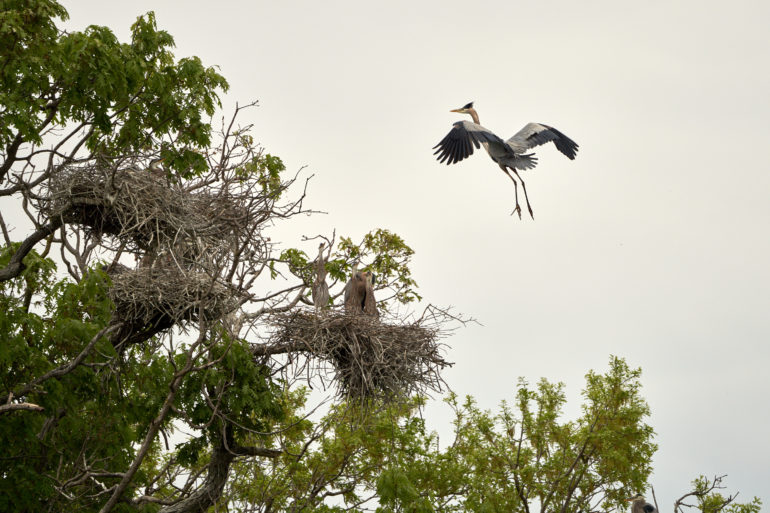
  • When we test lenses, we’ve got various things in mind. First off, we consider who might want to buy the lens and what they might do with it. With that in mind, we try to tackle at least three genres of photography with that lens in a variety of situations. If the lens has weather resistance, then we’ll test it accordingly with a weather-resistant camera. We also test the autofocus of the lens in continuous mode, single mode, with exposure preview effects, without those effects, and then with all the major image quality parameters. These days, no one really makes a bad lens — but some are far better than others.
  • In this specific roundup, we’re basing our findings on the reviews that we’ve done. We’re choosing a favorite, but we’re also giving photographers a bunch of others that they might like, depending on how they shoot.

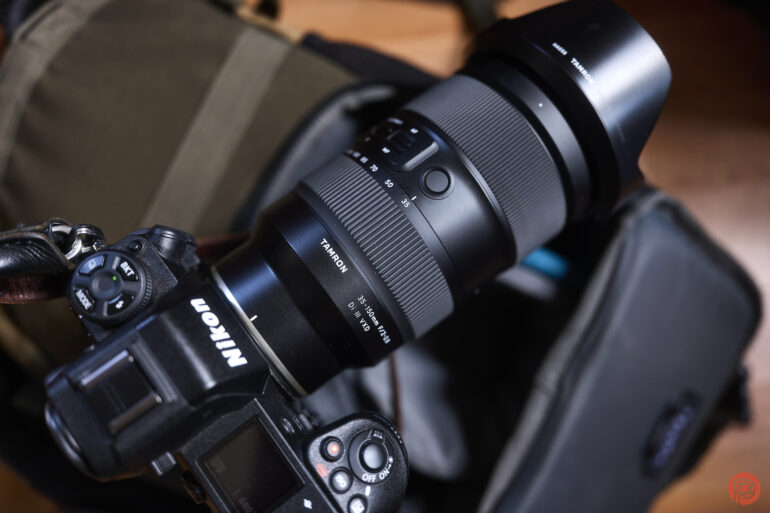
Our Choice for the Best Budget Zoom Lens for Professional Photographers: Tamron 35-150mm f2-2.8 Di III VXD

It’s really nearly impossible to beat this thing. For several photographers, the Tamron 35-150mm f2-2.8 Di III VXD is the only lens they need. Available for both Sony FE and Nikon Z mount, it gives professional photographers the most frequently used focal lengths in just one lens. Tamron packed sharp image quality, speedy autofocus, superior build quality, and other cool features including a built-in USB port to update the firmware and customize the lens for your still of video shooting style. And that firmware tells a story since the lens has been optimized to be faster focusing at least once.

Tech Specs

These specs are borrowed from the Lensrentals listing

Specifications

Angle of View Diagonal
63° 26’- 16° 25’ (for full-frame mirrorless format)
Aperture Blades 9, Rounded
Aspherical Elements 3
Autofocus Autofocus
Brand Tamron
Compatibility Full Frame
Filter Size 82.0mm
Focal Length 35.0-150.0
Groups/Elements 15/21
Hood Included Yes
Image Stabilization No
Item Type Lens
Length 6.2″
Lens Type Telephoto
Low Dispersion Elements 4
Max Aperture 2.0
Maximum Magnification 1:5.7 (Wide) / 1:5.9 (Tele)
Mfr. Model Number A058
Minimum Aperture 22.0
Minimum Object Distance (M.O.D.) 13″ (0.33m) (Wide) / 33.5″ (0.85m) (Tele)
Mount Sony E
Weight 2.6 lbs.

What We Think

In our review, we state:

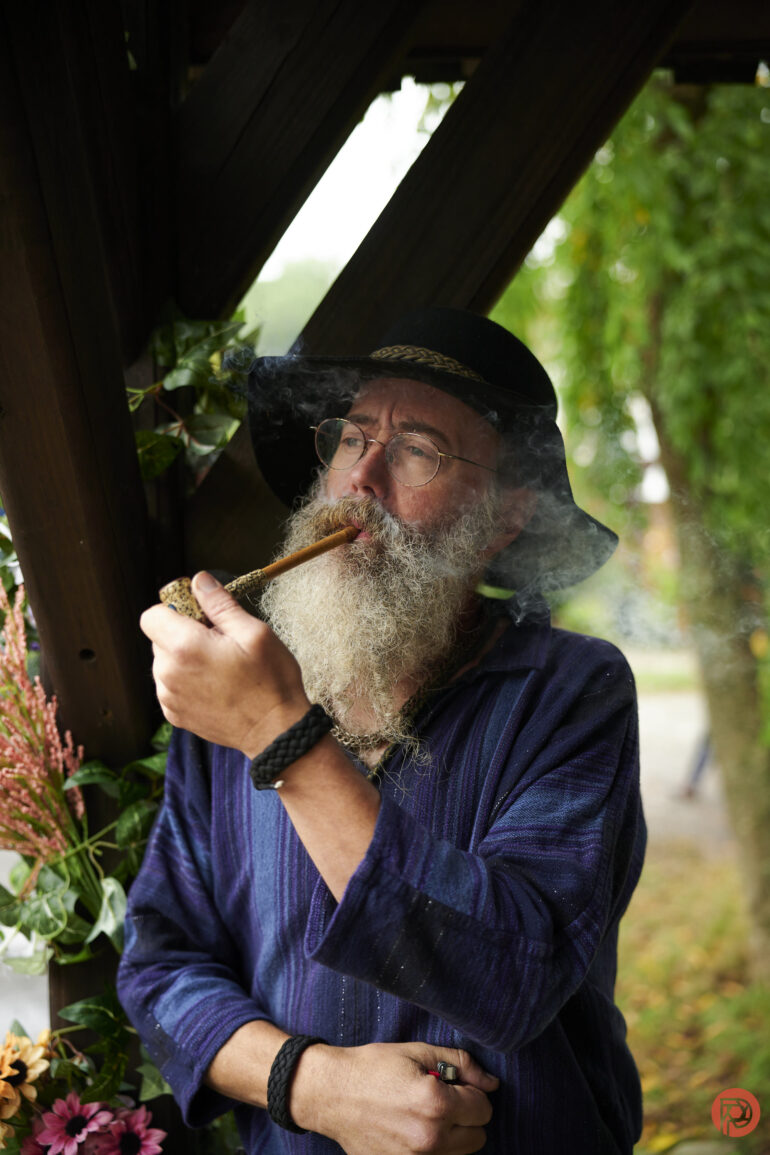
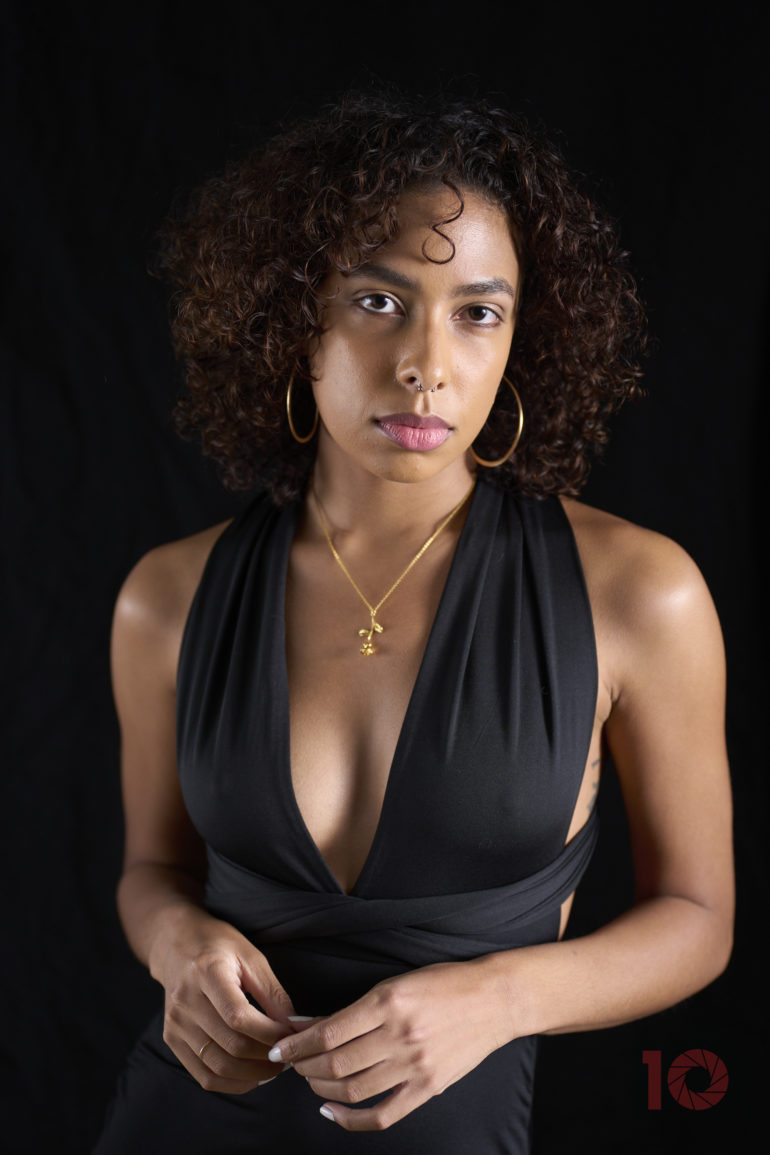
“The first time Tamron’s colors really hit me was when they came out with their 35mm f1.8 and 85mm f1.8 for DSLR cameras. The colors from the Tamron 35-150mm f2-2.8 Di III VXD hit me pretty much as hard, but the colors here are a bit more muted. I adore that. And it’s also so much more important for anyone shooting portraits.”

Other Great Options for the Best Budget Zoom Lenses for Professional Photographers

It’s pretty universally decided that most photographers will do well with the Tamron 35-150mm. But what if you shoot other camera formats or subjects? Well, then we’ve got you covered with these two lenses.

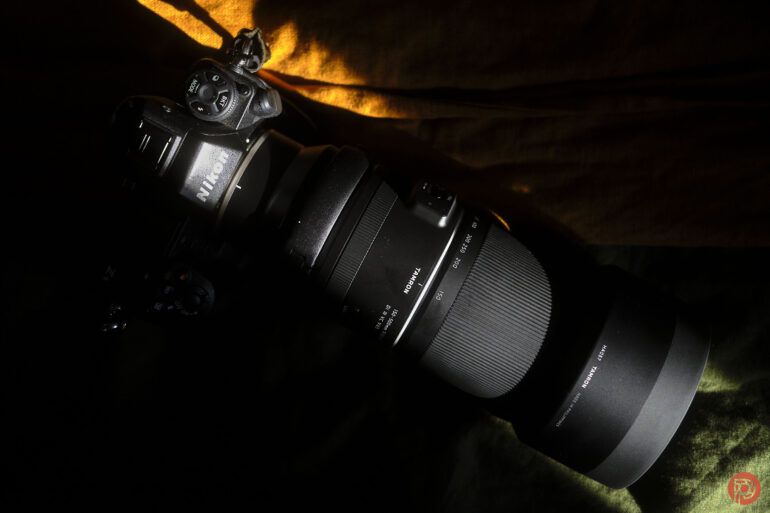
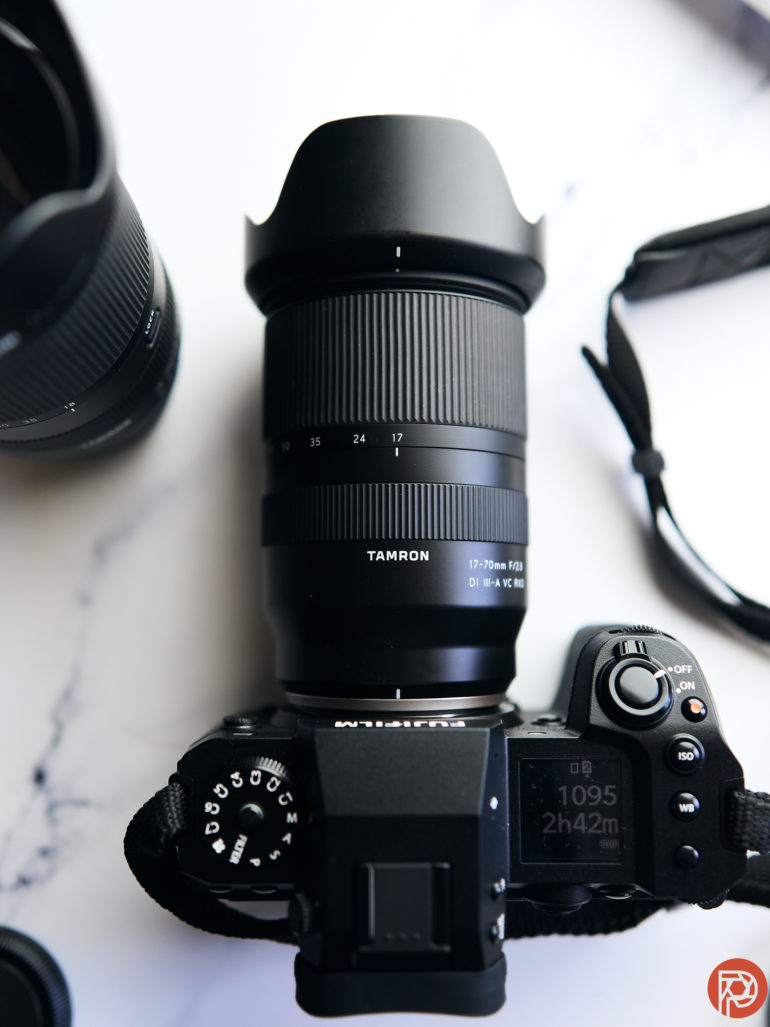
TAMRON 17-70MM F2.8 Di III-A VC RXD: Great for Fujifilm X (and Sony E-mount, too)

In our review, we state:

In terms of autofocus, this lens can surely hold its own with nearly anything that Fujifilm makes. And that’s wonderful to know! In fact, I’d rate it along the lines of the new Fujifilm LM lenses. That means that it’s faster than most of the older glass out there.

TAMRON 150-500MM F5-6.7 Di III VC VXD: Great for Fujifilm, Nikon, and Sony

In our review we state:

The Nikon Z mount has been working very closely with Tamron recently. In the case of the Tamron 150-500mm lens, it’s now available for the system. This lens has some of Tamron’s highest-end technology inside of it — like the autofocus motors and the optics. For what it’s worth, it performs admirably on the Nikon z9.

Using This Guide to the Best Budget Zoom Lenses for Professional Photographers

If you’re considering purchasing anything from this list of the best budget zoom lenses for professional photographers, know the following:

  • This is a sponsored roundup. But any professional will tell you that Tamron makes the best budget zoom lenses for the pros. The image quality, autofocus performance, price, and overall quality are there like no other lenses on the market.
  • Originally, these lenses were available only for the Sony E mount. But that has since expanded. Perhaps more mounts will be covered in the future.
  • Tamron is partially owned by Sony, so the autofocus performance is typically better with them than it is with other 3rd party options.
  • Tamron’s zooms are often better than Fujifilm’s own.
  • Nikon rebadges many of Tamron’s own lenses after making some external updates to them. But if you’re looking to save money, get the available Tamron lens.
  • Our Editor in Chief owns three Tamron lenses for the Sony E mount. In fact, they’re the only zoom lenses he owns, and he’s famous for never wanting to use zooms.
  • All of these lenses offer some of the best weather resistance on the market.

Picking the Right One For You

If you’re still a bit confused as to the right lens for you, here are some questions to ask yourself

  • What’s your budget?
  • How will you use the product?
  • What lighting situations are you in, and how will that affect what you’re doing? Our reviews hyperlinked in this article can help with that.
  • Are you traveling a lot with it?
  • Will you be using it in a situation that’s a bit rougher?
  • Who else uses this product? How are they using it?
  • What’s so appealing about this product that I can’t get from what I have already or something else?
  • When will I really have time to use this product?
  • Where will I bring this product?
  • How will this product help bring me joy and joy in my photography?

These are just a few of the questions that we ask ourselves, but we think that you should ask yourself these for sure.