Photography

Top 20 Fine Art Photographs From The 2023 Px3 Prix De La Photographie Paris Winners

Top 20 Fine Art Photographs From The 2023 Px3 Prix De La Photographie Paris Winners

Bronze in Fine Art/Digitally Enhanced

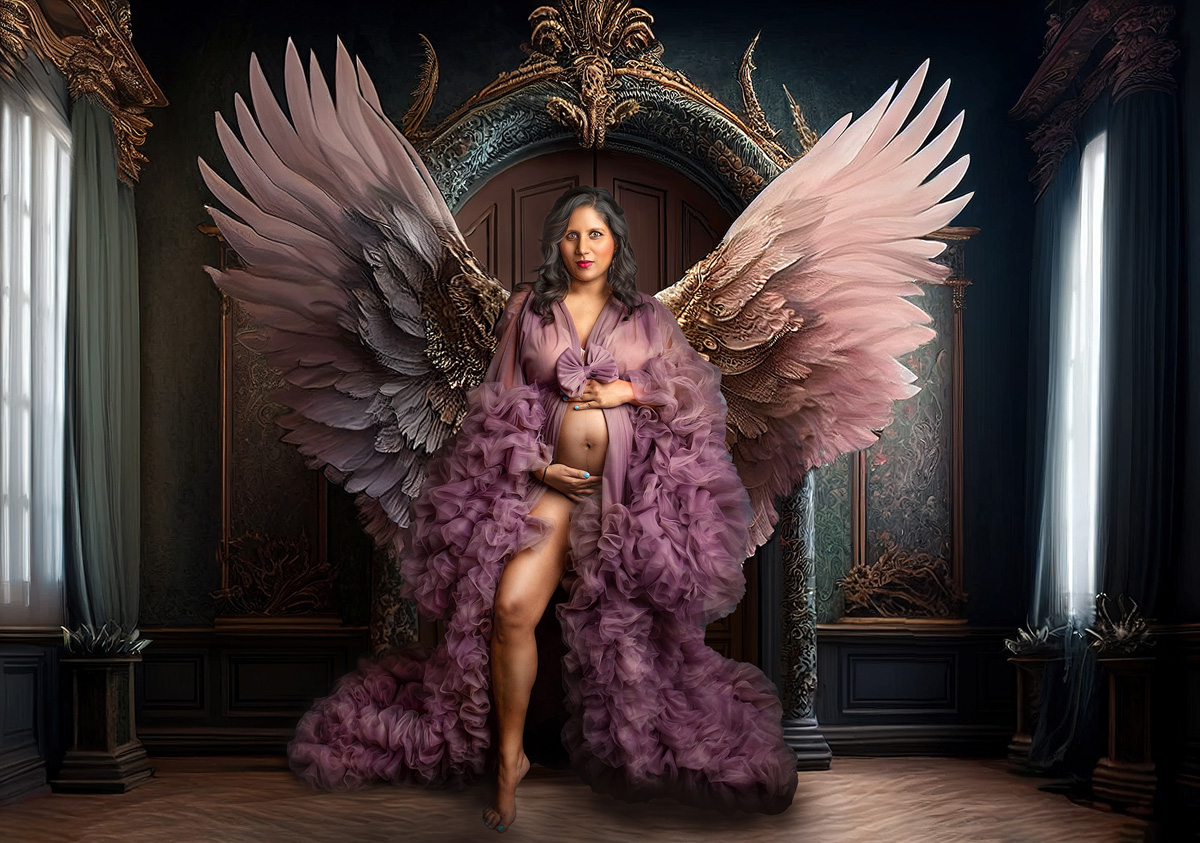
“I am a Dreamer” is a project started in 2018 and still in progress, it is a conceptual series of surreal portraits interpreted in an ironic key and inspired by adolescence.

Adolescence is a crucial time when the identities are being challenged where young people spend time with their reflection and accept their appearance. As society impose to grow with the brain in box, or forces us to wear masks,express fear. We often grow up and educate our children according to the preconceptions that are imposed on us by mass media and society, while the most important thing is to teach them to be free.

Carmelita Iezzi is an award winning photographer, visual artist and professional graphic designer based in Italy. After graduating in Art School, Carmelita got her BA in Graphic Design and Fine Art Photography.
Most of her artworks are recognized and appreciated by collectors worldwide from New York, Los Angeles, Miami, Washington, Castle Rock, London, Mykonos, Bruxelles, London Carmelita’s artworks are owned by expert art lovers working for Sotheby’s.
She has achieved international recognitions, Her works were exhibited in New York, Tokyo, Someserset House London, Paris, Cannes, Marsille.

Growing Demand and Trends of 360 Product Photography Solution Market To Receive Overwhelming Hike In Revenue That Will Boost Overall Industry Growth, Forecast 2031 | Ortery Technologies, Orbitvu, Iconasys, PhotoRobot

Growing Demand and Trends of 360 Product Photography Solution Market To Receive Overwhelming Hike In Revenue That Will Boost Overall Industry Growth, Forecast 2031 | Ortery Technologies, Orbitvu, Iconasys, PhotoRobot

360 Product Photography Solution Market

The latest competent intelligence report published by WMR with the title “An Increase in Demand and Opportunities for Global 360 Product Photography Solution Market 2024” provides a sorted image of the 360 Product Photography Solution industry by analysis of research and information collected from various sources that have the ability to help the decision-makers in the worldwide market to play a significant role in making a gradual impact on the global economy. The report presents and showcases a dynamic vision of the global scenario in terms of market size, market statistics, and competitive situation.

At present, the 360 Product Photography Solution market is possessing a presence over the globe. The Research report presents a complete judgment of the market which consists of future trends, growth factors, consumption, production volume, CAGR value, attentive opinions, profit margin, price, and industry-validated market data. This report helps individuals and market competitors to predict future profitability and to make critical decisions for business growth.

Request Sample Copy of this Report at: https://www.worldwidemarketreports.com/sample/933194

The following Key Players / Companies are Mentioned in this Document:

Ortery Technologies
Orbitvu
Iconasys
PhotoRobot
RotoImage
Packshot Creator
Mode360
WebRotate 360
PhotoSpherix
1WorldSync
Alo Photo Sphere
SKUlibrary
Spyne
Visual SKUs
K360
360Refinery
Momentum Virtual tour
Space and Light
Pro Photo Studio
AUTOCAM360
PIC-UP
StyleShoots
Rotocular
Picture Instruments

360 Product Photography Solution Market Segments:

Split by Types:

Hardware
Software
Service

Split by Applications:

E-commerce
Advertising and Marketing
Real estate
Education and Training
Tourism
Other

Get an Exclusive Sample Copy of the Report at: https://www.worldwidemarketreports.com/sample/933194

A comprehensive review 360 Product Photography Solution report focusing on each and every side effect of COVID-19 on new products, pipeline analysis, supply chain overview, government policies, customer-related strategies, as well as vaccines and drug status, which could ultimately affect the company in the long run. These market strategies are analyzed by studying the impact of different social, political, and economic factors as well as the current market impact on the development of the COVID-19 360 Product Photography Solution market.

Market Analysis and Insights:

The segmental analysis focuses on revenue and forecast by type and by application in terms of revenue and forecasts for the period 2024-2031. The objective of the study is to define 360 Product Photography Solution market sizes of different segments & countries in recent years and to forecast the values for the coming years. The report is designed to incorporate both qualitative and quantitative aspects of the industry within each of the regions and countries involved in the study. The research report has incorporated the analysis of different factors that augment the market’s growth. It constitutes trends, restraints, and drivers that transform the market in either a positive or negative manner.

Regional Analysis, the major regions covered in the report are:

The report provides a detailed overview of the business with both qualitative and quantitative information. It provides scope and forecast of the global 360 Product Photography Solution market based on various segments. Declare five major regions:

➢ North America (the United States, Canada, and Mexico)
➢ Europe (Germany, France, United Kingdom, and Rest of Europe)
➢ Asia-Pacific (Japan, Korea, India, Southeast Asia, and Australia)
➢ South America (Brazil, Argentina, and Rest of South America)
➢ Middle East & Africa (Saudi Arabia, UAE, Egypt, and Rest of the Middle East & Africa)

The research provides answers to the following key questions:

☛ What is the estimated growth rate of the market for the forecast period 2024-2031? What will be the market size during the estimated period?
☛ What are the key driving forces responsible for shaping the fate of the 360 Product Photography Solution market during the forecast period?
☛ Who are the major market vendors and what are the winning strategies that have helped them occupy a strong foothold in the 360 Product Photography Solution market?
☛ What are the prominent market trends influencing the development of the 360 Product Photography Solution market across different regions?
☛ What are the major threats and challenges likely to act as a barrier in the growth of the 360 Product Photography Solution market?
☛ What are the major opportunities the market leaders can rely on to gain success and profitability?

Here we have mentioned some vital reasons to purchase this report:

➤ Regional report analysis highlighting the consumption of products/services in a region also shows the factors that influence the market in each region.
➤ Reports provide opportunities and threats faced by suppliers in the 360 Product Photography Solution and tubes industry around the world.
➤ The report shows regions and sectors with the fastest growth potential.
➤ A competitive environment that includes market rankings of major companies, along with new product launches, partnerships, business expansions, and acquisitions.
➤ The report provides an extensive corporate profile consisting of company overviews, company insights, product benchmarks, and SWOT analysis for key market participants.
➤ This report provides the industry’s current and future market outlook on the recent development, growth opportunities, drivers, challenges, and two regional constraints emerging in advanced regions.

Book the Latest Edition of this Market Study Get Up to 𝟕𝟎% Discount At: https://www.worldwidemarketreports.com/promobuy/933194

Why Worldwide Market Reports?

☛ Strong Market Research Expertise- Worldwide Market Reports helps businesses understand the target market, including customer preferences, needs, and behaviors to meet customer demands, leading to higher sales and customer satisfaction.
☛ Targeted Marketing Strategies- We help businesses analyze the competition, including strengths, weaknesses, and market share to develop effective marketing strategies and gain a competitive advantage.
☛ Innovative Solutions- We help businesses identify new market opportunities and potential areas for growth. This includes new customer segments, emerging trends, and untapped markets.
☛ Strong Customer Service- Through our Company, your businesses can minimize the risk of launching new products or services that may not resonate with your target market.
☛ Continuous Learning- WMR provides businesses with objective data and insights that can inform decision-making. This can lead to more effective and successful business strategies.

About Author:

Ravina Pandya, Content Writer, has a strong foothold in the market research industry. She specializes in writing well-researched articles from different industries, including food and beverages, information and technology, healthcare, chemical and materials, etc. (https://www.linkedin.com/in/ravina-pandya-1a3984191)

☎ Contact Us:

Mr. Shah
Worldwide Market Reports,
Tel: U.S. +1-415-871-0703
U.K. +44-203-289-4040
Japan +81-50-5539-1737
Email: sales@worldwidemarketreports.com
Website: https://www.worldwidemarketreports.com/

About WMR:

Worldwide Market Reports is your one-stop repository of detailed and in-depth market research reports compiled by an extensive list of publishers from across the globe. We offer reports across virtually all domains and an exhaustive list of sub-domains under the sun. The in-depth market analysis by some of the most vastly experienced analysts provides our diverse range of clients from across all industries with vital decision-making insights to plan and align their market strategies in line with current market trends.

This release was published on openPR.

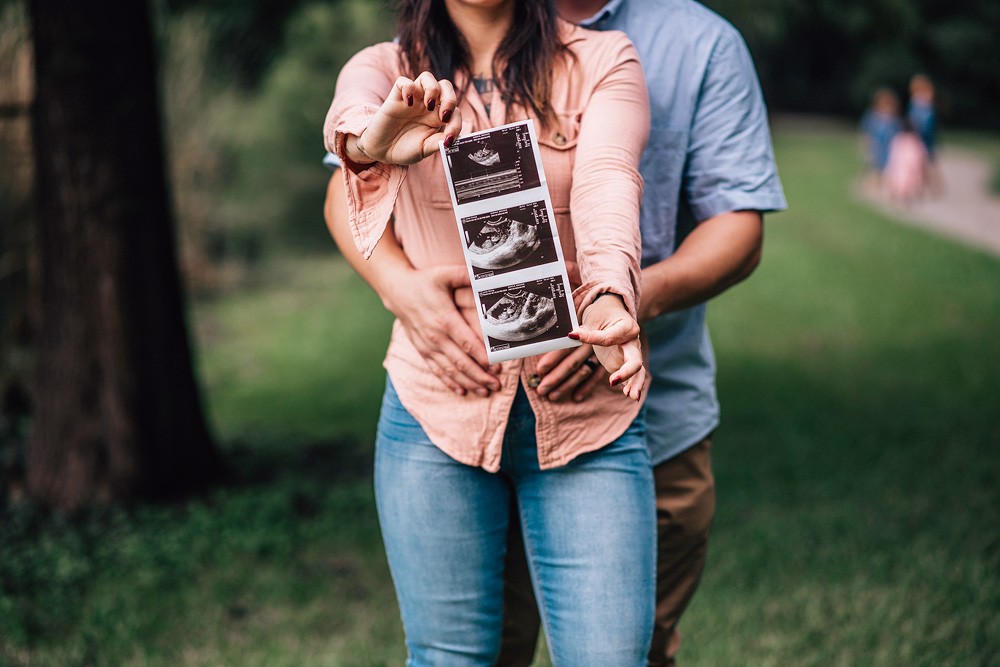
Familymoment Photography Announces New Pregnancy Announcement Photo Session in Spring, TX

Familymoment Photography Announces New Pregnancy Announcement Photo Session in Spring, TX
PREGNANCY ANNOUNCEMENT PHOTO SESSION

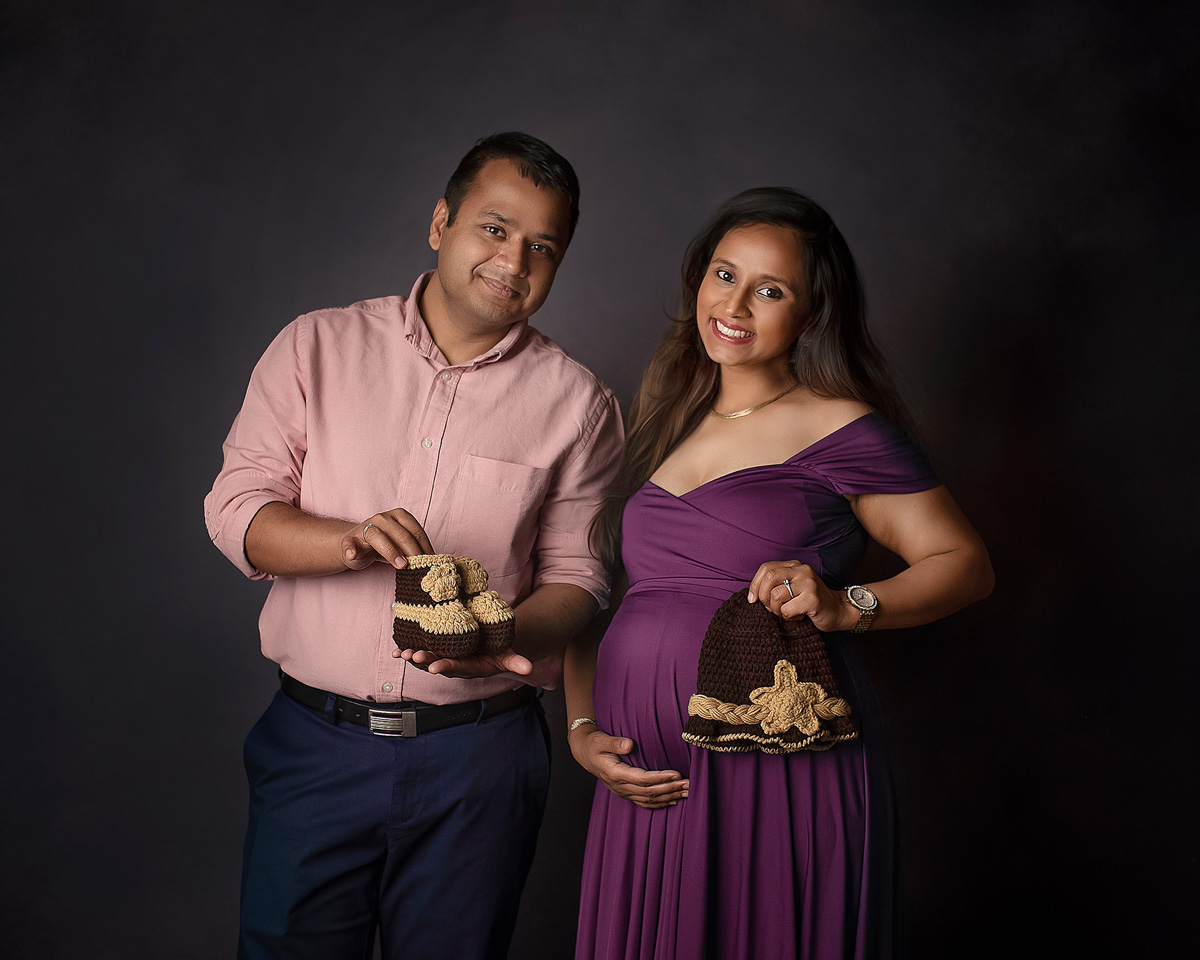
Exciting news! ?✨ Capture your special moment with a Pregnancy Announcement Photo Session by Familymoment Photography.

Maternity Photographers Woodlands

Capture the beauty of motherhood with Familymoment Photography. Book your Maternity Photoshoot in Woodlands today! ?✨

Maternity Photography Woodlands

Cherish the beauty of motherhood with our Maternity Photography sessions in Woodlands. ??

Capture your special moment with a Pregnancy Announcement Photo Session by Familymoment Photography. Cherish these memories forever

Capture the joy of your special moment with a Pregnancy Announcement Photo Session by Familymoment Photography. Cherish these memories forever!”

— Sumitra

SPRING, TX, UNITED STATE, June 21, 2024 /EINPresswire.com/ — Spring, TX – Familymoment Photography, a leading photography studio in Spring, TX, is excited to announce the launch of their new Pregnancy Announcement Photo Session. This new service is designed to capture the special moment when expecting parents share the news of their pregnancy with their loved ones.

The Pregnancy Announcement Photo Session is a unique and creative way for expecting parents to announce their pregnancy to family and friends. The session includes a personalized photo shoot with professional photographers who specialize in capturing the joy and excitement of this special moment. The photos can then be used to create custom pregnancy announcement cards or shared on social media to announce the news to a wider audience.

“We are thrilled to introduce our new Maternity Photography Woodlands to our clients in Spring, TX,” said Sumitra, owner and lead photographer at Familymoment Photography. “We understand the importance of this moment for expecting parents and we are dedicated to capturing it in a way that is both beautiful and meaningful. Our team of photographers is excited to work with families to create unique and memorable pregnancy announcement photos.”

Familymoment Photography has been providing high-quality photography services to families in Spring, TX for over 15 years. Their team of experienced photographers specializes in capturing special moments such as weddings, family portraits, and now, pregnancy announcements. With their attention to detail and creative approach, they have become a trusted name in the community.

The Pregnancy Announcement Photo Session is now available for booking at Familymoment Photography. Expecting parents can contact the studio to schedule their session and discuss their vision for the photos. The studio also offers a variety of packages and options to fit different budgets and preferences.

For more information about Familymoment Photography and their new Pregnancy Announcement Photo Session, please visit their website or follow them on social media. The studio is excited to help expecting parents in Spring, TX share their exciting news in a unique and memorable way.

Press Contact:

Familymoment Photography

71 N Concord Valley Cir, Spring, TX 77382

+12816875874

info@familymomentphotography.com

www.familymomentphotography.com

www.facebook.com/sbm.familymoments

https://twitter.com/FamilymomentP

www.instagram.com/familymoment_photography

https://www.pinterest.com/familymomentphotography/

https://www.linkedin.com/company/family-moment-photography

https://www.youtube.com/@newbornphotographystudio

https://maps.app.goo.gl/nwPgdPDJwSXETay38

Sumitra
Familymoment Photography
+1 281-687-5874
info@familymomentphotography.co
Visit us on social media:
Facebook
X
LinkedIn
Instagram
YouTube
Other

Secrets to Stunning Photos at a Maternity Photography Studio

[embedded content]

image

Ash Fox Continues To Dominate The Proposal Planning & Photography Sector

Ash Fox Continues To Dominate The Proposal Planning & Photography Sector

From expert guidance and advisory and ideas on how to propose, to the planning and logistical elements of location selection, decorations, floral arrangements, live musical performances, and gorgeous documentation with stunning photography and videography services, Ash Fox Proposals covers everything a client needs for a stress free, easeful, experience and milestone.

Meta is tagging real photos as ‘Made with AI,’ say photographers

Meta is tagging real photos as ‘Made with AI,’ say photographers

Earlier in February, Meta said that it would start labeling photos created with AI tools on its social networks. Since May, Meta has regularly tagged some photos with a “Made with AI” label on its Facebook, Instagram, and Threads apps. 

But the company’s approach of labeling photos has drawn ire from users and photographers after attaching the “Made with AI” label to photos that have not been created using AI tools.

There are plenty of examples of Meta automatically attaching the label to photos that were not created through AI. For example, this photo of Kolkata Knight Riders winning the Indian Premier League Cricket tournament. Notably, the label is only visible on the mobile apps and not on the web.

An Instagram photo of the Kolkata Knight Riders, labeled as “Made with AI”. Image Credit: Instagram (screenshot)

Plenty of other photographers have raised concerns over their images having been wrongly tagged with the “Made with AI” label. Their point is that simply editing a photo with a tool should not be subject to the label.

Former White House photographer Pete Souza said in an Instagram post that one of his photos was tagged with the new label. Souza told TechCrunch in an email that Adobe changed how its cropping tool works and you have to “flatten the image” before saving it as a JPEG image. He suspects that this action has triggered Meta’s algorithm to attach this label.

“What’s annoying is that the post forced me to include the ‘Made with AI’ even though I unchecked it,” Souza told TechCrunch.

A photo taken by Pete Souza, but which Instagram has labeled as “Made with AI.” Image Credit: Instagram (screenshot)

Meta would not answer on the record to TechCrunch’s questions about Souza’s experience or other photographers’ posts who said their posts were incorrectly tagged. 

In a February blog post, Meta said it utilizes metadata of images to detect the label.

“We’re building industry-leading tools that can identify invisible markers at scale – specifically, the “AI generated” information in the C2PA and IPTC technical standards – so we can label images from Google, OpenAI, Microsoft, Adobe, Midjourney, and Shutterstock as they implement their plans for adding metadata to images created by their tools,” the company said at that time.

As PetaPixel reported last week, Meta seems to be applying the “Made with AI” label when photographers use tools such as Adobe’s Generative AI Fill to remove objects.

While Meta hasn’t clarified when it automatically applies the label, some photographers have sided with Meta’s approach, arguing that any use of AI tools should be disclosed.

For now, Meta provides no separate labels to indicate if a photographer used a tool to clean up their photo, or used AI to create it. For users, it might be hard to understand how much AI was involved in a photo. Meta’s label specifies that “Generative AI may have been used to create or edit content in this post” — but only if you tap on the label.

Despite this approach, there are plenty of photos on Meta’s platforms that are clearly AI-generated, and Meta’s algorithm hasn’t labeled them. With U.S. elections to be held in a few months, social media companies are under more pressure than ever to correctly handle AI-generated content. 

The Saatchi Gallery’s Beyond Fashion Exhibition Proves To Be Pop Art

The Saatchi Gallery’s Beyond Fashion Exhibition Proves To Be Pop Art
image

There is fashion, and then there is high art.

Rarely, can a photographer capture both, or balance both, but those who can are part of a sprawling group show at the Saatchi Gallery in London called Beyond Fashion, which runs until September 8.

If you want to see some of the world’s best fashion photography, this is it. Beyond Fashion showcases over 100 photographs by 48 photographers, featuring some of the most creative work out there, showing how the medium does much more than just sell handbags.

There are the greats, including works by both men and women photographers, like Peter Lindbergh, Viviane Sassen, Paolo Roversi, and Ellen von Unwerth, who are showcased alongside the younger, newer generation of fashion photographers, including Daniel Sannwald, Emma Summerton and Horst Diekgerdes.

Sadly, Helmut Newton is not included in this exhibition. Neither is Arthur Elgort, Patrick Demarchelier, Tim Walker, Annie Leibovitz, Olivier Zahm, Guy Bourdin, Mert and Marcus, Ren Hang, Petra Collins or Inez and Vinoodh—all fashion photographers worth noting in a retrospective of industry greats.

However, if there’s one thing that binds together this exhibition it’s color. The photos feel like pop art in their presence, they’re so perfectly composed. And when there is less color, the walls of the gallery are painted in bright hues. More museums need to take this commercial approach to showing exhibitions—its a much more engaging experience beyond your typical gallery setting (without veering into mass market pop-up mode).

The exhibit is divided into four sections, including Allure, Fantasy, Realism, and Surrealism, with of course, Surrealism being the best part. The exhibit aims to tell the story of how fashion photography is more than just a commercial service, but is in fact, art. There are sections that take viewers inside the photo studio, on the runway, and out on the streets with street style photographer, The Sartorialist.

Some of the greatest fashion photography in recent times is on view. We get to see classic Vogue covers and headline-grabbing campaigns (like Victoria Beckham posing for Marc Jacobs, shot by Juergen Teller in 2008). There are also photos of supermodels like Christy Turlington and Naomi Campbell, as well as shoots for designers like Christian Dior, Alexander McQueen and Valentino, among others.

With the rise of fashion photography comes the rise of fashion film. There are works by SHOWstudio, the website founded and directed by Nick Knight, as well as a great selection of younger photographers you might not know.

Fashion photographers today really push the limits of what creativity is. It’s never been so imaginative. Check out the works of Chinese photographer Feng Li, Coco Capitán (who has collaborated with Gucci), and Norwegian photographer Sølve Sundsbø.

This exhibit feels more of a contemporary snapshot of fashion photography, rather than clawing back to the roots of it, with photos by Horst P. Horst, let’s say, or American photographers Edward Steichen, Richard Avedon and Irving Penn. Back in 2012, the Victoria & Albert Museum’s Dundee location had an exhibition called Selling Dreams: 100 Years Of Fashion Photography, which showed how early fashion photographers paved the path for many of these photographers we see today. It truly was a revolutionary move a century ago.

This exhibition groups together the fashion photographers who have more of a pop art edge. All of their work is boldface in nature, attention-grabbing, and loud. It’s very 2024, and it’s very social media savvy. But, as we know, fashion photography can be quiet too, and Paolo Roversi is a great example of that.

According to the curator Nathalie Herschdorfer, she said in a statement that “The emergence of a broader visual language has enabled a blurring of boundaries between editorial work, advertising and artistic expression within fashion photography.” She explains: “Nowadays, it is no longer regarded as a frivolous medium; it is elevated to the status of an art form, capturing the sustained attention of museums and galleries, auction houses and publishers alike. It is the art world’s rising star.”

An Allan Sekula/Sally Stein Garage Sale at the Brick

An Allan Sekula/Sally Stein Garage Sale at the Brick

When photographer and critic Allan Sekula died in Los Angeles in 2013, he left behind abundant evidence of a life spent collecting all sorts of material over decades in L.A. and traveling the globe with his wife, art historian Sally Stein. This presented a challenge when Stein put the house on the market and had to decide what to do with their extensive holdings, which filled the rambling Craftsman in Koreatown. 

Even after donating much of his archive to the Getty in L.A., giving some 15,000 books to the Clark Art Institute in Williamstown, Massachusetts, and sending the 1,250-strong Dockers Museum to the Museum of Contemporary Art Antwerp, she was left with far more than she could possibly fit into the four-room apartment she was moving to in her hometown of New York. 

Fans of Sekula and Stein will have a rare opportunity over the next week to bring home some of the items the duo lived with over the years as Los Angeles art venue the Brick is staging a benefit garage sale of their collection. Founded as LAXART in 2005, the nonprofit visual arts venue has moved to a new location, a former furniture showroom at 518 N. Western Avenue, just north of Koreatown. It is newly renamed in honor of the red bricks that are prominent in the new, 5,000-square-foot facility.

A man holding up a large, colorful mask in front of his face

Courtesy the Brick.

“All pun intended, they are brick and mortar of the L.A. cultural community,” said Hamza Walker, director of the Brick. “Between Sally’s stint teaching at UC Irvine and other schools in the area and Allan’s stint at CalArts, they have a bevy of progeny.” Theirs, he said, has been “one of the most lasting and critical engagements with documentary photography, bar none.” 

“I was overwhelmed,” said Stein of surveying their home in preparation for her move. “Hamza Walker had worked with Allan at the Renaissance Society [where Walker previously worked for more than two decades] and I thought, what am I going to do with this? Make 40 trips to the Goodwill? I had planted bushes and and cacti and agave in place of a lawn, so I couldn’t do a yard sale, so I went to Hamza and asked, ‘Would you be interested in doing some kind of weird rummage sale as a soft opening, to remind people we are in a new place?’”

Courtesy the Brick.

Sekula and Stein have indeed long been fixtures in the area’s higher education system and the international art world. Stein taught art history at Irvine from 1993 to 2008 and has numerous books, articles, and essays to her name. She has frequently published on her husband’s work, including co-editing the 2020 MACK book Allan Sekula, Art Isn’t Fair: Further Essays on the Traffic in Photographs and Related Media.

A poster for a David Bowie concert from the collection of Allan Sekula

Courtesy the Brick.

Sekula died of esophageal cancer at the age of 62; he had taught at the California Institute of the Arts for almost three decades. He was recognized with inclusion in major shows such as the 1993 Whitney Biennial in New York, and, in Kassel, Germany, Documenta 11 (2002) and 12 (2007). He earned fellowships from no less than the Guggenheim Foundation and the National Endowment for the Arts, among others. 

The garage sale gets underway this Sunday, June 23, from 2 to 6 p.m. Stein has donated their home library (containing more than 3,000 books), along with all manner of bric-a-brac including mementos from their travels, Hasselblad slide projectors, and “lots and lots of Sekuliana,” said the Brick. Among the themes are photography-related items like toy cameras and objects related to seafaring, which was one of the lenses through which Sekula viewed modern industrialization. The sale will continue from Tuesday through Saturday, June 25–29, from noon to 5 p.m. each day. 

Courtesy the Brick.

The garage sale will, of course, present a much more affordable alternative than Sekula’s work for those who want to have a piece of Sekuliana. Two pieces are on offer, said Walker, priced at about $18,000 and $20,000. The artist’s current auction high is $10,000, set at Sotheby’s New York in 2019 for his 1999 work Dear Bill Gates (Triptych), consisting of three photographs and a letter to the Microsoft magnate, who had the year before purchased Winslow Homer’s Lost on the Grand Banks for $30 million, a record price for an American painting at the time. “It’s a great painting,” Sekula wrote in the unsigned letter, “but, speaking as a friend and fellow citizen, at $30 million you paid too much.” 

By contrast, no one will overpay at the Brick’s sale; its announcement even invites people to haggle, so the prices may even be more a matter of making an offer. It would have been far too much work to go through and price each item individually, said Walker. 

A hand holds a small model of a boat from the collection of Allan Sekula

Courtesy the Brick.

“It sparked all these memories,” Stein said of looking at the objects. She’s not even sure she’ll go, she said, partly due to possible seller’s remorse. “I may decide I want things. I may be nauseated. It’s kind of like attending your own funeral. I’m happy that Hamza can use it as a soft opening for the Brick. I think the programs sound exciting, and this is a way of reminding people that the Brick is a very eccentric space, like a Kunstverein.”

The collection is also, to say the least, eccentric, said Stein, who admitted she was at times impatient with the breadth of her husband’s acquisitions, but in his view, the interconnectedness of the world justified a wide-ranging acquisitive program. “Sometimes it drove me nuts,” she said. “His answer would be, ‘It’s all connected.’”

Follow Artnet News on Facebook:
Want to stay ahead of the art world? Subscribe to our newsletter to get the breaking news, eye-opening interviews, and incisive critical takes that drive the conversation forward.

Late Photographer Allan Sekula’s Collection Heads to a Garage Sale

Late Photographer Allan Sekula’s Collection Heads to a Garage Sale

When photographer and critic Allan Sekula died in Los Angeles in 2013, he left behind abundant evidence of a life spent collecting all sorts of material over decades in L.A. and traveling the globe with his wife, art historian Sally Stein. This presented a challenge when Stein put the house on the market and had to decide what to do with their extensive holdings, which filled the rambling Craftsman in Koreatown. 

Even after donating much of his archive to the Getty in L.A., giving some 15,000 books to the Clark Art Institute in Williamstown, Massachusetts, and sending the 1,250-strong Dockers Museum to the Museum of Contemporary Art Antwerp, she was left with far more than she could possibly fit into the four-room apartment she was moving to in her hometown of New York. 

Fans of Sekula and Stein will have a rare opportunity over the next week to bring home some of the items the duo lived with over the years as Los Angeles art venue the Brick is staging a benefit garage sale of their collection. Founded as LAXART in 2005, the nonprofit visual arts venue has moved to a new location, a former furniture showroom at 518 N. Western Avenue, just north of Koreatown. It is newly renamed in honor of the red bricks that are prominent in the new, 5,000-square-foot facility.

A man holding up a large, colorful mask in front of his face

Courtesy the Brick.

“All pun intended, they are brick and mortar of the L.A. cultural community,” said Hamza Walker, director of the Brick. “Between Sally’s stint teaching at UC Irvine and other schools in the area and Allan’s stint at CalArts, they have a bevy of progeny.” Theirs, he said, has been “one of the most lasting and critical engagements with documentary photography, bar none.” 

“I was overwhelmed,” said Stein of surveying their home in preparation for her move. “Hamza Walker had worked with Allan at the Renaissance Society [where Walker previously worked for more than two decades] and I thought, what am I going to do with this? Make 40 trips to the Goodwill? I had planted bushes and and cacti and agave in place of a lawn, so I couldn’t do a yard sale, so I went to Hamza and asked, ‘Would you be interested in doing some kind of weird rummage sale as a soft opening, to remind people we are in a new place?’”

Courtesy the Brick.

Sekula and Stein have indeed long been fixtures in the area’s higher education system and the international art world. Stein taught art history at Irvine from 1993 to 2008 and has numerous books, articles, and essays to her name. She has frequently published on her husband’s work, including co-editing the 2020 MACK book Allan Sekula, Art Isn’t Fair: Further Essays on the Traffic in Photographs and Related Media.

A poster for a David Bowie concert from the collection of Allan Sekula

Courtesy the Brick.

Sekula died of esophageal cancer at the age of 62; he had taught at the California Institute of the Arts for almost three decades. He was recognized with inclusion in major shows such as the 1993 Whitney Biennial in New York, and, in Kassel, Germany, Documenta 11 (2002) and 12 (2007). He earned fellowships from no less than the Guggenheim Foundation and the National Endowment for the Arts, among others. 

The garage sale gets underway this Sunday, June 23, from 2 to 6 p.m. Stein has donated their home library (containing more than 3,000 books), along with all manner of bric-a-brac including mementos from their travels, Hasselblad slide projectors, and “lots and lots of Sekuliana,” said the Brick. Among the themes are photography-related items like toy cameras and objects related to seafaring, which was one of the lenses through which Sekula viewed modern industrialization. The sale will continue from Tuesday through Saturday, June 25–29, from noon to 5 p.m. each day. 

Courtesy the Brick.

The garage sale will, of course, present a much more affordable alternative than Sekula’s work for those who want to have a piece of Sekuliana. Two pieces are on offer, said Walker, priced at about $18,000 and $20,000. The artist’s current auction high is $10,000, set at Sotheby’s New York in 2019 for his 1999 work Dear Bill Gates (Triptych), consisting of three photographs and a letter to the Microsoft magnate, who had the year before purchased Winslow Homer’s Lost on the Grand Banks for $30 million, a record price for an American painting at the time. “It’s a great painting,” Sekula wrote in the unsigned letter, “but, speaking as a friend and fellow citizen, at $30 million you paid too much.” 

By contrast, no one will overpay at the Brick’s sale; its announcement even invites people to haggle, so the prices may even be more a matter of making an offer. It would have been far too much work to go through and price each item individually, said Walker. 

A hand holds a small model of a boat from the collection of Allan Sekula

Courtesy the Brick.

“It sparked all these memories,” Stein said of looking at the objects. She’s not even sure she’ll go, she said, partly due to possible seller’s remorse. “I may decide I want things. I may be nauseated. It’s kind of like attending your own funeral. I’m happy that Hamza can use it as a soft opening for the Brick. I think the programs sound exciting, and this is a way of reminding people that the Brick is a very eccentric space, like a Kunstverein.”

The collection is also, to say the least, eccentric, said Stein, who admitted she was at times impatient with the breadth of her husband’s acquisitions, but in his view, the interconnectedness of the world justified a wide-ranging acquisitive program. “Sometimes it drove me nuts,” she said. “His answer would be, ‘It’s all connected.’”

Follow Artnet News on Facebook:
Want to stay ahead of the art world? Subscribe to our newsletter to get the breaking news, eye-opening interviews, and incisive critical takes that drive the conversation forward.

This Photographer Chartered An Open-Door Airplane To Capture The Beauty Of Western Australia (75 Pics)

This Photographer Chartered An Open-Door Airplane To Capture The Beauty Of Western Australia (75 Pics)
ADVERTISEMENT

Today, we’re excited to present you with the most recent images straight from Daniel Kordan. You might remember his previous work documenting the stunning landscapes of Vietnam. This time, he takes us on another adventure, discovering Western Australia seen from an open-door airplane. Sounds interesting, right? If you’re not familiar with the incredible, out-of-this-world landscapes of this region, you should be even more intrigued.

We must say that the majority of the images captured by Daniel look more like abstract paintings than real places on our planet. Some shots resemble watercolor artwork, with colors flowing into one another, while others remind us of oil paint dried on canvas, full of cracks and amazing textures. It goes without saying, the collection you’re about to explore is truly inspirational and unique.

More info: Instagram | danielkordan.com

The Real Story Behind ‘The Bikeriders’ and the Danny Lyon Photography Book That Inspired It

The Real Story Behind ‘The Bikeriders’ and the Danny Lyon Photography Book That Inspired It

Danny Lyon considered himself a bikerider, but there were glaring differences between him and the members of the Chicago Outlaws, a notorious motorcycle club. They were blue-collar Midwesterners riding Harleys and living on the outskirts of society. Lyon was a college-educated photographer who rode a Triumph and toted around two cameras and a seven-pound tape recorder.

It was the mid-1960s, and Lyon was following in the footsteps of Hunter S. Thompson, the journalist who rode with—and wrote about—the Hells Angels around the same time. Lyon even sent a letter to Thompson, perhaps expecting encouragement from a like-minded chronicler. Instead, the writer advised Lyon to “get the hell out of that club. … I’ve seen the Angels work, and they scare the hell out of me.” Lyon bristled at this advice, which he later summed up thusly: “[Thompson] advised me not to join the Outlaws and to wear a helmet. I joined the club and seldom wore a helmet.”

Lyon documented the Outlaws for several years, but he was not an objective observer. When The Bikeriders, a collection of photographs and interviews, came out in 1968, Lyon—who had become a full member of the club in 1965—billed it as an “attempt to record and glorify the life of the American bikerider. It is a personal record, dealing mostly with bikeriders whom I know and care for.”

THE BIKERIDERS – Official Trailer [HD] – Only In Theaters June 21

Now, more than 50 years later, The Bikeriders forms the basis of a new movie adaptation of the same name. Directed by Jeff Nichols, the film uses verbatim quotes from Lyon’s interviews for around 70 percent of its dialogue. The plot, meanwhile, is a work of fiction created by weaving the interviews together.

The movie is concerned less with telling a true story than with capturing the feeling of freeways and freedom, of outlaws and open roads—what Lyon calls the “spirit of the bikeriders: the spirit of the hand that twists open the throttle on the crackling engines of big bikes and rides them on racetracks or through traffic or, on occasion, into oblivion.”

Here’s what you need to know about The Bikeriders (both the book and the adaptation) as the film, which stars Austin Butler, Jodie Comer and Tom Hardy, arrives in theaters in the United States on Friday.

The outlaw archetype

In 1957, about a decade before The Bikeriders, Jack Kerouac published On the Road, his famous chronicle of disillusioned, peripatetic young travelers wandering the country and searching for answers. One reviewer described Kerouac as a “kind of literary James Dean,” the actor responsible for a formidable percentage of the motorcycle’s cultural cachet.

Members of Hells Angels rounding a corner on their motorcycles in 1966

Members of Hells Angels rounding a corner on their motorcycles in 1966

Bettmann via Getty Images

Like many young men, Lyon, who was 15 when On the Road came out, was inspired by the book. In the summer of 1962, after wrapping up a semester at the University of Chicago, he asked friends to drop him off along Route 66, “the road Jack Kerouac used,” and hitchhiked to Cairo, Illinois, where he saw future congressman John Lewis speak and began photographing scenes from the civil rights movement. By 1964, he was back in Chicago, where he started planning The Bikeriders.

Around this time, Lyon wrote to a publisher about the project. When he revisited the letter many years later, he realized he came across as “a kind of crazy person who writes in this sub-Jack Kerouac-style prose about the open road and the freedom of being an outlaw,” as he told the Observer in 2014.

American motorcycle clubs were also fueled by this outlaw spirit. Their history stretches back to the end of World War II, when returning veterans—particularly those having trouble reintegrating into civilian life—began to form new groups. The lifestyle combined several values these former soldiers clung to: As Vox put it in 2015, “Nostalgia for the camaraderie and risk-taking of the war made the clubs’ focus on male bonding and dangerous activities like, say, riding motorcycles particularly attractive.”

Many such clubs were part of the American Motorcyclist Association (AMA). Membership in the organization, which was founded in 1924 and still exists today, requires adherence to strict rules. Some clubs resisted these rules and formed without the group’s stamp of approval. As Lyon wrote in The Bikeriders, they “are so far in spirit from attitudes of the AMA that they neither want nor could receive AMA sanction. These are known as outlaw clubs.”

CAPTURING A CULTURE – EP04 DANNY LYON: OUTLAW BIKERS

image

Members of outlaw clubs are also known by another term: “one-percenters.” This identifier comes from an oft-repeated (but possibly false) story about the AMA insisting that 99 percent of motorcyclists are mainstream, law-abiding Americans. The outlaw clubs proudly position themselves in that remaining 1 percent.

One of the first such clubs was the McCook Outlaws, which formed in McCook, Illinois, in the 1930s. After a period of dormancy during World War II, the group came back together and ultimately relocated to Chicago, becoming the Chicago Outlaws in the 1950s, about a decade before Lyon started tagging along.

The bikeriders’ best storyteller

Each of Lyon’s interviewees had a unique perspective on outlaw culture and how they fit into it. Cal, a former airman, had been to 18 countries and “seen what most people have read about.” Rodney Pink, meanwhile, was a motorcycle racer who insisted that “being on a motorcycle don’t make you special at all” and lamented that while “everyone wants to be part of something,” nobody wants to “have any responsibility unloaded on ’em.”

Danny and Kathy

Lyon (played by Mike Faist) interviewing Kathy (Jodie Comer) in The Bikeriders

Kyle Kaplan / Focus Features

The bikeriders also spoke candidly about the dangers of their lifestyle. Johnny Goodpaster, who once broke his leg in 17 places, called such injuries an “occupational disease,” while “Funny Sonny” described watching a “little guy on his Honda” with a “helmet and everything” who accidentally drove over a cliff.

But as Lyon recalled in a 1997 preface to a new edition of the book, the “best storyteller” of the group was Kathy Bauer, 26, who “didn’t even ride a motorcycle, but was married to Benny, a member of the club.”

According to her interview, Kathy noticed Benny while she was at a bar with a friend, who advised her not to get involved. “Every time he gets up on his bike, he has an accident,” the friend warned. Benny persisted, planting himself outside Kathy’s house and refusing to go home.

“My boyfriend would still come over, and Benny would still sit here, and I’d tell him, ‘You better go home.’ And he wouldn’t go,” she recalled. “So finally, my boyfriend left, and Benny was still around. So he says, ‘Let me take you to the meeting. Everything’ll be real nice.’ So I went to the meeting. After that, I started goin’ out with him. I only went out with him, never with any of the other guys in the club. And five weeks later, I married him.”

In The Bikeriders, Kathy describes the arc of the couple’s relationship in a series of startling anecdotes and off-the-cuff reflections:

I’ve had nothin’ but trouble since I married Benny. I’ve seen more jails, been to more courts and met more lawyers, and it’s only a year. That’s a short time for so much to happen.


Benny thinks that when you die, you’re better off than when you’re living. You know, like when his dad died, he said, “It’s just as well, he’s better off that way.” When his friends got killed, well, they’re better off that way. No feelings.


I thought I could change him, you know? Every woman thinks that she can change a guy. Not to her own ways, but to be different. Not to be different, but to be, I don’t know. Like he’s wild. I used to think he’d get over that. But he don’t.

Lyon’s book features one photograph of Kathy. Sporting a dark beehive haircut with side-swept bangs, she stands in a bathroom with three mirrors, each reflecting her profile at a slightly different angle. In the main reflection, she looks directly at the camera, lips slightly parted, at ease but alert.

Benny, meanwhile, is an elusive figure. While Kathy describes him at length, he was never interviewed. The book features two photographs identified as him: One shows him gripping a pool table covered with ring stains; his head hangs between his shoulders, obscuring his face. The other captures him from behind on his motorcycle, wearing a “Chicago Outlaws” jacket and backlit by headlights.

Adapting The Bikeriders for the screen

The film adaptation, which debuts Friday, follows characters based on Kathy (played by Comer), who also narrates the story, and Benny (Butler). Some scenes play out just as the anecdotes in the book, such as the pair’s first meeting. Kathy is at a bar with a friend when she notices Benny, who is leaning against a pool table in a nearly perfect recreation of Lyon’s photo. Here, though, he looks up. We see his face, hear his voice and find out what happens next.

Still of Benny

This still from The Bikeriders is a recreation of Danny Lyon’s photo Benny at the Stoplight, Cicero, Illinois.

Focus Features

Ahead of the movie premiere, Lyon heard from a man named Kirk: Kathy and Benny’s son. He learned that Kathy had died, but Benny was living in Florida. “So I call Benny up,” Lyon tells the Telegraph. “We have a great talk. He’s totally upbeat. And then he says, ‘Hey, you know the picture of me at the pool hall?’ I said, yeah. He says, ‘It’s not me.’ What? ‘Check out the tattoos. It’s not me.’”

The movie is structured in two parts. The first half follows a group of misfits finding a family; much like Lyon’s book, it is meant to “glorify the life of the American bikerider.” As one of the club members, Brucie (Damon Herriman), says, “We don’t belong nowhere else, so we belong together.” The second half is a darker meditation on the dangers of outlaw life. As members of a younger generation join up, they introduce a newfound aggression and propensity for cruelty.

“[The violence] in the second half is fairly cruel, and that’s the important part,” Nichols tells PA Media. “If you just have the first hour, this would be a film glamorizing violence. Nobody wants that, nobody needs that, the world doesn’t need that. If you take the two parts as the whole, I think it says, ‘Here are the consequences of choosing to live this kind of life.’”

The book does not feature this second chapter. But while Lyon has retained an affection for the outsider spirit—“I like rebels and think they are intrinsic to the survival of our democracy,” he told the Chicago Reader in 2014—his views have evolved with time.

By the end of his stint with the Outlaws, Lyon was already growing disillusioned with the group. As he said to the Observer, he remembers getting into a “big disagreement with this guy who rolled out a huge Nazi flag as a picnic rug to put our beers on. By then, I had realized that some of these guys were not so romantic after all.”

What became of the Outlaws

Today, more than 300 outlaw motorcycle gangs operate across the United States. According to the Department of Justice, which defines the groups as “organizations whose members use their motorcycle clubs as conduits for criminal enterprises,” the Outlaws have some 1,700 members in more than 100 chapters around the world. The club has engaged in criminal activities such as “arson, assault, explosives, extortion, fraud, homicide, intimidation, kidnapping, money laundering, prostitution, robbery, theft and weapons violations.”

Benny on his motorcycle

Benny (played by Austin Butler) on his motorcycle in The Bikeriders

Kyle Kaplan / Focus Features

The real Outlaws are “certainly aware of the film,” Nichols tells the Globe and Mail, but he has not had any contact with them. In the film, the club is called the Vandals, a fictional name intended to distance the project from existing groups, which the director had no desire to portray on screen. “If I’m being completely honest, I’m not really interested in contemporary biker culture,” he adds. “I was interested in the people in Danny’s book.”

Besides, Lyon believes the two groups have little in common. The people he knew in the 1960s were quite different from today’s biker types, whom he notices in connection with news events like the January 6 insurrection. Instead, the photographer tells A Rabbit’s Foot, the closest analogues are perhaps “the Cheyenne River and Standing Rock Sioux fighting the oil pipeline and the catastrophe of climate change.”

Today’s Outlaws appear to have an internet presence, albeit a limited one. One website, belonging to the Outlaws M.C., instructs, “Everything is done face to face NOT online DO NOT write us asking how to join! Find an Outlaw and ask him!” Another site, belonging to the Outlaws M.C. World, features an article titled, “What is [an] Outlaw M.C. one-percenter today?” “To say that one-percenters are criminals or people of a lesser moral code than the rest of society is a tainted opinion,” the pseudonymous author argues. “We may not live by the rules of society, but we do live by its laws.”

Kathy and Benny

Kathy (played by Jodie Comer) and her husband, Benny (Austin Butler), in The Bikeriders

Kyle Kaplan / Focus Features

Another language quibble: “Bikerider” is not a word, strictly speaking. It does not appear in the dictionary. According to Lyon, it is a word that once held a narrow definition, describing a subculture as it existed at a specific time and place.

“Back then in Chicago, they had a lot of names for things, names that were of the Midwest, and of that city, words belonging to that place and to the people who lived there,” wrote Lyon in the 1997 preface. “One of those words was bikeriders. No one there ever called them motorcyclists. The machines were called bikes, and the riders were called bikeriders. The word biker was simply never used in the Midwest by anyone at that time.”

After finding a publisher for the book, a copy editor explained that the title would need to be two words: The Bike Riders. Lyon pled his case—and won. In the years that followed, he was aghast to see “biker” become widespread. “I even use it myself,” he wrote. “The term that I heard and loved, and used with such pride, has all but been forgotten.”

Benny on his bike at night

Benny (played by Austin Butler) in The Bikeriders

Focus Features

Get the latest History stories in your inbox?