Photography

Berkshire’s Big Picture: 4 December

Berkshire’s Big Picture: 4 December

Copyright 2023 BBC. All rights reserved.  The BBC is not responsible for the content of external sites. Read about our approach to external linking.

Beta Terms By using the Beta Site, you agree that such use is at your own risk and you know that the Beta Site may include known or unknown bugs or errors, that we have no obligation to make this Beta Site available with or without charge for any period of time, nor to make it available at all, and that nothing in these Beta Terms or your use of the Beta Site creates any employment relationship between you and us. The Beta Site is provided on an “as is” and “as available” basis and we make no warranty to you of any kind, express or implied.

In case of conflict between these Beta Terms and the BBC Terms of Use these Beta Terms shall prevail.

31 Days, 31 Books: 2023 Fabulous Photography in Kids Books

31 Days, 31 Books: 2023 Fabulous Photography in Kids Books

There was a moment in my life when I had the choice between becoming a photographer or a librarian. I chose the latter and have never regretted it, but the lure of photography has never left me. In the old days (as I’m sure I’ve mentioned before) it wasn’t uncommon to find fictional picture books illustrated with photography. These days finding such books is a huge challenge. You’ll see that the books included on today’s list range from fairy tales to nonfiction to poetry. Take a gander (some of these have appeared on my 31 Days, 31 Lists before) and enjoy this ode to f-stops and apertures.

If you’d like a full PDF of today’s list you can find one here.

Curious about the previous years’ collections? Then take a gander!


2023 Fabulous Photography for Kids

At Home with the Prairie Dog: The Story of a Keystone Species by Dorothy Hinshaw Patent, photographs by William Muñoz

What’s a keystone species and why are prairie dogs so incredibly important to the prairielands? Take a trip down into their burrows and learn how these necessary animals keep at least 150 species healthy and thriving. This is great. I wasn’t in love with the font, but that’s the harshest thing I can say about the book. If you’re looking for a picture book that really defines what a “keystone species” is by showing rather than telling, this is the book you want to have in hand. Patent cleverly intertwines a prairie dog’s everyday existence with the lives of so many other critters and species in the prairielands. I also appreciated the photography at work here, and completely understand why they had to supplement Mr. Muñoz’s work with shots of other Getty images n’ such. Normally I won’t allow Getty image books on this list, but this title goes above and beyond the call of duty. All told, this takes something cute and makes it pertinent.

SCROLL TO KEEP READING THIS POST

ADVERTISEMENT

ADVERTISEMENT

Crowned: Magical Folk and Fairy Tales from the Diaspora by Kahran and Regis Bethencourt

Twenty-seven reinterpreted folk and fairy tales, old and new, are paired with stunning visual photographic images celebrating the African and African-American diaspora. You may remember the Bethencourts from their visually stunning picture book The Me I Choose to Be by Natasha Tarpley in 2021. Same pair of photographers and same amazing images. In this particular book the Behencourts are reinterpreting folk and fairy tales, which I tend to enjoy. The photography is the real jaw-dropping star of the show, leaving the serviceable stories in the dust. Consider this a book for your eyeballs rather than your ears. Want to see more? You can view images from the book in this ABC News piece:

[embedded content]

Dear Yesteryear by Kimberly Annece Henderson

When I was a teenager, I had a secret passion. It was a little odd, but I loved going to antique shops and looking through the old photographs they had on sale there. These were forgotten photos from the late 19th early 20th century, and often I would buy the ones that I thought were the most interesting and take them home. There, I’d make up stories about them and what their lives might have been. Photography has always been something that’s fascinated me. Little wonder that when I heard about Dear Yesteryear I was instantly intrigued. What I did as a kid as a hobby, historical curator and researcher Kimberly Annece Henderson does as a calling. In this book she takes historical photographs of Black people and their families from the 19th and early 20th century and weaves poetry around them. In her Note from the Author she says, “Trees have roots, and we each come from a long line of people who play a role in our unique life story.” When I interviewed Ms. Henderson about the book this year, she said, “this book acts as a figurative family photo album for Black Americans who might not have done their ancestry research yet, or if they’re like me, and they have hit roadblocks researching their ancestry due to American Slavery, these portraits represent this idea of collective Black ancestry in a sense. That’s what makes it feel special in my opinion.” Beautifully put and beautifully put together.

Destiny Finds Her Way: How a Rescued Baby Sloth Learned To Be Wild by Margarita Engle, photos by Sam Trull

The “Baby Animal Tales” series from National Geographic Kids relies, to a certain extent, on two things: The subject matter and the author. That there will be copious photographs? That’s a given. Of course, it helps each book a great deal if there’s a bit of a story to go along with the cute critters (and up until this moment each one really has been conventionally adorable). Here, Margarita Engle was not present when Destiny’s story was been lived out, but she’s gotten all her information from the people who knew her, as well as this plethora of great photos by Sam Trull. The end result is that you’ve the story of a twin baby sloth who was found at the base of a tree alone, and taken in by an animal rescue center in Costa Rica. The photos are a great lure, but I was particularly impressed by how Engle kept the words concise and limited, to a certain extent. There aren’t big blocks of overwhelming text here. Instead, the font is actually relatively large and the storyline beautifully rendered. As exciting as fiction, but more so because you know that it’s real. Come for the writing. Stay for the photos of little Destiny hugging other rescued sloths because she likes hugging so much.  

Every Body: A Celebration of Diverse Abilities by Shelley Rotner

If you’re an aficionado of photography in children’s literature, it can be a lonely lot. There are really only a handful of established photographers to pick and choose between. Fortunately, Ms. Rotner is one of the few. She staked her claim in the world of nonfiction as our preeminent photographer/author years ago, and it’s paid off. Her subjects tend to be actual kids, more often than not, and this book is precisely what it sounds like. Jennifer Browne, the book designer, should probably get equal billing in terms of how the images here are laid out. You’ve full page spreads, pages where there might be eight portraits all at once, and places in between the two. Because a book like this doesn’t systematically explain that one child might have Down’s syndrome or another is deaf, parents and teachers will need to be there to explain elements of the book to kids. It doesn’t pander nor does it make it seem like everything is equally easy for everyone. But with its representation, bright colors, and clear text, it’s a nice one. A posthumous note from Judith Heumann herself (who died earlier this year) as well as other disability rights advocates complements the printed rights recognized by The United Nation’s Convention on the Rights of Persons with Disabilities, and Glossary. Previously Seen On: The Message List

How to Bird by Rasha Hamid

SCROLL TO KEEP READING THIS POST

ADVERTISEMENT

ADVERTISEMENT

“Are you a birder?” Good news. Anyone can bird! Let this joyful little book be your guide with vibrant photographs and a heaping helping of enthusiasm! Folks, I just seem to keep finding great books. This latest is no exception. Here we have a book that makes it clear that any kid, anywhere (but particularly if you’re in the city) can be a birder. The birds that they show are indeed of the city (though I might take issue with the fact that they call the sparrows in the book “house sparrows” which are an entirely different breed). The photographs are a ton of fun, a mix of photos takes by Ms. Hamid and some other folks and iStock photos. But really I just love the energy of this book. If any book is going to make you want to run out the door to spot a birdie, this is the one. Previously Seen On: The Simple Picture Books list.

In Between by April Pulley Sayre, with Jeff Sayre

Have you ever felt stuck in between something before? Lush, lovely photography perfectly encapsulates both the comfort and frustration of finding yourself in the middle when you’re young. It’s a visual encapsulation of how everyone and everything is perpetually in a state of flux. April Pulley Sayre really was a master of photography in her time. The photography on these pages is without parallel. Kudos, then, to Jeff Sayre for using her photos to co-create this story about being between ages and places and times. Not only does this book show off April’s adept handling of different kinds of creatures, but it’s a marvelous show of how she could get so close to the tiny and also back up far enough to show landscapes and places. I’m so sorry we won’t be seeing more of April’s books in the future, but I’m so happy we at least have this one now.

My Hair Is Like the Sun by St. Clair Detrick-Jules, ill. Tabitha Brown

I ask you, one and all, to take a good, long, hard look at this cover. This, my friends, is my perpetual frustration. This cover is not overly complicated and yet it is, in essence, incredibly well made. It’s beautiful, the colors are fantastic, and look at how well the photo itself was exposed in terms of contrast! How is it that we don’t have reams and reams of board books that look like this one? In lieu of that fact, we must be content with what we have, and what we have is a thoroughly charming creation. It’s a celebration of Black hair that compares a variety of styles to natural forces. So St. Clair Detrick-Jules not only wrote the text but took these photos as well and I want to honor the skill that went into this collection. This isn’t some haphazard smattering of children. It’s thought out, skillful, and a beautiful range of hair and skin tones. I’ve seen a lot of children’s books celebrating Black hair, but few board books, and what few I’ve seen tend to be illustrated. There’s something so enormously satisfying about seeing real hair on the page. A magnificent book, I don’t really understand why more publishers haven’t jumped on this bandwagon yet. In any case, this is one of my top board books of the year. Don’t miss out on it! Simply fantastic. Previously Seen On: The Board Book List

Nature Is a Sculptor: Weathering and Erosion by Heather Ferranti Kinser

image

Take a trip to national parks and landmarks to learn about all the different ways that nature designs some of the most beautiful landscapes. My sole objection to this book is that every time I see this title I start singing “Rhythm is a Dancer” for some reason. Not the book’s fault, I suppose. I’m a sucker for gorgeous photography and how can you possibly resist the shots they’ve included here? More to the point, Kinser has taken this mass of information about weathering and erosion and organized it into a comprehensible and understandable format. The rhymes are also accomplished (which is always a relief). “The ocean is a hammer / pounding shorelines into bits. / Ice – a chilly chisel – finds a crack, / expands, and splits.” Very cool. Previously Seen On: The Rhyming Picture Books List


Hope you enjoyed these! Here are the lists you can expect for the rest of this month:

December 1 – Great Board Books

December 2 – Picture Book Readaloud

December 3 – Simple Picture Book Texts

December 4 – Transcendent Holiday Picture Books

December 5 – Rhyming Picture Books

December 6 – Funny Picture Books

December 7 – CaldeNotts

December 8 – Picture Book Reprints

December 9 – Math Books for Kids

December 10 – Gross Books

December 11 – Books with a Message

December 12 – Fabulous Photography

December 13 – Translated Picture Books

December 14 – Fairy Tales / Folktales / Religious Tales

December 15 – Wordless Picture Books

December 16 – Poetry Books

December 17 – Unconventional Children’s Books

December 18 – Easy Books & Early Chapter Books

December 19 – Comics & Graphic Novels

December 20 – Older Funny Books

December 21 – Science Fiction Books

December 22 – Fantasy Books

December 23 – Informational Fiction

December 24 – American History

December 25 – Science & Nature Books

December 26 – Unique Biographies

December 27 – Nonfiction Picture Books

December 28 – Nonfiction Books for Older Readers

December 29 – Best Audiobooks for Kids

December 30 – Middle Grade Novels

December 31 – Picture Books

Filed under: 31 Days 31 Lists, Best Books, Best Books of 2023

Franklin community surprises student photographer with new camera lens

Franklin community surprises student photographer with new camera lens
image

Nash Pils has an eye for photography, and the Franklin High School junior is often found on the sidelines at Friday night football games in the fall taking photos of his Lions classmates.

The Franklin community recognized Pils’ passion and skill with a surprise last Thursday as several of those peers he often photographs presented Pils with a new professional-grade camera lens at the school’s pep rally prior to their state semifinal playoff game against Edna.

It was an emotional moment for Pils, who said he shed a few tears. But as he hoisted his new lens into the air, Pils had a smile from ear to ear as the student body cheered him on from the stands.

“I was happy and thankful,” said Pils, who has Down Syndrome.

Behind the scenes, Hannah White had orchestrated the surprise. Her husband is an assistant football coach for the Franklin football team, and she’s often right next to Pils on the sidelines during games. White said she recently posted on Facebook to see if community members would help. The money needed to buy Pils the camera White wanted was raised in less than a day.

People are also reading…

“When I get to see him on the sidelines experiencing joy, experiencing having a fun time, I just want that for him all the time, and I know that’s what the Franklin community wants for him all the time,” White said. “That he never feels different, that he never feels like he has Down Syndrome, but he’s just a part of this team, which I really do think our boys feel like he’s a part of our football program and really any sports program in Franklin.”

The Lions make their fourth consecutive state championship game appearance Thursday and hope to bring home the school’s third straight title. Leading the way is one of Pils’ classmates, Jayden Jackson. Franklin’s standout running back was the one who handed Pils the present during the pep rally.

“I remember when I first got here, people used to bully him and I didn’t like that, so I’ve always been a good friend to Nash and he’s my boy,” Jackson said. “He takes good pictures.”

Pils first picked up his family’s Canon Sure Shot camera at age 6. He would take photos of his older brother’s soccer games when they lived in San Antonio. Pils once dressed up as fictional photojournalist Jimmy Olsen of Superman fame. After the Pils family moved to College Station in 2014, Pils was at his sister’s soccer games when he stopped at the park gates.

Pils picked up his camera and snapped a photo of a spider web with his sister’s eye framed in the open part of the web. The photo won a summer youth contest at the College Station library. Pils was just 10 years old. Journalism runs in the family, though, as both of his parents are former newspaper employees.

“What’s weird about some of the great pictures he takes is it’s the only frame he takes,” Pils father, Douglas, said. “I’ve been standing next to him a couple of times and I only hear the one click and I’m like, ‘Are you sure you got that?’ And he’s like, ‘Yeah, I got it, Dad.’”

Nash and White first met at his brother’s junior varsity football game in 2019. Over the last four years, White has become a mentor for Nash. White recalled Nash being shy and timid, but excited to be on the sidelines when they first met. As he became more involved, White said Nash began to open up. His photography skills also improved. Nash has taken photos of the Franklin varsity team for the last three years. His work has been featured in the Franklin High School yearbook, the Franklin News Weekly, and even The Eagle. His Facebook and Instagram pages have hundreds of followers.

“He just has this ability to capture people in a moment and capture who they are,” White said. “I always enjoy going to look at his photos because they’re not staged. It’s just normal photos that he catches, but he catches their personality so well.”

Last week, Douglas said White’s husband told him Nash would be involved at the pep rally, but Douglas wrote it off as his being a part of one of the classic silly skits. He was surprised when Nash’s teacher texted him afterward that she would drop the new camera lens at their house, which was followed with videos of the gifting. Douglas said he had to shut his office door because he became emotional. He added the Pilses still haven’t figured out the best way to say thank you to the community for their support.

“Just floored by how much Hannah put into that and how much the community put into that knowing that they support Nash with something he loves to do,” Douglas said. “Is it going to be something he’s going to do as a career down the road? I don’t know. It’s certainly going to be a lifelong hobby and something he enjoys doing.”

Nash has played soccer with his typical peers since age 4. Douglas said their mindset with him was to always treat him like their two other children and give him as many of the same opportunities they could. Nash even played one season with the Lions in middle school.

Nash might not be strapping up a helmet and pads this Thursday, but he will be right there on the sidelines of AT&T Stadium in Arlington with the Lions to capture their latest moments.

“Them doing that and accepting him and making him part of the team, that’s all he wants,” Douglas said. “He just wants to be a part of the team. … Him being able to do this from a taking pictures standpoint, that’s his way of being part of the team.”

#lee-rev-content { margin:0 -5px; }
#lee-rev-content h3 {
font-family: inherit!important;
font-weight: 700!important;
border-left: 8px solid var(–lee-blox-link-color);
text-indent: 7px;
font-size: 24px!important;
line-height: 24px;
}
#lee-rev-content .rc-provider {
font-family: inherit!important;
}
#lee-rev-content h4 {
line-height: 24px!important;
font-family: “serif-ds”,Times,”Times New Roman”,serif!important;
margin-top: 10px!important;
}
@media (max-width: 991px) {
#lee-rev-content h3 {
font-size: 18px!important;
line-height: 18px;
}
}

#pu-email-form-daily-email-article {
clear: both;

background-color: #fff;

color: #222;

background-position: bottom;
background-repeat: no-repeat;
padding: 15px 0 20px;
margin-bottom: 40px;
border-top: 4px solid rgba(0,0,0,.8);
border-bottom: 1px solid rgba(0,0,0,.2);

display: none;

}
#pu-email-form-daily-email-article,
#pu-email-form-daily-email-article p {
font-family: -apple-system, BlinkMacSystemFont, “Segoe UI”, Helvetica, Arial, sans-serif, “Apple Color Emoji”, “Segoe UI Emoji”, “Segoe UI Symbol”;
}
#pu-email-form-daily-email-article h2 {
font-size: 24px;
margin: 15px 0 5px 0;
font-family: “serif-ds”, Times, “Times New Roman”, serif;
}
#pu-email-form-daily-email-article .lead {
margin-bottom: 5px;
}
#pu-email-form-daily-email-article .email-desc {
font-size: 16px;
line-height: 20px;
margin-bottom: 5px;
opacity: 0.7;
}
#pu-email-form-daily-email-article form {
padding: 10px 30px 5px 30px;
}
#pu-email-form-daily-email-article .disclaimer {
opacity: 0.5;
margin-bottom: 0;
line-height: 100%;
}
#pu-email-form-daily-email-article .disclaimer a {
color: #222;
text-decoration: underline;
}
#pu-email-form-daily-email-article .email-hammer {

border-bottom: 3px solid #222;

opacity: .5;
display: inline-block;
padding: 0 10px 5px 10px;
margin-bottom: -5px;
font-size: 16px;
}
@media (max-width: 991px) {
#pu-email-form-daily-email-article form {
padding: 10px 0 5px 0;
}
}
.grecaptcha-badge { visibility: hidden; }

OC photo instructor wins statewide competition

OC photo instructor wins statewide competition

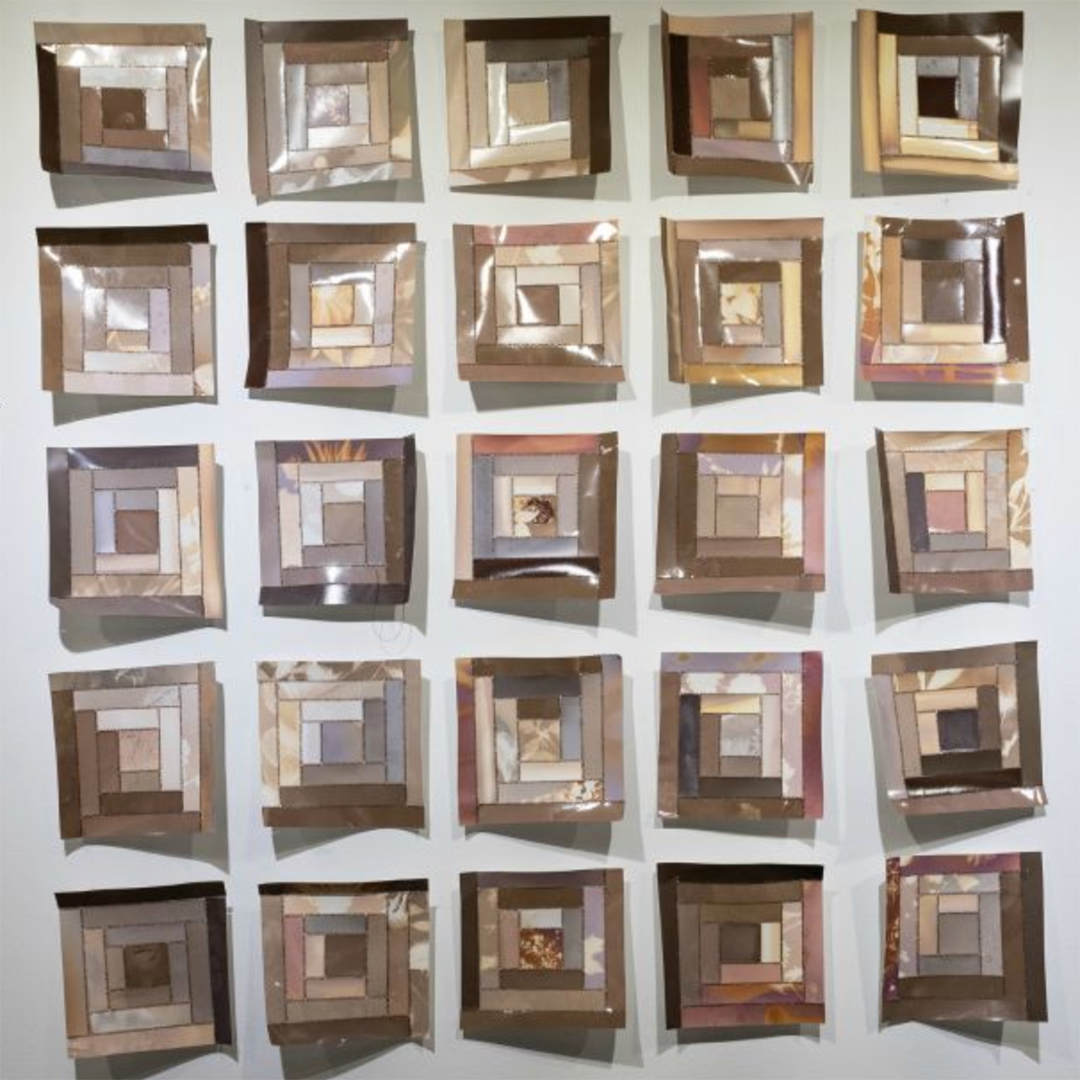
The Texas Photographic Society recently announced that Odessa College photography instructor Gwen Davies won the First Place Award for her entry, “Stitched Memories,” in its 2023 By Hand: Alternative Processes Competition.

The exhibit, consisting of 50 images, opened at the Center for Contemporary Arts in Abilene Dec. 7, 2023, and will run through Feb. 3, 2024.

“It is very special to win this award,” Davies said in a news release. “While I have won awards and recognition in the past, never first place. So, to win it for a project I have put so much time and work into is amazing.”

For the competition, which was open to artists of all levels internationally, “676 images were submitted by 121 artists, which meant the selection process was extremely competitive — around a 7 percent chance of being selected for exhibition,” said Juror Christine Z. Anderson, acclaimed artist, educator writer and editor.

When asked what was her inspiration to create the piece, the OC instructor said, “‘Stitched Memories’ is a contemplation on how our environment, physical, social, political, health, etc. impacts our understanding of our identity. This project grew out of a large project reflecting on how the COVID-19 pandemic was impacting us. Quilting is a memory keeping device, often created to celebrate or commemorate significant life events and these squares are a reflection of that. Each square is made from 1-inch strips cut from one-of-a-kind Lumen prints. They are then pieced and stitched together in the Log Cabin Quilt Pattern. Half of each square is fixed and half is unfixed, meaning it will continue to change over time.”

“Stitched Memories” is a piece in transition which has taken years to create and is not finished, according to the artist. The images used in the squares were created in 2020 and 2021, and she began stitching them in the spring or summer of 2022. Each square takes about 14 hours of labor from piecing to sewing. Currently she has roughly 35 squares completed, of which 25 will be on display at the exhibit in Abilene. She added that she is constantly making additional squares, and she curates a display of squares based on the requirements for each time it is displayed.

‘A Journey in Images: The Photography of Yun Thwaits’ Explores Life’s Timeless Beauty | Arts

‘A Journey in Images: The Photography of Yun Thwaits’ Explores Life’s Timeless Beauty | Arts

Entering the glass doors of the Harvard Ed Portal gallery on Nov. 29, one could hear traditional Chinese folk music permeating the atmosphere of the room.

Yun Thwaits, a graduate of the Harvard Extension School, opened her newest exhibit, “A Journey in Images: The Photography of Yun Thwaits,” showcasing her life’s journey through photography. Her exhibit included stunning natural landscapes, mystical wildlife, and snapshots of everyday ordinary street life.

Thwaits was raised in Inner Mongolia, China, and immigrated to the United States where she worked as a Commercial Loan Approval Officer for Bank of America. After working for 27 years, she retired in 2017 in pursuit of her lifelong dream and hobby, photography. After decades of corporate burnout, Thwaits’ interest in photography led her to take photography courses at Harvard Extension School. Thwaits’ passion for photography enabled her to travel across the world photographing wildlife and landscapes, traveling as far as Australia, South Africa, Europe, China, and Japan.

The gallery was structured with white walls that transformed the small gallery space into a portal full of Thwaits’ golden-framed photographs.

“When I was thinking about the design of the exhibition, I also wanted to take visitors on a journey through the exhibition itself,” said Brian Hone, the exhibit’s gallery curator.

Many of Thwaits’ photographs featured were still-lifes, including a photograph titled “Harvard Montage,” which depicted a translucent glass pane with two halves of different faces in front of what looks to be one of Harvard Yard’s gates. Similarly, “Weirdness at MIT,” a black-and-white photograph of the MIT Strata building, gazed up at the geometric forms on the side of the building. Thwaits’ still-life photography enticed viewers into her world of ambiguity, inducing one’s mind into a state of mystery and intrigue.

Furthermore, the gallery’s deliberate use of grayish-purple backgrounds behind gold-decorated frames, as well as the pairings of solid black frames with black-and-white photographs, mirrored the marriage between gallery background, frame, and photograph.

Thwait’s gallery was grouped thematically, with certain black-and-white photographs assigned in one area of the gallery, drawing distinction from her landscape photographs that highlighted natural viewsheds and animated wildlife in their native habitats. For instance, “Rolling a Fireball,” a snapshot perfectly aligned with an elephant’s tusk at the border of the glowing setting sun that appears to be “rolled” by the elephant, is featured at the very end of the gallery walk-through, compared to some of Thwaits’ landscapes positioned at the start that picture everything from mountains peaks beside sapphire-blue river deltas to smooth mounds of impeccably white snow.

“I like almost every category: landscape and wildlife and even street photography,” Thwaits said.

Thwaits’ photography lured viewers into fantastical realms that she captures from her snapshots of beauty found in the mundane to her photographs of the majestic.

“It takes a lot of patience. Many times you have to go to a site, you have to wait til the lighting is good,” said Alan Thwaits, her husband of 28 years.

Alan went on to comment on Thwaits’ extreme dedication to photography.

“For instance, some of the birds [she photographed], she had to wait for hours for the birds to come, or for them to take off right. There’s a lot of serendipity involved in taking good photography.”

Thwaits’ journey with photography has driven her journey with life, revealing her timeless experiences with nature and beautiful sights that have touched her heart.

As Mei Zhang, a good friend of Thwaits from the Boston Chinese Photographers Association, said: “this [exhibit] is just an accumulation of her knowledge and hard work.”

Ultimately, Thwaits’ exhibit is the embodiment of her journey with photography, as well as her journey through life so far — from her appreciation of unnoticed everyday sights in city life as a corporate loan officer to her love for grandiose and elegant forms in nature as a traveling photographer. Thwaits’ photography is a testament to her life and her journey through it, hence the exhibit’s fitting title: “A Journey in Images.”

Looking forward, Thwaits hopes to continue traveling the world alongside her husband with her camera in hand. In particular, Thwaits and her husband are looking forward to their trip to Japan in March.

“Through the lens, you can see the different world,” said Thwaits.

Photographer Documents Roanoke, Virginia’s Burgeoning DIY Punk Scene – West Virginia Public Broadcasting

Photographer Documents Roanoke, Virginia’s Burgeoning DIY Punk Scene – West Virginia Public Broadcasting

This story originally aired in the Dec. 10, 2023 episode of Inside Appalachia.

Roanoke photographer Chelse Warren is documenting Roanoke’s thriving hardcore scene under the name “Openhead Takes Photos.”

The Virginia city’s burgeoning DIY music scene is growing, based around Flying Panther, a venue that doubles as a skate shop. Its two-day festival called The Floor is Gone featured music, a local zine, an underground book distro, skateboarders and a local punk podcast. Warren was in the middle of it all, shooting photographs and dodging flying bodies in the mosh pit.

Inside Appalachia Host Mason Adams reached out to learn more.

An adult woman with dark hair and tattoos poses for a photo and looks up toward the sky, while holding her camera. A flower bush is seen behind her.
Photographer Chelse Warren, a.k.a. Openhead Takes Photos.

Photo by LaJoy Visuals 

The transcript below has been lightly edited for clarity.

Adams: Chelse Warren, thank you so much for coming on Inside Appalachia today.

Warren: Thank you for having me. I’m happy to be here. 

Adams: For people who’ve never been, can you set the scene and describe a Flying Panther show?

Warren: Flying Panther is a warehouse and skate shop in northwest Roanoke. The owners, who are fantastic, decided to turn the warehouse area into a mini-ramp and a venue. It’s all ages, they allow anyone to come. I’ve never felt so safe before at a venue. You go there, [and] everyone’s there for the right reasons. It’s a sense of camaraderie, and it’s always a fun time.

It’s mostly punk and hardcore music, but they’ve had country artists, they’ve had bluegrass artists, they have a goth night every month. So you can pretty much guarantee a full spectrum of music at some point.

During the month at Flying Panther, there are a ton of different people from all walks of life that come to shows. They’re there every show. You have your alternative and your punk kids, but you also have what I would describe as normal people that you wouldn’t expect to see at these shows. It’s nice to all inhabit the same space for music.

Adams: When I first went to that show, there’s people jumping around, the singers jumping around and you’re right there in the middle of it shooting photos. What’s that like?

Warren: I’ve seen a trashcan thrown, I’ve seen chairs, I’ve seen a couch pushed in the pit, rolling chairs, pillows thrown — you name it, I’ve seen it. That’s something that I always have to take into account, is I’m constantly aware of my surroundings. I’m looking at my peripherals.

That is hard, because I have to focus a manual lens and plan my routes. I’m very, very lucky to have the vast majority of those people always looking out for me, and I find comfort in that. I’ve had a lot of close calls. On day two of The Floor Is Gone. I got tackled. I saw it, and it was just so fast happening that I couldn’t move. I came like an inch away from banging my head on the floor. But my camera went up, it’s fine, I’m fine. And I just got up and laughed it off. Because that’s just part of hardcore and punk. It’s just something to expect.

Young people stand close together at a concert.
Dimension Six plays at Flying Panther.

Photo by Openhead Takes Photos

Adams: So what’s your strategy when you go into these shows, when you walk in and see the stage and crowd there? How do you approach that as a photographer? It seemed like you had a system.

Warren: Yes. I try my best to get there early, which doesn’t always work, because I’m usually late. I plan my route as best as I possibly can. Within reason, I try my best to do one side and then the other side. I’ve had to perfect taking a photo as I’m walking right across the stage. I’ve gotten some of my best photos just from doing that.

I mentioned the focusing thing — like, okay, I want to go there. Next I need to focus my lens to that point. So when I get there, it’s in focus, and I can get the photos. But because it is like punk and hardcore, you never know when someone’s going to jump or do something else bizarre that you want to document. I try really, really hard to always get jumps, because those are what the people in the band want. I try to listen to the music and try to map out, do I think they’re going to jump? I may be right once out of every five times that they might jump, but I still try my best to get it no matter what.

A man jumps in the air at a concert.
Gaol, playing at Flying Panther.

Photo by Openhead Takes Photos

Adams: How did you get into this culture?

Warren: My friend in probably sixth grade showed me a band on Napster, if that tells you my age. Which spiraled to another band, and then another band, and just kind of snowballed after that. I would say I was around like 15 when I started going to DIY shows that really helped broaden my spectrum and idea of heavy music. And it all just branched into like hardcore punk.

I suppose what really fed the fire and started it all in the early 2000s was my friends playing music. Watching them play music and doing what they love inspired me, who already loved taking photos, to start documenting shows. DIY is so, so important, and it’s important to document it so that it lasts longer than us, and people can look back and see a history on how things were.

Adams: What keeps you in this? You talked about getting tackled at a show, and that’s a deal breaker for a lot of people. What keeps you coming back? What keeps you so engaged? 

Warren: It’s just exciting. It’s exhilarating. It pushes me and my art to new levels every time, because no situation, even if it’s at the same venue, is the same. Even if I’ve shot the same band five times. It’s been different every single time, and I just love the music, and I love our scene here, and it’s important to me to make sure that it’s documented. 

A close up of the bottom of a man's sneaker as he performs on stage.
Roanoke hardcore band Collective Action.

Photo by Openhead Takes Photos

Adams: You’ve been doing this for awhile and you’ve shot all these bands. What have you learned from all this? 

Warren: It’s definitely pushed me past my limits of what I thought was possible. Several years ago, my goal was, I want to shoot bigger bands, bigger venues. I just took pictures of [bassist] Victor Wooten at the Jefferson Center this past weekend. That was amazing and incredible that I got the opportunity to do that, but it’s nothing like DIY music. I really think DIY seems like a critical part to communities. It offers a safe space for people who feel like they don’t fit in elsewhere, or feel like they have no friends like them, a space where they can feel loved, welcomed and accepted, and witness music that they love. It’s really important.

How Canon Supports a New Generation of Photographers

How Canon Supports a New Generation of Photographers

Eva Carias Kentucky Governor's School for the Arts

Many camera companies do charitable outreach work, including sponsoring photo contests, offering scholarships, and doing grassroots projects. Canon does a bit of everything, and the company’s work with the Kentucky Governor’s School for the Arts is a significant way for the camera company to support the next generation of photographers and videographers.

The Kentucky Governor’s School for the Arts provides hands-on opportunities for Kentucky’s talented high school students to hone their creative talents and add new skills to their repertoire. Students include dancers, actors, instrumental and vocal musicians, writers, future architects, and most importantly to Canon, visual artists.

PetaPixel spoke with one of the campers from the most recent GSA summer program for visual arts, Eva Carias from Louisville.

Eva Carias Kentucky Governor's School for the Arts
Photo by Eva Carias

Carias was a natural candidate for the program, having been interested in photography since childhood.

“I have always been in love with photography since I was little. My mom would let me claim her old Canon cameras as mine, as I would take pictures of everything I saw. I used to just see it as a hobby and something I couldn’t do as I would be teased at school for always carrying a camera around,” Carias tells PetaPixel. “It wasn’t until I took a Photo 1 class my sophomore year of high school that I fell back in love with the art and realized that I could follow my passion and potentially do it for a living.”

The GSA program is an intensive three-week summer program, and each day is full of valuable learning opportunities for budding artists. As part of the film and photography program, Carias says her daily morning studio work was focused on photography, and her afternoon classes were centered on videography.

Eva Carias Kentucky Governor's School for the Arts
Photo by Eva Carias

On some days, the students would enjoy a performance following dinner. The performances would be from one of the other art programs, so it could be a musical performance or a dance workshop. Other evenings include post-dinner studio work, sometimes until 11 PM. Carias says her night studio time allowed her to finish up on her homework, whether it was editing photos or working on her documentary assignment.

“GSA is truly a bonding experience as you spend all day every day with students who are equally as passionate about art as you. The bonds that you create during these three weeks last a lifetime,” she explains, adding that she still talks daily to the friends she made at GSA and plans to spend time with them over the holidays.

Eva Carias Kentucky Governor's School for the Arts
Photo by Eva Carias

The GSA is currently accepting applicants for the 2024 program, and Carias cannot recommend it enough.

Driven to succeed and improve, Carias spends a lot of time taking photos of school sports. “I started taking pictures of every sports team at my high school, learning and growing with each sport I photographed. I started to work very closely with the athletic department and was able to take photos at more than five state championship games. I also was then able to help not only my school’s athletic department, but I was able to help my school’s marketing department as I would go to events and help take promotional pictures to use for prospective students and parents. I was also able to work with another local high school and photograph the biggest football rivalry in the state two years in a row, as well as have the opportunity to take photos and become the social media manager for the boys’ wrestling team.”

Eva Carias Kentucky Governor's School for the Arts
Photo by Eva Carias

Carias says that her experience playing sports has helped her with her photography. “As an athlete myself, I was able to use my knowledge of how each sport worked and use it to decide where I wanted to stand, what angle, and what shutter speed I needed in order to achieve the perfect shot.”

As a junior, the year before attending GSA, Carias branched out into portrait photography. Her friends helped by being willing models, and she also shot senior pictures for her friends who were about to graduate.

“I love how taking senior photos is a little more relaxed and at a slower pace than sports. I enjoy being able to have conversations with my clients and be able to capture genuine emotions. Sports and senior portraits are my favorite as I am able to capture people’s true emotions. I love being able to notice the small details like the ring a senior is wearing or the reaction of a fan in the stands after their team scored a touchdown or just won the game,” Carias says.

Eva Carias Kentucky Governor's School for the Arts
Photo by Eva Carias
Eva Carias Kentucky Governor's School for the Arts
Photo by Eva Carias
Eva Carias Kentucky Governor's School for the Arts
Photo by Eva Carias
Eva Carias Kentucky Governor's School for the Arts
Photo by Eva Carias
Eva Carias Kentucky Governor's School for the Arts
Photo by Eva Carias

“I love being able to showcase how I work and function just by publishing my work. I love how I am able to see the world so differently just by zooming in or out of your camera or even just by changing the angle and showcasing that to others.”

While she has done considerable work to learn and improve independently, Carias says the GSA program was highly beneficial. She was able to continue to grow as a photographer and learn much more about filmmaking.

“I was able to learn about the rule of thirds, RAW images, masks, and different editing styles, backing up photos to an external hard drive, the importance of clearing your SD card after different shoots, the importance of background knowledge, how to edit, how to light an interview properly, and what a Kelvin is and why is it used during filmmaking,” she explains. “The most important lesson I learned was about the importance of telling a story in both photography and throughout films.”

Using her improved skills, Carias says that she can show more details from a sporting event and tell a more cohesive, compelling story through her images. “I am able to notice my surroundings and realize that the small details will help me tell a story and show people why they should care and why my photo or film is important.”

Eva Carias Kentucky Governor's School for the Arts
Photo by Eva Carias
Eva Carias Kentucky Governor's School for the Arts
Photo by Eva Carias

Currently a senior, Carias is preparing for the next step in her educational journey. She plans to attend college and major in sports marketing and communications, and intends to volunteer for her school’s athletic department, “specifically in the media team.”

“I want to be able to take photos for their sports teams as well as help with any promotional shoots for the college. I plan to take multiple internships similar to the ones that I already have had,” the photographer says. “I’ve job shadowed and had an internship with a photographer from the University of Louisville as well as my high school’s sports photographer. I hope that I will be able to have an internship with an NFL, NBA, or any other professional sports photographer. I also would like to venture out and have an internship or job shadow with a concert photographer and get more involved in the entertainment industry. Ultimately, I want to be able to use my skills and love for photography and videography and use them to promote a team, person, product, or company.”

Eva Carias is well on her way to achieving her artistic and professional dreams thanks largely to her experience at the Kentucky Governor’s School for the Arts. Carias is active on Instagram and she also has a general portfolio and a collection of work made during her GSA program.

She was far from the only student in the program, and many of them have positive things to say about their time in the program.

“Thank you so much for generously allowing us to use your cameras and lenses. Getting to use professional equipment allowed me to explore my ideas and familiarize myself with essential skills in film and photography. It was amazing to experiment with such high-quality tools and my growth at GSA wouldn’t have been the same without them,” one student told Canon.

Eva Carias Kentucky Governor's School for the Arts
Photo by Eva Carias
Eva Carias Kentucky Governor's School for the Arts
Photo by Eva Carias

Another added, “Thank you so much for all you have donated for us to use here at Kentucky Governor’s School for the Arts! It truly was a privilege to get to use these cameras and lenses. It gave us an opportunity to capture great moments around Kentucky — a county fair, a walk downtown, the tracks at Keeneland, and more. Having access to these cameras, and learning so much about them in just three weeks, gave each of us great experience that we can use in our careers in the future. I had an amazing time at GSA and it wouldn’t have been the same without the help of the equipment that Canon provided to us. Thanks again!”

A common thread throughout many of the quotes is that most campers do not have regular access to professional-grade equipment, which is unsurprising given that cameras are very expensive and most high school students are not flush with cash. The opportunities to not only learn from professionals in the industry but also gain experience working with high-end gear is invaluable.

Eva Carias Kentucky Governor's School for the Arts
Photo by Eva Carias

“Thanks for all the gear you sent to GSA. At home, I don’t have any professional camera gear accessible for me so it was difficult to get a grasp of more modern cameras. The gear you sent helped me understand cameras so much better, finally being able to grasp the differences between lenses and aperture. Again, thank you so much for sending this gear. It helped to further my knowledge on this art form that I love so much,” adds another student.

Each camper’s portfolio is available on the Kentucky Governor’s School for the Arts website: Session One and Session Two.


Image credits: All images courtesy of Eva Carias

Staying Warm for Landscape Photography in the Winter

Staying Warm for Landscape Photography in the Winter

Cold weather landscape photography is one of my favorite times to be out photographing. Familiar landscapes become unfamiliar once again. But you must be prepared and comfortable while out in the elements. Here is my approach to staying warm in the winter.

I enjoy photographing landscape scenes in the cold weather of winter. You have a chance of seeing familiar scenes covered in snow or ice. Waterfalls, lakes, and ponds freeze, affording new and unique composition opportunities. You can show scenes most people don’t get to see with your wintertime images.

And my favorite thing about landscape photography in the winter? Fewer people! I can visit areas often busy with tourists in the spring, summer, and fall and have places nearly to myself!

But you have to be prepared for the winter weather. If you are cold and miserable, your work will suffer. But with some preparation, it isn’t hard to prepare yourself properly for cold weather and enjoy the wintertime landscape photography experience.

Importance of Layers

Keeping yourself comfortable is the most important. If you aren’t comfortable photographing in the cold, the experience will not be any fun. Everyone tolerates the cold differently, but the layering approach works in some variation for everyone. 

Another significant advantage of using layers as a photographer is due to the mix of activities in one trip. During the hiking portion of a trip, we often generate more heat due to the activity, and then once we reach our destination, we stand for long periods of time with less activity, making us cold. 

With layers, you can quickly shed an outer shell while hiking to avoid becoming overheated and then once you stop, add the shell back on to stay warm. The ability to add and remove layers as the temperature or your activity level change contribute greatly to comfort.

There are three layers to utilize when out in the cold.

Base Layer

The base layer is the layer closest to your skin, typically long underwear of some sort. This is an integral part of the layering system, as it helps keep moisture away from your skin, making you feel warmer. 

Something like this Duofold Thermal Shirt is a good example of a possible base layer option. I use both upper and lower body base layers as soon as the temperature drops on my outings.

Middle Layer

The middle layer is an insulating layer that helps keep the warm air near your body and the cold out. There are many options for your middle layers, from fleece vests, to fleece jackets, to down vests, and jackets. There are even legging options in various materials as well. 

These middle layers are where you can tailor your layering system to your own comfort in the cold. Some people might want a fleece vest, a fleece jacket, and a down puffer jacket to stay warm. Others might shed one of those layers to stay a little cooler. 

Outer Layer

The last layer in the system is the outer layer. Those middle layers, while excelling at insulation, aren’t always the greatest at wind protection or keeping you dry from cold rain or snow. 

An outer shell layer will have varying levels of waterproofing or water-resistance while also protecting from the wind. When these shells are coupled with the other two layers, they provide a very comprehensive and flexible system to keep you warm and dry while you practice landscape photography in inclement weather.

A Hat: Keep the Head Warm

Don’t underestimate the importance of a warm hat for your head. You can lose a lot of heat through an uncovered head, which causes your body to be inefficient in trying to keep the rest of it warm. 

A warm hat similar to this Columbia beanie is one of the first clothing items I don for cold-weather outings. If I can keep my head warm, I can stay much more comfortable when out photographing in the winter. Don’t forget the hat!

Gloves

Gloves are another essential item of clothing, though somewhat tricky for photographers. We need to keep our hands warm, but we also need to maintain the dexterity of our fingers so we can change camera settings, use the shutter button, and adjust our zoom lenses.

Different photographers will have different opinions, and it can take some experimentation to see what is most comfortable for your use. After lots of time in the field, I have two sets of gloves I use most often.

In 30 °F weather and above, I use a set of fingerless gloves. They keep the core of my hand warm but keep my fingers free to use the camera efficiently. In weather under 30 °F, I use mittens with flip tops that are insulated and have a shell for wind protection. Those have worked well for me down to sub-zero temperatures and high winds.

Some photographers prefer a two glove approach with a thinner liner and a heavier outer shell to slip on over the liner in really cold conditions. 

Protect the Feet

Your feet can be subject to a lot of abuse in cold weather landscape photography. From trudging through snow to standing on cold rocks or frozen lakes, it is important to be mindful of your feet. 

I wear hiking boots for nearly all of my hiking, but wearing a sturdier and warmer boot is important. The socks you wear are important as well, they need to have insulation properties and wick moisture away from your skin.

If you know you are going to encounter deeper snow, a set of gaiters to keep the snow from getting into your boot from the top is essential. I often toss a pair into my backpack if uncertain of the conditions I might face.

While not so much related to keeping warm, be mindful of the conditions. If you know you will be on icy trails or crossing frozen lakes, invest in a set of microspikes for your boots. These traction control devices easily fit over normal boots and make you much more sure-footed as you are hiking or standing on frozen lakes taking photos.

Enjoy the Winter

Landscape photography in the winter can be a gratifying experience. Winter photography is a great time, from enjoying locations with fewer people to capturing scenes many will never see. Many shy away from the experience because of the cold, but with preparation and a clothing plan, you can stay comfortable on the hike and while photographing in some fantastic locations.

How about you? Do you enjoy wintertime landscape photography? Do you have a favorite tip to stay comfortable in those conditions? 
 

Leica Q3 Review From a Canon Photographer: Hit and Miss

Leica Q3 Review From a Canon Photographer: Hit and Miss

Leica Q3

Like many photographers, I’ve spent years hunting the impossible combination: a high-quality camera that’s also compact. Must haves: a great sensor and a wide aperture wide angle lens. Today, I’ll walk you through the meandering journey that eventually led me to the Leica Q3.

Editor’s note: The photos below were all captured with the camera in the section they are in. The photos from the first Leica Q3 section onward were all captured on the Leica Q3.

But First, the Fuji X-Pro 1

My first contender was the Fuji X-Pro 1 in 2015. I traveled to France and Italy with it and enjoyed the quality of the files the X-Trans sensor was giving me. The camera was much smaller than my Canon 7D and the lenses available were pretty great, giving the photos a dream-like quality. For anything going slow, I was able to get decent images, with plenty to recover when processing the RAW files.

Photo by Emmanuel Nataf

Photo by Emmanuel Nataf

The main downside of the Fuji was its autofocus: the camera was too slow for my street photography, so I’d keep reverting to my Canon 7D.

On to the Canon 5D Mark IV

What eventually made me part ways with it completely was the release of the 5D Mark IV and the upgraded 35mm f/1.4 II lens in 2016. That new combo nearly tripled my hit rate against the 7D. Suddenly everything was in focus and my gear wasn’t a limiting factor anymore. I traveled the world with the 5D, and I took photographs I’m still very proud of. But there was nothing compact about that camera.

Photo by Emmanuel Nataf

Photo by Emmanuel Nataf

Photo by Emmanuel Nataf

Next, the Canon R5

Mid-2020 I upgraded to the Canon R5, again increasing my hit rate to a point where 90% of my shots would be in focus with minimal effort. The reliable autofocus and impeccable image quality made me drop the idea of a smaller body camera temporarily. I shot fashion shows, concerts, and adventured to many places, such as the Lofoten Islands, China, and Iceland.

Photo by Emmanuel Nataf

Photo by Emmanuel Nataf

Photo by Emmanuel Nataf

The R5 became the camera I could trust in all conditions. Very little thinking was required to get the shot right. It gave me more freedom to create than any other camera before.

Finally, the Leica Q3

Fast forward to 2023 and when I got into ultra-distance gravel cycling, cycling over 10,000 kilometers during the year through various regions of Spain and Portugal. I competed in a few races but quickly realized sleepless nights on a bike — only to come back with iPhone photos — just wasn’t my thing… It felt wrong to be traveling through such incredible places without a camera.

So I focused my search again on a compact body with a decent lens. I quickly stumbled upon the Leica Q3. Ecstatic reviews convinced me to try one in store. When I did, the truth is, I wasn’t overly impressed. But I ordered one anyway — I wanted a camera for my future adventures and no one else had released any that could come close for quality and weight (743 grams).

Three months later, my local Leica dealer called to let me know the camera had arrived. Eager to put it to the test, I took time off work straight away, and I went out to shoot the streets of East London.

The Q3 for Street Photography

Adapting to the 28mm wasn’t easy. First, I compose my images at 35mm, not 28mm. While I’ve used most focal lengths, my vision of the world happens at 35mm, regardless of what my eyes actually see. I find it’s harder to isolate a subject at 28mm — going wider is the easy choice, where everything fits in.

Photo by Emmanuel Nataf

The ergonomics of the camera weren’t too hard to adjust to; the Q3 has simple menus and dials. However, I really missed having an additional aperture dial on the body. While stylish, changing aperture on the lens isn’t too practical, above all as it changes on its own when taken out of a bag. I also often ended up half way between Macro and regular shooting modes, which allows you to do nothing. Those are small things, but ones you shouldn’t have to think about.

My setup is simple: single shots (sometimes more), highlight-weighted exposure, field focus. I adjust aperture and exposure as needed and usually leave ISO in auto. My main mistake while setting up the Q3 was to go for mechanical shutter only to avoid dealing with rolling shutter. At only 1/2000 second, the Q3 is too slow to shoot at f/1.7 in bright light.

Photo by Emmanuel Nataf

After a couple of hours out, I quickly realized f/1.7 wasn’t enough for my street work; I rely heavily on wide apertures to separate the key subject from its environment, and I’ve struggled to do so on the Q3. A 28mm focal length brings a lot into the frame, significantly more than the 35mm I’m used to, and creating a “3D effect” in my photos was a lot harder. My experience with the R5 and 35mm f/1.4 combo is that I can separate subjects from their environment by pushing the aperture to f/1.4. With the Q3, I’m forced to rely on lighting a lot more to create the style I want.

Going back to my “hit rate,” I simply can’t get anywhere near my R5. Part of it is due to the ergonomics of the Q3: a typical Leica without joystick to move the focus and poorly placed dials (the worst one being for exposure, placed on the outer part of the body and hard to reach with your thumb). With the temperatures dropping in the past few weeks, I used the Q3 with gloves and missed countless street shots by pushing the Play button instead of the arrows, definitely killing my shots. You may wonder why I’m not using subject tracking: because switching between subjects rapidly with the Q3’s buttons is completely unreliable.

Photo by Emmanuel Nataf

The second reason for the low hit rate is the autofocus: average in poor lighting conditions and terrible in motion. With the Q3, I’ve had to stop shooting while walking. I have to stop, compose my image and shoot when the right subject comes into the frame — a much less spontaneous experience than what I’m used to.

Lastly, the camera is painfully slow to wake up. It should be on within a few milliseconds, but it takes the Q3 a second or two to start… far too long when trying to capture an instant.

Getting a disappointing street photography experience with a camera that many would describe as designed just for that is the paradox I found myself in. The photos above are more “successful” examples, but they would’ve been so much easier to get with my R5. In fact, it’s made me eager for Canon to finally release a 35mm f1.2, which should enable me to do much more.

The Q3 for Landscape Photography

If you remember, I didn’t really get the Q3 for street. I was curious about the idea, and was left unimpressed. But I really got the Q3 for bikepacking. And during my gravel rides in the South of Spain, in the region of Guadix, this November, the Q3 proved to be a great companion.

Photo by Emmanuel Nataf

Photo by Emmanuel Nataf

Photo by Emmanuel Nataf

Photo by Emmanuel Nataf

Photo by Emmanuel Nataf

I’ve been very happy with the highlight-metering mode on the Q3, which has allowed me to always properly expose my landscapes. In that mode, I’d often have to retrieve shadows, which was easy with the amazing dynamics range the Q3’s sensor offers.

The Q3 for Intentional and Attentive Photography

Generally, the Leica Q3 is a great camera for more intentional and attentive photography. Anything slow-paced with time to breathe is within the Q3’s capabilities.

Photo by Emmanuel Nataf

Photo by Emmanuel Nataf

Photo by Emmanuel Nataf

Leica Q3: Worth It?

Now, does it make sense to spend $6,000 on the Leica Q3? I think it does for now… until someone takes the opportunity and makes something like the Q3 but with a far better lens, ergonomics and software. It’s more than achievable for every camera maker today, including Leica themselves.

My understanding is that Leica doesn’t want to cannibalize its M sales. I see this as a mistake. The Q series can be Leica’s future, allowing more people like me to enjoy a great 60mp sensor in a beautiful body, but with the lens of their choice and great autofocus. I’m sure there’s significant market share to own.

Something that really puzzled me was the image quality coming from the large 60mp files. They aren’t any better than what I get on my R5, and I believe that’s only because of the fairly average 28mm f1.7, which has a lot of chromatic aberrations and uninteresting bokeh. It’s a shame to pair such an amazing sensor with such a lens. When comparing files, I’m happier with those of the R5, especially when processed with Canon’s DPP software. They seem more pure and sharper where it needs to be. I thought DPP was slow, but processing the Q3’s RAW files in Camera Raw or Lightroom has been a more time-consuming process.

Photo by Emmanuel Nataf

I didn’t buy the Q3 for the prestige or the appearances, but for its features. I enjoy using a nice object to take photographs but the brand name doesn’t matter one bit to me. I think it’s high time Leica realized there’s a market of people seeking the highest performance and image quality possible in a small body, and that they are ideally positioned to capture it. Adding a joystick, investing in software, and allowing for other lenses (or a modern 28mm with f1.4 aperture) would make the Leica Q series the ultimate compact cameras.

As an ultra-distance cyclist, the Q3 fits in my frame bag, and I will be using it for my bikepacking adventures. It’ll also be with me for day-to-day events where bringing a larger camera would be cumbersome. However, to produce my best work, including at similar focal lengths, I’ll definitely continue using my R5.


About the author: Emmanuel Nataf is a photographer who’s traveled through Europe, South America and South East Asia in search of all things strange and beautiful. He’s also the co-founder of Reedsy, a marketplace where authors can connect with the world’s best freelance editors, designers, and marketers.

You can see more of his photography on his website or by following him on Instagram.

Light Codes at 1053 Gallery

FLEISCHMANNS — 1053 Gallery is pleased to present Light Codes, a group photography exhibition organized by Lindsay Comstock. On view December 9, 2023 through February 25, 2024, with a public reception December 9, 2024, from 4 to 7pm, the exhibition brings together works by 12 artists who use photographic processes and the language of light to transport viewers into new realms.

Photography, derived from the words photo and graphein literally means to write with light. Roland Barthes, in his seminal text, Camera Lucida, admitted his fascination with photography had something to do with his fascination with death, the subject of the photograph representing that which no longer exists. All of the works in the exhibition play with this notion, but rather than documenting a moment, they serve to bridge the gap between the form and formlessness and reality and fantasy.

Jessica Eaton’s Pictures for Women are an homage to female artists, in this case, Tomma Abts and Hilma af Klint, the motion-blur of color creating a dance of form; Don Freeman’s Communicating Vessels, Pompeii and Bamboo use layered photographic processes to suggest realms of sleep and wakefulness, reality and delusion, reason and madness and the connection between man and nature; Claire Gilliam’s Blue Woman series contemplates mortality and the fragility of the human form; Emily Johnston’s work examines the process of photography through the medium of drawing to challenge the notion of the decisive moment; Parker Manis’ work uses photo papers and emulsion to represent the sanguine nature of war and the layered reflection of the viewer within the piece; Brendan Pattengale’s large-scale prints give landscape photography a new dimension as he watches the way light shifts over time and recreates the chromatic effect; Kate Quarfordt’s Sun Glifs are symbols for a new light language as seen on city buildings and sidewalks; Kathleen Sweeney’s Solar Power series depicts the prismatic refractions and energy lines working through quotidian objects; Dan Tapia’s Orb Girl originated from a dream that later manifested in his reality; Caroll Taveras’ photo-based collages bring her visions and dreams into fragmented form; and a special installation by Monte Wilson and Lindsay Comstock is a mind-bending altar to the living photograph.

At a point when photography has long been a ubiquitous medium, serving as an often-instantaneous reminder of existence, the exhibition looks to artists who are relating to photographic processes and tools for capturing light that ask new questions: How might the medium be looked at as a language of its own? What happens when photography and photo materials go beyond the moment to further bend time and reality? How might the language of captured light provide a portal into unseen dimensions of healing during this time of global upheaval? 

The gallery will host sound baths and artist talks to accompany the exhibition.


Remember to Subscribe!

Subscription Options