Photography

This project traces the eccentricity and Welsh pride of Dagmar Bennett’s stylish uncle

This project traces the eccentricity and Welsh pride of Dagmar Bennett’s stylish uncle

Growing up, Dagmar Bennett was in perpetual awe of her uncle Keith’s flamboyant and eccentric style. Standing out from the crowd, in the small village in Wales that she and her uncle are from, she says, “the contrast between his style and attitude, and the town have always been refreshing”. Longing to create a body of work that captures this, alongside his experience as a person with a disability, the creative director and filmmaker began working on Village Style – a documentary for BBC Cymru Wales as a part of its New Voices From Wales series. And while Village Style showcases his individual flair, Dagmar wanted us to see that little bit more, in the form of a behind-the-scenes series titled Uncle Keith.

When the idea came to mind, Dagmar first contacted her dear friend and photographer, Stefy Pocket. “I just knew she would understand the subject matter,” Dagmar says. Stefy often documents subcultures and mass events around the world, from ceremonies in Mexico to the dapper and joyful characters of Jamaica’s Spanish Town. She jumped at the chance to zone in on one character. “In a world obsessed with conventional beauty and youth, there’s no better time to share the richness of life that comes with age,” says Stefy. “Uncle Keith is a celebration of uniqueness that challenges stereotypes in not just age but ability.” Dagmar holds a similar belief. While working with her uncle on styling for the project, she often wondered what Keith’s life as a fashion creative would have been without the barriers placed on people with disabilities: “That’s why we started this – to embrace and champion the creativity of differently abled individuals; it’s about shifting the narrative from limitations to possibilities.”

Art for Change: Kenyssa Evans, The Deliberate Photographer

Art for Change: Kenyssa Evans, The Deliberate Photographer

Kenyssa Evans is not a big fan of social media, which might be surprising considering that she is, after all, a photographer in her 20s. Evans’s dedication to staying enigmatic reflects in her life and her artwork. Similar to the paintings made by Jennifer Packer or to the videos created by Sonda Perry, the images Evans produces capture Black people — all while obscuring the identities of those within the images. Why? Because anonymity can be a type of freedom.

Evans says that her creative process is largely intuitive. As for her aesthetic choices: “Most of the time a lot of my images are just me winging it.” Once she completes a photo, she devotes heavy contemplation towards interpreting the work. Evans explains, “I feel like with every project, I have to dive into it, take a break and come back to it.”

Valuing feeling over judgment allows Evans to slow down and create meaningful images — a tactic that is especially important because her work often features people or environments that are near to her heart. Exhibitions in Philadelphia, Seattle, Chicago and Washington, D.C. have featured Evan’s artwork.

As part of a partnership with Forman Arts Initiative, the Citizen caught up with Kenyssa Evans. The interview has been condensed and edited for clarity.

What brought you to Philadelphia?

I’m from the 202, so I’m from Washington, D.C. I went to Duke Ellington School of the Arts. It’s the first performing arts school in D.C. To get in, you’ve got to go through a whole interview process and talk about why you love art. At that time I was not, honestly, really into art. The reason I applied is otherwise I would have had to go to a Catholic school. I didn’t really understand what art was really like. Then, once I got in, the teachers there were just awesome. They introduced me to a whole new world.

Kenyssa Evans, 2023-ongoing, photographic studies.

Moore College of Art & Design visited my school. I don’t know, I feel like the all-woman college thing kind of lured me in — and also just all the majors that they had there, especially curatorial studies. I came to Philly for school at Moore, and I just decided to stay here. I fell in love with the city.

In your experience, what is the skill leap between an amateur taking photos versus the images a photographer in the professional world makes?

There could be a difference, but I feel like sometimes I don’t see a difference. It’s really a question of, “What is the story you’re telling? What are you’re trying to portray in these images?” A lot of artists now take snapshots on their phones, don’t really edit anything, and they have an intentional reason for doing that. It’s the intention behind it that’s always stuck with me. That’s what I feel like with my personal practice. If I don’t have an intention, then I just have no interest in it.

With me personally, I’ve been straying away from my camera. I’ve been really just using — especially with the current project I’ve been working on — I’ve been using my cellphone and taking these images.

Tell me about your current photography project.

It really started over the summer. I went to go visit my grandma and I was just in her house and she had one of [engraver/painter] Ernest Watson’s paintings. I just love how the bodies are just so distorted and how he captured those scenes [of Black life]. I just like seeing it in Black households. Summertime, being surrounded by all these cookouts and these gatherings, I was observing people and how their bodies are reacting to these environments. That’s how I started getting interested in that sonic architecture and studying different sounds from different places.

In D.C., you have Go-Go music. It originated from jazz, blues and funk. Chuck Brown was the guy that founded it. In Chicago you have house music. I remember going to church as a kid and seeing these spaces, especially for Black and brown people, and how they gather in these spaces and felt like they could be themselves and be free. I’m trying to capture those spaces in my photography, and trying to study the music more.

I’m honestly just going for it. My nights out when doing this is like me being one with everyone in that space. I’m not telling anyone, “I’m here doing my project.” I’m just like, All right, I’m going to have a drink, dance, get in the crowd. If I see something, I take a picture. I don’t even look at it. I wait until the next day. It’s a project that I’m still figuring out.

I really like to talk about space and how it affects people. That’s where my work has been honing in on. Right now I’m really diving into sonic architecture. [Editor’s note: Sonic architecture works to reconstruct architectural spaces in sound, or, vice versa, to create listening experiences as sculpture or architecture.] It all goes back to space and how one’s emotion, body and everything responds to one’s space.

Kenyssa Evans, 2023-ongoing, photographic studies.

Do you feel pressure to produce work really quickly? I feel like generally you move through a project very slowly..

Yeah, so that’s me all the way. I think that’s why I got off Instagram for a bit because being on Instagram, social media, whatever, and just seeing people post at work and people asking me constantly, “Oh, what are you working on? What are you working on? You haven’t posted anything. Da da da da da.” I just felt, like, this pressure. But I don’t really care what people are thinking, or if I’m being lazy about something. I just feel like I always have to take my time. Again, I’m not a person just to release, release, release. Like, “Here’s an image. You guys like it, share it.”

What does success as an artist look like to you?

Having the freedom where I have full control of my work, what I want to do, how I want to do it, and when I want to do it. I think that comes into my practice, my success as an artist. It’s just about knowing who you are as an individual and making the work for yourself. That gets blurred in the world we live in now: We’re constantly making and trying to keep up our appearance and how many followers we have.

I just want to wake up and feel okay to not work on something and not feel like, Okay, I have to work, I have to go to the studio. I have to go open my laptop and at least work on something or at least apply to exhibitions or something. I’m still trying to figure that out for myself because I do have my moments, honestly, where I’m just like, I’m not doing anything with my practice. I should be applying to this. I should be applying to that. I should be taking these opportunities.

If something’s not really gravitating me towards that opportunity, then I just kind of sit with it and I’m like I don’t feel like it’s probably right for me, or I’m probably not ready for that yet. As an artist, I just want to reach that confidence level of just being like, Okay, something is not right for me and I will be okay with it. It doesn’t feel right. I don’t want to do it. I’m okay with it.

That’s why I enjoy most of my projects a lot, because I’m just on my own time compared to my friends who are constantly working with galleries. They just always seemed drained and are trying to keep up with that. I’m not built for that to just hurry up and produce something for someone to put on their wall. I think maybe it’s just my personality type. I like being in the shadows.


Logan Cryer is a curator based in Philadelphia with a penchant for local art histories. They currently serve as the Co-Curator of Icebox Project Space and they like to rewatch documentaries.


This story is part of a partnership between The Philadelphia Citizen and Forman Arts Initiative to highlight creatives in every neighborhood in Philadelphia. It will run on both The Citizen and FAI’s websites.

MORE FROM OUR ART FOR CHANGE SERIES

Kenyssa Evans, courtesy of the artist.

The party world of Nicolò Rinaldi

The party world of Nicolò Rinaldi

We attended the unveiling of Lavazza’s new calendar, a project that takes us into an uncharted Africa, brimming with energy, experimentation, and a forward-looking spirit influenced by its culture and the diverse communities that inhabit it. Three photographers collaborated on this year’s calendar: Thandiwe Muriu from Kenya, Aart Verrips from South Africa, and the latest addition, Daniel Obasi, whom we had the privilege to interview. The theme of Africa as the birthplace of coffee remains strong, linked to the Giuseppe and Pericle Lavazza Onlus Foundation, founded in 2004 and now involved in thirty-three projects across three continents. With Nigerian roots and a holistic approach to photography, Daniel Obasi is a creative talent who seamlessly blends fashion styling, cinema, photography, and art direction to create captivating and distinctly African narratives. Here’s our interview with him.

How did you first get into photography?
I started photography because of my background in design, and for a while, I also dabbled in fashion styling. That’s when I got into photography. Additionally, I had an eye for certain subjects, and the practice of photography attracted me in a unique way. Working with other people was often challenging for me, so I decided to learn how to take photos on my own to share my exact vision with the world. For me, it’s more about a concept and an idea, which is at the core of my holistic approach to creativity.

How do you manage to blend art direction, fashion photography, and your work as a director?
By approaching each practice in a holistic way and considering them as one, it’s easier to navigate. I don’t think of them as separate components but rather focus on the end goal.

How do you apply Afrocentrism to fashion photography? Can it be seen as the primary vehicle for promoting messages of inclusivity and cultural appreciation?
Absolutely. The concept of Afrocentrism and photography go hand in hand, and in this context, we can also recognize fashion as an art form. Moreover, you can see how it’s all connected to a certain cultural background. There’s also another aspect that brings a bit of your history into it. Of course, it’s not what’s needed in every shot, but in some cases, it gives you a good idea of the process behind the photos I take.

How did you accept the commission for Lavazza’s calendar project?
On an ordinary day, I received an email from Lavazza’s team. I waited for a week and then decided to propose the concept of working together, of unity. Everything started from the photos that depicted the young people together on the beach. I’m a big fan of simplicity, and sometimes the most astonishing images come from the simplest ideas. These images, which centralize the theme, are, in my opinion, the most powerful because beneath all those layers, the simple idea of working as one shines through.

What are your primary sources of inspiration in photography, cinema, and fashion?
My inspiration always changes depending on where I am. Currently, I’m more interested in architecture and composition, so I’m trying to improve the way I use space. I’m studying Bauhaus, Gothic architecture, and the movement. Additionally, choreography and contemporary dance – actually, all forms of dance – are a significant source of inspiration for me. Love, the idea of being loved, losing love, and being in love also fascinates me greatly at this moment.

Marcos Alberti Shows Photography Doesn’t Need to be Serious

Marcos Alberti Shows Photography Doesn’t Need to be Serious

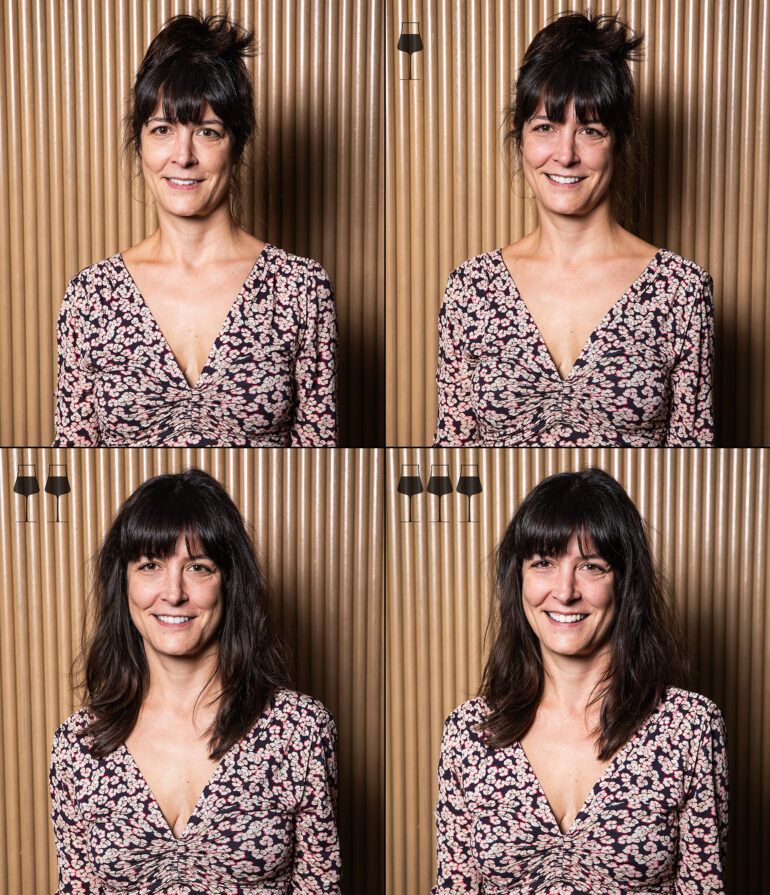
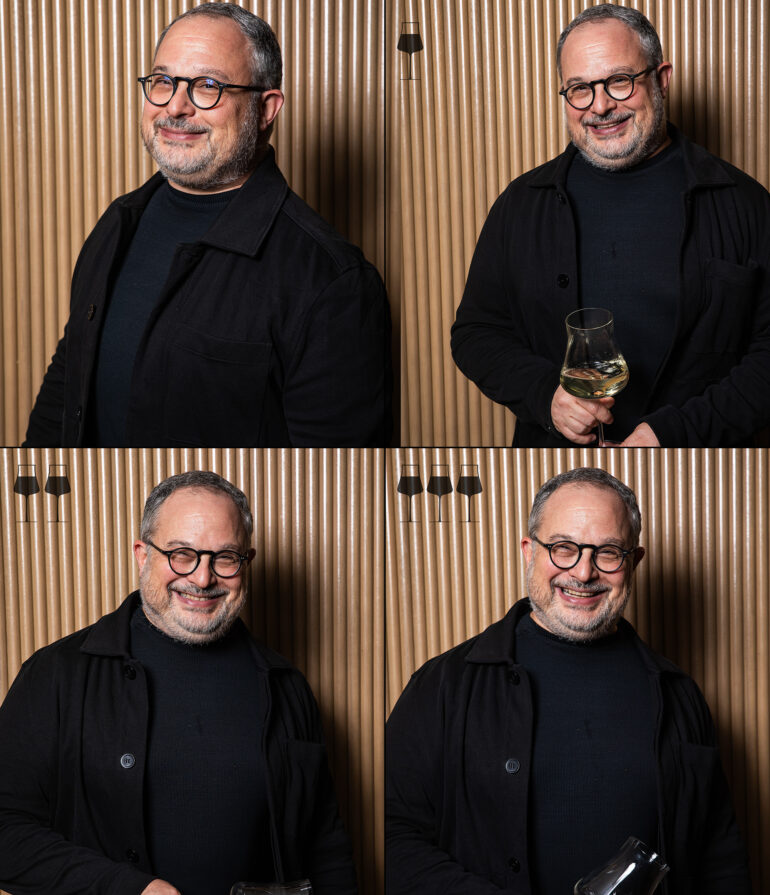
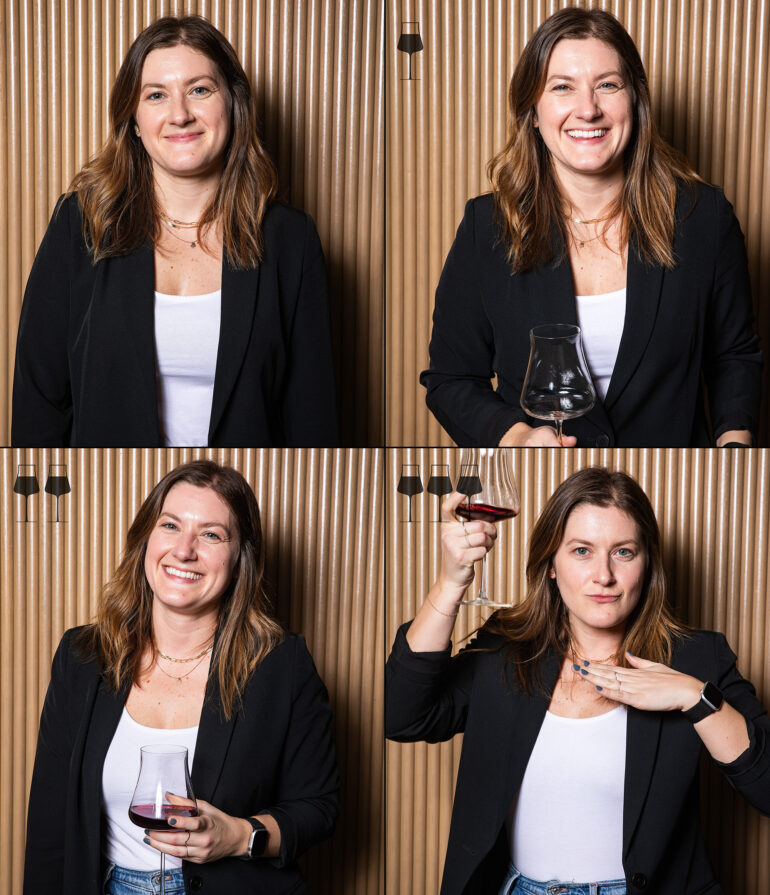
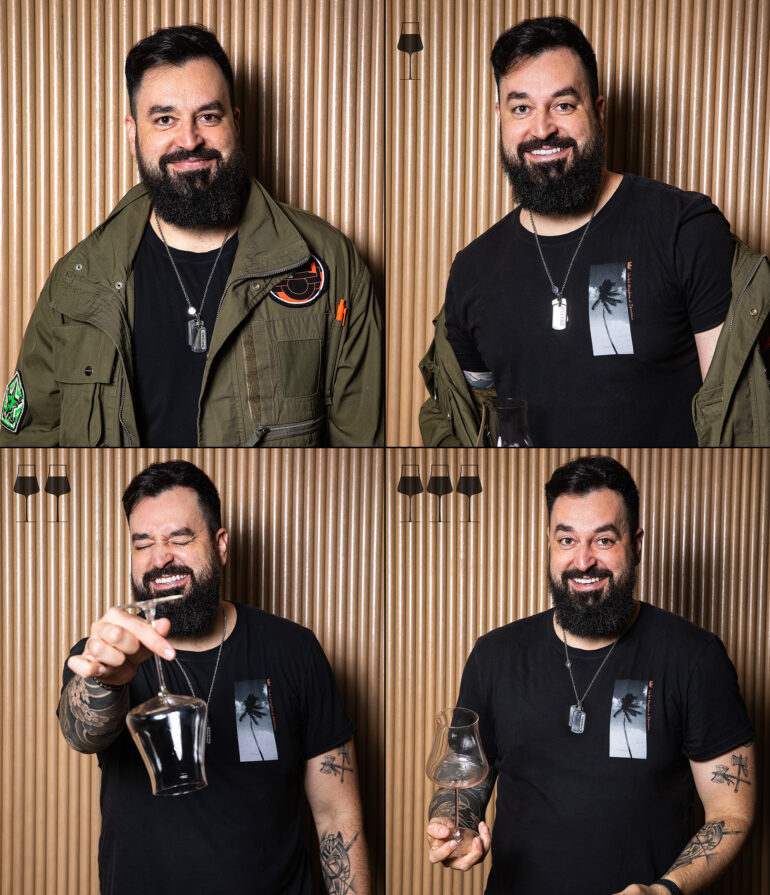
A few years ago, we featured Marcos Alberti and his incredibly fun Wine Project along with the sexually liberating O project. It’s a curious study that shows how someone changes after getting a few drinks in them. And this time around, he’s back. But this time, he chose his subjects to be wine sommeliers and NYC chefs. The concept: photograph the subject before they drink any wine, and then once for each glass they drink for three glasses. The expressions get goofier and goofier — and they’re an inspiration for anyone who hosts photo booths and photographs at parties.

All images used with permission by Marcos Alberti. Please follow him at @marcos_alberti or his website

To do this shoot, Marcos used a Canon 5D Mk IV and a 24-70mm L lens. “In other projects, I used a Hasselblad H4X with Phase One P65+ digital back, but its weight and the slowness of this camera hindered me during the photo shoot,” Marcos tells the Phoblographer. “Regarding the lens, I like to have versatility quickly. When I’m about to photograph these moments, everything happens very quickly, so having a zoom lens is essential.”

“I think this is the most important thing for all of humanity, to connect with others.”

Marcos Alberti

The photographs are all done in a photo booth style with consistent lighting and a person in front of a backdrop. But mostly, they’re a reminder to sometimes just set loose and have some fun. Not everything needs to be a super serious, majorly conceptual photography project or even need to try to change the world. At times, we need to see the good amidst all the bad that we’re bombarded with on social media and in the news. This project is a bit of a reminder about this. Sure, it shows that alcohol can help us sometimes forget our problems, too, if we’re in a comfortable position.

Of course, we also had to ask Marcos about AI imagery and his thoughts on it. “Well, I believe that photos made by AI are a passing thing, like other waves we had in the past, like 3D, for example, at the time many people questioned whether photography would survive, and this wave has passed,” he tells us. “I think we are all still amazed by the capabilities of AI, but I think it is unlikely that anything will replace the human effect. When I see a portrait, I don’t want to look at a person who doesn’t exist, I want to look at a real human being.” He continued to state that he want to feel and connect with this person through their photo — which is seemingly something he alludes to that he doesn’t get through AI imagery.

Google’s Pixel Fold might get a new Dual Screen feature for enhanced photography

Google’s Pixel Fold might get a new Dual Screen feature for enhanced photography

Just recently, Google rolled out the Pixel Camera app 9.2 with its fresh design and features to all Pixel users, but the excitement doesn’t end there. The latest findings in the update suggest that Google has more up its sleeves, particularly tailored for the Pixel Fold.

Android Authority reports that the Pixel Camera 9.2 update brings to light strings hinting at an upcoming Dual Screen feature, internally known as “Saturn.” It looks like the Dual Screen feature is poised to let the Pixel Fold leverage its outer/rear display for preview while capturing the shot using the inner display.

Similar functionalities have been seen on the Galaxy Z Fold 5 and the OnePlus Open, so it’s no surprise Google is joining the foldable bandwagon.

However, according to the source, there are some limitations outlined in the strings. The Dual Screen feature won’t function in Battery Saver mode on your Pixel Fold, and it’s a no-go when the device is running too hot. These limitations align with Google’s approach of disabling certain camera features on Pixels when they heat up.

Right now, the Dual Screen feature isn’t operational on the Pixel Fold, even with APK sideloading. However, there’s a glimmer of hope for the future as the strings indicate ongoing work on this feature. Given it’s not officially announced, take this intel with a grain of salt—Google might flip the switch on or off at any given moment. Stay tuned for potential updates on this evolving feature.

Google stepped into the foldable smartphone arena this year with the Pixel Fold. Unfolding to reveal a 7.6-inch OLED display, it also features a 5.8-inch cover display. Going head-to-head with competitors like the Galaxy Z Fold 5, the newly launched OnePlus Open, and the Oppo Find N3, Google’s debut in the foldable market has some tough competition.

‘A Martian landscape on Earth’: 10 best images from the Royal Society Publishing Photography Competition

‘A Martian landscape on Earth’: 10 best images from the Royal Society Publishing Photography Competition

Fancy visiting an alien world? Well, Mars, one of our closest celestial neighbours, is roughly a staggering 225 million kilometres away from Earth – a journey that would take you over 1,000 years to walk.

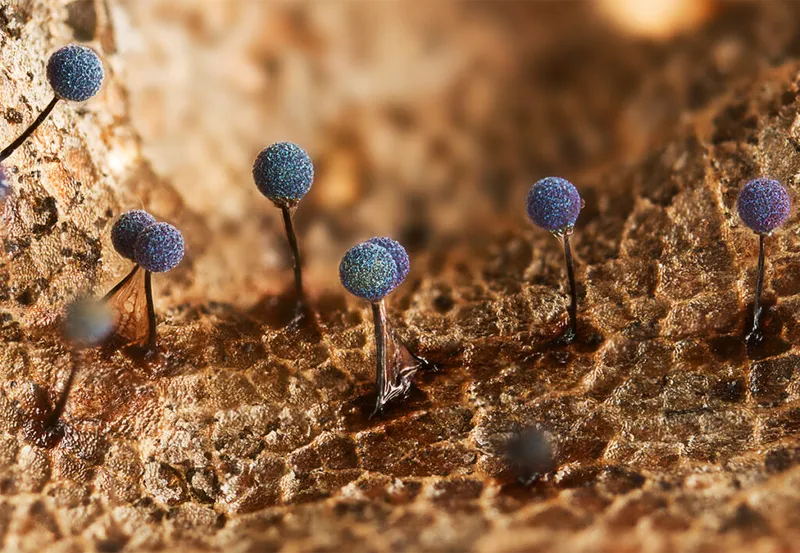
But don’t go reaching for your space boots just yet: there’s plenty on planet Earth that looks truly Martian. At least, that’s what we can tell from the winner of this year’s  Royal Society Publishing Photography Competition. While it looks like a picture of extra-terrestrial plants, it actually shows a cluster of smile moulds growing in a leafy garden in the United Kingdom (see image below).

But it’s not the only staggering photo in this collection, which documents strange scientific phenomena. Scroll down below to see a real-life crystal forest, a temporal crack, and a jellyfish elevator.

Ecology category runner-up – Post-war chamois

A chamois looking up at snow-covered rocks
An Alpine chamois (Rupicapra rupicapra) licks the wall of a WWII bunker, high in the mountains of Val Varaita, in the western Alps. Over the last centuries, the Alps have been theatre of many conflicts since they represent natural and political borders among different countries. Photo by Filippo Carugati

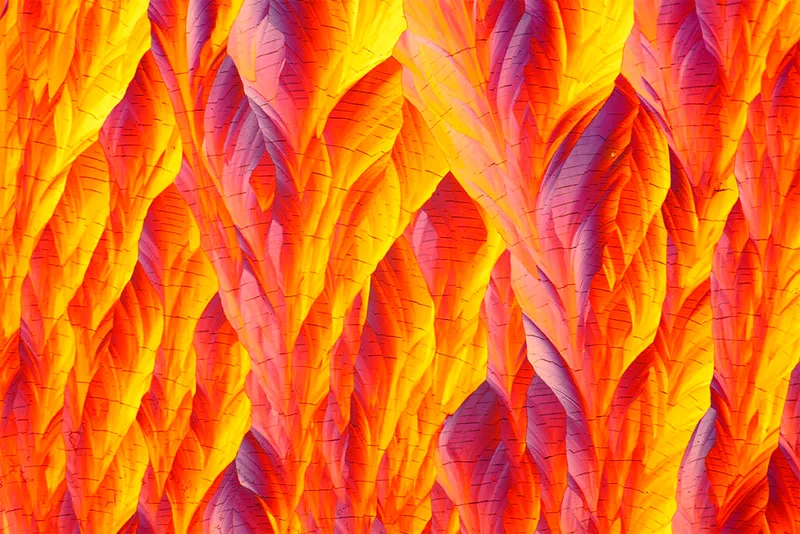
Microimaging category runner-up – Beacon of crystals in a wild forest

Multicolour bright crystals
The Image shows micro crystals of two chemical combinations Beta Alanine and L Glutamine showing the evolution of crystal patterns in process of crystallisation. Photo by Shyam Ulhas

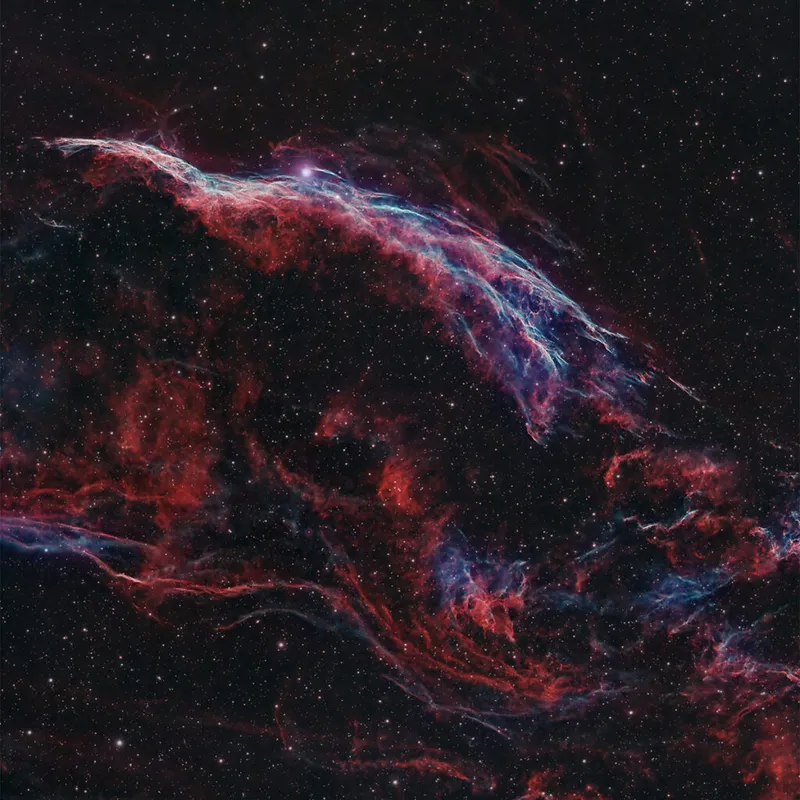
Astronomy category winner – The western veil nebula

deep space stars and red clouds
About 10,000-20,000 years ago, a star much more massive than our Sun exploded into a supernova. The result was the Veil Nebula, a magnificent supernova remnant found in the Cygnus constellation. Despite being over 2000 lightyears away, the angular size of the nebula in our sky is several times larger than the Moon. Photo by Imran Sultan

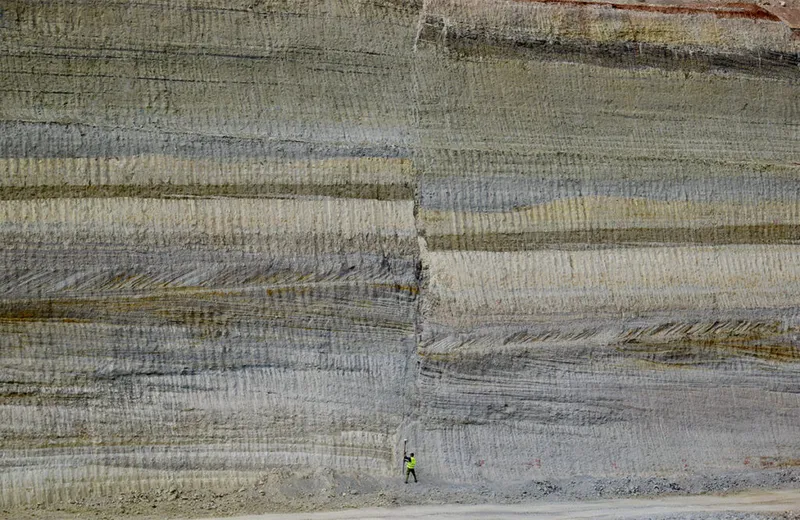
Earth science category runner-up – A crack in time

Man stands behind huge cliff face
A surveyor is dwarfed by the huge cliffs of the Corinth Canal, Greece. The image shows a typical outcrop, of the canal, which sits in the centre of the neotectonic depression and cuts through numerous normal faults. Photo by Dr Chia-Hsin (Wendy) Tsai

Ecology category winner – Star of the night

star fish on yellow coral
A school of small fish run wild above a colourful coral reef and a sea star, which has just come out of its den to forage. Photo by Dr Tom Shlesinger

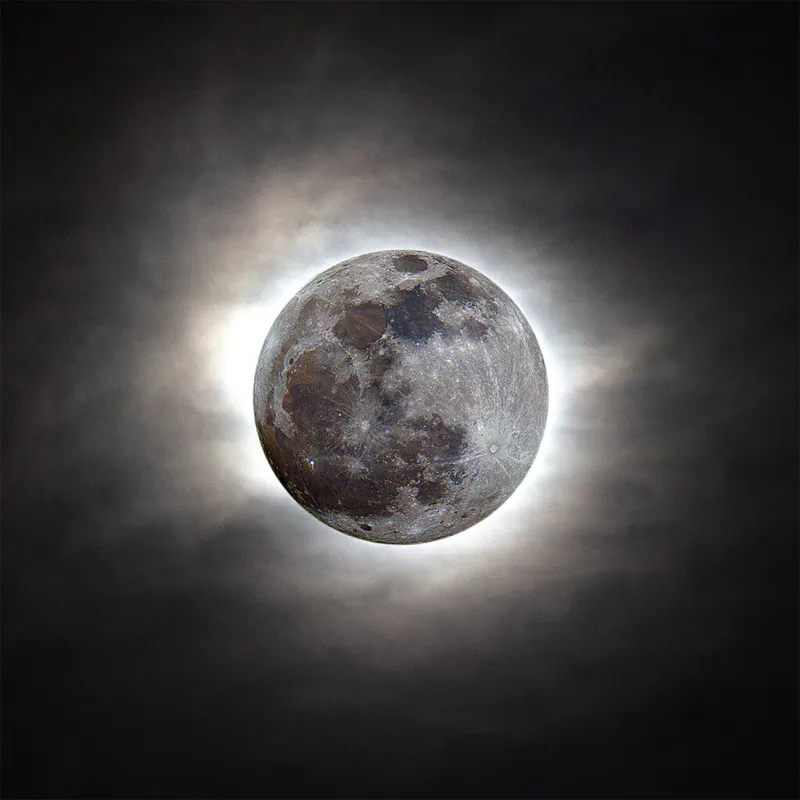
Astronomy category runner-up – Flower Moon on a cloudy night

Sunlight obscured by full Moon
The May full Moon is known as the Flower Moon, a name originating from the Algonquin people that marks the blooming of flowers during spring. This year’s Flower Moon fell on a cloudy night, but the photographer was able to capture this image through the clouds above Chicago, USA. Photo by Imran Sultan

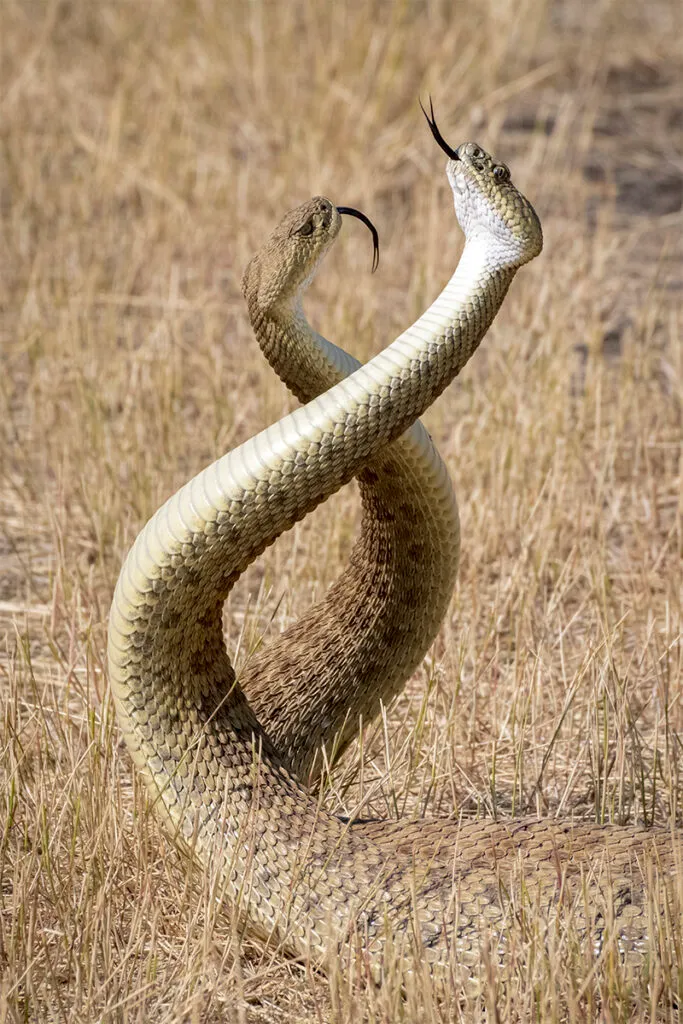
Behaviour category runner-up – Ssstandoff

Two snakes fighting intertwined
A pair of male prairie rattlesnakes (Crotalus viridis) tussle for dominance, intertwining their necks. Photographed in southern Alberta, Canada. Photo by Dr Gregory Funston

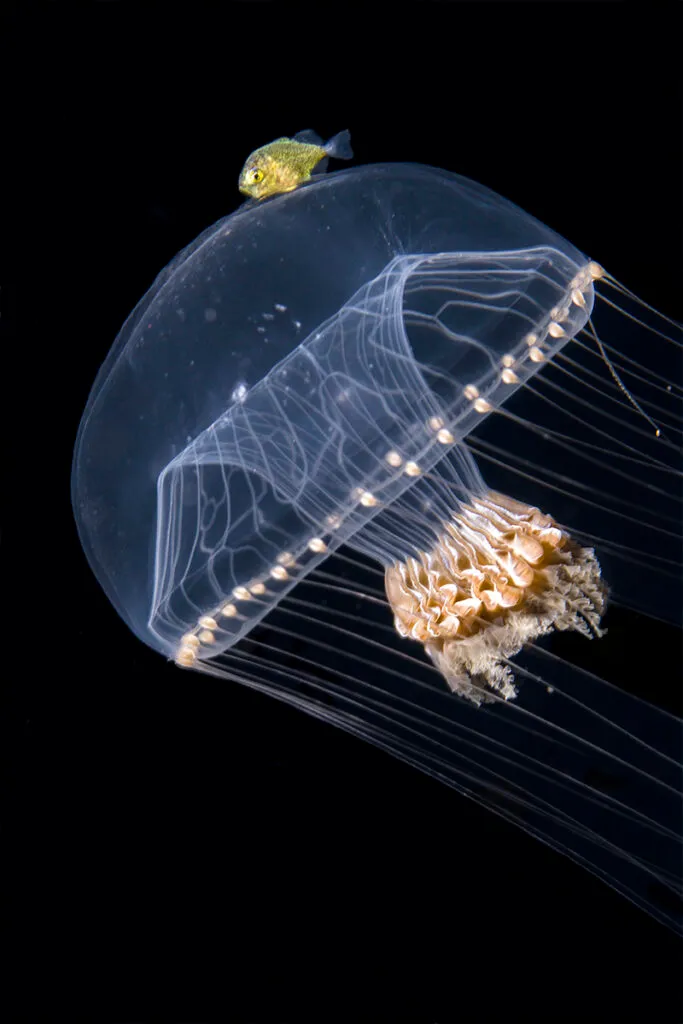
Behaviour category winner – Nightly elevator

Jellyifish in dark underwater
Every night, sea creatures rise up to the ocean’s surface in order to feed while avoiding daytime predators. Many small organisms like this juvenile fish hitch a ride on larger animals not only to conserve energy but also to gain protection. This jellyfish will sting anything that gets too close, thus protecting the fish. Photo by Dr Tom Shlesinger

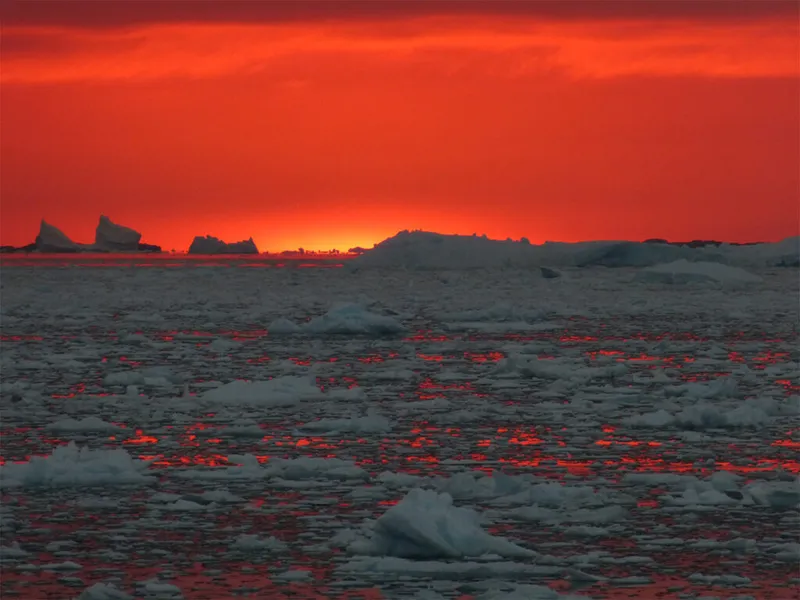
Earth science category runner-up – Burning through the frozen south

red sky over fields of grey icebergs
Fiery sunsets like this one can last for hours in the frozen landscape of the Antarctic Peninsula. Here, the dying rays of the Sun pick out gaps between ice floes, creating a landscape that seems more like lava than ice. Photo by Professor Michael Meredith

Overall winner – Martian landscape

blue slime moulds on brown rock
This photo shows a specimen of Lamproderma scintillans, an exceptionally fascinating microorganism firmly growing on an autumnal leaf in Somerset, UK. The slime mould exhibits a striking array of hues, ranging from earthy browns, fiery reds, and lustrous bronzes to occasionally a mesmerising steel-blue iridescence, mirroring the vibrant palette of the surrounding deciduous landscape. Photo by Irina Petrova Adamatzky

Read more:

In pictures: what it’s like being queer in China

In pictures: what it’s like being queer in China
image

“I want members of the queer Chinese diaspora to fathom how special it is to be who we are,” says Jeffrey Jin, “to feel an almost-familial bond with these faces that they’ve never even met.” It’s those faces – the ones that populate Jin’s most recent series – that sit alone in bedrooms, lounge carelessly on sidewalks, and embrace tenderly on mattresses, all while projecting their own sense of resilience. While Western notions of China often cast the country as “monolithic, restrictive, and intolerant”, as Jin describes, his photographs explore the queer bonds bubbling beneath its surface. And despite his subject’s calm exterior, there’s an urgency to the images he presents – we feel resilience in each stare, love in each laugh, entire lives splayed out on walls and bookcases.

The photographs are all the more meaningful once we learn the circumstances in which they were created. A trip to China, the country of Jin’s heritage, was extended indefinitely after running into unforeseen legal trouble. The photographer was forced to set up shop in Shanghai, finding solace with a chosen family in an un-chosen new home. These photographs are the product of that trip, and while the images are ones of strength, Jin reminds us that there is more to the community than this. “In the cracks and crevices lie some of the most electric queer spaces I’ve ever encountered, and the people within them are vibrant and loving,” the photographer says. “Although the atmosphere in some of these photos might be more on the sombre side, please don’t misinterpret my intentions – these people deserve to be celebrated.”

In the conversation below, the photographer details the events that led to his extended stay in Shanghai, and reveals how his chosen family came to be.

Hi Jeffrey. When did you begin taking photographs for the project? Was there an exact moment of inspiration that led you to create the work?

Jeffrey Jin: I suppose I began taking photos for the project – which didn’t even actualise itself into a formal ‘project’ until October – as soon as I stepped foot into China. I began in Guilin, a slow-paced city in the south, before coming to Shanghai. It was there that I met Lina and took a few photos of them one night on the way back to our hotel. I took photos of my friends Sey and Kyoto later in August. After discovering I already had several photos of queer people out of mere coincidence, I figured I should keep going and try to form a cohesive and purposeful body of work.

How did you cast the people in the series? Were there any criteria other than belonging to the LGBTQ+ community?

Jeffrey Jin: The casting process was pretty spontaneous, and the people in the photos are the result of a variety of interactions. A handful of them were mutual friends, and some I had met at Elevator, a queer club in Shanghai that’s unfortunately closing down at the end of the year due to lack of funding. One is a Tinder match, another is a familiar face I’d only ever bump into after dark outside Shanghai’s techno venues, both of us tipsy and soaked in sweat.

I didn’t necessarily structure the project with criteria other than being queer and Chinese, but many of the subjects ended up being around my age and part of the subculture scene as well. I liked that most of them didn’t consider themselves models.

The styling is particularly striking – was this specifically for the shoot, or did they have free reign to wear whatever?

Jeffrey Jin: Everyone styled themselves. I gave my two cents for some of the outfits, but I’m a huge proponent of subjects having control over their clothing choices. I look back on the photos and see everyone’s different personalities emanating through what they decided to wear that day.

I value photographing those with individual style, style that isn’t just conveyed through what someone wears, but how they think and speak and move throughout the world. I truly believe all of these components can be captured through a lens. The world, and especially Shanghai, is full of beautiful faces to photograph. What I really care about is whether your brain is beautiful too. 

“Many of them asked me what America was like – if I had ever touched a gun, what drugs I had done…. I realised that I had never answered questions like those in Chinese” – Jeffrey Jin

How did you build a relationship with them while shooting?

Jeffrey Jin: I just kept talking. I love to run my mouth when I shoot, inserting questions about first crushes, what life is like back in their hometown, whether they’ve been to Chengdu, the gay capital of China. We usually shared a meal before or after, and conversation flowed quite naturally most of the time. Yutou and I bonded over our appreciation for Arca’s music. Sky told me he has a friend from here who moved all the way to Austin, where I go to school, and plans on opening up a hotpot restaurant. Many of them asked me what America was like in return – if I had ever touched a gun, what drugs I had done, what the queer culture is like in Texas. I realised that I had never answered questions like those in Chinese.

Can you tell me about the issues that led to your extended stay in China?

Jeffrey Jin: A couple of months ago, I got into some trouble with the police in Shanghai for making an incredibly stupid decision. They confiscated my American passport and denied me any specifics regarding when I would be able to return to the States – all I was told was that I had to wait. After 36 hours in a detention centre, I was released back into the world on bail and pending trial. Month after month, I spent most of my time waiting in Shanghai, one of China’s densest and liveliest cities. Every day was a game of mental fortitude, not knowing exactly when I could return, especially since China’s statutes regarding non-citizens are so vague.

Truthfully, I could handle being arrested, detained, and interrogated – the most unendurable part was the way that my circumstances affected my family’s perception of me. After about a month, I was called back to the police station in Shanghai to sign some more papers and, shortly following, decided to move into a small apartment where I’d spend the remainder of my time.

Did that change your relationship with Shanghai?

Jeffrey Jin: My excitement to return to China – the ‘motherland’ – quickly morphed into resentment and frustration and regret. What happens when home no longer feels like home? When a place of solace transforms into a place of solitude? I beat myself up day in and day out over my mistake. From what was supposed to be a one-week stay, I ended up establishing a sense of livelihood in Shanghai for nearly half a year, developing a routine and integrating myself into a culture that I originally felt very far removed from after being born and raised in Texas, only ever having been to China before to briefly visit relatives.

Such a life-changing situation must’ve bled into your work.

Jeffrey Jin: You could say this photo series that I intentionally began during my fourth or fifth month in Shanghai immortalises that entire experience for me. Woven into these shots is a reminder to turn moments of misfortune into something meaningful. I encouraged myself to meet more and more queer people – people who might look like me but exist in radically different ways – and to absorb their stories. To heal from them. I didn’t touch my camera for an entire month after the incident initially happened, the longest I’ve ever gone. But I’m thankful I eased myself into shooting again. Although immense barriers of time and distance obstructed me from my real family back home, I gradually grounded myself in the realisation that I could find family here too.

“I really like the photo of Yihao sitting on his couch and myself in the mirror… I think I took it to include myself in the series somehow. To indicate that I’m queer and Chinese, too” – Jeffrey Jin

If you could choose one image in the series, that is either your favourite image or representative of the project as a whole, which one would it be and why?

Jeffrey Jin: I really like the photo of Yihao sitting on his couch and myself in the mirror. It’s a vulnerable self-portrait of us both, and I think I took it to include myself in the series somehow. To indicate that I’m queer and Chinese, too, and that identity is what connects me to these other subjects.

That day was so special for me; I admire Yihao and what he’s done for the LGBTQ+ community in China a lot. We ended up hanging out until 3am the next day. He showed me a documentary about Li Ermao, a renowned transgender woman in China with a tragic backstory, and I showed him a short film by Huang Shuli, a cinematographer from Wenzhou that I hold close to my heart. I feel very fortunate to have gotten to know him on a human level and that our relationship exists beyond the time that we spent shooting. Photos begin to hold real meaning for me when I can attach distinct memories to them.

What would you say is the guiding principle behind this photo series?

Jeffrey Jin: Authenticity is the flesh and bones of this body of work. There’s an unparalleled joy in encountering, interacting with, and photographing what feels real to me. Also, the timing of the work’s publication is particularly special to me – I finally got my passport back, and am headed back home this weekend.

‘We Tell Stories’: second edition of The Kingdom Photography Award launched by the Visual Arts Commission

‘We Tell Stories’: second edition of The Kingdom Photography Award launched by the Visual Arts Commission

Riyadh, Saudi Arabia – The Visual Arts Commission, under the Saudi Arabian Ministry of Culture, is thrilled to announce that registration for the highly anticipated Kingdom Photography Award is officially open. Embarking on its second edition, this award encourages photographers based in Saudi Arabia to capture their everyday lives and share their unique perspectives.

By creating a visual narrative that encapsulates the beauty and cultural essence of the Kingdom, the Kingdom Photography Award will provide a platform for emerging photographers to portray the diversity of Saudi Arabia, under the theme ‘We Tell Stories”. Photographers are encouraged to submit a series of 3–10 photographs that tell a compelling story of everyday life in Saudi Arabia.

Dina Amin, CEO of the Visual Arts Commission expressed her excitement about the competition: “We are delighted to introduce the second edition of the Kingdom Photography Award, a unique and exciting competition that is looking to unearth visual stories that speak of people’s lives in Saudi Arabia. Every photograph has a story to tell, but unlike a single picture, a photo essay can offer us possibilities to get to know characters, the textures of their lives, their interests, and their ideas. Saudi Arabia is a treasure trove of stories waiting to be discovered and shared and through ‘We Tell Stories’, we are excited to explore the heart and soul of the Kingdom through the lens of your camera.”

The competition, available to both Saudi nationals and residents, encourages participants to capture “a day in the life,” loved ones, familiar places, or the inspiring landscapes they live in. This competition is an opportunity to realize that every facet of the Kingdom has the potential to be a masterpiece.

The Kingdom Photography Award offers participants a chance to win 20,000 SAR and gift vouchers worth 20,000 SAR per winner, as well as access to mentorship programs led by renowned professional photographers. In addition, selected entries will also be featured at an exhibition in Hayy Jameel, Jeddah, providing a platform for emerging photographers to showcase their work alongside accomplished professionals.

The judging panel, comprised of esteemed professionals, will evaluate each submission to ensure the selection of the most captivating and evocative stories. The judging panel includes Ghada AlMuhanna, Hussain AlMoosawi, Mick Moore, Mohammed AlFaraj, and Tanvi Mishra.

Registration for the competition is now open and closes on December 31, 2023. To submit your series, simply visit the official website, click on “Register Now,” and complete the form. The submission process is free, with terms and conditions detailed on the website. Winners will be announced on February 10, 2024, with the final exhibition taking place between February 10, 2024 – March 2, 2024.

The second edition of The Kingdom Photography Award promises to be an exciting journey of self-expression, discovery, and storytelling. For more information on how to submit entries, please visit: https://engage.moc.gov.sa/tkpa

About the Visual Arts Commission:

The Visual Arts Commission is one of 11 sector-specific commissions under the Ministry of Culture. Founded in 2020, it is leading the development of the visual arts sector in Saudi Arabia. The Commission is working to nurture the talent of art enthusiasts, practitioners, and professionals in the Kingdom, and support the production and exhibition of artwork in all its forms, locally and internationally.

To learn more about the Visual Arts Commission, please visit www.visualarts.moc.gov.sa/en and the commission’s page on Twitter @MOCVisualArts and Instagram @visualarts_moc

About the Ministry of Culture:

Saudi Arabia has a vast history of arts and culture. The Ministry of Culture is developing Saudi Arabia’s cultural economy and enriching the daily lives of citizens, residents, and visitors.

Overseeing 11 sector-specific commissions, the Ministry is leading a cultural transformation to develop an abundant ecosystem that nurtures creativity, unlocks the economic potential of the sector and unleashes new and inspiring forms of expression.

Find the Ministry of Culture on social media: Twitter @MOCSaudi (Arabic); @MOCSaudi_En (English) | Instagram @mocsaudi

For media inquiries or further information about The Kingdom Photography Award, please contact:
Khalil Dagher
Z7 Communications
Senior Account Manager
Khalil@z7communications.com