Photography

100+ Photographers Help Raise Funds for 13 Orphaned Elephants

100+ Photographers Help Raise Funds for 13 Orphaned Elephants
Elephants play as they explore the wilderness at Reteti Elephant Santucary in northern Kenya.

Photo: Ami Vitale/Courtesy of Vital Impacts
“Elephants play as they explore the wilderness at Reteti Elephant Sanctuary in northern Kenya. The orphans cared for by Reteti spend every day, all day exploring the wilderness of the 850,000 acre Namunyak Wildlife Conservancy where they are situated. Reteti is changing the lives of both elephants and people. Elephants are orphaned as a result of drought, human-wildlife conflict, natural mortality, and in rare cases, poaching. Reteti sanctuary is unique as the first community owned and run elephant sanctuary in Africa.”

Wildlife photographers capture poignant stories of survival and hope with their cameras. While their labor brings visibility to the issues animals face, over 100 photographers have taken their efforts to the next level. Vital Impacts, a non-profit dedicated to boosting environmental art and photography, is launching a fundraising fine art print sale in support of Reteti Elephant Sanctuary, Africa’s first indigenous-owned elephant sanctuary.

The efforts of the Reteti Elephant Sanctuary help in two ways. First, they raise orphaned elephants with the appropriate care so they can be safely released back into the wild once they come of age. Currently, the sanctuary is working with 13 elephant calves. “From being weaned from their bottles to extended explorations of the landscape on longer walks, they also increased their encounters with other wild animals and sourced more of their own food,” writes Vital Impacts.

At the same time, the Reteti Elephant Sanctuary also aspires to turn elephant conservation into an opportunity that will improve livelihoods in local communities, especially those of women. “All the keepers are from the local community and are formally trained in the care, rehabilitation and release of elephant calves. An elected board from within the community oversee all operational aspects of the Sanctuary,” states the Reteti Elephant Sanctuary on their website.

To support their efforts, renowned photographers such as Ami Vitale, Reuben Wu, Michael “Nick” Nichols, Jim Naughten, and Gunnar Gunnarson have donated their work to Vital Impacts’ annual print sale. From a tender encounter between Jane Goodall and a primate to a sci-fi-like desert landscape, the available images speak to a large number of sensibilities.

The photographs donated by photographer Ami Vitale were taken at the Reteti Elephant Sanctuary in Northern Kenya. For example, one of her image features two of the elephants that will be benefited from the print sale in an act of play as they explore the land that they call home. While another moving photograph showcases a baby elephant sweetly embracing one of its caretakers.

To browse all the images available as part of the print sale, visit Vital Impact’s website. You can also take a look at some of the photographs donated to this cause and learn their stories, below.

Vital Impacts, a non-profit dedicated to boosting environmental art and photography, is launching a fundraising fine art print sale.

orangutans in blue tinted forestorangutans in blue tinted forest

Photo: Jim Naughten/Courtesy of Vital Impacts
“Our perception is that wildlife is something other, apart from humanity. It happens elsewhere, in far away lands, in nature documentaries, zoos or safari parks. This impression is fictional and bears little resemblance to reality, both because wildlife barely exists at all in this harmonious state, and also because despite our perceived separation, we are still very much bound to the laws of the natural world. The images in this series reflect this by using natural history specimens and dioramas, themselves a fictional human construct, and adding layers and altering and exaggerating colors to highlight the artificial and nature of what we are seeing.”

The funds will go towards Reteti Elephant Sanctuary, Africa’s first indigenous-owned elephant sanctuary.

Mary Lengees comforts Lodokejek, an orphaned calf at Reteti Elephant Sanctuary in northern Kenya.Mary Lengees comforts Lodokejek, an orphaned calf at Reteti Elephant Sanctuary in northern Kenya.

Photo: Ami Vitale/Courtesy of Vital Impacts
“Mary Lengees comforts Lodokejek, an orphaned calf at Reteti Elephant Sanctuary in northern Kenya. The sanctuary is changing the lives of both elephants and people. Elephants are orphaned as a result of drought, human-wildlife conflict, natural mortality, and in rare cases, poaching. Reteti sanctuary is unique as the first community owned and run elephant sanctuary in Africa.”

Currently, the sanctuary is working with 13 elephant calves, which are getting the appropriate care so they can be safely released back into the wild once they come of age.

Halo of light over night desert landscapeHalo of light over night desert landscape

Photo: Reuben Wu/Courtesy of Vital Impacts

At the same time, the Reteti Elephant Sanctuary aspires to turn elephant conservation into an opportunity to improve livelihoods in local communities, especially those of women.

Jane Goodall lets a chimp touch a strand of her hairJane Goodall lets a chimp touch a strand of her hair

Photo: Michael “Nick” Nichols/Courtesy of Vital Impacts
“Late one afternoon as she was checking on the zoo chimps that her organization had been feeding, Jane Goodall approached the cage of a dangerous and aggressive male. Disarming him with a language learned from her years of research, she offered her golden hair for him to touch. It was a simple moment that came to represent so much.
Jane Goodall Institute does not endorse handling or close proximity to wildlife. This represents a historic context.​”

To support their efforts, renowned photographers such as Ami Vitale, Reuben Wu, Michael “Nick” Nichols, Jim Naughten, and Gunnar Gunnarson have donated their work to Vital Impacts’ annual print sale.

seabirds flying through a cloud in St. Kildaseabirds flying through a cloud in St. Kilda

Photo: Jim Richardson/Courtesy of Vital Impacts
“The sight was breathtaking. Tens of thousands of gannets flew out from cloud-wrapped Boreray to greet us as our boat pitched wildly on the Atlantic waves.
This uninhabited island is part of St. Kilda, forty miles out in the Atlantic beyond the Outer Hebrides.The last islanders abandoned St. Kilda in 1930, leaving it to the wild Atlantic storms and invoking melancholy memories of a lost world — and creating a haven for migrating and nesting seabirds like Gannets and Puffins. Together these stories of human abandonment and wildlife sanctuary have garnered St. Kilda dual UNESCO World Heritage Site awards.
When I came that evening I was simply seeking scenes of a remote island at sunset. I was disappointed to find Boreray shrouded in clouds. But as we came around the sun broke through and the birds swept down upon us in multitudes. The spectacle totally eclipsed my expectations, and here was the gift of wild splendor and transforming wonder. I remember whooping and hollering while the crew member held on to my belt so I wouldn’t plunge over the side and into the sea.”

To browse all the images available as part of the print sale, visit Vital Impact’s website.

Two park rangers carry two elephant tusks from an elephant shot in 2004Two park rangers carry two elephant tusks from an elephant shot in 2004

Photo: Nick Brandt/Courtesy of Vital Impacts
“The elephant was killed by poachers in Tsavo in southern Kenya in 2004. His tusks were stored in Kenya Wildlife Service’s ivory strongroom. It is doubtful that there is an elephant left alive today on the African continent with tusks this size.
The rangers in this photo work for Big Life Foundation. Big Life protects over 1.6 million acres with more than 350 rangers in 36 permanent and mobile outposts. With the aid of multiple patrol vehicles, tracker dogs, night vision equipment and aerial monitoring, this co-ordinated protection for the ecosystem has brought about a dramatic reduction in poaching of all animals in the region, and an attendant increase in key populations.”

Vital Impacts: Website

My Modern Met granted permission to feature photos by Vital Impacts.

Related Articles:

Photographer Shares How a Community in Kenya Came Together to Help Orphaned Elephants [Interview]

Photographer Wins Prize for Heartbreaking Story About the Plight of Endangered Forest Elephants

Photographer Showcases the Majestic Beauty of Elephants To Help in Their Conservation [Interview]

Herd of Wild Elephants Take an Adorable Nap Together After 300-Mile Journey

Photographers Made a Splash (With No Flash) at the Aquarium of the Pacific’s Photo Night

Photographers Made a Splash (With No Flash) at the Aquarium of the Pacific’s Photo Night

Photographers trawled the Aquarium of the Pacific looking for perfect shots at the Aquarium of the Pacific’s annual photographers’ night this October, and the prize-winning catches have now been announced.

Crystal Stromer’s photo of a giant sea bass appearing to gaze pensively at a school of fish took home the top prize. The aquarium’s Andrew Reitsma, who helped to judge the entries, said that the winning shot caught the judges’ attention for its moodiness that embodied the times we live in.

An octopus shows off its tentacles, with the suckers plainly visible, in a twisted yoga-like pose. A blue background and some rocks are visible in the background.

This shot of an octopus in a contorted position won second place in the contest.

(Eric Horvat/Aquarium of the Pacific)

Reitsma said that the judges look for technicality, composition, and emotion in the photos of the aquarium’s animals, but they’re also looking for an unquantifiable “wow” factor.

“Having done this for 10 years, you see a lot of similar images and you kind of look for things that you haven’t seen before, things that kind of strike out as, ‘wow, this is an amazing image,'” Reitsma said.

A skinny black-and-orange tropical fish stares head-on at the camera with an inscrutable, mysterious expression.

This photo wowed the judges enough to win third place at the Long Beach aquarium’s photo contest.

(Forrest Blanton/Aquarium of the Pacific)

The photo contest’s past winners have captured a variety of animals at the Aquarium, from frogs to tropical fish to the Pacific spiny lumpsucker.

During this year’s photo night, photographers had free rein over the museum’s exhibits, and they could also borrow equipment from vendors to help them take their shots. The aquarium was closed to the public for the event, allowing nature photographers to get wildlife photos without having to brave the waters of the Pacific.

A pink fish nearly blends in to the background of vibrant pink sea anemones with tentacles pointing in every direction.

This photo won honorable mention at the photographers’ night.

(Brent Lew/Aquarium of the Pacific)

Reitsma also said the Blue Lagoon, where the first-place picture was taken, is a great place for visitors to camp out looking for a shot.

“It has a lot of opportunities for taking pictures of the sardines and the schools of fish to the slow moving giant sea bass,” Reitsma said. “It becomes challenging, but you can also step back and get these beautiful shots of glowing light coming down from the upper parts of the exhibit downlighting the darker areas at the bottom.”

Reitsma, who has a photography degree from Cal State Long Beach, said his favorite animal to take photos of is the octopus. While they can be hard to track down at the aquarium since they spend much of their time out of sight, octopuses featured in two of the top ten photographs this year.

He offered some tips for anyone taking photos at the aquarium.

“Try to be as head on with your subject matter as possible,” Reitsma said. “When you start shooting at an angle, you get aberration in the glass and it makes it difficult to get sharp shots, but if you try to get forward facing, perpendicular to your subject, it really helps to get everything really sharp.”

What questions do you have about Southern California?

We Turned the Nikon Zf into a Street Photography Workhorse

We Turned the Nikon Zf into a Street Photography Workhorse

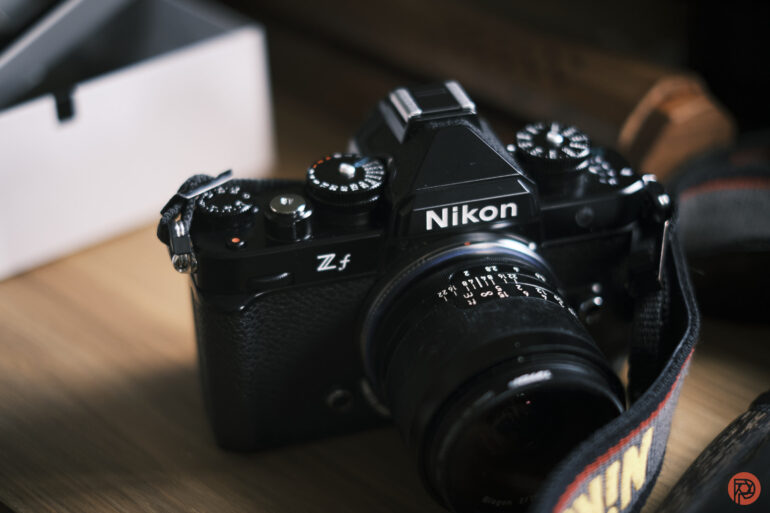
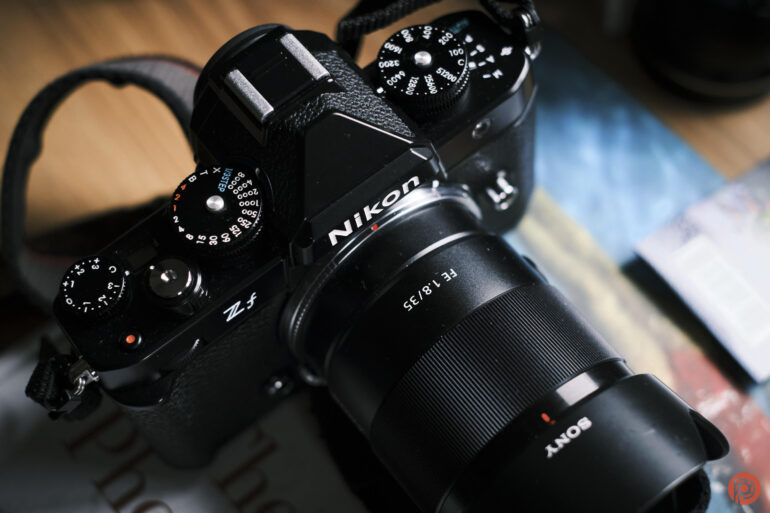
I never thought that I’d say this, but some of the best lenses for the Nikon Zf aren’t made by Nikon. They’re made by Tamron and Sony. While we’re reviewing the Nikon Zf, we’ve found that the lenses we received from Nikon weren’t always the best for autofocusing. To clarify that statement, Nikon sent us the 40mm f2 and the 24-70mm f4 — and while I adore the 40mm f2, it’s not the best for autofocusing. However, we’ve got the Megadap ETZ21 Pro around the office, which adapts Sony E mount lenses to Nikon Z bodies. And the results were really incredible to us.

We used the Sony Zeiss 55mm f1.8, the Sony 35mm f1.8 FE, and the Zeiss Loxia 35mm f2 — which are all lenses we own. When I say that putting Sony’s own lenses on the Nikon Zf is a night-and-day experience, I’m truly not joking.

First off, the Zeiss Loxia 35mm f2 has problems on Sony cameras that we’ve reported about previously. But that problem doesn’t happen when it’s adapted to the Nikon Zf. It almost makes me feel like Zeiss could get new life by upgrading the build quality of the Loxia lenses and making them for the Nikon Z mount. And since this is a manual focus lens, it’s so perfect for street photography for several reasons.

  • It’s a Zeiss lens, and the image quality is incredible.
  • It’s manual focus, so I set the lens to focus 6 feet away at f5.6. Because of zone focusing, this gave me quite a bit of space to work with.
  • The Nikon Zf has incredibly clean image quality, even at ISO 51,200.
  • The camera can shoot seven frames a second

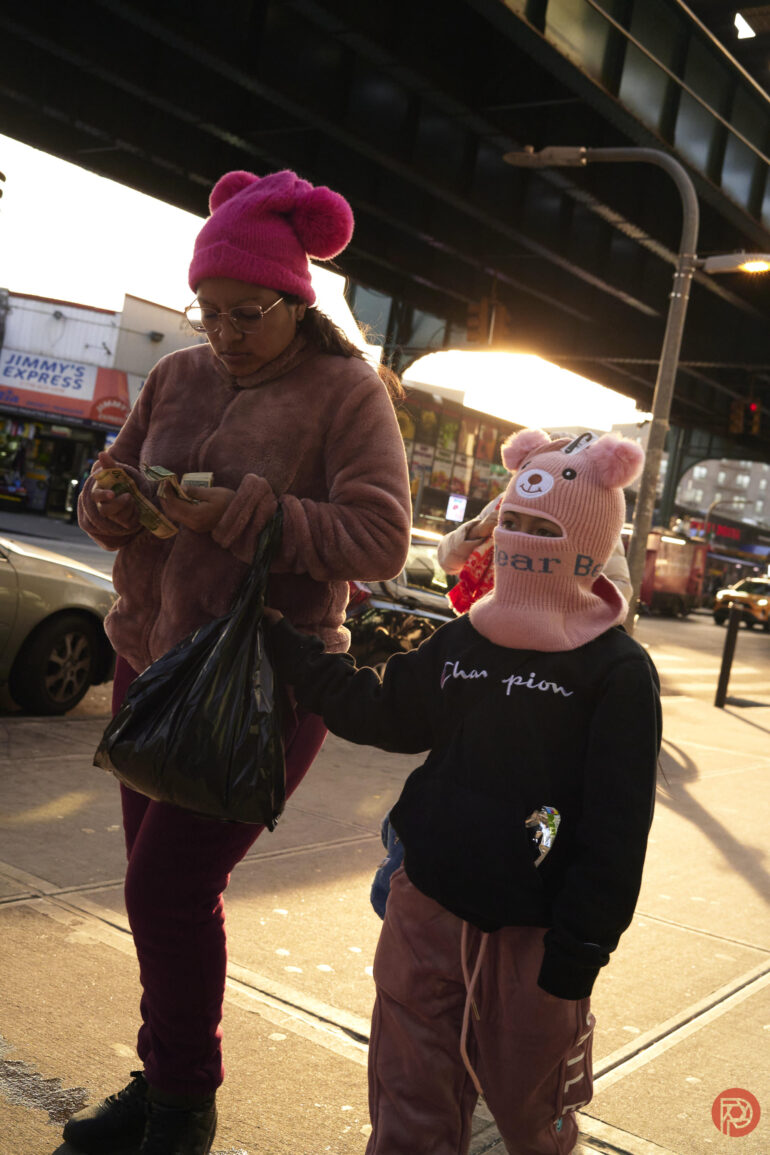
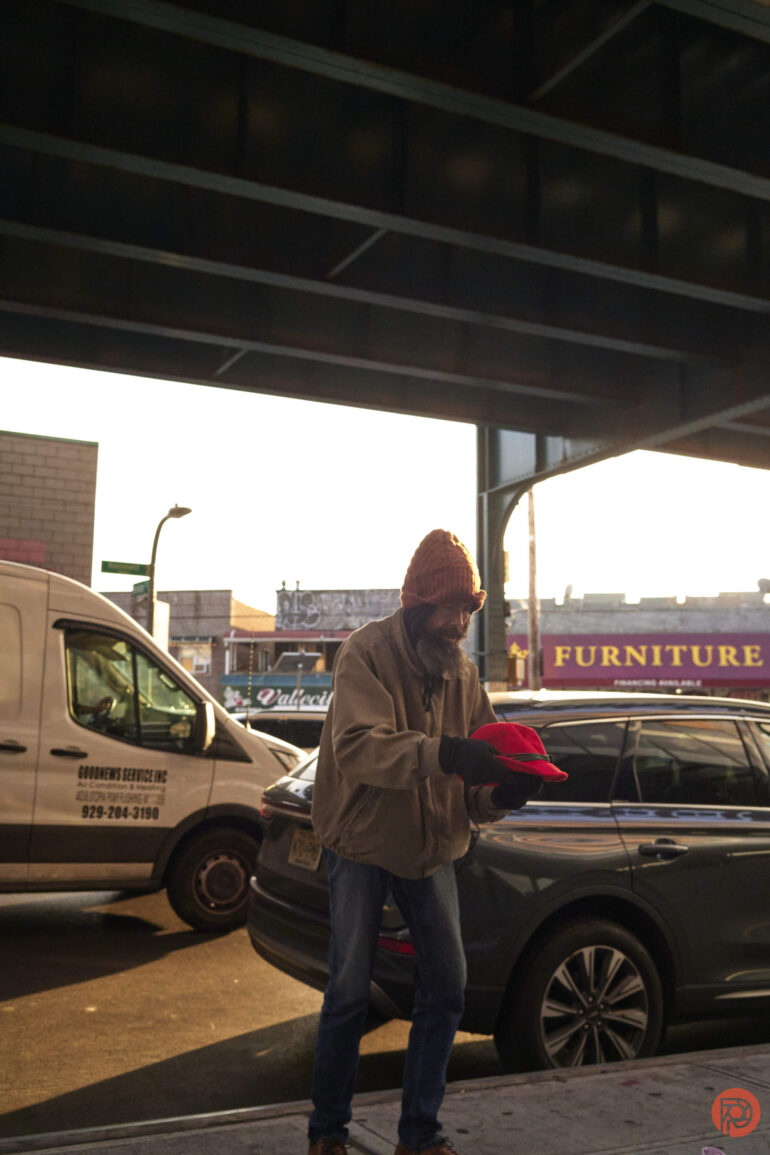
Couple all of these together, and it’s a perfect combination for street photography. Using the Megadap ETZ21 Pro to shoot with the Zeiss 35mm f2 on the Nikon Zf is the single most pleasing experience I’ve had so far during my review process. It was almost like shooting with a Leica M — but this is a Nikon Z body with incredible ergonomics. During my outing with this camera and lens combo, I’ve gotten some of my favorite photographs to date with the camera.

But then we just had to test the autofocusing abilities. With Nikon’s own lenses, the autofocus of the Nikon Zf isn’t anything worth talking about for street photography. They work well enough for many situations, but the combo of the 40mm f2 and the Nikon Zf can’t keep up with fast-moving subjects. However, I felt the Sony 35mm f1.8 FE autofocused much faster than the Nikon 40mm f2 on the Nikon Zf body.

More importantly, it could track people of color with darker skin, even in low light. However, it wasn’t in the darkest situations that we’ve encountered. This is where I was incredibly surprised because Sony’s own cameras are pretty bad at this.

Crazy, right? Well, not really. The 35mm f1.8 is a much more expensive lens than the 40mm f2. I could kind of expect this to happen. Tamron’s Z mount lenses also focused faster than the three Nikon lenses we have right now.

This makes us wonder how the Nikon Zf will work with Nikon’s own 35mm f1.8 — and I’d assume that it’s good, but not as good as Sony’s. I hope that Nikon’s autofocus improves for their smaller primes as they pair perfectly with the Nikon Zf’s retro and smaller camera body. And just think, I wouldn’t have even knew that this would happen if it weren’t for the Megadap ETZ21 Pro.

There’s no clear word on weather resistance when using the adapter though, so I’d be careful in inclement weather.

Shooting Waves – the story behind Paul Gibbins Photography

Shooting Waves – the story behind Paul Gibbins Photography

image

Shooting Waves – the story behind Paul Gibbins Photography

by Paul Gibbins 2 Dec 01:04 PST

Final Fling, Plymouth, October 2023 – Canon 5d Mk 3 300mm Prime at f7.1 / 1/640 / ISO 250 © Paul Gibbins Photography

Sailing less now I needed an excuse to be on the water. I stumbled into photography in 2017, entirely self taught, but gravitated towards the sea as I thought I would combine my interest with an understanding of boats from many years cruising, racing and teaching. I’m also a former Royal Marine, so familiar with the ‘how hard can it be? I’ll give it a go’ approach.

The number of pro-sports photographers on the water is increasing, especially as events attract more sponsors that demand more timely, quality coverage to reach new audiences on many different media platforms. This places a huge responsibility on professional photographers to shoot for different formats, including short form video and stills imagery with drones. Speed of image capture to publication is paramount, everyone likes to see a selection of shots on the Club Bar TV after racing.

But this is a huge challenge for an enthusiast. Yes, those social feeds might need updating by sundown, but good editing takes time, and the pressure is on, especially when like me, it is a solo enterprise. SailGP lead by example, where stills images are captured and uploaded into the cloud in real time, to be edited by a 3rd party, and ready for media consumption in as little as 50 seconds.

On the water I like getting close to people and the subject, which comes at risk when you have a big fleet coming towards you. But with careful planning, identified escape routes and some good boat driving, getting ‘the shot’ is doable. I’m constantly looking for the emotion of being on the water: the sweat and the smiles of being on a boat and getting it to move. It’s intrusive, but the connection between the machine and the person visually captures the ‘why we go sailing’ of our sport.

Photography at sea certainly has its challenges, it’s tricky but rewarding. The environment is hard on expensive kit, sea salt is toxic. In front of the lens, everything is moving, composition is limited and framing becomes an exercise in compromise. While we are all photographers with our phones, there’s a quality that can only be achieved with a professional camera and a fast lens.

Photographers often obsess about kit, what camera, what lens and what setting is needed for a particular shot but it’s our ‘eye’ that remains the most important. On the water, knowing where to be with my cameras is crucial. I have two rules: get close, but don’t get in the way. I don’t always get it right, but this is often forgotten when the gallery is uploaded.

This year I’ve been lucky to shoot events throughout the South West, and also a few private clients just wanting some images of their boats. I’m also seeing more Foiling on the water, some Wakeboarding, and offshore rowing of course, which I always enjoy shooting. Off the water, I’ve been lucky to do a product shoot for a local Devon Cycling brand and a Triathlon – if there’s water and movement, I’m interested! But I remain a small enterprise with a side hustle that puts a smile on my face.

If you enjoy a photo, it’s easy to share it, like it, or make a comment; all photographers like some interaction and feedback. If you can, make a purchase, help support that photographer, he/she will probably have spent thousands on kit and invested many hours of learning to be there. But most of all, when you see someone with a camera on the water, smile and wave, that always makes a great shot.

paulgibbinsphotography.mypixieset.com

Sam Youkilis’ ‘Somewhere’ is an ode to the beauty of everyday life across cultures

Sam Youkilis’ ‘Somewhere’ is an ode to the beauty of everyday life across cultures

The reason most people come across Sam Youkilis’ work is none other than doom scrolling. Yet, among the hard drive of infinite visual memories that is Instagram, it’s one of the few online destinations where one can easily find stillness. A native of New York, now calling Italy home, Youkilis is a photographer and filmmaker capturing the daily nuances of existence – acts of kindness, wittiness, and love. His work has been described as ‘a generous indexing of everyday life’, often expressed through a visual language that is both deep and effortless.

Sam Youkilis’ ‘Somewhere’, an archive of human joy and kinship

sam youkilis somewhere book loose joints

(Image credit: © Sam Youkilis (2023). Courtesy of Loose Joints)

For the last six years, he’s been observing the world and portraying the beauty of the seemingly mundane through his iPhone camera. Published by Loose Joints, his first photography book, Somewhere 2017 – 2023, arrives as a substantial 500-page testament to his exploration of universal themes. Departing from the traditional photography archive, Somewhere takes readers on a journey through human behaviours, touching on diverse themes like unmade beds, the act of cutting, thresholds, dancing couples, and gestures of romance.

somewhere sam youkilis book loose joints

(Image credit: © Sam Youkilis (2023). Courtesy of Loose Joints)

somewhere sam youkilis book loose joints

(Image credit: © Sam Youkilis (2023). Courtesy of Loose Joints)

In crafting the book, Youkilis drew from his current archive of iPhone video work, spanning from the project’s inception to its development. He explains ‘[Somewhere] is a comprehensive amalgamation of everything I’ve made up until now, but since my work is continuing and these themes and subjects are innate to my work, all of the series are works in progress in a way.’ The process involved delving into the archive, leading to the identification of themes and repetitions that have proven invaluable for his evolving understanding of motifs in his photography.

somewhere sam youkilis book loose joints

(Image credit: © Sam Youkilis (2023). Courtesy of Loose Joints)

somewhere sam youkilis book loose joints

(Image credit: © Sam Youkilis (2023). Courtesy of Loose Joints)

Moving from the dynamic nature of Youkilis’ online feed, experiencing his work in print provides a different perspective. He notes, ‘It’s strange for me as I’m so familiar with the motion aspect of almost all of the stills. I see them as moving, even when looking through the book and it’s the first time I’m able to interact with them as stills. I present my work in two ways on the internet – one is through stories which are very diaristic and reflect my day. The other way is as carousels and very often I organise these carousels by theme, quite similar to the way these chapters break the book up.’

somewhere sam youkilis book loose joints

(Image credit: © Sam Youkilis (2023). Courtesy of Loose Joints)

somewhere sam youkilis book loose joints

(Image credit: © Sam Youkilis (2023). Courtesy of Loose Joints)

Somewhere unfolds as a visual exploration of the world, leveraging Youkilis’ extensive archive and typology to unveil the profound essence of diverse global locations. Each page serves as a celebration of the real, engaging with both ephemerality and sincerity. Youkilis’ attention to composition, colour, chiaroscuro, and framing speaks to his deep affinity for the photographic medium, elevating his work beyond mere snapshots.

somewhere sam youkilis book loose joints

(Image credit: © Sam Youkilis (2023). Courtesy of Loose Joints)

somewhere sam youkilis book loose joints

(Image credit: © Sam Youkilis (2023). Courtesy of Loose Joints)

Somewhere 2017 – 2023, by Sam Youkilis, published by Loose Joints.

Skilled photographer understands the sport

Skilled photographer understands the sport
image

#inform-video-player-1 .inform-embed { margin-top: 10px; margin-bottom: 20px; }

#inform-video-player-2 .inform-embed { margin-top: 10px; margin-bottom: 20px; }

I think The Frederick News-Post has a star on its hands in Katina Zentz.

I followed the inaugural girls flag football season and Katina did an amazing job covering this sport.

This page requires Javascript.

Javascript is required for you to be able to read premium content. Please enable it in your browser settings.

#inform-video-player-3 .inform-embed { margin-top: 10px; margin-bottom: 20px; }

After open heart surgery, Madison man hikes and photographs Ice Age Trail

After open heart surgery, Madison man hikes and photographs Ice Age Trail

MADISON, Wis. (WMTV) – Twelve hundred miles, one backpack and a camera- a Madison man’s road to recovery took him through the Ice Age Trail.

After undergoing emergency heart surgery, in 2014, he decided to focus on gaining his strength back while making new friends along the way. He documented his voyage through his camera lens.

Two hundred and sixty-four pages later, photographer Cameron Gillie combined all the photos he took into a book. It took him four years to complete the hike and this year he is finally able to share it with the world.

“They realized once they got in there and saw there was a lot of blockage and I needed to have quadruple bypass surgery,” Gillie said.

The emergency open heart surgery reminded him that life is precious.

“Well, having something like that happened to you when you’re young is it’s an eye opener,” Gillie said. “You realize your mortality, you know you. You’re not going to be around forever, so. Yeah, it was. It became important to do.”

In hopes to complete his goal to walk one million steps, Gillie packed his backpack and camera and hiked through the Ice Age Trail.

Cameron Gillie and his wife
Cameron Gillie and his wife(WMTV)

“It was about four years after heart surgery, I started the hike and it took a long time because it’s 1,200 miles,” Gillie said.

He learned how much his body could handle in a day and how to make quick and easy dinners.

“I would make my own backpacking meals, things that were easy to rehydrate, like couscous and ramen,” Gillie said.

After meals, he would travel through towns to snap photos of people he met along the way. One day he ended up at a barber shop in Kewaunee.

“I knocked on the door and just called, just kind of ambushed him and said, ‘hey, can I take some pictures?’” he said.

There's been a Lukes barbershop in Kewaunee for 100 years. Lynn Lukes is the third generation...
There’s been a Lukes barbershop in Kewaunee for 100 years. Lynn Lukes is the third generation carrying on the tradition of cutting hair.(Photo by Cameron Gillie)

He reminds others to never give up when things get hard.

“If you just keep making progress, you’ll get there,” he said. “At one point, you’ll get to the point where you’re a quarter of the way done.”

Gillie plans to create another book, taking another journey through Wisconsin and making connections with the people he meets. He thinks he might ride his bike this time.

Click here to download the NBC15 News app or our NBC15 First Alert weather app.

Celebrated US photographer Elliott Erwitt dead at 95

Celebrated US photographer Elliott Erwitt dead at 95
NEW YORK

Celebrated US photographer Elliott Erwitt dead at 95

U.S. photographer Elliott Erwitt, renowned for capturing the lighter side of his subjects, their canine companions and celebrities, has died aged 95, the Magnum agency where he was a mainstay said on Nov. 30.

“He died peacefully at home surrounded by family,” the storied agency, founded in 1947, wrote on X, formerly Twitter.

The New York Times reported that he passed away in New York on Nov. 29.

“His images have helped build our general understanding of who we are as a society and as humans and have inspired generations of photographers despite the changes in the industry and trends,” said Magnum Photos president Cristina de Middel.

Erwitt was widely recognized for capturing unique moments in his images, including historic events such as the famous 1959 encounter between then-Soviet leader Nikita Khrushchev and Richard Nixon, then the U.S. vice president.

Alongside such milestone images, Erwitt had a keen eye for the quirky and offbeat, giving dogs and their owners parity.

“It was Erwitt’s firm belief that photography should speak to the senses and emotions rather than intellect,” Magnum added.

[HH] Pillar of Magnum agency

Born on July 26, 1928, in Paris to Russian parents, Erwitt grew up in Milan before emigrating in 1939 to the U.S. with his family just before World War II broke out.

After 10 years in New York he moved to Los Angeles, where he started to learn photography. He was taken on as a printer in a laboratory specializing in portraits of stars.

Erwitt was conscripted to the army in 1951 as an assistant photographer and continued working for several publications while stationed in New Jersey, Germany and France.

After his military service in 1953 one of his mentors, renowned photojournalist Robert Capa, recruited him to Magnum.

Erwitt would combine the abilities of its two founders — French humanist photographer Henri Cartier-Bresson and his “decisive moment”, and Capa’s sense of history.

“Erwitt became known for benevolent irony, and for a humanistic sensibility traditional to the spirit of Magnum,” the agency said on its website.

He toured the world several times. It was the golden age of illustrated magazines and he contributed to Collier’s, Look, LIFE and Holiday.

Some of his many legendary snapshots also include Cuba’s Fidel Castro and Che Guevara in 1964, a GI sticking out his tongue at the height of the Korean War.

Erwitt will also be remembered for a snapshot of a veiled Jackie Kennedy at her husband’s JFK’s funeral, a tender private conversation between Erwitt’s wife and baby girl and an old Russian woman in curlers.

But arguably his best known is “California Kiss” in which in one click in 1955 he sums up the optimism offered by the U.S. West Coast.

In the 1970s, he turned to video, making documentaries on subjects ranging widely from Japan and country music to Afghan glassmakers.

In the 1980s he made 18 comedy and satirical television programs for the U.S. channel HBO.

Aged 90 in 2018 he published a book on Scotland.

Married four times and father to six children, Erwitt also owned eight dogs.

“Taking pictures of celebrities is exactly like taking pictures of non-celebrities”, he said in “Elliott Erwitt’s Personal Best” in 2006.

“Above all do not be intimidated. Remember that even the most exalted celebrities brush their teeth at night before going to bed.”

dies,

Spring 2024 Adult Announcements: Art, Architecture & Photography

Spring 2024 Adult Announcements: Art, Architecture & Photography

Spring’s highlights explore gender, sexuality, activism, performance, self-expression, and the legacy of colonialism on the art world.

Top 10

Adrian Piper: Funk Lessons

Elvan Zabunyan. Afterall, Feb. 6 ($19.95 trade paper, ISBN 978-1-84638-264-2)

Zabunyan draws on conceptual artist Adrian Piper’s interactive performances from 1982 to 1984 to trace the history of funk and soul music, from its radical beginnings as the soundtrack to the civil rights movement to its modernized form marked by performative whitewashing.

The Art of Dying: Writings, 2019–2022

Peter Schjeldahl. Abrams Press, May 14 ($30, ISBN 978-1-4197-7324-2)

New Yorker art critic Schjeldahl (1942–2022) reflects on art, life, politics, and his battle against lung cancer in this posthumous collection.

Atlas of Never Built Architecture

Sam Lubell and Greg Goldin. Phaidon, May 22 ($150, ISBN 978-1-83866-653-8)

Comprising paintings, sketches, and digital renderings of unbuilt projects by Frank Lloyd Wright, Le Corbusier, and others, this survey highlights architecture at its most visionary.

Giant Robot: Thirty Years of Defining Asian-American Pop Culture

Edited by Eric Nakamura. Drawn & Quarterly, May 7 ($42.95, ISBN 978-1-77046-713-2)

This compendium traces the history of Giant Robot, which began as a punk-rock zine in 1994 and expanded to galleries and retail stores on the east and west coasts in the 2000s.

The Heirloomist: 100 Treasures and the Stories They Tell

Shana Novak. Chronicle, Apr. 30 ($27.95, ISBN 978-1-7972-2440-4)

Still life photographer Novak pairs photographs of 100 objects, including an ordinary dinner fork and a Vietnam War–era fighter pilot’s helmet, with the stories of why their owners hold them dear.

Jay Matternes: Paleoartist and Wildlife Painter

Richard Milner, with Ian Tattersall. Abbeville, Apr. 23 ($45, ISBN 978-0-7892-1480-5)

This retrospective surveys the career of a pioneer in the field of natural history illustration, from his murals of extinct mammals to his drawings of birds found in America’s backyards.

The New Television: Video After Television

Edited by Rachel Churner, Rebecca Cleman, and Tyler Maxin. No Place, Apr. 23 ($45, ISBN 978-1-949484-11-3)

The impact of the groundbreaking 1974 Open Circuits conference on video art at MoMA is examined in this scholarly account.

A Programme of Absolute Disorder: Decolonising the Museum

Françoise Vergès. Pluto, June 20 ($27, ISBN 978-0-7453-4961-9)

It is time for a complete overhaul of the Western museum tradition, which was designed to showcase work stolen from other cultures, argues French political scientist and curator Vergès.

Reframing the Black Figure: An Introduction to Contemporary Black Figuration

Ekow Eshun. National Portrait Gallery, Apr. 2 ($19.95, ISBN 978-1-85514-548-1)

Drawn from an exhibition at London’s National Portrait Gallery, this collection gathers representations of the Black figure from more than 20 Black artists working in the U.K. and the U.S., including Lorna Simpson and Henry Taylor.

Tears of Gold: Portraits of Yazidi, Rohingya, and Nigerian Women

Hannah Rose Thomas. Plough, Feb. 6 ($49.95, ISBN 978-1-63608-080-2)

Spotlighting marginalized women from three continents and three religions, Thomas’s photographs and her subjects’ corresponding self-portraits reflect their struggles to reclaim their femininity and personhood after the traumas of ethnic displacement and sexual violence.

Art, Architecture & Photography longlist

ABRAMS

A Great Gay Book: Stories of Growth, Belonging, and Other Queer Possibilities by Ryan Fitzgibbon (May 21, $45, ISBN 978-1-4197-6678-7). The founder of Hello Mr. gathers selections from the magazine’s archive, including art, photography, essays, poetry, and interviews with the likes of Lady Bunny, John Waters, Ocean Vuong, and Hanya Yanagihara.

Watching New York: Street Style
A to Z
by Johnny Cirillo (Apr. 16, $29.99, ISBN 978-1-4197-6994-8). Instagrammer Cirillo, aka “The People’s Paparazzo,” presents a compendium of New York City street style from pandemic fashion to the latest trends seen on the sidewalks of SoHo.

Cernunnos

Mark Ryden’s Yakalina Secrets by Mark Ryden (Apr. 16, $50, ISBN 978-1-4197-7190-3) collects more of the artist’s paintings and sketches of half-animal, half-plush mythical creatures and the lands they inhabit.

Figure 1

Bertram Brooker: When We Awake! by Michael Parke-Taylor (Mar. 5, $50, ISBN 978-1-77327-243-6) profiles a prominent figure in the Canadian modernist scene and curator of one of the first abstract painting exhibitions in Canada.

Fordham Univ.

Aeffect: The Affect and Effect of Artistic Activism by Stephen Duncombe (May 7, $29.95 trade paper, ISBN 978-1-5315-0651-3) examines what the trend of combining art and activism means for the future of socially impactful yet creative expression.

Breaking the Bronze Ceiling: Women, Memory, and Public Space by Valentina Rozas-Krause, edited by Andrew M. Shanken (May 7, $29.95 trade paper, ISBN 978-1-5315-0639-1), reassesses the role of women in public art, with a particular focus on the lack of female memorials around the world.

David R. GODINE

In the Company of Art: A Museum Director’s Private Journals by Perry T. Rathbone (May 21, $28.95, ISBN 978-1-56792-803-7) recounts the author’s career, from the 1950s through the ’70s, at the St. Louis Art Museum and Boston’s Museum of Fine Arts, including his encounters with such artists as Willem de Kooning and Andrew Wyeth.

Frances Lincoln

The Elements of Art: Ten Ways to Decode the Masterpieces by Susie Hodge (Apr. 30, $19.99, ISBN 978-0-7112-8665-8) shares insights into the techniques used to create 30 classic artworks to teach readers how to dissect art.

METROPOLITAN MUSEUM OF ART

The Art of the Literary Poster by Allison Rudnick (Mar. 26, $50, ISBN 978-1-58839-774-4) surveys the history of late 19th–century posters promoting books and magazines and the influence they had on U.S. visual culture and advertising.

The Harlem Renaissance and Transatlantic Modernism, edited by Denise Murrell (Feb. 27, $65, ISBN 978-1-58839-773-7), examines how the movement expanded beyond its New York City origins to help shape 20th-century modernism and foster a global shift in Black creativity and artistic influence.

MIT

Art as Demonstration: A Revolutionary Recasting of Knowledge by Sven Spieker (Feb. 6, $35, ISBN 978-0-262-04871-2) analyzes how the perception of art as a mode of protest, activism, and resistance has shifted with post–WWII and Cold War politics.

Mortevivum: Photography and the Politics of the Visual by Kimberly Juanita Brown (Feb. 6, $18.95 trade paper, ISBN 978-0-262-54764-2) studies images from the first Black republic in early 19th-century Haiti to the 1994 Rwandan genocide to probe the colonial roots of global photography and the ethics of sensationalizing Black suffering.

Wolkenbügel: El Lissitzsky as Architect by Richard Anderson (Apr. 9, $65, ISBN 978-0-262-04878-1) spotlights Russian painter and designer El Lissitzsky (1890–1941) and his proposal for a series of eight “horizontal skyscrapers” to stand at the intersections of Moscow’s Boulevard Ring.

Monacelli

STILL: The Art of Noticing by Mary Jo Hoffman (May 1, $60, ISBN 978-1-58093-633-0) selects 275 of the best images from Hoffman’s project of taking a photograph every day for more than a decade.

Museyon

Kominka: The Beauty and Wisdom of the Japanese Traditional House by Kazuo Hasegawa (Feb. 1, $28.95, ISBN 978-1-940842-70-7). Drawing inspiration from the legacy of premodern Japanese architecture, craftsmanship, and determination, Hasegawa offers a guide to Japan’s 101 most attractive kominka.

Penguin Press

The Work of Art: How Something Comes from Nothing by Adam Moss (Apr. 16, $45, ISBN 978-0-593-29758-2). A former editor of New York magazine interviews artists, writers, and musicians, including Rostam Batmanglij, Sofia Coppola, and Marc Jacobs, to shed light on how their notable works got made.

Phaidon

Tattoo You: A New Generation of Artists (Apr. 3, $59.95, ISBN 978-1-83866-756-6) gathers 700 images featuring the work of 75 tattoo artists to highlight the artistry of tattooing and the innovations being made with this ancient form of self-expression.

Princeton Univ.

Contact: Art and the Pull of Print by Jennifer L. Roberts (May 14, $39.95 trade paper, ISBN 978-0-691-25585-9) highlights the physical aspects of engraving, lithography, and other forms of printmaking to show what it takes to create an often one-of-a-kind artwork, and surveys pieces by David Hammons, Edgar Heap of Birds, Jasper Johns, and other artists.

Reaktion

Symbolism, Dada, Surrealisms: Selected Writing of Mary Ann Caws by Mary Ann Caws (May 13, $40, ISBN 978-1-78914-857-2) gathers the literary critic and art historian’s writings on such artistic movements as symbolism, dadaism, and surrealism, including insights into works by Emily Dickinson, Stéphane Mallarmé, and Marcel Duchamp.

Rizzoli

Housing the Nation: Affordability and Social Equity, edited by Alexander Gorlin and Victoria Newhouse (Mar. 26, $35, ISBN 978-0-8478-7398-2), reframes America’s housing crisis as more than just a failure of the market but an ongoing and ever-growing byproduct of climate change, multigenerational poverty, and racial injustice.

Ride: Antoine Predock: 65 Years of Architecture by Antoine Predock (Apr. 23, $125, ISBN 978-0-8478-9951-7) brings together 3,500 photographs surveying the career of trailblazer Predock, from the La Luz townhouse development in 1960s Albuquerque, N.Mex., to the 2009 construction of the Canadian Museum for Human Rights.

Running Press

This Is a Book for People Who Love Tattoos by Verena Hutter, illus. by Eric Hinkley (May 7, $17, ISBN 978-0-7624-8595-6), traces the history of the American traditional style and delves into the meaning and origins of designs from across the world.

Scribner

Cities in the Sky: The Quest to Build the World’s Tallest Skyscrapers by Jason Barr (May 14, $32.50, ISBN 978-1-9821-7421-7) details the economics, controversial designs, and histories of the world’s skyscrapers, including Dubai’s 2,717-
feet-tall Burj Khalifa.

Sternberg

Burn & Gloom! Glow & Moon! Thousand Years of Troubled Genders by Katrina Daschner (Feb. 6, $24, ISBN 978-1-915609-31-1) presents the Vienna-based artist and filmmaker’s work from the 1990s to today.

The Complex Answer: On Art as a Non-binary Intelligence by Chus Martinez (Feb. 13, $25.95 trade paper, ISBN 978-1-915609-17-5) probes how contemporary art has helped break down the barriers between culture and nature.

Martine Syms: She Mad by Martine Syms (Apr. 2, $35 trade paper, ISBN 978-1-915609-33-5) discusses the five episodes filmed by installation artist Syms between 2015 and 2020 for her TV series She Mad, and how their references to sitcoms, silent films, and other narrative forms comment on representations of Black
identity in mass media.

Tate

A World in Common: Contemporary African Photography, edited by Osei Bonsu (Mar. 26, $45 trade paper, ISBN 978-1-84976-851-1), gathers images from Africa’s leading photographers and corresponding essays touching on such subjects as spirituality, urbanism, and climate change to challenge Western perceptions of the continent.

Thames & Hudson

Claude Cahun by François Leperlier (Feb. 13, $16.95 trade paper, ISBN 978-0-500-29749-0). Born Lucy Schwob, French surrealist Cahun (1894–1954) pushed against the boundaries of gender and identity in her art and writing. The latest entry in the publisher’s Photofile series gathers her striking self-portraits and other photographs.

Collaboration: A Potential History of Photography by Ariella Aïsha Azoulay et al. (Feb. 6, $85, ISBN 978-0-500-54533-1), challenges the notion of photographers as the sole creators of their work by surveying Susan Meiseaes’s photos of her neighbors, Endia Beales’s images of Black women about to enter the workforce, and other collaborative projects.

Project UrbEx by Ikumi Nakamura (Mar. 5, $50, ISBN 978-0-500-02694-6). The video game creator presents her photographs of abandoned and secret locations, from a derelict high school in New Jersey to the Petrova Gora monument in Croatia.

The Art of Ukraine by Alisa Lozhkina (Apr. 16, $24.95 trade paper, ISBN 978-0-500-29778-0). The latest entry in the World of Art series chronicles Ukrainian art from the 19th century to the beginning of the 2022 Russian invasion.

Univ. of Minnesota

Good Pictures Are a Strong Weapon: Laura Gilpin, Queerness, and Navajo Sovereignty by Louise Siddons (July 30, $34.95 trade paper, ISBN 978-1-5179-1073-0) analyzes 20th-century lesbian photographer Gilpin’s depictions of the Navajo community, the problematic legacy of white photographers depicting Native cultures, and the limits of allyship.

Viking

Get the Picture: A Mind-Bending Journey Among the Inspired Artists and Obsessive Art Fiends Who Taught Me How to See by Bianca Bosker (Feb. 6, $29, ISBN 978-0-525-56220-7). The author of Cork Dork returns with a report on how obsession drives the art community and what it means to see the world as artists and collectors do.

Yale Univ.

How to Enjoy Architecture: A Guide for Everyone by Charles Holland (Apr. 23, $25, ISBN 978-0-300-26393-0) invites readers to examine buildings through the eyes of an architect and contends that doing so can bring joy.

The Performer: Art, Life, Politics by Richard Sennett (Apr. 23, $30, ISBN 978-0-300-27290-1) dissects artists’ uncanny abilities to perform, not just on the stage or canvas but in life and politics.

Return to the main feature.

A version of this article appeared in the 12/04/2023 issue of Publishers Weekly under the headline: Art, Architecture & Photography