Photography

Using the Sony a9 III for Concerts as Dave Matthews Band’s Photographer

Using the Sony a9 III for Concerts as Dave Matthews Band’s Photographer

Dave Matthews

Like most photographers, I’ve never reviewed a piece of gear before. Also like most photographers, I tend to voraciously read reviews each time I consider upgrading. Many of these reviews parse through micro-level analysis of pixel detail, noise levels, and test charts but to me fail to answer the simple question: “will this help me get the shot?”

So when Sony offered to send me a pre-production a9 III to shoot the Dave Matthews Band tour finale at Madison Square Garden, I thought, “will this help me better get the shot?” I jumped at the chance to see firsthand whether these new features would help me specifically as a concert photographer.

First, we should talk about two common problems concert shooters face when using mirrorless cameras. This will help explain why I was very excited about the Alpha 9 III’s global shutter.

Dave Matthews Band

The first problem is banding. That occurs when your shutter speed is not synced up with the refresh rate of the lights. It’s more prominent in video but in concert photography it can happen as well. There’s a minimum shutter speed needed to freeze action and if the refresh rate is out of sync with that, you can get dark bands or lines across your photo. I solve for this currently by using the mechanical shutter only, disabling my e-curtain front shutter, and keeping my shutter speed no higher than 1/500 second.

For our stage setup these adjustments work well to negate most banding problems I have. However, if you’re shooting only the first three songs of a band you don’t typically shoot, especially in a small club with low quality lights, banding can frustrate you or ruin a great shot.

Dave Matthews Band

The second big problem with electronic shutters and concert photography is something called rolling shutter distortion. This happens when an object is moving in the frame faster than the readout of the sensor. As a result you end up getting a distorted or bent object. For me, this will happen with our drummer Carter Beauford. Carter is one of the world’s greatest drummers and he is always moving extremely fast. I’ve yet to find an electronic shutter that reads out fast enough to freeze his drumming in motion. It is another reason I use a mechanical shutter on my cameras, but in doing so, I lose some features that make Sony cameras so powerful.

The Alpha 9 III aimed to solve these two problems. So let’s dive into my experience with the features and see how it did.

Global Shutter

This is the feature that made me so excited to try the a9 III. With a global shutter, all of pixels in the sensor are read out at the exact same time, instead of line by line like a scanner, and the a9 III has the first CMOS global shutter that has ever appeared in a full frame consumer camera.

Having a global shutter also eliminates the need for the a9 III to have a mechanical shutter because now the electronic shutter is technologically superior to any mechanical shutter.

Dave Matthews Band

Other advanced cameras like the Nikon Z9 have eliminated their mechanical shutter, but they lack a global shutter. Without the global shutter, they can only can adjust for banding by tweaking their shutter speed until it disappears. This works, to a point. With the Alpha 9 III none of those workarounds are needed. It just captures exactly the frame you intend to capture at any shutter speed you want, up to 1/80,000 second.

Dave Matthews
This shot would not have been possible without the Alpha 9 III because these LED spots create banding on all my cameras, even with mechanical shutter.

With Dave Matthews Band (DMB), our lighting crew has helped to minimize banding by outfitting the stage with high quality lighting that has variable refresh rates. Even still, some of our spots and side fill lights can create banding, even when using a mechanical shutter. Having a camera equipped with a global shutter created for the first time an opportunity for me to photograph them in certain lighting situations from certain angles. When you photograph the same band every night, this unlocks many new possibilities.

Finally, with a global shutter, rolling shutter distortion is a thing of the past. Just check out these two photos of Carter. This first was taken with the a7R V with the electronic shutter:

Carter Beauford, drummer for Dave Matthews Band

And this image was taken with thea9 III and its global shutter:

Carter Beauford, drummer for Dave Matthews Band

With the global shutter, the stick stays straight and there’s no distortion on the cymbal.

Pre-Capture

I’ll file this under “features I did not know I needed until I tried it.” As photographers, we are probably quicker to react to situations than most folks, and yet we are still human and if we’re reacting to something, we are likely behind. This feature allows you to set the a9 III to pre-capture a designated number of seconds when you half press the shutter. When you follow through with pressing the shutter all the way, it writes those pre-recorded frames to the burst you’re capturing.

I found, for me, the sweet spot was one second of pre-capture with my frame rate, but you can adjust the time to your needs.

Dave Matthews Band

It should be noted that the pre-capture does cut into the buffer, but I found the buffer in my pre-production model was more than adequate.

This was so valuable because when I select the frame to publish, my decision is often based on small micro-motions or expressions of the band members. The pre-capture feature usually offered me a superior choice because it was already recording frames as I was reacting to whatever moment was caused me to raise the camera to my eye.


This, like the global shutter, is a game changer.

Frame Rate

The a9 III can capture up to 120 frames per second (fps), which is blazingly fast. I only used the high frame rate of 120fps once, just to try it. For me, it was unnecessary to capture that many frames and is a data management nightmare. However, for a photographer assigned to the Olympics, this will be a tool that can set them apart from their peers. I can’t wait to have more time with this camera to play with high-speed photography.

For the concert photographer, finally being able to use an electronic shutter and pick my frame rate was amazing. The a9 III allows frame rates of 1/5/10/15/20/30/60/120 fps. In my time with the camera, using a frame rate of 20, 30 or 60 allowed me to better see the nuances in the band’s playing when I went back through them.

Looking back at photographs of Stefan Lessard, I became aware of just how graceful he moved his hand up the neck of the bass and how much movement was in his wrist as he played. Being able to realize and see something new with a band you’ve photographed hundreds of times is extremely special.

Stefan Lessard

Sony has also added a new custom button just inside the grip. In my pre-production model it was programmed to activate the full 120 frames per second, regardless of where the dial on the top was set. If you’re a sports shooter or photojournalist that’s a great feature to have should something unexpected or high speed arise.

It’s also worth noting that the a9 III has blackout free shooting for any frame rate you choose.

Focus

While obviously not a new feature, it’s notable that this camera combines the AI autofocus features of the a7R V with the focus area of the Alpha 1. Combining this with a high frame rate and fast processing, I found it was very hard to miss a shot. The focus locked quickly anywhere across the frame.

You can select various focus modes (human, animal, bird) as well as utilize a new “extra small” single focus point which helped me get this shot with a wide angle through the drum kit.

Dave Matthews Band

If you shoot concerts, you know that constantly shifting lighting plus moving musicians equals many missed shots. With the Alpha 9 III my hit rate was better than any camera I’ve ever used. Nearly perfect over two nights of use.

Dave Matthews Band
The articulating screen helps me stay (mostly) out of sight when getting shots on stage.

Ergonomics and Screen


With each generation of Sony cameras, the ergonomics and screen have gotten better. I think with the a9 III they’ve finally dialed it in just right. The screen is the same flip and twist situation we saw in the a7R V that I love. They’ve also rounded out the hand grip angled the shutter button down just slightly. Finally, they moved the custom buttons to a slightly different level than the shutter.

All of this combined made for the most comfortable shooting camera that I’ve used from Sony yet. To me, the grip feels a bit like an older pro DSLR from Nikon or Canon — I think that’s a good thing.

Customization

One of the things I love about the Sony Alpha system is the menus. I am aware that there are people who dislike the complicated Sony menus. For me once you learn them, the customization abilities are incredible. I’d even say it’s indispensable if you’re a photographer like me that shoots a certain genre repeatedly.

Because of the new features of the Alpha 9 III it is perhaps good to take a minute revisit some of the lesser known features that already exist in Sony cameras, because they help make the workflow with the A9III so much better.

Display as Group

This is such a useful feature to be able to see and if you choose delete a whole burst of images at once. Handy if you used those 120fps unwisely, or if the photograph you were trying to take didn’t materialize. With this feature you can scroll quickly through the burst, lock the image you want to keep, and discard the rest.

Dave Matthews Band
Focus confirmation allowed me to quickly look at the back of the screen and know that Dave’s face was in focus without having to zoom in.

Focus Confirmation (Focus Frame Display)


Another feature that most Sony shooters don’t seem to know about is the focus frame display which acts as a focus confirmation feature. This displays a small green rectangle during playback that tells you where the camera was focusing for the shot.

Again, extremely helpful to quickly scroll through your burst and select your favorite shot without having to zoom in on the image to confirm that it’s in focus.

ISO

There’s been a fair amount of conversation over whether the global shutter would handle noise as well as other current Sony Alpha models. Judging the high-ISO noise from a new camera is always hard because you’re working with pre-production firmware and restricted to shooting JPEG only.

When photographing the shows, I choose to set the ISO to AUTO, floating between 250 and 3200 ISO. While I did not have time to do a direct A-B comparison between my other Sony cameras and the a9 III in JPEG, I was very pleased with the performance considering the compromises made.

In my real world experience, the a9 III files held up exceptionally well to moderate cropping, color correction, and print. I felt the dynamic range of the JPEG file was good and I wasn’t hindered in my post production work by it. In real world use I didn’t see any noise or dynamic range issues as it relates to having a global shutter.

If you’re consistently shooting at the lowest ISO to have the cleanest files in a studio setting, this is probably not the camera for you anyways; you’d be better served with the A7R V.

Dave Matthews Band

Dave Matthews Band

An Impressive, Big Leap

I think the Alpha 9 III is an impressive jump in technology for digital cameras. It did everything I asked it to, and more. It allowed me to feel more secure during the show knowing that I could harness the higher frame rate of an electronic shutter without the previously inherent downside. With the global shutter and it’s amazing autofocus, essentially if I saw a shot, I also captured it. The a9 III not only helped me get the shot, but it felt like an extension of my brain during the show. The fact that Sony has stressed this is a pre-production model, and that they will continue to tweak and improve this camera for better final images, only makes me more excited to see the end result.

I feel the same way about the a9III as I felt when I got my first pro DSLR years ago. That it is a game changer and unlocks the ability for me to go places with my photography where technology was the limiting factor for reaching my goals. I can’t wait to get my hands on it again when it is released and try it out for sports and high speed photography as well as some studio work with that insane shutter speed. It’s the most capable all-around camera I’ve used yet.

I’d venture to say that if you are thinking about switching to Sony as a professional, there couldn’t be a better jumping in point than this camera. But, if like me you are already a Sony shooter, I think that this camera improves greatly on the previous a9 series cameras and serves as a compliment to the amazing a7R V or Alpha 1 for when you don’t need the resolution of those cameras or find yourself in the most challenging conditions.


About the author: Sanjay Suchak is an independent commercial and editorial photographer based in Virginia and Los Angeles. He serves as the photographer for the Dave Matthews Band and regularly works with a roster of national bands as well as music festivals around the country. 

When not on the road, he works with commercial and higher education clients to help tell their stories. He is also currently serving as a Fellow in Democracy at the Karsh Institute of Democracy at the University of Virginia, where he is working on a long term documentary project and helping to educate students on photojournalism and the importance of media and the free press. He’s mostly interested though in finding the best place in each city to get tacos.

Holiday festival, photography show opening Dec. 10

Holiday festival, photography show opening Dec. 10

Each December, the Winona County Historical Society hosts a holiday fundraiser the House Tour on even years and the Family Festival on odd-numbered years. The Winona County Historical Society’s Holiday Family Festival will be on Sunday, December 10, from 1-4 p.m. at the History Center this year. This event is sponsored by WNB Financial. 

The family admission rate for the festival is $20 per household or for grandparents with grandchildren. Individual admission is $5 for adults and $3 for youth.

The 2023 Holiday Family Festival offers many traditional Christmas crafts and a visit from Santa himself. The open house style event has stations throughout the History Center and this year’s lineup includes:

• Hot cocoa bar

• Visit and photo with Santa

• Cookie decorating

• Holidays Around the World Display with Project FINE

• History of toys and Santa’s Toy Tester Play Area

• “Stained glass” tree ornament and coloring

• Holiday cards craft

• A few elves will also be playing hide-and-seek in the exhibits; count them all for a prize.

In addition, for $5 a chance, enter to win a themed gift basket filled with fun, winter family activities. Chances will be sold only at the event, and the drawing will be held at 4 p.m. that same day. You do not need to be present to win.

The History Center Art Gallery and Art of the Rural will also open “Snow Piles of the Upper Mississippi” on Sunday, December 10. “Snow Piles of the Upper Mississippi” is a photography and public art project that focuses on the most ubiquitous, temporary, and underappreciated sculptures of winter. Through documenting hundreds of snow piles in Winona during the last five years, Matthew Fluharty has created a playful and strangely illuminating look into how everyday life (and the landscape of Winona) is shaped through the work and creativity of its citizens. This exhibit will also feature photographs from the museum’s archive that illustrate the cultural and historical contours of winters past in Winona.  

The Winona County History Center is open daily from 10 a.m. to 4 p.m. at 160 Johnson Street in downtown Winona. Call 507-454-2723, or visit winonahistory.org to find more.

Elliott Erwitt, Master Photographer from Magnum Photos, Dies at 95

Elliott Erwitt, Master Photographer from Magnum Photos, Dies at 95

In a career spanning more than 70 years, Magnum photographer Elliott Erwitt had photographed politicians, movie stars, beaches, dozens of children and hundreds of dogs. He was one of the few photographers who could make people laugh with his images and most importantly, his photos used humor like no others to raise consciousness on serious topics. Rick Smolan, a photographer and Erwitt son-in-law, confirmed the sad news in an email this afternoon: “At 95 it was a pretty good run and while I know he was incredibly modest I hope he took pride the impact he had for so many decades on so many lives  – when you think of all the shooters he inspired (including your’s truly) – it’s pretty astounding.”

Erwitt belonged to the era of the early days of Magnum defined by passionate and committed comrades, Robert Capa, Cartier-Bresson… The eccentric, mischievous son of a Russian immigrant, who spoke fluent French and possessed unsatiable curiosity, Erwitt understood very quickly that his art must remain a hobby.

Born in Paris in 1928, “Elio” arrived in New York at the age of ten, after spending his childhood in Italy. He got into photography at 15, officially to “earn a living.” His first real camera, “a photographer’s notebook,” was a Rolleiflex. He had a great sense of humor, talent, and a prankster’s eye. Already in his early photos he was a master of derision. He would poke fun at the world, de-dramatize what should be shocking, hunt down the comical, and photograph the street as if it were a comic strip.

Humor

From the start, Erwitt was constantly “watching people, things, and human behavior.” Spying is his favorite pastime, and he keeps a camera close, tethered by a lanyard. But there are moments he does without. “When I go to relieve myself, I don’t bring the camera. My mind is on other things,” he likes to joke. A sign over the toilet in his bathroom keeps the user on track: “Please aim directly.”

Erwitt has always had a penchant for jokes and witticisms. Jimmy Fox, editor-in-chief at Magnum in the 1960s, could spend hours recounting Erwitt’s antics. Like the agency’s New Year’s Eve party, when the photographer came dressed up as Santa Claus, or the pranks he played to lighten the mood: “When people were too tense on a shoot Elliott would get out an old car horn and blow it to make people laugh and loosen them up.”

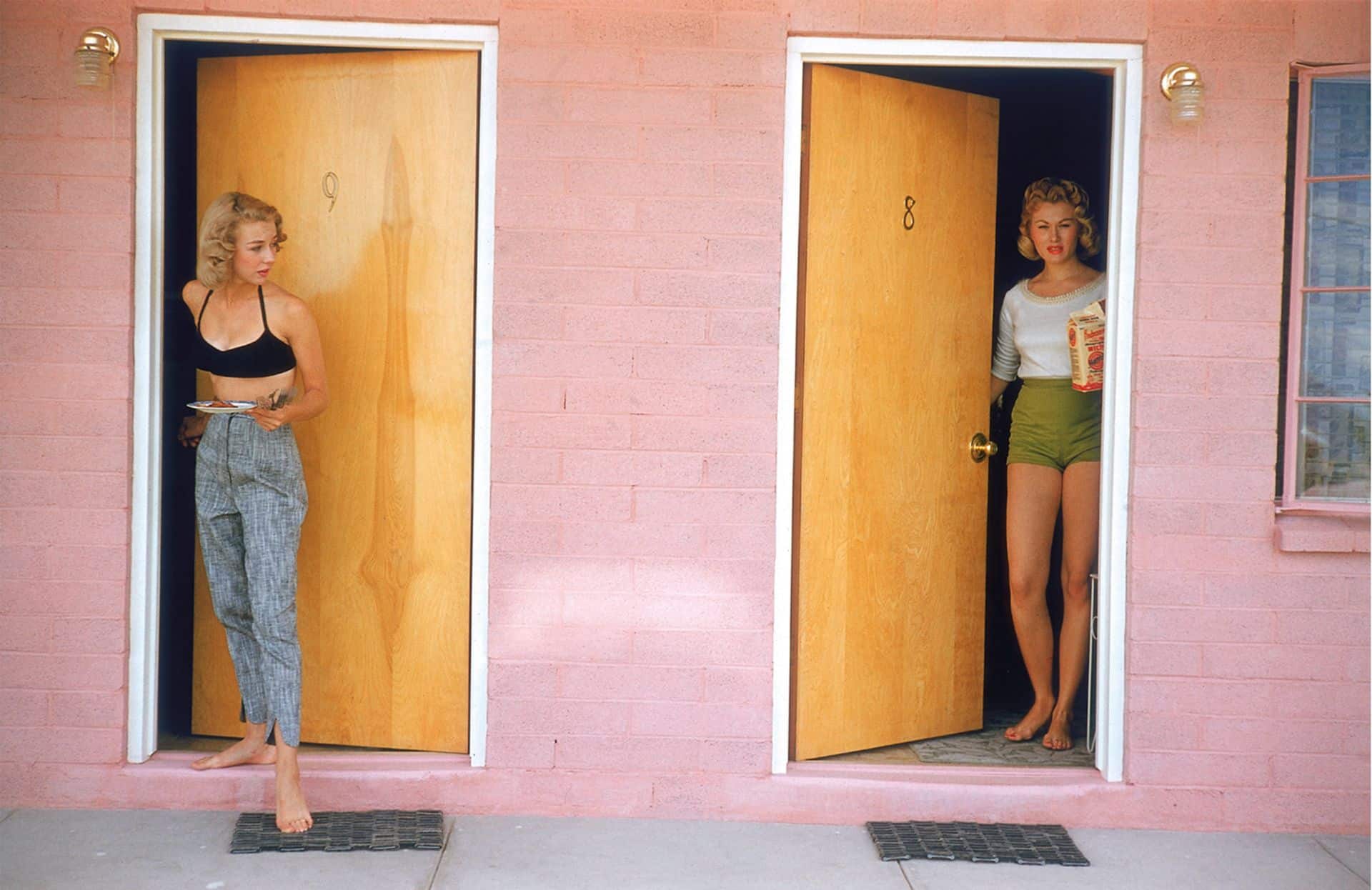
Showgirls, Las Vegas, Nevada, USA, 1957 © Elliott Erwitt / Magnum Photos

Showgirls, Las Vegas, Nevada, USA, 1957 © Elliott Erwitt / Magnum Photos

A bit of a rabble-rouser, but without a mean bone in his body, Erwitt was a kind of an intellectual of humor. He always denied it, claiming he had a “poor education.” But he used his wit to attract the eye, to capture whatever surprises or moves him, or what he found amusing. His gaze constantly oscillated between joy, astonishment, and sadness.

“Elliott’s photos should be inserted into survival kits. When you’re desperate, they can save your life.”

Ferdinando Scianna, Magnum photographer

He made the spectator aware of serious subjects, questioned the world, and rejected indifference. Ferdinando Scianna, another Magnum veteran, and a great photographer with similarly impeccable French, knows Erwitt in and out: “You can’t be ironic without being intelligent. Elliott’s photos should be inserted into survival kits. When you’re desperate, they can save your life.”

Men and women

Elliott Erwitt may have been a dreamer, but he always kept one foot firmly on the ground. He observed the “human comedy” like a sociologist. Scianna said it best: “Elliott is an eminently political photographer. He likes to show differences between people, always using mockery to avoid being too buttoned up.” Erwitt’s famous photo of the segregated drinking fountains falls into this category. The paradoxical composition of the scene highlights the inanity of racism: the black fountain is for the whites, and both races share the same water supply. Similarly, “when a Black soldier sticks out his tongue at the camera, that’s Elliott Erwitt making faces at the military establishment.”

There is no secret to good photography. With Erwitt, everything seemed easy. “In photography, thinking isn’t of much use, you have to see.” There is no special recipe, but there were mentors, starting with Capa, who brought Erwitt into Magnum, an agency he worked with throughout his life and later directed. Henri Cartier-Bresson, the man who taught young Elliott to always go out armed with a camera, once said: “To photograph is to put on the same line of sight the head, the eye and the heart.” From this “gold standard,” as he calls it, Erwitt learned how to forge his own style, to learn to find the moment, of course, with a precise dose of the heart, the eye, and the mind.

“Don’t worry, it’s Sting.”

He never talked much about the subject. Nor, as a matter of fact, does he talked much at all. Erwitt was eloquent in his silence. Modesty is perhaps one of the secrets that allowed him to aim his lens at many celebrities: Marilyn Monroe, Che Guevara, Clark Gable, and John F. Kennedy, whose family appreciated him in particular.

The photographer had always been close to celebrities. In 2010, he opened the imposing metal door to his ground-floor studio in his home in Central Park West to welcome his assistant visiting his archives. The sound of the piano could be heard from the apartment above. It was his neighbor playing. “Don’t worry, it’s Sting.” The English singer penned a note in Erwitt’s latest book, Found Not Lost, published in 2021, citing him in one breath with the biggest names in American photography.

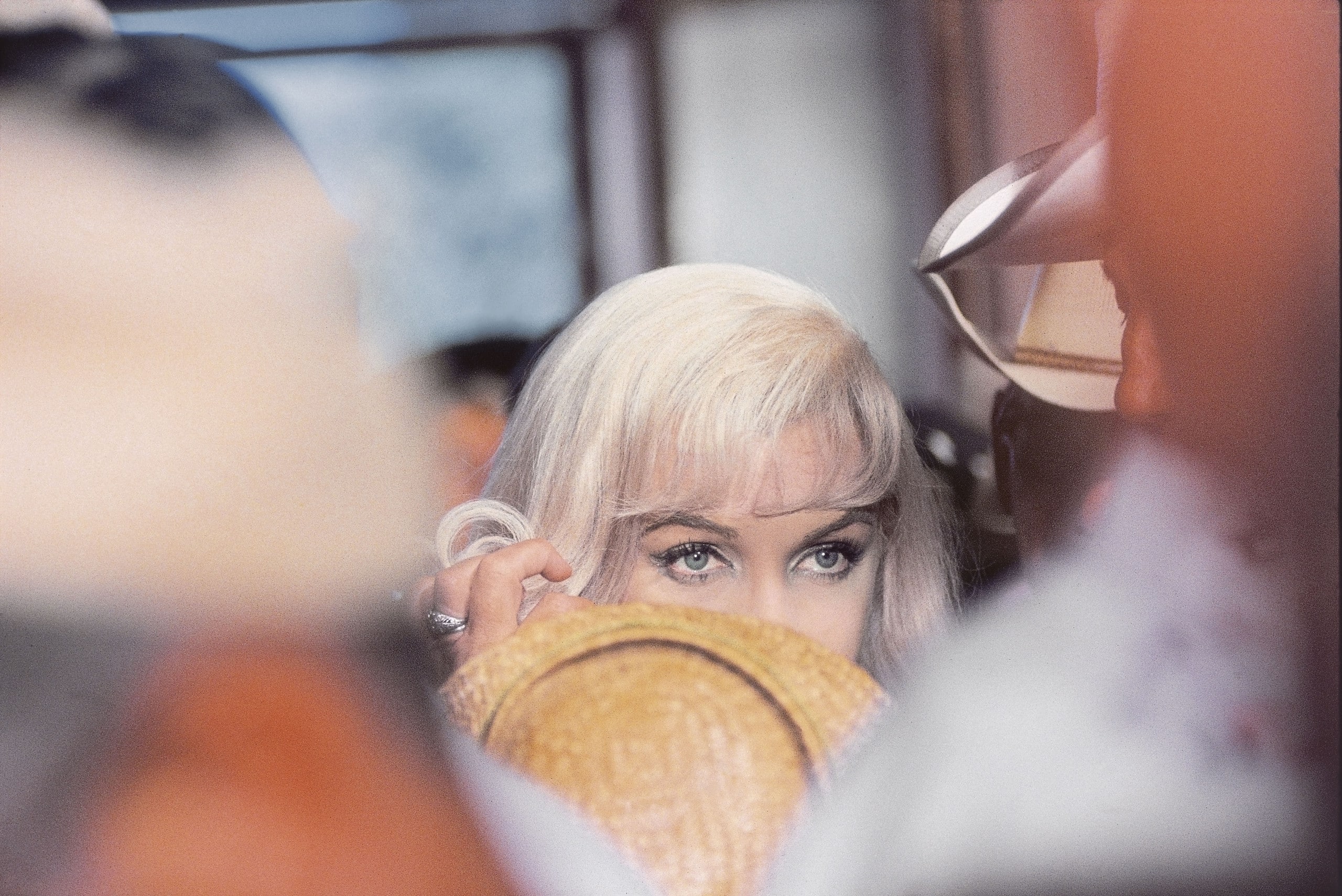
Marilyn Monroe during the filming of The Misfits, Reno, Nevada, USA, 1960 © Elliott Erwitt / Magnum Photos

Marilyn Monroe during the filming of The Misfits, Reno, Nevada, USA, 1960 © Elliott Erwitt / Magnum Photos

Erwitt’s name is also synonymous with poetry and glamour. An 2023 exhibition at the Maillol Museum in Paris presented several of his iconic fashion photos, including the delightful shot of a black cat poking its head between the perfect legs of a model, or the photo of Marilyn with unmistakable blue eyes and blond curls. Scianna, who knows a thing or two about the genre, comments: “Elliott always knew how to get an extraordinarily sensual look from all the women he photographed.”

Pia Frankenberg, Erwitt’s ex-wife, said he was laconic and, like many artists, hard to pin down. In a 2003 interview with The Guardian, she recalled, “Now that I know him, I feel for everyone who is a little intimidated because they don’t know how to handle him. It is like when people think that comedians are funny people and they are not.” One of the—a total of four—women he married famously played a trick on him by hiding the negatives of his best photos in a bed after their separation had been announced. The negatives were reported missing and were only found years later.

“I am a craftsman. I often say that I am a photographer with a hobby, which is photography.”

The nonagenarian had made a lot of money from commercial photography. Take the ad campaign for the French Office of Tourism, memorable for the picture of a man on a bicycle, with his son and a baguette on the rack, which is now in museum collections. With the proceeds, Erwitt was able to purchase a house at the edge of Central Park and a second home in the Hamptons. But he had known much less prosperous times. He remained a humanist, close to the “little people,” and turns a critical eye on the rich and the powerful. “One could say that I am on the Left,” he said reluctantly. What place does the human being have in his photography? “The human is neither a flower, nor a building, nor an animal.”

Dogs


Elliott Erwitt was a collector of images. He often has to let them mature, like good wine, before bringing them to the public. Dogs were among his favorite subjects. He immortalized them in human poses: a way to put man and animal on the same level. His passion for the canine species developed over time, when he realized that they were abundantly represented on his negatives.

In recent years, Sammy, a Scottish terrier born in Hamburg, could still be seen wandering around Erwitt’s apartment: a multilingual refugee, a bit quirky, gentle, and quiet, just like his master. Before that, there were others, bigger ones, like Great Danes. Just ask Jimmy Fox. He knew these dogs well because he had to take care of them whenever Elliott Erwitt dropped off them at Magnum’s New York office before leaving on assignment.

New York, New York, USA, 1974 © Elliott Erwitt / Magnum Photos

This old-timer in the world of photography had remained a child at heart: fully of whimsy and talent. “Elliott’s photos are recognizably his, and they have been from the very start,” says Scianna. “That’s a difficult thing to accomplish in photography. Normally, one gets there by exaggerating the form. In Elliott’s work, the form appears to be simplicity itself.”

In an interview with Le Monde in 2010 (probably one of the best interviews ever done with a photographer), Erwitt explained his philosophy: “I am a craftsman. I often say that I am a photographer with a hobby, which is photography. Most of my images are commercial, but I also take pictures for my own pleasure. Sometimes the two go together, but not always.”

In 2011, the International Center of Photography, awarded him the prestigious Lifetime Achievement Award. Did it mean his career was over? “No, the award wants only my life to be over.” In the decade that followed, the photographer published seven books, some including never-seen photographs, and produced several retrospectives and themed exhibitions, for example about England, Scotland, or simply about color. The man never stoped. Mr. Erwitt, how did you learn how to photograph? “I read the instructions on the back of the box.”

More information and photos on Elliott Erwitt on Magnum’s website.

100 photos for press freedom, Reporters sans Frontières – Eliott Erwitt, Released November 2, 2023.

Cover photo: Elliott Erwitt in reflection, Tropicana Hotel, Las Vegas, Nevada, USA, 1957 © Elliott Erwitt / Magnum Photos

Photographers Alarmed Over Squarespace’s ‘Auto Opt-In’ of AI Crawlers

Photographers Alarmed Over Squarespace’s ‘Auto Opt-In’ of AI Crawlers
A crawler
Web crawlers have become more of an issue in the past few months.

This month, Squarespace added a feature that allows website owners to opt out of artificial intelligence crawlers; however, some photographers are dismayed because the option appears to automatically be set to opt-in.

AI crawlers are bots that collect data from websites which are then used to train generative AI models such as image generators and chatbots. Crawler bots are nothing new but because of the perceived threat that AI poses, websites have begun blocking the crawlers, including PetaPixel.

The issue has risen to the surface because generative AI models have become so good that they can imitate real photography.

Squarespace’s Default Setting for AI Crawlers: Opt-In

Squarespace announced a new feature earlier this month which allows website owners to hide their site from search engines and AI crawlers. However, photographers have found that the default setting for both search engines and AI crawlers is to allow them.

Most photographers will want to be indexed by Google crawlers for obvious reasons but it’s many photographers do not want AI crawlers taking their image data.

[embedded content]

Miguel Quiles, a professional portrait photographer based in Orlando, Florida, made a video about the AI crawlers after he was updating his Squarespace website and saw a section he hadn’t come accross before.

“Out of curiosity, I clicked on it to see what it was about and saw the artificial intelligence crawlers option,” Quiles explains in the video above. “What surprised me most is that this option was actually turned on by default.”

Others online have expressed outrage that the default is set to opt-in, Squarespace responded to one critic by saying, “We understand the concern. To clarify, AI models currently train on all public web data. This feature is not actively opting you in, but instead offers you the option to opt out and prevent your site from being crawled by artificial intelligence crawlers.”

Squarespace did not respond to PetaPixel‘s request for additional comment ahead of publication.

How to Turn Off AI Crawling on Squarespace

To change the AI crawler setting on Squarespace, open the settings panel, click “Crawlers”, and from there site owners will be presented with two options: “Search Engine Crawlers” and “Artificial Intelligence Crawlers.”

For users who don’t want their site to be crawled by AI, toggling the setting to off will prevent it. Most will probably want to keep the search engine crawlers toggle left on to help the site’s visibility, as without it Google won’t be able to properly index the contents of the site.

Crawlers can also be blocked by adding a line of code to the robots.txt of the site.

Local photographer to share love of cooking at new store

Local photographer to share love of cooking at new store
imageimage

John Mollura stands in the Farmacy Market where he will be offering cooking tips and advice to customers (Photo courtesy of Facebook)

Known throughout the area for his photography and motivational speaking, John Mollura has revealed another talent that he is bringing to Milford. Recently, he announced that he would be working at The Farmacy, a new, fresh food market located in downtown Milford. The Farmacy, jointly owned by the Helmick and Shupe family offers locally grown produce, meats and other unique cooking items.

“When things get put on your heart, do you move? What if they’re not what you would choose to do? What if that situation plays into your long-held fears?” Mollura posted on social media recently. “I’ve learned that when God puts something on my heart, I need to take action.”

Last summer, Mollura decided to put his studio in Penny Square up for availability as his photography business was moving slowly. He began offering his services as a motivational speaker, bringing a voice to Imposter Syndrome, the feeling that even when you should be proud of an accomplishment, you feel as if you do not deserve recognition for it. As Mollura described it, Imposter Syndrome is the feeling of being “fake” and undeserving of accolades, something that affects up to 70 percent of people. However, as he grew the second business he began after leaving a career as a rocket scientist, Mollura realized he would need a part-time job in the meantime, something he didn’t even want to entertain at first.

“About two weeks ago, God whispered in my ear a person I needed to reach out to, and the opportunity I felt was waiting for me, even if it meant swallowing my pride,” Mollura continued on social media. “You might not know this about me, but I am a hella-good cook. It’s actually my hobby. Some people read People Magazine, I read Food Network Magazine.”

According to Mollura, when he has a bad day, he takes the advice of Matthew McConohey in “Failure to Launch.” The character, Trip, says, “Pour yourself a glass of wine and turn on the Food Network; it’ll take the edge right off.” Mollura credits “Alton, Valerie, Eduardo, Emeril (BAM), Ree and Giada for “being there” for him.

“So, what was put on my heart? To reach out to my friend Patrick Helmick to see if he needed help launching his new brick-and-mortar store,” Mollura said. “When I spoke to Patrick, he said that my name had crossed his heart to reach out to and then, a few days later, I messaged him. We don’t believe in coincidences.”

While at the store, Mollura will be doing almost everything that needs to be done.

“With the Farmacy Market being so new, there is no shortage of things to do,” Mollura said. “From assembling shelves, to helping install the phone system, and of course, helping customers. I love having varied tasks. My mentor when I was a test engineer used to refer to it as “other duties as assigned,” so I’m familiar with pitching in with whatever tasks need to be completed.”

Since the Farmacy Market specializes in local and extremely high-quality foods, rooted in the mindset that food is medicine, Mollura is excited to talk to customers about what they enjoy cooking and eating or what the person they are buying a gift for enjoys, then showing them some options that would be perfect to take home. When asked if he would be offering cooking classes or offering demonstrations, he answered that there were some exciting things being discussed for 2024 as the business is operated by “creative and entrepreneurial minded people working together.”

“I was a picky eater when I was younger. My parents both worked when I was growing up and my mom would leave me notes to help get dinner ready. Helping to get the dinner on the table became a source of pride for me, even if it was just a tuna sandwich and some microwave French fries for my dad to scarf down in the minutes he had between coming home from work and then heading to night school. As I got older, and started eating out with friends, I began to enjoy a variety of food and then I would go home and experiment in the kitchen,” Mollura said when asked what got him into cooking. “When I graduated college I moved from my hometown of Johnstown, PA and I immediately began travelling extensively for work. I longed for home cooked meals with family and friends who were hundreds, if not thousands, of miles away. When I would have some down-time in my single bedroom apartment in Dover, I didn’t have time to make many friends. That isolation, coupled with an intensely high-pressure job in the space program right out of college caused me to have a tremendous amount of anxiety that would sometimes slip into depression. My safe-haven and “happy place” was to watch Food Network and dream of having dinner parties of delicious creative home cooked food with friends.”

Focusing on cooking techniques of chefs in the 2000’s, like Rachel Ray, Giada De Laurentiis, Bobby Flay, Emeril and Alton Brown, Mollura was amazed at how their foundational knowledge of techniques, tastes and textures give them the ability to create complex dishes that are also unique. He calls it “humble ingredients kicked up a notch.”

“As my friend circle in Delaware slowly grew, we held weekly gatherings centered around home cooked food. When Brenda and I got married, we loved to entertain with fun and creative meals whenever I was in town,” Mollura said. “As I traveled across the planet for work, I enjoyed trying different flavors that the locals were always gracious to share with me. Sometimes I didn’t know what I was eating… and sometimes, I knew what I was eating, and I wish that I didn’t.  won’t say what the weirdest thing was as to not make anyone lose their appetite!”

In addition to his role at the Farmacy Market, Mollura continues to accept clients for both his photography and motivational speaking businesses, but finds this new venture to fall in line with his other artistic endeavors.

“The common thread with ALL of my artistic endeavors, whether it is portrait photography, motivational speaking or coaching, or cooking, is that I want people to realize and believe that they have worth and they are loved and cared for. My dear friend Paige has a sign in her kitchen that says, “show people how much you love them; cook them tasty food” and that sums it up for me,” Mollura said. “I love that food engages all of the senses; the tastes (of course), the sight of a beautifully plated dish, the textures, the sound a frying skillet, and all of the wonderful smells!”

For those who love to cook, but simply don’t know how to be adventurous in the kitchen, Mollura offered a few tips.

“I have an option for people looking to try new ingredients and also an idea for people looking to expand the flavors and seasonings they eat. First, If you want to branch out from ingredients you usually cook with, find something new that is “related” to what you currently eat. For example, if you’re used to eating a regular baked potato, buy some fingerling potatoes and prepare them as you usually would, and you can begin to taste the subtle and sometime substantial difference in flavors. If you like broccoli, try some broccoli rabe or broccolini,” Mollura said. “Second, if you are feeling adventurous with trying new the spices and seasonings find an ingredient you’re familiar with, like broccoli, and find a geographic region you’re interested in trying the flavors of, such as India. Do a quick internet search to see if that region uses that ingredient. If so, you can buy any number of prepared sauces and spice mixes to add to your ingredient and prepare as recommended and voila you will know whether the new flavors are for you, or not, but at least you tried!”

In addition to continuing his photography, motivational speaking and work at the Farmacy Market, Mollura also offers private cooking lessons. Anyone interested in scheduling a lesson can reach him at [email protected] to discuss where they are and what they are looking to learn. The Farmacy Market is located at 28 South Walnut Street in Milford.

“Anyone that calls to discuss private lessons, I’d be happy to share what those “too-weird-for-print” meals were,” Mollura joked.

RELATED STORIES:

Share this Post

Fstoppers Photographer of the Month (November 2023): Kareem Quow |

Fstoppers Photographer of the Month (November 2023): Kareem Quow |

The Fstoppers community is brimming with creative vision and talent. Every day, we comb through your work, looking for images to feature as the Photo of the Day or simply to admire your creativity and technical prowess. In 2023, we’re featuring a new photographer every month, whose portfolio represents both stellar photographic achievement and a high level of involvement within the Fstoppers community.

This month’s winner is Kareem Quow! His work is notable for its creative concepts and innovative lighting. Be sure to check out our favorite shots of his below and give him a follow to see his full portfolio. He’s now in the running for Fstoppers Community Photographer of the Year!

How to Be Chosen

Remember, in 2023, we’ll be featuring a photographer chosen from the community every month. At the end of the year, the Fstoppers Community Photographer of the Year will be chosen from the 12 monthly winners, with the overall winner getting a tutorial of their choice from the Fstoppers store. Be sure to share your photos in the Fstoppers community

See Past Photographers of the Month

You can see all Photographers of the Month here.

Bird Photo Contest Celebrates Unique Diversity of Australia’s Wildlife

Bird Photo Contest Celebrates Unique Diversity of Australia’s Wildlife
Cockatoo in flight

“Fingertips” by Kate Burgess. Winner, Birds in Flight.
“Being able to capture both the ‘fingertips’ of the feathers in flight and the cockatoo’s head and feet in the background makes this a magical image for me. Shooting in burst mode enabled me to capture just the right composition.”

Australia’s unique birds are celebrated in the annual BirdLife Australia Photography Awards. Some of the country’s best bird photographers submit their work for consideration each year, and the 2023 contest was no exception. Nine winners were singled out for their work, rising above more than 6,000 images that were submitted.

The winning photos are both a celebration of Australia’s spectacular and diverse birdlife and a powerful statement. Organizers BirdLife Australia and BirdLife Photography hope they will inspire more people to connect with, care about, and protect birds and nature.

Standout images include Kate Burgess’ action-packed photograph of a cockatoo in flight, which won the Birds in Flight category. As the cockatoo spread its wings in the forest, its individual feathers almost look like they’re touching the photographer’s lens. In terms of cuteness, Nikki Kenwrick’s winning image in the Backyard Birds category takes the cake. In the photo, an adorable Superb Blue Wren is perched on a gap in wood fencing. With its head thrown back and beak slightly open, we can almost hear its song.

The photo contest not only awards these incredible bird photographers, but it also gives back to help Australia’s bird population. The funds raised through entry fees support BirdLife Australia’s bird conservation work. This year, proceeds will go to its Birds on Farms project in central west New South Wales, helping landholders protect, restore, and revegetate threatened woodland bird habitat on their properties.

Scroll down for more winners and our favorite finalists, and then check out the full winner’s gallery for even more exceptional bird photography.

Here are the winners of the 2023 Birdlife Australia Photography Awards.

Superb blue wrens standing on a fenceSuperb blue wrens standing on a fence

“Song of the Superb” by Nikki Kenwrick. Winner, Backyard Birds.
“There are several families of Superb Blue Wrens living at my mother’s place, and I often sit and watch them popping around her garden. They are such happy little birds.”

Seagull flying in the air with wings spreadSeagull flying in the air with wings spread

“Wings spread” by Tai M. Winner, Youth.
“During a walk along the Victoria Quay I was shooting some photos of the seagulls flying around me, I noticed there were moments where they would fly directly above me. I tried for a shot like this one a few times but failed until I eventually captured one of the birds scratching itself mid flight.”

Falcon and hawk fighting over a mealFalcon and hawk fighting over a meal

“Where there is smoke there is fire” by Martin Anderson. Winner, Portfolio.
“The portfolio consists of a sequence of images that I was lucky to capture of a Brown Falcon trying to steal a free meal from a Spotted Harrier. The Spotted Harrier (Smoke Hawk) had just captured a Golden-headed Cisticola, and this did not go unnoticed by the Brown Falcon perched in a nearby tree. The Spotted Harrier was doing its best to hide the kill in its plumage as it flew gracefully across the field, when the Brown Falcon (one of Australia’s Fire Hawks) flew in to steal the prize. An interesting battle ensued and the prize fell to the ground unclaimed, the Harrier asserted dominance and the Brown Falcon left in defeat.”

Swans swimming across a lake in PerthSwans swimming across a lake in Perth

“Morning! Time to get moving” by Veronica McPhail. Winner, Birds in the Landscape.
“Early morning movement from all residents along the south Perth foreshore. The swans awake and swim across the lake, looking for food.”

Rainbow Bee-eater in flightRainbow Bee-eater in flight

“Leapfrog” by Jason Moore. Shortlight, Birds in Flight.
“The classical flight shot of the Rainbow Bee-eater is the front on, wings spread “portrait”. I thought this side on perspective offered the viewer something a little unusual. I’m fond of the lighting in this image. The subject and perch are shrouded in shadow, but the distant background is being lit by sunlight, which has created a contrast between cool and warm colors which I find quite attractive.”

Little Egret taking off on the waterLittle Egret taking off on the water

“Water trails” by Rebecca Harrison. Shortlist, Special Theme.
“A Little Egret takes off gracefully, leaving a sparkle of water droplets in its wake.”

Nylon wire stuck in the neck of a birdNylon wire stuck in the neck of a bird

“Anguish” by Kim Wormald. Shortlist, Human Impact.
“This was such a heart-wrenching situation, not only the adult’s anguish at being entangled in nylon filament but also the juvenile’s desperation as it tries to free its parent. I called a specialist rescue service that was unable to save this bird.”

The photo contest celebrates Australia’s unique and diverse wildlife.

Portrait of a young Southern CassowaryPortrait of a young Southern Cassowary

“Casso-unwary” by Gail Yager. Shortlist, Bird Portrait.
“We were driving in Tully Gorge NP and pulled off the road. To our surprise, this young Southern Cassowary was standing there. He was as curious about us as we were about him—whilst maintaining a safe distance! I love the tilt of his head and the way his casque looks like a cap, which I have emphasized with the way I have cropped the photo.”

White-faced Heron stands on the roof gutter of a houseWhite-faced Heron stands on the roof gutter of a house

“Urban sentinel” by Stephen Spence. Shortlist, Backyard Birds.
“A White-faced Heron stands on the roof gutter of a house near the beach, its presence capturing the essence of the coastal surroundings. The black and white contrast adds depth to this urban encounter with nature. The image also captures the Heron’s elegant presence, symbolizing an urban sentinel amid the coastal landscape.”

Portrait of a female Australasian DartePortrait of a female Australasian Darte

“Piercing” by Colin Driscoll. Winner, Bird Portrait.
“Just on sunset a female Australasian Darter looks up from preening after her final successful fishing session for the day. These birds are so angular it is difficult to get an interesting composition. This shot captures what these birds do under water. One can imagine this is the last thing a fish sees as the long neck launches that bill piercing it like a spear fisher would.”

Two Little Corellas on a BranchTwo Little Corellas on a Branch

“Two’s company” by D’Artagnan Sprengel. Shortlist, Youth.
“Walking back to the car along the Coodanup Foreshore, I came across a large flock of what I believe were Little Corellas. They were feeding on the ground around the carpark. I saw these two perched together on an open branch and thought it would make a cute photo. I composed the image in portrait orientation and chose to overexpose the image to get a nice, clean, white background.”

A leucistic Australian Pied Oystercatcher catches the last light as it retreats to the mangroves. Cairns, Queensland, Australia

Group of Little Corellas Rolling on the GrassGroup of Little Corellas Rolling on the Grass

“Have you heard the one about…” by Franciscus Scheelings. Shortlist, Bird Behavior.
“While doing a bit of birding at the La Trobe University wetlands I noticed a large flock of Little Corellas on one of the ovals with several pairs rolling around in the grass. I got down as low as I could to fire off some shots and managed to get this photo of what looks like a couple of old friends sharing an hilarious joke.”

Yellow-faced Honeyeater showered itself in pollenYellow-faced Honeyeater showered itself in pollen

“Pollen Shower” by Guy Draper. Winner, Bird Behavior.
“I had spent several weeks returning to the same area of the park, watching and photographing a wide variety of native birds feeding on the Grass Trees. After taking a lot of front-lit shots, I set myself the challenge of getting some “last light” backlit shots, capturing some behavior with warmer light. I knew the instant I checked the back of the camera with this image that I’d captured a special moment, as the Yellow-faced Honeyeater showered itself in pollen as it plucked the flower from the stem!”

The funds raised from entry fees go toward conservation projects aimed at protecting Australia’s bird populations.

Bird wading in a bayouBird wading in a bayou

“Jambalaya on the Bayou” by Jason Moore. Winner, Special Theme.
“The somewhat messy, but beautifully coloured background inspired the title of this image. For those of you that don’t know, The Carpenters released a hit song in the 70’s called Jambalaya on the Bayou. It was a happy song with a tuneful beat, and it spoke of life on the Bayou… my thoughts of a Bayou include water everywhere, flooded cypress trees with Spanish Moss hanging from their branches, and swampland with wading birds…”

Bush Stone Curlew near a construction barrierBush Stone Curlew near a construction barrier

“Curlew construction consideration” by Gregory Abbott. Winner, Human Impact.
“One night in April, I went down to pick up a passenger off the late ferry. The Macleay Island jetty (then still under major reconstruction) was deserted except for myself and this attentive Bush Stone-Curlew. Both of us waiting. The Curlew just stood there as if the construction, signs, lights, and dead machinery had stumped it. I slowly walked to within a few meters and took the shot with my phone, then retreated a little. I too was somewhat stunned at the implications for wildlife of the multi-million dollar upgrade to jetty and the extended parking areas. I stood with the Curlew for a while. Then quietly I retreated to take a fenced in, man-made detour to the jetty proper. The concrete concentrations. Mine. The curlew’s… where will it go?”

Birdlife Australia Photography Awards: Website | Facebook | Instagram

My Modern Met granted permission to feature photos by the Birdlife Australia Photography Awards.

Related Articles:

20 Outstanding Images From the 2022 British Photography Awards Shortlist

People Can’t Believe This Photo of a Bird Isn’t Photoshopped or AI-Generated

Winners of the 2023 Audubon Photography Awards Celebrate the Beauty of Birds

Peregrine Falcon Fiercely Defending Her Nest Wins Bird Photography Competition

Prince Gyasi becomes Pirelli calendar’s first black photographer

Prince Gyasi becomes Pirelli calendar’s first black photographer

The annual Pirelli calendar has been shot by a black photographer for the first time since its launch in 1964.

The 28-year-old Ghanaian visual artist Prince Gyasi was in LA when he first got the call from the Italian tyre company asking him to fly to New York for a “vibe check”.

Vibe checked, he got the job. The fact that he is the first black artist, and the first African, to shoot the calendar means a lot to him. “It’s about opening the door, opening the floodgate,” he said at a launch event in London on Wednesday.

“If I open it and I close the door there’s no reason for me being the first artist to do that. It’s about what happens after, does it continue … It’s not just about having the title … for me it’s about other people being able to touch that opportunity.”

The theme of this year’s calendar is timelessness, which is represented perhaps most literally through a shot of the evergreen Naomi Campbell standing in front of a melting, Dali-esque clock. Other names that Gyasi chose to shoot included the actor Idris Elba, the singer and actor Teyana Taylor, the footballer Marcel Desailly, the painter Amoako Boafo, and King Otumfuo Osei Tutu II of Ghana.

(From left) the director Jeymes Samuel, the poet Amanda Gorman, Prince Gyasi and the actor Angela Bassett at a photocall to launch the calendar.

Amanda Gorman, the youngest inaugural poet in US history, is also featured. She is up a ladder writing equations on a blackboard, next to which stands Margot Lee Shetterly, the author of Hidden Figures: The Untold Story of the African American Women Who Helped Win the Space Race.

The photo, says Gorman, “is directly acknowledging that I stand on the shoulder of so many other people … it says that I was able to rise to where I am today because of people like her”.

The actor Angela Bassett is photographed in front of a huge door. “I think it’s glorious,” she says of her portrait. “This by far is the most beautiful shot and set that I’ve been a part of … this is exciting, a young man from Africa … he’s at the beginning of his career and he’s already a visionary. That adds to what makes it so special.”

Angela Bassett photographed in front of a huge door, slightly ajar, with a giant key in her hand.

Pirelli in recent times has embarked on a rebranding that has been nothing short of a total overhaul. It began with the famous photographer Annie Leibovitz being invited to shoot the 2016 edition, which featured pictures of clothed “sheroes” such as Yoko Ono and Serena Williams. For 2017, an unretouched Dame Helen Mirren was December, shot wrapped in a blanket, and a similarly unretouched Uma Thurman wore a polo neck. The 2018 calendar featured an all-black group of models, activists and actors shot by Tim Walker.

It is very different from the Pirellis of yore, which often featured women in no or next to no clothes, shot through the lens of the “male gaze”. Most on-the-nose, perhaps, was the 2010 calendar, shot by Terry Richardson, whose name has since become something of a byword for female exploitation in the fashion industry, with young models photographed eating bananas and pretending to eat cockerels.

skip past newsletter promotion

Gyasi says he came to the brand not through the calendars and their chequered past, but through Formula One. “I have a car, so I use the tyres,” he says. “My favourite rapper name-dropped Pirelli in his debut album. I watch sports every day so that’s where I know Pirelli from, I don’t know other things. I don’t do politics.”

The calendar, or “The Cal” as it is trademarked, isn’t available to buy. Part of its personal lore is that it is reserved for people the company deems big cheeses – key clients and VIPs. But despite this, it holds cultural capital. As Gorman put it to the New York Times recently: “It still matters.”

Amanda Gorman up a ladder writing equations on a blackboard, next to which stands Margot Lee Shetterly

Speaking in London yesterday, she explained further: “in a world that is still incredibly digital and visual and imagery – based, being able to create images and representations of people is still such a cultural power to have, regardless if it’s a tyre company, a social media influencer or a poet.

“That type of, let’s say, authority over the images that enter the cultural space is astronomical. And so the idea that this institution is creating a calendar where the gaze is African … and where the talent is African or Black … I think that matters and shows our image matters and shows our lives matter.”

Daddy issues: Julia Fox and photographer Luisa Opalesky in conversation

Daddy issues: Julia Fox and photographer Luisa Opalesky in conversation

Following her recent show, New York-based photographer Opalesky sat with close friend and collaborator Julia Fox to discuss their history, ‘seizing the fucking day’ and complex father-daughter dynamics

30November 2023

Since the late 1970s, Downtown Manhattan has been an incubator for both upcoming and established artists, photographers, musicians, writers and creatives. For multiple generations, the city’s hub has given Generations of native New Yorkers and transplants a space to find their creative perspective and community. For photographer, Luisa Opalesky her move to the city in 2010 opened her world to the chaos and creativity of Downtown New York.

Born in Philadelphia, to a Croatian father and Venezuelan mother, Opalesky first moved to New York City to complete a BFA in photography at Parsons New School for Design. Since then, she has spent the last decade immersed in the downtown New York scene, working as a photographer, choreographer and movement director. 

Back in 2019, she released Beauty Trilogy, an exhibition project consisting of three parts –  WIG, HEEL and NAIL. Made over a five-year period on medium format and instant film, the project drew inspiration from multifaceted concepts of beauty. Displayed as expansive prints, this unconventional series encapsulated Opalesky’s experiences as a nightlife dancer in her 20s. 

Over the past summer, Opalesky put on her latest show entitled Daddy’s Daydream. Inspired by her father Lou, the show combined both her visuals of him and his drawings and text. While the focus of the show was centred on her father’s view of the world and their relationship, it also tackled some taboo moments of daily life, challenging traditional notions of ageing and youth.

The images, some too graphic to be shared on social media, were intentionally provocative and ranged from a triptych of her dad in the bath nude after an injury, to explicit images of her partner’s phallic wristband. “Though I did not learn boundaries from my parents, comprehension and consciousness became transformative in understanding the many sides to the way I learned how to love,” she explains. “I put the show together with Sam Sutcliffe, my curator, wanting to push semi-graphic imagery for the first time throughout dangerous times and healing ones, revealing truths in intimacy and my own vulnerability.”

Among the other pictures are images of her close friend and collaborator Julia Fox. Depicted through a series of polaroids taken over the years they have known each other, the images contrast the other graphic pieces and offer a different perspective to her work. Speaking on the messaging behind the image selection, she explains, “I hope that people continue trying to be as honest as possible in their relationships with family and friends, particularly with complicated parental figures that are flawed, as we all are”.

Below Opalesky and Fox discuss how they first became friends, putting on DIY art shows, and navigating relationships with parents through adulthood.

Luisa Opalesky: We both started doing photography shows around the same time back in 2017. I remember being so inspired and reaching out to you and asking how the fuck does anybody do that. I remember buying flowers at the bodega for RIP Julia Fox and thinking I don’t really know her but I love her. There was a really raw vulnerability I was really drawn to. That opening led to essentially us trauma bonding and then a mini road trip where we started taking pictures.

Julia Fox: Yeah, we just started doing things differently. You’re the friend that I would call if I wanted to go to see a movie that I knew no one else would want to go see. Or go on a crazy road trip, shoot guns, set fireworks off and go to the state fair. We would just kind of go and immerse ourselves in our own little world, it was really special.

Luisa Opalesky: There’s this term I’ve been coming back to through therapy which is cognitive dissonance, it’s conflicting thoughts that have been in my head forever. In 2017, when we were in really different places we would have these coping activities together. When would you say we started working together creatively? I feel like it was when we took those pictures [on the road trip].

Julia Fox: I feel like it was never intentional, it was just who we were at the time. It was never ’Oh, we’re going to meet here and do a shoot’. It was way more natural, organic, fluid and not forced. We were the art. We were creating art just by existing and then capturing it on camera very casually. It wasn’t this deliberate, curated moment, it was more like photojournalism.

So often, people are just waiting for someone to give them the opportunity. Sometimes you just have to go in and take the opportunity, you make it for yourself. You invite your friends. You are your own producer, curator and PR, especially in the beginning. There’s no shame in that at all. It’s about cultivating that community and those people that will come and they’ll show up for you. 

Also not putting boundaries on yourself. Anything is possible if you want it bad enough. Your career has been a huge example of that. You had to do everything yourself all the time but like you did it, that’s the difference. You got yourself here. You didn’t wait for a handout.

“We were the art. We were creating art just by existing and then capturing it on camera very casually” – Julia Fox

Luisa Opalesky: Daddy’s Daydream focuses on father-daughter relationships. Has your relationship with your parents changed during adulthood?

Julia Fox: I know you’re really close with your dad but I’m not. I’m closer to my dad now by default… he helps me a lot with my son. Now that I’m older, I can empathise more with him and sympathise more. He was a single parent and now that I’m a single parent I know how hard it is. I don’t have that chip on my shoulder anymore with him, which is nice. But in a way, I feel like that chip on my shoulder was what made me who I was. Everything I did was acting out of that father wound. Now that I feel like I don’t have it anymore I’m like, ‘wait what’s my driving force now?’ I guess it’s my son. I feel like a lot of things change when you have kids, you start to see your parents through a completely new lens. It’s really a mindfuck.

Luisa Opalesky: How would you describe intimacy with your parents? If you had any, what was it?

Julia Fox: When I was really young I was definitely a daddy’s girl, wanting to climb up on his shoulder, wanting him to tell me bedtime stories and just always wanting to be next to him. As I got older and life happened and that image was tainted, there really was no intimacy. Now, intimacy looks like he’ll come over to my house and put something in my basement and I’ll give him a plate of food because I know he has trouble with self-care and eating right so I’ll pack him a bag of food to take home for the week. We don’t really have deep conversations, he’ll talk at me and then I’ll be like, ‘Hey I’m not your therapist, I don’t want to hear this shit’. It’s a work in progress. 

Luisa Opalesky: I think the most specific difference with my dad in comparison to most people is that he was 50 when he had me. He’s 85 now. Having an older parent is a wild experience of patience. He had four daughters before me. He was always my hero and I idolised him because my mother was so young and she was a teenager, only 19.

Julia Fox: Now that you’re older and you’re wiser, do you see that maybe it was not normal for a 19-year-old to be having a child with a 50-year-old? Does it change the way you see your dad at all or do you just think times were different? 

Luisa Opalesky: No I totally have more mindfulness in the damage that was caused to my mum, but also he left his first family for my mum. I think in your book when you talk about your dad having relationships with the women you knew that really hit home because it put a perspective for me that I hadn’t heard in detail. I’ve been thinking a lot more about what my sister’s experience would be or what my mum’s experience would be. Just generally for the women in my family, what the fuck that would have felt like? I’m not going to judge my father, and I’m not going to judge anybody, but I definitely can see how much he’s gotten away with and how much women have to suffer the most through those situations. 

Julia Fox: And do the emotional labour of having to pick up the pieces, while the men just keep moving on up. 

Luisa Opalesky: It’s just really interesting to think about the ways in which our parents have grown up. For my parents, they’re always alone. They haven’t remarried. How can we not think about patterns and what we’re going to become? 

With the whole stigma around daddy issues, that’s a cultural stereotype that I purposely put in my show because it’s bullshit. I just always wonder what people think of when they hear that. Having these pictures of you and me or my friend Sam [Sam Sutcliffe, the curator] or these really graphic, very pin-up photos of women I can’t help but see the lens through my dad’s eyes. How we look at the body is based on what our parents have told us. How do we recondition that?

Julia Fox: Definitely by recognising it and being conscious and aware of it. I feel like I’ve already undone so much of the mental conditioning that was done to me indirectly. I feel like worlds ahead of my parents. In a way, I feel I’m smarter than them. 

Luisa Opalesky: Yeah. I wanted to bring up medication too, because I just started one SSRI that has been so helpful. I just have always had this stigma of why would you need anything. Why can’t you just deal with it, it’ll move past. Or what’s the point of spending your money on seeing a professional? 

Julia Fox: Funnily enough those kinds of sentiments always come from people who just have not done the work and want to just live in their cycle and their spiral. Anyone who’s done the work is going to tell you to go see a professional. Life is too short to be in pain. Life is too short to be suffering, seize the fucking day. Also, if you’re going to be self-medicating, why not go to a professional? Of course, everything is not black or white. There are some times when you go to a professional and they don’t give you what you need and it’s not that easy. But then there are times you go to professional, you get exactly what you need and you feel better. 

Luisa Opalesky: It’s worth it to find out what works. 

Julia Fox: It’s worth it to at least fucking try and if you’re just going to not try then you’re just choosing misery. That’s a deeper issue to be looked at. What is it in you that you’re so afraid of your potential greatness that you would rather sit in your misery because it’s familiar and comfortable?

This interview has been edited and condensed for clarity.

To keep updated on Luisa Opalesky’s upcoming exhibitions follow her on Instagram.

Join Dazed Club and be part of our world! You get exclusive access to events, parties, festivals and our editors, as well as a free subscription to Dazed for a year. Join for £5/month today.

Mastering reflection-free photography

Mastering reflection-free photography

Minimizing reflections when shooting through glass can be challenging. But here are some tips to help you reduce or eliminate unwanted reflections.

I recently ran one of my SPLASH! Photography workshops. These are fun and messy, but working with glass, water, and High-Speed Sync with speed lights is a great learning curve.

The setup

I placed a small square fishtank on a table covered with black fabric. The fabric also extended up the back. I placed a Godox AD200 and strip box on one side with grid and diffusion and a silver reflector on the other side of the tank. The tank was 3/4 filled with tap water. I placed my camera on a tripod directly in front of the tank.

Speed light: Godox AD200 on 1/8 power, HSS on with Stripbox

Camera Gear: Sony A7RV and Tamron 28-75mm lens – f/8, ISO200, shutter 1/250 second, 28mm, Peak Design tripod

Fish tank filled with water on black fabric

The shoot

We used High-Speed Sync to capture the action of the objects being dropped into the water. We also had cameras on burst most. This allowed us to capture fast-falling objects short distances with great lighting. I have also done this with a slower shutter speed of 1/125 and a higher shutter speed as well. I have found that 1/250 second was enough on most cameras to get great results with plenty of lighting.

Soda can dropped in water

The trick is to block unwanted reflections from the tank and water while still reflecting enough light onto the subject. The strip box was placed on a slight angle to the tank to allow light to catch but not appear in reflections. Side of the tank is preferable to the front. A silver reflector was also used to bounce some light back onto the subject, but also placed far enough away to avoid reflections.

The biggest reflections were actually from the camera, the photographer and the background. I placed black v-flats behind the photographer and kept all ambient light to a minimum (enough to see and focus). Another great option was to hang block-out curtains and shoot through that, or place black fabric between the object and camera. Using a remote shutter release and removing the photographer from all reflections works well too.

It’s easy if you have one person throwing and one person shooting, but you can do it yourself. I recommend setting your camera on a tripod, framing your shot and getting focus. Try a larger object in the middle of the tank. Then switch to manual focus. If using continuous focus and a zoom lens, I found the lens tends to track and often fails to focus on your desired subject, grabbing the water or the tank instead. Manual focus is better.

coffee pods dropped in water

Polarizing Filter

A polarizing filter (CPL) can be effective in reducing reflections. Rotate the filter until you achieve the desired effect. This is particularly useful when shooting through glass, and windows or photographing reflective surfaces.

Use a lens cloth

Clean the glass thoroughly before shooting to minimize smudges and fingerprints that can cause reflections. Use a lens cloth for this purpose. Don’t forget to occasionally check and clean any water drops from your lens too.

“,”link_href”:null,”link_target”:”_self”,”link_rel”:null,”attributes”:{“data-mgl-id”:”191324″,”data-mgl-width”:”1143″,”data-mgl-height”:”1600″},”orientation”:”i”},{“caption”:”After”,”meta”:{“width”:1143,”height”:1600,”file”:”2023/11/JuliePowell_tank-1-of-2.jpg”,”filesize”:631471,”sizes”:{“medium”:{“file”:”JuliePowell_tank-1-of-2-357×500.jpg”,”width”:”357″,”height”:”500″,”mime-type”:”image/jpeg”,”filesize”:”80022″},”large”:{“file”:”JuliePowell_tank-1-of-2-529×740.jpg”,”width”:”529″,”height”:”740″,”mime-type”:”image/jpeg”,”filesize”:”140874″},”thumbnail”:{“file”:”JuliePowell_tank-1-of-2-107×150.jpg”,”width”:”107″,”height”:”150″,”mime-type”:”image/jpeg”,”filesize”:”36633″},”1536×1536″:{“file”:”JuliePowell_tank-1-of-2-1097×1536.jpg”,”width”:”1097″,”height”:”1536″,”mime-type”:”image/jpeg”,”filesize”:”468249″},”Featured Image”:{“file”:”JuliePowell_tank-1-of-2-1143×1440.jpg”,”width”:”1143″,”height”:”1440″,”mime-type”:”image/jpeg”,”filesize”:”543170″},”Thumb”:{“file”:”JuliePowell_tank-1-of-2-357×500.jpg”,”width”:”357″,”height”:”500″,”mime-type”:”image/jpeg”,”filesize”:”80022″}},”image_meta”:{“aperture”:”8″,”credit”:”u00a9JuliePowell”,”camera”:”ILCE-7RM5″,”caption”:””,”created_timestamp”:”1700884243″,”copyright”:”u00a9JuliePowell”,”focal_length”:”28″,”iso”:”200″,”shutter_speed”:”0.004″,”title”:””,”orientation”:”0″,”lens”:””}},”id”:”191323″,”img_html”:”“,”link_href”:null,”link_target”:”_self”,”link_rel”:null,”attributes”:{“data-mgl-id”:”191323″,”data-mgl-width”:”1143″,”data-mgl-height”:”1600″},”orientation”:”i”}]” data-atts=”{“ids”:”191324,191323″}”>

Post-Processing

If reflections are still present in your images, you can use post-processing software to reduce or remove them. Tools like Photoshop allow you to clone or heal reflections. I find increasing blacks and contrast and adding a High Pass layer can work really well, as in the Before and After above.

Experiment

Try different techniques and settings in various lighting conditions. Experimentation is key to finding the optimal approach for your specific shooting situation.

Remember that some reflections may be unavoidable, especially in certain lighting conditions or with highly reflective surfaces. In such cases, incorporating reflections creatively into your composition might be the best approach.

You can check out the behind the scenes video on my YouTube channel and get a feel for the setup.