Photography

Freddie Miller’s The District reframes perceptions of drill artists and Deptford’s Pepys estate

Freddie Miller’s The District reframes perceptions of drill artists and Deptford’s Pepys estate

In Deptford, London, on the bank of the River Thames lies Pepys Estate. Opened in 1966, and comprising three 24 storey towers – the tallest in London at the time – eight 10 storey blocks and multiple lower structures, it still stands today after many phases of demolition and remodelling. A born-and-raised Bristolian and avid documenter of people and communities, including a butcher named Joe from the Bronx and fishing competitions in Oaxaca, Mexico, Freddie Miller has most recently taken his camera to the southeast London area to document its drill artists.

The District came about after Freddie was invited to take part in the exhibition Boundary Conditions, a group show thematically seeking to reframe the estate, at Gareth Gardner Gallery in September. Inspired by photos of the estate taken in 1970 by Tony Ray-Jones for The Architectural Review, Freddie initially gave himself a “fairly loose brief,” to photograph its young people. “I sent messages via social media, and visited the estate to find contributors,” Freddie tells us. He soon met Skitszo via Instagram, and they agreed that the project would also double as music promotion for the artist and his friends. “I gravitate towards subculture in my work so finding a group of mates who were part of the drill community, and wanted the images for their own purposes, just seemed like the perfect fit,” he adds.

For Freddie, visiting the estate without his camera first was paramount, as was immersing himself in the community and building trust. And when it came to the actual documentations, he says, “it was important for me to capture the estate and friendship group in a sensitive and collaborative way”. Alluding to the media and Metropolitan Police’s scrutinising of drill lyrics and the overall culture (the Met requested for YouTube to take down a total of 510 music videos in 2021 and since 2020 there has been a 1360% increase in requests made to the platform), Freddie sought for it to be more than a media depiction, and a focusing on the pride in their hometown. “I felt their musical ambitions and the strength of their friendship, that’s what was important for me to show.”

Turkish astro-photographer awarded for Sun image

Turkish astro-photographer awarded for Sun image
ISTANBUL

Turkish astro-photographer awarded for Sun image

A Turkish astro-photographer has secured third place in the solar category of the Astronomy Photographer of the Year Competition, an esteemed event organized by the Royal Observatory of Greenwich in London.

The astronomy photography competition received a total of over 4,000 submissions from 64 countries, establishing its status as the most prestigious event in this field.

The solar category of the “Astronomy Photographer of the Year Contest” is recognized for its higher level of difficulty compared to the remaining categories.

Mehmet Ergün, an astro-photographer who captured images that are imperceptible to the naked human eye using advanced technological equipment, received third-place recognition in this particular category.

A sizable solar flare is visible in Ergün’s photograph, which won third place. The photograph was captured using a 500-millimeter lens, accompanied by specialized equipment and filters.

Ergün proudly shared his remarkable accomplishments in the global sphere, stating, “I have garnered numerous triumphs with my photographs on the international stage. This prestigious accolade holds immense significance for me.”

The photographer expresses deep gratitude and great joy upon being named one of the global winners in the prestigious Sun category.

astro-photography,

Everything you need to know about getting started in film photography

Everything you need to know about getting started in film photography

From a niche hobby to one that has the attention of the major camera manufacturers once again, shooting stills on film is undergoing a real revival. Here’s everything you need to know about getting started/restarted in film photography.

Without running the numbers and doing any research, I suspect the Google search for “how to get started with film photography” has been on the rise in recent years. Much like vinyl, the once-doomed film format has come full circle, currently enjoying something of a renaissance. It may well have led you here to this article. 

So, how do you get started in film photography? Having been on this journey myself, I have a few tips and tricks to streamline your introduction to a new, somewhat daunting format of photography. We’re going to take a look at the three main things – cameras, film stocks and developing.

Getting started in film photography: first things first

Before anything else, you’ll need a film camera. If you’ve ended up inheriting one from a family member or picked yours back up after some thirty-odd years of it sitting idle in the loft, congrats! You can probably skip ahead to the next section. 

For those starting from scratch, you’ll most likely be buying secondhand. With the current renaissance, I wouldn’t be that surprised to see one of the camera brands release a new film camera sometime soon. In fact, Pentax has announced exactly that. Some Leica and Nikon models are still in production, but for brand new beginners, you should focus on second hand. 

[embedded content]

Tips for buying second-hand film cameras

There are two main sources you’ll be looking at when it comes to buying a second-hand film camera. There’s the online markets such as eBay or the in-person experience of walking into a camera shop and browsing. 

eBay

canon ae-1

The iconic Canon AE-1. Pic: Shutterstock

A quick search of eBay will reveal a plethora of film camera equipment in various states and conditions. I picked up my Canon A-1 with two lenses here. There are definitely bargains to be had, but because some of this stuff is 50 or 40 years old (perhaps even older), you really do need to do your due diligence. Ensure you read the reviews of what other buyers have to say and only purchase from trusted sellers providing plenty of product photos and a detailed description of the item. There are certain sellers who deal solely in second-hand film cameras and can be more or less trusted. 

Meanwhile, you may also get the odd chancer who’s thrown a camera body on because they found it in their parents’ loft and don’t know what to do with it. It may be going very cheap, but you won’t know if it works until it’s in your hands.

Camera shops

Depending on where you live, there should be at least one or two camera shops in the bigger cities. If you can find one, then it’s worth having a look. Buying a second-hand camera in-store will almost certainly be a little more pricey than purchasing on eBay, but it does come with more assurances.

Not only will you know that the camera you’re picking up has been properly checked over by a professional and has, if necessary, been fixed, but you’ll be able to pick their brains for a little bit of knowledge and expertise about the camera. 

Ask around?

You could always ask around your friends and family. As I mentioned at the start of the article, it’s plausible that there may well be a great film camera sitting up in someone’s attic gathering dust. You’ll be met with, “What on earth do you want one of those for?” but you won’t know until you ask!

Popular beginner film cameras

Below, I’ve earmarked a few beginner-friendly film cameras you’ll want to consider.

Canon AE-1

Manufactured between 1976 and 1984, the Canon AE-1 is an iconic 35mm film camera that’s much loved to this day. It’s reliable and easy to get to grips with, and you’ll find plenty of options available on eBay. Lightweight and easy to handle, this camera gives you a plethora of great lens options and can shoot both manual or automatic – something that can be very useful for true beginners.

Olympus OM-1

If you’re on a small budget, the Olympus OM-1 is an excellent option for any beginner looking at getting into film photography. It remains one of the smallest and lightest 35mm single-lens reflex cameras on the market and is really easy to operate. Many people still use these today, and there should be plenty on eBay, as well as in your local second-hand camera store.

Nikon FM

nikon FM

Vintage and affordable? The Nikon FM. Pic: Shutterstock

The Nikon FM has a beautiful vintage look and is incredibly affordable. You’ll find there are just enough settings and options to learn and grow with as you begin your film photography journey. The Nikon FM is also compatible with a wide range of Nikon lenses – their SLR and DSLR lenses are interchangeable. So, if you already shoot Nikon…

Pentax K1000

The Pentax K1000 is another legendary 35mm film camera – probably one of the most prolific and popular of all time. It’s often compared to the Canon AE-1 as a high-quality alternative thanks to its reliability and ease of use. Because it’s fully manual, beginners will be forced to learn the basics of photography (if you don’t already know them).

Mamiya 645

This differs from the others in the fact that it’s a medium format camera, not a 35mm format. More on that below. I’d always suggest starting off with 35mm when it comes to film photography, but if you are looking at a medium format, the Mamiya 645 is great. It’s fairly easy to handle and transport around, it’s got interchangeable lenses, and it gives you a few more shots per roll.

Understanding film stocks

With your camera purchased, you’ll need a roll of film to shoot. Film is the medium on which analog cameras record their image. It’s all physical and real – a huge part of the appeal of film photography. 

How film works

Your film is light-sensitive. So, when the shutter opens, the light comes through the lens and burns onto the film roll. It’s a chemical process that physically sears the image onto the film. You then wind the roll forward with a mechanical lever, ready to expose the next frame.

I like to think of the film as your camera sensor. One of the main differences between film and digital photography is that with film, you have to shoot at the same ISO for the whole roll. Different film stocks have different sensitivities to light. For example, one may require you to shoot with an ISO of 200, while another could be 800. 

Note – the key here is that film is light-sensitive. Whatever you do, do not expose that roll to any light outside of the camera!

The difference between 35mm and medium format

mamiya 645

Moving on to medium format with the Mamiya 645. Pic: Shutterstock

As I alluded to with the Mamiya 645, there are different sizes of film stock to shoot. 35mm is the cheapest and most popular stock. It produces an image that’s 36mm wide and 24mm tall (a 3:2 aspect ratio). 35mm is popular because it’s so portable, affordable, and easy to use. However, there are some limitations. The negative is quite small, so you can’t enlarge the image too much without sacrificing image quality.

This is why some film photographers do prefer to shoot medium format. The film stock is more expensive, the cameras are bulkier and harder to operate, and you only get 10, 12, or 15 shots to a roll. Despite all this, medium format is loved because the larger negative size means there’s greater detail and resolution, providing more room for cropping and enlargement of images. They’re usually square (6x6cm) or rectangular (6×4.5cm or 6x7cm), with a 1:1 or 4:3 aspect ratio.

Yes, there is also large format film but we’re not going to get into that here as it’s nothing for beginners to worry about. If you’re starting out as a beginner, stick to 35mm film for the time being.

B&W vs. color negative

The other main choice you’ll need to make when it comes to film stocks is to shoot in color or black and white. As of this moment, color stocks tend to be more expensive but can be developed very quickly. Meanwhile, black and white stocks tend to be cheaper but take a little longer to develop. This is mainly a stylistic choice.

The right film for beginners

There really is no right or wrong film stock to start shooting as a beginner. However, from personal experience, I suggest choosing a cheaper stock to start with. It’s inevitable that when you start, mistakes will be made. My first roll didn’t load properly (user error); consequently, all of my photos were blanks! If you choose an expensive stock to start with, your mistakes will be pricier.

Film stocks can be found in the same places your film cameras are sold – both online and in camera stores. Depending on each individual shop, you may even find the odd roll of film still for sale in supermarkets or high street pharmacies.

I would say for color-negative film, take a look at something like Kodak Gold 200 or Kodak ColorPlus 200 – both cheap, easy-to-find film stocks. For black and white film, Ilford HP5 Plus 400 is a safe bet. This ended up being the very first roll I shot with (and bizarrely, I found it in an airport Boots store).

Developing 101

pentax K1000

One of the most prolific and popular film cameras of all time; the legendary Pentax K1000. Pic: Shutterstock

This is perhaps the part of the film photography process that doomed it when digital came along. Rather than the simplicity of pulling out an SD card and loading it onto your PC to view your (unlimited) photos easily, film photos have to be developed.

As you probably already know, film can be developed by yourself at home but it’s not for beginners. In fact, it would require a whole different article to get you up to scratch. For beginner film photographers, you’ll want to take your roll to a lab where it can be developed.

Nowadays, thanks to the digital revolution, it’s not as easy to have your film developed as it used to be. Some pharmacies may still offer the service, so it’s worth checking, but otherwise, a dedicated photography shop is your best bet. Services and price points do differ, so it’s worth doing some research and shopping around. You can either post your roll and have the scans delivered digitally via email, or go through the experience in person, including the ability to keep your physical negatives afterwards.

Carlijn Jacobs and Sabine Marcelis create a surreal fantasy at Foam, Amsterdam

Carlijn Jacobs and Sabine Marcelis create a surreal fantasy at Foam, Amsterdam

From the album cover of Beyoncé’s Renaissance to fashion campaigns, Dutch photographer Carlijn Jacobs’ work is in demand, her fantastical distortions of reality depicting a world that doesn’t yet exist. Now, Jacobs has united with designer Sabine Marcelis on the design of her first solo photography exhibition, ‘Sleeping Beauty’, at Foam, Amsterdam, presenting existing work and debuting new pieces.

photography exhibition

Exhibition view, Carlijn Jacobs, ‘Sleeping Beauty’, 2023 

(Image credit: © Carlijn Jacobs. © Foam. Photo: Christian van der Kooy)

‘I really liked working in a more 3D way,’ says Jacobs of the dreamlike space at Foam. ‘For the first room, I used a mirroring floor. This is duplicating the work on the walls and gives a surreal effect to the space. It plays with the senses in a way that makes it quite challenging to watch your step, as coloured glass cubes by Sabine Marcelis are placed on the floor and blend in so well that it puts everything upside down; it’s mesmerising.’

All eyes on Carlijn Jacobs at Foam, Amsterdam

eye inside lips, Carlijn Jacobs photography

(Image credit: © Carlijn Jacobs)

Jacobs plays with perceptions, creating a fantasy world for the viewer. ‘The photographs on the wall are tilting towards the viewer, like they are coming right at you. It’s inspired by old castles where they used to hang their paintings on wires, which makes them tilt. When you enter the second room, there is a video with a circle shape, being played in a loop with a model following onto a bed – a beauty that keeps falling asleep, so to say. The circle shape resonates with a curved wall and one of Sabine Marcelis’ ‘Boa’ poufs placed on the floor. 

‘As such, this exhibition echoes itself and comes with many surprises. I and Mirjam Kooiman, the curator, were trying to replicate the different corners of my brain, so to say: each room we created is a world on its own, altogether representing my creative universe. Like, you do a little walk through my brain, through my dreams. When you enter the vernissage, there are on both sides mirrors from Sabine where you can see yourself almost infinitely. There are 18 small prints in the hallway, presenting a dreamlike world that I created through mixing my own photographs with AI. The windows have coloured foil, which creates an interesting play of light.

‘In the final room, there is a mix of different works hanging in a more chaotic yet constructed way – salon-style, resonating with the nostalgic feel of the photographs displayed here – together with a champagne-coloured illuminated totem by Sabine.’

photography exhibition

Exhibition view, Carlijn Jacobs, ‘Sleeping Beauty’, 2023

(Image credit: © Carlijn Jacobs. © Foam. Photo: Christian van der Kooy)

photography exhibition

Generated by DALL·E by OpenAI, prompt and photo Carlijn Jacobs

(Image credit: © Carlijn Jacobs)

 Jacobs draws on her travels when creating this alternative reality, intertwining references to geishas with the masquerade of Venice’s yearly carnival. ‘Within my fashion work I kind of do the same thing, we free ourselves from reality through masquerade,’ she adds. ‘As this was my first solo show; the most challenging thing was making final decisions, ruling out all other options.’

Carlijn Jacobs ‘Sleeping Beauty’ is on until 21 January 2024 at Foam, Amsterdam

foam.org

people in stripes

(Image credit: © Carlijn Jacobs)

photography exhibition

Exhibition view, Carlijn Jacobs, ‘Sleeping Beauty’, 2023

(Image credit: © Carlijn Jacobs. © Foam. Photo: Christian van der Kooy)

woman's exaggerated face seen through glass full of fish

(Image credit: © Carlijn Jacobs)

Nature Like Never Before

Nature Like Never Before

Extraordinary award-winning photographs from more than 20,000 images from all over the world.

The Nature Photographer of the Year competition, organised by Nature Talks, showcases the artistry of capturing nature’s beauty.

Photographers from all levels submit their work, judged on technical proficiency, creativity, emotional impact, and composition.

Winners receive recognition, rewards, and exposure, while the event celebrates nature’s magnificence and inspires environmental stewardship.

From more than 20,000 images which came from all over the world, it was a tough job for the judges who saw the most amazing images, some sad and cruel, some full of wonder.

It was clear that nature photography is alive and kicking in all its forms.

Here are the winners that we feature today. For more details and more entries, please see Nature Photographer Of The Year 2023 (external link).

OVERALL WINNER & Category (Mammals) Winner

Jacquie Matechuk: ‘He Looks to the Heavens

Nationality: Canada

Occupation: Full-time sports and wildlife conservation photographer

The Spectacled Bear is a unique species found in the Andean mountains of Ecuador.

Jacquie embarked on an 11-day trek to observe these bears in their natural habitat.

Jacquie’s guide, a local farmer, has dedicated his life to studying and protecting this endangered species.

With the guide’s intimate knowledge, Jacquie was able to observe the bears closely without disturbing them.

In this image, a large male bear named Tony is seen resting on a fig tree.

Jacquie describes the moment as ‘He Looks to the Heavens’.

CATEGORY WINNER BIRDS

Hermis Valiyandiyil: ‘Dawn’s Whispers: Graceful Hoopoe Silhouette at Sunrise

Nationality: Country Of Origin: India; Country Of Residence: UAE

Occupation: I am a full-time photographer

This picture of Hoopoe was taken in Dubai from the Al Qudra lakes.

Hermis spends most of his weekends taking pictures of the birds in the Al Qudra lakes.

Hermis wanted to test his new Nikon Z8 camera. So, a friend and he travelled to the lake where he noticed a Hoopoe occasionally catching its prey in the air and at other times on the ground.

Additionally, Hermis observed that each time it caught a prey, it flew in the same direction to a nearby tree.

Hermis spent a few days photographing this bird, and when he got home and looked over the pictures, he got the idea to photograph the bird against a background with light and dark sides to represent the dark and light sides of existence.

The following day, he arrived a little earlier at the same location and waited for the ideal shot to occur.

WINNER CATEGORY OTHER ANIMALS

Imre Poty&oacute: ;December Moth’

Nationality: Hungary

Occupation: Imre is an environmental educator in The Danube-Ipoly National Park, Hungary.

‘We can find mushrooms not only in autumn, but some of them – for example, this antler-shaped fungus — also turn up in winter,’ Imre says.

The top of the 3-5 cm tall mushroom (Xylaria hypoxylon) branches multiple times, just like antlers.

‘I have been taking photographs of spore clouds for 9 years. My picture ‘December Moth’ was taken last November in Börzsöny hill, Hungary.

‘On a cold evening, I photographed this beautiful bouquet in flash backlight, when after dark — at only 1-2 degrees — the December moth (Poecilocampa populi) suddenly fluttered around me in the litter.

‘They just woke up and landed near my equipment and then on top of an antler-shaped fungus.

‘Flashes flashed and he was walking and flapping his wings on the antler formations in backlight.

‘The spores are spread by the currents, and from these, reaching further, new mushrooms can grow. These are unforgettable and tense moments for me.

‘I believe that we can draw attention to the natural beauties with our impressive photos.’

WINNER CATEGORY PLANTS AND FUNGI

David Maitland: ‘Star Spangled;

Nationality: UK

Occupation: Profession nature/science photographer and author specialising in small and microscopic forms

Blue auto-fluorescing Star-shaped defensive hairs (Trichomes) covering the surface of a Deutzia leaf are silhouetted against the leaf’s red-fluorescing chlorophyll-packed cells.

When exposed to invisible Ultraviolet light (but visible to insects etc), plant Chlorophyll fluoresces bright red.

All green plants fluoresce red while photosynthesizing, but its presence is too faint to be seen in broad daylight.

Measurable fluctuations in this fluorescence indicate the plant’s health and ability to fix carbon.

Environmental stress (heat waves, dry spells, flooding) brought on by climate change can severely impair a plant’s ability to photosynthesise, and in turn, will impact crop productivity and food production.

WINNER CATEGORY LANDSCAPE

Thomas Vijayan: ‘Austfonna Ice Cap’

Nationality: Country of Origin: India; Country of Residence” Canada

Occupation: Photography is my passion and not my profession. I am an entrepreneur by profession.

The Austfonna Ice Cap ranks as the third largest in the world, situated on Nordaustlandet Island within Norway’s Svalbard archipelago.

It spans an expansive 8,000 square kilometres and faces a disturbing rate of melting due to global warming. This accelerating thaw contributes significantly to rising sea levels, a grave concern for our planet’s future.

‘During a recent visit to the Austfonna Ice Cap, I had the privilege of capturing a remarkable image of a waterfall formed by the melting ice,’ says Thomas.

‘Despite having been to this location previously, it was disheartening to observe the sea ice had already vanished in June, allowing us to access the ice cap by ship.

‘This year, the ice cap began melting earlier than usual, giving rise to this captivating waterfall.

‘While the scenery held an enchanting allure, it simultaneously served as a stark reminder of the ice cap’s diminishing state, likely to vanish within a few years.

‘This image is a composite of 26 frames, artfully stitched together to immortalize the transient beauty of this natural wonder.’

WINNER CATEGORY UNDERWATER

Renee Capozzola: ‘Paper Nautilus Rider’

Nationality: USA

Occupation: I am now a full-time photographer but until 1.5 years ago, I worked full-time as a biology teacher at Nautilus Rider.

This image of a paper nautilus with jellyfish was shot off Anilao in Balayan Bay, Batangas, Philippines with a 60mm lens during a Blackwater dive.

During this type of dive, which is performed over very deep water at night, divers search for tiny critters with handheld torches while circling a lit downline.

‘Towards the end of my dive at approximately 10-15 metres of depth, I spotted this paper nautilus or Argonaut, which is often seen riding on the back of a jellyfish,’ says Renee. ‘This paper nautilus is a female as it features a thinly secreted coiled shell or egg case which resembles a hat.

‘These unique cephalopods rise towards the surface at night to feed and in this case, aerate their eggs.’

HIGHLY COMMENDED CATEGORY NATURE ART

J Fritz Rumpf: ‘Fields of Dreams’

Nationality: Born in Venezuela, now live in the USA (moved here 42 years ago)

Occupation: I am a full-time photographer

‘On one of my first wild mushroom foraging outings, in the White Mountains of Arizona, USA, I went with a friend who taught me how to identify two types of edible mushrooms (Boletes and Caesars), I walked by this mushroom who was lying upside down on the ground,’ says Fritz.

‘The stunningly vibrant colors of the gills caught my attention. I proceeded to set up my tripod, and using my photo backpack as a base, took several photo stacks, using the beautiful natural soft forest light.’

WINNER CATEGORY HUMAN AND NATURE

X J Toh: ‘The Sad Poncho’

Nationality: Singapore

Occupation: I am the principal photographer of UglyCarrot Studio based in Singapore.

‘We are a comprehensive photography studio providing commercial photography services, specialising in beauty and skincare portraits, as well as product photography,’ says Toh.

‘We have recently expanded our offerings to include underwater photography, a service inspired by my deep interest and passion for the aquatic world.

‘Nautili are grabby little creatures known to latch onto passing jellyfish in the ocean.

‘Based on my research, they do this as a mode of travel or for more devious reasons, like sneakily siphoning the jellyfish’s food for themselves.

‘I did a double-take at how cartoonish this Nautilus looked when I first saw it. But it’s initial silliness hides a sobering truth: Somehow, this Nautilus — despite living more than 20 metres underwater — had found this plastic packaging.

‘I spoke to a few locals in Anilao (Philippines) about my experience after my dives, and this was what was shared with me.

‘Families would dump their trash on a nearby mountain because of the inaccessibility of trash points.

‘And when typhoons arrive, these heaps of plastic bags, styrofoam cups, food wrappers, and so on would be scattered by the winds into the ocean… and what was once used to store bread and treats for humans would be mistaken by these Nautili as their own food sources, not realizing that they’ve latched onto an empty inedible bag.’

WINNER CATEGORY BLACK AND WHITE

Jodi Frediani: ‘Heads or Tails’

Nationality: United States

Occupation: I retired 10 years ago from 35 years as an environmental consultant working to protect forested watersheds, primarily redwood forests, and anadromous fish, such as steelhead trout and coho salmon.

‘I have been photographing whales, dolphins, and other marine species for the past 22 years and currently pursue my photographic passion semi-professionally, while also conducting whale research, both as a scientist and as a photographer,’ says Jodi.

WINNER CATEGORY ANIMAL PORTRAIT

Jonathan Lhoir: ‘The Pen And Inkwell

Nationality: Native from Belgium; living in France.

This image of a pink flamingo was taken in the Camargue last winter.

At certain times of the year and in certain places, the water level drops and the substrate becomes denser. Despite this, Greater Flamingos (Phoenicopterus roseus) like to come and look for food in this muddy water.

It’s a great opportunity to observe and photograph them, because when they lift their heads out of the water, a thin film of mud clings to their plumage for a few seconds.

‘It’s an image I’d been hoping to capture for a long time,’ says Jonathan, ‘and on this particular day, all the conditions were right: Clear skies, light cloud cover, backlighting and, of course, the flamingos and the right level of water!’

‘Naturally, I called this image ‘the pen and inkwell’.’

WINNER CATEGORY LAGE LANDEN

Alex Pansier: ‘Big Wing’

Nationality: The Netherlands

Occupation: I’m a full-time nature photographer

‘For a long time, the black woodpecker was on my wishlist,’ says Alex. ‘I find the graphic bird with its red accent absolutely stunning!

‘The challenge for me was to find one, and by chance, I stumbled upon a nest next to a bike path in the De Maashorst nature reserve in The Netherlands.

‘Night after night, I stood at a respectful distance to see if there was any activity.

‘The nest was quite high up in the tree, so I needed the distance to take a shot that gave a feeling of eye level — an intimate shot. That’s why I chose to use a 1.4x teleconverter on my 400mm lens.

‘After a few evenings, I already had some fantastic shots, but I felt like something was missing.

‘At the same time, I noticed that the sun was shining precisely between the leaves on the tree, as it was still early in the year and the trees weren’t fully covered in leaves yet.

‘How beautiful it would be to play with the shadows that would blend perfectly into the black woodpecker.

‘Now, the challenge was to time it so that the sun would illuminate just the head of the woodpecker without shining on the edge of the nest hole. That way, I would get a mysterious shot where only that lovely red cap, his eyes, and beak would be visible.

‘Using my TPE (The Photographer’s Ephemeris), I was able to gauge the sun’s position, so I went a bit earlier in the following days. The exact moment should be at 16:51.

‘Now, I just had to hope that the woodpecker would come out then. And luckily, a few days later, it happened.

‘Around the scheduled time, a parade of cyclists passed by, after which the woodpecker curiously peeked his head through the hole. That was the moment I was able to take this photo. I was thrilled!

‘When I got home, I immediately checked the catch on my computer. Yes, it was also sharply focused! And then, I also noticed the shadow on the light portion of the tree.

‘It looked like a wing of the woodpecker. That was an extra bonus. That’s why I chose to name the photo ‘Big Wing.

WINNER CATEGORY YOUTH

Őrsi Ákos: ‘Walk on the hill’

Nationality: Hungary.

Occupation: Őrsi is a hobby photographer and studying in high school.

‘During a bird-ringing trip with my friends to the Hungarian Tápióság, I saw these roe deer on the top of a hill next to us,’ says Őrsi.

‘As the sun was setting, my immediate thought was to capture a backlit photo, with very high contrast.

‘There was not much time to make it happen, as in a few minutes all the light disappeared. The deer started walking around from one group, but they split up very soon.

‘Just as I thought I missed the opportunity for an interesting photo, they regrouped again for a few moments.’

WINNER CATEGORY FRED HAZELHOFF PORTFOLIO AWARD

Fernando Constantino Martínez BelmarL ‘Balam, the endangered king of the Mayan jungle”

Nationality: Mexico

Occupation: Full-time photographer

The jaguar is a highly valued and ecologically important species in Mexico. It is an endangered species due to illegal hunting, habitat loss, and conflict with humans.

Despite these challenges, conservation efforts are underway to protect jaguars and their habitat.

These images, taken in the Yucatan peninsula, show jaguars in both their natural habitat and human settlements, highlighting the need for human-jaguar coexistence says Fernando Constantino Martínez Belmar.

Published with permission from Nature Photographer Of The Year (external link)

Photographs curated by Rajesh Karkera/Rediff.com
Feature Presentation: Ashish Narsale/Rediff.com

How Photographer Wayne Stadler Gets His Beautiful Night Photos

How Photographer Wayne Stadler Gets His Beautiful Night Photos

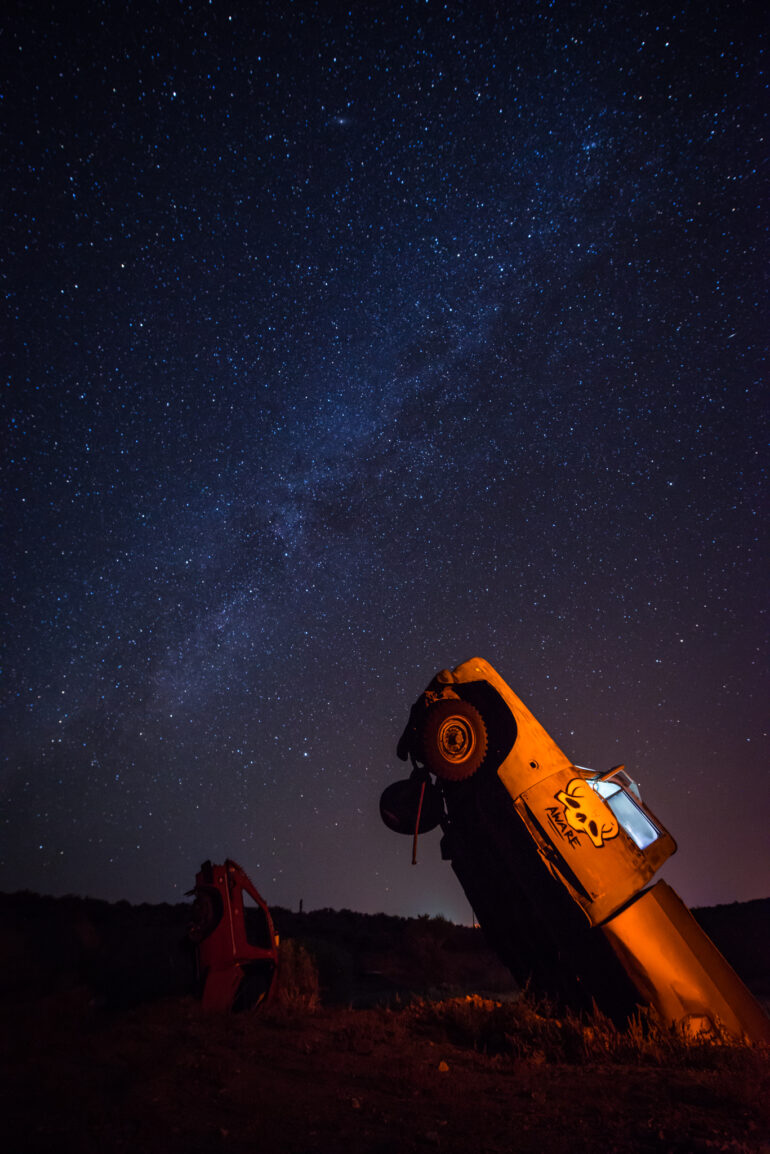
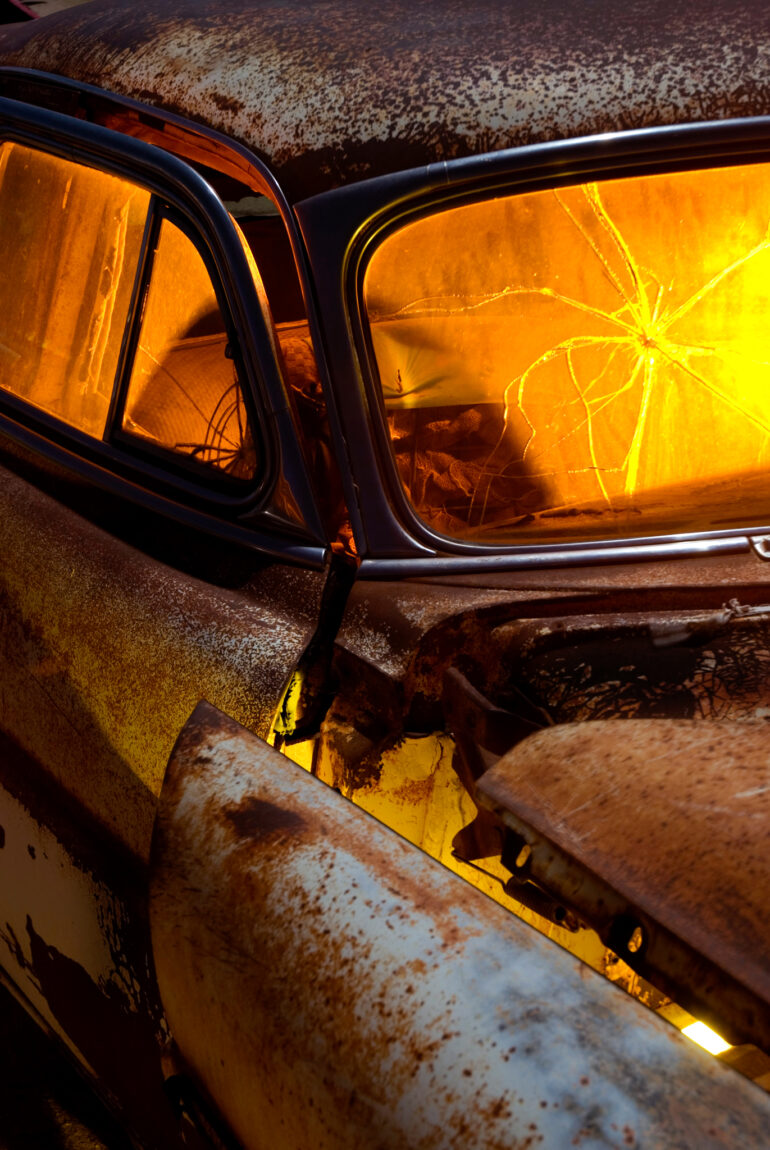
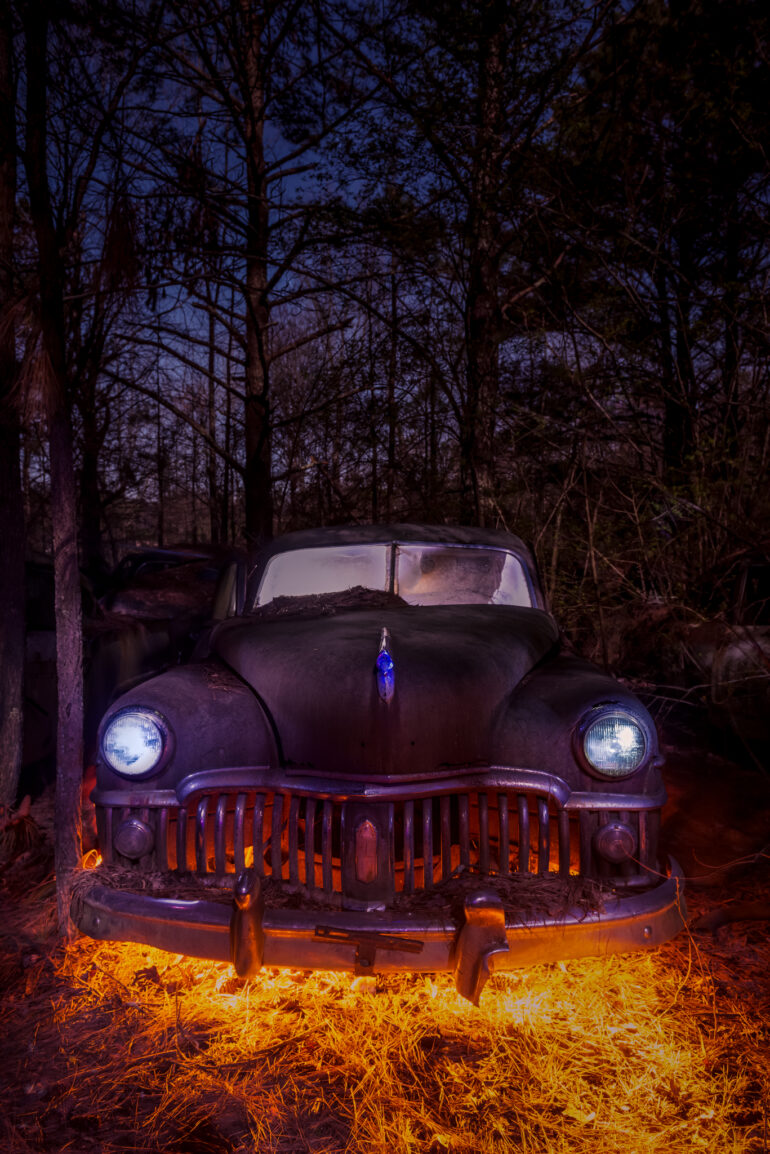
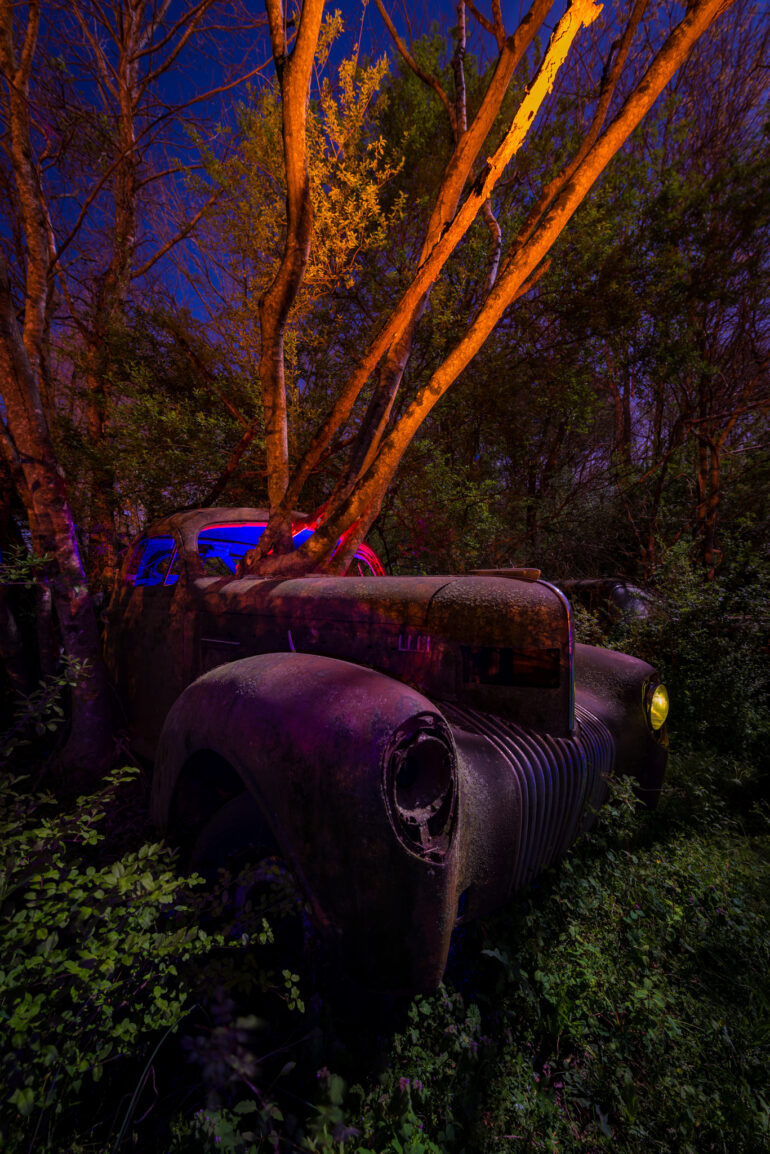
“The night work I do isn’t HDR at all,” says photographer Wayne Stadler (he/him/his) to the Phoblographer in an interview. “It’s long exposure light painted subjects while the shutter is open. There is actually very little post-processing in this work.” He continues to state that it’s mostly just contrast and saturation adjustments that are made. This surprises us — as his daytime work involves HDR processing and even overcooking the images, according to him. Wayne’s work is fascinating to look at, and on pouring your eyes over the photos, it’s easy to see why.

All images by Wayne Stadler. Used with permission. Check out his website or buy his images on Etsy.

Wayne first got into photography via arts in school — where he adored using an old manual Pentax camera with black and white film. “Even back then I was trying different things, double exposing etc.,” he tells us. “The darkroom time was strange in hindsight, a complete art form of its own. Both my teachers were pushing me to go to Ryerson University in Toronto for fine arts.” But instead, Wayne tried being a rock star. In 2005, he picked photography back up again.

To get his photos, he uses a Nikon D800 with the trinity of f2.8 lenses. He hasn’t ever seen a reason to upgrade and uses tripods as well. To paint with light, he uses a variety of different lights — some of them are as simple as little LED keychain flashlight.

Wayne knows that he didn’t invest his style of photography, and so when it came to learning it, he took workshops where he learned how to create his own unique images. He took lots of notes and references them when he shoots at times.

It’s very experimental and creative when doing it because one wrong move and you’ve just wasted a 3-4 minute exposure and have to start all over again. 

Wayne Stadler

Most of his work is him being alone — and he prefers time with his dog more than anything else. Sometimes he works with other people, but he typically likes photographing at his favorite spots. “I find it very calming and meditative,” he tells us. “I’m where I’m supposed to be when I’m just shooting and creating. And being as many of my subjects are abandoned, the quiet is an extra bonus, sometimes only a hum of a distant interstate. “

Of course, Wayne images can’t be recreated easily using something like AI imagery. And he told us why and how his work stands out.

My main goal in my photography work is that I try to bring one last breath back to something that has been discarded and ignored sometimes for decades. To show the remaining beauty in the history that the place or item holds. AI isn’t doing this because the subjects aren’t real. Sure it can crank out similar work, similar looking images but the human element is missing. I’ve played around with MidJourney, created stuff that looks like mine etc but I compare the whole thing to what also happens in music.

He likens this to the fact that humans are the only ones who made music for a long time. Then electronic music came out. Sure, there are still folks out there who still want real bands, and that there will always be people that search out live, real music — as he calls it. “…just as Ikea and Walmart art, website graphics, stock photography, etc will be replaced by AI there will still be people who will seek out REAL photography. I also believe that (out of necessity) just as there is AI to make the fake music/news/photos/art, there will AI to detect it,” Wayne tells us. “So those continuing to create real art and photographs will still be able to be found and people will get tired of everything being fake and search them out.”

This photographer uncovers Hong Kong’s creatures of the night

This photographer uncovers Hong Kong’s creatures of the night


CNN
 — 

A green pit viper coiled around a drainpipe, three blue-banded bees sleeping on a grass blade, and a gecko climbing a tree against the backdrop of a bustling city. They’re all part of Hong Kong-British wildlife photographer Lawrence Hylton’s extensive portfolio.

Despite being one of the most densely populated places in the world, Hong Kong is a diverse home to over 1,000 animal species, and boasts one third of all bird species in China. Many of these creatures only emerge at night, but that doesn’t stop 30-year-old Hylton from seeking them out.

Embarking on nocturnal safaris multiple times a week, Hylton says his mission is to promote conservation through his artistic approach to nature photography.

“I’m hoping people view [my photographs] as an opportunity to understand that nature isn’t as scary as we might deem them to be,” he said. “The key is to show that animals have a right to live here. Just because we fear them doesn’t mean that they don’t deserve to live.”

Reptiles and amphibians are among Hylton’s favorite animals to look for – particularly snakes, because of how misunderstood they are. Despite being important predators and ecological indicators, he says many snakes face persecution.

For Hylton, finding wildlife is the easiest part, but photographing them takes a lot of patience. “You’re working with a subject that doesn’t want to be disturbed, so it’s important to try and respect wildlife where we can,” he says. “The best thing we can do if we’re documenting is to capture what we need to capture and leave it be.”

Hylton started wildlife photography when he got his first camera at the age of 17, capturing “the odd bird dancing on the branch here and the cute ladybird trampling around on a leaf there,” but it wasn’t until he moved from the UK to Hong Kong and photographed a peregrine falcon swooping past that it became a passion.

In terms of nocturnal wildlife, apart from “blood-thirsty insects” and some feral dogs, Hong Kong is relatively safe to explore in the dark. With no large predators willing to harm humans, Hylton says all someone needs to get started as a night-time wildlife spotter is a torch, some common sense and to be mindful of the subjects they encounter.

Bosco Chan, director of conservation at WWF Hong Kong, says one reason why wildlife can survive and thrive in Hong Kong is that around 40% of its land is designated as “country parks,” one of the highest ratios of protected area in the world. Coupled with the city’s hilly terrain, animals can avoid human disturbances and hunting pressure.

Pit vipers naturally coil when hunting, which makes photographing them easier, says Hylton.

But despite being home to hundreds of species, biodiversity loss is also a problem in Hong Kong. “A century or two ago, we had tigers, a leopard, and a civet called the large Indian civet, which was last found in the 1940s,” says Chan. “In recent years, we have lost a lowland frog species called the floating frog. It thrives in paddy fields but as we abandon rice farming, the frog is gone in Hong Kong.”

While organizations like the WWF are helping to conserve endangered populations such as the Eurasian otter, which according to Chan is “one of the last remaining kinds of urban otters in China,” Hylton thinks more can be done for Hong Kong’s natural habitats through education.

“We have lots of [hikers] who visit this area and fear snakes and fear the unknown. [It] makes people do silly things,” Hylton says. “Hopefully someday in the future, everyone can just enjoy nature as they came out to do.”

Lawrence photographer to discuss inspiration found in works of Gordon Parks

Lawrence photographer to discuss inspiration found in works of Gordon Parks
Share this post or save for later

The Lawrence Public Library is celebrating the 111th birthday of African American author, photographer and filmmaker Gordon Parks.

Ann Dean, an artist and freelance photographer who teaches photography classes at the Lawrence Arts Center, will present on the impact and inspiration found in Parks’ books, according to the library’s event page.

Advertisement

Parks, born in Fort Scott, was well known for documenting American life and culture. The library describes him as “one of the most esteemed image makers of all time.”

Dean will present on three of Parks’ books: “The Learning Tree,” “A Choice of Weapons,” and “Half Past Autumn.”

The books help illustrate Parks’ mother’s teachings “centered in love, dignity, and hard work, and provide a starting point to talk about his struggles, choices, and triumphs – all great life lessons for those searching to find their way in this complicated world,” according to the website.

The event, “Learning from Gordon Parks,” is set for 6:30 to 8 p.m. Thursday, Nov. 30 at the Lawrence Public Library auditorium, 707 Vermont St.

Visit this link and click the green bookmark icon to add this event to your Google, Apple, Outlook or other calendar.

If our local journalism matters to you, please help us keep doing this work.
Don’t miss a beat … Click here to sign up for our email newsletters

This post is by the Lawrence Times news team.

If you have news tips, questions, comments, concerns, compliments or corrections for our team, please reach out and let us know what’s on your mind. Find our contact info (and a quick contact form) at this link.

Follow us so you won’t miss the local news that matters most to you:

Latest Lawrence news:


Contributed photos

Share this post or save for later

Quentin Rials and Zach Harwood are being promoted from interim principals to the permanent positions at Lawrence High School and Lawrence Virtual School, respectively.


Share this post or save for later

In the Baldwin Woods Forest Preserve south of Lawrence, stately oaks and hickories rise 50 to 100 feet into the air. But far below their canopy, something worries scientists.


Share this post or save for later

Winter flocks have come together. Concentrated further with each snow storm we get chickadees, cardinals, bluejays, juncos, nuthatches and titmouse; give yourself a ringside seat by putting out a birdfeeder this winter.


Molly Adams / Lawrence Times

Share this post or save for later

Lawrence school board members on Monday will hear a report on the district’s curriculum and structured literacy and consider adding some STEM courses.

MORE …