Photography

The Original Birders Gave Photography a Run for its Money

The Original Birders Gave Photography a Run for its Money

As the National Audubon Society recovers from a referendum to change its name in light of the fact that America’s founding birder was a slave owner (the name stayed), a luxe reissue of John James Audubon’s magnum opus, BIRDS OF AMERICA (Abbeville, $195), proves the man’s artistry itself unimpeachable.

His paintings foretold the ambitions of the camera, and at only a quarter of the size of the four-volume folio that was first published between 1827 and 1838, this still hefty edition preserves the poetic backdrops and fierce detail of the original. The copperplate lines are so exact they mimic the individual venation of feathers; the neck of a gyrfalcon takes on all the ripply realism of moiréd silk.

A painting of two birds, one perched on a cliff and the other swooping down from the air. Both have white feathers with bits of black detailing. Behind them the sky is a dark gray.
Audubon’s Icelandic gyrfalcon (falco rusticolus)John James Aubudon

But the real subject of these immaculate 435 prints is prey: A red-tailed hawk clutches a rabbit midair, urine dribbling from the stunned mammal’s loin, as two Northern shovelers hunt a beetle whose weight has bent a blade of grass. In the gung-ho years after the Monroe Doctrine, Audubon, a white refugee from revolutionary Haiti, brought a convert’s zeal to this thinly veiled portrait of American power.

The red-tailed hawk (buteo jamaicensis) hunts a rabbit.John James Aubudon
Two Northern Shoveler ducks reach for a beetle clutching to a blade of grass.John James Aubudon

Across the pond, the less obsessive and more mystical Elizabeth Gould (1804-41) — the illustrator of books by Charles Darwin and her husband, the ornithologist John Gould — was depicting neon lorikeets from Australia next to the quiet Galapagan finches that taught Darwin natural selection.

Gould’s blackbird (turdus merula) appeared in John Gould’s “The Birds of Europe,” published between 1832 and 1837.via The Trustees of the Natural History Museum, London

In a new anthology of her work, BIRDS OF THE WORLD (Prestel, $70), we find lithographs whose knowingly slapdash linework, paired with bright pigments and quick washes, makes prints such as her candy-cloudy Senegalese woodland kingfisher feel like daydreams as much as records. As Her Majesty’s navies and naturalists patrolled the world, Gould limned its limits, whetting the visual imagination of an ever-reaching empire.

Caring stink bugs and tangled octopuses: European Wildlife Photographer of the Year 2023

Caring stink bugs and tangled octopuses: European Wildlife Photographer of the Year 2023

Editor’s Note: Call to Earth is a CNN editorial series committed to reporting on the environmental challenges facing our planet, together with the solutions. Rolex’s Perpetual Planet initiative has partnered with CNN to drive awareness and education around key sustainability issues and to inspire positive action.


CNN
 — 

To the naked eye not much happens on tree branches in the depths of our forests. But a closer look through a camera lens can tell a different story — one of motherly love.

That’s exactly what was captured by the overall winner of the 2023 European Wildlife Photographer of the Year award. The photo taken by biologist Javier Aznar González De Rueda shows with incredible detail a female stink bug shielding her eggs and newly hatched larvae.

The maternal behavior was observed by Aznar in Ecuador’s Yasuní National Park, a dense jungle that is the country’s largest protected area.

The Spanish photographer explained that the mother’s protection is crucial for improving her offspring’s chances of survival, with a whole host of predators waiting nearby. “This is a highly complex ecosystem with countless organisms in a vast interconnected web of life,” he said in a press release.

Various insects are known as stink bugs, named for their unpleasant smell, but the ones photographed by Aznar go by the scientific name antiteuchus tripterus, and are found in South and Central America, with the most common habitat being southern Brazil. They are roughly 14 milimeters in length and at most 2 centimeters in width, but Aznar was able to show them up close and personal.

Entries to the competition, which is run by the German Society for Nature Photography, were submitted by photographers from 42 countries and prizes were awarded for categories including birds, mammals, landscapes and the underwater world.

Two octopuses tangle their tentacles around one another, unusual behavior, according to photographer Francisco Javier Murcia Requena.

Describing the judging process, jury member Mark Littlejohn said in a statement: “Recent studies have found that the rate of species extinction in insects is eight times higher than in mammals, birds and reptiles. And yet the world as we know it would not exist without insects.

“With this in mind, the long, hard task of selecting one winner out of 18,000 entries was surprisingly easy.”

Photographed here by Petr Bambousek, brookesia, also known as leaf chameleons, are one of the smallest chameleons in the world, measuring only 10 centimeters long on average.

Sabine Riewenherm, president of the German Federal Agency for Nature Conservation and patron of the competition, said that increasing awareness of insects can help protect them. In an introductory note to the competition, she added: “Nature photography in its traditional form … sparks emotions. And emotions play an important role in nature conservation.

“They stimulate interest in species, habitats and the interconnectedness of nature as well as increasing awareness for nature conservation.”

#ck_cta{max-width: 1560px; width: 100%;cursor: pointer;position: relative;}#ck_cta *{padding: 0; margin: 0; box-sizing: border-box;}#ck_cta>video{width: 100%; height: auto;}#ck_cta>video.dskVid{display: none;}
@media screen and (min-width:730px) {#ck_cta>video.mobVid{display: none;} #ck_cta>video.dskVid{display: block;}}

Shadowlands photography exhibit in library

Shadowlands photography exhibit in library

Starting Nov. 1 in the Orcas Library, Lewis Francis will be displaying his black and white photos of the Southwestern US. Lewis states: “The shadowlands include the vast deserts of Utah, Nevada, New Mexico and California where beauty, solitude and silence offer shelter from the chaos of modern life.”

Lewis Francis was born and raised in Gibraltar, moved to the US in 1995, and lived in Southern California until 2020. His home is now Orcas Island where he lives with his partner and 3 dogs.

Prior to moving to Orcas, he explored the amazing light and landscapes of the Southwest primarily and has been lucky enough to have his work shown around the country. Since he moved he has been exploring, and enjoying, the landscapes of our islands and the Pacific Northwest.

Lewis will be hosting a reception in the community room of the library on Saturday, Nov. 4 from 4 to 6 p.m.

Landscape Photographer of the Year 2023

Landscape Photographer of the Year 2023
image

highly commended, expressions and impressions of the landscapeHayle, Cornwall, England. “After a morning taking photographs on the beach at Hayle estuary, I captured this image while walking back along the coastal path to the car. The movement and texture of the dune grasses blowing in the breeze was extremely evocative and I felt totally immersed in the moment. I hoped that I had captured that feeling. Using intentional camera movement, I gently moved the camera in the same direction as the wind, creating a slightly abstract, painterly feel.”

SMAC will host The Art of Photography Exhibit

SMAC will host The Art of Photography Exhibit

In its upcoming art exhibit, Southern Missouri Arts Connection (SMAC) will be featuring the work of 14 area photographers in The Art of Photography. The exhibit will run from November 3-25 at the SMAC Art Center gallery on historic Downing Street in Hollister. The opening reception will be held in conjunction with the First Friday Art Walk on Friday, November 3, from 6-9 p.m. Both the exhibit and reception are free and open to the public. Attendees may view the exhibit, tour the private studios and enjoy complimentary refreshments. The Vintage Paris Coffee kiosk will also be on site.

“This is our first fine art photography show ever,” SMAC President Tenille Blair- Neff said, “And we are excited to be bringing to the community a new way to view photography as a powerful art medium with endless possibilities.” The images selected for this show range from classic to innovative techniques, and thought-provoking to obscure with hidden meaning subject matter.

In addition, each month during their exhibits, SMAC highlights one of the many local non-profit organizations that serves the area. This month SMAC is drawing attention to The Child Abuse Prevention and Elimination Foundation (CAPE),which assists child abuse survivors and their families in receiving therapeutic counseling by providing financial grants.

Southern Missouri Arts Connection (SMAC), a 501C3 non-profit local center of creativity, art education, innovation, and community partnership, strives to improve the quality of life in southern Missouri by connecting individuals with the arts, for the benefit of all.

###

This press release is from the Southern Missouri Arts Connection (SMAC).

More from Local News

New Neural Network Could Majorly Improve Smartphone Photography

New Neural Network Could Majorly Improve Smartphone Photography

Glass AI and iPhone

Glass Imaging uses artificial intelligence to “extract the full image quality potential from hardware on current and future smartphone cameras by reversing lens aberrations and sensor imperfections.”

The company has put its impressive AI technology to work with the new iPhone 15 Pro Max smartphone, showing dramatic improvements from the flagship phone’s 5x zoom lens.

Glass Imaging Argues That Lackluster Software Holds Back the iPhone 15 Pro Max’s Telephoto Camera

The iPhone 15 Pro Max’s telephoto lens sports a unique tetraprism design and offers a 120mm equivalent focal length and f/2.8 aperture. The camera and lens combo is impressive from a technical perspective. However, the real-world results leave a bit to be desired.
Glass AI and iPhone
Left: Image as captured by the 5x lens on the iPhone 15 Pro Max, as output by Apple’s default image processing software on the device. Right: the same shot as rendered by Glass AI software.
Glass AI and iPhone
Left: detail of an image as captured by the 5x lens on the iPhone 15 Pro Max (cropped), as output by Apple’s default image processing software on the device. Right: the same shot as rendered by GlassAI software, showing the additional resolution, texture detail and clarity that can be extracted from this amazing 5x lens hardware, with the right software processing.

“The full potential of this hardware is limited as the accompanying software from Apple doesn’t extract all the detail this lens can capture,” Glass Imaging claims.

In a journal entry, Glass compares the iPhone 15 Pro Max’s default processing against its advanced GlassAI processing. The results demonstrate a significant overall image quality improvement, including better detail, clarity, and color accuracy.

Glass says that while Apple’s hardware is impressive, the iPhone’s native software “occasionally falls short of harnessing the full capabilities of the hardware,” potentially resulting in compromised image quality. Despite dedicating significant resources to its image signal processing and image processing algorithms, Glass argues that “there’s significant room for improvement.”

Glass AI and iPhone
Left: iPhone 15 Pro 5x default rendering Right: the same shot with GlassAI applied. Note the enhanced texture detail and richer colors.

Neural Networks to the Rescue

So, what is Glass doing, and how does its AI processing improve image quality? In its own words, “Glass Imaging harnesses the power of artificial intelligence to get the most from the raw image burst data — the unprocessed sensor information captured during a shot. This AI-centric approach allows for intelligent decisions on image enhancement, going beyond the limitations of traditional handcrafted algorithms.”

At the heart of the company’s approach is neural network training. “At our labs, for each camera on that phone (wide, ultra-wide, tele, selfie), we train a custom Neural Network for low light, bright light, and super res (zoom),” Ziv Attar, Glass’s CEO tells PetaPixel.

Glass AI and iPhone
Left: iPhone 15 Pro 5x default rendering Right: the same shot with GlassAI applied. Note the increased texture detail, lower noise, and better color rendering, especially of small details.

“After training, we port these networks to the device’s chipset and optimize for speed and power consumption. Our neural networks take in a burst of RAW images and outputs a full processed image. Our Neural networks are trained to characterize the optical aberrations of each lens at any location on the sensor and are capable of correcting these aberrations,” Attar continues.

The entire training process takes “a few days.”

While the company cannot fully detail its “unique way” of “teaching” its AI to reverse lens aberrations (since it is a proprietary technology that the company is actively marketing to smartphone makers) Attar promises that GlassAI’s results are “more true and noise free compared to traditional processing approaches,” such as those that Apple is utilizing.

Glass AI and iPhone
Left: iPhone 15 Pro Max 5x default rendering. Note the strange text artifacts, noise, and lack of color fidelity. Right: the same shot with GlassAI applied, with clear and accurate text details and fine realistic texture on the fabric visible.

“The data (photons) are there but iPhone and other phones must apply very aggressive color denoise in order to remove color noise which is very disturbing. When they do that, they desaturate colors on fine details,” Attar explains.

“You don’t see this in big cameras as it’s mostly a problem of tiny pixels that are noisy and suffer from signal cross contamination between neighboring pixels that are of different color,” he continues. “Our networks are able to look at a large area and understand what pixels lie on what thread or object and handle the color noise removal in a much smarter way.”

The result is more accurate color information in the output image. Attar says that original iPhone images in Glass’s examples appear less colorful in part because default image processing mixes up small, colorful pixels with neighboring pixels when performing denoising.

Glass AI and iPhone
Left: iPhone 15 Pro 5x default rendering. Right: the same shot with GlassAI applied. Note the enhanced texture detail and richer colors.

Glass AI is “fundamentally improving reconstruction of existing data that exists on the sensor,” and is not performing any sort of synthesis of new information or creating “fake” data.

Is There a Downside to Neural Networks?

If this AI processing approach delivers such impressive results — as it does — then it should be a pretty easy sell. Is there any downside?

Attar says “there is no downside,” but admits that training high-quality neural networks is extremely challenging. Further, there are relatively high processing demands to handle the neural networks, which technology has only been able to achieve in the “the last year or so,” in his words.

“There were neural processors on Android and Apple devices for a few years now but they were not capable of handling pixel level operations and were only used for semantics and global operations like automatic white balance, automatic exposure, etc.,” Attar explains.

Glass AI and iPhone
Left: iPhone 15 Pro 5x default rendering Right: the same shot with GlassAI applied. Note the increased texture detail, lower noise, and better color rendering.

Further, the neural network processing requires time to execute its operations, even on swift, powerful mobile devices like the iPhone 15 Pro Max. However, the processing is pretty quick. A 12-megapixel image captured by the Pro Max’s telephoto camera takes about half a second, says Attar, and he says that the standard iPhone processing of a 12-megapixel file “takes longer than that.” So, practically speaking, processing time shouldn’t be a major inhibitor.

The user also doesn’t need to wait for the processing to complete to continue to shoot. However, it does take some time to see the final output file: the initial image on the screen is a low-quality version. However, even while processing occurs, Attar says the photographer can continue shooting.

Glass AI and iPhone
Left: iPhone 15 Pro 5x default rendering Right: the same shot with GlassAI applied. Note the increased detail on the fabric and reduced noise.

He also says that despite the higher image quality, the image files are smaller because they have less noise, and noise makes files more challenging to compress. So, again, what is the cost here?

“The only cost is you need to develop tools to train these networks: large labs, robotic equipment, tons of software that controls the training procedure,” Attar says. While that all sounds expensive, it seems feasible for large companies to achieve.

Glass AI and iPhone
Left: iPhone 15 Pro Max 5x default rendering. Note the strange text artifacts and noise. Right: the same shot with GlassAI applied, with clear and accurate text details, along with fine and realistic texture on the metal.

Additional Examples of Glass AI and Last Year’s iPhone 14 Pro

Glass AI and iPhone
iPhone 14 Pro with Glass AI disabled
Glass AI and iPhone
iPhone 14 Pro with Glass AI disabled (10x)
Glass AI and iPhone
iPhone 14 Pro with Glass AI enabled
Glass AI and iPhone
iPhone 14 Pro with Glass AI enabled (10x)
Glass AI and iPhone
iPhone 14 Pro with Glass AI disabled
Glass AI and iPhone
iPhone 14 Pro with Glass AI disabled (4x zoom)
Glass AI and iPhone
iPhone 14 Pro with Glass AI enabled
Glass Imaging
iPhone 14 Pro with Glass AI enabled (4x zoom)
Glass AI and iPhone
iPhone 14 Pro with Glass AI disabled
Glass AI and iPhone
iPhone 14 Pro with Glass AI enabled
Glass AI and iPhone
iPhone 14 Pro with Glass AI disabled
Glass AI and iPhone
iPhone 14 Pro with Glass AI disabled (5x)
Glass AI and iPhone
iPhone 14 Pro with Glass AI enabled
Glass AI and iPhone
iPhone 14 Pro with Glass AI enabled (5x)

What’s In the Pipeline for Glass Imaging?

“We are working to sell our software to phone makers around the world. The product is an SW library that includes custom-trained Neural Networks for each camera on a phone (selfie, wide, ultra-wide, tele…). Our solution will be in some phone models in 2024,” says Attar.

The company will also consider an iPhone app to allow end users to achieve impressive results. However, it will not be available “very soon,” if it ever hits the market. The company’s primary focus is selling its core technology services to manufacturers so that its AI can be implemented natively.


Image and caption credits: Glass Imaging

The International Photography Hall of Fame Honors Four Women

The International Photography Hall of Fame Honors Four Women

This Friday —that is, tomorrow— the International Photography Hall of Fame and Museum will honor its 2023 class of Photography Hall of Fame Inductees and Awardees in a virtual ceremony at 6p.m. CST. An annual occurrence since the IPHF first opened its doors fifty-eight years ago, these awards are given to photographers and industry visionaries for their artistry, innovation, and contributions to photography both as an art and as a science.

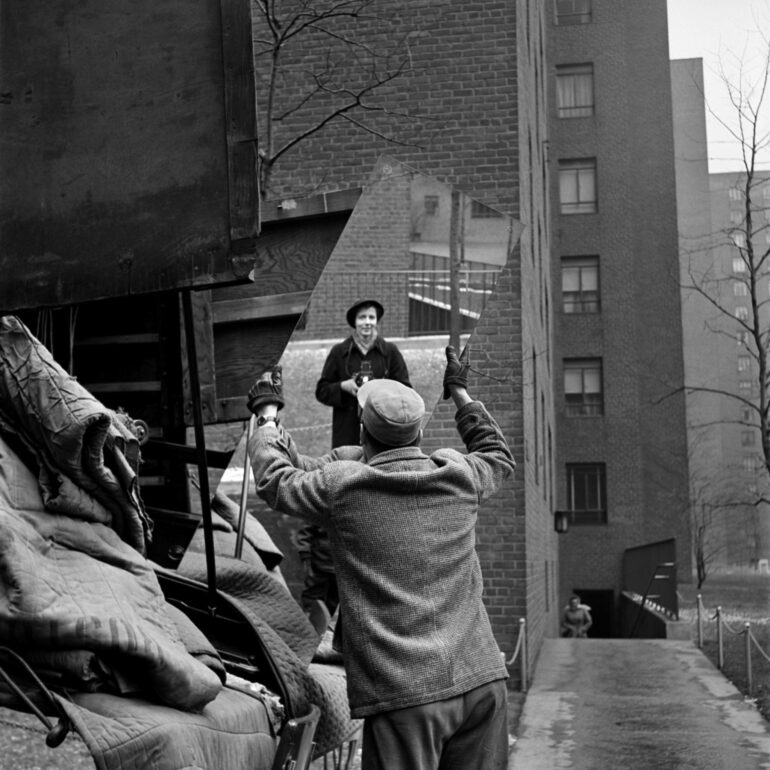
Significant innovators in their respective fields —according to not only to the IPHF (and common sense) — are none other than Nan Goldin, Vivian Maier, and Bea Nettles, in addition to Matika Wilbur, honored with the IPHF Visionary Awards as women photographers.

The Honorees

Frankly, as a street photographer who also happens to be part of an, ahem, certain subculture, the most shocking thing about this year’s honorees is the fact that it took so long for the IPHF to recognize their work.

We’re talking about Vivian Maier, one of the most prolific street photographers of the twentieth century, whose work we’ve been able to see thanks to serendipity and good luck. We’re talking about Nan Goldin, whose work within the LGBT community shed light on both its happiness and its tragedies; her opus The Ballad of Sexual Dependency, captured moments of love and loss in the post-Stonewall era; sex, drug use, dance clubs, domestic violence, AIDS and more are portrayed candidly and powerfully in this must-see piece.

Vivian Maier

Vivian Maier was an American street photographer whose massive, unseen body of work came to light when it was purchased at an auction in Chicago, in 2007.

Born in New York City, she spent some of her youth in France and then worked in Chicago as a nanny and caregiver for most of her life. In her spare time, however, Maier ventured into the art of photography. Consistently taking photographs over the course of five decades, she would ultimately leave behind over 100,000 negatives.

Image from the book “Vivian Maier: Self-Portraits” photographs by Vivian Maier, edited by John Maloof. Published by powerHouse Books. Credit; From Vivian Maier: Self-Portraits photographs by Vivian Maier, edited by John Maloof, published by powerHouse Books

Nan Goldin

Nancy Goldin, is an American photographer and activist whose work has explored LGBT subcultures, the HIV/AIDS crisis, the opioid epidemic and various moments of intimacy, as stated before.

She’s a founding member of the advocacy group P.A.I.N —Prescription Addiction Intervention Now— and she lives and works in New York City.

Nan Goldin in the bathroom with roommate — Courtesy of Nan ´Goldin

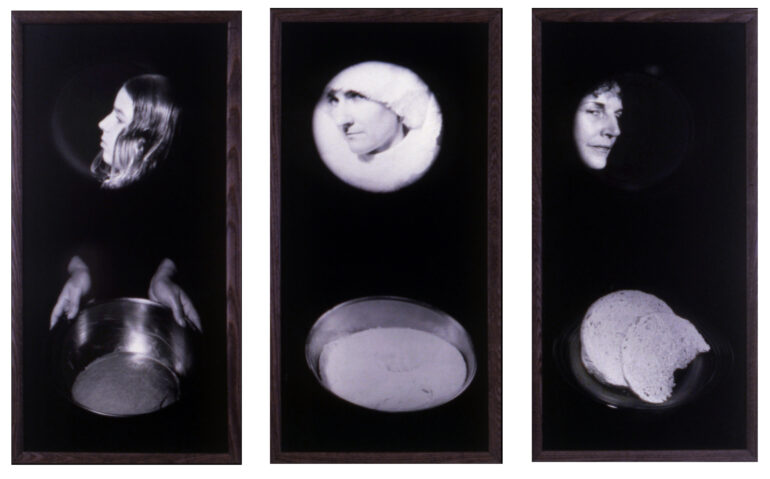
Bea Nettles

Bea Nettles explores the narrative potential of photography through constructed images often made with alternative photographic processes. Combining craft and photography, Nettles’s work makes use of wide-ranging tools and materials, including fabric and stitching, instamatic cameras, the book format, manually applied color, and hand‐coated photographic emulsions. Her imagery evokes metaphors that reference key stages in the lives of women, often with autobiographic undertones, and her key motifs draw upon mythology, family, motherhood, place, landscape, dreams, aging, and the passage of time.

Matika Wilbur

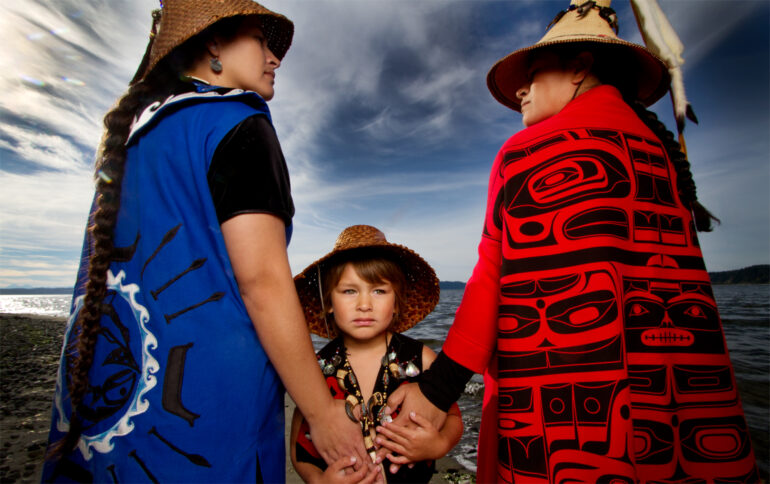
Matika Wilbur is a critically acclaimed social documentarian and photographer from the Swinomish and Tulalip peoples of coastal Washington. Project 562, a crowd-funded initiative to visit, engage, and photograph people from over 562 sovereign Tribal Nations in North America, is her fourth major creative venture elevating Native American identity and culture. She co-hosts the All My Relations podcast with Dr. Adrienne Keene as a platform that invites guests to delve into subjects facing Native peoples today and explore the connections between land, non-human relatives, and one another.

Winners of 2023 European Wildlife Photographer of the Year

Winners of 2023 European Wildlife Photographer of the Year
Stink bug (Antiteuchus tripterus) guarding clutch of eggs on a branch

“Maternal care” by Javier Aznar González de Rueda (Spain). Overall Winner.
“In Ecuador’s largest protected area, Yasuní National Park, I was able to observe maternal care behavior in the stink bug Antiteuchus tripterus over a two-week period. The female bug guarded its clutch of eggs on a small branch. This behavior has been reported for other true bug species. To my surprise, it turned out that the mother bug not only protected the eggs but also the newly hatched larvae up to their first molt. In Ecuador’s rainforest, the stink bug’s brood is vulnerable to attack by numerous predators and parasitoids such as ichneumon wasps. Maternal care significantly increases the offspring’s chances of survival. The rainforest is a highly complex ecosystem with countless organisms in a vast interconnected web of life.”

Spanish nature photographer Javier Aznar González de Rueda impressed judges with his image of a female stink bug guarding her clutch of eggs in Ecuador’s Yasuní National Park. For his efforts, he was named Photographer of the Year in the German Society for Nature Photography (GDT) European Wildlife Photographer of the Year competition. 

In doing so, he beat out professional photographers from 42 countries, and his image of this insect topped the nearly 18,000 photographs entered into the contest. His photo highlights the complex ecosystem of the park and the interconnected nature of the species that live there, as the mother wards off potential predators and parasites.

“Do we humans really believe that insects bond with their offspring?” muses jury member Mark Littlejohn. “That they are capable of displaying parental feelings? And are humans capable of connecting emotionally with insects?

“From an early age, the fate of dolphins, elephants, and other large charismatic animals touches our hearts. Yet all life deserves to be cherished and protected. The beautiful photograph by Javier is about exactly this—unconditional love. In all its forms and manifestations. This aspect was crucial to the decision by the jury.”

This winning image is just one of many excellent photographs to earn a win in the competition. In addition to the overall winner, nine category winners, two special prizes, and two youth winners were also named.  Highlights include Roberto Bueno‘s mysterious photo of lichen overtaking dinnerware in an abandoned farm in Portugal, which won the Plants and Fungi category, as well as Jens Cullmann‘s dynamic photo that won the Mammals category. In the image, he captures the frenetic energy of a lion as it attempts to take down a member of a buffalo herd.

A staple of the wildlife photography community since it began in 2001, the European Wildlife Photographer of the Year contest once again proves to be a valuable outlet for creativity. Scroll down to see more of this year’s winners, and check out the full gallery online.

Here are some of our favorite winners from the 2023 European Wildlife Photographer of the Year contest.

Lion preying on buffalo in Mana Pools National Park in ZimbabweLion preying on buffalo in Mana Pools National Park in Zimbabwe

“Last dance?” by Jens Cullmann (Germany). Winner, Mammals.
“It was the height of the dry season in Mana Pools National Park, Zimbabwe. The days were hot and dusty, and water was a rare commodity in the southern part of the park. One of the last available watering spots was Chitake Springs. However, the springs are located in a gorge and are part of the territory of a large pride of lions specialized in preying upon buffalo herds that come to quench their thirst. In the dust kicked up as the buffaloes fled the gorge after drinking, the lion took its chance.”

Sleeping intermediate egret on a branchSleeping intermediate egret on a branch

“Silence” by Jan Piecha (Germany). Runner-up, Birds.
“The small town Tissamaharama in the south-east of Sri Lanka is the starting point for safaris to the famous Yala National Park. While in town, I enjoyed strolling through the rice fields in the evenings and stopping in at a flying fox colony at the shore of Lake Tissa. My walk took me along a lakeside promenade with elegant and stately trees. In one of them, I discovered this sleeping intermediate egret (Ardea intermedia).”

Juvenile Munk's devil rays feeding on planktonJuvenile Munk's devil rays feeding on plankton

“Nighttime squadron” by Catherine Holmes (United Kingdom). Winner, Underwater World
“This image was captured in a quiet, shallow bay of Isla Espirito Santo (Mexico). The photograph shows a squadron of juvenile Munk’s devil rays (Mobula munkiana) feeding on plankton attracted to a green light hanging off the stern of our boat in the dark of night. I used a slow shutter speed to capture the graceful, synchronized movements of the rays as they appeared to fly through the darkness.”

Old plate and cutlery covered in lichenOld plate and cutlery covered in lichen

“Lichen dinner” by Roberto Bueno (Spain). Winner, Plants and Fungi.
“I found this unusual situation at an abandoned farm near Sintra, Portugal. A complete place setting had been left behind on a stone table. I was very surprised to see that the whole ensemble was covered in lichens. The table stood under a huge tree which most likely provided the shade and moisture needed for the lichens to grow over the course of decades.”

Landscape of an island in the west of NorwayLandscape of an island in the west of Norway

“Paradise” by Florian Smit (Germany). Runner-up, Landscapes.
“The photograph shows the fascinating landscape of an island in the west of Norway. The island is dotted with small lakes and many of its pines have a bonsai-like appearance. The scenery is reminiscent of a tropical landscape. The image was taken early in the morning before sunrise, while the fog was still wafting amongst the trees.”

Western yellow wagtail balancing on a piece of grass in a fieldWestern yellow wagtail balancing on a piece of grass in a field

“Tightrope artist” by Alberto Román Gómez (Spain). Winner, Young Photographers | 14 years and under.
“One afternoon in spring, my father and I set out to photograph birds. We drove to an agricultural area with many bird species. We decided to park the car and walk along a path through the fields. Almost immediately, I spotted a western yellow wagtail (Motacilla flava) moving cautiously from one stalk to the next – sometimes almost losing its balance and looking more like a tightrope walker than a bird.”

Two common octopuses tangled underwaterTwo common octopuses tangled underwater

“Octopus tango” by Francisco Javier Murcia Requena (Spain). Underwater World, Highly commended
“This photograph was taken in the early morning hours during a dive along the Mediterranean coast of south-east Spain. Already from a distance, I could see two common octopuses (Octopus vulgaris) intertwining their arms and moving continuously—a very unusual behavior. Perhaps a mating ritual or maybe a form of territorial defense requiring the animals to compare tentacle lengths?”

Spider in Peru infested with zombie fungusSpider in Peru infested with zombie fungus

“Defeated” by Roberto Garcia Roa (Spain). Runner-up, Plants and Fungi.
“In August 2021, I found this spider near a small river in the Peruvian Tambopata rainforest. It was infested with a parasitic Ophiocordyceps fungus. This so-called “zombie fungus” infects arthropods by penetrating their exoskeleton. The fungus is able to control the behavior of its host. In this case, the spider was “compelled” to seek a location favorable for the growth of the fungus. After killing the host, the fungus fully metabolizes the inner organs of the spider and produces fruiting bodies that release spores to infect new victims.”

Leaf chameleon in MadagascarLeaf chameleon in Madagascar

“Brookesia superciliaris” by Petr Bambousek (Czech Republic). Highly commended, Other Animals.
“Brookesia, also called leaf chameleons, are a group of Old World lizards endemic to Madagascar and are considered to be the world’s smallest chameleons (< 10 cm long). They are terrestrial and forage among fallen leaves. The ability to change their skin coloration to match the environment and the tendency to stay still under threat make leaf chameleons almost invisible to their predators. In this photo taken from a distance, I have tried to depict Brookesia superciliaris in its typical habitat.”

Nearly 18,000 photographs were entered into the contest, which is run by the German Society for Nature Photography.

Pink flamingo with muddy beakPink flamingo with muddy beak

“Pen and inkwell” by Jonathan Lhoir (Belgium). Highly commended, Birds.
“I’m lucky enough to live close to the Camargue, a perfect place to photograph pink flamingos (Phoenicopterus roseus). This image shows a flamingo searching for prey in a muddy pond. The photograph was taken late in the day, with light cloud cover. Positive exposure compensation produced the high-key effect. The result reminded me of a paintbrush covered in ink.”

Two-colored mason bee building a nestTwo-colored mason bee building a nest

“Nest building” by Solvin Zankl (Germany). Runner-up, Other Animals.
“The two-colored mason-bee (Osmia bicolor) is a solitary bee species that nests in empty snail shells. After mating, the female bees search for suitable empty shells, which they then provision with masticated pollen and nectar. After laying eggs on the provision balls, the bees seal the shells and camouflage them with plant material. This bee is gathering dry twigs to cover her nest – ‘the more, the better’, she seems to think, flying back and forth to accumulate an impressive pile.”

European Wildlife Photographer of the YearEuropean Wildlife Photographer of the Year

“Bird in forest” by Csaba Daróczi (Hungary). Winner, Birds.
“In the winter of 2022-23, I regularly visited a nearby forest to take photographs. Almost every week, I chose a new topic that I perfected over the course of several days. That is how I found this hollowed-out stump surrounded by tall trees. The opening is approximately half a meter in diameter. I put my GoPro camera inside, and the results were amazing. After a few days, I realized that the composition was missing something—an animal. I placed sunflower seeds in the hole and, soon enough, the first birds appeared, including this great tit (Parus major).”

Rhône GlacierRhône Glacier

“Wrapped up” by Marella (France). Runner-up, Man and Nature.
“Every summer, a small part of the Rhône Glacier in the Swiss Alps is covered with white fleece blankets to protect the ice from melting even further and to preserve the blue ice grotto—one of the region’s largest tourist attractions. This image is part of the long-term project Evig, which explores the glistening, eternal, yet also fragile beauty of glaciers using digital black and white photography and cyanotype printing.”

Valley of Glencoe in the Scottish HighlandsValley of Glencoe in the Scottish Highlands

“Glencoe Highlands” by Dario Fernando Marelli (Italy). Highly commended, Landscapes.
“The spectacular valley of Glencoe and its eponymous village lie in the north-west Scottish Highlands. Glencoe played a tragic role in the history of the country in the 17th century; a feud between two opposing clans ended in a bloody massacre. Looking at today’s idyllic landscape with centuries-old pine trees, it is hard to imagine that this was once the site of a terrible tragedy.”

Loggerhead sea turtlesLoggerhead sea turtles

“Lost at sea” by Angel Fitor (Spain). Winner, Man and Nature.
“Loggerhead sea turtles (Caretta caretta) spend their lives unhurriedly roaming the high seas – the largest habitat on Earth – in search of edible morsels drifting in the water currents. As omnivores, the sea turtles feed on a wide variety of items, including jellyfish, salps, bits of seaweed and carrion. Because of their broad dietary interests, the animals are inevitably attracted by the brightly colored, eye-catching pieces of plastic drifting around in the world’s oceans. Many loggerhead turtles perish in agony due to intestinal blockage, just one of the many health concerns of ingested plastic.”

Spiraling structures of lava in IcelandSpiraling structures of lava in Iceland

“Volcanic swirls” by Joel Delmas (France). Winner, Landscapes.
“This photograph was taken on Reykjanes Peninsula in Iceland during the Geldingadalur eruption in 2021. I was there leading a photo workshop and the participants were thrilled to be able to photograph a volcanic eruption. The spiralling structures in the image arose as lava pushed out of a crack in an old lava field far from the main crater. The greatest challenges were to not overexpose the centres of the swirls and to prevent the drone from overheating and crashing on the hot lava. Despite being very careful, several small plastic components melted while the drone moved in close enough to get this risky shot.”

Lion cub in captivityLion cub in captivity

“Start of the cycle” by Aaron Gekoski (United Kingdom). Highly commended, Man and Nature.
“In South Africa, there are more than three times as many lions in captivity as in the wild. Every stage of the life cycle of a captive lion is fraught with suffering. Cubs are taken away from their mothers shortly after birth. This brings the female back into oestrus and increases the number of times per year that she can breed. Lion cubs are used as props for tourists who pay for the photo opportunity. Once cubs are too old to be handled in this way, they are often sold to ‘walking with lions’ operators. In the next life phase, lions are brought to hunting facilities to be shot by trophy hunters paying a great deal of money to bag a lion in a small enclosure. Lion skeletons are then exported to Asia where the teeth and claws are fashioned into jewelery and the bones are used as substitutes for making tiger bone wine. It is estimated that a lion born in captivity is worth up to $150,000 over the course of its lifetime.”

Raccoon sitting in its denRaccoon sitting in its den

“Inside a tree den” by Jan Piecha (Germany). Highly commended, Mammals.
“I have been photographing raccoons (Procyon lotor) for several years and have had the opportunity to accompany various individuals with my camera. This female was raising her offspring in a large tree den and was not bothered by my presence. During the day, she would lazily let her head hang out of the burrow. In the evening, she would climb down the tree trunk with me standing right there. With a self-made, extra-high tripod, I was able to observe and photograph special moments in her family life.”

Seaweed washed up on shoreSeaweed washed up on shore

“Treasures of the sea” by César Llaneza Rodríguez (Spain). Highly commended, Plants and Fungi.
“This photograph was taken as part of my project On the sea shore. It shows diverse seaweeds washed up together on the shore by waves. At the center of the image, there is a shark’s egg – most likely from a small-spotted catshark (Scyliorhinus canicula). For this type of motif, I pay special attention to focus placement to ensure a balanced composition. To enhance the color contrast, I added side lighting using an LED panel with warm colors.”

German Society for Nature Photographers (GDT): Website | Facebook | Instagram

My Modern Met granted permission to feature photos by GDT.

Related Articles:

Soaring Winners of the 2022 Bird Photographer of the Year Competition

Germany’s Nature Society Crowns the 2022 Nature Photographer of the Year

Marine Biologist’s Photo of a Golden Horseshoe Crab Wins Wildlife Photography Awards

Photographer Wins Prize for Heartbreaking Story About the Plight of Endangered Forest Elephants

Beyond ‘The Rose’: A New Monograph Shines a Light on Abstract Expressionist Jay DeFeo’s Unseen Photography

Beyond ‘The Rose’: A New Monograph Shines a Light on Abstract Expressionist Jay DeFeo’s Unseen Photography

Jay DeFeo barely took any photos of her hefty one-ton painting, The Rose (1958-66), during the seven years she spent layering it with inches of impasto and chiseling it. She may have forever regretted that.

In fact, for the first half of the late Abstract Expressionist’s career she hardly ever recorded her paintings in progress. But around 1970, she began an intense—if brief—affair with photography, documenting herself, her surroundings, and her paintings in pictures that fuse formal prowess with poetic playfulness.

While some of these works are currently in museum collections (including the Centre Pompidou, J. Paul Getty Museum, and Whitney Museum of American Art), DeFeo has not been broadly known for her photography.

But a  new monograph, Jay DeFeo: Photographic Work (DelMonico Books, 2023 which reproduces DeFeo’s photographs at their original (small) scale),  stands to change that. The book’s publication coincided with a recent exhibition at Paula Cooper Gallery in New York, with over 70 photographs, photocollages, photocopies, and chemigrams—the largest-ever presentation of the artist’s photographic work.

imageJay DeFeo: Photographic Work. © 2023 The Jay DeFeo Foundation/Artists Rights Society (ARS), New York.” width=”1024″ height=”819″ srcset=”https://www.mecreates.com/story/news/wp-content/uploads/2023/11/Jay-DeFeo_Photographic-Work_9781636811116_Cover-copy-1024×819.png 1024w, https://news.artnet.com/app/news-upload/2023/11/Jay-DeFeo_Photographic-Work_9781636811116_Cover-copy-300×240.png 300w, https://news.artnet.com/app/news-upload/2023/11/Jay-DeFeo_Photographic-Work_9781636811116_Cover-copy-50×40.png 50w, https://news.artnet.com/app/news-upload/2023/11/Jay-DeFeo_Photographic-Work_9781636811116_Cover-copy.png 1200w” sizes=”(max-width: 1024px) 100vw, 1024px”>

Jay DeFeo: Photographic Work. © 2023 The Jay DeFeo
Foundation/Artists Rights Society (ARS), New York.

“Much like singles on an album, her dignified and serious paintings are the ‘hits’ that carry her legacy,” writes the late artist’s friend Catherine Wagner in Jay DeFeo: Photographic Work. “But for those of us who had the good fortune to know Jay, her photographs and collages, the ‘B-sides,’ now play like watershed discoveries, full of experimentation and innovation for both new and seasoned DeFeo aficionados to delight in.”

Best known in the Bay area, where she lived for most of her life, DeFeo’s work has seen a reevaluation since her 2012 traveling retrospective organized by the Whitney and shown at SFMOMA. Most of this focus has been on her early paintings that culminated in The Rose (now in the Whitney’s permanent collection) and on works on paper made subsequently.  Lesser known is the  four-year phase that DeFeo called “the dropout years,” when she painted very little. It was then, after The Rose was extracted from her studio, that she moved from lively San Francisco to quieter Marin County and picked up a camera instead of her paintbox.

imageUntitled (1973). © 2023 The Jay DeFeo Foundation/Artists Rights Society (ARS), New York.” width=”1016″ height=”1024″ srcset=”https://www.mecreates.com/story/news/wp-content/uploads/2023/11/JDF-2-PH_Levy_P0307H-copy-1016×1024.png 1016w, https://news.artnet.com/app/news-upload/2023/11/JDF-2-PH_Levy_P0307H-copy-298×300.png 298w, https://news.artnet.com/app/news-upload/2023/11/JDF-2-PH_Levy_P0307H-copy-150×150.png 150w, https://news.artnet.com/app/news-upload/2023/11/JDF-2-PH_Levy_P0307H-copy-50×50.png 50w, https://news.artnet.com/app/news-upload/2023/11/JDF-2-PH_Levy_P0307H-copy-96×96.png 96w, https://news.artnet.com/app/news-upload/2023/11/JDF-2-PH_Levy_P0307H-copy.png 1400w” sizes=”(max-width: 1016px) 100vw, 1016px”>

Jay DeFeo, Untitled (1973). © 2023 The Jay DeFeo
Foundation/Artists Rights Society
(ARS), New York.

“She took her photographic work very seriously,” said photography historian Corey Keller in a recent interview. “When she was preparing to meet a curator or preparing for an exhibition, she would really outline what she wanted them to look at. And almost invariably would say ‘look at the photographs, they are really important to me.’ Almost invariably, the curators would ignore them.”  Indeed, DeFeo’s photos were only exhibited once in her lifetime, despite her best efforts.

Remarkably, DeFeo never formally studied photography but learned darkroom printing from her students at the San Francisco Art Institute (SFAI), where she taught painting. SFAI had one of the oldest photography programs in the country, founded by Ansel Adams in 1945, and his classical influence seeped into DeFeo’s prints. “For someone who was not known for being very careful, she was really intentional about her photographic work,” Keller said. This was especially true of her photographic ‘portraits,’ pictures of beloved objects that show a mastery in composition, light exposure, and printing technique. (One such series was devoted to a discarded plaster cast once used by DeFeo’s dog, R. Mutt.)

Foundation/Artists Rights Society (ARS), New York.

Jay DeFeo, Untitled (Salvador Dalí’s Birthday Party), May 11, 1973 (1973). © 2023 The Jay DeFeo Foundation/Artists Rights Society (ARS), New York.

DeFeo soon became as experimental in her photos as she had been with her canvases, reversing negatives, cropping images, and sometimes not using negatives at all, but making chemigrams, exposing photographic papers to light and then pouring developer and fixer over them in painterly gestures.  In a nod to the surreal quality of these prints, DeFeo titled a 1973 group of chemigrams Salvador Dalí’s Birthday Party. “She just wasn’t bound by any of the rules,” noted Keller. “If a medium had rules assigned to it, those went out the window.”

In the same vein, DeFeo also began creating enigmatic photo collages, cutting, tearing, and layering her own prints. She’d often explore a shape repeatedly—like an old telephone she kept in her studio or a chair she saw in a thrift store—cutting out the object’s silhouette to leave a void that she filled with other images. “It reminds me of Mad Libs, where you put these funny words in and you end up with kind of absurdist poetry,” Keller explained. “That’s how her collages work.”

imageJay DeFeo: Photographic Work. © 2023 The Jay DeFeo Foundation/Artists Rights Society (ARS), New York.” width=”1024″ height=”819″ srcset=”https://www.mecreates.com/story/news/wp-content/uploads/2023/11/Jay-DeFeo_Photographic-Work_9781636811116_Pgs.48-49-copy-1024×819.png 1024w, https://news.artnet.com/app/news-upload/2023/11/Jay-DeFeo_Photographic-Work_9781636811116_Pgs.48-49-copy-300×240.png 300w, https://news.artnet.com/app/news-upload/2023/11/Jay-DeFeo_Photographic-Work_9781636811116_Pgs.48-49-copy-50×40.png 50w, https://news.artnet.com/app/news-upload/2023/11/Jay-DeFeo_Photographic-Work_9781636811116_Pgs.48-49-copy.png 1500w” sizes=”(max-width: 1024px) 100vw, 1024px”>


Images from Jay DeFeo: Photographic Work. © 2023 The Jay DeFeo Foundation/Artists Rights Society (ARS), New York.

But it was in the late 70s that  she began photographing paintings in progress—which some have speculated she regretted not doing for The Rose. As she told art historian Sidra Stich, these photos allowed her to take a step back and view “the strength of the real basic spatial statement … so that I don’t allow all the sensuousness of the paint to kind of seduce me into thinking I’ve got something structurally strong, when I don’t.”

DeFeo continued photographing into the 1980s, but the intensity slowly faded. Later in life, as she looked back on these works, DeFeo described her the process as having engaged with “photography for its own sake, which I just didn’t stay with long enough.”

Bruce Conner, THE WHITE ROSE (still) (1967). © Conner Family Trust, San Francisco, © 2021 The Jay DeFeo Foundation / Artists Rights Society (ARS), New York.

For now, her paintings still tend to be the draw for museums and collectors. “Market interest in DeFeo’s paintings and works on paper is, of course, more developed than that of the photographs, but this is largely due to this body of work being relatively little-known,” said Steve Henry, senior partner at Paula Cooper Gallery. Prices for her photographs reflect this, starting at around $20,000 against an auction record of $281,250 set in 2016 for an oil painting. An oil on paper sold at Sotheby’s New York in December 2022 for $94,500, exceeding its presale high estimate of $60,000.

Yet many believe that as her photographic work garners more notice, it will come to be as celebrated as The Rose. “Her career has been so overshadowed by the 2000-pound painting, the gorilla in the room. I think that there’s a prejudice, still, against the photographic output of a painter,” Keller said. “I would argue that I’m not sure if we can call her a painter anymore. I think she’s something more complex than that.”

Follow Artnet News on Facebook:
Want to stay ahead of the art world? Subscribe to our newsletter to get the breaking news, eye-opening interviews, and incisive critical takes that drive the conversation forward.