Photography

Phil Penman Made a Street Photography Soul Food Book

Phil Penman Made a Street Photography Soul Food Book

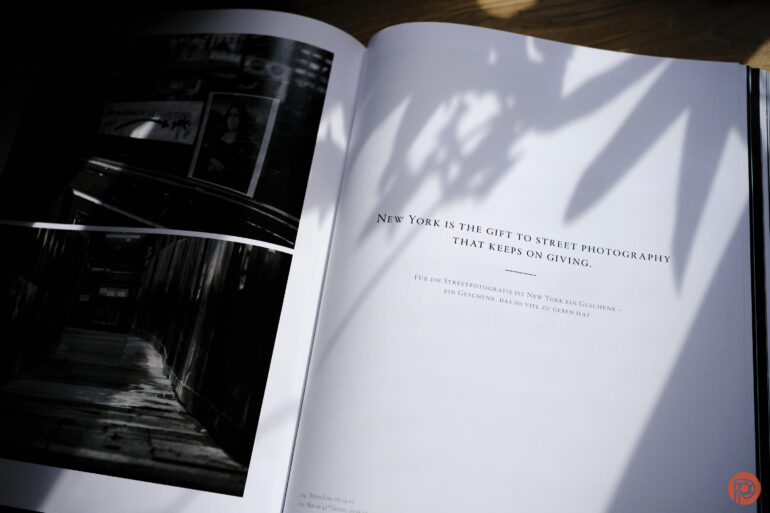
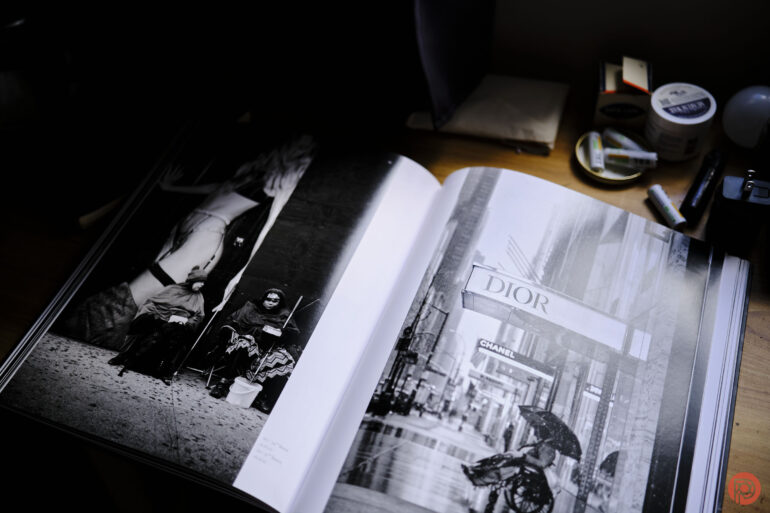
Black and white photos: check! Beautiful street photography moments that look timeless: check! Leica: check! A printed set of photographs with no advertising interruptions: checkmate! Photographer Phil Penman is no stranger to being featured in our online magazine and sharing compelling tales. His latest book, entitled New York Street Diaries, is a deep dive into the work that he’s done over the years. In many ways, this book is soul food for the street photographer.

To understand how this book is soul food, you must dive into who Phil is. Phil Penman is originally from Britain and came to America many years ago. He’s a former press photographer, and these days is mainly known in the world for his street photography work. Browse through his website, and you’ll see that he’s created several beautiful photos. But it’s in this book that you truly start to see where and how he stands out from several others. And for $50, this book is a worthwhile investment into your growth as a photographer.
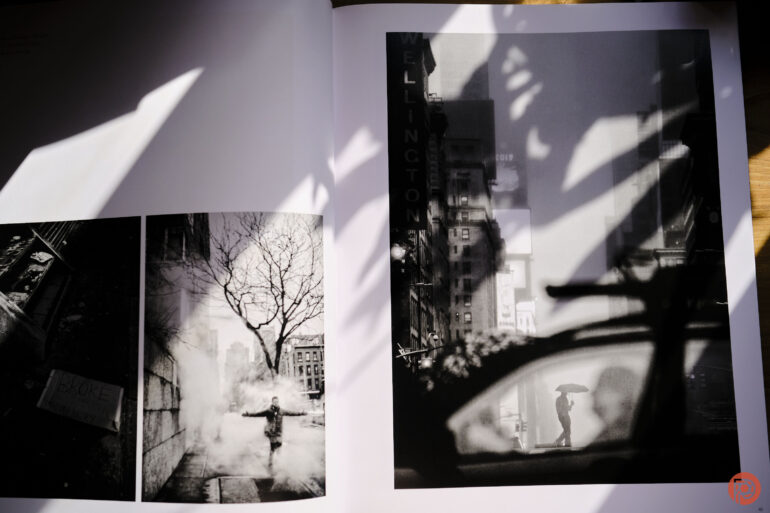
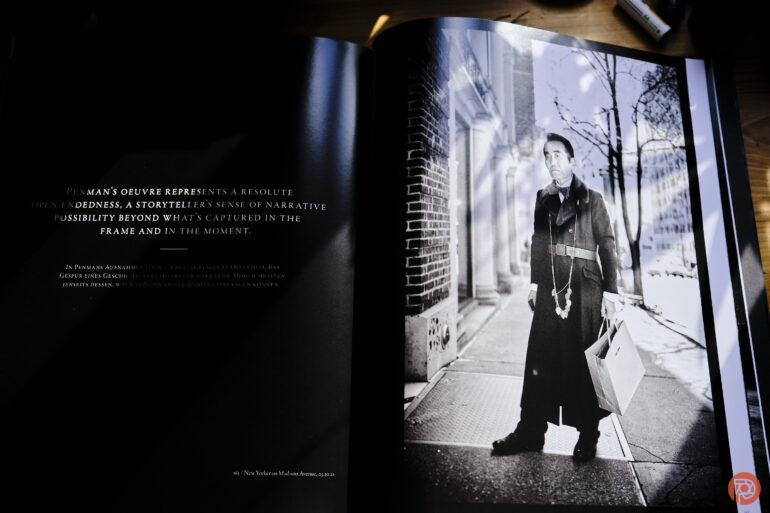
“I wanted to do a truthful portrayal of a time in our history that I hope we never have to see again,” says Phil to the Phoblographer when asked about his inspiration for the book. “From the shadowy underbelly of the homelessness and grittier NYC to the beautiful serenity of walking through the snow at night. We all have our own vision of New York, and this is mine.” He continues to state that while some think that the graffiti streets are an eyesore, it’s part of what makes the city so beautiful and unique to him. This vision is holistically seen throughout the book.

To truly savor this book, I sat down and enjoyed two glasses of nice whiskey. It’s similar to what you’d experience when you go to hang out at a meetup of photographers geeking out about their prints or something. You typically hang out, and then you get into the mode of looking at the images. These rituals are often much more fun together with someone else.

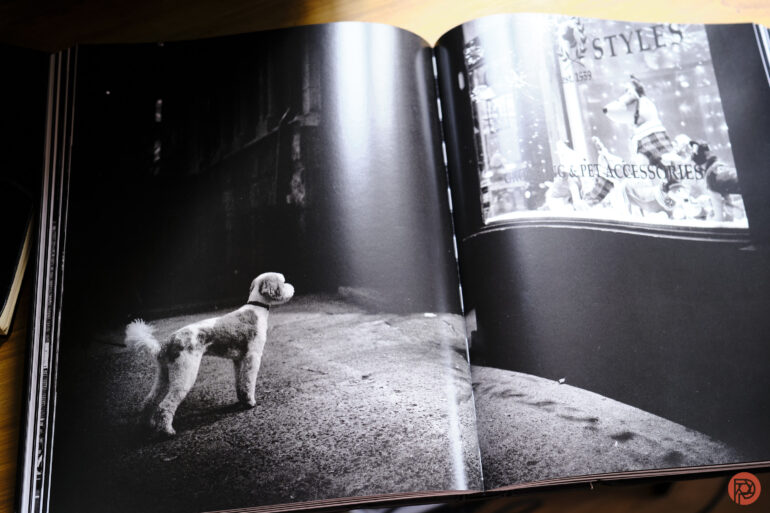
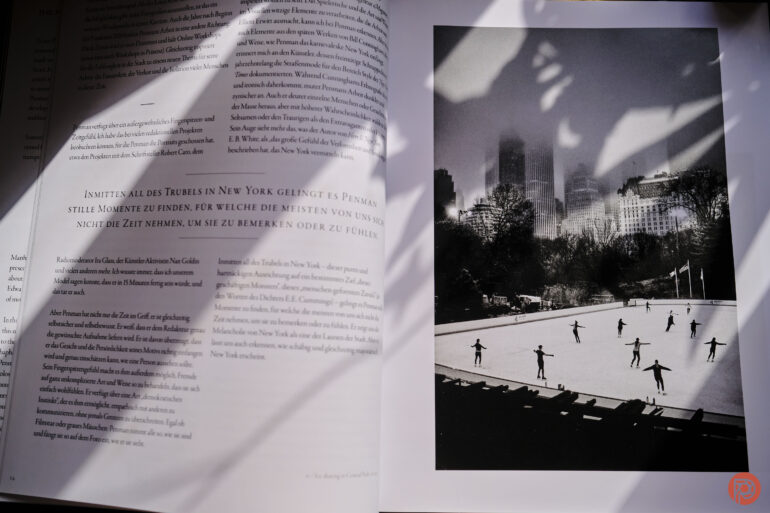
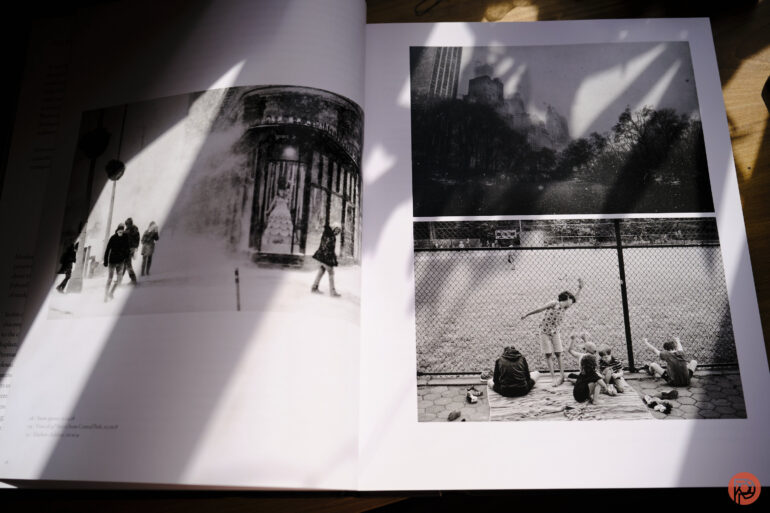
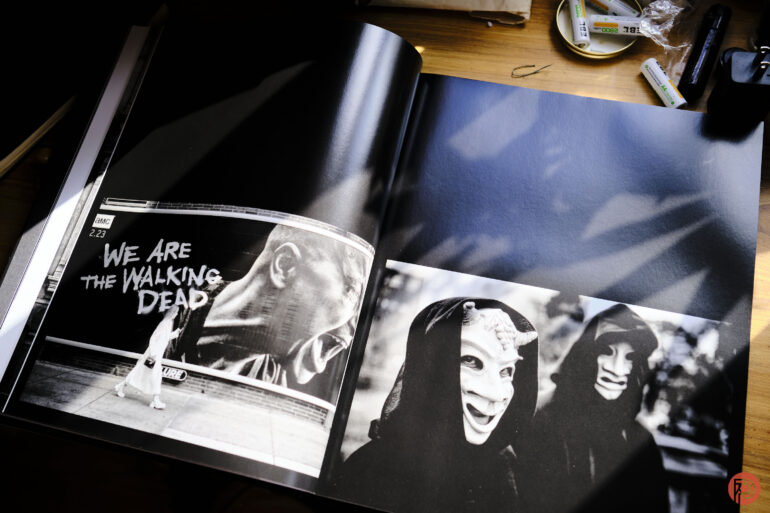
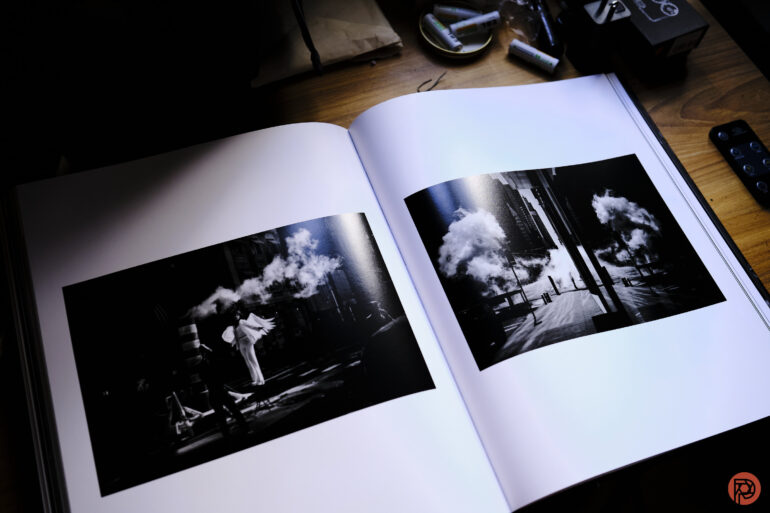
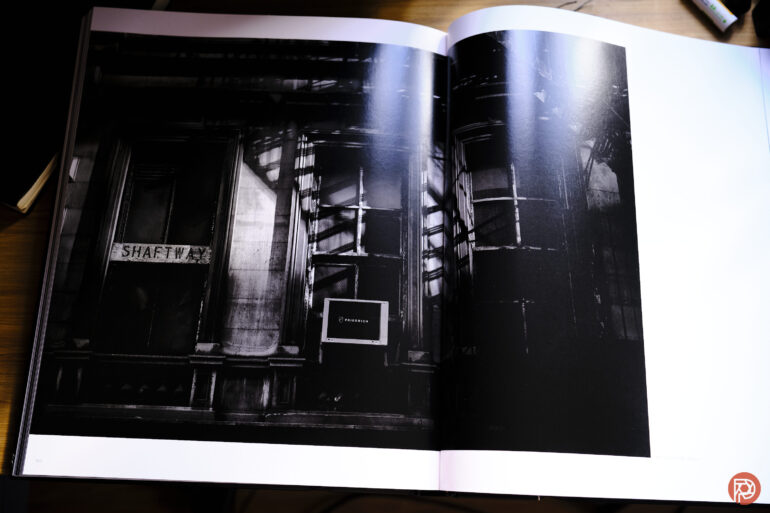
All of Phil’s photographs are black and white — and in this way, one can see him as a modern archetype for the genre of street photography or black and white work. Page through the book, and you’ll spot incredible photographs that will satisfy several camps of photographers. Fine art photographers will appreciate how Phil plays with light and contrast in his photographs. Street photographers will adore how he captures people through a lens that doesn’t at all seem like a colonial eye to the people of New York — but as a sincere admirer. And most importantly, most of the photographs aren’t split down the middle of the page break. Instead, the images are placed in a way that we can clearly see them, or they’re just vertical images that you want to stare lovingly at.
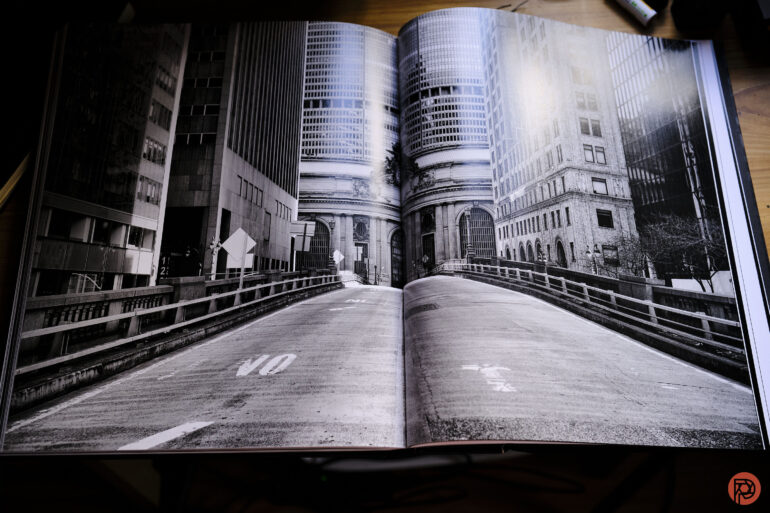
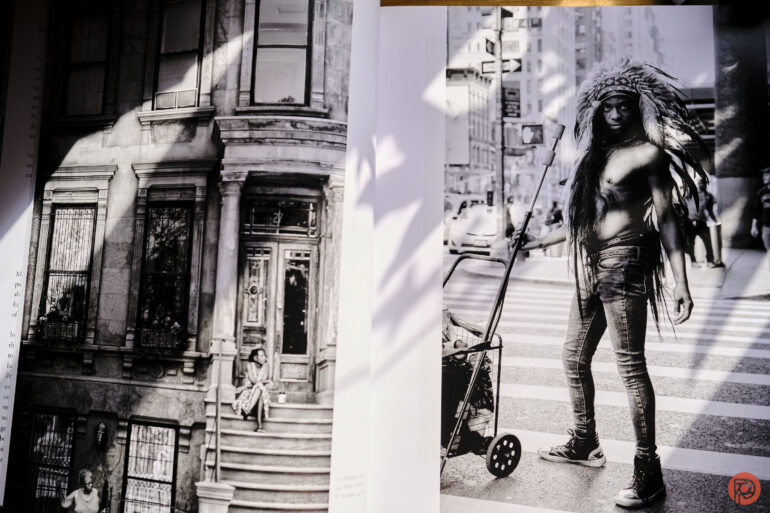
Truly, looking through the book shows you that Phil is in love with New York for what it was and what it is. I mean, isn’t this the kind of love story that we want to know about and that we yearn for? Wouldn’t you want to be holistically loved for what you are? And more importantly, wouldn’t you want to have that expressed about you? We think of New York in a way that is sometimes scoffed at. And I admit that even as a native New Yorker, I’ll scoff at parts of the city that bring me sadness for various reasons. But I also accept that those parts have also, at one time, brought me happiness. Through Phil’s book, you see nothing but admiration portrayed in a classic retelling of the modern landscape of the city and its people.

While I adore the fine art images that Phil makes, I don’t think that they’ll be the most riveting ones to people who buy this book. Phil’s best work arguably showcases people and moments that we otherwise just don’t see.

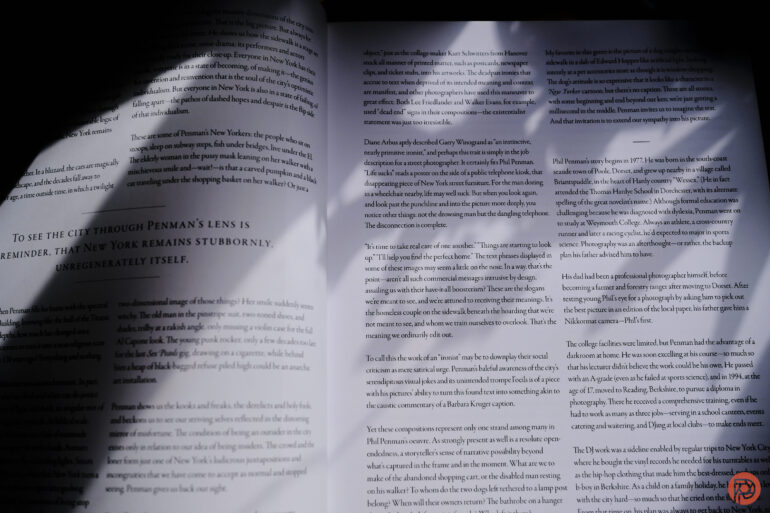
Do yourself a giant favor and get your hands on this book. And more importantly, read the text inside. It’s big enough that even someone with failing eyesight can read it easily.
Rating: 5 out of 5.

A

Phil Penman Made a Book That’s Soul Food for Street Photographers
To understand how this book is soul food, you must dive into who Phil is. Phil Penman is originally from Britain and came to America many years ago. He’s a former press photographer, and these days is mainly known in the world for his street photography work. Browse through his website, and you’ll see that he’s created several beautiful photos. But it’s in this book that you truly start to see where and how he stands out from several others. And for $50, this book is a worthwhile investment into your growth as a photographer.

Roots of life: The 2023 Mangrove Photography Award winners

Roots of life: The 2023 Mangrove Photography Award winners

Mangroves may not be the first thing you picture when you think ‘forest’, but they’re both incredible, unique ecosystems and serve as a kind of structural and water-quality coastguard. And while mangrove forests make up about 0.1% of the planet’s surface, they can store up to 10 times more carbon than terrestrial forests.

Found along the coastlines of 123 countries, their enviable position with water views has made them susceptible to clearing for development, However, the rate of loss is stalling, and because they can grow fast and are environmentally resilient, the world has actually seen nearly 1,000 acres (405 ha) of mangrove forests grow in areas they did not exist in 2000.

Celebrating the unique, often otherworldly nature of this aquatic forest and the life-support it provides for a diverse range of species, the winners of the ninth annual Mangrove Photography Awards beautifully capture the wonder of these pneumatophore-peppered landscapes. (Mangroves, unlike terrestrial forest trees, do not have traditional roots, but root-like structures that aid absorption of nutrients and oxygen; while they have a few different kinds of structures, the most comical ones are the famous pneumatophores that spread out from the tree and stick out of the ground like woody snorkels.)

As for the awards, there were winners across six categories, and we’ve picked out some of the best that highlight the animal life that calls these forests home. For more, check out our gallery.

The overall winner for a striking snap of a young Royal Bengal tigress (see pic above) was Soham Bhattacharyya, who captured the endangered big cat candidly in the Sundarbans Biosphere Reserve in India. Titled “The Finest ‘Flower’ of the Mangroves,” it is a stunning portrait of the only tiger adapted to live in a mangrove forest.

Another portrait of a rather different animal earned Katanyou Wuttichaitanakorn of Thailand the Young Mangrove Photographer of the Year award.

'Eye Contact', Katanyou Wuttichaitanakorn, Thailand (Young Mangrove Photographer of the Year Winner)
‘Eye Contact’, Katanyou Wuttichaitanakorn, Thailand (Young Mangrove Photographer of the Year Winner)

Katanyou Wuttichaitanakorn/Mangrove Photography Awards

At just 17, Wuttichaitanakorn has already made a name for himself as a world-class nature photographer.

This young gold-spotted mudskipper (Periophthalmus chrysospilos) was wonderfully captured in Samut Sakorn province in Thailand. This winning photo comes just a year after the teenager took out his age category in the 2022 Wildlife Photographer of the Year awards, for his artistic capture of a Bryde’s whale.

'In the Forest', Phan Thi Khanh, Vietnam (Mangroves & People Runner-up)
‘In the Forest’, Phan Thi Khanh, Vietnam (Mangroves & People Runner-up)

Phan Thi Khanh/Mangrove Photography Awards

This dazzling aerial shot shows the many sides to these landscapes, as a fishing boat slowly navigates through its dense network of wintery branches in the Ru Cha Mangrove Forest in Vietnam. Photographer Phan Thi Khanh’s image titled “In the Forest” earned the runner-up prize in the People & Mangroves category.

“Ru Cha is a mangrove forest that is considered the green lung of Tam Giang lagoon,” he explained, adding that the bare winter branches are reminiscent of a giant spider web.

Mangrove Photography Awards

Mangrove forests have as much happening under the water as above it, as Chien Lee captures in “Hiding in Plain Sight,” taken deep in the Utría National Natural Park, Colombia. This funny character is a common potoo (Nyctibius griseus), doing its best to pretend it’s part of the furniture in order to guard the nest. As nocturnal animals, it’s are to see these birds in daylight.

“As I didn’t want to risk disturbing the potoo into flight, I photographed it with a long telephoto lens some distance away,” Lee said. “It was only after looking through the lens that I realized there was actually a single egg.”

The snap below took out the Mangroves & Wildlife category.

Mangrove Photography Awards

There’s no denying that us humans have had a significant impact on mangrove forests, much like everywhere else we’ve turned up. Emanuele Biggi’s “The Theatre of Plastic,” which captures a lone hermit crab who has made a home out of a plastic deodorant can top, is a stark reminder of how many species have had to adapt, if they can, or die.

Taken close to the resort island Pom Pom in Sabah, Malaysia, it’s a haunting contrast to the aqua waters and beach views usually associated with the region. And it won the photographer the top prize in the Mangroves & Threats category.

“Pom Pom island is a violated paradise,” said Biggi, who added that the area is burdened by tons of plastic flowing in from nearby Borean shores. “When I found this poor hermit crab … I knew I [had] found my sad ambassador for this terrible human problem.”

Mangrove Photography Awards

With a title that spells out exactly what is happening here, “Mating Nurse Sharks” is an action-snap taken by Mark Ian Cook from a helicopter above the aptly named Shark Point in the Everglades National Park, Florida. He snapped this photo while actually conducting a scientific study on waterbirds in the region.

“Sheltered mangrove habitats that are largely free of human disturbance are critical mating and nursery habitats for a number of shark species, and protecting these areas is essential to sustaining shark populations,” he said.

The various kinds of above-ground roots of the mangroves here form a sort of shark ‘lovers’ lane’, with the sheltered and calm waters providing a haven for the animals to go about their business.

Source: Mangrove Photography Awards

Adventure wedding and elopement photography captures hearts in western Wisconsin

Adventure wedding and elopement photography captures hearts in western Wisconsin
image

From Willow River to Taylors Falls, western Wisconsin and its neighboring regions offer plenty of scenic destinations for weddings and elopements. Local wedding adventure photographers are taking full advantage.

When Samantha Burke started working her first job after graduation, she grew frustrated with having to ask for time off. Burke said she didn’t get paid time off for her first year at a company, so she took an unpaid absence when the opportunity to go to Italy arose.

She quickly realized that a more conventional work experience wasn’t for everyone — her included. And now, Burke has a full-time career in what she calls “wedding and elopement adventure photography.” How does Burke describe her line of work?

“Adventure weddings and elopements, it’s kind of fun, because adventure can mean different things for different people,” Burke said. “I like to think of it as taking a wedding experience and making it intentional and full of connection and things that make you happy. Just starting your marriage off with an adventure — with a bang.”

Couples also like to incorporate hobbies that they enjoy, such as canoeing and camping. The photographer can often help plan the experience, booking things and suggesting locations that match what the couple is looking for in an experience.

Cassandra Oldenburg of Narrow Leaf photography describes it as an “unconventional approach to weddings,” whether that’s hiking, kayaking or even helicopter elopements.

For Oldenburg, her favorite place she’s been to for photography is Iceland. And she said her most popular spots in the local region are the St. Croix River Valley and the North Shore.

Burke couldn’t narrow down her favorite destination to take photos while on assignment, so she listed three: Hawaii, Utah and the North Shore in Minnesota. In Hawaii, Burke traveled to O‘ahu and photographed a couple on a lesser-known beach. The couple went into the water with their wedding clothes on and climbed up on rocks.

Anna Scheunemann, along with her husband, Richard, hired Burke for adventure elopement photography as well. They all went out to Capitol Reef National Park in Utah. Scheunemann said she and her husband are pretty outdoorsy and wanted a more private elopement ceremony, which led to them choosing the adventure photography experience.

“I loved the way she was able to capture the essence of the wilderness wherever different couples were,” Anna said. “Along with the photos of the wedding, I wanted to be able to look in my house, have different scenery from the area that we had eloped and I thought that a lot of her photos, yes, captured the couple, but also captured really cool backdrops.”

The Knot, a wedding planner site, conducted a 2022 survey that found 83% of its Gen Z correspondents said photo or video is the most important element of a wedding. And as couples pursue less conventional wedding experiences, Oldenburg brings up a good point.

“The way of getting married used to be this very structured [method of] ‘this is what you did, this is how you spend, this is a societal norm,’” Oldenburg said. “And I think, nowadays, people are really starting to appreciate more experiences over maybe social norms or stuff. … We’re seeing this sort of change in the industry.”

‘This is Shepherdstown’: Photography book celebrates local beauty found during pandemic

‘This is Shepherdstown’: Photography book celebrates local beauty found during pandemic

Mike Chalmers, of Shepherdstown, signs a copy of his book, “This is Shepherdstown,” for Lucien Lewin, of Martinsburg, at Saturday night’s book launch party in Evolve. Tabitha Johnston

SHEPHERDSTOWN — “This literally is Shepherdstown — every part of the book! There’s pictures of German Street covered in snow, there’s pictures of local houses. Mike did a really good job of capturing what it is to be in Shepherdstown and what Shepherdstown is,” said Shepherdstown resident Katelyn Chambers at the book launch party for Michael “Mike” Chalmers’ recently released photography book, “This is Shepherdstown,” in Evolve on Saturday evening.

According to Chalmers, this book would have never come into being, if not for the COVID-19 Pandemic.

“I was looking for a way to do my part, during COVID — to use my skill sets to help. Everyone felt there was a sense of discomfort at that time,” Chalmers said.

“I wanted to do something attainable for the public, that was relatable and didn’t devour my time,” Chalmers said of the project, which started with him posting photographs of Shepherdstown on social media in Aug. 2021. “So I decided that I could take these pictures of Shepherdstown, I could put them up every few days, I could write a little something about them and maybe people would take notice. And so, as often happens with digital endeavors, it took off, to the point that thousands of people are following on Facebook and Instagram. They started really engaging with the ‘This is Shepherdstown’ pages after about a year — talking and sharing. A lot of people then started asking about a book. About six months ago, I seriously started thinking about it.”

Over the summer, Chalmers then proceeded to narrow down his favorite photographs on the “This is Shepherdstown” social media pages, from over a thousand down to 160.

Katelyn Chambers, of Shepherdstown, chats with Shepherd University alumni Patrick Shunney at the “This is Shepherdstown” book launch party in Evolve on Saturday. Tabitha Johnston

“I put it together and shopped it around,” Chalmers, who previously created and published “The Observer” periodical, said. “I had several publishers that wanted to do it, but they were going to take too long [in getting it to print] and were going to wrestle away a decent amount of the creative control, so I said, ‘No thanks! I’ll go ahead and invest in myself and publish it myself.’”

Choosing to go the self-published route has, over the month since it first came out, proven to be the right call for the Shepherd University Class of 1997 graduate.

“There’s a distinct layout to this book that, if you have a familiarity with publishing, you’ll see that a publisher wouldn’t have given all of this attention to one book, because it would cost a lot and you just don’t know if you’re going to get that return [on the cost], as a publisher,” Chalmers, who mainly works in marketing and advertising, said. “I knew that, so I took the pressure off of everybody and decided to take the financial risk of doing this myself. It’s been extremely well-received. Tonight has been a huge success!”

Copies of “This is Shepherdstown” can be purchased at Four Seasons Books or by visiting https://www.thisisshepherdstown.com/. Fifteen percent of the book proceeds will be donated to Shepherdstown Shares, which played a major part in local relief efforts during the COVID-19 Pandemic.

Comments from community members of all ages share the things they love about Shepherdstown at the book launch party in Evolve on Saturday night. Tabitha Johnston

Home For Creators

Home For Creators

Pictured is Erica Rose, owner of Rose and Grace Studio, 316 Cherry St., Jamestown. The studio is open for local creators in the community.
P-J photos by Sara Holthouse

A community space for different kinds of creators has opened in Jamestown.

Rose and Grace Studio, located at 316 Cherry St., Suite 105, is owned by Erica Rose and is a studio meant to give community creators a place to explore. These creators can include anyone from photographers to yoga instructors.

Rose said she opened the studio because during her own creative process she found there were not a lot of spaces in the area for things like photography.

“We have event centers, which are all very business and corporate like, but there are no places or studios like this for photographers,” Rose said. “It’s part of the Jamestown area.”

While Grace Studio is set to be used for any kind of creator, Rose said it will lean heavily toward photography. There will be five or six backdrops for photographers, and the studio will also be open for style shoots for places such as bridal boutiques and influencers. Rose said anything from someone working on their brand for social media to training, business meetings, art galleries, or yoga and pilates classes can be held in the studio. She is also opening it for pop up classes and exclusive pop up classes for fundraisers.

Rose and Grace Studio, 316 Cherry St., Jamestown. The studio is open for local creators in the community.
P-J photo by Sara Holthouse

Rose is also a social media manager under the name XO Erica Rose LLC. The studio is an extension of that.

“My clients often need headshots and a place to work on their brands, and this is a place where they can take those,” Rose said. “I like to say the two shake hands, but they are still separate. I mostly want to give back to the community by allowing them to use the space.”

Rose said she is here to be part of the local community.

“I’m a big believer that we have a collection of creators with skills out there in the community, and I want to create a platform to help get the word out about them and to let people know that they exist,” Rose said. “I want to put a spotlight on the hidden gems in Chautauqua County.”

Rose said being able to open her own studio is a big achievement because she has previously been with another company for 15 years, which recently shut its doors so Rose recently lost her job. It has also meant a lot to be able to achieve this with her daughter — Ryleigh Grace.

Rose and Grace Studio, 316 Cherry St., Jamestown. The studio is open for local creators in the community.
P-J photo by Sara Holthouse

“To be able to open this on my own is a huge accomplishment and as a mother of a girl I can show her that whatever you think you want to do can be done, and she can learn to follow her dreams,” she said.

Rose encouraged those who need a studio to come and use her space.

“A really great source of advertisement is talking and word of mouth,” she said. “You don’t have to use the space yourself, but tell your friends and family who might and we can have a collaboration. When collaboration happens beautiful things come.”

Rose and Grace studio can be booked online at https://XoEricaRoseLLC.as.me/. Bookings are available hourly, quarterly — four hours — and daily — eight hour — slots. The studio is open from 9 a.m. to 9 p.m. Sunday through Saturday.

Today’s breaking news and more in your inbox

Equine Photographer Katey Barrett Passes Away

Equine Photographer Katey Barrett Passes Away

Photographer Katey Barrett, long associated with artful images of Santa Anita, passed away Sunday, Oct. 22 after a bout with cancer. She was 91.

Barrett’s images, often easy to identify due to her unique style, were part of Santa Anita’s opening day Winter Meet souvenir calendar for over 30 years. A Minnesota native, Barrett came to California in the 1950s and worked on several TV shows, as well as on a movie with Don Knotts.

“Katey had been on hospice and was diagnosed with cancer a couple of months ago,” said her sister, Jane Barrett. “She was at Santa Anita and took beautiful pictures for more than 40 years. She received many awards and she was dedicated to serving animals, all animals. A lot of people have been calling and expressing what she has done for them personally, in their lives.”

Barrett is survived by her sister and two brothers, David and Jim. At her request, there will be no memorial services. Donations in her honor can be made to Wild Horse Sanctuary, P.O. Box 30, Shingletown, CA, 96088.

Friday Art Walk showcases art, photography, W.I.T.C.H.E.S and sugar skulls

Friday Art Walk showcases art, photography, W.I.T.C.H.E.S and sugar skulls

Photo by Shiloh Glaspell

COTTAGE GROVE, Ore. – This Friday, October 27, from 6 to 8 p.m., at historic downtown Cottage Grove, enjoy a spooktacular autumn stroll during the Cottage Grove Last Friday Art Walk. Surprises await with special guests, amazing art and even a few treats! Look for the flags.

Five Flying Monkeys; The Crafty Mercantile/Tallulah & Co. – Jonathan Thornton, landscapes and portraits; Opal Center for Arts and Education; Ambrose Collectibles; Kalapuya Books – Jasen Szczepaniak, photography; The Bookmine; The Brewstation – The Huckleberries; Apple Pie Antiques – Molly Engleman, leather work, beaded collars for dogs; Cottage Grove Chamber of Commerce; Goodbar Books – Cottage Grove Art Collective Sugar Skulls; Hot Spot Cafe

You can also see the W.I.T.C.H.E.S at Art Walk on Fri., Oct. 27, and at Coast Fork Brewstation on Sat., Oct. 28. They will also be located on 7th and Main Street during this year’s Downtown Trick or Treat event between 3 p.m. and 6 p.m. on Halloween, Oct. 31. 

BYU Museum of Art debuts new exhibit ‘Life: Six Women Photographers’

BYU Museum of Art debuts new exhibit ‘Life: Six Women Photographers’
BYU’s Museum of Art’s new exhibit, “Life: Six Women Photographers.” This exhibit features work from six different women photographers. (Audrey Hill)

BYU’s Museum of Art debuted its new exhibit “Life: Six Women Photographers” earlier this month, highlighting six influential women photographers’ work from the 1930s to the 1970s.

The exhibit features the work of photojournalists Margaret Bourke-White, Hansel Mieth, Marie Hansen, Nina Leen, Martha Holmes and Lisa Larsen.

Featured within the new installation are a variety of photos, such as Marie Hansen’s photo essay showcasing the 20th century Women’s Army Auxiliary Corps, and Margaret Bourke-White’s photographs depicting the impact of the American economic depression on the people of the 1930s. Photographer Nina Leen highlights the work of women and mothers, while portraits of Hollywood personalities are featured in Martha Holmes’ photos of Billy Eckstine. Hansel Mieth’s photos focus on depicting the reality of labor forces and the experiences of the general public.

BYU students, local community members and visitors now have the opportunity to visit the Museum of Art’s new exhibit and appreciate the talent of these six female photojournalist pioneers.

Garment workers at play. Vintage gelatin silver print. (Hansel Mieth 1909-1998)

“I think it’s cool that we’re honoring female photographers,” Sally Bradshaw, a BYU junior, said.

Bradshaw continued to describe the photos in the exhibit as “down to earth.”

“They capture very emotional moments, it seems. It’s pretty inspirational,” BYU student Logan Berry said.

Life Magazine, which ran weekly from 1883 to 1972 and monthly from 1978 to 2000, focused on showing “The Most Iconic Photographs of All Time,” according to Life Magazine‘s website.

The “Life: Six Women Photographers” exhibit at the BYU Museum of Art gives visitors the opportunity to witness for themselves the photographs of the six featured photographers. The exhibit displays photos both published and unpublished by Life.

“It’s like a crazy cool opportunity to be able to see these things that at one point were just in a magazine but are now really important,” BYU student Katy Turner said.

Turner continued to express interest in the past and future BYU Museum of Art photography shows because of the focus on important events.

“A lot of times we try to make it a focus and like a point to remember prominent women in history or maybe women in history who were amazing but we don’t really know about,” Bradshaw said. “I think it’s really cool that BYU wants to give a space to that because we’re all about honoring amazing people.”

First gas-mask drill. Vintage gelatin silver print. (Marie Hansen 1918-1969)

“Life: Six Women Photographers” was organized by the New-York Historical Society and will be on display in the BYU Museum of Art until Feb. 3, 2024.

There will be a panel discussion discussing the exhibit and photography, art history and journalism on Thursday, Oct. 26 at the Museum of Art. BYU professors and faculty members Heather Belnap, Melissa Gibbs and Paul Adams will be presenting.

Museum of Art educator Liz Donakey will also host a gallery talk regarding the exhibit on Wednesday, Nov. 29.

Students can schedule a tour of the exhibit on the Museum of Art website.

Print Friendly, PDF & Email

A Friendship in Photography

A Friendship in Photography

A Friendship in Photography

Black and white photograph of Brian Graham and Robert Frank.

Brian Graham and Robert Frank.Photograph by Brian Graham

Early in 1947, the Swiss-born photographer Robert Frank boarded a liberty ship in Antwerp, Belgium; almost a month later, he arrived alone in New York, to make his way as an artist. There he met his first American friend, a fellow-photographer, Louis Faurer. The two men regularly convened at night to traverse Manhattan with their cameras. Frank, who published his famous collection “The Americans” in 1958, and became one of the twentieth century’s most influential photographers, often praised Faurer for the way that he could see into and reveal people of the sort they encountered together.

Black and white photograph of Robert Frank taking a picture of Allen Ginsberg who is sitting in a chair with a person...
Robert Frank making a portrait for Allen Ginsberg’s “Collected Poems,” 7 Bleecker Street, 1984.Photograph by Brian Graham

One person Faurer memorably captured, in 1947, was his friend Frank, fresh off the boat and out on the job, beginning to search his new country for photographs. In Faurer’s portrait, Frank is part of a crowd gathered to watch an unfolding off-camera event. As the pedestrians crane and peer, Frank stands with hands in the pockets of his weathered pinstriped suit, quietly taking them in. The picture conveys Frank’s uncanny skill at blending with his surroundings, a form of tradecraft that enabled him to photograph strangers up close, unposed and uninhibited. Faurer’s subtle composition places Frank in line with the other figures, yet also offers him richer focus, setting him apart as someone of intrigue. He exudes potential energy, primed as a piston to point and click. It’s as though Faurer had been waiting for just the right chance to capture his friend as he already knew him to be.

Black and white photograph of Robert Frank driving a car
Photograph by Brian Graham
Black and white photograph of Robert Frank looking at a contact sheet in a studio
Robert Frank in Brian Graham’s darkroom at 101 Crosby Street, New York, 1987.Photograph by Brian Graham

So many other photographers would go on to photograph Frank that such portraits became a near-rite of professional passage. In 1952, Elliott Erwitt caught Frank dancing in a Spanish kitchen with his first wife, Mary, and flexing in his underwear while wading off the Valencia coast. Walker Evans made many Frank images, including one with Frank behind the wheel of a parked Buick Roadmaster, and another in which he sits at a rustic wooden table. Richard Avedon’s renditions of Frank glowering back at him, from 1975, imply what was true—that Frank considered Avedon a celebrity chaser, not an artist. (After the notably kempt Avedon’s session with the invariably uncombed Frank, Avedon made his most dishevelled self-portraits, as his biographer Philip Gefter observed.) Frank’s uncompromising ways intimidated many people, but, across the next seventy years, a number of younger photographers—including Danny Lyon, Danny Seymour, Jim Goldberg, Michal Rovner, Ed Grazda, Mellon Tytell, Ayumi Furuta (A-CHAN), and Chad Tobin—felt close to him, and (successfully) asked to take his picture.

Black and white photograph of Robert Frank standing outside with one arm raised
Mabou, Cape Breton, 1979.Photograph by Brian Graham

Part of Frank’s willingness to submit was likely noblesse oblige; during his Zurich boyhood, he’d slept under a portrait of Franklin Roosevelt, and he preferred to photograph those he referred to as “outsiders,” especially “held back” women and men of all races and backgrounds. Frank’s private spirit was, like his chosen art form, essentially democratic. He enjoyed helping people. But the mercurial psychology running through him was as complex as the emotions he found in the faces of those he photographed himself. “Sometimes he’d forbid it and say No!” Gerhard Steidl, who publishes Frank, recalled recently. “But, other times, he’d become an actor in front of the camera.”

The photographer to whom Frank was most magnanimous was Brian Graham. Graham’s new book, “Goin’ Down the Road with Robert Frank,” also published by Steidl, documents the forty years he knew the man he called the Chief, from 1979 until Frank’s death, in 2019. In the nineteen-seventies, Frank had retreated from fame by living much of the time in a ramshackle cliff-top farmhouse on the remote island of Cape Breton, in northeastern Nova Scotia. Graham was from Glace Bay, a rough Cape Breton town of closed mines and struggling fisheries. His father was the mechanic at a bowling alley; Graham worked on off-shore and Alberta oil rigs, and taught school. He learned that “an important photographer” lived on Cape Breton; he’d begun taking photographs of Glace Bay, and decided to show him his photographs.

Black and white photograph of two windows a person is in each window speaking to the other
Raoul Hague’s cabin, Maverick Road, Woodstock, New York, 1988.Photograph by Brian Graham

The two became friendly. Later, Graham received a postcard from New York inviting him down to the big city: Frank had kept a space in a flophouse on Bleecker Street, and, eventually, he and his second wife, the artist June Leaf, bought it. Graham drove south in an old truck, and ended up staying on at Bleecker Street for years, helping Frank renovate the building, processing and printing Frank’s work, and looking after the property when Frank was away. “You couldn’t help but like Brian Graham,” Leaf told me. “Real Cape Breton. Kind of shy.” Graham said, “Maybe he liked me because I am the real Cape Breton.” Still, Frank’s patience with him had a limit, Graham said. “Robert hated it when I took a self-portrait of us. I’d crossed the line. His revenge was to scratch on the negative.”

Black and white photograph of a landscape
Photograph by Robert Frank

Another person who took Frank pictures, in the nineteen-sixties, was Tod Papageorge, who is not only an excellent photographer but among the finest writers on the form. I went to see him the other day to show him Graham’s book. “The Americans” meant a great deal to Papageorge, and he was curious about what Graham had seen during those decades of observing Frank. He opened Graham’s collection and took in the unfolding moments of a photographer’s life: Frank, stoic on the set of Rudy Wurlitzer’s and his film “Candy Mountain,” and Frank with a stay-off-my-land look in his eye while hammering patches into the Bleecker roof; Frank cavorting with Leaf, and Frank keeping busy among such friends as Wurlitzer, Allen Ginsberg, Jim Jarmusch, Harry Smith, and Tom Waits. “He’s definitely responding to Graham differently,” Papageorge said, looking at the portraits. “He’s more relaxed. And when he isn’t completely relaxed, you feel him trying to be the person young Brian knows. He’s almost struggling to be himself, but he’s doing a pretty good job of it.”

Black and white photograph of Robert Frank hammering a nail into a structure
Roof repair, 7 Bleecker Street, 1981.Photograph by Brian Graham
Black and white photograph of two people standing by a car embracing
Robert Frank and June Leaf on Bleecker Street, 1982.Photograph by Brian Graham

Papageorge considered the most successful picture in Graham’s book to be one of Frank visiting a mentor, the irascible sculptor Raoul Hague, who lived in a cabin in Woodstock. The photograph, taken from outside, shows Frank and Hague seated, facing each other, inside the cabin, framed by separate windows, with an empty window between them. “There’s an idea here,” Papageorge said, “each person existing in a separate cabin of self.” The picture also seemed to gesture to a famous image from “The Americans,” a front-to-back line of white-then-Black faces looking out from a segregated New Orleans streetcar. Frank drove well over ten thousand miles while making “The Americans,” and a picture by Graham, from 1992, of Frank vehemently commanding a Ford Falcon station wagon, made Papageorge say, “You know this guy’s gonna get you there.” It reminded Papageorge of another photo from “The Americans,” of hitchhikers whom Frank picked up in Blackfoot, Idaho. One hitchhiker spelled Frank at the wheel, and, from the back seat, Frank surreptitiously got his picture.

Graham’s pictures inevitably invite comparison, and contrast, with Frank’s—as a recent exhibit, at the Inverness County Centre for the Arts, on Cape Breton, made explicit, displaying the “Goin’ Down the Road” images alongside those from Frank’s last collection, “Good days Quiet,” which is mainly a meditation on Frank’s life in Cape Breton. (Most of the pictures were taken in the seventies and eighties and were never printed until Frank put the book together, toward the end of his life.) Frank was a literary photographer in the sense that his pictures possess narrative and character, hold the emotional resonance of short stories. “Lived experience and vivaciousness,” Papageorge noted of one picture, “real echoes of art history and Virginia Woolf.”

Black and white photograph of two people standing side by side the person on the left is looking at the person on the right
Pablo Frank and his girlfriend Rhonda.Photograph by Robert Frank

Papageorge got out “Good days Quiet,” and flipped to a stunning Cape Breton winter land-and-sea expanse, with footprints in the snow. Frank could locate emotion pretty well anywhere, Papageorge said. “I remember Robert came to Yale once,” he went on. “He got out of the taxi, he looks down at the pavement, and got totally engrossed in the impression a few leaves had left in the concrete.” He added, “With Robert, it’s interesting how still the pictures are even as they express motion. His gift is offering a sense of things about to move, about to happen.”

Then Papageorge was smiling, at a portrait of Frank’s son, Pablo, with his girlfriend, both happy and tender with youth. After Frank’s daughter, Andrea, was killed in an airplane crash at twenty, Pablo descended into mental illness, and eventually died by suicide. Papageorge, too, had photographed Pablo, as a teen-ager, and here he was moved by how sure of each other the two young people had looked. “Not many people can photograph their kid and you’d want it on your wall,” he said. “Robert said of Walker Evans that Evans thought he was superior to other people. He’s probably right, but it’s still unfair. Some people are superior. Evans was superior. Robert was, too.” ♦

Black and white photograph of Robert Frank signing photographs
Signing prints, Newark, New Jersey, 2002.Photograph by Brian Graham