Photography

Photographer Cursed Out for Refusing to Send Wedding Photos Until She’s Paid

Photographer Cursed Out for Refusing to Send Wedding Photos Until She’s Paid
Wedding photographer
Stock photo.

A photographer has taken to the ever-popular AITAH subreddit to ask whether she is the proverbial backside for refusing to hand over wedding photos until she is paid.

The photographer, who goes by Belle0910, explains that she is a 24-year-old female who stepped in for a friend after their wedding photographer canceled the night before the wedding.

Belle says that it was her brother-in-law who told her about the situation and asked if she would help and that she would be paid by a certain date.

“I agreed and traveled four hours with my camera and laptop up to this wedding venue to take photos for the bride and groom,” explains Belle.

Belle says she later found out that she wasn’t being paid until much later than agreed and, clearly disgruntled, she decided to withhold the photos.

“I then explained this to my friend and he was unaware of a date being set for payment and only the amount until I’d showed him that part of the conversation we had between each other,” writes Belle.

“So now I’ve been called an as*hole for refusing to send any photos over until payment has been made in full by the given date but everyone’s already been using my photos quite happily for profile pictures and cover photos from the few I had already sent over.

“I feel the whole situation is about to put a divide between me and my friend when I don’t want it to but am I the Ahole for refusing to send any more photos until payment has been made or am I overreacting?”

Belle’s post received 5,000 upvotes and nearly 1,000 comments with the majority of people judging her to be “Not the A-hole.”

Many on the thread suggested Belle send her friend the photos with huge watermarks on them or as tiny thumbnails that can’t be enlarged.

“As a former professional tog, I feel your pain here. No, you are NTA. Family, friends, strangers, whomever is asking for images without paying is NOT entitled to those images,” writes one Redditor.

“They’re your photos, and you own the rights to them to do as you wish. Please, please don’t distribute those images without getting full payment, if you do it once, it’ll be expected again and again and again.”

In August, PetaPixel reported on a photographer who deleted their cousin’s wedding photos after their relative refused to pay.


Image credits: Header photo licensed via Depositphotos.

UA Little Rock to Host Street Photography Exhibition – News

UA Little Rock to Host Street Photography Exhibition – News

UA Little Rock will host a pop-up exhibition of street photography by Jacobb Nichol from Oct. 9-13.

The exhibition, which is free and open to the public, will be held in the Focus Gallery in the Windgate Center of Art and Design. It will feature the street photography of Nichol, a senior mass communication major with a journalism emphasis from Little Rock. The exhibition highlights 12 photographs Nichol captured while “beating the streets taking candid photographs of people in street settings.”

“I started street photography to capture the raw emotions that are presented on the streets, the times where people let their emotions come to the surface instead of masking them,” Nichol said.

Nichol said that his street photography project was greatly impacted by the loss of a loved one.

“I lost someone important to me, and taking photos allowed me to escape from the hardship, where I could think and reflect on life’s choices and the reason I am taking these photographs,” he said. “I found the reason is that these photos are a source of motivation in seeing life in the moment, being present in times of precious moments, and freezing them for further reflection. I hope the viewers will see what I felt in these photographs and get a sense of how I viewed the world while making them. I hope they can see that life is precious and fragile, and being present in the moment is the goal of life.”

The UA Little Rock Art Galleries in the Windgate Center are open from 9 a.m. to 5 p.m. Monday through Friday, 10 a.m. – 1 p.m. Saturday, and 2-5 p.m. Sunday.

For more information, contact Nathan Larson, interim art gallery director and curator, at 501-916-5104 or nglarson@ualr.edu.

Share this Post:

Sunbath: Film Photography, the Cinematic Version

Sunbath: Film Photography, the Cinematic Version

Off the beaten path at the Rencontres d’Arles, Maxime, Léo, and Valentin sell their color film rolls at a small makeshift stand. These film rolls, encased in pastel-colored cardboard boxes, are unique: they were handmade using repurposed cinematic film.

The project began with Valentin and Maxime Tanchaud, two brothers passionate about analog photography. To economize, the duo decided to buy 300-meter reels of cinematic film fresh off the factory line. Donning lab coats and gloves, they set out to breathe a new life into this film. Some extensive research and experimentation later, the project expanded, giving rise to Sunbath Filmlab.

Chemistry 101

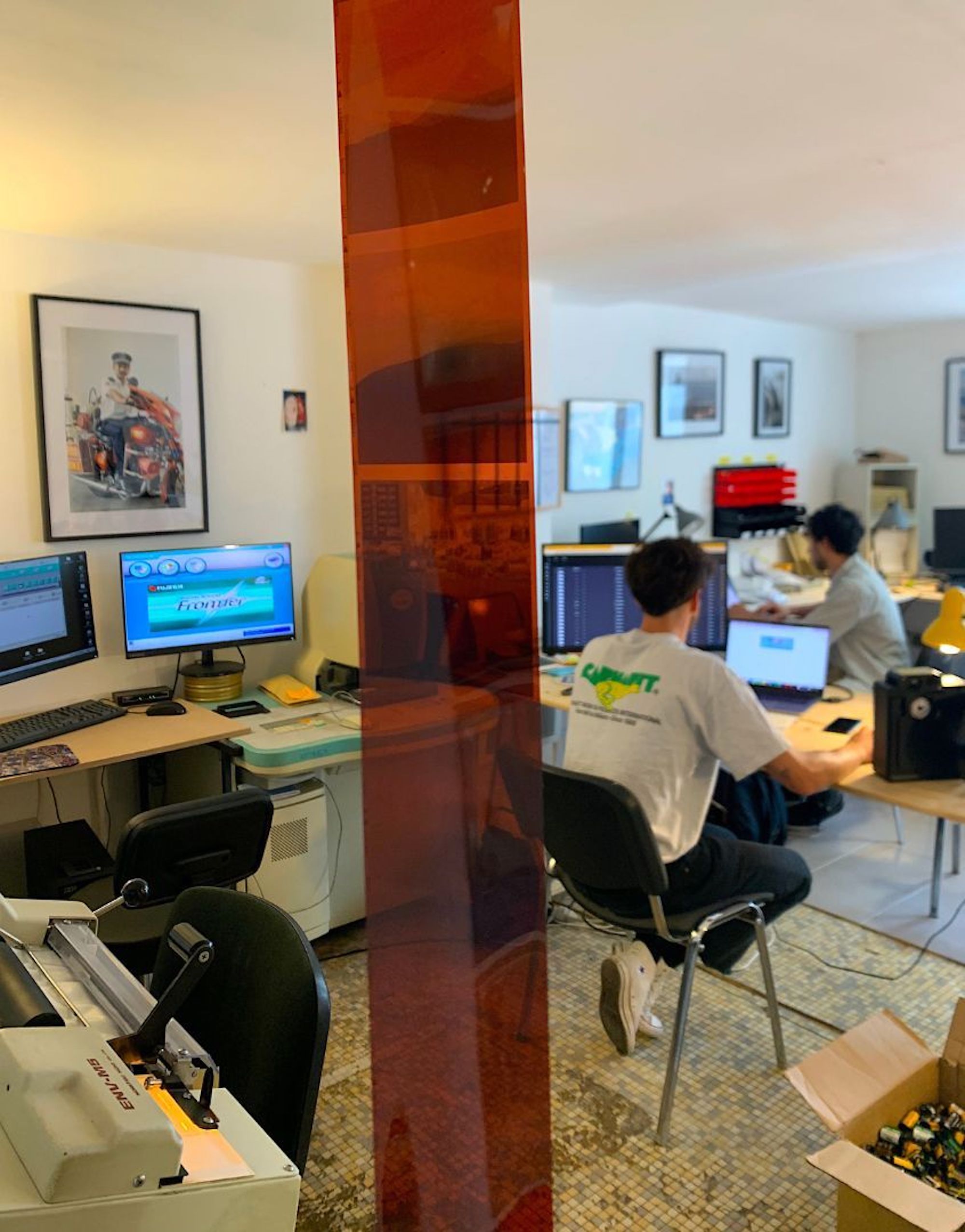
Sunbath’s laboratory is located in Pantin, near Paris. Inside, there’s no darkroom; instead, a Noritsu developer takes center stage. User-friendly and efficient, this machine can quickly process a large number of 35mm films. However, cinematic films are a different story; they come with a layer of remjet, an anti-halation and antistatic coating. These films require a special manual process: ECN2 and C41 development.

Drawing inspiration from cinematic film development techniques and adapting them for photography, Sunbath has made ECN2 development their signature method. “You have to be ready to slip your gloves back on and really get hands on with the chemistry,” says Maxime. “There are other labs that work with cinematic film, like CinéStill. The big difference is that they remove the anti-halo layer, which is essential for the film’s color balance, so that their film can be developed using the C41 process by any photo lab.”

The Sunbath lab in Pantin
The cinema films that pass through Sunbath are processed by hand using film-specific chemistries.

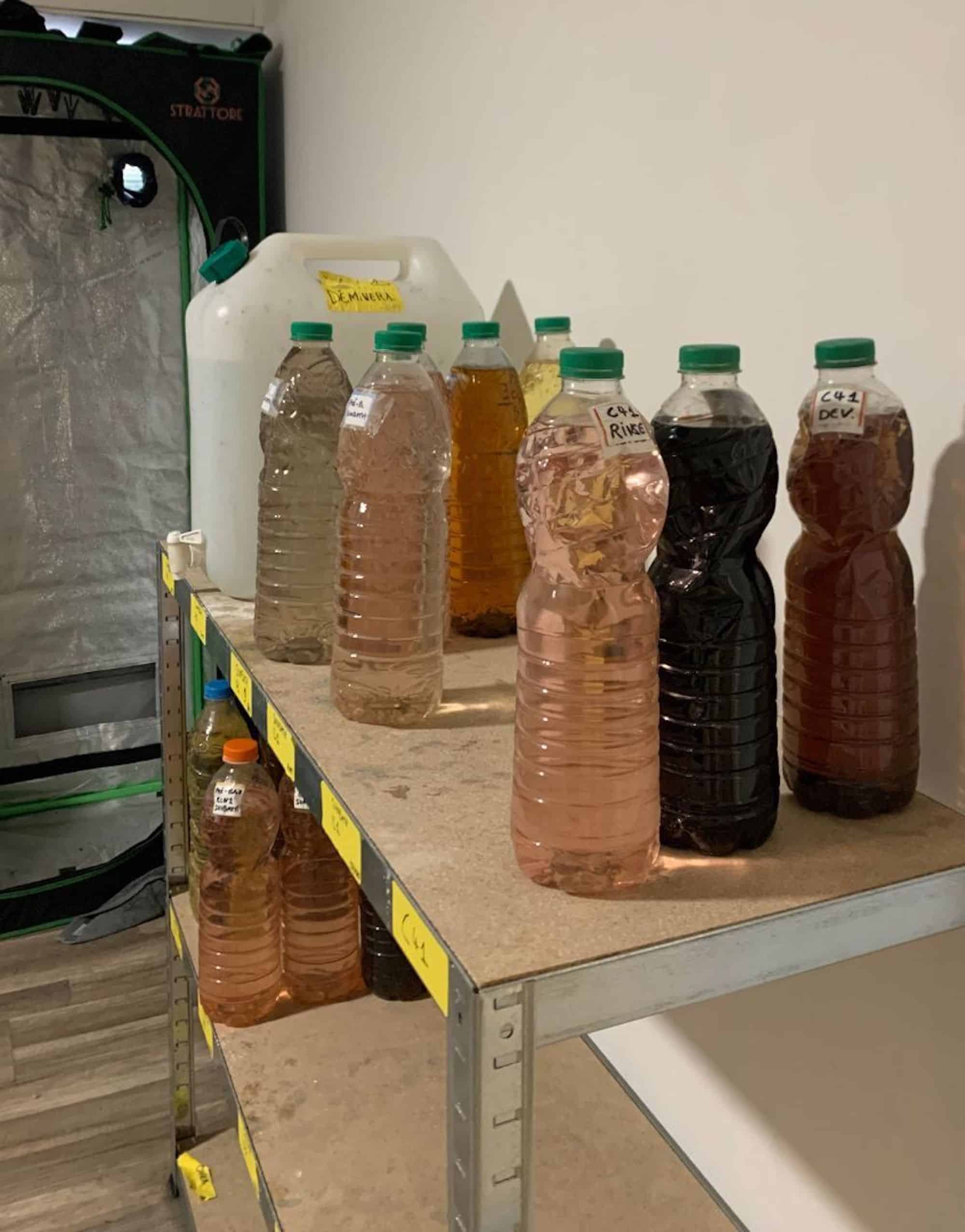
At the back of the workshop, films, tanks, dryers, chemicals, and dilutions sit side by side. Everything goes through a Jobo processor, a kind of temperature-controlled vat equipped with a motor for alternating rotation of a developing tank. Valentin meticulously explains each step as if it were a culinary recipe: “You have to be precise, calculate the temperatures for the water bath, mix and renew the chemicals to maintain their effectiveness, and adjust the dilutions according to volume.”

It takes skill, but above all, patience, Valentin acknowledges: “ECN2 development is done in five baths. The entire cycle, from spooling to development, takes about an hour and a half, plus another two to three hours for drying.” In contrast, Valentin shows a machine and explains how much simpler C41 development is: “You load your films, and in nine minutes they’re dry and ready to scan. It’s old equipment, but it’s a joy to use. It saves an incredible amount of time.”

100% handmade

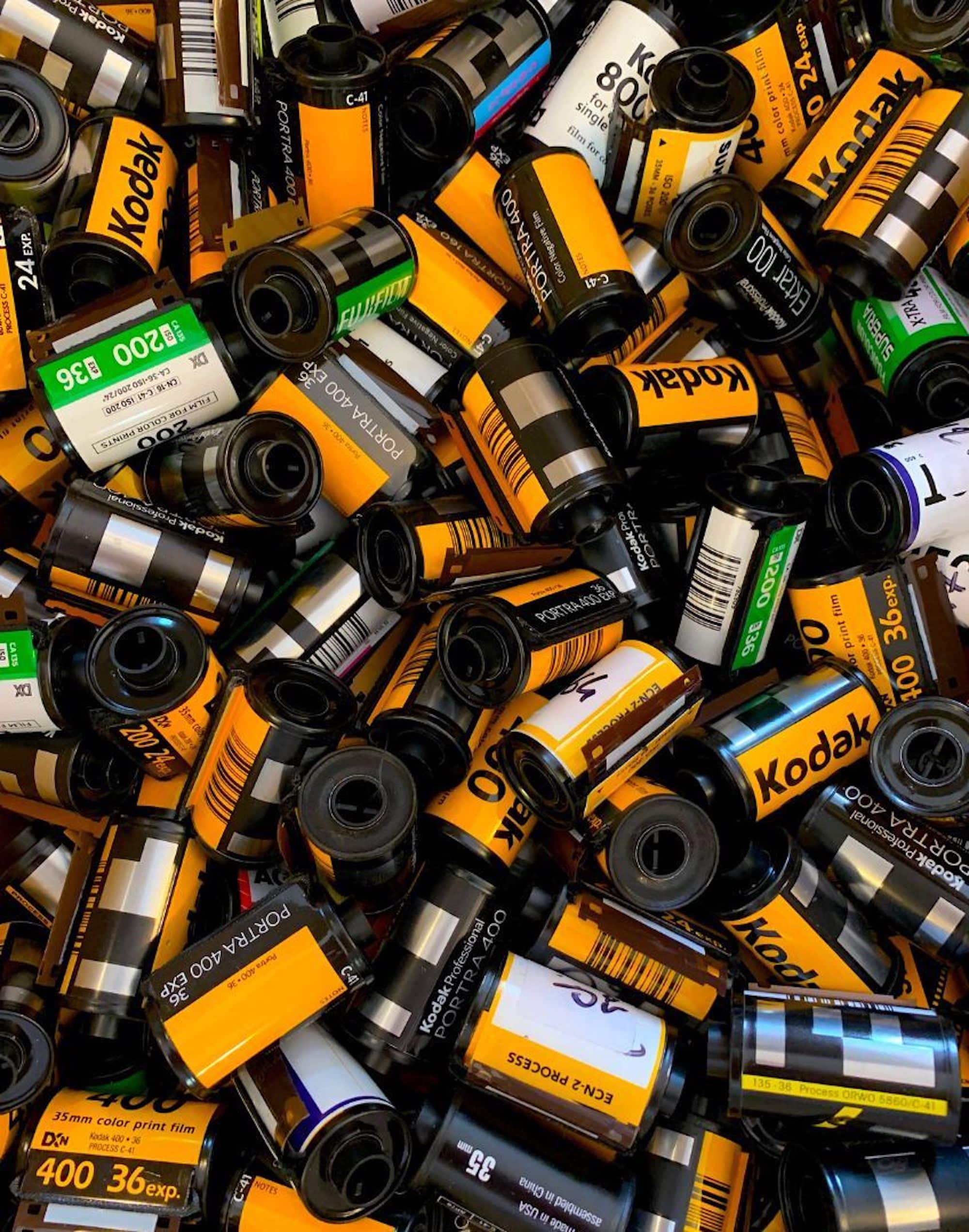
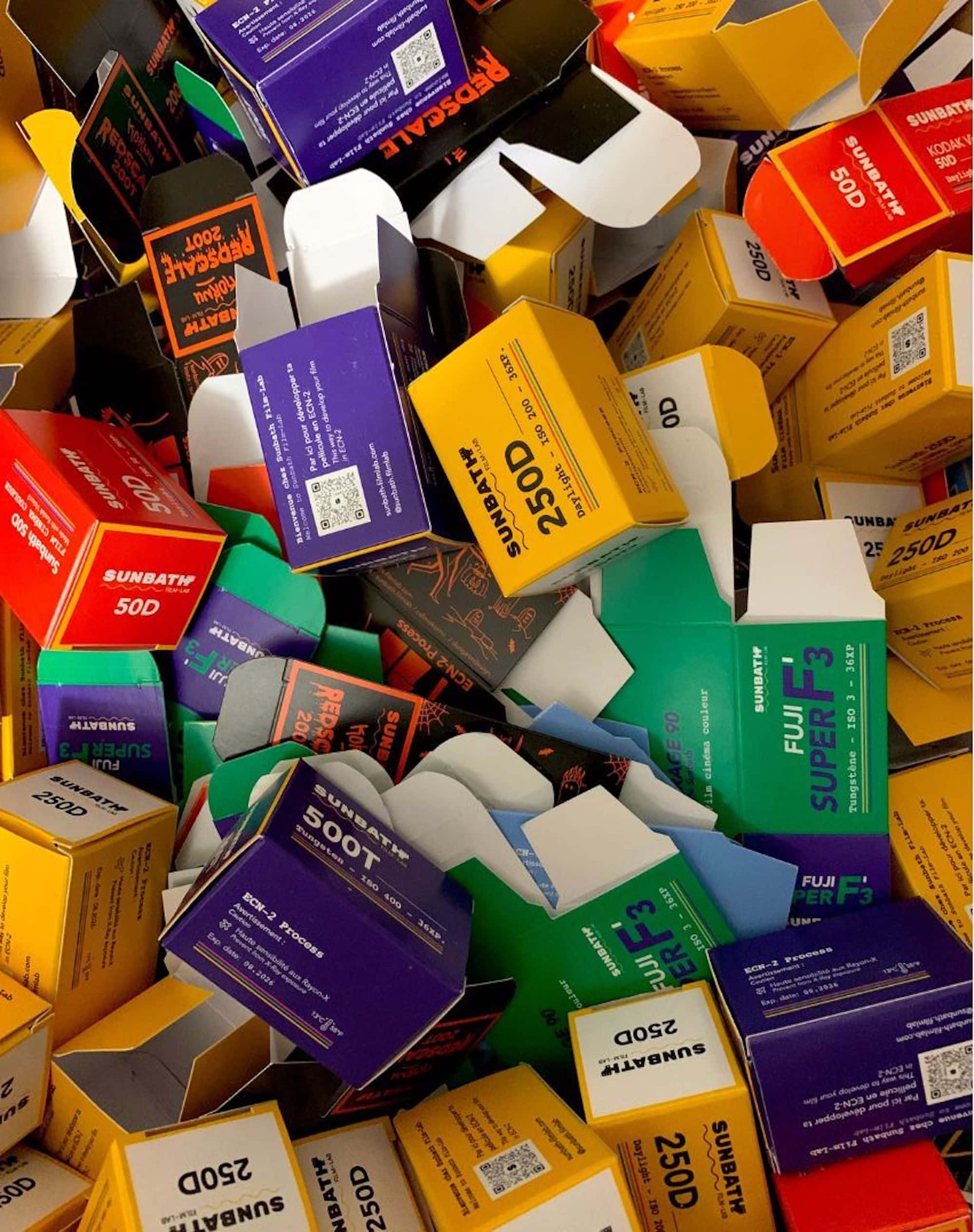
Self-taught and self-sufficient, the creators of Sunbath do everything themselves. This includes not only developing the film but also the work of cutting and packaging. They prepare their own 35mm film rolls, winding them onto spools in recycled cartridges stamped with the Sunbath logo. They even built their own website using Squarespace, launching it before even formally establishing a business. “In the beginning, we started developing in our own sink. The first month we made 1000 euros in revenue!”

“We learned accounting, logistics, marketing…” Maxime recalls. “We didn’t outsource anything. We couldn’t afford it anyway. We figured, why not take an extra month or two and create something truly reflects who we are?” To do so, the two brothers learned as they went along, via discussion groups or with the help of more experienced friends. “We mostly learned thanks to people who were interested in our project. Even today, people come along and offer us tips and advice.”

Sunbath Filmlab collects film cartridges for reuse
Sunbath Filmlab packaging is also collected after use for recycling or reuse.

In addition to cinematic film still produced today, Sunbath is continually seeking innovation. And they don’t shy away from seasonal offerings. For Halloween, they released redscale film that produces orange-reddish results. Last summer, they launched limited-edition disposable cameras. “We’re pretty insatiable; as soon as one project is done, we’re on to the next thing.”

Sunbath is much more than your plain old photo lab: it aims to create a community, showcasing the photos of its members on its online gallery and on Instagram. The owners are even considering hosting physical exhibitions to promote their cinematic film rolls and the photographers who use them. “We’ll be back at Arles next year, but this time with an exhibition.”

Photo with Sunbath 50D film by Maxime Peschard
Photo with Sunbath 200T film by Louise Boyé Della Giustina
Photo with Sunbath 250D film by Alexandre Cornille
Photo with Sunbath 500T film by Océane Entfellner

Learn more about Sunbath Filmlab on their website or at 22, rue Beaurepaire, Pantin.

Victoria photographer relives memories through photography

Victoria photographer relives memories through photography

When Ingrid Kabela first arrived in Victoria from Germany in the early 1960s, she experienced culture shock. Everything from the wide-open roads to the different types of bread available at grocery stores, it was a completely different environment from her hometown in Hochspeyer, Germany.


Seagull

Seagull on the wall of Cathedral Mont St. Michel, St. Malo, France.


“When I came [to Victoria] the first time it was so different, that is hard to imagine somebody from Europe to come to rural Texas,” Kabela said.

#placement_588509_0_i{width:100%;margin:0 auto;}


Ship

Ship off the coast of Argentina on the way to Montevideo, Uruguay.


Brittany

Coast of Brittany, France in August 2019.


Kabela first started her journey with photography after her husband, Edward Joe Kabela, a U.S Army soldier, bought her a camera after a tour in Korea. Through her husband’s military duties, Kabela traveled all around Europe, taking her camera everywhere she went. She documented her family’s travels and through this she fell in love with photography.


Easter egg hunt

Sandra and Michael Kabela at an Easter egg hunt in the forest of Hochspeyer, Germany, Easter 1969.


JFK

John F. Kennedy at Armed Forces in South Naples, Italy in July 1963.


“Travel and photography has always been my passion,” Kabela said.

“You have something tangible to look at to refresh your memories and the many happy moments that you’ve had in life.”


Buckingham Palace

Buckingham Palace, London, England during Easter 1972.


Kabela memorializes her trips and memories through making her own photo books that feature a comprehensive number of images that she’s taken over the years.


Chapel

Chapel close to Marfa.


Since 1976 Kabela has settled down in Victoria, but she makes time for traveling across the country and abroad.

The Victoria Photography Club helps encourage Kabela to look back through her work and relive lifelong memories.


Grindlewald

Grindlewald, Switzerland.


Alpine Glowing

Alpine glowing.


Lake Fandango

Lake Fandango, tip of Argentina in Patagonia, 450 miles from Antarctica.


“Photography gives you the opportunity to relive the happy and sometimes sad memories, she said.”

Anne Cusack Derk, Times photographer of skill and heart, has died

Anne Cusack Derk, Times photographer of skill and heart, has died

Chicago in the late 1970s and 1980s overflowed with a cadre of smart, keen-eyed photojournalists who would go on to win national acclaim, taking unforgettable pictures from their hometown and hot spots around the world.

They worked for the Chicago Tribune, the Sun-Times and other newspapers, competing fiercely for the best images before adjourning for liquid therapy at the Billy Goat Tavern, a storied journalism watering hole.

More than holding her own in this remarkable company was a young photographer named Anne Cusack Derk. She was something of a unicorn — frequently the lone woman in the bullish fraternity of Chicago news shooters.

Known for both her vivid picture-making and her abundant heart, Cusack became the first woman honored as Photographer of the Year by both the Illinois Press Photographers Assn. and, twice, by the association of news photographers in Chicago.

Cusack later took her intimate storytelling to The Times. In a career that spanned five decades, she won renown for photos that captured the anguish of Vietnamese boat people on the South China Sea, the grit of a “girl boxer” from L.A.’s Eastside and the ferocity of a backboard-shattering dunk by a high school basketball player.

Anne Cusack's 1993 image of Leon Watson shattering the backboard with a 'slam dunk.'

Anne Cusack’s 1993 image of Leon Watson’s “slam dunk,” a move that shattered the backboard in a game between the Crenshaw Cougars and the Faith Baptists.

(Anne Cusack / Los Angeles Times)

Cusack, who retired from The Times in 2015, died Monday, with her two daughters at her side, at Los Robles Regional Medical Center in Thousand Oaks. She was 72 and had struggled with interstitial lung disease since 2019.

Her colleagues remembered her as a trailblazer, a woman who made award-winning images while raising three children with her husband, Richard Derk, a former photo editor at The Times.

“She met the world with an open, loving, unguarded heart,” a dear friend, Nancy Drew, wrote in tribute to Cusack. “It was the key to her art. As a news photographer she walked into situations both grim and delightful, and came back with award-winning images.”

Like many news photographers, Cusack was called on to shoot an array of images, from news conferences to murder scenes. Her skills came into highest resolution on projects, including her nearly two-month foray to Southeast Asia to catalog the suffering of Vietnamese refugees. At one point, she jumped into a dugout canoe, the only vehicle that could get her to a remote island where many people were stranded. In a relentless rain, she held an umbrella in one hand and a bucket in the other. Years later, Cusack would laugh while recalling her guide, who repeatedly admonished: “Keep bailing! Keep bailing!”

While she captured wrenching images during that assignment for the Chicago Tribune, the newspaper had not yet fully embraced photo essays and initially published only a handful of her pictures. So Cusack set to work with her husband to design a five-page layout of the photos. The presentation was so compelling that the Tribune ran all five pages.

“One thing that came out of it was a kind of awakening at the paper of the power of photojournalism,” Derk recalled.

An undated photo of Anne Cusack on assignment.

An undated photo of Anne Cusack on assignment.

(Derk family)

Some of his wife’s most compelling work for The Times came when she collaborated with Kurt Streeter, a gifted writer who is now a national correspondent for the New York Times.

The duo first worked together on a series about a slight young girl from L.A.’s Eastside who yearned to become a boxer. “The Girl” recounted the journey of Seniesa Estrada and her father, Joe, delving deeply into issues of race and identity.

Cusack’s photos captured the girl and her sport in all its savagery and tenderness. One gripping image showed Seniesa, her eyes gleaming with desire, reflected in the glass pane over a poster of Muhammad Ali.

Cusack and Streeter would team on three other projects that delivered harpoons to the heart. One followed identical twin boys struggling with heart disease. Two other projects centered on young women with traumatic medical conditions: one an Iraqi disfigured by a war-time bomb, the other an American who suffered a horrendous brain injury in a car accident.

“She was so much more than a photographer,” Streeter said this week. “She was a reporter right there with me, with a special ability to make people feel at ease. It was like having a mother’s wisdom and care and strength at my side. That always helped so much in these highly emotional situations.”

Not surprisingly, Cusack’s caring persona took full force in her home life.

Her three grown children remembered her as the mother who guided and inspired by example: driving home from work, she told one daughter to stay in the car as she donned fire gear and jumped out to shoot a brush fire; helping prepare her kids for “Crazy Hair Day” in school, her creativity conjuring up just the right hairdos; and consoling her teenage son, jilted by a girlfriend, by lying on his bed and finding the right words.

“Anne trailblazed that path for so many women, and beautifully captured the essence of people and what it meant to be human,” said daughter Gwendolyn Derk, a physician who lives near Portland, Ore.

Anne Cusack and her husband, Richard Derk, in New York City.

A photo of Anne Cusack and her husband, Richard Derk, in New York City, circa 1980. The couple were married 50 years.

(Richard Derk)

Anne Cusack was born in Chicago in 1951 and grew up in the northern suburb of Glenview. She attended the University of Illinois Urbana-Champaign, where she fell in love with another Daily Illini photographer, Richard Derk.

“Annie,” as friends called her, would become the first woman photo chief at the college paper. She graduated in 1973 with a degree in social work.

Cusack worked at small papers, mostly in suburban Chicago, before landing in the big time: the Chicago Tribune, where she was a photographer from 1978 to 1990. Among the luminaries shooting pictures in Chicago in those days were John White, a Pulitzer Prize winner for the Sun-Times, and Pete Souza, later chief White House photographer for President Obama.

Perry Riddle, another member of the Chicago cohort, landed a job as a photo editor at The Times, and in the 1980s he brought other members of the group to the paper, including Al Seib and Rosemary Kaul. The Times offered jobs to both Derk and Cusack, who moved to Thousand Oaks.

Richard Derk said the humanity that so many colleagues and subjects admired in his wife was not a “tactic.”

“On a story, she would just become part of someone’s circle, become part of someone’s family,” Derk said. “It wasn’t a journalist working their way in there. She was very much a student of the human condition.”

After leaving The Times, Cusack put her creative energies into new passions, particularly sculpture. Diagnosed with lung illness in 2019, it became harder for her to remain active. But she was thrilled that she got to attend the wedding of her younger daughter, Maggie, in October of last year.

The family plans a showing of Cusack’s work in Thousand Oaks and a burial in Glenview, Ill. She is survived by her husband, two daughters and son, George, and two grandchildren, Miles Tucker Derk and Paul Richard Derk.

This week, the Derk children remembered their mother as someone who urged a certain wonder about the world.

Maggie, a transportation planner who lives in the greater Portland area, recalled a night in their childhood when her mother woke the two Derk girls in the dead of night. Though it was past 2 a.m., she lay them down on a blanket on the lawn to watch a meteor shower.

To this day, the sisters recall one particularly giant celestial object. The meteoroid appeared so enormous they are sure they heard it roaring across the heavens.

“We just had a blast, laying out there in the dark together,” Maggie Derk said. “When I see a shooting star now, I will think of her.”

Can this photographers’ images of central Kansas help save the disappearing prairies?

Can this photographers’ images of central Kansas help save the disappearing prairies?

A migrating snapping turtle stopped near a pond on Dobbins Ranch at 6:30 on the evening of June 2, 2022. Philip Heying took her picture.

The ranch is just south of Matfield Green, Kansas, where the veteran photographer has lived for nearly three years. After residing, working, and exhibiting in France, Italy, New York, and California, Heying’s move to the speck of a town two hours southwest of Kansas City allows him to be “within the subject that I most want to photograph,” he writes on his website.

Heying’s was a homecoming with a mission. The Kansas Citian and University of Kansas graduate photographs the Flint Hills to draw attention to the grave danger they’re in and encourage others to act.

Philip Heying

“The face of a migrating snapping turtle near the northwest pond on the Dobbins Rance – 2 June 2022, 6:30 p.m.”

In 2022, he was awarded a Guggenheim Fellowship for his Flint Hills work.

“Prairies are disappearing all around the world,” says Heying, who has pieces in the permanent collections of the Nelson-Atkins Museum of Art, the Microsoft Art Collection, and the Spencer Museum of Art. “They’re either getting turned into farmlands or being neglected into deserts or turning into forests from invasive species.”

Intact prairies are massive carbon sinks – one of seven natural features able to draw in more carbon dioxide from the atmosphere than they release – making them crucial components of the planet’s ecosystem.

“Also, they’re just places where a person exploring with open eyes and an open mind can get in touch with fundamental aspects of their experience as a human, and even their well-being,” he says.

To drive that home, he’s filled his exhibition “A Survey of Elemental Gratitude” with macro and micro views of the Flint Hills — from our vast solar system to tiny pond algae — creating a tension and sense of urgency. The images are displayed at the Kansas City Public Library’s Central location through Dec. 9.

Heying’s shot of the Milky Way includes “three jet navigation light trails” and a lone shooting star, a juxtaposition that could point to man’s insignificance or brilliance.

Philip Heying

“The Milky Way with a meteor and three jet navigation light trails seen from open range west of Matfield Green – 2 September 2022, 10:13 p.m.”

“To spend time living in a grassland is to become subliminally connected to the central alchemical idea: As above, so below,” Heying writes. “The intermingling of forms, the echoes and symmetries of processes that determine and permeate these forms, are constantly apparent.”

Heying’s remarks can seem abstract, but his observations verge on scientific.

In lieu of brief descriptive phrases or whimsical wording, Heying grounds each image with labels noting the location, time and date it was made.

“Algae in a brook tributary of the North Fork Verdigris River – 27 May 2020, 5:41 p.m.” is uncannily similar in color and texture to the migrating turtle’s portrait — the plants and animals are so interconnected they even look the same.

“Everything is contingent on everything else,” Heying says. “We spend way too much time controlling and manipulating the world and not nearly enough time being part of it.”

Philip Heying

“Algae in a brook tributary of the North Fork Verdigris River – 27 May 2020, 5:41 p.m.”

And while he does want viewers to feel called to act, he doesn’t want to come across as militant or angry. Instead, Heying hopes people will experience a feeling of inclusion.

“We’re in the midst of a massive emergency,” he says. “That’s really the ultimate motivation for what I’m doing now, is trying to deal with my feelings of concern about the state of the planet and the ecosystem and all the life around us.”

This story was produced in partnership with the Kansas City Public Library.

Philip Heying will discuss his exhibition “A Survey of Elemental Gratitude” at 4 p.m. on Saturday, Oct. 7 during the Heartland Book Festival at the library’s Central location, 14 W. 10th St., Kansas City, Missouri 64105. The event is free with RSVP. More information at HeartlandBookFest.org.

The exhibition, “A Survey of Elemental Gratitude,” is on display through Dec. 9 at the Kansas City Public Library, 14 W. 10th St., Kansas City, Missouri 64105. More information at KCLibrary.org.

Stunning photos of leopards are helping to protect this elusive big cat

Stunning photos of leopards are helping to protect this elusive big cat

Editor’s Note: Call to Earth is a CNN editorial series committed to reporting on the environmental challenges facing our planet, together with the solutions. Rolex’s Perpetual Planet initiative has partnered with CNN to drive awareness and education around key sustainability issues and to inspire positive action.


CNN
 — 

As their populations dwindle worldwide, photographing leopards in the wild is becoming increasingly difficult. It is also becoming harder to imagine a secure future for one of nature’s most captivating animals.

Through her Remembering Wildlife project, British photographer Margot Raggett is fighting against this trend. She started the initiative in 2016, and every year since then it has produced a photo book dedicated to one type of animal, capturing its beauty in images from across the globe.

All profits are donated to conservation efforts for that animal, with more than £1 million ($1.2 million) raised since the project began, according to Remembering Wildlife. In this year’s edition, the leopard takes center stage.

Over 50 wildlife photographers have contributed to the book, including Maasai Mara-based Jonathan and Angela Scott, presenters of TV show Big Cat Tales, as well as award-winning conservation photographers Neil Aldridge and Suzi Eszterhas.

Raggett believes that showcasing beautiful images of the big cat raises awareness and captures the public’s attention.


“We need people to see what we might lose if conservation efforts aren’t successful,” she says. “Photography is a great way to do that.”

image Ladakh, India.” class=”image__dam-img image__dam-img–loading” onload=”this.classList.remove(‘image__dam-img–loading’)” onerror=”imageLoadError(this)” height=”2705″ width=”3500″ loading=”lazy”>

Almost all leopard populations are decreasing. The only exception is the Amur leopard, which lives in northern China and eastern Russia, and whose habitat has roughly tripled since the beginning of the century thanks to conservation efforts. But it remains the world’s rarest big cat, according to WWF.

Out of the nine leopard subspecies, two are classified as endangered and another two as critically endangered. Some subspecies have seen an estimated population decline of up to 90% in recent years.

Finding solutions

Ecologist Dr Vidya Athreya, from the non-profit Wildlife Conservation Society, wrote a section of the book titled “Lessons from a leopard.” She tells CNN she has been working on leopard conservation for the last two decades. “The more I learn about them the more fascinated I am,” she says. “This book showcases the amazing species that leopards are, so it has been inspirational to get involved in something that showcases their aura.”

“[Conservation] is about reviving populations,” Athreya adds. “It is about ensuring people and leopards do not get embroiled in conflict.”

Leopards are interacting more with human structures and living space, causing conflict. Pictured, a leopard climbing through a fence in Hoedspruit, South Africa.

Raggett says that climate change and expanding human populations are forcing leopards into ever-smaller areas. As a result, they are coming into closer contact with humans, becoming more susceptible to snare traps and targeted poaching. Leopard attacks on livestock in places such as Afghanistan are also leading to further conflict, with farmers killing big cats to protect their livelihood, according to Raggett.

Conservation efforts funded by Remembering Wildlife have provided farmers in Afghanistan with predator-proof corrals to house their livestock, as well as education on other protective measures, she says.

“It’s about persuading the local community not to retaliate against animals … and enabling them to live alongside them,” explains Raggett.

Jonathan Scott, one of the photographers who contributed to the book, says that over the years, leopards have suffered greatly because of demand for their pelts.

“The leopard’s exquisite beauty has cost it dearly,” he says. “In the 1960s and 70s as many as 50,000 leopards were believed to be killed each year in Africa to satisfy the fashion industry’s insatiable appetite for spotted cat skin garments.”

Remembering Wildlife helps tackle the threat of hunting by funding rangers, supporting them in confronting poachers. It can be as simple as paying for fuel, new tires or salaries to keep efforts alive, says Raggett.

Rangers are tasked with confronting and preventing poachers from killing leopards, often for their fur. This pelt was confiscated in Odzala-Kokoua National Park, in the Republic of Congo.

But despite her efforts, Raggett admits work still needs to be done.


“Remembering Wildlife is like one hose fighting a forest fire,” she says. “We’re proudly standing alongside lots of amazing organizations with that hose.”

#ck_cta{max-width: 1560px; width: 100%;cursor: pointer;position: relative;}#ck_cta *{padding: 0; margin: 0; box-sizing: border-box;}#ck_cta>video{width: 100%; height: auto;}#ck_cta>video.dskVid{display: none;}
@media screen and (min-width:730px) {#ck_cta>video.mobVid{display: none;} #ck_cta>video.dskVid{display: block;}}

Marty and Max (and TaylorAnne): Real Estate Photography and Copyright

Marty and Max (and TaylorAnne): Real Estate Photography and Copyright

Hey Max: I listed my home a couple of years ago and am getting ready to re-list with a different agent. My new agent wants to bring out another photographer and I don’t want to go through the work of preparing my home again. Can I just reuse the images from the previous agent?

The short answer is, it depends. Let’s break down a few things to consider to decide the best way to move forward and get your home on the market.

Misrepresentation and Buyer’s Expectations. In the modern age, more and more buyers are looking online for their next home – according to the National Association of Realtors, 97% of homebuyers used the internet in their home search. Buyers choose which homes to tour based on photographs and online videos therefore it is crucial that homes are marketed accurately. Jim Rohn is an amazing Idaho author whose net worth was estimated at about $500mm at the time of his death. The image he used on the back cover of his books was not that great. On one occasion he was asked about this. His response was that when he met people he wanted them to be pleasantly surprised. One phrase you don’t want buyers to think to themselves when touring your home is, “It looked so much better online”.

Copyright Law and Contracts. In the United States, a photographer owns the copyright to (the right to use) any image they capture. They can assign that right to another party, but unless specifically agreed upon in writing, the images they capture are their property. It doesn’t matter if they were hired by someone else or if the image is of your home. Real estate photographs are not like easements – they do not run with the land. Bottom line – whoever takes the picture, owns the picture. Just because you have a copy of the images on your computer, does not give you ownership of, or permission to use them.

Preparing Your Home to List. Using the previous images will not exempt a homeowner from the work of properly preparing a home to list. If this is your primary reason for wanting to reuse previous listing images, we recommend discussing your marketing plan with your agent. You might be able to outsource some of the preparation work (i.e. staging companies, landscaping companies, cleaning companies, etc.). It is never too early to discuss a marketing and preparation plan with your agent, and is a great topic to review when interviewing agents before signing a listing agreement.

Seasonal Images can have a positive impact on your listing. A very good selling feature is for the buyer to have the ability to see what the property looks like in the opposite season. In Idaho this is most common late Fall to early Spring. Most buyers hesitate to buy what they cannot see under the snow. This is one instance where reusing previous listing images can be very helpful. Seller’s should showcase what the outside of the home looks like during the warm and bright summer months – as long as the images accurately reflect what is under the snow. If you plan to list your home in the next six months, we recommend getting it photographed NOW before the seasons change.

Overall, reusing previous listing images may be a great option for some sellers when listing their homes, however many times it is better to simply take new pictures. There is no guarantee how long it will take to get the approval to use the images. Using another photographer’s work without permission that another real estate agent has paid for can be costly. This includes payments to photographers, MLS fines, and potential copyright infringement legal interpretations. I am a part of a national group of real estate photographers who freely exchange information and share their experiences, tips, etc. In regards to this subject specifically, the range of responses varies greatly – some will go straight to a cease and desist, while others may notify with a friendly text or email first. In most cases, photographers will charge similar rates for reusing prior images as they will for taking new images. If you would like to include previous images in your new listing, we recommend scheduling your new photography appointment as soon as possible, then reach out to the previous photographer and start the process of selecting the seasonal images you would like to include. This will help you list your home as soon as possible and avoid any possible delays with the approval of previous images.

For more information, contact TaylorAnne Walker at twalker@21goldchoice.com or call (208) 518-7949. This article was not written by and does not necessarily reflect the opinions of Coeur d’Alene Regional REALTORS®

Frame.io Review: Photography’s Next Big Thing?

Frame.io Review: Photography’s Next Big Thing?

Photographers become photographers for, well, the part of the process that actually involves taking photos. Backing up photos is a necessary but mundane part of the art. But what if tasks like backing up photos to the cloud were automatic? What if you could work on a creative team and get feedback from across the world just a few minutes after actually taking the images? Those are just some of the things that could be possible with camera-to-cloud technology. And at the forefront of that technology is frame.io.

Frame.io started as a video collaboration tool—and is still heavily invested in Premiere Pro and After Effects. But, recently, the software has also opened up to still photographers. But the software’s biggest perk for photographers isn’t the ability to comment and share with a team. No, the biggest perk is the ability to do all of that with automatic camera-to-cloud uploads.

Is camera to cloud the next big thing in photography technology? I took Frame.io for a spin to answer precisely that question. The software solves a few pain points for photographers and has big potential. But, early on in the game, the types of photographers that will benefit most are limited, and there are some glitches to contend with.

What is Frame.io?

Frame.io is an Adobe software that’s designed for media collaboration. The software allows photographers to share and review images in a team-based environment. But, the software’s biggest draw is camera to cloud, where supported cameras will automatically upload images to the cloud using Wi-Fi or a smartphone network. This allows photographers to quickly send images to team members—not to mention the potential for automatic cloud backups. Only a few cameras support the feature so far, including Fujifilm’s latest flagships, the XH2, XH2s, and GFX100 II. A Frame.io plan that includes camera-to-cloud starts at $15 a month per team member and includes 2 TB of storage.

The Big Picture

For photographers working in a studio and sending work to a team, camera to cloud on Frame.io shortens the to-do list by automating the upload process. And for busy photographers, anything that saves time is a game changer. Frame.io allows photographers to automatically upload images straight from the camera to cloud storage, either for safekeeping or to collaborate with editors and other team members.

Frame.io and camera-to-cloud have the potential to change a big part of how future cameras work. But, this early in the concept’s young life, Frame.io has limited appeal. Someday, perhaps journalists and event photographers will automatically back up to the cloud. But, the need for the camera to be close to a Wi-Fi router and a buggy smartphone connection process is not the case today. I can see studio photographers really loving frame.io, but as a wedding and on-site portrait photographer, the young technology just isn’t where I would need it to be to make a big impact on my workflow. I can see big potential, but the infrastructure — as well as camera battery life and integration with Lightroom and Capture One— will have to grow along with Frame.io in order for such tech to become the norm.

I’m giving Frame.io three out of five stars.


Rating: 3 out of 5.

Pros

  • Camera to cloud capability
  • Automatic uploads whenever the network is within reach
  • Easy team collaboration
  • Multiple ways to share, including options for non-paying team members
  • Option to upload with the camera off

Cons

  • Needs to be closer to the Wi-Fi router than other tech like laptops
  • As a new technology, it’s a bit more glitchy
  • I had difficulty connecting via smartphone
  • Integration with image editors not available yet

Gear Used

I tested Frame.io with the Fujifilm X-H2 and X-H2s, both on loan from Fujifilm for review purposes. Adobe also provided a complimentary Frame.io subscription for review. I accessed Frame.io from Safari on an iPhone and MacBook.

Innovations

Camera to cloud is a relatively new concept — which means there is a lot of innovation in the background to make that possible. But, outside of the camera-to-cloud possibilities, users will find some Frame.io features feel a bit like sharing from a fancier version of Google Drive, which is a plus because it makes the software a bit more user-friendly.

Ease of Use

The two main components of frame.io are uploading and sharing. Both concepts are quite simple, though there is a bit of a learning curve to frame.io’s terminology and troubleshoot the camera connection. Once you figure out how to connect the camera and what the different sharing options are, the interface is fairly intuitive.

Frame.io: Connecting a camera

While I can often connect a new camera to a Wi-Fi app without instructions, setting up a Frame.io camera connection requires a more detailed list of instructions and some troubleshooting. Both the Fujifilm XH2 and XH2s need the FT-XH File Transmitter battery grip accessory, as well as updated firmware, while the GFX100 II supports the camera to cloud without the grip accessory. Photographers will also need internet access and a Frame.io subscription. (The free version of Frame.io doesn’t support camera to cloud and has a limited 2 GB of storage).

The camera-to-cloud process starts in the camera. For Fujifilm cameras, the Frame.io settings are inside the network settings menu. On-screen prompts walk through connecting via Wi-Fi by typing in the network and password. From there, photographers will also want to use the menu to select which file type to transfer, RAW, or JPEGs, the latter being a bit friendlier for slower internet speeds. Auto image transfer then needs to be turned on in the upload settings. Images can still be transferred with the camera powered off under the upload settings as well.

The second half of setting up camera-to-cloud is within Frame.io itself. Navigate to an existing Frame.io project or create a new one. Once inside the desired project, head to the C2C Connections tab and follow the instructions there. Back inside the camera, you’ll generate a pairing code in the Frame.io Camera to Cloud menu to type into Frame.io and finish the connection.

The compatible cameras also offer an option to connect and upload without a Wi-Fi network using a USB-C cord and a smartphone, relying on the smartphone network instead. However, I couldn’t connect the XH2 or the XH2s this way, even trying multiple smartphones. Despite repeated attempts, I have not yet figured out what the error is.

Frame.io originally started as a video collaboration tool — and the expansion into photography is quite young. But, ideally, the software would connect to image editors the way it talks to Adobe Premiere Pro and After Effects. Automatic uploads are great but worth little if they don’t sync up to my culls and edits. Compatibility with Lightroom will be critical for really falling in love with the feature, but it’s currently not integrated unless using a third party like Zapier.

Here’s the odd part: Capture One has already announced an upcoming Frame.io integration, though the “first half of 2023” prediction has long passed. Frame.io is now owned by Adobe, so arriving first in a competing image editor is definitely odd.

Frame.io: Sharing and collaborating

Once auto transfer is set up, images are sent directly to the Frame.io album, accessible from the Frame.io website or the app. While uploading to a shared album requires a Frame.io subscription, the images can be shared for collaboration with clients or team members who don’t have a Frame.io subscription.

There are two ways to share the images with someone without a Frame.io subscription. A review link displays the images and allows for features like comments. This is designed to work with a team and receive feedback through those comments.

A presentation is meant more as a method of sharing final files with a client — there are no comment options, but there are different layout choices and custom branding options, such as colors. Settings include allowing or preventing downloads so presentations can be used as a display or to deliver digital downloads. Password protection, link expiration, and watermarks are also presentation options.

Project members, however, will need a Frame.io account for further collaboration beyond comments. Project members with a subscription can contribute to the album by adding images as well.

Sharing options felt similar to existing software and wasn’t difficult to use. The only real learning curve to the sharing was figuring out the difference between members, reviews, and presentations. The first time I attempted to share, I used the person plus icon, which requires a Frame.io membership for the recipient — the share button is the one to use for non-Frame.io users.

Speed and Reliability

The speed of automatic Frame.io transfers is primarily determined by the internet connection speed. Automatically uploading JPEGs from the XH2 and XH2s on my Wi-Fi network performed at a speed similar to uploading images to Google Drive from my laptop. 

The camera-to-cloud uploads will work best in smaller spaces close to the Wi-Fi source.

But uploading directly from the camera means everything is uploaded pre-cull. That means photographers will want fast internet speeds to work with the automatic frame.io uploads. Using my own rural internet speed was a challenge but an expected one based on the speeds of my network. The camera-to-cloud feature will be a more significant feature for photographers with access to fast internet and can be more frustrating for users with slower speeds.

The bigger issue that I had is that the camera needs to be relatively close to the Wi-Fi router to maintain a strong wireless connection. On the opposite side of my house—where my Wi-Fi still reaches my TV and laptop just fine—the XH2 and XH2s dropped connection. The uploads worked just fine when the camera was close to the router. The camera-to-cloud uploads will work best in smaller spaces close to the Wi-Fi source. Otherwise, I can also see photographers setting up a charging station near the router and automatically creating a cloud backup after returning home from a shoot.

Who Should Buy It?

If you have fast internet and need to send every photo to a team as fast as possible, Frame.io really has no competition. The ability to wirelessly upload as you shoot is an advantage for creative teams, particularly when communication is necessary before even leaving the shoot. If you work in a studio or want to create a charging station with automatic uploads, camera-to-cloud is a nice advantage as well.

However, camera to cloud is a young technology — and, as such, has a steeper learning curve and a higher likelihood of glitches. Setting up frame.io, I was immediately reminded of the very first camera apps that communicated between smartphone and camera. The technology will likely soon be a huge advantage, but this early on, there’s a lot of frustration in getting set up.

Using camera-to-cloud on Frame.io is more of a collaboration tool than a backup solution. I know many event photographers like myself are intrigued at the possibility of being able to automatically backup photos in the cloud so damaged SD cards aren’t a crisis. But, at least this early in the game, the technology has to be too close to the router, and I couldn’t get the mobile hotspot option set up. Integration with Lightroom would also be a huge advantage. For now, the technology remains more of a studio tool for collaboration — but that could change very quickly. If the kinks get ironed out, Frame.io could be used by commercial studio photographers and journalists in the field. But, for now, the photographers likely to get the best experience are team members doing most of their work in-studio. 

Frame.io Tech Specs and System Requirements

  • Browser: The latest two versions of Google Chrome (desktop and Android), Safari (MacOS and iOS), Firefox, Microsoft Edge, and Android Browser. Chrome and Safari are recommended.
  • Operating system: Windows, MacOS, Chrome OS
  • RAM: 4 GM required, 8 GB or more recommended

The Phoblographer may receive affiliate compensation for products purchased using links in this blog post.

Frame.io Review: Is Camera To Cloud Photography’s Next Big Thing?
For photographers working in a studio and sending work to a team, camera to cloud on Frame.io shortens the to-do list by automating the upload process. And for busy photographers, anything that saves time is a game changer. Frame.io allows photographers to automatically upload images straight from the camera to cloud storage, either for safekeeping or to collaborate with editors and other team members.

Frame.io and camera-to-cloud have the potential to change a big part of how future cameras work. But, this early in the concept’s young life, Frame.io has limited appeal. Someday, perhaps journalists and event photographers will automatically back up to the cloud. But, the need for the camera to be close to a Wi-Fi router and a buggy smartphone connection process is not the case today. I can see studio photographers really loving frame.io, but as a wedding and on-site portrait photographer, the young technology just isn’t where I would need it to be to make a big impact on my workflow. I can see big potential, but the infrastructure — as well as camera battery life and integration with Lightroom and Capture One— will have to grow along with Frame.io in order for such tech to become the norm.