Photography

Retired NHCC photography teacher gives swan song, gallery of his life’s work

Retired NHCC photography teacher gives swan song, gallery of his life’s work
image

North Hennepin Community College is wrapping up a celebratory gallery of retired art teacher Will Agar’s photography. The show, called, “Voyages of the Eye: A 50-Year Retrospective,” is expected to close Oct. 6.

The gallery is located in the Joseph Gazzuolo Art Gallery in the Fine Arts Center and is free and open to the community 9 a.m. to 8 p.m., Monday through Friday, and 9 a.m. to 5 p.m. Saturday.

This page requires Javascript.

Javascript is required for you to be able to read premium content. Please enable it in your browser settings.


Featured Local Savings


The photographers exploring “the chemistry between humans and nature”

The photographers exploring “the chemistry between humans and nature”

In the thick of winter 2021, photographer Siân Davey’s 33-year-old son proposed a family project. “Why don’t we fill our back garden with wildflowers and bees, and the people we meet over the garden wall, we’ll invite them in to be photographed by you,” he said. Davey and her four children were galvanised by the task and set about clearing the small, neglected garden of their cottage on the Dartington Estate in Devon. The resulting photographs show passers-by, friends and family — including Davey’s daughter Alice, pictured here — as they react to the profusion of flora. What we see, says Davey, is “the chemistry between humans and nature”.

That alchemy is at the heart of this year’s Prix Pictet exhibition at London’s Victoria and Albert Museum, where Davey is showing alongside 11 other photographers shortlisted for the sustainability-focused award. Each entry for the SFr100,000-prize was selected for its relevance to this year’s theme: “human”. “In a world facing unprecedented challenges, from social inequality to environmental crises, it was crucial to turn the lens towards humanity itself,” says Prix Pictet’s executive director, Isabelle von Ribbentrop.

Hoda Afshar, an Iranian photographer based in Australia, is also presenting work about an emotional and spiritual relationship with the Earth. Her project, titled Speak the Wind, which featured in this magazine in 2022, explores a belief held by people in the Strait of Hormuz, off the southern coast of Iran, that the wind can come to possess a person and cause them harm.

Other photographers were interested in the precarity of children’s futures. The UK’s Vanessa Winship and New Delhi-based Gauri Gill focused on the challenges and joys experienced by schoolgirls in rural villages — in the harsh, dry landscape around the borderlands of Eastern Anatolia (for Winship) and Rajasthan (for Gill), where droughts and monsoons can change the fate of a year. They featured in the magazine in 2018 and 2019 respectively. Polish photographer Michał Łuczak and Lima-based Italian photojournalist Alessandro Cinque each chronicled the impact of mining on the people in their communities.

Here, we look at four nominated photographers offering new perspectives on the human.

Siân Davey
Devon, UK

The Garden

Alice, 2022 © Michael Hoppen Gallery, London
Lovers, 2021 © Michael Hoppen Gallery, London

Among the native wildflowers that Davey and her family planted in their garden — meadowsweet, wild carrot, sunflowers, poppies and cornflowers, as well as structures for clambering gourds and sweet peas — the photographer also placed chairs and chaises longues for her subjects to rest on.

Davey spent 15 years working as a psychotherapist before turning to photography, and says the garden, replete with couches, explores a similar principle: “how a space can enable someone to inhabit their true self”. Some stripped off their clothes and lay against the cool of the grass, others wandered through the flowers. “People bring in their ancestry, they bring their hopes,” says Davey, who’s still welcoming new subjects, “their lack of purpose, their longing for purpose, their grief and their profound joy”.

Michał Łuczak
Upper Silesia, Poland

Extraction

Miner, 2017;
Mining Damage, Forest, 2020

Łuczak was raised in a region of southern Poland where coal has been mined for the past 200 years. “When you are born in this landscape, it’s quite normal,” he says of his relationship to the industry. But his perspective changed when earthquakes — caused by the ground adjusting to the hollow, mined-out spaces — became more regular.

“It was so frequent that I was annoyed with it,” he says with a laugh. He began to photograph other “consequences” of mining: the small lakes and rotting trees created by eroded ground, the patterns of coal dust on the skin of the miners, the crooked slant of a sinking house. The project has also become a way for Łuczak to think about his conflicted feelings around coal, “or black gold, as we call it here”. “We have to find a way to disconnect from this kind of extracting, but to remain with our tradition,” he says.

Gera Artemova
Kyiv and Cherkasy Oblast, Ukraine

War Diary

Left: Fragment of a Fresco from Saint Sophia Cathedral (11th century), Kyiv; Right: Hand of My Son Mykhail, Vyhraiv Village, Cherkasy Oblast, 2022
Left: Smoke After Russian Bombing, Seen from Our Apartment Window, Kyiv; Right: Cooking on the Little Gas Stove, Vyhraiv Village, Cherkasy Oblast 2022

Artemova began her visual diary on the morning of February 24 2022, when she was awoken by the sound of explosions in her Kyiv apartment. Russia had begun its invasion of Ukraine. The next day she moved with her family to a tiny house in a village in Cherkasy Oblast, 130km from Kyiv. She continued photographing daily life throughout the evacuation and their return to the city.

War Diary, the resulting body of work, is sequenced in diptychs: the hand of a fresco in Saint Sophia Cathedral in Kyiv beside the hand of her son as he plays with a leaf in the village; the steam from a simmering pot next to the smoke from a bombed-out building in Kyiv. “You are cooking, and you see the beautiful light from the window and spring outside, but you can’t forget about the war and why you are there,” says Artemova. “The diptych shows both sides of this reality”.

Vasantha Yogananthan
New Orleans, US

Mystery Street

Untitled, 2022
Untitled, 2022

Off the back of a grant to shoot anywhere in the US, French-Sri Lankan photographer Yogananthan decided to explore the reality of life in New Orleans almost two decades on from Hurricane Katrina. He focused his lens on the generation born in the years following the 2005 storm, spending three summer months observing a group of boys as they became teenagers. In the resulting series, titled Mystery Street, we only see children.

“It seems like the city was abandoned by others,” Yogananthan says. “I liked the idea that the children would be on their own in an urban environment that was shaped, constructed, partly destroyed by past generations.” In this photograph, taken one evening in the park as the boys played football in “the blue hour, sunset hour”, the subject is watchful, looking protectively at something outside the group. Yogananthan says, “I was feeling that in this moment there was a sense of community, and there was a sense of hope.”

Prix Pictet Human, 2023 is at the V&A’s Porter Gallery until October 22

Follow @FTMag to find out about our latest stories first

New York photographer exhibits portraits of grief after gun violence in Miami

New York photographer exhibits portraits of grief after gun violence in Miami

MIAMI – A photographer captured 44 grieving mothers forever impacted by gun violence. Many of them have turned their pain into activism.

Kathy Shorr, of Brooklyn, New York, asked the group of mothers to take her to places where they felt connected to their children.

“This is a major problem. This is an epidemic and we stand here today because we know change can be made,” Shorr said.

The women’s portraits will be on exhibit in Miami’s Overtown neighborhood until November. The photos are lined up on a fence at the Theodore Gibson Park, at 350 NW 13 St.

“A child who loses a parent is called an orphan, a spouse who loses their partner is called a widow, but there is no word to describe a parent who loses their child,” Shorr said.

Tanya Fincher saw the exhibit and she was in tears. She said the mothers’ gun violence grief reminded her of her own grief after a shooting took her child’s life.

“I get emotional because I feel her pain,” Fincher said. “I am a mother. I have been there.”

Ferri : Sam Haskins : 120 Photographs – The Eye of Photography Magazine

Ferri : Sam Haskins : 120 Photographs – The Eye of Photography Magazine

For the first time in Paris, a set of 120 photographs – carefully preserved by the Estate of Sam Haskins, will be offered for auction on Friday September 29, 2023 at the Hôtel Drouot, under the hammer of Maître Alexandre Ferri, assisted by Charlotte Barthélemy , photography expert.

A particular look at women, a powerful and poetic aesthetic, an emphasis on natural beauty, timeless photography, this is how the work of Sam Haskins is defined.

Sam Haskins (1926-2009) is today considered one of the masters of artistic nude photography of the 20th century.

The sale of these vintage prints offers the opportunity to acquire photographs that marked the 1960s and 70s with the success of his works Five Girls, Cowboy Kate and Other Stories, November Girl, Haskins Posters, African Image.

These 120 photographs were selected from the prints made by Sam Haskins for his research or for his books, most of them are unpublished. They are estimated between 1,500 and 4,000 euros.

“Haskins is fully aware of the importance of the face and expression on the effect of a nude and shows the faces of his models. Smiling quietly, laughing in an exuberant joie de vivre (…), they seem totally carefree about their nudity. It seems to me that it is precisely this frankness (…) which gives Haskins’ nudes (…) their bewitching quality, this indescribable mixture of pure physical beauty, sensuality and honesty which (…) makes these women an element of nature, belonging to the universe, like a tree, the sea or the sky.”
Andreas Feininger. American Society of Magazine Photographers: 1963.

Auction
Friday September 29, 2023
Hôtel Drouot – Room 7 – 2 p.m. – 9, rue Drouot – 75009 Paris

Public exhibitions
Thursday September 28 from 11 a.m. to 8 p.m.
The morning of the sale from 11 a.m. to 12 p.m. Catalog and results on www.ferri-drouot.com

Prints And Photographs

Prints And Photographs

Janelle Lynch talks about her book “Welcome to The Salon” to group of people.

Jamestown Native, Janelle Lynch, will be launching a book and a new exhibition in September.

The book, “Welcome to The Salon” is a collection of photographic works from a collective of image makers led by Lynch, known as The Salon. Lynch said the idea for the book came up in Paris.

“The idea for the book was born in Paris during a dinner conversation with two of The Salon members, Pamela Fox and Lee Isles,” Lynch said. “We were there for Paris Photo, the international photography fair, which also includes a strong presence from photography and art book publishers. Lee was thinking about starting a book and music publishing company and suggested that a book of The Salon’s work could be the inaugural publication. We started working on it as soon as we returned.”

“Welcome to the Salon” includes an essay by Lynch and works from Lynch and her students at the International Center of Photography in New York City over the last decade. Artists whose works are printed in the book include; Irina Chaiet, Anastasia Davis, Pamela Fox, Lee Isles, Chloe Jones, Tom Klem, Andrew Rizzardi, and Michael Wilson.

The book is made up of different types of prints and photographs.

Janelle Lynch in front of Metamorphosis X, 2023, a unique cyanotype. The exhibition was at Foley Gallery in collaboration with Flowers Gallery.

“There are five of my cyanotypes, and lumen prints, black and white and color photographs made by other artists that explore notions about perception, the metaphysical in nature, family history and the cycle of life,” Lynch said.

Exhibitions often go with book launches, so when the group had an approximate publication date, Lynch said she started thinking about curating the exhibition. The planned exhibition will include images from the book, along with images that the artists have made since 2021, and two cyanotypes from Lynch’s spring exhibition, “Endless Forms Most Beautiful”.

Lynch said her spring exhibition was a great success and well received by the public.

“Martin Barnes, Senior Curator, Photography at the Victoria and Albert Museum in London wrote a beautiful essay about the work, which is available with installation shots of the show and links to all reviews on Flowers’ website,” Lynch said. “During the show, the documentary short film, ‘Janelle Lynch: Endless Forms Most Beautiful’, premiered at the gallery. It was directed, filmed, and edited by Mia Allen, produced by PlantPop, and has an original score by Yehezkel Raz. The film is about the making of ‘Endless Forms Most Beautiful’ and includes footage in Amagansett, NY and interviews there and in my home studio.”

A pop-up exhibition opening reception and book launch of “Welcome to The Salon” will be held on Sept. 13 at Foley Gallery in New York City. The exhibition will run through Sept. 17.

Janelle Lynch in front of Metamorphosis X, 2023, a unique cyanotype. The exhibition was at Foley Gallery in collaboration with Flowers Gallery.

Lynch has two works included in the show, one that has been included in a previous show and one that has not.

“I have two works in ‘Welcome to The Salon’, one piece that I did show in London – Metamorphosis X, 2023 and one piece that hasn’t yet been shown, Metamorphosis II, 2022,” Lynch said. “Both are cyanotypes that include my body and fallen botanicals in my quest to connect to the natural and spiritual worlds.”

Lynch said that the group show includes work by nine of her former students. Some use photography to connect with the interior and exterior of other worlds. Others use black and white work concerned with feeling, perception and consciousness, while others use color images from the Bolivian salt flats that transcend place and offer an experience of the sublime.

Lynch said the work of the other artists in the show focus on the metaphysical, the universe, realms known and unknown, identity, intergenerational family ties, and notions of home. Other works examine changes and loss, myth making and kin, and themes of maternal love, aging and impermanence, and the evolving nature of masculinity, devotion, hope and sorrow.

Lynch said her group, The Salon, meets weekly for discussion and often invite guest artists to the meeting.

“The Salon meets weekly for discussion about the creative process, literary texts, cultural references, and for constructive feedback about their images,” Lynch said. “Guest artists are invited to present their work once per month. The ideas and aesthetic values shared in The Salon have had enduring implications. As a result of sustained camaraderie and critical dialogue, the artists’ practices have evolved and a coherence in their work has, unexpectedly, emerged as evidenced – and celebrated – in ‘Welcome to The Salon’.”

“Welcome to the Salon” is available on Tonal Edition’s website, www.tonaleditions.com/product/welcome-to-the-salon/3. The publishing company Tonal Editions was founded in 2023 by Lee Isles in Vermont. For more information on Lynch’s past exhibit, “Endless Forms Most Beautiful” visit https://www.flowersgallery.com/exhibitions/564-janelle-lynch-endless-forms-most-beautiful/, and more information on the documentary can be found at https://janellelynchdoc.com/. United States screenings of the documentary are planned for 2024.

Today’s breaking news and more in your inbox

A New Book Revisits Andy Summers’s Life In Photography

A New Book Revisits Andy Summers’s Life In Photography

Andy Summers has amassed an impressive body of work over the decades — including work that goes far outside of his work as a musician. He’s best-known for his guitar work in The Police, but he’s also collaborated with the likes of Robert Fripp and Kevin Coyne — to say nothing of a long solo career. He’s also been working as a photographer for over 40 years, and a new book, A Series of Glances, takes readers through his life behind the camera.

As Summers told InsideHook, the realization that there was an audience for his photography came “when we wound up The Police.

“I’d shot everything for all those years, right from the inside of the band and all the furor that went on with it, and I just thought, oh, well, it’s all crap, and I put it away,” he added. “But I had it organized. I had all these folders with the contact sheets and the negatives. I was pretty careful about it. And then another photographer from the U.K. came and saw it and said, ‘Oh my God, this is incredible.’”

As his interest in photography grew and he continued to take photos while on the road with The Police. Those efforts eventually resulted in a 2007 book published by Taschen called I’ll Be Watching You: Inside The Police, 1980-1983. “No one else had that material,” said Summers. “So that was kind of a good moment. And quite pleasing.”

Most of the work in A Series of Glances is in black and white, something that Summers said reflects his overall practice as a photographer. “I was inspired by all the great black and white photographers, like Lee Friedlander, like Henri Cartier-Bresson, Robert Capa, Ralph Gibson in America,” he said. “The fact that I saw so many European arthouse movies as a teenager was a big influence on me — and gave me the desire to emulate those films and to recreate those emotions later in life.”

While Summers is quick to point out that his musician and photographic interests reflect very different aspects of his personality, he did share that some of his work has brought the two together. “I’m pretty involved with cameras,” he said. “I had a big summer exhibition at Leica in Germany a couple of years ago. I did a performance where I played on stage to the whole set of sequences of photography.”

That, in turn, led to his meeting with the publisher of A Series of Glances. “The week I was there — the show went on for months — that’s where I met this company, teNeues,” he said. “They were very interested in doing something with me.”

Woman looking at an Elvis album

“Woman and Elvis” by Andy Summers

Andy Summers

A Series of Glances finds Summers in a somewhat retrospective mood, looking back over scenes from his life in brief snippets of text that accompany the images. “The way this book came out, it’s almost like a retrospective, which wasn’t particularly intended by me,” he explained. “I wouldn’t call it greatest hits, but it’s a compendium of years of photography.”

More specifically, Summers said, the book focuses on his penchant for travel. “I think what you see in the book is my involvement with photography and traveling the world,” he said. “You’ve got India, China, Japan, Tibet, all over the place. And then not so much in America, which I’d done in other books.”

“Man in Peru” by Andy Summers

Andy Summers

Some of that retrospective mood lends a bittersweet quality to A Series of Glances, as when Summers recalls a trip taken with the late John Belushi. 

“I’ve had a pretty full life of all this stuff,” he said. “I don’t pull photographs out of the drawer every day and look at them and weep over them. I tried to see them in terms of their artistic quality. But I am pretty involved with it all because someone like me — ‘well-known,’ I suppose, is the right word. I have to be pretty engaged with all kinds of photography that I’ve done or pictures of me or pictures of me in different situations, because people ask for them all the time.”

While Summers’s long career in music has intersected his work in photography, he stayed away from works that connected the two for A Series of Glances. “I’m working on another book right now that maybe won’t come out for another year or so that illustrates my life as a guitarist,” Summers explained. “All the different guitars I’ve used and the scenes that I’ve been through that are all marked by guitars. I’m having to look at hundreds of photographs to get the whole shape of the thing.”

Man and cloud

“Man and Cloud” by Andy Summers

Andy Summers

Summers can also be candid when discussing photography. When William Eggleston’s name came up, Summers mentioned that he found his work hit-or-miss. “Some of that stuff looks like total shit to me, like he doesn’t have an eye at all,” Summers said. “And then at times you go, ‘God, he was pretty hip.’

“I do have a few of his books. I’m very familiar with it,” he added. “He’s a sort of master of the bland. I don’t know. Or he’s supremely intelligent and I’m just missing the point.” Summers went on to cite the work of  Luigi Ghirri as a photographer whom he felt worked in a similar vein but with more success.

“Somehow he managed to get the blandness and absolutely non-event into it,” Summers explained. “But somehow in his case, it was humorous.”

Trapeze artist

“Circus artist” by Andy Summers

Andy Summers

As for where Summers has taken some of his favorite photographs, he cited the Chinese city of Lijiang. Several photographs of musicians playing there can be found in A Series of Glances. “I actually went there two years running,” he said. “There’s a sort of whole bunch of old guys looking out and they’re all in robes. I got a lot of photographs of them in color and [in] black and white.” Those photos, he explained, were the result of two visits there, one with a friend and one with his two sons.

“You would think somewhere like Brazil would be the best place,” he said. “But actually, China was where I got the most stuff. I went to China eight times, so I’m pretty well traveled in that country. And I found quite a lot of stuff like that.”

During the pandemic, Summers spent long stretches of time photographing deserted streets in Los Angeles. “I started going to old downtown L.A. at about eight o’clock in the morning because it was always completely deserted, there were no humans in sight anywhere,” he said. “I started to shoot that, alleys and buildings and roads.”

That, I told Summers, sounds not unlike the arthouse films that he mentioned as having been a formative influence on him.

“Very much that. It’s the influence, and it’s very strong. Because when you really focus in — and this is the only subject matter, I’m not shooting people, tourist things, anything like that — it’s just dark buildings, some sunlight, shadows, mist, edges of buildings. You have to have the eyes to do it, but when you start compiling it and putting it together, it thematically becomes quite compelling.”

It was here that Summers cited another influence on his photography: the late-1960s Japanese magazine Provoke. “There’s a sort of inspiration coming from that look, which is very tough and noirish,” he said.

Summers mentioned several book projects in the works over the course of our conversation, though he also remains an active musician. He’ll be spending much of the fall touring throughout the U.S. and Canada. As our conversation drew to a close, I mentioned a serendipitous moment: shortly before our conversation, I’d gotten an email from the great Seattle record store Wall of Sound that mentioned Bewitched, his 1984 collaboration with fellow guitarist Robert Fripp.

Summers mentioned that a reissue of his music with Fripp was in the works. “We want to put it out again,” he said. “It might even be as much as a triple CD.” As he explained, he and Fripp had recorded two albums together, but in the process of revisiting their archives, they uncovered a cask of previously-unreleased music. 

“Somehow, we found all these other tracks that we had gone out to try to put an album together. It was actually a very nice surprise,” he said. “There’s some really cool stuff on there that I didn’t remember at all. So we’re cleaning it all up, putting it all back together. It’s coming out, I think, in February.”

It’s one more surprising piece of the artist’s multilayered catalog.

Wooden USB Drives Are Still a Must for Wedding and Portrait

Wooden USB Drives Are Still a Must for Wedding and Portrait

If you think digital downloads are enough to supply clients with, think again. USB drives are still the standard, and here is why.

Wedding and portrait photography holds huge significance for clients and their families, as the creation of these images allows them to cherish and relive special moments in their lives. The value of capturing these moments cannot be overstated; key milestones in the family life cycle are documented generation after generation, creating a visual document of children growing up, getting married, and going on to have children of their own.

While we, as photographers, understand the significance of preserving these memories for our clients, our clients aren’t often too great at archiving and preserving their images long-term. Over the years that I operated a photography studio, I encountered many people who had lost important family images due to not taking care of their digital files. One client had lost their phone, and with it, all the images that they had ever taken of their then two-year-old child. Another client contacted me a while back to say that she had lost images that I had shot of her son during a messy divorce and had no digital backup. She was so grateful to learn that I still had the digital files from that photo session eight years before.

As photographers, we prioritize safeguarding our work against loss and should encourage clients to do the same. It is crucial to educate them on the importance of preserving their family archive to prevent image loss. When discussing products and packages with your clients, I believe it is our duty to help educate people about the importance of preserving the family archive to prevent image loss.  With that in mind, clients should be encouraged to choose both print and digital copies of their images. 

Tangibility Over Speed of Delivery

While digital downloads have become a common method of delivering images, they lack the personalized, boutique feel that physical products can offer. The most user-friendly method of supplying digital files is through a USB drive, which is a physical product of its own. Of all the products available on the market, my favorite is the custom-printed wooden USB drive from Zno. Made of solid maple wood, both sides can be printed with a full-color image across both the body and cap, which is a premium touch. The wooden USB drive is slightly larger than the standard in order to make sure that printed sides can hold appropriate detail.  My advice would be to print a client image on one side and your company logo or website address on the reverse.

Ordering Is Easy Through Album Designer Software

Ordering the wooden USB drives is easy through the Zno’s cloud-based album designer, known as Zno Designer. This user-friendly platform enables effortless design and customization on the USB drives to match your branding. And not to mention you can upload online gallery photos during the design process into Zno Designer directly from Zno Gallery.

An additional selling point with these drives is that they are available in two sizes, 32 GB or 64 GB. Encourage clients to opt for the larger storage size so they can store some of their own family snaps on the drive too. You could even help them with this to get them into the habit of backing up their images. With a USB 3.0 transfer speed, this won’t take long to complete. This way, you are selling a service that will benefit them for years to come. By offering USB drives instead of just digital downloads, we empower clients to safeguard their photos in a tangible way, ensuring that their precious moments are preserved for years to come.

The Latest Exhibits at ICP Slap Instagram Photography in the Face

The Latest Exhibits at ICP Slap Instagram Photography in the Face

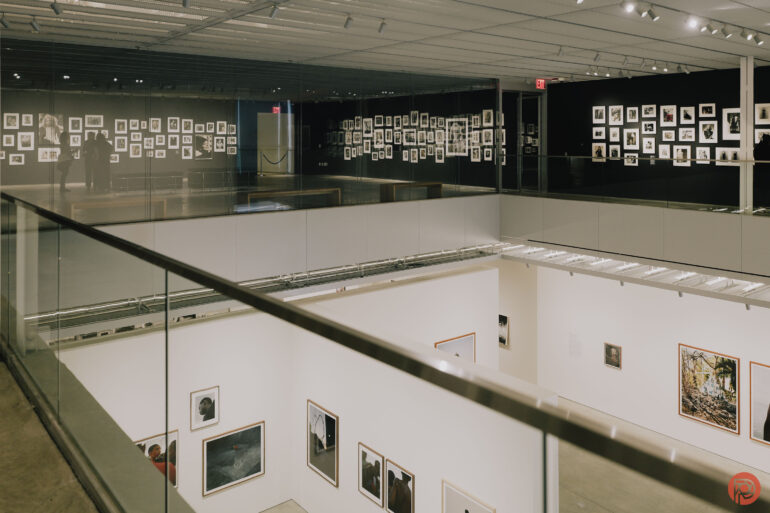
We’re blessed to have more than one museum dedicated to photography here in NYC. The International Center of Photography (ICP) has existed for many years. However, it’s recently been overshadowed by Fotografiska in a few ways — especially with the marketing of the Chapel Bar attached to the museum. Nonetheless, one can’t deny the massive floor-to-ceiling windows lighting the prints at ICP. For Fall 2023, there seem to be a few unifying themes. The first is the idea of human photography — which we emphasize a lot in our interviews here on the site. But the other one seems to be the idea of slapping photography for social media in the face in favor of something that you’d want to look at in a museum.

Editor’s Note: The Phoblographer was invited to the press preview of the Fall 2023 exhibits free of charge. We took an Uber there on our own account. ICP provided pastries and beverages to the press, and we imbibed a coffee. None of this affects our reporting. Declarations like this are part of our editorial credibility standards, which you can read more about at this link.

Changes at ICP

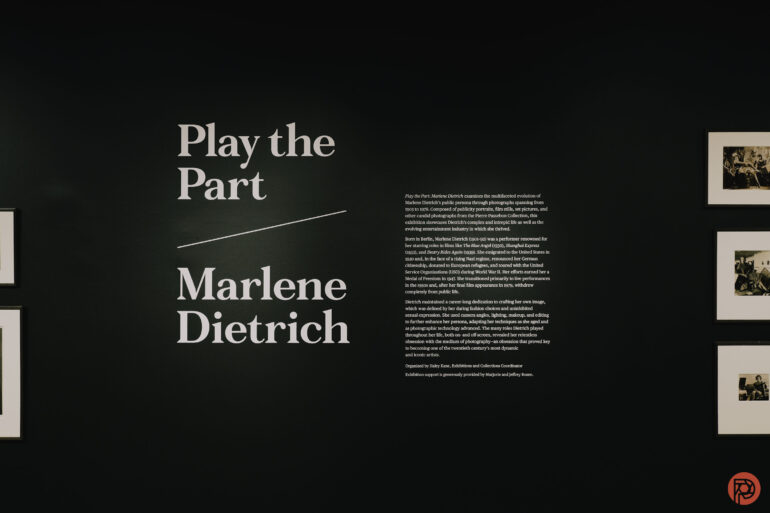
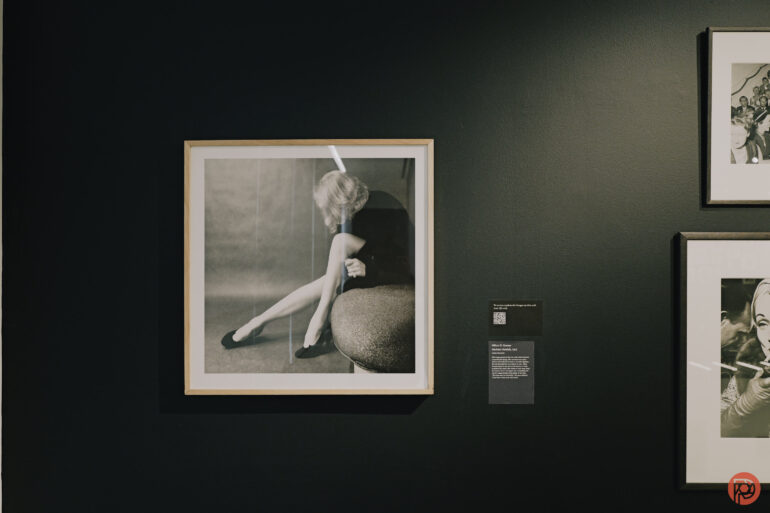
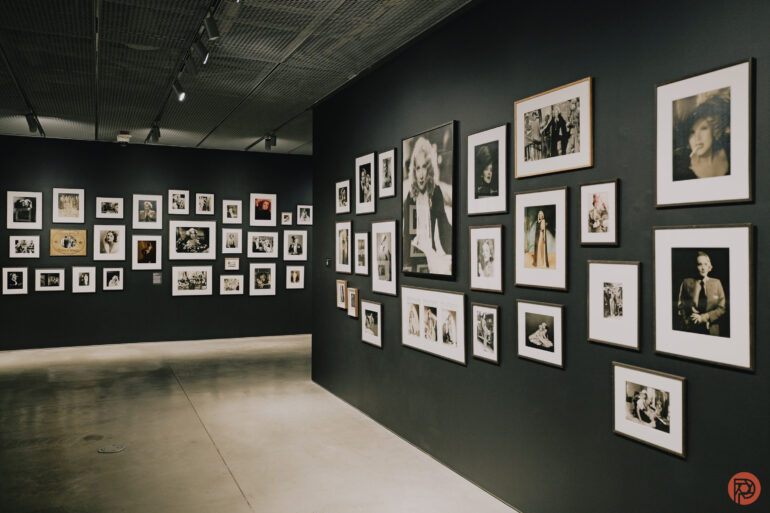
Visitors will be treated to three exhibits for Fall 2023 at the International Center of Photography. The second floor has one-half dedicated to Muriel Hasbun, while the other half is called Immersion and is a group show between three different photographers. The top floor is dedicated to Marlene Dietrich, who was very specific about how she was photographed. This section features images by Richard Avedon, Irving Penn, and many other big names. All of the work embraces something we talk about on this site — the idea that photographers should leave behind social media and return to the idea of doing certain things in person again. Of course, there’s a lot that can be done virtually. However, the print is an experience that can only be had in person.

Worth noting, firstly, is the fact that ICP finally seems to be taking cues from the designers at Fotografiska and using museum glass to minimize reflections. Despite their efforts, ICP’s lighting is so aggressive that other attending journalists also voiced their annoyance when I discussed it with them. While it’s better than it was in the past, the museum- celebrating 50 years of service to the arts next year- still feels a bit like it’s phoning it in. This is evident in the lighting and the lack of clear and distinct separation between the exhibits.

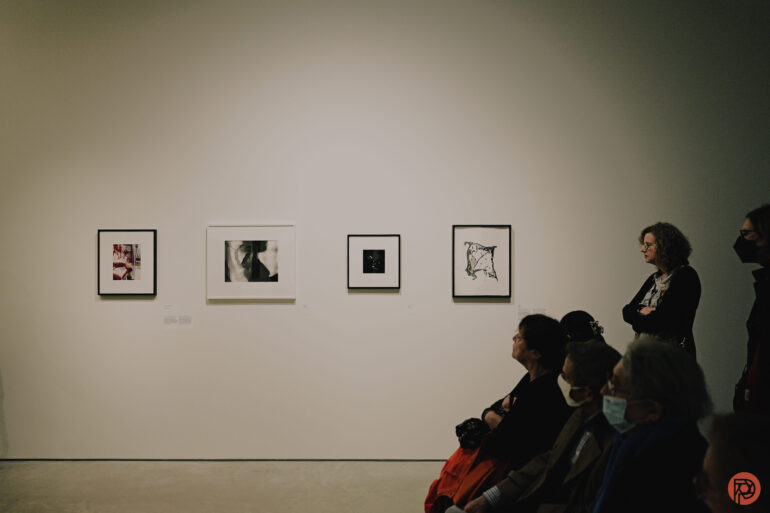
Muriel Hasbun

Muriel Hasbun’s exhibit does something that I feel is incredibly important these days: it’s bilingual. Many museums tend to only show descriptions in English. But moving back to Queens, NY, the most diverse place in the world has reminded me that we’re not alone. Here, signs are in various languages. And a museum that preaches inclusivity should indeed be provided translations where possible.

As you go through Muriel’s work, you’ll need to remember the idea of exile and loss. That’s all an essential part of it; you can find it in the descriptions. Many photos are created through analog processes that can only be done in the darkroom unless you do Photoshop work. There are, for example, multiple exposures that overlay parts of Muriel’s life with seismographs. Ms. Haburn attended the press opening and couldn’t entirely give me a straight answer when I asked her about the emotions she was going through when she made this work. It was done during the COVID lockdowns — so it essentially was a bunch of them.

Clearly, this is not the style of work that you’d see on social media platforms.

But you can only get that from the artists, and ICP doesn’t do an outstanding job explaining the work. And to reach out to newer audiences, they must find a way to connect the artistic and psychological parts of the brain. People are open to their interpretations of art, but knowing intentions is crucial here.

The exhibit explores war, genocide, and some randomness. For example, I’m not exactly sure why there’s an entire section dedicated to dental photography or why the curators felt it was so important. At least, they don’t do an excellent job of explaining why we’re looking at the photos.

If you’re new to understanding photography as an art form, you might not immediately comprehend what’s in front of you. But from interviewing photographers for a decade and a half, I can provide a solid hypothesis that Muriel is trying to connect various parts of her life together — which otherwise seems fractured by her past in multiple ways. Wars, oppression, and exile do that to people.

At the end of Muriel’s exhibit, I could relate to her in ways — though not in the same. I have dreams where people I currently know somehow or another have met random folks in my life, like my 6th-grade teacher, for example. And those random fragments of life merge pretty well and show an artistic maturity that I hope doesn’t disappear in the face of social media’s dominance of photography.

Muriel’s work is fantastic, and you should indeed check it out. But ICP did a not-so-great job of displaying the work, controlling the lighting, etc.

Immersion

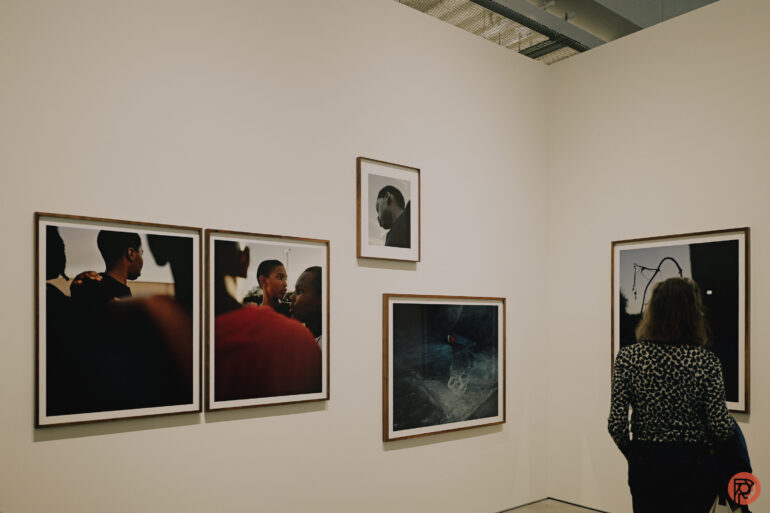
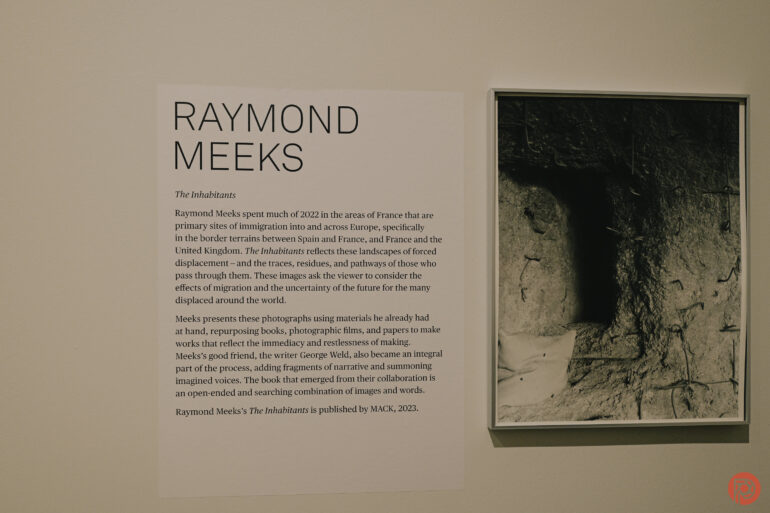
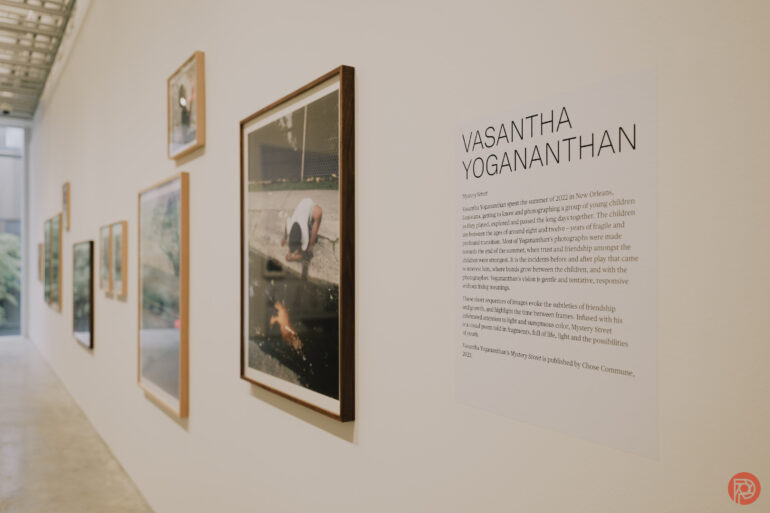
From Muriel’s section, you can walk directly into the Immersion space and not even fully realize that you’re in another gallery. That’s part of how ICP labels the section. Be warned when you inadvertently walk from one area into another. With that said, Immersion seemingly takes the idea of outsiders looking into society and trying to integrate with it while holding onto their own identities. It showcases the work of Gregory Halpern, Raymond Meeks, and Vasantha Yogananthan.

The work of Raymond Meeks talks about displacement, while Halpern discusses cultural conflict and colonialism. These are essential ideas and conversations to have — with Halpern’s curation subtly saying quite a bit about how influencers try to take advantage of areas in their own ways. Yogananthan works to showcase the interactions between children — and shows some very human moments that folks might otherwise not even think of or care about. These sections aren’t all split up very well, and even other journalists found the work to be a bit perplexing. For example, there are a few images that you’d look at and wonder why they’re in a museum like ICP.

Marlene Dietrich

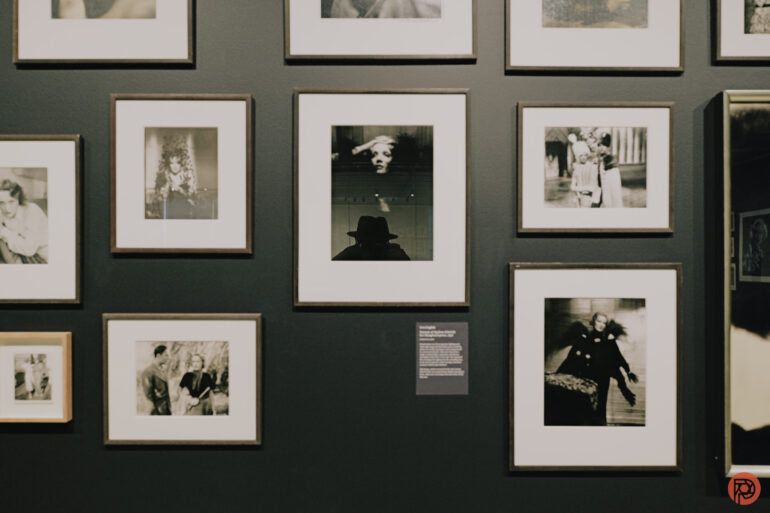
Move upstairs to the exhibit space dedicated to Marlene Dietrich, and you’ll see echoes in today’s conversations on beauty standards. The work is a bunch of aged black-and-white images with very few color ones. Specifically, they’re photos of Marlene. She was particular about how she was lit, which shows in her poses, attire, etc.

ICP’s captions, which you can look at here, don’t help much. I’d love to know more about each photograph, but the information isn’t available to anyone looking at the images at the museum. Anyone new to photography as an art form would probably never understand why those photographs are in a museum.

While I genuinely believe that conversations on beauty standards are essential, it could’ve and should’ve been done in more than just the context of a privileged white woman. But the idea plays into how beauty standards these days are defined by social media.

In summary, I think ICP is doing a great job with its intentions, but its execution is lacking a bit due to the space itself. The reflections on the images sometimes make it difficult to clearly see and understand the work. And I can imagine that if you’re surrounded by others at the museum, you’ll move around to give others their space, too. Eventually, someone might just give up on looking at an image and not understand what they’re looking at. Because of this, we recommend going during an off-hour to really take in the experience. And when you do, think critically about the work.

Foreground, Middle Ground, and Background in Photography

Foreground, Middle Ground, and Background in Photography

SLR Lounge helps over 1.5 million photographers master their craft. Real world education & resources from the most successful wedding photography studios in the world.


Watch anywhere
Learn online, anywhere, anytime.


Access Tutorials & Resources
Exclusive content and more!


Submit to awards
Have your work recognized.


Join the Conversation
Ask questions, seek inspiration
and contribute to our community.