Photography

‘They became Messi’: Juan Carlos Castañeda’s best phone picture

‘They became Messi’: Juan Carlos Castañeda’s best phone picture
image

Given the unforgiving August heat, most people were keeping to the shade of the trees in a nearby plaza. These boys, however, were playing football with a foam buoy. Juan Carlos Castañeda had sought out shade, too, and a bottle of water, having wrapped filming for the day. He was in Cité Soleil, in Port-au-Prince, Haiti, to shoot a short film on the community and its leaders.

“The kids in the picture were only 12, and they live in Haiti’s poorest and most dangerous neighbourhood. None of them can afford proper shoes or a ball to play with – they’re not even sure when they’ll get their next meal,” Castañeda says. “However, when they discovered this yellow buoy, they became Messi, scoring a goal in the World Cup and, just for a second, leaving the heaviness of their lives behind.”

skip past newsletter promotion

Having finished work for the day, Castañeda hadn’t planned this shot. He also didn’t want to interrupt or distract the boys with his big video camera, he says, adding, “They were also on their break.” Instead, he used his iPhone 6 Plus.

“The best camera in the world is the one you have with you at the time,” he says, “and sometimes the phone can make faster decisions than I can when approaching time-sensitive moments such as these. I hope this photograph shows how resilient and untarnished the human spirit is, and that it offers a moment of hope.”

National photography contest open to all K-12 students

National photography contest open to all K-12 students

CHARLESTON — Eligible students in grades K–12 nationwide can submit their art to be judged by professional photographers for a chance to win prize packages valued up to $1,200, thanks to a contest hosted by K12 Competitions.

This year’s theme is “In Focus,” and judges hope to see what students can create with their full imagination and skill set, according to a news release from K12. Categories include DLSR Lens Master, Smartphone Shots and Film Photography.

James Nachtwey: The last of the great photojournalists

James Nachtwey: The last of the great photojournalists
A photo from Rwanda at the exhibitionBBC/ Jonathan Head

A woman has just discovered the bodies of her husband and brother in her garden in Bucha, a suburb of the Ukrainian capital Kyiv.

The bodies are dusted with frost. She lays one hand on her brother, while the fingers of her other hand touch her mouth.

There are two more human hands almost perfectly arranged in the frame, of someone whose face cannot be seen – one resting on the head of a dog, the other playing nervously with her blonde hair.

It presents an unexpectedly peaceful moment, arranged with the near-perfect balance of a classical painting. Except it’s not – it’s a photo from the aftermath of the massacre of civilians in Bucha, taken by the renowned photojournalist James Nachtwey.

“Hands and eyes. I’m concentrating always on hands and eyes. And the detail of the dog. You actually seem to see sympathy in the face of the dog,” says Mr Nachtwey, who has brought his retrospective exhibition Memoria to Bangkok, the only place it is being shown in Asia.

A display of a photo showing a woman next to the body of her brother in Bucha

BBC/ Jonathan Head

The collection has 126 photographs from some of the worst conflicts and disasters of our times – from Central America in the 1980s to the ongoing war in Ukraine.

A very private, softly-spoken man who prefers to let his images speak for themselves, Mr Nachtwey agreed to be interviewed in Bangkok about his approach to photojournalism, and about the state of the profession in the digital age.

Now 75 years old, Mr Nachtwey just missed being part of the Vietnam War generation of photojournalists, when the profession reached the peak of its influence.

The searing images from that conflict, from photographers like Philip Jones-Griffiths, Don McCullin and Tim Page, helped swing public opinion against involvement in the conflict and force the US withdrawal from it.

But Mr Nachtwey is arguably the greatest of the generation that followed.

Five-times winner of the Robert Capa Gold Medal for courageous overseas photographic reporting, his images are known for both their brutal immediacy and their stunning composition and lighting, rendering his subjects with humanity and warmth.

Even in an information landscape dominated today by video and instant, digital distribution, the greatest still photographs have a unique power, in the split-second moments they capture, to distil the essential themes of a news story, to freeze the action, to invite reflection.

A photo on display of a woman emerging from a smashed apartment block on the outskirts of Kiev in April 2022

BBC/ Jonathan Head

As we looked at a striking photo of a woman with blonde hair emerging from a smashed apartment block on the outskirts of Kyiv in April 2022, just after Russian forces had withdrawn, I asked him how he went about capturing such well-composed shots.

The woman is clutching blankets she has retrieved from her home, and looks casually at the camera as though performing a normal domestic chore, with a vast jumble of pulverised rubble behind her.

Did he just “spray and pray”, hoping to get one good image out of hundreds? A feasible technique in the age of digital cameras, which can take dozens of shots a second.

“Prayer does not enter into it,” he says. “It’s really about years of training, applying what I’ve learned, being persistent. In any given situation, it’s highly unlikely that I’ll make a strong, significant image. But the only way I can ever succeed in doing that is to simply throw myself into the situation. And just keep shooting, and follow my instincts and my intuition, and find a place where a picture might happen.”

Most of the images in Memoria are black-and-white. But that’s not always his preference, he says.

“Early on in my career, before I established myself, I didn’t have much choice. If the editors asked me to do colour then I did colour, and I always tried to use colour in a way so that it didn’t become the subject of the picture. Colour is a very powerful phenomenon. So powerful that it can become the subject, so I tried to keep it under control.”

In some images, though, the colour really stands out. An early photograph from the El Salvador civil war shows a military helicopter evacuating an injured soldier. But it is the three little girls crouching behind a tree in the foreground, their dresses of white, pink and pastel blue standing out in the orange dust cloud, who give the image its haunting loveliness.

Children in El Salvador

James Nachtwey

Most of Mr Nachtwey’s career has been in the era of film. Digital photography, he says, is “more time consuming”.

“In the days of film, I’d shoot my rolls of film, and that was it. I would write my captions, label the rolls and then I would have an evening to network and talk with people, get information to figure out what I was going to do the next day. Now I have to download all the memory cards, back everything up, do an initial edit.”

We are looking at his photographs from Afghanistan. Incredibly strong, stark images, not taken recently but in 1996, from when Kabul was reduced to a shattered moonscape by the battles between competing warlords.

In one, a woman in a light-coloured burqa seems to float like a ghost through the black ruins. In another a woman on her knees reaches out with a ringed hand to hold the rough-hewn gravestone of her brother, killed by a Taliban rocket. She is surrounded by dozens more of these hastily-dug graves.

“This is the final stage of the Afghan Civil War, when Kabul was surrounded and besieged by the Taliban,” he recalls. “They were shelling and rocketing the city every day. The NGOs had left, with the exception of the ICRC. Virtually all the foreign journalists had left. The editor-in-chief I was working with at that time, he had no interest in the story. But I did.”

A photo of the 9/11 attack is displayed next to a photo from Afghanistan

BBC/ Jonathan Head

He has arranged this section right next to the dramatic shots he took of the 9/11 attacks in New York, to make the connection.

“We are in a totally interconnected world. The siege of Kabul was one of the last battles of the 20th Century. And once the Taliban took over, it set the stage for the wars of the 21st Century. Today you can’t pretend that things that happen on one side of the world will not affect you. Because in this day and age, they invariably do.”

I put to him a point made by his famous colleague Don McCullin, 12 years his senior, that digital photography is so easily manipulated that it can no longer be trusted.

“I don’t agree with that assessment,” Mr Nachtwey says. “The credibility of the person who’s making the picture and putting it out is very important. So, yes, some people might manipulate falsely a digital image, but they could do that with film as well in the darkroom.”

But we live in a sceptical age, where so many no longer believe in the impartiality of the established media which has given Nachtwey his greatest exposure. Does that trouble him?

“I think it’s fine to be asked if we have agendas and biases, I think that’s a very good question. And I think we should be ready with a good answer. We should have thought about that and understood it ourselves. I’ve rarely covered a war where I don’t have a very strong opinion about who’s the aggressor and who’s the victim, and where right and wrong plays out. That doesn’t mean I’m going to create propaganda for anyone, it doesn’t mean I’m going to falsify my images.”

A display of photos taken in Iraq

BBC/ Jonathan Head

Is the heroic age of the photojournalist, though, coming to an end? Especially at a time when people are bombarded daily by a tsunami of digital images, and when the first, and often most dramatic, photos of an event are usually taken by citizen journalists with their phones?

I suggested that the heyday of photojournalists was probably the pre-digital era of the Sunday colour supplements of newspapers, and influential, image-rich magazines like Time, where millions would see powerful photos from the world’s trouble spots for the first and only time.

But Mr Nachtwey remains an optimist – about his profession, and about humanity, whose darkest sides he has spent his life chronicling.

“The fact that people are using their phones in situations where journalists might not be present is I think very useful. Journalists can’t be everywhere. But the two are not mutually exclusive. We still need trained journalists and photographers who are not just making random shots, who were actually trained and have insight, experience, and talent. Because that counts for something. It’s not only the message – it’s the quality of the message, which speaks to people.”

At the far end of the exhibition is a photograph, printed very large, of a young Vietnamese woman damaged from birth by the effects of the chemical herbicide Agent Orange.

Two women look at a photo of of a young Vietnamese who was affected by Agent Orange

BBC/ Jonathan Head

Her mother holds up her thin arms, for exercise, in an almost balletic pose. Behind her lies her sister, similarly afflicted, and the rough texture of her simple home. Your eye is drawn to the dazzling, filigree lace around the neck of the young woman. And the closed-eyes, seraphic expression on her face.

It is an achingly beautiful image, which for just a moment, makes us forget all the suffering that lies behind it.

Related Topics

Monmouth County Clerk’s Annual Archives and History Day Photography Contest is Open to County High School Students

Monmouth County Clerk’s Annual Archives and History Day Photography Contest is Open to County High School Students

originally published: 09/23/2023


(FREEHOLD, NJ) — Monmouth County Clerk Christine Giordano Hanlon is inviting all Monmouth County high school students to enter the County Clerk’s Annual Archives and History Day Photography Contest. The theme of this year’s contest and Archives and History Day focuses on business and industry in Monmouth County.

High school students residing in Monmouth County and/or attending a school in Monmouth County are encouraged to submit an original photograph of his/her favorite business or establishment in the County, for example, a favorite coffee spot, restaurant, boutique, etc. Entrants are permitted to be creative with the usage of artistic effects, such as digital and/or special effects or editing.

The submitted photographs will be archived by the Archives Division of the County Clerk’s Office for future generations to one day look back on and to see what local business and industry of Monmouth County was in 2023.

“We are excited to host our Annual Archives and History Day Photography Contest which provides high school students with the opportunity to learn about their local history while showcasing their creativity,” said Clerk Hanlon. “My hope is that this year’s contest will drive a new appreciation for Monmouth County’s rich history amongst high school students across the County.”

The top three (3) photographs will be awarded gift card prizes by Clerk Hanlon at Archives and History Day, which will be held on Saturday, October 28, 2023 at the Robert J. Collins Arena at Brookdale Community College in Lincroft.


Advertise with New Jersey Stage for $50-$100 per month, click here for info

Contest entries will be accepted through Friday, October 20, 2023 via email to ClerkContest@co.monmouth.nj.us with the subject “2023 Archives Photography Project.” Within the email, entrants are asked to attach the image with a resolution of a minimum of 1024 pixels wide and a maximum file size of 20mb.

All entries must also include the student’s name, grade, high school, address, phone number, and email address. Additionally, the student must list what business or industry is highlighted in his or her entry, and explain why the particular business or establishment was chosen.

For full contest rules and eligibility, please visit the Monmouth County Clerk’s Office website at MonmouthCountyClerk.com, email ClerkContest@co.monmouth.nj.us, or call 732-431-7324, ext. 8735.

Advertise with New Jersey Stage for $50-$100 per month, click here for info

Explain Your Photography Job to Your Friends With This Hilarious,

Explain Your Photography Job to Your Friends With This Hilarious,

If you’ve ever had trouble explaining just what it is you do as a photographer, here’s a handy explainer for the non-photographers in your life.

YouTuber and self-proclaimed “all around cool guy” Casually Explained offers an explainer about any and all types of photography. If you’re a wildlife photographer, macro photographer, high school yearbook photographer, or micro photographer (that’s a new one for me), then what you do is explained within the video above in great, hand-drawn detail.

The artist explains practical ways to make money in photography, whether that’s selling your gear or shooting video for someone’s Only Fans site. Practical and useful tips all around.

If you’re looking to make more professional photos, the video adds, it’s key to spend the money on full frame sensors with big lenses that can create shallow depth of field, where the background is blurry while the subject is in sharp focus. These are the kinds of photos that cell phones just can’t really do well. But Midjourney can.

The video spends a bit of time talking about wildlife photography, akin to the type you see in National Geographic. And while it’s easy to lampoon the photographer spending time in a cage in the freezing arctic, it is a true point that half the battle of photography is just being there with a camera in hand.

There’s even some advice thrown in about pricing here, something I’ve often struggled with. More or less, it’s an inverse relationship: charging a client more means the job will likely be easier than if you had charged the client less. Strangely, I often find this advice to be true.

All kidding aside, there’s actually a fair amount of technical explanation of photography here that’s easy to understand. If you’ve ever wanted to understand what some genres of photography actually entail, you could do worse than start with this (literal) joke of a video.

Matthew Joseph Shares Beautiful Photographs of City Bike Culture

Matthew Joseph Shares Beautiful Photographs of City Bike Culture

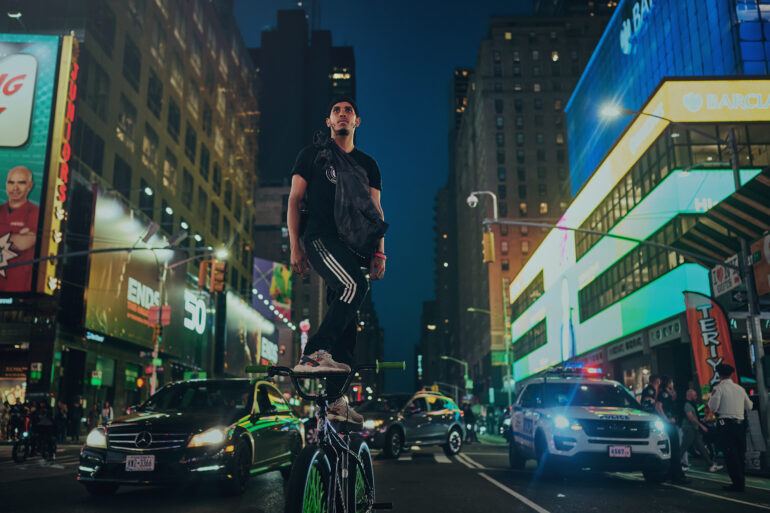
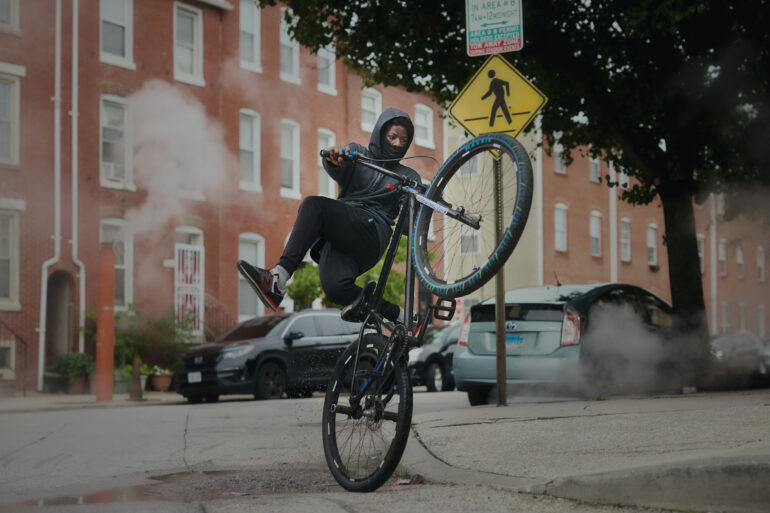
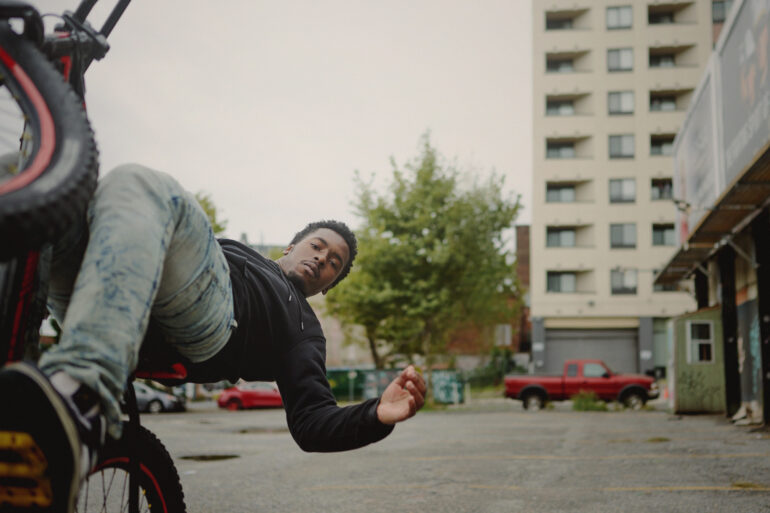
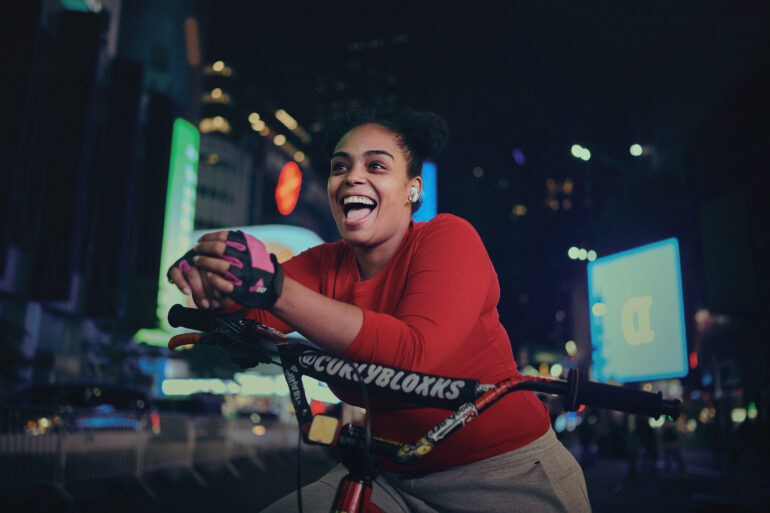
“I’ve never wanted to shoot bikes as I didn’t want to mix my hobbies (and mental escape methods!) with my work,” says photographer Matthew Joseph to the Phoblographer in an interview, hitting ever so hard with that line. “It was only on completion of this project and really going into the edit on the interviews that I realized bikes had always been such a big thing for me – since I was a kid.” Indeed, Matt’s work around bike culture in NYC and Baltimore is exceptional. As the project grows like others have, we think that it’s going to evolve into something very beautiful.

All images by Matthew Joseph. Used with permission. Follow him on Instagram and check out his website.

Phoblographer: Talk to us about how you first got into photography.

Matthew Joseph: My story is not unfamiliar to most – the classic situation whereby the family camera happened to be a Pentax SLR so manually focussing on a prime lens and manually exposing everything was the way I learned photography. I consider myself very fortunate to be of an age where I really came into it just before (and through) the film-digital transition, it taught me so much. It was a family holiday in Amsterdam when I was 11 that I realized the best way of avoiding family photos, was to be the one taking them. So I took charge and then ghosted a multitude of old-school photographers at family weddings over the next few years, delivering a reportage story of the day to the bride and groom, just for fun…and before reportage, wedding photography was the thing it is today!

Then, I didn’t get the posh fancy new camera I’d asked for for Christmas, I got an old second-hand manual Pentax MX. But it was the best thing my parents could have done because it kept me learning. Then I shot my first paid job at 16, and the camera always followed me with whatever I was doing in life. It snowballed (gradually) from there.

Phoblographer: Talk to us about the gear that you use.

Matthew Joseph: I have a lot of cameras and have used different systems professionally over the years. But I was a fairly early adopter the the mirrorless world (when Nikon finally got their act together!) and haven’t looked back. It helps me achieve so much more and the tech advances in AF alone are just so worth it. My camera cases definitely aren’t any lighter because of it – what most people refer to mirrorless system as – if anything they’re heavier because the really good glass which is starting to be released now is epic and huge! I struggled with the Z7 and Z6 range for a while because what we all really needed was the Z9. And it really hasn’t disappointed. I got one of the first Z8s in the UK as I was eager to get rid of the Z7ii and its inability to work as a real robust pro camera. Annoyingly the Z8 is basically a duplicate of the Z9 in a smaller body missing a few key features. I would have rather it be slower, but with a higher resolution, it would have made more sense in my arsenal. My whole lens system is native Nikon Z glass, but I go to some efforts to counter the digital ‘perfection’ of the system and aim to bring some humanity and romance back to it if I can, using various filters and techniques – in camera and in post. 

My favourite thing to do is to pair vintage lenses with mirrorless tech. The new mounts on mirrorless systems make it really easy to mount vintage Leicas, Hasselblads etc – I’ve even got a re-housed Canon ‘Dream Lens’ which is crazy. The best pairing is the 35mm Leica Summricon f/2 on a Nikon Z8 – for personal travel. But on much of my commercial work I can’t afford the risk of missing focus as my work is fast and reactive. 

I won’t bore you (or should I!?) with listing off my other boxes/shelves of gear, I own a lot because I rent it onto my commercial jobs. I mix using Profoto with other forms of continuous light, but most of my efforts revolve around re-shaping and manipulating natural light, that’s my thing. I’m all about keeping things feeling as human as possible, but also maintaining a cinematic and polished quality to it at the same time. It’s a constant balance!

Everything is carried around in colour-coded Pelis (now I’m getting carried away)… I’ll stop here. 

Phoblographer: To you, what’s so fascinating about city bike culture? And what was the toughest part about making this project?

Matthew Joseph: It’s the specific culture of the ‘BikeLife’ movement which is what I was drawn to more than bikes in general. I mean, I’m a huge cyclist, cycling fan, owner of bikes and it’s a big interest area for me. But I’ve never wanted to shoot bikes as I didn’t want to mix my hobbies (and mental escape methods!) with my work. It was only on completion of this project and really going into the edit on the interviews, that I realized bikes had always been such a big thing for me – since I was a kid. Bikes provided a means of transport, escape, opportunity, and fun – especially growing up in a rural area with 5 other siblings to be taxied around to clubs etc, there wasn’t always a lift going! The Bike in itself is the ultimate in class-leveling transport. Rich or poor, you can probably own some form of two-wheels. For those in the BikeLife movement, it’s really starting to provide a way forward for those who largely may be from tough backgrounds with not a lot of options. I love that. 

The toughest part of any personal project is usually two things: access & creative vision. Both were completely true on this, for sure. Access starts off hard, but it gets easier as you get into it, and especially once you start shooting it – so you start to build material to convince people of your vision, and then hopefully get them on board. Being on the ground it accelerates it further as you’re constantly meeting new people and they’re curious as to why you’re there with your camera. Social media – especially Instagram – really makes the initial start easier too. BikeLife lives on Instagram, so that had to be my way in, but you still have to make enough noise to be heard. Then, creatively – I always start with an approximation of a vision, a rough guideline – some boundaries for me to play within… then it often completely changes as I’m shooting it, and I start to see the wider project slowly unfold the more I shoot. I am constantly adjusting my trajectory and reacting to my experiences, I really hate being locked off and limited, I want to respond. In the moment is where I’m at my best – I always put this down to wedding photography training me at an early age!!! 

Phoblographer: Biking in cities is often considered dangerous for so many reasons. What, to you, were the most eye-opening and emotionally driven parts of this project?

Matthew Joseph: As previously mentioned – it’s the potential and hope it’s giving to those who don’t have much. The human story, that’s always what I’m after. I got that plenty. I love meeting people from different walks of life in different places and just being polite and curious. I want to understand their journey and how they’ve got to where they’ve got to – Emmanuel from the Bronx and Maine from the Projects in Baltimore are a long way from my experience growing up. I didn’t have to deal with things they’ve perhaps had to, so the fact that bikes and photography brought us together into the same place for a brief moment, well to me, that’s special. You can hear their personal stories in the photo-films. 

Bikes in cities are dangerous, but they’re dangerous everywhere. They’re mainly dangerous due to cars and the humans driving them – though there, of course, some bad and dangerous cyclists out there. The BikeLife movement on their ‘Ride-outs’ can appear particularly lawless and perhaps threatening to the untrained eye, so the sub-culture has some PR to take care of. I’m hoping this project can go some way to helping that!

Phoblographer: We really liked your images partially because, as we’ve been going through various projects, there’s something that’s very human about it. With that said, what are your thoughts about all the AI projects out there these days and “AI photos” as they’re called?

Matthew Joseph: Thank you – that’s exactly what I’m after with this stuff, so it’s humbling to hear that you saw it too. And yes, AI – wow, a huge and evolving topic which, my opinion on it changes weekly. It’s not going away, that’s for sure. So, I’m trying to remain positive and help it push me further into the ‘human.’ Yes, AI will be able to create anything, but I don’t pre-conceive my images. So, my creativity is in the moment, and I’d never be able to use AI to replace that. Right now, I’m putting my faith in humanity and hoping that humans will be humans and continue to be drawn to real-human emotions. I think we’re naturally drawn to the more human photography and art – people are interested in people. So, it’s imperfections, unpredictable angles/moments/locations/expressions, and being able to respond to a situation and portray someone’s story – that’s where for me, the power lies. Yes, you can prompt AI to copy the work of Dorothy Lange, but what I’m hoping to see in the future is a demand for accountability as to whether that moment really existed, or whether it was created by AI. If we as a population continue to demand that – whether it’s a small print or some other verification method – then we have hope. The beauty of photography is that it can transport someone who wasn’t there to that situation. So photography has to remain relevant for that alone. We just all have to tell the truth along the way!

How I Got My Job: Being a Professional Recipe Developer and Food Photographer

How I Got My Job: Being a Professional Recipe Developer and Food Photographer

As a child, Louiie Victa wanted to be a veterinarian. She loved animals and thought caring for them would be a nice career — until she saw a video of a cow giving birth and promptly changed her mind. From then on, food was the only path she considered, so it was rather ironic that the only culinary job she could get, as a young immigrant to the United States, was at the San Francisco Zoo.

Though Victa had earned a hospitality management degree in her native Philippines, she struggled to get hired without recognizable names on her resume, so she began her cooking career by flipping burgers and whipping up pasta dishes at the zoo. “It was not quite the fine dining experience I aspired towards, but I was young and it was fun,” she remembers. “The zoo is actually where I learned a lot about American culture. Plus, it was such a perk to be around animals — the elephants especially.”

Eventually, Victa moved to Las Vegas to get hands-on culinary training from chefs on the Strip. She cooked at the Wynn Las Vegas and Bazaar Meat by José Andrés for nearly two decades before she contemplated leaving the restaurant industry for a more artistic pursuit, which she found in food photography.

That led Victa into recipe testing and development, and that’s how she ended up where she is today: successfully juggling all three jobs. She was responsible for testing all the recipes in our debut cookbook, Eater: 100 Essential Restaurant Recipes — so we know what she can do. Here, Victa shares the details of her career switch, how she maintains balance in her professional life, and what always surprises people about her work.

Eater: What does your job involve? What’s your favorite part about it?

Louiie Victa: As a recipe tester and developer, it’s really exciting to get a recipe from another chef and cook through it. When I was working on the Eater cookbook, I had such an amazing time cooking with different ingredients, tasting incredibly diverse cuisines, and learning the background of each dish. I believe that every recipe is a story. It’s an opportunity to learn new things — skills and techniques, sometimes shortcuts and hacks, and better ways of cooking a dish. Cooking and developing these recipes gave me a chance to work with and get to know such amazing chefs. I was able to recreate the dishes of acclaimed restaurants all in the comfort of my very own kitchen. You’ll get the same opportunity now that the cookbook is on shelves!

As a commercial food and restaurant photographer, I love bringing chefs’ ideas to life and being creatively engaged with building the image. If I have time, I try to get to know all the people responsible for cooking and executing each dish I’m taking a photo of. It builds a lot more synergy that way. I guess that’s why I call myself @the.cheftographer.

After each shoot, I make it a point to go to the back of the house to give high fives and thank each person involved for their hard work. It’s my signature move. When I was a cook dreaming of becoming a food photographer, it would have meant the world to me if a photographer or any guest came around to give me a little recognition. Just an affirmation that I was doing the right thing because food service is truly a thankless job.

How do you balance having multiple jobs in one: recipe testing, recipe development, and food photography?

Wearing multiple creative food hats is part of my brand. My days usually involve scheduling and planning things out. I had to learn that working the creativity muscle consistently makes you stronger, but you need to balance life with physical and mental health. Self-care and routine help me stay mentally and creatively sharp. Of course, there are days where you are required to be creative, but you don’t feel like it. You have to have enough “creative muscles” to get into a flow state and do the best work possible.

Mountain biking has been very beneficial for clearing my head. When I’m on my bike, I have to tune out other thoughts and focus on the obstacles in front of me. Otherwise, I’ll fall and eat dirt. I’m a big proponent of the “five hobbies” rule. It goes, find five hobbies that you love: one to make you money, one to keep you in shape, one to be creative, one to build knowledge, and one to evolve your mindset. That’s plenty to work with to grow in one’s career and in life.

Did you go to culinary school or college?

I attended university in the Philippines and pursued hotel, restaurant, and institution management, focusing on the business side of things. When I migrated to the U.S. in 2001, I originally wanted to attend the Culinary Institute of America in Hyde Park, New York, but as an immigrant with very limited resources, I decided to move to Las Vegas to learn from the talented chefs on the Strip.

I figured that real work experience would enable me to build a career in the food industry. It was also a more financially sound move because the cost of living was low compared to San Francisco, my first home in the U.S. The move also allowed me to be in close proximity to my mom, who was living in Las Vegas.

I was fortunate to have my mom help me pay for my first degree, leaving me with no student debt. When I decided to pursue photography and film studies at the College of Southern Nevada, I used my former employer’s (Wynn Las Vegas) tuition reimbursement program. I took advantage of the opportunity they offered as an employee benefit. They allowed for any field of study, not just courses that were directly related to my job as a cook.

What was the biggest challenge you faced when you were starting out in the industry?

Being a young, first-generation immigrant presented me with very few great opportunities for work. I also had challenges advancing in my career being a woman in the kitchen. I would immediately get assigned to prep, garde manger, or any small appetizer or dessert station because that’s where women usually got pigeonholed. I observed that my male colleagues had a better chance of being promoted and advancing their careers than I did. This was in the early 2000s and it was a very male-dominated industry. There wasn’t a lot of diversity and representation in kitchens. As an openly gay brown woman, it was difficult to find my rightful place in the kitchen without first proving that I was more capable than my male colleagues.

When was the first time you felt successful?

I never truly felt successful as a chef. I never got to the point of being an executive chef or owning a restaurant. As a food media creator, there was a time that I wanted to be a renowned food photographer. But I had a light bulb moment when I realized I no longer wanted to be someone else. I just wanted to be myself and pursue my own creative ventures in the world of food.

Did you have any setbacks? What were they?

Putting myself through photography school, and succeeding at it, while having a full-time job in the kitchen was difficult. I didn’t have the best gear or technology because I simply couldn’t afford it. I had to go through the whole learning curve and hone my photography skills so I could justify buying professional equipment. What a game changer that was! Once that was done, there was no looking back. I now had enough skill and the proper tools to execute the images I envisioned in my head.

Switching careers is scary. There were so many questions and moving parts, but my two biggest creative entrepreneurial saboteur excuses were, Where am I going to get a paycheck? and What about my health benefits? Those two thoughts nearly stopped me from leaping into a brand-new career full-time.

I also found it hard to find resources and supportive people who would truly help me get my foot in the door. I remember asking a fellow chef to introduce me to his boss, so I could ask about shooting the restaurant for free to build my portfolio. He immediately shut me down and said, “Well-known photographers from the L.A. Times shoot for our restaurant. And who are you?” That really stuck with me and it absolutely lit a fire for me to become better at what I do.

What was the turning point that led to where you are now?

There were many turning points and affirming instances that led me to where I am now. After working for Wynn Las Vegas, I worked for Bazaar Meat by José Andrés, and being around that kitchen team made me fall in love with food all over again. Then, Eater Vegas put out a call for a photographer and [former Eater Vegas editor] Susan Stapleton hired me. For a time, I was working as a photographer for Eater Vegas and a restaurant, while trying hard to book more shoots. This was shortly before the pandemic began.

And then the pandemic hit. While the industry really suffered, it gave me time to think about what I wanted career-wise. On the one hand, I could keep overworking with two jobs. On the other hand, I could figure out how to use this strange time to go through my checklist and set up my business as a full-time food photographer.

The next stepping stone appeared when a mentor of mine, cookbook author and former James Beard Foundation Book Awards chair Hsiao-Ching Chou, recommended me to . I was a super huge fan of the brand since the launch of its sous vide tool, so I was stoked about this. I signed on with them as a recipe developer. Now having somewhat of a paycheck and some street credentials, I felt more comfortable to take the leap and decided to become a full-time food photographer.

I am very grateful and fortunate that the word of my work soon spread and the next stepping stones kept appearing, one after the other. I had a pineapple pork adobo recipe featured in Bon Appétit, signed on as a recipe developer at Butcher Box, and my former employer, José Andrés Group, gave me multiple restaurant photography opportunities. I was also asked to join the book committee for the James Beard Awards and then Eater’s Rebecca Marx gave me a shot as a recipe developer and photographer for Eater at Home, which eventually landed me work with the Eater cookbook.

Do you have, or did you ever have, a mentor in your field?

I have many different mentors that have shared their careers and technical wisdom with me over the years. Professor Charles Lohman taught me to grow as a photographer and an artist. Susan Stapleton, former editor of Eater Las Vegas, helped me navigate the early beginnings of my career outside the kitchen. Hsiao-Ching Chou has given me an opportunity to work with such amazing food folks. I always come to her for solid career advice. And chef David Thomas, formerly of the José Andrés Group, taught me a lot about being a chef, time management, and personal accountability. His lessons helped me grow as an entrepreneur.

What would surprise people about your job? Why?

One of the questions I get asked most is if I get to eat the food I take photos of. The answer is, occasionally. Most food styled for photography isn’t even edible and there is a difference between plating for looks and plating for flavor. The job is not as glamorous as it seems. Shoots are always fun, but there is a lot of hard work involved: planning, packing, carrying gear, maintaining technology, travel, jet lag, long hours spent editing images on a computer, and having to roll with the punches if things don’t go smoothly. It’s not for the faint of heart, but it gets easier over time.

For me, owning your own business means having to be your own assistant, accountant, PR team, and admin. On top of that, you are the creative! It takes a ton of juggling and mastering time management. The thing I miss most about working in restaurants is not having people to interact with on a day-to-day basis. I miss my fellow cooks and chefs, working through a busy service. I had to adjust to being a solopreneur. I do have a small circle of people, colleagues, that I can talk shop and decompress with, which is necessary for my mental health.

How are you making change in your industry?

I seldom think of making big changes, but I keep in mind the small goals and achievements that I can implement. As a chef, food photographer, recipe developer, and food writer, I tend to show other people how to not create boundaries for your work or who you work with. I represent the AAPI, LGBTQ++, and women in both the food & beverage and photography industries, and I also teach aspiring food photographers at the Community College of Southern Nevada and the University of Las Vegas.

In the future, I want to be able to provide services, lectures, and professional support to diverse groups of women in hospitality who do not have the resources to leverage their own businesses and careers. I want to make sure to give back to the industry that I love.

What would you have done differently in your career?

I wish I had spent less time figuring out how to make the leap into entrepreneurship and started earlier. The anxiety of making sure I had completed my business checklist was debilitating. The journey takes a bunch of small steps that happen in real time. I wish I realized earlier that you don’t need to wait to have all your ducks in a row. You can get them in line as you go.

The cover of the cookbook, ‘Eater: 100 Essential Restaurant Recipes.’


‘Eater: 100 Essential Restaurant Recipes’

Prices taken at time of publishing.

Introducing Eater’s debut cookbook: Sourced from the best street carts to pillars of fine dining and everywhere in between, this diverse, powerhouse collection features recipes that have been carefully adapted for home cooks. Packed with expert advice from chefs, bartenders, and sommeliers on easy ways to level up your meals at home, Eater: 100 Essential Restaurant Recipes is a must-have for anyone who loves to dine out and wants to bring that magic home.

2 Mistakes the Best Photographers Never Make

2 Mistakes the Best Photographers Never Make

If you want to be the best, you need to refine and perfect your craft. You also need to recognize your errors and eliminate them. Here are two of the most common amateur mistakes that the best photographers never make.

Life would be pretty boring without mistakes. How else would those hilarious meme creators get their content? Life without mistakes would also mean you’ve stagnated and are no longer learning new things. Mistakes are inevitable. That said, quickly identifying mistakes and making efforts to redress those errors is a skill that separates the best from the rest. Here are two common mistakes I see beginner photographers make far too often. The best thing is that they are totally avoidable.

One and Done

It honestly fascinates me to see photographers – in any genre – rock up to somewhere with all their gear, get one shot, then leave. Worse, it’s often the same shot that a thousand other photographers have taken. It fascinates me for two reasons: first, if you’ve made all that effort to get to a place for a photo, why are you in such a rush to leave? To prepare, you have to charge your batteries, clean your lenses, choose your gear, pack your bag, get to your location, and perhaps hike to a specific spot. For what? Wham bam one and done, let’s get outta Dodge?

The second reason it intrigues me so much is that, if you’re shooting outside, conditions change so much over the course of a day. There are so many options when you’re shooting a particular subject. Even if you’re inside in a studio, you can play around with almost endless variations in your lighting setup and subject’s position. 

Don’t be a one and done photographer. Take your time, move around, think of different, creative, original possibilities to shoot your subjects. Let me give you an example to demonstrate what I mean about variation of a single subject.

This image above was taken from a recent typhoon swell in the south of Japan. This location is a well-known big wave spot, but most photographers like to stand side-on to this wave so they can see inside the belly of these beasts. This shot, however, was taken from a more front-on angle in which I used a wider lens to pull the scene back to give the viewer more context.

It’s hard to believe, but the shot above was taken on the same day as the first image. The difference is twofold: first, this was taken about five hours later, in the afternoon, so the light and the colors are vastly different. Second, I used a longer telephoto zoom lens to really get in close to the surfer so the viewer can almost feel the power of the wave and the exhilaration of the surfer.


Finally, this is a completely different perspective, yet it’s the same location and same wave. To get the image above, I used a drone, but this time the focus was not on the surfers or the wave, it was on a festival that was happening at the time. But in the top portion of the image, you can see the wave breaking along the reef. The position of the drone gives the viewer an entirely different experience and lets them see the landscape around the location as well as the dangers of the shallow reef formations, not to mention the interesting party going on in the foreground.

From these three images, you get a unique story in all of them and a much better understanding of the wave, the location, and its nuances. That’s because I took the images from three distinct locations with three different lenses.

Next time you’re out shooting, spend some time looking around for original shots of a location that might have been shot a thousand times before.

I’m Not Interested In That

The other big mistake I see from beginner photographers (and experienced photographers if I’m honest) is that they limit themselves in what they do. For example, they might say, “I’m a landscape photographer, so I’m not interested in sports.” Or it might not relate to genres, but gear instead. For instance, they might say, “I only use prime lenses.”

We could use a million hackneyed cliches to support this idea, such as “Jack of all trades, master of none.” But the truth is, if you obstinately refuse to even entertain the idea of trying new things and stepping into territory that you’re not at all familiar with, then you’re only preventing yourself from growing as a photographer and a creative force.

I can use myself as an example in this one. When I first started out, I never shot black and white. Then, after a couple of years, I started to think of black and white as something to use when your colors weren’t so great. A fall-back option when nature didn’t co-operate in giving you the light or conditions you were hoping for. How horribly naive.

As I grew as photographer and began to meet more people in the industry, I became friends with a number of photographers in different genres who specialized in using black and white. Their knowledge and expertise in illustrating the reasoning behind black and white photography was jaw-dropping. I was genuinely embarrassed by how clueless I’d been about black and white photography until that point.

They taught me about the importance of things like contrast, texture, shapes, patterns, lines, and shadows. Now, when I go out shooting, I can immediately identify what will make a good black and white photo and I don’t use it as some kind of safety net back-up option.


Once I’d learned what to look for in black and white photography, I was able to apply it to my bread and butter, landscape photography. In the image above, you can see example of all the elements I discussed earlier: contrast, lines, shapes, texture, and patterns. If I’d never opened my ears and allowed myself to drop the ego and listen to others, I’d never have progressed as a photographer.

For you, it might not necessarily mean trying out black and white photography. It could mean shooting flowers with a macro lens or doing portraits using natural light. It doesn’t matter, the main thing is that you always open yourself to learning new things and never limit yourself. Doing so will only hold your progression and your skill-set back.

Summing Up

Mistakes are part of life. However, knowing what you’re doing wrong is very powerful because that’s the only way you can eliminate your mistakes. First identify, then fix. Two of the biggest amateur mistakes I see photographers make is rushing away from a location as soon as they’ve got a single shot, and restricting themselves to certain genres or certain tools. Be more open to discovering new things and you’ll become a much better photographer.

Frenetic Photos of New York Nightlife in the 1970s

Frenetic Photos of New York Nightlife in the 1970s
Meryl Meisler photography
JJ Holding Head as Hair Flies While Dancing with JudiJupiter, Studio 54, NY, NY, July 1977.

1970s New York is a unique time in the city’s history; blackouts, crime, financial problems — the Big Apple was at a relatively low ebb. But for photographers, it was a rich resource.

Photographer Meryl Meisler says she had an epiphany while standing beneath a disco ball at a dance club in Bushwick. It was at that moment she realized that her photos of nightclubs and humble streetcorners could be shown together to tell the complex story of New York City.

And now, Meisler is having her first retrospective at CLAMP Gallery in the Flower District of the Chelsea neighborhood in Manhattan.

Meryl Meisler photography
Hurrah, NY, NY, March 1978
Meryl Meisler photography
Guys at Christopher Street Pier, NY, NY April 1978.
Meryl Meisler photography
Handshake, Bushwick, Brooklyn, NY, September 1982.
Meryl Meisler photography
Roller Skates, Bushwick, Brooklyn, NY, 1984.
Meryl Meisler photography
Boy in Tire, Bushwick Brooklyn, 1984.
Meryl Meisler photography
Coli, Playmate Hostess, NY, NY, December 1978.
Meryl Meisler photography
Jive Guy on Williamsburg Subway, March 1978.

Meisler’s photos are chaotic and outrageous, full of big personalities. She does not shy away from the absurd and joyful, viewing the world through her “queer, quirky eye.”

Meisler was a public school teacher for 31 years and has only just begun revealing her extensive photo archive after she retired in 2010.

Meryl Meisler photography
Amanda Lepore on her Birthday, Bartschland, Working Girls Holiday Special.
Meryl Meisler photography
Self-Portrait, My Childhood Mirror, Woodstock, August 2023.
Meryl Meisler photography
Two Queens, One Blonde, One Brunette, COYOTE Hookers Masquerade Ball, CopaCabana, February 14, 1977.
Meryl Meisler photography
Mom Getting her hair Teased at Besame Beauty Salon North Massapequa, NY, June 1976.
Meryl Meisler photography
Women Embrace on Floor Near JudiJupiter’s Legs
Les Mouches, NY, NY, June 1978.
Meryl Meisler photography
Self-Portrait, Playmate Hostess, NY, NY, December 1978.
Meryl Meisler photography
My favorite Jewish Mother, Sylvia Frances Schulman Meisler reading on Thanksgiving Evening, 1978.
Meryl Meisler photography
Dallas Performs near Mirrors, Hurrah Wild Wild West Party, NY, NY, March 1978
Meryl Meisler photography
Love in Bloom G-d Bless America Henry Street Settlement Good Companions Senior Center 1978.
Meryl Meisler photography
MC Murray Hill with Jacket Overhead, The Big Drag King Show, 3 Dollar Bill, Brooklyn, NY, June 2023.
Meryl Meisler photography
The Village People Stepping Out of the Grand Ballroom New York, NY, June 1978.

Her photos are not just party folks dancing hard at Studio 54. Meisler’s retrospective also includes photographs taken recently as well as personal photos of herself and her mom.

Simply Scintillating: A Retrospective will be at CLAMP gallery until November 4. For more information, visit the gallery’s website.

Stunning Undersea Photography: 20 Winners Of Ocean Photographer Of The Year

Stunning Undersea Photography: 20 Winners Of Ocean Photographer Of The Year

From thousands of drone, underwater and coastal images submitted by the world’s best ocean photographers, Ocean Photographer of the Year 2023 has announced the overall and the different category winners of its prestigious awards.

The Ocean Photographer of the Year has a simple mission: to shine a light on the beauty of our oceans and the threats they face.

Marine biologist and amateur photographer Jialing Cai has been named Ocean Photographer of the Year 2023, with a stunning image (below) of a paper nautilus floating on a piece of ocean debris, photographed on a blackwater dive in the wake of a volcanic eruption in the Philippines.

Cai was inspired to start shooting on blackwater dives after learning about “diel vertical migration,” when zooplankton moves from the deep ocean to the surface at night. “That hit me like lightning,” said Cai. “My professor was telling me the deep sea was within my reach, that it would come to me. That realization was mind-blowing. It’s why [I’ve become] so obsessed with blackwater photography.”

All the winning photos will be showcased at the Australian National Maritime Museum in Sydney, Australia, which opens to the public on November 17.

The overall winner, category winners and winning photos can be seen here.

Overall Winner and Runners-Up

A Paper Nautilus drifts at night on a piece of ocean debris, surrounded by heavy sediment (Philippines).

Andrei Savin was named runner-up with his astonishing image of a crab sitting in the middle of a sea anemone as it sways in the ocean current (Philippines).

A distressing but thought-provoking image of a whale struggling on with its flukes severely damaged as a result of continued entanglement (Mexico).

Category Winners

While surfing North Shore’s famous Banzai Pipeline, a rainbow appears in O’ahu, Hawaii.

A scuba diver explores the underside of a gigantic iceberg in Tasiilaq, East Greenland. Only in springtime, when the hard winter slowly subsides, are the ice-cold waters suitable for divers who can dive around icebergs that float in crystal-clear water.

A manatee enjoys the crystal-clear waters of Florida’s Homosassa River.

Two pale octopuses sit on a pipe that forms part of an artificial reef built to attract octopuses and other marine life to this area of Australia.

During low tide, a coral reef is perfectly mirrored on the surface of Mayotte Island, a French overseas region in the northern Mozambique Channel in the Indian Ocean.

The essence of Raja Ampat: Myriad colorful soft corals and schools of sweetlips in one frame at Indonesia’s Raja Ampat.

A batallion of mobula rays swim peacefully in the shallow waters of the Gulf of California in Baja California Sur, Mexico.

A whale shark and its entourage of remoras is attracted by the bright lights of fishermen in The Maldives.

The calm after the storm: After feeding on a baitball, almost diminishing it, a blue marlin swims through sparkling fish scales at Baja California Sur, Mexico.

A porcelain crab sits atop a sea pen, its constant companion in the Philippines.

Chilean devil rays glide through the ocean off Costa Rica.

Humpback whales in the shallow water at Turks and Caicos Islands.

A cormorant dives beneath the surface to hunt in Mexican waters.

A young gray reef shark is seen at the surface being hooked by an angler during the night in the open sea at Burma Bank, an offshore plateau in the Andaman Sea off the coast of Tanintharyi region, Myanmar.

Although shark fisheries are legally banned in Myanmar at the national level, the lack of enforcement at sea and trade regulation can barely prevent shark fishing or trade in shark products.

Half-and-half image of a shallow, healthy mangrove habitat containing numerous hard corals and fish and a local woman in a handmade canoe near Kavieng, Papua New Guinea.

Although the corals are plentiful and beautiful, they exhibit the beginnings of bleaching, which is a reminder of the urgent need not only to protect our oceans but also mitigate the factors contributing to climate change.

A South Right Whale fin-slaps the surface at Argentina’s extraordinary Peninsula Valdez.

A polar bear cub contends with the fragility of melting ice in Svalbard, Norway.

The young polar bear yearling is playing in the water, testing the fresh ice to get out of the water and jumping back and forth with his sibling while their mother is resting nearby.

Framed by her unexpected surroundings, walrus Freya sits on a concrete pier in the harbor of Harlingen in the Netherlands.