First Americans Museum to Host Fashion Summit Showcasing Indigenous Designers

First Americans Museum to Host Fashion Summit Showcasing Indigenous Designers
Oklahoma City -– The First Americans Museum is set to host the Teton Trade Cloth by Lenape Fashion Summit at 7:30 p.m. on April 22, 2023, showcasing the best of Native American fashion.
This year event – the second annual summit — will bring together emerging and established Native American fashion designers, highlighting a mix of traditional and contemporary designs, and a range of materials and techniques.
According to advance promotional materials, sent to The City Sentinel, “The fashion show promises to be a celebration of indigenous fashion, reflecting the beauty and culture of Native America, and the importance of preserving and promoting Native American culture and traditions through fashion.”
The Teton Trade Cloth by Lenape Fashion Summit has already become a platform for showcasing the rich culture and diversity of Native American fashion.
Hosted at the First Americans Museum (FAM) on the Oklahoma River, it attracts designers and artists from across the United States at “the Crossroads of America” – where Interstates 35 and 40 intersect.
Featured designers at this year’s event include Designs by Della, Michelle Luna — Bitterwater for Redhouse, Sheel Designs, Marian Mike — Breezy Designs, Queena Ribbon Designs, Kathleen Tom Garcia, JG Indie, Stitched by Millie, Native Springflower Creations, Bonnie Woodie and Penny Singer. Accessory designers include Shude Victors – Big Smoke Maker Designs, Shaydee Snow Pretends Eagle – S.N.O. Inc and Amanda Wilson – Weryackwe Tie Co.
General admission seating is available on a first-come, first-served basis with a cash bar.
VIP seating options include second- and front-row seating, an exclusive lounge, swag bag, appetizers and cash bar.
Designers will have their own featured booths available for purchase of their work.
The booths will open tomorrow (Friday, April 21, from 10 a.m. to 5 p.m.) and re-open on Saturday, April 22, from 11 a.m. to 5 p.m.
The FAM promotional staff says: “Don’t miss out on the opportunity to experience this unique celebration of Native American fashion.”
Additional Information From this link:
Teton Trade Cloth By Lenape 2nd Annual Fashion Show returns — doors open 7 p.m. | Funway show begins 7:30 p.m. Three ticketing options are available: $25 General Admission: seating is first come first served, cash bar available… $50 2nd & 3rd Row VIP: secured seating, swag bag, VIP lounge, appetizers and cash bar available… $100 Front Row VIP: secured runway seating, VIP swag bag, VIP lounge, appetizers, and cash bar available. Fashion Show … Hall Of The People: Doors open for all ticket holders at 7 p.m. Fashion Show begins at 7:30 p.m., Dress codeDress to impress …
News of this event is spreading quickly – check back at the FAM website to see if anything changes or evolves further. …
Notes: The mission of First Americans Museum (FAM) is to educate the broader public about the unique cultures, diversity, history, and contributions of the 39 Tribal Nations in Oklahoma today. The 175,000 square foot facility showcases state-of-the-art exhibitions in history, culture, and art; live public and education programs; a full-service restaurant presenting unique Native inspired cuisine; and a museum store featuring one-of-a-kind hand-made items created by Oklahoma’s premier Native American artists. Pat McGuigan of The City Sentinel staff prepared this story for posting. Check the city-sentinel.com archives here: (https://www.city-sentinel.com/tribal/ ) for a decade’s worth stories, features and other information on Native American issues. 


RISD Continuing Education Reaches Teen Artists Globally With Online Youth Programming

RISD Continuing Education Reaches Teen Artists Globally With Online Youth Programming

Artwork by Advanced Program Online student Madison S.

Since 2020, developing effective and engaging art and design programming for teens has been the focus of Rhode Island School of Design Continuing Education (RISD CE). In addition to online courses and certificate programs for adults, RISD CE now offers two formats of virtual engagement specifically designed to meet the needs and goals of young students across the globe.

Teen artists from anywhere in the world can now participate in courses taught by academics, creative practitioners, entrepreneurs, and industry leaders who advance RISD CE’s mission to provide an art and design education for everyone. Students’ unique goals are met by instructors who provide opportunities to expand their worldview and hone critical visual communication skills applicable to any career path.

RISD CE teen online courses allow students ages 13 to 17 to explore one or more visual arts and design subjects. They attend weekly live Zoom meetings, which foster connection and community building.

Our first live class had students pair up to draw blind contour portraits of each other while asking questions about who they were, where they lived, likes and dislikes. Afterwards, everyone shared their portraits and told us what they had learned about their drawing partner. The blind contour portraits got everyone laughing and created a class connection. It definitely set the tone for the rest of the session and I could see a marked improvement in student interaction. —Bunky Hurter, Fashion Illustration instructor

In addition to Zoom meetings, students will review asynchronous course materials, work on projects independently, and receive narrative assessments with personalized feedback.

Summer 2023 teen online courses are offered in two sessions from June 25 to August 5.

For high school students ages 15 to 18 looking for more intensive experiences, CE offers RISD’s Advanced Program Online, a year-round online alternative to its residential summer pre-college program. This certificate program is for changemakers who want to develop their art practices, learn new ways to collaborate, and pursue art and design topics in depth. The Advanced Program Online allows students to focus on a passion, reflect on contemporary circumstances, and create a future they’re excited about.

Summer 2023 Advanced Program Online courses are offered in two sessions from June 17 to August 13.

RISD CE Summer 2023 is now enrolling!

To learn more, visit ce.risd.edu.

Do stories and artists like this matter to you? Become a Colossal Member today and support independent arts publishing for as little as $5 per month. The article RISD Continuing Education Reaches Teen Artists Globally With Online Youth Programming appeared first on Colossal.

Lindsey Adelman Introduces Fantastical Illuminated Works in Milan

Lindsey Adelman Introduces Fantastical Illuminated Works in Milan

To mark the launch of her new LaLAB venture, Lindsey Adelman just introduced new works in an installation at Alcova during Milan Design Week 2023. LaLAB is platform where Adelman can explore and share her experimental work outside the parameters of her regular studio practice. With zero boundaries, she’s free to play outside the box making pieces that are one-off, limited edition, or privately commissioned. The first round of LaLAB pieces includes three new series of illuminated works – Cages, Mobiles, and Rock Lights – all on display in Soft Opening from April 17 – 23, 2023.

Lindsey Adelman says: “LaLAB is a chance for me to push myself – to let the fantasy work come out. It is about raw development without attachment to outcome. I’ve long been interested in ‘the space between’ – the space between words, between people, between thoughts; the space between things, which is for me as important as the things themselves. LaLAB allows for the physical realization of these ideas; within the tension between what is there and what is not there, is an energetic realm full of opportunity and experimentation.”

moody dark room with illuminated mobile light hanging

The Mobiles come about through process with each of the seven designs comprising three to four precious components, all of which are crafted, sculpted, or hand-blown ahead of time. The components include raw minerals, slumped glass, ceramic spheres, and chains. Working as she goes, Adelman arranges the various objects into an assemblage that balances. The group of Mobiles reach almost 12 feet in height with elements dangling from the ceiling to almost the floor giving viewers an evolving composition depending on their perspective.

moody dark room with illuminated mobile light hanging

Adelman on mobiles: “I’m fascinated by the simultaneous stillness and kinetic energy of mobiles. They’re at once physically settled but also perpetually moving, embodying constant transformation. It’s a great reminder that everything moves. I’m also very interested in how mobiles create and hold space, allowing us to see what we’re unable to see, but somehow know. For me, the negative space is not a void – it is full of mystery, full of meaning.”

moody dark room with illuminated mobile lights hanging

While the Mobiles have an organic flow, the Cages features angular frames that are precise and fixed. Each cage benefits from two frame profiles that double the visual interest. While similar in concept, the four Cages on display are quite different with a variety of frame styles and glass globes shapes.

moody dark room with illuminated mobile light hanging

Adelman on Cages: “I like to think of the Cages as a combination of the analytical and the emotional. They feel at once meticulously planned yet also not rational. The wildness and emotion of the glass form balances the rigidity of the structures.”

moody dark room with illuminated mobile light hanging

moody dark room with illuminated mobile light hanging

moody dark room with illuminated mobile light hanging

moody dark room with illuminated mobile light hanging

moody dark room with illuminated mobile light hanging

Displaying at a much smaller scale, six Rock Lights give nod to beauty found in nature. The organically shaped pieces feature hand-blown glass slumped over various minerals ranging in size from five to nine inches. The fixtures glow and work as functioning lamps while feeling like sculptures.

moody dark room with illuminated table lights

Adelman on Rock Lights: “I love that they are anthropomorphic in quality; as if the glass is the underbelly of a crustacean I’ve turned inside out, exposing the gooey innards which are meant to be protected. In exposing this essence, I’m exposing the most fragile parts we work so hard to protect – our fears, hopes, and desires – the very parts that connect us all inextricably.”

moody dark room with illuminated mobile lights hanging and artist Lindsey Adelman posing

Lindsey Adelman at Soft Opening exhibition

Soft Opening will be on view at Room L1 at Alcova, Viale Molise 62, Milan from April 17 – 23, 2023 from 11am – 7pm daily.

Photography by Matteo Imbriani.

Caroline Williamson is Editor-in-Chief of Design Milk. She has a BFA in photography from SCAD and can usually be found searching for vintage wares, doing New York Times crossword puzzles in pen, or reworking playlists on Spotify.

Peter Miller, Iconic Vermont Photographer, Dies at 89

Peter Miller, Iconic Vermont Photographer, Dies at 89
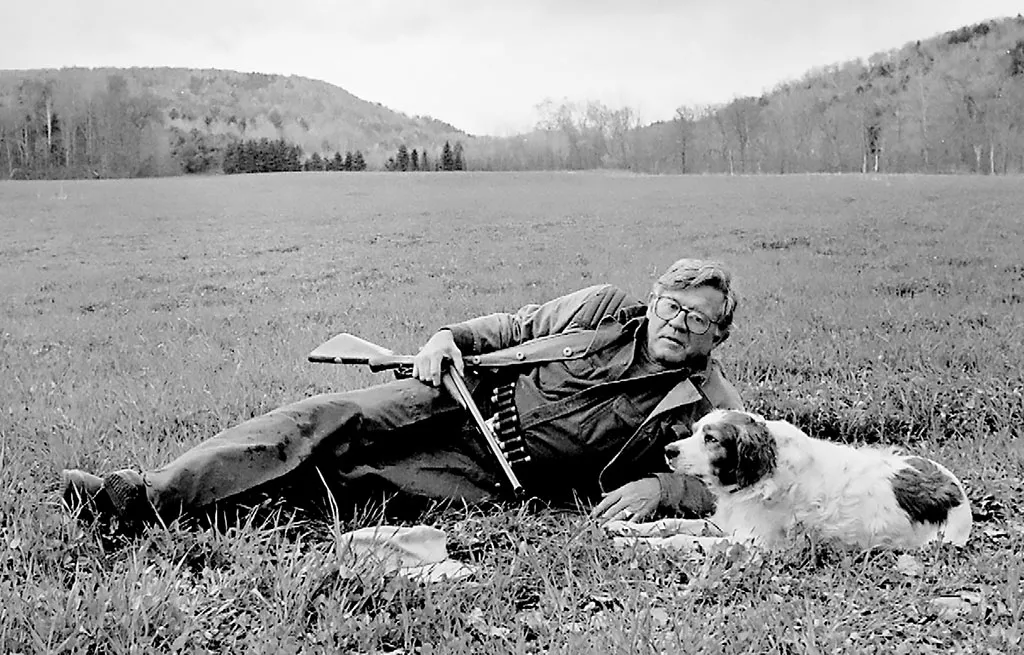
click to enlarge Peter Miller - COURTESY OF PETER MILLER

  • Courtesy of Peter Miller
  • Peter Miller

Peter Miller, the photographer and writer who documented a passing way of life in rural Vermont through intimate black and white portraits of its people, died on Monday. He was 89.

His death, confirmed by his longtime friend Rob Hunter, followed a hospitalization for pneumonia.

Even Vermonters who don’t recognize Miller by name will likely recognize his work. He’s best known for a series of self-published coffee-table books that featured portraits of and essays about older Vermonters — often farmers — who embodied the rugged authenticity that first made him fall in love with the state upon arriving here in the 1940s as a teenager.

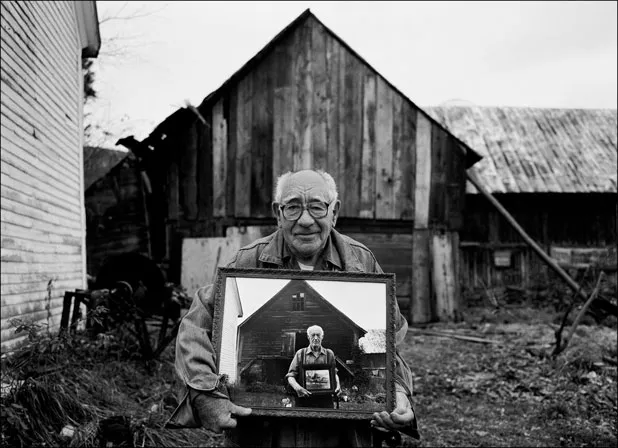
Among his most iconic images are the 1959 portrait of Will and Rowena Austin, a retired farm couple from Weston; and the 1997 portrait of Fred Tuttle, a Tunbridge dairy farmer and U.S. Senate candidate.

An avid outdoorsman, Miller also had an affinity for landscape photography. Until his health began to fail him recently, he could often be found chasing sunsets across the countryside. “It isn’t photography that I like so much,” he said during one of a few interviews with Seven Days in the months before his death. “What I do like is beauty.”

Miller received his first camera as a gift from his mother, who bought it with insurance money the family received after someone stole some guns Miller owned. As a student at the University of Toronto, he met famous portrait photographer Yousuf Karsh and traveled to Europe as his assistant, helping out on photo shoots of notable figures including Pablo Picasso, Albert Camus and John Steinbeck.

Miller enlisted in the U.S. Army after graduating college and spent two years working as a Signal Corps photographer in Paris, roaming the streets with his camera. He then wrote for Life magazine in the late 1950s before returning to Vermont to raise his children.

In the late 1980s, Miller sought to compile his three decades of Vermont images into a book that would tell the story of a changing culture. He pitched it to roughly a dozen publishers — and struck out with each.

Undeterred, Miller refinanced his house in Waterbury and used the money to self-publish Vermont People, an acclaimed book that sold over 15,000 copies. He went on to self-publish six other books, the most recent of which, Vanishing Vermonters: Loss of a Rural Culture, was released in 2017.

His work would earn him notable acclaim. In 2005, he was named the Burlington Free Press Vermonter of the Year. And in 2013, former senator Patrick Leahy read a tribute to Miller on the floor of the U.S. Senate.

click to enlarge Peter Miller's iconic photo of Fred Tuttle - PETER MILLER

  • Peter Miller
  • Peter Miller’s iconic photo of Fred Tuttle

“His resiliency is remarkable and his uncanny ability to display the beauty of Vermont in a way words cannot do justice serves as an inspiration for photographers everywhere,” Leahy said in his speech.

The self-publishing route allowed Miller to produce his books with meticulous care, which is perhaps why the quality of his volumes rival those put out by large publishers. His works can often be found at small-town bookshops and general stores.

But the do-it-yourself approach had its downsides — primarily, financial.  Though his writing and photography sales once brought in up to $85,000 annually, Miller’s income had plummeted in recent years, making it harder and harder for him to get by in an increasingly expensive state. Last year, he sold his longtime home in Waterbury and moved into an apartment at a senior facility in Stowe. At the time of his death, he was cataloging his work with the hope of  selling his portfolio.

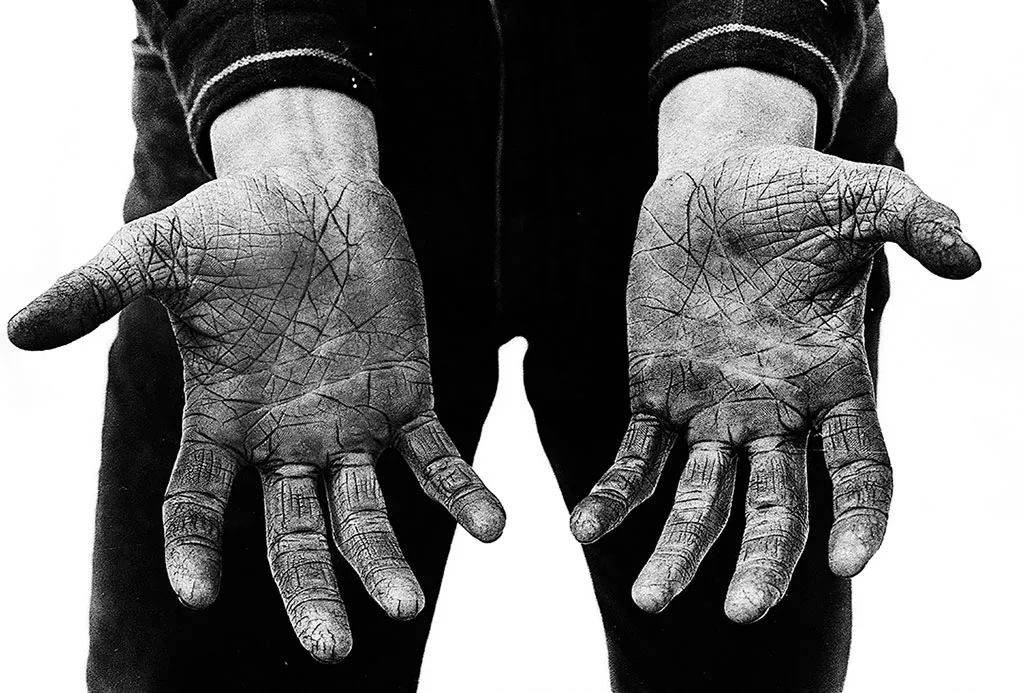
click to enlarge A Blacksmith's Hands - PETER MILLER

  • Peter Miller
  • A Blacksmith’s Hands

A self-described curmudgeon, Miller could indeed come off rough to new acquaintances. Hunter, for instance, recalled meeting him for the first time while working as the executive director of the Frog Hollow Vermont Craft Gallery. “He came in, and he’s like, ‘So you gonna buy my books?'” Hunter said with a laugh.

But Miller’s gruff exterior quickly gave way to a warmth and kindness that friends say stemmed from his deep curiosity about people and their stories.

“All those people he photographed, a lot of them were long-term investments that he would make: going out, talking to them, getting to know who they are,” said Hunter, a documentary filmmaker. “That, I think, made for a better end product.”

Hunter grew close with Miller over the years and once even spent dozens of hours following him around while producing a documentary film series about some of Frog Hollow’s artists. The two had fallen out of touch during the pandemic but recently reconnected, with Hunter visiting Miller numerous times before his death.

After learning of Miller’s passing, Hunter searched his own computer for the raw footage he shot of his friend and sat down to watch.

“I will miss him tremendously,” Hunter said.

Meet the first Native American woman to bring a show to Broadway

Meet the first Native American woman to bring a show to Broadway

When Larissa FastHorse was growing up in South Dakota, she was taught that Thanksgiving was a time for harvest and gratitude. The inaccurate portrayal of happy pilgrims and Indians that many students learn today was never part of story.

It’s part of the reason why FastHorse, 51, decided to write the satirical comedy “The Thanksgiving Play,” which tells the story of four woke, white theater makers who are writing a Thanksgiving play for students to perform. The liberal, well-meaning artists worry so much about not offending anyone and getting the story historically right, that things go very wrong.

“The Thanksgiving Play” stars Katie Finneran, Scott Foley, Chris Sullivan, and D’Arcy Carden.Joan Marcus / Joan Marcus

“[Growing up], I was aware that there was an Indigenous truth being left out of Thanksgiving, but even I was not fully aware of how fictionalized the national holiday story is until I did research from the play,” said FastHorse.

With the play’s opening this week, FastHorse is making history as the first Native American woman to bring a show on Broadway. It’s being directed by Tony Award-winning director Rachel Chavkin and stars Katie Finneran, Scott Foley, Chris Sullivan and D’Arcy Carden.

FastHorse recently chatted with Know Your Value about her new play, the importance of representation, her career pivot from ballet dancer to playwright and more. Below is the conversation, which has been edited for brevity and clarity.

Know Your Value: You grew up in South Dakota. What are your memories of Thanksgiving during your childhood, and how did it influence the story you tell in “The Thanksgiving Play”?

Larissa FastHorse: The play is based in a classroom. My childhood classroom experiences with Thanksgiving was not like the play. My experience was [that Thanksgiving is] entirely a harvest festival. The way Thanksgiving is taught in schools with plays and pageants depicting pilgrims and Indians was completely new to me. It’s been really big for me to realize what we have kids to learn about Thanksgiving, because my in my world, Thanksgiving is just about harvest, gratitude and thankfulness.

Larissa FastHorse’s “The Thanksgiving Play” opens on Broadway this week.John D. and Catherine T. MacArthur Foundation

Know Your Value: You have gotten a lot of attention for being the first Native American woman to bring a show on Broadway. What does that honor mean to you?

FastHorse: It’s huge. I go back and forth between being so excited and honored, and then feeling like a lot of pressure. The last Native American playwright that we know of was Lynn Riggs, and it was nearly 100 years ago. It’s taken a whole new century for us to have another Native American playwright… me. I do not want that to happen again. I have a lot of pressure to make sure things go well so that it isn’t another century before we have the many, many incredible Native writers we should have on Broadway.

Know Your Value: Tell us about the genesis of the play — and how you decided to weave a lot of humor into a story about America’s dark history.

FastHorse: I’m a comedy writer. Comedy is also in Native American culture. We say, “you have to laugh or cry,” so we choose to laugh … We deal with the dark history with humor and that’s how we persevere and we survive. Using comedy is natural for me, and it’s the indigenous way to deal with things.

Know Your Value: The play is being directed by Rachel Chavkin, best known as the Tony Award winning director of “Hadestown.” On the surface, this may seem like an unlikely pairing. Tell us about this decision and how you two decided to collaborate.

FastHorse: Rachel Chavkin and I have known each other for 10 years, at least. We always have admired each other’s work but this is the first project we’ve been able to work on together. Her sense of theatricality is incredible. She can take something very simple and make it large and beautiful and inviting. And she’s hilarious. She’s also our … secret weapon of understanding well-meaning, liberal white people. She does that role well for us because everyone else on the creative team is a person of color.

image
Aug. 5, 201905:06

Know Your Value: What do you hope viewers take away from the play— and America’s painful history of how they treated Native Americans?

FastHorse: First and foremost, I hope people have fun and can enjoy being together in the theater, at the play, as a comedy within a satire. But then I think also it should leave people asking themselves about what they were and were not taught: Why wasn’t I taught these things? Why didn’t I learn different history? Why is it so hard to find history about indigenous people and the lands we’re standing on? I want people to start to really question why Native American history is taught how it is, why there’s an access or lack of access to certain information, and why we haven’t sorted it out sooner and started to do better.

Know Your Value: Let’s talk about career pivots. You began your career as a ballet dancer and choreographer but left that dream behind when you were forced into early retirement due to an injury. What was the pivot to playwright like?

FastHorse: A career pivot is really hard… Suddenly you have to let go of what you know (in my case dancing) and find out what to do with the rest of your life. I was fortunate and found an organization called Career Transitions for Dancers. They give career counseling, training and education to the dancers both during and after their career to figure out what to do next. I really needed that at that time. They helped get me into writing.

I worked in film and TV writing first, 15 years ago. At the time, I was really disappointed in how Hollywood was depicting Native people and Native stories. It just wasn’t accurate, and I felt like I was fighting all the time to share true Native stories. Eventually theater found me through the Sundance Institute’s Indigenous Program. I really was excited about how theater wanted to do things right with storytelling. I’m now back in film and TV because things have changed in the past 15 years. And now, theater, film and TV are trying to do things right as

10 Ways to Have a Dope Time at the DAM

10 Ways to Have a Dope Time at the DAM

4. As you expand your mind, decolonize it. Many artworks in the galleries explore race, gender, identity, and other issues related to equity, diversity, and inclusion. As artist Wendy Red Star is quoted as saying in the renowned Indigenous arts of North America galleries on level 3 of the Martin Building:

A lot of people will say, ‘Well, that’s just Native history.’ No, that’s everybody’s history who lives on this continent. It’s about decolonizing the way people are seeing things.

5. Vibe with surreal Latin American art on level 4 of the Martin Building. Works by Leonora Carrington, Pedro Friedeberg, Gunther Gerzso, Bridget Bate Tichenor, and others will blow your mind!

6. On the same floor, you can learn about ancient origin stories in the art of the ancient Americas galleries. For example, you can learn how ancient Andean communities believed in dualism—the understanding that the world is made up of complementary pairs. The Inca described the world as kay pacha, the here-now earth. They believed that humans lived on the edge between the sky and the earth and between the past and the future.

7. Contemplate matters of the spirit with Buddhist, Hindu, and Islamic art on level 5 of the Martin Building. For example, you can see a Hayagriva mandala created at the DAM by three monks from Seraje Monastic University in southern India.

8. Enjoy the beauty. From the Monets and other Impressionist masterworks on level 2 of the Hamilton Building to the sweeping landscapes of the American west on level 7 of the Martin Building, the museum is filled with creations that will take your breath away.

9. Speaking of level 7, you can take in the views from the rooftop of the Martin Building. Also on this floor, you can see It’s Roundup Time in Heaven, in which a cowboy serenades squirrels in party hats while being blessed by the Great Acorn in the Sky. That’s right. Squirrels. In party hats. You’ll also be able to flip through a comic about legendary Black cowboy Nat Love and find many other cool and unexpected artworks in these galleries including a painting by Andy Warhol!

10. Awaken your own creativity. You’ll find something interactive in almost every gallery. In the Creative Hub on level 1 of the Martin Building (developed in collaboration with Moe Gram and Frankie Toan), spin the experimentation wheel to play with colors, textures, and patterns, and shred the expectations that might get in the way of your creativity. Get hands on with artists in the Landscape Studio on level 1 of the Hamilton Building, and on the weekends visit with one of the artists demonstrating their process.

Job Spotlight: Meet Curstin Carpenter, see how art and marketing helps OSA

Job Spotlight: Meet Curstin Carpenter, see how art and marketing helps OSA
image

When walking down the BSC, I am sure that you have realized the beautiful and creative banners made by the Marketing Team of the Office of Student Activities (OSA). One of the people that work for OSA, Curstin Carpenter, makes these creatively painted banners for organizations and activities happening on campus. Carpenter is a sophomore majoring in business administration with a concentration in marketing. Additionally, her work is to attend these activities and create social media posts to inform students of the various things that will be happening on or out of campus.

“Anyone who has a love for student organizations and activities and can effectively manage social media platforms for specific events can work in the marketing team of OSA,” Carpenter said. 

Working in this position has given her many skills like managing, organizing and working with a team. The job is very technical, but you do not need to be good at drawing and painting to be a part of it. You just need to be creative and let your inner self be expressed by the different paintings.

“What I enjoy the most is painting the banners and getting to see/hear people refer to my work when walking through the BSC,” Carpenter explained. 

“Applying for the job was simple,” she said. Carpenter applied online through the school website and a few days later she got an interview for the position. “It was a fairly easy process,” she claimed.

The hours of operation are from 10 a.m. to 6 p.m. for a normal schedule. But as an advantage, they give you the opportunity to adjust it by your availability. Carpenter finds that extremely useful because she does not have to be stressed about working and attending classes.

“When getting out of class, I can go to the Marketplace and then head to my on-campus job without any worry and a belly full, which is a good thing,” she said.

There are multiple tasks that must be taken care of before a certain day and time. Not only does one person work on them, but multiple people do, making it fun and entertaining. Carpenter loves her job because it helps sometimes relieve some of the stress she has. It has grown to become her safe place to be when she wants to escape from time to time.

“We could always need help and new people applying for this position,” Carpenter stated.

If anyone is interested in applying for the position, you are welcome to head to the HUB which is located downstairs of the BSC, close to the mail services, and ask for information. At the same time, you could come across other on-campus jobs that OSA offers.