An excerpt from ‘Paper Trails: Modern Indian Works on Paper from the Gaur Collection’, edited by Tamara Sears.
A brief history of printmaking in India: From 1850s’ art schools to modern works


Robin Layton’s new photography book “rain” contains 146 pictures of droplets, puddles, reflections and other images celebrating wet weather. #k5evening
SEATTLE — A Pulitzer Prize-nominated photographer from Seattle has done what some think is impossible: make the Northwest’s notoriously wet weather a thing of beauty.
Robin Layton’s new photography book “rain” includes nearly 150 images of droplets, puddles, reflections and other imagery.
“Rain has a very negative connotation, right?” Layton said. “I actually think rain is beautiful because it distorts reality. And when you really look at what rain can create, either right before or right after, it’s quite amazing.”
It’s also nothing new to Layton, who’s shot in all manner of Northwest weather – first, during her work as a photojournalist for the Seattle P.I. (she once snapped a famous front page image of Ken Griffey Jr. under a celebratory pile.)
After 16 years with newspapers, she became a visual artist and started working with celebrity clients like Jennifer Aniston, Oprah Winfrey, Tom Hanks and Barack Obama.
She also published photography books about everything from basketball to the natural wonders of Lake Washington.
She was inspired to create “rain” after 2022’s record precipitation.
“After it rained for three months, I was like, ‘Oh my gosh,’” Layton said. “Rain! Hello, I live in Seattle. Seattle equals rain.”
She shot images for the book exclusively for about a year.
“There are 146 (pictures) that I love that are in the book,” she said.
The cover photo is one of the most striking, taken through a clear umbrella at Mount Vernon’s tulip festival. Bursts of color make up the background, and each individual raindrop in the foreground reflects tulips. It’s completely real – no Photoshop involved.
“I was a photojournalist for 16 years so I have that mentality of making it real and not Photoshopping,” Layton said. “Everything I shoot is from camera to paper, which I’m really proud of.”
With only 750 copies of the book available, “rain” is a special edition fine art coffee table book.
Any of Layton’s images can be purchased as fine art pieces, and she also creates original one-of-a-kind works combining her photos with found objects (mostly vintage and antique.) Examples include pictures framed by foundry pieces and video installations mounted in the window space of old car doors.
Her own house is decorated by her work.
“I think the creation comes first, and then I’ll find a spot for it,” Layton said. “I need more walls.”
Layton believes passion equals purpose in art and life.
“Everything I’ve done since I left the newspaper world has been a personal project,” she said. “It doesn’t matter if you’re full-time working at another job, find a personal project that you love and just dive in. You’ll be surprised what can come from it.”
“rain” costs $395 and every copy is signed and numbered. It’s available on Layton’s website.
She will also take the stage at Benaroya Hall on Saturday, Nov. 18 for a book and concert event with guitarist Todd Boston. Tickets go on sale later this year.
KING 5’s Evening celebrates the Northwest. Contact us: Facebook, Twitter, Instagram, or Email.


This month’s round-up of exhibitions circles the precarity of memory through retrospectives and homages, as if holding on to what we can remember. It’s been said that as we get older, the days seem shorter and the impact of time lessens, perhaps because our experience of time expands and it feels less new. Sometimes it feels as though things blur together– what was I doing yesterday? What did I eat for lunch last week? Who was I talking to just a few hours ago, and about what?
Our memories seem to collapse in on one another, creating overlaps and gaps in clarity. Sometimes the act of remembering itself is intimidating and slippery; Derek Franklin and Danielle Ross explore this phenomenon through painting and movement. For Justin Favela, remembering can be celebratory and honors the work of those that came before us. The title of Todd Norsten’s show at Adams and Ollman (closing this month) perhaps encapsulates this instability best: it feels like experiencing An Imprecise Recollection of an Inaccurate Memory.

An Imprecise Recollection of an Inaccurate Memory
Todd Norsten
May 20 – June 17
Adams and Ollman
418 NW 8th Ave., Portland (Wed – Sat 11am – 4pm)
Minneapolis-based artist Todd Norsten presents a collection of new paintings that toe the line between witty, satirical word-play broadsides and a nihilistic critique of everyday graphic design. While minimal in appearance, Norsten’s paintings are complex meditations on the unending presence of visual information in our lives and the existential dread it can bring. While you’re there, make sure to check out We Recording Tonight, an exhibition of Hasani Sahlehe’s recent atmospheric color-stain paintings that draw inspiration from the freeform nature of improvisational music.

Vistas del Cielo
Justin Favela
May 27 – November 26
High Desert Museum
59800 US-97, Bend (Daily, 9am – 5pm)
High Desert Museum welcomes a large-scale installation by multidisciplinary artist Justin Favela, who considers the history of vaqueros and braceros–Mexican and Latinx cowboys and farmworkers–through lenses of place, intersectional identity, and authenticity. Favela’s use of brightly colored piñata paper as his primary material gives the work an air of celebration and playfulness, offering joy and dimension to his explorations. As a whole, the installation pays homage to Favela’s grandfather, who was a vaquero himself, and the deep history of Latinx experiences in the High Desert region.

Grief is on my calendar every day at 2:00 p.m.
Derek Franklin
June 8 – July 29
Elizabeth Leach Gallery
417 NW 9th, Portland (Tues – Sat 10:30am – 5:30pm)
In his first solo exhibition since 2018, Derek Franklin contemplates performativity and performance in many aspects: the rituals of everyday life, the action of painting, and the staging of art objects in an exhibition. It’s as if nothing is arbitrary in the age-old dialogue of subject/object relationships; everything has a role, be it prop or player, in the space it inhabits. Franklin focuses on this precarious (and, honestly, often harrowing) structure of perception and its both visible and invisible tendrils through a series of layered paintings and concrete sculpture.

Touch ‘em with Love
Shelley Turley
May 27 – July 1
Helen’s Costume
7706 SE Yamhill Street, Portland (Sat – Sun 1pm – 4pm, or by appointment)
Shelley Turley’s new exhibition of paintings, Touch ‘em with Love, revisits the ideas and themes surrounding the single-world title of Helen’s Costume’s first show in 2020, Touching. In an interplay between scenes of domesticity and contemplations of our inner lives, Turley’s paintings ponder the interconnectedness of breath and touch, public and private, and the thin line between life and living. In both style and concept, the work evokes the Impressionists (particularly Berthe Morisot and Mary Cassatt) and their attempts to grasp at the modern world that was constantly shifting and changing.

Music for Ghosts
Tom Prochaska
June 6 – August 26
Melvin Henderson-Rubio Gallery, Hallie Ford Museum of Art
700 State St., Salem (Tues – Sat 12pm – 5pm)
Over 50 years of work by printmaker, painter, and draftsman Tom Prochaska is surveyed in an exhibition of 70 paintings, drawings, prints, and glass works. Curated by Jonathan Bucci, Music for Ghosts takes a retrospective look at the development and maturation of Prochaska’s career that skillfully shifted between many mediums and processes over time. Accompanying the exhibition will be a panel discussion moderated by Bucci on Saturday June 3 at 5pm, two gallery talks on June 13 and August 8 at 12:30pm, and a forthcoming publication titled Tom Prochaska: Music for Ghosts at the end of the summer.

Protection: Adaptation & Resistance
May 19 – August 4
The Center for Native Arts & Cultures Foundation
800 SE 10th Avenue, Portland (Fri 4pm – 7pm)
The Native Arts & Cultures Foundation (NACF) welcomes the nationally touring exhibition, Protection: Adaptation & Resistance, featuring Indigenous Alaska artists including Dimi Macheras and Casey Silver, Lily Hope, Amber Webb, Katelyn Stiles, and Holly Nordlum. Protection explores various ways Indigenous Alaskan communities come together with strength and resilience, oriented towards the survival and thriving of future generations. The exhibition is organized around themes of Land and Culture Protectors, Activists for Justice, and Sovereignty and Resilient Futures in order to explore collaboration and allyship as tools of resistance.
Sponsor


Lineage
Danielle Ross
June 1-3, 8pm nightly; June 3, 4pm
Portland Institute for Contemporary Art
15 NE Hancock, Portland
Danielle Ross collaborates with Muffie Delgado Connelly, Allie Hankins, Hannah Krafcik, and Emma Lutz-Higgins to present Lineage, Ross’s latest performance. Thinking through the loss of elders and fraught struggles to maintain connections caused by the recent pandemic, the Portland-based choreographer contemplates various lineages, memories, and affective structures that inform our moving bodies through movement strategies of looping, transmission, and remembrance.

hapa.me: 15 years of the Hapa Project
Kip Fulbeck
May 21 – August 13
Japanese American Museum of Oregon
411 NW Flanders St., Portland (Thurs – Sun 11am – 3pm)
Kip Fulbeck initially launched The Hapa Project in 2001, photographing and interviewing over 1,200 volunteers who identify as Hapa–the Hawaiian term for someone of multiracial ancestry, often used for those of part Asian or Pacific Island heritage. 15 years after its first museum exhibition in 2006, hapa.me revisited some of its original participants, resulting in a new exhibition that pairs contemporary portraits and newly written statements alongside their previous counterparts. The comparison shows not just physical changes over 15 years, but new reflections as time and history change the participants’ perspectives and outlooks on the world.

Cary Weigand
June 3 – July 30
Brumfield Gallery
1033 Marine Dr., Astoria (Tues – Sat 11am – 5pm, Sun 11am – 4pm)
In an exhibition of new ceramic works, Hawaiian-born artist Cary Weigand merges symbolism, mythology, tradition, and memory to reflect her childhood upbringing on the religiously-diverse island. Weigand’s somewhat haunting figures rendered delicately with muted colors bring together references to Indigenous spirituality, Buddhism, Hinduism, and Catholicism in a dream-like space of coexistence.

Bue Kee: An Artist’s Life and Legacy
May 19 – October 8
Portland Chinatown Museum
127 NW Third Ave., Portland (Fri – Sun 11am – 3pm)
Portland Chinatown Museum presents a survey of watercolors, paintings, lithographs, drawings, and ceramics by Bue Kee (1893-1985), developed in partnership with Kee’s family, the Hallie Ford Museum of Art, Friends of Timberline, Portland Art Museum, and private collectors. The Portland-born Chinese American was the first recipient of the Carey Prize in 1929 and then an artist with the Federal Art Project under the Works Progress Administration, creating works for Timberline Lodge and Tongue Point Naval Station. The exhibition explores the artist’s oeuvre, revealing his unique perspective of Oregon, memories of the state’s Chinese American history, and intimate view of Portland Chinatown in the first half of the twentieth century.

Art Beyond
May 20 – June 15
Schneider Museum of Art; Various locations
555 Indiana St., Ashland (Tues – Sat 10am – 4pm)
Art Beyond, a biennial outdoor art exhibition hosted by the Schneider Museum of Art, returns this year with a series of site-specific sculptures and installations by 14 different artists. Stretching well beyond the walls of the museum, the exhibition activates multiple locations in and around Ashland from satellite galleries and local businesses to fenceposts on the side of the road, ultimately encouraging viewers (and its participating artists!) to critically consider the intertwining connections between art, place, and society. Accompanying the exhibition will be a series of workshops, performances, and events throughout the month.

A close affiliate of the National Football League Players Association has been unable to collect $41.8 million of licensing and sponsorship revenue and pay it to the union as of the close of its fiscal year, the organization disclosed in its annual report filed last week with the U.S. Department of Labor. The figures appear tied to the collapse of the crypto marketplace, a person who has been involved in NFLPA dealings and a representative of another sports union who are both familiar with the process, and likely underscore similar issues at other sports unions and leagues.
Advertisement
The figure represents roughly a quarter of the NFLPA’s commercial revenue based on an analysis of its annual report (that percentage does not include the $75 million marketing agreement payment from the NFL, including that the hit comes to under a fifth of the union’s commercial haul). Divided among the 2,135 active NFL players noted on the annual report, the absent payments could deprive each of $19,578.
“As of Feb. 28, 2023, there is uncertainty surrounding collection of certain accounts receivable from OneTeam Partners, LLC. Therefore, an allowance has been recorded as of that date for those amounts,” the union wrote in a footnote at the end of the annual report. Earlier in the report, the NFLPA listed $41,799,008 for OneTeam next to accounts receivable, a category for funds owed by customers.
OneTeam Partners is a joint venture started in 2019 by the NFLPA, the Major League Baseball Players Association and private equity to oversee sports unions’ commercial enterprises. The group, in addition to the baseball and football unions, now oversees business operations for the U.S. Women’s National Soccer Team, Major League Soccer Players Association and the Women’s National Basketball Players Association, among others. It also recently moved into the college name, image and likeness space with a deal to pay players $500 to allow their use in the upcoming college football video game.
The venture has thus far been successful, with original private equity investor RedBird Capital Partners cashing out last year with an estimated $600 million profit. The unions control group licensing (meaning commercial rights to multiple players) for businesses like video games, trading cards and apparel at a time when demand for sports consumer items has soared.
OneTeam Partners, for example, is listed as paying the NFLPA a year ago $66 million, a figure that jumps to $105.3 million in the most recent report (the NFLPA’s fiscal year ends Feb. 28, so the most recent year reflects the 12-month period that ends on that day). It’s unclear if the nearly $42 million of nonpayments is included in that figure.
Advertisement
OneTeam referred questions to the NFLPA, which did not reply for comment. An MLBPA spokesman said the union is aware of the issues of nonpayment by OneTeam. In the MLBPA’s annual report for the calendar year 2022, no mention is made of missing payments from OneTeam, which paid the union $36.4 million.
The unpaid bills appear tied to the news in Sportico last month that Dapper Labs, the platform for the NBA’s and NFL’s sputtering nonfungible tokens, and DraftKings’ Reignmakers NFTs had each engaged the NFLPA to renegotiate their deals in light of the plummeting value of the digital assets. Then came a report this month that Dapper Labs’ NFL NFT was badly missing financial goals.
“OneTeam would have expected around $60 million from Dapper & DraftKings, of that, $41 million would go to the NFLPA,” the person who has been involved in past NFLPA dealings wrote in a direct message. “Now, NFTs are relatively new, so most of the money typically comes from Madden and trading cards.” By that, this person means the bread-and-butter licensing businesses like video games and trading cards at the NFLPA remains healthy. Cryptocurrency is a relatively new category for the unions and has not been a relied-upon source of revenue. Still, this person described the nonpayments of $41.8 million as “horrific.”
Cryptocurrencies like NFTs were all the rage two years ago, skyrocketing in value. Leagues and teams were inking cryptocurrency deals with companies like now-bankrupt FTX, and touting a wide range of NFTs. But crypto crashed along with NFTs, which are essentially authenticated digital duplicates of something real, like a highlight, a trading card or a work of art.
The true value of an NFT has long been debated, and the naysayers appear to have the stronger hand now. But in 2021 they did not, and that’s when the NFLPA and NFL reached their deal with Dapper.
Advertisement
“The irreplaceable nature of the NFT captures what is special about sports fandom,” said Steve Scebelo, president of NFL Players Inc., the marketing and licensing arm of the NFLPA, in the 2021 release announcing the partnership. “Our players are immensely excited for the NFLPA — in working with our enterprising partners at Dapper Labs and OneTeam — to make this significant push into the digital collectibles market.”
Unions like the NFLPA built their commercial arms to create war chests for labor battles with the leagues. In the years leading up to the expiration of a collective bargaining agreement, the unions typically will hold back some licensing payments to build a work stoppage account. The NFLPA and MLBPA have long-running existing CBAs, and as noted, NFT revenue is not a mainstream source of revenue. So while concerning, the loss of NFT payments does not present any great threat to the unions’ health. Indeed, the NFLPA’s assets grew from $1.003 billion to $1.055 billion in the most recent fiscal year, according to the annual report.
The more recent developments emerge as the NFLPA prepares to select its new executive director. The union scheduled a meeting for next month when a new executive director might be selected by the 32 player representatives. It’s unclear exactly who is in the running.
Whoever is chosen will take over for DeMaurice Smith, who has held the post since 2009. The latest annual report shows him earning $9.3 million, of which, $5.6 million came from deferred retirement compensation. He still has $4.3 million remaining in his retirement account, the NFLPA report shows.
(Photo: Rich Graessle / Icon Sportswire via Getty Images)

While our stories as Asian Americans are still being told—in Oscar-winning films, in Pulitzer-winning prize books, in television—I find that the journey of finding home is always as complicated as it is beautiful and different for everyone. For some of us, home is a place we’re still seeking. Not always easy to visit, home is sometimes a reason to build a new place that serves us and keeps us safe instead. Sometimes home is even a simple meal, with unspoken love in every bite. To wrap Asian American Pacific Islander (AAPI) Heritage Month this year, we’ve asked five AAPI creatives to share where they find themselves most at home, if they do at all.
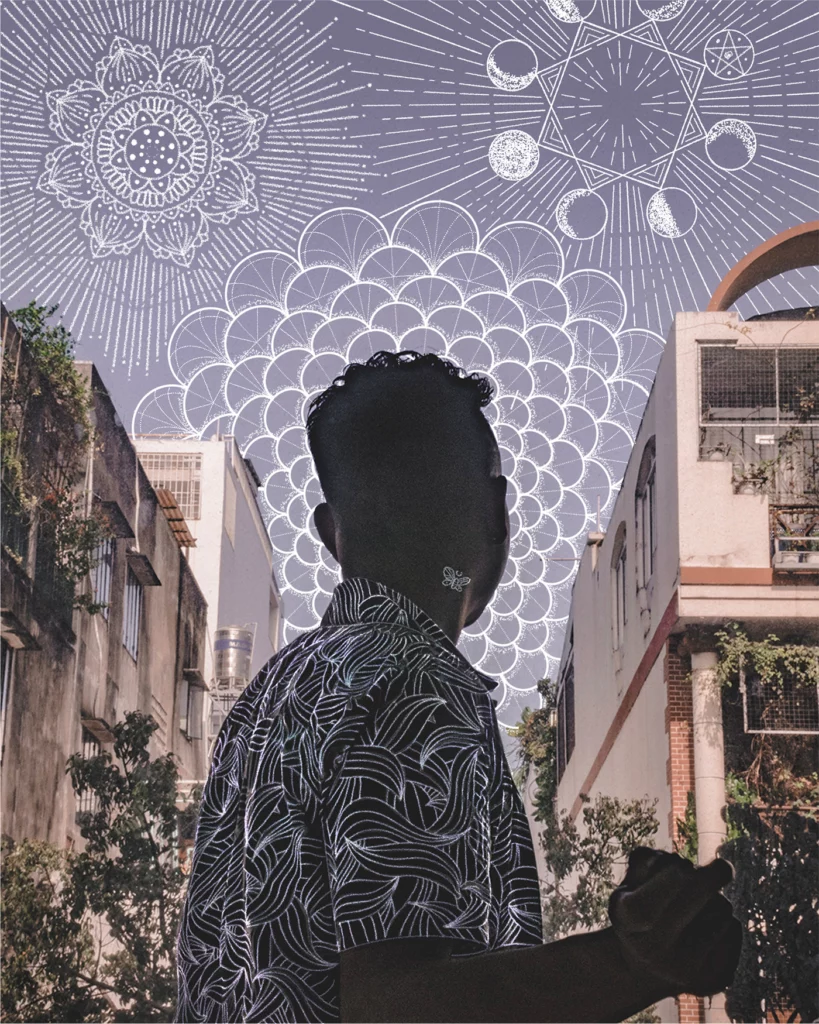
I often find myself looking for that place of belonging, that sense that this must be where home is, or, rather, where it should be. How does one find it, in a country that unquestionably places us as the outliers? Half American, half foreigner—or maybe not a half at all: perhaps 100% of the best of both. The math doesn’t need to add up for it to make sense.
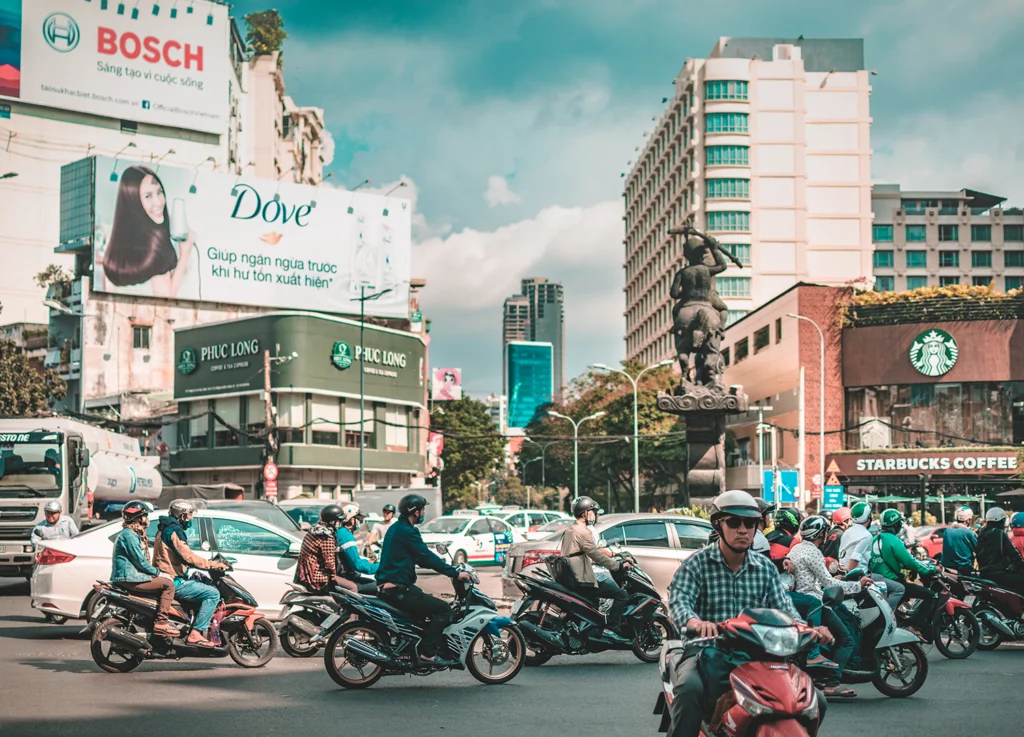
For me, home isn’t a place, but rather a feeling, and a story of parts and halves and division. I was born and raised in Denver, Colorado, by my 15-year-old mother who had fled the Vietnam War in the 1970’s with my grandparents. My father’s side fled the remaining fallout of Pol Pot’s Khmer Rouge and American carpet-bombing in Cambodia. I always silently understood that my two halves had a quiet disdain for each other, fingers pointed at each other, and I was an anomaly created under strange circumstances. Too dark-skinned to be Vietnamese, too fair-skinned to be Cambodian. Ironically, both of my halves fled their motherlands to live in the country that created the conflict to begin with, which I wouldn’t understand until much later in life. What I hadn’t realized was that I was the one dividing myself into so many parts: How could I ever find home when so much of me was spread out in so many places? I found home when I realized the beauty is to be all of these things, all at once—a collective force all on my own.
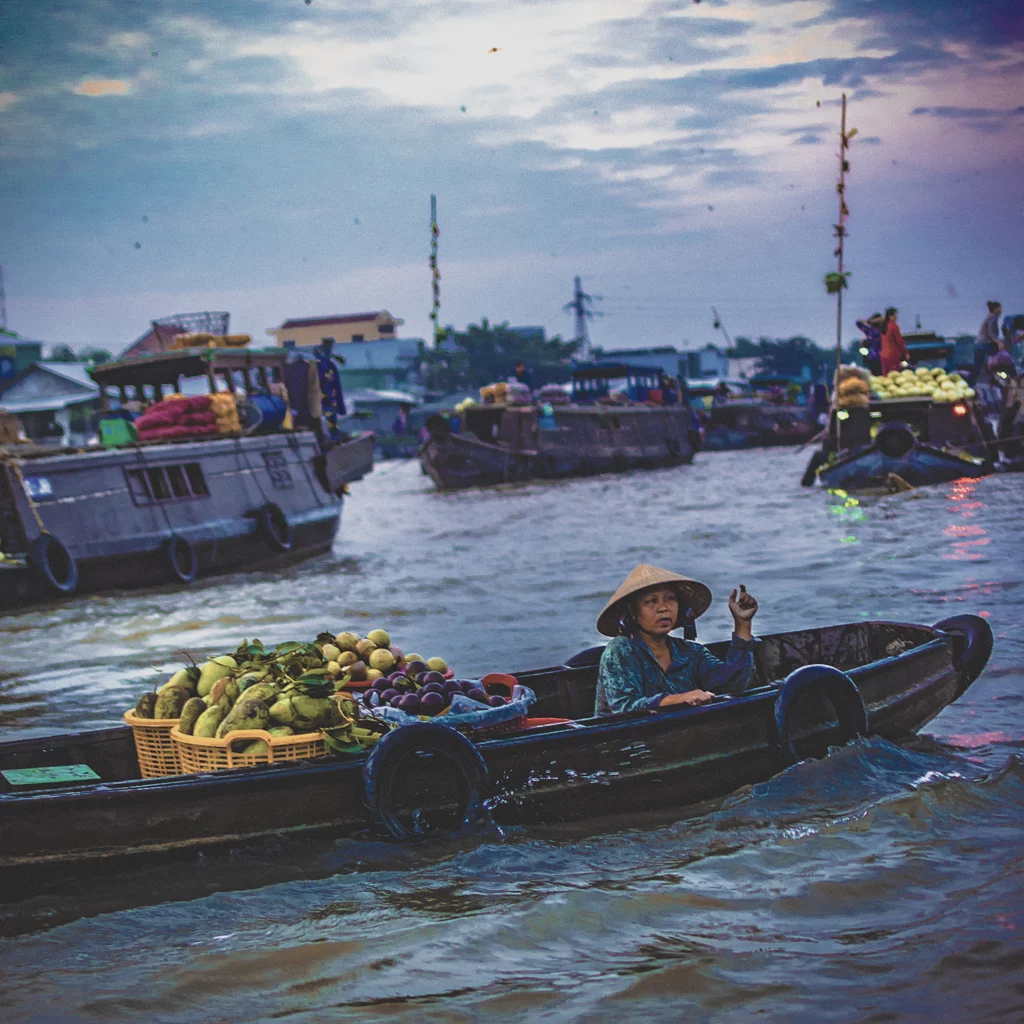
I’ve always felt out of place growing up in the United States: the shame I carried at lunchtime, the academic gymnastics, the blatant racism and name-calling that happens in your adolescence when you grow up as something in-between. I hoped visiting Vietnam for the first time as an adult in 2018 would give me that sense of belonging I’d been missing in my life. Although I was hopeful, I wouldn’t find it there: I couldn’t speak to my family of strangers who knew of me but had never experienced me. I had forgotten my mother’s tongue because it didn’t serve me in the place where my body typically resided. I dressed American and read as a tourist in every way. My camera and the pursuit of creativity were and still are seen as luxury for me: the embrace of individuality and rejection of thinking of myself as cog in a family unit. This trip ended up just feeling like a stamp in an American passport.
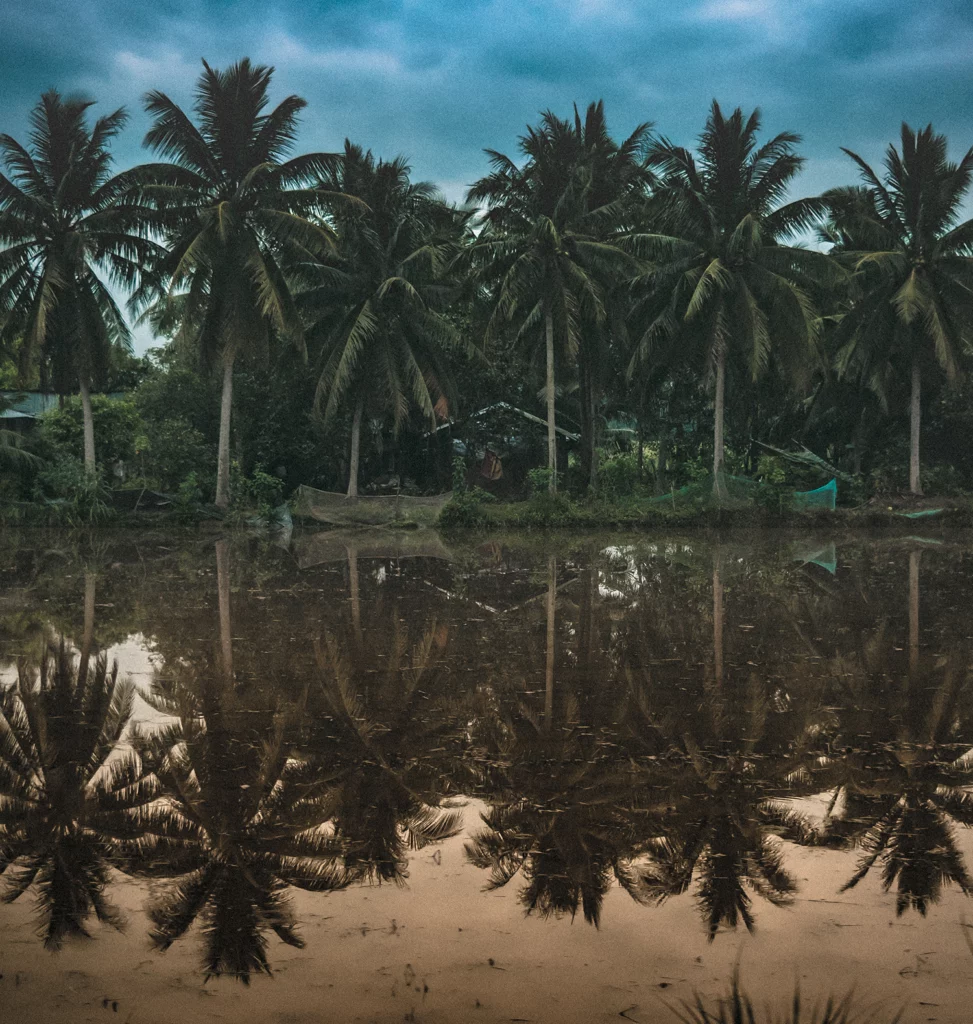
Today, I find comfort in knowing I don’t need to find home: Home is always ready for me in my pocket. The collective efforts of all my ancestors placed me where I am today, whether intentional or not, and I don’t have any halves about me: I’m a complete package all on my own.
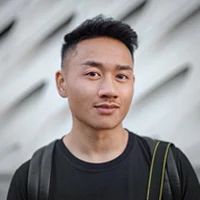
Michael Luong joined YES! as the Associate Art Director in the summer of 2021. He has worked in publishing over the past seven years and has a passion for bringing stories to life with visuals. He has worked as a Digital Art Manager for Out Magazine, The Advocate, Pride.com, and HIV Plus Magazine. He’s also worked as a freelance designer for the nonprofit publication, Next City. His most recent experience in publishing was as an Editorial & Marketing Designer for Deadline.
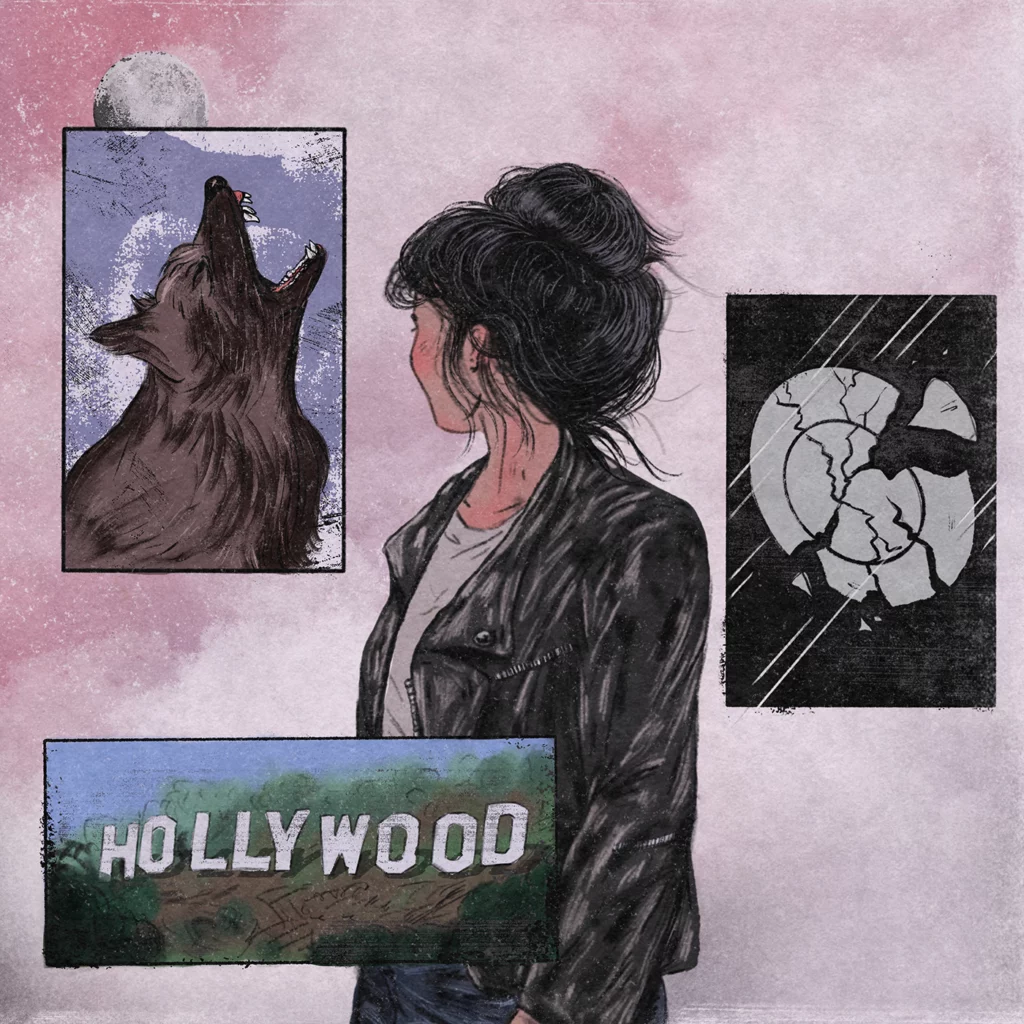
I have never truly had a place to call home. When we lost everything we had, we found ourselves stranded in Cambodia, with nothing to our name. There, I witnessed moments of joy, the haunting aftermath of the Khmer Rouge’s genocidal war, and lived among 300 cousins. Our family home was foreclosed on, and we became homeless. We wandered from one hotel room to another, and in and out of my strict grandparents’ home, until we finally settled into a small townhouse with walls so thin that I could hear our neighbor splashing around in his tub. I slept on the living room floor, surrounded by the scurrying sounds of roaches.
In each place we lived, judgment flowed in both directions. On the outside, we were seen as wealthy Asians, yet we were poor in reality. The truth was, we were engulfed in instability. Chaos became my home. The cacophony of loud, drunken voices, barking dogs, screaming, fighting, and the shattering of dishes became the lullaby that put me to sleep. I longed to escape this environment, so school became my refuge—a sanctuary, until it no longer felt safe. It was there that I forgot I was expected to conform to a certain identity. I would skip school and take the train to Hollywood, seeking solace in its quieter and more predictable atmosphere. I craved a sense of safety.
When college came around, I moved out of my parents’ house and into the arms of an abusive partner. Exhausted from feeling ugly and unloved, I eventually left that toxic relationship as well. After enduring years of abuse, my tumultuous upbringing took its toll on my mental well-being and broke my brain. Recognizing that I needed assistance, I mustered the courage to reach out and ask for help. Home for me is wherever I find solace and security. Today, I am happily married, and have a strong support system. I’ll always be grateful for that. Despite this, I often wonder if I will ever truly feel a sense of belonging anywhere.
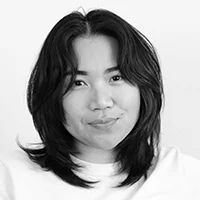
Tevy Khou is an illustrator and designer from Long Beach, California. Currently she’s based in San Francisco Bay Area. She studied illustration design at Art Center College of Design and graduated in 2014 with a BFA. She has won a bronze award for editorial from Society of Illustrators: Illustration West 60 and was featured in American Illustration 41. Her clients include Buzzfeed, Apple, LA Times, Mic, Yes! Magazine, Latin TV and Hazlitt Mag.
Portfolio: tevykhou.com | Instagram: @tevykhou

I left Vietnam and started my journey to America when I was about a month old. After some time spent in the Philippines, I arrived in the U.S. at a year and a half old. I’ve always existed in the middle, not really knowing what it was like to call Vietnam home, but not really feeling like I belonged in America either. But to be honest, I never dwelled on it too long. In my home, my parents tried to always make Vietnamese food for us, growing Vietnamese fruits and veggies in our backyard, teaching us the names of the herbs and dishes. I always felt like I was grounded in my culture, and I had a lot of pride in being Vietnamese American.
I took my meals for granted, however, always wanting American food instead—not because I was embarrassed, but because I just wanted to try new things. When I moved away to college, I ate Vietnamese food less and less. Living far from Vietnamese grocery stores and always being on the go meant a lot of breakfast sandwiches and coffee—college student essentials! I never imagined that I would miss my parents’ cooking so much, or how much I would miss gathering around a table, volunteering to scoop the rice, setting the plates for hot pot, counting how many chopsticks I needed. As a kid, I wanted to try different things, but as a grown-up, I yearned for what always made me feel at home. My food is a vehicle for community, for love, and care, and it’s a reminder that my home is wherever my family is.

Thumy Phan is a Vietnamese immigrant illustrator & designer currently based in Oklahoma City, Oklahoma. She loves telling stories through art, specifically BIPOC stories. In her personal work, she explores how to visually tell her own experiences of growing up in the U.S. as a Vietnamese, immigrant, permanent resident raised in the south. To make sure these narratives are heard, loud and clear, she uses a combination of bold colors and flora, with a sprinkle of magical shapes and swirls.
Portfolio:thusister.studio | Instagram: @thusisterstudio
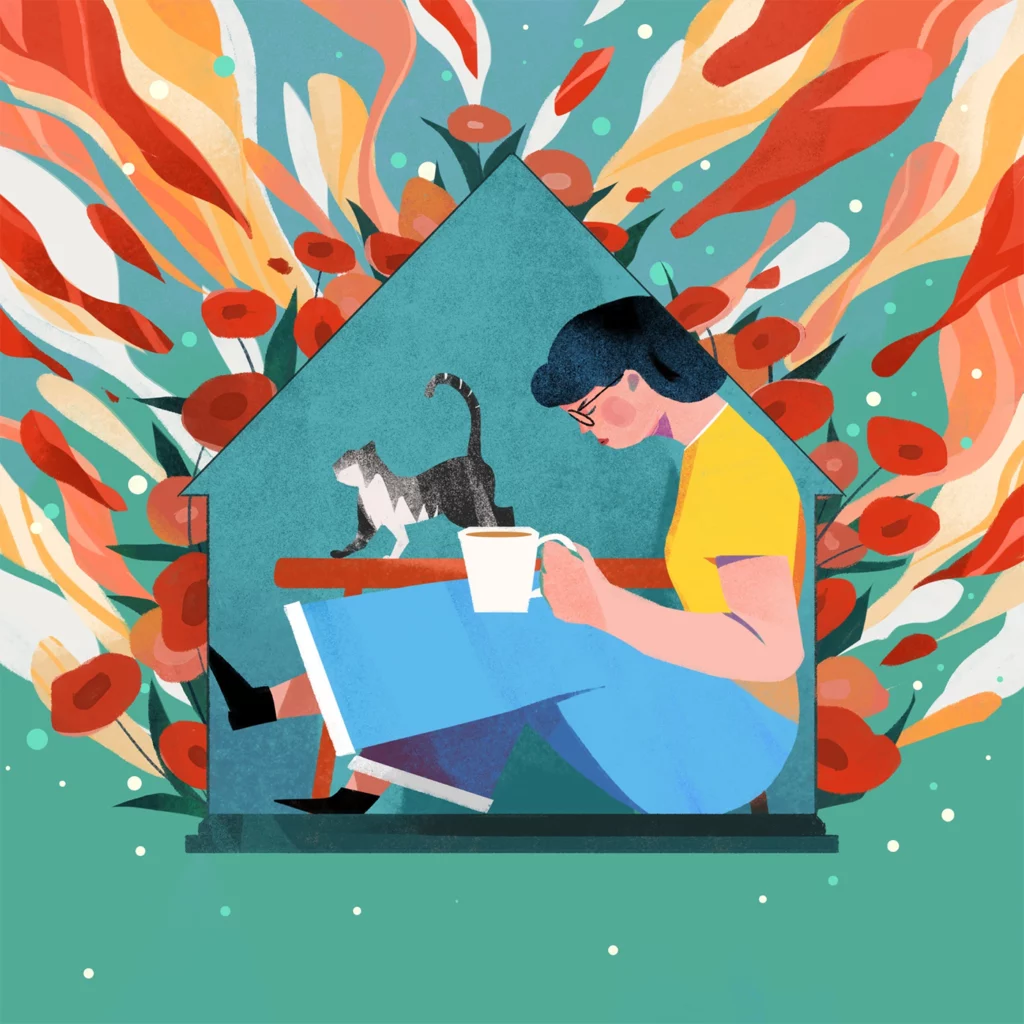
For me, home is more than just a physical location or an address where my Amazon packages get delivered. Home encompasses memories and sentimental value. It’s a place where I can keep items that hold deep meaning, especially when I share the space with the people I love. Home resembles an old photo album, serving as a container for countless memories and offering a sense of security. It acts as a dictionary, helping me piece together vivid recollections and providing an opportunity for reflection.
From Beijing to San Francisco, I have lived in five different apartments so far. Each of them has played a significant role in different stages of my life. The floating shelves my dad built in my small childhood room, the sensitive fire alarm that screamed at me twice, the old call box that was never functional, the carpet my cat chewed, and the foggy ocean view from my window—all of these hold a special place in my heart.
Whenever I feel like a small leaf floating in a giant void, I think about those places, and those memories, and they provide me with a sense of comfort and purpose. Home transcends the physical space, it is a mosaic of memories.
After 24 years in China, Jianan Liu came to the U.S. to explore her possibilities. She spends most of her day sitting in front of screens with her best work buddy, Notch the cat. Her work focuses on color and texture, and she pours her imagination into creating a beautiful world. Liu often brings depth and space to the two-dimensional world, making her illustrations vivid and lively.
Portfolio: jiananliu.com | Instagram: @jiananliuillustration
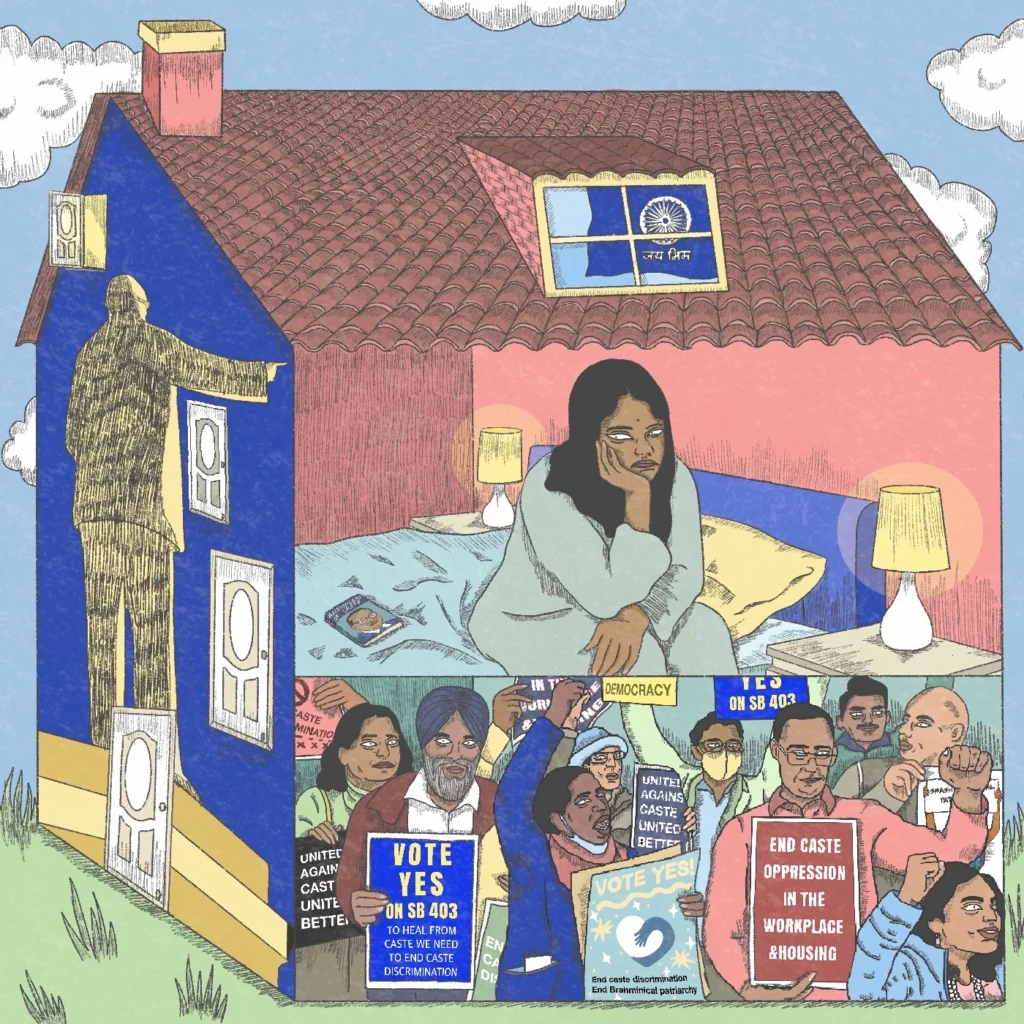
In the tumultuous era of India’s fight for independence from British rule, B.R. Ambedkar, fondly known as “Babasaheb,” proclaimed, “Gandhiji, I have no homeland.” This poignant statement reflected the plight of millions who suffered under the oppressive caste system. Today, as we commemorate AAPI Heritage Month, we must confront the lasting impact of caste discrimination, not only in India but also within diasporic communities worldwide. California’s recent legislation, Senate Bill 403, takes a significant stride in combating caste-based discrimination and offers hope for a more inclusive society.
Ambedkar’s struggle transcended the quest for political freedom. He yearned for liberation from all forms of slavery and oppression that marginalized communities endured. He emphasized that true freedom encompasses both physical and mental realms. While physical freedom allows individuals to act on their will, it holds little value if their minds remain shackled. Babasaheb recognized that the freedom to think, question, and exercise one’s potential was the essence of human liberation. Thus, his fight was not solely for land or religion; it was for dignity and equality.
The deep-rooted caste system did not confine its impact to the borders of India. It traveled with Indian immigrants to various corners of the world, perpetuating discrimination and inequality. As we celebrate AAPI Heritage Month, it is crucial to acknowledge the presence of caste oppression beyond India’s shores. This recognition serves as a reminder that the struggle against caste discrimination is not limited to a single nation but demands a collective effort to eradicate its influence on individuals’ lives.
With the recent passage of SB-403, California has become the first U.S. state to legally address caste-based discrimination by including caste as a protected category in its anti-discrimination laws. This landmark legislation marks a significant milestone in the journey toward social justice and equality. By recognizing caste discrimination as a form of prejudice, California demonstrates its commitment to fostering an inclusive society that embraces the diverse experiences and backgrounds of its residents.
In our shared vision for a better future, we must strive for a world that offers dignity, equal opportunities, and freedom from all forms of discrimination. This endeavor requires dismantling systemic barriers and challenging long-held biases. By acknowledging the struggles faced by individuals who grapple with a sense of belonging due to systemic discrimination, we foster empathy and understanding. Through ongoing dialogue, education, and legislation like SB-403, we pave the way for a society that celebrates diversity, encourages inclusivity, and ensures that finding one’s true home becomes a reality for all.
Priyanka Paul, A.K.A. Artwhoring, is a multi-disciplinary artist and writer from Mumbai, India. Their work revolves around the themes of social justice, marginalization and self-exploration, and has been published and exhibited globally. Paul’s work uses bright and pastel colors, interspersed with humor to talk about themes ranging from gender and caste, to analyzing current media trends and contemporary society.
Instagram: @artwhoring


Sign up to receive email updates from YES!





