Meet the Filmmakers Behind this Year’s Sundance Film Festival Indigenous Film Tour

Meet the Filmmakers Behind this Year’s Sundance Film Festival Indigenous Film Tour

Influenced by watching his mom when he was a child, Greyhorse explains how his ancestors played a huge role in not just his vision behind the film, but the actual film itself. His grandmother provided the film’s Diné Bizaad voice-over narration, and other family members constantly brought him inspiration throughout the creative process. 

“My mom always taught me to never dwell in the negative and always focus on what you can change and do for yourself to get out of whatever you’re going through because that’s the only thing you can control. So I began to think about who I am and all my ancestors that came before me and the people who raised me and loved me. It was the matriarchal figures in my life — my grandma, my mom, my aunties — they truly had the key to what sacrifice and resilience was in my family and what it looked like. I always admired the way they all carried themselves and were always able to provide home and the foundation of home. That was the center of this film.” 

woman looking to the left side with her hand on her forehead
A still from “I Am Home”

“I watched my mom navigate the world and the obstacles with so much strength and confidence,” Greyhorse continues. “And I know that that carries over to my voice and film and what intrigues me about being human, being Indigenous, being Polynesian, and the culture that affects the decisions that we make in order to keep moving forward. It’s why I’m drawn to storytelling, because storytelling is power, and sometimes it’s a power that you can’t put into words.” 

The decision to use the Indigenous language Diné Bizaad for the narration was a meaningful one for Greyhorse. And having his grandmother narrate the poem just felt right. 

“I’m drawn to stories that challenge me — this being one of them — stories that feel very close to home, pun intended,” he laughs. “I felt like the wisdom in her voice would carry a message far beyond just the visuals and what I had written already. I wanted her to have her moment where there was sort of this reverence of the audience to hear her speak and hear the elegance and history and beauty within our language.”  

When asked what he hopes the audience will take away from his film, he explains, “I want the audience to feel the love, inspiration, growth, and empowerment that went into this film. It was just for me,” Greyhorse continues. “It was something very personal to me that I could look at and be reminded of why I’m doing this. I used it to calm my mind at a time of turmoil and take away self-doubt and reinspire me, and I hope that message comes across to audiences when they watch the film.”

For Fox Maxy, inspiration came from multiple sources — both good and bad. Her debut feature-length film, Gush, which had its premiere in the New Frontier section at the 2023 Sundance Film Festival, was partially inspired by Maxy’s pain. But that pain ultimately led to her finding joy as an artist and a filmmaker. 

Maxy explains that making the film involved a lot of “trying to feel joy after so many long periods of pain.” She was especially inspired by the concept of transmutation. “There’s something in the filmmaking process for me — it comes from something ugly, it comes from something horrific, it comes from survival, being a woman but also being in a world with men and finding a balance and a respect between the two … after a time period of disrespect.” 

Summer markets start to gather and inspire creative people

Summer markets start to gather and inspire creative people

Billings, MT- Starting Saturday, the 9th the Native American Development Center will be hosting Beyond Indigenous: Summer Markets for Creatives.


Flowers

These markets will serve as a vending opportunity for both native and non-native artists.

Beyond indigenous is spearheaded by one of N.A.D.C.’s subsidiary T.R.I.I.A. 

T.R.I.I.A. stands for teaching, reaching, innovative indigenous artists.


TRIIA

Which is what they hope to accomplish and more with the summer markets.


Event

Three markets will be hosted this summer with the first one being this Saturday from 9 till 1.

Two more markets will be held at the same time on July 15th and August 12th.


Art 2

All three markets will be held at the eagle seeker community center, which was previously the shrine.

More information on the markets and how to apply to be a vendor can be found here


NADC

The public is also invited to attend the markets to see some of the incredible pieces made by artists right in their community.


Art

More from this section

Photographer Frank Stewart Gets His First Museum Retrospective

Photographer Frank Stewart Gets His First Museum Retrospective

Frank Stewart is not just a photographer; he’s an artist. While many people know him for his jazz photography, he has also taken images of art, joy, love, and people’s environments in Africa and Cuba to the Caribbean and New Orleans for three decades. Frank Stewart’s Nexus: An American Photographer’s Journey, 1960s to the Present, his first museum retrospective at the Phillips Collection in Washington, DC, displays the breadth of this work. Interactive activities with Stewart, including a portfolio review for photographers and a meditation session, will complement the exhibition, opening tomorrow, June 10 and continuing through September 3. 

Co-curators Ruth Fine, the former director of the National Gallery of Art, who first met Stewart in 1999, and poet, scholar, and professor Fred Moten envision the retrospective as a visual autobiography of Stewart’s life. Alongside his captivating images, the exhibition will include some of his old cameras and photographs of him and fellow artists of the Kamoinge Workshop, a New York-based collective of African-American photographers. Stewart wrote the label for each picture on display with the aim of telling a complete narrative of his life.

Frank Stewart, “Juneteenth ‘93, 19th of June Celebration, Mexia, Texas” (1993), gelatin silver print, mounted by artist on heavy paper, 7 3/4 x 11 1/2 inches, collection of the artist

As a result of the lack of Blackness he encountered growing up in segregated Memphis, Tennessee, Stewart used his camera to capture the history and evolution of Black culture.

“I always wanted to go to Africa to find out the roots, and then I wanted to go to the Caribbean to find out how it got codified and then New Orleans to see what it ended up as in terms of music,” Stewart told Hyperallergic

His talents have earned him several awards and unique opportunities. He was the first photographer artist-in-residence at the Studio Museum in Harlem and photographed the 1984 Los Angeles Summer Olympics and the Democratic National Convention for the Chicago Defender, among historic events. Stewart was one of the first photographers to enter communist Cuba under the leadership of former president Fidel Castro. He is now the senior photographer of Jazz at Lincoln Center in Manhattan, the concert hall and orchestra led by Wynton Marsalis. 

Stewart’s artistic view on photography stems from his early days studying painting at the School of the Art Institute of Chicago in 1962. He transitioned to photography after realizing he could see his failures faster and improve more quickly. 

Frank Stewart, “Smoke and the Lovers, Memphis (or Smoke and the Lovers, Hawkins Grill) (1992; printed 2009), gelatin silver print, 12 3/8 x 18 1/2 inches, Museum of Modern Art, New York, David H. McAlpin Fund

He took his first photos in 1963 at the March on Washington for Jobs and Freedom with his mom’s Kodak Brownie camera. Shortly after photographing the march, Stewart encountered The Sweet Flypaper of Life (1955) by Langston Hughes and Roy DeCarava, which transformed his life and perspective on photographs and would later lead him to move to New York to study under DeCarava, Joel Meyerowitz, Arnold Newman, Jack Whitten, and George Nelson Preston at the Cooper Union in 1971. 

“What I got from Roy [DeCarava] was the love for Black folks that he had, and it showed in his work,” Steward said. “I was hoping that the same kind of love and empathy I have for Black folks was showing in my work, too.” Inspired by DeCarava and Hughes’s major collaboration, he and his Kamoinge brothers published The Sweet Breath of Life: A Poetic Narrative of the African-American Family in 2004. 

Frank Stewart, “Radio Players Series (or The Bus)” (1978), gelatin silver print, 14 x 11 inches, collection of Sing Lathan and Bining Taylor

After graduating with a BFA, Stewart met Romare Bearden, whom he worked with for over a decade. “Everything I got from Bearden was osmosis, just by being close to him. He would say a certain thing, or he would tell me some stories, or he would show me what he was doing, and that influenced how I constructed my frames,” he said. 

Stewart used the lessons he gleaned from these major figures to take stunning and profound photographs that speak to his subjects’ humanity and emotions. “Juneteenth ’93, 19th of June Celebration, Mexia, Texas” (1993), a close-up black-and-white image of a man and a woman dancing, their faces hidden and their limbs interlocked, showcases his ability to portray musicians as well as the intimate moments experienced by the audience. “Smoke and the Lovers, Memphis” (1992), taken in Stewart’s hometown at a restaurant where the owners knew his whole family, allows the viewer to feel the calm and familiarness of being in a homely atmosphere. A black-and-white photo titled “Radio Players Series (Or The Bus)” (1987), part of his LIFE magazine series Youth in Harlem, shows the tension of Black love. The image depicts a young couple wearing button-up shirts and wide-leg pants sitting on a bus looking in opposite directions in a way that thoughtfully brings the viewer into a moment of intimacy.

Frank Stewart, “Stomping the Blues” (2004), gelatin silver print, 16 x 20 inches, collection of Rob Gibson, Savannah

Stewart’s image-making and career reflect the extensive impact that music has had on his work. On weekdays, his mother played rhythm and blues; on Sundays, she only played gospel. His photograph on view titled “Stomping the Blues” (2004), of a performance of Wynton Marsalis’s Pulitzer Prize-winning jazz oratorio about slavery and its aftermath Blood on the Fields, depicts musicians playing trumpets and clapping their way off stage as well as audience member’s reactions. The image embodies Stewart’s mission to compose an innovative image while capturing the feelings of everyone in the room. Beyond his jazz work, Stewart aimed at everyday musicians’ lives, ensuring that their stories were not overlooked. 

“Very few musicians got documented back in the early days, except for the famous ones,” he said. “For every famous one, there were 10 or 15 guys who were trying to play the music, and those guys needed to be documented as well.”

Frank Stewart, “Gorée Island Painter (or Slave Castle Back) (2006), chromogenic print, 35 x 42 1/2 inches, Guess Family Collection, Louisville, Kentucky

Like his photos of musicians, Stewart’s other images transport the viewer to different cultures and moments. In “Clock of the Earth, Mamfe, Ghana” (1998), three women form a triangle holding a basket on their heads as they walk in the early morning to get water as a woman walks ahead and a boy runs off in the background. The stillness and quietness of the image portray the essence of a morning in Ghana. “Bicycle II, Cienfuegos” (2004) taken on the southern coast of Cuba is a black-and-white image that shows Stewart balancing form and space to emphasize the ethos of places unknown to him. “Goree Island Painter” (2006) illustrates Stewart’s ability to balance color and pigmentation. Against the bright orange background of the Slave Castle, a museum and memorial dedicated to the victims of the Atlantic slave trade in Senegal, a Black man turns away from the camera, so that only his back is visible. The backdrop enhances the Black man’s skin tone, achieving Stewart’s goal of creating a metaphor for slavery, and sparks the emotions of the pain and suffering enslaved Black people faced. His compositions and attention to detail capture the ethos of places unknown to him. 

Stewart is currently focused on photographing the catastrophes caused by climate change and its environmental impacts. His image “Katrina: Hammond B-3, 9th Ward, New Orleans” (2007) depicts the damage to a keyboard due to Hurricane Karina. The instrument’s color and texture and the image’s composition illustrate the sadness and damage caused by the storm, which destroyed more than 100 churches in New Orleans; only 11 survived. 

“Back in the day, it was all black and white, but now everybody’s shooting color and digital photography. Everybody’s got a camera now, everybody’s a photographer,” he said. “I’m trying to be an artist. So I hope that sets me apart from the average person with a camera.”

Lawndale Announces 2023/2024 Artist Studio Program Participants

Lawndale Announces 2023/2024 Artist Studio Program Participants

Earlier this week, Lawndale, a Houston-based nonprofit exhibition space, named Tay Butler, Sol Diaz, and Ayanna Jolivet Mccloud as its 2023/2024 Artist Studio Program (ASP) participants. 

The nine-month program provides artists with 24-hour access to a private studio, a monthly honorarium of $750, and up to $2,000 for project development and materials. Recently, the National Endowment for the Arts awarded Lawndale a $20,000 grant in support of this artist-in-residence program. 

This year, the program received over 140 applications. The selection committee was comprised of the following panelists: Regina Agu, 2017/2018 Artist Studio Program participant; Jamal Cyrus, Lawndale Advisory Board Member; Melissa Noble, Interim Director of the Cynthia Woods Mitchell Center for the Arts/Coordinator of Interdisciplinary Initiatives; Jeremy Johnson, Lawndale’s Operations & Exhibitions Manager; and Anna Walker, Lawndale’s Executive Director.

Learn more about the 2022/2023 ASP artists below, via descriptions provided by Lawndale.

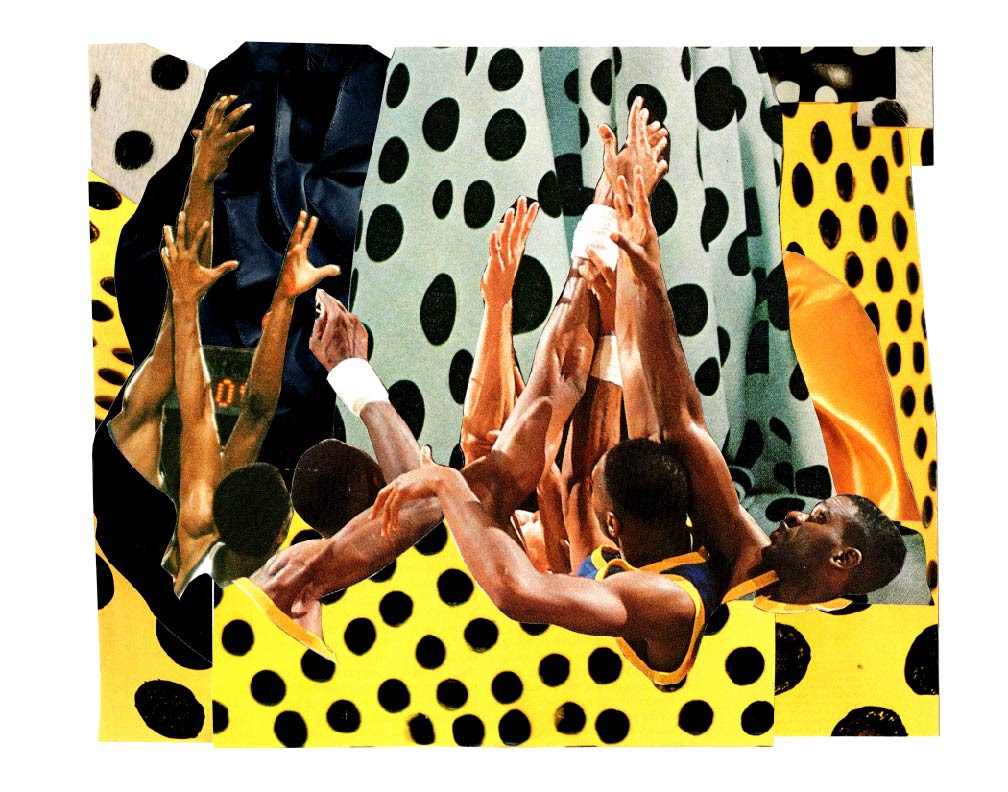
Tay Butler is a multi-disciplinary visual artist based in Houston, TX. He received his BFA in Photography and Digital Media from the University of Houston and completed his Photography MFA at the University of Arkansas. After retiring from the U.S. Army and abandoning a middle-class engineering career to search for purpose, Mr. Butler reignited a rich appreciation for Black history and a deep obsession with the Black archive. Through collage, photography, drawing, video, sound, performance and large-scale installation, Mr. Butler utilizes past histories and imagery to create new understandings of the present while imagining a brighter future.

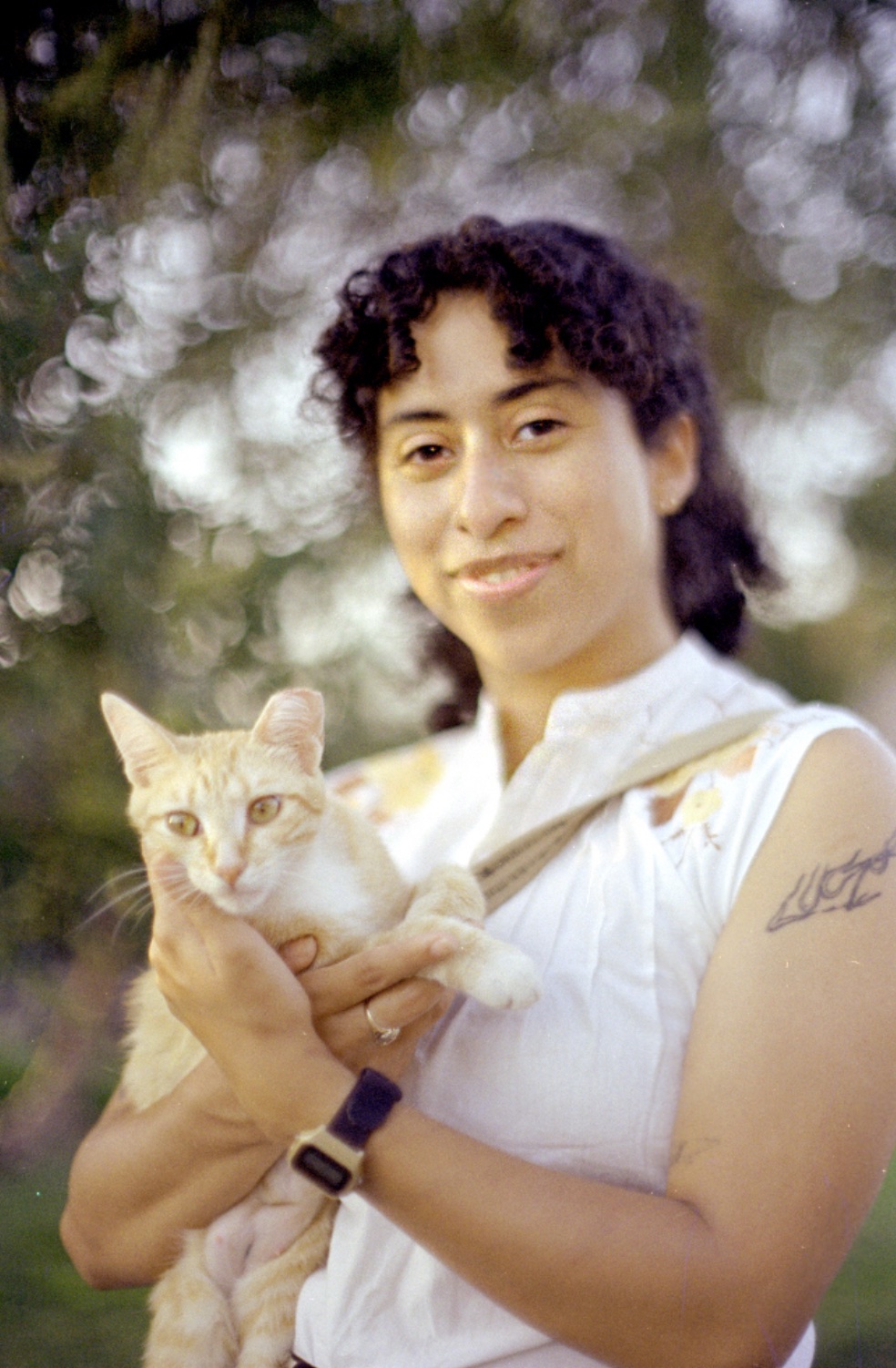
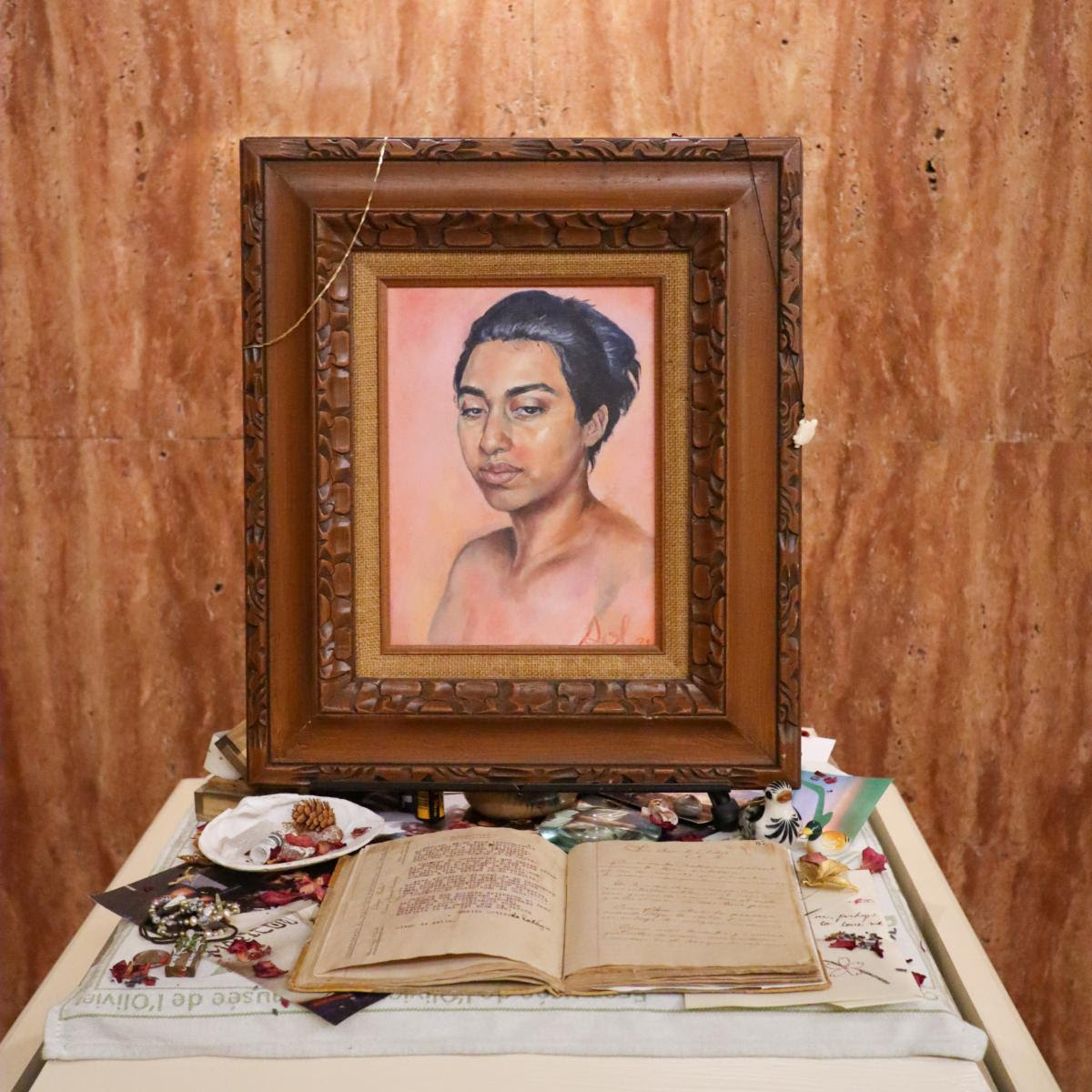
Sol Diaz is a Houston-based visual artist who graduated from the University of Houston – Downtown in 2021. They have exhibited their work at notable venues throughout the city, including Box 13 ArtSpace, HCC’s Wedgespace, Houston City Hall with the Mayor’s Office of Cultural Affairs, Project Row Houses, and Sawyer Yards. They are the recipient of the Summer Studios Residency with Project Row Houses, The Idea Fund Grant with DiverseWorks, and are featured in a collaborative publication by Mujeres Malas and Fifth Wheel Press. In their work, Mx. Diaz explores personal narratives, history, and the poetic relationship between nature and man. Guided by this inspiration, and working from their own relationship to colonization as a first-generation queer person, Mr. Diaz crafts an animist vision of growth in marginal spaces. Their work stands on its own as a quiet, spiritual, and radical act.

Ayanna Jolivet Mccloud views her creative practice and environmental advocacy as forms of stewardship. She creates art about the environment in relation to the African diaspora and examines broader themes around memory, geography, spatial studies, and materiality. Ms. Mccloud has rooted her practice in the Americas, participating in exhibitions and residencies in the U.S., Caribbean, and Latin America. Working at the intersection of advocacy, narrative change, and creativity, Ms. Mccloud develops frameworks for new ways of imagining and advocating for water, nature, and people in greater Houston through the lens of climate resilience and environmental justice. In her leadership at Bayou City Waterkeeper, Ms. Mccloud advances a collaborative vision for water justice in greater Houston through wetland protection, urban water management, flood mitigation, and water quality. Ms. Mccloud is a fourth-generation artist and native Houstonian and is inspired by the people, culture, ecology, and the seemingly banality of Houston and the Gulf Coast.

The Metropolitan Museum of Art Announces Lineup of Summer and Fall 2023 Exhibitions and Programs

The Metropolitan Museum of Art Announces Lineup of Summer and Fall 2023 Exhibitions and Programs

Highlights include a historic exhibition of works by Édouard Manet and Edgar Degas, new contemporary commissions by Nairy Baghramian and Jacolby Satterwhite, and a major exhibition examining the artistic contributions of north and east Africa to the Byzantine Empire

New York (June 8, 2023) —The Metropolitan Museum of Art announced today its upcoming summer and fall exhibitions along with new live arts performances and summer initiatives, including the return of the bike valet program, ongoing date night offerings, and more.

“The stories we tell at The Metropolitan Museum of Art are ever expanding,” said Max Hollein, Marina Kellen French Director of The Met. “Through groundbreaking exhibitions, compelling displays, and powerful performances and programs, this upcoming season is sure to delight, inspire, and engage audiences from near and far.”

Highlights of The Met’s summer exhibitions include: Grounded in Clay: The Spirit of Pueblo Pottery (opening July 14), a presentation of Pueblo Indian pottery and the first community-curated Native American exhibition in the history of The Met; Tree & Serpent: Early Buddhist Art in India, 200 BCE–400 CE (opening July 21), featuring never before publicly exhibited masterpieces that trace the aesthetic impact of the religion on Indian art; Art for the Millions: American Culture and Politics in the 1930s (opening September 7), surveying how artists searched for cultural identity during a decade of political and social upheaval in the United States; The Facade Commission: Nairy Baghramian, Scratching the Back (opening September 7), the fourth in a series of contemporary commissions for The Met’s facade and the artist’s first public installation in New York City; and Picasso: A Cubist Commission in Brooklyn (opening September 14), a focused exhibition dedicated to a captivating, but lesser-known chapter of the artist’s Cubist period. It will bring together for the first time six paintings linked to Picasso’s unrealized decorative commission for the Brooklyn residence of artist, collector, and critic Hamilton Easter Field (1873–1922).

Fall season highlights include: Manet/Degas (opening September 24), the first major exhibition examining one of the most significant artistic dialogues in the genesis of modern art; The Great Hall Commission: Jacolby Satterwhite, A Metta Prayer (opening October 2) an immersive multi-channel video installation and a series of performances that will transform the Museum’s iconic Great Hall; Vertigo of Color: Matisse, Derain, and the Origins of Fauvism (opening October 13), exploring how the artists manipulated and experimented with color to create a new artistic vocabulary; Proof: Maxime Du Camp’s Photographs of the Eastern Mediterranean (opening October 23), the first exhibition to focus on The Met’s rare collection of photographs made by Du Camp in advance of his landmark 1852 book, Egypte, Nubie, Palestine et Syrie; and LineagesKorean Art at The Met (opening November 7), which will celebrate the 25th anniversary of the Museum’s Arts of Korea gallery with a collection of works tracing the history of Korean art.

Additionally, Africa & Byzantium (opening November 19), a major exhibition of nearly 200 works that explores the tradition of Byzantine art and culture in Africa from the 4th through the 15th century and beyond, will be presented at The Met Fifth Avenue through March 3, 2024, and feature many international loans being exhibited in the United States for the first time.

On November 20, 45 galleries dedicated to European Paintings, 1300–1800 will reopen, following the completion of an extensive skylights renovation project that began in 2018. The major reinstallation will highlight fresh narratives and dialogues among more than 700 works of art from the Museum’s world-famous holdings.

The 2023–24 season of MetLiveArts will include music, dance, and theatricalized culinary experiences that will invite deeper connections and make powerful observations about relevant cultural narratives as well as the Museum itself.

Upcoming public programs include Short Films for Short Nights, screenings of early video art accompanied by live music (July 7-9); the grand opening of the 81st Street Studio, a new children’s library and multipurpose active learning center (opening September 9); and the return of MetFest, the Museum’s community-wide block party (October 21).

The Museum also announced a continuing tradition of the summer season: the return of its popular bike valet program, which will be offered on Saturdays, Sundays, and select holidays through Labor Day (September 4). Guests visiting the Museum, regardless of transportation method, have the opportunity to experience The Met’s current blockbuster exhibition program, including Karl Lagerfeld: A Line of Beauty (through July 16), with extended viewing hours until 9 p.m. on Sundays, and Van Gogh’s Cypresses (through August 27).

###

Contact:
Communications@metmuseum.org

Omaha Summer Arts Festival kicks off for another season at Aksarben Village

Omaha Summer Arts Festival kicks off for another season at Aksarben Village

OMAHA, Neb. (WOWT) – A treasured tradition in Omaha is back. The Omaha Summer Arts Festival kicked off at Aksarben Village Friday.

Tiffany Pearson of Omaha is no newcomer.

“I just always loved coming out and seeing all the wonderful art. I just always had a dream of being able to be a part of it,” she said.

That dream never changed, not even after Pearson suffered a spinal cord injury in a crash six years ago, which left her with limited mobility.

“I’ve definitely had to learn how to adapt,” she said.

Now she has her own booth at the festival.

“Like a dream come true,” she said.

Pearson is with Art-Able, a showcase for work by artists who are physically and/or intellectually challenged. Art-Able is one of many new partners with the Omaha Summer Arts Festival this year aimed at promoting diversity, equity, and inclusion.

“This is definitely something that a lot of organizations have been looking at the past couple of years and we’re no different,” said Maggie Wilson, the festival’s marketing coordinator. “We want to make sure that we’re including all artists in Omaha of all abilities, races, all talents.”

Artist Sedra D. with D’Colores combines workshops, performances, and a mobile art gallery all inside an old school bus.

“I feel honored because I feel I can bring different people to check out this,” he said.

The Omaha Summer Arts Festival runs through Sunday, June 11th.