Library exhibits photography and painting duo

Library exhibits photography and painting duo

The Camp Verde Community Library is featuring a new exhibit, “Double Take,” showcasing the collaborative art of husband and wife team Larry and Debbie Gallagher. 

The show consists of nature and landscape photographs taken by Larry paired with acrylic paintings by Debbie that reinterpret the photos and are displayed side by side. 

Debbie said that she always had a love of art and won her first art contest in the third grade. She studied fine arts at the University of Portland and later became a teacher. She painted with oils before turning to watercolor, creating what she called non-traditional portraits and focusing on color. About five years ago, she switched from doing portrait work in watercolor to landscapes in acrylic. 

Larry took up photography around 1980 when he purchased a basic film camera, which he kept using until the 1990s when his work became more time-consuming. He didn’t return to shooting until he retired three years ago and taught himself how to use a digital camera. He mainly photographs landscapes, or small scenes within a landscape. 

“I love being out in the early morning and late afternoon in the blue hours looking at how the world wakes up and goes to sleep,” Larry said.

– Advertisement –

Both of the Gallaghers find inspiration in nature. Larry observed that nature simplifies your life with its calming and centering aspects. “I’m just amazed at nature, the complexity and interrelationships of everything, how they are so delicately balanced and then when they’re thrown out of balance the effects can be pretty dramatic,” he said. 

“We love to camp and hike and Arizona is just so beautiful,” Debbie said. “I started using Larry’s photographs for resource information and that’s kind of how we started doing our collaborative work together.” 

While for some, creating art is a solitary endeavor, the Gallaghers have been exploring a more collaborative process. Debbie had done collaborative art before with another artist, passing a painting back and forth with each of them taking turns adding to it. 

“With that kind of collaborative art you have to have a lot of trust and have to be able to really let it go,” Debbie said. “It was very powerful.” 

While Larry photographs an area, Debbie will sketch or paint plein air. Later, she will look through Larry’s photographs and choose one to reinterpret with her own palette and in her own style. He gives her the photos in black and white, as she does not want to be influenced by their colors. 

“It’s important in that process of having that level of trust in the person and for me to say to Debbie, I don’t care what you do with the photograph I give you,” Larry said. “I’m really just waiting to see what interesting, colorful and unique ways you can create some derivative piece of art from it. The photographer has to completely release their preconceptions of what would be done with it and say, I can’t wait to see what you do with it.” 

The Gallaghers feel that this collaborative form of art and trust has strengthened their relationship even more. 

“I do think it brings us closer,” Larry said. “We have a similar interest and so that makes the time for us to be together to do things, but also that exchange of information builds trust, not that we didn’t have it to begin with, but it’s just another layer of it.” 

The Gallaghers moved to Camp Verde in 2003 and recognized the importance of meeting other artists. Debbie joined a group of fellow painters, feeling that meeting other artists broadens your perspective and encourages you to keep painting as well as to experiment. Both Debbie and Larry are members of El Valle Artists Association, which brings together artists in the Verde Valley. 

On the photography side, Larry said, “Get out and experiment. Don’t wait till you feel like you’ve learned everything. Get out there and start learning by doing it.” He facilitates the Verde Valley Photographic Society, which meets monthly at the Camp Verde Community Library. He stressed the importance of being able to talk to other photographers and to see their work, of learning from and being inspired by others with a similar passion. 

“It gets you that connection to other people who like doing what you do, and you both get better by doing that together,” Larry said. 

Indigenous Australian art bridges ancient and modern worlds in Paris exhibition

Indigenous Australian art bridges ancient and modern worlds in Paris exhibition

Indigenous communities around the world are faced with the challenge of preserving and transferring ancestral knowledge. A new exhibition at the Quai Branly Museum in Paris is an example of how indigenous Australian elders are finding innovative ways to protect the bridge between ancient and modern worlds.

Dalisa Pigram, a dancer and co-artistic director of the contemporary Australian dance company Marrugeku, has been invited to present a series of recitals as part of the “Songlines: Tracking the Seven Sisters” exhibition.

Her piece “Gudirr Gudirr” takes its name from the warning cry of the guwayi shorebird from Western Australia.

“Watch out,” it cries. “The tide is coming in, you might drown!” It could be interpreted as a universal alarm bell for society in general, but in particular for young indigenous people.

Pigram, who belongs to the Yawuru/Bardi people of Western Australia, created “Gudirr Gudirr” with the Belgian choreographer Koen Augustijnen ten years ago. It was a way to address the past and the present with all their contradictions, pain, anger, frustration and joy.

Using dance, video, music and text, Pigram explores the fallout of colonialism and the trauma of younger generations, lost between cultures. She broaches the topic of young people fighting each other for kicks, and the record high child suicides in the Kimberley region of Western Australia.

Even after several world tours, the urgency of the message has not changed.

The movements are robotic, hypnotic, blending martial arts with aerial acrobatics. The music is modern, punchy rock, sometimes with lyrics in Pigram’s native tongue.

She whirls around the stage using a fishing net suspended from the ceiling. It is an important symbol, representing both friend and foe. While it is a tool for survival to find food, it is also a trap.

“Dalisa told me a lot of stories,” Augustijnen told RFI, referring to their chance encounter many years ago. “Then she asked me to give her some ‘tasks’ or themes to prepare for the dance. This was new way of working for me.”

The cross-cultural partnership has enriched both their experiences on and off the stage, with Augustijnen hailing the recital’s ability to recount important historical events from a physical perspective.

“Our truth-telling hasn’t begun yet, telling both sides of the historical story,” Pigram told RFI after her performance on Thursday, adding she was thrilled to be part of the “Songlines” exhibition.

“The youth are still struggling with their place in the world and their connection to culture, their connection to who they are. Also the country is at risk every single day with the different policies, mining and loss of language, loss of elders and all of that. In the last ten years, nothing has changed,” she laments.

Decolonising minds

Born in the pearl industry town of Broome, Pigram recognises the wealth of her own mixed Asian and indigenous cultural heritage, and her attachment to the stories and traditions passed down from her elders.

“I can see people [in the audience] processing it. They ask me, ‘how did you manage to say all those hard things in a dance?’ They are surprised that dance and theatre has the ability to address complex issues.”

She says her piece poses questions: “How can we decolonise indigenous minds? Can the past hold keys to the future? And who will pass on that knowledge?”

This question of transfer is raised in the rest of the “Songlines” exhibition.

Passed down through the generations for thousands of years, these oral guidelines continue to provide a spiritual and practical map for the people of today.

They explain moral principles, rules of society, how to care for nature, and essential knowledge for survival in the desert.

The Quai Branly exhibition introduces one of the major pillars of the First Australians’ creation legends, known as the Seven Sisters songline.

An evil sorcerer is threatening the lives of seven sisters, who flee into the desert. Pursued relentlessly through what may seem an inhospitable environment, the women learn to survive thanks to their knowledge of the terrain and of nature, guided by the songlines. 

Their story, presented visually, takes place across three of the continent’s vast central and western deserts and provides the backbone of the exhibition.

Fragmented knowledge

The museum has gone to great lengths to present a fully immersive experience with nearly 200 works, including 20 multimedia pieces, on display in partnership with the National Museum of Australia.

Curator Margo Neale says that the process of gathering material began in 2010, with the close collaboration with a group of elders from the Aṉangu Pitjantjatjara Yankunytjatjara lands in central Australia and the Ngaanyatjarra and Martu in the West.

They expressed concern that many of their descendants no longer have a meaningful connection to their ancestral lands, nor do they have access to the language. The project provided a vehicle to preserve this fragmented knowledge before it was too late.

Recognising the fact that the digital age has changed the way people consume culture and knowledge, there has been a push to make the presentation as interactive as possible.

By following the lines on the ground of the gallery, visitors can listen to the songs and testimonies of the Aboriginal artists and elders as if they were standing there in person. The videos are part of what Neale calls “a living library”, assuring that the elders’ knowledge does not die out with them.

“They said to themselves that they too had to record their knowledge in digital form if they wanted to maintain a link with the younger generations,” she writes in the exhibition notes.

‘Everything is alive’

The landscape is described in extraordinary colourful dots, lines, shapes and patterns, all holding their own significance. Each artist has the responsibility to recount the legend, leaning on the ancestral knowledge passed down to them.

“For Aboriginal peoples,” Neale explains, “country is a multidimensional concept that includes everything. There is no distinction between animate and inanimate worlds.

“Everything is alive, everything has its place: people, animals, plants, earth, water and air.”

“Songlines: Tracking the Seven Sisters” is at the Quai Branly Museum in Paris until 2 July

Virginia Commonwealth University presents 10 interior and design projects

Virginia Commonwealth University presents 10 interior and design projects
Dezeen School Shows: a printmaking project exploring the artist’s Qatari heritage and a multi-sensory flower installation are included in Dezeen’s latest school show by students at Virginia Commonwealth University School of the Arts in Qatar. Also included is a design for a future city informed by traditional housing and an interactive library that immerses young The post Virginia Commonwealth University presents 10 interior and design projects…

Swedish museum displays first-ever Al sculpture influenced by Michelangelo

Swedish museum displays first-ever Al sculpture influenced by Michelangelo
A sculpture known as “the Impossible Statue” is currently on display at a Swedish museum thanks to the training of artificial intelligence (AI) by a historical dream team of five famous sculptors, including Michelangelo, Rodin, and Takamura.

“This is a true statue created by five different masters that would never have been able to collaborate in real life,” said Pauliina Lunde, a spokeswoman for Swedish machine engineering group Sandvik that used three AI software programmes to create the artwork.

Construction begins on a new home for Portland’s Artists Repertory Theatre

Construction begins on a new home for Portland’s Artists Repertory Theatre
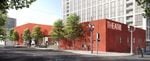
A rendering of the exterior of Artists Repertory Theatre's new building. The building will serve as ART's new home beginning 2024.

A rendering of the exterior of Artists Repertory Theatre’s new building. The building will serve as ART’s new home beginning 2024.

Courtesy LEVER Architecture

Since its founding in 1982, performing arts company Artists Repertory Theatre has played a big part in highlighting theatrical productions by artists from underrepresented communities, such as Larissa FastHorse and her current Broadway hit “The Thanksgiving Play” and Hansol Jung’s “Wolf Play.”

THANKS TO OUR SPONSOR:

But over the last few years, due to construction delays caused by the COVID-19 pandemic, ART hasn’t had a home base to showcase the company’s work.

That’s all about to change.

Officials at ART announced in April that the company moved into the second phase of a $30 million building project that will house all of its future productions.

Through a rigorous funding campaign, ART Executive Director J.S. May said they raised $24.5 million as of April.

Construction crews broke ground for the project in 2019 at 1515 SW Morrison Street, just a few blocks from Providence Park.

As part of the first phase, crews tore down the Alder Street side of the old building to make way for the 21-story Alta ART Tower. They also reinforced the Morrison Street side of the building, stripped the interior and added seismic safety-upgrades.

Phase two currently consists of constructing a new lobby, which will initially serve as the performance space, and two additional theaters including a 178-seat main stage and 99-seat studio theater.

The inside of the lobby area of Artists Repertory Theatre's new building under construction. ART is in the middle of constructing a brand new building to house their future performances.

The inside of the lobby area of Artists Repertory Theatre’s new building under construction. ART is in the middle of constructing a brand new building to house their future performances.

Courtesy Howard S Wright Construction

Since 1997, ART has operated out of the same building on SW Morrison Street and bought the entire block from 15th to 16th avenues in 2004. But years of wear and tear finally caught up to the building, including leaky roofs and walls that were not up to seismic standards.

In 2018, ART received an anonymous donation of $7.5 million to do what they wished.

ART used the money to pay off the company’s debts and started planning for the new building.

THANKS TO OUR SPONSOR:

ART at the time was real estate rich, but cash poor, May said. So in 2019, they sold the north half of the block to development firm Wood Partners, who built Alta ART Tower.

“And that became the lead investment for redoing our half of the building,” May said.

May said he’s excited about finally having a building that meets the high standards of the productions ART has been known to have.

“ART has both a local and a national reputation of doing really high quality work that impacts the theater, and our building hasn’t supported that kind of process,” May said. “So this gives us the opportunity to have a facility that at least aspires to be as good as the work.”

Jeanette Harrison joined ART in 2022 as its first Indigenous Artistic Director and echoes May’s enthusiasm for a new building.

“I think our artists are just really feeling the hurt of isolation for so long. It’s been hard and it’s been exhausting and arts leaders are exhausted. Portland is really a first class art city, and this building is going to help us knit our community back together again,” she said.

While the new building is being constructed, ART is still putting on productions for the upcoming season.

Harrison said that ART will continue to put on productions through partnerships with other theater companies like Portland Center Stage and the University of Portland.

“One of the great things for Artists Rep from this partnership is not just the intergenerational theatre making, but also the fact that University of Portland is opening up some of their resources to us,” she said.

The 2023-24 season opens with the play “Pueblo Revolt” by Indigenous playwright Dillon Chitto. The comedy play follows two Indigenous brothers who live in 1860 New Mexico and plan a revolt against their Spanish colonizers. The play runs from Sept. 18 to Oct. 15.

“It is going to be performed and produced in partnership with the Native Arts and Cultures Foundation. So that play will be performing in what used to be the Yale Union Building,” Harrison said.

Harrison admits that navigating both the construction of the new building and the new season has been a challenge, but she relishes the opportunity to showcase new productions in interesting ways.

“We’re gonna go out into the community and we’re gonna be producing work all over Portland in the hopes that we’ll be building our audience back, and then we’ll be able to invite people to come back into our building and into our neighborhood when we’re ready,” she said.

May hopes the new building will inspire people to come back to ART and enjoy their new offerings of productions that challenge how we view the world.

“Creativity is a fundamental human impulse that helps define who we are,” he said. “What we want is for people to come to this building and get insight into what’s going on in the planet and how they can personally understand it better.”

THANKS TO OUR SPONSOR:

Essential Highlights Of International Women Artists’ Art Week

Essential Highlights Of International Women Artists’ Art Week

For one week every June, art galleries and institutions around the world commit to showing only female artists, with many offering special talks and events. Women Artists’ Art Week (WAAW) was co-founded in 2022 in London by artist Annya Sand and art patron Catherine Hunt as a not for profit initiative to encourage the art industry to be more inclusive towards female artists and to address the imbalance of representation of female artists. From London, the annual event has gathered momentum, showing there is clearly a need for an annual event to highlight female artists.

ADVERTISEMENT

This year’s event runs until 15 June, with 44 galleries in the U.K involved. WAAW has expanded quickly since launching and this year, seven overseas galleries are participating including the Rangi Gallery in Tanzania, the Leila Heller Gallery in the USA, three galleries in China, one in Uzbekistan and one in Singapore. A map on the WAAW website shows artlovers all of this year’s participating galleries and their exhibitions and events. It’s also useful for women artists to see which galleries are perhaps more encouraging of women artists.

Among the highlights of the female art shows this week in London is a tour on 14 June at 5pm of the Victoria & Albert Museum’s new Parasol Foundation for Women in Photography. The new gallery emphasises the museum’s commitment to supporting female practitioners and championing contemporary photography, through a dynamic series of events and exhibitions.

ADVERTISEMENT

Bowman Sculpture and Guerin Projects is presenting The Power of She – A Tribute to Women in the Arts (until 24 June), a group exhibition featuring 15 of the most important 18th and 19th century, Modern and Contemporary women artists. including: Camille Claudel, Elizabeth Frink and Barbara Hepworth, juxtaposed with leading contemporary artists Emily Young, Lily Lewis and Pauline Amos. A highlight is works by 19th-century artist Camille Claudel, who, while until recently was perhaps best known for her tragic love affair with Rodin, now has her own museum, the Camille Claudel Museum in Nogent-sur- Seine. Claudel is shown alongside one of the most striking pieces in the show, a beautiful sculpture by Emily Young, The Skies Daughter, carved from a piece of Lapis Lazuli mined in a high mountainous region of North Eastern Afghanistan. As a special event during the exhibition, at 4 pm on Monday 12 June, Prima Ballerina of the English National Ballet, Natascha Mair will perform The Dying Swan, accompanied by Austrian violinist and composer Yuri Revich, as well as a talk by New York gallerist, Hong Gyu Shin, on Carla Prina and Else-Fischer-Hansen, two 20th-century female artists, whose works feature in the exhibition.

ADVERTISEMENT

Another fantastic exhibition during WAAW is Tangle Teaser by Sarabande Foundation, established by Lee Alexander McQueen. The exhibition at the north London gallery, explores how artists use hair to examine themes of lineage, conditions, tradition, gender, sexuality, politics and liberation. Artists in the exhibition work in a variety of media including photography, sculpture, textiles, painting and performance.

JD Malat Gallery have an Artist Q&A 10 June, at 3pm by French-Vietnamese artist Sophie-Yen Bretez and the Gallery Director about Sophie’s painting show Powerful, despite it all (until 8 July 2023). The artist’s vibrant surrealist paintings elicit questions on self-expression and the social conformities imposed on women.

ADVERTISEMENT

Further afield, Leila Heller gallery in Dubai is showing Beirut based multimedia artist Katya A.Traboulsi’s solo show Perpetual Identities until 1 September. Katya’s show is based on the empty sleeve of a mortar shell that she received for her birthday in 1975. The object, which had blindly sown death where it fell, ended up in her room, raised to the status of a trophy celebrating the courage of fighters or the defeat of enemies. Her later reflections on the mortar shell inspired an installation project Perpetual Identities which sought to divert the weapon from its morbid destiny and make it serve Life. Forty six shells are on display from different countries, each one handmade, using different materials, including ceramics, porcelain, resin, wood, and iron. Each is titled with a country’s name; most are produced by their native artisans. The shell becomes like a ‘book’, an inventory of myths and traditions. The many cultures and societies involved in the project enrich the object with seemingly infinite meanings.

WAAW World has set its sights on helping the public to see and appreciate the art created by female artists that we have been missing for centuries. They’re also keen to show commercial galleries the talent of female artists and their commercial potential.

‘Kinship: Photography and Connection’ Review: Camera Convergences

‘Kinship: Photography and Connection’ Review: Camera Convergences

‘The Necklace’ (1999) by Alessandra Sanguinetti

Photo: Alessandra Sanguinetti

San Francisco

The “Kinship: Photography and Connection” exhibition at the San Francisco Museum of Modern Art was conceived and organized by the curator and head of photography at SFMoMA,

Erin O’Toole.
Her notion was that after three years of pandemic-enforced isolation and other social traumas, it would be interesting—maybe even therapeutic—to show photographs that illustrated connection; she said she intended the definition of “kinship” to be “purposefully broad.” Ms. O’Toole selected California photographers

Deanna Templeton,

Alessandra Sanguinetti,

Paul Mpagi Sepuya
and Mercedes Dorame, as well as

Jarod Lew,
who lives in New Haven, Conn., and New York-based

Farah Al Qasimi.
Each was given a separate space in which to exhibit work from a single project.

Kinship: Photography and Connection

San Francisco Museum of Modern Art, through Nov. 26

The most obvious definition of “kinship” refers to family ties. And the first space one enters is occupied by Ms. Sanguinetti’s “The Adventures of Guille and Belinda and the Enigmatic Meaning of Their Dreams,” 14 pictures from a project she began over 20 years ago documenting the relationship between two cousins and the place where they live in rural Argentina. The earliest of the chromogenic images, “Shepherds” from 1998, shows the two young girls standing side-by-side on an extensive grassy plain with a single sheep; one of the cousins is slender and one is chubby. The physical difference is more apparent in “The Necklace” (1999), where the heavier child is examining a necklace worn by her slimmer cousin. But the series demonstrates their continuing affection for each other—startlingly in “Ophelias” (2002), where they float side-by-side in a body of water, each holding flowers. Later pictures show pregnancy and a baby.

‘Abalone Congregation’ from the series ‘Everywhere is West’ (2022) by Mercedes Dorame

Photo: Mercedes Dorame

Ms. O’Toole said she wanted “Kinship” to show “affection and affinity,” and the definition is stretched furthest in the work of Mercedes Dorame. She is an indigenous American of Gabrielino-Tongva heritage, and her project “Everywhere Is West” involves pictures of the tidal spaces in the Channel Islands off the California coast; there are no people in any of her 14 inkjet prints (all from 2022), but pictures like “I Will Come From the Ocean – Moomvene Kimaaro,” an image of abalone clinging to a rock emerging from the water, help her establish a feeling of kinship with her ancestors who inhabited the area. Some pictures, such as “Algae Portal – Shooxar Tukuupar,” are close-ups approaching abstraction in their attention to color and texture; those like “Asphaltum Seeps – Shaanat Chuuynok’e,” all shiny black and green, feature substances of importance to the tribe’s rituals and its material culture.

‘Welcome Home (Elina and Amelia)’ (2021) by Jarod Lew

Photo: Jarod Lew

Jarod Lew is Chinese-American; when he learned that in 1982 his mother’s fiancé had been murdered by anti-Asian toughs, he began exploring the experiences of young Asian-Americans living in the suburbs and their relationships to the two cultures of their identity. “Please Take Off Your Shoes” is the title of Mr. Lew’s project and of his 2021 inkjet picture showing several dozen pairs of neatly arranged footwear outside the door leading from a garage into a house; prints of two robed Chinese children and a bright red medallion are on the door. The girls in “Welcome Home (Elina and Amelia)” (2021) sit at a table on which rests a whole roasted pig; one wears a T-shirt with “Kalahari” printed on it, presumably the resort chain, and on the wall above them are a commercial “Welcome Home” banner, two inflated party balloons and a smiley-face. Homer Simpson and Asian writing are printed on the T-shirt “Gracie” (2019) wears; she also has on a face mask of some white material and a yellow rubber-ducky cap.

‘Alexa and Briana, Huntington Beach, California’ (2014) by Deanna Templeton

Photo: Deanna Templeton

The 13-foot walls of the six exhibition spaces are each painted a color appropriate to its contents, but the white walls of Deanna Templeton’s “What She Said” project also have a 4-foot pink stripe around the middle. Printed excerpts from the diary she kept during her troubled teenage years are interspersed among her 32 informal portraits of teenage girls. “Jaclyn, Death Metal, Huntington Beach, California” (2017), “Amanda, The Clash, Santa Ana, California” (2018) and others wear the T-shirts of the music with which they identify. Some girls—as in “Shay, Safety pin in nose, Newport Beach, California” (2020), “Writing on forehead, Helsinki, Finland” (2004) and “Scars from cutting, Huntington Beach, California” (2013)—mark their bodies. Ms. Templeton feels a sense of kinship with their struggles.

‘Snail’ (2022) by Farah Al Qasimi

Photo: Farah Al Qasimi

Farah Al Qasimi and Paul Mpagi Sepuya conclude Ms. O’Toole’s half-dozen artists. Ms. Al Qasimi was born in Abu Dhabi and returns there frequently; she photographs people and animals as the relationship between them shifts in the rapidly developing region. An arched foot with red toenails stands near the dead “Locust in Salt Flat” (2022). “Figure (0X5A0918)” and “Drop Scene (0X5A9306)” (both 2019) are two images in which Mr. Sepuya, black and queer, photographed naked men; their faces are mostly hidden and a camera in the foreground points toward the viewer.

Artisans at The Art Garage

Artisans at The Art Garage

By Janelle Fisher

City Pages Editor

Nearly a year ago, the third cohort of artists began their journey through the NWTC Artisan and Business Center’s Artisan Residency Program. Now, they’re completing the final piece of the program — an exhibition of their work at The Art Garage.

This year’s cohort of artists began their journeys in the Artisan Residency Program at the end of last summer, and over the past year have gotten a crash course in what it takes to run an art-based business.

“We start with them at the end of the summer and we bring in a bunch of different mentors,” Carrie Dorski, Artisan Center operations coordinator, said. “They cover everything from goal setting, setting up your studio, marketing, branding, websites, actually starting your business, paying taxes, all of that stuff. They spend the whole year doing that while they’re also making art and figuring out what their business looks like.”

The culminating experience for artists in the Artisan Residency Program before they venture out into the world as art entrepreneurs is a showcase exhibit at The Art Garage.

“As we move through the year, we tackle all of those topics, and then it culminates in this exhibit here,” Dorski said.

See the captions below to learn more about each artist from this year’s cohort and what they’ve been working on during their year in the Artisan Residency Program.

Applications to be a part of the Artisan Residency Program’s next cohort are still open, but only through this Sunday, June 11. To learn more about the program and to apply to be a part of it, visit nwtc.edu/about-nwtc/nwtc-locations/artisan-and-business-center/artisan-residency-program.

The Legacy of Menhat Helmy: An Egyptian Pioneer of Graphics and Printmaking

The Legacy of Menhat Helmy: An Egyptian Pioneer of Graphics and Printmaking
Through careful brushstrokes and delicate handwork, Menhat Helmy created a world of art that is distinguished and everlasting. With paintings steeped in color and wonder, Helmy was a pioneer whose talent and influence continue to reverberate through the artistic industry today. Helmy was born in 1925 in Helwan to a family of nine siblings. At