Artist Austin Brantley returns to Madison to create a sculpture for Madison’s Darbo-Worthington Neighborhood

Artist Austin Brantley returns to Madison to create a sculpture for Madison’s Darbo-Worthington Neighborhood
Madison, WI – In an exciting collaboration between the Madison Arts Commission and Madison College, artist Austen Brantley has returned to Madison to begin designing a commissioned sculpture. The self-taught Detroit artist known for his evocative figurative sculptures is set to create a unique public art piece for the residents of Madison’s Darbo-Worthington neighborhood.

The Creative Advantage to Receive $100,000 Grant

The Creative Advantage to Receive $100,000 Grant

The Creative Advantage to Receive $100,000 Grant

The National Endowment for the Arts (NEA) announced a $100,000 grant for arts education will go to support the expansion of The Creative Advantage in Seattle Public Schools. 

“The National Endowment for the Arts is pleased to support a wide range of projects, demonstrating the many ways the arts enrich our lives and contribute to healthy and thriving communities,” said NEA Chair Maria Rosario Jackson, PhD. “These organizations play an important role in advancing the creative vitality of our nation and helping to ensure that all people can benefit from arts, culture, and design.” 

The Creative Advantage is a citywide initiative to establish equitable access to arts learning for every SPS student. It is a coordinated network that includes SPS, the Seattle Office of Arts & Culture, Seattle Foundation, and more than 100 community-based arts partners. 

“We’ve received this grant for eight consecutive years, which is incredible,” said Gail Sehlhorst, SPS program manager for Visual & Performance Arts. “It’s been foundational in realizing equitable access to arts education across the district through culturally relevant teaching, certificated teachers, arts partnerships, arts integration, and career connected learning.” 

Organizations will carry out arts projects in three NEA funding categories: Grants for Arts Projects, Our Town, and State and Regional Partnerships.  

The Creative Advantage received funding through the Grants for Arts Projects category, which will allow for the engagement in outdoor arts programming, artist residencies, and public programs by Indigenous Creatives Collective. It is comprised of works by resident Indigenous artists knowledgeable about Native ecological systems. Multidisciplinary arts programming will include an exhibition and other public arts events hosted on the organization’s wooded property in South Seattle. 

Since the implementation of The Creative Advantage, Seattle Public Schools has doubled the number of elementary music and visual art programs and is now in 89 of the district’s 106 schools. The team is developing more opportunities to connect arts to career for secondary students through Media Arts Skills Center courses offered in the summer and during the school year. 

Learn more about The Creative Advantage.

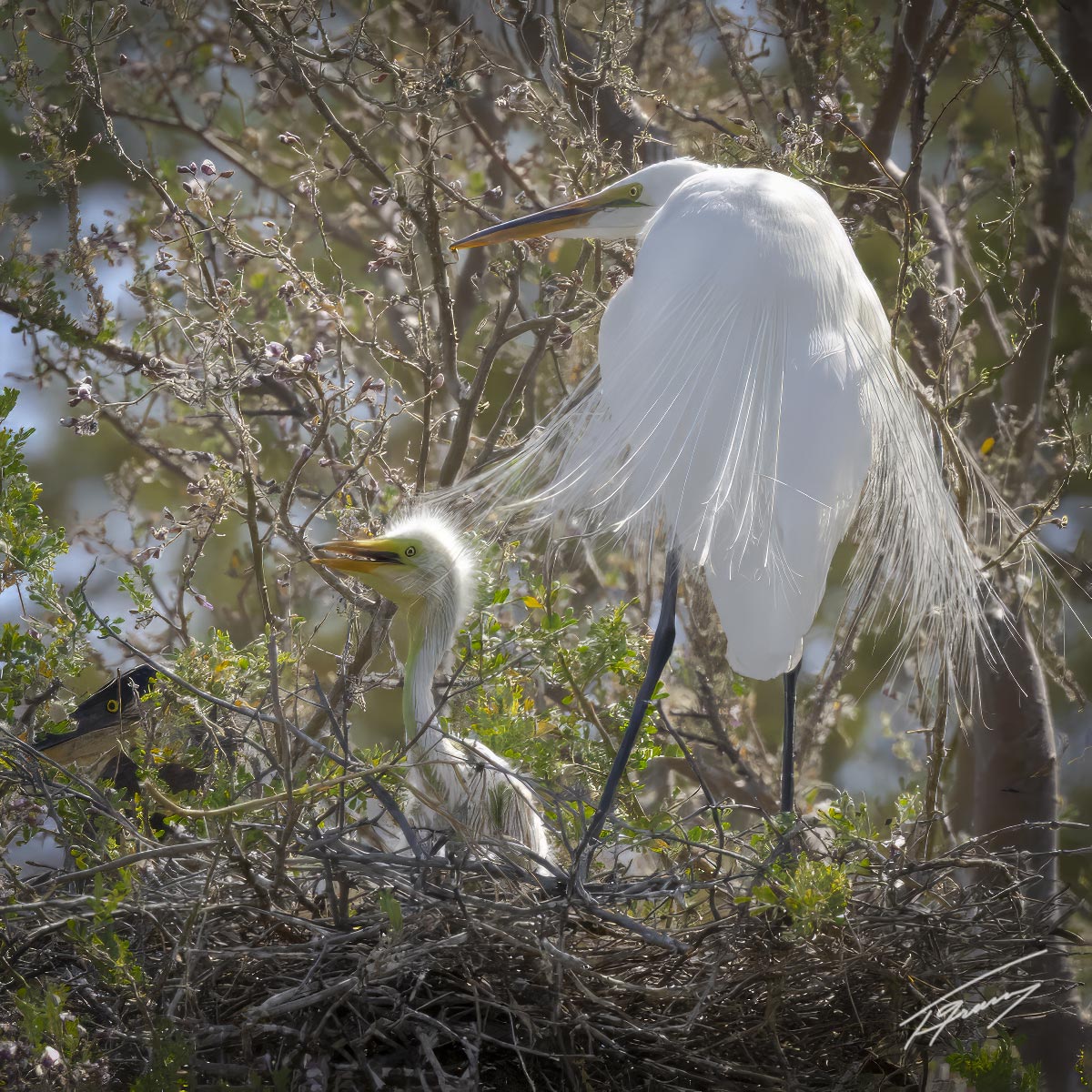
Today’s Photo from Ted Grussing Photography: Time With The Kids

Today’s Photo from Ted Grussing Photography: Time With The Kids

… a lesson in things that are important affirmed by what we experienced on the lake this morning … family! As new life continues to brought into existence, let’s do what we can to make it a blessing … responsibilities and wonder … an unlimited future and a gaze into the unknown days ahead.

Shooting the red tail hawk family in a little while … have a beautiful day and make choices that will bring a smile into your soul!

Keep breathing!

Ted

Let me not follow the clamor of
the world, but walk calmly
in my path. Give me a few friends who will love me for what
I am; and keep ever burning
before my vagrant steps
the kindly light of hope.

excerpt from A Prayer by Max Ehrmann

###

photo_tedgrussingThe easiest way to reach Mr. Grussing is by email: ted@tedgrussing.com

In addition to sales of photographs already taken Ted does special shoots for patrons on request and also does air-to-air photography for those who want photographs of their airplanes in flight. All special photographic sessions are billed on an hourly basis.

Ted also does one-on-one workshops for those interested in learning the techniques he uses.  By special arrangement Ted will do one-on-one aerial photography workshops which will include actual photo sessions in the air.

More about Ted Grussing


Healing Paws

Healing Paws

This is an advertisement

Behind the Lens: Male Idols Revealing their Passion for Photography

Behind the Lens: Male Idols Revealing their Passion for Photography
image

K-Pop idols are renowned for their remarkable versatility, excelling not only in singing, dancing, and rapping but also often showcasing talents that go beyond these expected areas. It’s particularly delightful to discover idols who harbor a deep passion for photography and demonstrate remarkable prowess in this artistic field. They beautifully capture a range of subjects, from intriguing portraits to candid shots of people, creating a visual feast that leaves their fans awestruck.

Check out some of our photographers and the art they share!

Stray Kids Hyunjin

Hyunjin is known to be the group’s artistic member. He’s not only the group’s main dancer and painter but also a photographer! He would always take us on his beautiful journeys when he travels by sharing the beautiful photos he takes! He also often takes photos as inspirations for his paintings.

NU’EST / Wanna One Hwang Minhyun

Our beautiful prince, Hwang Minhyun, is overflowing with talent. As if his honey voice is not enough, he is also artistic when it comes to photography. His main Instagram is for when he is in front of the camera, and his photography Instagram is for when he’s behind it. Both are filled with nothing but beauty!

The Boyz New

image

Whenever New takes photos, he’ll always label it with #NewShot, and it’s honestly fans’ favorites! He took the hashtag to the next level as he gifted fans with a photobook of photos he took of his beloved members! A gift is an understatement, especially with the photos he had.

Infinite L

image

L is not only a genius in singing and acting, but fans call him “the OG photographer” in the idol world. The man literally has published photography books and is always taking photos. He even took photos of his fellow junior idol group, LOVELYZ

WayV Kun

Kun takes excellent photos; he even inspired some fans to take up photography! Not limited to, but Kun is a huge fan of aviation and nature photography. He even has a separate account to share his beautiful art!

WINNER Kang Seungyoon

Kang Seungyoon has been into photography for quite a while now, and if you’re a fan, you would know that he uses the name “Yooyeon” for his photos. He’s still very much active with his photography side. He recently had an exhibition titled “Sky Roof.” 

ATEEZ Hongjoong

image

Hongjoong not only has to be the captain of 7 chaotic members and writes bangers after bangers for his group, he still finds the time to be a fantastic photographer. He also had an exhibition for his photos that fans could attend for free but donated proceeds to a charity. You can check out some of his amazing works

.

VICTON Sejun

Sejun is a total camera fanatic, and it really shows in his work! The photos he took and shares on his photography Instagram truly are remarkable; it’s about time he holds an exhibition as well.

Jerry Uelsmann, The Artist Who Turned Photography Upside Down

Jerry Uelsmann, The Artist Who Turned Photography Upside Down
Untitled (1969) © Estate of Jerry N. Uelsmann
Owl Boy (1959) © Estate of Jerry N. Uelsmann

In the 1960s, if you visited the darkroom at the University of Florida (UFL), you might see students carrying wet prints to show their teacher, Jerry Uelsmann. His classes were exceedingly popular; he allowed students to call him by his first name, and he was known to smoke cigars and occasionally pop popcorn during class. That signature sense of humor and playfulness runs through Moa Petersén’s new book Eighth Day Wonder, a biography of her friend, Jerry Uelsmann, the man who turned the photography world upside down. 

Petersén, an art history scholar who first met Uelsmann in 2016, spent years on the biography. It’s a book about an individual, but it’s also about a singular moment in the history of photography, as more artists challenged the conventions of “straight photography” and experimented in the darkroom.   

By “breaking the rules” established by those who came before him, Uelsmann helped redefine what photography could be. In stark contrast to the purist ideals of the time, his work didn’t capture an external reality but expressed an internal vision. Using multiple enlargers (as many as seven) and countless negatives, he placed images on top of one another to create impossible montages, composed of many layers. 

In the age of Photoshop, it’s easy to take for granted what Jerry Uelsmann did in the darkroom, but as Petersén explains, it was nothing short of revolutionary. The idea that a photograph could be therapeutic and capture the unseen, hidden contours of the human imagination—revealing our memories, fears, and desires—was both thrilling and unsettling. Similarly, the notion that a photograph could be made after the moment when the shutter was released—e.g. in the darkroom—felt liberating. 

At the time, some insisted his work was “not photography.” Uelsmann countered with the simple fact that all his images were made using materials from a photography shop: what could they be, if not photographs? It’s no wonder Uelsmann’s classes filled up quickly, as young photographers embraced that characteristic rebel spirit. 

While Uelsmann’s photographs have recurring motifs—eyes, trees, hands, shells, and nuts among them—our interpretations are highly subjective, as each of us will project our own memories and emotions onto every layer. While some have dubbed him a Surrealist, he’s an artist who defies easy categorization, and Petersén accepts and celebrates the true complexity of his work and legacy. 

In many ways, Uelsmann’s photographs are as mysterious and elusive as the vast natural landscape that surrounded him and informed much of his work. His darkroom sat in a wild corner of Gainesville, Florida, where alligators roamed and oak trees grew tall. In that darkroom, Jerry Uelsmann created entirely new worlds, unbound by the rules of space and time. Up became down, and past became present. 

The title of Petersén’s book, Eight Day Wonder, references something Ansel Adams once said:  “God created the earth in six days, and on the seventh day he looked down on the earth and thought, ‘Maybe some things need to be changed.’ So he created Jerry Uelsmann.” 

Although Jerry Uelsmann never got a chance to see the final result of this biography, out now by Kehrer Verlag, he comes to life once more throughout its pages. He and Petersén remained friends until his passing in 2022. He talked with her about the place we go when we die—wherever and whatever it might be. Perhaps unsurprisingly, he called it the “big darkroom.”

Self-portrait as Robinson and Rejlander, 1964, colored version. © Estate of Jerry N. Uelsmann
Untitled (1959) © Estate of Jerry N. Uelsmann
Untitled (1963) © Estate of Jerry N. Uelsmann
Small Woods Where I met Myself (1967) © Estate of Jerry N. Uelsmann
Untitled (1973) © Estate of Jerry N. Uelsmann
Untitled (1962) © Estate of Jerry N. Uelsmann
Untitled (1968) © Estate of Jerry N. Uelsmann
Enigmatic Figure (1959) © Estate of Jerry N. Uelsmann
Untitled (1967) © Estate of Jerry N. Uelsmann
Moa Petersén, Eighth Day Wonder: Jerry N. Uelsmann

Further reading:

Surreal Photography Helps An Artist Cope During a Time of Grief

After Coming Back From the Dead, This Photographer Created the Most Astonishing Images of the Human Body

Enchanting Photos from a Cabin in the Woods

Discover More

How to Win Awards for Your Photography

How to Win Awards for Your Photography

We all want people to like and enjoy our images. Social media is plastered with countless pictures whose owners are all seeking attention and some kind of approval from others.

As we progress, it can become apparent that many of these opinions or “likes” are from people who don’t understand photography in any depth and often are friends and family just trying to be supportive. So, you might decide to pitch yourself up against your peers in a competition and see if your images really are as good as you hope.

Often, entering photography competitions can bring us back down to Earth with a bump. Our favorite photos may not win anything at all. Rather than curse the judges, we can use this as a learning opportunity. Most competitions won’t give you detailed feedback, so you won’t always know precisely why the image didn’t win an award. But, there are common technical and creative criteria that judges use both consciously and subconsciously. While we can’t help looking at things subjectively, despite our best attempts, there do tend to be common factors for competition winners.

First of all, you have to make sure that you follow the rules and guidelines with your entries. Otherwise, you risk being disqualified! Once your image finds itself in front of judges, there are then things that judges tend to look for. We will look at these in some detail later. Finally, it is important to be open to improving. There might be areas of your work that you don’t realize would benefit from extra training or practice. Competitions can reveal these. We may feel a little resentful, to begin with, but if we want a chance of winning something another time then we need to be open to finding ways to grow. Similarly, we also need to be open to and understanding of the subjective, personal nature of how we each see images.

Top tip: Don’t just compete to win – compete to grow.

Meet the Basic Requirements

If you don’t follow the rules you aren’t going to win! There is no point in entering photography competitions if you don’t follow their guidelines. You may simply be disqualified before a judge even looks at your image. Check the format, image size, color space, and naming conventions first of all so that you know your file will be accepted. You must also ensure that you are not breaking any of the regulations. Some competitions may only allow pictures of wild animals and not domestic ones or those that live in zoos. Others may have categories where no post-production is allowed. Breaking these kinds of rules is likely to get you banned and disgraced, even if your image were to slip through the net initially and win.

Enter the right number of images into the correct (or most suitable) categories. Give them files at the size asked for and in the right format. Don’t give the organizers any reason to disallow your entry. I know it sounds obvious, but it is easy to miss something in the rules and people do get disqualified from competitions at all levels. You won’t get anywhere by rebelling against the regulations. Maybe debate them another time, but when entering competitions or salons it is time to be on your best behavior!

Top tip: Read the rules and guidelines and then read them again! Make sure you stick to them.

What are Photography Competition Judges Looking For?

As a competition Judge for the Societies of Photographers, I work with a set of criteria when judging an image. These 10 elements are readily available on their website on a page describing what the judges are looking for. Other photographic societies and competitions may also have the marking scheme or guidelines for assessment available on their sites. If so, make sure you read them as they are a great source of information that can help you to get into the mind of the judges.

Excellent Camera Technique

Avoid technical errors – make sure you have good technique backing up your artistry. Judges will be looking at things such as:

  • Choice of Aperture, Shutter Speed, and ISO
  • Lens Choice: Focal Length and Perspective
  • Sharpness

Basically, we want to see that you are in control of your kit and that you know what you are doing. If you are losing sharpness because you have some motion blur in your subject or from trying to hand-hold a longer exposure, then this comes across as poor technique (unless it is obviously Intentional Camera Movement (ICM) or the like). Perhaps you have got a little too much in focus and could benefit from a shallower depth of field. Or maybe the focal length you’ve chosen distorts the subject badly and doesn’t look considered and deliberate. If judges see anything like this then your image won’t do well. The industry expects to see some degree of technical mastery from its award-winners.

Top tip: Practice until good technique becomes second nature. Make sure that whether you stick to or break the “rules” it looks to others as though you are in control and acting deliberately.

Use of Lighting

How a scene is lit can make all the difference. Whether it is the warm glow of sunrise on a landscape, beautiful gradients of light on a product, or the controlled contrast of Rembrandt lighting for a portrait, your photo can go from OK to great if the lighting looks good. So, whatever genre you shoot, it is vital to have good quality, interesting light for your subject. Sometimes that might mean that you need to revisit a landscape on another day when it isn’t looking flat under a grey sky. It could mean getting training in studio lighting and reshooting images where lighting patterns are a little off. Even with a great subject you still need great lighting to win awards.

Top tip: Any light, natural or otherwise, can look dull or interesting. Work hard to avoid dull!

Composition Skills

Judges want to see images that look like they have been put together deliberately. Even if we can’t work out your precise intent, a well-composed image helps us to read it and perceive a sense of structure. You may choose to use a well-known device such as the “rule of thirds” or “golden ratio”, but that is not what a judge is normally looking for (there may well be exceptions to this, but hopefully that would be stated in the guidelines for application). Your image needs to look like you meant it rather than being a happy accident. There are all sorts of ways that you can compose an image and all sorts of reasons for choosing the various tools. Award-winning photography shows the photographer’s input, the deliberate arrangement of elements to create a composition.

Top tip: Arrange elements within the image deliberately. Make sure we can see your interpretive stamp on the composition.

Originality

As we’ve already mentioned, it is important to get the technical elements right. But don’t forget that “rules” can be broken. Something subtly outside the norm can look like a mistake, so go bold! Make it obvious that this is a deliberate artistic choice rather than a technical lapse. Breaking a “rule” for the sake of it is unlikely to lead to a great image. Do so with purpose – use a technique a certain way to make a point or to tell a story.

Judges see hundreds or possibly thousands of images when assessing competition entries. One way to catch their eye and stand out from the crowd is to be original. Something that stops you in your tracks and disrupts the flow of very similar-looking pictures has a chance of doing well. It still has to have the elements of technique, lighting, and composition in place. But to be noticed amongst a sea of technically good images you need something extra – a degree of artistry or originality.

Another thing: watch out for trends.

It might be tempting to copy others if there seems to be a trend for certain types of images to do well. However, this can be a bad move. For one thing, by the time you’ve done your version, it might have already become old hat. Others have been working at this for some time before their images have been seen winning awards. So, further down the line, it will be harder to wow the judges with something they have seen a lot. Secondly, it could side-track you from developing your own style. Sometimes we get inspired by something different and that can be a good thing. But if we are trying to chase awards by doing what the judges seem to be rewarding right now then we can derail our own progress and become a less successful cheap imitation of someone else. It is better to learn from and be inspired by others’ images while continuing to cultivate your own style.

Top tip: Develop your own style – be inspired by others but don’t copy.

Careful with Image Titles

Sometimes you may be limited to a particular naming convention for your entries, such as your name_category_country or the like. If this is the required format, then obviously you should adhere to it. However, many competitions allow you to enter your own title for images with few requirements (in some cases anything not including your name). This can be an opportunity for you to guide the judges’ thinking when they view the image. If you are worried something might be misunderstood or that the story is potentially too ambiguous then the title may be a useful way to offer clarification. Perhaps there is a reason for the styling or the posing or the use of color, for example, that the judges may not pick up on straight away. By all means use a descriptive title if it helps them understand.

However, don’t let the title carry too much weight. There is a danger that if the image only works with its title present that you are testing your copywriting skills more than your photographic ability… If the title doesn’t get read out or displayed then you may be in trouble if you are relying heavily on it. Likewise, if the title is too long then it becomes rather ridiculous and may simply be cut off or ignored. When presenting qualification panels such as for Fellowship, it is normal to read a statement of intent. This helps the judges understand the body of work, the reasons for it, any constraints that were in place, etc. Very rarely is this the case for individual pictures. Aim for images that tell their own story with titles that are a gentle lead, rather than a big neon sign.

Print Competitions

When submitting prints there are further things to take into consideration. You need to make a good impression by presenting the print well. Make sure that you choose an appropriate paper type and mount, for example. Tatty-looking prints make a bad impression. An unusual colored mount may take attention away from the print, so risking a lower score. You should be presenting your best work in the best way you possibly can within the rules of the competition. Yes, this can cost more, but there is no point in entering substandard prints as they just won’t score as well.

Take a look at my previous article on creating the perfect print for more information on this topic.

Top tip: Invest in good quality prints for competitions and tailor the paper and mount to suit the image.

Don’t Give Up

Doing well and becoming one of the best in your field always takes practice and perseverance. If you put in plenty of hard work, then you would expect to improve and increase your chances of success.

Top tip: Choose competitions that don’t have a limit on the number of awards, but instead give awards to those who reach a particular standard.

Where the awards on offer are limited, you always rely a bit on luck and on what others decide to enter. With some of the monthly competitions run by photography societies, they often have a benchmark for achieving an award that can mean each month there can be any number of award-winning images from zero to double figures. That way you know that if you reach the standard, you gain an award, even if there are others whose images are still deemed better than yours.

You Might Not Win Anything

Despite all your efforts, it is of course still possible that you might not win anything. It is important to be able to learn to live with this as competition success is by no means guaranteed. If you put all your emphasis on trying to win something, then you could risk falling out of love with photography and being resentful towards others. Try to see each competition you enter as a goal for improving something about your image-making. If you focus on your creativity and technique rather than on what you think is needed to be a winner, then you may well find success without having to chase it.

Top tip: Make sure that first and foremost you keep making images that you like and that you enjoy creating.

Keep Learning and Improving

Even if you do start doing well, allow yourself to keep evolving your own style. Think of the competition as a way to focus your improvement and get some kind of measure of it rather than as an end in itself. Listen to feedback if you get any. Seek out feedback from photographers and artists whose opinions you value and trust. They may be able to point you in the right direction to get your work to the next level. Never think that you know it all and have no need to work on your skills. There is always something you can do to broaden your creative horizons and hone your technique. If you keep getting better, then you increase your chances of success.


About the author: Joe Lenton is a qualified Judge and Mentor for The Societies of Photographers and has also judged for photography club competitions. He works as a freelance advertising photographer and his work can be seen at joelenton.com. All of the images in this article have won awards in competitions.


Image credits: All images © Joe Lenton, all rights reserved

Bayfield County: Tourism posts record-breaking year in 2022

Bayfield County: Tourism posts record-breaking year in 2022

Bayfield, Wis. (June 6, 2023) – The Wisconsin Department of Tourism released 2022 economic impact data, showing the tourism industry generated a record-breaking $23.7 billion in total economic impact. The highest-ever overnight visitation helped fuel the growth, with Bayfield County playing a pivotal role by contributing $89 million in total economic impact. 

The 2022 total economic impact surpassed the previous statewide record of $22.2 billion set in 2019. Locally, Bayfield County surpassed the 2019 record of $72 million with a 24% increase. 

The tourism industry in Bayfield County supported 706 part-time and full-time jobs across various sectors of the industry and generated $7.6 million in state and local tax revenue. Statewide, tourism generated $1.5 billion in state and local tax revenue. Without this revenue, each Wisconsin household would pay an additional $620 to maintain the current level of government services.

“The City of Bayfield and Town of Bayfield once again saw an increase in lodging and sales tax revenue in 2022. Tourism allows us to showcase our heritage and cultural sites, and promote the creation of new community initiatives,” said Carol Fahrenkrog, executive director of the Bayfield Chamber and Visitor Bureau. 

Bayfield also grew in 2022, with more than a dozen new businesses within the city. The Bayfield Chamber and Visitor Bureau launched a new art initiative in September of 2022 called Art Escape; a nine-day celebration of “all things art” across Bayfield County and Madeline Island. With the help of a $30,000 Joint Effort Marketing Grant, Art Escape generated an additional $700,000 economic impact county-wide. Art Escape will be held September 9-17, 2023.

Our partners and business community’s dedication and hard work are why Bayfield and Bayfield County continue to be sought-after destinations for visitors. 

Big Top Chautauqua also had a record-breaking 2022, generating $2.5 million in revenue, a 6% increase over 2021. Big Top also moved its offices to Bayfield and opened The Backstage as an additional year-round entertainment venue, generating a $3.7 million impact for the building project. 

Additionally, 2022 marked the 75th anniversary of Mt. Ashwabay Ski and Recreation Area. About 900 season passes were issued, and nearly 5,000 alpine and snowboard day passes, and rentals were sold. 

In 2022, the Apostle Islands Cruises sold 52,783 tickets, allowing people to experience the Apostle Islands National Lakeshore. 

Bayfield will keep growing its visitor experience in 2023 with the addition of the St. James Social. This boutique hotel, opening in July, will add eight beautifully appointed suites and an indoor/outdoor lobby bar and social lounge to Bayfield’s historic downtown experience. 

Print Friendly, PDF & Email

Nature Photographer Robbed of Canon R5 at Gunpoint Near San Francisco

Nature Photographer Robbed of Canon R5 at Gunpoint Near San Francisco
[embedded content]

A photographer was robbed at gunpoint in the San Francisco Bay Area in the early morning just as he was setting up to take wildlife photos.

Jim Roach, 72, found himself surrounded by three armed robbers last Friday in the Oakland Hills, east of San Fransico, who put a gun to his ribs and demanded his valuables.

“They said ‘Give me your phone’ and then I couldn’t find my phone and they got angry and they looked in my car for my phone and they found my camera,” he tells KTVU.

“I do take precautions all the time I got caught a little off-guard with this one because it was real early in the morning and I wasn’t quite expecting it, but I’m usually very cautious.”

A Popular Photographer

Roach is very popular on the hyperlocal social network site Nextdoor where he regularly delights internet users with his photos of bobcats, coyotes, eagles, and other animals that are an antidote for the often gloomy posts about crime in the area.

“Until this event, I didn’t realize that my pictures were this popular,” he says. “When this happened, wow, the outpouring of love on Nextdoor was over the top.”

Roach’s Nextdoor community has created a Gofundme page in a bid to raise money to replace his stolen R5, Canon 100-500mm lens, and a 2x extender.

The robbers used Roach’s credit card at a gas station within half an hour of the hold-up and the photographer is having to deal with replacing his ID, cards, and mobile phone.

“They were young kids,” Roachs tells KTVU. “Clearly somebody’s telling them to do what they’re doing and teaching them what to do. They’re just as much victims as I am if you ask me.”

Camera Crime

Regular readers of PetaPixel will know that San Francisco is synonymous with camera crime with multiple documented attacks last year.

In Roach’s case, the bandits were not specifically looking for camera gear, instead they simply got lucky adding more stolen goods to their loot.

The problem is not just contained to the Bay Area. In April, PetaPixel reported on a scary incident in Dallas, Texas where a photographer was shot at while taking photos of the skyline.


Image credits: Feature photo courtesy of Gofundme page.