Extraordinary shots from a prestigious Scottish landscape photo awards

Extraordinary shots from a prestigious Scottish landscape photo awards

Great Scot! The extraordinary winning images from the 2023 Scottish Landscape Photographer of the Year contest, from crashing waves to tropical-looking beaches

Advertisement

Prepare to fall under Scotland’s spell, courtesy of these spellbinding pictures.

These remarkable photographs are all winners and finalists in the 2023 Scottish Landscape Photographer of the Year awards, an annual contest that celebrates the scenery of Scotland in all its glen-filled glory.

This year, the contest saw more than 4,000 images submitted by both Scottish photographers and talent from further afield – everywhere from Australia to the Netherlands. An Edinburgh street blanketed in snow, a thundering waterfall on the Isle of Skye and a glorious white-sand beach in the Outer Hebrides are among some of the beautiful landscapes that were captured by photographers whose work was honoured in the contest.

The title of Scottish Landscape Photographer of the Year, however, goes to Brian Pollock – based in the town of Bearsden near Glasgow – for his portfolio of three ‘stunning’ images taken in the Scottish Highlands.

Commenting on his victory, Pollock says: ‘The outdoors and the Scottish landscape, in particular, have been a huge part of my life for as long as I can remember and it is a privilege to be able to share that passion through my photography.’

Competition founder Stuart Low weighed in: ‘Once again, I’m humbled by the huge support shown by photographers to the awards. These awards and the photographers’ images promote Scotland massively and give the country a huge boost for tourism. I’m sure that this year’s collection of stunning images will touch many people’s hearts.’ Without further ado, here’s MailOnline Travel’s pick of the breathtaking images that have garnered acclaim in the contest – scroll down to the very bottom to see pictures from the overall winner…

Commended in the 'Landscapes' category, this otherworldly photograph by Alan Johnstone shows a misty morning in Binning Wood in East Lothian

This picture by photographer Glenn Murray shows Gairloch Church in Northwest Scotland in the late afternoon. Murray says: 'The pre-setting sun provided this rich, saturated scene.' The image is part of a wider collection that is highly commended in the 'Portfolio' category

Titled 'Going Up', this picture by photographer Graham Niven shows a waterfall 'defying gravity' on the Isle of Skye. It's from a collection of images that are highly commended in the 'Portfolio' category

This atmospheric picture shows Ardmair Beach near the village of Ullapool in Northern Scotland 'under leaden skies'. Commended in the 'Seascapes' category, it's the work of photographer Rob Sutherland

The ferocity of Storm Brendan, a storm that struck Scotland in early 2020, is captured 'raging' against the 'ballast bank' earth bank in the town of Troon, South Ayrshire, in this dramatic shot by photographer Stuart Strachan. It's a runner-up in the 'Seascapes' category

A runner-up in the 'Landscapes' category, this dreamy photograph shows 'trees appearing through a cloud inversion at sunrise'. It's the work of Marc Pickering

This enchanting shot by photographer Robert Quig shows mist over a cluster of lochside trees. It's from a series of images that are highly commended in the 'Portfolio' category

This glorious shot from Quig's portfolio shows 'a splash of sunlight' on Luskentyre beach on the west coast of Harris, in the Outer Hebrides, 'prior to a stormy weather front approaching from the north'

Commended in the Seascapes category, this stunning aerial shot by photographer Bill Crookston shows a rocky beach at the southern end of the Cowal peninsula in Argyll and Bute

Appropriately titled 'White Out', this cleverly-composed picture of a snowstorm in Aberdeen takes the top prize in the Urban category. Photographer David McLauchlin points out the person 'casually walking across the road' in the image, 'seemingly unconcerned' by the snowy weather as they look at their phone

Describing this breathtaking image, photographer Grant Bulloch says: 'A day of passing snowstorms provided a backdrop to the oil platform on the far side of the Firth of Forth.' Bulloch adds that the picture was taken from the slopes of Arthur's Seat, a hill in Edinburgh, using a special telephoto lens. It's commended in the 'Seascapes' category

Commended in the 'Landscapes' category, this spectacular image was captured by Steven Oates at the Corrieshalloch Gorge in Braemore. Oates says 'an early morning, summer visit' to the gorge was 'rewarded with a fast-flowing and full falls, mist, and some striking rays from the low rising sun'

Commended in the 'Seascapes' category, this painterly photograph by Mark Ferguson shows waves crashing against the sea cliffs of Yesnaby on the west coast of Orkney Mainland island

This moody shot of St Andrews Harbour by Graham Hutchison, titled 'City Lights', is commended in the 'Urban' category

Fog spills over Craigmore hill near the Perthshire village of Aberfoyle in this powerful shot by photographer Richard Fox. It's part of a series of images that is highly commended in the 'Portfolio' category

This enchanting photograph forms part of Erik Lornie's highly commended collection of images in the 'Portfolio' category. Titled 'Winter at Loch Gamhna', it shows a beautifully soft orange sky in the 'afternoon light on a peaceful winter's day in the Cairngorms National Park'

The sunrise brings a beautiful amber tone to this striking photo of the Needle, a 37m- (121ft) tall rock in the Quiraing on the Isle of Skye. It is part of a wider portfolio by Jos Pannekoek that is highly commended in the 'Portfolio' category

This magnificent shot - a second image from Jos Pannekoek's highly commended portfolio - shows Stac Pollaidh mountain in the Northwest Highlands of Scotland behind radiant reeds bathed in 'golden light', with a 'beautiful rainbow' overhead

Almost tropical in appearance, the turquoise waters of Farr Bay on the north coast of Scotland can be seen in this brilliant shot by Calum Hamilton, which is highly commended in the 'Seascapes' category

'I left Inverness at 8.30 in the fog and rain as this was the first time in Torridon I was out for some photos and new locations,' says photographer Arthur Mitchell, describing the story behind this magical image of a Highlands fisherman's hut. The photo forms part of his commended portfolio

Steve Marson recalls capturing slender Downy Birch trees 'in the rising sun on a wintry autumn morning beside the River Dee'. It's from a collection of images that are highly commended in the 'Portfolio' category

This dynamic photograph from Steve Marson's highly commended portfolio shows 'challenging conditions on the west coast of Lewis', with 'dramatic seas and skies'

Captured by Alan J Bain, this charming shot of Edinburgh's Circus Lane 'caught in an early morning snow shower' is one of a collection of images that is commended in the 'Portfolio' category

Autumnal trees are reflected in the waters of the Union Canal on a foggy morning in Linlithgow, a town in West Lothian, in this richly-coloured shot. Taken by David Queenan, it's from a collection of pictures that are highly commended in the 'Portfolio' category

This striking photograph is the handiwork of photographer Ian Bowie, whose body of work is highly commended in the 'Portfolio' category

Another image from Ian Bowie's highly commended portfolio, this image shows the Harris mountain landscape in the Outer Hebrides of Scotland. The photographer says: 'I'd been expecting conditions to be fine and, with light showers forecast, I headed up An Clisham hoping for a sunrise over these little but impressive range of summits'

This shot was commended in the 'Portfolio' category, with photographer Bob Davis saying he was 'struck by the juxtaposition of the washing line against the industrial harbour'

Finn Curry captured this striking photograph shortly before the arrival of a storm. It's one of a series of photos that have been named runner-up in the 'Portfolio' category

This magical winter-time scene, featuring the mountain of Buachaille Etive Mor in the Highlands of Scotland, was captured by overall winner Brian Pollock. He describes the snowy landscape - captured from his perch on the nearby peak of Beinn a'Chrulaiste - as 'pristine'. The picture is from a collection of photographs that also take the top prize in the 'Portfolio' category

This transfixing picture, taken by overall winner Brian Pollock, shows the mountain of Binnean Beag (foreground) and the peaks of the Grey Corries in the West Highlands 'as light breaks at the edge of a rain storm'

How Danish design helped shape 1950s American design culture and taste

How Danish design helped shape 1950s American design culture and taste

This very succinct and engaging book, on how Danish design and Danish Modern helped shape 1950s American design culture and taste, weaves its story around the history of two chairs designed in 1949, their origins, methods of making and place within the Danish and, especially, American markets: Finn Juhl’s Chieftain Chair and Hans Wegner’s the Chair (originally called the Round Chair).

Among the most recognisable of Danish chairs, they are described by Maggie Taft as “emissaries” for the strategic creation of an American export market for a wider range of Danish furniture and domestic objects. So successful was this strategy that, gradually, not only was Danish production shaped for American consumers but, in the US itself, Danish Modern became a term applied to American-made furniture and product design.

From 2006 onwards in publications in both Danish and English, including his 500-page book Danish Modern Furniture, 1930-2016: The Rise, Decline and Re-Emergence of a Cultural Market Category, the economic historian Per Hansen proposed that the concept of Danish design was consciously invented with a clear marketing narrative, underpinned by the idea that it was “democratic, social and honest, created out of a unique sense of moderation and regard for surroundings and human need”. The creators and drivers of this narrative were a coordinated network of Danish designers, makers, their organisations and the Danish government.

Hansen’s research—a major contribution to design history without which the title under review is unimaginable—was revelatory. He explained that what began as a plan to revive and diversify the Danish economy in the 1930s by exporting to European markets, was only realised from the late 1940s when it focused on the American market. In Danish Modern Furniture, 1930-2016, Hansen devoted a whole chapter to the American story. While perhaps Taft could have more fulsomely
acknowledged Hansen’s work (there are some footnotes), she delves deeper into the key role played by the American market in creating and transforming the idea of Danish design, consumer responses and copies.

Origin stories

Taft begins her book with the origin stories of her two protagonist chairs, placing them within the Copenhagen context where, at the top end of the market, “craftsmanship was king”. It was members of the Cabinetmakers Guild and certain architects (rather than the wider Danish furniture trade) that championed this idea; along with the export-minded Danish government, the department store Den Permanente and various trade bodies, they led the push into the US.

With the help of the post-war Marshall Plan, the Danish government was instrumental in moving away from import tariffs on woods, especially Thai teak, in favour of subsidies for Danish cabinetmakers, who were limited by an insufficient supply of native timbers. Taft highlights the backstory of the commercial relationship between Denmark and Thailand, which began in 1858. As a result of the Danish subsidies, between 1952 and 1957 teak became the wood most used in and associated with Danish furniture exported to the US.

Taft deftly organises her chapters into a compelling narrative that explains, in chapter two (“Made in Denmark”), how Juhl’s and Wegner’s chairs were modified in design and manufacturing technique for export, and then (in the case of Juhl’s chair as well as other furniture designs) for manufacture in the US. Between 1949 and 1960, the majority of Danish factories had under ten employees—too few to meet the needs of the US market, which consumed at least 50% of the entire production of the new Danish Modern furniture.

Chapter three (“At Home with Danish Design”) explores the sellers, tastemakers and consumers who promoted Danish design, including in exhibitions. Especially fascinating are the motivations of American consumers revealed in correspondence with Den Permanente. More traditional tastemakers included Edgar Kaufmann Jr, of the Museum of Modern Art in New York; he was an influential champion of Juhl and saw meaningful parallels between Danish and American design cultures. “Both are drawn to organic design … [which] blends form, structure and utility into a vivid whole,” he wrote. Parallel connections were observed by American design writers, notably the Cold War warrior Elizabeth Gordon, the editor of House Beautiful and a keen admirer of Danish Modern. For Gordon, both cultures exemplified democracy and thus Danish design was spuriously enlisted into the McCarthy-era fight against Communism within the sphere of the American home.

The final chapter in the book (“Mail Order Danish Modern”) covers the plagiarising of Danish Modern furniture, with Wegner’s the Chair described at the time as “the most stolen-from design in the world”. Taft argues that the proliferation of copies helped grow the concept of a Danish Modern style and was instrumental in popularising it. Ironically, by 1968, when the US Federal Trade Commission banned the “misleading” use of the word Danish for furniture produced outside of Denmark (except for “Danish manner” or “Danish style”), copies had ultimately destroyed the export market for such furniture. These and other stories in Taft’s book make it essential for an understanding of post-war Danish and American design.

Maggie Taft, The Chieftain and the Chair: The Rise of Danish Design in Postwar America, University of Chicago Press, 184pp, 16 colour & 36 b/w illustrations, $22.50/£18 (hb), published 22 May

Christopher Wilk is the keeper of performance, furniture, textiles and fashion at the Victoria and Albert Museum, London

Budget for June 8

Budget for June 8

A-1: lau-20230608-news-flooding (photo), lau-20230608-news-retirees (three photos), one or two photos can be on jump page, lau-20230608-news-splashpark (photo with cutline) (this can move to A-2 if you don’t have space), lau-20230608-news-schoolchanges (head shot).lau-20230608-tease-lemonade (photo), lau-20230608-tease-allstars (photo), lau-20230608-tease-citizenship. Subscriber: Opal Gomer.

A-2: These items will all go under the header “Community Digest”: lau-20230608-news-specialk, lau-20230608-news-foofest, lau-20230608-news-frereconcert, lau-20230608-news-barndance, lau-20230608-news-schoolmeeting. lau-20230608-news-lemonade (two photos of kids with stands).

This page requires Javascript.

Javascript is required for you to be able to read premium content. Please enable it in your browser settings.

.apg-support-local-wrapper {
border-radius: 5px;
background-color: #E6E6E6;
padding: 10px;
}

.apg-support-local-wrapper p {
padding: 5px;
font-weight:bold;
/* override other site style */
margin: 0 !important;
font-size: 2rem;
}

.apg-support-local-wrapper h1 {
text-align: center;
/* override other site styles */
margin: 0 !important;
}

.apg-support-local-wrapper a {
font-family: verdana;
font-weight: 900;
font-size: 25px;
line-height: 20px;
color: white;
background-color: #FF6600;
padding: 10px;
border-radius: 15px;
box-shadow: 2px 3px 5px #888888;
text-decoration: none;
display: table-cell;
}

Get our free email newsletters — latest headlines and e-edition notifications.

Gatorade Previews High-Tech R&D Center

Gatorade Previews High-Tech R&D Center

Gatorade previewed the opening of its new state-of-the-art R&D facility, the Gatorade Sports Science Institute (GSSI). 

The new facility, located in Valhalla, NY, will provide the opportunity for innovation and product development across all Gatorade Portfolio brands, including Gatorade, Fast Twitch, Propel, EVOLVE, and Muscle Milk, that provide athletes or exercisers the resources they need for all-day nutrition and the energy and hydration required to take their fitness to the next level.

The world-class facility within PepsiCo’s Global Beverage R&D Center of Excellence campus includes an environmental chamber to monitor athletes’ response to hot and humid weather conditions and muscle performance, biochemistry, metabolism, body composition, and cognitive performance testing.

“The first step in product creation has and will always be athlete insights, and the critical work the team is doing across our GSSI labs helps bring those insights to the forefront of our innovation pipeline,” said Dr. Lindsay Baker, R&D director at GSSI, in a statement. Over the past three decades, GSSI has worked with thousands of professional and amateur athletes at PepsiCo R&D labs nationwide to collect data surrounding nutrition science and hydration to drive future product innovation.

Gatorades first foray into the tablet market, Gatorade Zero and Propel Immune System Support, were developed at the R&D Center in Valhalla and will release later this month. This convenient and sustainably-minded product will mark the first cross-portfolio launch since the PepsiCo sport and fitness brands unified under the Gatorade Portfolio.

“With solutions in ready-to-drink, powder, supplement and now tablet form, we’re advancing our business forward by reaching more athletes and exercisers on more occasions,” said Marissa Pines, senior marketing director at Gatorade.

Many in the consumer goods market are investing in new state-of-the-art R&D facilities, with Mondelēz International announcing investment in a new $50 million global R&D innovation center and L’Oreal announcing a $140 million research and innovation center that will be fully operational in 2024.

skinflint Restores 1920s–1970s Lighting for Homes, Restaurants + Shops

skinflint Restores 1920s–1970s Lighting for Homes, Restaurants + Shops

“We don’t make lights, we find them,” says British lighting brand skinflint. They have been giving new lives to vintage lights for more than a decade – and in that time they have saved more than 50,000 lights from landfill. They rescue lighting from all over the world, from abandoned glassworks in Budapest to old Navy ships in shipbreakers’ yards in Gujarat, restoring every light to modern electrical standards without compromising character. Design Milk speaks to co-founder Chris Miller to find out more.

Chris Miller

Tell me about your childhood, education, background, and how you first became interested in repair.

Repairing, restoring, fixing, mending – they were all the norm in my household growing up. We didn’t just throw things away. But it wasn’t until I got a little older that I realized my mindset differed from the predominantly throwaway culture elsewhere. When I look back, I realize it’s this that led me towards restoration as a career path – skinflint was founded on a mission to stop vintage lights from going to landfill; repairing vintage lights has always been an act of care for our planet and our people.

A row of pendant lights hangs above a set table in a restaurant

What appeals to you about repairing objects versus creating something new?

And a triple-bottom-line approach underpins everything we do. As a Certified B Corp, we will always prioritize people and the planet over profit. And restoring and repairing vintage lights is how we achieve this. Our vision is to buck ‘fast furniture’ fashion trends, so it wouldn’t make sense for us to design and manufacture new lights and add to the waste pile. Vintage lights were made to last, designed before the notion of ‘planned obsolescence’. That’s why we often find them in amazing locations around the world, outliving the buildings they exist within. The ceilings may be falling down but the lights are still standing!

A white women in her 30s holds a screwdriver to the inside of a pendant light

There are many words for repair with slight nuances in their meaning – mending, fixing, hacking, restoring, repurposing… which do you prefer in relation to your work and why?

‘Restoration’ is the word that best sums up what we get up to at skinflint. To us, it means working with each vintage light to preserve as much of the original character as possible. We ensure each light meets modern-day technological standards but also preserve signs of age and patina; they’re the bits that tell the story of where the lights have been – everywhere from churches in the UK to private residences in Prague and factories in the Eastern Bloc.

Three strip lights hang from a black-painted high ceiling

What is the inspiration behind it – where did the idea come from?

We’ve always wanted to challenge the status quo; why can’t modern-day homes, hotels, shops, and restaurants be fitted with salvaged and restored vintage lights? In 2009, we put the theory to the test in a Victorian home in North London, and with that, skinflint was born. Fourteen years later we’ve grown, but always stayed true to our founding mission. Our ethos means we continue to make business a force for good and ensure we give back through initiatives like 1% for the Planet every year.

restaurant interior with pendant lights lit

Which repair techniques are you using and why? How did you learn the techniques you’re using and why?

We treat each vintage light differently, there is no one-size-fits-all approach! Some lights are soda-blasted to remove old paint, some are polished, some are lacquered – restoration is a slow and steady process. But regardless of the intricacies, we will always work sustainably and prioritize the environment in our processes.

A white hand holds a vintage industrial light

How do your repairs change the function or story of the object?

The aim of the game is to preserve. We never want to change the function of salvaged vintage lights, just ensure that they’re able to live on to tell their story. That’s part of the beauty of what we do at skinflint – the first chapter in a light’s life might be illuminating old mine shafts, but the possibilities of where it could go next are endless. We work closely with other B Corps like Aesop and Patagonia, who now have skinflint lights that once lit 1940s factories suspended from their ceilings!

A set of pendant lights hangs above a green-tiled bar

How visible or invisible is the repair and why is that important?

We talk a lot about never compromising character. Signs of patina are an added bonus; it’s these little details that all add to the story of each individual light. They’re great conversation starters above dining room tables! But we will always ensure that the electrical components meet modern-day technological standards. As a proud member of the UK Lighting Industry Association, we’re independently audited, approved, and verified at every stage to ensure that all of our lights are expertly restored to modern standards for faultless functionality.

A white man in a shirt and a cap is adjusting a chandelier

How have people reacted to this project or body of work? How do you feel opinions towards mending and repair are changing?

Consumer behavior is definitely changing. As individuals, we’re all a lot more aware of our impact on the environment and the proof is in the questions our clients are asking. They want to know we’re working sustainably and that we’re kept in check. And we are! Our B Corp Certification means that we’re legally obligated to consider our impact – and to report on it. It’s the little reminder we need to continue to evolve our ways of working, and making sure the work we do is truly circular. That’s why we recently introduced Full Circle, our product buy-back scheme. It means our clients can return their skinflint vintage lights for a 50% credit towards a future purchase. It keeps vintage lights in existence for longer and we also offer a lifetime guarantee, meaning we’ll repair any lights that need a little extra TLC.

A white man in a shirt and cap adjusts a desk lamp

What do you think the future holds for repair and restoration?

We’re proud to be the first vintage lighting company to introduce a product buy-back scheme and we like to think of ourselves as a game-changer in the industry. What we’ve done is demonstrate that a fully circular approach to vintage lighting is absolutely possible. And we hope that others in the industry will follow suit, bringing change to the sector as a whole. We’re excited to see what the future holds.

advertisement for wasted by katie treggiden

Katie Treggiden is a purpose-driven journalist, author and, podcaster championing a circular approach to design – because Planet Earth needs better stories. She is also the founder and director of Making Design Circular, a program and membership community for designer-makers who want to join the circular economy. With 20 years’ experience in the creative industries, she regularly contributes to publications such as The Guardian, Crafts Magazine and Monocle24 – as well as being Editor at Large for Design Milk. She is currently exploring the question ‘can craft save the world?’ through an emerging body of work that includes her fifth book, Wasted: When Trash Becomes Treasure (Ludion, 2020), and a podcast, Circular with Katie Treggiden.

Sponsor spotlight: Test your photography skills during Edmonds Rotary Photomarathon June 10

Sponsor spotlight: Test your photography skills during Edmonds Rotary Photomarathon June 10

Are you looking for a fun and creative way to support a great community organization? Then you should sign up for the Edmonds Rotary Photomarathon — a six-hour photography challenge where you’ll have to capture as many photos as you wish, but only one photo per theme, or topic, can be submitted.

You can take your photos anywhere in the world, using your digital camera or a smart phone, so you can explore your own backyard or travel to a new place.

Six themes or topics will be released on the morning of June 10, at 10 a.m. PDT. Each registrant can submit one photo per topic or theme. The deadline to submit all or any photos is 4 p.m. PDT Saturday, June 10.

The event is open to all skill levels, so whether you’re a beginner or a seasoned professional, you’re sure to have a great time. 

All winners will have their winning photo displayed at the Rotary Club of Edmonds Annual Oktoberfest on Sept. 15 and 16 at the Frances Anderson Center.

All proceeds from this event go to support community service projects by the Rotary Club of Edmonds.

Registration is now open, but limited, so don’t miss out. Visit the website to register today.

KYT Merges Medicine + Fashion With Innovative Bag Collection

KYT Merges Medicine + Fashion With Innovative Bag Collection

At the age of 20, designer and KYT (Keeping You Together) founder Bridget Scanlan was diagnosed with Type 1 Diabetes. As her pancreas stopped producing insulin, she had to learn to manage blood glucose tests and insulin injections – as well as all of the equipment that comes with it. Soon, KYT released three designer bags meant to empower diabetics and streamline their daily treatment in a stylish way.

“From talking to diabetics around the world, I got universal insights into the daily diabetes struggle,” Scanlan says. “It sparked a thought: could smarter design empower people to feel better about dealing with daily treatment? I wanted to redesign diabetes, so we could all redefine it.”

Jumping into action, her background in fashion design and entrepreneurship led the way. “Every zip, every angle, every equipment detail has been influenced by the insights gathered from the hundreds of incredible diabetics who have opened up and shared their diabetes stories (and gripes) with me,” she shared.

light-skinned hand interacting with diabetes tools in a black bag

The contemporary bag designs feature smart layouts, using quality materials such as gold-rated Italian leather and solid brass hardware, and are ethically crafted. Each bag holds and organizes the carrier’s diabetic supplies, such as a testing kit, pump consumables, and insulin pens.

four black bags on pedestals

The SideKYT is a crossbody bag that streamlines users’ essential diabetes supplies by splitting into two sections: life essentials up front and diabetes equipment in the back. A testing station allows blood glucose levels to be evaluated straight from the bag.

If you’re looking for something larger, the SideKYT+ style might be for you. It’s a larger crossbody bag designed for pump users or those who want to carry more equipment or spares.

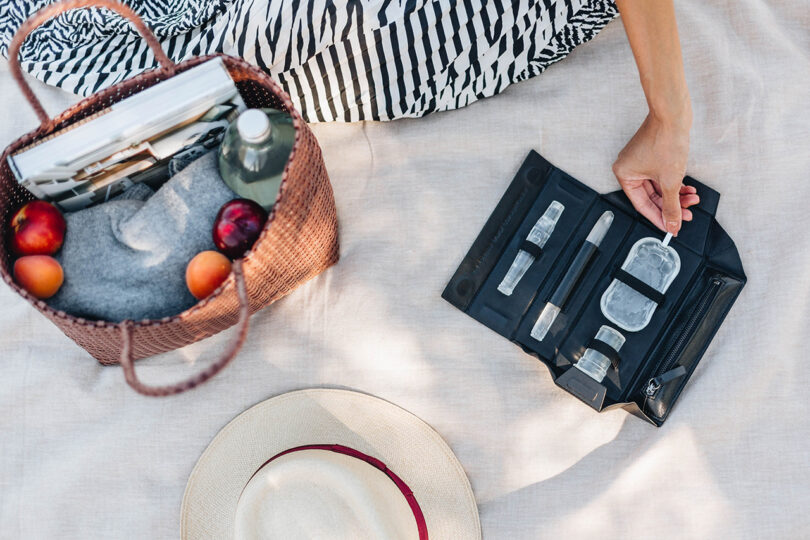
Lastly is the StarterKYT. The compact case allows users to discreetly carry supplies, measuring in at the size of a sunglasses case. It locks together with magnets and unfolds flat to create a testing station, then can be easily folded up again.

Currently, all three bags are available for pre-order, which includes a 15% price cut. 

light-skinned hands interacting with diabetes tools in a black bag on a table

light-skinned hand picking up a black case

light-skinned hand removing a black case from a brown bag

light-skinned hands interacting with diabetes tools in a black bag on a picnic blanket

light-skinned person wearing a black and white garment while carrying a black bag

light-skinned person wearing all white carrying a black bag while walking

light-skinned person wearing a bold geometric short-sleeved shirt and carrying a black backpack

light-skinned person wearing a bold geometric short-sleeved shirt and carrying a black backpack

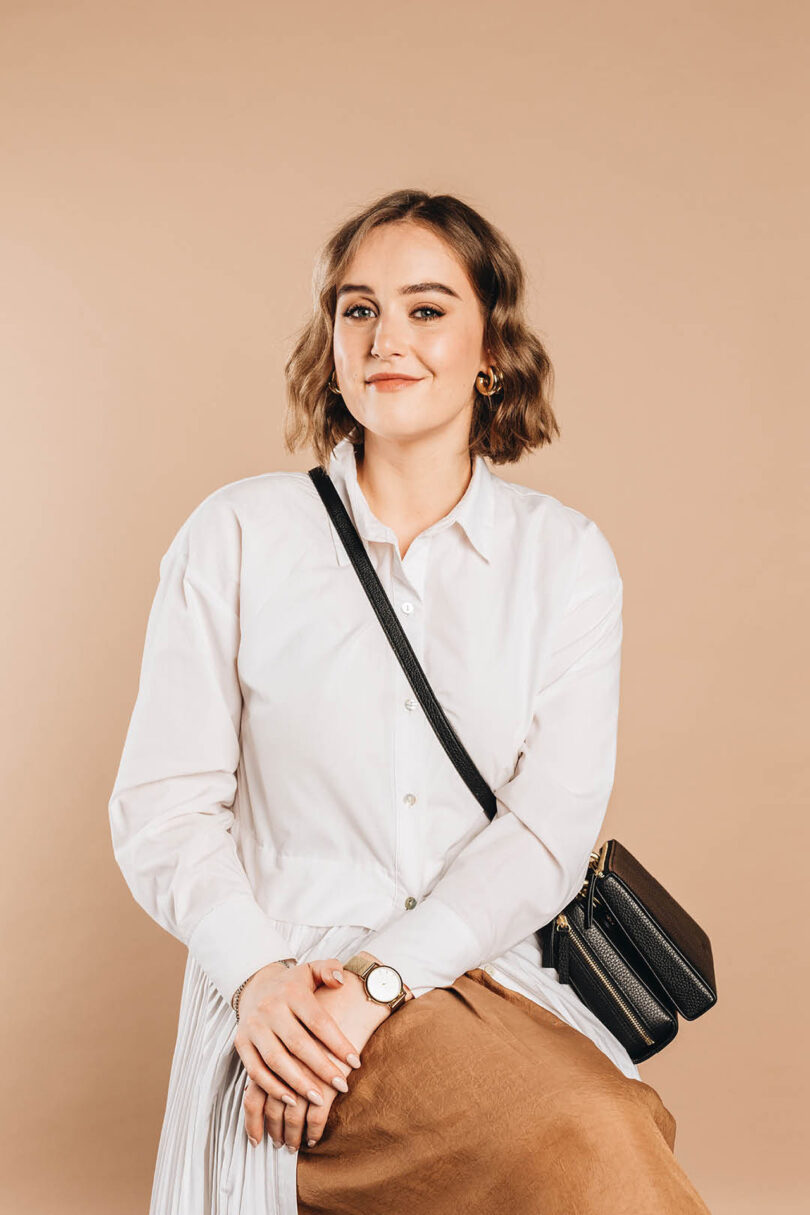
light-skinned woman with short brown hair wearing a button-down white shirt and a crossbody black bag

Bridget Scanlan

A donation from every KYT bag sold helps diabetes charities get crucial supplies to those in need. To learn more or pre-order, visit kytbags.com.

Kelly Beall is senior editor at Design Milk. The Pittsburgh-based graphic designer and writer has had a deep love of art and design for as long as she can remember, and enjoys sharing her finds with others. When undistracted by great art and design, she can be found making a mess in the kitchen, consuming as much information as possible, or on the couch with her three pets. Find her @designcrush on social.

KYT Merges Medicine + Fashion With Innovative Bag Collection

KYT Merges Medicine + Fashion With Innovative Bag Collection

At the age of 20, designer and KYT (Keeping You Together) founder Bridget Scanlan was diagnosed with Type 1 Diabetes. As her pancreas stopped producing insulin, she had to learn to manage blood glucose tests and insulin injections – as well as all of the equipment that comes with it. Soon, KYT released three designer bags meant to empower diabetics and streamline their daily treatment in a stylish way.

“From talking to diabetics around the world, I got universal insights into the daily diabetes struggle,” Scanlan says. “It sparked a thought: could smarter design empower people to feel better about dealing with daily treatment? I wanted to redesign diabetes, so we could all redefine it.”

Jumping into action, her background in fashion design and entrepreneurship led the way. “Every zip, every angle, every equipment detail has been influenced by the insights gathered from the hundreds of incredible diabetics who have opened up and shared their diabetes stories (and gripes) with me,” she shared.

light-skinned hand interacting with diabetes tools in a black bag

The contemporary bag designs feature smart layouts, using quality materials such as gold-rated Italian leather and solid brass hardware, and are ethically crafted. Each bag holds and organizes the carrier’s diabetic supplies, such as a testing kit, pump consumables, and insulin pens.

four black bags on pedestals

The SideKYT is a crossbody bag that streamlines users’ essential diabetes supplies by splitting into two sections: life essentials up front and diabetes equipment in the back. A testing station allows blood glucose levels to be evaluated straight from the bag.

If you’re looking for something larger, the SideKYT+ style might be for you. It’s a larger crossbody bag designed for pump users or those who want to carry more equipment or spares.

Lastly is the StarterKYT. The compact case allows users to discreetly carry supplies, measuring in at the size of a sunglasses case. It locks together with magnets and unfolds flat to create a testing station, then can be easily folded up again.

Currently, all three bags are available for pre-order, which includes a 15% price cut. 

light-skinned hands interacting with diabetes tools in a black bag on a table

light-skinned hand picking up a black case

light-skinned hand removing a black case from a brown bag

light-skinned hands interacting with diabetes tools in a black bag on a picnic blanket

light-skinned person wearing a black and white garment while carrying a black bag

light-skinned person wearing all white carrying a black bag while walking

light-skinned person wearing a bold geometric short-sleeved shirt and carrying a black backpack

light-skinned person wearing a bold geometric short-sleeved shirt and carrying a black backpack

light-skinned woman with short brown hair wearing a button-down white shirt and a crossbody black bag

Bridget Scanlan

A donation from every KYT bag sold helps diabetes charities get crucial supplies to those in need. To learn more or pre-order, visit kytbags.com.

Kelly Beall is senior editor at Design Milk. The Pittsburgh-based graphic designer and writer has had a deep love of art and design for as long as she can remember, and enjoys sharing her finds with others. When undistracted by great art and design, she can be found making a mess in the kitchen, consuming as much information as possible, or on the couch with her three pets. Find her @designcrush on social.