Scottish Landscape Photographer of the Year announced

Scottish Landscape Photographer of the Year announced
Brian Pollock photographBrian Pollock
  • 32 minutes ago

The winner of the 2023 Scottish Landscape Photographer of the Year award has been announced.

Bearsden-based Brian Pollock took the honour with a portfolio of images shot in the Highlands, including the mountain Buachaille Etive Mòr in winter.

He said the outdoors and Scotland’s landscape in particular had been a huge part of his life.

Mr Pollock added: “It is a privilege to be able to share that passion through my photography.”

Other winners include overall runner-up Finn Curry and Simon Dear, who won the best landscape prize.

The seascape award went to John Threlfall, Simon Dear won the landscape accolade while David McLauchlin picked up the urban prize with a wintry scene.

The competition’s founder Stuart Low said awards had bounced back from the travel restrictions of the Covid pandemic.

Buachaille Etive Mòr

Brian Pollock

Dawn at Loch Ken

Stuart Tilbury

David McLauchlin's image Whiteout

David McLauchlin

Rainbow at Stac Pollaidh

Jos Pannekook

John Threlfall's image Sail Free

John Threlfall

Finn Curry's photograph

Finn Curry

Related Topics

It Takes Two to Tango: Florentijn Hofman’s ‘Double Ducks’ Set Sail in Hong Kong’s Victoria Harbour

It Takes Two to Tango: Florentijn Hofman’s ‘Double Ducks’ Set Sail in Hong Kong’s Victoria Harbour

“Double Ducks.” All images © Studio Florentijn Hofman and AllRightsReserved, shared with permission. Photos by ARR

Vying to be the world’s largest bathtub toy is a game that two can play. Ten years after his enormous rubber duck sailed through Hong Kong’s Victoria Harbour, Dutch artist Florentijn Hofman marks the occasion with Double Ducks. The identical inflatable artworks sit side-by-side in the waterway, designed to be hitched to tugboats and escorted in all of their sunny splendor, foregrounding the famous panoramic views of the city’s skyline.

Known for his playful, monumental installations, Hofman approached the project as a celebration of friendship and joy. The pair represent unity and togetherness, drawing on the symbolism of the symmetrical Chinese characters “囍” (happiness) and “朋” (friends). “Due to COVID we learned that spending time together is so valuable,” Hofman says in a statement. “Making moments and memories for real, living in the here and now, are things to cling on to… ‘Double Ducks’ is not about looking into the past but enjoying the moment together!”

Hofman collaborated with with creative brand AllRightsReserved to facilitate the floating sculptures in addition to dozens of installations and interactive activities throughout the city. Admiralty MTR station in the central business district sports a giant yellow face peering from its half-moon shaped window—the largest of 18 train station installations—and 24 images of the playful pair accompany iconic locations, like the Clock Tower on the shore of Tsim Sha Tsui, Kowloon, The Hong Kong Space Museum, and the historic Lan Kwai Fong neighborhood. The more, the merrier!

The floating sculptures are stationed near Tamar Park and the Central and Western District Promenade, and will embark for the first time on June 10, sailing for approximately two weeks. Find more on the Double Ducks website, and follow Hofman’s Instagram for updates.


Two giant inflatable rubber ducks in Hong Kong Harbor.

Two giant inflatable rubber ducks in Hong Kong Harbor.

A giant inflatable duck in Hong Kong Harbor.

Two giant inflatable rubber ducks in Hong Kong Harbor.

Two giant inflatable rubber ducks in Hong Kong Harbor.

Two giant inflatable rubber ducks being towed under a bridge in Hong Kong.

Two giant inflatable rubber ducks in Hong Kong Harbor.

Do stories and artists like this matter to you? Become a Colossal Member today and support independent arts publishing for as little as $5 per month. The article It Takes Two to Tango: Florentijn Hofman’s ‘Double Ducks’ Set Sail in Hong Kong’s Victoria Harbour appeared first on Colossal.

F5: Adam Nathaniel Furman Shares Their Unique View of Creativity

F5: Adam Nathaniel Furman Shares Their Unique View of Creativity

London-based artist and designer Adam Nathaniel Furman grew up surrounded by influences from different countries and cultures. Of both Argentine and Japanese descent, they have a unique perspective to share, and are eager to bring ornament and form from around the world into peoples’ lives. Adam’s creative practice includes product design, furniture, interiors, public art, architecture, fashion, and publishing – none of it for minimalists. The ultimate goal is to create items that feel otherworldly, yet strangely familiar. Those who will appreciate these things trust their own instincts, are confident in themselves, and aren’t afraid of being who they are.

Adam says they’ve always loved objects, clothes, and interiors that are full of interesting things – particularly color and pattern. “The switch was not a sudden one, but more of a gradual process over several years, starting with my residency at the Design Museum in London in 2013,” they say of their current career. “That program gave me the opportunity to share my work and ideas with a large audience, and was instrumental in beginning a chain of opportunities and commissions which, several years later, led to my setting up the studio to handle the volume and scale of work coming in. It was a tough decision to leave working for architecture practices, as they provide a sense of security, but within a year I was already doing better than I had ever been in architectural practice per se, and it’s only gotten better since then.”

Adam Nathaniel Furman

Public art has also been a big influence on Adam. They named the old Tottenham Court Road Tube Station in London, what used to be known as “the world’s biggest piece of public art” by Eduardo Paolozzi, as the first piece that really made an impression. The space “created a glittering warren of simultaneously dingy but magnificent, deeply colorful spaces that were the spectacular and strange entrance to the previously vibrant and queer world of Soho above,” Adam shared. “Those spaces are burned into my memory as an exemplar of how public art can truly create a context, how it can gently submerge itself into the very fabric of the lives of those who pass through and past it, eventually becoming in the minds of those passersby equated with the area itself and all the memories of it they will have acquired over time.”

The way Adam jots down ideas when they pop up, as either a sketch or a poem, is intriguing. “I find that they are the perfect vehicles for capturing a fleeting thought or idea in such a way that doesn’t fix them too concretely into any one particular form. They remain open and flexible, easily returned to at a later date, and built upon further, modified. I have them lying around all over the place, and often return to them, combining different ones, merging a poem with two sketches – for instance – to respond to a new brief or project.”

Today, Adam Nathaniel Furman joins us for this week’s Friday Five!

two people wearing black anti-hate t-shirts

Photo courtesy Human Rights Campaign

1. Trans Rights are Human Rights

There is a concerted campaign by much of the media and conservative politicians and spin doctors to use the Trans community as a political wedge issue. They have pinpointed it as something that can divide people along emotional, rather than political, lines and are viciously attacking this tiny, vulnerable minority (who are rarely, if ever, invited onto panels “discussing” their right to exist) with all the – initially rhetorical, and now legislative – weapons at their disposal. It is important to understand that Liberal democracy must mean freedom, protection, and rights for all minority groups, or else it is simply a form of tyranny dressed up as democracy. So, this Friday I would ask everyone to switch off from the hate, and tune into the love.

pastel book cover reading QUEER SPACES

This book was a huge communal/community project that unfolded over several years, and is a landmark change for the architecture world. For the time that architectural history has existed, queer history has been systematically erased, downplayed, and very often ridiculed and othered. It is quite astonishing that by 2022 there was no wide-ranging book that brought together an accessible historiography of case studies that present a history of queer space. Without which it is virtually impossible for students to do that kind of work in universities, let alone for the wider public to find out about. Queer Spaces does this, and on a large scale, with a multitude of voices (55 contributors), covering vast swathes of the world rather than just Europe and America. We regularly receive photos of students using it as reference and justification in final exams, and also receive a lot of very emotional feedback from people in architecture and parallel industries who feel seen for the very first time in their careers.

book cover reading The Lies That Bind Rethinking Identity Kwame Anthony Appiah

As someone with a very mixed heritage, I have struggled in recent years to place myself politically within an ever-polarizing discursive context. Appiah’s beautiful treatise on the contingency of identity, and the framework and structures we can build as humans to accommodate the differences and contradictions inherent in many people’s sense of self and communal affiliation, was something that brought me profound comfort in a dark time.

interior of an old cathedral

4. Westminster Cathedral

I am very sensitive to the effects of architecture and ornament. Westminster Cathedral is a place of almost biblical impact, with its vast vaults and domes disappearing into blackness, its innumerable little chapels encrusted like caves of gemstones with multicolor mosaics of every style and description, and incense hanging in the air, catching the rays of light as they cut through the darkness from above. When I am having a particularly difficult time, and everything feels just too much, I always go there and the power of its atmosphere somehow takes me out of myself and is profoundly calming. A magical and strangely unappreciated (I hope it will remain that way!) masterpiece in the middle of London.

studio photo of eight people wearing dark or neutral clothing against a dark grey backdrop

Photo courtesy Netflix

I return to this series again and again, the Wachowskis have made a symphony in celebration of love, and the freedom of being liberated from social expectations and our bodily confines. I am not surprised it was cancelled by Netflix, as it was so radical, but the two series that were made are a true riot of liberation and joy.

Work by Adam Nathaniel Furman:

light wood cabinet doors with aqua, red, white, and yellow geometric hardware

Swarf x ANF Symbols Hardware Collection

four colorful facades with an opening in the middle of each for people to interact

Gateways Photo: Gareth Gardner

space with the walls covered in red and blue modern tiling

New Town

colorful geometric outdoor installation

Fairfield Beacons

modern chair and ottoman on light blue background

Dina Chair Photo: Lara Zankoul

This post contains affiliate links, so if you make a purchase from an affiliate link, we earn a commission. Thanks for supporting Design Milk!

Kelly Beall is senior editor at Design Milk. The Pittsburgh-based graphic designer and writer has had a deep love of art and design for as long as she can remember, and enjoys sharing her finds with others. When undistracted by great art and design, she can be found making a mess in the kitchen, consuming as much information as possible, or on the couch with her three pets. Find her @designcrush on social.

Raspberry Pi Keeps Re-enactment Photography Authentic

Raspberry Pi Keeps Re-enactment Photography Authentic

When it comes to historical re-enactments, one thing you don’t want to do is break immersion. That’s where TankArchives’ latest Raspberry Pi project comes into play. Using a Raspberry Pi Zero , he’s turned a vintage 1940s Argust A camera digital thanks to a Raspberry Pi High Quality camera module. Best of all, the original camera was not damaged during the creation of the project. Using this Pi-powered digital camera, TankArchives can capture images while retaining the appropriate look and feel of the era.

The camera used in this project, the Argust A, isn’t a terribly expensive antique to acquire. TankArchives explains that you can find a working model for around $50. That said, it’s still a historical relic and being a re-enactment fan, it’s no surprise TankArchives wanted to preserve it as much as possible.

Raspberry Pi

(Image credit: TankArchives)

In this case, TankArchives has opted to use a Raspberry Pi Zero W along with a Raspberry Pi HQ Camera module. Although TankArchives is using the wireless model of the Pi Zero, you could get away with using one without wireless support. The new Global Shutter Camera is also a viable alternative to the HQ camera, as it can capture fast moving images with no rolling-shutter artefacts. The project also uses an Adafruit Joy Bonnet for controls, a 5V boost converter, as well as a 450 mAh LiPo battery. An intermediate 16mm M12 lens is included as well.

Although everything fit inside the camera housing, TankArchives explained that they would rather have used a different camera module. The HQ Camera module had to be partially cut so it would fit inside the original lens hole. It also doesn’t have autofocus so the camera has to be disassembled to manually adjust the focus. With all of the hardware in place, the final camera relies on a digital shutter and can last for roughly an hour off a single charge.

The software used to capture images was created using a mixture of Python 3 and libcamera2. Picamera2 can also be used and provides a Pythonic means to interact with the camera. According to TankArchives, capturing images is somewhat slow and the unit takes a minute or so to completely boot. Taking a photo requires a couple of seconds to fully capture.

If you want to recreate this Raspberry Pi project or just get a closer look at how it goes together, check out the original thread shared to Reddit by TankArchives.

Why I Love Loudoun – Tonia Crawford, Chalk Artist, Chalkoholic

Why I Love Loudoun – Tonia Crawford, Chalk Artist, Chalkoholic
image

A native of Altoona, PA, chalk artist Tonia Crawford moved to Loudoun 19 years ago to raise a family. She creates extremely detailed large-scale chalk drawings that can be seen at multiple public spaces in Loudoun including Lost Rhino Brewing Co and The Buffalo Wing Factory as well as on Instagram at @Chalkoholic and her website www.linktr.ee/Chalkoholic.
Favorite place to eat in Loudoun?

There are so many. If I must choose one, I love the sushi at Passion Fin in Goose Creek Village in Ashburn.
Favorite place for a craft beverage. Ocelot, a small craft brewery in Sterling. Amazing people, wonderful atmosphere and great beers named after song lyrics from some of their favorite artists.

Best kept secret in Loudoun? World’s Okayest Trivia – absolutely the most fun and funny trivia I’ve ever experienced. The host is Chris Drummond who started doing it when he was manager at House 6 Brewing Company in Ashburn. Now he hosts it at breweries throughout Loudoun such as Lost Rhino and Bear Chase. It’s wonderfully entertaining. 

What’s a must-see place for an out-of-town visitor? My family loves Leesburg Animal Park south of Leesburg and Franklin Park near Purcellville. We roller skate in the outdoor rink and go to exhibits at the Visual Arts Center. Seeing Bob Ross’s paintings there a few years ago was something I’ll never forget.

Favorite event in Loudoun? Lot Con at Comic Logic Books and Artwork, the comic shop in Ashburn Village. Usually taking place on a Sunday in spring and summer, it’s an amazing event at which local artists, authors and creators show their work. I’m super lucky to be part of it a couple times a year. They are a big group of fun, creative people who make you feel like family.

What’s a fun fact to share about Loudoun? I thought it was neat that the movie Foxcatcher with Steve Carell, Mark Ruffalo, and Channing Tatum was filmed at Morven Park. 

What do you like about the art scene in Loudoun? I see more and more art-related events every year. I love festivals in the summer and the craft fairs during the holidays. So many awesome local creatives! 

How did you start doing chalk art? I worked at Brewer’s Alley in Frederick, MD, in the early 2000s. We needed chalk signs for events and they were very well received by everyone who saw them. I knew then that I wanted to do more. 

What is unique about your art and what inspires you to create? From feedback I have gotten, I would say the extreme level of detail I put into my pieces, plus the large-scale size of them. I am always inspired by the excitement of my clients and the reactions of people who see my work. 

What makes Loudoun appealing to artists? It’s a fun, busy place filled with so many clients that have a need for and appreciate all types of art. 

Where should locals go to celebrate the arts in Loudoun? There is art just about everywhere in Loudoun. A lot of businesses in the area have murals and framed work by local artists. Anyone can support local artists, not only by purchasing their work but also by following them on social media and sharing their art with others. 

Visit Loudoun strives to bring tourists to the county, but locals can be tourists, too. In this series, we ask Loudoun residents to tell us about the joys, secrets and delights of their own backyard. Discover something new and share your local adventure with Visit Loudoun using #loveloudoun.

Beginner basics: What is ISO in photography?

Beginner basics: What is ISO in photography?

In the world of photography, there are several technical terms that can be overwhelming for beginners. ISO is one such term that often confuses aspiring photographers. In this article, we will try to simplify the concept of ISO and explain its significance in digital photography.

What is ISO?

ISO stands for International Organization for Standardization, which sets standards for various industries, including photography. In photography, ISO refers to the sensitivity of a digital camera’s image sensor to light. It measures how much light is needed to create a properly exposed image. In simpler terms, ISO determines the camera’s ability to capture images in low light conditions without compromising the quality.

Back in the days of film, ISO referred to film sensitivity. It still worked pretty much the same way as today’s modern cameras, in that ISO 100, was great for bright sunny days, while ISO 1600 or even ISO 6400 was more for dark indoor settings or night photography.

Understanding ISO Settings

ISO is represented by a numeric value, such as ISO 100, ISO 400, or ISO 640. The lower the ISO number, the less sensitive the image sensor is to light, resulting in less noise in the image. On the other hand, higher ISO numbers increase the sensor’s sensitivity, allowing you to capture images in low light environments but at the cost of introducing more noise.

What is noise?

So, what exactly is noise? Noise in photography refers to the grainy veil that can obscure details and degrade the quality of an image. It occurs in low light situations or when using high ISO settings, as the camera’s sensor struggles to gather enough light, resulting in amplified noise. Noise can distort colors, reduce sharpness, and create an overall lack of clarity. Often making the images unusable. Noise can also be caused by severely underexposed images, rather than high ISO.

What is BASE ISO?

Many camera manufacturers have base ISO settings, this is the lowest native ISO on that camera (or brand). Why is this important? It gives you the potential to produce the highest image quality, minimizing the visibility of noise as much as possible. Older DSLRs and a number of modern cameras have a base ISO of 200, whereas most modern digital cameras (like my Sonya7RIII) have a base ISO of 100. Google the base ISO for your camera and always try to stick to the base ISO to get the highest image quality. However, that’s not always possible to do, especially in low light conditions.

ISO200 - Minimal noise even due to low light conditions
ISO200 — Minimal noise even due to low light conditions

ISO and exposure

ISO is closely related to two other fundamental aspects of photography: aperture and shutter speed. Together, these three factors determine the exposure of an image. While aperture controls the amount of light entering the camera through the lens, and shutter speed determines the duration of the exposure, ISO affects the camera’s sensitivity to light. Balancing these settings is essential to achieve a well-exposed image without overexposure or underexposure.

What ISO should you use?

The choice of ISO setting depends on the shooting conditions and desired artistic effect. For well-lit environments, such as outdoor daylight, a low ISO setting (e.g., ISO 100 or 200) is suitable. This ensures minimal noise and maximum image quality. In low light situations, like indoor or night photography, higher ISO values (e.g., ISO 800 or above) can be used to capture brighter images. However, it’s important to note that higher ISO values may introduce noise, reducing the overall image quality.

Modern digital cameras and ISO performance

Advancements in camera technology have significantly improved the performance of higher ISO settings. Many modern cameras can handle high ISO values with minimal noise, allowing photographers to capture quality images even in challenging lighting conditions. However, it’s still advisable to use the lowest possible ISO setting to maintain optimal image quality whenever feasible.

Topaz labs with a high setting (93) using the Low Light Model.

Can you remove noise in post-production?

Of course, it’s not always possible to use ISO100, especially in low light situations or if you need to increase your ISO to get a faster shutter speed. That is where post-production can help. It can’t always fix every image, but in certain situations, it can help enormously. you can try Lightroom Denoise, Topaz Denoise, Luminar Neo Noiseless AI, DXO Pure Raw3, just to start you off.

A final word on ISO

ISO is a crucial setting in photography that determines the sensitivity of the camera’s image sensor to light. By understanding ISO and its relationship with aperture and shutter speed, photographers can capture well-exposed images in various lighting situations, striking a balance between sensitivity and image quality.

Want to learn more? Check out these Photofocus articles:

Photography essentials to buy during Insta360 summer sale

Photography essentials to buy during Insta360 summer sale

One of Insta360’s biggest sales of the year is happening right now, and you can grab a whole lot of cool photography gear, including action cameras and selfie sticks, at great prices. Here are our top picks from the Insta360 summer sale.

Compatible with DJI Mavic Air 2 and Air 2S, Insta360 Sphere is a product that will let you capture 5.7K 360-degree immersive drone footage with endless reframing possibilities. The ultimate tool to level up your aerial videography content, Sphere features Insta360’s proprietary Flowstate stabilization technology to ensure that the captured video is silky smooth.

Typically priced at $430, the Sphere is available to buy for just $352 during the Insta360 summer sale.

[embedded content]

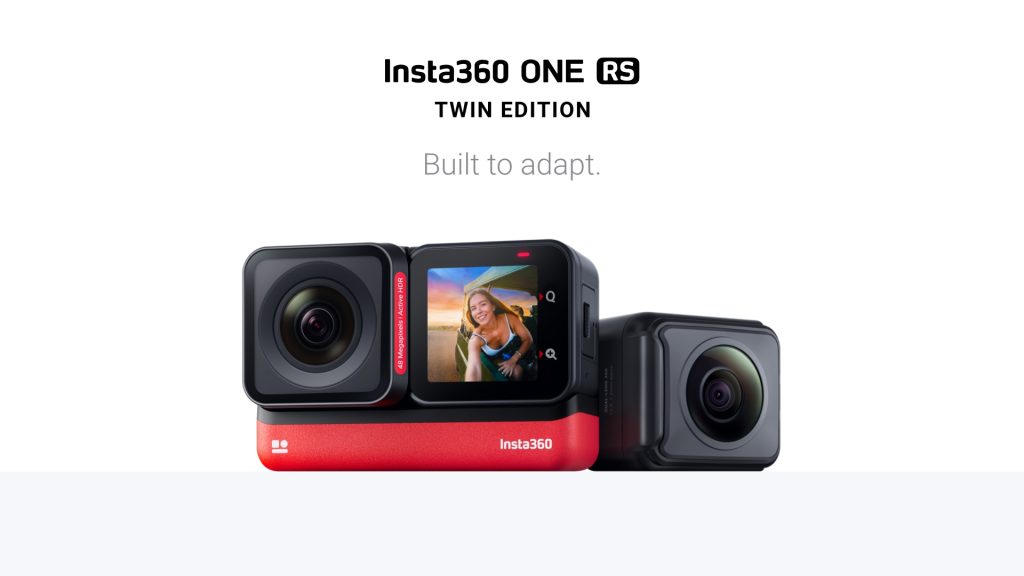
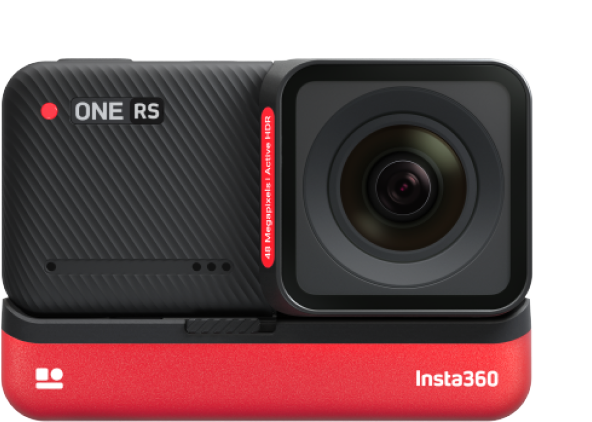
Insta360 ONE RS is an incredible action camera with a high-performance 4K Boost Lens whose 1/2-inch image sensor captures detailed wide-angle 4K/60fps videos and 48MP stills. It comes with a fresh sports HDR mode, designed especially for dynamic shooting scenes. Meaning, the camera balances the exposure while maintaining a stable picture, ensuring more light and dark details. In addition, ONE RS supports a 6K widescreen mode. This mode adopts the classic 2.35:1 ratio, and can shoot super textured 6K movie-like movies with one click.

You can buy the ONE RS for $239 during the Insta360 summer sale, which is a 20% discount on its regular price of $300.

The Twin Edition of Insta360 ONE RS comes with two swappable lenses. In addition to the 4K lens detailed above, with this model, you also get a 360-degree panoramic lens to shoot 5.7K high-definition videos. So, whether it is skiing or riding a motorcycle, you can enjoy one-click shooting without worrying about composition, and then freely select the angle and picture for editing in the later stage.

Insta360 ONE RS Twin Edition is available to buy at $441 during the summer sale, which is a discount of $140 on its regular price.

insta360 summer sale

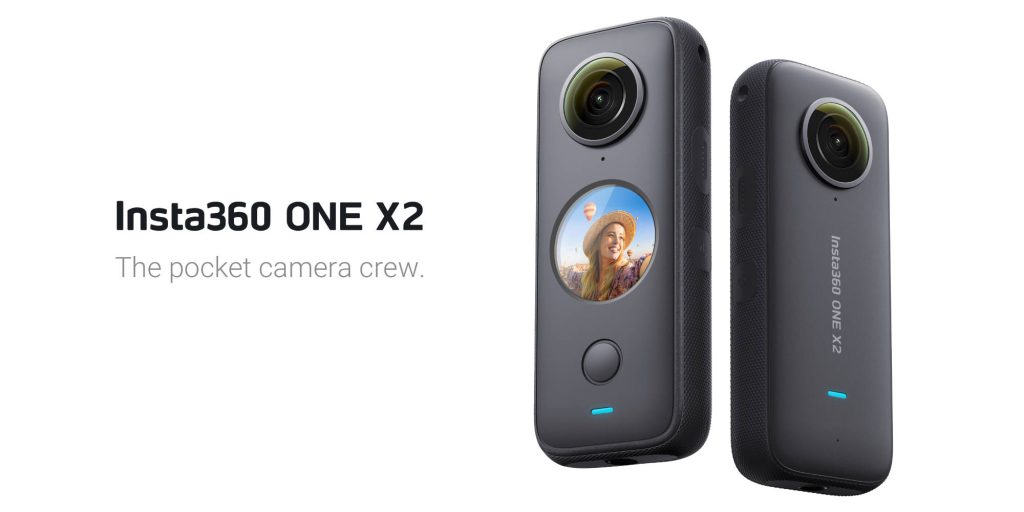
With its 5.7K 360-degree photo and video capturing prowess, the ONE X2 is perfect for places where you may not be allowed to fly a drone. Ideally paired with Insta360’s famed Invisible Selfie Stick (currently available at a discount of 12%), the product comes equipped with a high-brightness touchscreen and can shoot for up to 80 minutes. It allows you to capture easy drone-like angles and third-person perspectives with the flick of a wrist. Moreover, the camera is waterproof up to 10 meters, which means you can take it out in a rainstorm or while surfing without worrying.

Typically priced at $430, the Insta360 ONE X2 is available to buy for just $364 during the ongoing summer sale.

Insta360 ONE X2

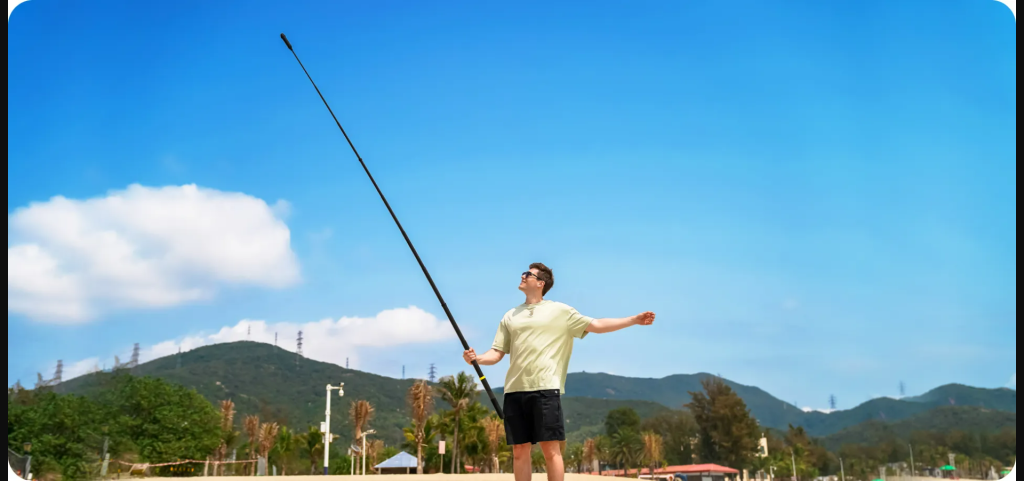
The ultimate tool for creative, third-person shots, Insta360’s Extended Edition Selfie Stick extends to up to 3 meters with adjustable lengths in between. However, at its most compact, the product measures only 14 inches, which makes it super convenient to carry. Pair it with one of Insta360’s 360-degree cameras, such as the ONE X2 above, and you can capture otherwise impossible angles with ease!

During the summer sale, Insta360 Extended Edition Selfie Stick can be grabbed for $89 at a discount of 11%.

Meanwhile, if you already own an Insta360 product, you might want to check out the discounts on accessories here.

Read: Hover X1: New 125g self-flying camera drone with Follow mode

FTC: We use income earning auto affiliate links. More.

Rockford art and nonart students work together to create a one night only exhibit

Rockford art and nonart students work together to create a one night only exhibit

An art exhibition that blossomed from several academic disciplines coming together will open for one night only.

Jason Judd is an art teacher and the business academy lead at Auburn High School. He said he and other teachers of the academy wanted to create a cross-curriculum project.

“My history of being in the art business,” he said, “I saw a really amazing opportunity where these worlds collided. I was like, ‘well, I mean, I did budgets, we did marketing, we had to do design, we had to do technical writing.’”

This is the first time that students from the academy’s science, English, business, math, graphic design, and art classes created something together.

Judd said the project started out with the science class making tie dye fabrics, after that the art students manipulated the cloth.

“Then that set the stage for math to use the exhibition for budgeting,” Judd explained, “for English, to use it for technical writing, and for design to take all those elements and to design a brochure.”

“Abstract Creations” will display from 5:30 p.m. to 7:30 p.m. Friday, June 2 at Octane restaurant in Rockford. A silent auction will also take place.

How the wild things are

How the wild things are

Some visual memories stay with you from childhood. For me, one such vivid memory is of a large tapestry at Oxburgh Hall, a National Trust property in Norfolk. This, part of a series of hangings worked by Mary, Queen of Scots, features animals from all around the world – including one hilarious monkfish, memorably represented as a fish’s tail topped with the head of a monk. Thanks to the British Library, I now know that this image is drawn directly from the book De aquatilibus (1553) by the naturalist Pierre Belon, where it appears with a blue-scaled body morphing into a monk’s habit and tonsured head.

This illustration is made much of in the marketing for the exhibition ‘Animals: Art, Science and Sound’ at the British Library, which offers an amusing view into the history of humanity’s understanding of nature while sending a serious message about the relationship between image, description, observation and knowledge in natural history. As the exhibition makes clear, this kind of knowledge has never been more important than at the present time, when so many species are at risk.

‘Animals’ is a rich and rewarding tour through both the animal kingdom and the British Library’s extraordinary collections. The exhibition presents a 2,000-year story of discovery, destruction and endless wonder. It is divided into four sections focused on particular environments – darkness, water, land and air – each looking at extraordinary or well-known species, the ways they have adapted to their surroundings or the threats they face. The catalogue offers the opportunity to delve more deeply into a selection of the works on display.

The Hip-po-pot-a-mus (1918–20), a record published by the Talking Book Corporation. British Library, London

Large and lusciously illustrated books such as The Birds of America (1827–38) by John James Audubon demonstrate how humans have sought to represent the natural world by recording animals in their habitat. Belon’s monkfish is one cautionary tale about the importance of direct observation, as are some beautiful but implausibly coloured illustrations by Samuel Fallours from 1718, featuring Indonesian fish and crustaceans; these required extensive artistic licence, as the artist had to imagine the colouring lost so quickly in dead fish specimens. Then there is the tale of the bird of paradise: long thought to be constantly in flight and surviving on dew-laden sunlight, thanks to the lack of feet on any specimens sent back to Europe.

Fast forward through time, and the library’s sound archives allow us to hear animals in the wild. Field recordings include early sonograms by the amateur naturalist John Hooper, used to study the behaviour of the nocturnal and largely silent bat. Songs of the Humpback Whale (1970), an album recorded by bio-acoustician Roger Payne, played a crucial role in the international conservation movement to save whales from extinction. The album sold more than 125,000 copies; it remains the most popular nature recording in history. By combining immersive lighting with soundscapes – alongside the richly varied imagery, sounds and texts that make up the show – the exhibition is effective in engaging our senses.

Metamorphosis Insectorum Surinamensium (detail; 1705), Maria Sibylla Merian. British Library, London

One underlying theme to emerge from the show is the crucial yet often overlooked contributions made by women. We meet Sarah Bowditch, who illustrated and wrote The Fresh-Water Fishes of Great Britain in instalments from 1828 to 1838; Maria Sibylla Merian, who travelled from Amsterdam to Suriname in 1699 to record the metamorphosis of insects; and Indian artist Sita Ram, who drew South Asian animals for albums collated by Lady Flora Hastings in 1818–20. Recent acquisitions by the library include Evanesco: A Selection of Beleaguered Frogs (2020) by Alicia Bailey, a diamond-shaped artist’s book inspired by the biology notebooks of her great aunt.

This thread continues into the finale of the exhibition, ‘Going Forward’, in which three contemporary women are filmed talking about their work. Researcher Kate Scott-Gatty speaks about her surveys of hedgehog populations for the Zoological Society of London; Miranda Lowe discusses her role as the principal curator of crustacea at the Natural History Museum; the composer Roma Yagnik shares how she drew on the British Library’s sound archives to make a new audio work.

On my visit, the exhibition was buzzing with groups marvelling at the beauty or strangeness of the animals represented within. The British Library has produced a timely reminder of the fragile world in which we live, and the very great risk that we pose to its fauna.

Illustration of a Monkfish from De aquatilibus (Of Aquatic Species; 1553), Pierre Belon. British Library, London

‘Animals: Art, Science and Sound’ is at the British Library, London, until 28 August.