Vandals take aim at sculptures ahead of RockFire granite and culture festival
By Admin in Photography
Bright and sunny skies, or bluebird skies, as some call them, are the bane of landscape photographers. Or are they? We’ve all been taught to seek out the “good” light of golden hour or dramatic skies. This video talks about how to walk away with great images even on those sunny, cloudless days.
Have you ever had a landscape photography trip planned only to have several days of cloudless skies? Michael Shainblum shares his tips for photographing landscapes on bright and sunny days, so those trips still result in great results.
Shainblum works through some of his techniques for capturing images on days with blue skies. He highlights the importance of scouting scenes under the harsh light, marking them for coming back to them a little later in the day with reflected light. This takes slowing down a little, observing the elements and subjects around you, and thinking about how they will look later in the day.
Shainblum also seeks out subjects in more favorable conditions, looking for small scenes and textures in the shade of canyon walls. He shares impressive results that can come from a little extra effort looking for pleasing light in small places. He concludes the video with what I think is one of the most important tips in the video.
I have actively been pushing myself to latch onto the advice that there is no bad light. The tips presented by Shainblum in this video are welcomed as I work to grow my approach to photographing landscapes at times old me would have considered unfavorable.
SANTA FE — “What is most exciting about the exhibition is the experimentation that each graduate student took on,” says Dakota Mace, who is an Artist Mentor at the Institute of American Indian Arts (IAIA). Beyond Mastery, continuing through June 30, features work by the inaugural Master of Fine Arts in Studio Arts (MFASA) cohort at the IAIA, exhibited off campus at the Coe Center and the Container gallery. Mace called this exhibition the first of its kind because it challenges Western colonial approaches to art-making, education, and its hierarchical structure. Many of these artists produced work on different scales and using mediums they had not considered previously. The program’s Indigenous pedagogical aims and methods allowed each artist to push their conceptual practice beyond, resulting in a stunning and thought-provoking show.
Beyond Mastery collaboratively interrogates the idea of gaining “mastery” and an MFA from an Indigenous perspective. This two-year program, “provides a professional degree in Studio Arts while allowing students to live at home and continue participating in work, family, and community,” and includes intensive summer and winter residencies on the IAIA campus in Santa Fe. Director Dr. Mario A. Caro states that the program centers mentorship, supporting individualized study plans and art practices, along with expanding community relations. Because of this Indigenous pedagogical framework and mission, the Artist Mentors enthusiastically signed on to participate, while maintaining their own practices and careers in their communities. Artist Mentor Tanya Lukin Linklater shared, “In my experience and understanding of Indigenous practices, we are continuously learning over our lifetimes.” Centering an Indigenous lifelong perspective provides space to take risks and produce innovative thesis work.
“Where else can you say all your mentors are Indigenous?” asks artist and graduate student Margarita Paz-Pedro. Many students applied to IAIA because of this radical and unique representation within academia and arts institutions. Even with all Indigenous mentors, though, it is essential to highlight the diversity of their tribal affiliations, histories, homelands, and interdisciplinary art practices and methods. Student Carmen Selam shared, “What I love about IAIA is that you don’t have to do the whole ‘Indigenous 101,’ because there’s already a context for Indigeneity, so you’re able to really focus on the work and growth.” Many of the artists came into the MFA program with decades of experience and developed practices, yet every artist undertook a new interdisciplinary work.
Dr. Caro notes, “The first year is all experimental; we try to break people out of their discipline […] and encourage them to play, make mistakes … [and] grow as artists.” Academic disciplines usually function as a system of rules within a field, but at IAIA there’s a commitment to foster unstructured creative inquiry. Pulitzer Prize recipient and Artist Mentor Raven Chacon wants students to know, “It’s okay to make things that you don’t know exactly the outcome. And you may fail. Because that is what an experiment is.” Many students identify the mistakes, along with creative explorations, as part of the growth process; this approach provides the possibility for transformation beyond one’s practice. For instance, Shane Hendren entered the program with more than 30 years of experience as a metalsmith and jewelry maker, but during his first year, he turned his attention to filmmaking, working with Artist Mentors like Chacon and Anna Hoover. Hendren’s films document intergenerational historical, personal, and environmental storytelling. “Matanza” presents a pig butchering to honor the life of Larry Ortiz while contextualizing Genízaros, descendants of Native American captives, in New Mexico. Collaborating with his family and Navajo community, the films “Grandma Said” and “Grandma Says Diné” impart knowledge exchanged through oral and active listening, while “Sunup to Sundown” is a montage film of his meditative practice of watching sunrises and sunsets and is projected in a round stock tank filled with water.
At the Coe Center, all the artists utilize innovative installation techniques. Margarita Paz-Pedro shifted from production pottery to a multidisciplinary conceptual practice. “Parts of the Whole” is a large installation that interrogates how knowledge is produced and shared through history, land, structures, and relationships. Traditional pottery designs are painted directly on walls as monumental murals and adobe bricks that serve as abodes or habitats for her ceramic pottery, and shards.
Dominick Porras said that working with Artist Mentor Jackson Polys helped form his concept of “memory deposits,” or individual/community cultural story building (i.e., dreams, mythologies, lived experience), as valid forms of research. Porras’s interactive installation work, “p’Akenmamm,” includes a large-scale net that hangs from the ceiling, inviting the public to interact with and touch it, which triggers a video projection of fish. His films “Culture Confidential: Talking Stones” and “Simulation: Voladores” employ digital 3D sculpting/animation and investigate Mesoamerican cosmovision/cosmology and environmental consciousness. Interdisciplinary artist Nika Feldman is interested in making visible the unseen exploitation of land labor in textile and fashion production. Her haunting hanging installation of white t-shirts, titled “Kriah and the Hungry Ghosts,” explores Jewish tradition, in which holes are cut in clothing, to illustrate grief/grieving. “Footnotes of Atrocity” is another part of a larger trilogy, titled Unmaking a Coded Call, and all these works explore her concepts of sartorial sabotage, schmatte prowess, and feminist chutzpah.

Carmen Selam’s interdisciplinary installation “Switch Dance” flows in a circular movement, much like powwow or dance, and welcomes the public to engage with that flow. She offers “new mourning protocols,” emerging from lived experience. They include large photographs and videos, along with seed bead buckskin bags — “23 Tamish” and “The Black Pearl.” As a Queer Indigenous past pageant queen who grew up on the reservation, she’s reevaluated her visibility and positionality in the arts, which she defines as “revolutionary,” and continues to highlight with her work.
Joseph (wahalatsu) Seymour, Jr., whose work is on display at the Container Gallery, states, “I work with whatever medium I can to preserve Coast Salish culture […] and mentors like Sara Siestreem took me to task on moving beyond a static image.” Because his traditional language’s alphabet is only about 50 years old, Seymour explained how important it was to include the language in his image making, as in “Enjoy Beautiful bastiqiyu.” In his paper weavings, like “Mesa in the Valley,” he deconstructs two archival documents and weaves a new image representing Salish agency. Angélica M. Garcia’s installation “El Altar Olvidado” includes some of her ventures in paper-making, sound, and film. Her work centers her maternal grandmother, Teofila Peña, who died on a coffee plantation in El Salvador. She intertwines personal histories with the violent realities and impacts of global capitalism. On opening night, Garcia performed a live serenade offrenda, or offering, which further activated the altar space.
Another artist working with paper, Susanna Mireles-Mankus expanded her painting practice by exploring larger-scale works incorporating text and bookmaking. She looks at the materiality of seeds and their symbolic cyclical potentiality. “Memories of Heat” is an accordion book incorporating watercolor, photo collage, ink, and poetics from her dreams and lived experience. The work journeys through land, dreamscapes, and potential futures.

Madelynn Boyiddle-Schoel, aka Madboy, placed her work outside the gallery space at Container. “Whole Bison Mindset” is a sculpture of an ear made from a butterfly chair frame, wire fence, packing foam, and other repurposed materials. Boyiddle-Schoel credits her environmental research findings and program mentors like Sara Siestreem for prompting her to “educate the already established educators,” with diverse methods of making rooted in sustainable arts pedagogical practice. Her art production has inspired her daughter to recycle and reimagine what kinds of things can be considered art supplies.
This cohort of students pursued their education and art practice during the pre-vaccine COVID-19 pandemic and completed their first year completely online. During their first semester, the cohort tragically lost their friend and colleague DeAnna Autumn Leaf Suazo. At their hooding graduation, her family was given an honorary certificate of recognition and a scholarship was established in her memory.
Beyond Mastery showcases the powerful creative openness of “continuous learning” in IAIA’s first MFASA cohort. Much of the public discourse around Indigenous traditions and history sets up stereotyped expectations of “Native art.” This exhibition instead illustrates how the IAIA is liberating and expanding truly beyond those expectations in and out of the art community.


By Admin in Photography
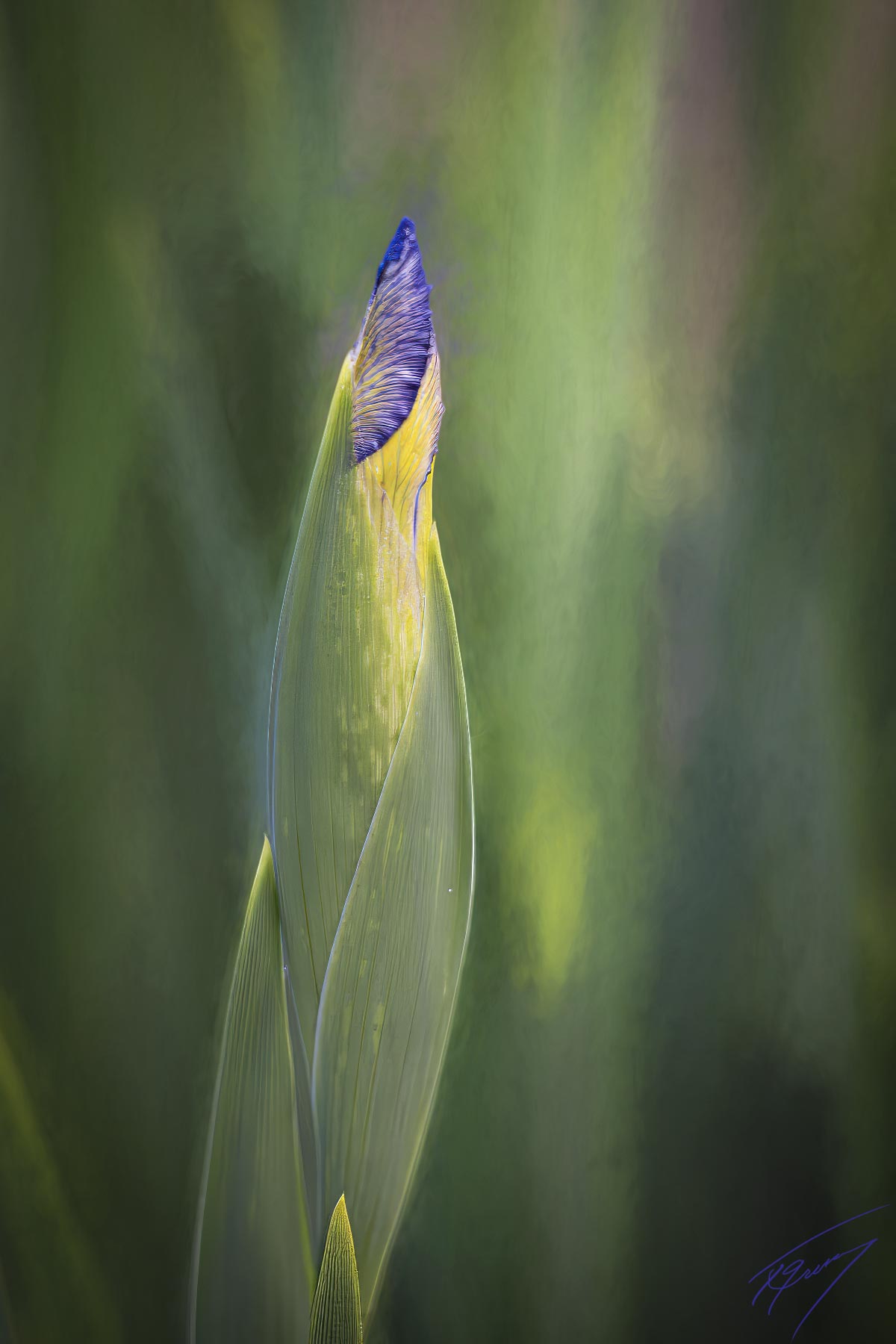
… a little fun and change of pace as we head out to the bed of Spuria Innovator Iris’s in my back yard … both images show one of the iris’s as the bloom is beginning to unfurl, but the one above has a ladybug at the top of the bud in exquisite detail, whilst the one below is relying on its natural beauty to attract my attention.

The blooms are now in the past, but the memories live on and next year they will again bloom … seasons pass and life goes on for all of us … what a gift!
A belated Happy Fathers Day to all the dads out there …
Another new week underway and time to wrap this day … lots of things on the agenda this week beginning with a day of cutting gems after a few espressos when I wake … finding eight shots is about the right amount to get a good jump start on the day 🙂
Have a beautiful day … keep breathing … keep smiling!
Cheers,
Ted
O PASSER-BY, O passer-by!
Have you good words of me
Upon your lips as I draw nigh
To you each day?
If so, I ask
That you’d them say,
For soon I’m gone and cannot hear,
So speak the kindly word
I beg, and smile while yet I’m near.
I’d speak to you,
If courage came,
And I quite knew
You’d take the love my heart oft sends,
And give me yours as well,
O passer-by, come, let’s be friends!
Life’s smiles and tears
And happiness
And childish fears
Are mine, just like your own each day,
(You understand, I know.)
So come and let’s be friends, I say.
O PASSER-BY by Max Ehrmann
###
The easiest way to reach Mr. Grussing is by email: ted@tedgrussing.com
In addition to sales of photographs already taken Ted does special shoots for patrons on request and also does air-to-air photography for those who want photographs of their airplanes in flight. All special photographic sessions are billed on an hourly basis.
Ted also does one-on-one workshops for those interested in learning the techniques he uses. By special arrangement Ted will do one-on-one aerial photography workshops which will include actual photo sessions in the air.
More about Ted Grussing …
By Admin in Photography
Natural light, often synonymous with available light, is a cornerstone of photography. Its ability to give life to your images and induce raw emotions is what makes it a favourite among photographers. By allowing them to produce aesthetically appealing images, natural light enhances the artistry in their work.
However, harnessing natural light isn’t always straightforward. Its intensity and quality can be influenced by many factors including the time of day, weather conditions, and geographical location, leading to unexpected and sometimes undesirable results. Moreover, the inability to control it in the same way as artificial light often proves challenging. This article explores the art of using natural light in photography and offers some tips on how to best utilize this resource.
Natural lighting in photography refers to the use of sunlight as the primary source of illumination. Unlike artificial light sources such as studio lights, natural light originates from the sun and is therefore readily available and free to use. Natural light can be direct or indirect, depending on whether it’s coming straight from the sun or has been reflected off other surfaces.
The use of natural light in photography is as old as the art form itself. Early photographers had no choice but to use it, and even today, many professional and amateur photographers prefer natural light due to its variability and the unique ambiance it creates.


In the world of photography, natural light is defined as any light that originates from the sun, either directly or indirectly. It can further be classified into several categories based on its characteristics such as quality, direction, and colour.
The quality of natural light can be harsh or soft. Harsh light produces strong shadows and high contrast, while soft light results in less defined shadows and lower contrast. The direction of light refers to the angle from which light is hitting your subject, which can affect the appearance of depth and texture. Finally, the colour of light changes throughout the day, with warm tones appearing during sunrise and sunset, and cooler tones during midday.


Using natural lighting in photography involves understanding its characteristics and learning to work with them rather than against them. Firstly, knowing the best times of the day to shoot is essential. During the “Golden Hour” (shortly after sunrise or before sunset), the light is soft and warm, which can create a magical effect in your photos. Conversely, the “Blue Hour” (just before sunrise or after sunset) provides cool, diffused light that is ideal for creating moody and atmospheric shots.
Direction is also key. Front lighting (where the light source is behind the photographer) creates even lighting across the subject, but can lack depth. Side lighting (where the light is coming from one side of the subject) enhances texture and depth. Backlighting (where the light source is behind the subject) can create dramatic effects and silhouettes.


The “best” natural lighting for photography is subjective and depends on the mood and effect you want to create. For soft, flattering portraits, the Golden Hour is often preferred. For dramatic landscapes with long shadows and intense contrast, shooting at midday can be effective.
However, overcast days are often overlooked. The clouds act like a giant softbox, diffusing the sunlight and creating even, soft light. This is perfect for minimising shadows and reducing contrast, which can be particularly helpful for portrait photography.


While natural light is not as malleable as artificial light, there are still ways to manipulate it. One popular method is the use of reflectors. A reflector can bounce sunlight back onto your subject, filling in shadows and illuminating darker areas.
They come in different colours, with silver increasing the light’s intensity and white providing a softer fill. Gold reflectors are popular because they cast a warm, sunny colour onto the subject, mimicking the soft, glowing light found during the Golden Hour. This makes them especially useful for adding a warmer tone to skin in portrait photography or creating a summery, radiant feel in outdoor shots.
Diffusers can also be used to soften harsh sunlight and reduce contrast. Like reflectors, they are lightweight and portable, making them a valuable tool for photographers who frequently work outdoors.
Remember, while natural light can be unpredictable, learning to work with it can lead to stunning, one-of-a-kind photographs. Embrace the challenge and let nature’s light guide your creativity.
By Admin in Photography
PARK RAPIDS, Minn. — Local wildlife photographer and loon educator Steve Maanum captured a winning photo of Minnesota’s beloved state bird.
His image of a Big Mantrap Lake loon and a chick on a nest, entitled “Patiently Waiting,” is featured on this year’s Loon Appreciation Week poster.
“Once in a while I get lucky,” said a humble Maanum.
He won the same contest in 2019.
It’s sponsored by LoonWatch, a program of the Sigurd Olson Environmental Institute at Northland College in Ashland, Wis.
ADVERTISEMENT
Held the first week of May, LoonWatch promotes loon education and conservation during Loon Appreciation Week by creating and distributing a new poster each year.
Maanum explained his photography process.
“Using a long telephoto lens, a photo blind and a great deal of patience, I was able to document the behavior of the adult loon and the first chick as both sat and waited for the second egg to hatch. As you can see from the upright posture of the loon, it is experiencing no stress and my hidden presence is not causing any discomfort during this sensitive time.”
According to the Big Mantrap Lake Association (
), “Big Mantrap Lake boasts a high population of loons due, in part, to the lake’s many bays and points, but a lot of it has to do with the lake’s volunteer ‘Looners’ who run the loon nesting program.”
Maanum is one of those Looners.
This season, he reports, “The first chicks appeared on the weekend of June 10-11, and by June 15, we counted 16 chicks on the lake. A total of 43 eggs were laid, one nest was abandoned and another nest lost its first two eggs to predators, so they re-nested and yesterday afternoon (June 14) an eagle raided that nest. Both eggs were lost. Incubation is still occurring on other nests so predation and hatching numbers may change day by day.”
The management program on Mantrap began in the mid-1980s and “has grown into a widely recognized success story,” Maanum said.
Big Mantrap loons have been featured by National Geographic and the Smithsonian Channel.
ADVERTISEMENT
“The miles of privately owned shoreline, and the commitment to leave it undeveloped, has been an essential and appreciated factor in making Mantrap Lake an important loon research location,” Maanum continued.
Along with interesting loon facts, the LoonWatch poster emphasizes that “Good nesting sites are critical loon habitat.”
“Air and water pollution, loss of habitat, and increasing recreational activities on lakes all pose serious threats to loons across North America, and in some cases are responsible for loons and loon music disappearing from traditional nesting lakes.”
LoonWatch also ensures that contest photos are taken in an ethical way. The guiding principle: Place the welfare and safety of the loons and their habitats above all else and avoid disturbing them in any way.
A general rule of thumb for good loon etiquette is to keep a distance of 200 feet from loons and loon chicks, according to LoonWatch.
Never flush birds – that is, disturb them and make them fly or swim. In breeding season, it can interfere with reproduction.
Never get too close to a loon family with chicks. If you separate a loon parent from its chicks, this could be fatal for the chicks, especially when they are very young.
ADVERTISEMENT
Posters are available to the public for $7 each and may be ordered at
www.northland.edu/sustainability/soei/loonwatch/loonposter/#loonposter
.
By Admin in Photography
Paul McCartney’s recently released photography book, 1964: Eyes of the Storm, features pictures from the early days of Beatlemania, and putting it together was a great walk down memory lane for the Rock & Roll Hall of Famer.
“Well, I mainly see it as a ‘behind the scenes’ publication. After all these years, it was lovely for me to be taken backstage again,” he reveals in a Q&A on his website. “I love just looking at old pictures of the guys.”
One such picture is of John Lennon with his glasses. McCartney writes, “… obviously it’s hugely sad, because I miss him so much. But this just reminds me of growing up with him and all the pleasant memories.”
He adds, “Whenever I see John with these sorts of glasses, it reminds me of the way he would take him off when there were girls around. For some reason people think they look better without their glasses! And now, whenever other people do that it always reminds me of John.”
He says the book “just brings back all those little memories which make up a life.”
As for whether he’s still taking pictures, McCartney shares, “I am a keen photographer, and now of course it’s all iPhone. It’s just too easy!”
He says, “The iPhone quality is really pretty good, but having a daughter, Mary, who is a professional photographer, she tells me she always takes the precaution of taking a nice picture on a what she calls her ‘real’ camera, just because, you can do pretty much anything with that.”
Copyright © 2023, ABC Audio. All rights reserved.
Milwaukee Art Museum announces new Herzfeld Center for Photography show
Wondering what’s the importance of PDF editing software for photographers? Hop inside this guide to find out!
The loon traveled from Los Angeles to its permanent home in the Twin Cities.
A new beetle species has been named to honor a fellow Husker, bridging the worlds of academia and wildlife conservation.
Silversea, a premier brand in experiential luxury and expedition travel, recently concluded the inaugural season of its first Nova-class ship, Silver Nova,
The Desert Foothills Land Trust (DFLT) is proud to announce a special presentation event featuring acclaimed botanical photographer Jimmy Fike on Saturday, Oct. 12 at 6:30 p.m. at the Sanderson