New creative art gallery and photography studio opens in East Texas

New creative art gallery and photography studio opens in East Texas

RUSK — A new studio, Alchemy Creative Arts, LLC, has opened in Rusk which includes an art gallery and photography studio.

The studio is owned by Amy Lescoe-Hall who works alongside well-known local photographer Bryan Barrow.

The studio, which offers indoor studio and outdoor photography sessions, original artwork, photo retouching and professional print services on canvas, acrylic, metal, and professional quality photo paper, opened its doors with a ribbon cutting celebration on July 1.

#placement_588494_0_i{width:100%;margin:0 auto;}

Lescoe-Hall said the duo loves being creative and wanted to offer something new to the community.

“We love art and photography and wanted to offer a studio location that also allows us to offer artwork to the public. The opportunity became available for us to have a location downtown in Rusk, so we took it,” she said. “Plus, air conditioning and heat is a great benefit to have when taking photographs.”

Lescoe-Hall, with help of Barrow’s wife, pulls from her film and professional theater experiences to create sets, wardrobe, hair and makeup, digital backgrounds, and props for themes like Viking Shield Maidens, Fairy Princesses, Elven Queens, Archers, Warriors, Wizards, and many other fantastical and dramatic photography sessions.

“We love themed photo sessions. We schedule special ‘limited edition’ photo sessions in both our studio and various outdoor locations in Rusk and the surrounding areas.”


alchemy2.jpg

A new studio, Alchemy Creative Arts, LLC, has opened in Rusk which includes an art gallery and photography studio. The studio is owned by Amy Lescoe-Hall who works alongside well-known local photographer Bryan Barrow and offers unique “themed’ photo shoots.


Barrow is an established photographer in the area, excels at sports photography, action of all sorts, and has a special affinity for capturing images of wildlife in vivid detail. He has been seen on the sidelines of all of the different sports fields the past few years photographing images of students as well as professionals, including Smith County student-athletes and coaches.

Barrow, who has long aspired to follow his photography passion full-time, said he is both excited and a little intimidated to start this new journey.


IMG_6125.jpg

Local sports photographer Bryan Barrow captures a tackle at a Chapel Hill vs. Kilgore game. Barrow recently took his photography full-time by joining forces with artist and photographer Amy Lescoe-Hall to open Alchemy Creative Arts, LLC in Rusk. 


“I’m excited to open and a little intimidated because I am learning new skills and putting to the test things I’ve already learned. It’s been some hard work already but we’re ready to provide great service and beautiful images to our clients,” he said. “Our studio is a welcoming space that we want everyone to feel comfortable to relax and have fun without the fear of being judged. Our goal is to become the go to photographers for themed style shoots. If you have an idea, bring it to us and we will make it happen.”

Barrow said the reception has been great and he is grateful for the support he has gotten to move forward with this dream.

“Everybody has been so positive and encouraging so that definitely has us excited for the future,” he said. “I can’t say thank you enough to my family and friends that are supporting me following my dream to work as a full-time photographer.”

Lescoe-Hall agreed the reception thus far has been off the charts.

“We were so incredibly blessed to have a great turn out for our grand opening celebration and ribbon cutting. We met so many people that were curious and want to support us,” she said. “We have already begun seeing customers, selling artwork, and scheduling sessions through the end of the year.”

Lescoe-Hall said one of her most important goals is to have fun and bring a positive experience to clients.

“We like to have fun; life is too serious for most people most of the time. Session time with us will be a way to step out of your normal life and just enjoy yourself,” she said. “We are very body-positive and like to bring out the beauty and ‘special-ness’ of the people, animals, and locations that we photograph.”

Lescoe-Hall went on to it was also important for the business to support the arts and other local artists and will soon be having exhibits.

“We love supporting the arts and local artists of a variety of mediums. We want to showcase and sell other people’s artwork as well as our own,” she said. “We will be having exhibits throughout the year that feature a variety of styles and artists.”

Photographers will travel to outside of Rusk to Jacksonville, Tyler, Kingsland, Bertram, and other East Texas communities for sessions. 

Alchemy Creative Arts, LLC offers portraits, both in studio and in a natural setting, senior pictures, school and childhood milestones, sports photography, corporate photography including head shots, products, locations, and more, bridal, boudoir, and body positive photography sessions.

The business is located at 125 East 6th Street in Rusk and can be reached at 903-373-2640.

For more information, visit the Alchemy Creative Arts, LLC Facebook page.

Who exactly is the Hayward Gallery’s environment-themed summer blockbuster for?

Who exactly is the Hayward Gallery’s environment-themed summer blockbuster for?

The Hayward Gallery’s environmentally-themed summer blockbuster, Dear Earth: Art and Hope in a Time of Crisis (until 3 September) “takes a different route to look at the environmental crisis: it doesn’t aim to breed despair,” says its chief curator Rachel Thomas. Rather, it vies to “open hope in a way of potentials,”—an idea offered by Otobong Nkanga, one of the show’s contributing artists.

Admirable aspirations, and with extractions, extinctions and extreme weather systems currently at an all-time global high we need as much hope as we can muster. But while no one can doubt their fine intentions, many of the 17 artists in Dear Earth seem to be addressing the climate and ecological emergency in the spirit of an earlier era when information was hazy, ideas around the environment vague, and it was a big deal for galleries even to be considering green issues. After one of the UK’s wettest winters and the hottest June on record we now don’t need to be told by American eco Feminist Andrea Bowers that “Climate Change is Real”, and certainly not in the form of a flashing electrically powered neon sign.

Other high-profile works strike a similarly hollow note. With the River Thames rolling alongside the Hayward it’s not necessary to experience the therapeutic power of water, or to ponder “what lies underground towards the centre of the earth” by standing in one of Cristina Iglesias’ elaborate concrete, glass and metal structures, with pumped water constantly gurgling beneath our feet. Did no one consider the environmental impact of shipping such a hefty artwork? Or the power needed to fuel the hydraulic pumping system? Likewise, while the veteran environmental artist Agnes Denes is a hugely significant figure and it’s always great to be shown images of the iconic two-acre wheatfield she planted and harvested on landfill in New York’s Battery Park in 1982 , is it really necessary to fill an upstairs gallery with one of her giant tiered metal Living Pyramids copiously planted with locally-sourced vegetation? Again, consider the shipping! And the irrigation!

A more light-touch reminder of the power of plants is offered by the artist duo Heather Ackroyd & Dan Harvey who have been making their trademark photosynthesis photographs in living grass for more than three decades. Over the years these have often been used to spotlight important figures fighting for climate justice worldwide, and for Dear Earth the artists have made five new portraits of local London based activists. They are: Julian Lahai-Taylor of Grow Lewisham; Love Ssega , co-founder of LIVE & BREATHE; Destiny Boka-Batesa, one of the founders of the clean air campaign Choked Up; Paul Powlesland, a co-founder of Lawyers for Nature and River Roding Trust; and Helene Schulze of the London Freedom Seed Bank. Each of these individuals and their organisations correspond to the four cornerstone ‘commons’: soil, air, water and seed, that we all need – and need to share – in order to sustain life on Earth. While I would have liked more detailed information about each of these figures and how we can support their work ( a QR code by each label, perhaps?) these hauntingly elegiac images literally and figuratively root the work in the urgent – and active – specifics of the here and now.

Installation view of Ackroyd & Harvey at Dear Earth: Art and Hope in a Time of Crisis (21 Jun –3 Sep 2023)

Photo: Mark Blower. Courtesy of the Hayward Gallery.

Ackroyd & Harvey’s grass panels on hessian are recourse-light and can be composted at the end of the exhibition. Another welcome example of how plants and water are being used more responsibly is offered by two significant commissions that will continue to inspire and nurture long after the exhibition has ended. Natura Nostra Forest—Southbank is a 130 sq m ‘pocket forest’ of 390 native trees which has been planted on a terrace adjacent to the Hayward entrance by the urban rewilding organisation SUGi. Specially designed to withstand harsh surroundings and increasingly extreme weather conditions, this arboreal oasis will remain as a new, permanent feature of the South Bank complex, sequestering carbon and encouraging wildlife.

Another important permanent work which lies outside the Hayward’s walls is the Precious Stones Project situated in the nearby Queen Elizabeth Hall Roof Garden. Precious Stones has enabled South Bank gardener Paul Pulford and his team of volunteers to install an ingenious and sustainable irrigation system for arid conditions inspired by the ancestral techniques of the Native American peoples of the south-western United States. This involves surrounding all the garden’s 250 plants—including native and fruit trees—with an eclectic mosaic of discarded stones, tiles and bricks salvaged from throughout London and the banks of the Thames, thus utilising ancient ancestor knowledge from across the globe to cope with the impact of London’s changing climate on an already inhospitable terrain.

Such practical, enduring initiatives offer a hopeful indication of the ways in which humankind can nurture and work in harmony with the natural world, even in the most hostile surroundings. Back inside the Hayward artworks from across the world and in multiple media are also at pains to communicate the many manifestations of this crucial interconnection with nature. These include Otobong Nkanga’s drawings, film and extensive tapestry which links humans with nature and the cosmos; aneight metre mural painted on the Hayward’s walls by indigenous Brazilian artist-activist Daiara Tukano and a vast textile sculpture by Aluaiy Kaumakan using endangered Taiwanese craft traditions. Yet while they are often visually striking, these works appear more concerned with illustrating and commemorating lost communal bonds between the human and the natural world than offering any resistance—caring or otherwise—to the current status quo.

More galvanising is Richard Mosse’s ongoing documentation of environmental crimes in the Amazon Basin which uses the latest imaging technology to capture information invisible to the human eye. These take the form of films and photographs that combine his documentary footage with Geographic Information Systems (GIS) mapping technology that renders polluted terrain in trippy psychedelic hues. Even though he has recently shown similar work in London both at the Barbican Centre and at 180 The Strand, Mosse is still a welcome presence at the Hayward, with new work consisting of uncannily vivid photographs of the effects of oil extraction by multinational companies on Kichwa Indigenous territory in North Eastern Peru, as well as a coruscating film made this year which splices together angry speeches by Yanomami people in Northern Brazil with powerful footage charting the extent of the devastation.

Imani Jacqueline Brown is another campaigning artist whose video installation draws on her extensive research into the polluting petrochemical companies in her native Louisiana. In prints, video and an interactive mapping platform Brown uncovers how the origins of this fossil fuel industry lie in a 300 year old history of extractivism in the region, which began with the colonial conquest of indigenous territory and the subsequent establishment of sugarcane plantations dependent on slave labour. The Louisiana oil industry continues to employ descendants of enslaved people, many of whom are also the most affected by the pollution and destruction of the land today. By mapping both the hidden geographies of oil wells and canals as well as uncovering the location of enslaved people’s burial grounds and their planting of restorative trees, Brown powerfully underlines the irrefutable interconnection between climate and social and colonial injustices which exist throughout the world whether in Louisiana, Lagos or Lewisham.

Cornelia Parker’s THE FUTURE (Sixes and Sevens)

Photo: Mark Blower. Courtesy of the Hayward Gallery.

Sometimes the most simple works can be the most effective and hope-inducing. In Cornelia Parker’s THE FUTURE (Sixes and Sevens) a class of London primary school children talk about their hopes and fears for the future. Funny, poignant and frequently more clued-up about the climate emergency than most adults, these kids offer some sound sense. “Does every single person need a computer, does every single person need a phone?” asks one, while another declares, “We need people to start designing better cities!” The film ends with one girl asserting that “the future is great!” But it’s a bittersweet clarion call as right now, it’s up to us to make sure they have a future at all.

Desperate times call for radical and active measures from both artists and institutions alike. It is encouraging to read in the most recent press material the Hayward’s assertion that no flights were taken in researching Dear Earth, with just one European artist visited by train and the rest via Zoom. The same press release includes listings of various ways in which Dear Earth has striven to be “as sustainable as possible” in its installation and infrastructure—from recycled walls and gloves to climate-positive paint, offering what it describes as “a breakdown of what we are proud to have achieved”. Eco-friendly, low waste actions in the café, the shop and in the production of the catalogue are also itemised. Some—but not all—the artists are credited for materials that are recycled or have green credentials. Along with the South Bank the Hayward states its aim to becoming “a Net Zero carbon site by 2035 (scope 1 and 2)”.

All of the above and more is positive, but it should be—and often now is— standard practice for all institutions, whether or not they are doing a green-themed show. If the Hayward is proud of its initiatives, then listing them for all to see alongside the exhibition information on the gallery walls and artist labels would send out a significant message of genuine intent. But to offer a genuine sense of hope and to signal a real sea change in culture and attitude there needs to be a demonstrable programme of systemic change in place that foregrounds the environment in every operational aspect of the Hayward’s activities, present and future. This would send out a very real message that the climate and environmental catastrophe is more than just another topical subject for a group show. 

Rencontres d’Arles: can the storied photography festival recognise the issues that beset its homeland?

Rencontres d’Arles: can the storied photography festival recognise the issues that beset its homeland?

On the surface, the photography festival Rencontres d’Arles looks like a picture postcard; more than 30 exhibitions embedded into the very streets of the ancient French city, long sunsets dipping over the lush Provence landscape, birds roosting in the city’s enduring Roman ruins, an endless stream of young artists, from all over the world, mixing and drinking and talking in the bars by the Rhône, not far from where, in June 1889, Vincent van Gogh painted The Starry Night.

But is the city as bucolic as it seems? Because Rencontres d’Arles takes place in a moment of stress. The festival opened on 3 July as violent protests spread across France, sparked by the death of Nahel Merzouk, a 17-year-old boy of Algerian and Moroccan descent who was shot by a police officer during a traffic stop on 27 June in Nanterre, on the outskirts of Paris.

The riots have been particularly fierce in Marseille, the main transport link for the festival. Arles itself has faced disruption, unmasking, once again, the long-standing tensions between France’s affluent, chic and peaceful urban centres and its many troubled, disparate banlieues.

LUMA Arles now defines the city’s skyline. The cultural centre, designed by Frank Gehry and paid for by the philanthropist Maja Hoffman, is a monolith of glass and steel and stone; a hymn to what money can buy if you have enough of it. But Arles has a definite peripherique. It is not difficult to spot plenty of poverty here, a poverty which seems clearly delineated along racial lines. In 1988, Van Gogh painted Trailers, Gypsy camp near Arles, and a sizeable travelling community still call Arles their home. In recent elections, far-right nationalist candidates have found plenty of support in Arles’s voting booths.

Is the festival entirely insulated from its setting, or does it have the capacity and mentality to recognise it? The answer is yes—but you have to look beyond the headline acts.

Diane Arbus, Constellation, The Tower, Main Gallery, Luma Arles
Photo of all artworks © Adrian Deweerdt, courtesy the Estate of Diane Arbus Collection Maja Hoffmann / LUMA Foundation Photo

Rencontres d’Arles remains the place for living artists to get a retrospective. Get a survey of your work here and your spot in the establishment is secure. This year, the New York photographer Gregory Crewdson is handed the crown.

His work is shown alongside some big names from the annals of the medium, the biggest of which is Diane Arbus. Constellation, a roaming, amorphous exhibition of Arbus’s portraits, takes up The Tower, the main gallery space of LUMA Arles.

Arbus’s work has been shown a lot recently; indeed, in London, the Hayward Gallery displayed many of the images shown here in 2019. But never before has the work been displayed with such audacity. Walking through the show is like walking through an Escher painting in which you encounter, sometimes again and again, her images of New York’s most marginalised figures. The portraits, ever more strange, are hung at oblique angles and at all levels, on tall, haphazard grids. Mirrors ring the room, allowing the observer to observe themself as they view her work. It’s a disconcerting experience, but it’s appropriate for Arbus. She used her subjects to mirror her own psyche, and, as such, one gets the sense of a manic, compulsive and obsessive artist. It is like being invited into Arbus’s brain.

In the Palais De L’archevêché, we find the perfect accompaniment; Assemblages, an exhibition of work by Arbus’s contemporary, the New York street artist Saul Leiter. He was born in 1923, the same year as Arbus. They often socialised together. But his gentle, tender portraits of New York couldn’t be more divergent. Are these really the same streets, in the same place, at the same time?

Saul Leiter. Ana, circa 1950. From the exhibition Assemblages, Rencontres d’Arles © Saul Leiter Foundation, courtesy Rencontres d’Arles

Leiter shot for Harper’s Bazaar throughout his adult life, but he never had much in the way of a gallery presence. He became, increasingly, a hermit, feeling marginalised and dismissed by the New York gatekeepers. They missed out on a photographer almost uniquely capable of sublime, sheer beauty, a quality amply demonstrated in Assemblages. Leiter, who rejected his Orthodox Jewish family to pursue photography, was an autodidact of art history; his photography was informed, in particular, by his deep readings of French impressionism and Japanese ma—the theory of negative space, “the nothingness where, in fact, everything happens”, as the Japanese historian Kōtarō Iizawa terms it. Leiter’s paintings are duly included in this intricate exhibition of his work. But the curator could have guided the viewer through the show a little more, displaying how such influences informed Leiter’s utterly distinct usage of colour, framing and bokeh (the art of blur).

Then there’s the Parisian polymath Agnes Varda, the late doyenne of the Nouvelle Vague. Tiny in physical stature, Varda was a giant of French culture. Her death is still recent; born in 1928, she died in March 2019. That being the case, it is understandable that the festival wants to recognise her passing. But the handling of Varda’s legacy here feels, to me, too partial. Two separate exhibitions of her work are on show; the first, titled A day without seeing a tree is a waste of a day, on show at LUMA Arles and curated by Hans Ulrich Obrist, focuses on the artwork she made, as an ageing woman, for the 2003 edition of the Venice Biennale. The other, at Cloître Saint Trophime, showcases the photographs she took as a budding young artist in 1947 in Sète, the port town an hour from Arles. The photographs formed the basis for La Pointe Courte, her debut feature film, released when she was just 27. She’s also included in the group show Scrapbooks at the Espace Van Gogh, an exhibition looking at movie directors and their research materials. Each exhibition of Varda’s work has value, but they feel minor and incidental, not capable of capturing what a wonderfully emotive artist she was. She deserves a truly overarching retrospective.

Agnès Varda. Fishing lines at La Pointe Courte, positive view from the original negative, March-April 1953 © the Estate of Agnès Varda / Agnès Varda Photographic Archives deposited at the Institut pour la Photographie des Hauts-de-France

The headline shows go downhill from there. In Église Sainte-Anne, we are given Sosterkap, or ‘Sisterhood’, a group show of female artists from the Nordic countries. The show’s theme—to “explore the welfare state from a perspective of intersectional feminism”—disintegrates at the point of contact. It’s difficult to see how the work on the walls relates to this grand intent, while, too often, the portraits on show are shallow and bland or mere replicas of other series done better elsewhere.

Finally, there’s the blockbuster Crewdson show in La Mécanique Générale, a three-series retrospective which includes the first display of his new series, Eveningside. Crewdson has apparently spent his career “fleshing out a portrait of middle America,” we’re told. Middle America must be a very depressing place.

Crewdson, no doubt, has created compelling and enduring work; his series Beneath the Roses, from 2003 and not on show here, remains potent. But this exhibition cruelly reveals how repetitive and conservative his practice has become. From the beginning, his photographs paid too heavy a debt to Edward Hopper and New Hollywood, yet he continues to churn out derivative fare, yet another variation on a set theme, repeated over decades. The result is deadening.

Gregory Crewdson. Starkfield Lane, An Eclipse of Moths series, digital pigment print, 2018-2019 © Gregory Crewdson, courtesy Rencontres d’Arles

But push past the top billing and the festival comes alive. At the fringes of Rencontres d’Arles, smaller exhibitions by lesser-known artists feel urgent and of the moment, demonstrating that photography is the one truly global medium.

In the Louis Roederer Discovery Award, for example, there is strong bodies of work by artists from countries as disparate as India, Ecuador, Vietnam and Egypt. But the Discovery section is strong not because of its diversity per se. It’s strong because the work on show doesn’t feel tokenistic or exoticised.

Photography, at its worst, can feel like the creative splurging of a Westerner’s romantic dalliance with a country far from their own; parachute art, as it’s sometimes called. Arles, in years past, has been guilty of sometimes indulging this, while relegating artists from the global south, even ones who have gained acclaim in their own countries, to play second fiddle to known European names.

The Discovery of 2023 is anything but that; 80% of the artists on show comes from the global south, 90% of the work has been shot there. But this is not a group show about the expected concerns of ‘people of colour’.

If one had to capture the unifying theme of the show, it’s the repudiation of migrancy as a burden. Migration, instead, is alchemical, uniquely capable of creating new ways of being. The show discusses “the distance between how we see ourselves and how we are seen by them,” says its curator, the Delhi-based Tanvi Mishra. “I become a person of colour and a migrant when I come to Europe from India,” says Mishra. “Back home, we don’t use these terms.”

Samantha Box. Portal, digital collage, printed as archival inkjet print, 2020 © Samantha Box, courtesy the Louis Roederer Discovery Award

Of particular note is Caribbean Dreams, by Samantha Box. The series mediates on Box’s identity with an unmoored thing; based in the US, raised in Jamaica, with Indian and African heritage, she considers her home to be the global diaspora. Her photography, then, considers the daily objects onto which we attach cultural currency; plants and vegetables, indigenous to her ancestral home in the Caribbean but considered alien in the US, are grown under artificial lights before being photographed with a lurid saturation. The plastic stickers attached to such commodified produce are pasted on top, interspersed with archive family portraits. These are packed, multivalent and complicated images, abundant with meaning and power.

Stronger still was the exhibition Light Of Saints. Set in Chapelle du Museon Arlaten, a desecrated Jesuit church from the 17th century, the exhibition is a humanistic history of the annual pilgrimage to the nearby Saintes-Maries-de-la-Mer, during which local Romani communities honour Saint Sara, the Black Madonna and patron saint of the Romani people. Some will see the setting of this informing, intimate exhibition as sacrilegious; for me, the intention was clear—we all worship the same God.

Also of note is the Abbaye de Montmajour exhibition 50 Years Through The Eyes Of Libération, a curated display of photography commissioned or published by Libération, starting from the newspaper’s founding in 1973—the newspaper turns 50 this year, and has become well-known in journalism circles for its willingness to break with news conventions, especially in its presentation of imagery. The show, then, mediates on the ever-evolving dynamic between documentary and fine art photography, mass media, conflict and political protest, a mash of relationships that seem to become more complex by the day.

Gaston Bouzanquet. View of the church and caravans, Saintes-Maries-de-la-Mer, 1911. From the exhibition Light of Saints © the Musée de la Camargue

Rencontres d’Arles’s opening week crescendoed with Nuit De l’Année, a late night party during which photographic montages were projected, at jaw-dropping scale, onto an abandoned warehouse a mile from the city centre. While the night had a rave-like atmosphere, the work on show was deadly serious.

A projection by Tori Ferenc, a press photographer for The Washington Post, showed, for example, the photographs a young group of teenagers took in the days after Russia’s invasion of Ukraine. The group are from Melitopol, Ukraine and did what all groups of teenagers do best; they partied. In voiceover, we hear them reflect on a year of war and the toll it has taken on them after they initially plunged, head-long, into hedonism, even as their city began to be flattened by Russian ordnance.

This was juxtaposed with the meditative images, taken by the Iranian photographer Mahka Eslami, of an Iranian refugee making his way to Coventry in the UK, even as he recovered from the news his best friend and toddler child were killed after a small boat sunk in the English Channel.

Each series kicked like a cart horse, driving home, in the Provence night, how delicate and forceful photography can be.

They Know the Blessing and Curse of Warhol and Basquiat

They Know the Blessing and Curse of Warhol and Basquiat
image

Paige Powell and Brigid Berlin documented the world of artists who overshadowed them. With shows in New York and Paris, can these women escape their connections?

For many of the ambitious young people who circled Andy Warhol, the enigmatic pop artist opened otherwise inaccessible doors but also cast an inescapable shadow.

Last month the photographer Paige Powell, a longtime close pal of Warhol’s, put a Jean-Michel Basquiat painting from her collection up for sale at Art Basel. Powell, who returned to her native Oregon in 1994, is still defined by her time in New York, where she arrived in late 1980. She started selling ads for Warhol’s Interview magazine a few months later. There she met Basquiat and was his girlfriend for a little more than a year.

In her photographs, Powell captured a fabled New York of the ’80s, at a time when, because of her connections, she had front-row access to the leading artists and scene makers. Her photographs are included in a Basquiat-Warhol exhibition this year at the Louis Vuitton Foundation in Paris and in a group show that has just opened at the ILY2 gallery in Portland. Her reputation, however, lies in her relationships with famous men: Basquiat, and especially Warhol.

The association with Warhol is even more salient for Brigid Berlin, an outsize personality from a privileged background on the Upper East Side, who died at 80 in 2020. She arrived at Warhol’s Factory in 1965 and stayed until Warhol’s fatal gallbladder surgery in 1987. They were best friends, referring to each other as Mr. and Mrs. Pork. Berlin, whose socialite mother had introduced her to amphetamines in hopes of slimming down the overweight girl, was known in that circle as Brigid Polk, a reference to her penchant for poking herself and others with a syringe dosed with speed.

Berlin and Warhol were best friends. She referred to herself and Warhol as Mr. and Mrs. Pork, their nicknames for each other, in the Polaroids she took.Vincent Fremont/Vincent Fremont Enterprises, Inc.

“Brigid Berlin: The Heaviest,” at the Vito Schnabel Gallery in Manhattan’s West Village until Aug. 18, is the most extensive view of her work since a 1970 exhibition at Galerie Heiner Friedrich in Cologne, Germany, and it explores her varied pursuits. She is primarily remembered for documenting life at the Factory with a Polaroid camera and a tape recorder — two instruments that Warhol employed with avid devotion. It is uncertain who influenced whom.

“People at the Factory say she was first with making Polaroids and audiotapes, and Andy got it from her,” said Alison Gingeras, an independent curator who organized the Schnabel exhibition. “I’m always attracted to these women who fall outside the canonized art history. This show is a holistic view of the complex life and work of Brigid Berlin, to show that her agency was so much bigger than how she was taken up through the lens of Warhol.”

Describing both Powell and Berlin, Gingeras said, “They have this acolyte status, and their own agency and creation is not given their due.”

Powell and Basquiat in 1983 outside the Café Luxembourg on Manhattan’s Upper West Side. The two met at Warhol’s Interview magazine and were together for a little more than a year.Paige Powell Archive

In very different ways, Powell and Berlin chronicled the people who intersected with Warhol. Powell’s approach was more conventional. She took photographs, mostly in black and white, first with a 35-millimeter camera, and then for a time with a medium-format Rolleiflex. A generous selection of her work is contained in a boxed set, “Beulah Land,” published in 2019. “Andy was really the one that inspired me,” Powell said. “He was just so encouraging. My photos were natural. They were not about documenting. I felt inspired.”

Despite Powell’s disclaimer, many of her photographs, especially those of Warhol, are invaluable documents: Warhol with Louise Bourgeois, Warhol with Basquiat, Warhol with Keith Haring dressed as Santa Claus. Others stick in the mind as human portraits regardless of whether the subject is celebrated. A soulful shot of the art dealer Leo Castelli in 1986, dressed elegantly as always, seated with hands clasped and a copy of Interview in his lap, evinces ineffable world weariness, a melancholy that photography is particularly suited for conveying. The art critic Edit DeAk poses in front of a Howard Chandler Christy mural from 1934 at the Café des Artistes. Her hair in bangs, her huge eyes echoing those of Christy’s water nymph, she looks just as romantic as the art.

Powell captured an intimate moment between Warhol and Louise Bourgeois at a gallery show opening in 1987.Paige Powell
Keith Haring, dressed as Santa Claus, with Warhol in a photo taken by Powell in 1986 at Haring’s Pop Shop in New York City.Paige Powell
In Powell’s portrait from the mid-80s, the art critic Edit DeAk is captured in front of a mural at the Café des Artistes in New York.Paige Powell

Berlin’s output is more outré. As the exhibition title indicates, her ongoing battle to shed pounds was a central preoccupation, sabotaged by binges in which she could easily consume two Key lime pies slathered with whipped cream, one after the other. Another obsession was her mother, Muriel “Honey” Berlin, the wife of Richard Berlin, the powerful and wealthy head of the Hearst Corporation, who was bitterly disappointed that Brigid had not developed into the Upper East Side socialite she was bred to be. In a scathing voice that could scorch the bark off a tree (a snippet of a phone conversation that Brigid taped is included in an audio section of the show), she belittled and berated her adult daughter for her corpulence and louche lifestyle.

“It Is About the Weight,” proclaims a cushion stitched in needlepoint by Berlin. But it was also about Honey, whom Brigid, as she grew older, came to resemble in style, temperament and conservative Republican politics. One wall of the exhibition is covered in the custom wallpaper that Brigid installed in the East 28th Street apartment where she resided from 1986 until her death in 2020. It is the sort of color-saturated floral pattern usually seen in a proper matron’s chintz-heavy salon, but in this understatedly witty design, cabbage roses have been replaced by cabbages.

Berlin was expert at needlepoint, as evidenced by this pillow she made around 1984; it is on view at the Vito Schnabel Gallery.Vincent Fremont/Vincent Fremont Enterprises, Inc.
The forms in Berlin’s “tit prints” from 1996 resemble angelfish or balloons.Vincent Fremont/Vincent Fremont Enterprises, Inc.
Using her bare breasts as paintbrushes, Berlin began making prints in this style in the 1970s.Vincent Fremont/Vincent Fremont Enterprises, Inc.
The installation at Vito Schnabel Gallery gives a sense of Berlin’s apartment décor.via Vito Schnabel Gallery; Photo by Argenis Apolinario

Other vestiges of her genteel surroundings, including a shadow box frame that she filled with the artfully placed collars of her beloved pugs, vie in the exhibition with the work that convulsed Honey in vituperative fits. Using her bare breasts as paintbrushes, Berlin, beginning in the ’70s, made “tit prints,” in which her pigment-laden aureoles produced forms that resemble balloons and angelfish. Even more scandalous are three of the chapbooks in which she kept drawings she cajoled artists into making of their penises. The self-illustrators include Jasper Johns, Leonard Cohen, Dennis Hopper, Robert Smithson and Brice Marden.

Artistically, Berlin was ahead of her time as a woman unabashedly indulging her sensual desires. Not that she would have called herself a feminist. “You can argue that her work has feminist content, but her conservative background works against that,” Gingeras said. “There’s so much internalized misogyny in her desire to be one of the guys and have that validation. She was making the ‘tit prints’ without thinking of burning her bra. What really matters is what is in the work.”

Like Powell, Berlin in many of her Polaroids documented the Warhol entourage. But Gingeras puts those pictures in context, as only part of Berlin’s abundant production, by arranging the Polaroids in three groups — one devoted to Warholiana, the others to self-portraits and to shots of eminent artists, including Willem de Kooning and John Cage. The show concludes with homages to Berlin made by artists today, including Francesco Clemente, Jenna Gribbon and Jane Kaplowitz.

Berlin incessantly shot Polaroids of the people in Warhol’s circle, much as Warhol did himself.via Vito Schnabel Gallery; Photo by Argenis Apolinario
Powell photographed Berlin, in 1983, at her desk in Warhol’s Broadway studio. A piece from Warhol’s “Flowers” series is visible in the background.The Andy Warhol Foundation for the Visual Arts, Inc./Licensed by Artists Rights Society (ARS), New York; Paige Powell

Although both Berlin and Powell are now being considered outside their Warhol tie, they can never detach from it. All of the people in the Warhol constellation whom he heralded as “stars” were, with the notable exception of Lou Reed, really moons, illuminated by his reflected light.

Beyond the entree to the bohemian elite of New York, Warhol provided a philosophical underpinning to Powell and Berlin. Both women subscribed to his notion, lifted from Marcel Duchamp, that whatever an artist says is art is art. When I asked Powell if she thought of herself as a photographer, she replied, “I am an artist. I still do photography and video. I’m an art curator, too. It’s just like — I’m having artistic thoughts, thinking to make things happen.”

While Powell and I were speaking on the phone, a text message came in from the art dealer Jeffrey Deitch about the Basquiat painting she had consigned, in which the artist depicted himself and Powell as chimpanzees. The back story is that before coming to New York, Powell had, among other pursuits, taught American Sign Language to chimpanzees, including ones named Delilah and Leah, at the zoo in Portland.

“Jean-Michel was really fascinated that I was with chimpanzees,” she recalled. “He had a photograph, not even one I took, of Delilah and Leah, feeding each other. We would always feed each other when we would have dinner, with a spoon and fork.” The painting shows Powell and Basquiat as monkeys grooming each other. Deitch was reporting to Powell that he had sold it to a young collector for $5 million.

Powell was excited. “It’s $1.5 million less than what we asked for it, but I can live with it,” she said. The picture had been on long-term loan to the Portland Art Museum. “I decided to sell it because I wanted to buy a house where I could have a large room to build my archive,” she explained. “Also, just to move forward.”

Although Powell didn’t say so, she was proving herself to be a true Warholian artist, putting into practice one of the master’s most-quoted aphorisms: “Making money is art, and working is art, and good business is the best art.”

New photography studio opens in downtown Latrobe

New photography studio opens in downtown Latrobe

Photography wasn’t the only art highlighted Saturday at the grand opening of Maria Mejia Photography. Under the watchful eye of potter Amy Roadman, Bianca Brown, a sophomore at Greater Latrobe Senior High School, tries to make a bowl on the pottery wheel for the first time.

Photographer Josh Shinner takes us behind the lens

Photographer Josh Shinner takes us behind the lens

In our regular series Behind the Lens, we get to know the photographers behind the beautiful images that fill the magazine’s pages and illustrate our online storytelling at Harper’s Bazaar. From celebrity cover stories to fairy-tale fashion editorials, every image is lovingly captured by one of our talented pool of visionary photographers, without whom the brand wouldn’t be what it is today.

This month we’re getting to know photographer , who has shot multiple covers for Harper’s Bazaar over the years – including Gemma Chan, Maude Apatow, Olivia Cooke, Elizabeth Olsen and Vanessa Kirby.

Josh Shinner

Here, we get to know Shinner’s story behind the lens; how he started his photography career, his favourite shoot to date and the biggest lesson he’s learnt from his career so far.

How did you get into photography?

“My mum has a great eye and she used to take wonderful pictures of us as kids. Some of that obviously rubbed off, as I remember the joy of getting films back from Boots fairly early on in life – no doubt with some very average holiday snaps on. It was at university that I realised I could get in to see my favourite bands for free if I just took photographs, which felt like a pretty good deal, so that’s when I really got into it.”

gemma chan

Josh Shinner

vanessa kirby

Josh Shinner for Harper’s Bazaar

What was your first photography job or commission?

“At 17 years old, I worked for a local paper where I covered a garden party at a nursing home. I think my mum even drove me to the shoot. It was a strong start.”

What was the shoot that changed your career?

“Music had been a big part of my life for such a long time. Shooting my first album cover for Laura Mvula’s ‘Sing to the Moon’ debut, and seeing the vinyl with my photograph in the shops, really made a big difference – both in the level of work I was getting but also how I saw my own work.”

This is an image
preview for Life Lessons with Olivia Cooke

What’s the best piece of career advice you’ve ever received?

“Be nice to people and wear comfortable shoes.”

Which person or location that you’ve shot stands out the most?

“Shooting on the summit of Mount Snowdon for Bazaar, having trekked up there with backpacks full of fashion, was pretty special. We were up in the clouds, there was next to no visibility and I was starting to wonder what the hell to do. Then suddenly, the clouds parted and we were left looking and feeling like we were on top of the world. Then followed a frantic 15 minutes trying to get as many shots done up there as possible.”

josh shinner photography

Josh Shinner

What’s been your favourite Bazaar shoot and why?

“I still always think back to the first shoot that Cathy Kasterine and I did together in the Lake District. The story was all about wild swimming and the incredible Amber Witcomb and I both got in the freezing water multiple times to do some underwater shots. I had to wear a 20kg weight belt so I’d be heavy enough to sink a few metres down and I remember holding my breath and sitting on the bottom of the lake taking a photograph of Amber swimming over me on the surface and thinking that this is an interesting career I’ve chosen.”

josh shinner photography

Josh Shinner

grief, isolation, grieving,

Josh Shinner for Harper’s Bazaar

Who or what do you find interesting subjects to photograph?

“I’ve always loved portraiture and the people I most enjoy photographing are those that take some warming up. Maybe they’re nervous or they don’t want to be there, or perhaps they find having their picture taken as pleasant as going to the dentist, but I love trying to make those people feel at ease and chatting to them – normally about anything other than the shot we’re about to take – then making them comfortable enough to take a good picture. The feeling when it all comes together and you make something you’re both happy with is hard to beat.”

What makes a good photo?

“Different people will give you different answers, but to me, a good photo is when there’s a fleeting moment of connection between the sitter and the lens in that small second. It’s the magic that happens in those few feet between two people, who might have just met or might have known each other for decades, that I find so special. When you look at a photograph and find yourself wondering what they were thinking about, what they’d just been discussing or you just feel inexplicably drawn to their gaze – these are all things that make for a compelling photo in my opinion. Trying to find that magic will always be what draws me to photographing people.”

Shop Josh Shinner’s work online .

olivia cooke cover

Josh Shinner

Ah-Tah-Thi-Ki Museum To Present Seminole Art Sale

Ah-Tah-Thi-Ki Museum To Present Seminole Art Sale
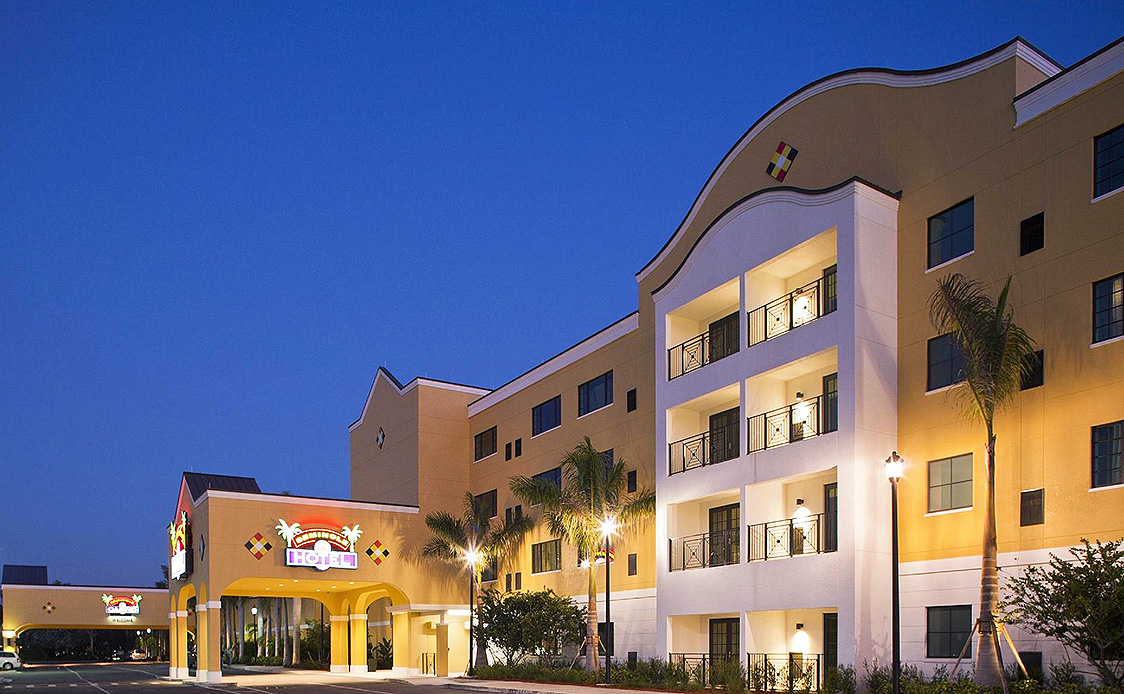
Seminole Casino Hotel Immokalee

IMMOKALEE, FL – The Seminole Tribe of Florida’s Ah-Tah-Thi-Ki Museum is presenting the “Seminole Artist Experience Art Sale” event on Saturday, July 29, from 11:00am to 5:00pm at the Seminole Casino Hotel Immokalee. This will be the third event of the series. The first event kicked off at the Ah-Tah-Thi-Ki Museum in Big Cypress, followed by an event at the museum’s satellite location in Hollywood, FL, at the Seminole Okalee Indian Village.

The Seminole Artist Experience Art Sale features fine art by Native American artists from the Seminole Tribe of Florida. Attendees can view original works of art by Artists Elgin Jumper, Justine Osceola, Tyler Tigertail, among others.

The free event will showcase featured artists as they demonstrate live painting and exhibit original works, showcase hand crafts such as Seminole sweetgrass basketmaking, and display other traditional Native Florida Seminole artists’ works. Live musical soundscapes and oral traditions will channel the flow of the creative experience.

Attendees can also enjoy traditional favorite dishes from Seminole food vendors while experiencing the Seminole Immokalee art sale.

Jiayueyue Li’s intimate photography shines a light on Asian women emigrating to London

Jiayueyue Li’s intimate photography shines a light on Asian women emigrating to London

Perusing through journals of months and years past can bring us right back to feelings of the time, and in some cases summon a new wave of creativity. Both are particularly true for London and Shanghai-based photographer Jiayueyue Li, whose old diaries gave her a window into her rough start in London — fraught with intrusive neighbours, struggles to find accommodation and pursuing a degree outside of her native language — and the solace she found in her room. “Daily life outside was like a war at times, and my room was always a place for healing,” she tells us. “Reading back through my diary, images of other girls in their rooms, in a similar situation, started coming to mind,” she adds.

Jiayueyue’s journey doesn’t stop at introspection or nostalgia. She wants to know how Asian women who have emigrated to London are feeling now; developing from self to friends and eventually strangers. Her very personal style captures these women in a way that doesn’t strive for perfection or immediate clarity to us as viewers. Some images are of near silhouettes and in others, faces are obscured by furniture and keepsakes. But the emotions of the subjects – whether distraught, joyful or jestful – come to the forefront, allowing us to read the room. “Things have changed a lot since I started the project [in 2016], a lot of the girls I documented in the early years have moved out of those rooms. It could be the pandemic, new policies or the rental market”, she says. “When you come to a new city, your decision to stay or leave is deeply personal, but when you zoom out these choices draw a portion of history”.

Student photography on display at library

Student photography on display at library

Photography students at Oak Harbor High School are the featured artists at the Oak Harbor Library for the month of July.

The featured students were in Jana Jansen’s photography and digital arts class during the last school year. Jansen said the 13 digital photographs and two digital art pieces on display at the library showcase the skills taught in her classes.

“I hope the visitors will very much enjoy the artwork and be amazed at how much creativity, talent and skill our high school students have,” she said.

This is Jansen’s second year in a row showcasing her students’ work at the library. Some of the photographs on display this month advanced to the final round of the Washington State High School Photography Competition this year.

Matthew Ackerman was one of the students who had a photograph advance in the contest. He started taking photos over the summer of 2020 and most greatly enjoys taking photos of landscapes and old architecture.

Ackerman, who will be a senior next year, said he learned how to compose a photo in Jansen’s class.

“I would characterize my style as emphasizing the interplay between light and texture,” he said. “Most of this is achieved through the use of a slower shutter speed and picking the right time of day to photograph.”

The students’ photographs will be on display through July 31.

Photo by Bailey Darnell

Photo by Bailey Darnell

Photo by Bailey Darnell

Photo by Bailey Darnell

Photo by Roann Barrera

Photo by Roann Barrera

Photo by Alex Merrill

Photo by Alex Merrill

Photo by Bailey Darnell

Photo by Bailey Darnell

Photo by Taylen Bader

Photo by Taylen Bader

Photo by Matthew Ackerman

Photo by Matthew Ackerman

Photo by Matthew Ackerman

Photo by Matthew Ackerman

Photo by Laurianna Newcomb

Photo by Laurianna Newcomb

Photo by Faith Dalio

Photo by Faith Dalio

Photo by Alex Merrill

Photo by Alex Merrill

Photo by Thatcher Tennal

Photo by Thatcher Tennal

Image by Emelyn Payne

Photo by Thatcher Tennal

Image by Mia Peterman

Photo by Thatcher Tennal

Desert Rider Celebrates Lowrider Culture and History at Denver Art Museum

Desert Rider Celebrates Lowrider Culture and History at Denver Art Museum

The Denver Art Museum is on a roll. The first half of the year saw the museum packed with openings full of creative goodies and diversity, and July welcomed yet another barrier-busting, exceptional exhibit with Desert Rider: Dreaming in Motion, which opened July 9 and will be on display through September 24.

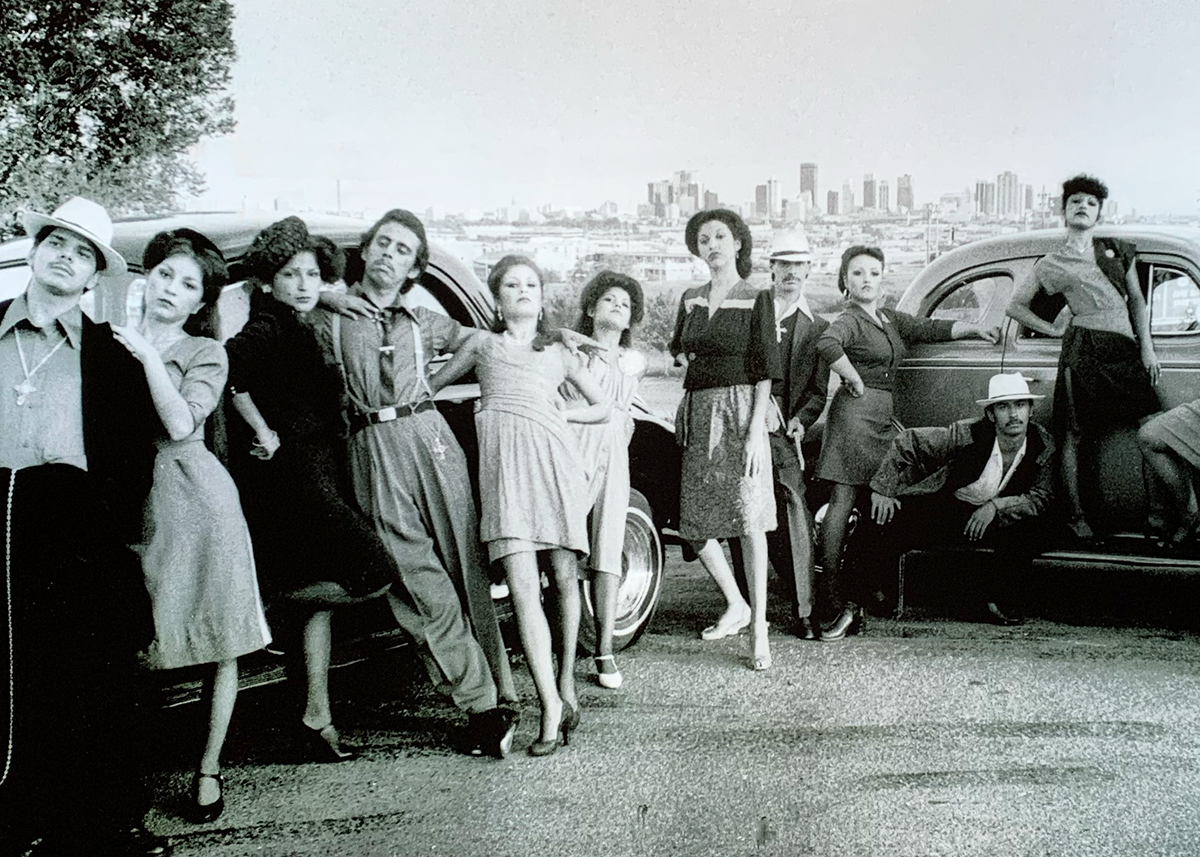
Curated by Victoria I. Lyall, the Jan and Frederick Mayer Curator of Art of the Ancient Americas, Desert Rider is a fresh look at transportation in the West, exploring how some methods can also be forms of expression and empowerment. In particular, the show highlights lowriders, the stylistically dazzling customized cars linked to Mexican-American culture that are often tricked out with gravity-defying hydraulics and candy-color sparkle. Lyall retooled the exhibit, which originated at the Phoenix Art Museum, to include a deep bench of Colorado artists, including Carlos Frésquez, Juan Fuentes, Tony Ortega, Daniel Salazar and Santiago Jaramillo.

They join queer, Latinx, Indigenous and women artists from western and southwestern cultural hot spots in challenging stereotypes about such subcultures as lowriding and skateboarding, including those who are part of them. Artistic mediums run the gamut, and in many cases they are surprisingly combined to lampoon artistic traditions in an approach that’s as satisfying as the sound of polyurethane striking concrete. There are immersive installations, massive photographs of vintage Denver car culture, a wall of boards from Denver skate company 303 Boards and much more.

Greeting visitors is Justin Favela’s large-scale suspended and sparkling lowrider sculpture, Fantasma, which was painstakingly assembled with tissue paper and cardboard to create one most majestic piñata. Favela is a Las Vegas native but a familiar face on the Denver art scene; this piece complements his work already on display in the city, at the David B. Smith Gallery and Denver Botanic Gardens.

Lowriders are especially significant for Favela. He grew up in a religious environment where representations of car culture were forbidden because of their perceived connotations of violence and criminality. “When I got older, I realized that the way that the media portrays lowriders is not really true…and I realized that the lowrider is one of the most important art forms for the Chicano community,” he says. Favela gained a deep respect for the meticulous craftsmanship of the redesigned vehicles, which often take years to complete.

“The symbol of American progress is the car, and it’s literally moving us through and propelling us forward. … For Latinos to take that symbol and make it their own art form, taking something that’s been discarded, an old car, and turning it into this beautiful sculpture, not only is it just cool to look at; it’s also about family, tradition…religion,” Favela explains. “It’s literally a resurrection.”

Desert Rider presented an opportunity for him to make an especially personal work. “Usually when I make a car, I’m re-creating a car that already exists. This is the first time that a curator asked me to make a car that represents me,” he says.

“I’ve always had this vision of this white lowrider, floating like an angel from above, you know? So when I came up with idea, [I asked myself], ‘How do I queer this up and represent that side of me and Vegas and my Latinx heritage?'” Favela continues. “And this car has all of that.”

Working in white and silver, Favela used the sculpted lowrider’s “paint work” to represent a trio of queer icons: Walter Mercado, Liberace and Juan Gabriel — none of whom came out in their lifetimes. The undercarriage, illuminated in gold, is a nod to the hero of the Club Q shooting, Richard Fierro, who drives a gold lowrider.

Another creative representing queer identity is San Antonio artist José Villalobos, who not only adorned vintage saddles with expressive touches such as pink faux fur and chrome, but also emblazoned them with pejorative homophobic terms. His work, “QueeRiders,” is one of the highlights in the ‘Horsepower’ section, which reconsiders one of the oldest forms of transportation.

“A lot of my work is informed by the border and machismo, and a sense of how we navigate those spaces as queer people,” Villalobos explains. “For me, at least, it was kind of important to start talking about…the lack of representation of queer people in these specific subcultures. I mean, if you really look at everything, the cars are very flamboyant — they’re very sparkly, they’re very gay.” Villalobos links the sense of ownership and machismo involved in crafting a lowrider to the reclamation of the slurs shown in his current installation.

Other artists broadening representation in intriguing ways include Nanibah Chacon and Liz Cohen, as well as Indigenous artists Gregg Deal and Douglas Miles. Chacon and Cohen provide representations of women in what is often the “boys’ club” of lowrider culture, while Deal and Miles lead viewers into discussions about the stolen Native land that lies under a skateboard’s wheels. There’s a lot to take in, but Desert Rider treats its serious subject matter in ways that are both playful and empowering.

The exhibit was initially created by Gilbert Vicario, a former curator of contemporary art at the Phoenix Art Museum. DAM curator Lyall discovered it while returning a piece of artwork that the DAM borrowed from Phoenix for her groundbreaking exhibit on La Malinche. “I was about to return the painting and I was just seeing what they had up, because I wanted to check out what was going on, and I saw this show,” she recalls.

Intrigued by its approach to oft-misunderstood subcultures, she reached out to Vicario for more information. “I was like, ‘This is an incredible show,'” she says. “It’s very different than what most people think of when they think of things like lowriders and skateboards. … You’re telling a story about vehicles, self-expression, communities of practice and communities of empowerment, hope and pride and the landscape, from a totally different perspective than we normally get.

“I brought it to the programming committee, and everyone loved it from the get-go,” she continues. “And it had coincided with the publication of former state historian Nicki Gonzales’s report…on Denver’s Latino historical landmarks.” That report, “Nuestras Historias: Mexican American/Chicano/Latino Histories in Denver,” is considered a big step toward rescuing local Latin histories from obscurity. It also linked well thematically with Lyall’s new project.

“It just all kind of came together,” Lyall reflects. “When we were given the green light to do the exhibition, after reading Nicki’s report, it was like, ‘We need to find a way to adapt it to Denver. How can we really make it so that there’s a local component of the show?’ — because lowriding appears in that report. She talks about the different cruising routes — how it started on 16th, then went up to 38th, and then as 38th changed it went to Federal, and as tensions grew between the police and the community on Federal, they started using the medians.”

Pushing back on the negative local perceptions of lowriders and celebrating the culture’s Denver history is Desert Rider‘s most salient goal, with the DAM also linking it to Denver car clubs and celebrations like La Raza Park Day — entities that strive to foster a more amicable relationship with the city while altering pre-existing prejudices. That’s the artists’ goal, as well. “One thing that they’re all trying to do…is underscore that lowriders are about family and they’re about community pride,” Lyall says. “They’re not about gangs; that criminal element is not a part of it.”

And the vibrant display of vehicular creativity highlights many communities that have “a very similar message,” adds Favela. “That we’re here, and we’re making the best out of what we have, and we’re going to do it even better.”

Desert Rider: Dreaming in Motion is on display through September 24 at the Denver Art Museum, 100 West 14th Avene Parkway. Find information at denverartmuseum.org.