Looking for some something to do? Here are highlights of what is happening through the next week.
A circus, free jazz and ‘Terrors’ at the drive-in


The sculpture – which was painted by local artist Nick Romeril – arrived at St Catherine’s Breakwater on a Jersey Seafaris rib on Monday morning.
Each week…


At the Sioux Falls Levitt All My Relatives – or in Lakota, Mitakuye Oyasin – Festival, Native American artists spoke on a panel about music, their communities and their identities.
Nathan Foote, on stage called Crime Spree, sat with Kobe Jordan and Jackie Bird Saturday in discussion of what music means to them.
“How I got started in music, I was locked up. It’s kind of a funny story but I was literally writing a letter to my family and some guy came up and asked me if I was writing rhymes,” said Foote “I didn’t know what he was talking about, I was like, ‘sure.’ And he was like, ‘spit it to me, let me hear it.’ I was like, ‘you want to hear my letter?’ He said ‘Oh you’re writing a letter.’ Yeah. He was like, ‘if I teach you how to write music will you go somewhere with it.’ And I was like, ‘yeah sure man.’”
Foote started taking music seriously after finishing out his sentence. Since that conversation, he has released four albums and been nominated for the Native American Music Awards.
Sitting next to him on stage was Kobe Jordan. He said his love of music began with his mother’s car radio on the way to elementary school.
Jordan mentioned the stigma surrounding the Native American community and alcoholism. He feels that artists serve as inspiration.
“I think it’s really great that we have people like us that try to make waves in quote unquote, ‘the outside world,’” said Jordan.
The final night of the festival was June 8. That evening Jordan opened for the final act performance by the band called “Indigenous”. The last panels also occupied the Levitt mainstage during the festival.
Jackie Bird said she has been an artist all her life.
“What I do with my life is offer all that I am to the traditional art to inspire others, so were remember who we are and live a real good quality life,” said Bird.
These artists and the festival were sponsored by South Dakota State University’s Wokini Initiative and Levitt at the Falls.

When it comes to cameras, two of the most important specs for landscape photographers are resolution and dynamic range. In recent years, cameras from Fujifilm and Hasselblad have reinvigorated medium format by modernizing camera options and reducing their prices to the point that they have become a viable alternative to full frame. So, which company makes the best camera for the genre? This helpful video review compares the Hasselblad X2D 100C and Fujifilm GFX 100S to help you decide.
Coming to you from fototripper, this great video review takes a look at the Hasselblad X2D 100C and Fujifilm GFX 100S for landscape photography. It really is amazing how far along medium format options have come in just a few short years, with both cameras offering 102-megapixel sensors with loads of dynamic range along with a wide range of useful features. Perhaps the biggest differentiator is price. The GFX 100S is almost $3,000 cheaper than the X2D 100C, though the Hasselblad does offer some extra features, like 1 TB of internal storage, a viewfinder with higher magnification and resolution, and a larger rear screen. On the other hand, Fujifilm’s option includes things like more focus points, a faster burst rate, two card slots, and more. No doubt, both are great options. Check out the video above for the full rundown.

London-based designer Conor Hacon of Common Design released his latest series of furniture pieces, all inspired by the idea of collectivity and kinship. The collection, which consists of a set of chairs, a coffee table, and a fruit bowl, is named Invitations, for the details of the pieces that help foster connection.
The Cruz Canteen Chair is instantly memorable for the design of the back, characterized by two panels that leave a negative space in the backrest and also serve as the back legs. If you look closely, there is a repeating pattern that the designer intended as a metaphor for being together. It’s not each chair that is one “unit” of the pattern but instead, the mirrored halves of two adjacent chairs that make the inconspicuous pattern.


Unlike typical and perfectly linear coffee tables, the Invitations Coffee Table features hand-shaped, fin-like edges that tilt down. This detail was intended to foster closeness; an invitation, so to speak, for those gathered around to lean closer into and across the table.


Lastly, the Wood Warped Fruit Bowl, a modern interoperation of a vessel made for communal and informal grazing, recalls the natural tendency of wood to cup and bow. The perimeter of the wood is painted to further highlight the warp and is reminiscent of how wood is typically received from the timber merchant.
For more information on the Invitation collection by Conor Hacon of Common Design, visit commondesign.co.uk.


Nan Goldin’s photography can often feel like a sunburst. Sometimes, it’s the chiaroscuro of the New York artist’s camera flash, haloing its subjects in a beam so blinding that everything else seems to melt away. Or it’s the fading light filtering in through a window, casting bathrooms and bedrooms – unkempt, grimy, mottled with the debris of life – in an aureate glow. A lyrical documenter of queer life during the Aids crisis, her best-known works are suffused with the texture and ambience of memory: singular moments of warmth against roiling clouds of devastation.
A new exhibition at the National Gallery of Australia collects 126 works from The Ballad of Sexual Dependency – the photographs that Goldin presented as slideshows, prints, and a 1986 book that remains a seminal entry in the American artist’s five-decade career, as well as the lineage of photography at large. It’s the first time the entire set of prints has been shown in Australia, although the slideshow version has played a few times, most recently in 2010.

“There is a popular notion that the photographer is by nature a voyeur, the last one invited to the party,” writes Goldin, in her introductory essay to the book. “But I’m not crashing; this is my party. This is my family, my history.”
With this manifesto, she invites us into her universe of earth-shaking infatuations and glimmering heartbreak, often limned with a startling intimacy. The romantic and the platonic become ambiguous. Friends and freaks of all ilks populate her photographs – skinheads and gutter punks, queens and dandies, rakes and debauchees, always at their least guarded. They are in various states of undress, sprawled across unmade sheets, making and falling out of love with equal fervour. In Canberra, the photographs fill one darkened room – which, in its cocooning silence, feels appropriately numinous.

“Photo plays such a talismanic, extraordinary role in Nan’s life,” says Anne O’Hehir, the NGA’s curator of photography. “She’s very clear that it saved her life.”
Now 69, Goldin was raised by middle-class Jewish parents in the stifling suburbs of 50s Boston . When she was 11, her older sister Barbara died by suicide after periods of hospitalisation – a tragedy which reverberates through all of Goldin’s art, O’Hehir says. “Probably her whole life is trying to keep Barbara’s memory alive.”
For years after Barbara’s death, Goldin “barely talked above a whisper,” she said in a 2014 Guardian interview; it wasn’t until she left home at 14 and enrolled at an alternative school a few years later that another form of expression unveiled itself. A teacher gave her a camera; as the lore goes, she simply never stopped.
Taken between 1979 and 1986, the photographs in The Ballad of Sexual Dependency mostly span Goldin’s time in the queer enclaves of Provincetown, Massachusetts, as well as New York’s downtown bohemia in the 80s. Named after a number from Bertolt Brecht’s The Threepenny Opera, The Ballad of Sexual Dependency is similarly theatrical in sweep, cataloguing the web of relationships in the artist’s life: what Goldin saw as the unimpeachable alienation between men and women, and our addiction to love in the face of certain doom. “I’m trying to figure out what makes coupling so difficult,” she writes in the introduction.


Chosen family remains a potent thesis throughout. Faces of Goldin’s nearest and dearest recur. The performer and longtime friend Suzanne Fletcher features 11 times: eyes closed in momentary bliss as she showers, or gazing out a train window – or, later, tear-stained by Goldin’s bed. The late Cookie Mueller – the John Waters muse and it-girl who inspired legions of urban legends – appears in three variations, each divorced from her public persona. In one photograph titled Cookie at Tin Pan Alley, the actor perches ruminatively at the bar, in between takes of a film shoot.
after newsletter promotion

The sheer proximity between Goldin and her subjects, says O’Hehir, up-ended decades of photographic tradition which had long prized distance between artist and sitter. “And if you did have an intimate portrait, it was the male photographer and the muse.” She namechecks the classic couples of art history: Alfred Stieglitz and Georgia O’Keeffe, Edward Weston and Charis Wilson, Harry and Eleanor Callahan. “I don’t think it’s that normal before Nan for people to photograph their friends in the same way.” She points to Suzanne in the shower: “Traditionally, that’s meant to be Nan’s lover. And it’s not – it’s her best friend. She doesn’t even make a distinction: everybody’s looked at with a lens of desire, because she wants to make them all look beautiful.”
Even at its most ecstatic, however, The Ballad of Sexual Dependency is punctuated with the tang of melancholy. The creeping despair of the HIV/Aids epidemic increasingly colours otherwise joyous photographs of Goldin’s community caught in interstitial moments: preparing to go out, midway through a birthday party, raising a drink to their lips as they sunbathe. “When thousands are dying in New York, Nan is showing her friends just doing stuff beyond being sick and in hospital. [They’re] having kids and playing Monopoly. It’s a simple idea, but to see people like that – it’s very powerful.”
Goldin, recently, has become well-known for her staunch (and successful) campaign against the Sackler family, whose pharmaceutical company has fuelled the deadly opioid crisis in America while donating millions to landmark art institutions around the world. The campaign was documented in last year’s Oscar-nominated film All the Beauty and the Bloodshed – but Goldin’s work has always been political. “I think Nan was probably born with a little clenched fist,” O’Hehir laughs.

Goldin first presented The Ballad of Sexual Dependency as public slideshows in clubs and bars: a tongue-in-cheek revolt in a time where “everyone’s making slides so they can bore each other to death,” O’Hehir says. “Dad’s doing his little holiday slides, click click click. She’s using that very heterosexual nuclear family tradition … and flips it to say: we’re having a family album as well, but it’s my chosen family.” During the slideshows, Goldin would accept feedback from a vocal audience, and eventually winnowed down more than 700 photographs to a slim volume of 126. “People would shout out, ‘Oh, I love that one, Nan!’ Or: ‘I hate that!’ She’d take it out if people said they looked ugly.”
The Ballad of Sexual Dependency, then, is both documentary and glorification: a record of queer life which elevates its subjects to the stuff of mythology. There is one notable exception: Brian, the louche layabout who Nan met while tending bar, and who became an abusive lover to her over a relationship that lasted several years.
Brian wields an outsized presence in the room – photographs of him fill the centre of the exhibition in what O’Hehir calls the emotional climax of The Ballad of Sexual Dependency. His first appearances are roguish, almost bewitching. “You understand that Nan’s seeing him in that way,” O’Hehir says. Soon, though, his face turns stony, glowering into the lens like a threat.
Then the gut punch: a photograph titled Nan one month after being battered. Blue-black bruises bloom across the artist’s face in the aftermath of a beating which almost left her blind; in red lipstick and pearl necklace, she stares defiantly down the barrel of the camera. “She says it’s important to make the private public: this is the reality, and as much as you don’t want to talk about it, I’m going to put it in my book and you can all look at it … We will not vanish.”

O’Hehir gestures towards Parliament House, a few blocks away from the NGA. “It’s just as important now as it was in 1986 … All that stuff in parliament, we haven’t gone anywhere. The fact that people can still be put through it for coming forward.”
Perhaps, suggests O’Hehir, The Ballad of Sexual Dependency remains perennially relevant as a celebration of the fringes – an arms-outstretched howl against conservatism. “I think the world is becoming a very fearful place again,” she says. “And when you think of how people were afraid of HIV/Aids at the time when this came out – the fear just ends in violence.”
The Ballad of Sexual Dependency is on show at the National Gallery of Australia until 28 January 2024


Photographer shines light on young migrants after media forgets about them – InfoMigrants

Published on : 2023/07/10
Thousands of migrants are photographed arriving in places like Spain each year. But with the next round of arrivals, the images of the previous migrants are quickly forgotten. Photographer Felipe Romero Beltran decided to work with migrants to stage images to bring their narratives back into the present.
Spain is one of the countries that remains at the forefront of the ongoing migration movements across Europe. In 2022, almost 30,000 migrants arrived on Spanish soil by sea, according to the United Nations.
This is only half the number of 2018, but with pandemic-related travel restrictions now a thing of the past, the number of people embarking on perilous journeys across the Mediterranean is once more on the rise.
Every time a boat arrives — whether by rescue or by succeeding under its own steam — the same images travel around the world: tired migrants and refugees being assisted on land with blankets and water; somewhere nearby there’s usually an ambulance or Red Cross vehicle in the shot.
In some instances, these migrants can simply be seen walking away, usually never to be heard of again, as they enter the asylum system with all its pitfalls and rejections.
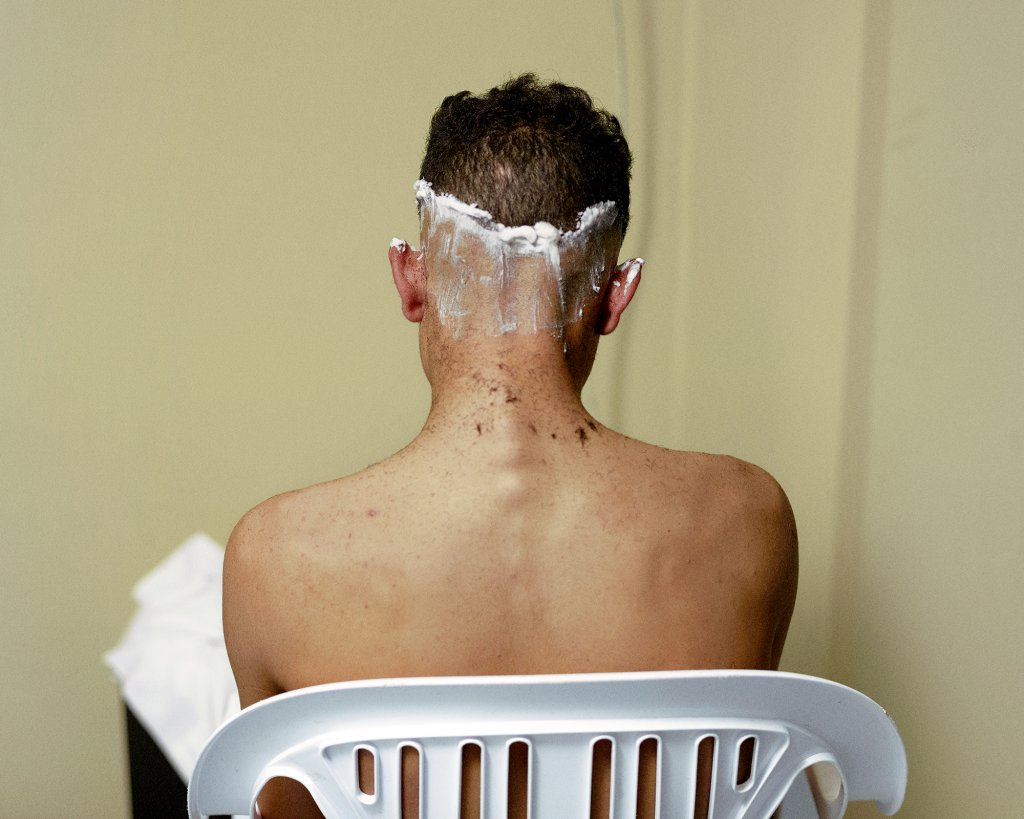
Photographer Felipe Romero Beltran decided that this is not where their story should end. In fact, for many this is the real beginning of the journey, having succeeded in coming abroad. This is why he decided to follow a number of young migrants from Morocco after their arrival in Spain to highlight their experience once they made it.
Part documentation, part photography art, Beltran, born in 1992, focuses on the lives of nine Moroccan men, who did not know each other prior to the photo shoots. They share their experiences, their fears, their frustrations as well as their hopes. They examine what masculinity mean in a new culture, which may not echo the expectations imparted upon them in their home countries.
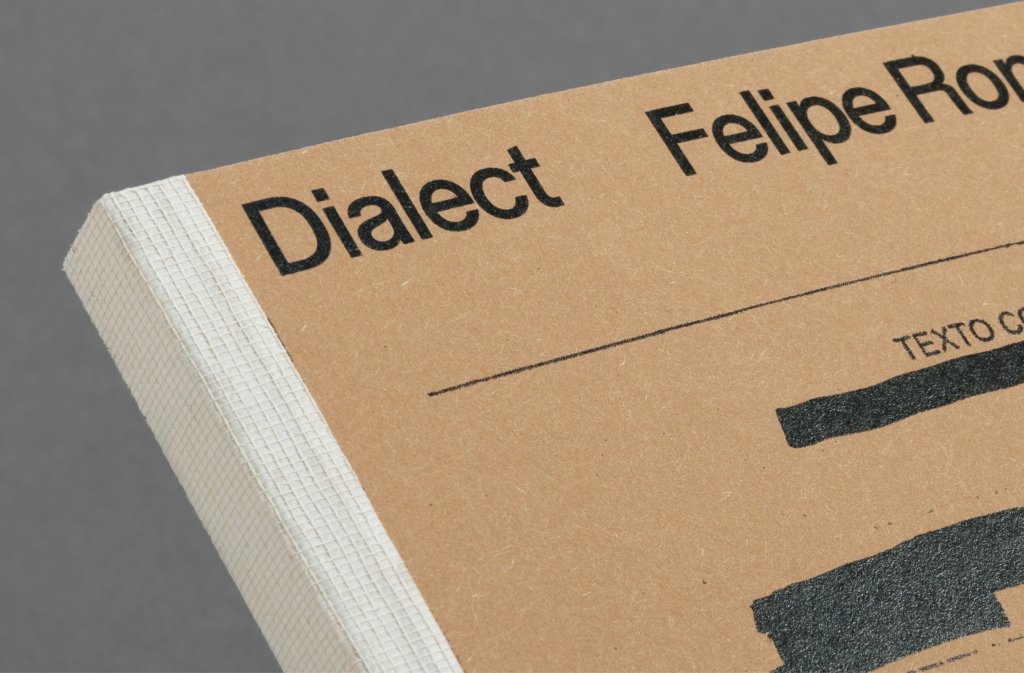
The result is a book and a photographic series called “Dialect,” which aims to change the way we view the phenomenon of migration.
Beltran had time to get to know the nine subjects in the book: they are required to stay in Spain for three continuous years before they can apply for residency and start a regular life.
During this time, they rely on state welfare for food and housing and are not allowed to work. Even with a certain number of classes they can join, such as Spanish lessons and integration classes, three years is a long time for boredom to not set in.
Beltran’s images cut through this boredom, highlighting the reality of such migrants who instead of pursuing their dreams find themselves stuck killing time in a bureaucratic quagmire.
“I proposed the project and explained that I wanted to take photographs of them in this limbo state, documenting the years of waiting,” Beltran explains.
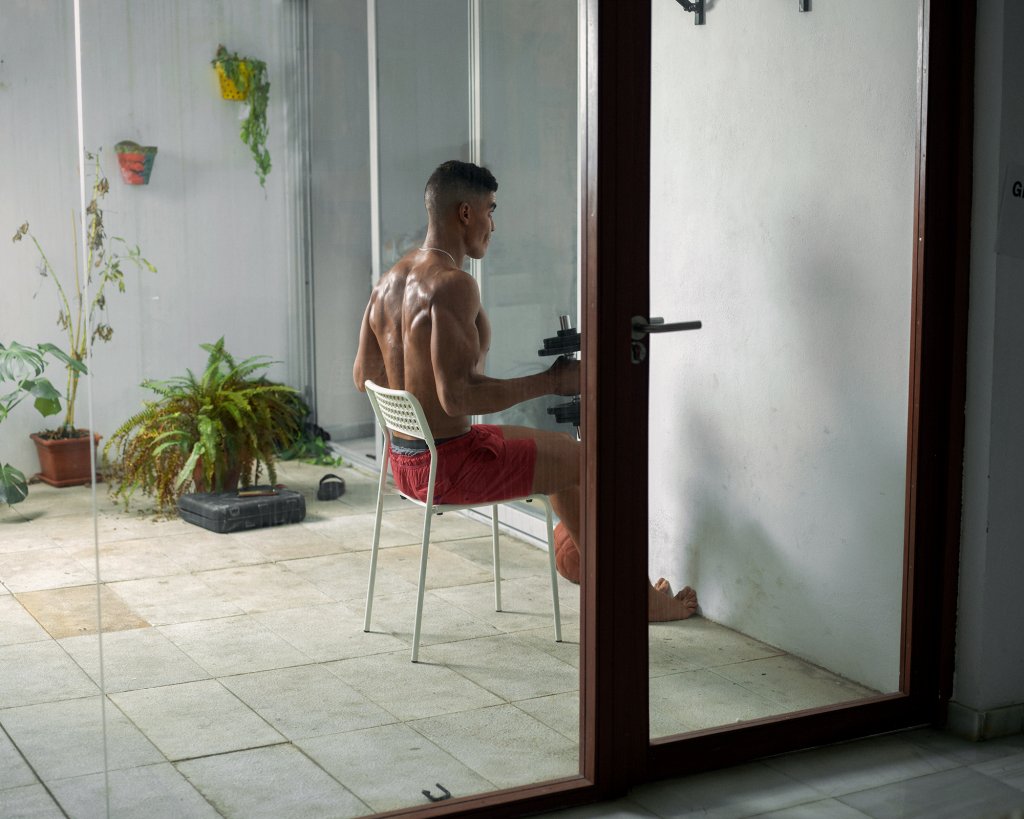
This is one of the reasons why Beltran decided to have a good amount of the images staged; he asked his young subjects to reenact moment of their migration journeys — to share glimpses into the nightmares of migration in pictures which look almost like a piece of physical theater.
“There was an activity around taking the images — it was something during the day that (could get them) excited. And it was fun,” Beltran explained.
“Everyone was laughing, and they just make jokes each other during the sessions.”
With the veil between art and reality thus deliberately being lifted, Beltran also incorporated some of his own experience of being stuck in bureaucratic waiting game in Spain: A few years before, he had moved to Spain from Colombia himself, where he suffered with the immigration authorities despite being a highly educated native Spanish speaker.
With the subjects of his “Dialect” project being francophone, he figured that the hurdles must be even considerably higher. To illustrate this, he also included a video named “Recital” in his work, in which he got the nine young migrants to try to read the first four pages of Spain’s immigration law.
“They weren’t understanding a word,” he said, highlighting how this removes their sense of agency over their own fate — even if they have Spanish lawyers attached to their cases.
“These legal procedures are really, really complicated, even for native speakers,” said Beltran, adding that this leads to an overall sense of helplessness among migrants and refugees.
Beltran says he hopes that his photographic project can help humanize the experiences of migrants to audiences which appear to increasingly be desensitized to images of migrant suffering.
The images are abstract and stylized — they look more like Instagram than the evening news. They look like they will fill museums and not front-pages.
“One of the reasons this project stood out to me is because it’s technically documentary photography, but it feels like fashion imagery,” Beltran explains.
This is part of the reasons why some of his reenactments really hit a nerve: they are interesting to look at but only reveal their full story on second sight. In one image, one of the subjects lies on a blue gym mat — symbolizing the way he laid on Spain’s shores upon surviving his migration ordeal.
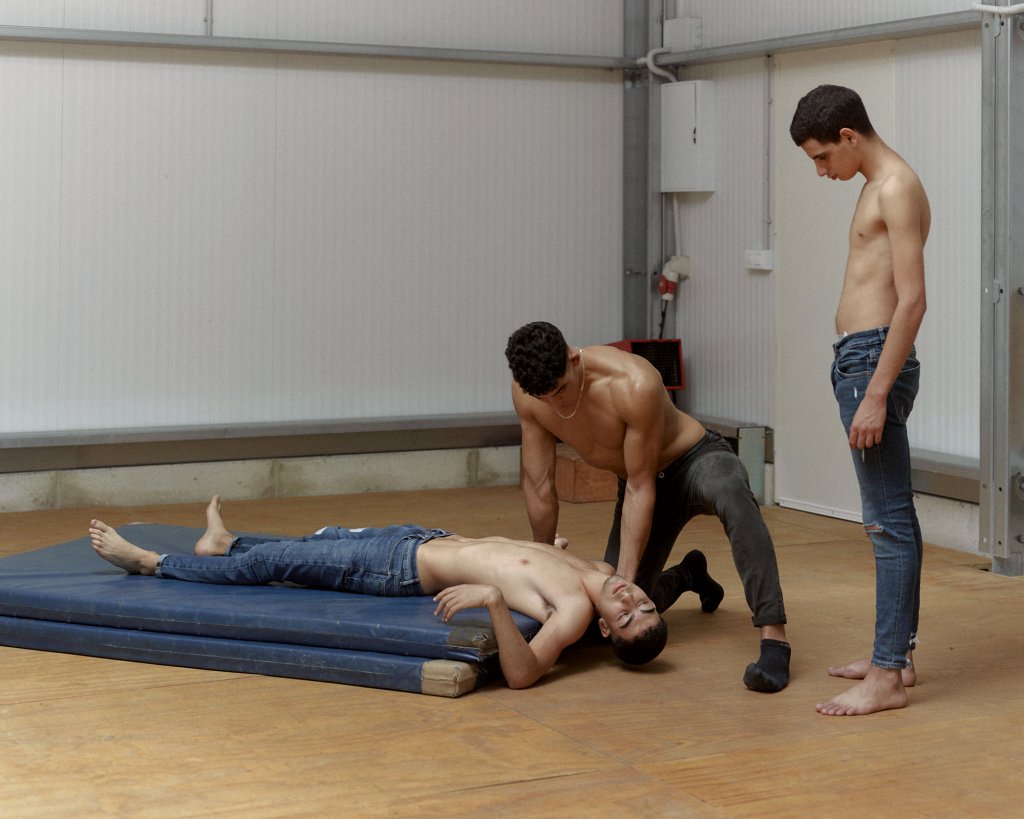
In another such scene, two men are seen carrying a third on their shoulders, recreating the moment that he fainted during a day-long walk to Seville.
Beltran says that Dialect covers “three years of state violence for nine young Moroccan migrants exiled in Kafka-esque limbo in Seville, southern Spain.
“When underage migrants enter the country illegally and cannot be verified as adults, their custody remains in the hands of the state – subjecting them to a lengthy process of up to three years to gain legal status.”
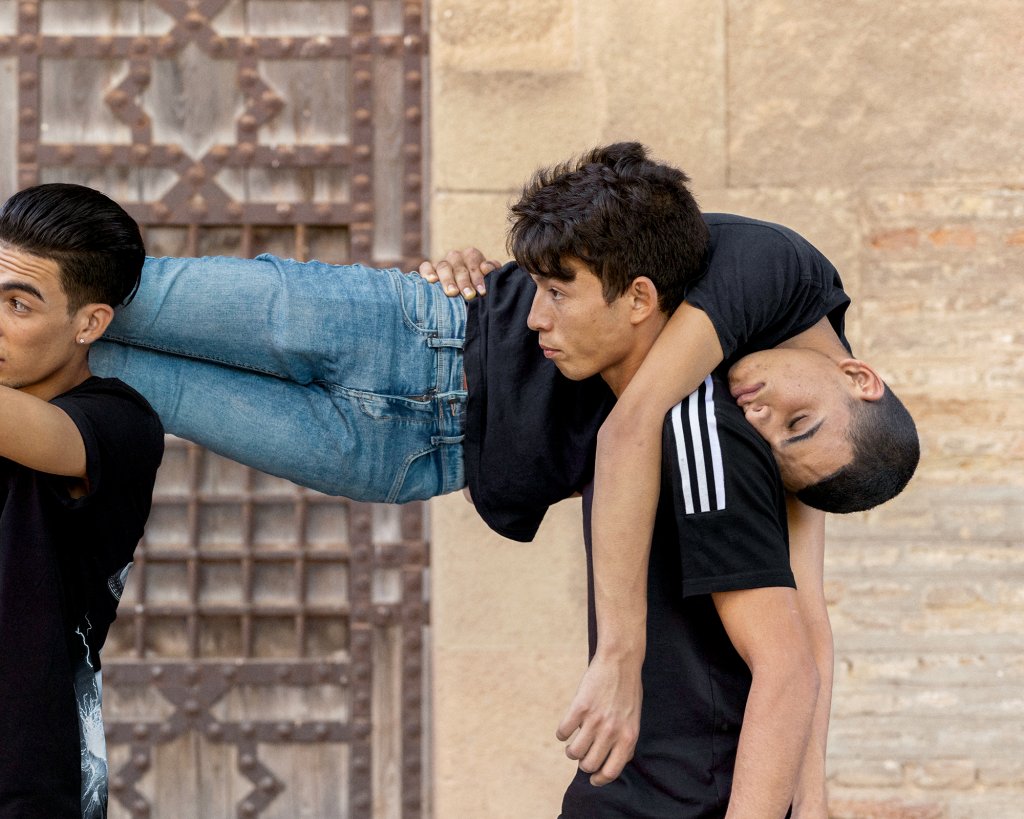
It is in this state of suspension and liminality, Beltrán says, that he engages with the body as a metaphor:
“Using a carefully articulated language between photography, performance and collaboration, the weight of dead time is registered upon the shoulders of these young men, entering into dialogue with their memories, journeys, and the humiliating mundanity of waiting and migration.”
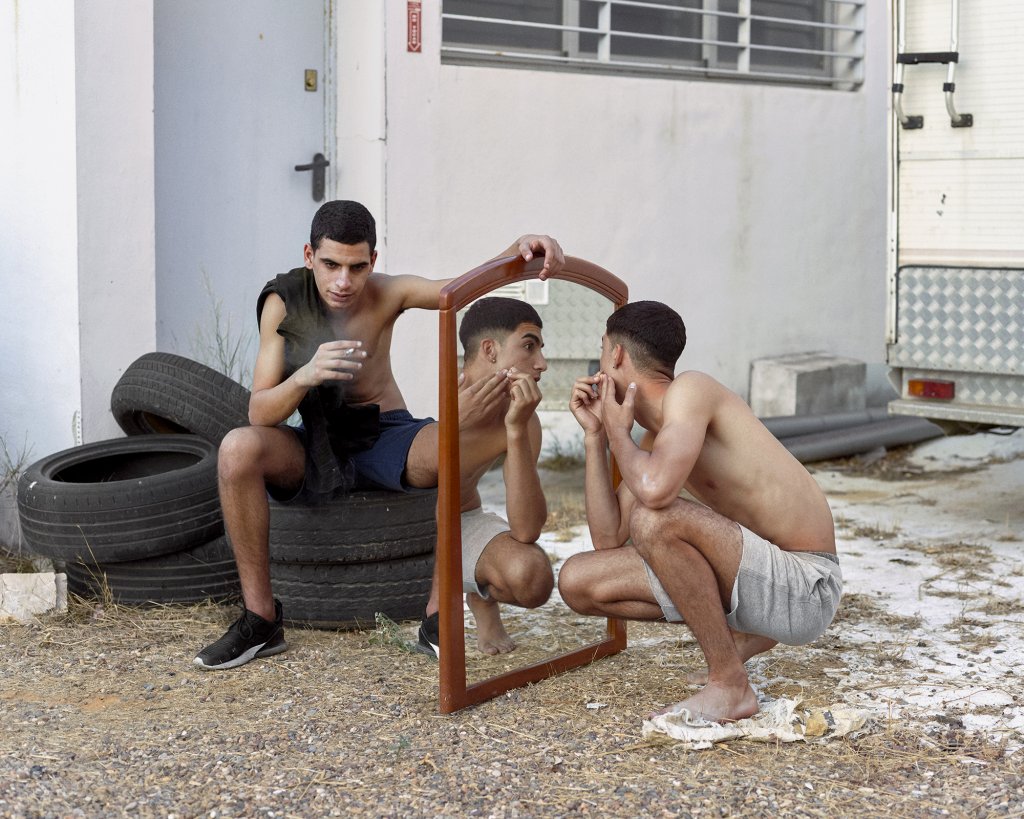
Dialect by Felipe Romero Beltrán is published by Loose Joints, and is available through to www.loosejoints.biz

In the volatile markets of 2023, with major current affairs occurring day by day, and digital platforms (ChatGPT, Discord, Midjourney and more) disrupting brand engagement, how are organizations expected to stand out in all this noise? Making marketing (and business) efforts sustainable is the key.
Following the same templated format for activity isn’t going to make a significant impact on new audiences. But trying new techniques at random isn’t going to be authentic or effective either.
Instead, stepping out of your marketing box should be done through well-researched and calculated campaigns. Testing out new campaign formats, audiences, platforms or copy may feel like a risk. You could waste investment, lose trust, or destabilize your brand image. But being creative doesn’t need to have a consequence if you’ve done the work.
When backed by data-driven planning and understanding, trying out new ideas will be a valuable boost for brand engagement, lead generation and conversion. This combines to form a natural and essential process of evolution for any organization’s marketing strategy. To ensure that your next marketing “risk” is a confident success — not something you’ll regret — it’s important to follow these four steps:

The first step in successfully taking your next marketing risk is conducting thorough research. This means understanding your target audience’s pain points and needs, as well as the channels and tactics that will effectively reach them. Once you know this, you can better understand the value you can realistically expect to gain from any given activity.
Taking a risk without proper research is just taking an uncalculated guess. You may get lucky, but your chances of success are much lower. For businesses that are unsure of how to begin planning out their next campaign, there are numerous resources available, such as Hubspot’s resource center.
Continue this research process until you can confidently answer these three questions:
By answering these questions, you can ensure that your marketing plan is a calculated risk rather than a poorly thought-out idea.
Related Article: How to Understand What Your Customers Do and Why They Do It
A lack of coherence or consistency can lead to a lack of engagement. It may even be misleading about the brand or service and work against your efforts.
Understanding how your copy will resonate with your target audience is key to the performance of your latest campaign.
It’s important to make sure that your messaging and narrative are tailored to their needs. Online tools such as Answer The Public, Ahrefs, Semrush and Google Trends can give you great insight into your audience. Through these, and many other additional extensions and plugins, you can find out what your audience is commonly searching for, the questions they ask and the best keywords you can use to target them.
Combining these with a formal, definitive matrix of all available personas can help inject clarity and transparency into your latest marketing risk. If you can’t find a tangible link between your newest campaign and these personas, then maybe it’s time to reevaluate.
Related Article: Finding Your Target Audience Through Social Media
Track your results regularly and make changes to your strategy as necessary to help you stay ahead of the curve and avoid making regretful decisions.
One of the biggest advantages of modern marketing is the ability to track and measure the results of your efforts. Instead of relying on intuition or qualitative information, use the data available to you to make informed decisions you know will perform well.
Having the right infrastructure in place, such as a flexible and scalable CRM, is key to tracking your results effectively. It provides clear performance data and informs best practices for future efforts, allowing you to reactively optimize activity. Examples of warning signs to look for include:
With these tools in hand, it’s easy to be confident when taking risks. It won’t always prevent lackluster results, but it will enable you to turn the situation around quickly.
Even the most calculated and well-researched decisions need monitoring and optimization. Be prepared to pivot your strategy as needed — and be willing to make changes that may be uncomfortable at first.
The online landscape, social and search algorithms, and audience sentiment are always changing. Staying up to date and adapting strategies is a full-time task.
Personas naturally shift as their needs evolve, and you may find that your same old social media strategy just isn’t achieving the same level of engagement as it was. When this happens, embrace a mindset that isn’t afraid of adapting, instead of doubling down on traditional marketing efforts.
Just some examples of creative (but achievable) marketing risks include:
Taking risks in marketing is an essential part of driving growth for your business, but it’s important to do so in a way that minimizes the risk of regret or negative impact.
Ultimately, the biggest risk to your marketing is not doing anything new at all. Old processes become stale, boring, and irrelevant, and your engagements and conversions will suffer as a result.
Taking marketing risks is daunting, but they are incredible ways to reach new audiences and grow your business.
 Learn how you can join our contributor community.





