Why New Gear Won’t Make You a Better Photographer

Why New Gear Won’t Make You a Better Photographer

We live in an age of instant gratification, and as such, it can be hard to have the patience it takes to develop and master a skill over the course of several years, and photography certainly is not immune to that. There is a temptation to throw money at the problem, and while that shiny new camera or lens will certainly be fun to play with, it will not make you a better photographer. This insightful video discusses seven reasons why. 

Coming to you from Peter Forsgård, this fantastic video essay discusses seven reasons why a new camera will not make you a better photographer. To be clear, there is nothing wrong with buying new gear because you enjoy it so long as you have the budget to do so, but where people often go wrong is in assuming that that equipment will make them a better photographer. While it might provide small differences in image quality or performance, the truth is that just about every modern camera and lens can produce quite nice images. Outside of the extreme outlier situations in which specialized equipment truly is needed, storytelling, composition, technique, creative vision, and editing will all have a greater impact on the quality of the final image than the cost of the lens or camera you use. More often than not, it is more creative inspiration and practice that is needed, not gear. Check out the video above for the full rundown from Forsgård. 

EMERGING CURATOR

EMERGING CURATOR

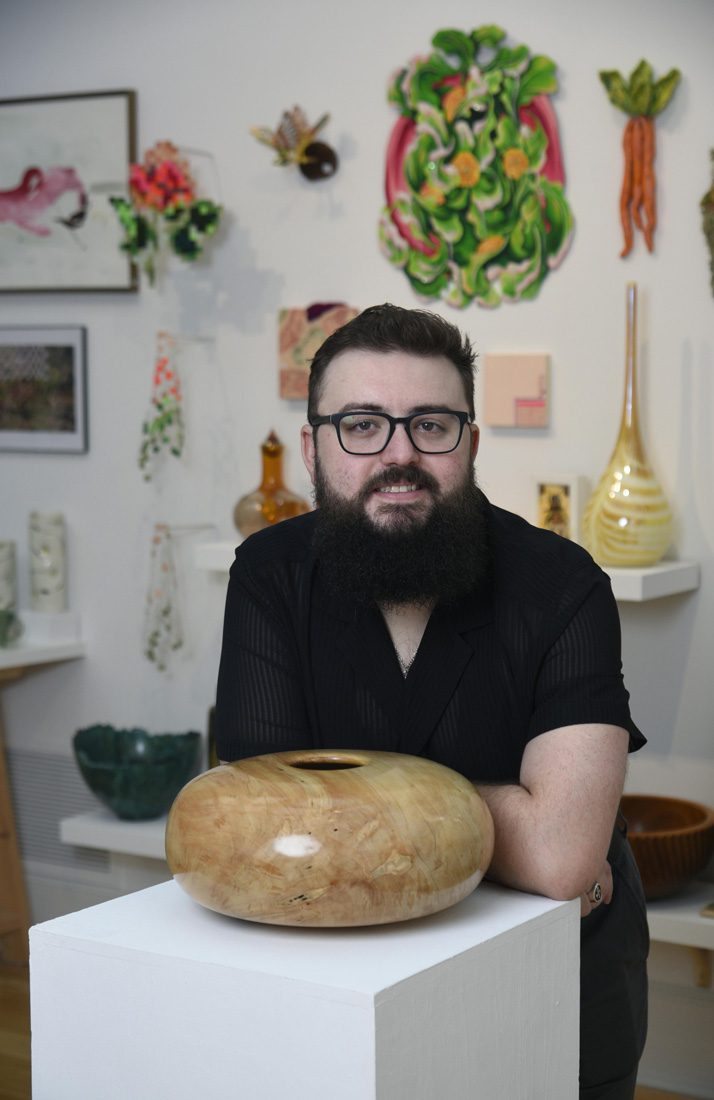
Jacob O’Kelley brings a new lens to Atlanta’s art scene!

Jacob O’Kelley

Jacob O’Kelley thinks the city is sitting on a goldmine of artistic talent and encourages Atlantans to get out and explore. “There are a lot of galleries and art to be seen and a lot of untapped talent here,” says O’Kelley, who joined Swan Coach House Gallery, on the Atlanta History Center grounds in Buckhead, last June as creative director.

O’Kelley is himself an emerging artist who paints and creates installation art with found materials, and furniture focused on domestic spaces through a “queer focus lens,” but his true passion is curating.

After graduating from Georgia State University with a degree in drawing and painting, he opened a gallery in 2018 with college friend Abigail Justman. The young business partners created ShowerHaus Gallery out of a standalone building where the showers were when it was a mill at The Goat Farm Arts Center. The space focused on solo shows with emerging artists and group shows that mixed emerging with mid-career and well-established artists, something that’s not often done. The duo also collaborated on shows around the city, which they continue to do today.

In fact, the ShowerHaus team had put on a few exhibitions at Swan Coach House Gallery before O’Kelley came on full-time. The Georgia native now curates the curators who work on four of the seven shows the gallery presents annually and works alongside Gallery Manager Maria Bruckman to put together the major exhibitions. Here, we chat with him about his role, career and art in the city.

What are the biggest exhibitions you work on at Swan Coach House Gallery?

We call them mega shows. The Summer Invitational, an annual craft- and textile-based exhibition, will highlight the works of more than 90 artists this year. The Little Things show is all about 2D small works by painters and illustrators. I also manage the annual Edge Award that the Forward Arts Foundation, the [nonprofit] behind Swan Coach, gives out to emerging or underrepresented artists.

Besides Swan Coach House, what are some of your favorite galleries?

Whitespace in Inman Park is a really beautiful gallery, and I love that they can have three shows going at the same time. The new Johnson Lowe Gallery is a massive space. And Echo Contemporary Art is a new space on the Westside that’s run by my former boss from the MINT gallery, where I worked for a year as gallery manager before I got the job at Swan.

What would you consider a pivotal moment in your career?

It was when ShowerHaus did The High Rise Show, a four-floor exhibition in downtown Atlanta at the end of 2019. It involved over 200 artists and nine organizations, including Fulton County Arts & Culture, The Goat Farm, MINT and Peters Street Station, working together. Two to three thousand people showed up on opening night. It showed that there’s a lot of artists in Atlanta and that plenty of people want to see art.

What are your future goals?

The two directors before me at Swan Coach were pushing contemporary art and experimental stuff, which I love and want to push further. [Eventually,] I want to go to grad school for art history or curatorial [studies].

JACOB O’KELLEY
jacobokelley.com
@jacob.okelley

PHOTO: Joann Vitelli

Weonrhee’s Primitive Structures Resemble Functional Dolmen

Weonrhee’s Primitive Structures Resemble Functional Dolmen

Designer Weonrhee, also known as Jongwon Lee, has released a new sustainable project with a focus on the material that’s based upon his own cultural and historical background and the material’s origin story. Primitive Structures, is a series of small tables and stools that resemble “dolmen,” or a type of single-chamber megalithic tomb, usually consisting of two or more upright megaliths supporting a large flat horizontal capstone. Over time, moss grows to cover these structures. One piece of research cites South Korea as having 70% of the world’s dolmen, and so it became the overall architectural motif used throughout by Weonrhee.

Sustainability was of particular importance to Weonrhee throughout the project. PSL is a down-cycled material, meaning it’s recycled in such a way that the resulting product is of a lower value than the original item. It’s part of a family of structural composite lumber (SCL) made using dried and graded wood veneers. Strands or flakes are layered upon one another before being bonded together with a moisture-resistant adhesive. The resulting material evokes a primitive feeling through its texture and pattern.

product design sketches

two differently sized three legged structures with light wood tops and green legs

three legged structure with light wood top and green leg

The engineered wood beams used to create Primitive Structures employ waste materials from plywood and LVL production, and commonly include Douglas-fir, pine, and western hemlock among others. PSL is also commonly used in architecture frames, carrying the architectural motif further throughout the project. By using PSL, Weonrhee in turn created a valuable object through what was initially considered garbage.

cross section of PSL material

three differently sized structures with light wood tops and green legs

PSL turned out to be perfect for creating the polygonal shapes that mimick dolmen. During the manufacturing process, the material develops divots in its surface, but the designer had a solution to achieve “visual completeness” and safety – by repeatedly placing fallen pieces of PSL back into these holes over and over again, until only a smooth surface remains.

polished striated green PSL material

The final step is adding color. “In terms of color, I was inspired by the moss on the surface of the dolmen. The moss on the surface of the stone was formed over a long period of time and had pearl and parakeet green colors, and this part also showed [as] primitive,” Weonrhee said.

two differently sized structures with light wood tops and green legs

closeup of side by side tables made from layered materials

To learn more about Primitive Structures, visit weonrhee.com.

Kelly Beall is senior editor at Design Milk. The Pittsburgh-based graphic designer and writer has had a deep love of art and design for as long as she can remember, and enjoys sharing her finds with others. When undistracted by great art and design, she can be found making a mess in the kitchen, consuming as much information as possible, or on the couch with her three pets. Find her @designcrush on social.

Five travel photography tips from a professional

Five travel photography tips from a professional

Before you leave for summer vacation, take in professional photographer Pat Kane’s wisdom on how to capture the best shots possible.

Around the world in eight photos with photographer Pat Kane

Travel Light

It can be tempting to bring several lenses, tripods and gear when you’re travelling, but I find that using one camera and one lens can be creatively freeing. I used a Fuji XT-4 and a 35-mm lens on my international travels this year. A fixed focal-length lens forces me to move around a scene and challenges me to think more carefully about how I frame my shots.

Simple Compositions

When we travel, we want to show our friends and family as much as we can. We love to take wide photos that capture a lot of information, but I find many things get lost if we try to show too much. I look for simple compositions within scenes: one or two people in a landscape, details of people’s clothes, gestures or expressions. By focusing on a small part of a larger scene, we can capture a better sense of a place.

Open this photo in gallery:

Hoi An, VietnamPAT KANE/The Globe and Mail

Unexpected Moments

There’s no bad time to make a great photograph. Even when the sun is too bright or the rain is pouring, people are still living their lives. In fact, poor weather is a great time to photograph a slice of life that you otherwise might not expect. Wait and watch, and interesting things will happen.

Open this photo in gallery:

Saigon, Vietnam.PAT KANE/The Globe and Mail

Make Connections

I’ve found that most people like having their photo taken. This is not to say that it is okay to photograph people when they aren’t expecting you to. It is important to ask permission, or better yet, introduce yourself and tell them why you want to photograph them. These short introductions can lead to conversations, which can lead to learning something new about that person or the place you’re visiting, or even recommendations on other things to see.

Open this photo in gallery:

Wayasewa, FijiPAT KANE/The Globe and Mail

Be Present

I don’t have to photograph everything. Sometimes putting the camera down and enjoying the sights and people offers a different perspective. It is important to be open to new experiences without documenting them because when I pick up my camera again, I’ll have some understanding and appreciation of the story I want to tell.

Around the world in eight photos with photographer Pat Kane

Around the world in eight photos with photographer Pat Kane

Photographer Pat Kane was hiking Hang Mua mountain’s upper peak in intense heat and humidity last February, alongside his wife and several women in high heels and traditional Vietnamese dresses (áo dài). They were all on the way to see the view of the lower peak towering over the ancient countryside landscape of Ninh Binh, Vietnam, where limestone karsts jut out between the rice paddy fields and wetlands of the Red River Delta.

Five travel photography tips from a professional

After taking in the beauty, Kane and his wife made their way back down the mountain, passing the well-dressed women still taking selfies of themselves against the stunning backdrop. This view was one of the most impressive of Kane’s journey to 18 countries and 60 cities since last fall. But like many who have travelled since travel restrictions have eased, Kane has become a “self-loathing tourist,” and wonders whether visitors going in droves are ruining the beauty of places like this.

“Although tourists are contributing to the economy, we can’t help but ask: Are we overdoing it?”

This year, many popular travel destinations have taken steps to prevent overtourism’s impact on the environment and local communities. Amsterdam launched a “stay away” campaign to dissuade “nuisance tourists” who partake in all-night drink and drug benders, Athens joined 22 other European cities in urging the European Commission to limit short-term stays, and Italy’s Portofino introduced legislation to discourage tourists from lingering for selfies.

Kane – who returned this spring from seven months of touring Europe, the Balkans, Fiji, New Zealand and Southeast Asia – brings the issue back to the personal responsibility of the tourist.

“Coming out of COVID, there’s a lot of frustration, and people want to travel,” he says. “But I also see there’s a lot of entitlement. The world doesn’t owe you anything simply because we all had to stay home for a couple of years during the pandemic. To me, it’s a privilege and we have to remind ourselves about that. Don’t treat it as your playground and not be a nice, normal human being. The people who work at the airports, the tour guides and anyone in the service or travel industry deserve a break too.”

Say hello to your underrated, uncrowded summer vacation

A member of the Timiskaming First Nation, Kane has photographed communities in the Northwest Territories for the past 18 years. His international travels were not only a lesson in humility, but a welcome shift from his regular photo work. “Travelling was an opportunity to find the joy and fun in photography again,” he says.

Kane took around 100 photos a day. In crowded hotspots, he intentionally looked for quiet moments to capture. But he spent more time in the affordable, less touristy areas such as the village of Theth in Albania, Mostar in Bosnia and Herzegovina, Slovenia’s capital Ljubljana, New Zealand’s coastal city Napier, and Chumphon city on the Central Gulf Coast of Thailand.

“Your experiences are more genuine and new in places like that,” he says. “Going off the beaten path enriches your experience so much more, because you’re not waiting in lines, and you get a better understanding of places and people when you engage with the culture, people and try new food.”

Along his journey, Kane captured many moments of serenity, beauty and surprise that remind us what travel is really all about. Here are a few that stood out.


Open this photo in gallery:

Buddhist monks pause for a photo in the temple complex at Angkor Wat, Cambodia.

Angkor Wat, Cambodia

The temple complex plays host to thousands of tourists and both Hindu and Buddhist pilgrims each day. A visit to this UNESCO World Heritage Site is a humbling experience. The monumental architecture and intricate bas-reliefs made us feel small, and the diversity of tourists was a testament to how important the ancient city is to people across the world.

I was hesitant to photograph any monks because I didn’t want to exoticize them through my pictures. While we were touring inside of the temple, a monk was walking down the same corridor toward us, carrying a camera. I complimented him on his camera and asked sheepishly if I could take a portrait of him but soon realized he did not speak English. Nonetheless, he put his camera aside and stood next to a window, an invitation to have me photograph him. I showed him the photo, thanked him and he smiled and moved on.

Later, outside of the temple, we walked past these monks and they noticed my camera. Without saying a word, they posed next to the Naga, the statue of a guardian serpent that is found at the entrance of many Cambodian temples. They waved me closer to take their photo for no other reason than to be friendly. The exchange was brief, but it was nice to feel welcomed and encouraged to make these portraits.


Open this photo in gallery:

A bride and her guests dance at a wedding in Berat, Albania.

Berat, Albania

After hearing music and singing from outside of our hotel, a receptionist encouraged us to take a look at the wedding inside. She said everyone was welcome to say hello and extend their best wishes to the newlyweds.

It’s an example of why of all the countries we visited, Albania was a highlight. There is a sense of joy and community in the small nation that doesn’t get many tourists compared with most places in Europe.

Wherever we went, people asked us if we were enjoying ourselves and if we liked being in Albania. In most towns and cities in the country, people gather along promenades in the evenings and walk and mingle with each other. In the shqip language, it is called xhiro – a time to exercise after dinner and catch up with family and friends. The practice began during the communist years as a way for people to share news and check in with each other. The tradition continued as the country transitioned into a democracy in the 1990s. Today, it is a way to see and be seen, and to socialize with friends and strangers alike.

We met many people on their evening xhiro and many told us how it is a good way to feel connected to their communities. My wife and I continue to walk – to xhiro – even back in Canada as a break from our work and home life, to meet with people and explore the nooks and crannies of our city.


Open this photo in gallery:

Four men sit on a park bench beside Hồ Hoàn Kiếm (Hoàn Kiếm Lake) in Hanoi, Vietnam.

Hanoi, Vietnam

The lake is a popular destination in the city’s Old Quarter. Vendors sell flowers, fruit, fritters and sight-seeing tickets along the pathway, where visitors come to see the lake and nearby temples and attractions.

Many tourists hire professional photographers to have their photo taken against the backdrop of the lake. For locals, this is a place to relax, stretch, exercise and socialize.

In one of the world’s most bustling cities, scenes of calm and peace are rare in the Vietnamese capital. When we saw this group of men sitting together, it was a reminder to find places away from the crowds and to reflect on the people, scenery and culture around us.


Open this photo in gallery:

People walk across and take pictures of the historic Stari Most (Old Bridge) and the river Neretva in Mostar, Bosnia and Herzegovina.

Mostar, Bosnia and Herzegovina

The bridge was built in the 16th century but destroyed in 1993 during the Croat-Bosniak War. It was reconstructed in 2004. Shelled-out buildings remain standing in Mostar, stark reminders of the horrors of war in the 1990s and its impact on the people here.

Walking across the small, beautiful bridge was like stepping through the culturally rich but complex history of this Balkan country: each step in reverence to the men and women who built the bridge, those who died to protect it and those who preserved it.


Open this photo in gallery:

A tourist feeds Dougal, a famous and hungry Highland Bull, at Walter Peak Station near Queenstown, New Zealand.PAT KANE/The Globe and Mail

Queenstown, New Zealand

Visitors are encouraged to feed Dougal grain pellets by sticking an arm inside his mouth and dropping the pellets inside.

Queenstown markets itself as the world capital of fun and adventure. For us, that involved a tour across Lake Wakatipu to drink wine, watch dogs herd sheep and, of course, to feed Dougal, which was a highlight in adventureland. As soon as our guide demonstrated the technique, I knew I had to get my camera ready to capture this moment.


Open this photo in gallery:

A man dressed in lederhosen visits an autumn market in Nuremberg, Germany.PAT KANE/The Globe and Mail

Nuremberg, Germany

People from across Bavaria gather to eat, drink and socialize at local festivals in September each year – the most famous being Oktoberfest in Munich. Markets like this also bring crowds of tourists and I was hoping to capture the fun and humour of the festival with my camera.

As we walked, shopped, ate and drank, we noticed the decorative lederhosen worn by most men and women was unlike the campy outfits you see at German-style beer gardens in North America. This man’s stockings, his shoes and the colour palette of the whole scene stood out to me.


Open this photo in gallery:

A young man cleans the face of a woman on Charles Bridge in Prague, Czech Republic.

Prague, Czech Republic

The city is a well-known cultural and economic hub of central Europe, filled with gothic and baroque architecture at every turn. Castles, museums, galleries, pubs and stores fill Prague’s Old Town. The city seems like all you would imagine if Europe was bundled together in a single place. The medieval Charles Bridge is an icon of Prague and is packed with tourists, performers and street vendors.

It was refreshing to capture this quiet moment between two people in the commotion around them.


Scientific Principles and Craft Traditions Converge in Tauba Auerbach’s Research-Focused Practice

Scientific Principles and Craft Traditions Converge in Tauba Auerbach’s Research-Focused Practice

Tauba Auerbach (previously) wants “to be somewhere that isn’t a hard edge,” within a space that mimics the instability of “The Wave Organ.” Embedded within a jetty of the San Francisco Bay, the sculpture was created by Peter Richards and George Gonzalez in 1986 and captures the sounds of waves as they crash into and fill the pipes, emitting a musical mix of gurgling and gushing noises as the tide changes. The work is designed to highlight the acoustic irregularities of Earth’s elements and is also one of Auerbach’s favorite locations in their native San Francisco.

In a new episode of Art21’s 11th season, “Bodies of Knowledge,” which premiered in late June, Auerbach visits the instrument and explains their interest in natural patterns and processes, physics, and mathematic principles. They harbor a profound curiosity and desire to understand the complex systems that undergird life, many of which they interpret as swirling marbled paper, spontaneous tessellated drawings in marker, and writhing beaded sculptures that evoke biological forms like the rigid composition of a sea sponge.


Auerbach in their studio

Auerbach’s New York studio is brimming with these translations, and shelves lining the space are filled with puzzles, organic matter, and small treasures that inspire the artist’s works. They’re interested in how these structures and systems are not just the basis of life on Earth but also of craft and artistic traditions. For Auerbach, research into how pigments rest atop water or how variances in the velocity of the artist’s hand affects a painting is as important as the work itself. “I am quite compelled by things that just barely work. The near–impossibility is key,” they say.

After surveying the artist’s broad and diverse practice, the segment closes with “Auerglass,” an interactive organ-like instrument Auerbach created in collaboration with their friend and musician Cameron Mesirow. Made of glass and wood, the apparatus functions with pedals, keys, and pipes like the traditional design, although it requires two players. Each person has only half a keyboard—four octaves have been divided by alternating notes—and is required to pump air for the other. Physically engaging and rooted in the principles of sound, “Auerglass” is evidence of the artist’s interest in the experiential, connection, and the understanding that “the body is an important thinking tool.”

Auerbach will open a solo show titled TIDE on July 15 at Fridericianum in Kassel, Germany. That exhibition runs through January 14, 2024, and you can find more of their work on their site and Instagram. You also might enjoy earlier Art21 episodes on Wangechi Mutu and Guadalupe Maravilla.


A person in pink sits on an outdoor concrete structure jutting out into the bay

Auerbach at “The Wave Organ” in San Francisco

A person stands with hands clasped in front of shelves filled wiht books and objects

Auerbach in their studio

two people sit at either side of a pipe organ on a stage

Cameron Mesirow (left) and Auerbach (right) play “Auerglass”

Do stories and artists like this matter to you? Become a Colossal Member today and support independent arts publishing for as little as $5 per month. The article Scientific Principles and Craft Traditions Converge in Tauba Auerbach’s Research-Focused Practice appeared first on Colossal.

The Liverpool Plinth unveils a new sculpture that reflects on Ukrainian culture

The Liverpool Plinth unveils a new sculpture that reflects on Ukrainian culture
The Liverpool Plinth has unveiled a new sculpture serving as a meditation on the ongoing conflict in Ukraine. Boy with knife carnation by Wirral based artist Brigitte Jurack is the sixth sculpture to be installed onto the Plinth. The new sculpture will be on display on The Liverpool Plinth for the next 12 months. Boy with knife carnation is a piece originally

Applications for Kentucky Crafted open through Aug. 15

Applications for Kentucky Crafted open through Aug. 15
image

The Kentucky Arts Council is accepting applications for the Kentucky Crafted arts marketing program through Aug. 15. Kentucky Crafted assists visual and craft artists through networking, promotional and sales opportunities and business training.

“Kentucky Crafted artists enjoy more than just the right to use the Kentucky Crafted brand on their work,” said Dave Blevins, arts marketing director for the arts council. “Many artists have broadened the reach of their personal brands through the recognition that comes with being a Kentucky Crafted artist.”

Kentucky Crafted is a symbol of artistic excellence in the commonwealth. Artists in the program have been adjudicated by an independent panel of professional artists and leaders within the arts and craft community. Among many other benefits and privileges, Kentucky Crafted artists become eligible to exhibit at the annual Kentucky Crafted Market.

Louisville artist Sabra Crockett said being in Kentucky Crafted has opened doors for her and her work: “I have been invited by many different fairs and art events to attend, including Woodland Art Fair, Arts On the Green and Saint James Art Festival. If I had not participated in The Kentucky Crafted Market, I believe I would not have had those invitations.”

Crockett enjoyed a successful weekend at The Kentucky Crafted Market in March, which she said gave her momentum.

“Just attending the Kentucky Crafted Market has brought me more sales, more connections and a broader sense of community in Kentucky. The artists I have met through the program are part of my close community, and I have been able to create strong bonds with some of them.”

That bond with her fellow artists is one reason Crockett believes artists should apply for Kentucky Crafted.

“Being an artist can be a very lonely and isolating experience. This is a way to form stronger relationships with other artists,” she said. “It also pushes you to really hone your craft and raise your artwork to a professional level. You’ll also be part of a network of supportive artists and arts administrators to help you further your career as an artist.”

In addition to exhibiting at The Kentucky Crafted Market, artists are eligible to apply for consultancies from the Kentucky Peer Advisory Network (KPAN). Artists may also use the Kentucky Crafted logo, which will be included in the online directory of artists, and can take advantage of cooperative advertising and exhibit opportunities.

For more information about the Kentucky Crafted program, contact Blevins at david.blevins@ky.gov or 502-892-3120.

adidas x Norse Projects Collaboration Fits the Duality of the Modern Adventurer

adidas x Norse Projects Collaboration Fits the Duality of the Modern Adventurer

The Faroe Islands in the the South Norwegian Sea exist as the definition of a “far-off land.” Located over 600 miles off the northwest coast of Denmark, the ragged mountainous isles emerge from the sea with a primordial splendor – an untouched realm of remote beauty tempting the adventurous, but a place that demands studied planning and proper equipment when explored. Its a fitting landscape of inspiration for Copenhagen-based outdoors clothier Norse Project’s latest SS23 collaboration with adidas, one epitomizing an ethos striving to be “Good for All Seasons.”

The Terrex Skychaser 2 is the more functional and performance-oriented shoe of the two models released, a technical hiking shoe expressed in a deep navy and moody Ash Black shade reminiscent of the glassy black rocks lining the Faroe Island shoreline.

Side view of Norse Projects x Adidas Terrex Skychaser hiking midtop shoes facing to the right

Bottom view of Norse Projects x Adidas Terrex Skychaser hiking midtop shoes Continental tread

Detail of Adidas' thermoplastic polyurethane closed-cell cushioned Boost sole on the Terrex Skychaser.

A two-way stretch woven nylon upper resting on adidas’ thermoplastic polyurethane closed-cell cushioned Boost sole results in a comfortable and responsive alternative to heavier hiking boots.

Adidas has a great track record for designing adventuring footwear lighter than a boot, yet properly rough-hewn enough to endure the abuse of rocks, shale, water, and a myriad of other footwear-detrimental detritus encountered while hiking trails shaped by the violence of volcanoes (and anything less demanding).

Dark green Norse Projects x Adidas Campus 80s in dark green set on rocks jutting from water in the Faroe Islands.

Meanwhile, the Campus is the Skychaser’s more casual kick back brethren, sneakers crafted with an English calf leather upper and adorned with recycled elements for shoe’s emblematic three stripes and heel overlay. The dark green colorway draws its hue from the hills and dwellings of Saksun, a small Faroe village dotted with turf-roofed structures designed to endure the elements. It should be obvious these sneakers are intended more for traversing the sidewalks of central København or pedaling along Nørrebrogade than adventuring across the archipelago’s numerous volcanic outcroppings – shoes to slip into for a bit of rest and relaxation, post-hike.

Side view of Norse Projects x Adidas The Campus 80s casual sneakers in dark green.

Bottom view of Norse Projects x Adidas The Campus 80s casual sneakers flat tread bottom.

Young man in beanie and puffy jacket seated on a jutting piece of the Faroe Islands with his footwear prominently in the foreground.

Young man standing balanced upon a rock set on the sandy beach of the Faroe Islands.

Together, the adidas x Norse Projects Terrex Skychaser and Campus shoes represent two sides of the same coin and the duality of the modern adventurer, one who may call the city home, but is always seeking to answer the call of outdoor adventure.

This post contains affiliate links, so if you make a purchase from an affiliate link, we earn a commission. Thanks for supporting Design Milk!

Gregory Han is the Managing Editor of Design Milk. A Los Angeles native with a profound love and curiosity for design, hiking, tide pools, and road trips, a selection of his adventures and musings can be found at gregoryhan.com.

Using Radiant Photo for volume photography

Using Radiant Photo for volume photography

If you shoot events, real estate, or any other style of volume photography, Radiant Photo may be the editing solution you have been looking for. The internet is crowded with plenty of solutions to take the burden of editing copious images out of your day. But most of those require a pay-per-edit fee that can cut into your bottom line. In volume photography, time is money. So, let’s explore how Radiant Photo can help quicken your workflow without lightening your wallet.

What is Radiant Photo?

If you are not familiar with it, Radiant Photo is a photo editor that uses AI or artificial intelligence to analyze an image and automatically apply corrections to your images. Radiant Photo is intelligent enough to detect and edit different parts of a photo differently. For example, Radiant Photo would edit the sky in a photo differently than the rest of the image so that the image is neither over nor underexposed in any area. The software also makes it easy to create your own presets and save them for use later. Radiant Photo works as a plug-in for both Adobe Lightroom and Photoshop.

Method

I used a standard method of photographing real estate photos by shooting HDR photos and then combining the images in Photomatix 7. I then imported the finished HDR photos into Lightroom Classic. After opening the photos in Lightroom, I simply need to export them from the library tab of Lightroom to Radiant Photo for batch editing.

From there, I can then choose a standard preset or a custom one for applying to my edit. I have the option of returning the results back to the same directory and can even stack them in Lightroom with the original unedited photo. I can also hide the Radiant Photo window making the whole process seamless, editing just about a hundred photos in about a minute or two.

The results were impressive. Radiant Photo created a consistent look across every image. The edits it created could never have been done by hand so quickly. Not only that, but every image was edited so close to what I needed, that no additional editing was necessary. The savings in time was so substantial, and the results so consistent, that I could see how this software would actually save you money in just a few shoots over pay-per-edit software.

Pros and Cons

Pros

  • Creates consistent edits
  • Easy to use
  • Quick
  • Edits different parts of an image differently
  • Easy to create custom presets

Cons

  • Optional maintenance fee for updates (6 months included at time of this article)
  • No option for manual editing of an individual part of an image
  • No sky replacement feature

Conclusion

Overall if you are a volume photographer and you are looking to quicken your workflow or offload it, Radiant Photo is worth consideration. With no pay-per-edit fees, it can quickly become an investment that adds to your bottom line.

Learn more about Radiant Photo by visiting their website.