Prior Lake-Savage Area Schools invites community to Youth Art and Craft Market

Prior Lake-Savage Area Schools invites community to Youth Art and Craft Market

The Prior Lake-Savage Area Schools’ Community Education Youth Art and Craft Market is slated for Tuesday, Aug. 8.

More than 50 area children ages 5 to 18 will be selling their handmade creations, according to a press release from district. Jewelry, ceramics, diamond art, knitted and crochet items, Zen gardens and more will be on sale from 4-6 p.m. at La ola del lago at Grainwood, 5061 Minnesota Street SE, Prior Lake.

‘Always wanted to come back and have an impact’: California-based art therapy center opening location in Louisville

‘Always wanted to come back and have an impact’: California-based art therapy center opening location in Louisville

Artists for Trauma’s goal is to enrich the lives of trauma survivors through creativity.

LOUISVILLE, Ky. — A California-based art therapy center is officially opening in Louisville. 

Artists for Trauma provides interactive and adaptive healing through art and music. The goal is to empower the mental, physical and emotional wellbeing of survivors. 

Artists for Trauma will hold a series of free public workshops on Aug. 27 from noon to 4 p.m. at The Skybox on the third floor of Louisville Slugger Factory and Museum

The workshops will feature Kentuckiana artists leading hands-on experiences for all ages and abilities. The workshops include sculpture, visual, poetry and spoken word, and music. 

“Louisville has an incredible community of local artists, and we’re grateful for the welcome they’ve given us,” founder Laura Sharpe said. “We’re thrilled to establish ourselves as part of the Louisville community, and to help those artists amplify their impact.”

The press release states that Sharpe’s partner, Eddie Donaldson a.k.a. artist Guerilla One, is a Louisville native and played a “key role” in bringing the Fairey mural and Artists for Trauma to the Metro. 

“Ever since I moved to California as a teenager, I’ve always wanted to come back and have an impact on Louisville,” Donaldson said. “I’m finally getting that chance through connecting Laura’s work and world-class artists to the town where I grew up.”

For more information about Artists for Trauma or the workshops, please click here

Make it easy to keep up-to-date with more stories like this. Download the WHAS11 News app now. For Apple or Android users.

Have a news tip? Email assign@whas11.com, visit our Facebook page or Twitter feed.

[embedded content]

Embodying Spirit: The Visual Storytelling Behind 3 Liquor Brands

Embodying Spirit: The Visual Storytelling Behind 3 Liquor Brands

While gathering ideas for a summer sipping round up, I kept repeating: “Don’t judge a book by its cover.” But the truth is we judge almost everything by its covers. Books, dish soap, albums, even booze… As design enthusiasts, you know that particular colors, architecture, shapes, and materials can evoke a mood and feeling. A great cover, or bottle label in this instance, serves as a visual storyteller, expressing the essence of a brand and its offerings effectively. Granted what you see on the outside is not always a true indicator of what you’ll find behind the surface… Dubbed as “Marketing Magic,” I had the chance to explore the narratives behind the shelf appeal of three brands and put their claims to the taste.

Doce Mezcal Photo: Taste:Work:Shop

Gabriela Lawrence, Gabby Arce, and Mia Tonelli have high standards. So, when they decided to get into the Mezcal business, they wanted to bottle an earthy, exhilarating, and full-bodied mezcal rooted in wellness – 100% Plant based, gluten free with zero carbs, no added sugars, no yeast, and no additives. Mindfully made in Oaxaca, Mexico, Doce Trecenas Mezcal is a company founded and owned by women in partnership with a third generation family-owned distillery, led by Matriarch & Maestra Mezcalera, Margarita Blas, mother of 5 children, with 3 of whom play a key role in creating the artisanal mezcal. The 3 generations of mezcalaros have made it their life’s passion to polish the artisanal production of mezcal, maintaining tradition and quality in every step of the process.

Designed by Morgan Light, the bottle packaging inspiration was pulled from an ancient Mayan calendar showcasing the philosophy of following the pathway to reach your highest self at 12 & 12 each day. With its bold colors, holographic type, a step pattern cut-out, and laid paper texture – the bottle is recognizable, reads quality, and resonates with conscious consumers seeking cleaner, mindful choices connecting to their core ethics.

Below are some highlights from my interview with Gabriela Lawrence, Doce’s Co-Founder + Chief Communications Officer, after being schooled on the proper way to sip mezcal slowly with a slice of orange. Doce did not disappoint with its aromatic start, and flavorful smooth finish.

Can you discuss the role of packaging design in creating a luxurious and premium feel for your mezcal? What specifically about your typography, color palette, and overall aesthetics choices incorporates the rich history and heritage of mezcal-making?

Packaging was one of the major lighthouses when building the brand identity. Doce Mezcal’s visuals are the culmination of both the vibrancy of Mexico paired with our founder’s previous backgrounds and personal affinity for fashion and style. Color can be found all over Mexico – and we were inspired by the vibrancy within the region’s flora, the street art, and visuals across the country. Our previous careers in fashion also directed the way we approached packaging, playing with color, and texture to create something visually stimulating. Mezcal is a true gift from the earth, its dynamic, filled with heat and created with passion and tradition. We realized most options available on the back-bar and on the shelves of our local liquor stores didn’t echo the stylistic tastes of today, and many felt detached from our modern ideals. Mezcal is a spirit that is traditionally experienced with friends and loved ones. We wanted to create something that people would be excited to share and engage with – packaging that excites you and makes you take a second look. The goal was to create a product that exceeds your usual expectations when it comes to spirits, one that earns a coveted spot in your beverage rotation.

Did you collaborate with any designers or agencies during the brand creation process? If so, how did you ensure a seamless partnership between the design team and your brand’s vision?

Our internal team spent months gathering creative references and inspirations that we felt best encompassed our brand identity. When it came time to create the final product – we were led to our designer Morgan Light who we met through the former women’s networking group + Coworking Space – The Wing. Morgan’s experience working in beverage + lifestyle brands within beauty & wellness coupled with her like-minded aesthetic made her the perfect partner for Doce. Together we worked hand-in-hand pairing our team’s vision with Morgan’s creative expertise. We went back and forth with weekly check-ins sharing historical references and creative inspirations, and after a few months and iterations we were able to bring the final product to life.

How did you incorporate sustainability and environmentally conscious practices into your brand’s design and packaging?

As an emerging brand, when building Doce Mezcal we focused on the details. Small changes that would make a big impact in the long run as we grew and scaled. Creating with recyclable and reusable materials, taking into consideration factors such as bottle weight and certain types of bottle caps, label paper, and more were at the forefront when dictating design decisions. Every part of Doce Mezcal from cap to paper to bottle is environmentally conscious.

What book have you read solely based on the cover design? Did it live up to the judgement? 

Anything by Assouline never falls short. Their coffee table books are always equally as stunning on the outside as the content on the inside. The Windows at Tiffany & Co. was the most recent buy. Coffee table books are always known for the visuals, but this edition served dual parts stunning imagery + informative of the brand’s creative history. A treat for fashion lovers.

bottle of bourbon laying on hay

Pinhook Bourbon Photo: Taste:Work:Shop

With a steadfast commitment to tradition, an eye for contemporary design, and a nod to the equestrian world, Pinhook Bourbon & Rye stands as an embodiment of artistry, flavor, and the indomitable spirit of Kentucky.

Breaking away from convention, Pinhook takes a winemaker’s approach to craft bourbons, creating and releasing a unique vintage year after year. Rooted in the concept of using oak barrels as terroir, their whiskey-making process yields exceptional results that captivate both seasoned connoisseurs and newcomers to the world of whiskey.

series of labels for yearly bourbon

Pinhook Bourbon

Beyond this approach, Pinhook also pays homage to Kentucky and the rich parallels between horse racing and whiskey. Bottles are inspired by the vibrant colors and bold geometries of jockeys’ silks, and each vintage is dedicated to a new and promising thoroughbred, tying the spirit of both industries seamlessly.

advertisement for Pinhook Bourbon

Pinhook Bourbon

The very name Pinhook draws inspiration from the old Kentucky term for acquiring young thoroughbreds, nurturing them as they mature, and ultimately selling them when ready to race. This analogy finds a profound connection with whiskey-making, where success is a harmonious blend of instinct, experience, quality appreciation, a touch of luck, and, above all, patience.

At first glance, Pinhook’s bottle reads quality and authentic. With thoughtfully clean graphics that are not overly modern or trendy, the bottle neck is dip sealed with a slightly muted bright color wax to match the geometric color pop pattern on the label. Clearly the brand prioritizes the user experience and has a very straightforward pull tab for opening the wax seal effortlessly.

Behind this brand stand the three original co-founders, each contributing their unique expertise: Sean Josephs, the Master Blender; Jay Peterson, the Wharton business expert; and Charles Fulford overseeing brand, marketing, and packaging. The trio’s collective efforts proved so successful that they convinced Alice Peterson, Jay’s wife and Harvard Business School alum, to take on the role of CEO when the side project evolved into a year-round business.

Below is more of what I learned straight from the horses’ mouth… Alice Peterson, Pinhook CEO and Charles Fulford, Pinhook Co-Founder and Chief Brand and Marketing Officer.

How long has Pinhook been in the bourbon business and what are your most popular markets?

Alice Peterson: Pinhook’s journey began in 2010 when we acquired a set of barrels. In 2011, we purchased 20 full barrels in Indiana as we sought a distillery that could distill to our exact specifications. Our first bourbon was released in 2014, and by 2017, we had our first year-round product. Since then, we’ve expanded our presence and are now available in 30 different states, with California, New York, Louisiana, Kentucky, Ohio, Colorado, and Illinois being our largest markets.

Can you share the unique characteristics and flavor profiles that set Pinhook apart from other bourbon/rye brands?

Alice Peterson: We tend to bottle at a pretty high proof alcohol content. We do that because we want it to stand up to a cocktail and dilution. We want you to tell that it’s a rye cocktail, and taste it, unlike the vodka lemonades that are “so good – I can’t even taste the vodka.” Because we’ve set ourselves free from uniformity and consistency, we can play with the alcohol integration until we get it right. So, we try different complexities. Basically, play with it until its perfect.

Each year’s release has different expressions due to our wine-like approach, using barrels as the natural ingredients that allow us to compose and combine unique flavor profiles. This results in every vintage having its own label, united by color but distinguished by shapes, creating a visually compelling and varied collection.

How do you envision people enjoying Pinhook, and what are some of your favorite ways to serve it?

Alice Peterson: We want people to feel comfortable and at ease when enjoying Pinhook. There’s no right or wrong way to drink it. It’s accessible to everyone, whether you prefer it neat, on the rocks, or in cocktails. I’ve always admired the versatility of whiskey, and I want to share that with others. Tying back to the brand and the spirit of hospitality, one of my personal favorites is to prebatch a cocktail, put it back in the Pinhook bottle, and bring it as a hostess gift.

The bottle itself is beautiful. Sometimes I feel like if I appear at someone’s house, and they’re hosting a dinner and I put a bottle of bourbon in their hands, it’s almost like giving people flowers without a vase… And who doesn’t love offering a cocktail. Most people haven’t prepared a cocktail for a dinner. And so you’re adding something super easy and ready to go feels like it’s helpful as opposed to potentially intimidating.

Batched cocktails are also great to keep in the fridge, the flavors can infuse and it speeds up service. Even if you still need to shake a la minute, they are labeled with simple wrap around tape, ready to serve to unexpected guests without pulling out the cutting board. You can just grab a glass and pour. For that reason, all our recipes have a single serving and batch version on the website.


Alice introduced me to the “Boulevardier,” a bourbon version of a Negroni. The cocktail is delightfully simple, and easy to sip. A great evergreen cocktail that suits all seasons.

8oz of Pinhook rye
8oz of Forthave Red
8oz of Antica Sweet Vermouth

Simply combine all the ingredients and dilute with 4 ice cubes, funneling it back into a Pinhook bottle. Serve it over ice and garnish with an orange peel.


Can you discuss the role of marketing and packaging design in creating a luxurious and premium feel for your bourbon/rye? Besides your typography, color palette, and overall aesthetics choices what else incorporates the rich history and heritage of whiskey-making? 

Charles Fulford: We discovered that the 275 whiskey products on the market all came from 13 distilleries. Revealing that most brands don’t have their own still, and rely on the a huge market for buying barrels. So, storytelling becomes the main differentiating factor. And the story out there is always about the same – faux antiqued grandpappy recipe found in the barn by the creek. We felt an enormous opportunity to do something different aesthetically. With my creative agency background – how do we modernize things? These barrels are wildly different. Sean coming from the wine world asked why is the industry not treating this like natural product and treating it more like wine? Instead of hiding behind the curtains – and wasting a lot of products let’s celebrate that it is different year after year.

Let’s not play the same BS game, let’s tell an authentic story. The global industries in Kentucky are bourbon and thoroughbred horses. No one has really put these worlds together beyond putting a horse on the label. So we partnered with a thoroughbred farm, and merged the product with active thoroughbred race horses.

The decision to use bright colors had historical significance. Before the era of phones and screens, at the racetrack, people placed bets and wanted to follow their horse during the race. The distinct colors and shapes on the jockey silks allowed spectators to recognize their chosen horse easily. We metaphorically connected this to people walking into a bar or retail shop and easily spotting Pinhook amidst other bottles due to its tall shape dipped in wax of an extremely bright color, like a beacon on top.

To go further we’ve added an augmented reality aspect to the package itself. People want to know everything about the juice they are consuming. And we have a rich brand story to tell. So we bridged digital and physical – arming people, bartenders especially, with an AR browser base scan code on the back to get the history of that specific bottle from the water, to the grains, to the barrel, the horses career and races they’ve won, and allows people to dive deeper into what they’re drinking.

How did you incorporate sustainability and environmentally conscious practices into your brand’s design and packaging? 

Charles Fulford: Biggest impact with paper type and soy inks.. and trying to be as sustainable as possible in all our choices. The larger environmental challenge – initially we wanted the weight of bottle to have a heft, as it connotes quality. People think of weight with being premium. But there is a tax on that, case weight is heavy. And shipping takes a toll on environment. With our current production numbers, we are discussing creating our own custom bottle mold to address this issue.

How did you consider target audience – and balanced the existing and new customer through design choices? Did you collaborate with any designers or agencies during the brand creation process?

Charles Fulford: We needed to teach people that we are a singular brand with consistent identity but with varying annual releases.

Introducing Pinhook to a broader audience without alienating existing audiences – balance was key. You could come too far left field with packaging, do something hyper modern, but then alienate a large group of traditional folks. We wanted to balance traditional and modern.

We collaborated with Noli Novak, a Wall Street Journal illustrator, to create pen and ink portraits of thoroughbreds for each bottle. Noli’s illustrations act as a hat tip to heritage olden times, and the bright colors and geometry help balance it out and make it seem modern. The word mark and typeface is from Grilli Type – GT sectra, a serif type leaning to the past, but with angular elements looking very modern in certain light.

We wanted beautiful bottles, friendly for all, to be admired on the shelf, instead of the tired masculine narrative and aesthetic. The bouquet of fruits, herbs, and floral tastes lean more like wine and gender neutral then the typical manly attributes of tobacco and butterscotch. Through packaging and branding we aim to widen the aperture of the audience.

Have you received any notable recognition or awards for the design of your brand? 

Charles Fulford: We received a silver medal at the San Francisco world’s fair competition when we submitted Pinhook.

What book have you read solely based on the cover design? Did it live up to the judgement? 

Charles Fulford:
I know where you’re going with it… In the wine world – if someone has the aesthetic eye to put together an absolutely beautiful label, chances are they are putting the same craft and care into the bottle too. FLOWERS wine, for example – stunningly simple, paper quality, embossing, typeface, this is going to be beautiful wine inside because they put so much care into the brand.

sideways image of a Spritz yellow and white can with stacked fruit and yellow flowers

Something & Nothing Photo: Taste:Work:Shop

The award-winning brand from the U.K., Something & Nothing officially launched in the U.S. this May. Founder Olly Dixon’s background in design is reflected in the premium spritzes he’s developed that lead with flavor and natural ingredients and are inspired by travel and nature.

After starting his career in music, Dixon transitioned to running an award-winning cultural agency called Margaret. But it wasn’t until he opened his own pub that the idea for Something & Nothing came to be. First with a quality non-alcoholic soda, and then the Spritz.

Something & Nothing spritzes are made with the highest quality natural juices, extracts, and botanicals. But it’s the artistic & graphic packaging design that highlights their commitment to refresh people and planet, both literally and holistically, through inspirational ideas, moments, experiences, and culture. Oh and let’s not omit the funny connection the brand name has to my favorite TV buddy George Costanza – “It’s about nothing, everyone is doing something we’ll do nothing.”

array of Spritz cans surrounded by flowers

Something & Nothing Spritz

The latest of the three expressions of premium spritzes … is the Japanese Junmai Sake & Yuzu. By carefully blending dry, umami and tart Junmai sake with complex and aromatic natural yuzu juice and botanicals, the gently effervescent spritz claims to taste like wandering Kyoto’s backstreets at golden hour. That said, I found the subtle flavors paired nicely with Nozawa-style sushi from Sugarfish.

The fresh and green Sauvignon Blanc & Cucumber claims to taste like running through a vineyard naked. I paired it successfully with grilled daurade dowsed in lemon butter and sprinkled dill flower.

And lastly, the French Rosé + Hibiscus & Rose Spritz is a nice option for terrace snacks at sunset. Leaning into a pale, dry French Rosé from the Côtes de Gascogne with complementary botanical and tart flavors from rose & hibiscus, the subtle bubbly tasted lovely with a summer pavlova topped with raspberries and white peaches.

set of 6 tall cans of Spritz liquor

Something & Nothing Spritz

Below are some design specific insights from my interview with Something & Nothing’s Olly Dixon. He is also founder of the Glimpse Collective, a group of artists, illustrators, copywriters, and makers who come together regularly to imagine a better world… and create a glimpse of it.

Can you discuss the role of packaging design in creating a luxurious and premium feel for your Spritz? What specifically about your typography, color palette, and overall aesthetics choices incorporates the essence of your brand?


The Spritz are an extension of the core brand, using all the elements of the Soda – the white frame, the imagery, the minimal design, and typography – but adding a more elevated feel that works for the alcohol occasion. This was achieved through the format change (the taller can) and the use of a bold, classic, angular typeface running along the can saying SPRITZ. The classic angular font plays off the core design elements of the brand, elevating and modernizing. The design and brand positioning for Spritz had to work for Wine and Sake, both of which have a legacy of craft and tradition but the way we have blended them with natural ingredients, water, and carbonation lifts them and brings a new energy. The design hopefully reflects this.

Did you collaborate with any designers or agencies during the brand creation process? If so, how did you ensure a seamless partnership between the design team and your brand’s vision?

Before starting Something & Nothing, I had a creative agency and the designers I collaborated with all the time were Studio AS/CC. I’ve worked closely with Studio AS/CC for several years now, firstly with my creative agency Margaret and then on collaborative projects such as Birch hotels where we developed the strategy, brand, and launch campaign together. So, when it came to developing Something & Nothing, we started exchanging ideas and visual references and having a lot of conversations years before it came to life. What we created probably wouldn’t get past most traditional drinks clients and companies. Something & Nothing is a very pure reflection of our conversations, references, and strategy that we discussed over several months.

What book have you read solely based on the cover design? Did it live up to the judgement?

I used to go to car boot sales a lot, mainly to buy vinyl but occasionally a book would catch my eye. I picked up a book called The Doyle Diary which was a collection of illustrations from Charles Doyle, the brother of Arthur, the author of Sherlock Holmes. The cover shows a strange skeleton wearing a pagan crown shaking hands with a gentleman in a suit.

Inside it’s full of detailed illustrations of nature mixed with mythical creatures and weird combinations of dark humor, horror, and charming country scenes. They are illustrations made whilst Charles Doyle was committed to a facility. He was seen as “mad” back then, now I believe he would have been viewed as a genius.


So there you have it… three brands that captivate consumers through their packaging designs, embodying their pleasantly tasty spirits and beverages with a touch of narrative and artistry. Happy Summer Sipping!

TJ Girard is a sought-after food designer and creative consultant, celebrated for staging theatrical, interactive food + beverage experiences. She now resides in California where her creativity is solar powered! TJ writes the Design Milk column called Taste.

Jeffrey Gibson Will Be First Indigenous U.S. Artist at Venice Biennale

Jeffrey Gibson Will Be First Indigenous U.S. Artist at Venice Biennale
image

The multimedia artist is known for incorporating a Native American perspective into legacies of modernism and craft that define today’s cultural foundations.

Jeffrey Gibson, a multimedia artist who challenges the absence of Native American practices in visual culture, will represent the United States at the next edition of the Venice Biennale.

He will be the first Indigenous artist to represent the country at the Biennale, according to organizers with the State Department who selected Gibson for what is generally considered the art world’s version of the Olympics.

The artist’s Hudson Valley studio is working on a multimedia installation and performances that will open in April 2024 and be titled “the space in which to place me,” referring to a poem by Layli Long Soldier, a citizen of the Oglala Lakota Nation.

Gibson, who is a member of the Mississippi Band of Choctaw Indians and of Cherokee descent, said he wanted to build an art world that extended beyond mere representation for minorities and toward deeper opportunities for groups to create their own spaces and narratives.

“The last 15 years of my career have been about turning inward and trying to make something I really wanted to see in the world,” said Gibson, 51. “Now I want to expand the way people think about Indigeneity.”

Gibson incorporated glass and plastic beads and nylon fringe with a punching bag for “A Question of Time a Question of Trust.”via Stephen Friedman Gallery

From a young age, Gibson nurtured his artistic passion through punk music, raves and the powwow traditions of Native American tribes. He earned an arts degree from the School of the Art Institute of Chicago in 1995 and concentrated on painting during his graduate studies at the Royal College of Art in London three years later, which he attended thanks to a scholarship from the Mississippi Band of Choctaw Indians.

His first major exhibition at a museum came in 2013 with “Love Song” at the Institute of Contemporary Art, Boston. The show included a sculpture that stitched together seven painted drums, a recycled Army blanket strung on a flagpole and a bedazzled punching bag with hand-sewn beads. Six years later, his colorful textiles were standouts of the 2019 Whitney Biennial.

In May, the National Gallery of Art in Washington announced it had acquired one of his garments, which draws on Native American designs and inspiration from queer performers like the nightclub fixture Leigh Bowery.

Three commissioners will steer Gibson’s exhibition, including Kathleen Ash-Milby, the first Indigenous curator to represent the United States at the Venice Biennale. She is a member of the Navajo Nation and the curator of Native American art at the Portland Art Museum in Oregon, which recently asked Gibson to transform its exterior windows into displays about local history.

Ash-Milby said she had dreamed of putting Gibson in the Venice Biennale since the 2000s, when she began her friendship with the artist. “I think it is tremendously important that a Native American artist is representing the United States,” she said. “You might wonder why it hasn’t happened sooner.”

Kathleen Ash-Milby is the curator of Native American art at the Portland Art Museum in Oregon.via Portland Art Museum
“We all had a desire for a different kind of art world,” said Abigail Winograd, an independent curator.Robert Chase Heishman
Louis Grachos, the director of SITE Santa Fe, is one of three commissioners steering Gibson’s exhibition.via SITE Sante Fe

The feeling was shared by the other commissioners, Louis Grachos, director of SITE Santa Fe, and Abigail Winograd, an independent curator who had her own epiphany about Gibson after attending last year’s Venice Biennale show featuring the artist Simone Leigh.

“I called Jeffrey from the American pavilion last summer and said, ‘You should be here,’” Winograd said. “We all had a desire for a different kind of art world.”

Though specifics for Gibson’s exhibition in Venice remain a mystery, the artist said he was thinking about the economies of global trade and the disruption that colonization had on Native American culture.

“I see myself in a continuum of Indigenous making,” Gibson said. “I have been trying to imagine what that would look like if those disruptions hadn’t happened.”

The American pavilion will host several new works by Gibson and performances filled with other Indigenous musicians, poets and dancers. By using his platform to showcase other artists, he hopes to broaden the international audience’s understanding of Native Americans, their art and their culture.

“I hope people will think beyond the definition of what Indigenous people are — what we make, look and sound like,” Gibson added.

Amelie Ojeda Embarks on a Creative Journey: Pursuing Her Passion for Film and Photography in the City That Inspires Her

Amelie Ojeda Embarks on a Creative Journey: Pursuing Her Passion for Film and Photography in the City That Inspires Her
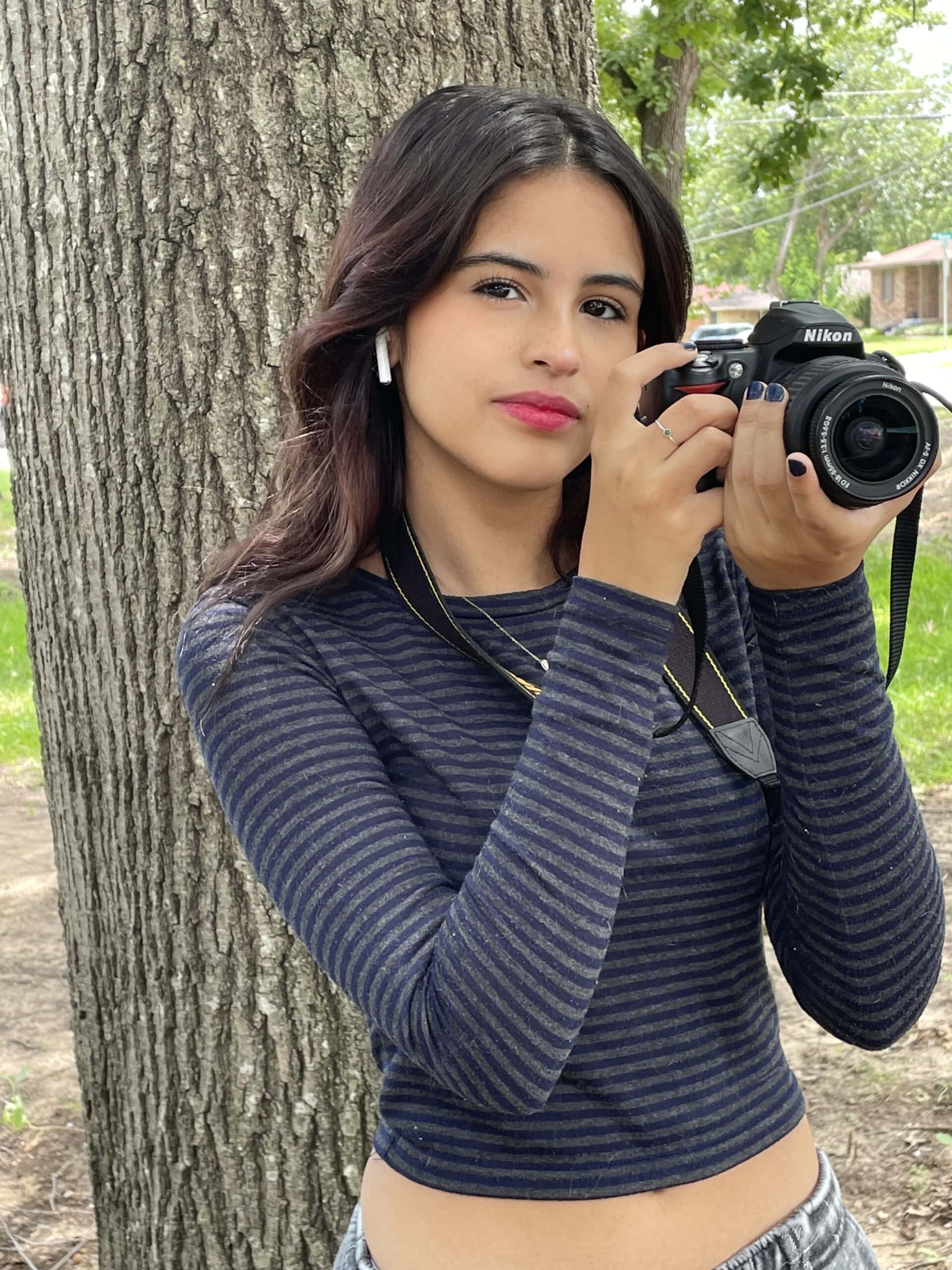
Amelie Ojeda

DeSoto Youth Attends The New York Times Summer Academy

As part of her love for film and photography, Amelie Ojeda is spending two weeks this summer in a city known for being photogenic.

Amelie, a homeschooled sophomore in DeSoto, left on July 16 to attend The New York Times Summer Academy for two weeks. She was selected for their fashion/photography/film program.

“This program will give me the chance to have hands-on experience, dive deeper into my passions, and help me think critically and creatively about my future career,” she said. “It will help reassure me that film and photography are truly my passions and something I want to continue to pursue in the future.

“It will help me put myself out there and not shy away from showing my work. I will also learn a lot of new skills and get to build amazing connections with my teachers, peers, and the professionals who come to lectures.”

Amelie has never been to any summer camps before. However, now that she has decided to attend one, she chose big in a city she loves.

Focusing On Art & Culture In The Big Apple

In the course, she will be going on field trips around New York City to focus on the art and culture in the city. She will also learn about the importance of art through fashion, photography, and film.

“While having field trips, we will also have scheduled classes every day of the week where our professors will teach us about different subjects regarding the course, as well as other social events to build relationships with people who share the same interests as you,” she said.

Amelie is no stranger to The Big Apple. She has visited a good friend she’s known since childhood who moved there a couple of years ago.

“I love visiting her and hanging out around the city with her. We go to the touristy places, but she also takes me to lesser-known areas,” she said. “I could go to New York a million times and would never get sick of it. It just feels like such a welcoming environment, and I can’t wait to explore more.”

Amelie has been exploring since she was around four years when she started making videos. They were mostly tutorials for various things like doing her makeup with candy or making her mom record her planting fruits and flowers in her grandmother’s garden in Puerto Rico.

Then she started making videos about her Littlest Pet Shop animal figurines. She would build sets for them, making school lockers out of toilet paper rolls with markers or computers/phones out of old cereal boxes, and she would use anything around the house to create items for them.

“I would create stories with dialogue and would act them out while filming on my tablet or my family members’ phones,” she recalled. “As I got older, I started making vlog-style videos, and when I was a tween, I would film a lot of makeup tutorials or GRWM’s (Get Ready With Me). I would find free editing programs and would try to figure them out.

“I started photography when I was in ninth grade, and that enhanced my filmmaking, and I started creating more documentary-style videos about nature and stuff like that.”

Reaching People Through Creative Expression

Amelie has expressed herself creatively throughout her life – by writing, drawing, playing the guitar, songwriting, photography, painting, filming, and dancing.

“I’m actually not sure what my greatest passion is yet. I have a lot of interests, but I know that my main goal with all of them is to reach people in some way,” she said. “I want people to gain something from what I create; I want them to laugh, cry, smile, be frustrated or angry, have every emotion, or just enjoy it for simple entertainment.

“I think art is one of the best parts of the human experience. It’s incredible that we as people are able to create art that make us feel heard or seen. I truly believe that art in any form is the most beautiful thing that sets us apart from every other species. That is why I am so grateful to have this opportunity to be able to explore the amazing world of possibilities that come with film, photography, music, art, fashion, and everything else.”

If you’d like to help Amelie with expenses, here is a link to her GoFundMe account.

LiveWire will perform at Alexandria’s Saturday Art Market

LiveWire will perform at Alexandria’s Saturday Art Market

ALEXANDRIA — A group of seasoned local musicians will return to the Saturday Art Market stage at Big Ole Park on Saturday, July 29, 10 a.m.-1 p.m.

LiveWire, which performs a variety of music from country to classic rock, includes Jim Lunemann, Bill Gillies, Bill Ingebritson and Marcus Hinnenkamp.

The Saturday Art Market is adjacent to the Alexandria Farmers Market at Big Ole Park on the north end of Broadway in Alexandria. Local artists will be on hand to visit and offer their work for sale. Coffee and food items will be available nearby, and every weekend showcases live music. New this year, the second weekend of every month will feature events and music for younger visitors.

The Art Market runs every Saturday from 9 a.m. to 1:30 p.m. through Sept. 2.

Our newsroom occasionally reports stories under a byline of “staff.” Often, the “staff” byline is used when rewriting basic news briefs that originate from official sources, such as a city press release about a road closure, and which require little or no reporting. At times, this byline is used when a news story includes numerous authors or when the story is formed by aggregating previously reported news from various sources. If outside sources are used, it is noted within the story.

Rainmaking in law firms: neither mystical art nor exact science

Rainmaking in law firms: neither mystical art nor exact science

July 27, 2023 – It’s often said that lawyers didn’t go to law school to learn how to develop business — they went there to earn law degrees. And yet, every practicing attorney will at some point in their career need to bring in new clients, matters, or lateral hires to help build and sustain their book of business.

For many, however, the idea of ‘sales’ or ‘business development’ is anathema — something best left to the marketing department and/or the rainmakers of the firm. There may have been a time in the distant past when a small percentage of top performing rainmakers could carry their firm’s growth trajectory; today, that likely isn’t the case.

The contours of the legal industry landscape are changing and with it, the ways in which business needs to be developed and maintained over time.

Competition is increasing and shifting in shape from law firm to law firm, to law firms competing with Big Four accounting firms, and with ‘new law’ firms, boutique, and alternative legal services providers in the mix.

Clients of law firms, faced with their own array of modern-day business and economic challenges, are ever-more demanding. And they’re not just looking for ‘cheaper, better, faster’ — although these remain fundamental drivers for most. They’re seeking more nuanced strategic or industry advice and relationship support that may not necessarily fit neatly within the comfort zone of a traditional transaction-oriented firm/client relationship.

Add to that the unstoppable force that is the impact of technology on all our lives, and it’s not surprising that business development — as both a mindset and a skillset — is becoming more important than ever. No longer can firms expect double-digit, year-on-year growth from a select group of rainmakers who have somehow mastered the mystical art of bringing new business and clients to the firm. To achieve sustained growth and client loyalty in law firms of today and tomorrow, business development ideally needs to be considered as important a discipline to the firm as financial management.

The age-old question is, how do firms build business development muscle and capability in a scalable way when there is skepticism among partners and attorneys who do not see themselves as rainmakers, or those who simply aren’t interested or believe they aren’t ‘good’ at it. Are there skills, attributes, and strategies they can adapt or develop to be better equipped to succeed despite these tendencies?

The answer is simple: Yes. Business development might feel like a mystical art or inexact science to the ‘untrained’ legal professional, but that doesn’t mean developing capability and strength in it is unattainable. Indeed, it’s highly attainable when you boil it down to basics.

As with a resistance-training program, key is to have a plan and some set goals or intentions, supported with relevant coaching, training or guidance on technique or method, and a personal commitment to ‘just do it.’

When it comes to specific skills and attributes, if you’re a human and not a robot, you innately possess what’s required, which is the ability to connect with other humans in an authentic way and to demonstrate through your actions and attention to your client that you genuinely care about them and the problems they’re trying to solve. None of this can be faked or done by auto-pilot. It must be real which means you have to be a great listener, to enjoy working with others, and to have empathy and integrity.

It also helps to be intellectually curious and constantly on the look-out for ways to help your clients — beyond just the legal work you do for them and not just when you’re engaged in a matter. The most enduring relationships are built on both tangible and intangible value-exchange.

And you ideally never tire of taking an almost unnaturally keen interest in understanding your clients, the industries in which they operate, and the macro-trends and factors that may impact them now and in future. Bringing to your clients a fresh or provocative perspective or insight borne from such interest, is something your clients will value highly.

Where firms can help support and improve business development outcomes across the board, is by having in place the right strategy and culture, technology, and enablement.

What is the firm’s go-to-market strategy for business growth? Is it clear, aligned, and incentivized in a way that drives desired behaviors and actions? The most successful business development initiatives are tightly tied to an over-arching strategy that has firm-wide buy-in. Scalable growth will not be achieved if a dozen practices are off pursuing their own potentially misaligned strategies and tactics or if the culture of the firm doesn’t support collaboration or sharing of information or relationships, for example.

How well are the firm’s collective client relationships nurtured and managed across the organization? Are all partners and attorneys armed with the intelligence and tools they need to understand the nature and strength of their own relationships, as well as those of their peers across the firm? Having a plan for how best to cultivate new relationships, leverage existing relationships, and reinvigorate those that may have cooled is a vital pillar of any firm growth strategy.

And finally, does the firm set clear expectations around business development time-spend, and are all lawyers equipped with the technology, training, and support of business development professionals to execute on their individual or group plans? None of these investments is optional for firms that are truly committed to mitigating the risk of relying on their growth to be driven by a ‘gifted’ few.

The reality is, there is no single playbook for rainmaking in law firms, but there are multiple, highly attainable actions that can be taken at both an individual and firm level to shift performance over time.

Opinions expressed are those of the author. They do not reflect the views of Reuters News, which, under the Trust Principles, is committed to integrity, independence, and freedom from bias. Westlaw Today is owned by Thomson Reuters and operates independently of Reuters News.

Lavinia Calvert, vice president and legal industry principal at Intapp, Inc., a provider of cloud-based software solutions, leads the company’s global go-to-market strategy for legal industry solutions, with a focus on driving growth, key client relationships, and continuous product innovation. She works at the intersection of business development, marketing, and legal technology and regularly writes and presents on related industry topics and trends. She is based in New York and can be reached at lavinia.calvert@intapp.com.

Pi Cheng Hsiu Traverses Taiwan to Document a Disappearing Population of Elephant Slides

Pi Cheng Hsiu Traverses Taiwan to Document a Disappearing Population of Elephant Slides

All images © Pi Cheng Hsiu

Through the parks and schoolyards of Taiwan, a dwindling herd of vintage elephant slides trudge alongside ball courts and buildings. Popular in the mid-20th century, the slides no longer adhere to local safety regulations, and as parks are redeveloped, they have been gradually disappearing. In an ongoing series, Pi Cheng Hsiu (previously) captures the herd’s diverse expressions and ornamentation, some retaining their original gray appearance, and others the recipients of vibrant makeovers.

Pi has also generated an interactive map featuring all of the locations documented so far, and you can explore more on Instagram.


An elephant slide under a tree.

An elephant slide painted with characters from Disney's Bambi.  A colorful patchwork elephant slide.

A small elephant slide made from brick.

A colorfully-painted elephant slide. A double-sided elephant slide next to a running track.

A colorfully painted elephant slide.

An elephant slide under a roof with small tricycles.

Do stories and artists like this matter to you? Become a Colossal Member today and support independent arts publishing for as little as $5 per month. The article Pi Cheng Hsiu Traverses Taiwan to Document a Disappearing Population of Elephant Slides appeared first on Colossal.

A Southern California Home That Blends Modernity + Traditional Design

A Southern California Home That Blends Modernity + Traditional Design

Emerald Bay is a minimalist home located in Laguna Beach, California, designed by Studio Gutow. The project offered the studio an opportunity to stay true to its minimalist aesthetic while maintaining their iconic blend of modernity and traditional design aptly highlighted in the restoration. It integrates the original architectural structure from the 1930s with the untouched 1970s interior design within its nearly 5,000 square foot, four-bedroom layout.

This amalgamation of disparate styles, alongside the integration of personal collections, results in a home that reflects the property’s heritage and functions as a showpiece where furniture and walls seamlessly blend. Craftsmanship was key to diffusing the house with its unique charm, from specially designed ceilings painted in Wimborne White by Farrow & Ball to custom fabrics.

Amplified by a breathtaking ocean view, the living room is imbued with a luxurious feel, thanks to the MLK Sofa and antique rug. As a bustling family home, a warm and friendly atmosphere was a critical objective. To achieve this, the designers opted for a color scheme centered around taupe, cognac, and olive. The home’s design allows for a smooth transition from one space to another, making it ideal for entertaining.

Entrance hallway consisting of dark wood walls and ceiling

Main living room with lounge chairs

Main living area overlooking sofa and lounge chair

Main living area with abundant natural light

Lounge chair next to sofa

Wrap around windows and daybed

Living area with cozy furniture

A read nook with built in sofa

Kitchen with marble accents and sloped ceiling

Antique chair and flowers

A makeup station with dark wood accents

Master bedroom with vaulted ceilings

Guest bedroom with ensuite bathroom

Bathroom with bathtub and marble accents

Bathroom with marble tiles in the shower

Photography by Michael Clifford.

Leo Lei translates his passion for minimalism into his daily-updated blog Leibal. In addition, you can find uniquely designed minimalist objects and furniture at the Leibal Store.