“Gifts galore from ceiling to floor”: Past Times Photography & Gifts full of unique décor

“Gifts galore from ceiling to floor”: Past Times Photography & Gifts full of unique décor

Tucked near the end of Main Street, right beside the famous Moose Jaw tunnels, Past Times Photography & Gifts is a must-stop for Moose Jaw locals and visitors alike.

According to its slogan, Past Times has “gifts galore from ceiling to floor” and it’s hardly an exaggeration. One step through the front door will have visitors craning their necks to take in everything the store has on display.

The fullness of the store is entirely part of its charm, and owner Mike Thul has been filling Past Times with giftwares, collectibles and decor for over twenty years. He looks to find the most unique items possible to include in the collection.

From decorative signs to postcards to artwork to mugs with funny sayings, Past Times carries a little something for everyone. Whether your taste runs towards shiny and crystal, or rustic and country, this gift shop likely has what you’re looking for and more.

Decor makes up the largest part of the offering at Past Times, and garden wares are big in the summer, with lots of things like decorative yard spikes and wind-spinners on display. The store also carries several lines of handmade products, stocked by local makers.

One of the store’s most popular features is the refinished furniture it regularly stocks. From dressers to cabinets to repurposed doors, furniture is one of Past Time’s most interesting offers. Each piece is individual and one-of-a-kind, which means customers are unlikely to encounter the same item twice.

Although Past Times has the word “antiques” on its sign outside, the store doesn’t carry as many old collectible items as it used to — but there are some historical gems scattered throughout the shelves for customers to stumble across like a scavenger hunt.

Items like old comic books, serving dishes, luggage sets and even vintage toys are ready to be discovered by the right eyes.

The most “antique” offering at Past Times is its photography service — but only because it allows customers to take a step into the past themselves.

The studio on the left-hand side of the store specializes in old-timey photos, where customers can choose from a variety of costumes and settings to immerse themselves in the past for a unique memento. Past Times Photography is able to do photos set in the Old West era, the roaring ‘20s or the Victorian era, with costumes to fit a range of sizes.

Past Times is also the official supplier of Chocolate Moose candy and fudge, a Moose Jaw staple that makes for a perfect shopping treat. The shop also carries a whole selection of other old-fashioned candies, like Cracker Jacks and Lucky Elephant popcorn.

Thul purposely stocks his store with things people aren’t likely to find in any other gift shops in Moose Jaw, and he hears often that every visit to Past Times is like a whole new experience because there’s always something new to see.

Past Times is a great experience for a first-time visitor, but regular customers also find the store is “surprisingly unexpected” every time they stop by — which is actually the city of Moose Jaw’s logo these days.

The store is located at 26 Main Street North, open from Monday through Saturday from 10 a.m. to 5:30 p.m. and on Sundays from 12 p.m. to 4 p.m.

For more information on available products, check out the Past Times Facebook page or visit pasttimesphotos.com.

News & Notes: A new curator at the art museum, a get-together with Lillian Pitt

News & Notes: A new curator at the art museum, a get-together with Lillian Pitt

Left: Erin Grant, new assistant curator of Native American art at PAM. Photo courtesy Portland Art Museum. Right: Artist Lillian Pitt, with “She Who Watches” mask. Photo: Dennis Maxwell.

The Portland Art Museum has hired Erin Grant as its new assistant curator of Native American art. And Lillian Pitt, one of the Pacific Northwest’s most revered contemporary Native artists, is getting ready for an evening of a little bit of talking, a little bit of showing, and a little bit of meeting and greeting at the Fort Vancouver Visitor Center in Vancouver, Wash.

Grant, a member of the Colorado River Indian Tribes with family at Hopi, the Gila River, and Phoenix, Arizona, has worked at the Portland museum since February 2022. Her assistant curator position is new to the museum, and will provide a boost to oversight of one of PAM’s most complex and important collections.

“This new position is a game-changer,” Kathleen Ash-Milby, curator of Native American art, said in a museum release. “We will now be able to focus on necessary work in our collections as well as exhibitions and more public-facing work. Both are needed as we continue to build our relationships with Native communities in the region and beyond.”

The new curatorship was made possible in part by a grant from the Leadership in Art Museums initiative, which is designed to help museums increase racial equity in leadership positions and is funded by the Alice L. Walton Foundation, Ford Foundation, Mellon Foundation, and Pilot House Philanthropy.

In her new role, Grant will focus initially on museum compliance with the National Graves Protection and Repatriation Act, an important role internationally in assessing museums’ holdings, how objects were come by, and whether other groups or individuals — often Indigenous — have a legitimate claim to ownership. In June 2022 PAM returned nine Tlingit objects to the Native community in Wrangell, Alaska, from which they’d been taken before the Portland museum acquired them as part of the 800-piece Axel Rasmussen collection in 1948.

Grant will also concentrate on planning for the museum’s current major redesign and eventual reinstallation of the Native American galleries.

Grant has a bachelor’s degree in history from Seattle University and is a 2019 graduate of the History of Design & Curatorial Studies master’s program through The New School and the Smithsonian Design Museum. She’s completed internships at the New York Historical Society, American Federation of Arts, Metropolitan Museum of Art, and the Indian Arts Research Center (School for Advanced Research). In her 17 months at PAM before joining the curatorial team she concentrated on programming and outreach to Native communities for the exhibitions “Dakota Modern: The Art of Oscar Howe” and “Jeffrey Gibson: They Come from Fire.”

The new position is particularly important considering curator Ash-Milby’s commitment to connecting the museum with contemporary tribal members and emphasizing that Indigenous art is both historical and contemporary: The work of many contemporary Native artists is in the museum’s Northwest galleries.

“As an Indigenous scholar and museum professional, I have always strived to be the bridge connecting institutions and their audiences to the worlds and cultures they reflect,” Grant said in the museum release. “I am guided by community collaboration and outreach methodologies. As I seek more growth opportunities, I am eager to continue my work in the prioritization of Native voices and to contribute my voice on a bigger scale at the Portland Art Museum.”

“An Artist’s Journey” with Lillian Pitt

Some of Lillian Pitt’s artwork that will be on view at the Fort Vancouver Visitor Center.

Meanwhile, the Friends of Fort Vancouver and the National Park Service are getting ready to host an evening with Lillian Pitt, the mutidisciplinary traditional and contemporary Columbia River artist who for decades has been a key part of the glue that holds Northwest Indigenous artists together and helps keep them in the public eye.

The evening, called “An Artists Journey,” will be from 5 to 7 p.m. Thursday, July 20, at the Fort Vancouver Visitor Center, 1501 East Evergreen Blvd. in Vancouver, and if you’d like to be there (it’s free) you can register here by scrolling down to “Events.”

Pitt, whose family roots are Wasco, Yakama, and Warm Springs, will talk about her artistic journey, her exploration of traditional art forms and the ways she’s learned to carry them into contemporary times, of artists she’s mentored and been mentored by, and of techniques she’s learned in forms as varied as glass, metal sculpture, mask-making, pottery, jewelry, and printmaking. A selection of her work will be on view, some of which will be for sale.

Sponsor

Chamber Music Northwest Summer Festival Poetry in Music Portland Oregon

The Portland Art Museum has about a dozen works by Pitt in its permanent collections and has shown exhibitions of her work, but her influence ranges far beyond museum collections. Among other things, she’s been central to spreading the historical and cultural significance of Tsagaglalal, or She Who Watches, the ancient rock image that sits in Columbia Hills State Park on the Washington side of the Columbia River, on Washington Highway 14 between Lyle and Maryhill.

You can listen here to Lillian Pitt: 10,000 Years through Art, Dmae Lo Roberts’ Stage & Studio April 2021 podcast interview with Pitt on ArtsWatch, on the occasion of the artist’s solo exhibition Ancestors Known and Unknown at the Columbia Center for the Arts in Hood River.

Indian artist Sri Prabha’s exhibition wows at Boca Raton Museum in Florida

Indian artist Sri Prabha’s exhibition wows at Boca Raton Museum in Florida

Sri Prabha’s exhibition is a great opportunity to witness the brilliance of an Indian-born artist who has made his mark in the United States. With a powerful vision and a deep connection to nature, his art has the potential to inspire change and ignite a passion for environmental preservation.

Acclaimed artist Sri Prabha, originally from India and now based in South Florida, is showcasing his captivating solo exhibition, “Sri Prabha: Resonator-Reanimator,” at the renowned Boca Raton Museum of Art in Florida. Running until October 22, this exhibition takes center stage in the museum’s main gallery, a prestigious honor for any artist.

Born in Hyderabad, India, in 1969, Sri Prabha has been living in the United States since 1978. His artistry brings together the essence of Eastern philosophy and Western science, creating a unique exploration of our connection to the natural world. The exhibit is a vibrant journey filled with vivid colors and innovative art forms that promise to leave a lasting impression on visitors.

Curated by Kelli Bodle, the Associate Curator of the Boca Raton Museum of Art, this exhibition exemplifies Sri Prabha’s deep passion for the environment and the human-nature relationship. Through his multi-disciplinary approach, he has crafted awe-inspiring site-specific installations that engage all the senses. Visitors can walk through mesmerising mixed media, watch captivating videos, immerse themselves in ambient sounds, and interact with thought-provoking structures.

Sri Prabha’s artistry goes beyond traditional boundaries as he ingeniously incorporates elements like traditional Indian sari fabrics, abstract paintings, digital print collages, and assemblages. His works have garnered significant attention and are proudly displayed in private collections across major cities like Chicago, Seattle, Miami, New York, Washington, DC, and even internationally in Copenhagen.

At the heart of his art lies a powerful message of interconnectedness, urging viewers to reevaluate their relationship with nature and each other. Through Resonator-Reanimator, Sri Prabha invites us to reflect on the shared origins of life and to embrace collaboration in safeguarding our planet for future generations.

“The idea is for people to go through a portal and realise we are more similar than different, that all of these elements floating around space came together and created us,” says Sri Prabha.

“We are all interconnected, and we can change our behavior to work together and collaborate. As civilizations, we like to think that we are different from each other, but we are really not. Our technology is changing rapidly, but our behavior has not kept up.”

Founded by artists in 1950, the Boca Raton Museum of Art has since flourished into a cultural landmark in South Florida. Alongside the Museum, it houses an Art School and Sculpture Garden, offering an enriching experience for art enthusiasts and visitors from all walks of life.

Sri Prabha’s exhibition is a great opportunity to witness the brilliance of an Indian-born artist who has made his mark in the United States. With a powerful vision and a deep connection to nature, his art has the potential to inspire change and ignite a passion for environmental preservation.

If Social Media Didn’t Exist, How Would You Share Your Photography?

If Social Media Didn’t Exist, How Would You Share Your Photography?

Social media is an incredible tool for propagating ideas, allowing the potential for mass outreach to anyone with an Internet connection and something to say.

People without a background in advertising or public relations can go viral simply by making the right meme-worthy content and sharing it at the right time, in the right place, without a real penalty for getting it wrong, leading some to treat posting to social media as almost a one-armed bandit, with the built-in reward mechanisms seeming just as addictive for some.

However, it is only really across the last decade or so that this status quo has been balanced, and within that span, the “town square” for photography content has shifted constantly. Flickr, Facebook Groups, Twitter, Reddit, 500px, Instagram, and various other forums and sites that have popped up, claimed to be the next big thing, then vanished without a trace.

Communities have usually migrated towards whoever is offering the most eyes on posts with low barriers to entry, and potential to gather new members. Some remain in the abandoned ruins of groups that have long since moved on, while others try and co-opt sites that aren’t really intended for sharing high-quality imagery (media) and are more concentrated on networking and communication (social).

A Shifting Social Media Landscape

The current landscape of social media seems to be undergoing some pretty significant changes, away from still images (which occupy a tiny fraction of attention as you scroll past) towards video content (spend longer with each morsel of content, including branded deliveries), which means still photography has been cut loose to an extent.

Combine these strategic and deliberate medium-based changes with other decisions, like fundamentally altering the ways communities behave on Reddit, or profile “hierarchies” on Twitter, and the result is a bit of a mess. It is not easy to find firm and confident footing on a path towards a photography-centric space, the digital Promised Land that ticks all boxes of image quality and audience quality.

It’s easy to be blinded by the potential a digital space seems to offer; global reach, unlimited customer base, acclaim, and recognition. But achieving these relies on standing out from the noise because you’re effectively competing for attention against every single other person who is trying to do the same thing as you, and everyone else who is trying to do something different than you.

No one is going to “solve” the algorithm any more than they will solve a roulette wheel. These social media platforms are not “your platform”, they belong to someone else. If tomorrow a company decides to remove all instances of the letter “A,” they will be entirely able to do so. They choose what they want their platform to be a reflection of.

If you have the option to buy an advertising spot and actively market your photographs that way, then people will certainly see the advert – it won’t be “organic reach” or free-range audience, or whatever else people call posting and hoping, but at the same time how many of these people who see the work will actually convert into an audience member, let alone a paying customer?

The Challenge of Getting Seen

When was the last time you bought a print or a book from a photographer you’d never heard of just because you saw their sponsored post on social media? If you haven’t, then why would you expect someone else to purchase your product when you promote it in a way that you haven’t personally responded to?

Some creators, instead of paying to have their work shown to people in the form of an advert, will “buy followers” which inflate the number shown on their profile, as well as view and like counts, sometimes even comments. But you can’t really pay someone to be your customer, for that you need advertising or an equivalent form of marketing. This undermines the accuracy of the assessment of actual popularity, which means potential clients or brands looking for a legitimate audience to harness are dissuaded from using follower counts and other numbers games for a real sense of legitimacy.

Despite all of the shortcomings, that underlying sense of potential remains for the digital space: if I’m not there, where will I be? If I don’t share my message where everyone else seems to be shouting, how will I get heard (even if no one is hearing what anyone else is saying anyway)?

What are the non-digital spaces that don’t cost money to access? What is the equivalent of a work re-sharing hub, boosting their own audience using that very audiences content? Who are the gatekeepers, and what are they gatekeeping if not just an audience you may not have reached yet?

Outside of the digital-but-not-social media options, like blogging or YouTube (which are increasingly populated by social-media-like tools), how does your physical real day-to-day existence differ from the way you behave on social media? How often do you speak to someone you’ve never met or seen before, make a new connection? How often do you involve yourself with your local community, in whatever form that may be? Would these interactions still be focused on photography? Are you showing them your photographs within moments of getting their attention?

Without the boundaries of a digital frame restricting you to one method of interaction, what new potential opens up to you? Without those digital tools would you even call yourself a photographer as an initial introductory label?

With these as a starting point, the real question becomes obvious. Is your goal only to have your work seen? Remembered? Purchased? Is social media really the best path to achieving any of these?

What’s the last image you’ve only seen on social media that you really remember?

What’s the last one you bought?


About the author: Simon King is a London-based photographer and photojournalist, currently working on a number of long-term documentary and street photography projects. The opinions expressed in this article are solely those of the author. You can follow his work through his documentary collective, The New Exit Photography Group, and on Instagram.


Image credits: Photographs by Simon King

Garden artists creating ephemeral beauty with transient foraged materials

Garden artists creating ephemeral beauty with transient foraged materials

A leaf that doubles as a dog’s ear, stems that make for insect legs and a twig that becomes a baby. Garden artists are using nature’s bounty to unleash their creativity.

Foraging for materials including petals, seeds and acorns, nature lovers – many of whom are gardening enthusiasts – from all over the globe create both portraits and abstract art. These are then photographed for posterity, while the original work is recycled or left for the wind to carry away. The overarching aim of so-called Earth art is to create something of ephemeral beauty, even if it’s transient.

“Nature is an infinite well of inspiration, so naturally I gravitate towards it,” says Canadian artist and photographer Raku Inoue, who makes colourful portraits using flowers, twigs, leaves, seeds and stems placed on white paper, which he then photographs.

His creations also include orangutans, llamas, colourful birds, fish and butterflies, and even dinosaurs. He uses freshly cut flowers to create portraits of insects, from delicate beetles to vibrant ladybirds, using stems to artfully form legs.

Given the nature of his work, Inoue’s palette shifts with the seasons as leaves and petals change colour. He also digitally manipulates the arrangements using different angles to make a montage.

Fellow garden artist Subhashini Chandramani, who lives in Bengaluru, India, uses discarded petals, leaves and seeds to make portraits of anything from the Hindu deity Krishna, complete with a flute, to Audrey Hepburn, flamenco dancers and birds, using poinsettia leaves. For Earth Day in April, Chandramani created a stunning world map using the petals of different flowers on a black backdrop.

“The materials I use originate primarily from my own garden. Even when I am out in parks, I am always on the lookout for unique leaves, flowers, seeds and even vegetables that can inspire my next piece of art,” says Chandramani. “The process of creating each piece is a dance with time and nature, and a little like assembling a puzzle. For example, I’ve transformed the leaf of Leea rubra into a Native American’s eyes, and a crepe jasmine leaf into a sky filled with birds.”

In Chicago, artist Vicki Rawlins and her daughter Brooke spend much of their time outdoors foraging for materials that Rawlins then uses in her whimsical art.

Vicki Rawlins forages for materials in her garden and neighbourhood. Photo: Julie M Gile

“I work with foliage that I forage from walks in my yard and neighbourhood and build detailed scenes and portraits with no glue or tape, just 100 per cent Mother Nature,” says Rawlins. “Sometimes I’ll buy flowers from a local shop if I can’t find what I need in my own backyard.

“My pieces aren’t permanent. After I take photos of what I create, I put the foliage back outside in the compost pile for a new life,” adds Rawlins, whose Instagram feed is filled with landscapes and portraits, including one of Frida Kahlo with a head full of flowers.

“If I like what I’ve done I’ll turn the photos into fine art prints and greeting cards,” she says.

British painter and photographer Hannah Bullen-Ryner is garden artist who assembles works not on paper, but rather on woodland floors. She describes herself as “a land artist and woodland pixie in love with the natural world”, and makes portraits of hummingbirds and owls using wildflowers, berries, leaves, seeds, twigs and petals.

She arranges various elements, such as leaves to form the feathers of a bird, such that they resemble artistic brush strokes before she leaves them to be reclaimed by nature.

Ryner also creates images of white tigers and chimpanzees drawn using chalk and water, then filled with foraged materials. She sells prints of her creations on Etsy.

Bridget Beth Collins, from Seattle, has been creating floral art for 15 years. “It started when I was walking through my garden one day and saw a ‘goldfish’ in my orange poppies. I brought the poppy inside and painted a body on a piece of paper, then used the petals as fins. Since that day I have made different animals, landscapes and books with flowers,” says Collins.

An arrangement by Bridget Beth Collins. Photo: @flora.forager

Her love of nature has been fostered by backpacking trips and time spent in mountain meadows in the state of Washington. Her Instagram feed is filled with eclectic images of everything from gnomes and turtles to bicycles and even the Eiffel Tower made out of petals, leaves and seeds.

“I forage for wildflowers from meadows and parks, and also grow my own flowers or buy bouquets at the market to create my botanical art. Many of my friends give me flowers from their gardens knowing I will create with them,” says Collins, who sells prints of her work at Floraforager.com.

In Singapore, fashion illustrator Grace Ciao uses petals and leaves to create “bloom belles”.

These are illustrations of women in stylish dresses, with full skirts and glamorous gowns made with the petals of daisies, gerberas and roses. Sometimes Ciao will use a whole flower to form a garment.

Unlike many other garden artists, Ciao draws and paints an entire picture before adding petals or leaves as embellishments.

Also differing from the norm is London artist Chris Kenny, whose nature portraits use just one material: twigs.

Chris Kenny uses only twigs to create his portraits. Photo: Chris Kenny

Kenny makes everything from detailed dancing figures and babies to abstract portraits by joining together the twigs he forages.

“Twigs provide naturally rhythmic, characterful and unpredictable lines,” says Kenny. “They reveal connections between plant limbs and human limbs with an exuberance inherent to life.”

Updated: July 16, 2023, 2:01 PM

Camera ready: how Agnès Varda turned her photographs into film

Camera ready: how Agnès Varda turned her photographs into film

Agnès Varda, at least in her later years, didn’t make a big deal about being taken seriously. For decades, the film-maker and artist was much respected as the pioneering feminist voice in French cinema and as the “godmother of the Nouvelle Vague” – New Wave – her work beating Jean-Luc Godard, François Truffaut et al to the big screen by several years. But she was also somewhat sidelined, eclipsed by her male peers, and it took until this century for her to be truly revered: last year, her 1962 classic Cléo from 5 to 7 was ranked No 14 in the Sight & Sound greatest films poll.

But by the time she had begun to be deified, Varda was prone to sending herself up. She would appear on her film posters and DVD boxes in cartoon form as a quizzical, rotund Mrs Pepperpot figure; she even appeared at the Venice Biennale dressed as a potato. The latter guise, she once said, was because she loved the circus as a child. “I thought I should do something to get attention.”

The clownish side of Varda, who died in 2019 at the age of 90, helped endear her to a new international public, as did her double self-reinvention this century: first as a digital documentarist with her groundbreaking The Gleaners and I (2000), then with her extraordinary late flourishing as an installation artist. Her installations included Patatutopia, a reverie on tubers at the 2003 Venice Biennale (hence the spud costume); and a remarkable tribute to her beloved island of Noirmoutier in western France (mixed media: photos, video, beach balls, a hut made entirely from celluloid strips of one of her films).

Nude, Paris, 1954.

What’s often forgotten is that Varda, before turning to cinema, had already developed her own vision as a photographer. This year her black-and-white work from the early 1950s is celebrated by French photography festival Les Rencontres d’Arles with the exhibition La Pointe Courte, From Photographs to Film. The show (and accompanying book) consists of images shot by Varda in La Pointe Courte, an area of the Mediterranean town of Sète, where she lived as a teenager. Varda returned to the area – then an impoverished fishing community – to take photos in preparation for her first feature, La Pointe Courte, which she shot in 1954, a daring formal experiment alternating documentary footage and fictional love story.

La Pointe-Courte (patterns and details on the “dark side” of the port), March-April 1953

Containing many photos never seen before, the show has been curated in collaboration with the film-maker’s children, Rosalie Varda – who runs the family production company Ciné-Tamaris – and actor-director Mathieu Demy. Since their mother’s death, Rosalie has begun making an inventory of Agnès’s vast archive of negatives. “We’re organising, we’re discovering, we keep finding new things,” she says. The Sète photos are particularly telling, as they show Agnès planning her transition from still to moving images. “When she decided to make La Pointe Courte,” Rosalie says, “she really worked on the photos – it was more than reportage, it was about preparing the film. When she came on set, she had no problem knowing where to put the camera.”

Reflections on the quay, Sète, vintage print, 1950.

Having moved from Sète to Paris in the late 1940s to study photography and history of art, the Belgian-born Varda had soon established herself as a professional photographer, shooting portraits, working for magazines and documenting the Avignon festival and the Théâtre National Populaire. “That’s how she earned her living, right into the 60s,” says Rosalie. Agnès’s early theatre photos, featuring stars such as Jeanne Moreau and Gérard Philippe, have long been reproduced in published drama texts: in France, says Rosalie: “All schoolchildren had textbooks with her photos – all the classics of Racine, Molière, Corneille. Everyone grew up seeing her pictures.”

Varda’s La Pointe Courte photos, taken on her Rolleiflex, include a certain amount of folkloric spectacle – notably the gondolier-like figures competing in Sète’s traditional water jousts, in which participants try to push their opponents off boats with long poles. But she also explores the mundane reality of postwar Sète: children huddled in cramped rooms, dogs and drying laundry on the waterfront, along with familiar objects (barrels, stacked logs, carved wood) transformed into bizarre near-abstractions in the surrealist tradition.

Jousters on board during a tournament on the Canal Royal, Sète, summer 1952

Published alongside the La Pointe Courte book is a separate photobook, Expo54. It reproduces an exhibition of Varda’s work that she organised in June 1954 at her home in Rue Daguerre in Paris’s southern 14th arrondissement, inviting friends and neighbours, among them the photographer Brassaï and artists Alexander Calder and Hans Hartung.

Expo54 features more children, including an eerie masked trio, as well as Varda’s friends: Calder is seen larking around in a bowler hat and sitting solemnly alongside his wife and daughters. There is also a remarkable set of ruthlessly matter-of-fact self-portraits with Varda either smiling cautiously in sensible-looking jumper and skirt, or naked, sometimes shot from behind, head bowed so as to turn her torso into pure sculpture. Even then, she sported the pudding-bowl cut that would be a trademark right through to old age, when she wore it in aubergine and silver in a style she called “mamie punk” (punk granny).

Varda moved to Rue Daguerre – appropriately named after 19th-century photographic pioneer Louis Daguerre – in 1951 and would live and work there over seven decades, for some of that time with her late husband, Jacques Demy, the director of The Umbrellas of Cherbourg. The quartier had changed massively by the time I went to interview Varda there in 2009. The 1954 photos show the sooty, distressed walls of a dilapidated postwar city, but half a century on, Varda’s home vividly evoked the bohemian oasis it must have become during Paris’s cultural boom of the 1950s and 1960s. The courtyard felt like Varda’s private beach, decked with plants and decorated in shades of crimson and purple – very different from the severe site she recalled moving into, with no heating and no bathroom. By the time she and Demy had become star auteurs, the place was better equipped for entertaining, but at that point Varda didn’t photograph their guests: an enduring regret, she told me, was that she never took pictures of the Doors singer Jim Morrison, who would come to dinner.

Heart potato, 1953

Rue Daguerre became Varda’s base for an eclectic, globetrotting career, taking in era-defining feminist fictions (One Sings, the Other Doesn’t, Vagabond); numerous documentaries, including studies of the Black Panthers and Los Angeles murals; hybrid works such as Jacquot de Nantes, an imaginative recreation of Demy’s childhood; and photographic studies of China in 1957 and Cuba in 1962.

The artist Alexander Calder and his family

Varda found renewed attention this century partly through films such as her playful, affecting autobiography The Beaches of Agnès (2008), partly through her impish new delight in self-promotion. But photography always remained a key thread – right at the end of her life, she enthused about becoming an Instagrammer. And one way or another, still images continued to fuel her films. One example is an enigmatic photo from Expo54 showing a dead goat, a child and a naked man on the beach; it would inspire her 1982 film Ulysse, in which Varda pondered the image’s meaning, and she mused on it again in The Beaches of Agnès. “It was a way of showing how a narrative can be born out of a single still moment,” says Rosalie Varda of Ulysse. “The shutter clicks – but before and after, there’s a whole story to tell.”

Stolen culture: Ilya Repin, the Kharkiv Cossack Devoted to Ukraine

Stolen culture: Ilya Repin, the Kharkiv Cossack Devoted to Ukraine

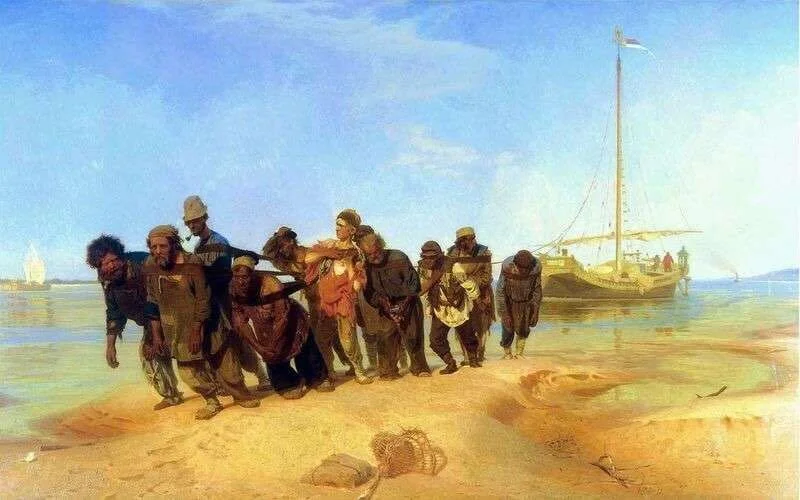
Ilya Repin has long been considered one of the masters of Europe’s late-19th-century Realist painting tradition. Yet he did not merely copy what he saw. Rather, he reincarnated the scene with an almost expressionistic flair, suffusing the atmosphere with his deeply rooted sense of being Ukrainian.

Unfortunately, like so many Ukrainian artists and cultural figures, the world-renowned painter has been classified as a “Russian” and is invariable referred to as a “one of the key figures of Russian Realism.”

Russian art critic Vladimir Stasov called Repin’s work an “encyclopedia of post-reform Russia.” In his works, Repin managed to cover all aspects of modernity, touch on topics that concern the public, and react to the spirit of the day.

Repin’s life is closely connected with the Kharkiv region, where he was born; and Repin’s Cossack roots strongly influenced his work.

In his works, he depicted human figures in motion, giving them a rich plasticity with brilliant colors. Some works are also influenced by Impressionism and Symbolism.

image

Cossack origins

The future artist was born on July 24, 1844, in the city of Chuhuiv, now in Ukraine’s Kharkiv region. His paternal grandfather, Vasily Repin, was a Cossack engaged in trade. The original Cossack name, Ripa, was later Russified.

From the age of 11, the artist was sent to a school for topographers. Two years later, he began working in the icon workshop of the artist Ivan Bunakov. There the visitors heard about the talented young master.

Already at the age of 16, Repin left the workshop and his parents’ house to work in an icon painting cooperative, where he was paid 25 rubles a month. In the summer of 1863, he went to another art cooperative in Voronezh province, near the city of Ostrohozhsk. From there, Repin was inspired to go to St. Petersburg in the fall.

Once in St. Petersburg, he obtained the right to stay abroad for six years as an academic at public expense after his painting Christ Raises the Daughter of Jairus received a prestigious award.

But Repin only went abroad for three years, from 1873 to 1876, a period during which he exhibited his works at the Paris Salon.

Ukrainian motifs

From the 1870s to the 1880s, the artist traveled extensively throughout Ukraine and Russia, where he got new inspiration. The periods of his work can be divided into Ukrainian and Russian.

However, it was with Ukraine that the artist from Kharkiv region was most deeply connected not – not just geographically, but also sensually. In his paintings, he depicted Ukrainian nature, people and folklore.

His works include such well-known Ukrainian-themed canvases, such as Ukrainian Peasant Woman (1886), Portrait of Taras Shevchenko (1888), and Cossacks on the Black Sea (1908).

image

“Cossacks on the Black Sea”

Through his work, Repin raised important issues for society, in particular the problems of the 1876 Ems Ukaz, the decree by which Russian Emperor Alexander II banned the Ukrainian language in many spheres of life.

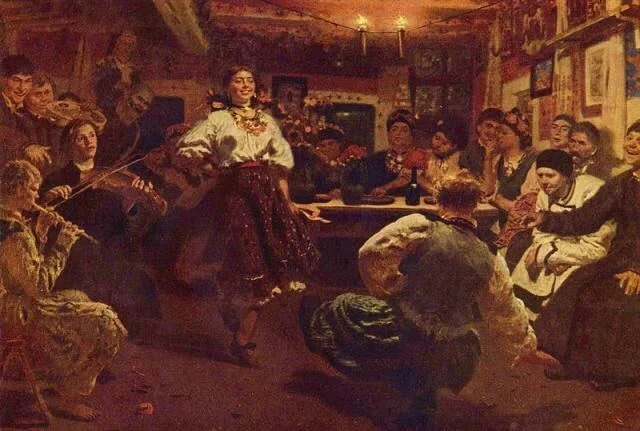
As a reaction, the descendant of Cossacks painted Vechornytsi in 1881, on which he signed his name in Ukrainian. The gallerist Pavel Tretyakov bought the painting and hung it in his renowned gallery under a virtually forbidden name. The entire Russian press submitted this name in Ukrainian.

image

“Vechornytsi” (1881)

One of Repin’s best-known paintings is Reply of the Zaporozhian Cossacks, which has become a symbol of the Cossack spirit. The artist began it in 1880 and finished only 11 years later. Before writing, he carefully studied Cossack weapons and clothing. He also constantly consulted with the Ukrainian historian Dmytro Yavornytsky, who posed as the writer of the letter.

During his travels, Repin personally communicated with other Cossack descendants . “An amazing people. Nobody in the whole world felt so deeply about freedom, equality and brotherhood! Throughout their existence the Zaporozhtsi remained free, they surrendered to nobody!” Repin wrote.

The painting was admired by the Russian Emperor Alexander III, and he bought it for 35,000 rubles, which was a huge sum for those times.

Ivan the Terrible kills his son

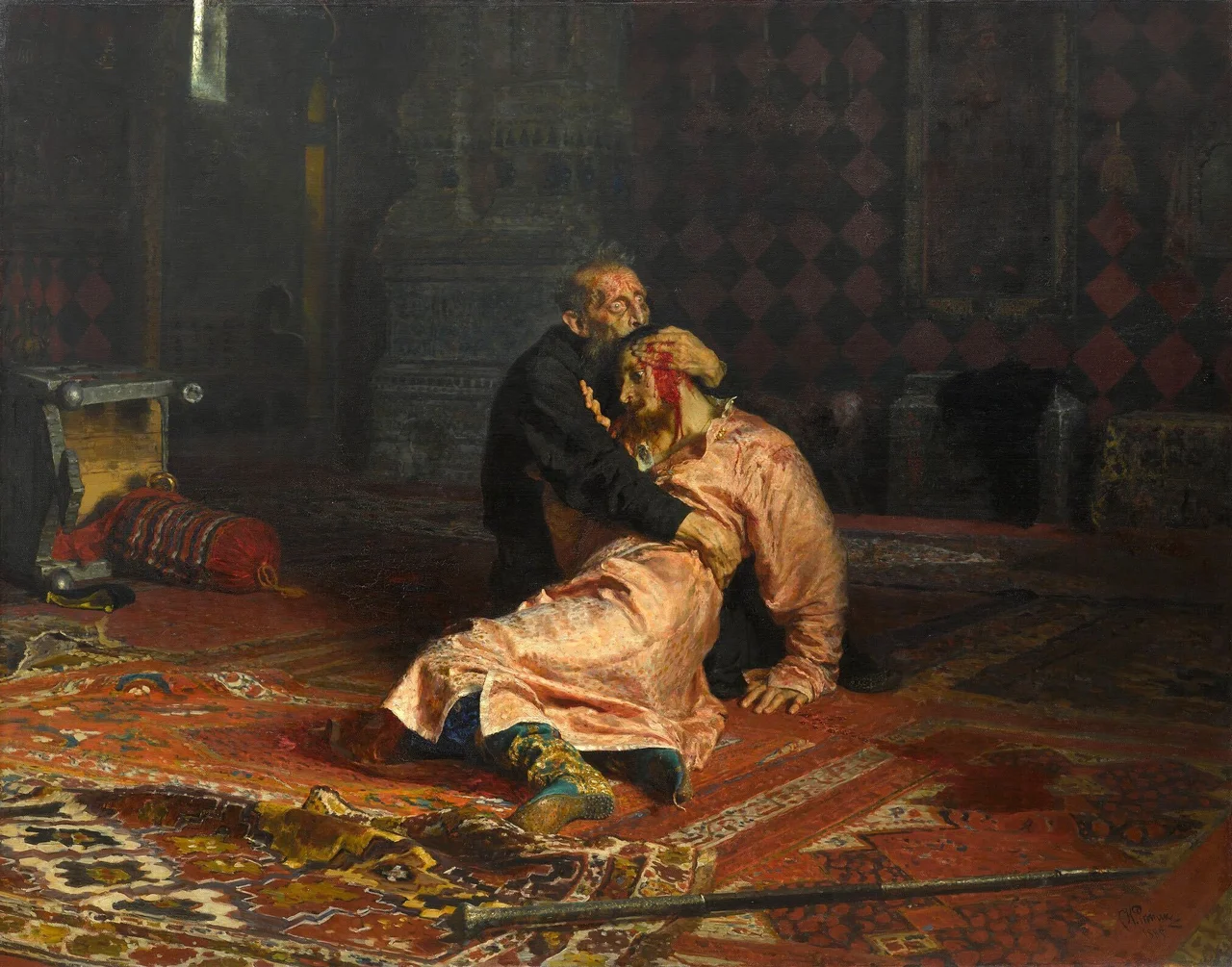
The next of Repin’s most memorable paintings is Ivan the Terrible and His Son Ivan on 16 November 1581. The picture, depicting a significant historical drama, was painted in 1885 and has the unofficial title “Ivan Grozny Kills His Son.”

image

“Ivan Grozny Kills His Son” (1885)

After completion, the painting was shown at the exhibition. But this interpretation of the historical plot caused dissatisfaction with Emperor Alexander III. So he forbade the painting from being exhibited. Many cultural figures defended the canvas. Thanks to their efforts, as well as those of the artist Alexey Bogolyubov, the ban was lifted.

Refusal to return to the USSR and nostalgia for Ukraine

At the initiative of Grand Duke Sergei Alexandrovich, Repin accepted an offer to work at the Imperial Academy for the sake of reforming the educational institution. His workshop at that time was the most popular among students.

But after Finland gained independence from Russia, the artist did not want to return. In 1919, he presented the Finnish Society of artists with 23 paintings by Russian artists who did not support the Bolshevik coup. Thus, the famous Athenaeum collection was founded, showing the works of European artists.

But the Soviet government made at least three attempts to bring Repin back from Finland. Eventually, Stalin issued a resolution: “Allow Repin to return to the USSR.”

In 1925, Korney Chukovsky came to visit Repin. He was supposed to make the artist an offer to move to the USSR, but in fact had secretly persuaded Repin not to return. A year later, a delegation of artists led by Isaac Brodsky arrived again to persuade him to return.

In November 1926, Repin received a letter from people’s commissar Kliment Voroshilov. Repin’s son Yuri was involved in the negotiations. But to no avail – the artist remained in Finland.

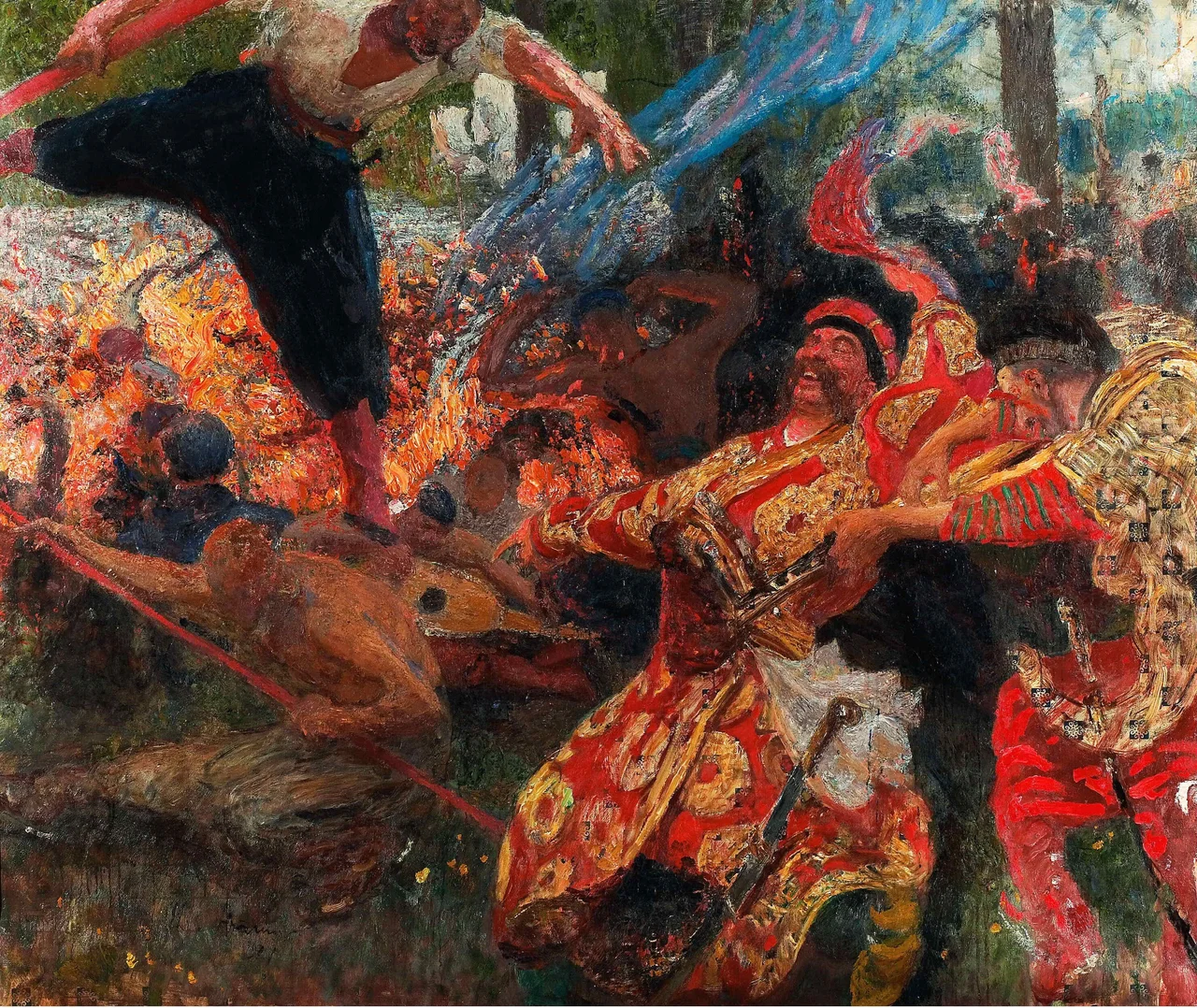
If Repin wanted to return, it was only to Ukraine. But the Bolsheviks blocked his way. Even his last major painting, Hopak, is directly related to Ukraine and its tradition of wild acrobatic dancing. He conceived it in 1926. But it was already physically difficult for him to execute it due to the paralysis of his right arm.

image

“Hopak” (1927)

Ilya Repin died on Sept. 29, 1930 in the small Finnish village of Kuokkala. In his will, he insisted that his body be buried in his native Chuhuiv. However, due to problems with the Bolshevik authorities in eastern Ukraine, the artist’s widow decided to bury her husband in a park near the house and the hill that Repin called Chuhuiv Hill. She buried him without a coffin, and planted a tree on the grave, as the creator asked.

New edition of “Waffle House Vistas” highlights new photographs and essays about the iconic Southern restaurant

New edition of “Waffle House Vistas” highlights new photographs and essays about the iconic Southern restaurant
image

Author Micah Cash spent most of 2018 traveling through the southeastern United States visiting and photographing Waffle House restaurants, a project that culminated in the book “Waffle House Vistas” published by The Bitter Southerner. Cash explains:

I did it because I wanted to see through each restaurant’s windows. I wanted to see the surrounding architecture, catalog adjacent businesses, and understand the public and commercial space around each restaurant. I also wanted to ask questions about our society and our social, economic, and political divisions. 

The resulting photography project, “Waffle House Vistas,” collects images that document Southern communities as seen through the windows of Waffle Houses. In each instance, the point of view is the customer’s. Each photograph looks out from booths and chairs, making the viewer a witness to intertwined narratives of poverty, transience, and politics. 

These photographs ask viewers to look up from their hash browns and acknowledge the institutions and structures that create real, yet rarely acknowledged boundaries that feel impossible to break through for much of this country.  And Waffle House is the perfect place to have this conversation — beloved as a Southern cultural icon and scattered throughout our region like hash browns on a grill. But while the Waffle House feels like a “safe space” for such discussions, it has not, it is not without its own controversies.

In fact, Waffle House restaurants have become somewhat notorious for violent, racially-charged incidents. Cash cites three that occurred in Spring 2018 alone. In a more recent article, Brian Kean writes that if you Google “shootings at Waffle House,” you’ll be “shocked.” Kean attempts to explain why Waffle House “is so deadly” and posits that it boils down to the “unpredictability of a late-night crowd, the likelihood that there are guns, and racism.”

Micah Cash, then, couldn’t ignore the sociopolitical and cultural contexts within which Waffle House restaurants exist. Cash explains:

I also began “Waffle House Vistas” against the backdrop of challenging political times: the trauma of the shooting at Marjory Stoneman Douglas High School in Parkland, Florida, and the activism that followed; the rhetoric of the 2018 midterm elections and their consequences; the threat and eventual occurrence of a government shutdown over the holidays. While I did not want the tonality of these photographs altered by those events, in truth, they were.

There was no way around it. These photographs contemplate our volatile political and economic climate and do so explicitly from the vantage point of Waffle House restaurants. My approach had its own rules: I would eat at every Waffle House I entered and make images only from where I was seated. I wanted to have a complete Waffle House experience every time. Not only did it give the photographs the authenticity I wanted, but it also compensated the restaurant for taking up a table, especially during prime dining hours. I ordered a full breakfast at the first restaurant of the day and would order coffee and a side of toast at the remaining stores, as it was customary for me to visit multiple locations in one day while I was traveling.

Waffle House Vistas was published in 2019 by The Bitter Southerner, and a second edition was recently released. According to The Bitter Southerner:

This new edition has an awesome new cover. Inside, there are new locations, new essays, and new vistas. If you loved our original Waffle House Vistas, we know you’re going to double love Waffle House Vistas, second edition. 

The new edition includes 40 new photographs that were made between 2020-2022. The book also includes essays by Beth McKibben, Mike Jordan, Laura Bullard, Maurice Carlos Ruffin, and Micah Cash.

Read more about the project here, and order a copy of the book here.