Immersive art exhibit in Yellowstone emphasizes past and present Native presence in the park

Immersive art exhibit in Yellowstone emphasizes past and present Native presence in the park
image

This weekend, the 2023 Yellowstone Revealed installation is bringing teepees with a contemporary twist to Madison Junction in Yellowstone National Park. The art exhibit combines Indigenous art and storytelling to raise awareness of Native connections to what is now known as Yellowstone.

Native peoples have long-lasting and continuous connections to the area – according to the park, 27 tribes have historical and contemporary ties to the land. According to the Greater Yellowstone Coalition, 49 tribes maintain current and ancestral connections to the lands of the Greater Yellowstone Ecosystem, which encompasses roughly 22 million acres in northwestern Wyoming, southwestern Montana, and eastern Idaho.

Last year, a traditional teepee village was installed at Madison Junction as part of the first Yellowstone Revealed event. According to the event’s website, the week-long programming and place-based art projects aimed to “put forward Indigenous truths and perspectives” and provide a “long-overdue opportunity to envision and co-create the future of the park.”

This year, the second Yellowstone Revealed continues in that theme with the creations of two contemporary Native artists – Ben Pease (Apsáalooke/Tsétsêhéstâhes) and Sean Chandler (Aaniiih).

Chandler’s project “WHEN WE USED TO BE.” features eleven contemporary teepees with liners decorated by paintings portraying historical events and present-day Indigenous narratives.

Pease’s “AMMACHHÍIA: JOURNEY THROUGH TIME AND CULTURE” reimagines the landscape with teepee lodges decorated with mixed media, stitching, portraits on canvas, and screen mesh. Both artists’ creations are installed in relationship and visual proximity to the traditional teepees on view at Madison Junction.

Eastern Shoshone member Ren Freeman is the Cultural Producer and Project Manager for the project, along with Artistic Producer and Mountain Time Arts (MTA) Co-Founder Mary Ellen Strom, MTA Executive Director Francesca Pine-Rodriguez (Apsáalooke/Tsitsistas), and MTA staff Victoria Cheyenne (Tsitsistas/Aymara) and Tia Doney (Rocky Boy/Fort Belknap/Gros Ventre/Cree/Assiniboine/Chippewa/Little Shell/Crow).

Partnering organizations include Mountain Time Arts and Yellowstone National Park. Mountain Time Arts is a Bozeman-based public art organization that cultivates projects and programs exploring the history, culture and environment of the Rocky Mountain West and its Sovereign Nations.

Mountain Time Arts’ Administrative and Program Assistant Victoria Cheyenne helped with the project and said the exhibit helps illustrate tribes’ ongoing relationships to the landscape through time.

 “A lot of the messaging that can be seen in the artwork is of the past, present and future presence of Indigenous peoples on this land. That’s part of our goal – to evoke dialogue and discussion and be a reminder of presence in the park” she said.

Cheyenne said artists Chandler and Pease wanted to create a more contemporary representation of Indigenous presence in the park and create an immersive experience for all visitors.

“Part of the approach of these artists was looking at this in a way of asking ‘How do we want to represent teepees as more than just the traditional teepees?’ and ‘What messages do we want to share? What do we want people to experience?’” she said.

The installation opened on August 10th with a song from actor Michael Spears, a member of the Kul Wičaša Lakota from the Lower Brulé Sioux Tribe of South Dakota. Visitors can take self-guided tours through the installation from sunrise to sunset through August 12th.

Lahaina showcased centuries of Hawaiian history. Now its gems are gone.

Lahaina showcased centuries of Hawaiian history. Now its gems are gone.
image

Situated in the heart of Lahaina, the 34-room Pioneer Inn was a piece of history built in 1901 by George Alan Freeland, a British adventurer who followed his star to Maui and started a family with a Native Hawaiian woman. The hotel became the linchpin of a modest business empire that eventually included a saloon, a liquor wholesale operation and movie houses in plantation camps.

Now the Pioneer Inn, owned today by Mr. Freeland’s grandson, figures among the architectural gems obliterated by the wildfire that swept through Lahaina, wiping out not just buildings but sites imbued with historical and cultural significance to many people in Hawaii.

“The Pioneer Inn was the place where crusty old sailor types used to hang out,” said Theo Morrison, the executive director of the Lahaina Restoration Foundation, which manages more than a dozen historic sites in the town. “But it was also where we would hold our Rotary meetings before the fire. It was part of Lahaina’s daily life for well over a century,” she said. “And now it’s gone.”

Indeed, while the community of about 12,700 people is known as a vacation destination for many visitors, for many locals it is simply their home — a place where the presence of some families, especially Native Hawaiians, harken back centuries to an era long before the tourists arrived, and well before the United States annexed Hawaii in the 1890s.

The Pioneer Inn in Lahaina, Hawaii, last year.Daejas Fallas for The New York Times

The losses in Lahaina from the fire now include the historic Baldwin Home, which houses the restoration foundation’s main office and was considered the oldest house still standing on the island of Maui. It was built between 1834-35 by the Rev. Ephraim Spaulding, a missionary from Massachusetts who prized its proximity to the waters where whaling ships once anchored.

The home contained the wooden rocking chairs that the family of the Rev. Dwight Baldwin had shipped all the way from their East Coast home in the 1830s when he took over the compound, their son’s antique shell collection and the medical instruments that Dr. Baldwin, a missionary and physician, had used to vaccinate much of Maui against smallpox.

Unlike others in Lahaina whose families in the area stretch back generations, Ms. Morrison, 75, from Berkeley, Calif., happened upon the town while sailing around the Hawaiian islands in 1975. She said her mind was made up when she set out on foot around the town, once known as a vacation spot for Mark Twain and as a gathering point for whalers, now featuring art galleries and restaurants. “I walked down Front Street,” she said, “and decided this was my place.”

In the wake of the fire on Thursday, the sense of loss — of history, of community, of friends and family — was coming achingly into focus for many of those who had long lived there.

Kiha Kaina, 46, a Native Hawaiian tattoo artist who grew up in Lahaina, was one of the few people allowed into town to drop off water and supplies for residents stranded there.

Family and friends had sent him videos of the fires, but none prepared him for the heartbreak he felt seeing the destruction in person: the smoke still rising from the flattened homes, the firefighters who looked like “zombies,” the downed power lines, the charred cars.

Destroyed cars in Lahaina in the aftermath of wildfires in western Maui on Thursday.Patrick T. Fallon/Agence France-Presse — Getty Images

Mr. Kaina said he personally knew more than 10 people who were still missing, including his biological father and one of his kickboxing students. “Everything that you could think of that meant a lot to this town were just gone,” he said.

Lee Anne Wong, the executive chef at Papa’aina, the restaurant in the Pioneer Inn, said one employee was still unaccounted for, and she said she expected that the death toll would climb significantly because there were so many old wooden buildings around town, making it a “tinderbox.”

“It happened very, very fast,” said Ms. Wong, who moved to Hawaii a decade ago from New York City, where she had been the executive chef of the French Culinary Institute. “A lot of employees are in shelters in the same set of clothes, and they are just thinking about their next meal.”

She added: “I’m thankful for the people who made it out alive, but an entire town has burned down.”

Originally called Lā-hainā — which roughly translates as “cruel sun” in the Hawaiian language, a nod to the area’s dry, sunny climate — the town was known before the fire as a place where one could reflect on centuries of Hawaiian history simply by walking around.

Shops and dining destination along the sidewalks and streets in Lahaina, Maui.Tony Novak-Clifford for The New York Times

“Many people don’t understand that Hawaiians have been in these islands for nearly 2,000 years,” said Ronald Williams, an archivist with the Hawaii State Archives who has researched Lahaina for decades. He likened the city to global capitals like Mexico City, where different layers of history are visible. Walking around Lahaina before the fire, Mr. Williams said, was a chance to listen to “voices from the 18th century that are clearly wanting their stories to be told today.”

The Front Street area includes, near Shaw Street, the Moku’ula archaeological site that once served as the Hawaiian kingdom’s capital; Prison Street, which served as the monarchy’s prison; buildings dating back to the whaling, missionary and plantation eras of Hawaiian history; and the trinket shops and retail outlets now symbolizing tourism’s importance in Hawaii.

“To locals, it’s a very touristy spot, but we embraced it,” said Jared Hedani, 37, a grant specialist of Japanese-Filipino ancestry and who has lived on Maui nearly his whole life.

Yes, many of Lahaina’s old wooden storefronts had gone from housing fish markets to high-end tourist spots like Tommy Bahama and Cheeseburger in Paradise, but the town maintained its charms. Mr. Hedani said the fabled beach areas on Oahu that Hawaii is best known for held nothing on Lahaina. “To me, Front Street is better than Waikiki,” he said.

Mr. Kaina, the tattoo artist, said he never took for granted the town’s stunning sunsets, temperate climes and pristine beaches. He recalls fondly nights spent with his family feasting on fresh-caught fish and working alongside laborers from around the world in the nearby pineapple fields.

“You’re sitting there, and you see the islands in front of you and the water, and the whales are jumping, and even as a local, I’m like ‘Bro, is this real?’” he said. “The sunset looks fake every time I see it.”

Sunset in Lahaina, Hawaii.Jim Wilson/The New York Times

For some Kānaka Maoli, as many Native Hawaiians call themselves, Lahaina was particularly notable as the place where Kamehameha the Great, the monarch who united all the Hawaiian islands, established his kingdom’s seat at the dawn of the 19th century.

Kaniela Ing, a former state legislator and Native Hawaiian organizer, said several buildings in town traced the story of Hawaii’s industrial and capitalist development, evolving from the era of the Hawaiian kingdom to the sugar and pineapple plantations and finally, in more recent years, tourism and luxury hotels.

Longtime residents, he said, have had to endure the effects of both displacement and climate change.

“The fire, to me, is a symbol of the terminal point of that trajectory, like where it all ends up if you keep down this road of extraction,” said Mr. Ing, who is the national director of the Green New Deal Network, which seeks a climate-conscious reconfiguration of government programs.

Still, until the fire hit, Lahaina was mainly known for its mellow vibe; small locally owned galleries still thrived among chain surf shops and jewelry stores. Mr. Hedani said he and his friends would stroll Front Street during nights out on the town and play “Spot the Local” — a difficult challenge among the hordes of visitors.

And whenever he passed the Kishi Building on the waterfront thoroughfare, he felt a rush seeing the historic name. It had once been his family’s fish market, opening in 1903 and closing in the mid-1970s.

“I’d always pass by there and I’d look up at the name and feel a little sense of pride,” he said.

It appeared to have been one of the first on Front Street to burn.

Mr. Hedani said he worries that buildings will not be rebuilt in the same style, that the owners of small galleries and eateries won’t be able to afford to rebuild, and there will only be room for businesses that cater to wealthy clientele, like in parts of Waikiki, where designer temples lure foreign shoppers.

“What happens when you take away the most important street on Maui?” he said.

Amy Qin, David W. Chen and Mitch Smith contributed reporting.

The Godfather of Generative Art Goes Global

The Godfather of Generative Art Goes Global

Generative digital art remains in demand, even as the broader NFT market struggles. This summer alone, the medium has garnered eye-popping sales, the doting attention of elite brands and institutions, and the emergence of new platforms. But it wasn’t always that way.

Casey Reas, an artist and software designer who has pioneered the use of automated computer code in creating digital art for over 20 years, recalls how much lonelier—and cumbersome—things used to be prior to the rise of NFTs, which made it much easier to sell original digital artwork.

“If I was showing a piece of generative art in a gallery, the collector base was extremely small,” Reas told Decrypt of the bygone aughts and 2010s. “I would have to produce a documentation box that would include source code, the files on a storage medium, and a lot of documentation credits—all these mechanisms just to make it possible to collect a generative work.”

How things have changed. Next week, Reas will debut “923 Empty Rooms,” a series of just as many digital artworks minted on Ethereum as NFTs and released in collaboration with generative art startups Bright Moments and Art Blocks, at six live minting events held across three continents.

At the gatherings, members of the vibrant, global generative art community will watch as Reas’ works come alive for the first time, birthed by code of his design. 

A sample output from “923 Empty Rooms.” Courtesy: Casey Reas/Art Blocks/Bright Moments

“It’s been a dream of mine, for decades, to have generative art scale—to have a community of artists and collectors working in this medium,” Reas said. “And now it’s here, after so much slow-burn, pioneering work going all the way back to the 1960s.”

Reas’ connection to that history fuels much of his output, including his latest collection. Earlier this year, the artist—who co-created the influential, visual design-oriented programming language Processing—was commissioned by the Los Angeles County Museum of Art (LACMA) to riff on an exhibition chronicling the evolution of computer-generated art in the pre-internet age.

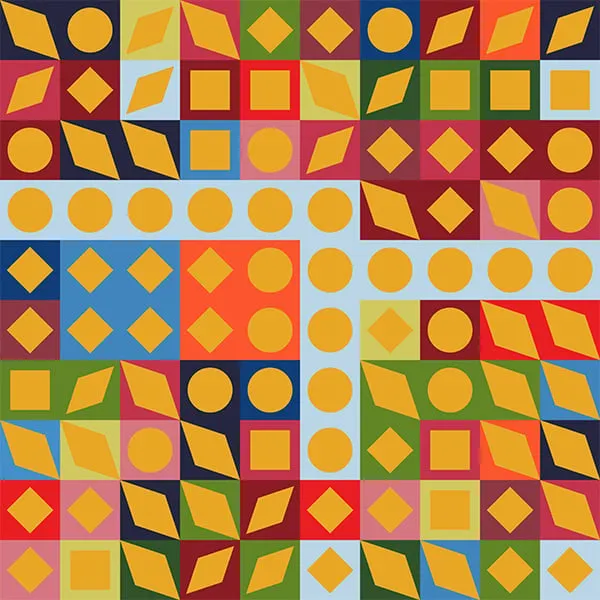
For the occasion, Reas created the software equivalent of a machine once envisioned by 20th-century optical art pioneer Victor Vasarely, which could replicate any one of the French-Hungarian artist’s works in infinite permutations. The physical machine would have cost nearly $11 million in today’s dollars; it was never built.

An output from “METAVASARELY,” Reas’ coded realization of Vasarely’s theoretical infinite output art machine. That machine, which would have cost near $11 million, would have been composed of lights arranged in a grid. Courtesy: Casey Reas

Reas took his reflections from that experiment and incorporated them into his own work, which at the time focused on putting the history of still life paintings in conversation with modern conceptual software. Layers of history on top of history, pulled apart and put together again by technology—the result, he called “An Empty Room.”

Perhaps unsurprisingly for Reas, who’s been on the faculty of UCLA’s Design Media Arts department since 2003, the layers of reflection didn’t stop there. As he watched museum patrons interact with his collection for long stretches, the artist further pondered the indeterminate possibilities lying in wait within seemingly simple shapes and colorforms.

An output from “An Empty Room,” which displayed at LACMA earlier this year. Courtesy: Casey Reas

If you were to take just six colorforms—let’s say, for argument’s sake, representative of the six cities in which Bright Moments has already launched its unique mix of immersive art minting experiences and community galleries—you could combine them to create 923 unique permutations. 

And so that’s what Reas did. He created every 923 combinations of six base colorforms inspired by Bright Moments cities; they will be released next week in batches, one day at a time, at the galleries that inspired them: first Tokyo, on August 14, then Berlin, London, New York, and Mexico City, followed finally by Los Angeles. The pieces will be sold daily via Dutch auction on the Art Blocks website.

A sample output from “923 Empty Rooms,” based on the Tokyo colorform. Courtesy: Casey Reas/Art Blocks/Bright Moments

Though Reas makes a point of remaining connected to generative art’s decades-spanning history, he also acknowledges that the last two years have permanently changed both the medium and his connection to it.

Even half a decade ago, the artist couldn’t have dreamed of distributing so much of his generative art to such a large and collaborative audience, let alone one spread so far across the world. 

But then came two seminal events: the innovation of the blockchain, which allowed for the dissemination of digital art via the internet, and the creation in 2020 of Art Blocks, the collective founded by Erick “Snowfro” Calderon that fused the permanence of the NFT minting process with generative code, and by doing so ushered in demand for owning such art.

“As a distribution mechanism, it’s been extraordinary.” Reas said of the blockchain. “But what Erick did, by launching Art Blocks, changed generative art forever.”

Calderon sees things a little differently. 

“The reality is that Art Blocks would likely not be what it is today if it were not for [Reas’] contributions to creative coding,” Calderon said.

Perhaps after so many years dissecting and reflecting on the strands of art history that led to this moment, it’s hard to see your own place in the big picture. But given the global scale of the rollout and growing anticipation around the events, Reas may soon have hundreds of new collectors affirming his status in the generative art world.

Stay on top of crypto news, get daily updates in your inbox.

San Juan Island Residents Are at War with Wildlife Photographers

San Juan Island Residents Are at War with Wildlife Photographers
San Juan Island Foxes
Image credit: © Glenn Nelson / trailposse.com

A years-long conflict has been brewing on the picturesque San Juan Island in northwestern Washington, and photographers are taking unwarranted and unreasonable heat for their alleged role in the tension.

Core to the story are the island’s photogenic red foxes. However, they are not the whole story. The fluffy and charismatic canids seem much more like the poster child for a campaign against change, a desire for seclusion, and a battle for ownership over a place and protecting what that place represents for the people who live there.

Glenn Nelson has spent the past two years visiting San Juan Island and San Juan Island National Historical Park, getting to the bottom of what he calls “the fox war.” In his brilliant special report for The Seattle Times, Nelson details the island’s fascinating history, rich ecosystem, and how some people’s animosity toward photographers outpaces any semblance of reason.

Nelson is a former Seattle Times reporter, founder of The Trail Posse, community director at Birds Connect Seattle — the first Audubon in the United States to discard its slave-owning namesake — and an avid photojournalist.

Viral Fox Photo Sets Off a Chain Reaction

Before discussing the uncomfortable reality of San Juan Island today, it is worth taking a detour to five years ago because, as Nelson writes, “Nature photographer Kevin Ebi of Lynnwood arguably but unwittingly touched off this ongoing drama.”

San Juan Island Foxes
This incredible photo from San Juan Island went viral in 2018 and sent photographers to the beautiful island in droves. | Credit: © Kevin Ebi

“While photographing the non-native foxes in San Juan Island National Historical Park on San Juan Island in Washington state, Ebi spotted a young red fox carrying a rabbit it had caught across a meadow. As he panned his camera to follow that fox, a bald eagle suddenly swooped in from behind Ebi and grabbed the rabbit while it was in the fox’s mouth,” Michael Zhang wrote on PetaPixel in 2018.

The photo went viral, and the ears of nature and wildlife photographers worldwide perked up: Incredible wildlife in a beautiful location. What more could any photographer want? Predictably, droves of photographers soon flocked to San Juan Island, much to the dismay of its residents.

A Changing Island Falls into Conflict

PetaPixel chatted with Nelson about his story and the situation on San Juan Island. From everything he describes, the foxes seem like the cute face of a local campaign against change and development.

“What seems actually in jeopardy, for the island’s residents as well as its national park, is a quiet existence that their relative isolation once seemed to guarantee. And so the sensitive habitat that off-island photographers actually might be encroaching — at least, symbolically — is that belonging to people, not foxes,” writes Nelson.

It is worth mentioning that the red foxes on San Juan Island are not native. They were introduced sometime in the 20th century — reportedly sometime between 1930 and 1960 — to control a massive rabbit population, which itself is a non-native inhabitant of San Juan Island. It is believed that domestic rabbits were released in the late 19th century to create a food source for lighthouse keepers.

That the red foxes that roam San Juan Island in huge numbers now are the descendants of non-native species has no bearing on their being worthy of protection, of course. Still, it is not evident that the red fox population there needs any protection.

“Though a national park representative declared on regional television that, ‘The island’s beloved red foxes are in jeopardy,’ there is little to no evidence to support that claim,” Nelson writes.

A ‘Fox Brigade’ Battles Shutterbugs

Advocating on behalf of the island’s foxes, Kyle Kittoe was a member of the Fox Brigade, a volunteer group that aimed to teach park visitors about the red foxes and how to observe them safely. The Fox Brigade has since disbanded, only to be replaced by a new volunteer group, Prairie Ambassadors, that appear to occupy a similar role as the defunct Fox Brigade.

“These critters live on the edge of survival. They need time and space to live their lives. And if you’re intruding on it, it makes it harder for them,” Kittoe says, citing times he has witnessed “20 people” within “20 feet” of fox kits and their mom.

However, Nelson himself has observed a very different reality.

“After that initial vacation [in April 2022], I returned to San Juan Island eight more times for multiple-day visits. I observed residents, social-media influencers, local media, and national park staff and volunteers disrupting (or fanning talk about disrupting) photographers and other perceived off-island transgressors. Island residents were observed, and photographed, feeding hot dogs and chicken wings to foxes, unleashing dogs and firing air horns into dens, then using social media to blame such tactics on photographers trying to get better pictures,” Nelson writes.

He notes that on at least three occasions during just the first two weeks of May 2022, photographers called the police concerning incidents with locals.

Photographers Face the Ire of Residents

The people of San Juan Island must love wildlife. After all, people are harassing photographers, bullying them off the island entirely, claiming that the island’s foxes need protection from dastardly outsiders and their telephoto lenses.

The situation is so much murkier than that.

The park’s superintendent, Elexis J. Fredy, acknowledges that the photographers that come to the park to photograph its beautiful foxes are possibly being cast as the collective boogeyman for the people who live — or just vacation — on San Juan Island and who hate how the island has changed.

As has been the case with many national parks, visitor numbers to San Juan Island National Historical Park have skyrocketed in recent years, buoyed mainly by people wanting to go somewhere relatively remote and safe during the pandemic.

The quiet people sought when moving to San Juan Island, the same peace people want to experience as tourists, has been disrupted.

Whether photographers are more disruptive than any other visitors to San Juan Island, they are by far the easiest to spot and, therefore, the easiest to target.

“Locals have been singling out one user group [fox photographers] that maybe doesn’t deserve it,” Amy Nesler of the San Juan Islands Visitors Bureau tells Nelson.

Are Foxes Actually in Danger?

Foxes might actually be in danger, but not from photographers.

Photographer Max Waugh has a Commercial Use Authorization (CUA) to host guided workshops at San Juan National Historical Park and held tours in 2019 and intended to continue to do so last year when the park fully opened following the pandemic.

However, as Waugh writes on his website, anti-photographer regulations and sentiment resulted in him canceling a pair of sold-out tours.

An updated park map was created following a town hall meeting in March 2022. The revised map closed off access to the famous fox-filled prairie at American Camp and restricted visitor access to roads and trails.

“This change has effectively moved photographers back at least 100 yards, on average, from the clearest, most reliable places to photograph kits, and eliminates any ability for people to change viewing or shooting angles,” Waugh explains.

“I felt compelled to cancel my tours, since the new regulations ensured we would lack sufficient viewing and photography opportunities to make my own tour offerings worthwhile for clients (most reports from folks who have been to the island recently to check out the new situation back up this assertion). It’s important to point out, of course, that this was my decision based on my own goals for the experience I desired my clients to have. Some photographers may still deem the new situation to be adequate for their own goals (I’ve heard from a couple), while others are likely to feel this greatly hampers their ability to have or lead a successful trip,” he adds.

2022 came and went, and Waugh did not lead his photo tours on San Juan Island. The park’s regulations, which sought to protect the foxes, did impact the island’s fox population.

“Two things immediately occurred as folks arrived at the area now closed to public access. First, the Bald Eagles came in and hunted the fox kits in the prairie. As was the case in 2020 (when the area was devoid of tourists due to COVID), the raptors were emboldened by the lack of people in the field. Some photographers were lucky to be on hand to document eagles flying away with kits, but soon there were no kits left,” Waugh writes.

The second problem is that people found a den site unaffected by the park’s regulatory changes. Many people crowded the den because it was the only chance to see foxes. This is where the hot dogs and chicken legs that Nelson mentions were doled out — again, not by photographers.

“Photographers referred to by locals as the ‘Foxerazzi’ are arriving on the island in large groups of around 20. The groups encircle fox dens at the height of kitting season in the hopes of snagging the perfect shot, but that pursuit has a price…At the start of this past spring, there were six fox kits living at Cattle Point Nature Preserve. By the end of the season, all six were dead,” writes KIRO 7, implying that photographers are to blame. The article does not discuss the dead kits that eagles nabbed.

“Red foxes can do quite well from being in close proximity to us,” David Drake, a professor of wildlife ecology at the University of Wisconsin-Madison, tells Nelson. “When they move into an urban environment, they are well aware that there’s a density of people and that activity patterns of people are different than for nonurban areas. There’s more light pollution, more noise, more human activity — and they adapt. The red fox can benefit from being near people because there might be refuge from predators, and they are likely getting some type of food resource that is both natural and might be even provided. There’s also a lot of different types of shelter availability,” Drake explains.

Some claim that a fed fox is a dead fox. It seems that a distanced fox may be a dead fox, too.

The bald eagles that feast on foxes are a protected species. San Juan Island is home to a second protected species, the island marble butterfly. As Nelson tells PetaPixel, not only is San Juan Island the only place in the world where this exceptional butterfly lives, but it seems that the people who purport to care so deeply for the red foxes seem to very rarely, if ever, mention the butterflies.

Contradictory Motivations on San Juan Island

The story of San Juan Island and the so-called “fox war” is fascinating for many reasons. There is the intriguing photography angle, of course, but the situation there also reflects society at large. Whenever an area experiences change, it affects different groups of people in highly varied ways.

Some of the island’s residents live there because they want to be somewhere remote and alone, able to enjoy their beautiful backyards in peace. Others rely on tourism to survive and make more money when people visit the island in greater numbers.

As for the park, the staff is caught in between feuding parties. On the one hand, any good park ranger wants to be able to safely share everything the park has to offer with as many visitors as possible. But for Fredy, maintaining a strong relationship with neighbors matters too.

When it comes to photographers specifically, there is no question that some of them do behave poorly. Despite the National Park Service’s very clear and reasonable advice concerning ethical wildlife viewing, including the rule that visitors must always stay at least 75 feet away from animals, some people still behave recklessly and stress out wildlife.

However, it is difficult to believe that irresponsible visitors are anything but few and far between, and they are not exclusively photographers.

Wildlife photography is an incredible way for people to enjoy nature, learn about animals, and share their passion for conservation with others. Great photos inspire and educate. A beautiful wildlife image should always be the result of care and respect. Anything else is wrong and should be discouraged and punished.

But blaming photographers for everything is preposterous and detached from reality.

While people scream at photographers, a bald eagle swoops and grabs a newborn fox. As park staff erect new entry barriers, another kit is dragged to its death. When one local blames photographers for hand-feeding foxes and laying bait, another local drops a hot dog from their pocket, ready to point at the nearest person with a big lens, “See, look, we told you!”

Where there are people, there will be bad apples. It is an unfortunate and unavoidable reality of living in any society. However, the trees from which these bad apples fall may be much closer to home than people want to admit.


Image credits: Featured image © Glenn Nelson. Many more of Nelson’s red fox photos are available on The Trail Posse’s website.

10 Jaw-Dropping Modern A-Frame Homes That Redefine Architecture

10 Jaw-Dropping Modern A-Frame Homes That Redefine Architecture

Located in Snoqualmie Pass in The Pass Life community in Washington State, 160 Cascade is a prefab A-frame designed by Stephenson Collective and built by Buildhouse. The 1,721-square-foot cabin embraces modern mountain living with stunning views of the surrounding area full of evergreens.

Photo: Jakub Skokan and Martin Tůma of BoysPlayNice

The Weekend House in Beskydy, located in the Beskydy Mountains in the Czech Republic, is designed by Pavel Míček Architects to blend into its mountainous location while also proudly showing off its angular design. Choosing both heavy and light materials, the house is built with a concrete base that will eventually be covered in moss and a lightweight larch wood A-frame top floor that will slowly patina to a grey-silver.

exterior shot of angular a-frame cabin in light wood with white accents surrounding by snowy trees

Photo: Courtesy Scott and Scott Architects

This modern A-frame cabin, by Scott and Scott Architects, is designed for a family of snowboarders who longed for a weekend retreat in Whistler, Canada. The cabin is built into the bluff with an exposed frame of local Douglas fir, offering coziness within its snowy backdrop.

Cabin A, by Bourgeois / Lechasseur architectes, rests on a steep slope in the Charlevoix region with an A-frame design that gives nod to naval architecture. The triangular roof gives nod to sails in the wind, while the large wooden covered terrace references the upper deck on a ship.

Angled exterior view from lake looking to black a-frame elevated cabin jutting out from trees

Photo: Ian Balmorel

Located in the Eastern Townships, near Montréal, Chalet A is a 1950’s property that’s been renovated by Matière Première Architecture into a modern cabin on the lake that peeps out from the evergreen forest. The A-frame silhouette is clad in black metal roofing, while the interior boasts shades of white and sage for a cozy, relaxed feel.

Quite possibly one of the most unique A-frames out there, the PAN Cabin in Hedmark, Norway, designed by Espen Surnevik, lives on stilts raising the structure high up to live amongst the treetops. With views in every direction, this cabin rental makes you feel like you’re camping in a comfortable hotel in the forest.

With strict building codes to follow, NODE architectes designed a modern white A-frame that blends into its Arradon, France neighborhood. The POG House, plastered with white masonry and topped off with a dark aluminum roof, stands out with its dramatically sloped to 60 degrees roof line.

AR Design Studio designed The Climber’s Cabin in southern England on property where the forest and stream meet. Standing at approximately 269 square feet, the A-frame structure was built to house guests on a homeowner’s property offering a tranquil spot to escape to while visiting.

exterior view of modern black a-frame house with side extension and deck with dining table

Photo: Mick Couwenbergh

Belgian firm dmvA renovated and designed an addition to a black A-frame vacation house in Brecht, Belgium, that resulted in a trapezoid-like form extending off the main structure. The extension added much needed square footage while respecting the original design.

angled elevated exterior view of modern all-white a-frame house in Japan

Photo: Toshiyuki Yano

Located in Tochigi, Japan, the House in Utsunomiya is a unique A-frame designed by Suppose Design Office with strategically placed openings along both sides of the roof. The cutouts bring natural light to the interior without compromising privacy, along with a rooftop deck that also allows the occupants outdoor time without prying eyes.

Caroline Williamson is Editor-in-Chief of Design Milk. She has a BFA in photography from SCAD and can usually be found searching for vintage wares, doing New York Times crossword puzzles in pen, or reworking playlists on Spotify.

Photographer turns moments into memories

Photographer turns moments into memories
image

Most second graders don’t know what they want to do with their lives, but that wasn’t the case for Scott Areman.

Most people also don’t associate a science fair with fine art, but Areman has always seen the world a little differently than most. His keen eye and love for photography developed at an early age.

Here’s What’s Going in Indian Country, August 11

Here’s What’s Going in Indian Country, August 11
This weekend and next week in Indian Country, there is an array of concerts, webinars, festivals and more for all to enjoy.
The Anti-Racism Lab is hosting an online event on using Indigenous fire practices to reclaim culture and fight climate change. Join the New Mexico History Museum for a special showcase of Native cinema, or livestream a performance from Brulé, the Native American cultural rock music group that has sold more than a million CDs worldwide.

Here is Native News Online’s weekly round-up of arts, culture, and entertainment offerings around Indian Country.

Never miss Indian Country’s biggest stories and breaking news. Sign up to get our reporting sent straight to your inbox every weekday morning. 


Youth GONA in the “D”
Friday, August 11- Sunday, August 13, 2023
Detroit, MI

Consider taking your youth to this event focused on gathering Native American youth together in order to learn about belonging, mastery, and interdependence. The event is free to any youth and their family who stays in the hotel, and anyone under 18 must be accompanied by a parent. 

In The Spirit Arts Market and Northwest Native Festival
Saturday, August 12, 2023, 10 am – 5 pm
Tacoma, WA

This event is an arts market and Northwest Native Festival, an annual summer celebration of diverse Native arts and culture. This festival is hosted by the Washington State History Museum, Tacoma Art Museum, and Museum of Glass. Consider enjoying the event by shopping among and talking with artist vendors, listening to Native music, watching dynamic cultural dance, making art, exploring exhibitions and more.

Hawk Henries, Native American Flute Player
Saturday, August 12, 3 pm-4 pm
UMF Ampitheater, Farmington, ME

Hawk Henries is a member of the Chaubunagungamaug band of Nipmuck, a people indigenous to what is now Southern New England. He has been composing original music and making Eastern Woodlands flutes using hand tools for more than 30 years. 

National Navajo Code Talkers Day in the United States
August 14, 2023
United States

National Navajo Code Talkers Day is observed annually on August 14. It was first proclaimed in 1982 to honor the contributions of the Natives who served in the US military during the Second World War, using the Navajo language to support the war effort.

Native American Dances with Catching Eagle Dancers
Tuesday, August 15, 2023, 9 am-Noon
Cortez Cultural Center, Cortez, CO

Free Native American Cultural Dance program with Catching Eagle Dancers from the Ute Mountain Towaoc, Colorado. Multigenerational dance performances ensure that the Ute tradition of storytelling, drumming, singing and dancing continues and thrives.

Native American Youth Basketball Camp
August 16-17
Great Falls, MT

Strong Life Basketball Camp is to teach campers enhanced basketball skills that will lead them to be better players both on and off the basketball court. We’ve put together a world-class team of coaches from both the high school and college ranks that will help you elevate your game while building confidence as a player and individual.

Brulé: Native American Experience in Sight, Sound & Soul
Sunday, August 13, 8:30 am
Online

Best known for thrilling audiences with an emergence of cultural rock and theatrical instrumentations, award-winning music group Brulé has pushed the boundaries of contemporary Native American rhythms and classic rock in their genre-blending selections. Their electrifying show consists of a rock ensemble augmented with an array of traditional Native American instrumentation. Paired with the stunning choreography of one of the top Native American dance troupes, their authenticity brings a multi-dimensional art form to this cultural rock opera. 

Decolonizing Fire: Indigenous Land Stewardship and Climate Futurity
Tuesday, August 15, 9 pm-10 pm
Online 

Climate change has been identified as a key factor in increasing the risk and extent of wildfires in the Western United States. Wildfires in California can be traced to the roots of colonialism through the establishment and persistence of “no burn” policies. Agencies have recognized the detrimental effects of fire suppression on ecosystems, and scholars have emphasized the need for climate adaptation partnerships with Indigenous communities. However, we are asking the same agencies that created the problem to be responsible for the solution. This talk will centralize the significance of working with Indigenous fire practitioners and cultural bearers to reclaim cultural practices in Northern California and now in the Midwest area of the United States. These demonstrations edify decolonial approaches to fire practices, land care, and Indigenous ecological intelligence towards our collective climate futurity.

The Education and Well-Being of Native Students
Tuesday, August 15, Noon
Online 

This webinar aims to address the unique challenges faced by Native students and explore strategies to enhance their educational experiences and overall well-being. We have assembled a panel of experts, educators, and community leaders who will share their insights, experiences, and best practices. Participants will have the chance to connect, exchange ideas, and gain valuable resources to support Native students’ success. Whether you are a student, educator, parent, or community member, this event is open to all passionate about improving the education system for Native students. 

Native Cinema Showcase Santa Fe 
Thursday, August 17-Sunday, August 20
New Mexico History Museum, Sante Fe

The National Museum of the American Indian’s Native Cinema Showcase is an annual celebration of the best in Native film. This year, the Showcase highlights films of Indigenous perseverance that inspire, uplift, and triumph against adversity—stories that prevail against the judicial system, generational trauma, and cultural appropriation through love and complex relationships, self-worth, and humor.

More Stories Like This

Robbie Robertson, of The Band, and Mohawk and Cayuga descent, Dies at 80
First-Ever Santa Fe Native Fashion Week Scheduled to Debut Next Spring
Legendary Native American Singer Buffy St. Marie Retires from Live Performances
Here’s What’s Going in Indian Country, Aug. 3 — 13

Native News is free to read.

We hope you enjoyed the story you’ve just read. For the past dozen years, we’ve covered the most important news stories that are usually overlooked by other media. From the protests at Standing Rock and the rise of the American Indian Movement (AIM), to the ongoing epidemic of Murdered and Missing Indigenous People (MMIP) and the past-due reckoning related to assimilation, cultural genocide and Indian Boarding Schools.

Our news is free for everyone to read, but it is not free to produce. That’s why we’re asking you to make a donation to help support our efforts. Any contribution — big or small — helps.  Most readers donate between $10 and $25 to help us cover the costs of salaries, travel and maintaining our digital platforms. If you’re in a position to do so, we ask you to consider making a recurring donation of $12 per month to join the Founder’s Circle. All donations help us remain a force for change in Indian Country and tell the stories that are so often ignored, erased or overlooked.

Donate to Native News Online today and support independent Indigenous journalism. Thank you. 

About The Author
Native News Online StaffNative News Online Staff
Author: Native News Online StaffEmail: This email address is being protected from spambots. You need JavaScript enabled to view it.
Native News Online is one of the most-read publications covering Indian Country and the news that matters to American Indians, Alaska Natives and other Indigenous people. Reach out to us at [email protected].