Official removed from office over controversial Cowherd and Weaver Girl sculpture in C.China’s Henan
By Admin in Printmaking
By Admin in Photography
Get the latest Syracuse news delivered right to your inbox.
Subscribe to our newsletter here.
On Sept. 11, 2001, Doug Muir was sitting at Lake Skaneateles with his daughter Heather Muir. When he learned of the tragedy unfolding in New York, Washington D.C. and Pennsylvania, he grabbed his camera and ran back to Syracuse to capture the reaction of people in the city.
“He was right in the middle of everything. I mean, often I would be with my parents at marches and then he’d go off and photograph and those would be picked up by various Bay Area newspapers,” Heather said of his career. “It wasn’t like he was there as a journalist, he was there as a participant.”
Whether he was living in Texas, the Bay Area or central New York, Muir was always able to perfectly capture a moment through his photos. During the summer, highlights from decades of Muir’s work were on display at the Everson Museum of Art. The exhibit presents a wide range of artifacts from Muir’s life, from his start as a photographer in Syracuse to his passing in 2016.
A majority of the events featured in the exhibit took place during the 1970s when Muir was heavily involved in the social and political movements of the time — both as a participant and an observer.
“He was involved in many trades and with people who were in the union. He would be around the Syracuse campus or with his plumbers and steamfitters,” Heather said. “Whether it was working or photographing, or growing up, he really saw Syracuse, and he had this remarkable memory.”
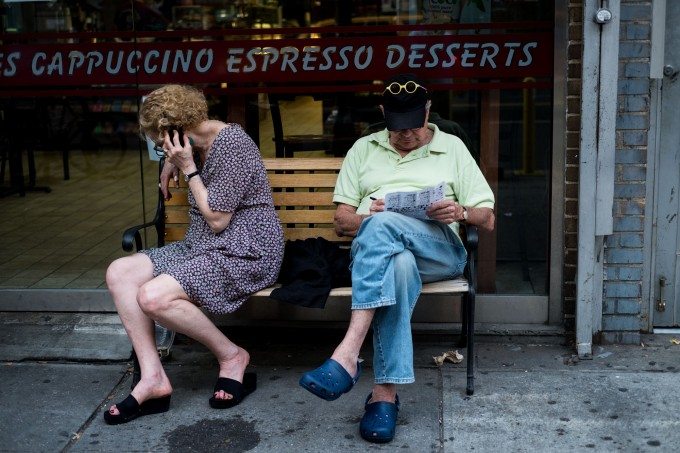
Capturing anti-Vietnam War marches and gatherings of the Black Panther Party, Muir’s close proximity to the events created incredibly unique photos. Heather said that her father’s access to these events allowed him to take “shots that someone who was on the periphery wouldn’t have seen.”

Courtesy of Heather Muir
Doug Muir participated in numerous significant social and political movements during the course of his career. He was able to document the work of numerous unions, including plumbers and students, as both a journalist and a participant. Courtesy of Heather Muir
The exhibit also highlights Muir’s connection to central New York. Both sides of his family immigrated to Syracuse from Scotland and Ireland respectively, and he spent the majority of his childhood growing up in the south side of the city, Heather said. She described her father as having a deep understanding of Syracuse and his work reflects changes in the city as Muir grew up.
Throughout his career, Muir had a strong, 50-year relationship with Light Work, a photography center in Syracuse, said Daniel Boardman, the director of the center. Muir was featured in many issues of Light Work’s single-artist publication series, and many of his images were featured in the collections.
Boardman said that Muir’s work exemplifies Light Work’s mission to present and support under-recognized, lens-based artists. Boardman said that Muir’s best skill was making images live no matter what the scenario they were taken in was.
“Doug was a superbly skilled photographer who was able to capture his community, family, and everyday life with wonder, tenderness and complexity,” said Boardman.
Steffi Chappell, an assistant curator at the Everson, said the personal vision of Muir’s work was the key reason the museum wanted to present it to the public.
“The magic of Doug Muir’s work can be found in his ability to capture everyday people, situations and scenery, but make all of those things memorable,” Chapell said. “His photos always echo with familiarity, and reveal timeless connections between people and the public and private spaces they inhabit.”
In addition to the exhibit, Heather and her family worked to produce a documentary about Muir and his career. They wanted to help tell Muir’s story through family and friends who knew him as well as with his photographs.
No matter where he was working, Muir was able to establish a special connection with the people and places around him with his photography, Heather said. He always made it a priority to properly represent the time period he was working in and the people who were making history at that time.
“He remembered every detail about Syracuse, from his first paycheck at (a candy shop) or what happened at every intersection,” Heather said. “I just think that intimacy with a place is important.”
Published on August 30, 2023 at 12:13 am
By Admin in Photography
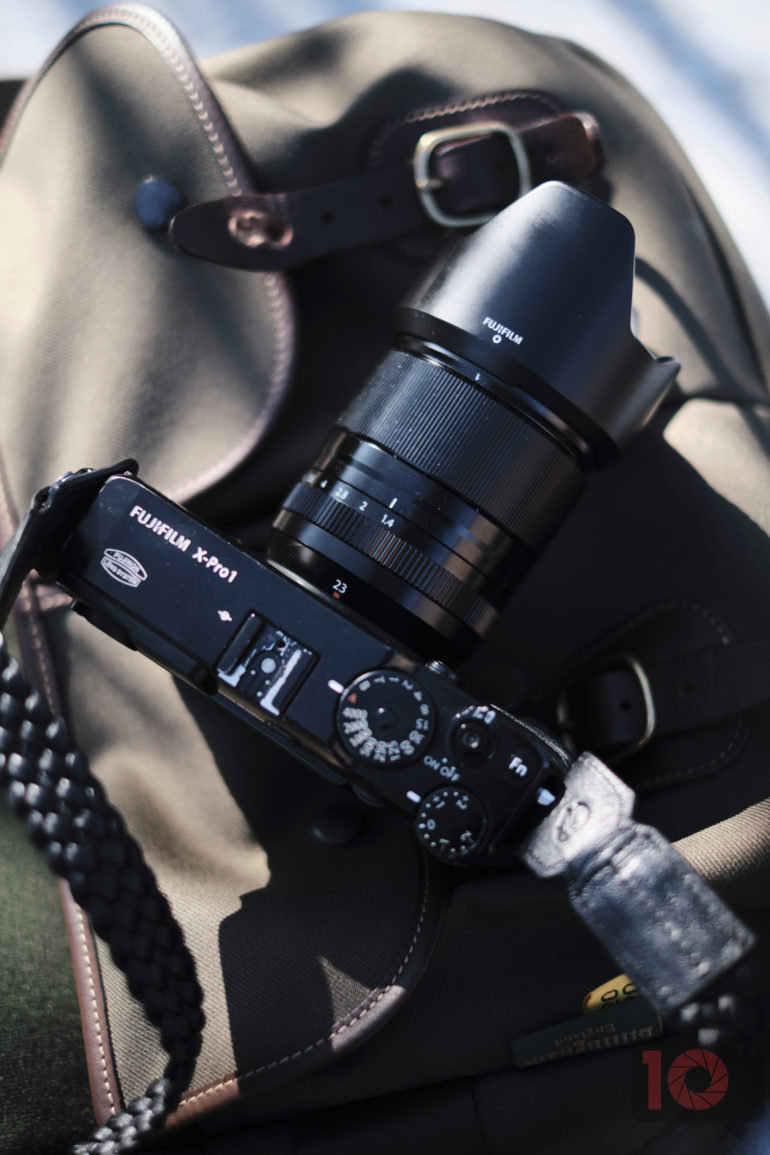
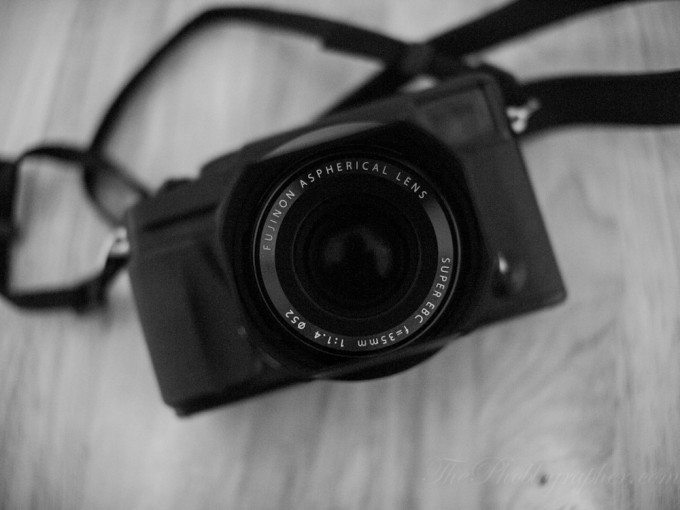
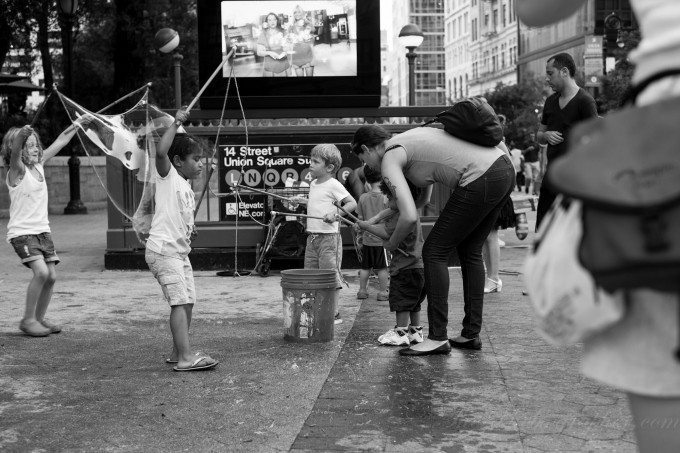
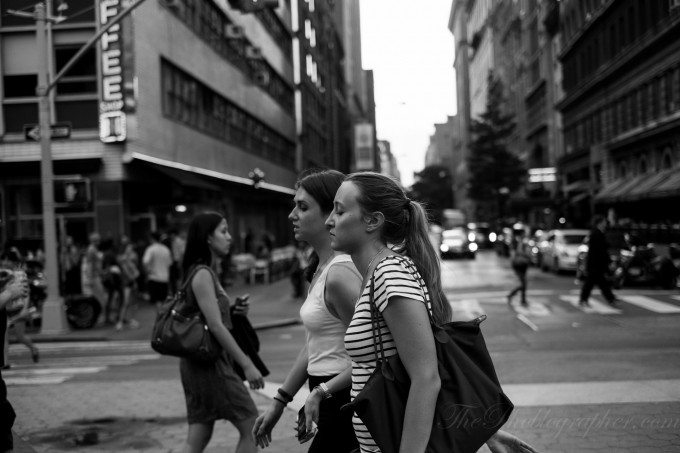
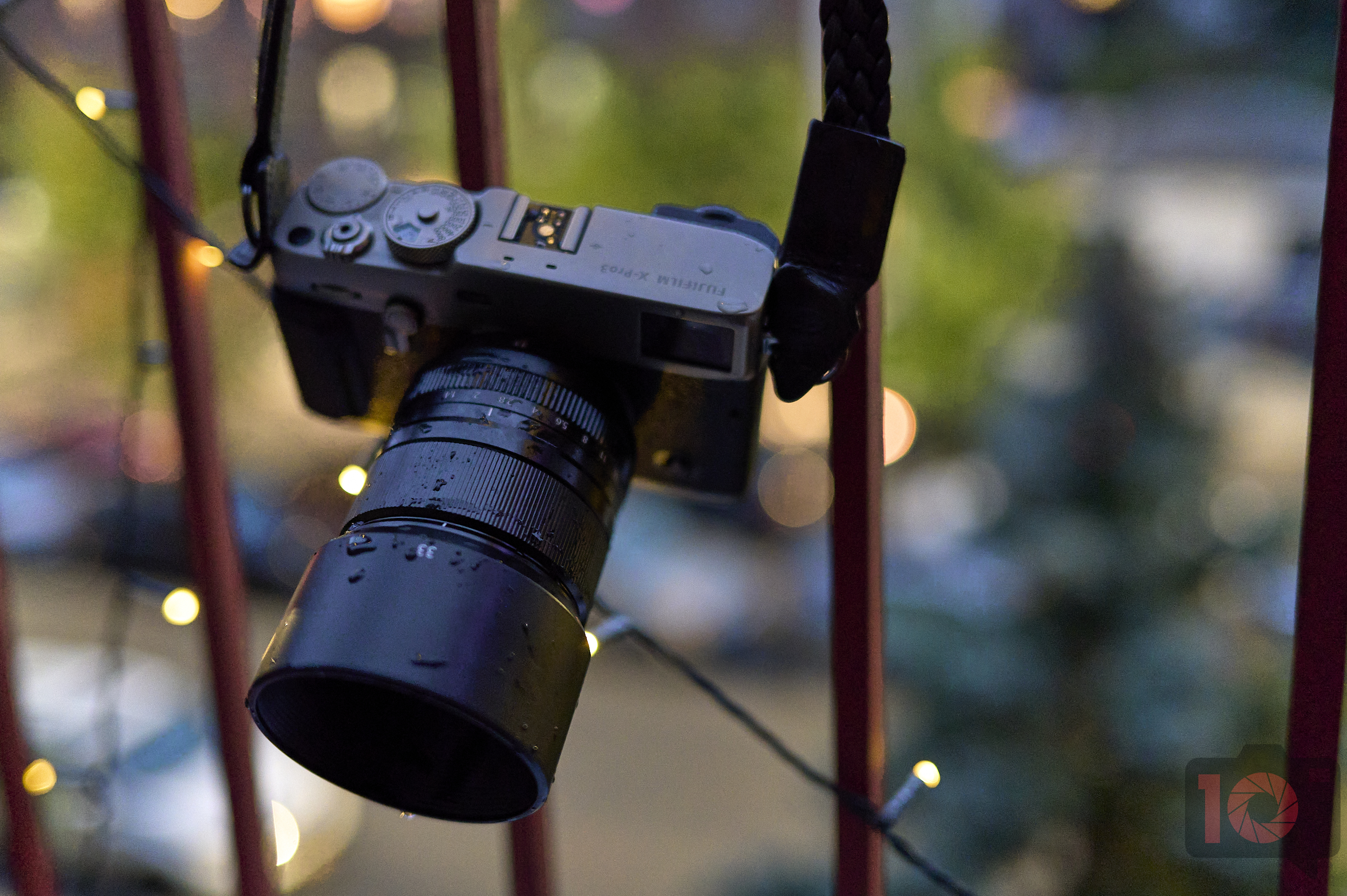
Street photography is a given with Fujifilm cameras. They’re set up pretty perfectly for doing just that. Not only do you get lenses that are pretty small, but they deliver great image quality when paired with the company’s incredible cameras. I mean, who wouldn’t like the look of Fujifilm Acros? Scroll through Instagram and you’ll find so many photos that look like film — and they’re bound to have been shot on Fujifilm. Here are some of the best lenses for street photography with Fujifilm cameras.
This piece is presented in partnership with FUJIFILM. We’ve independently and ethically reviewed all the products in this post already without sponsorship. And we worked with them to recommend a few key gems to you.
Visit the FUJIFILM on-line store to make your purchase. Enter the coupon code phoblographer to receive FREE ground shipping. Offer expires October 31st 2023.

There’s a lot to love about this lens. Fujifilm revamped the autofocus motors to improve it over the previous version. They also modernized the optics to help it render sharper images with newer sensors like those on the X-H2. It’s also weather resistant, so you can take it out with you in tougher conditions. Honestly, it’s a lens that might never leave your camera. Nothing hits quite like this lens and your favorite film simulation. We like pairing it with Glimmer glass for retro-vibes.
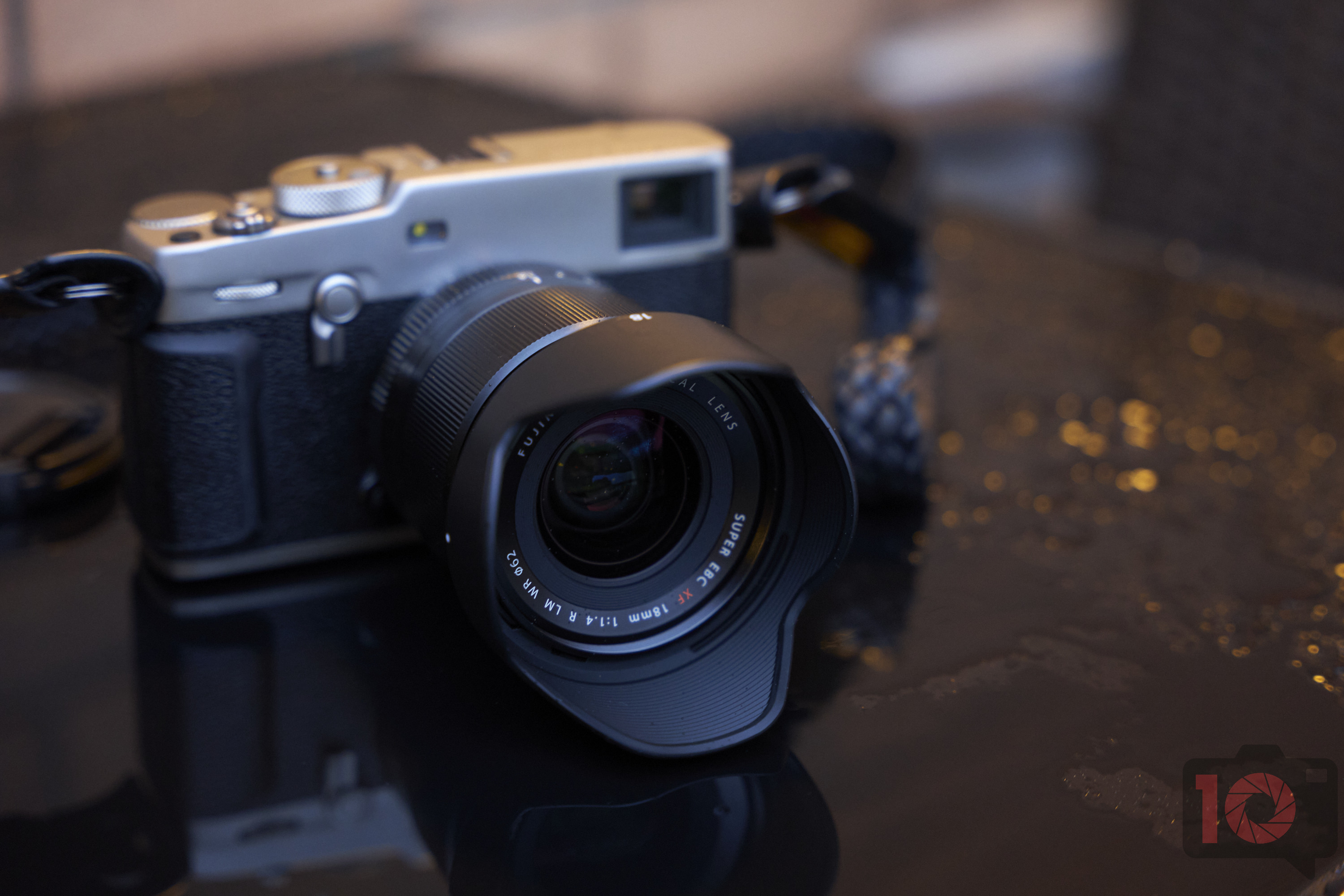
I honestly thought that my favorite lens for street photography would be the 18mm f1.4 R WR, but nope. It’s this!
Combine it with your favorite film simulations and the right exposure for results that you’re going to love. I prefer Classic Chrome, Astia, Pro Negative High Contrast, and Classic Negative.
Specs are taken from the FUJIFILM online store.
This lens is available for $899.95. In our review conclusions, we said:
The Fujifilm 23mm f1.4 R WR LM is a worthy successor to the original. Fujifilm improved the image quality by making it sharper. Some of us won’t want our photos too sharp, so I’d recommend using a haze filter or an intensifier to soften it up a bit. There’s also weather resistance and faster autofocus. At the same time, it’s pretty long. Ergonomically speaking, I personally like a fatter, shorter lens. But practically speaking, this is one of the best lenses Fujifilm has ever made.


Here are three other great options that photographers will enjoy. These lenses render different views, and all have different looks — especially Fujifilm’s beloved 35mm f1.4. But for some photographers, these might be the best lens for street photography with Fujifilm cameras because of image quality, balance, or affordability.

This lens is available for around $599. Our review concluded by saying:
When I made the purchase of the X-Pro 1, I was torn between the 18mm f2 and this lens. I think I made the right decision due to the faster aperture despite the fact that I like shooting wider. Either way, this lens is a wonderful piece of glass that every photographer going into a mirrorless system should consider. Granted, it does have its contenders. Panasonic’s 25mm f1.4 and Voigtlander 25mm f0.95 may keep Micro Four thirds users locked in at the time of this publishing. Sony doesn’t have anything in the equivalent area to step into the arena, though some can argue that the 30mm f3.5 may be a suitable fit.


You can get this lens for around $799.95. In our review, we state:
“Mount the Fujifilm 33mm f1.4 R WR LM to your camera, and you’ll probably fall in love nearly immediately. The balance, the build quality, and the reliability all work together to make this a fantastic lens. Couple that with one of the great Fujifilm simulations and you’ll be very happy. It focuses incredibly fast in any situation you’ll need to it. And it also reliably tracks your subjects.”


Get this lens for around $999.95. In our review, we state:
“The Fujifilm 18mm f1.4 LM WR lens provides the classic 28mm equivalent focal length with a fast aperture. The linear motor delivers even more impressive autofocus, and it’s weather sealed. Images are beautifully sharp with painterly bokeh, gorgeous colors, and solid contrast. The film simulations make editing a breeze and get you back to shooting in no time. It is a lens that you can and will want to take with you everywhere.”


If you’re still a bit confused as to the right lens for you, here are some questions to ask yourself
These are just a few of the questions that we ask ourselves, but we think that you should ask yourself these for sure.
By Admin in Art World News
A selection committee formed to search for a new CEO for the International Folk Art Market will have its first meeting Wednesday.
The organization hopes to have a new leader in place by the end of the year, spokeswoman Audrey Rubinstein said.
Former CEO Melissa Mann resigned last month following this year’s market, which organizers said was its most successful to date. A news release from the organization did not give a reason for Mann’s departure four days after the 2023 event ended.
By Admin in Photography
Burt Glinn. Half a Century as a Magnum Photographer celebrates the compelling, elegant, and expressive ways Burt Glinn experienced the world through photography. Highlighting his extraordinary talent for picturing iconic and everyday scenes from the second half of the 20th century, this is the first monograph covering the breadth of Glinn’s storied career.
From the Introduction by Sarah Stacke:
I remember Burt’s wit and his lopsided grin when he told stories, which was a lot. He loved fine things, especially clothes. He had big opinions, high expectations, and an incredible grasp of the narrative, technical, and administrative aspects of photography. […] For more than half a century, Burt covered it all: conflict, celebrities, wildlife, science, corporations, travel, society, culture. Yet, looking through his archive, his interests clearly emerge. The chapters in this book present five themes Burt returned to again and again.
From the text Notes from Family by Elena Prohaska Glinn:
Burt began creating annual lists of his stories in 1948 and continued for 60 years. The lists reveal how diverse his interests were throughout his life. As an example, in 1959, one of Burt’s favorite years, he photographed more than 30 stories. It began when he abruptly left a New Year’s Eve party after hearing Cuba’s president Fulgencio Batista was on his way into exile and Fidel Castro was taking control. Burt caught the last Yellowbird flight from New York to Miami, then got a $20 charter plane to Cuba, where he spent nine days on the road with Fidel and his soldiers, document- ing their triumphant procession into Havana. After some rest and assignments stateside, he covered the ultrarich and almost famous, often ridiculous, at Badrutt’s Palace Hotel St. Moritz in the haute Swiss Alps. Back in New York, he photographed Sammy Davis Jr., followed by the Beatniks.
From the interview by Sarah Stacke with Susan Meiselas:
Burt’s editorial eye is key. He really knew how to see the world by placing himself in it. He was part of the generation who were lucky to work when magazine assignments were still plentiful and long. He came out of that tradition, which meant that he went places, then stayed and documented them over time. His photographs of the Berlin Wall being built were an example of incredibly good work.
Burt Glinn (1925–2008) is known as one of the most prolific photographers of his generation. Born in Pittsburgh, Pennsylvania, Glinn served in the US Army and studied literature at Harvard University. In 1951, while working for LIFE magazine, he joined Magnum as an associate and became a full member in 1954, one of the first Americans at the young agency. Glinn gained recognition for his coverage of the Cuban Revolution and his in-depth color series on the South Seas, Japan, Russia, Mexico, and California, each of which was published as a complete issue of Holiday. In the 1960s, he became one of the first photographers to enter the field of annual reports and for the next four decades created a visual record of corporate America’s rapid growth. Throughout his career, he regularly covered national and international historical events, cultural icons, and political figures for leading publications. Whenever possible, Glinn made images of religious communities and leaders, as well as sacred architecture and rituals. Many of these photographs became his personal favorites.
Burt Glinn. Half a Century as a Magnum Photographer
Sarah Stacke (Ed.)
Texts by Elena Prohaska Glinn, Sam Glinn, Mark Lubell, Susan Meiselas, Martin Parr, Gilles Peress, Sarah Stacke, Larry Towell, Alex Webb, Eelco Wolf
Designed by Bonnie Briant
Hardcover, 24 x 30 cm
144 pages
100 color and b/w illustrations English
ISBN 978-3-96900-121-9
Euro 45,00 / US$ 55.00
https://www.kehrerverlag.com/en/burt-glinn-half-a-century-as-a-magnum-photographer-978-3-96900-121-9
By Admin in Photography
This past week I had to rush to Kelowna for an appointment and I didn’t want to be late. As I drove I noticed that I was missing some great photographs — two coyotes hunting in an open field, a large owl on a roadside post, hawks sitting by a marsh and the sun glowing off the white cliffs along a lakes as I passed.
As I began to write this article I was reminded of a long trip to Salt Lake City, Utah that my wife and I made some years ago. Our route was to head east to Calgary, then turn south to the boarder and follow the Missouri river as it snaked it’s way through canyons and gullies, then head west to Salt Lake City.
We left later than we should and were driving with as few stops as possible because I had promised my brother I would be at his house for a family event the next day. That was the first (and only) time I took that scenic drive. We kept realizing we should be stopping over and over again. Linda said, “We will never do that to ourselves again, we need to leave lots of time, even days, to photograph subjects when we see them.”
I think that many photographers have had the circumstance where the chance at a great photograph was missed because of the wrong lens or camera.
I remember a photograph of a moose wandering in the hazy morning fog. All I had was a cheap point and shoot camera. Sure I got the shot, but the photo was lacking because of the limitations of the small sensor and short lens. I spent time working on it with Photoshop, eventually changing it to a black and white because the image was noisy with a purplish cast and the quality of the final image was poor. Wrong camera.
The Boy Scouts say, “Be prepared,” and I think that is a good idea for photographers. When film use was common, most serious photographers had more than one camera; one loaded with black and white film, one with colour negative film, and sometimes one with colour slide film. I used to put a short zoom on one and a telephoto on the other. Since digital imaging many photographers only carry one camera, colour or black and white images can be chosen with any computer program.
Now I have my main DSLR camera, and two little mirrorless cameras; A Fuji I have mentioned in other articles and a fun little Nikon V1.
Sometimes I like the portability of a little Canon G1x digicam I also have. I don’t use it much — only if I am going to a party or walking around town. It is one of the rare digicams with the crop size sensor that’s found in many larger cameras, I mainly use it for subjects that are close to me and rarely use it for scenic photos.
Concerning roadside photo opportunities, I’ll mention my father. The chance of him taking a good picture was never very good, but he was certainly dedicated. He was a contractor that worked all over the Utah and there was usually a very dirty camera jammed under his pickup seat or sometimes stored on his excavator and he rarely missed an opportunity to photograph anything that interested him. The sheer volume of pictures he took out weighed the bad pictures. He mostly used slide film and my brothers and I looked forward to his evening slide shows. There were always lots of interesting photos and it was fun to view pictures that he hand fed in his old projector.
Like my father, we not only should be continually looking for photographic opportunities, but we should prepare for them by having some kind of camera with us. I’m not a fan of camera phones, but as they say the camera that with you is better than none.
Stay safe and be creative. These are my thoughts for this week. Contact me at www.enmanscamera.com or emcam@telus.net.
Aug. 30, 2023
Join the Honors College for an exploration into the rāgas of Carnatic music with Sri Vittal Ramamurthy–internationally-celebrated violinist–and Grammy-nominated Sri Poovalur Sriji–percussionist, composer and performer–at 6:30 p.m. on Wednesday, Sept. 13, in Gearhart Hall 130 as part of the Honors College House Concert series.
The concert is free, open to all and will be followed by a reception. Please RSVP here and come early to reserve a seat. Parking will be available in the Harmon Avenue Parking Garage.
“Founding dean of the Honors College, Bob McMath, created the House Concert series to produce a space for community and artists to come together in celebration of the performing arts,” said Lynda Coon, dean of the Honors College. “Professor of Music Nikola Radan’s expertise in global music adds new dimensions to this storied series, delivering an exciting journey into the music of India.”
Carnatic music is a form of classical South Indian music that balances both devotion and creative self-expression by drawing inspiration from sacred texts.
![]() |
| Sri Poovalur Sriji |
![]() |
| Vittal Ramamurthy |
While a large portion of Carnatic music is composed, Ramamurthy and Sriji will treat the audience to manodharma sangita – imaginative music, as most of their performance will be improvised on the spot. Sriji will lead vocals with solkattus, spoken rhythm, and Ramamurthy will guide the melodies by accompanying the vocals with strings.
“It’s a dialogue between the violin and the vocals,” Ramamurthy shared. “I don’t know what [Sriji] is going to sing, and he doesn’t know what I will play.”
Although the music system is universal, “the handling of Carnatic music is different,” Ramamurthy said. He encourages those interested in world music to attend and learn more about complementing traditional composition with creative latitude.
“We are honored to host two of the top Carnatic music artists: Sri Vittal on violin and Sri Poovalur on mardagam,” said Nikola Radan, director of the World Music Ensemble and music instructor. “Carnatic music is the mother and the root of all music in India. It is considered to be one of the most complex music styles in the world with compound rhythmical patterns. Thank you to the Honors College, Department of Music and the RA-VE Cultural Foundation to make this concert possible.”
ABOUT SRI VITTAL RAMAMURTHY
Ramamurthy, an internationally acclaimed violinist and top-ranking artist at All India Radio, is the torchbearer and leading disciple of the Lalgudi bani, a distinctive style of music in which the violin is “made to sing” and mimic the human voice. Ramamurthy describes himself as a “solo performer, accompanist, teacher and humble student of the arts.” He has students worldwide, many of whom are leading performers. To give back to the community he grew up in, he conducts a free summer camp in his native house Karunbithil, where he teaches more than 250 students Carnatic music in the style of Gurukulam, an education system where students live with their guru.
ABOUT SRI POOVALUR SRIJI
Sriji is a prolific composer, performer, educator and an “A Top” grade artist at All India Radio – the highest ranking given by the Indian government. His love and expertise in Indian Classical music are inspired by his father. Many of his compositions celebrate South Indian idioms, and for decades, he has performed with leading artists from across the world. He accompanied American banjo player Béla Fleck, Hindustani classical instrumentalist Vishwa Mohan Bhatt and Chinese fiddle player Jiebing Chen on their collaborative album “Tabula Rasa,” which was nominated for a Grammy Award in 1997. He is currently an adjunct instructor of percussion at the University of North Texas and director of the South Indian Cross-Cultural Ensemble.
About the Honors College: The University of Arkansas Honors College was established in 2002 and brings together high-achieving undergraduate students and the university’s top professors to share transformative learning experiences. Each year the Honors College awards up to 90 freshman fellowships that provide $80,000 over four years, and more than $1 million in undergraduate research and study abroad grants. The Honors College is nationally recognized for the high caliber of students it admits and graduates. Honors students enjoy small, in-depth classes, and programs are offered in all disciplines, tailored to students’ academic interests, with interdisciplinary collaborations encouraged. All Honors College graduates have engaged in mentored research.
About the University of Arkansas: As Arkansas’ flagship institution, the U of A provides an internationally competitive education in more than 200 academic programs. Founded in 1871, the U of A contributes more than $2.2 billion to Arkansas’ economy through the teaching of new knowledge and skills, entrepreneurship and job development, discovery through research and creative activity while also providing training for professional disciplines. The Carnegie Foundation classifies the U of A among the few U.S. colleges and universities with the highest level of research activity. U.S. News & World Report ranks the U of A among the top public universities in the nation. See how the U of A works to build a better world at Arkansas Research and Economic Development News.
Milwaukee Art Museum announces new Herzfeld Center for Photography show
Wondering what’s the importance of PDF editing software for photographers? Hop inside this guide to find out!
The loon traveled from Los Angeles to its permanent home in the Twin Cities.
A new beetle species has been named to honor a fellow Husker, bridging the worlds of academia and wildlife conservation.
Silversea, a premier brand in experiential luxury and expedition travel, recently concluded the inaugural season of its first Nova-class ship, Silver Nova,
The Desert Foothills Land Trust (DFLT) is proud to announce a special presentation event featuring acclaimed botanical photographer Jimmy Fike on Saturday, Oct. 12 at 6:30 p.m. at the Sanderson