Clark Atlanta University Art Museum’s “Woman in Blue” Is Signature Marketing Image for MET’s “Harlem Renaissance” Exhibition

Clark Atlanta University Art Museum’s “Woman in Blue” Is Signature Marketing Image for MET’s “Harlem Renaissance” Exhibition

ATLANTA, Aug. 29, 2023 /PRNewswire/ — Clark Atlanta University Art Museum is among several HBCU museums and galleries to have artwork featured in the Metropolitan Museum of Art’s upcoming exhibition, “The Harlem Renaissance and Transatlantic Modernism.” The exhibition is scheduled to run from February 25 through July 28, 2024.

“Through some 160 works, it will explore the comprehensive and far-reaching ways in which Black artists portrayed everyday modern life in the new Black cities that took shape in the 1920s–40s in New York City’sHarlem and Chicago’sSouth Side and Nationwide in the early decades of the Great Migration when millions of African Americans began to move away from the segregated rural South. The first survey of the subject in New York City since 1987, the exhibition will establish the Harlem Renaissance as the first African American–led movement of international modern art and will situate Black artists and their radically new portrayals of the modern Black subject as central to our understanding of international modern art and modern life.” The MET News Release

CAU Art Museum’s Woman in Blue, a painting by William H. Johnson, is the signature image for all media and banners for the exhibition. The portrait is of a Black woman in a vibrant blue dress, staring straight ahead but facing forward, seated sideways on a wooden chair.

“The colors are striking,” said Danille K. Taylor, director of the Clark Atlanta University Art Museum, in an article appearing in the New York Times announcing the exhibition. “It’s the angle that she looks at you. The colors and texture give it a three-dimensional quality.”

The CAU Art Museum loaned the MET four additional paintings: Woman with Kerchief by William Artis, Mr. and Mrs. Barton by John N. Robinson Jr., Friends by Margaret Taylor Goss, and Pickets by Roy DeCarava. Denise Murrell, the Merryl H. & James S. Tisch Curator at Large at the MET, researched and traveled to several HBCUs over a two-year period identifying pieces for the exhibition. The MET provided funding for conservation of Woman in Blue. Fisk University Galleries, Hampton University Art Museum, and Howard University Gallery of Art Howard, Fisk also loaned pieces to the exhibition.

About Clark Atlanta University 
Clark Atlanta University was formed with the consolidation of Atlanta University and Clark College, both of which hold unique places in the annals of African American history. Atlanta University, established in 1865 by the American Missionary Association, was the nation’s first institution to award graduate degrees to African Americans. Clark College, established four years later in 1869, was the nation’s first four-year liberal arts college to serve a primarily African American student population. Today, with nearly 4,000 students, CAU is the largest of the four institutions (CAU, Morehouse College, Spelman College, and Morehouse School of Medicine) that comprise the Atlanta University Center Consortium. It is also the largest of the 37-member UNCF institutions. Notable alumni include James Weldon Johnson, American civil rights activist, poet, and songwriter (Lift Every Voice and Sing, “The Black National Anthem”; Ralph David Abernathy, Sr., American civil rights activist; Congressman Hank Johnson, Georgia District 4; Kenya Barris, American award-winning television and movie producer; Kenny Leon, Tony Award-winning Broadway Director; Jacque Reid, Emmy Award-winning Television Personality and Journalist; Brandon Thompson, Vice President of Diversity and Inclusion for NASCAR; Valeisha Butterfield Jones, Chief Diversity and Inclusion Officer at the Recording Academy. To learn more about Clark Atlanta University, visit www.cau.edu.

Cision View original content to download multimedia:https://www.prnewswire.com/news-releases/clark-atlanta-university-art-museums-woman-in-blue-is-signature-marketing-image-for-mets-harlem-renaissance-exhibition-301912998.html

SOURCE Clark Atlanta University

Clark Atlanta University Art Museum’s “Woman in Blue” Is Signature Marketing Image for MET’s “Harlem Renaissance” Exhibition

Clark Atlanta University Art Museum’s “Woman in Blue” Is Signature Marketing Image for MET’s “Harlem Renaissance” Exhibition

ATLANTA, Aug. 29, 2023 /PRNewswire/ — Clark Atlanta University Art Museum is among several HBCU museums and galleries to have artwork featured in the Metropolitan Museum of Art’s upcoming exhibition, “The Harlem Renaissance and Transatlantic Modernism.” The exhibition is scheduled to run from February 25 through July 28, 2024.

“Through some 160 works, it will explore the comprehensive and far-reaching ways in which Black artists portrayed everyday modern life in the new Black cities that took shape in the 1920s–40s in New York City’s Harlem and Chicago’s South Side and Nationwide in the early decades of the Great Migration when millions of African Americans began to move away from the segregated rural South. The first survey of the subject in New York City since 1987, the exhibition will establish the Harlem Renaissance as the first African American–led movement of international modern art and will situate Black artists and their radically new portrayals of the modern Black subject as central to our understanding of international modern art and modern life.” The MET News Release

CAU Art Museum’s Woman in Blue, a painting by William H. Johnson, is the signature image for all media and banners for the exhibition. The portrait is of a Black woman in a vibrant blue dress, staring straight ahead but facing forward, seated sideways on a wooden chair.

“The colors are striking,” said Danille K. Taylor, director of the Clark Atlanta University Art Museum, in an article appearing in the New York Times announcing the exhibition. “It’s the angle that she looks at you. The colors and texture give it a three-dimensional quality.”

The CAU Art Museum loaned the MET four additional paintings: Woman with Kerchief by William Artis, Mr. and Mrs. Barton by John N. Robinson Jr., Friends by Margaret Taylor Goss, and Pickets by Roy DeCarava. Denise Murrell, the Merryl H. & James S. Tisch Curator at Large at the MET, researched and traveled to several HBCUs over a two-year period identifying pieces for the exhibition. The MET provided funding for conservation of Woman in Blue. Fisk University Galleries, Hampton University Art Museum, and Howard University Gallery of Art Howard, Fisk also loaned pieces to the exhibition.

About Clark Atlanta University 
Clark Atlanta University was formed with the consolidation of Atlanta University and Clark College, both of which hold unique places in the annals of African American history. Atlanta University, established in 1865 by the American Missionary Association, was the nation’s first institution to award graduate degrees to African Americans. Clark College, established four years later in 1869, was the nation’s first four-year liberal arts college to serve a primarily African American student population. Today, with nearly 4,000 students, CAU is the largest of the four institutions (CAU, Morehouse College, Spelman College, and Morehouse School of Medicine) that comprise the Atlanta University Center Consortium. It is also the largest of the 37-member UNCF institutions. Notable alumni include James Weldon Johnson, American civil rights activist, poet, and songwriter (Lift Every Voice and Sing, “The Black National Anthem”; Ralph David Abernathy, Sr., American civil rights activist; Congressman Hank Johnson, Georgia District 4; Kenya Barris, American award-winning television and movie producer; Kenny Leon, Tony Award-winning Broadway Director; Jacque Reid, Emmy Award-winning Television Personality and Journalist; Brandon Thompson, Vice President of Diversity and Inclusion for NASCAR; Valeisha Butterfield Jones, Chief Diversity and Inclusion Officer at the Recording Academy. To learn more about Clark Atlanta University, visit www.cau.edu.

SOURCE Clark Atlanta University

Today’s Photo from Ted Grussing Photography: The Eternal Gaze … Eye Contact

Today’s Photo from Ted Grussing Photography: The Eternal Gaze … Eye Contact

… it was a beautiful day and I got to spend time with two favorite endeavors … working with gem material and working on photos that I have captured … terrific day!

The photo above is a great blue heron that I shot a while back at Lake Pleasant as he gazed off into the eternal light facing life … proffering himself as a willing recipient of all that is and that which is to come … or so it seems … to me.

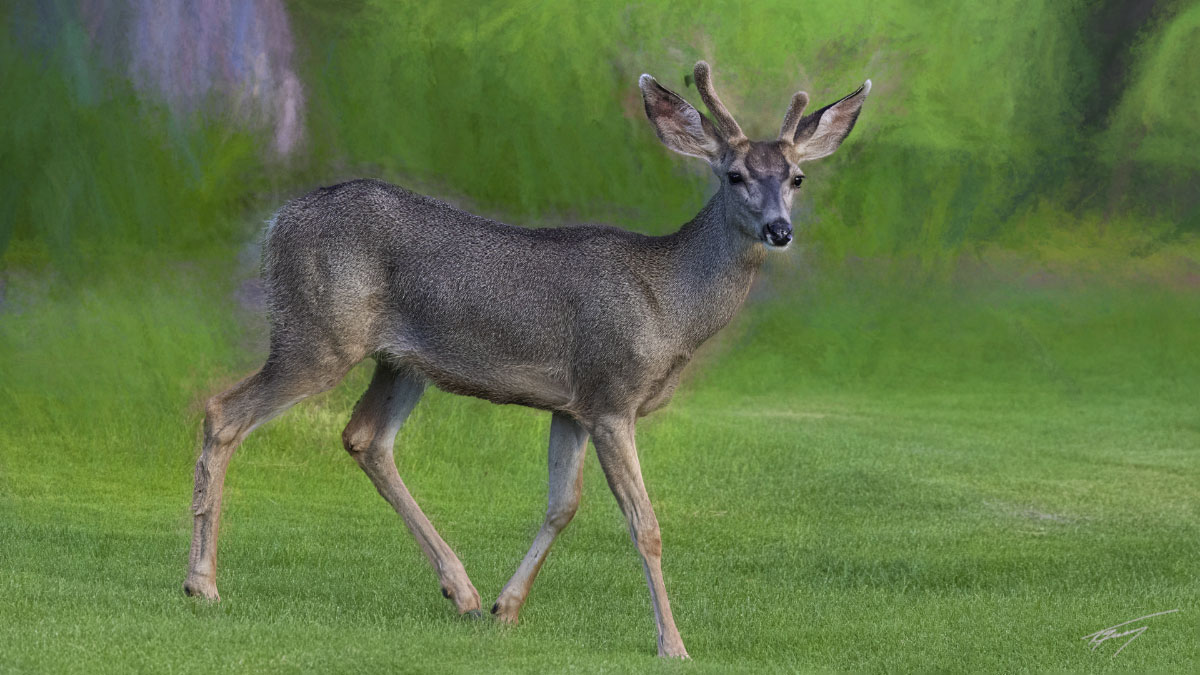
Below is a shot of a young couse whitetail deer in our back yard earlier this year … a young buck and a nod of recognition before he continued on his way.

Life is good and it abounds everywhere we look … all of us including other species face the same challenges daily … providing for our needs and making it through the day. We ponder that which is to come and daily interact with others … be kind and extend a hand to others … share smiles and you will bring one to another person.

Keep breathing and live life … it is an awesome opportunity we have every day!

With joy!

Ted

Though I know I shall sometime no more open
my eyes to the night or day,

I am one who looks at the stars when unchained from
the work-bench at nightfall.

They are a sign that I am not ephemeral, not you, nor
you, whoever you are.

The dawn comes and the dark and the sign sparkling
in the brooding night forever and forever.

At Nightfall by Max Ehrmann

###

photo_tedgrussingThe easiest way to reach Mr. Grussing is by email: ted@tedgrussing.com

In addition to sales of photographs already taken Ted does special shoots for patrons on request and also does air-to-air photography for those who want photographs of their airplanes in flight. All special photographic sessions are billed on an hourly basis.

Ted also does one-on-one workshops for those interested in learning the techniques he uses.  By special arrangement Ted will do one-on-one aerial photography workshops which will include actual photo sessions in the air.

More about Ted Grussing


Healing Paws

Healing Paws

This is an advertisement

Orem artist tells stories, preserves memories through florals

Orem artist tells stories, preserves memories through florals
Local artist Whit Olsen holds one of her art pieces, an arrangement of dried flowers framed in glass. Olsen began pressing flowers in 2019. (Sydni Merrill)

Artist Whit Olsen, an Orem native, captures identity and memories in her art with passion and a pocket full of flowers.

Her journey into floral art began in 2019 when Olsen’s husband gifted her a flower press for Christmas. Growing up in an artistic home, Olsen said she looked for her artistic niche for a long time before finding what truly inspired her. 

An engraved flower press sits on Olen’s worktable. Olsen uses several different types of presses in multiple sizes to dry her flowers. (Sydni Merrill)

“Everyone is an artist, you just have to find out what kind,” Olsen said. 

Olsen presses her own flowers and frames them in glass, preserves them inside jewelry, attaches them to candles, sells them as original prints, creates custom works and creates what she calls her “flower girls,” one of her most popular creations.

For her flower girls, Olsen arranges flowers and petals into human representations.

“The petals fell out of the press and it looked like a little skirt and I was like ‘wait a second, I can make a girl out of this.’ And that’s how it started,” Olsen said. 

Olsen said she received an enormously positive response from the community and often hears stories of people seeing themselves or their loved ones in the flower girls.

“People come up and they’re like ‘I saw this and it spoke to me and I’ve got to have it.’ It makes me feel so good because I hope that it speaks to people,” Olsen said.

Olsen grows most of her flowers at home in her garden, or sources them through other local growers.

Olsen picks up a pressed flower stem from off of her flower press with tweezers. Olsen almost exclusively uses tweezers when handling her dried flowers to avoid damaging them. (Sydni Merrill)

Olsen said she felt more connected to family and nature since creating art with florals, especially when she uses the flowers she and her husband grew themselves.

Olsen’s mother is a florist, and that family connection means a lot to her. Olsen said she notices an added spiritual boost and sense of mindfulness come into her life when she works with flowers. 

“I feel close to my Creator when I’m in nature. … I notice all the little things like how many butterflies we have on average each day in our front yard, or other things I’ve never noticed before, like what kind of insects like our yard like bumblebees and dragonflies,” Olsen said. “I’m taking in the small things a lot more.”

Along with her using her own flowers, Olsen takes custom orders, often preserving flowers from weddings, proms and funerals. 

“When I’m creating art from flowers that someone has given me I take it seriously, especially funeral flowers. That is like the most sacred art I can do,” Olsen said. 

Olsen is self-taught. She initially dove deep into YouTube tutorials and learned everything she could, with lots of trial and error. She currently sells her art on Instagram, Etsy and at local markets. She also takes custom orders via Instagram messages and teaches workshops. 

In July, Olsen worked with the Sun River Gardens to teach flower pressing techniques. She has also worked with Utah lettering artist Betsy Goodman

Whit Olsen stands in her workshop where she creates art with dried flowers. Olsen often experiments with different types of flowers to see what can be preserved the best. (Photo courtesy of Whit Olsen)

Olsen and Goodman connected over Instagram as local Utah artists, and Goodman expressed an interest in learning how to press flowers to include them in the wax seals she creates.

“The very first time I met her it was just like meeting an old friend. It’s kind of like I felt like we were already friends,” Goodman said. 

Olsen then invited Goodman into her home to teach her the basics of flower pressing. 

“Not only is she just pressing flowers and making her artwork, she’s involved in the whole process, especially with ones she grows herself,” Goodman said.

Since then, Olsen and Goodman have collaborated together in Goodman’s subscription box program, teaching a workshop to participants on how to dry flowers and include them in wax seals and lettering art. 

Olsen’s younger sister, Courtney Campbell, is a Provo photographer and has seen Olsen’s “addiction” grow and enrich Olsen’s life. Campbell said she loved seeing Olsen’s artistic pursuits come to life through florals. 

“Whit ventured into so many different ways to showcase the flowers, choosing different flowers, doing different designs, everything like that,” Campbell said. “I know she started mainly with flower girls, but it’s so cool to like see her do these big pieces, bouquets, the necklaces, the candles like, she’s added so much into her creative realm.”

Campbell owns several pieces of Olsen’s artwork and promotes them when she can.

“I get compliments on every piece that I have from her. And I just think, like, it brings me so much happiness because I’m such a nature child. And so is she. And so bringing that aspect into a house is so happy,” Campbell said.

Flowers from Olsen’s garden sit arranged in her work room. Olsen and her entire family enjoy the flowers that come out of their garden. (Sydni Merrill)

Olsen considers her art mainly a creative outlet, and currently has no plans to take on her business full-time.

“Selling the art supports my addiction to making the art,” Olsen said. 

Olsen will be selling her artwork at the upcoming September Beehive Bazaar and is always taking orders via Instagram.

Print Friendly, PDF & Email

Brazilian Indigenous artists take the forest to the world

Brazilian Indigenous artists take the forest to the world
  • In recent years, several exhibitions held abroad have featured Indigenous people from Brazil and Latin America, giving unprecedented visibility to artists historically erased by gallery owners and museums.
  • Some examples include Siamo Foresta in Milan; The Yanomami Struggle in New York, and BEĨ: Benches of Brazilian Indigenous Peoples in Japan.
  • According to curators, the works transcend a mere aesthetic vision, being deeply connected to each people’s cosmologies, in addition to taking political and socioenvironmental issues into museums and galleries.

The art market is moving closer and closer to Indigenous villages. In recent years, several exhibitions have been held abroad that focused on Indigenous peoples from Brazil and Latin America, giving unprecedented visibility to their artists, historically erased by gallery owners and museums.

At this time of high demand for Indigenous art, Europe is also debating how colonialism usurped Amerindian culture and wrongly appropriated its artifacts. An example is the 16th-century Tupinambá mantle at the National Museum of Denmark, which will be returned to Brazil after three centuries in the institution’s collection. A late reckoning.

Such renewal in the circuit shows how art and politics are inseparable, and it may guide exhibitions and change curators’ colonial thinking. This is the case of Siamo Foresta, an exhibition that opened at Milan’s La Triennale  in June, gathering works by 27 artists related to the Amazon Rainforest. They include Indigenous collectives such as the Yanomami Group, one of the best known in the country, with artists such as André Taniki, Sheroanawe Hakihiiwe, Vital Warasi and Joseca Mokahesi.

This is the collective’s second international exhibition in 2023, after The Yanomami Struggle, at The Shed culture center in New York in February. Alongside the work of photographer Claudia Andujar, who has documented changes in the Yanomami Territory for 50 years, the artists showed, in the largest U.S. city, the struggle of a people who have recently faced one of their worst humanitarian tragedies.

Works on exhibition in The Yanomami Struggle, which was held in early 2023 at The Shed in New York. Image courtesy of Adam Reich/Fondation Cartier pour l’art contemporain.

French anthropologist Bruce Albert, the exhibition’s curator, pointed out in a statement to the press that “Siamo Foresta stages an unprecedented encounter between thinkers and defenders of the forest; between Indigenous … and non-Indigenous artists.” The exhibition “draws its founding inspiration from this aesthetic and political vision of the forest as an egalitarian multiverse of living beings, human and non-human and, as such, offers the vibrant allegory of a possible world beyond our anthropocentrism.”

A new art history

This important role played by today’s Indigenous artists has drawn the attention of the international community, which is beginning to see the history of Indigenous peoples’ art in a different light, says curator Edson Kayapó, a member of the Mebengokré Indigenous community. He is co-responsible for programming at the Indigenous Histories department of the São Paulo Museum of Art Assis Chateaubriand (MASP). “We Indigenous peoples have always been here, producing art. And now that society has the opportunity to see this in great depth, it is important to debate issues that have been dragging on for some time,” he says.

Edson Kayapó mentions a point addressed by Albert when he explains that, from the Eurocentric point of view, “man had to dominate nature because it is hostile.” He points out that the COVID-19 pandemic was one of the factors that expanded discussions on our codependency with nature. “After that world crisis, people had to open their eyes. There are U.N. studies mentioning the possibility of new and worse pandemics if we keep devastating the system of biomes. We now face a major climate problem: The Earth is getting hotter and therefore the human project is in a crisis,” the researcher adds.

Curator Edson Kayapó. Image courtesy of Ibuí Pataxó.

Edson Kayapó points out that the role of today’s Indigenous art goes beyond exposing socioenvironmental problems; it is a means of preserving traditions and everyday ritualistic acts, something that can be seen in the visions of the Mahku collective, created by the Huni Kuin people, who are also participating in the Siamo Foresta exhibition.

“Mahku is a very sound resistance act, which arises from an artistic and educational project within Indigenous communities. They say, ‘We sell land to demarcate our territories,’ ‘We make art to fight drugs and any other vice within the community,’” says Edson Kayapó.

Work of the Mahku collective, of the Huni Kuin people. Image courtesy of the São Paulo Museum of Art Assis Chateaubriand (MASP).

One of Mahku’s best-known members, Cleiber Bane takes part in Siamo Foresta alongside names like Sheroanawe Hakihiiwe from the Venezuelan side of the Yanomami community, who had a solo exhibition at MASP in July and August. There are also works by Jaider Esbell, from the Makuxi people, one of the biggest names in today’s Brazilian Indigenous art.

Over the last decade, Esbell was responsible for a network that supported Indigenous artists as they established themselves on the circuit and brought many of them along in the wake of his meteoric career. In addition to taking ancient knowledge such as songs and myths of his people beyond Indigenous lands, the artist, who was born in the Raposa Serra do Sol Indigenous Territory in Roraima, used his work to denounce crises in the territory, in addition to being a critic of the art scene itself.

One of the most notable artists of the 34th São Paulo International Art Biennial, Jaider Esbell took his own life at the height of his career, in November 2021, in the same week he exhibited his works at the pavilion. His paintings were covered by black cloths. It was not only a shock to the art field and Indigenous communities but also a warning about the processes of the art market.

The Jaider Esbell Art Gallery was then created in Boa Vista, Roraima, to manage the artist’s estate and keep his legacy alive. A year later, in 2022, Esbell’s work was featured in Le Vivants, a collective exhibition of Amerindian artists in Lille, France, and some works were acquired by museums around the world such as Paris’ Centre Pompidou.

Work by Jaider Esbell. Image courtesy of Jaider Esbell Art Gallery.

Indigenous benches in Japan

In addition to the political nature of the works, the alignment between aesthetics and cosmology is a strong feature of Indigenous artists’ works, as reported by sculptor Mayawari Mehinako from Kaupüna village in Xingu, who traveled to Japan in 2019 to open the exhibition BEĨ Collection: Indigenous Banks of Brazil. Such pieces have become objects of desire for the Brazilian intellectualized middle class and each cost an average of 5,000 reais (about $1,270 at the time).

With examples from 43 Indigenous peoples in Brazil, the BEĨ Collection became “a way of disseminating the millennia-old Indigenous culture,” says Mayawari about how Indigenous benches transcend their utilitarian nature.  “They are not decorative items; they are [associated with] cosmology, [since there is a specific moment] for the use of each bench. Our life is strongly related to nature. Some animals are exclusive to the chief’s throne; there are figures for singers, shamans and women.”

Some Brazilian Indigenous benches featured in the BËI collection. Image courtesy of Editora BEĨ.

Encouraged by his father, who was also a bench maker, to sculpt in order to preserve the images of endangered species such as birds, snakes and the giant armadillo, the largest armadillo in the world, Mayawari bridges the gap between collectors and the village. Thanks to his role as a mediator, several infrastructure works have been built in his community in recent years, such as a health center. The artist also says that a school will be built in the village, in addition to projects that seek to encourage handwork such as the creation of benches, ceramics and basketry. It’s just the beginning,” he says.

According to BEĨ director Tomás Alvim, more international exhibitions of the collection are already scheduled for next year in countries such as Portugal and Spain. Art dealer Carmo Johnson, who works with the Mahku collective, explains that the group will be responsible for a large mural on the main façade of this year’s Venice Biennale — a space coveted by artists from all over the world that opens the doors to a new panorama in the history of art.

Indigenous artists from the Amazon use art for environmental advocacy

Banner image: Siamo Foresta exhibition at La Triennale Foundation, in Milan, Italy. Image courtesy of Andrea Rossetti/La Triennale.

This story was first reported by Mongabay’s Brazil team and published here on our Brazil siteon Aug. 21, 2019.

, , , , , , , , , , , , , , , , ,

Print

2023 Cherokee Phoenix Seven Feathers honorees announced

2023 Cherokee Phoenix Seven Feathers honorees announced
image

TAHLEQUAH – In November, the Cherokee Phoenix will honor Cherokee Nation citizens who work to make the world a better place in the areas of business, community, education, health and service, as well as advance the tribe’s culture and language.

After accepting nominations for the newspaper’s fifth annual Seven Feathers Awards, this year’s winners are:

LANGUAGE: NEW JORDAN BAPTIST CHURCH

For language, the Cherokee Phoenix selected the New Jordan Baptist Church congregation for its use of the Cherokee language.

“The pastor and the majority of the small congregation of this church are elder first-language speakers,” the nomination letter states. “The weekly Sunday service is done in mostly Cherokee as well as most of the hymns. This gives people the opportunity to speak their first language with other speakers, which has become a rare opportunity for them.”

The Salina-based church and places like it “are key to maintaining and revitalizing our language,” according to the nominator.

“Although there are opportunities such as online classes and such, I feel that seeing the language spoken in a church and conversational setting from people who learned to speak Cherokee before they even learned English is the key to spark an interest in learning and carrying on the language,” the nomination letter states.

CULTURE: JESSICA (TYNER) MEHTA

The Seven Feathers award for culture goes to Jessica (Tyner) Mehta, a multi-award-winning interdisciplinary author, artist and storyteller from Hillsboro, Oregon.

“Dr. Mehta is a working artist, writer, scholar/researcher and business owner,” the nomination letter states. “She has had several award-winning books published during her career, all of which center on lessening the effects of decolonization and revitalizing Indigenous culture. Her artwork (visual, performance and installation) addresses similar themes.”

One of her recent exhibitions included an installation that explores the history of residential boarding schools. Mehta’s doctoral work focused on the intersection of poetry and eating disorders in Indigenous communities.

“Now, she is looking forward to an artist residency at Soaring Gardens in Pennsylvania in August where she will work on a new, wearable art project,” her nominator said. “She prioritizes collaborating with fellow Native artists, creatives and culture-bearers whenever possible, and this extends to this work which is a collaborative undertaking with her youngest daughter.”

COMMUNITY: BRAD EUBANKS

The Seven Feathers honoree for community is Brad Eubanks, a board member of Help in Crisis and owner of the Tahlequah-based United Wrestling Entertainment professional wrestling company.

Help in Crisis offers support and services for victims of domestic violence and sexual assault. Eubanks, of Hulbert, participates in the organization’s annual Walk a Mile in Her Shoes fundraiser “to publicly show that he will not stand for domestic violence,” his nomination letter states.

“He works for Indian Child Welfare and helps children find foster homes,” his nominator says. “He also owns the UWE wrestling company that hosts monthly events to benefit children/organizations in the community. He is willing to always help others no matter the cost.”

Eubanks, also known as his wrestling persona “Fuel,” held the UWE’s first event in 2009 at the Cherokee Nation’s Talking Leaves Job Corps to help support Sequoyah High School.

SERVICE: HANNAH JIMENEZ

For service, the Seven Feathers recipient is Hannah Jimenez, who according to her nomination letter is “a rising star” at Columbia University in New York City with a mind for community service whether it’s volunteering or tutoring students.

Jimenez is a 2019 graduate of Sequoyah High School.

“Hannah has been extensively involved in her community in Tahlequah – from volunteering at the Cherokee Elder Care facilities before the peak of COVID-19 and tutoring students at the high school to helping facilitate the annual Performing Arts Summer Youth Camp for the past five years with Amanda Ray at Sequoyah High School,” her nomination letter states. “In the past year, Hannah was a part of the Summer Youth Leadership Intern cohort with the Cherokee Nation, and in that was an instructor of storytelling, theatre and performance where she demonstrated to Cherokee youth the importance of storytelling, culture and passing on oral histories.”

Jimenez is a recent recipient of Columbia University’s Leadership Award of “Indelible Mark” for the positive impact she’s had on the Native community on campus.

EDUCATION: REGINA (PHILPOTT) MCLEMORE

The Seven Feathers honoree for education is Regina (Philpott) McLemore, a retired teacher and librarian-turned author from Stilwell who is described as “a quintessential educator” by her nominator.

“She continually obtains knowledge then passes it on,” McLemore’s nomination letter states. “Her life choices – career in public education and involvement in her retirement – show how her love of learning and her love of teaching has made a difference and continues to make a positive impact.”

Over the course of her 33-year career in education, McLemore spent time at Stilwell Junior High, Sequoyah High School in Tahlequah and at Siloam Springs, Arkansas. After retiring, she “became an advocate for lifelong learning by joining organizations which promote volunteerism in educational endeavors,” her nomination letter states.

McLemore volunteers with the Stilwell Public Library Friends Society, Adair County Retired Educators Association, Alpha Delta Kappa and Adair County Historical and Genealogical Association.

HEALTH: DR. CRYSTAL HERNANDEZ

Selected as the Seven Feathers recipient for health is Dr. Crystal Hernandez, “a proud Cherokee citizen and Latina” and psychologist by training who has been a mental health administrator for more than 15 years, according to her nomination letter.

“Currently, she serves the state of Oklahoma as the executive director of the Tulsa Center for Behavioral Health, which is an adult civil psychiatric hospital, the Oklahoma Forensic Center, which is the sole forensic psychiatric hospital for adjudicative competency and insanity, and the Transitions Recovery Center, which is a forensic mental health step-down unit,” her nominator wrote. “Dr. Hernandez is considered a tribal disabilities expert, as well as a researcher, autism mother and ally. She holds independent contracts with several tribal nations to provide guidance and insight to system and program development design.”

Hernandez, from Craig County, Oklahoma, is also the creator and co-host of the Black Feathers podcast, which offers “disabilities conversations for all.”

BUSINESS: KRISTOPHER EASTON

For business, the Seven Feathers winner is Kristopher Easton, a senior program manager of engineering and finance systems for Google. 

Easton, of Buda, Texas, is a founding member of Google American Indian Network, now known as the Google Aboriginal & Indigenous Network.

According to Easton’s award nominator, following the 2020 U.S. Supreme Court’s historic McGirt v. Oklahoma decision, he leveraged work relationships to organize and lead a small project that added the Cherokee Nation and other major tribes in Indian Territory to Google maps. 

The project ultimately made the Cherokee Nation recognizable and searchable on the world’s most-used map, the nomination letter states.

“Kris led a volunteer team back in 2014 to add all federal recognized tribes to the map … but was heartbroken at the time to not be able to include his own nation at the time due to legal ambiguity,” the letter states.

Honorees will be presented their awards during the Cherokee Phoenix Seven Feathers Awards Gala on Nov. 11 at the Chota Center in Tahlequah. Tickets for the gala will be available for purchase at a later date. 

James Pauk Photography shuttering after 54 years in business

James Pauk Photography shuttering after 54 years in business

One of Orillia’s oldest businesses is set to close.

James Pauk Photography opened in 1969. It was started by the late James Pauk, who immigrated to Canada in 1951 from the Netherlands. With an interest in photography, he landed a job as reporter and city editor with the Packet & Times.

“He was a self-taught editor and reporter at the Packet who basically ran the dark room,” explained his son, Greg Pauk. “When his time was done there, he decided to do wedding photography, and then he had the opportunity to buy a business, which became his dream.”

Pauk recalls his father learning at the New York Institute of Professional Photography before opening in downtown Orillia.

“It’s been an interesting journey,” he said. “Not too many businesses in town remain from that time frame.”

He says the photography industry is vastly different today with digital cameras and cellphones.

“A lot of things are online now,” he said. “Interactions with clients are different now, too. Sometimes they come into the store to talk to you and sometimes they will just send an email.”

Around 2003, digital photography changed the way the business went about a lot of its production.

“The so-called black room where film was developed and prints were made was gone,” Pauk said. “Now we use digital files and a desktop computer to edit and print with high-end inks and digital paper.”

The industry has continued to change at a fast rate over the years, leaving Pauk feeling it’s time to make a change and reinvent how his business operates.

“I think what we will miss the most is the interactions with customers day in and day out,” he said.

He plans to continue his work as a photographer on a part-time basis once he closes the storefront at 25 Peter St. S., which could happen by the end of the year.

The complete photography studio and retail business has photographed family portraits, weddings, and special occasions all while doing custom framing and selling equipment.

“I think being so diversified was the real secret to our success,” Pauk said. “Memorable moments have given us a lot of opportunity to photograph some interesting people throughout the years.”

In 1967, his dad photographed the Los Angeles Kings while they were in London for training camp. In 1970, Hockey Hall of Famer Bobby Orr stopped by the shop in his yellow Corvette to select photos James had taken of him for his book.

“He sat down with my mom, Grace, and said, ‘They all look so good. Which one do I choose?’” Greg recalled. “It was a pretty hilarious time.”

During the 1999 NHL season, James photographed the Toronto Maple Leafs at the Scotia Bank Arena for their New Memories and New Dreams poster. He also photographed Gordon Lightfoot, Orillia’s city council numerous times, and the 1973 Allan Cup champion Orillia Terriers.

“Looking over the years, from weddings to portraits and everything else in between, the files are endless,” Pauk said.

James operated the store until about the time he died last year at age 86.

“We had talked about making this change,” Pauk said. “I think what has sped it up has been him not being here. It was his dream.”

He has been with his father’s business since he finished high school in 1978, making it a difficult decision to let go, but he knows his family’s legacy will live on through the photographs they have taken.

Customers interested in purchasing their original files at James Pauk Photography can do so for a “very reasonable price,” Pauk said. He can be reached at 705-326-6066.

Grenada to Add New Pieces to the Underwater Sculpture Park

Grenada to Add New Pieces to the Underwater Sculpture Park
The Grenada Tourism Authority has unveiled 31 new sculptures to be added to the Molinere Underwater Sculpture Park. | The unveiling of the new sculptures is part of a rehabilitation and upgrade initiative for the world’s first underwater sculpture park. See more here.

NFT Market Analysis: Art Sector Emerges as Top Performer in 2022

NFT Market Analysis: Art Sector Emerges as Top Performer in 2022

Share this article

2022 has witnessed significant shifts in the nonfungible token market landscape, with different sectors experiencing varied levels of volatility. At the center of this fluctuation is the Art NFT sector, which has managed to carve out a position of strength, Nansen research reported on Twitter.

The Game-50 index, which encapsulates a diverse range from GameFi to Play-to-Earn platforms, experienced a notably challenging year. Investors who commenced their journey in January with an optimistic $1,000 found their investments gutted to a meager $90 by year-end.

Similarly, the buzz and promise surrounding the metaverse sector were put to the test. The Metaverse-20 index, representative of this digital frontier, began the year with investments valued at $1,000, only to contract to a humbling $202 as the curtains closed on 2022.

The broader NFT market wasn’t immune to the year’s turbulence, according to Nansen. The NFT-500, touted as a barometer for the generalized NFT landscape, recoiled significantly. Starting the year on a high note with investments valued at $1,000, the index ceded ground, ending at a diminished $329.

Yet, not all sectors were mired in challenging terrain. The Social-100 index, emblematic of NFTs rooted in community and interpersonal connections, painted a slightly brighter picture. Starting positions in January, pegged at $1,000, saw a decline, but concluded the year at a relatively healthier $362.

Similarly, the revered Blue Chip-10 index, often perceived as the gold standard within the NFT universe, held strong. Despite facing the market’s unpredictable whims, investments here saw a descent from $1,000 in January to $405 by the year’s culmination.

However, the star of the year was undeniably the Art-20 index. Bucking the broader market trend, this index, representing the top 20 art collections by market cap, offered a glimmer of optimism. Investors in this segment would find solace, with January’s $1,000 valuation growing to an impressive $596:

“I guess people really do like the art.”

Ether, often regarded as a bellwether for the digital asset landscape, has had its challenges. A $1,000 allocation to Ether in January translated to $432 by the close of 2022, showing the performance of the Art NFT sector as other NFT sectors struggled.

Share this article

My Favorite Art Gallery is The Market-Bantam’s Craft Beer Cooler

My Favorite Art Gallery is The Market-Bantam’s Craft Beer Cooler

After standing out in the sun at the San Gennaro festival on Saturday, Mrs. Large and I stopped into The Market-Bantam on our way home. It was hot outside, and as we made our way past produce, the automatic doors of their craft beer cooler swung open for us. What we found inside is now our new favorite art gallery in Connecticut.

image

We’re weak when it comes to beer knowledge, but strong in recognizing great marketing. The craft beer explosion has largely bypassed us, so we really haven’t paid much attention to the dark sense of humor that has emerged among the craft beer marketers. There are so many great names, I almost bought a Fuzzy Baby Ducks just to see why the hell they thought of that one.

My Favorite Art Gallery is The Market-Bantam Craft Beer Cooler

I have to hand it to you craft beer makers of Connecticut, you use such beautiful artwork on your cans. My wife and I wandered into the awesome craft beer cooler at The Market-Bantam the other night, and spent about 15 minutes appreciating the 38 degree art gallery.

Danbury’s Quirk Works Brewing Scavenger Hunt Items…

The Undisputed Hot Dog Kings of Connecticut

Today is National Hot Dog Day, and every social media outlet in Connecticut has come up with their own “Best hot dog in Connecticut’ list. I’ve read them all, and these 5 places were the most mentioned