John and Mable Ringling Museum of Art shows contemporary Native American art

John and Mable Ringling Museum of Art shows contemporary Native American art

SARASOTA – Some people think Florida museums and galleries are missing out on the meaningful art of Native Americans.

This page requires Javascript.

Javascript is required for you to be able to read premium content. Please enable it in your browser settings.

.s2nPlayer {
max-width: 600px;
margin: 0 auto;
}


Digital design

Wilson Bowers (Seminole, b. 1985), Fire Feather or Warrior Within, 2020. Digital design.


Alyssa Osceola

Alyssa Osceola (Seminole, b. 2001), Carolyn, 2022. Oil on wood panel.


John and Mable Ringling Museum of Art shows contemporary Native American art

Corinne Zepeda (Seminole/Mexican, born 1997), Cooking Sofke, 2021, digital design.


Featured Local Savings

Today’s Photo from Ted Grussing Photography: This is Here

Today’s Photo from Ted Grussing Photography: This is Here

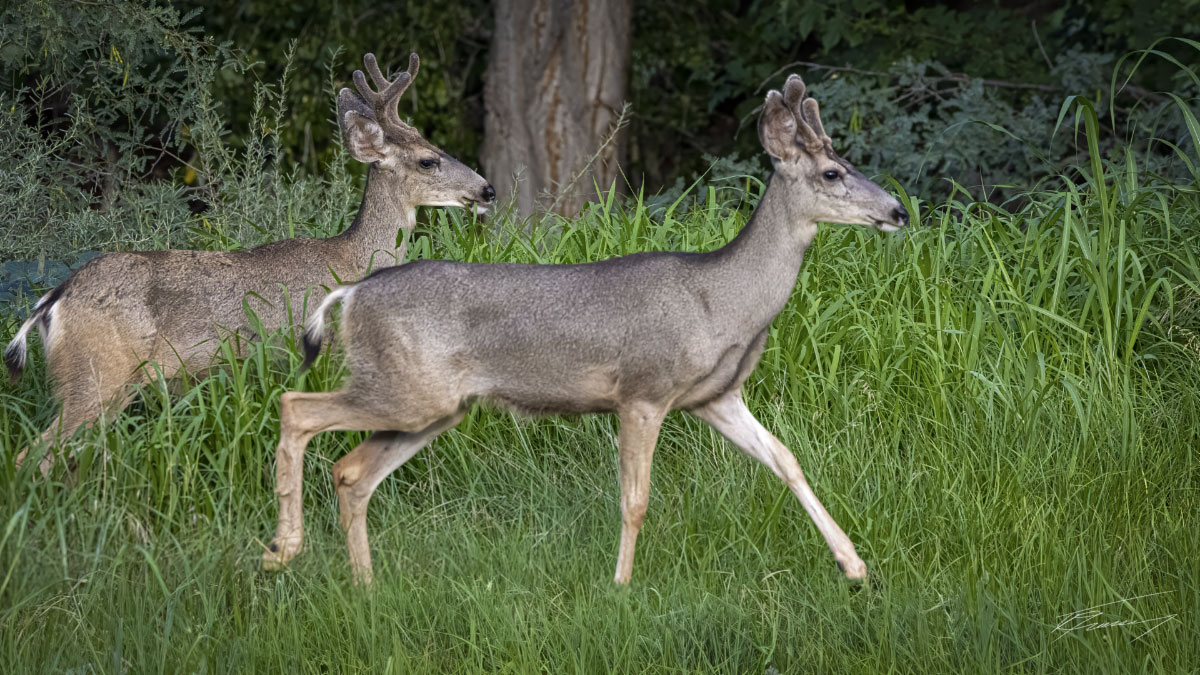
… another short one for tonight … the shot above is what typifies the beauty of Sedona … this truly is here and it is a wonderful place to be. The shot below is of a pair of Couse White Tail deer as they passed by our home early one evening … all this and more welcomes you to Sedona. There are so many other species of wildlife that live in the area and so many fabulous vistas for you to take in!

Busy day coming up and a little computer work to finish up … have a beautiful day and share your joy with others.

Cheers,

Ted

The book of day and the book of night burst with
wonder, testifying that there is more in the world than
we, and that we shall yet be other than we are.

excerpt from Lamentations by Max Ehrmann

###

photo_tedgrussingThe easiest way to reach Mr. Grussing is by email: ted@tedgrussing.com

In addition to sales of photographs already taken Ted does special shoots for patrons on request and also does air-to-air photography for those who want photographs of their airplanes in flight. All special photographic sessions are billed on an hourly basis.

Ted also does one-on-one workshops for those interested in learning the techniques he uses.  By special arrangement Ted will do one-on-one aerial photography workshops which will include actual photo sessions in the air.

More about Ted Grussing


Healing Paws

Healing Paws

This is an advertisement

Steele Creek Park opens for annual photography contest submissions

Steele Creek Park opens for annual photography contest submissions

BRISTOL, Tenn. — Nature lovers are invited to submit their best photos of Steele Creek Park’s natural beauty through its 17th annual Wildlife Weekend Photography Contest and Show held in conjunction with Wildlife Weekend.


Steele Creek Park sign vertical

Steele Creek Park is located in Bristol, Tennessee.


“This is always a fun opportunity for anyone with a camera to show what a beautiful and diverse park we have, right here in the middle of Bristol,” said Robin Feierabend, contest coordinator, in a press release from Bristol, Tennessee. “It helps us get that message out and, hopefully, makes more people aware of the importance of nature and the need to preserve what we have.”

Exhibit of Inuit photography centers Indigenous perspectives at new-look Arctic Museum

Exhibit of Inuit photography centers Indigenous perspectives at new-look Arctic Museum

The exhibit “Iñuit Qiñiġaaŋi: Contemporary Inuit Photography” brings Inuit perspectives on modern life in the Arctic to the Peary-MacMillan Arctic Museum. (Kelli Park photo)

As Bowdoin College’s Peary-MacMillan Arctic Museum welcomes visitors into a brand-new, modern space, the curatorial staff has set course for the future with a fresh vision that gives more attention to Indigenous perspectives and modern life in the Arctic.

The relationship between Bowdoin College and the Arctic dates back to 1860, when students and faculty began traveling north to study Arctic cultures and environments. Later, Bowdoin graduates and explorers Robert E. Peary, class of 1877, and Donald B. MacMillan, class of 1898, led historic expeditions to the Arctic.

Peary is reputed to have been the first man to reach the North Pole in 1909, although a rival explorer claimed to have beat him. The architecture of the historic Peary home on Eagle Island, Harpswell, reflects a ship and faces north to symbolize his passion for the Arctic. Peary purchased Eagle Island in 1881 for $200 and is said to have kept his Greenlandic sled dogs on a nearby island.

In 1967, Bowdoin College created the Arctic Museum and, in the 1980s, its Arctic Studies Center was established. The museum staff has known for the past few decades that a new space was needed. In early 2021, after a year’s delay caused by the COVID-19 pandemic, construction began on the John and Lile Gibbons Center for Arctic Studies, now home to the museum.

“The old space was beautiful and charming in its way, but it was never designed to be a museum space,” said Genevieve “Genny” Lemoine, curator of the Peary-MacMillan Arctic Museum. “It was very exciting to be able to work with the architects and the designers on this space.”

The Center for Arctic Studies is the first commercial construction project in Maine to use mass timber, a pioneering wood-based product that was sourced from Austria. Museum staffers say the building was assembled like “a huge piece of Ikea furniture.” The museum space is climate-controlled, solar-powered, and wheelchair-accessible, unlike the previous facility.

“Iñuit Qiñiġaaŋi” collects work from five Inuit photographers. (Kelli Park photo)

A display of photographs by Brian Adams, curator of the “Iñuit Qiñiġaaŋi” exhibit. (Kelli Park photo)

The space, however, isn’t the only change taking hold.

“People continue to have a very stereotypical view of what it’s like to live in the Arctic,” said Lemoine, whose archaeological research has taken her across the Canadian Arctic and northern Greenland for 30 years. “If we only show them our historic images, they’ll still think that people live year-round in igloos, when, in fact, Inuit culture is a modern culture.”

“They’re working hard to live in the modern world on their own terms and to maintain fundamental aspects of their society — hunting seals and using seal products and getting out on the land when they can, even if they’re working a 9-to-5 job in the community,” said Lemoine. “They’re still Inuit.”

The museum is shifting its narrative to emphasize modern Inuit culture.

“We’ve been moving the museum in this direction for many years,” said Lemoine. “The original exhibits naturally focused on Peary and MacMillan and the work that they did. It had a lot of content about Inuit society, but mostly in relation to their work.”

Although the work of Peary and MacMillan is still a significant part of the museum, the current narrative weaves in information about how contemporary Inuit live traditionally off the water, the ice and the land, while adapting their practices to the changes and challenges of colonialism, modernization and climate change.

Lemoine reveals that one of her favorite objects in the collection is a necklace carved of a single piece of walrus ivory from Greenland. Miriam MacMillan, who explored the Arctic alongside her husband, gave the necklace to the museum long ago, with no information. The beauty of the piece and the skill required to create it are not the only reasons Lemoine calls it a favorite.

“More than 20 years ago now, I was working with some Inuit elders in our collection when I opened the drawer where the necklace was stored and the two women, who were sisters, looked at it and said, ‘Our father made that,’” said Lemoine.

The sisters’ father had worked with MacMillan in the 1920s.

“There we were, working with the descendants in the collection as well. It really exemplifies the continuity of Peary and MacMillan’s long history in some of these communities and our own work in some of these communities,” said Lemoine. “It really nicely tied that together and gave a lot more meaning to this already beautiful object. It’s those kinds of moments that are really the most exciting.”

The “Collections and Recollections” exhibit on the third floor of the Peary-MacMillan Arctic Museum. (Kelli Park photo)

Lemoine and Susan Kaplan, director of the museum, recently started an initiative to collect contemporary Inuit photography as a way of centering the perspectives of the Indigenous community. The museum hired Inupiaq photographer Brian Adams to curate a new exhibit and purchased 30 prints with funding from Bowdoin alumni.

The exhibit, “Iñuit Qiñiġaaŋi: Contemporary Inuit Photography,” dismantles stereotypes about the Arctic while showing aspects of modern Inuit life through the eyes of five Inuit photographers: Adams, of Alaska; Jenny Irene Miller, of Alaska; Jennie Williams, of Labrador, Canada; Niore Iqalukjuak, of Nunavut, Canada; and Minik Bidstrip, of Greenland.

“We wanted an Indigenous person to curate it and we wanted a photography expert to curate it, and Brian is both of those things,” said Lemoine. Adams chose the photographers. He was reluctant to include himself, but the curatorial staff insisted. Adams and the other photographers then talked about their work and selected the images that would be included in the exhibit to share an in-depth look at modern life in the Arctic. Attempts to reach Adams for an interview were unsuccessful.

“It’s such a diverse range of photography that really highlights the talent and the different directions that young photographers in the Arctic are taking their work,” said Lemoine. The exhibit will remain in place for one to two years.

Through this new lens, the exhibit offers glimpses into the stories of those whose lives are carved by the north.

“There are modern people living up there and these days, with climate change, they’re facing challenges and problems that they don’t have much control over. … They didn’t create climate change, but they’re among the first people to have to deal with it in a very significant way,” said Lemoine. “I hope it makes people think a little bit about globalization and the interconnectedness of what’s going on today.”

The Peary-MacMillan Arctic Museum is open from 10 a.m. to 5 p.m. Tuesday-Saturday and 1-5 p.m. Sunday. Admission is free. For more information, go to bowdoin.edu/arctic-museum.

Kelli Park pursues her interest in culture as a freelance writer and photographer, teacher of multilingual learners, and part-time faculty at the University of Southern Maine, which recently gave her the opportunity to travel to Greenland as part of the Arctic Education Alliance. She lives in Cundy’s Harbor and seeks out adventures near and far with her son, Kieran.

Vintage Video Shows What It Was Like Being a Pro Photographer in 1946

Vintage Video Shows What It Was Like Being a Pro Photographer in 1946
[embedded content]

Camera technology has evolved dramatically since the advent of photography and as a result, being a professional photographer has significantly changed too. A vintage video created by Vocational Guidance Films, Inc. in 1946 shows what being a professional photographer used to be like.

As spotted by PopPhoto, the public domain video was upscaled using artificial intelligence by DIY Extravaganza on YouTube.

“Photography is often called the universal hobby. It is a means of creative expression within the reach of people in all walks of life, and it speaks a language that everyone can understand,” the narrator says in the video above.

Even though the video is nearly 80 years old, and the gear that photographers use is much more advanced now than it was then, it is interesting how many aspects of being a professional photographer remain true today.

The video expertly summarizes the timeless appeal of photography and its influence on the world. The vocational video touches on how photography can immortalize fleeting moments that will never occur again, making visible things that are impossible to see with the naked eye, and telling exciting stories in compelling ways.

“Photography as a hobby can lead to photography as a career, and often does, but professional work calls for a lot more than just snapping pictures here and there,” the video explains.

For example, to become a successful professional portrait photographer, the photographer must understand their subjects and be able to showcase their character and personality in a single moment.

Another type of photographer, a commercial photographer, must be versatile and skilled in many different situations and when taking a wide range of images.

This is also true of a photojournalist, although they must be able to work under tight deadlines in a way unrivaled by other photography careers. An interesting video from 1937 shows how photos were transmitted by wire in the early to mid-20th century.

No matter the type of photography, all photographers, amateur and professional alike, must be well-versed in compositional skills, as highlighted in this excellent video from 1949, which has stood the test of time.

The old-school vocational video may look and sound old, but the lessons contained within still hold primarily true and may even continue to do so for another 80 years.

Soccer Star Blasts Ball Straight Into Photographer’s Lens

Soccer Star Blasts Ball Straight Into Photographer’s Lens
Trinity Rodman hitting a volley
Photographer Wolfgang Zac about to be blasted by a soccer ball from the foot of Trinity Rodman.

Photographers have to go above and beyond to get the perfect shot and that sometimes means putting themselves in the line of fire — like one photographer did while shooting a soccer player for a magazine.

Wolfgang Zac was going for a dynamic shot of U.S. women’s star Trinity Rodman while shooting photos for a feature for The Red Bulletin magazine.

Zac wanted a shot of Rodman smashing a volley and told her to hit the ball as close to him as possible — but she got a little too close.

In the clip, Rodman takes her first shot which narrowly sails over the photographer’s head causing them both to react. But the second time, Rodman blasts the ball straight into Zac’s lens, seemingly snapping the lens hood in two.

However Zac is unfazed by the incident even shouting “Yes!” straight after the smack.

In the above video, we get to see the resulting shot which Zac must have been happy with as it captures Rodman in a powerful pose with the ball perfectly framed.

“I said the closer the better…and she did her best,” writes Zac on Instagram.

The fabulous photo was used as the first image in The Red Bulletin magazine’s feature on Rodman who is a 21-year-old star for Washington Spirit and is currently an active player at the Women’s World Cup held in Australia and New Zealand.

Rodman also happens to be the daughter of former NBA and Chicago Bulls player Dennis Rodman.

Risking it All

The extent of the damage to Zac’s camera equipment is not clear, if it is just a broken lens hood then he has gotten away lightly.

“That looked expensive af,” an Instagram user responded to the video. “Just destroys a camera that cost like 2k dollars,” another writes.

Red Bull USA called it “dedication to the craft” while Zac himself made light of it all writing: “Hahahahahahahaha! fuggin hell yezzz for capturing the ‘one shot, kill the camera’ moment!”


Image credits: Red Bull USA.

The Metropolitan Museum of Art and Verizon launch new AR app experience, Replica

The Metropolitan Museum of Art and Verizon launch new AR app experience, Replica

NEW YORK – The Metropolitan Museum of Art and Verizon have launched a first-of-its-kind experience at the Museum, Replica, that allows visitors at The Met to scan artwork and bring elements of the works digitally into the global immersive platform Roblox through augmented reality (AR).

Beginning August 2, users can download the Replica app, and starting August 3, visitors to The Met can access the in-app map to guide them to artworks around the Museum, learn about different works of art, and digitally collect unique pieces for free—like a Japanese suit of armor from early 14th–early 15th century or Vincent van Gogh’s straw hat from his iconic Self-Portrait of 1887—for their Roblox avatar.

Each wearable piece in Replica was inspired by art from across The Met’s vast collection of 1.5 million objects; the 37 selected artworks are drawn from objects on view across more than 30 galleries spanning nine curatorial areas, including the American Wing, Egyptian Art, European Paintings, and Asian Art. Highlights include Van Gogh’s Self-Portrait with a Straw Hat (1887); Statuette of Anubis (332–30 B.C.); Perseus with the Head of Medusa (1804–6); Prince Holding a Falcon (ca. 1820); Marble capital and finial in the form of a Sphinx (ca. 530 B.C.); Reaching Jaguar (1906–7; cast 1926); Vase with Rabbits (late 16th century); Helmet (Zukinnari Kabuto) (16th century); and Armor of Henry II, King of France (ca. 1555).

The Replica app can be downloaded for free on iOS and Android devices.

“This groundbreaking app brings artwork from The Met’s illustrious collection into the virtual realm of Roblox, transforming the way visitors engage with art and crafting a captivating, fun, and truly unique journey through the Museum,” said Max Hollein, The Met’s Marina Kellen French Director and CEO. “Replica is a testament to The Met’s ambitious exploration of educational initiatives that inspire playful connections with art in the Museum as well as in the digital realm.”

“In partnership with The Met, we created Replica as an experience to connect people to art in a new and culturally relevant way,” said Kristin McHugh, SVP of Marketing and Creative at Verizon. “From The Met Unframed to this exciting launch of Replica, our technology can help bridge gaming and art, creating new possibilities for art education.”

Once inside the app, visitors can follow fun and accessible clues that appear on the digital map, leading to various galleries and works throughout the Museum. After the artworks are scanned in real life, each object is transformed into a collectible replica and can be transferred to the Roblox platform. These objects will then appear in the user’s inventory for their avatar to use as items and accessories.

On Roblox, users can experience a virtual version of The Met’s iconic facade on New York City’s Fifth Avenue and other renowned spaces, like the Great Hall and Great Hall staircase. Each Replica item is accompanied by information and details about the object and its history. Users are invited to create pairings of items and feature their selections in museum-style display cases—which can then be upvoted—and to snap pictures in four photo booth spaces inspired by The Met’s collections of art from ancient Greece, Rome, and Egypt, as well as European Paintings and the beloved print The Great Wave (ca. 1830–32) by Japanese artist Katsushika Hokusai.

Created and designed by the multidisciplinary company UNIT9 and Verizon in partnership with Roblox, the strategy and production company Ode to Joy, and The Met, whose digital, educational, and curatorial teams provided rich content and expertise, Replica was built as a user-friendly and engaging experience for children and young adults. The app features strong visuals, clues, and short, digestible educational moments to help users along their journey. In an impressive feat of 3D geometry, the Roblox experience contains a Met-inspired virtual version of the Museum itself, where users can explore the Museum in their newly acquired avatar items. Users can find these items in perpetuity in their Roblox inventory, bringing their favorite Met pieces wherever they go.

Replica will be featured on The Met’s website as well as on social media using the hashtag #TheMetReplica.

About The Metropolitan Museum of Art

The Met presents art from around the world and across time for everyone to experience and enjoy. The Museum lives in two iconic sites in New York City—The Met Fifth Avenue and The Met Cloisters. Millions of people also take part in The Met experience online. Since it was founded in 1870, The Met has always aspired to be more than a treasury of rare and beautiful objects. Every day, art comes alive in the Museum’s galleries and through its exhibitions and events, revealing both new ideas and unexpected connections across time and across cultures.

Meet the man reviving the lost art of old-school photography

Meet the man reviving the lost art of old-school photography

With the internet, we assume we have all of humanity’s knowledge at our fingertips, but surprisingly, a lot of it has been lost — including how people used to take photos.

That’s why Brian Scadden has single-handedly managed to resurrect the lost art of old-school photography. Seven Sharp paid a visit to the Carterton local last week.

Scadden has a collection of vintage cameras ranging from the 1840s to the 1970s.

For some of them, he uses cameras with glass plates coated in his own self-made chemicals. The collector said he taught himself the techniques from books because there were few other sources available.

“You’ve just got to be very careful you don’t get this into your eyes because it can actually blind you!” the photographer said.

ADVERTISEMENT

He has also taught about 30 people over the years, running workshops and sharing his passion. The skilful and patient techniques required are more satisfying than digital photography, according to Scadden.

More on this topic

“In New Zealand, I was the only one for years and years and years,” he said.

“Some people call me the godfather of it.”

Scadden has even played the part of Jos Divis, a photographer who documented life in the mining town of Waiuta, in the recent documentary The Forgotten Photographer.

He has also been invited to America for Civil War re-enactments, where he uses his cameras to capture scenes from history.

Scadden said one of the challenges of old-school photography is that people have to hold still for a long time, which makes it hard to smile.

“It’s very, very difficult to hold a smile.

ADVERTISEMENT

“You do see the odd ones where they hold a smile, but it’s pretty rare.”

The photographer said he enjoys preserving a piece of history and creating unique images that will last for generations.