
DarkSky International Announces Winners of Fourth Annual Capture the Dark Photography Contest

DarkSky International Announces Winners of Fourth Annual Capture the Dark Photography Contest
image
image

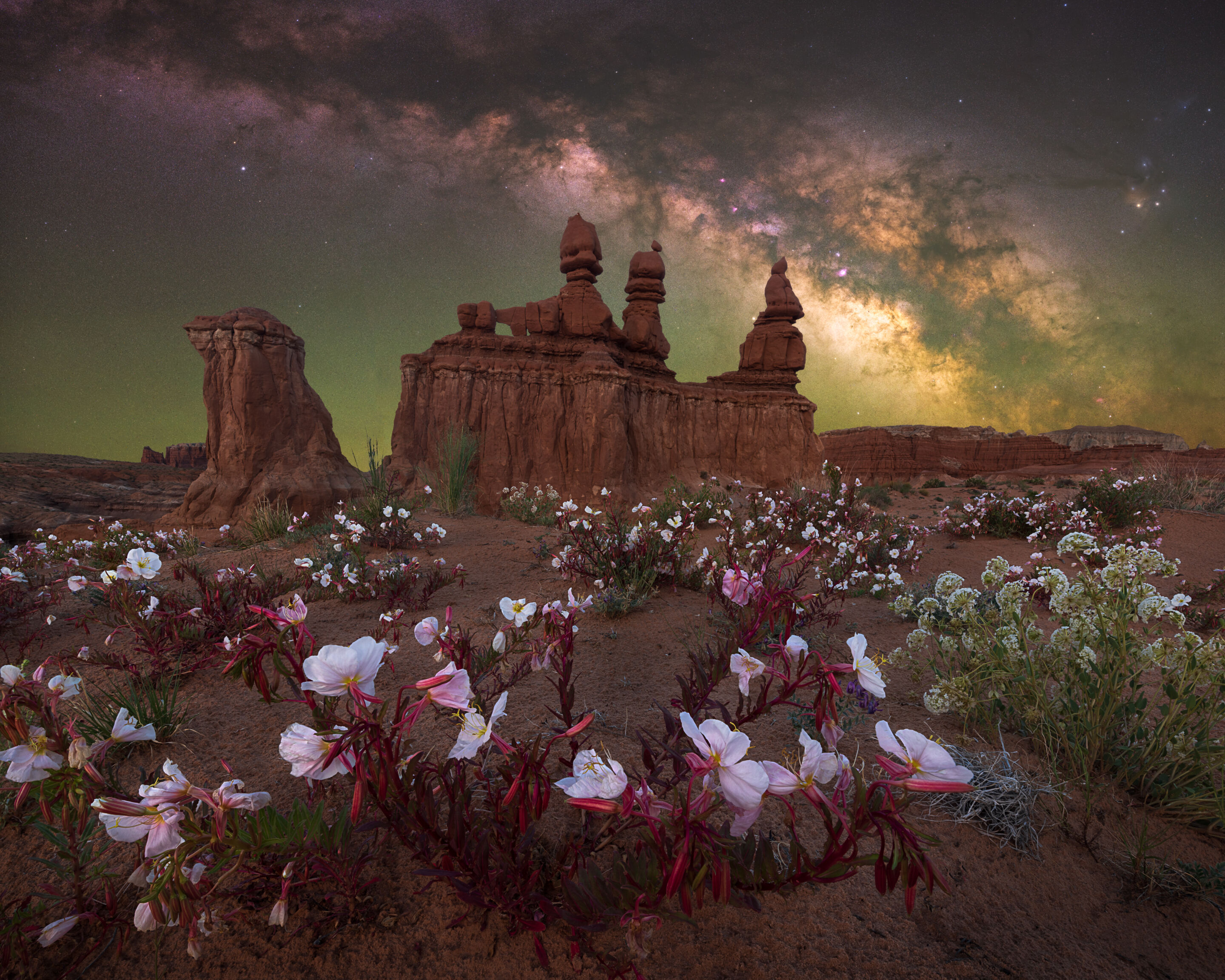
Desert Bloom by Marcin Zajac, 2023 First Place Winner in the Utah Dark Skies Category.
image

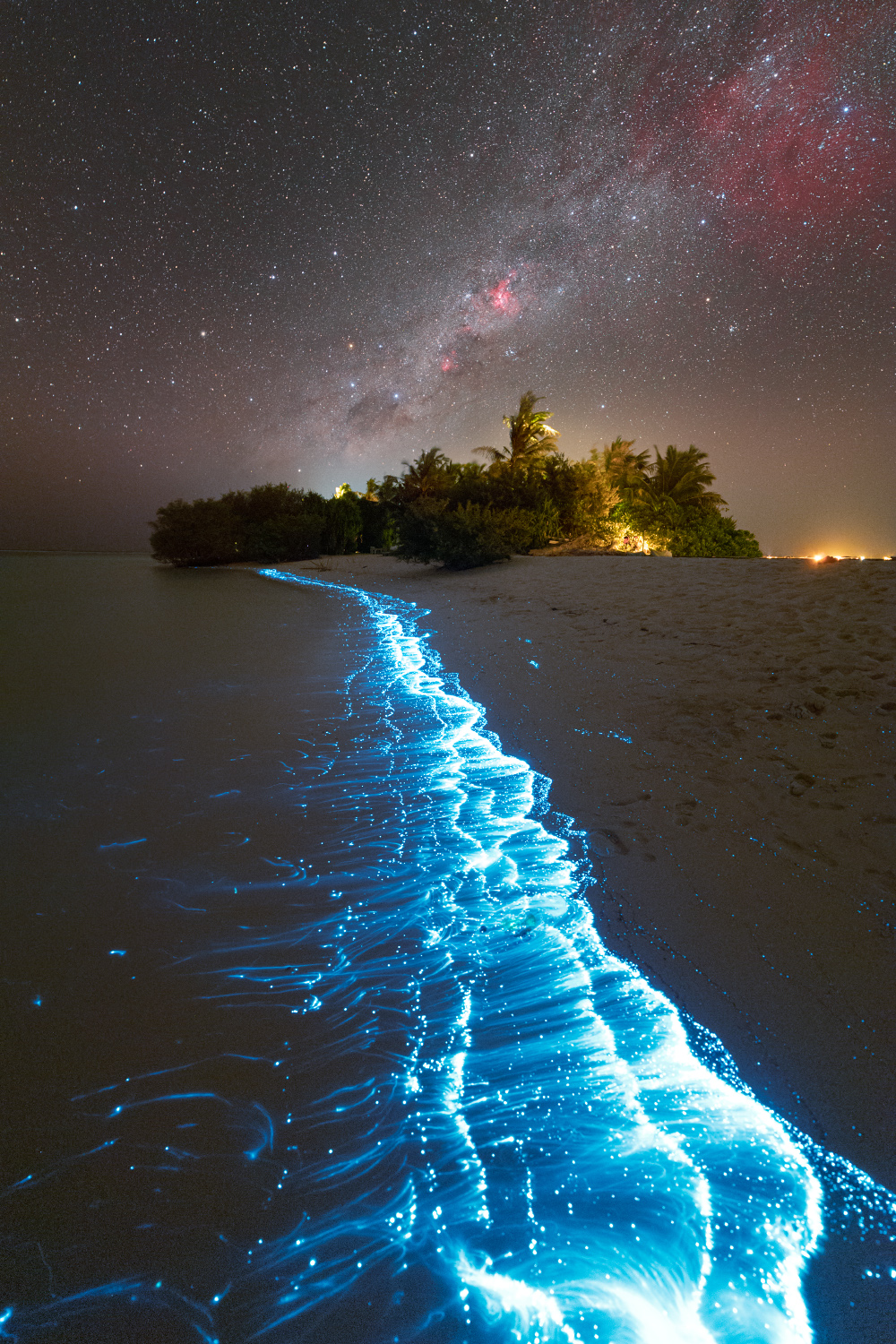
Milky Way above the Turquoise Wonderland by Petr Horálek, 2023 First Place Winner in the Creatures of the Night Category.
image

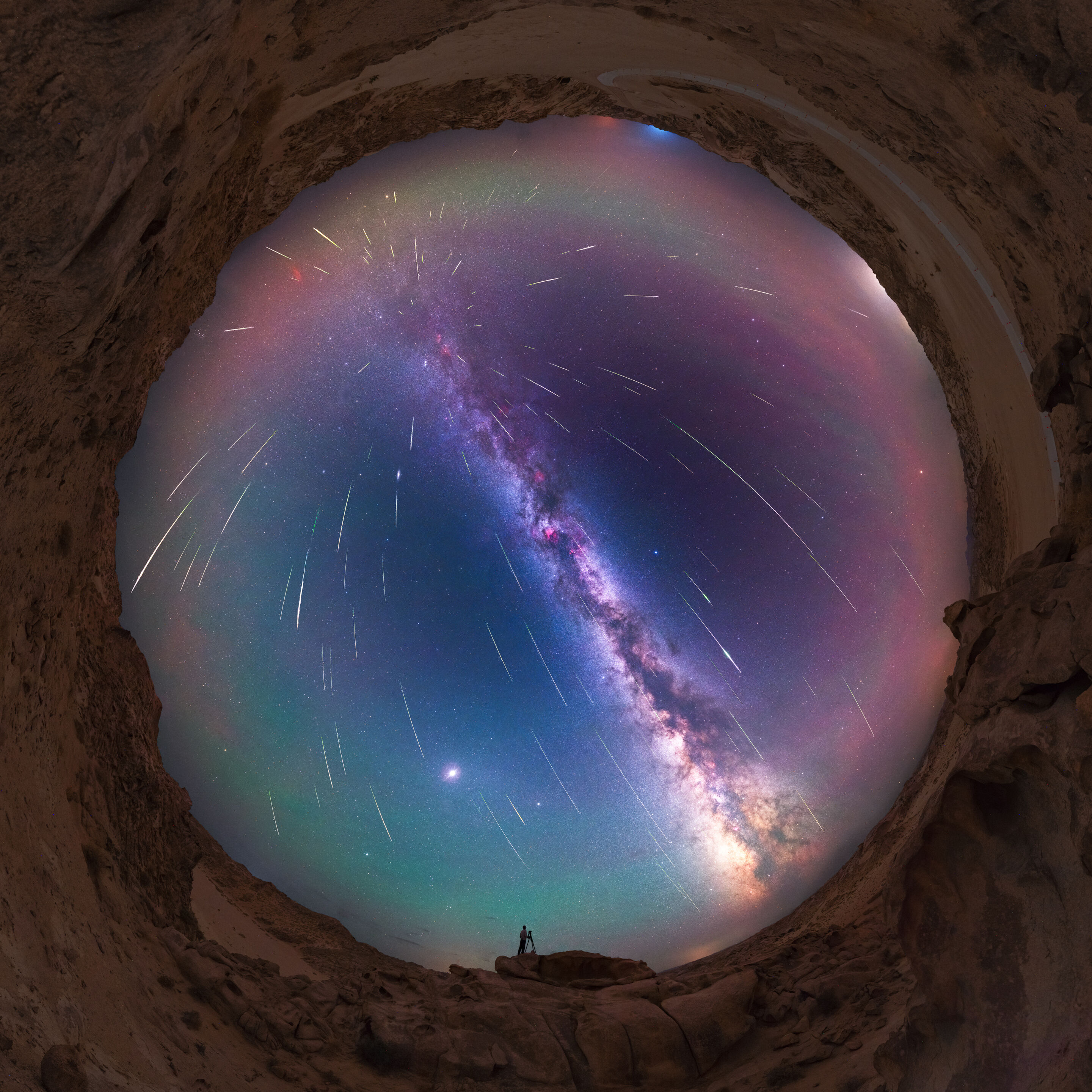
The sky is like a dome, covering field by Wang Tianwei, 2023 First Place Winner in the Connecting to the Dark Category.

The Capture the Dark Photography Contest celebrates photography’s important role in the dark sky movement.

TUCSON, ARIZONA, UNITED STATES, August 22, 2023/EINPresswire.com/ — DarkSky International recently hosted its Fourth Annual Capture the Dark Photography Contest, presented by Visit Utah, to celebrate photography’s important role in the dark sky movement. The contest received 494 entries from participants worldwide to the ten categories:

● Connecting to the Dark – Experiencing a natural night provides perspective, inspiration, and leads us to reflect on our humanity and place in the universe.

● International Dark Sky Place – Now over 200 protected lands and municipalities worldwide have been certified by DarkSky as an International Dark Sky Place, creating havens for astrophotographers.

● The Impact of Light Pollution – Light pollution can significantly impact the environment, human health, and our access to the night sky. This category also includes images of terrible lighting, glare bombs, etc.

● The Bright Side of Lighting – Light pollution can give artificial lighting a bad reputation, but lighting that follows DarkSky’s Principles for Responsible Outdoor Light can be beautiful, healthy, and functional.

● Creatures of the Night – Light pollution doesn’t only erase our view of the stars; scientific evidence suggests that artificial light at night has adverse and deadly effects on wildlife, including amphibians, birds, insects, and mammals.

● Deep Sky – For thousands of years, humans have looked to the night sky and wondered what is out there. Today, we can take photos of deep space objects from our own backyards.

● The Mobile Photographer – No big camera? No problem! A photo from any of the above categories that was taken with a cell phone, tablet, or GoPro. No DSLR, mirrorless camera, or drone shots.

● Youth – A shot for any of the above categories taken by someone 17 years old or younger.

● Utah Dark Skies – A photo taken in one of the most popular destinations to capture dark skies — Utah, U.S.

● People’s Choice – Voted on by the public.

“This year we saw some of the most beautiful photos from around the world that we have ever seen,” said DarkSky International Program Associate Michael Rymer. “These brilliant views of the night sky show how our place in nature does not stop at the horizon, and that the sky above is as much a delicate and beautiful resource that we must protect and reclaim.”

“Congratulations to this year’s Capture the Dark Photography Contest winners and the awe-inspiring photos,” said Vicki Varela, managing director of the Utah Office of Tourism. “Astrotourism and dark sky messaging complement our Red Emerald Strategic Plan, which aims to elevate life in Utah through responsible tourism stewardship. Preserving dark skies helps communities establish long-lasting tourism economies and keeps our places Forever Mighty®.”
– Vicki Varela, managing director of the Utah Office of Tourism

A global panel of esteemed judges composed of Imma Barrera, Ian Lauer, Jeff Dai, Parisa Bajelan, Ben Coley, Dr. Lin Qing, reviewed the photos using criteria that included technical skill, composition, connection to the category theme, and ‘wow’ factor and we have the results!

Winners of each category will receive a prize package that includes a feature in DarkSky’s Nightscape publication, DarkSky’s blog and social media, a DarkSky membership, DarkSky and Visit Utah swag, and a Peak Design Field Pouch. Additionally, one photograph will be presented with a “People’s Choice Award” based on votes by the public. This winner will receive a prize package that includes a $250.00 gift card to B&H, a feature in DarkSky’s Nightscape publication, the organization’s blog and social media, a DarkSky membership, and DarkSky and Visit Utah swag. Review the official contest rules and eligible photographs here.

To see the winning photos, visit the official website for the photography contest at capturethedark.darksky.org and check out the official announcement on the DarkSky blog.

About DarkSky International

DarkSky International, headquartered in Tucson, AZ, USA, is a recognized global authority on light pollution, empowering a global movement to protect the night sky. DarkSky restores the nighttime environment and protects communities from the harmful effects of light pollution through outreach, advocacy, and conservation. Since 1988, our global community of dark sky advocates have protected more than 200 International DarkSky Places, enacted dozens of responsible lighting policies, and raised awareness of light pollution on every continent.

Susan Serven
DarkSky International
susan.serven@darksky.org
Visit us on social media:
Facebook
Twitter
LinkedIn
Instagram
YouTube

image

Chasing M2S: a new drone for underwater photography by Jose Antunes

Chasing M2S: a new drone for underwater photography by Jose Antunes
Support ProVideo Coalition
Shop with
Filmtools Logo

What Do You Think? Let Us Know.

Why Embracing Abstract Photography Will Improve All Your Images and

Why Embracing Abstract Photography Will Improve All Your Images and

Abstract photography, do you hate it or love it? Either way, there’s a lot we can learn from the techniques and utilize them in our other photographic work.

Abstract is central to modern art. Therefore, abstract photography fits very well into that bracket, because it is one of the most modern of all arts. Digital photography, especially so. There is much we can discover from it that will help us develop our broader photographic skills. Plus, it’s a fun genre to dabble in anyway.

What Is Abstract Photography?

The word abstract has two meanings. Firstly, it can be synonymous with extract, and indeed, we can separate parts of an entire scene to create abstract images. Then, the word can be used like we do when we talk about an abstract idea; it’s something conceptual. With abstract art, and therefore abstract photography, both meanings can apply. Either way, it is a type of photography that is not attempting to show an accurate depiction of a visual reality but reveals the world in a way that most people don’t see it. That is what all good photography is about, but perhaps with abstract photography, we are taking that to extremes.

The opposite of abstract art is figurative art. That depicts real-life imagery clearly, without distortion. It’s slightly confusing because figurative otherwise means metaphorical, and the ideas created by abstraction are often metaphors for reality.

With abstract photography, the subjects are often not even recognizable, although sometimes, the subjects can jump out at you after close examination. This sudden realization of the image’s subject is explained in modern Gestalt theory. It suggests that a viewer will look at the whole image, perhaps recognizing its individual elements, and then an understanding of the whole scene will leap forward in their mind.

Often, in all forms of abstract art, including photography, the subject has been simplified or schematized. Abstract art uses the organization of patterns, textures, colors, forms, geometric shapes, and gestural marks to achieve its effect. This is known as ‘pure’ abstraction. That fits well with photography because organization – composition – is one of the essential building blocks of creating a photo.

Abstract Photographer and the Naked Emperor

One criticism of abstract photography is the Emperor’s New Clothes argument. Some fear expressing that they don’t see the purpose or meaning because others might think they are not all that bright, yet, for them, there is no meaning there at all, and it’s all nonsense. If you don’t get abstract photography, I’ll leave it up to you to decide whether it’s beyond your capacity to understand it or whether it is all a load of hogwash. Don’t worry, though. If you don’t get it, you are not alone.

Although many people struggle to see beyond abstraction being just random shapes on a piece of paper, for those that do appreciate it, this area of art is so very much more. It can be representative of reality but can also be understood as having moral attributes and representing virtues such as order, purity, simplicity, and spirituality.

That spiritual aspect comes from it not necessarily representing the material world and therefore must have some meaning beyond that. This idea stems from the ancient Greek philosopher Plato. He suggested that at its highest levels, beauty lies not in the forms of the real world but in geometry. Consequently, many abstract artists believe that artistic effect should be achieved by using pure patterns of form, shape, line, tone, and color.

The Two Types of Abstract Photography We Usually Consider

It is not always the case that abstract photos have meaning. Abstraction is usually subdivided between two art movements, one of which deliberately shuns meaning. That is concrete art, which is entirely free of any observable reality and that has no symbolic meaning. The other is non-objective art, which usually aims to convey a sense of simplicity and purity using geometry. Other forms of abstract art include Abstraction-Création, Cubism, Constructionism, Modernism, and Suprematism. These are less commonly applied to photography, although it’s not impossible to do so.

Is Abstract Art Beautiful?

There are those who believe that art should be purely about creating beautiful effects. This is indeed the most undemanding type of art to like; beauty is easily accessible. I know that if I post an image of a beautiful sunrise on social media, it will get far more likes than an abstract image or one of something sublime.

Furthermore, it is a commonly held belief that photography must be rooted in reality. In some circumstances, that is true. There are photographs that should depict reality as closely as possible, such as those used to illustrate news or if they were taken for scientific or legal purposes. Nevertheless, it’s not a prescriptive rule that every photograph should be made that way.

In fact, it’s possible to accept that a photograph is always a long way from the reality it represents. Firstly, it is two-dimensional, and the image is trapped in time, unlike the four-dimensional world we live in. Furthermore, the length of the exposure rarely stops or reveals movement in the same way that we perceive it. Then, there is the illusion of changing perspective resulting from varying a lens’ focal length.

Similarly, a photo’s depth of field is unlike that of our eyes. On top of that are all the other factors, such as the limited dynamic range and color space of the image, plus that the photo is only visual. It lacks all the other senses that we experience when we observe the world around us.

Of course, those restrictions also apply to the way we see the world and how our brains interpret our limited sensory inputs. There’s a lot more to reality than what our limited senses perceive. For example, dogs, bats, sea urchins, sharks, and flies sense their world in ways that we cannot imagine. The same would be true the other way around.

Once we accept that a photograph, in its limitations, is a poor representation of actuality, we can let go of the naive idea that photos must always be precise interpretations of reality, because they can’t anyway. It’s debatable that the camera never lies, but it certainly never tells the whole truth.

Adding Meaning to Abstract Photographs

Non-objective abstract photographers face a challenge that all experienced photographers tackle. That is to put their desired meaning into their abstract images. If you are setting out to take abstract photos that are more than just a random shape, then that takes considerable thought and a degree of intelligence to do so. However, if you can relate your intention with an abstract photo, it follows that doing the same in figurative photography should be easy in comparison. Consequently, that makes abstract photography a worthwhile pursuit.

Of course, that meaning can be personal, and it doesn’t necessarily follow that your viewers will interpret it in the same way as you.

How to Take Abstract Photos

To create abstracts, we are using the same techniques as we would when shooting any other photograph. It is usually achieved by changing the variables we have when we take a photograph. These variables are light, exposure, focus, the subject, and composition.

Firstly, light can change in intensity, color, and direction. These create varying levels of contrast. That doesn’t just mean the difference between luminosity, but varying contrasts between different hues and saturations.

Secondly, adjusting the exposure settings dictates how the light hits the sensor and that, in turn, affects the image, e.g. shallow depth of field, showing movement, etc.

Choosing what is and isn’t sharp can be a major element of abstract photography. We can decrease sharpness with focus and depth of field, obscuring the lens, and moving the camera and/or the subject.

Finally, what you shoot and how you shoot is essential for creating abstract photos, too. We think about the subject, then our proximity to it, the camera angle, and the overall layout of the frame. As part of that, we seek out patterns, textures, colors, tones, and shapes.

Adding Abstract Elements to Figurative Photographs.

When you have taken on board the idea of abstract photography, you probably realize that success is usually down to simplicity. Try limiting the different elements in the frame. This doesn’t just mean less subject matter, but fewer changes in colors and tones. Learning to use simplicity this way helps when we want to carry it over to our everyday photography.

When we have mastered abstract photography, we can then employ these techniques in other photos we shoot. Moreover, discovering the methods of creating abstract photos enables us to better all our photography by including abstract elements in them. For example, in out-of-focus areas, patterns, and textures are abstract elements.

Is abstract photography something that appeals to you? Is it something you would like to try, but are not sure where to start? It would be great to hear your thoughts in the comments.

A Spanish House That Blurs the Lines Between Home and Art Gallery

A Spanish House That Blurs the Lines Between Home and Art Gallery

Located in the heart of Badalona, a city near Barcelona, stands a modern home that seamlessly blends the homeowner’s artwork with architectural ingenuity. Designed by interior designer Clara Lleal INTERIORISTA, the Art Gallery House is not just a living space; it’s an art gallery that encapsulates the creative skills of its owner, the artist and sculptor Juanma Noguera. At the heart of this project lay a challenge – to organically integrate the owner’s sculptures throughout the house. The result? A home that doubles as a gallery, where every turn reveals a new piece of art waiting to be admired. From strategically placed sculptures to paintings that adorn the walls, every inch of this house exudes artistic energy.

The designer retained the building’s original materials to carry on with an authentic industrial aesthetic. Unearthed solid brick walls, vaulted iron-beamed ceilings, and the revival of the original hydraulic pavement form the foundation of the home’s overall character. The materials chosen for new design elements follow this industrial theme, including concrete, black iron sheet, and a herringbone floor made from reclaimed wood. Amidst the grays, teak wood furniture emerges as a warm and welcoming contrast.

angled interior shot of modern living room with sofa and two chairs and floating shelf holding objects

Natural light is key to this project. Skylights punctuate the ceilings, casting a natural glow throughout the interiors. An inner courtyard at the rear of the house serves as a secret garden, inviting light to cascade through to the interior.

angled interior shot of modern living room with sofa and two chairs and floating shelf holding objects

interior shot of modern industrial space with open kitchen and living area

An open living room, kitchen, and dining room welcome visitors with a high gable ceiling. Here, the designer faced the challenge of creating an inviting atmosphere in a large space. Iron sheeting spans a good portion of one wall housing storage before transforming into the modern kitchen.

interior shot of modern dining room with long wood table that stretches to become part of unique staircase

A custom-designed central structure seamlessly transforms from a dining table to a staircase leading to the rooftop. This clever design is not just functional but a focal point with it’s built-in planter and herringbone parquet top.

modern interior with unique floating staircase

modern interior with unique floating staircase with built-in planter

angled interior view of modern apartment with art studio

Further exploration reveals the owner’s workshop and studio, which was left untouched.

angled view of messy art studio

view into art studio

view looking out to interior patio of modern house with plants

view looking out to interior patio of modern house with plants

view of modern bedroom with tub in room with sliding glass panels that open room to hallway

Behind a large sliding glass door, there’s a bedroom suite with the bed, sink, and bathtub all situated in one room, while the shower and toilet are private behind diffused glass.

angled interior view of modern bedroom with open bathroom and tub in room

interior view of modern bedroom with open bathroom and tub in room

interior view of modern living space with small sectional sofa underneath loft bed with stairs wrapping around

A pair of children’s rooms each include a loft bedroom and a sitting area underneath with a shared bathroom in the middle.

interior view of modern living space with small sectional sofa underneath loft bed with stairs wrapping around

interior view of modern living space with small sectional sofa underneath loft bed with stairs wrapping around

narrow modern bathroom with sink floating in front of long vertical window

The powder room features a floating fire enameled stainless steel sink with the faucet hanging from the ceiling above.

view of rooftop patio with spa and seating

To top the design off, a rooftop terrace received a complete renovation with a surprising stainless steel pool surrounded by synthetic outdoor decking.

Photography by Felipe Mena.

Caroline Williamson is Editor-in-Chief of Design Milk. She has a BFA in photography from SCAD and can usually be found searching for vintage wares, doing New York Times crossword puzzles in pen, or reworking playlists on Spotify.






