Florian Krewer Compels Us to Love the Mess of Being Animals


Calling all lighting designers around the world! The 2023 L A M P International Lighting Design Competition is now accepting entries for its 9th edition, with a deadline of September 30, 2023. Design Milk is happy to once again be the media partner of the competition that devotes itself to promoting and connecting talented designers with new markets in lighting design. With each year’s competition we’re blown away by the submissions more and more!
There will once more be three main categories: Manufactured, Professional, and Student. Five sub-categories will include table, floor, chandelier/sconce, portable, and outdoor. In a twist, an additional ACOUSTIC category has been added for 2023 and is open to submissions from both students and established designers. An esteemed panel of judges will make their decisions based on a set of evaluations ranging from aesthetics to marketability and innovation.
If you need some inspiration, check out the winners from the L A M P 2022-2023 competition here. Follow @lampthecompetition on Instagram and register your designs today!

Professional Overall Winner + Professional Pendant/Sconce Winner: Maya by Luiza Guidi @luizaguidi (Balneário Camboriú, Brazil)

Student Overall Winner + Student Table Winner (tied): Skylar by Jiahao Huang @jiahao_hh (Lausanne, Switzerland)

Manufactured Overall Winner (tied) + Pendant/Sconce Winner (tied): Viro by Robert John Morrison, Emma Waters, Viro Lighting @virolighting (Salt Lake City, UT)

Manufactured Pendant/Sconce Winner (tied): Booi by Graypants @graypantsstudio (Seattle, WA)

Manufactured Floor Winner: Iron by Hassene Jeljeli / JK lighting / JK design SARL @jklighting (Tunis Tunisia)

Manufactured Table Winner (tied): Maja by Magdalena Boggiano, OBLUMO @oblumo.coleccion (Buenos Aires, Argentina)

Professional Floor Winner: T-Lamp by Heajin Ko @heakostudio (New York, USA)

Professional Table Winner (tied): Bamboo by Rostyslav Sorokovyi, mudu design studio @mudu_design (Lviv, Ukraine)

Professional Table Winner (tied): Mikono by Moritz Putzier, Studio Moritz Putzier @studiomoritzputzier (Cologne, Germany)

Student Pendant/Sconce Winner: Swi-Wal by Darsh Patel, Dhruv Patel @darshpatel_id @dhruvpatel_id (Gujarat, India)

Student Floor Winner: Horizon by Didi NG Wing Yin @dd_ng (Hong Kong)

Student Table Winner (tied): Zabriske by Rachel McGovern @rachelmcgovern_dsign (Los Angeles, USA)

People’s Choice Manufactured Winner: LUPO Table Lamp by Recozy, Moritz Putzier @recozy.shop (Germany)

People’s Choice Professional Winner: Arpeggio, light and music Table Lamp by Yume Studio (Valencia, Spain + French Guiana, France)

People’s Choice Student Winner: Sol by Fabian Malmhagen @fabian.h.c.malmhagen (Ljunghusen, Sweden)


Wildlife photography is a thrilling and rewarding genre that allows us to immerse ourselves in the untamed beauty of nature.
The challenge lies in capturing the essence of the wild and bringing it to life through our lenses. In this article, we will delve into the art of wildlife photography. These five tips will help you embark on your journey of capturing the roar of the wild.
In wildlife photography, research and preparation are the foundations of a successful shoot. Before embarking on your photographic adventure, take the time to research the wildlife species you intend to capture thoroughly. Dive into books, documentaries, and online resources to understand their behaviors, habitats and patterns. Knowledge about your subjects will empower you to predict their movements and increase the likelihood of capturing unique and captivating moments.
Furthermore, familiarize yourself with the specific locations where your chosen wildlife species can be found. Seek information from local experts, park rangers, or experienced photographers who have worked in the area. Discover the best times of day or seasons when the animals are most active. By immersing yourself in this knowledge, you can plan your photography excursions with precision. This will ensure that you are in the right place at the right time to witness extraordinary scenes and secure remarkable photographs.
Remember, wildlife photography is about capturing images and understanding and appreciating the subjects you photograph. By conducting thorough research and preparation, you lay a solid foundation for your artistic journey into the untamed world of wildlife.

Patience and observation are the cornerstones of successful wildlife photography. It is crucial to understand that wildlife follows its rhythm and timeline, often unpredictable and beyond our control. Whether you are waiting for a particular behavior or searching for a rare sighting, patience becomes your closest companion. Be prepared to spend long hours in the field, waiting for the perfect moment to unfold before your lens.
During this waiting game, take the time to observe and understand the behaviors of the animals around you. Wildlife has its own language of communication through body language, sounds, and interactions. By keenly observing and interpreting these cues, you can anticipate and capture extraordinary moments that epitomize the essence of the wild.
Remember to stay still and blend into your surroundings as you wait and observe. Wildlife is sensitive to sudden movements and human presence. Create a sense of camouflage by wearing appropriate clothing and minimizing any disruptive noises. Immersing yourself in the environment and adopting a patient and observant mindset, enhances your chances of witnessing and capturing magical moments. These moments will translate into stunning wildlife photographs.

When it comes to wildlife photography, choosing the right lens can significantly affect your image quality. The ideal lens choice depends on various factors such as the type of wildlife you photograph, the distance between you and your subject, and the desired composition.
Telephoto Lens (70-200mm or 100-400mm): A telephoto lens is a must-have for wildlife photography. It allows you to capture subjects from a distance without disturbing them. This makes it perfect for photographing shy or easily startled animals. The 70-200mm lens is versatile, offering a wide range of focal lengths. And, the 100-400mm lens provides even more reach, making it suitable for wildlife that tends to stay far away.
Super-Telephoto Lens (300mm or longer): If you want to get up close and personal with distant wildlife or capture intricate details, consider investing in a super-telephoto lens. These lenses from 300mm to 600mm offer incredible reach and magnification. This reach and magnification allow you to fill the frame with your subjects. They can be quite heavy and expensive, so be sure to consider your specific needs and budget before making a purchase.
Wide-Angle Lens (24-70mm or wider): While telephoto lenses are often the go-to choice for wildlife photography, don’t forget about the potential of wide-angle lenses. They can be useful for capturing animals in their habitat, and showcasing their surroundings. Wide-angle lenses can also offer a unique perspective when you are closer to your subject. A wide-angle lens can help you tell a broader story and add context to your wildlife images.
Remember, lens choice is subjective and depends on your shooting style and the wildlife you encounter. It’s recommended to have a versatile lens combination that includes a telephoto lens for most situations and a wide-angle lens for creative opportunities.
By mastering your equipment and selecting the appropriate lens, you will have the flexibility to adapt to different wildlife scenarios and capture captivating images that showcase the beauty and intricacies of the animal kingdom.

Composition is the visual language that allows you to create compelling wildlife photographs that go beyond mere documentation of the subject. When it comes to wildlife photography, pay attention to your main subject and the surrounding elements that contribute to the overall composition.
Consider your shot’s background, foreground, and framing to create a harmonious and balanced image. A cluttered or distracting background can take away from the impact of your subject, so look for clean and uncluttered backgrounds that help your subject stand out.
In addition to the technical aspects of composition, storytelling is a powerful tool in wildlife photography. Every animal has its unique behaviors, interactions, and characteristics that can tell a story. Look for those special moments that reveal the essence and personality of the animal you photograph. It could be a nurturing interaction between parent and offspring, a captivating display of courtship, or a fleeting expression that conveys a range of emotions.
These moments allow your audience to connect with the subject on a deeper level and provide a glimpse into the fascinating world of wildlife.
Remember, composition and storytelling go hand in hand. When you compose your shot thoughtfully, you create a visual narrative that engages the viewer and evokes emotions. By capturing the animal’s behaviors, interactions, and unique moments, you transport your audience to the wild and allow them to experience the story behind the image. So, keep an eye out for those defining moments that convey the true nature of the animal. Let your composition and storytelling skills bring those moments to life in your wildlife photographs.

As a wildlife photographer, it’s your responsibility to prioritize the well-being and conservation of the subjects you photograph. Ethical wildlife photography ensures that we do not harm or disturb the animals or their environment for the sake of a photograph. Respect their space and maintain a safe distance. Use long lenses to bring them closer while preserving their natural behavior.
Follow local regulations and guidelines for wildlife photography. They are in place to protect both the wildlife and their habitats. Avoid baiting or feeding wildlife, as it can disrupt their natural foraging and hunting behaviors. Be conscious of your impact on the environment and leave no trace behind. Refrain from altering or manipulating the scene to create a more dramatic image.
In addition, focus on creating images that promote awareness, empathy, and appreciation for the natural world. Highlight the beauty, fragility, and importance of wildlife and their habitats through your photographs. Share your images to educate and inspire others to protect and conserve our precious biodiversity.

Wildlife photography captures stunning images and fosters a deep connection with the natural world. It requires dedication, persistence, and a genuine love for wildlife. Remember, it’s not just about the result; it’s about the journey and the experiences you encounter along the way. Embrace the challenges, learn from each encounter, and let the wild guide you toward breathtaking moments that will forever be etched in your photographs.
Now that you have learned the fundamental tips for wildlife photography, it’s time to put your knowledge into practice. Choose a local wildlife sanctuary, national park, or any nearby natural setting where you can encounter wildlife. Spend a day observing and photographing the animals, applying the techniques and principles you have learned. Return with a collection of images that truly capture the essence of the wild. Reflect on your experience and select your favorite photograph, sharing it with others to inspire a deeper appreciation for the beauty of the natural world.
Remember, the essence of wildlife photography lies in the result and the profound connection you establish with the creatures that inhabit our planet. Happy shooting, and may the wild always ignite your passion for capturing its untamed glory.
Share your wildlife images with us in the Photofocus Community. We would love to see them and hear how you created them.

The Amon Carter Museum of American Art (the Carter) in Fort Worth has announced the retirement of longtime photography curator John Rohrbach.
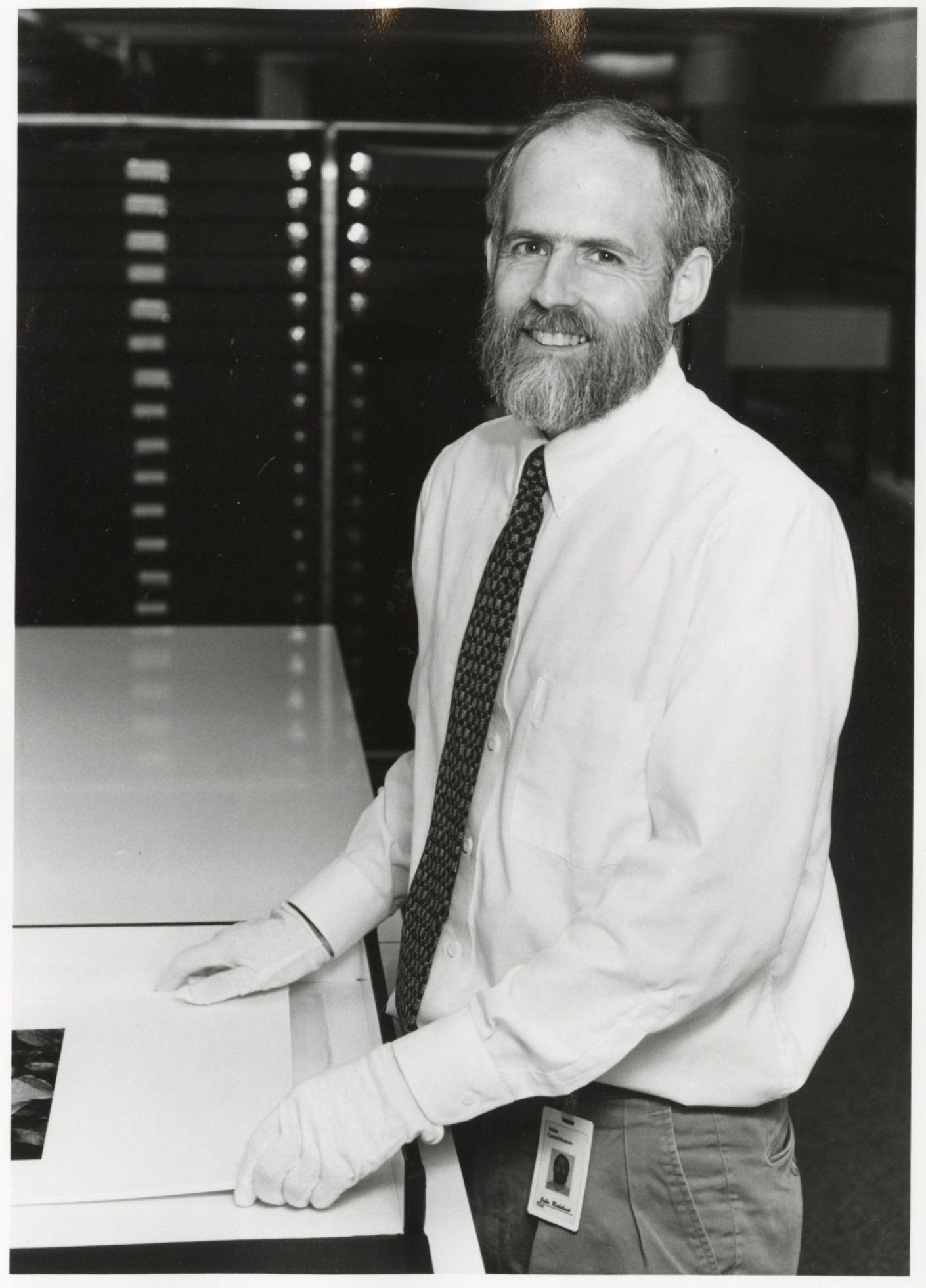
John Rohrbach, 1996. Image courtesy of the Amon Carter Museum of American Art.
Mr. Rohrbach joined the Carter in August 1992 as Assistant Curator of Photographs, a temporary position which was funded by the Mellon Foundation. In this role, he was tasked with organizing and rehousing the museum’s Eliot Porter Collection, a bequest that included more than 8,000 prints, 100,000 transparencies, and other ephemera. During his time at the museum, Mr. Rohrbach was promoted to the positions of Associate Curator of Photographs (1995), Curator of Photographs (1999), and ultimately Senior Curator of Photographs (2003).
Prior to his work at the Carter, Mr. Rohrback served as the Director of the Paul Strand Archive at Aperture Foundation in New York, NY, after having previously held positions at the George Eastman House in Rochester, NY, and the Photographic Archive and Exhibitions Program at Apeiron Workshops, Inc., in Millerton, NY. He holds a BA in Government from Wesleyan University (1979) and a PhD in American Civilization from the University of Delaware (1993).
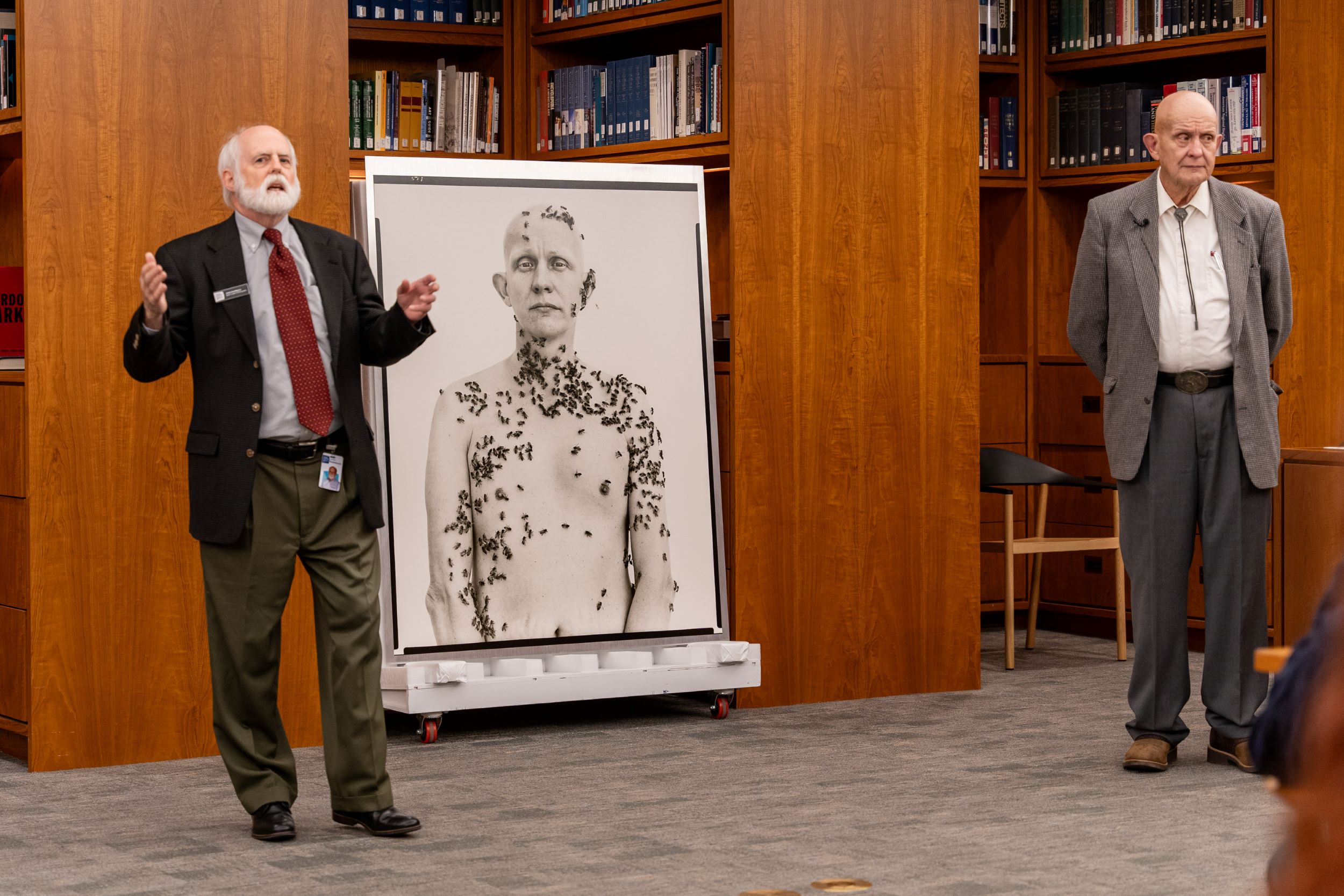
John Rohrbach discusses a work by Richard Avedon for the Carter’s Photo Forum, 2021. Image courtesy of the Amon Carter Museum of American Art.
During his 31-year career at the Carter, Mr. Rohrbach spearheaded significant acquisitions that built on the museum’s strong 19th century holdings and photographer archives. Some key pieces include rare full-plate daguerreotypes by Albert Sands Southworth & Josiah Hawes; complete sets of Alfred Stieglitz’s art publications Camera Notes, Camera Work, and 291; and a complete set of Edward S. Curtis’ 20-volume work The North American Indian, which aimed to document traditional Native American cultures.
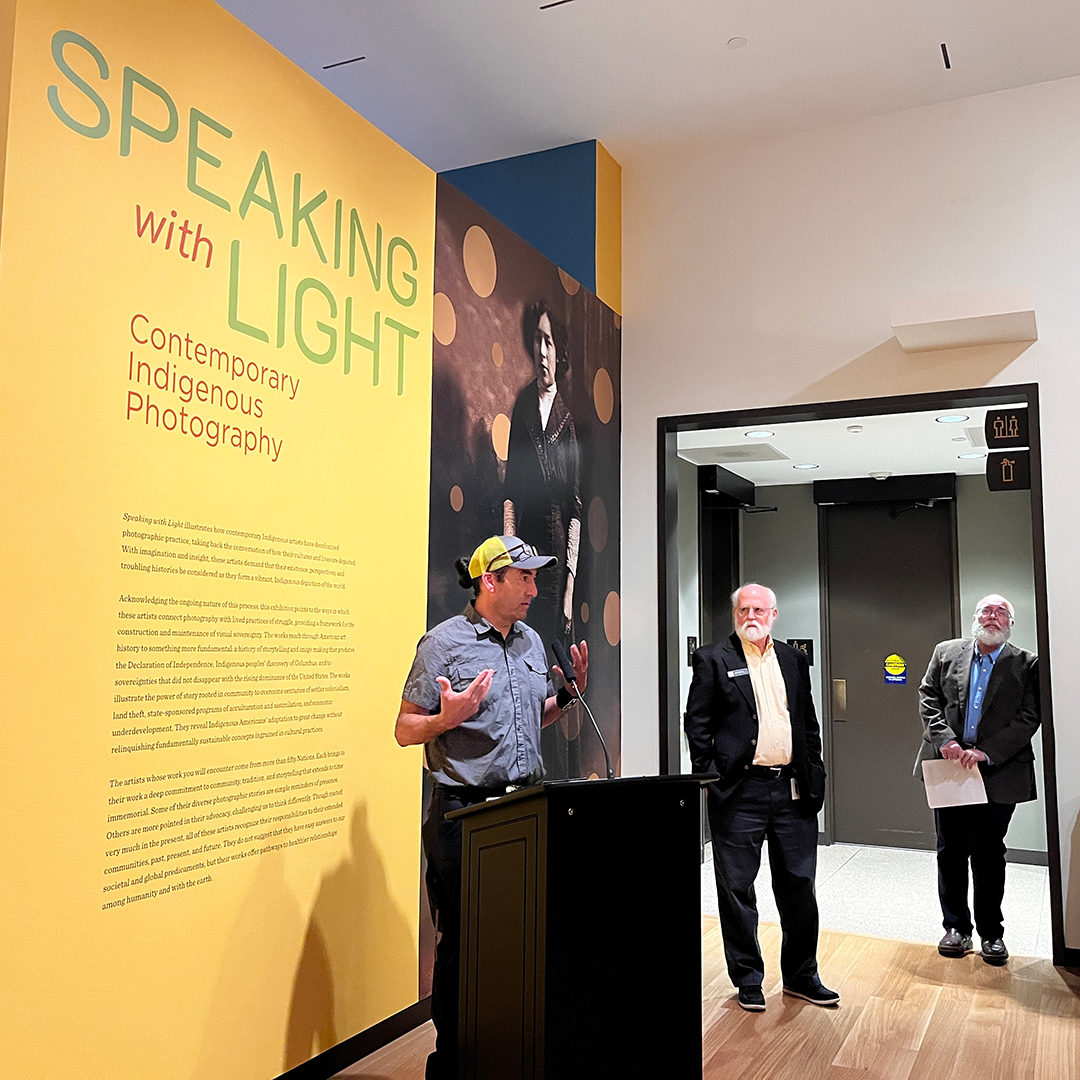
Will Wilson and John Rohrbach speak at a press preview for “Speaking with Light: Contemporary Indigenous Photography” at the Amon Carter Museum of American Art.
Because the documentation done by early American photographers like Mr. Curtis’ has been revealed to be romanticized and often inaccurate portrayal of Indigenous peoples, Mr. Rohrbach has also worked to diversity the Carter’s collection and expand on the idea of what an “American” art museum’s holdings should encompass. Specifically, he spent a significant amount of time acquiring works by contemporary Indigenous photographers. These efforts culminated in the 2022 co-curated exhibition and publication Speaking with Light: Contemporary Indigenous Photography. This was just one of his more than 80 exhibitions for the Carter, which also included the first critical studies of the careers of Frank Gohlke, Robert Glenn Ketchum, and Eliot Porter; a commission of photographer Terry Evans to photograph Fort Worth’s Trinity River; and groundbreaking studies of cabinet cards and American color photography.
As a steward of and advocate for photography, Mr. Rohrbach’s contribution to the museum extended beyond acquisitions and exhibitions. He also led the Carter’s cold storage initiative, which led to the implementation of a state-of-the-art storage facility to better maintain the museum’s photography collection.
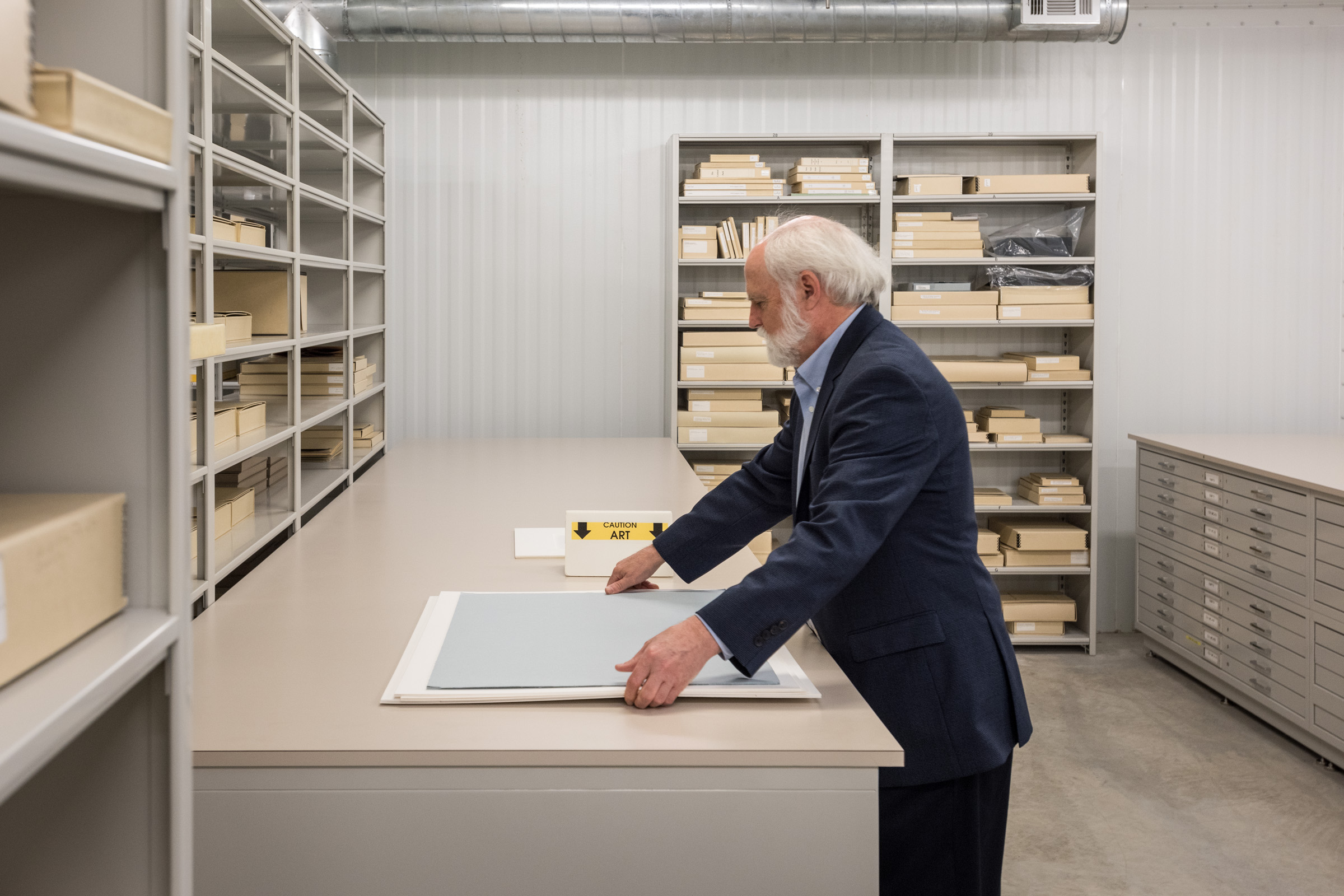
John Rohrbach handles artworks in storage at the Amon Carter Museum of American Art. Image courtesy of the Amon Carter Museum of American Art.
Andrew J. Walker, Executive Director of the Carter, told Glasstire, “The Carter will greatly miss John Rohrbach upon his retirement, both as a colleague and as a friend. His impact is felt in the additions to the collection under his tutelage and the numerous exhibitions he curated including popular shows such as the 2003 Eliot Porter: The Color of Wildness to last year’s Speaking with Light: Contemporary Indigenous Photography. John has introduced generations of visitors to the importance and magic of photography.”
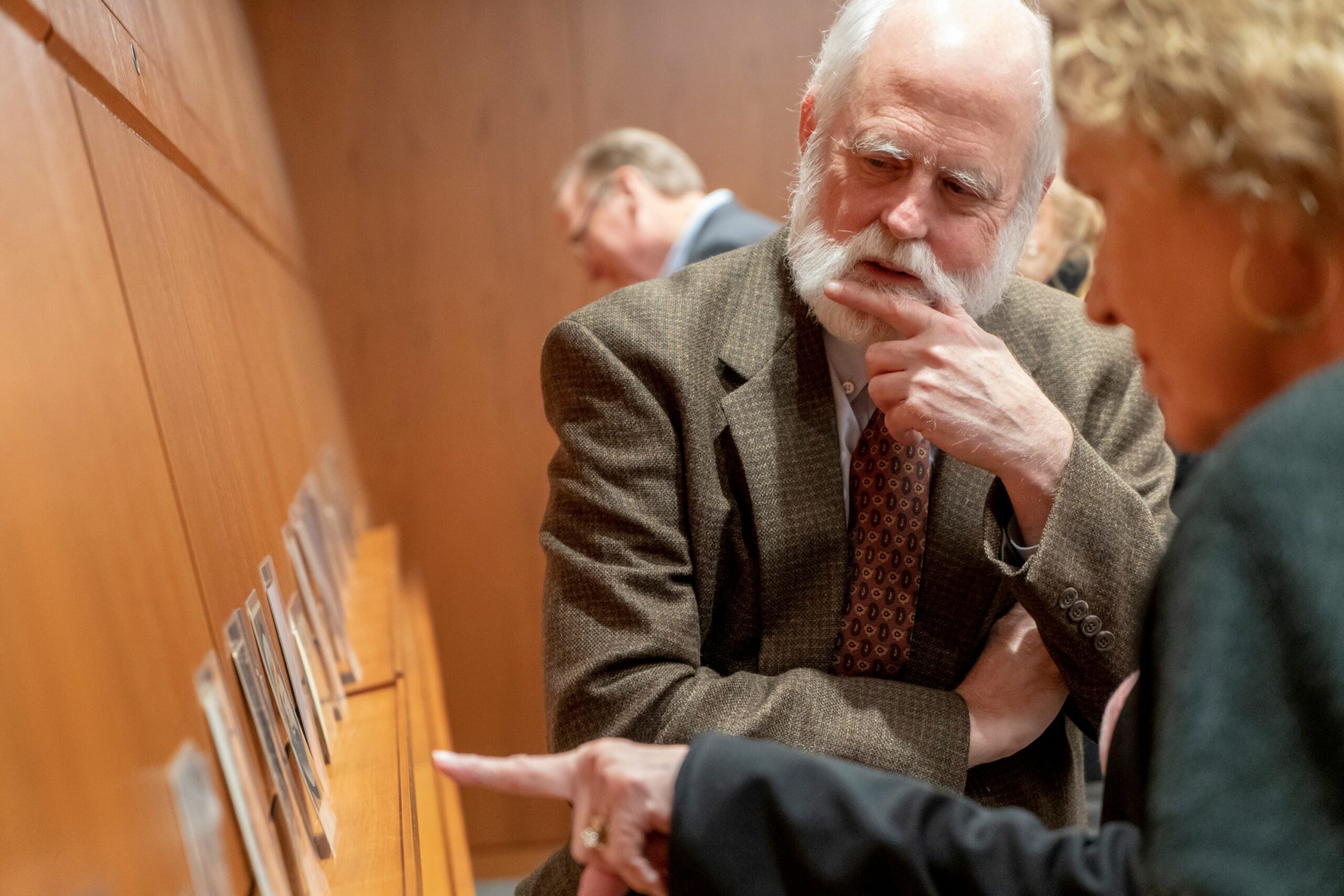
John Rohrbach discussing works at the Carter’s Photo Forum in 2019. Image courtesy of the Amon Carter Museum of American Art.
Mr. Rohrbach’s last day at the Carter will be Friday, September 1, 2023. Following his retirement, he plans to serve as a guest curator in a forthcoming exhibition at the museum that has not yet been announced. In the meantime, he plans to focus on repairing his yard after a long, hot, dry Texas summer; completing home repairs; organizing, digitizing, and sharing with his family his parents’ thousands of family photographs; returning to making art; and traveling.

World Photography Day commemorates the invention of the daguerreotype, a photographic process developed by Louis Daguerre in 1837 that marked a significant milestone in the history of photography. The day is dedicated to the art and science of photography.

World Photography Day is celebrated every year on August 19.
World Photography Day commemorates the announcement of the daguerreotype process to the public on August 19, 1839, by the French Academy of Sciences. The daguerreotype process was one of the earliest methods of capturing permanent images on a light-sensitive surface.
The day traces its origins to 1837 when the first ever photographic process, the ‘Daguerreotype’ was developed by the Frenchmen Louis Daguerre and Joseph Nicephore Niepce. On January 9, 1839, the French Academy of Sciences announced this process, and later in the same year, the French government purchased the patent for the invention and gave it as a gift, “free to the world.”
However, the first durable colour photograph was taken in the year 1861 and there is even speculation about the first digital photograph being invented in 1957, 20 years before the invention of the first digital camera.
World Photography Day highlights photography as a legitimate form of art, encouraging photographers to experiment with different techniques, compositions and styles. It encourages people to appreciate the power of photography in telling stories, capturing emotions and preserving memories.
It is a day to discuss the technical aspects of photography, advancements in equipment and the evolution of photographic techniques when photographers and enthusiasts often share their favourite photos, stories behind the images and insights into their creative process.
Photographers and photography enthusiasts around the world celebrate the day by taking photos, sharing their work on social media platforms and participating in photography-related events. Many photography exhibitions, workshops and contests are organised on World Photography Day to showcase the talents of photographers, reflect on the significance of their craft and the role that photography plays in documenting history, culture and personal experiences.
This day, people from all walks of life come together to appreciate the visual storytelling that photography offers and celebrate the photographers who capture moments that inspire, inform and provoke emotions while recognising the impact that their work has on the world.


When Kaylene Big Knife was 17 and working as an assistant for a print shop at Stone Child College, she never imagined that she’d one day produce an art piece for a video game giant.
But this summer, that’s exactly what happened.
In June, Big Knife got a call from Xbox, a video gaming brand owned by Microsoft, asking if she’d be interested in doing a project. Big Knife jumped at the opportunity, but so did lots of Indigenous artists, who entered into a pool hoping to be selected by Xbox. Big Knife and other Native graphic designers submitted portfolios and presentations.
Kaylene Big Knife, Chippewa Cree graphic designer, commissioned a piece with Xbox.
After several rounds, Big Knife, who is Chippewa Cree and grew up on the Rocky Boy Reservation, was selected to create a piece for the gaming giant as part of its campaign to increase representation of Indigenous people.
Once she was selected, Big Knife and the Xbox team entered several rounds of design decisions. First, Big Knife presented three mood boards, and the Xbox team picked one, which featured ribbon skirts and ribbon shirts. Next, she submitted artwork based on that concept and entered several rounds of revisions with Xbox.
“It was a crazy amount of deliverable assets,” Big Knife recalled. “I think I turned in more than 40 different designs. It’s definitely one of the most intense projects I’ve ever been a part of.”
A few months later, Big Knife had her design.
Xbox commissioned a piece from Kaylene Big Knife. Her design is featured on the company’s social media pages and is available for users as a wallpaper or profile picture.
Her piece — featuring deep purples, bright oranges and vibrant greens — includes flowers, geometric shapes and the “X” symbolizing Xbox as the glowing sun. She said she intentionally chose a balance of cool and warm colors and avoided typical design schemes, like portraying a yellow sun against blue sky. The piece, called “Dancing in the Arbors,” is featured on Xbox’s social media pages, and players can use it as a free wallpaper, profile picture or for their avatar in games.
Big Knife drew inspiration for the piece from an old black-and-white photograph of her great-grandfather. The floral designs in her graphic mirror the flowers on his regalia.
“Overall, the design scheme is reminiscent of summertime in Rocky Boy,” Big Knife said. “During powwow, I’d be at my Grandma Minnie’s house. She lives over the hills, and when the powwow goes late into the night, people are still out there, there are stars and lights on the arbor. It’s a very lively place.”
Kaylene Big Knife drew inspiration for her piece from this photo of her great-grandfather.
Big Knife studied at Stone Child College on the reservation and went on to earn a degree in graphic design from the Institute of Native American Art. She also has degrees from the University of Arizona and University of Montana. In her early college years, Big Knife said she played a lot of Xbox and made lifelong friendships through gaming.
“It’s a dream come true,” she said of the piece. “I never thought I’d be doing something like this for a video game giant like Xbox. It’s just funny to see life come full circle. It was just an incredible experience.”
View of the Bears Paw Mountains where a vast majority of the Rocky Boy Reservation is situated, home to about 3,770 people and composed of more than 170 square miles of hilly terrain.
Despite her success, Big Knife said her pursuit of graphic design wasn’t always easy. There were times she considered leaving the field altogether and times when she worried her art wouldn’t be taken seriously since it wasn’t tactile, like beading or weaving. But, as Big Knife put it, “Life always led me back to graphic design. It’s what I’m good at.”
Now, Big Knife said she appreciates the medium more than ever. She uses graphic design for more than just art — helping local organizations promote events, create business cards and logos, and she’s even created free materials to help preserve the Cree language.
“The digital realm is a very powerful place to be,” she said. “Indigenous professionals and organizations need art, whether it’s branding or selling merchandise. … We, as Indigenous people, need to have a presence in digital art and in digital spaces. This is how I contribute to my community.”
To learn more about Kaylene Big Knife’s work, visit kaybigknifedesign.com.
#lee-rev-content { margin:0 -5px; }
#lee-rev-content h3 {
font-family: inherit!important;
font-weight: 700!important;
border-left: 8px solid var(–lee-blox-link-color);
text-indent: 7px;
font-size: 24px!important;
line-height: 24px;
}
#lee-rev-content .rc-provider {
font-family: inherit!important;
}
#lee-rev-content h4 {
line-height: 24px!important;
font-family: “serif-ds”,Times,”Times New Roman”,serif!important;
margin-top: 10px!important;
}
@media (max-width: 991px) {
#lee-rev-content h3 {
font-size: 18px!important;
line-height: 18px;
}
}
#pu-email-form-breaking-email-article {
clear: both;
background-color: #fff;
color: #222;
background-position: bottom;
background-repeat: no-repeat;
padding: 15px 0 20px;
margin-bottom: 40px;
border-top: 4px solid rgba(0,0,0,.8);
border-bottom: 1px solid rgba(0,0,0,.2);
display: none;
}
#pu-email-form-breaking-email-article,
#pu-email-form-breaking-email-article p {
font-family: -apple-system, BlinkMacSystemFont, “Segoe UI”, Helvetica, Arial, sans-serif, “Apple Color Emoji”, “Segoe UI Emoji”, “Segoe UI Symbol”;
}
#pu-email-form-breaking-email-article h2 {
font-size: 24px;
margin: 15px 0 5px 0;
font-family: “serif-ds”, Times, “Times New Roman”, serif;
}
#pu-email-form-breaking-email-article .lead {
margin-bottom: 5px;
}
#pu-email-form-breaking-email-article .email-desc {
font-size: 16px;
line-height: 20px;
margin-bottom: 5px;
opacity: 0.7;
}
#pu-email-form-breaking-email-article form {
padding: 10px 30px 5px 30px;
}
#pu-email-form-breaking-email-article .disclaimer {
opacity: 0.5;
margin-bottom: 0;
line-height: 100%;
}
#pu-email-form-breaking-email-article .disclaimer a {
color: #222;
text-decoration: underline;
}
#pu-email-form-breaking-email-article .email-hammer {
border-bottom: 3px solid #222;
opacity: .5;
display: inline-block;
padding: 0 10px 5px 10px;
margin-bottom: -5px;
font-size: 16px;
}
@media (max-width: 991px) {
#pu-email-form-breaking-email-article form {
padding: 10px 0 5px 0;
}
}
.grecaptcha-badge { visibility: hidden; }

Dawn Ranch is a 22-acre creative retreat featuring standalone cabins located in Guerneville, California, designed by Bridgeton Studio in collaboration with Brian Smith and Whitney Clark, who both contributed to the design of sister property, Marram Montauk. The property has a rich history of transformation, now re-emerging as a wellness destination after recovering from the floods of 2019.
With the acquisition of the neighboring resort, Fern Grove, Dawn Ranch now offers new facilities including a spa, saltwater pool, and dining concepts, showcasing the talents of famous Argentinian chef, Fernando Trocca.
“We provide guests with the ability to refresh their creative toolkits with devices they may not have accessed in some time,” said, Chief Executive Officer, Bridgeton. “Through the beauty of our grounds, world class accommodations, spa, dining and experiences that let the guests freely and organically craft their stay, we hope new talents are discovered or new hobbies found.”
Arrival at the property presents guests with a grand 1900s lodge, which has been meticulously restored. A new restaurant concept, The Lodge at Dawn Ranch, is helmed by Chef Juliana Thorpe and inspired by Trocca’s South American heritage. The menu is vegetable-centric, flaunting a global touch while sourcing locally, some of which from the ranch’s Kitchen Garden.
With 81 total keys, the renovated cottages and cabins have been modernized to blend rustic charm and contemporary elegance. Collaborations with Oxford Street Company have led to eclectic designs, employing functional textiles and luxurious custom furniture. Bathrooms offer a serene green palette, with brass fixtures and quality hair and body care amenities. The Spa at Dawn Ranch is an oasis, preserving the owner’s original dwelling and adding touches inspired by European solariums and ancient public baths.


Photography by Gentl & Hyers.







