Hayling Island sunflower farm’s plea over naked photo shoots

Hayling Island sunflower farm’s plea over naked photo shoots
SunflowersPA Media

A sunflower farm has urged visitors to keep their clothes on after some reportedly stripped off for photos.

Stoke Fruit Farm on Hayling Island said it had an “increase of reports of naked photography taking place” at its Sam’s Sunflowers visitor attraction.

One visitor said her son stumbled across a woman wearing “just a thong” and “didn’t know where to look”.

Sam Wilson, who runs the site at Northney, confirmed there had been a few “isolated incidents” of nudity.

He said there had been reports of four naked photo shoots since the flower-picking fields opened on 28 July, three of which had been on the same day.

Mr Wilson said: “We have always had photo shoots here but they are always respectfully done and it’s always organised so other people are not affected.

“People are having fun and taking pictures for their Instagram but we just ask that they keep their clothes on.”

A message on the farm’s Facebook page said: “Reminder to all, we are a family area and please keep your clothes on in the sunflowers!

“We are having a increase of reports of naked photography taking place and this must not happen during our public sessions please.”

One visitor commented: “Yes, we stumbled on a ‘session’ – I’m not a prude but I don’t expect to see almost naked bodies while searching for the best blooms.”

Another reported a woman wearing “just a thong”, adding: “Our son got a right eyeful last night, should have seen his face!!”

Most commenters saw the funny side, although some speculated whether it had been a publicity stunt, while others defended the right of people to be naked in public.

One man wrote: “Nothing wrong with topless. So teach children it is not right and the taboo continues.”

Presentational grey line

Follow BBC South on Facebook, Twitter, or Instagram. Send your story ideas to south.newsonline@bbc.co.uk.

Related Internet Links

The BBC is not responsible for the content of external sites.

World Photography Day 2023: History, Significance, and 9 Types of Photography

World Photography Day 2023: History, Significance, and 9 Types of Photography
World Photography Day 2023: The advent of smartphones with high-quality cameras has democratised photography, making it accessible to nearly everyone. (Image: Shutterstock)

World Photography Day 2023: The advent of smartphones with high-quality cameras has democratised photography, making it accessible to nearly everyone. (Image: Shutterstock)

World Photography Day, celebrated annually on August 19th, pays homage to the invention of the daguerreotype – one of the earliest forms of photographic process – by Louis Daguerre and Joseph Nicephore Niepce, in 1837.

WORLD PHOTOGRAPHY DAY 2023: In today’s fast-paced world where moments pass by in the blink of an eye, photography stands as a timeless art form, freezing fragments of time for us to revisit and cherish. World Photography Day, celebrated annually on August 19th, pays homage to the invention of the daguerreotype – one of the earliest forms of photographic process – by Louis Daguerre and Joseph Nicephore Niepce, in 1837. It was a turning point in the lives of many photographers of that time and also paved the way for the development of many different types of photography.

On January 9, 1839, the daguerreotype was officially endorsed by the French Academy of Sciences. Seven months after this, the French government purchased the patent for the device on August 19, 1839. The invention of the daguerreotype was called “a gift to the world” and was made freely available to all.

This day is not only a tribute to the technological advancements that have revolutionised how we capture photographs and share moments of our lives but also a celebration of the artistry and creativity behind the lens.

First-Ever World Photography Day

The origin of World Photography Day dates back to August 19, 2010, when Australian photographers Korske Ara and Tim Harvey launched the initiative. This day hosted its first global online gallery. More than 270 photographers shared their photos and photography enthusiasts from over a hundred countries visited the official website, marking the first official, globally reaching World Photo Day.

The aim was to encourage people to share their world through a lens and to appreciate the impact of photography on society. Since then, the day has gained momentum, with enthusiasts, professionals, and amateurs alike participating in exhibitions, contests, and workshops around the world.

According to World Photography Day’s website, it is the global celebration of all types of photography, but each year, people also have an optional theme to focus on. The World Photography Day 2023’s theme is “LANDSCAPES”.

Exploring Different Types of Photography

Photography is a diverse field, encompassing various genres that cater to different artistic and practical pursuits. While it is extremely difficult to divide the art of photography into specific categories based on a single factor, here are some of the most prominent types of photography:

  1. Portrait Photography
    Capturing the essence and personality of individuals or groups, portrait photography seeks to convey emotions and stories through human expression.
  2. Landscape Photography
    From sweeping vistas to intimate nature scenes, landscape photography focuses on capturing the beauty of the natural world.
  3. Street Photography
    This genre documents everyday life in public spaces, often highlighting candid and unposed moments of people and their surroundings.
  4. Macro Photography
    Macro photography delves into the miniature world, showcasing intricate details of tiny subjects, such as insects, flowers, and textures.
  5. Fashion Photography
    Often associated with glamorous images of models and haute couture, fashion photography blends style, aesthetics, and storytelling.
  6. Wildlife Photography
    Wildlife photographers brave the wild to capture stunning images of animals in their natural habitats, raising awareness about biodiversity and conservation.
  7. Architectural Photography
    Focusing on buildings, structures, and urban landscapes, architectural photography emphasizes form, lines, and visual design.
  8. Documentary Photography
    Documenting reality and conveying social messages, documentary photographers aim to raise awareness about important issues and events.
  9. Astrophotography
    By capturing celestial bodies like stars, planets, and galaxies, astrophotography unveils the beauty of the cosmos.

Digital Era and Beyond

In recent years, the advent of smartphones with high-quality cameras has democratised photography, making it accessible to nearly everyone. Social media platforms have also played a pivotal role in shaping how we share and interact with visual content. As technology continues to evolve, innovations like drone photography, virtual reality, and AI-assisted image editing are pushing the boundaries of what’s possible.

Self-Portrait in Other People’s Pictures

Self-Portrait in Other People’s Pictures

Header image ©1975, 2023 Joel Sternfeld

I’m no good at explaining how I came to write so much about photography, wrote an entire book about it in fact. A series of accidents, surely. Small-town western North Carolina, in the shadow of the Great Smokies, amid the Blue Ridge Mountains. My head was stuck in books, too close to the television, plunged underwater, ducked down low in the theater seats to sneak-rewatch the movie I’d just seen. Analog childhood, lucky me. Phone on the kitchen counter, everyone can hear your business, except my dad who was born Deaf (it runs in his family, we all sign). In the days before the internet, before video chat, his phone conversations are on a TTY machine that banner across a tiny screen in green calculator-font letters, which is how we all get a head start on texting shorthand. GM. TTYL. And, when you’re done talking and ready for the other person to respond:  GAgo ahead.

Meanwhile, so much goes unphotographed. Drugstore processing. The surprise of what was seen, what escaped. Cutoff heads. Glowing red eyes. Kodak everything.

My own first camera’s a novelty, a Christmas present, the Kodak Disc, a little Viewmaster-like wheel instead of a roll of film. Discontinued before 1990 rolls around. A taunting commercial jingle’s still in my head, “I’m gonna get you with the Kodak Disc! Gonna get you and I’m not gonna miss!” A particular visual violence in the dirty little hands of a ten-year-old. You only had fifteen frames on those discs, as precious as Polaroids and as prohibitively expensive. This could have made me intentional and economic about my shutter clicks, thoughtful when it came to composition. But I just took pictures of my cat and my sister and our friends. The picture quality of those discs was so bad, everything looked automatically grainy and ancient, as if we were already fading away, like Marty McFly’s disappearing photograph in Back to the Future. Even though we were just wearing our usual hoodies and jeans, we painted red circles on our faces, rigged up a makeshift tightrope on our swingset and tiptoed across balancing umbrellas, made a circus. I don’t know why or for who.

Our town’s a pit stop on the interstate, a place on the way to others that were actually scenic; get raised here and you absorb a sense of in-betweenness, outsiderness. Wild to imagine that anyone not from around here would find it remarkable, interesting, worthy of looking. But before I was born and throughout my growing up, wholly unbeknownst to me at the time, some of the photographers and filmmakers I’d come under the sway of years later, were lurking close by.

The carved-out mountain

image29450id_015.jpg
” data-medium-file=”https://s26162.pcdn.co/wp-content/uploads/2023/08/29450id_015-300×220.jpg” data-large-file=”https://s26162.pcdn.co/wp-content/uploads/2023/08/29450id_015-1240×908.jpg” decoding=”async” class=”wp-image-224666 size-large” src=”https://s26162.pcdn.co/wp-content/uploads/2023/08/29450id_015-1240×908.jpg” alt width=”1240″ height=”908″ srcset=”https://s26162.pcdn.co/wp-content/uploads/2023/08/29450id_015-1240×908.jpg 1240w, https://s26162.pcdn.co/wp-content/uploads/2023/08/29450id_015-300×220.jpg 300w, https://s26162.pcdn.co/wp-content/uploads/2023/08/29450id_015-768×562.jpg 768w, https://s26162.pcdn.co/wp-content/uploads/2023/08/29450id_015-60×44.jpg 60w, https://s26162.pcdn.co/wp-content/uploads/2023/08/29450id_015-50×37.jpg 50w, https://s26162.pcdn.co/wp-content/uploads/2023/08/29450id_015.jpg 1475w” sizes=”(max-width: 1240px) 100vw, 1240px”> A still from Wanda (1970), directed by Barbara Loden. Courtesy of Janus Films.

In the early minutes of Wanda (1970), Barbara Loden, as the drifting main character, slowly, slowly crosses a coal field as vast  as a lifetime. In my eyes the field is the mined mountains I am sure she saw as a child because, years later, in the late 1980s and 90s, they haunted me too. Loden grew up in Marion, North Carolina, twenty miles up the road from me, a place I stared at from car windows, driving up the mountain to stay with best friends who’d moved away. Certain significant trailers, parking lots, porches dotted the way; a hairpin turn with a gasping view we called, with dramatic flair, The Edge. Over The Edge, naturally, a sharp cliffdrop gaped open onto a rocky mountainside and old-growth forest below. Past The Edge, back then: tourist gem mines where you could pan for pyrite and abandoned Alpine themed inns and video stores and a broad, brooding mountain whose insides, like so many around here, had been scraped out for rock and gravel and construction rubble.

That particular quarry was named after the god of fire. In my memory, the air was the color of Loden’s 16mm film, a smoky cast against the blue horizon of the mountains behind it. Loden did not film Wanda in North Carolina; she had to cut corners on her already slim-to-nothing $115,000 budget. Production took place closer to the film processing houses in New York, mostly in Pennsylvania coal mining country. Northern Appalachia is distinct from the southernmost region where I’m from, but close enough to stand in for an emotion. The smudginess of dishevelment she passes through, of the living rooms, factories, bars, diners, downtowns, discount store parking lots comes partly from the grain of the film, from the natural, documentary quality of Nicholas Proferes’s cinematography.

Loden deviated from her own script, let the open ending happen on its own, as an inevitable consequence of the way the film unfolds. “I don’t see how anybody can predetermine how their movie is going to turn out, or why anybody would want to, because it’s a creative thing that is changing every day, and you’re changing every day while you work on it,” Loden told the American Film Institute in 1971. “You start to make a movie, and when you finish it you’ll be a different person.”

The shuffled deck

Mountain Dream Tarot, 1970, courtesy of Bea Nettles

When we made it over The Edge and passed Wanda’s quarry-coalfield, we were only halfway up the mountain to the house where two of our best friends moved, a tinier, remote town, a little closer to what people picture when they mispronounce Appalachia. On the way you pass the turnoff to the Penland School of Craft, started by women weavers in the 1920s, a vintage lodge in the fog. You could almost picture Thomas Mann’s Magic Mountain half lung club convalescing on its porches. As far as the rest of the county went, Penland was pretty much hidden away, doing its own thing. My friends and I up the road, we wished for other futures, casting our own divinations in the form of ruled notebook paper folded into MASH fortunes.

Little did we know then that Penland is also where in 1970, prompted by a dream, the artist Bea Nettles began making the first photographic tarot deck. For what became Mountain Dream Tarot, she photographed her friends and fellow artists and eventually her family in the roles of major and minor arcana, and arranged in numbers. Longhaired, mustached, folk art spirits and witches, ladies of the canyon dresses, defeated men who look as if they’re about to head out on “the lam,” a spectral child atop a donkey, they are of their time and timeless, They carry sticks as wands, and alpine mist in the frame. Plucking the stars from the sky, Nettles turns them into pentacles, scatters them in the water where a woman bends down to drink.

The town witch 

Doesn’t everywhere have one? Once, she sails into the corner store where my grade school self is about to blow the last of my pocket money on Sweet Tarts. In my memory she’s buying long, lean witch cigarettes—Virginia Slims or Capris—but all I can truly recall is how everyone swivels to look at her: clad head to toe in black like Elvira or Priscilla Presley, from the upswept dyed hair to the thick curtains of faux lashes, the silvery shadow dabbed all the way up to the shoreline of her painted-on brows, to the lowcut dress and pointy. The town witch briefly attempted her own country music career in Nashville: no hit records, but for a while she dated a man who claimed to’ve been a bus driver for Elvis.

A half dozen times a week we ride right past her house, less than a mile from ours, a little stone bungalow named Gray Shadows, its engraved wooden sign hung by a chain over the yellow door, and back then, a yellow AMC that my sister and I both coveted parked out front. We never go in. The town witch would simply be a Boo Radley figure to us, that is, if she weren’t always showing up in the local paper. An actual headline: “Local woman claims clown doll isn’t creepy.” (The doll, the story goes on to say, was pinned to the front door of Gray Shadows.)

The town witch runs for mayor, vowing to outlaw public toplessness for men unless women are allowed to go topless too. Fair! She claims, at one point: “I think I invented streaking.” Her actual claim to fame is that she’s the first woman in modern U.S. history to be tried for witchcraft in connection to an alleged murder—eyebrows raised after she accurately predicted another woman’s death to the date in a seance. (The town witch was acquitted, but the story is notorious enough that in 1976 Esquire sends a reporter to do a feature. For the spectral, shadowy impressionistic portraits of her, they send Duane Michals, whose photographs are already refreshingly unserious worlds of their own, little dances into the afterlife, unafraid to try to depict the things we’re told do not exist.)

Today the town witch is supposedly 90, a haze surrounding her precise birthdate. “I’m a good person till people bothers me,” the witch told a filmmaker recently, another former local who makes an extended YouTube video about our town. Her accent is wild—like mountain ladies who might’ve befriended my grandma, like she’s channeling someone from her seance table. “Listen to your conscious,” the town witch says.  “If I’m going to the store and I have a strange feeling, I don’t go inside.”

The dunes

©1975, 2023 Joel Sternfeld

To be fair, a long long drive from us—but worth the annual beach trek even back when car seats stuck to the backs of your thighs, surfing the radio the whole way. The eighties still looked an awful lot like 1975, as if the pictures Joel Sternfeld made that summer had actually frozen Nags Head, and beach towns like it, in time. If only photographs had that power—further south on the Outer Banks, in Rodanthe, giant houses are slipping away into the ocean. Perhaps they should’ve stayed small and kept their distance from the shore like the wooden bungalows Sternfeld photographed, painted plain white or stormy ocean green. Some of them, if not THE ones he photographed, are still in Nags Head, survivors amid the condos and the eight-bedroomers. Some look like little prairie farmhouses spirited away in a Kansas tornado and plunked down among these giant, horizon-swallowing dunes. Picture inside them still Sternfeld’s vividly sunburnt teenagers drinking sandy beers; all those saturated feelings. And at the end of it all, the visual planes of sky, water, beach flattened in the frame, like the memory I carry in the rearview mirror at the end of each summer visit, slowly disappearing as we ride further west, back to where I came from.

The senator

Via Poz.com

“Helms is deadlier than a virus,” read the words printed on a giant yellow condom a passle of ACT UP activists brilliantly wrapped around the Arlington, Virginia, home of blight-on-North Carolina Senator Jesse Helms. Helms’s fight to ban Robert Mapplethorpe only helped me to see his work sooner, connect the dots between the photographer’s portrait of Patti Smith on the cover of Horses and the nudes and BDSM shots that made the senator clutch his pearls. Helms’ boundless racism bled into his homophobia, and his vicious fight aginst federal funding for HIV research and treatment.

His banning of Mapplethorpe would be my gateway to all the other brilliant photographers that Helms ensured died young: Peter Hujar, dead in 1987 at 53; William Gedney, dead in 1989 at 56; Darrel Ellis, dead at just 33 in 1992. Cookie Mueller, writer and actress, not a photographer, but star of Hujar’s photographs, of Mapplethorpe’s, of Nan Goldin’s, dead at 40 in 1989. David Wojnarowicz who in 1988 painted a pink triangle on his leather jacket and the words “If I die of aids[sic], forget burial—just drop my body on the steps of the F.D.A.” When Wojnarowicz did die of AIDS, in 1996, at only 37, his ashes were scattered on the White House lawn. Somehow Helms remained in office through the deaths of every one.

The last mall

In 2021, Stephen Shore, whose seventies photographs of American parking lots became icons in their own right, returns to the lot with a drone that he happens to, one morning just before speaking to Peter Schjeldahl in one of the critic’s last interviews, fly over the shopping mall of my youth. Valley Hills, where I had my twelve-year-old birthday party at the food court, where over the triangular orange blaze of my Sbarro slice, I aspirationally eyed the mall goths and mohawked punks circling the fountain, where I later discovered you could buy outdated copies of the Village Voice and NME, all the way in Hickory, NC. Dead malls, abandoned malls, all the rage these days—I love them too. But now mine lives forever.

To smoke until all her cigarettes were gone

Amanda and her cousin Amy. Valdese, North Carolina, 1990. From Mary Ellen Mark: The Book of Everything. © Mary Ellen Mark. Used with permission of the Mary Ellen Mark Library.

An earring dangles from just one lobe, ending in a plastic pearl. The wearer, in mascara, lip gloss or stick, and press-on nails, juts her hips, standing in the four-inch lake of a kiddie pool, blowing smoke at the camera. Holding her elbow and giving a look like she’s about to tell you just what she thinks of the people next door. Not like a rowdy nine-year-old kid in a “problem school” that Life had sent Mary Ellen Mark to cover.

The first time Mark met Amanda, she followed her home, at a distance. Amanda hopped off the school bus and promptly vanished into the woods, to sit in an old chair there, as was her habit, and smoke until all her cigarettes were gone. Most of the problems with the “problem kids” in the school were the adults, Mark understood. She was my favorite, Mark remembered long after. Amanda lived in a housing complex nicknamed Sin City, in a little town nine miles away from mine, where I and a few motley friends had begun to go spend all our money at a secondhand record store whose survival in that place felt to us as unlikely as our own.

I didn’t know Amanda, but I knew girls like her, girls who were somehow already twice their actual age, girls who got yelled at by the teachers in front of everyone, girls who you just knew were going through even worse shit at home, who you hoped, hoped, hoped would get out. Amanda did, but it took years.

An ear in a field

A still from Blue Velvet (1986), directed by David Lynch.

By the time I see David Lynch’s Blue Velvet it’s the 90s, I’m hooked on his Twin Peaks, but I loved, perversely, intensely, knowing that Blue Velvet was filmed in another beach town we’d go to over and over. Wilmington, North Carolina playing the role of “Lumberton.” Not exactly next door but close enough to confirm that the underground was within reach. What else spoke to teenage me more than than the surreal creepiness of a human ear found in a field? Mine pricked up.

_________________________________________________

Strange Hours: Photography, Memory, and the Lives of Artists by Rebecca Bengal is available now via Aperture. 

Avatar

AI Photography: Where is the Line Between Photo and Digital Art?

AI Photography: Where is the Line Between Photo and Digital Art?

With the introduction of artificial intelligence, photography is at the edge of another precipice. The art form has been here before — with the invention of Photoshop, the advent of the digital camera, and the age of NFTs, to name a few. The question is, is the precipice of AI-based photo editing and image generation the edge of a cliff down which a fall would be detrimental? Or, is it the edge of a stairstep leading up to growth, if navigated correctly? To answer that, there is a bigger question at play: at what point is a photograph no longer a photograph but digital art?

Artificial intelligence in photography is a spectrum rather than a niche with easily definable solid lines. At one end of the spectrum is AI-based editing that simply saves the photographer time but accomplishes something the photographer would have done without the assistance of AI. For example, consider Lightroom’s select subject tools. The ability to select just the teeth or skin in a simple tap, for example, has saved me many hours of portrait retouching. Think of tools like AI-based sky replacement, select subject and similar tools. 

At this conservative side of the spectrum sits many AI naysayers who swear they would never use it yet really love the eye AF on their camera, that is, spoiler-alert, AI-based. While it’s easy to denounce AI photography made 100 percent by DALL-E, it’s harder to criticize the tools that do nothing except save photographers’ time. Many of the latest time-saving tools from Lightroom, Photoshop, Capture One, and Luminar are AI-based. These tools, however, are notably different because they are 100 percent technical and do not interfere with the artist’s creative vision.

At the opposite side of the spectrum sits AI image generation, graphics that are 100 percent generated by a computer with the help mod a few text-based prompts. These images are much more challenging to categorize as photographs. Images created 100 percent by a computer and zero percent by a camera are digital art, not photographs. Some will even have trouble with these images being called digital “art.” But, among the photography community, the general consensus seems to be that images generated entirely by a computer are not photographs.

The questions for the photography community to answer lie in the middle of that spectrum, the gray area on images that are shot with a camera, but finished on a computer. At what point does a AI photography become digital artwork instead? When 25 percent is comprised of AI? 50 percent? 75 percent? 

This is a question for the photography community as a whole to answer — not just one person. I’m just one of the many who should be having this conversation. But, I will add my voice to the growing symphony of photographers discussing where AI fits inside modern photography.

In the gray area of AI, determining when a photograph becomes digital art instead revolves around three questions. The first is who created the vision for the image, the photographer or the AI? For example, I’ve seen many AI-aided photographs that fixed where the image fell just short of the photographer’s vision. For example, the photographer couldn’t back away fast enough, and the image is cropped too close, so the photographer used AI to fill in the edges. This is an image that I would still call a photograph. On the flip side, I’ve also seen the randomness that AI generates used to inspire some or all of a piece of art.

The second question to consider is — would the same image be possible to capture in-camera? The question is similar to that of artists that mix photographs with hand-drawn Photoshop work. For example, Brooke Shaden uses a camera and then Photoshop to visualize some of the deepest human emotions. I would still consider her a fine art photographer because her Photoshop work is turning real but intangible emotions into something visual — and everything else is done in-camera. This question could similarly be applied to artists that use AI. I admire artists that use Photoshop to create visual representations of something otherwise intangible. I’m annoyed by Photoshop artists that take boring photos in-camera, adding almost all of the creativity later inside Photoshop.

The third question in determining where an image falls on that spectrum from photography to digital art is this: Does human emotion remain? Arguing semantics on a powerful image that tugs at the heartstrings is difficult. For example, photographer Sophie Gammond recently used AI to make shelter dogs with cropped ears whole again. The resulting images are still photographs because of the answers to those three big questions: Gammond had the vision, the same image wouldn’t be possible to capture in camera, and the resulting images are still full of human emotion.

The questions about AI in photography need to be answered by the photography community as a whole. Where on the spectrum is the line between photography and digital art? Drawing the line too conservatively risks thwarting artists with unique visions and big emotions. Drawing the line too loosely risks diluting the definition of a photographer as someone who creates images, not someone who creates photos with a camera. 

The final consideration is this — how much does the label “photographer” matter? Is a mixed media artist or digital artist any less an artist than a photographer? What is more important — transparency in how the image was created or labels?

In northern India, Bharat Sikka photographs the Khasi people’s deep understanding of nature

In northern India, Bharat Sikka photographs the Khasi people’s deep understanding of nature

For Volume 8 of Atmos, a magazine about climate and culture, Indian photographer Bharat Sikka shot a series on the ancient Khasi tribes of his country. Located in the state of Meghalaya in northern India, the Khasis are one of the world’s few remaining matriarchal tribes, passing property and last name down from the mother. In Kongthong, a village in Meghalaya that Bharat visited for the series, residents even refer to each other using a tune that is given to them by their mother at birth, creating a melodic exchange between members of the tribes.

Beyond this, the Khasis, like many indigenous peoples, are known for their intimate connection with nature and their surroundings. Most notably, the tribes in the area engage in an age-old tradition of tree shaping. As the name would suggest, this craft involves using living trees and other plants as a medium for creating structures and works of art. This method is shared by many groups and communities around the world, however in Meghalaya, it has resulted in particularly astonishing displays of craftsmanship.

Nestled deep in the state’s ancient forests are beautiful living root bridges which have been carefully shaped over the course of hundreds of years. Made from the aerial roots of rubber fig trees, they provide safe passage over rivers that can be otherwise difficult to cross. This ingenious practice has been passed down from generation to generation, though the Khasi people cannot recall exactly when it began. However, according to their mythology, their ancestors descended from a living roots ladder that bridged the gap between heaven and earth long ago.

Photography exhibit “Sand and Feathers” by Martin (Desert) Powell

Photography exhibit “Sand and Feathers” by Martin (Desert) Powell
image

Internationally traveled photographer Martin (Desert) Powell will exhibit his photographs of birds and landscapes, “Sand and Feathers”, at the Brunswick office of Edward Jones from August 17 through November. His series of 20 photos, printed mostly on metal, showcase the uniqueness and variety of birds and the beauty of desert landscapes. An opening reception will be held on Thursday, August 17 from 4 — 6 p.m. at the Edward Jones conference room, 580 Brunswick Ave, Suite 200 in Grass Valley. Refreshments will be provided. (Edward Jones is in the same building as the River Valley Community Bank)

Powell has been a photographer for much of his life including a year spent photographing as many bird species as possible during his “Big Year” competition which resulted in 200 shots of different species. He has traveled to Belize, Panama, Costa Rica, Thailand, Trinidad, Florida, Nevada, Arizona, Wisconsin, and Alaska taking photos of birds, wildlife, and nature-scapes. “Photography is a passion. It gets me outside where I can be still, calm, and aware of my surroundings. I try to show birds in interesting ways to show their personalities. Birds are my main passion and I love the desert so much, I gave myself the nickname of Desert,” stated Powell.

Flamingo.trade revolutionizes the art market with their innovative digital NFTs

Flamingo.trade revolutionizes the art market with their innovative digital NFTs
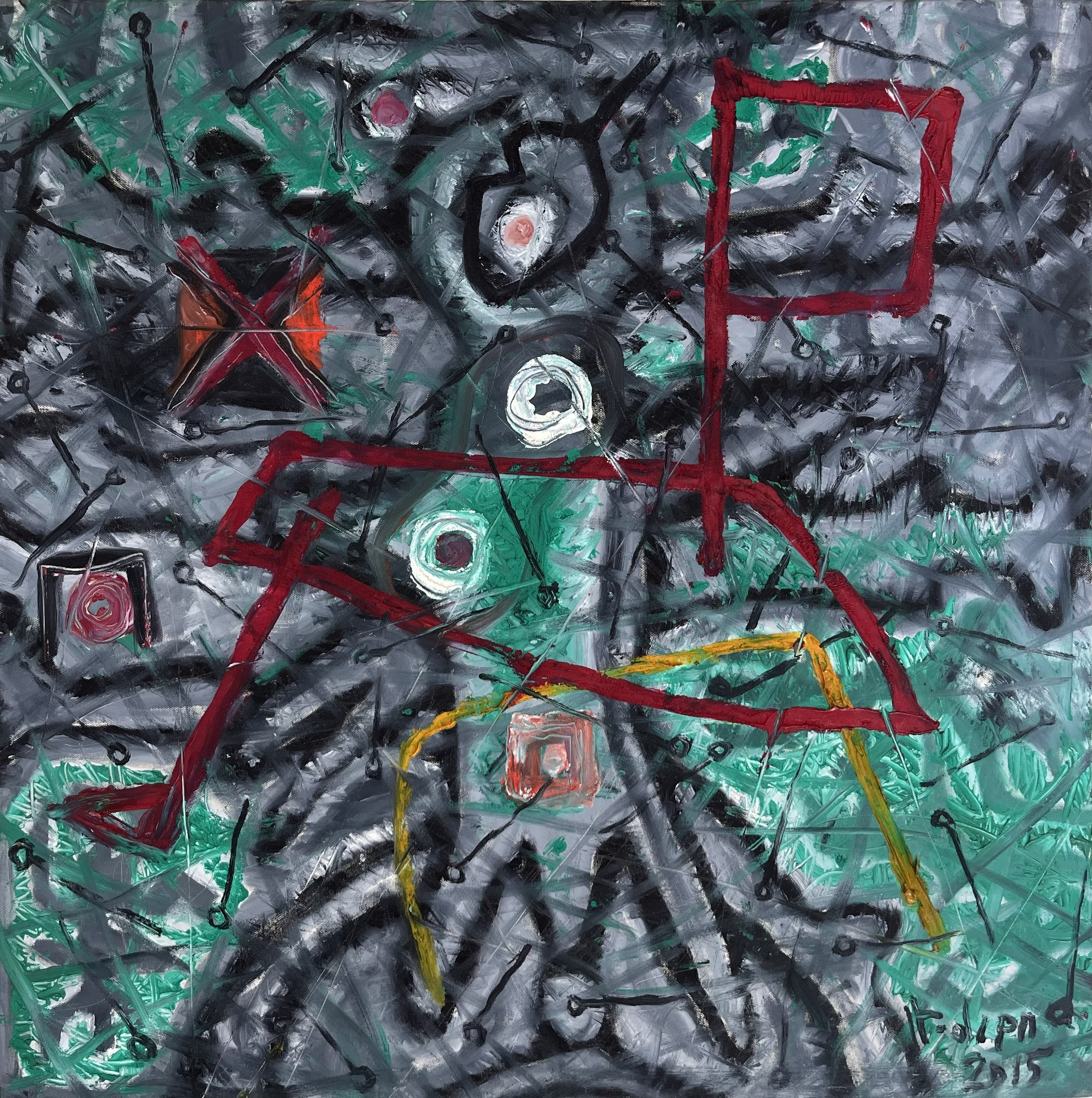
dang can painting

dang can painting

Le Trieu Dien Painting

Le Trieu Dien Painting

art certificate

art certificate

Flamingo.trade, a leading platform in the art market, is making waves with their groundbreaking approach to art investment.

Art is not an investment. Art is something you buy because you are financially solvent enough to give yourself a pleasure of living with great works rather than having to just see them in museums.”

— Arne Glimcher

VIETNAM, August 17, 2023/EINPresswire.com/ — Flamingo.trade, a leading platform in the art market, is making waves with their groundbreaking approach to art investment. By combining digital non-fungible tokens (NFTs) with physical art, Flamingo.trade is providing art collectors and traders a safe and sound option to invest in art.

Traditionally, art collectors and traders have faced several challenges, including concerns around authenticity, provenance, and security. Flamingo.trade aims to address these concerns by leveraging the power of blockchain technology and NFTs. With Flamingo.trade, investors can now confidently trade art knowing that each piece is authenticated, transparent, and securely stored.

Digital NFTs, or non-fungible tokens, have gained significant popularity in recent years. These unique digital assets allow ownership and provenance of digital objects, such as artwork, to be securely recorded on the blockchain. Flamingo.trade takes this concept further by bridging the digital and physical art worlds. Through their platform, investors can purchase digital NFTs that represent ownership of physical art pieces. This innovative approach not only allows art collectors to diversify their portfolios but also opens up new opportunities for artists and investors alike.

The fusion of digital NFTs with physical art offers several advantages for art collectors and traders. Firstly, it provides a seamless way to invest in art without the hassle of physically owning and storing the artwork. Additionally, it allows investors to participate in the digital art market, which has seen unprecedented growth in recent years. With Flamingo.trade, art enthusiasts can explore a wide range of artworks from renowned artists and invest in them with confidence.

Flamingo is committed to promoting transparency and security in the art market. Each digital NFT created on their platform is associated with a physical art piece, ensuring the authenticity and uniqueness of the artwork. Furthermore, Flamingo.trade partners with reputable art institutions and experts to verify and validate the physical art pieces represented by the NFTs. This collaboration ensures that investors can trust the quality and value of the artworks they invest in.

As the world embraces the digital revolution, Flamingo.trade continues to disrupt the art market with their innovative approach to art investment. By combining digital NFTs with physical art, they are revolutionizing the way art collectors and traders invest in art. With Flamingo.trade, art enthusiasts can now participate in the art market with confidence, knowing that their investments are safe, sound, and authenticated.

###
About Flamingo:
Originating in Vietnam, Flamingo.trade showcases an extensive array of artworks by esteemed local artists including Ha Nguyen Tri, Le Trieu Dien, Dang Can, and more. This marks the inception of a novel collection of NFT-backed art assets on a global scale.

Anh Le
Flamingo.Trade
hello@flamingo.trade
Visit us on social media:
Facebook

image