State fair’s 800-pound butter sculpture recycled at dairy farm
The BU Global Music Festival, now in its sixth year, offers members of the University community, and the general public, a chance to see the world from Comm Ave. The free event gives audiences a unique opportunity to hear music from places they’ve never been, sit in on workshops with the musicians, and even shop at a global bazaar.
The popular daylong festival returns this Saturday, September 16, on the BU Beach, featuring musicians from Ukraine via Canada, Malawi, San Salvador, Iran, Cape Verde, and New Orleans, starting at 1 pm. Find a full schedule here.
“Some people have been going for years, some people are attending for the first time,” says Elana Harris (MET’23), assistant director of the BU Arts Initiative, the festival’s primary sponsor. “It’s one of the first major events of the school year that students can just pull up to, relax, and have a great time.”
This is Harris’ first year as assistant director of the fest; she’s the point of contact for all things contracts, scheduling, promotion, and communications. The heart and soul of the event continues to be Marié Abe, a former College of Fine Arts associate professor of music, musicology, and ethnomusicology, now an associate professor of ethnomusicology at the University of California, Berkeley. Though no longer at BU, Abe remains at the helm of curating the yearly lineup and will return to campus for this weekend’s program. “It’s sort of become my baby,” she says of the festival. “I feel like the word has finally gotten around in our sixth year, and I’d love for it to keep going as long as possible.”
The acts Abe looks for need to represent not only their countries of origin, but also an array of female, queer, and indigenous artists in order to break up what she calls “decades of a ‘world music’ industry that has mostly been dominated by male stars.”
And their sounds must be diverse, as well.
“I don’t want it to be just a traditionalist, folkloric acoustic sound,” she says. Global music “is not just untouched tradition; there are lots of artists that are doing super creative stuff—and towards the end of the day, we want some pumping party music.”
In years past, Abe has also made sure to include artists who represent countries that have been in the news, like Puerto Rico’s Orquesta El Macabeo, who played the fest in 2018 after Hurricane Maria devastated the island. This year is no exception, with Ukrainian and Iranian artists on the roster.
“It’s a way of offering an opportunity for students, faculty, and everybody to have a chance to understand who’s behind the headlines,” Abe explains. “We always have workshops during the festival that are a way for the audience to ask [the artists] any questions they may have and get a chance to actually talk to them.”
Below is a preview of the six musical acts featured in the 2023 Global Music Festival, from Ukrainian EDM (electronic dance music) to New Orleans jazz funk and a range in between. Which one will be your favorite?

Ukrainian-Canadian Balaklava Blues is the fest’s headliner, and Abe makes it clear that audiences should expect a lot from them. “They have been closing other big music festivals in Europe,” she says, “So we should be in for a treat.” Before forming the group, Mark and Marichka Marczyk were no strangers to creating music out of disparate, and sometimes clashing, elements. Balaklava Blues is the husband-and-wife duo’s third project, coming on the heels of their successful Lemon Bucket Orkestra, a boozy Balkan 12-piece punk ensemble, and Counting Sheep, proudly billed as a “guerilla folk opera.” Balaklava Blues stays true to the Marczyks’ more-is-more conceptual formula, combining traditional Ukrainian polyphony with skronky EDM beats to create a cultural melange worthy of its name.

For centuries, Mardi Gras Indians—Black and indigenous artists who perform rhythmic call-and-response sections in elaborate costume—have been the cornerstone of New Orleans culture. Big Chief Juan Pardo’s Tribal Gold is a riff on that tradition, with the longtime performer backed up by The New Orleans Suspects, a jazz-funk quartet, in “a mix of indigenous music coming together with that Second Line sound you hear during Mardi Gras,” according to Harris. Blending the Suspects’ funk-inflected grooves with Pardo’s exuberant stage presence, Tribal Gold is a rollicking, over-the-top tour of the bayou and a crash course in New Orleans culture rolled into one.

“Why should we buy our instruments when we can build our own and get the sound we want?” is the ethos of Josefe and Yobu, the duo behind Madalitso. Discovered busking with handmade instruments in Lilongwe, the capital city of their native Malawi, the two soon found themselves touring Europe, and later the United States. Praised for its raw, unpolished instrumentation and joyful authenticity, Madalitso is a medley of strumming, picking, and foot-tapping that gets a lot of mileage out of sparse materials. “They are pure exuberance, pure joy,” says Abe.

Mehrnam Rastegari lives in two worlds: one steeped in traditional music and ancient instruments, and one that holds the old ways up to the light of modernity, melding them with contemporary influences. Rastegari, who hails from Iran but now lives in the United States full time, is a singer, violinist, and composer, but she is best known for her performances using a kamancheh, an Iranian bowed instrument dating back to the 10th century. Certified as a master kamancheh player and hailed as one of the foremost players in the world, Rastegari’s music is snaky, seductive, and dizzyingly intricate. “You get transported as you hear her play,” says Harris.

Like a Cape Verdean Billie Holiday, Fantcha’s wheelhouse is the wistful torch song. Unlike the other acts in this year’s fest, her sound is “melancholic; the opposite of a party vibe,” according to Abe. There are strong influences in Fantcha’s sound, which borrows from Cape Verdean musical traditions with a heavy dose of Portuguese and Cuban flavor. Fantcha’s presence at the Global Music Festival speaks to the sizable Cape Verdean community in Boston; though she is not a resident of the city, her performance will be “backed by New England–based Cape Verdean musicians,” to ground the global

“It’s not [typical] European music—it’s a Mediterranean, folkloric sound,” Abe says of southwest France’s San Salvador. “They’re searching for their roots.” The group’s lyrics are in Occitan, a lesser-known Romance language spoken in the south of France, Monaco, Italy, and Catalonia, and their sound marries the ancient language to the ancient sounds of the area’s troubadours. A sextet of vocals and percussion, San Salvador is hard to characterize as a cappella, but they are not particularly easy to characterize as anything else. “You just want to move when you hear them,” says Harris. “They have so much energy.”
A free, globe-trotting festival featuring six musical acts from around the world, as well as workshops and an international bazaar
By Admin in Photography
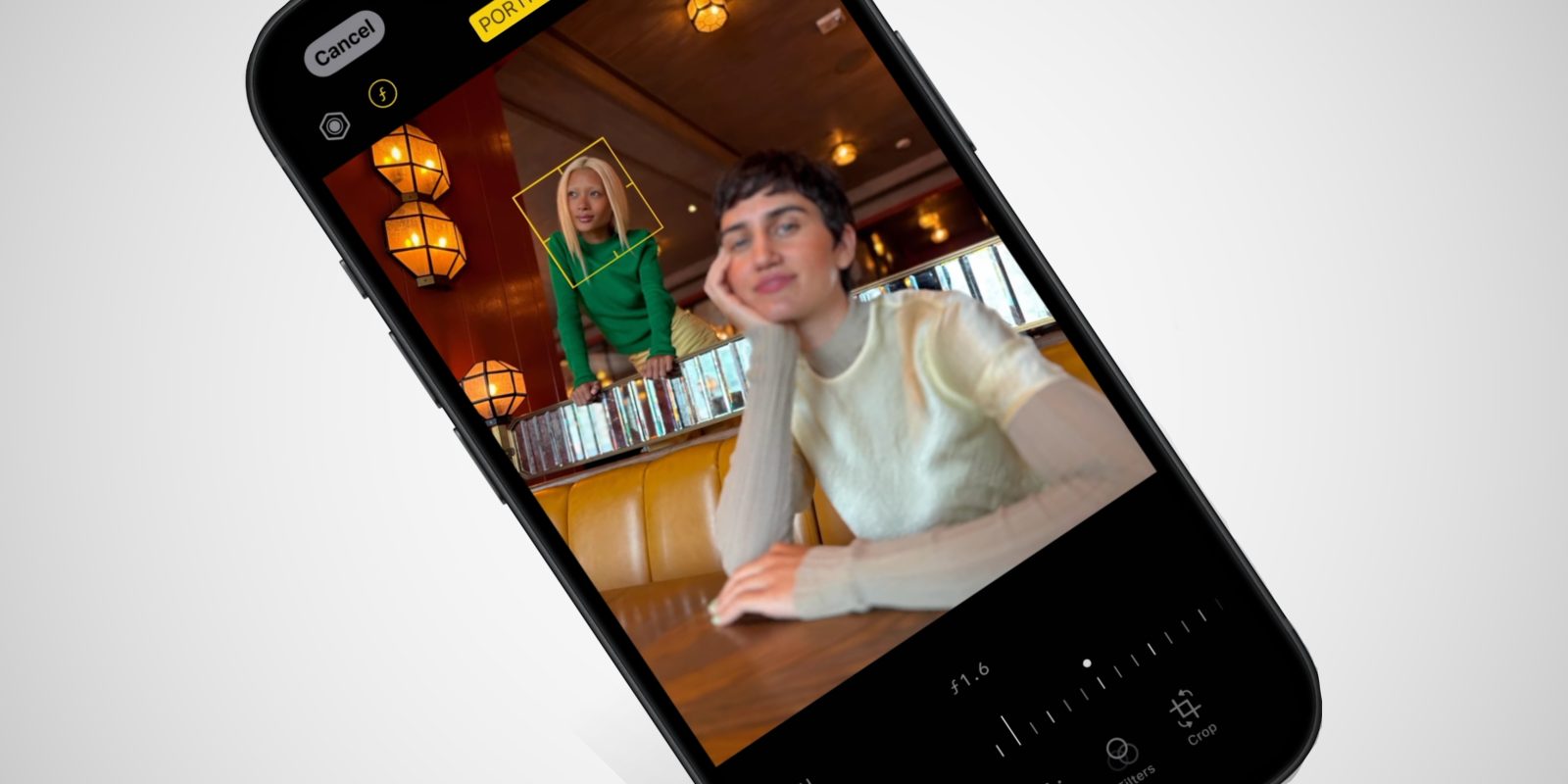
During the September keynote event, Apple touted a whole bunch of new Portrait mode features for the iPhone 15 series, like automatic capture of Portrait mode shots while using the main shooting mode in the Camera app and the ability to change the subject in focus in the Portrait mode shot after you have taken it.
Well, it turns out that at least some of that stuff is also coming to older phones too. Twitter user Dylan pointed out that on the iOS 17 release candidate build, iPhone 14 Pro users can also refocus their Portrait mode shots after they have been taken.
This story is supported by Mosyle, the only Apple Unified Platform. Mosyle is the only solution that fully integrates five different applications on a single Apple-only platform, allowing businesses and schools to easily and automatically deploy, manage, and protect all their Apple devices. Over 38,000 organizations leverage Mosyle solutions to automate the deployment, management, and security of millions of Apple devices daily. Request a FREE account today and discover how you can put your Apple fleet on auto-pilot at a price point that is hard to believe.

Until this week, if you took a Portrait mode shot, the desired subject was “baked in” at the time of taking the photo, so the same foreground region would always be in focus, and the same background region would be blurred. Users could adjust the intensity of the blur, though, or remove it altogether.
But now, when you edit a Portrait photo, you can tap on a part of the image to change the focus altogether. If two people are in the photo, for example, you can switch which person is blurred out by tapping on their faces.
This is one of the big marketing features of the iPhone 15 and iPhone 15 Pro camera system, but it’s actually enabled wholly through software, and Apple has also made it available on iPhone 14 Pro devices. You can even change the focus on old Portrait mode shots in your library, not just newly taken images.
It makes some sense that the feature is also available on the 14 Pro, as the iPhone 15 and iPhone 15 Plus are powered by the same A16 Bionic chip as the 14 Pro. Last night, we reported that the HEIF Max setting is also present on the iPhone 14 Pro and iPhone 14 Pro Max.
But owners of iPhone 14, iPhone 14 Plus, and the iPhone 13 series will also be pleased to hear that Depth and Focus Control is also available on those phones too, according to Apple’s iPhone Compare page.
However, other parts of the new iPhone 15 camera stack are not available on older models. For instance, the 14 Pro does not seem to automatically take Portrait mode shots while using the main camera. Neither does it get the ability to take 24-megapixel photos that balance detail and light capture.
iOS 17 will be available to download for free for iPhone and iPad users this coming Monday, September 18. iPhone 15 goes up for pre-order on Friday and deliveries start from September 22. All iPhone 15 models will come with iOS 17 preinstalled.
FTC: We use income earning auto affiliate links. More.
By Admin in Photography
The annual Fish Art Contest is now open! Students in kindergarten through 12th grade can create an original piece of artwork and compete in this free contest for a chance to win state and national honors and prizes.
In partnership with Wildlife Forever, the Florida Fish and Wildlife Conservation Commission (FWC) is excited to announce the second annual category for a Florida Native Fish Award! This State Specialty Award is an additional award to the national Fish Art Contest that participating students will qualify for by submitting a Florida native species from the specified list below. The goal of the Florida Native Fish Award is to celebrate fish species native to Florida’s inland and marine waters.
“The Florida Native Fish Award is an amazing opportunity to introduce students to some of Florida’s most iconic native fish species in a fun and creative way,” said FWC Commissioner Sonya Rood. “This award helps connect Florida’s students to the fish species that help make Florida the Fishing Capital of the World, which is critical in inspiring the next generation of fisheries resource stewards.”
One first place winner and one runner up will be selected for each grade bracket (kindergarten through third grade, fourth through sixth grade, seventh through ninth grade, and 10th through 12th grade), one for illustrating the best freshwater fish species and one for the best saltwater fish species. Digital artwork will not be accepted this year, all submitted pieces must be created with a traditional media. All first-place winners will advance to the National Competition to be judged for top prizes, such as Best of Show. The deadline to enter is Feb. 28, 2024, so start designing!
To enter, students from Florida should submit their entry at Wildlife Forever – Florida Art, consisting of the following:
Note: Digital artwork will not be accepted this year, all submitted pieces must be created with a traditional media.
Florida Prizes:
By Admin in Art World News
Sol Calero, “La Escuela del Sur (The School of the South)” (2015), mixed media, installation view. Photo by Andy Keate. All images courtesy of the artists and Phaidon, shared with permission
Dubbed the essential survey of artists living and working across Latin America, a monumental new book catalogs three centuries of output across 20 Spanish and Portuguese-speaking regions. Latin American Artists: From 1785 to Now, forthcoming from Phaidon, spans 352 pages of contemporary and historic paintings, sculptures, installations, photographs, performances, and more. Large imagery accompanies brief texts introducing 308 artists who’ve made significant contributions to the canon, including Frida Kahlo, Tomás Saraceno, Leonora Carrington, and Ernesto Neto. Arranged alphabetically, the tome brings together myriad styles, techniques, and methodologies to highlight the vast range of work coming from the region.
Latin American Artists: From 1785 to Now will be released on October 4, and you can pre-order your copy on Bookshop.
Simón Vega, “Tropical Space Hostel” (2019), wood, metal sheets, plastic, found objects, and light, 98 2/5 × 137 4/5 × 98 2/5 inches, installation view, Summit Tulum, Tulum, Mexico. Image courtesy of MAIA Contemporary
Sandra Eleta, “Edita (la del plumero) Panamá (Edita (The One with the Feather Duster) Panama)” (1978–80), from the series ‘La servidumbre (Servitude),’ 19 × 19 inches

Sonia Gomes, “Sol” (2018), stitching, bindings, different fabrics, and laces on wood and wire, 36 1/4 × 47 1/4 × 39 3/8 inches. Photo by Bruno Leão. Image courtesy of Sonia Gomes and Mendes Wood DM, São Paulo / Brussels / New York
Tomás Saraceno, “NGTS-2 b/M+MB” (2017), stainless steel, rope, fishing line, metal wire, and mirror panels, 25 5/8 × 41 3/8 × 41 3/8 inches. Image courtesy of Tanya Bonakdar Gallery, New York / Los Angeles

Claudia Martínez Garay, “Chunka Tawayuq Pacha (PACHA #14)” (2022), tufting, 98 3/8 × 61 3/8 inches. Image courtesy of GRIMM Amsterdam / New York / London
Eduardo Navarro, “Instructions from the Sky” (2016). Photo by Timothy Schenck, commissioned and produced by Frieze Art Inc. for Frieze New York

Do stories and artists like this matter to you? Become a Colossal Member today and support independent arts publishing for as little as $5 per month. The article An Enormous New Book Celebrates 308 Latin American Artists Across Three Centuries appeared first on Colossal.
By Admin in Photography

The Reina Sofía museum in Madrid has lifted its ban on photographing “Guernica,” saying it hopes to enhance the experience for those viewing the antiwar painting.
“No foto!” was long the refrain from guards at the Reina Sofía museum in Madrid if a visitor dared to attempt to take a picture of “Guernica,” Picasso’s 1937 antiwar masterpiece. But as one couple took a selfie on Wednesday and another woman adjusted her hair while smiling shyly into her phone’s camera, those guards were relaxed, offering tips about audio guides rather than yelling.
The museum lifted its longtime ban on photos of “Guernica” this month, belatedly joining the Instagram era. Still prohibited in Room 205.10 are the use of flash, tripods and selfie sticks, out of concern that the 25-foot oil painting could be damaged.
“Allowing photographs to be taken of ‘Guernica’ is intended to enhance the experience of viewing the painting, bringing it closer to the public and allowing what has been possible in other museums for a long time,” a spokesman from the Reina Sofía wrote in an email.
The spokesman added, referring to advances in technology, “The fact that the means have advanced and that they do not endanger the work did not justify, at this point, the prohibition.”
Ten minutes after the museum opened its doors on Wednesday, a crowd of about a dozen people gathered in front of “Guernica.” Many of them stood close to the painting before shifting away for a different perspective.
Ronny de Jong, visiting from Rotterdam, the Netherlands, spent about 45 minutes taking in the work, a black-and-white Cubist painting that depicts the horrors of the Spanish Civil War and disturbed those who saw it at the 1937 World’s Fair in Paris.
De Jong said that he loved to remember his museum visits through photos, and that he was slightly annoyed that the nearby Prado museum, home to many of Spain’s most important pre-20th-century artworks, banned photographs altogether.
“I did make some pictures — like stealthily — and no one was harmed,” he said.
Another visitor, Flavia Morelli of Rimini, Italy, praised the Reina Sofía’s recent decision to allow photographs of “Guernica.” “I think it’s a way to create a stronger link between people of varying levels of culture and art,” she said.
The Reina Sofía did not explain the origins of the ban on photographing one specific painting, but museums have long struggled with how best to conserve artworks and manage resources while trying to remain relevant to the public. For example, visitors cannot take photos inside the Sistine Chapel in Italy, and photography and filming are prohibited in some special exhibitions at museums because of copyright or lending concerns.
Nina Simon, the author of “The Participatory Museum,” said one reason museums originally banned photos was a fear that people would not visit in person if they were able to see the images online. That worry has abated, she said, but there is still genuine fear that works could be damaged by distracted visitors, and that their photographs could fundamentally alter museum programming.
“There becomes a concern that the museum becomes the backdrop to your perfect Instagram life,” Simon said, “or that the museum shifts the design of exhibits to cater to create great Instagram moments, which could be seen as cheapening in some way.”
Along with the vocal guards, visitors to the Reina Sofía have traditionally been separated from “Guernica” by a long divider that spans the length of the artwork.
But the painting, which Picasso lent to the Museum of Modern Art in New York for decades while Gen. Francisco Franco was in power in Spain, has not always been so restricted. When it was on view at MoMA in 1974, Tony Shafrazi, an artist who later became a successful art dealer, sprayed “Kill Lies All” in red foot-high letters on the canvas.
The painting, which avoided permanent damage because of a heavy coat of varnish, was returned to Spain in 1981.
Seema Rao, who leads Brilliant Idea Studio, a firm that focuses on museum experiences, said museums must learn to keep up with the demands of visitors who have traveled from around the world to see works like “Guernica.” “If you can’t hold on to that, it doesn’t matter, it doesn’t feel like it has value,” she said.
“Museums are basically becoming dinosaurs,” Rao continued. “They are so behind the times. In order to be a part of society they have to update these policies.”
One visitor at the Reina Sofía on Wednesday, Richard Rottman of Los Angeles, called “Guernica” an important Picasso shortly after someone tapped his shoulder.
“I was in the way of their photo,” he said, laughing.
By Admin in Photography
When the contemporary artist Mariah Robertson first started playing around in her darkroom with light-sensitive paper, hand-applying chemicals and trying out different exposure techniques, a whole new world opened up. Colors bled and burst. Streaks and specks were features, not bugs. All the carefully laid out rules of traditional photography now felt mutable. “I thought, This is totally insane,” she says. “I had no idea this was possible.”
In the 15 or so years since those first happy accidents, Robertson has honed her practice of camera-less photography, creating ferocious photograms with explosions of pigment that slingshot you to another dimension. Thirteen such transportive works go on view today at Van Doren Waxter in New York. The featured photograms in “Everything counts & local reality,” all made this year using a type of photographic paper called RA4, conjure distant galaxies.

Mariah Robertson. 2016, 191, 2023. Photochemical treatment on RA4 paper.Photo: Charles Benton
To make her large-scale experimental pieces, Robertson has to cede much to chance. “A lot of photography is holding on to things,” she says. Her process is the opposite: she has to let go of control. It’s a concept she thought about a lot while making the new pieces for this show.
Many of the works are spliced together from cut rolls of paper, with their jagged, curling edges exposed. These are part of Robertson’s ongoing Lost Puzzle series. In 364, 365, 366, 367, 368, 369, 370, 371—Robertson’s titles nod to her image-sequencing process—the glossy blues and greens erupt like algae bloom. The luxurious 481, 482, 483, 484, 485, 486 reminds me of melted, molten candy.
Milwaukee Art Museum announces new Herzfeld Center for Photography show
Wondering what’s the importance of PDF editing software for photographers? Hop inside this guide to find out!
The loon traveled from Los Angeles to its permanent home in the Twin Cities.
A new beetle species has been named to honor a fellow Husker, bridging the worlds of academia and wildlife conservation.
Silversea, a premier brand in experiential luxury and expedition travel, recently concluded the inaugural season of its first Nova-class ship, Silver Nova,
The Desert Foothills Land Trust (DFLT) is proud to announce a special presentation event featuring acclaimed botanical photographer Jimmy Fike on Saturday, Oct. 12 at 6:30 p.m. at the Sanderson