Take a closer look the artist’s work and its relationship with time.
The Life Cycles of Objects: An Interview with Adrián Villar Rojas | Magazine


We’ve featured photographer Jvdas Berra several times on this site. His resume is huge, and perhaps we’re all really familiar with the work that he’s done in Vogue over the years. There’s a great reason why he’s rated one of the best fashion photographers of 2023. But we were also curious to hear his thoughts on AI. And believe it or not, they might surprise you.
All images by Jvdas Berra. Used with permission. This interview has edited with grammatical corrections. Check out his Instagram for more.
Jvdas Berra: First of all, thank you very much. I always tried to make windows to surreal worlds but always with some reality, and that reality always comes from my subjects.
For me, AI is not the future, is the present. I think we as photographers need to evolve and learn how to use these tools cause AI is that, a tool. Personally, I have a year of working with AI and mixing it with my photography to improve and evolve my style.
I believe that today is happening exactly the same as when Photoshop came, a lot of people were worried about the future of photography and started to criticize the post-production process made on the software. At some point, I think it will be completely unified and will be something normal for everyone.
Let’s embrace the new technologies. It’s evolve or perish in the process.
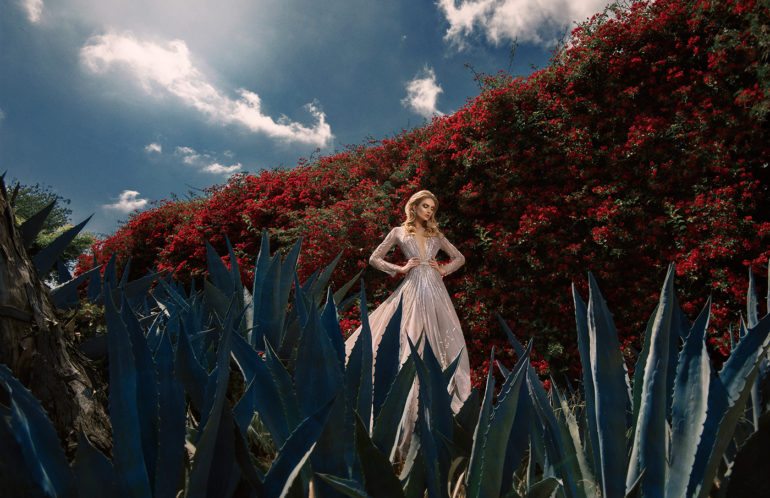
Jvdas Berra: For me, post-production is something really important, but for every photo I do the pre-production is 50% as I don’t like to prepare anything due I am a very improvised photographer, the production is the most important for me, and takes the 60% of it and to end the other most important is the post-production with the 40% of my effort.
With post-production, I have the chance to reach infinite possibilities that are not possible in real life. I feel I can create anything like a god.
Jvdas Berra: I believe that mixing infinite human creativity with limitless AI is going to take humanity to the next level of advances, talking about art and science. Let’s don’t forget that AI is an invention that we made as humans, and this is just an add-on.
Since a long time ago, every day since last year, I have been impressed with the insane creations that people are doing with the AI. I feel that we are in the middle of a huge change as species. I’m very excited to see what’s next and what we can reach as creators. Let’s don’t forget this technology is advancing very fast.
Jvdas Berra: I think this is a point of view that is coming from the wrong conception. We are not here to compete with AI, we are here to use it and improve our work and lives with it.
Our emotions need to be conducted to the creation by using the AI, not about to compete against an intelligence that has all the resources and infinite options to resolve any kind of necessity we have.
Is not possible to compete against the machines. For the first time in our history, we have created something that is more capable and Intelligent than us, but we are lucky enough to have this power in our hands, so let’s use it until we come to the realization that we can be the used ones, speaking in the fiction mode, but remember sometimes fiction is more real than reality.
To negate or try to compete with the technology once it’s out to the world is pure resistance, is trying to be in the darkness and to be destined to destruction or oblivion. We need to embrace it, adopt it, and make it our normal life.
I have one year of using this technology, and my photography has improved because of that. The mere existence of one does not means the destruction of the other, is just a matter of balancing both for a common good.

A couple recognized the Washoe weaver Louisa Keyser’s prodigious talent and spun myths to promote it. But her fortitude shines in work that today can be seen in museums and at the Independent 20th Century fair.

The Native American baskets sold in the early 1900s out of Abe Cohn’s Emporium, a men’s clothing store in Carson City, Nev., were exceptional. They were woven by Dat So La Lee, said to be a “princess” from the nearby Washoe people whose royal status permitted her alone to utilize a special weaving style.
The truth was less exciting. Dat So La Lee preferred her English name, Louisa Keyser. She was a Washoe woman, but the tales Cohn and his wife, Amy, spun about her — her esteemed heritage, her meeting with the Civil War general John C. Frémont — were myths.
As for many of her baskets’ distinctive and lovely incurving bulge, known as degikup, it almost certainly was influenced by the baskets of a different people, the Maidu, much as the fine stitching of Keyser’s work was lightly derived from the baskets of yet another Native American people, the Pomo. Nothing lent Keyser special authority to make her baskets her way.
“Interchange and borrowing was common in the production of baskets for the curio trade,” Marvin S. Cohodas, a professor emeritus of art history at the University of British Columbia who wrote an essay about Keyser accompanying the show, said in an email.
The Cohns originally hired Keyser to be their washerwoman, according to Cohodas. The Cohns noticed her skill — she may have begun by twining around Abe’s whiskey flasks — and backed her financially in exchange for her exclusive weaving services (she no longer had to clean for them).
The Cohns fashioned their apocryphal embellishments as the baskets’ extraordinary artistic value became apparent. They also arranged for her to weave outdoors or, during winter, in the Emporium window; at least once, Amy Cohn lectured while Keyser posed near her.
No matter their back story, Keyser’s baskets sold well and today are considered remarkable. They can be found in the collections of the Brooklyn Museum, the Baltimore Museum of Art and the Metropolitan Museum of Art.
And, after just a small handful sold in the past half-century — one, in 2007, for $1.2 million, a high at the time — they are about to receive a new spotlight: Five will be featured at the Independent 20th Century art fair opening Thursday in Lower Manhattan as part of what the fair calls a “major highlight exhibition” designed by the architect Annabelle Selldorf.
The prices for the five baskets, one of which by Tuesday was on reserve, range from $350,000 to $1.5 million, said Donald Ellis, whose namesake Vancouver gallery commissioned the mini-show.
Keyser, who lived from around 1850 to 1925, is among the most prominent names in Native basket weaving, said Jessica L. Horton, a professor of modern and contemporary art at the University of Delaware. Ellis, in an interview, called her “the Rembrandt or Michelangelo of the field,” adding of Native American art, “It’s considered the best basket-making culture in the world, and she was the best in it.”
Melanie Smokey, a Washoe weaver, said: “Our Washoe tribe, which is a very small tribe, is known across the nation because of her work specifically.”
Keyser’s baskets were arguably made possible not only by her talent and efforts, but by the support of white patrons, a sensational legend and a contemporary “basket craze” that placed a premium on the exoticism and authenticity of Native crafts.
It is notable, in an era vexed by questions of cultural appropriation, that Ellis is not shying from this kink in the story of Keyser and her baskets. Promotional material from the gallery refers to the Cohns’ “elaborate false narratives” and the halo of “pseudomythological significance” they constructed around Keyser.
“While there are some today who imagine the Cohns’ having taken advantage of Keyser, the aim of this presentation is to foreground Keyser’s exceptional artistic output while acknowledging the complicated relationship that enabled it,” Ellis said in an email.
Herman Fillmore, the culture and language resources director of the Washoe Tribe of Nevada and California, said that cultural borrowing was common in Keyser’s time among Washoe, for example in their adapting modern materials such as canvas to build warmer homes. “It’s not right for the rest of us to tell our basket weavers how to weave their baskets,” he said.
For Horton, the professor, Keyser’s story is important to understanding her baskets, if not in the way the Cohns intended.
“It’s complicated where we put our gratitude,” she said, “but thanks to the fraught relationship that unfolded around the Cohns’ Emporium and her own artistic brilliance and fortitude, we know her name and have an archive through which we can reread the details of her life, and the pretty inspiring story of a Native woman at the turn of the 20th century navigating a global art market under conditions of terrible colonization.”
The five baskets at the fair are from Keyser’s classic, middle period. They include one from 1916 titled “Myriads of Stars Shine Over Our Dead Ancestors,” which, Ellis said, Abe Cohn esteemed as her greatest work (as does Ellis). Another, titled “Brotherhood of Men,” was the one the Ellis Gallery sold in 2007 for $1.2 million. Most of the approximately 150 surviving works by Keyser are at institutions, Ellis said.
Then as now, the degikup evident in four of the show’s baskets is a source of much of the enthusiasm around them. “It’s a high-walled basket,” said Horton, “and in its most perfected form the actual designs integrated into the walls of the basket will flare and then get smaller to add emphasis to the sculptural shape.”
For centuries, baskets have been an important part of the culture and lifestyle of the Washoe, whose word for “lake” was taken for the Sierra Nevada’s most famous landmark. (The name Lake Tahoe, Fillmore pointed out, is something like “lake lake.”)
Like other developments in weaving during the period, degikup arose not out of utilitarian considerations — that is, the best way to design a basket used to carry things — but rather out of the demand for baskets from non-Native consumers who sought them as artworks.
“The fact that these baskets would not receive hard wear meant that more area of the basket could be covered with design,” Cohodas said. “Innovation was thus rampant, with weavers drawing on whatever was available, including new tools, shapes, materials and designs.”
One Pomo weaver adapted Keyser’s degikup, he noted. A Yokuts weaver used Apache designs. The Washoe weaver Sarah Jim Mayo was, like Keyser, widely imitated.
“There was no criticism of these actions as appropriations,” Cohodas added. “Likewise there was no criticism when most Washoe weavers took on the degikup shape, and many weavers also adapted Keyser’s flame design and scatter pattern.”
Heather Law Pezzarossi, a professor of anthropology at Syracuse University, argued that our contemporary arguments over cultural appropriation are misapplied to Keyser’s baskets.
“Authenticity is a completely Western, American fixation we’ve mapped onto this concept of indigeneity to make it part of an American past, not an American future,” she said, noting that it was the Cohns who were most invested in the concept.
“Instead of valuing these baskets because of the ways that those Western art dealers told us to value them a hundred years ago,” Pezzarossi added, “why don’t we look at them afresh and value them a different way?”
Independent 20th Century
Sept. 7-10, Battery Maritime Building at Cipriani, 10 South Street, Lower Manhattan; independenthq.com.

A dramatic picture of a female peregrine falcon swooping on a brown pelican while protecting her young has won this year’s Bird Photographer of the Year award.
The picture was taken by Jack Zhi, who had waited for four years to capture the rare moment in southern California. The incredible image ‘Grab the Bull by the Horns’ beat more than 23,000 entries to claim the prize.
‘For four years, I attempted to capture the rare sight of the female falcon attacking large brown pelicans with incredible speed and agility,’ he said in a press release.
‘The high-speed chase made it challenging to capture a closeup shot with a long lens. The falcon’s precision was amazing as it struck at the pelican’s head,’ the US photographer explained.
‘I love the eyes of the pelican in this image – surprised and scared. The action was fast, and over in the blink of an eye. But I’ll remember that moment forever,’ Zhi said.


The annual competition is designed to highlight bird photography around the globe. and features pictures in different categories including Conservation Award, Portfolio Award, Video Award, and Comedy Bird Photo Award.
Zhi, a full-time computer engineer, looks for birds and other wildlife in his spare time. He also won the Wildlife Photographer of the Year in 2021 and the grand prize of the Audubon Photography Awards in 2021.
The photographer won the top prize of £5,000 ($6,280 USD) and the prestigious title. The image also won Gold Award in the Bird Behavior category.
German photographer Anton Trexler, 17, won the Young Bird Photographer of the Year award for his picture of a blackbird’s silhouette set against the backdrop of the moon.
The gold award in the Comedy Bird category went to Italian photographer Antonio Aguti. That featured a wide-eyed bird with a massive fish in its mouth.
‘The purple heron is a migratory bird that nests in the lake basins of the Italian Peninsula and feeds mainly on fish. In this shot, the heron caught a large crucian carp and voraciously swallowed it after several attempts to turn the fish on to its side,’ Aguti said.


‘More Fish Please!’ taken by Levi Fitze in Saunders Island, Falkland Islands, won the Silver Award of Comedy Bird Photo, and features a baby penguin in the face of a King Penguin.
‘This juvenile constantly begged until the annoyed adult walked away. However, the fact that the juvenile was more massive than the adult suggests good parenting overall.’ Fitze noted.
The UK photographer Rachel Bigsby won the Best Portfolio Award this year for her ‘incredible ability to capture the beauty, resilience, and fragility of the lives of birds who are at home in the air, on land, and at sea.’
The Gold Award of Best Portrait went to Nicolas Reusens, who captured a rare glistening-green tanager in Ecuador.


“After hours of waiting, I saw the vivid-green bird on a perfect heart-shaped leaf. Its shimmering feathers reflected a dazzling array of colors. I captured every detail, grateful for this magical moment amid the lush jungle backdrop,’ Reusens said.
The Gold Award in the Bird in Flight category went to Rafael Armada’s image of sword-billed hummingbird with the world’s longest bill relative to its size.
“This bird’s unique bill, adapted to feed on flowers with long corollas, makes it a vital pollinator, as bees and butterflies can’t reach the nectar and so don’t pollinate these plants,’ the photographer said.


Nicolas Reusens, “Glistening Green,” Glistening-green Tanager (Chlorochrysa phoenicotis), Mashpi Amagusa Reserve, Ecuador. Gold Award Winner: Best Portrait. All images © the photographers and Bird Photographer of the Year 2023
The judges of the 2023 Bird Photographer of the Year competition (previously) sifted through more than 20,000 images submitted from photographers around the globe. With lenses trained on a variety of avians and their habitats, the makers of this year’s winning images highlight diverse behavior, sizes, colors, and environments, from enigmatic and elusive species to familiar backyard friends.
Jack Zhi’s grand prize-winning image catches the dramatic moment that a Peregrine Falcon attacks a Brown Pelican in mid-flight. “I love the eyes of the pelican in this image: surprised and scared,” Zhi says. “The action was fast and over in the blink of an eye.” Other category winners include striking portraits and rare observations, like Nicolas Reusens’ Glistening-green Tanager framed in a tropical leaf, Rafael Armada’s capture of a tiny Sword-billed Hummingbird, or Henley Spiers’ underwater sighting of a Blue-footed Booby with a freshly-caught meal.
The 2024 contest is now open for entries on the organization’s website, where you can also browse a gallery of this year’s winning photos. Follow BPOTY on Instagram for more updates.

Qiuqing Mu, “A Mother’s Love,” Great Grey Owl (Strix nebulosa), Zhejiang, China. Bronze Award Winner: Bird Behavior

Rafael Armada, “Flying Sword,” Sword-billed Hummingbird (Ensifera ensifera), Bogotá, Colombia. Gold Award Winner: Birds in Flight

Cheng Kang, “Morning Serenity,” Australasian Darter (Anhinga novaehollandiae), Northern Country, Victoria, Australia. Bronze Award Winner: Black-and-white

Mateusz Piesiak, “Sunflower Paradise,” Brambling (Fringilla montifringilla), Lower Silesia, Poland. Gold Award Winner: Birds in the Environment

Paul Mckenzie, “Green Planet Flamingos,” Lesser Flamingo (Phoeniconaias minor), Lake Bogoria, Kenya. Silver Award Winner: Birds in Flight

Antonio Aguti, “No Way Out,” Purple Heron (Ardea purpurea), Lake Chiusi, Italy. Gold Award Winner: Comedy Bird Photo

Arto Leppänen, “A Moment of Prayer,” Great Grey Owl (Strix nebulosa), Helsinki, Finland. Gold Award Winner: Urban Birds

Jack Zhi, “Grab the Bull by the Horns.” Peregrine Falcon (Falco peregrinus) and Brown Pelican (Pelecanus occidentalis), Southern California, United States. Gold Award Winner: Bird Behavior

Henley Spiers, “Blue-Footed Fishing Dive,” Blue-footed Booby (Sula nebouxii), Los Islotes, Baja California Sur, Mexico. Silver Award Winner: Bird Behavior
Do stories and artists like this matter to you? Become a Colossal Member today and support independent arts publishing for as little as $5 per month. The article Bird Photographer of the Year 2023 Highlights Avian Attitudes and Winged Wonders Around the World appeared first on Colossal.


The image of a peregrine falcon tackling a brown pelican that ventured too close to its nest (below) has snared the grand prize in the Bird Photographer of the Year 2023, the world’s largest bird photography competition.
This year’s winners were selected from more than 20,000 images entered from photographers from around the world to the different categories, with the £3,500 grand prize going to photographer Jack Zhi from the U.S. for his dramatic image taken in Southern California.
“For four years, I attempted to capture the rare sight of the female falcon attacking large brown pelicans with incredible speed and agility,” says Zhi. “I love the eyes of the pelican in this image: surprised and scared.”
Bird Photographer of the Year celebrates the world’s best bird photography, while supporting conservation efforts through imagery and financial support. This year, the competition donated £5,000 to partner charity Birds on the Brink, which provides vital funding to grass-roots bird conservation projects around the world.
“Each image is not merely a testament to the immense talent of the photographers, but a poignant reminder of the breathtaking beauty of birds,” says Will Nicholls, Director of Bird Photographer of the Year. “The astonishing calibre of these photographs underscores a vital message: Let us champion the cause of conservation, so that future generations can marvel at the real-life inspirations behind these extraordinary images.”
The 2024 competition is now open for entries by photographers of all ages and experience.
Grab the bull by the horns, Overall winner and Bird Behavior Gold winner, Peregrine Falcon and Brown … [+]
Photo: Jack Zhi, U.S – Bird Photographer of the Year 2023
During the breeding season, a female Peregrine Falcon fiercely protects her young, attacking anything that ventures near the nest.
“For four years, I attempted to capture these rare moment of incredible speed and agility,” Zhi explains. “The high-speed chase made it challenging to capture a close-up shot with a long lens. The falcon’s precision was amazing as it struck at the pelican’s head.”
Flying Sword, Birds in Flight. Gold award winner: Sword – billed Hummingbird, Bogotá, Colombia.
Photo: Rafael Armada, Spain – Bird Photographer of the Year 2023
The Sword-billed Hummingbird, common in the Andean forests, has the world’s longest bill relative to its size.
This bird’s unique bill, adapted to feed on flowers with long corollas, makes it a vital pollinator, as bees and butterflies can’t reach the nectar and so don’t pollinate these plants.
No Way Out, Comedy Bird Photo. Gold award winner, Purple Heron, Lake Chiusi, Italy.
Photo: Antonio Aguti, Italy- Bird Photographer of the Year 2023
The Purple Heron is a migratory bird that nests in the lake basins of the Italian Peninsula and feeds mainly on fish, although it also preys on mice, snakes, toads and other creatures.
In this shot, the heron caught a large Crucian Carp and voraciously swallowed it after several attempts to turn the fish on its side.
Blue Flycatcher, 11 years old and Under Gold award winner, Verditer Flycatcher, Pelling, Sikkim, … [+]
Photo: Arko Saha, India – Bird Photographer of the Year 2023
A Moment of Prayer, Urban Birds. Gold award winner, Great Grey Owl, Helsinki, Finland.
Photo: Arto Leppanen – Bird Photographer of the Year 2023
During winter migration, owls from northern Finland often fly south where they can find more food due to less snow. This Great Grey Owl chose a cemetery with abundant voles as its hunting ground.
While hunting, the owl would often stop on tombstones or other structures to observe the area.
Fascinating Droplet, Black and White. Gold award winner, Musk Duck, Perth, Australia.
Photo: Jason Moore, Australia – Bird Photographer of the Year 2023
A young Musk Duck seems mesmerised by a drop of water falling from its mother’s mouth. Of course, it’s actually interested in the morsel of food that she has in her bill. Their coloration may be drab, but they more than make up for it with their beautiful expressions and fascinating displays
Blue Hour And Red Moon, Young Bird Photographer Of The Year 2023 and 15–17 years old Gold award … [+]
Photo: Anton Trexler, Germany – Bird Photographer of the Year 2023
Blackbird singing in the dead of night in a blue atmosphere and a shining moon.
“Getting up before sunrise allows you to experience the magical awakening of animals, Trexler explains. “The blackbird is one of the first animals to awaken.”
High-Key Terns, 12–14 years old, Gold award winner, Arctic Tern and Common Tern, Örnsköldsvik, … [+]
Photo: Harry Sedin, Sweden – Bird Photographer of the Year 2023
In a small inlet in Örnsköldsvik, Sweden, there are terns everywhere during summer. “One afternoon on an overcast day, I headed down to the water with the goal of photographing terns in flight,” young Sedin said. “Instead of that, I ended up photographing an Arctic and Common Tern perched together on a railing. By utilising the white of their bodies, the overcast weather and the bright reflections in the water, I got this high-key image.”
Sunflower Paradise, Birds in the Environment. Gold award winner, Brambling bird, Lower Silesia, … [+]
Photo: Mateusz Piesiak, Poland. – Bird Photographer of the Year 2023
Flooding meant that a field of sunflowers could not be harvested, and thousands of birds, including greenfinches, goldfinches and bramblings, flocked to it.
Despite their colorful plumage making them easy targets, when foraging their colours blend with the surroundings, making them hard for predators to spot.
Don’t Make War, Conservation (Single Image). Gold Award winner, European Turtle Dove, Southern … [+]
Photo: Ewan Heath-Flynn, UK – Bird Photographer of the Year 2023
A Maltese hunter stands proud, having legally shot a European Turtle Dove, a prized quarry on the island.
European Union legislation bans the hunting of Turtle Doves in the breeding season. Nevertheless, across the Mediterranean, an estimated 340,000 to 870,000 are killed each year.
Generations of Maltese have hunted this species on migration; a few continue to hunt following tradition.
In 2017, Malta introduced a spring hunting moratorium, which left some hunters feeling their ‘traditional’ way of life had been ruined.
Unfortunately, the ban was lifted in 2022, allowing European Turtle Doves to be killed once again. The decision has the potential to dramatically impact and further damage this beautiful bird’s chances of survival and drive it further towards extinction.
BirdLife International and their partner BirdLife Malta both condemn the hunting.
Parenting Goals, Best Portrait Silver award winner, Emperor Penguins in Antarctica.
Photo: Thomas Vijayan, Canada. – Bird Photographer of the Year 2023
Before capturing this image, the Vijayan spent two days observing these penguins, lying flat on the ice to avoid scaring them: “Waiting for the chick to appear, I finally got this touching shot of parental love. I trekked eight hours a day on soft snow to reach this colony and even made friends with some penguins.”
Blue-Footed Fishing, Bird Behaviour Silver award winner, Blue-footed Booby, Los Islotes, Baja … [+]
Photo: Henley Spiers – Bird Photographer of the Year 2023
In early autumn, a sardine shoal in Los Islotes, Mexico, attracted seabird predators. Amid the shoal was an elusive Blue-footed Booby rising with a sardine in its beak.
Green Planet Flamingos, Birds in Flight. Silver award winner. Lake Bogoria, Kenya.
Photo: Paul Mckenzie, Ireland – Bird Photographer of the Year 2023
The Heron in the Palms, Black and White. Silver award winner, Black-headed Heron, Samburu National … [+]
Photo: Yaron Schmid, Israel – Bird Photographer of the Year 2023
At Samburu’s National Reserve, Kenya, among its most distinctive features are its Doum Palms. While moving away from the river, the photographer noticed this Black-headed Heron perched on one of the palm tree branches.
The Dance of the Shadows, Birds in the Environment, SIlver award winner, Emperor penguin, … [+]
Photo: Clément Cornec, France – Bird Photographer of the Year 2023
The Emperor Penguin breeds during winter in Antarctica, the coldest environment on Earth. It endures temperatures as low as -40°C during the long polar nights and 250 kilometers-per-hour blizzards. Adaptations allow it to maintain body temperature and conserve energy.
Urban Paradise, Urban Birds. Silver Award Winner, Great cormoran migration, Shenzhen, China.
Photo: Xiaoke Wang, China. – Bird Photographer of the Year 2023
From October to March, Shenzhen, China, is a wintering ground for more than 100,000 migratory birds. In January 2022, tens of thousands of Great Cormorants were spotted flying over Talent Park, adding to the area’s avian diversity.
More Fish Please, Comedy Bird Photo. Silver award winner, King Penguin Saunders Island, Falkland … [+]
Photo: Levi Fitze, Switzerland – Bird Photographer of the Year 2023
When observing King Penguins, Fitze was struck by how their behavior sometimes resembles that of humans. “This juvenile constantly begged until the annoyed adult walked away. However, the fact that the juvenile was more massive than the adult suggests good parenting overall.”
Seeing Eye to Eye, Conservation (Single Image). Silver award winner, Southern Boobook owl, Bonorong … [+]
Photo: Michael Eastwell, UK – Bird Photographer of the Year 2023
Southern Boobooks, the smallest Australian owl species, are often brought to veterinary hospitals after car accidents. Their large, outward-projecting eyes adapted for low-light hunting make them vulnerable to injury.
Coming Storm, Canada, Best Portrait. Bronze award. Adirondack Park, New York,
Photo: Jake Levin, U.S. – Bird Photographer of the Year 2023
The best place to see Canada Jays for those living in Montreal is across the border in upstate New York. During a winter 2022 visit to Adirondack Park, the photographer captured the image of a jay seemingly concerned that the snow was ramping up — and rightly so, as it made driving back home a challenge.
A Mother’s Love, Bird Behaviour. Bronze Award Winner, Great Grey Owl, Zhejiang, China.
Photo; Qiuqing Mu, China – Bird Photographer of the Year 2023
A Great Grey Owl adult was hunting in a wheat field, and a juvenile flew to the edge of the field to be fed. Suddenly, the parent caught some prey. “I quickly pressed the shutter and captured a heartwarming moment between the parent and the next generation,” photographer Mu explains.
Common Nighthawk in Flight, Birds in Flight. Bronze award winner, Florida.
Photo Richard Sanchez, Cuba – Bird Photographer of the Year 2023
A Barn Owl flew over a crop field and was followed by several Common Nighthawks.
Dawn At The Door Of the Farmhouse, Urban Birds. Bronze award winner. European Stonechat in Albacete, … [+]
Photo: Julian Fernandez Quilez, Spain – Bird Photographer of the Year 2023
At an abandoned farmhouse in a Spanish town, seemingly nestled by the painting of a woman on the door, a European Stonechat perches as the sunrise sun bathes the space in light.
Morning Serenity, Black and White. Bronze award winner, Australasian Darter, Northern Country, … [+]
Photo: Cheng Kang, Australia – Bird Photographer of the Year 2023
On a winter morning, fog swirled around perched birds and dead trees like tentacles. It was a breathtaking sight that filled the photographer with calm and tranquillity. Converting the image to black-and-white in post-processing, further emphasized the sense of stillness and peace.
Caracara Display, Comedy Bird Photo. Bronze award winner, Northern Crested Caracara, Santa Clara … [+]
Photo: Ann Gillis, U.S. – Bird Photographer of the Year 2023
A group of Northern Crested Caracaras was gathered around some pieces of chicken that had been placed out for them. This individual was more interested in displaying to all the others while they ate.
Staring At The River, Birds in the Environment. Bronze award winner, White-throated Dipper Kuusamo, … [+]
Photo: Stefan Gerrits, Netherlands – Bird Photographer of the Year 2023
“Last winter, I spent considerable time at the Kitka River in Finland photographing White-throated Dippers,” Gerrits exlain. “The conditions were ideal, with abundant dippers, fresh snow and crystal-clear ice. However, the harsh temperatures, reaching as low as-27°C, were a challenge.”
The Spectacle of Migration, Conservation (Single Image). Bronze award winner, Peregrine Falcon, … [+]
Photo: Luca Giordano, Italy – Bird Photographer of the Year 2023
A dead young Peregrine Falcon is being examined at the CRUMA wildlife rescue centre in Livorno, Italy. It had been shot by a poacher and X-rays revealed lead shot in its body – evidence of the danger of the migratory routes that cross Italian skies, an ongoing issue affecting wild birds in Italy.


Mountain photographer Arpan Das has traveled all over the world capturing incredible photos of dramatic peaks. But he says there’s one country that stands out above all of the others.
Das, who is an astrophysicist as well as a photographer, tells PetaPixel that mountains never cease to amaze him.
“They’re so massive and towering, it’s hard to fathom how small we are compared to them. It’s a humbling experience to stand in the shadow of a mountain and feel insignificant in the grand scheme of things,” he says.
“Mountains hold an air of mystery and intrigue. They’re always inviting exploration and discovery. There’s always something new to see around the next corner, from hidden waterfalls to serene alpine lakes, curving glaciers, or a variety of wildflowers.”


Das says that each mountain range possesses its own unique wonders.
“The Rocky Mountains are different from the Alps, which are different from the Himalayas. There’s always something new to learn about each range, and I love capturing the unique beauty of each one,” he explains.
“I’m also a big fan of the challenge of mountain photography. It’s not always easy to get the perfect shot. You have to deal with harsh weather conditions, difficult terrain, and unpredictable light.
“But when you finally get that perfect shot, it’s all worth it. I’m so grateful for the opportunity to photograph mountains. It’s a passion of mine, and I hope to continue doing it for many years to come.”


Das, who is originally from India, has been to Europe, North America, and Asia to photograph mountains. But he says there is one country that stands out above all of the others.
“Coincidentally all of my favorite mountains are in Canada: the Canadian Rockies, Yukon, and the Coastal Mountains of British Columbia,” he says.
“Even though the Alps are super beautiful, when it comes to photography I have to give the wilderness of Canada my favorite award.”


When Das is shooting mountains he is looking for what’s in the foreground, midground, and background — great light helps too.
He tells the Daily Mail that while he uses post-processing techniques, he doesn’t digitally manipulate the images.
“I am using the same equipment from the beginning and haven’t upgraded yet,” he says. “A Nikon D810, Tamron 15-30 f/2.8 G2, Tamron 24-70 f/2.8 G2, and a Tamron 100-400.
“I have two tripods, Feisol for hiking trips because of its superlight weight and Promediagear for normal trips with car and walking.”


More of Das’ work can be found on his website, Instagram, and Facebook.
Image credits: All photos by Arpan Das.
![Portrait of the Queen Explores Queen Elizabeth II’s Life Through Photographs [EXCLUSIVE CLIP]](https://www.mecreates.com/story/news/wp-content/uploads/2023/09/portrait-of-queen-elizabeth-exclusive.jpg)





