Don’t miss out
DIFC’s Sculpture Park closes soon


Last Updated on 09/24/2023 by Chris Gampat
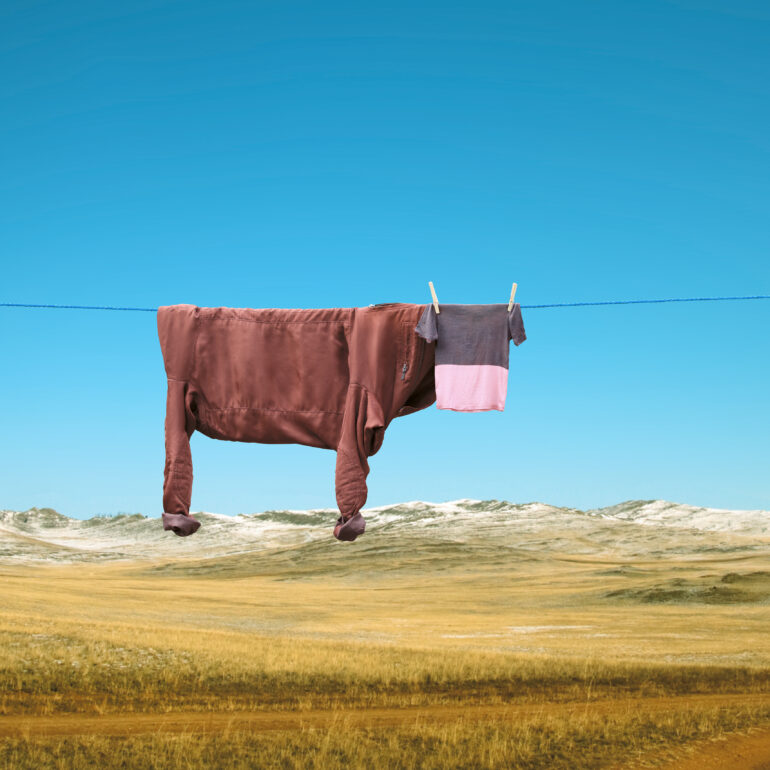
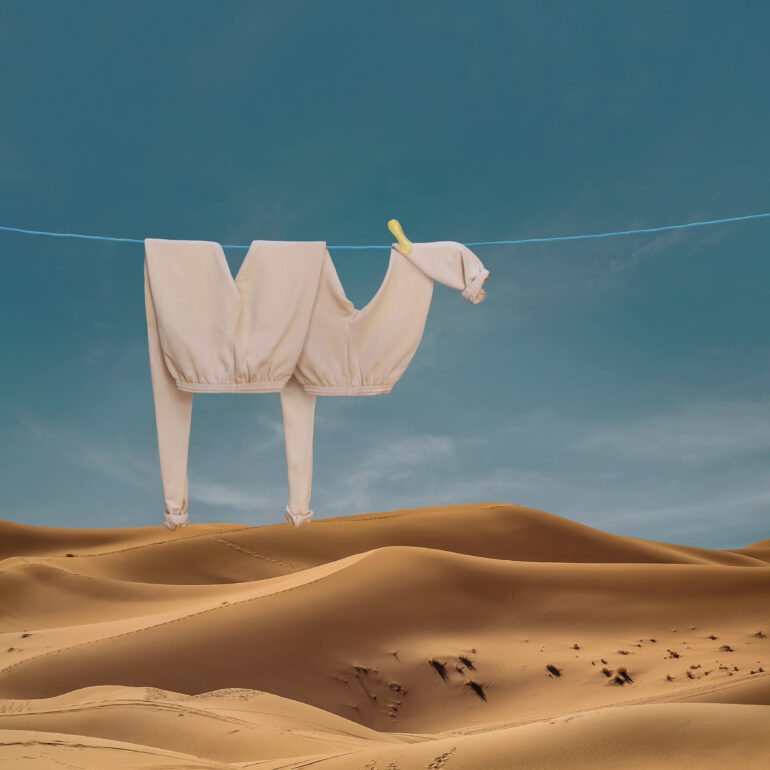
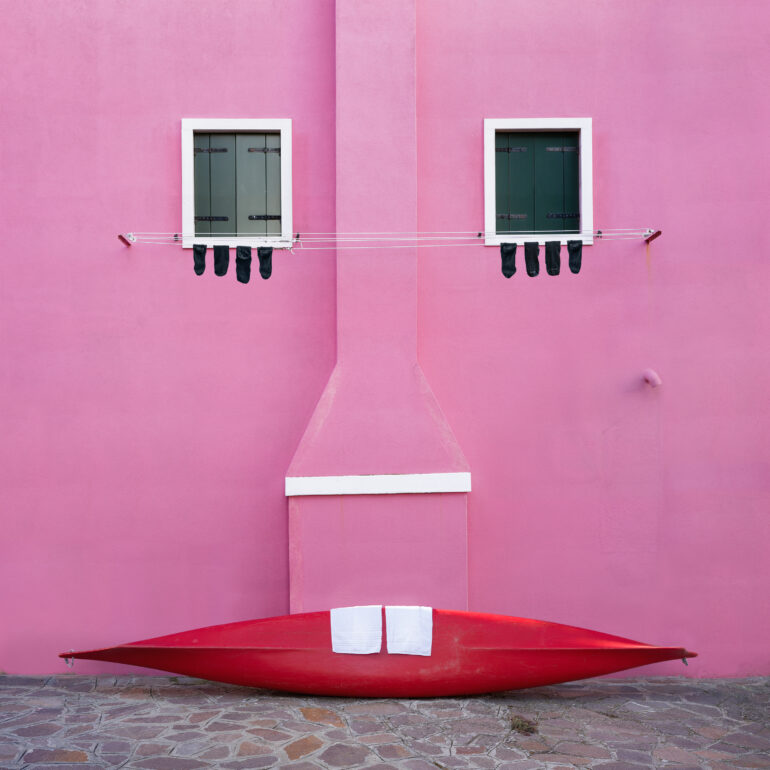
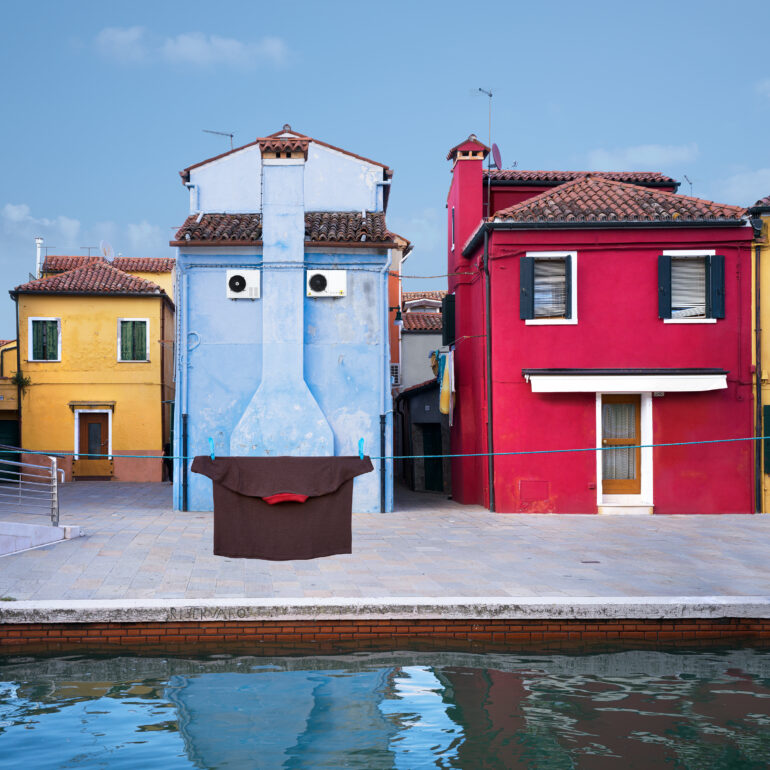
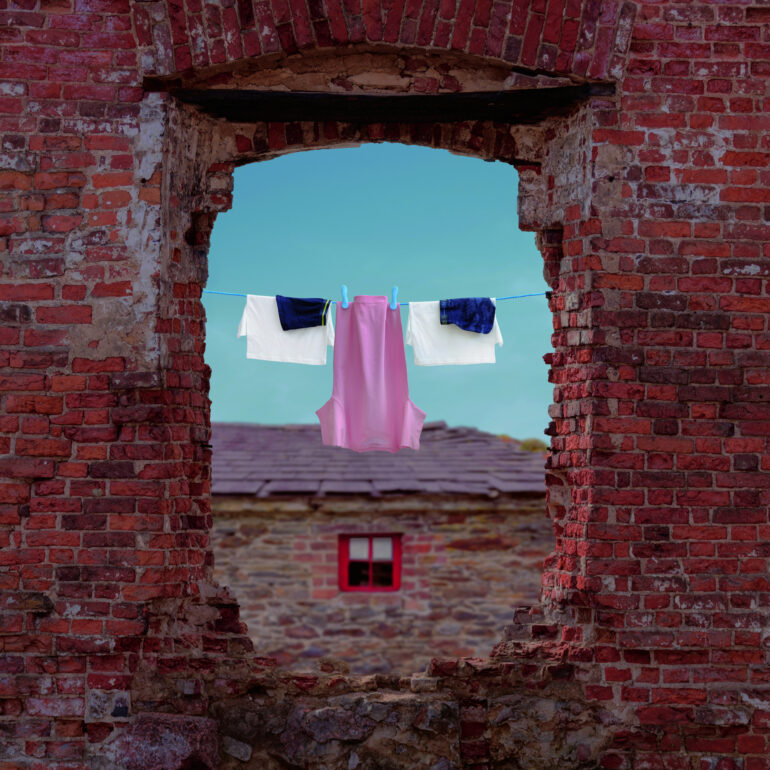
“One day, while I was casually hanging out laundry in my parents’ garden, something caught my eye,” says photographer Helga Stenzel to the Phoblographer in an interview about her whimsical images. “My son’s track pants, as they hung, bore a striking resemblance to a horse’s head. Almost impulsively, I added my husband’s black jumper, a teatowel, and a handful of pegs.” From there, she created her first clothesline animal — Pegasus. And the rest is just photography. But there’s something incredibly playful about Helga’s photos that harkens to the inner child we all hush for a kind society.
All images by Helga Stenzel. Used with permission. Please check out her website and Instagram for more.
Helga earned her degree in Graphic Design and Advertising. She started out photographing children’s clothing and found it pretty uninspiring. Instead, she switched to candid snapshots of her life. Then her Instagram following grew — and the fun photos that she shot lead to commissions and opportunities. “It became evident that these visual anecdotes held the potential to evolve into a creative venture in its own right,” Helga tells us.
To do this, she’s used a Canon 5D Mk II and the 24-105mm lens that came with it. Recently, though, she was honored as a Hasselblad Heroine. From there, she was given a Hasselblad X2D. “The nuances of color it captures and the intricacies of detail it preserves are truly astonishing,” she tells us. She eventually paired it with the Hasselblad 45mm f4.
Since playing with that single photo, she started to experiment more with it. “I got an opportunity to add another creature to my laundry farm,” Helga jokes. “I noticed that my son’s old pink colourblock t-shirt looked a lot like a cow’s head, so I added my brown jacket, two pegs, and just like that, the entire animal – Smooothie – came to life.” Yes, she names her creations. Psychologically speaking, this is pretty important as it gives them life.
Helga strives for simplicity in her photos. She doesn’t want them to get all that complex and instead just has fun doing it. Sometimes, she does them with only one pair of clothing.
This creativity came to her from a very young age. Helga spent lots of time with her grandmother in a village. Entertainment was limited and the infrastructure to support wasn’t really there either. So Helga had to find a way to keep herself amused. “Even while snug in bed, I’d gaze at the carpet on the opposing wall, squinting until the flowers seemed to metamorphose into a whimsical dragon,” she tells us. “Then, I’d shift my focus to the floor, eagerly seeking out parrots and hedgehogs concealed within the wood knots beneath my bed. The feeling of uncovering something overlooked by everyone else in the family was profoundly satisfying—it was as if I was an explorer on a unique mission.” This is something we find in so many artists that grew up outside of cities — at least that’s what they share with us in our interviews. And for Helga, this skill stuck with her.
“All it takes is a deliberate pause and a closer examination of our surroundings to uncover the remarkable within the ordinary.”
Helga’s photos are innately human — and so we just had to ask her about her thoughts on AI photography. She’s intrigued and fascinated by it. “The AI-generated architectural images I’ve encountered are nothing short of brilliant, conjuring worlds that flourish solely in someone’s imagination,” she tells us. “It’s a leap that takes us into a realm with no boundaries between what’s real and what’s not.” However, she’s all about reality. For her, it’s all about slowing down and observing the world to see it in a different way.



Professionals and hobbyists share their tips for improving your timepiece images.
In an industry whose lingua franca is the #wristshot (3.2 million tags on Instagram and counting), photographs of watches can often look redundant and uninspired.
In 2020, during the pandemic, James Kong, then a corporate lawyer in New York, sought to change that. He had purchased a new camera and resolved to post one new watch image to Instagram every day, with the goal of making his timepieces look “heroic,” Mr. Kong said by phone last month.
“I was working from home, and I needed something to get my mind off everything that was going on,” he said. “I had no idea what I was doing.”
Three years later, Mr. Kong has become a prolific freelance watch photographer, whose clients include brands and editorial platforms, including the well-known watch website Hodinkee. He quit his day job in December, when a fellow collector, Thomas Fleming, approached him about a position at Fleming, the watch brand he had founded. Mr. Kong is now Fleming’s chief operating officer.
In some ways, Mr. Kong is following the trajectory of one of his mentors, Ming Thein, a professional photographer-turned-watchmaker, whose blog about photography Mr. Kong read “front to back” in 2020.
“Something I learned from Ming: There’s no excuse for sloppiness,” Mr. Kong said. “When you’re taking a watch photo, you’re in control of every variable. You should be able to put the shadows where you want them.”
But how, exactly, should one do that? The New York Times asked a cohort of photographers — professionals as well as hobbyists — to share their tips for taking better watch photos.
Most people can take perfectly good watch photos using their smartphones. For anyone seeking to level up those images, however, a proper camera setup is in order.
Lydia Winters, the Sweden-based chief storyteller at Mojang Studios, the maker of Minecraft, got serious about watches, and watch photography, during the pandemic, when she and her partner, Vu Bui, passed the time by shooting pictures of flowers at the botanical gardens in Stockholm.
In January 2022, the couple started posting on a YouTube channel they had created for watch and photography enthusiasts. In the first episode, they focused on basic tips for capturing better watch shots. “Tip No. 1: If you want to elevate your watch photography, elevate your watch,” Ms. Winters said on the video. She then slid two plastic bottle caps beneath the Seiko model she was shooting to show how raising it off a flat surface helped draw attention to the timepiece.
Ms. Winters uses a digital medium-format Hasselblad X2D — the Swedish camera brand named her a “Hasselblad Heroine” in 2022 as part of its focus on female photographers — equipped with a Hasselblad XCD 120-millimeter macro lens as well as an XCD 80-millimeter lens, which allows her to achieve a shallow depth of field.
“In traditional watch or product photography,” she said on a recent video call, “you’re trying to have everything in focus on the item. But I’m just shooting for myself, so I’m fine if only a small part of it is in focus because sometimes it can make everything look more magical.”
Mr. Kong said he relied on a Nikon Z7 II digital camera for his professional work along with a Canon 135 millimeter TS-E as his primary lens. “The TS stands for tilt shift, a specific kind of lens that allows you to change the plane of focus,” he said. “I find that useful for watch photography because you can position the watch at an oblique angle and still have the dial be in focus.”
A German-made Leica is Atom Moore’s camera of choice, but the New York-based photographer acknowledged that less expensive options could be just as effective.
“When people ask me what the best camera is, I always tell them it’s the camera you’re willing to take with you and know how to use,” Mr. Moore said on a recent call.
Mr. Moore, who did the original photography for a forthcoming book about the 40th anniversary of the G-Shock watch, recommended using the latest crop of mirrorless cameras — with their built-in image stabilization — together with a software program such as Capture One, which tethers the camera directly to a computer. “That way, I can see exactly what I’m getting,” he said.
Many photography professionals insist that the trick to capturing a good photo is good lighting, but with watches, “It’s really about reflection management,” Mr. Kong said.
“A watch is like a multifaceted mirror,” he added. “Each watch reacts to light differently, depending on where its surfaces are, the texture of the dial, the shape of its crystal.”
In the beginning, Mr. Kong used only natural light. Then he moved on to continuous types of lighting before embracing off-camera flashes and strobes “because flash photography allows you to control your ambient environment in a way that natural or continuous lighting does not,” he said.
Yet natural light is often preferred by casual photographers, such as Ms. Winters. “I can sometimes put myself between the camera and the light source, and that can take care of the reflections” on the watch crystal, she said.
Inexpensive reflectors or “bounce cards,” which help channel light in a desired direction, are a simple way to brighten a watch, Mr. Moore said. He recommended buying a big sheet of quarter-inch-thick foam board at an art-supply store and cutting it into little cards that fold open like a book. LED lights would accomplish the same thing, he added.
“Having a card on one side of the watch, and/or an LED light, can go a long way toward making a really good shot, even for just a quick social media thing,” Mr. Moore said.
To get the best shots on a smartphone, it helps to manually lower the exposure by swiping down on your screen when you’re in the camera app, Ms. Winters said.
“If you underexpose the photo, you can always make it brighter, but if you accidentally overexpose it, you can’t get that back,” she said.
Once you’ve gotten the shot, a photo editing app such as Lightroom allows you to make subtle, yet meaningful, improvements. “I try to get as much right in camera and then use Lightroom to get a little pop or some clarity on the watch face,” Ms. Winters said.
Mr. Moore cautioned against going overboard with editing. “Sometimes, over-contrasting things can make it obvious you’ve manipulated the image,” he said.
In addition to the technical details that go into producing a top-notch watch image, photographers say they also keep artistic considerations in mind.
Karine Bauzin, a Geneva-based freelance photographer who specializes in documentary photos as well as portraits of watch-industry executives, has spent the past decade working on a personal project for which she traveled to more than 20 countries and photographed random people responding to a simple question: “What time is it?”
About 80 photos from the ongoing series, which she snapped using a Leica with a 35-millimeter lens, were shown in an exhibition at the Watches and Wonders fair in Geneva this past spring, while a smaller selection went on display at the Watches and Wonders Shanghai fair earlier this month.
“When you wake up in the morning until you go to bed, you see so many pictures,” Ms. Bauzin said during a video call. “For me, a picture you remember is a picture when you have an emotion.”
For Ms. Winters, watch photography is at its best when it’s both playful and personal. On St. Patrick’s Day in March, for example, she shot three Rolex watches with colorful dials arranged in a bowl of Lucky Charms cereal.
“I really like photos that tell you something about the person or the item,” she said. “Are you in a cool place? Do you have stuff around? Sometimes it’s nice to find props around your house. Why is this your watch and not just a watch anyone can have?”
The quest to tell stories is what keeps Mr. Kong clicking.
“When I started watch photography in 2020,” he said, “I didn’t set out to become known as a photographer. I was just motivated to share these things I’d spent so much of my life staring at and obsessing over.
“If I look at a photograph and it makes me dream, it’s worth showing,” he added.
Then again, some people are simply looking for an image that will help them sell or trade a watch. In that case, Mike Nouveau of Craft + Tailored, a Los Angeles-based company that deals in vintage watches, has some detailed advice.
“The dial is 80 percent of the value and should take up 80 percent of the photo,” Mr. Nouveau said by phone from New York. “I tell them to pretend the bracelet is not there and to cock the watch maybe 30 degrees.”
A vast majority of watch sales happen online, he added. “People will send $200,000 without seeing the watch so they are relying on photos.”
Anyone who has cruised through the watch listings on a resale site such as Chrono24 is probably familiar with bad watch photography. So much of it floods the internet that Mr. Nouveau said some people had discovered a lucrative side hustle in simply buying up timepieces with bad imagery and reshooting them so they look more attractive.
“If you’re a dealer who has a gift for photography,” he said, “you might make some money.”


THE WRITERS HAVE BEEN ON STRIKE SINCE MAY 2ND. WELL, NEW TONIGHT, A CENTRAL IOWA PHOTOGRAPHER IS RETIRING AFTER 67 YEARS IN THE BUSINESS. HE’S WELL KNOWN FOR DOCUMENTING LOCAL AND PERSONAL HISTORY, CAPTURING PHOTOGRAPHS OF DOZENS OF STATE FAIR QUEENS AND MOMENTS FROM THE STATE SENATE FLOOR. BUT AS KCCI PEPPER PURPURA REPORTS, HIS CLIENTS SAY THE THING THAT SETS HIM APART THE MOST IS THE RELATIONSHIPS HE’S BUILT AT DOCUMENTING DECADES. CHARLIE STOVER’S PHOTOGRAPHS HAVE GRACED MUSEUMS AND FAMILY HOMES. HE HAS DONE A TREMENDOUS AMOUNT TO BE ABLE TO GIVE US A FOOTPRINT, A HARD COPY FOOTPRINT OF OF LIFE, OF WHAT LIFE WAS LIKE FOR THE LAST 85 YEARS IN IOWA. BUT THE SECRET TO HIS SUCCESS IS NOT THE PRODUCT. IT’S THE PROCESS. IT’S THIS WILL ONLY COME UP TO ME. THIS YOU PHOTOGRAPHED MY WEDDING 40 YEARS AGO AND THAT WON’T COME ON. SHE SAYS, WELL, I GOT YOU BEAT. WELL, I HAVE DEAD 42. ANOTHER ONE, CALOMA. SHE SAYS, WELL, HE DID MINE 50 YEARS AGO. BUILDING RELATIONSHIPS TO BUILD THE BUSINESS. I CALL IT VISITING. IT’S SILLY. NOW STOVER IS SCALING DOWN. I’M 85 YEARS OLD NOW. MY WIFE IS. YOU’VE DONE ENOUGH. IF LEAVING A LEGACY OF CONNECTIONS FOR EACH PICTURE HE’S TAKEN. THANK YOU, CHARLIE. AND ALTOONA AND PEPPER PURPURA, KCCI EIGHT NEWS IOWA’S NEWS LEADER. AND STOVER’S FINAL SHOOT THIS EVENING WAS FOR HIS AL
Advertisement
‘I still enjoy doing it, that’s the problem’: Renowned Iowa photographer retiring after 67 years
Updated: 10:42 PM CDT Sep 23, 2023
A renowned central Iowa photographer, known for shooting dozens of Iowa State Fair queens and moments from the state senate, is retiring after 67 years. Charlie Stover, 85, began his career as a teen at Lincoln High in Des Moines, which lead him to start his business. He would go on to start photographing the school’s students, and by 2007, he was inducted into the school’s hall of fame. “He has done a tremendous amount to be able to give us a footprint, a hard copy footprint of life, of what life was like for the past 85 years in Iowa,” Stover’s daughter Hollee Stover Nelson said.Stover became known for his panoramic pictures and group shots, some now hanging in the Iowa State Fairgrounds museum, but the reason he was able to maintain business was his motto; “visiting makes you money.”Stover says he utilized his personable nature to build relationships in the community that lasted. The reason clients chose him was because he “took the time to visit.” Even if he didn’t remember everyone he met, they remembered him because of the time he took to get to know each person.”He has been a part of many many memories for a lot of different families whether it be photographing their kids’ pictures, their senior pictures, their weddings,” Nelson said. In retirement, Stover plans to continue working, but less frequently. Nelson said his passion for his craft won’t allow him to stop working.”I’m 85 years old now, my wife says ‘you’ve done enough,’ but I still enjoy doing it, that’s the problem,” Stover said. Stover’s final shoot before retirement was Saturday at Lincoln High’s Class of ’73 50-year reunion.
A renowned central Iowa photographer, known for shooting dozens of Iowa State Fair queens and moments from the state senate, is retiring after 67 years.
Charlie Stover, 85, began his career as a teen at Lincoln High in Des Moines, which lead him to start his business. He would go on to start photographing the school’s students, and by 2007, he was inducted into the school’s hall of fame.
Advertisement
“He has done a tremendous amount to be able to give us a footprint, a hard copy footprint of life, of what life was like for the past 85 years in Iowa,” Stover’s daughter Hollee Stover Nelson said.
Stover became known for his panoramic pictures and group shots, some now hanging in the Iowa State Fairgrounds museum, but the reason he was able to maintain business was his motto; “visiting makes you money.”
Stover says he utilized his personable nature to build relationships in the community that lasted. The reason clients chose him was because he “took the time to visit.” Even if he didn’t remember everyone he met, they remembered him because of the time he took to get to know each person.
“He has been a part of many many memories for a lot of different families whether it be photographing their kids’ pictures, their senior pictures, their weddings,” Nelson said.
In retirement, Stover plans to continue working, but less frequently. Nelson said his passion for his craft won’t allow him to stop working.
“I’m 85 years old now, my wife says ‘you’ve done enough,’ but I still enjoy doing it, that’s the problem,” Stover said.
Stover’s final shoot before retirement was Saturday at Lincoln High’s Class of ’73 50-year reunion.

September 23, 2023
Last month, three young artists from the Pueblo of Zuni had the opportunity to share their culture, history and traditional arts with the public through the Grand Canyon Cultural Demonstration Program. They are LaShea Harris, 24; Chasady Simplicio, 19; and Cassandra Tsalate, 21.
All three young people participated in the Zuni Youth Enrichment Project’s Emerging Artist Apprenticeship program, and Harris and Tsalate also completed the Advanced Artist Apprenticeship program. Kandis Quam, ZYEP’s assistant art coordinator, chaperoned the trip.
“We monitor our art students to see who has the capabilities to do something like this,” said Elroy Natachu Jr., ZYEP’s art coordinator. “We’re looking for young people with a solid work ethic and mental fortitude. They need to be motivated, self-driven, and able to push outside their comfort zone. With these three, we saw that light.”
The free cultural demonstrations took place from 9 a.m. to 4 p.m. daily at various locations at and around Desert View Watchtower, the easternmost developed area along the park’s South Rim. The artists also conducted demonstrations for other youth at Grand Canyon High School; in both cases, the artists said they appreciated the opportunities to engage with the public.

“I was nervous at first, but I really liked talking to people,” said Simplicio, who creates traditional Zuni Pueblo weaving. “People wanted to know how long it takes to produce a piece. I explained that it depends on the weaver, and on the design. One woman was so interested in our weaving process; she had her own small loom to fix socks. I thought that was cool!”
The three artists shared living quarters while in residence at Grand Canyon National Park, and Simplicio noted this gave the trio opportunities to get to know each other better.
“We talked about meaning, color and design in our work,” they remembered. “I learned a lot from LaShea and Cassandra.”
Harris said she also felt “a lot of nerves” before the program started, in part because she embarked on her journey with traditional Zuni embroidery just a year ago.
“It was a little bit intimidating, but I enjoyed sharing what I knew,” she recalled. “It was a popular time for European tourists, and we introduced them to Zuni art.”
“I was trying not to be nervous,” said Tsalate, who produces Zuni Pueblo pottery, with a laugh. “I told myself it was like trying to teach someone here at home. The ranger told us to ask ourselves, what is one thing we can leave them with?
“So, I talked about the significance of these traditional arts in our culture, and what revitalizing them means for the future of our people,” she continued. “I also talked about being passionate about culture and history. That’s what makes me motivated… the history! Hopefully we inspired others.”
Indeed, through the cultural demonstration program, these young artists became teachers for peers and adults alike. Natachu said this is vital for the future of the Zuni people.
“Our art forms are culturally rooted,” he explained. “They share how we view the world. They show it through our Zuni lens. Without future culture bearers, the knowledge of these traditional art forms will be lost — the artistic processes, and what they were meant for.”
Tsalate said she hopes the cultural demonstration program encouraged others to embrace their talents, especially women. And, back home, she hopes more Zuni youth will get more deeply involved with art and culture.
To that end, Harris said ZYEP’s Emerging Artist Apprenticeship Program is a good place for young people to start exploring their interests, passions and talents in the arts. The program not only provides art instruction, it also connects young artists with experienced mentors who can help guide them on their artistic journeys.
“Our experience at the Grand Canyon shows how far the apprenticeships can take you,” Harris observed. “You never know what doors will open. It’s great that ZYEP offers these opportunities, exposing youth to different arts and showing them that they can do it.”
While the group were able to visit a few of the tourist sites along the South Rim during their stay, their main focus was their artwork and strengthening connections to their roots in a place that is sacred to the Zuni people.
“It was so scenic, and there was the cultural significance as well,” Harris said. “It felt different to do my embroidery there. I felt closer to our ancestors.”
Grand Canyon has been home to 11 tribes for generations, which means it is more than a national park, a World Heritage Site and a natural wonder of the world. It’s also a sacred space for entire peoples: Havasupai, Hualapai, Hopi, Yavapai-Apache, Kaibab band of Southern Paiute, Las Vegas band of Southern Paiute, Moapa band of Southern Paiute, Paiute Indian Tribes of Utah, San Juan Southern Paiute Tribe, and Zuni.
The purpose of the Cultural Demonstration Program is to give members of those 11 traditionally associated tribes a voice at Grand Canyon by supporting interactions with the public through demonstrations of traditional Native practices and crafts. Made possible by grants from the Grand Canyon Conservancy, the program began in 2014 and continues to grow.
Now that she is back home, Harris said she is planning to take time to create something new. As she takes on larger embroidery projects, she is dedicated to further developing her own style.

Simplicio agreed, noting they plan to continue working on their weaving and learning more advanced techniques.
“I want to help my community by inspiring others, and showing them that you can make it as an artist, even if you’re a young person,” they said. “It’s always worth it to try something new.”
As for Tsalate, continuing with her pottery is one piece of a larger puzzle. Not only would she like to explore other mediums, like jewelry and basketry, she is pursuing an education in museum studies.
“I want to teach history,” she explained. “It’s so important. I want to open up conversations with our elders and encourage them to teach, as well.
“I also want to be in touch with other artists, people of all ages,” she continued. “It’s about bringing our community together, and improving access to outside resources like museums and national parks. I’m just so inspired.”
After this first experience with the Grand Canyon Cultural Demonstration Program, Natachu said he anticipates that this will become a regular part of ZYEP arts programming.
“We need to support the young people who have the capability to carry the torch into the future,” he said. “They must take our places one day.”
Bard College Hosting the Second Annual Conference of Rethinking Place: Bard-on-Mahicantuck
Little Priest Tribal College Celebrates 25th Anniversary
Indian Youth Service Corps Gets $3.5M Boost
Chickasaw Nation Breaks Ground for Child Development Center in Ada, Okla.
We hope you enjoyed the story you’ve just read. For the past dozen years, we’ve covered the most important news stories that are usually overlooked by other media. From the protests at Standing Rock and the rise of the American Indian Movement (AIM), to the ongoing epidemic of Murdered and Missing Indigenous People (MMIP) and the past-due reckoning related to assimilation, cultural genocide and Indian Boarding Schools.
Our news is free for everyone to read, but it is not free to produce. That’s why we’re asking you to make a donation to help support our efforts. Any contribution — big or small — helps. Most readers donate between $10 and $25 to help us cover the costs of salaries, travel and maintaining our digital platforms. If you’re in a position to do so, we ask you to consider making a recurring donation of $12 per month to join the Founder’s Circle. All donations help us remain a force for change in Indian Country and tell the stories that are so often ignored, erased or overlooked.
Donate to Native News Online today and support independent Indigenous journalism. Thank you.


Western Australia is home to some of the world’s rarest and most beautiful orchids.
The annual bloom from June to November draws tens of thousands of visitors hoping to catch a glimpse of some of the 12,000 species that burst into flower.
Wildflower photography is booming on social media with professional and amateur shutterbugs hunting the perfect snap.

Albany photographer Heather Brown says the key to the perfect wildflower snap is to take time to spot a variety of flowers.
Some wildflowers are the size of a 20-cent coin, making them hard to see.
“When you arrive, stand still and allow your eyes to adjust to seeing flowers,” she said.
“I am ‘flower blind’ until my eyes and mind get the feel of what is around me.”

Ms Brown says changing angles and perspectives, like getting low to shoot upwards, is a great way to get a unique shot and “reveal the personalities” of different species.
“Do at least three shots of each subject — landscape, portrait and try a tilting of the camera/phone to get more of the character in the image,” she said.

“We have so many favourable conditions that create such beautiful wildflowers – our isolation, the soil, the rocks, the climate, the animals and insects that co-exist and work with the wildflowers to keep them going.”

It’s also vital visitors move carefully through the landscape, Ms Brown says.
“Watch where you place your feet, knees and camera,” she cautions.
“Something tiny may be squished by your boots.”
Ms Brown sprays her shoes with methylated spirits to clean any potential biohazards such as dieback from the soles.

“Preservation is vital,” she said.
“We have so many critically endangered, almost completely extinct orchids that if you publish where you found them, some enthusiasts, may or may not turn up with a spade, which would wipe them out.”
Loading


A plethora of lawsuits over photography hacks in fast food advertising have made food litigation one of the fastest-growing areas of law, according to legal experts.
A record number of lawsuits have been filed since 2020 alleging misrepresentation in food marketing against several fast food giants, including Taco Bell, Wendy’s, McDonald’s, Burger King, and Arby’s.
MANCHIN SLAMS BIDEN’S ‘BOTCHED’ IMPLEMENTATION OF INFLATION REDUCTION ACT
Much of the evidence from the complainants in the suits consists of advertising images compared to their real-life product inspirations. Advertising images have tall burgers with puffy buns and loads of toppings or hearty, crunchy tacos. By comparison, real-world food is limp, lifeless, and lacking substance, according to the plaintiffs.
Techniques in food photography have been known widely for several years, with McDonald’s Canada’s ‘behind the scenes’ video capturing a classic quarter pounder with cheese gaining over 12 million views since 2012.
“Here you can definitely see that there is a size difference” explains Hope Bagozzi, then-director of marketing for McDonald’s Canada, as she compares the store-made burger with the studio-made product that took hours to craft. According to Bagozzi, the difference is in part attributable to the steam trapped in the store’s serving box that wilts the bun, and in part to the tilting of the patty in the studio-burger to highlight the toppings in a two-dimensional image.
Bagozzi left McDonald’s in January 2020 to become the chief marketing officer of Tim Hortons.
“Customers aren’t stupid,” says the advertising firm Gourmet Ads, “[T]hey know that the images of food that they see on billboards, on menus, in magazines or on online ads aren’t as they appear in store.”
According to Gourmet Ads, techniques such as spraying foods with oil or steam or using tools to melt cheese on a burger “are all part of the plan to make customers not just see the food but make them desperately want it.”
Much of the cases, however, depend upon quantity, arguing that foods featured in advertising are more plentiful than what paying customers actually can purchase.
The legal standard for convincing a judge or jury to hold fast food companies liable is whether or not a “reasonable consumer” would be misled by the product’s marketing or labeling. A reasonable consumer must be an average individual, with general knowledge rather than the industry-insider perspective.
Although the court system usually has a very high view of the average consumer, most class-action lawsuits involving the quality or quantity of fast food products end up being settled before trial.
Bonnie Patten, executive director of the non-profit organization Truth in Advertising, told CNN Business that although most of these seem trivial, inflation and rising costs of food have made them even more important.
CLICK HERE TO READ MORE FROM THE WASHINGTON EXAMINER
For people who are “using their limited resources to purchase this, and then they’re not being provided with the quantity of food they’re expecting — that is an issue, no doubt,” Patten said.
“The best defense against deceptive marketing is an educated consumer,” she added.





